

Backable With Suneel Gupta
Posted by John Livesay in podcast | 0 comments

Whenever you’re faced with what looks like a massive failure, you can either be an ostrich and bury your head in the sand or be a peacock and say, “I’m owning this.” That is what Suneel Gupta, the founder of RISE and author of Backable, learned from his experience. Imagine spending your whole career trying to paint a picture of success, only to become a poster child for failure. That is exactly what happened to Suneel as he tried and failed to pitch his idea of a one-on-one nutrition coaching platform to one naysaying investor after another. Put that on top of halted startups, canceled projects, missed promotions, and missed opportunities and you’ve got the perfect person for The New York Times to label as “The Face of Failure.” How does one get back up from that? You’ll be surprised how deceptively simple the answer is. Join in as he shares some of it with John Livesay.
—
Listen to the podcast here
Backable With Suneel Gupta
Our guest on the show is Suneel Gupta, the author of Backable. He says that when we focus on seven qualities, anybody can learn to be backable. We go over some of them so you can learn how to be backable. The concept of embracing something negative is an interesting way to look at something and your power to reframe something. Most importantly he said, “It’s not charisma that convinces people, it’s conviction.” Enjoy the episode.
—
Our guest is Suneel Gupta, who is the Founder of RISE, and is on faculty at Harvard University. Using the seven steps inside this book, Suneel went from being the face of failure for The New York Times to being the “New Face of Innovation” for the New York Stock Exchange. His ideas have been backed by firms like Greylock and Google Ventures. He has invested in startups including Airbnb, Calm and SpaceX. He also serves as an emissary for Gross National Happiness between the United States and the Kingdom of Bhutan. Welcome to the show, Suneel.
It’s nice to be here, John. Thanks for having me.
I’d love to hear a little bit more about your own story of origin. You could go back to childhood or school. It’s always interesting to see what got you to where you are now.
Why don’t we pick a moment that always stands out to me? It is the basis for this book that came out called Backable. The moment was in 2004. I am working as a junior-level speechwriter for the Democratic National Committee. I’m at the 2004 convention, which was being held in Boston that year. I’m backstage. The convention draws the who’s who crowd to be there and give speeches. Backstage, there are the Clintons, the Gores, the Liebermans, the standard faces of the Democratic Party. There was one face that I did not recognize and that was Barack Obama. I didn’t know who he was. A lot of people didn’t know who he was. While he gave his speech that night, that changed his career and I would argue changed the world. I got to watch that speech from backstage.
It was interesting because while it seemed like the world was watching Barack Obama, I got to watch the world. What I saw was this tidal wave of energy just ripped through the stadium. I became one of the millions of young people that night who became interested in his story. I started to dig deep into, “What is this guy all about?” What I realized surprised me. Four years earlier, he had run for Congress, not for Senate, not for president. He had run for Congress and he had lost. He had lost by a big margin. What surprised me more, John, was the way that he was received during that campaign. People described him as boring, stilted and professorial. There was a guy named Ted McClellan, who was a journalist who covered the campaign. He said, “Barack Obama is so dry that he sucks all the air out of the room.” Four years later, in 2004, he is this bastion of hope, inspiration and charisma.
The reason that story stands out for me, not only for my career in the way that I view the world but also this book that I wrote is because it turned me on to the power and possibility of human transformation. We can always change and reinvent ourselves. I have become obsessed and fascinated by how people do that. What happened in those four years between 2000 and 2004 for Barack Obama? What happens when we take the stories of all of the people that we admire who we now are looking at the chapters 14, 15, 16 in their story? If we go back to chapter one, what does that look like? Where did that begin? How do they evolve over time? That’s what makes me tick.
[bctt tweet=”Being #backable is not just for celebrities and CEOs. It’s something that all of us can learn.” username=”John_Livesay”]
In your own story, you were called out by The New York Times, “The Face of Failure.” You weren’t the only one. You and Barack share that similar history of being called something that’s not exactly positive and something that most people would say, “You’re never going to recover from that label.” The face of failure, in this case or in Barack’s case, sucking the air out of the room or the opposite of charisma. What’s the story? What happened? What did you do that caused The New York times to say that?
I was an entrepreneur at the time. I was pitching every investor I could find on this idea called RISE, which was one-on-one nutrition coaching right over your mobile phone. I was passionate about the idea and felt like it should exist. I could not get any investors to say yes. I also had a checkered past in terms of success and failure. I’d been part of a couple of startups that didn’t go anywhere. I’d been on the other side of canceled projects, missed promotions and missed opportunities. One day, I got a phone call from the organizer of a conference called FailCon, which stands for Failure Conference. She said to me, “You have been nominated twice to be a speaker at this conference.”
John, it’s a humbling experience when somebody calls and says, “I’m running a conference on failure. We would love for you to be the keynote speaker.” The reason I accepted that is because I thought, “Maybe there might be some investors in the audience, people who I can get on board with this new idea.” It turned out there wasn’t but there was a reporter in the audience from The New York Times. Fast forward to sitting in my apartment one day in San Francisco, my wife turned to the newspaper. There was a full-length feature story on failure with my story as the photo up top. That article went viral. It went viral to the point where for months you could have Googled just the word failure and you would have seen my face as one of your top search results.
That’s some SEO challenge in there.
I bet it’s still there. It’s still probably on page 1 or 2. When something like that happens, you have a couple of choices. One is you can pretend that it doesn’t exist and move in any direction. The other is you can embrace it. I had spent my whole career trying to paint this picture of success. Now, I’m the poster child of failure. I decided, “What would it look like to embrace that a little bit?” The way that I thought about there were all these people that I was trying to get coffee with and get advice from. I was cold calling them. I was reaching out to them the same way that anybody else would. “I’m living here in San Francisco trying to break through into tech and entrepreneurship. Would you grab a coffee with me?” Most people would say no or disregard the email. Now, I changed my approach. I sent them the article and I would say, “As you can see from this New York Times article, I have no idea what I’m doing. Would you be willing to spend a few minutes grabbing advice?” People loved it.
One bullet breaks through the clutter. It’s self-deprecating and clever. It’s the fact that The New York Times covered it, not just you saying it. It works on so many levels. You could be an ostrich and bury your head in the sand or you could be the peacock and say, “I’m owning this.” This story continues to get better. After all those noes and getting labeled that, you did get some funding. It was eventually acquired by One Medical. The full circle to your opening story about Barack is, in 2016, Michelle Obama partnered with RISE to bring this coaching to low-income communities. Nobody could have predicted the outcome of the story. I love that story. When a story has a twist like this, it is fascinating to hear. We all have the hero’s journey of like, “He’s down or she’s never going to recover from this.” Recovering might have been, “We finally got some funding.” It probably went beyond your wildest dreams when you started it, to get the first lady involved with it.
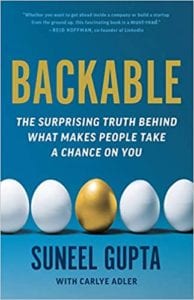
Backable: The Surprising Truth Behind What Makes People Take a Chance on You
John, you and I both love Joseph Campbell. We both love the hero’s journey. We know that one of the components of the hero’s journey is like, “Along the way, there’s an insight, learning, something that changes your worldview.” For me, through these conversations that I started to have, creativity and persuasion are two different things. Oftentimes, we think about them as one. We all know that you can have a great idea, be a great candidate for a job, have a beautiful product and still be dismissed. We see it happen all the time. That’s what I was feeling. Many of us have felt that way.
One of the stories that always pops for me especially is the story of Alexander Fleming, who came up with penicillin. Penicillin, to date, has saved nearly 200 million lives, yet it took him ten years to get people to buy into it. He got dismissed over and over again. Brilliant, game-changing ideas aren’t always met with a room of people who are going to support them. All of that got me interested in this idea of backable people. These are people who tend to be able to go into a room whether that be an interview, an audition or a pitch and they tend to shine. The trick of it is that, oftentimes, it’s when they aren’t the obvious choice. When they don’t have a fully baked product, we still feel like we want to take a chance on them. I wanted to understand like, “What is that quality? Can it be learned?”
Following up on this New York Times article, I started to have these conversations with people and said, “Let me have more and more.” Eventually, I found myself having hundreds of conversations with backable people from all walks of life including Oscar-winning filmmakers, Michelin Star chefs, military leaders, founders of iconic companies and fast-rising community initiatives. What I found was that being backable is not just for celebrities and CEOs, it’s for all of us. Being backable is not something that you’re born with but it very much is something that you can learn.
Let’s take a pause there. You’re being very humble. I’m going to shout-out. You have this book that has reviews from Reid Hoffman, the Cofounder of LinkedIn and Brian Grazer, one of my all-time favorite Oscar-winning producers of amazing movies. You’ve been able to not only have your own insights on what makes someone backable but figure out a way to grow your network and get out in front of people who are clearly backable and believe in what you’re doing. It’s a one-two punch there that gives it so much credibility much like The New York Times. One extreme to the other that social proof that gets transferred is what you’re demonstrating here in a big way that helps a lot of investors. You’ve invested in some successful companies yourself. I’m sure there are some things you look for in a founder that would be helpful to share that other people saw in you. The basic question is, as an investor, what makes a founder backable besides the idea?
The book outlines these seven qualities. We should talk about them. One of the things that I tried with this book, part of the reason that it’s doing well and a number-one new release is it talks about the stories and the substance but we get into the techniques. I personally love it when you can break it down for me and give me some specific techniques that I can use to bring it into my life immediately. Let’s start talking about some of these qualities. One of the first ones in the book came to me as a surprise. When I first started studying backable people, I thought that I was going to find a certain pattern of communication. I thought that backable people generally were going to end up being gifted speakers. They were going to make use of eye contact, hand gestures and pacing. I did not find that to be the case.
You certainly had backable people who are gifted speakers. It can be very Dale Carnegie-esque or Toastmasters-esque. There are plenty out there that are not. They’re shy, quiet and introverted. They’re not what we think of when we think of charisma. If you want an example of that, take a look at the most popular TED Talk of all time. What you’ll find is a brilliant talk being given by a guy named Sir Ken Robinson. It’s got over 65 million views. Amazing talk but not what you might expect. It’s a very un-TED-like talk. He’s got one hand in his pocket. He naturally walks with a bit of a slouch. He meanders on and off script, yet it was very well-received. What I found is that it’s not charisma that convinces people, it’s conviction.
[bctt tweet=”It’s not charisma that convinces people. It’s conviction.” username=”John_Livesay”]
There we go. There’s a tweet if I ever heard one. Plus, I love the fact that it’s got all those great alliterations. “It’s not charisma that convinces people, it’s conviction.” That’s a great line.
Backable people take the time to convince themselves first. They let that conviction shine through, whatever style it is that feels most natural to them.
Going back a little bit to your own story of origin, you have a relatively famous brother. I’m guessing that there’s a story there of what your parents taught you both. Why don’t you do the big reveal of who your brother is? It’s this concept of environment versus genetics. What causes certain families to produce such high achievers that are not just backable but impactful in the world? I wanted to ask, was there any sibling rivalry? Tell us a little bit about that experience with your brother and who he is.
It’s impossible for me to talk about my family without talking about my mom first. My mom was born and raised in a refugee camp on the border of Pakistan and India. She decided that somehow, she was going to become an engineer with Ford Motor Company. Her parents got behind the vision and dream. She got on a boat to the United States, ended up getting a scholarship at Oklahoma State University, drove to Detroit the day after graduation and went into the interview. When she got into the interview, the hiring manager said, “I’m sorry. We don’t have any female engineers here.” She, at that moment, was deflated. She picked up her resume and purse. She started to walk out of the room. In this last-ditch moment, she turned around and told this hiring manager her story of all the struggles that it had taken to get to this country, to get to Detroit, to get to this room. This guy was so moved by her story that he ended up taking a chance on her. She became Ford Motor Company’s first-ever female engineer. That was in 1967.
That’s the genesis story in a lot of ways for our family. I will talk about my brother here in a moment. We were raised with the refugee mentality even though we grew up in a very different environment than my mom. We had all the stuff that she didn’t have. We grew up in a safe, almost boring suburban Michigan. There’s still this refugee mindset of impermanence and possibility combined. It cuts both ways. With impermanence, you almost feel sometimes that things can be taken from you. You almost have an appreciation sometimes for what you have because you realize it could be gone. There’s the possibility. The possibility is there are no boundaries. Your past doesn’t necessarily determine your future. That’s what we learned simply from her story. She didn’t have to tell us that. It was who we were.
For my brother, he went to medical school and became a practicing surgeon in suburban Michigan. He realized he liked his job but he felt like there was more. He felt like he could be doing more of the type of work that he wanted to be doing. Naturally, he’s a gifted storyteller. He wanted to be telling the stories of patients. I remember I was in college at the time. I came home and he was home as well. We were with my parents. He was like, “I think I’d like to be on television. I’d like to start reporting on healthcare and patients’ stories.” I remember my mom was like, “Go do it. Figure out a way to make it happen. There’s no time like the present.”

Backable: When failure happens, you have two choices. The first one is to pretend that it doesn’t exist. The other one is to embrace it.
My brother, very similar to my mom’s improbable story, somehow gets himself in a room with the powers that be at CNN. This was in the year 2001. He has no Journalism and on-air experience but made himself backable in that moment. There are a lot of the techniques in the book that we talked about that he brought to that moment naturally. One of which is that he talked about his central character. He talked about the patient. Even though he didn’t have the on-air experience, his argument was, “I spend day in and day out with these patients. I understand them at a level that I may not be able to understand them if I wasn’t practicing day in and day out. These are the stories that I want to tell. These are the people I want to connect with.” It worked. They gave him a shot just like a hiring manager gave my mom a shot. That’s how Dr. Sanjay Gupta was at CNN.
One of the things that you talked about in the book, Backable, is this ability to put ourselves in a story that makes it memorable. You are singing from my song book. When people are pitching themselves to get a job, as your brother and mom did, pitching people to hire them, to buy their course and as speakers we have to pitch ourselves. If you can’t say something that makes you memorable during that interview and you’re just pushing out facts and figures or the details of your resume, “I’m a doctor. I went here,” and you don’t have a story to go, what I often do is I’ll tell a story of what happened at a recent speaking event and how that transformed the audience and made the people who hired me looked like heroes, all of those things and the feelings that get associated with it.
Stories are the emotional glue. We’re wired for stories. Few people understand that. You are supporting this so much that these personal anecdotes are what make us memorable. If you put yourself in the shoes of a hiring manager, an investor and the number of pitches that you hear in a year, there’s got to be somebody who says something to you that makes that memorable so that you can tell other people. That’s what people don’t realize. When someone like you, your brother or your mom tells a story or anybody who reads this book, Backable, learns is, “Once I have a story that makes me memorable, it’s not just that person who can remember it. They remember my story and tell other people.” That’s when it starts to grow viral or whatever else you might need it to do for those meetings when people are thinking, “Should we hire Suneel or someone else? Should we hire John or someone else? Did anybody tell us a story that we can tell other people of why we want to pick this person over another person?”
It’s such a good point, John. We’re not anymore pitching people. Hardly ever are we pitching the people who are going to be the only decision-makers. Typically, they’re going to have to sell their partners, other people, their boards, even their teams, on the decision they’re making. We’re not just looking for backers. We’re looking for advocates. Salman Rushdie has this great quote, “Most of what matters in our life takes place in our absence.” We don’t know what these conversations are like when we’re not there. We are trying to have people who are as passionate about what we’re trying to do with our own careers and ideas as we are. I do think stories are such a big part of that.
I remember pitching to Tim Ferriss on my company, RISE. I thought Tim was the perfect investor. When I was doing this one-on-one nutrition coaching right over your mobile phone, he had just written a book called The 4-Hour Body. He was starting to invest in companies. I thought it was the perfect fit. It turned out, he ended up passing on the idea. Along the way, he gave me some feedback that I will never forget. When I pitched to him, if you would have looked at that pitch, I spent the vast majority of my time talking about the market. I talked about the rising rates of diabetes, hypertension, obesity and how many people were out there spending money on trying to get into better physical health.
At the very end of the presentation, I told the story of my father. When he was in his 40s, he had an emergency triple bypass surgery. I still remember going to the hospital, I was about ten years old. I remember going to the hospital and felt like I had seen my father aged 25 years overnight. When we were leaving the hospital, they gave us a piece of paper. That piece of paper said things like, “Eat broccoli. Eat Brussels sprouts.” We were an Indian family. We didn’t eat broccoli and Brussels sprouts. There was nothing on that paper about chicken tikka masala. We struggled to make this diet that we were supposed to have now work. We struggled to make it fit for us. It wasn’t until insurance helped us pay for some time for a nutritionist that we were able to customize our lifestyle into something that worked. I believe that’s the reason that my father lived through that experience. He’s still alive now.
[bctt tweet=”The meaning of life is to find your gift. The purpose of life is to give it away.” username=”John_Livesay”]
I told Tim Ferriss that story. His feedback to me was like, “Why the hell are you leaving that story to the very end? Tell that story upfront.” My response to him was like, “It’s an Indian story. It’s an Indian thing.” He said, “No. It makes it even more important that you tell that story upfront even if the people who are sitting on the other side of the table from you look different than that. Even if they didn’t eat chicken tikka masala, it’s important. What you’re doing especially when you get into the details, is you’re helping them see themselves through the eyes of your central character, the one person that you’re trying to serve with this idea. If they can see themselves through the eyes of that central character, that’s when you hook them emotionally and then you talk about the numbers and the market. It’s the story that brings us in. It’s the substance that keeps us there.”
It brings us in and the substance keeps us paying attention but you can’t open with the substance. You did a beautiful job describing 5 of the 7 parts of what makes somebody backable. It’s drawing people into the story that makes them feel like insiders. I did this with Olympus Medical. I was saying to them, “What are you saying to doctors to get them to buy this equipment?” They said, “This equipment makes your surgeries go 30% faster. Do you want one?” I was like, “There’s no story there. That’s a left-brain analytical data like the market size.”
The story I helped them craft was, “Imagine how happy Dr. Higgins was six months ago using our equipment. He could go out to the patient’s family in the waiting room an hour earlier than expected. If you’ve ever waited for someone you love to come out of surgery, you know every minute feels like an hour. He came out, put them out of their waiting misery and said, ‘Good news. The scans showed they don’t have cancer. They’re going to be fine.’ He turned to the rep and says, ‘That’s why I became a doctor, for moments like this.’ That rep told that story to another doctor who sees themselves in the story and says, ‘That’s why I became a doctor too. I want your equipment.'”
That is your dad’s story with getting out of the hospital. By adding those little elements like, “If you’ve ever waited in the hospital for someone you love to come out of surgery, you know every minute,” that’s what pulls people in. Even if they haven’t had that experience, they probably know someone who has or they can certainly imagine how painful that would be. Those are the details that make me love your books so much. I have rarely seen anybody else talk about how to tell stories that are memorable. I say, “Tug at the heartstrings to get people to open the purse strings,” is what you’re showing us together.
I could talk to you forever. We’re only going to talk about a few things enough. Hopefully, it incentivizes people to run, not walk, to the nearest way to get a book. The last question I have for you is this beautiful cover, gold and blue, the gold egg. We all know there’s a story there about the goose that laid the golden eggs. I know, as an author, how much work goes into a book cover. What’s the story behind the book cover?
I’m glad you asked because I don’t get to talk about this enough. The book cover went through a few iterations. I worked with a great publisher. Little, Brown has been fantastic. I will say that when they sent me their first vision for the book cover, it was not something that I gravitated towards. It was the Facebook like thumbs. It was a cover full of thumbs where all of them were thumbs down but one of them was thumbs up. Same metaphor, it was like, “How do you get the thumbs up?” What I didn’t like about it was it felt overtly negative. It was almost littered with negativity.

Backable: Backable people take the time to convince themselves first. They let that conviction shine through, whatever style it is that feels most natural to them.
The other thing was it was very techy. I initially started writing this book because I felt like I was coming from the point of view of somebody who worked as an entrepreneur. I worked in tech. What I realized was like, “There’s not a single person out there who isn’t trying to make themselves backable in some way. You don’t have to be working as an entrepreneur. You don’t have to be working in tech.” It’s a human problem that we’re dealing with, which is unused creativity. We don’t sometimes know how to take these ideas that are inside us and get other people as excited about it as we are. That’s a human problem, not a tech problem. It’s not necessarily even an entrepreneurial problem.
I wanted to take this metaphor and do other iterations. It was interesting, John. I don’t know what your experience was like. With me, there was a push-pull that you have. We were very collaborative about it. I was super grateful to them for being that way. It reminded me a lot of one of the techniques that you talked about, which is flipping outsiders to insiders. One of my favorite stories from the book is it takes us back to the 1940s where Betty Crocker has introduced instant cake mix to the market. They were excited about this instant cake mix. All you have to do is pour water into a mix, pop it into an oven, and voila, you get this tasty treat. Who wouldn’t want that?
They were surprised when they find out that instant cake mix was not selling. Sales were terrible. They were trying to figure out why. They hired this psychologist named Ernest Dichter to go out into the field and start talking to homes across the country. What Dichter found when he came back with was fascinating. He said, “I think you’ve made the process of making a cake too easy and too simple. You removed the customer from the creative process so much so that when a cake comes out of the oven, they don’t feel any ownership of it.” His recommendation was, “Why don’t you remove one ingredient and see what happens?” They did. They removed the egg. Now, as a customer, you have to crack and mix in your own fresh egg. Sales skyrocketed. Now, when the cake comes out of the oven, customers felt like they were a part of it.
I think that comes back to this idea of we’ve been told that creativity and innovation is a two-step formula. You come up with a great idea and you execute on it well. I think there’s a hidden step in-between. That hidden step is where we flip outsiders into insiders so they feel like it’s their idea as well. In that way, when we show up to the execution, we show up together. These can be early employees, early investors, early colleagues who decided to take a leap of faith in your idea. You can trace every successful project, every successful organization, nonprofit company, political movement back to this hidden step.
There are many wonderful takeaways. Flipping outsiders into insiders. It’s not charisma that convinces, it’s conviction. This whole premise that the stories bring us in but it’s the substance that keeps us involved. The book is called Backable. The website to go read about the book and buy the book is Backable.com. Any last comments or ways that you want people to follow you and read about the book?
Go to Backable.com. I’ll leave you with one thought. I have two daughters, an 8-year-old and a 4-year-old. We do this little game every morning. I ask both of them, “What is the meaning of life?” They say, “To find your gift.” I said, “What is the purpose of life?” They say, “To give it away.” The meaning of life is to find your gift. The purpose of life is to give it away. I wrote this book, Backable, so that we can learn how to give our gift away. Thank you, John. I appreciate you having me on.
Thank you, Suneel. What a gift you are to the world. I’m sure you’re a great dad. I can’t wait for all kinds of people to benefit from learning these learnable insights on letting us all become a little bit more backable than we were before we got to read your wonderful book.
Thank you.
Important Links
- RISE
- Sir Ken Robinson
- The 4-Hour Body
- http://backable.com/
- Better Selling Through Storytelling Method Online Course
Wanna Host Your Own Podcast?
Click here to see how my friends at Podetize can help
Purchase John’s new book
John Livesay, The Pitch Whisperer
Share The Show
Did you enjoy the show? I’d love it if you subscribed today and left us a 5-star review!
- Click this link
- Click on the ‘Subscribe’ button below the artwork
- Go to the ‘Ratings and Reviews’ section
- Click on ‘Write a Review’
Love the show? Subscribe, rate, review, and share!
Join The Successful Pitch community today:
- JohnLivesay.com
- John Livesay Facebook
- John Livesay Twitter
- John Livesay LinkedIn
- John Livesay YouTube
(C)lean Messaging With Scott Brown
Posted by John Livesay in podcast | 0 comments

We all think that people make decisions based on rational numbers, but that’s not how humans work. How can you find a way to tap into the emotional side and deliver clean messaging that is memorable? In this episode, John Livesay, aka The Pitch Whisperer, talks to actor-turned-experienced startup founder, investor, and speaker Scott Brown. Scott reveals how he helps founders sound human and effectively deliver their message to their audience, may it be investors, employees, or customers. He touches on the challenges of building a company and how the founder of a startup is not the hero. Scott also discusses how trying to solve a problem and being able to communicate your solution is at the core of the game.
—
Listen to the podcast here
(C)lean Messaging With Scott Brown
Our guest is Scott Brown. Scott Brown is a former actor turned entrepreneur, having started eight companies over the past years. From topical analgesics to bounced emails, Scott’s background is diverse, to say the least. Scott is the Executive Director of UpRamp, which leads ventures and startup engagement for the global connectivity industry in Boulder. He has the dubious honor of spending $2.5 million on the 21st worst Super Bowl ad in history. As an active advisor, investor and author, Scott shares his unique blend of startup, grit, technology and clean messages with startups around the world. He’s also credited with inventing the world’s first bacon-wrapped tot. Scott, welcome to the show.
John, thanks so much. This is going to be a lot of fun.
It is indeed. I like to ask my guests to take us back to their own story of origin. For you, it can be childhood or college, whatever it was. You were a former actor, that might be an interesting place to start, then we want to know how that pivot became an entrepreneur experience.
It’s a funny story. I was in beautiful Milwaukee, Wisconsin in the early ‘90s. I had come in to do I think Henry V. I’m there and I got invited to this fabulous dinner party. I’m hanging out and we’re drinking and talking and I met this guy who had invented a new topical analgesic, this pain-relieving gel made out of red peppers. I’m talking to this guy and we’re drinking, laughing and having a great time. About 2:00 in the morning, he says, “Scott, I think you could help me sell this.” I’m like, “Yeah.” Lo and behold, the next day he calls me and says, “I was serious.” I’m like, “All right.” We wrote this little deal on the back of a napkin and it turned out the previous summer, I did a season at another Shakespeare festival and one of the board members happened to be the CEO of a large pharmaceutical company. Six months later, we sold the patent rights and now this thing is in every Walgreens in the world. I went from being an actor to an entrepreneur through dumb luck and happenstance.

Clean Messaging: When talking to your customers, share experiences other people have after using your product rather than talking about yourself.
It’s fascinating to me because I love to double click on this concept that following our passions will lead to success, even if we don’t have an exact step-by-step roadmap of how it’s going to happen. Being in the right place at the right time is something we’ve been taught as kids but there’s something besides dumb luck involved. It has to do with energy, purpose and alignment. Can you speak about that?
There’s something about the magic of happenstance, those happy accidents that happen in your life. When I look back, all of the amazing and great things that have happened to me are all attributed to leaning into those happy accidents. When that happens, great things can come about. That’s how I met my beautiful bride. It’s how I started my companies. Everything falls from moving into those opportunities as they appear.
I have to ask about creating a bacon-wrapped tot. I know what a tater tot is. I’ve seen bacon wrapped around little hotdogs sometimes in the Midwest where I’m from as well. That was considered fancy appetizers in my day. Tell us how you created this.
The bacon-wrapped tot is the culmination of human cuisine. Bacon and a tater tot, it’s the most perfect thing ever. It happened at a random restaurant here in Colorado. I was out with a number of startup founders. We were trying to come up with the best food ever and I stumbled on the bacon-wrapped tot. I convinced the restaurant to make it right there, they did and it’s on their menu as The Scott.
Going back a little bit to the Shakespeare launching you into the entrepreneur thing, you’ve got some food named after you. You’ve also been called Hamlet, the entrepreneur, I’m assuming that ties in somehow to your Shakespeare background?
There are amazing stories in Hamlet. It’s probably one of the greatest works of art ever written in the English language. I probably go back and read it once a year. One of the things that I found in that, is that most of the lessons we need as entrepreneurs as startup founders, as business people, it’s all buried inside that text. We could do an hour on Hamlet as entrepreneur.
Let’s talk about this whole concept, especially for people in the tech world, I love this phrase, “What if your message was as clean as your code?” You created something called (C)lean Messaging, but you put the letter C in parentheses. You’re trying to separate the word clean and lean, I’m guessing. Tell us how you came up with (C)lean Messaging while also using that double play on words.
I’ve spent the last years building my own company, as an advisor, investor and mentor to a number of startup founders around the world and one of the things we found is that the tools we have developed to figure out what to build, have changed the dynamic. The Lean Startup methodology that Eric Ries put out, build, measure, iterate, all of that stuff. It helped us figure out the what, then we had great tools to figure out who the value prop canvas to help us figure out who we’re building this thing for.
What I found in talking to these entrepreneurs is that they would get through that phase and then stop. They would have this brilliant idea, they knew what they were building, who they were building for. They’d go out to the market and try to sell it or try to find investors and then complain twelve months later that there was no market for their product. 42% of founders after the fact, say they shut down their company because there was no market but how could that be true? Nobody starts a business knowing there are no customers. We all do the work, we do that customer discovery.
What I figured out was that these founders were taking all of the information they gathered in those amazing customer discovery conversations and interviews. Repeating it back to random people, to customers or potential customers and all of that great data they got about the what, ends up hurting them when it comes to the why. That’s why I built (C)lean Messaging, it’s a framework that helps startup founders talk to humans. It’s the next evolution of that lean startup methodology, the what, the who, and now this is the why.
Can you give us a little story of how someone you worked with has used (C)lean Messaging?
I’ve been lucky to work with a lot of interesting founders but there’s a group in New York City, a young startup company called Mutable. These guys have the most incredible technology, some of the smartest people I’ve ever met. They’ve done good work to figure out how to take all of these data centers that exist around the world and put little computers inside of them to run hyperlocal low latency edge compute and when they sat down and told me that, I thought, “That’s cool.” Except, nobody understands what that means.
We got together with the founders of Mutable and worked through their product to try to figure out how to talk about this to real people. What we found is that first, I had an amazing origin story about the way the company was founded and how their team grew. Origin stories are great when you’re talking to investors who want to join your journey, but they start to fall down a little bit when you’re talking to customers. When these guys talk to customers, they talk about the experience that other people have after using their product, rather than talking about themselves. They talk about how webpages load 30% faster when they’re running on the system. They talk about how large service providers are generating hundreds of millions of dollars in revenue, rather than paying the taxes and the rent on the data centers they own.
[bctt tweet=”What if your message was as clean as your code? The goal of a pitch is to be memorable. It is about the listener not about you.” username=”John_Livesay”]
One of the mistakes that I see founders make when they make a pitch is treating an investor like a customer and they’re pitching them as if they want them to buy the service or start using it, thinking somehow that’s going to make them want to invest. Do you see that often? If so, how do you help them change that?
It’s subtle. Because an investor and I’m one, we want to understand how the product works and we want to see that founder as if they’re talking to a real human being, contrary to popular belief, most investors are also human beings. There is something cool about seeing a great pitch from a great founder talking as if they’re talking to a real customer and observing that in process. At the same time, an investor, they’re looking for slightly different things but they’re going to make that decision the same way that a customer makes the decision. We’ve got to move that elephant first, we’ve got to hit them in the gut, change their intuition first and let that lead to judgment. Eventually, lead them to the data or the words to help them describe why they’ve made that decision.
A lot of people say, “You get ten minutes to pitch an Angel group or an investor.” I tell people, “You have 90 seconds. You need to grab them at the beginning.” Do you have a favorite pitch that you’ve heard that said, “The minute that founder opened their mouth, I was in?”
There are so many good ones out there.
You only have ten minutes, and every word has to earn its spot. Do not waste time with cliché openings like, “Thanks for this opportunity. I’m excited to be here.”
Anytime I see a pitch that starts with, “Hi, I’m Bill. I’m the CEO and Founder of X.” Shoot me in the head. You’ve wasted the first 30 seconds of the conversation and that was the most critical. What I tell people is that the best way to start, the best way to lead in is to lead with the listener. Start with the person that you’re talking to and then follow up with how you can change their life rather than saying, “I’m Scott and this is what I do.” You could start with, “There are people like you who have this big problem and I’ve invented a way to fix it.”
Do you specialize in a particular industry that you’d like to invest in? I’ve had a lot of investors like, “I want to do mobile. I only do artificial intelligence.”
Most of the work that I do as an investor is around B2B. I’ve figured out after failing miserably at Super Bowl ads that I’m good at enterprise deals and how to talk to businesses and how to find solutions that solve big problems for companies. There’s something that I look for in a business like that, it’s a little different, and it’s not just about a product that you’re going to sell to other businesses. What I like to invest in companies that have figured out something about humans that nobody else knows, it could be in the buying process, it could be a problem or a challenge that a human has that nobody else has identified yet. I look for that human element in a B2B business.
You referenced the Super Bowl commercial. Everyone watches those commercials. Tell us the story there, I’m sure it’s a good one and any lessons learned?
That was my first venture-backed company and at that time, I believed what all of our venture investors said. This was 1999, in those heavy times, we believed that it was all about getting users and we could worry about revenue later.
Facebook was like that, right?
There are businesses that do work that way. Most companies are a lemonade stand, build something that people want and sell it for more than it cost to make and then do that over and over, that’s how it should work. At the time in ‘99, we thought if we get a lot of eyeballs, we get a lot of users, then money will come later or we’ll IPO before there’s a real revenue. We went hard at it and built a large company, 150 people, raised a bunch of venture capital. We had a tough decision to make in that winter of ‘99. We had an opportunity to do a Super Bowl ad and we pulled together the ad and the money. We had a big board meeting and all agreed that we were going to do it.

Clean Messaging: The goal of a great pitch is not only to deliver great content but about being remembered. Find a short, easy, clean, memorable way of communicating your message; then, you’ve won.
In the fourth quarter of that Super Bowl, February of 2000, if you recall, that was the Titans and the St. Louis Rams at the time. The game was close and they’re in that fourth quarter. There were still people watching the game and therefore watching the commercials. Our commercial hit and you had a huge spike of users and people signed up. It was successful by those standards, but of course nobody gave us a dime. Within a couple of months, we had to shut the business down and had to move on. I am on a list now. It is known as the 21st worst Super Bowl ad in history, and at least I got that going for me.
You made the top 30. You also travel the country speaking. Who is your ideal audience and what takeaways do you give them?
There are two groups that I talk to a lot, the first obviously are startup founders. For those founders out there could be around an accelerator or offense targeting startup founders, it’s about how do you find that message? How do you talk about what you’ve built in a way that will help people understand it and buy? It’s tactical, oftentimes about the (C)lean Messaging framework that we bring out there. I’ve been doing a lot more talking to innovation experts and government, strangely enough.
I happened to do a presentation in the beautiful Sunshine Coast in Australia. I was doing a whole session on messaging and afterward, this lovely gentleman came up to me and he said, “I’m the local representative on the council here in the Sunshine Coast.” This messaging idea, this idea of (C)lean Messaging, not only applies to startup founders and entrepreneurship but I bet we could use this to help figure out how to talk about the new initiatives we’re trying to help our region with.
I’m thinking you would be ideal in front of anybody caring about green messaging. If you’re talking about a clean environment and green, clean messaging and the problems because many people feel like, “That’s going to be expensive and you want me to get rid of all these products under my kitchen sink that might be toxic.” If anybody needs help with clean messaging about a clean product, it’s that industry. I know you like to play with words as I do with lean and clean. To me, that seems like a nice fit to help.
I’m all in, ScottBrown.co.
We’ve talked about what makes a good opening. Closing your pitch is as important as a good opening. I can’t tell you how many people will end their pitch with, “That’s all we got. Any questions?” I want to cry. What do you recommend people say at the end of their pitch?
It varies for every single pitch. For me, it’s important to remember that the goal of a great pitch, at least in my mind, obviously you have content you need to deliver but more importantly, it’s about being remembered. Somehow a decision is going to be made. If you’re talking to an investor, that investor has a partner meeting seven days from now, on a Monday afternoon partner meeting. If they don’t remember what it is you were talking about or what your business does, then it doesn’t matter. It’s the same thing with a customer. They’re going to have all of this great stuff and take all of your printouts and your pieces of paper, set them on their desk and they will not read them. Your job, in those meetings, conversations and opportunities, is to help that person remember you. If you can find short, easy, clean ways of communicating your message that are accurate also memorable, then you’ve won.
I tell people if you tug at people’s heartstrings, you can get them to open their purse strings.
It’s like, “What if your message was as clean as your code?” For a technical founder, they strive every day to polish that rock and make their code as perfect as possible. They don’t think about how they message or talk about their company. Something like that, message is clean as your code, goes right into that long-term memory for a startup founder.
The other thing is sense of urgency. I feel that when people are pitching, they have to answer two questions which are, why are they uniquely qualified to execute the idea and why is now the perfect time to do it? Do you have any thoughts around that?
[bctt tweet=”Nobody starts a business knowing there are no customers. ” username=”John_Livesay”]
That’s right on but you’ve got to lead with that. Too often, people put that stuff at the end, “Here’s all of the stuff. Here’s the history of the internet. Here’s the thing I’ve built,” then after they get through a bunch of other stuff, “Here’s a little bit about the team.” Especially in a seed stage funding opportunity, it’s about the team first and then the problem or the market that you’re trying to solve for and then about the product. As founders, we spent so much time building the product that we want to talk about and we forget that the decision is going to be based on, are you the right people to fill a need in this big market and do you have something interesting to do? That something interesting is further down the road.
What’s the one takeaway you want people to get from reading your book, (C)lean Messaging?
The thing I tell people often is that building a company is hard. It’s difficult and we have to invest a lot of time, energy, blood, sweat and tears to figure out what to build, but once you go out into the world, sadly, nobody cares. You have to remember as a startup founder that when you are talking to other people, it’s about them and not about you. Your message, the story that you tell, the big interesting clean messages that you build have to be focused on the listener. They will then imagine what their life is like after using your product.
I’m constantly telling people, “When you tell a story, you’re not the hero of the story, your client is.” You might be a Sherpa and someone climbing on a mountain or Yoda in Star Wars, but it’s not all about you, which is why we’re on the same page, from the same mom.
Brothers from another mother. There is something cool about this, this idea that you’re not the hero. That is absolutely true, especially when you’re talking to customers. There is an opportunity where you are the hero and that’s when you start to get into a deeper conversation with investors or potential employees. There, you want those listeners to join your journey, to join the journey of your company. You’ve got to be mindful of the duality of this.
Scott, how can people follow you? ScottBrown.co, standing for Colorado, which is where you live. Is that right?
That’s right, John. Beautiful Boulder, Colorado.
Any last thoughts? A book to recommend, a quote you like that you want to share with us?
If nothing else, if we remember that it’s about the listener and not about you. That’s going to be a big thing. I would love to chat with anybody about how to help build that clean message. There’s an opportunity here to help startup founders take all of the great work they’ve done and figuring out the what and now help communicate the why. John, I bet between you and I, we can solve this problem of all of these startups that only last eighteen months. Let’s do that together.
I would love that, Scott. Thanks for being such a great guest and sharing your passion, your humor and your wisdom.
Thank you.
Important Links
- UpRamp
- (C)lean Messaging: A Framework to Help Startup Founders Talk to Humans
- (C)lean Messaging
- The Lean Startup
- Mutable
- Better Selling Through Storytelling Method Online Course
Wanna Host Your Own Podcast?
Click here to see how my friends at Podetize can help
Purchase John’s new book
John Livesay, The Pitch Whisperer
Share The Show
Did you enjoy the show? I’d love it if you subscribed today and left us a 5-star review!
- Click this link
- Click on the ‘Subscribe’ button below the artwork
- Go to the ‘Ratings and Reviews’ section
- Click on ‘Write a Review’
Love the show? Subscribe, rate, review, and share!
Join The Successful Pitch community today:
- JohnLivesay.com
- John Livesay Facebook
- John Livesay Twitter
- John Livesay LinkedIn
- John Livesay YouTube
The Titanic Effect: Helping Startups Navigate Through Icebergs with Drs. Todd Saxton and Kim Saxton
Posted by John Livesay in podcast | 0 comments

Hitting icebergs is just part of the business, especially when you are in the startup stage. Nevertheless, it does not mean that you can’t steer away from them because the fact remains that these mistakes can be costly. We double up the insight in this episode as host John Livesay interviews business professors Drs. Todd Saxton and Kim Saxton. Giving us a preview of their book, The Titanic Effect, they help startup founders navigate the icebergs that so often sink startups in the ideation and early stage of development. As they touch on the four oceans that startups have to get across and how they can do that, they also offer great advice on practicing your pitch.
—
Listen to the podcast here
The Titanic Effect: Helping Startups Navigate Through Icebergs with Drs. Todd Saxton and Kim Saxton
Our guests are Drs. Todd and Kim Saxton. They’re award-winning professors at Indiana University’s Kelley School of Business as well as co-authors of The Titanic Effect. The book is a practical guide to help startup founders, as well as their investors and supporters, successfully navigate the icebergs that often pop up that sink startups in these early stages. They’re going to share their decades of academic and professional experience, business strategy, marketing, venture-funded startups to help you navigate these deck burgs that often sink early startups. Drs. Todd and Kim, welcome to the show.
I’m fine. Kim is fine. Thank you so much for having us. It’s a pleasure.
I’m excited to be here and chatting with you.
Let me ask you to each tell me your own little story of origin before you became professors, married and all of that stuff. I love to hear one of you start and say, “When I was growing up,” you can go back as far as you want, “my dream was,” and give us a sense of how you became a professor. We’ll get into the story of how you started working together and got married.
Here I thought you were going to do the origin story of how we got together, which was already dialing back many years.
I’m always fascinated, especially people who dedicate their lives to teaching the university level. Did you know in college this is what you wanted to do or did you as a young girl know, “Someday I’m going to be a professor?”
If I say what my real childhood dreams were, honestly, my first dream was to be the president of the United States. I went to MIT because at some point in high school I discovered I was good at math and computers. I worked in a debit processing center at the local junior college and got to play with some of the first personal computers that were coming out. By the time I got to MIT I had realized, that whole be the first American female president was going to be a tough way to go and would be fraught with a lot of icebergs even though I didn’t know that term. I thought, “I’m going to go make money instead. That’ll be a lot more fun.” We both got into consulting directly out of college, helping companies identify what they’re going forward, strategies ought to be as what I did. Todd did something some related. Todd started to want to go back and get a PhD and follow in his dad’s footsteps of being a professor. I pulled out my SAT scores and I discovered that what I told the SAT when I took that exam to get into college was that I wanted to be a professor as well.
[bctt tweet=” Practice your pitch on your least likely prospect first. ” username=”John_Livesay”]
I can’t wait to hear. Your dad was modeling for you, Todd, what a professor’s life was like?
The academic connections, it’s funny because Kim and I have both been out six years from college and working in business consulting on the East Coast. Circle back a little bit, I’m a Jersey boy. I grew up selling newspapers on the Jersey shore. My mom bought the lawnmower in exchange for me mowing our own lawn for free, which meant I could use the lawnmower to mow our neighbors’ lawns. That’s my connection back to your network.
I can relate to you both well of Kim talking about early computers. I was at the University of Illinois in Urbana-Champaign and we had Plato where you can touch the screen back then. That was totally cutting edge. I don’t know if you’ve ever remembered or heard of those. I also had a paper route, Todd. I would do the entrepreneur thing, knock on the doors, “Do you want to subscribe?” You sell it, you deliver it and you’ve got to go collect it at the end of the month.
If you’re good, you make your money in tips.
Don’t throw it in the bushes.
There are things you throw in the bushes in New Jersey, but it’s not your customer’s newspapers.
Ironically I skipped over that. My early pitching was as a Girl Scout, I went door-to-door. Those times you had to haul the boxes with you. After a little while, you only had one type of cookie left.
You had pushed those. The mints are gone. Now we’re pushing peanut butter or something. I can relate.
You learn how to message pretty quickly so that you don’t have to haul those cookies back to the house.
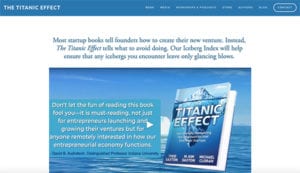
The Titanic Effect
Let’s hear those story of the origin of how you too wonderful people connected. You can make it as romantic as you want or as academic as you want. The choice is yours.
I’ll share the non-romantic part. Our first jobs out of school were at the same consulting firm in the DC area. Kim was the sixth and I was the seventh person hired. This was a relatively small entrepreneurial consulting firm. For the first few months, we struggled to work together. We did not get along. Kim may ask me to cut this out, for now, just between us, when we started dating and it got serious enough. We were like, “One of us probably has to leave.” Kim went to talk to the founder to say, “I’m moving onto something else. Part of the reason is I’m dating someone here.” He went through every member of the company, including some that were married, the other women, the janitor, the company dog and the only entity left was me. It was like, “It can’t be Todd.”
We got to keep that in. That’s at least likely to be dating. Kim, what’s your version of that story?
It’s pretty much like that. In fact, at that time, I was conservative and he was clearly liberal. There were so many different ways that we should not get along at all. As we tried to work together, that same founder one time said to me, “Would you stop yanking his chain already?” I didn’t realize I was. What ended up happening is that over a weekend thing, we realized that there was some attraction. We thought, “You can’t ignore chemistry so what we ought to do is probably date and get this over with so we can move on to the real love of our lives.”
It’s fascinating because I talk about going from invisible to irresistible in a business sense but also in a dating sense. If you have so much pressure that this has to be the investor that funds my startup or this has to be the customer that hires me or this has to be the love of my life. It’s too much pressure. If you think instead of, “Let’s get through this and we know we’re not going to be a fit, there’s no pressure.” The irony of that, if people could take that away from this show, I’d be thrilled that if you start to hold things a little lighter in your hands, how much that shifts things.
That’s interesting as a way to think about it. I never connected these two before. I counsel entrepreneurs when they go to their first pitch, whether it’s for money or a customer, go to the one you think is going to be most challenging and least likely first because you’re going to screw something up. You’re going to mess up the value proposition or the connection or frame of reference, whatever that might be. You’re going to hit icebergs. Get an iceberg that isn’t your biggest opportunity, whether it came from funding or a customer perspective because you’re going to get beaten up. You’re going to learn something from that and get better. As you get better, you got closer to home and the bigger and better opportunities because you fit some of those icebergs but survived.
He gave me that advice. He’s had to do some cold calling and I said, “Here are my best prospects.” He said, “Don’t call them. You’re not great prospects. Get them out, burn through five or ten of them. By then you’ll be ready for the good ones.”
Practice your pitch on your least likely prospects first, that’s unique advice because you’re not attached to the outcome.
[bctt tweet=”Be accountable as you scale.” username=”John_Livesay”]
Maybe it’s a phone instead of practice. There is a chance to compare it. We’re still married for many years.
Honing and practicing for me. We are rewriting everything already. I know in your book The Titanic Effect, originally, this metaphor was a sideline. It became something that anchored the whole concept. Let’s hear the story of origin for how did you come up with the idea for the book?
It started with the term technical debt, which you’re familiar with and some of your audience, for those that are not when particularly software. Any physical product that you’re trying to build it, you can’t invest enough time, resources, energy to build it all the way into the robust version that you might envision eventually. You have to cut some corners. You’ve got to build your software on some code that might be a little bit flimsy to go out there and get that minimally viable product or that early testable model to get feedback. The challenges, as you start to scale, as you move from that one pilot customer to five customers to hopefully ten, twenty plus, if you’re building on this weak foundation, it’s going to collapse upon itself. That’s from a technical standpoint, from a product standpoint, and that’s the term of technical debt. There are equivalents in our metaphor, these other oceans.
You have the people that you work with, who you surround yourself with, how you allocate equity. You get advice from who helps guide you, who you hire as your early employees. In the human ocean, all of those are important decisions, but also have associated debt with them. As we thought about it was all of these decisions look obvious and easy when you are resource-strapped, and that’s the part above the water. There’s all of this mass below the water that you can’t see or anticipate because you’re making decisions under conditions of uncertainty. That connoted the image of the iceberg, and at least many of us, when we think about iceberg and failure, we associate that with the Titanic. I’m like the superficial naming guy was like, “We’ll call our presentation The Titanic Effect, then something after to make it a little more specific.” They were like, my co-authors, Michael and Kim, “It’s a good idea. It’s catchy. We should probably make sure there is some substance.” I was like, “Substance, that’s your bailiwick. I’m out of here.”
You have images of all the different icebergs and things. I’m a big Titanic fanatic. I’ve been to the museum, the menus, touched the cold ice and watched all the documentaries. You’ve got me in a minute. The research that you showed people that it’s not what icebergs are not all the same, Kim?
We started with that idea originally of marketing debt and human debt. We started thinking, “Let’s name the debts and all that.” We got onto the iceberg. We started doing iceberg research. It turns out that icebergs are super cool. They have such a variety of size from little bergy bits. Imagine a berg all broken up to iceberg islands. It’s huge masses. They have different shapes. Some are downed, tabular and all this stuff. We started getting into it. It was easy to envision these debts as different icebergs. Even since I focus in the marketing area, I have a visual image of each one of the ones as something a little different. In the book, they all look the same. There was too much granularity to try and talk about size, shape and all that. It was pretty exciting. I’m the researchy person to do that background work. I said, “If my very creative co-author and partner here is going to come up with a fancy title, I need to figure out if it has any legs. I started researching it and it turns out that there’s a lot that’s been written about the Titanic.
There are many resources too. We’ve read books, documentaries, online research. The museum has a lot of information too. We started finding thing after thing that matched up. Todd usually tells the story of a change of investors bringing on a new investor caused them to change the shipyard that they use. You can imagine what the ramifications of that are going to be. They have three different segments, this luxurious class and the steerage as we know about. The groups of people are trying to do different things. What was cool is that the first-class luxury passengers were Americans and the third-class steerage was from Eastern Europe. Can you imagine trying to have a successful marketing program that bought those two different groups of people into the same boat?

The Titanic Effect: If you don’t have alternative opinions, you’re not going to be able to aim your product into the market and understand the variety of needs that are out there.
Never were they supposed to interact. The romance went out as it did with your relationship. Did you dance to Celine Dion’s song at your wedding?
Can you imagine doing that in 1912 like share difficulty of that is mind-boggling?
I hadn’t thought about it like that. The buzz of getting the wealthy people, you’re like, “I’m sure everybody wanted the glamor of all that.” The masses, what would make them want to get on that versus all the other ways to get across? One of the things I want to talk about what you have in The Titanic Effect is the four oceans, the human ocean, the marketing ocean, the technical ocean and the strategy ocean. I know you have a whole chapter devoted to each one of those things. It’s such a great incentive for people to start thinking of this metaphor in a way that, “I want to buy this book now because we started dabbling in the marketing ocean there a little bit.” You can each talk about each one or you can split it up however you want to do it. Let’s dive in on what’s the human ocean? What’s the biggest mistake people make when they’re putting their team together?
The human ocean has these different seas within it. I know geographically that doesn’t quite work, but in the metaphor, please forgive us and allow us there that you have your co-founders. The biggest mistake that I see early-stage and first-time entrepreneurs make, and frankly even seasoned entrepreneurs, are allocating all the equity early and equally across co-founders. Your three people go out for coffee or a beer and they sketch out this idea on the napkin. They get all excited. They’re going to start this company. We’ll split everything three ways equally. A few months later, how many times that everyone is completely pulling their waiter or even able to fully contribute? The co-founders, how you allocate equity, whether you have the appropriate mix of people. Those are some of the debt bergs on the human side within co-founders.
The next sea that we talk about are the investors and advisors. Those are the people that you enlist their help, ideally some money as well. You need that feedback, encouragement, support, connections and how you go about doing that. Who you choose, how many you choose and how you interact with them are some also important sources of either resource or in some cases step bergs as well that can limit your success moving forward. Finally, within the human ocean are the employees and who are those early employees that you hire? Do you go after the cheap but enthusiastic interns who may be graduated or aren’t even through college and bright, but don’t know a lot and maybe can’t help the venture as much and spend a lot of time training, etc.? The other end of the spectrum, the giant whale hunter who has had the huge success and demands $250,000 salary and a lot of equity. It turns out they’re a one-hit-wonder and don’t know what they’re talking about. That can also be a huge source of a debt berg. Who those early employees are, how you leverage outside resources, that’s one of the other major elements we talk about in the human ocean.
In the employee sea, Todd, I wanted to add, the iceberg that’s named our debt berg has named the dearth of diversity is one that deserves more attention. We have been working with some incubators and looking at some of their companies. I was struck that out of all of the companies and all of the founding teams, there were four people who did not look like everybody else. Academic research is interesting when you have people who are much like you, more homogeneous, you get along better. Startups are a hard path to go. Getting along better is probably good. On the other hand, if you don’t have those alternative opinions, you’re not as well going to be able to aim your product into the market and understand the variety of needs that are out there.
Let me ask you about advisors within the human ocean. How important are they, is the first question, which they’re very important. What’re the criteria of what makes a good advisor? How often should you expect them to talk with you? What equity do you have to give them over time? I have so many questions about advisors alone. It’s one little grand of sand in the ocean there of human odds. It’s something that you are expertly qualified to answer. I haven’t heard many people talking about that granular level if you don’t mind.
[bctt tweet=”Get an iceberg that isn’t your biggest opportunity because you’re going to get beaten up. ” username=”John_Livesay”]
I can’t pretend to have all the answers on that as you suggest. It’s a complex and nuanced question. At some point, it boils down to rapport. The fact that you like working together. It’s going to be a slog when you’re involved in any new activity, innovative activity, new project, and especially a new venture. It’s a long journey and they’re going to be hard moments. You want to be with people that you genuinely like, respect, appreciate and have fun with. That’s an important underlying element. The more objective criteria, I wouldn’t dare call it a rule. I’ll have somebody who documents and shows me, it only took X, but it’s a 50 and five rule that it will probably take you meeting with 50 people having a cup of coffee, a beer, whatever, lunch to share your idea. To get five that you feel are truly in that inner circle that is our trusted advisors that you have a good rapport with that get back to you.
One of the mistakes I see some entrepreneurs make is they try and maintain connections with 50 people and you simply can’t do that. The goal isn’t to make your network as big as possible. You want to be more engaged and activated, but also it takes a lot of networking and searches to find those five, settle with the first five you get. Within those five, you want some people who are not exactly always devil’s advocates in your face, but at least aren’t yes people that do challenge you. That you’re willing to have that and that gets back to that alternative perspective that Kim talked about and having a diversity of perspective is important.
Following that, it is having some diversity in terms of their backgrounds that you have one or two advisors that are more industry experts. You have one or two that perhaps have started a company, have grown one or two that are more on the investor perspective, that’s financial savvy and hopefully, connections that when it comes time to raise money. I think of it as this critical mix of elements that are all part of the stew that or ocean that helped you be a successful startup, but also help you identify different types of debt bergs in different oceans. You want advocates and advisers who can help you navigate that journey.
I wanted to have Kim speak to this one particular thing you said, which is that you’re not hiring a bunch of advisors who agree with everything you say and being comfortable enough to be coachable, to hear other people’s perspectives or maybe even criticism like you’re going down the wrong path or whatever it might be?
Nobody likes to have Negative Nancy around all the time. You have to be tough with yourself and say, “Who is going to be the person who’s going to see all the bumps in the road?” Who’s going to be able to point out those hazards to me and it’s going to tell me 1,000 ways that this isn’t going to work. For some of us and me, if you tell me all the challenges that I’m going to try to cross them, surround them. It’s good from that perspective, but also you want somebody who maybe can see things that you can’t see. There’s this hard thing about being the founder of a startup or the founding team is that you have to be enthusiastic. You have to be persistent. Sometimes you need to go a different path and to be doggedly persistent and not to be able to hear or listen is tough.
The ultimate pivot that everyone ultimately ends up doing. That’s why people invest in the team more than the idea and that awareness is something that a lot of people don’t register with or they feel embarrassed sometimes that they have to. I’ve seen it time and again where you have to be willing to let that go a little bit. We obviously don’t have time to go into all the oceans. I did want to have maybe you talk one little bit about the strategy ocean because some people think, “Why does strategy have its own ocean or its own chapter?”
But before we go on, I’d like to close on one more thought on that advisor side because we frequently get asked to be advisors. In fact, some years we’ve done hundreds of lunches and coffees and things like that. As advisors, we have a talk and a coachability metric that we use. We’ll take the first coffee with anyone and we’ll have lunch sometimes. You go away and if you ask a second time, we’re very likely to take the second one as well if we’ve already given the first one. If you come back in the second one and you have tested nothing that we said in the first one and/or you are doggedly holding to ideas that we suggested negative things about the first time, we recognize you as not being coachable.

The Titanic Effect: One of the mistakes entrepreneurs make is they try and maintain connections with 50 people.
That’s great criteria or excuses of why you haven’t done something yet.
Moving into the strategy ocean, we recognize that we don’t have all the oceans in the book. We pick solutions that were in our sweet spot, our comfort zones. There are regulatory issues and legal issues and all that. The challenge that we see with some startups and probably most startups at different points in time are that because you have these different arenas that you’re moving forward. You’re moving forward the human stuff. You’re moving forward the funding. You’re moving forward what your customer relationship is going to look like. You’re moving forward the product. The whole thing gets unwieldy.
You get something that’s very in-depth on the product side. There’s no understanding or recognition of how this could be marketed or what’s valuable to customers or you get something at the sales and marketing side starts promising something that employees can’t do. That’s why we call it out the strategy ocean because that’s the place to bring the other three oceans together. To remind people that you have to be coordinated, you have to move one piece forward a little bit. The next piece forward a little bit.
That lack of coordination, one department sales promising something that engineering can’t deliver or is a nightmare even at a small scale.
Measurement, what happens, we’ve seen a lot of startups is they get so busy doing and they’re shorthanded, that they don’t even have metrics in place. They know the metrics that they’re going to need to see if they’re going to go do an angel pitch or a VC pitch. They’re not effectively running the business with metrics. We advocate different metrics at different points in time, but identifying what those metrics are and having somebody look at them. The third sea in the strategy ocean is about accountability, which is, we all think we’re heading in a certain direction, but until you put a name to it, it doesn’t happen.
Always be the founder or even the founding team as you grow up a little bit, as you start to scale, that accountability has to start to transfer to others within the organization.
What you’re saying is sometimes accountability is delegating stuff too. It’s not doing it all yourself. It’s been a fascinating look at the Titanic as a metaphor and the oceans that we all swim in, whether we’re starting a business or working in a business and all the challenges that we face. The book is called The Titanic Effect. Is there any last thought or piece of advice you each want to leave us with?
I’ll cut in on one and it comes back to very much the theme of a lot of what you talk about and making sure in your picture, in your story, you know what you’re trying to get out of it and that it is both stage-appropriate and context-appropriate in a very personal sense. We’ve talked about our own interactions with each other. When we’re looking for feedback, I’m going to characterize two different types and try and make this brief. We do a lot of writing. If I have a deadline that I’ve got to get it out by midnight and into a journal for review or whatever, I have to signal to Kim, “I’ve got a tight deadline. I need these superficial and it’s okay if you say, “That’s great, Hon.”
[bctt tweet=”If you’re good, you make your money in tips. ” username=”John_Livesay”]
At the early stages of this project, however, when we were trying to flesh out this metaphor and extend it, we needed to be ruthless with between all three of us. What may have created some challenging discussions, but that early stage, that’s the time to be open to much more discursive conversations about what’s going to work, what isn’t, what is clear and what is not? Understanding where you are in the journey and what you were looking for in your pitch, whatever that might look like is an important part of the process. As you very well know when articulate in many ways, a pitch is not this model with the constructed. A pitch varies a lot by what you’re trying to accomplish, who your audience is, etc. That’s certainly very true as you’re navigating from an early stage of launch and ideation through the later stages of growing a venture.
Keep on sailing, that’s the goal.
If people want to follow you on social media and track the book, what’s the best way for them to do that?
They can check out the website at www.TitanicEffect.com. We have a weekly blog and we email out little tips once a week so we don’t clog your inbox, but it’s fun when people email or text us and say, “I love that.”
Thank you both for sharing your expertise, navigating the waters that we all face.
Thank you so much. It’s been a lot of fun and good luck with your endeavors. To the audience, good luck with your pitch, whatever that might look like.
Thank you.
Important Links
- The Titanic Effect
- https://www.TitanicEffect.com/successfulpitch
- Better Selling Through Storytelling Method Online Course
Wanna Host Your Own Podcast?
Click here to see how my friends at Podetize can help
Purchase John’s new book
John Livesay, The Pitch Whisperer
Share The Show
Did you enjoy the show? I’d love it if you subscribed today and left us a 5-star review!
- Click this link
- Click on the ‘Subscribe’ button below the artwork
- Go to the ‘Ratings and Reviews’ section
- Click on ‘Write a Review’
Love the show? Subscribe, rate, review, and share!
Join The Successful Pitch community today:
- JohnLivesay.com
- John Livesay Facebook
- John Livesay Twitter
- John Livesay LinkedIn
- John Livesay YouTube