

Big Questions with Cal Fussman
Posted by John Livesay in podcast | 0 comments

Episode Summary:
Podcaster, in-demand speaker, writer, and expert at asking the best questions, Cal Fussman believes that a good question could get you to the most powerful person on earth. Sharing a story that is not short of that, he takes us into the time where he landed an interview with Mikhail Gorbachev and how he managed to extend their conversation beyond what was allotted for. He then transitions to the power of asking the right questions, one that strikes at the heart. Equally important as well is the ability to listen, and Cal shares how it can ultimately improve your relationships with people. He shares the three things that a question is part of what allows for a successful pitch to happen while also giving us a look into his experience of being the sommelier at Windows on the World at the top of the World Trade Center.
—
Listen To The Episode Here
Big Questions with Cal Fussman
Our guest is Cal Fussman who is an expert on asking questions. Cal says the questions have guided his life ever since he was seven years old and he sent one to the president of the US and he got a reply. The key is how do you ask a question that gets you an answer that’s useful and unique? Cal is somebody who has a podcast himself called Big Questions. He’s an in-demand speaker for huge companies around the world talking about the power of questions. Magazine lovers may recognize Cal as the writer who spent a week with Muhammad Ali for Esquire magazine’s cover story. He’s interviewed everyone from Mikhail Gorbachev to Jeff Bezos, Richard Branson, De Niro and hundreds of others who have shaped the last 50 years. Wine lovers know him as the sommelier at Windows on the World at the top of the World Center before it was taken down on 9/11. Before that, he’s won a James Beard medal. Cal, welcome to the show.
Thank you. That was quite a pitch.
It’s easy to do with someone like you who has such a rich background in journalism and you have breakfast with Larry King every day. You’ve got a family life going on. You’re consulting for companies on how to improve their sales through listening and storytelling and the power of questions. The first question I want to ask you is about your own story of the origin. You can go back as far as you want because people are always interested. Cal was not always a journalist. Questions have been a big part of your life since you were seven. Let’s start with that story as kicking off place.
[bctt tweet=”A good question can get you to the most powerful people. ” username=”John_Livesay”]
It goes back to a very specific day at the end of November 1963. I’m in second grade. Right in the middle of the class, I’m the shortest guy in the room and Miss Jaffe leaves the classroom for a moment. She returns completely different wearing the same clothes but everything about her was different. She was pale and she started to speak in a voice that was so overly calm, it was scary. She tells us that President Kennedy has just been shot. It’s a Friday afternoon. Everybody is let out of school. We all run home to turn on the television and see Walter Cronkite the CBS broadcaster who everybody looked upon as the person who could give them the truth. Very different days than we have where everything is segmented and people turn in to hear the one voice that they’re looking for. Back then, it was this guy telling us the truth. He tells us that President Kennedy has been assassinated in Dallas. That set the whole nation into a busy state.
My dad when he got home talked to my mom and they realized it was the first time in my life that I was confronting death. I was seven years old the week before. They called me over to the kitchen table and they explained, “Cal, you’ve been watching the news and you know what’s happening. We’re here to tell you that this has happened in our country’s history before. The country has a plan in place to deal with it.” That’s as you now know Lyndon B. Johnson, the Vice President, has stepped up and assumed the presidency. “We want you to know when you go to bed tonight, everything’s going to be fine. When you wake up tomorrow, you’re going to have breakfast just like you did. You’ll go out and play just like you did so you can get a good night’s sleep.” I’m sitting at the table and I’m thinking, “This guy Lyndon B. Johnson the new President, I’ll bet you he wanted to be the president and now he is. Is he happy to be the president? Is he sad to be the president because he’s only the president because John F. Kennedy was assassinated? Then I think maybe he’s scared to be the president because they may try and kill him too.”
I’ve got these thoughts rolling around my head and I can’t figure out what Lyndon B. Johnson is feeling. Is he happy? Is he sad? Is he scared? Are there other emotions? I picked up a pencil and a piece of paper and I started writing, “Dear, President Johnson. How does it feel?” I asked him if he was happy, sad or scared or all the emotions and I wished him well. I had just been taught how to officially write a letter, so I was able to drop it in an envelope put my address in the top left-hand corner, lick a stamp, put it in the top right-hand corner and I’d put President Lyndon B. Johnson, the White House. I didn’t tell anybody about this. It’s not like there was any ambition in this letter. I wasn’t thinking of being Secretary of States. I just wanted to know what this guy was thinking so I didn’t tell anybody. The next day I took it outside with me to play dropped it in a mailbox and my parents were halfway right. The things did not return to normal. The next day the suspect in that shooting, Lee Harvey Oswald, was shot in the police station by a nightclub owner named Jack Ruby and then there was the President’s funeral.

Big Questions: A great storyteller pulls us into the situation where we feel like we’re there.
I still have vivid memories of John-John, the three-year-old son of the president saluting as the coffin passed him. It was John-John’s birthday. Life didn’t return to normal so quickly but after a time it did. I forgot about the letter until about six months later, my mom comes racing up the steps of the apartment holding this envelope in her right hand. The letter was addressed to me from the White House. It was the president through his personal secretary, Juanita D. Roberts, answering my questions. What was very cool about it was the way it was written because it was not written down to a second grader. It was written with great respect and I knew that when I reached the second sentence started, “In answer to your query.” I had no idea what a query was. The thing about it was the apartment filled up with people. Everybody wanted to hold the letter from the president and the principal at the school wanted to see the letter. When I went back to school, suddenly the shortest guy in his class was a very big man. The lesson that I took out of that was that a good question could get you to the most powerful person on Earth. It would guide me for the rest of my life and get me to many of the most powerful people, from Nelson Mandela to presidents like Jimmy Carter. I interviewed Donald Trump. You mentioned some of the actors like De Niro and Pacino that I’ve spoken with. It all started on that one day.
The thing that resonates if you are looking for tips on not just how to ask a great question but storytelling in general as part of a good pitch is you paint a picture so vividly. The year, the name of your teacher. She looks different even though she didn’t change clothes. You pull us into the situation where we feel like we’re there and that’s what a great storyteller like you does. The thing that resonates with me is you asked the president how he feels not just what he thinks or plans to do. That is what caused him to give you a response because you had empathy and could put yourself in his shoes. I’m happy and sad at the same time because of the way I got this job from a very young age. It’s quite insightful. Let’s double-click on the story you have of interviewing Gorbachev, which got cut down from what you originally thought it was going to be in terms of the amount of time you’d have of somebody. Can you paint that picture for us?
Let me take you back to February 2008. Mikhail Gorbachev is coming into town to give a speech about abolishing nuclear weapons. This is years after he was the leader of the Soviet Union. I’m sitting in a hotel lobby waiting to meet him. I’ve got an hour and a half to ask him any questions I want in order to fill up Esquire’s What I’ve Learned column. I’ve done all the research well-prepared and ready to go. The phone rings and it’s a publicist. She says, “Sorry to tell you this but your interview with Mikhail Gorbachev is going to be cut short.” I’m nervous and I have good reason to be nervous because this column that I write is not written in my own words. It’s written in the subject words and those words just can’t be any words. They’ve got to be wise words.
[bctt tweet=”Aim your first question for the heart. ” username=”John_Livesay”]
This situation happens time and time again to people in the business. You’re told you have an hour to present and it comes down to 30 minutes. You’re told you have 30 minutes and I only have ten minutes so tell me what you’ve got or you’re meeting somebody in the elevator and literally have an elevator ride. What you’re about to share of what you do in a situation should have everyone on the edge of their seats because it applies to business.
When I talk to salespeople I could see on their faces when they hear this how attached they are to that situation because it must be happening to them every day. Here I am, I got the phone in my hand and I know that there’s no way for me to fluff this column up or fill it out. I need Gorbachev’s words and I need at least an hour in order to reach into his soul and extract the wisdom to fill up that column. I leaned into the telephone and I asked the publicist’s, “How much time have I got?” She says, “Ten minutes.” I go crazy, “This is impossible. I can’t do this in ten minutes.” She was like, “Cal, a lot of very important people have been added to the list to see Mr. Gorbachev. There’s nothing I can do about it. Do you want that time or not?” Of course, I take the time but as I hang up the phone, I’m feeling worse about this. I know I’m going to walk in that room and we’re going to shake hands. We’re going to exchange pleasantries, we’re going to be seated and there are two minutes right there. Plus, my questions are going to have to be translated into Russian and his answers back into English. It’s another two minutes right there. This interview is down to six minutes before it even starts but you can only do your best.
The point of time arrives. The publicist escorts me into the conference room and I look in there and a smile comes over my face because there he is. I walk up to him and I know I’ve got to do something to get the time back. I know that doing things in a normal conventional way is not going to work. I’m looking at him and I get this feeling that he’s expecting my first question to be about nuclear arms or Ronald Reagan or world events. I quickly jump in and say, “What’s the best lesson your father ever taught you?” He was surprised in a pleasant way. He looks up and doesn’t say anything. He’s looking at the ceiling as if he’s seeing a movie of his childhood on it then he starts to tell me a story. It’s a story that goes back to when he was a boy and his dad got called up to fight in World War II. The Gorbachev’s lived on a farm. He was describing the trip that the family took from the farm to the town in order to see the dad off. He was doing it in nice details and I’m sitting there wondering, “This is amazing. I didn’t see this in research.” Another part of my brain is screaming, “Wrong question. This interview is going to be over before Gorbachev’s even get to town.” They don’t get to town. When they get to town, Mr. Gorbachev takes everybody in the family into a little shop and he buys them all ice cream.

Big Questions: It’s not going to help you even if you have the best question if you’re not listening to an answer.
Gorbachev is remembering this ice cream. He’s remembering the aluminum cup that it was served in. He’s talking about this aluminum cup of ice cream as if it’s sitting in the palm of its hands. The more he talks about this ice cream, the more we both have this realization. This cup of ice cream is the reason he was able to make peace with Ronald Reagan and end the Cold War. This cup of ice cream contains the moment that he could just imagine might be the last moment that he’d ever see his dad. It was a dread of not knowing what was going to happen from this point on. He’s looking at the ice cream, I’m looking at the ice cream, we both look up at each other and we’re thinking, “This is deep.” Just then there’s a knock on the door and it’s the publicist, “Mr. Gorbachev time for the interview to conclude.” Gorbachev looks, the publicist looks at the translator, looks over at me and he says, “No. I want to talk to this guy.” The publicist is surprised but she backs out the room. The conversation continues and goes deeper. About ten minutes later another knock on the door. This time the publicist comes in a little more sheepishly, “Mr. Gorbachev, Cal.” Mr. Gorbachev’s says, “No. I want to talk to him.” The publicist backs out the room.
Ten minutes later, the conversations got deeper and deeper and another knock on the door. This time the publicist is in an all-out panic, “Mr. Gorbachev, Cal, please. I get a long line of people outside the door to see Mr. Gorbachev. I don’t know what we’re going to do. The day is way off balance already. We’re never going to have time to do everything that we’ve set out to do. Please.” Gorbachev looks at her translator and looks back at me and then he gives me this shrug that says, “What can I do?” The interview ends but at that point, I had enough to write the What I’ve Learned column and it turned into a huge success. When I thought back on why, I realized that if I hadn’t aimed my first question for his heart, never would I have gotten that insight. If I got him with a canned question, I would have got a canned answer. The interview would have been over in six minutes and I’ll never know what was possible. That’s what I always recommend to people that when they’re in that situation, they always aim their first question at the heart.
The reason I love that is it automatically paints a picture again of drawing an arrow and aiming it. It’s vivid. Before the show started, we were talking about you have three things that a question is part of that allows for a successful pitch to happen. Would you take us on that journey and describe a little bit? If you’ve got a good question then what comes after that and then what does that lead to?
[bctt tweet=”I never learned anything while I was talking.” username=”John_Livesay”]
You start with the question but it’s not going to help you even if you have the best question if you’re not listening to an answer. Here’s your next tweet, John. It comes straight from Larry King the broadcaster and a legend. Larry likes to say, “I never learned anything while I was talking.” It’s so crucial to be an active listener. Once your sincere question is out there to be taking in the information because people will know how much you care by the way you’re listening. They can often look at your face and understand whether you’re standing there thinking of what you’re going to say next or listening to them. That leads to the story because now you’ve asked the question and you’ve got some information. Once you can frame that information in terms of a story, you can then make a pitch or try to compel somebody with something that may have happened in your past or that you know about. It is within you at the start but you need the question and you need the listening in order to know exactly the story to put forth in order to craft it in the right way and with the right timing.
I would be remiss as a host if I didn’t ask you to tell us a little bit about the story you wrote when you won the James Beard medal for your experience of being the sommelier at Windows on the World at the top of the World Trade Center.
That goes back to a moment where a new editor was taking control of Esquire magazine. This went back to late 1997. David Granger came in one day with a group of his writers passed magazine experience and he needed stories. You just suddenly have to fill magazines for a few months all of a sudden. I came up with this idea called The Perfect Man. The only reason I could have that idea was that I had so many flaws to correct. The idea was to look at my flaws and then go to experts to find out how to correct them and to be better than I was before. I did this across a variety of subjects. I learned to eat with etiquette and to manage my time. I learned to do things as simple as walking with the right posture, even how to shave in the best way. I was following all of these areas of my life that I wanted to be better at. One of the things about wine is if you don’t know anything about it, you can be humbled. When you are the host at a dinner table and the wine list comes around people will look at you to select the wine and you don’t know how to match it with people’s foods. You don’t know what’s good and you don’t know whether wines are worth the money. You never know if the waiter or the sommelier is trying to jump you.
Big Questions: The best questions are questions that make the person just as curious about the answer as you are.
What happened is we arranged for the folks at Windows on the World at the top of the World Trade Center to take me in. At one point, Windows sold more wine than any other restaurant on the planet. It was a huge restaurant. It was so beautiful because you’d have the windows that allow you to see the panorama of New York. It became the ideal spot for a man to take the woman of his dreams to dinner and then get down on a knee and propose and everyone in the dining room would start applauding. It gets more romantic than that in a lot of eyes.
Something you just said that I hadn’t thought about before was clearly that restaurant was all windows from floor to ceiling. When you’re sampling wine, you’re looking at the windows that the wine creates in the wine glass. I love that double meaning there.
I don’t know anything, John. They took me in on a two to three-year adventure. I wasn’t working at the restaurant every day but when I could, I would stop in and they taught me all about wine service. I had to go out and learn all about wines and the differences between all of the different types of grapes and where they came from. You had to be able to describe the sense and the taste. It is a long process. I don’t know if you’ve ever seen the documentary, SOMM. I recommend this to everybody. It doesn’t matter if you like wine or not. It’s a documentary about excellence and it shows a few guys going through a test to be a master sommelier and what they have to do in order to achieve that grand status. Hardly anybody passes this test because you have to be able to pick up a glass without knowing anything but what you’ve just tasted you’ll say, “This is the country that is from. This is the region in the country where it’s from. These are the grapes that were used and this is the year that the wine was made.”
[bctt tweet=”If you give people a canned question, then you would have a canned answer.” username=”John_Livesay”]
The amount of information that you have to accumulate is stunning. I didn’t do anything near that but for me to understand where all the wines on the Windows wine list came from and what they tasted like and to know enough about the grapes to talk about them. It took more than two years. Whenever I was traveling around the world, I would stop in the wine regions. It was beautiful the way the wine world opened up to me. Everybody embraced me and poured their wines for me and allowed me to taste. One night in 2001 shortly before the planes came in and took the World Trade Center down, I was the sommelier there. It was a glorious night. The beauty of it was there were many people who had no idea I was just doing this to write an Esquire magazine story. They thought I was the sommelier.
Very few people have the time and the luxury of being funded for two years to learn the job so well that you can write a story about it.
That was the great thing about my experience with David Granger and Esquire. If you had a great idea, he’ll go with it.
It’s almost like being undercover for the police and your identity starts to blur a little bit because you’ve become such an expert in that that you think, “This is my new career. Who needs journalism?” When the planes crashed into the towers and Windows on the World no longer existed, did you feel as if you lost part of your identity?
I had many feelings going through me. I felt odd because I didn’t know any of the people who were on those floors at the top of the World Trade Center because I was working at night. There was a whole different group of people working in the morning but there were certain people like General Manager Glen Vogt and the Head Chef Michael Lomonaco that I knew they were there all the time. Miraculously, Michael was coming into work at that time and he stopped to pick up a pair of glasses. Because he did, he was not at the top of the World Trade Center when the plane hit and is alive and Glen survived as well. I felt so close to this place. I remember having dreams of all the bottles and the wine cellar just tumbling into the abyss. You feel so connected to all the beautiful moments that that place had provided and all the beautiful moments that it had given me. The reaction I had was it was hard for me to drink wine for a while after that. I don’t think I’ve ever returned to the place I was at when I was a sommelier and the wine was that integral in my life. It was something that I was thinking about for hours in a day. It’s hard to answer the question because so many emotions ran through me.
They had a fundraiser to help out all of the wait staff and restaurant folks who lost their jobs. It was a beautiful dinner. Wines from around the world donated some of their best wines to be auctioned off so that the money could go to help support the restaurant staff and waiters. We’re in the middle of this beautiful evening and they start announcing the different people who would help put this fundraiser together and they were announcing the sommeliers of various restaurants. They announced like, “Sommelier from Windows on the World.” They mentioned my name and the place wraps with a roar and applause. I felt odd like, “I’m not the sommelier. I’m an impostor. I’m a writer who’s just doing a story and here is everybody jumping to their feet in support.” There were so many feelings that came out of this that moved me and almost crippled me because it was my job at that point to write a story about the experience and I couldn’t write it. I’ve heard of people having writer’s block. I never had that experience but it was too close. It took me ten years to get the distance to be able to look back and understand what I’ve been through. I did write the story at that time and it won a James Beard Award. That’s the best thing I’ve ever written.
[bctt tweet=”People will know how much you care by the way you’re listening.” username=”John_Livesay”]
You’re not only a great writer and interviewer but you’re also a great keynote speaker. I want to touch on some of the places you’ve spoken up and your fundamental idea that changing your questions can change your life. That allowed you to speak to Facebook, Twitter, Apple Music and UCLA. In fact, Facebook Marketing said that your technique has become a staple in the department. They have people using the term Cal question, “What Cal question are we going to use to get the understanding we need?” You changed their culture. Cal, can you leave us with what is a Cal question?
On my podcast, I ran a contest with a Cal question. The question is, “Why is your best friend your best friend?” The reason that I like that question is it does many things. One, it’s not threatening at all. It allows somebody to speak intimately about themselves without feeling that you’re prying into a dangerous place. Two, it brings the person who has the question coming at them their best friend. It makes them warm and it makes them happy to think about their best friend. Three, it’s not a typical question. It forces them to think about something that they know in a deeper way. The best questions are questions that make the person asked just as curious about the answer as you are or maybe they’re even more curious than you are to get to an answer. Here they are with their friend in mind and now they want to look into themselves in a deeper way to find out, “Why is my best friend my best friend?” When they do come to that answer, they’re going to be happy that they’ve got that question and they’re going to look forward to the next question.
Cal, I can’t thank you enough for sharing with us your journey and your insights about what it takes to get a good question that strikes at the heart and how we can learn to listen better and become storytellers so that every pitch we are on is framed in a whole new way. If people want to find you, they can go to your website, CalFussman.com. They can listen to your podcast, Big Questions. Do you have any last thoughts you want to leave us with?
I must say I’ve known you for a very short time, John, but I feel very close to you. We are almost mirror images of each other in terms of where our careers were. You were on the advertising side and I was on the editorial side but we’re seeing that it’s all much bigger than this fragmented way of looking at things. What I’m discovering through the time I’m spending with you is that it’s the questions, the listening and the storytelling that work across the board.
Thanks. It’s been a pleasure having you on. There are so many more things people could ask you. I just added my own questions because I feel you on the other side of the things. I could talk to you for hours. I appreciate you sharing your wisdom with us and I’m looking forward to watching what your next question is going to be.
The best is yet to come, John. I look forward to seeing you down the tracks.
Thanks.
Links Mentioned:
Wanna Host Your Own Podcast?
Click here to see how my friends at Brandcasting You can help
Get your FREE Sneak Peek of John’s new book Better Selling Through Storytelling
John Livesay, The Pitch Whisperer
Share The Show
Did you enjoy the show? I’d love it if you subscribed today and left us a 5-star review!
-
- Click this link
- Click on the ‘Subscribe’ button below the artwork
- Go to the ‘Ratings and Reviews’ section
- Click on ‘Write a Review’
How to Create “Gotta Have It!” with Dr. Mark Goulston
Posted by John Livesay in podcast | 0 comments

Episode Summary
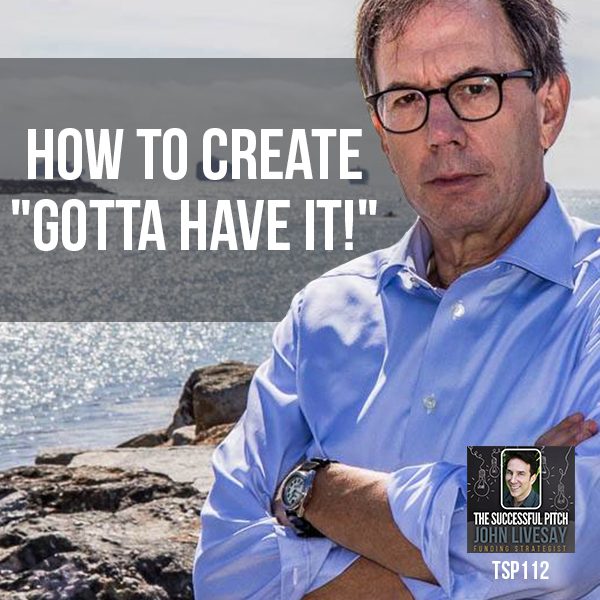
 Today’s guest on The Successful Pitch is Dr. Mark Goulston who’s written over seven books with great titles such as “Just Listen” and “Talking To Crazy.” He said his whole intent is to heal the world one conversation at a time. I really love that. He said “When you talk with people, talk with them, not at them and not over them if you really want to have a successful pitch.” One of the questions that we talk about is people are feeling when they hear your pitch is do I trust you not to hurt me? It’s that whole fight or flight response that I talk about all the time. He’s got a four-step process he’s going to share on how to get people to say “I gotta have what you’re pitching” and he really gives great insights on exactly what it takes to get people to connect with you when they not only feel like you’ve listened to them but as he describes you listen into them. Find out what that’s all about. Enjoy the episode.
Listen To The Episode Here
How to Create “Gotta Have It!” with Dr. Mark Goulston
Hello and welcome to The Successful Pitch. Today I’m honored to have Dr. Mark Goulston who is the author of seven books. One of them is “Just Listen,” which is a top seller and he’s traveled around to India and Europe promoting it. Another book is called “Talking To Crazy” and that book was a finalist in the Audible Book Oscars and has been featured on Oprah.com and as if that’s not enough, he’s a former FBI hostage negotiator and most recently he has started doing a one man show where he channels Steve Jobs coming back from the grave to talk about what he did and ask questions that the audience might have. He’s there to answer them. So, Mark, or should I say Steve, welcome to the show.
I’m so glad to be on, John. I was really looking forward to this and actually, right out of the gate, something, an insight that I would give people. The success of Steve Jobs, one of the main things he was able to do is he was what I’d call a first class noticer. And noticing is different than looking, watching and seeing. When you notice something, you’re actually tuned into it.
So, I’m bringing that up because one of the things that I notice about you, John, and why you’re effective and I think people who know you will say “That guy had you right.” You talk with people. Too often people talk at us, over us or they talk to us in a way that’s kind of intellectual but there’s an inviting way in your tone and you talk with people and it’s laced with a desire to be of service, to be helpful.
Also, what I pick up in your tone is, this guy I can trust to never hurt me and that’s rare.
Well I really appreciate you saying that Mark. That means a lot, especially coming from you, which you’re an expert in empathetic listening and people regard you as a people hacker. So you can cut right to what the issue is.
I do pride myself on making people feel safe when they’re with me. I think it’s the highest compliment I can give anybody is that I feel safe to be myself with you and if anybody ever says that back to me, that they feel safe that I would never hurt them, that is a huge compliment. Because when we have that empathy going on between two people, I think that’s a key factor to communication and likability and if you’ve got that going on, then you can start a potential bus relationship but without it you’re probably not going to be successful.

Source: Pexels
[Tweet “Talk with people not at or over them.”]
Boy, is that true. You know, you just triggered something. I was fortunate to have six mentors, they all passed away and my last one was a fellow named Warren Bennis and anybody who knows anything about leadership will know that name. He was one of the pioneers in the leadership field. Some will say he invented it.
He was at USC, died a couple years ago. I remember about 10 years ago he was telling me about his 80th birthday celebration. He mentored Howard Schultz at Starbucks and David Gergen from CNN. He’s advised four presidents and there’s a charming and shy part of Warren. I remember he was telling me after that celebration, he said, “You know Mark, they made a big deal over me in Cambridge” and we were at a restaurant and he leaned in and he was looking to see if anyone was looking, and he said, “and you know, I liked it.”
I said something, which I would say to you, and maybe this is something for listeners to consider. I said “Warren, what you don’t realize, people don’t just respect you, they love you. And the reason they love you is something that they pick up that I knew within 30 seconds of meeting you. And what I knew is that I could trust you to never hurt me.”
So great.
And a lot of the people that you coach, or that you mentor, they can’t say that. Howard Schultz at Starbucks can’t say that about many people. That he can trust people to not hurt them.
And then Warren looked at me and he’s kinda shy and he said “You know Mark, a lot of nice things have been said about me and I think people trust me to not hurt them is the third best thing I’ve ever heard and I can’t remember one and two.”
Even better. Oh, that’s terrific.
I’m saying, people who are pitching, if in this day and age where everybody has their guard up. If people can trust you to not hurt them, you’ve got a leg up on the competition. And that’s the leg up that you have, John, and that’s why I actually wanted to pursue you after I heard your wonderful presentation recently.
Thank you Mark. Well I really feel that, that is the secret, isn’t it? If you’re pitching someone to buy something from you, you’ve got a product to service, an app, whatever it is, and they feel that you got your back, that you won’t hurt them. You’ll make them look good to their boss or whatever it is, if they buy from you, if something goes wrong you’re going to be there to help them through it. That’s a huge reason why they pick you.
If you’re trying to get someone to join your team and they feel that you’re never going to humiliate them or embarrass them in front of anybody, either inside or outside of the company. In that quote “You’ve got their back”, they’re going to be loyal.
Of course, if you’re pitching to get funded, that’s everything. An investor has to trust that you’re going to make good use of their funds and not hurt them with how you spend their money and how you treat them.
Absolutely, I think that’s all true. I think you said it in your presentation, and maybe I got the order wrong but, that people need to like you, trust you and then figure out how you can help them.
Did I get the order right or did I get it backwards?

Source: Pexels
[Tweet “Do I trust you not to hurt me?”]
Just a little backwards but I start with the gut. That’s where I move up the body. So, I tell people it’s a gut thing. They have to trust is a gut thing. Do I feel safe? Is the whole fight or flight response needs to kick in?
So, it starts at the gut and then it moves to the heart, which is the likability factor, and then the head. So that’s the chakras if you will, that move up and down. So energy wise, I start with the gut, move up to the heart and then the head and that really is, I think if we can explain that to people in a way that they understand that and don’t start from the head, they’ll be way ahead of everyone else.

Let’s talk about “Just Listen.” I love the topic of listening. I’m fortunate enough to be friends with Elaine Gordon who co-authored a book with her husband, at the time, Tom Gordon, about parent effectiveness training, which then got translated into Leader Effectiveness Training and this whole concept of active listening that came about in the 60s, has always been a huge interest of mine. And you certainly are, you know, the expert traveling around the world.
So, my question to you, Mark, is what, if any, differences do you see in India and Europe versus here and how we listen?
Well, I think in America, and the world sees us this way, I think we’re becoming more transactional. In fact, I think, relationships are really being challenged now because in order to relate you need to pause enough to listen and consider what the other person’s saying.
And part of what I talk about in “Just Listen” is the difference between listening to someone and listening into them. And I’m going to demonstrate it with you. So, if I’m listening to you, you’ve asked me questions. You know, a substantive question, so, what do you think around the world, their view on listening. Do you think Americans listen better, worse than other places and I gave you kind of a substantive answer.
So, I’m listening to you but here’s an example of my listening into you, and tell me if it’s accurate. As I listen into you, I realize that this show is a calling for you. And it calls out to you and with that in mind, it’s really important for you to give quickly, usable, actionable tips that people can use in their life today to make them more effective today.
It’s really important also, to protect them from some of the gobbly gooks so that they can’t use it today or use it ever. I’m guessing, you’re also protective of your audience. So, every now and then you get and expert on and you think to yourself “This is unbroadcastable. I mean, this guy is a great academic but gee, I don’t want to do this to my audience.” And maybe out of respect you have to share it but I think you really care about bringing value to your audience.
Is any of that true?
All of it’s true. 100%, you have definitely listened into me and I can share with the people listening to this podcast, what that feels like when someone doesn’t just listen to your question.
Let me tell you, half the people don’t listen to you, so that feels great to just have somebody hear the actual question. But the part where it really resonates with you and makes it feel like “Whoa, I’m really connected to this person.” Is what you just did for me when you listened into me. And you put into words a feeling that I have not expressed in exactly that way. I will say I’m really passionate about hosting a podcast. I love hosting a podcast. It brings me great joy. It’s one of the best decisions I’ve ever made. But I’ve never said it is a calling and when you said it I thought “That’s absolutely true. It is a calling.” I didn’t even know it was a calling until I started it but I love that it feels like that to you.
And that certainly is what it feels like to me. And so that’s 100% right on the money. So, the goal for my listeners hearing that information is, if you can figure out how to listen into somebody, you’re going to not just have a connection on an intellectual level but an emotional level. And that’s what pulls people in and wants them to know you better, spend time with you, do business with you. All of that, right?
Right. And I can’t resist building on this little exchange. I didn’t expect it to be so authentic but here we are. I’ve been talking around the country on how to create gotta have it.
So, what happened was about two or three years ago, I decided that I was tired of persuading anyone to do anything because a lot of what I taught, or what people needed, to listen better, to get out of their own way, I wrote two books on that, that did very well. But I had to persuade them but they didn’t want it.
It’s exhausting to persuade people to do things that they need that will make their life better but they don’t want it. And so I decided, what do I do if I want to stop persuading them and I came up with this idea. If I could figure out what causes customers, clients, investors, or talent to think to themselves “I gotta buy that. I gotta have it” or “I gotta work there” or “I gotta invest there.”
If I can figure out how to create gotta, you don’t have to sell anyone on anything. And what happened is, I came up, this is how I got into Steve Jobs, is I came up with a four-step formula that results in gotta have it. And what happened is you went through the four steps when I listened into you.
Really?
Oh, yeah. And the four steps, that was just third step that you just mentioned. So, the four steps to creating gotta have it are whoa, W – H – O – A, wow, W – O – W, hmmm, H – M – M – M, yes. Whoa, wow, hmmm, yes. And then whoa is, I can’t believe what I just saw, heard, read, or felt.
So, the whoa for you was, you know I was teeing myself up and you were thinking “Oh, I hope this guy doesn’t make a fool out of himself thinking he can read my mind. Oh, he’s listening into me, sure. I mean, I might be a nice guy, Mark, but you’re about to go off a plank.”
And then when I got it right the whoa was, I can’t believe what I just heard and I never thought I was pursuing a calling, but I am. And the wow is, that’s amazing, unbelievable. That’s astonishing that you knew that about me. And that, when I asked you, what did that feel like? You laughed with delight because whoa, wow creates delight. And then the hmmm, which you’re doing all over the place right now is, hmmm, this is too good not to use somewhere.
Maybe what I’ll do is right a blog on my calling, you know. When you pitch, if it’s a calling to be of service to your customers or investors, your pitch is going to be better.
So, I don’t know what you’re going to do with it but the hmmm is, you’re thinking there’s something to this. I’m not going to forget what we just talked about. And then the yes is, when you figure out how you’re going to use it, you go to yourself “Sold.” And when I’m playing Steve Jobs now, one of the biggest whoa, wow, hmmm, yes moments is, and I’ll give you a taste, I’ll morph into Steve Jobs –
Oh, yes.
– visiting Xerox Park. And so, so, in 1979 we went to Xerox Park. We got this invitation to see these three things they were working on. So, I go there with Woz and they showed me three things but I didn’t even notice two of the things they showed me something, the windup computers or something about a different organization. I didn’t even notice that stuff. I was blinded by the first thing they showed me and that was the graphical user interface with the mouse and the icons. It was just like watching Atari where I used to work at.
It was the best thing I’d ever seen in my life, hands down. And when I saw it and when I played with it and I felt it, I looked at Woz and he whispered in my ears “Once they go there, they’re never going back the other way” and we both went “Hmmm, this is too good.” And so it was a good deal that we allowed Xerox to buy a million dollars of our Apple stock for just showing us these three things. And then the yes was when we went back to Apple, they didn’t give us the formula but we went back and we said “We’re going to create something and we called that the Macintosh.”
So, that was the whoa, wow, hmmm, yes. If you’re not doing that with your products and services, I’ve been dead for five years so I feel for you but I’m looking at … in this day and age now, since I’ve died, if you’re not creating whoa, wow, hmmm, yes, you’re creating nah, never mind, no thanks, pass.
Wow, I can’t help myself. I say “Wow” to that.
What you’ve done there, Mark, that is so powerful, is you’ve given us two examples. One is yourself and one is Steve Jobs, of a system, as you said before, the four steps of making people feel like I gotta have this. And you did it with me live and then you just did it with, what Steve Jobs did I in the past. And you’ve connected the dots for us of when you have whoa and wow happening you’re creating delight.
And then emotion is so rare and so coveted that it’s a magical formula. And of course, then I really love that you took and played the opposite of what happens when you don’t have that formula, which is, you know, never mind, and all the other negative stuff that’s the opposite of all the positive feelings that you want to elicit.
It’s a true gift. I can see why people around the world have you coming and speaking to them about this. And my big question to you is, who do you think is going to channel you when you are no longer on this planet, many years from now hopefully?
Not my wife or children because, what’s the saying “A Shoemaker’s…” No, actually I love my wife and children but they don’t even know what I do.
How funny.
Well, my dad was a workaholic. And he brought it home so one of the things I declared to myself is that I, even if I have work on my mind, once I’m home, I want my wife and my children to feel that they have a husband and a dad there. I think I’ve done a pretty good job but I could improve upon those areas.
Well, it’s just sometimes people joke around like “Oh, if they were ever to make a movie of my life I’d want” I don’t know “George Clooney to play me, or Brad Pitt.” So, I just thought it’s a fun question to tease you with of whose going to channel you 50 years from now. Because I think what you’re saying is just as relevant and timeless as what Steve Jobs had to say and get left as a legacy.

Well, let’s jump into this other book that I just love the title, “Talking To Crazy: How to Deal With Irrational and Impossible People in Your Life.” I want to start the questioning with this book, what if talking to crazy is the self-talk we’re talking? What if we go a little crazy sometimes with our irrational fears and thoughts?
Well, it’s interesting because the two chapters in “Just Listen,” which as I said, went on to become the top book on listening in the world. It’s in 17 languages and there were two chapters that people were interested in. One was called, Steering Clear of Toxic People, this was in “Just Listen.” And the other chapter was How To Go From OF to OK, let’s call the F fudge.
And it’s a chapter on how to calm yourself down when you’re with people who drive you crazy. So, there was so much interest in that, that I created a whole book about “Talking To Crazy” about how to deal with people who drive you crazy and how to calm them down and calm yourself down.
They fit nicely together because “Just Listen” was a way of listening into people. So, when I listened into you, you opened up. “Talking To Crazy” takes it a step further. So you’re not just listening into people, you’re leaning into their, what you think is craziness, and you’re disarming them.
So, I’m going to give a tip to people and this is going to be the best part of the interview I believe. Often when I give presentations, especially to entrepreneurs and business owners, it’s kind of a throwaway and it’s not so much of a throwaway, I’m thinking of making it the centerpiece, I say to people “How would you like to get through to people who don’t want your advice or solutions and when you give your advice or solutions it seems to make the conversation worse?”
Of course, who doesn’t want that and who hasn’t experienced that, right? Everybody.
That’s right. So, when I speak to CEO groups or I will tell you, speak about whoa, wow, hmmm, yes. Even if my talks going well, they all whip out a piece of paper and pencil when I’m about to say that.
And so, here’s a way of listening into that. A lot of times we get in conflict, especially in our personal life because there’s one person who processes information where they think and they do but they don’t like to feel. When you press them for their feelings, they don’t know what they’re feeling. Many of these people tend to be left brained, analytical problem solvers but they stay away from feelings.
Then the F word is feelings. Don’t make me talk about my feelings. And on the other end are people who feel and then do and they don’t like to think. Now, it’s not that they’re thoughtless, it’s that many of them have incredible intuition. Creatives are like this and I will tell you, someone whose incredibly intuitive and incredibly creative, I will trust their intuition over big data anytime.
In fact, one of the things that Steve Jobs prided himself on, he said this on many occasions. He said “We never had focus groups. I don’t believe in focus groups.” And part of it is, he was tuning into the future of people. So, he was very much tuned into what would a future in which consumers who think that technology is just for geeks and nerds and engineers, what would a future look like where they would love technology. And so he tuned into that.
I think that’s so valuable on a lot of levels. One is when you have your pulse on the zeitgeist of what’s going on and anticipating what people will want, my favorite definition of luxury is giving somebody something they want or need even before they know they want or need it. And that’s what I think you’re talking about here is anticipating a need. And if you were to rely on a focus group and test this out, people are like “Hmmm, I don’t think I need an iPad” or whatever the new product is but he put a spin on it because he didn’t let that … “Well you just don’t know you need it yet because you haven’t seen what this one does” for example.
So that is such an insightful way of not lighting the crazy take over. So, let’s continue down that path of who do you calm people down or what’s a tip that you have for calming yourself down when you get a little crazy.
Okay, so let me finish the anecdote because I’m going to save a few marriages tonight and there are some people listening who have been sleeping in the den for three nights and now they get to sleep back in the bed.
So, if you’re a think-do person and when the other person seems to want the conversation to have more emotion in it, here’s what you do. time you’re in a conversation, you’re a think-do person and you’re with a feel-do person, you’re going to utilize something called mediated catharsis. And that’s a big, ugly word but what it means is you’re going to mediate they’re getting stuff off their chest safely that normally they couldn’t say to you because if they did, it’d start a war.
So, there you are within a person who tends to process things in a feel-do manner and what you say to that person is, in the middle of an argument, or something like that, if you can pull yourself out of being emotionally shutdown, which is what happens to analytic types, you look your partner in the eye. And let’s just call that partner, and I’m just making up a name, let’s call that partner Nancy, or I’ll just say it, I’ll use my wife’s name, Lisa because she’s more of a feel-do and I’m more of a think-do.
So, if we’re escalating, what I might say and what I have said is, while it’s escalating I’ll look her in the eye and I’ll say “Lisa, Lisa, I got a way out of this. It’s better than our usual.” And she’ll go “What?” I say “Yeah, I got a way out of this that lands us in a much better place. Just play along with me. If it doesn’t work, we can go back to where we were arguing. We won’t miss a step. Just play along with me.”
And so, what happens is, that’s sort of disarming, but I’m looking into her eyes and then I say “Say this to me” and I’m looking right into her eyes and she thinks … She doesn’t know what I’m going to say and I say “Say to me this. Mark, when you play shrink with me, you give me all these solutions and you give me advice, it feels like you’re talking down to me. Like I’m some, you know, idiot. And you may think you’re making the situation better but you’re actually making it worse. Save that for your clients.” And I say “Could you say that with a little energy?”
And she looks at me and I say “No, you can ad lib it.” What happens is, she will actually say those things, which normally if she said them without my being prepared, I get defensive about it. And what happens is she says them, I’m looking her straight in the eye and what I’m noticing, being a first class noticer, is that I notice that she’s getting stuff off her chest. I’m also noticing that I’m not getting defensive because I invited her to do it. And then what happens is, she starts to giggle. She starts to giggle because she safely gets stuff off her chest that normally she wouldn’t and as that happens, you follow me, you have mediated the catharsis.
I gotta tell you the other side. So, I was doing this with a couple and I did the reverse and a wife of an entrepreneur said to me “You know, everybody respects my husband but he’s kind of a stiff. Everybody likes me but my husband says I talk too much. You know, but people like me.” And the husband would agree with that.
And so I said “This is what you’re going to say to your husband. Next time you get into one of these arguments what does he do? “Oh, he kinda shuts down. I can see he doesn’t know what to do.” So, this is what you’re going to say to him and we’ll call him Joey. The challenge is you’re going to have to stop yourself in mid vent and that’s not going to be easy because you’re a feel-do person. But if you can pause and look him straight in the eye and he’s going to be like a deer in the headlights of a car, because he doesn’t know what to do.
And if you say to him “Joey, Joey, Joey, I got something to get us out of this. Play along with me.” Now if you just say that, he’s just going to start laughing and exhale “Oh, it’s over, great. Tropical storm is over.” But to do it completely you say “Joey, play along with me” and then you say this to Joey. And we’ll call her Joan.
“Say this to me Joey. Joan, when you start to get emotional and you start to raise your voice and when you start to say, you know, you always do this and you never do this, it makes me want to run and push my head into a wall. You make me absolutely nuts and I’m damned if I do, damned if I don’t. If I say nothing, it’s bad. If I say something, it’s wrong and I just don’t know what to do.
So, I had Joan say this to Joey. “Could you say that Joey?” And he’s going “What?” And she said “I’ll help you along.” And then I asked her several days later. I said “How did it go.” She said “I’ve got good news and bad news. The good news is, you know, it took him a few minutes to get into it but then he really got into it and he went on for seven minutes about all these things he couldn’t stand about me and all these different things. But I didn’t get defensive because I was watching, like you said, exactly what was happening. And he just went on for seven minutes. So, that’s the good news.”
I said “What’s the bad news?” “Well, since that time, he won’t stop telling me how much he adores me. He’s following me around like a puppy dog. He’s stroking my shoulder. He’s creeping me out. I kinda like him when he was a nerd.”
Oh, how funny.
And she was kinda laughing, but do you see how leaning in –
Well, I see what you just have done here Mark, which is brilliant. You took the opening of the podcast about being a first-class noticer. Gave us an example of how to listen into someone and took it into the other book of how to resolve conflict by being a first-class noticer, listening in and using empathetic listening and going inside someone’s head of their worst thoughts that they’ve never voiced but you know what they are anyway and giving them permission to voice them so that it diffuses the situation. That’s what I saw and heard. It’s pretty masterful.
That was an amazing summary. I’m impressed.
Well, I’m a first-class noticer.
No, that was really impressive, I’m telling you. Well, I’m glad we could roll with this together, as opposed to checking boxes and me being off the track.
No, it’s fantastic. Well, before I let you go, I’m going to ask you to tell us a story. It could be your favorite story or just a story that you think has a great lesson on what’s it like to negotiate with someone who’s holding someone hostage.
What’s it like to negotiate with someone whose holding someone … So what I would … No, I was a trainer of hostage negotiators.
Negotiation. Right so what license did you train the trainers? I guess, would be the better question.
My training’s were, and you can find some online. If you go to YouTube and look up FBI goulston, you’ll see an old, old training. And what I used to do with FBI and police, that all day training session that I would often be the icebreaker. So, this would get them really involved, is I would, and in this old video you’ll see it. What I did is I take off my sport jacket. Underneath it I’m wearing a police uniform and I haven’t shaved for a couple weeks. I think I put on some broken glasses.
So, these are all police and FBI. You can see them, their backs. And I go from, just like I went into Steve Jobs, I go from Doctor Goulston and I say “I’m” I forget the name “I’m Joe. I’m in your department and a year ago I’m the guy who shot the kid with the plastic gun. And I’ve been on medical leave for a year.” And then I pull a gun out. And I hold it to my neck. And I say “And unless you talk me out of it, I’m going on permanent leave and then you live with the ghost of someone that you should have been able to save and couldn’t. And this time it’s one of your own.”
And then no matter what they do, I think you can see this in the video, no matter what they do, I always pull the trigger. And then I say “This is what you didn’t say. This is what you didn’t ask that would have made me turn over the gun.”
And one of the tips that I often gave in training, and this is in “Just Listen,” there’s something that I call the magic paradox. And I’m going to end by sharing a different anecdote and talk about how you develop a lifelong relationship with a fortune 50 CEO that nobody can get through to.
I can’t wait for this.
So, I get a call from this CEO, because I was doing something on leadership, and this guy is a good to great level five leader. He wasn’t in Jim, what’s his name’s book but, he’s one of these humble CEOs. He does a great job but he’s a little bit nerdy who wants to be cool. So, if you can picture that kind of mentality.
So, I get a call and he says to me “Doctor Elmarko.” I said “Who is this?” And they told me his name and I’ll change his name and we’ll call him Jack. That’s not what his name was. And he said “It’s Jack” and I was following up and I hadn’t followed up after the Harvard Business Review made an introduction.
Not one to be outdone “I said Doctor Eljacko, how are you?” And he said “Well, I’m going out of town but I wanted to be able to set a time so we can follow-up on that conversation.” I said “Where you going?” He said “New York.” And I said “For business or work?” He said “Both.” I said “Well, when I see you, we’ll talk about work, what’s going on at home?” And he said “Well, I have a mom and she’s got Alzheimer’s and she’s in, she’s out, she’s kinda stoic and then she’s just out of it. My dad’s taking care of her, my sister’s taking care of her. You know, she was just really wonderful lady and it’s just been ravaging her and, you know, that’s just kinda what it is.”
And then, because I can be a little bit bold, I say to him, and he went on a little bit, I said “I have a direct command for you.” This is a big CEO. He said “What?” I said “I have a direct command for you. Listen to this.” And I can tell that he’s kind of angry and I said “From what you tell me about your mother, there’s no joy at that home. And when she’s out of it, your dad and your sister see how out of it she is. And when she’s not out of it, she sees how much of herself she’s lost. And from what you told, she’s a noble person. When you go see her, I want you to do something that I call the magic paradox. And what you’re going to say to her, if she seems a little bit with it, is your going to say ‘Mom, I bet you sometimes feel that nobody knows what it’s like to wish it was all over. Isn’t that true?’
Now you’re not mentioning the D, the dead word, but if it hits true, she’s going to start to cry with relief because she’s too stoic to tell your dad or your sister that she just wishes it to be over.
And then if she says that, you follow it up with this question ‘And I bet you sometimes feel that you can’t keep doing this for much longer. Isn’t that true?’ And if you do that she’ll start to cry further and you’ll be giving her a gift. She’ll be lighter. It won’t clear her Alzheimer’s but it’ll make the situation better and you’ll – and you might start to cry.”
And it gets very quiet on the phone. So, I thought he hung up on me and I said “Are you still there?” And he said “I had the car pull over and I’m writing down everything you said, exactly.”
So, a few months later, I’m meeting him in his big office. I’d forgotten that. I’d forgotten that part of the conversation or meeting. And could have kicked myself because that was the most important part of that first call. And we have a great conversation and he’s very shy. And at the end of it he says “Oh, by the way. Do you remember the conversation we had when I was on my way to New York?” And I said “Oh yeah, you mean the one with your mom?” He said “Yeah.” I said “Yeah, what about that?”
He looked me straight in the eye and he said “I did exactly what you told me to do and she did exactly what you said she’d do.” He’s a shy guy and he reached down and took my hand with two hands and he looked at me and he got a little tearful and he said “Thank you.”
Well, that is tugging at my heart strings and so moving. I think the big takeaway, again, there is, you listened into him and you helped him listen into his mother. And when you get that kind of connection with somebody they’ll be happy to do business with you, stay in touch with you, take a meeting, whatever else you might want to do with them because you touched them at the heart level and the gut level and given them a gift. And I can’t tell you enough, Mark, what a gift you’ve given me and everyone fortunate enough to listen to these wonderful insights and stories.
Thank you so much. You know, one of the things you’ve said more than once, is the key is looking someone straight in the eye, whether it’s a spouse or someone you’re engaged with in business or negotiating in a hostage situation. So that’s another big takeaway that I think everybody, sort of, intuitively knows but might forget that it’s when you really want to connect, look someone straight in the eye.
And you’ve done that with us emotionally, verbally and I can’t thank you enough. So, if people want to follow you, obviously, you have over 256 thousand twitter followers. I am certainly one of them and I can understand why other people do. And that’s strictly at your name @MarkGoulston.
Is there any, and of course you have a wonderful website. We’re going to put all the book show notes for people to buy the books. Is there any last little piece of advice you want to leave us with?
Yeah, I have a personal mission in life. The personal mission in life is healing the world one conversation at a time.

Source: Pexels
[Tweet “Heal the world one conversation at a time.”]
Nice.
What I would like more than anything is if you made a commitment, everyone listening, that at least once a week, someone in your life, or maybe even just one of these faceless strangers that you walk past. If you look them in the eye, if it’s a faceless person you might say “How you doing?”
If it’s someone you love, look them in the eye. And if you let go of any agenda, my favorite quote about listening comes from a British psychoanalyst, Wilfred Bion and he said “The purist form of listening, is to listen without memory or desire.” Because when you listen with memory you have an old agenda that you’re plugging people into. When you listen with desire, you have a new personal agenda that you’re plugging people into but you’re not listening to them.
And once a week, find a person and you can say “How are things going?” And look them in the eye. And I will tell you, if you look for fear, anger, disappointment or frustration, that they’re feeling alone in, it’s always there.
And you might even say to them, as you’re looking, “Let me ask you, what was the most frustrating, disappointing or upsetting thing that’s happened to you in the last week?” And then get them to be specific. In other words, don’t bait and switch. When they tell you about it use what I call a conversation deepener.
So, when they’re telling you something about the story and say “This was really awful” or “I didn’t know what I was going to do.” When they pause say “Say more about the awful. Say more about didn’t know what you were going to do.” And if you notice you’ll see that they open up even more.
And if you have, I will tell you, if you have no agenda, other than ought listen to them and watch the relief it brings them, you might develop a lifelong relationship, which is what I have with that CEO, we’re buddies from two conversations.
I can email him anytime and I get a response within 12 hours.
Of course.
We’ll we’re going to tweet that out and I can’t think of a better way to leave this wonderful episode than just telling people listen without memory or desire.
Thanks again, Mark.
Links Mentioned
- Website: markgoulston.com
- Twitter: @MarkGoulston
- LinkedIn: www.linkedin.com/in/markgoulston
- Website: popprotocol.org
- Biz Journals syndicated columnist
- John Livesay Funding Strategist
Do You Want To Host Your Own Podcast?
Click here to see how my friends at Predictive ROI can help
Fox 11 News Los Angeles John Livesay The Successful Pitch book
Share The Show
Did you enjoy the show? I’d love it if you subscribed today and left us a 5-star review!
-
- Click this link
- Click on the ‘Subscribe’ button below the artwork
- Go to the ‘Ratings and Reviews’ section
- Click on ‘Write a Review’
Zen Warrior with Sam Morris
Posted by John Livesay in podcast | 0 comments

Episode Summary
 Today’s guest is Sam Morris who is the founder of Zen Warrior Training and if anyone has earned the right to call himself a zen warrior, it’s Sam. He is paralyzed from the waist down from a tragic accident caused by a drunk driver and he said, “While my legs are paralyzed, my mind is not.” When Sam talks about controlling how you react to circumstances and then how you think about what you can do in your life and not stop and not take excuses, he knows exactly what he’s talking about and faces challenges that most of us thank goodness we’ll never have to face but he’s faced them and has gone on to create a zen warrior training program, a keynote speaker and he really gives people insights into the tenacity and grit it takes to deal with whatever life gives you and figure out a way to make it happen. Enjoy the episode.
Listen To The Episode Here
Zen Warrior with Sam Morris
Hello and welcome to the Successful Pitch. Today’s guest is Sam Morris who is the founder and owner of Zen Warrior Training. What a great name. In 1999, just after leading a bicycling trip for nine teenagers across the US, Sam was in a car accident caused by a drunk driver which left him paralyzed from the waist down.
Rather than becoming the victim of his circumstances, Sam learned and created a system of mental and physical training that brought him more vitality, clarity than he ever had before his injury. In addition to coaching private clients in Zen Warrior Training, he hosts a Zen Church event in Santa Monica and I’ve had the pleasure of meeting him and believe me, he is someone that you are going to be inspired by. Sam, welcome to the show.
Thanks. It’s great to be on John. Thanks for having me.
Well, you’re just such an example of someone who doesn’t give up, right? I mean, I think that would really be … If I had to sum you up in a few words, that’s the first thing that pops into mind. How do you describe yourself?
Well, actually my tagline for Zen Warrior Training is let nothing stop you and that’s the motto that I’ve been living with shall we say for my entire life but especially over the past 18 years since my spinal cord injury. Yeah, I’ve been through thick and thin and spent over three years bedridden of my life and had to deal with those challenges, multiple surgeries, this and that.

[Tweet “Let nothing stop you.”]
A lot of not knowing what the future held for me and through all that experience that I had, developed this attitude of perseverance that I now use to train others with Zen Warrior Training.
Well, so many of us have our excuses from day-to-day. “I’m not in the mood to go work out.” or “This is too hard.” or “Man, I’m getting all these no’s when I’m pitching to get a new customer or pitching myself to get funding or pitching myself for anything. I won’t give up.” Right? Then you look at someone like you who has mastered the art of perseverance which I really think it is an art form.
It is an art absolutely.
It ties into Zen philosophy. Let’s talk about the combination of Zen and being a warrior because for some people they might think, “Well, aren’t those mutually exclusive?” How do you combine them?
Yeah, well that’s part of what I love about the brand too is they appear to be paradoxical but they are actually not paradoxical at all. When you think about how the more peaceful and present with yourself, the more grounded you are, the more powerful you become, then you’re able to conquer the challenges of your life.
It’s only when you’re in reaction towards your life’s circumstances that you become powerless. Zen and warrior actually sit perfectly together because it’s all about being peaceful, centered, grounded and then conquering challenges from that attitude, that mindset.

[Tweet “The more peaceful and present you are, the more powerful you become.”]
We’re going to tweet that out. The more peaceful and present you are, the more powerful you become. That’s a great, great take away right off the bit. Well, let me ask you, Sam, have you always been someone who’s been present and peaceful even before the accident?
Before the accident, yes I was definitely present, peaceful individual. I was an outdoor leader and had just finished leading a bicycling trip across the US for nine teenagers, and I was an expert skier and snowboarder. My whole life revolved around being in the outdoors. I was peaceful, I was present, I was vital, I was excited to be alive and when my injury happened, I had to step it up a notch. In fact, after leading the bicycling trip across the US I thought, “How could any challenge ever compared to the challenge that I’ve just been through?”
Ironically, it was only two months later that my spinal cord injury happened and the challenge was far greater than cycling across the US. I really had to step it up a notch to be able to have a good attitude despite the circumstances of my life and then a few years later, I ended up hospitalized and over time, it ate away at my will and spirit looking back over the course of those years.
It was really, really, really challenging for a long time. I went through a decade plus of not really knowing what life had in store for me and being the victim of my circumstances despite my best efforts to keep a good attitude about what was going on, but eventually I just transcended all of that and found, “Wow, I’m creating my life right now. The circumstances of my life are one thing but it’s how I’m interpreting the circumstances of my life that make all the difference.”
That is what’s actually going on. It’s not the circumstances of my life that are happening, what I’m doing with what’s happening to me that is actually happening.
Well, you have so much credibility in saying that because a lot of people can say, “Oh, just control your reaction to being stuck in traffic or what have you.” Don’t get stressed out, don’t get angry but your situation is such that a lot of people can’t even fathom what they would do let alone how they would cope.
Yeah, yeah.
You have so much more credibility than other people would just say, “Oh, you know, just work on your interpretation of the event.”
Yeah, yeah.
It’s so much more meaningful. One of the things that you have on your websites Zen Warrior Training that I just love and there’s seven points that I want to cover that you talk about that involve the system of meditation, awareness training and breath work that would have some real return on investments and the first one you talk about is seizing the moment. Can you talk to us about how do you seize the moment in your everyday life, you’re in the wheelchair and yet, you’re able to figure out how to do that?
Yes, yes, seizing the moment, being in the now moment is my only source of happiness. If I am stuck in my projections about the future or my thoughts about the past, I’m numb to my present situation. By being in the present moment, it’s not about … For me, it’s not about positive thinking. I don’t teach positive thinking to people. A lot of people ask me is it about positive thinking and so forth and I say, “It’s about neutral thinking. It’s about being grounded and centered and neutral so that positive things can actually happen to you so that you can actually experience positivity.”
That takes a lot of discipline, mental discipline to ground in the present moment and take advantage of the present moment because it’s the only moment we’ve ever got so you might as well take advantage of it. That’s the seizing the moment part. People talk about being in the now and so forth but I really think it’s about seizing the moment, really taking the moment back and making it your own.

[Tweet “If you’re stuck in the past or worrying about the future, you are numb to the present.”]
We’re going to tweet that out. If you’re stuck in the past or worrying about the future, you are numb to the present. I love that word numb that you used Sam because I’ve never heard anybody describe it quite like that and that’s really what it feels like your foot falls asleep, right? In this case, your brain falls asleep. You’re unconscious. You’re not even in the … you’re just numb and you’re numbing out with food, alcohol, drugs, TV, sex, whatever your choices so you really help us seize that moment. That’s fantastic.
All right, so let’s talk about the second one which is owning your power to conquer challenges. Clearly, there are some challenges you’re facing. How do you own your power?
Well, I realized early on in what had happened to me that there was no one to blame that the only … that I couldn’t blame myself, I couldn’t blame the person who was responsible for what happened. It just was what it was and you can either look at things through the lens of this is a terrible thing, this is this awful thing that happened. Yes, it was challenging but if I judge it as terrible, I judge it as awful, then I stay stuck in that situation.
I’m not actually owning my ability to be present with myself and to generate new energy and create and really focus my mind. Owning your power is really about taking back the power of, “Nothing can happen to me that I don’t allow on some level to happen to me.” If I am in a situation like when I was bedridden for months and months and months on end.
The longest period I was bedridden was seven and a half months. I did not get out of bed, lying flat on my back for seven and a half months. When that happened, I was fully cognizant of the fact that there was no one to blame, there was nothing to blame. I was just there having an experience. I was owning my power by being fully accountable for the experience that I was having.
I might not have liked the experience that I was having but I was being accountable for my feelings about the experience that I was having and a lot of people don’t … They fall in and out of accountability for the experiences that they’re going through.
Well, that’s everything, isn’t it? Especially in the business world, right? If you are going to take accountability for not hitting your numbers that you project or not being on time or all the 101 little things that we need to be accountable for. What I really hear you saying Sam is when you stop blaming other people or other things for where you are, you let go being a victim.
That’s right. That’s right. That’s absolutely right and it’s hard for people to own their feelings sometimes. Sometimes people will have these feelings where they’re really irritated with what’s going on and they’ll feel awful about like you said not making your numbers or whatever and they’ll go into a reaction, it has to be because of something else, it has to be because of someone or something or some situation because I couldn’t possibly be creating this in my own life but it’s just feeling.
All it is is feeling, it’s just sensations in the body and if you can get used to making room for those feelings to be there in your body, then you can learn from the experience rather than reject the experience and then have to repeat it over and over and over again until you finally learn from it.
Well, when people are pitching to get funded or pitching to get hired or pitching to get a new customer, they can sometimes go into this little pity party for themselves, right? This isn’t working. I don’t blame everybody else. You more than most people had to pitch yourself on not giving up and your third point here is let nothing stop you. How did you pitch yourself if you will with your internal thoughts et cetera, to not let anything stop you from being happy?
I’d tell you when I created Zen Warrior Training back in 2013, it was really with the commitment to myself that I wanted to lead a Zen Warrior life and that I wanted to hold myself accountable to that type of standard. I pitched myself, I pitched my own business to myself basically. I decided, “Hey, if I’m just doing this for a living, if I am creating value, Zen Warrior value in people’s lives then I have to be always pushing myself to be living at my edge, to be taking my mind to new heights and to be engaging more with the world and conquering more challenges and also relaxing more, relaxing so that I can have more power in me to be able to conquer challenges.”
I really pitched it to myself as the perfect opportunity for me to live the life that I wanted to live and knowing that as I work with clients, if I’m not living that life to the best of my ability, I’m not able to bring very good value through to my clients. My whole approach is I want to bring as much value through to my clients as I possibly can and in order to do that, I have to be very, very present with my own life.
Well, you’re a living example of how to not let anything stop you and then from there you say, “Okay, nothing’s gonna stop me so I want to live at the edge.”
Yes.
What does that look like?
That’s all about treating life as an adventure. It’s all about really getting out of the mindset that it’s just the burdensome experience and a lot of people can unknowingly get caught in that mindset, that life is just a burden and it’s never living up to what their expectations are of it and your job isn’t, living up to your expectations, your relationships aren’t living up to your expectations but that’s a very anti-adventurous spirit.
Living at your edge means pushing yourself forward, always pushing the envelope, always looking at what the next thing is, how can you engage with the adventure of your life? How can you be totally the hero of your own journey? It’s really about training your mind to be the hero of your own journey.
Can you tell us a story of how you have an adventure now?
The Adventure that I am on right now is scaling my business, to really create a really solid online platform where people can get Zen Warrior Training through and I don’t have to be working with them privately or in groups or workshops or whatever or speaking gigs but they can get video content and audio content and so forth. That’s the adventure I’m on. I’m looking for fresh new content, stuff that hasn’t been done.
I’m not trying to regurgitate anything that any other coach has ever created. It’s really about coming from my unique essence and what I have to share and that pushes me to live at my edge.
Well, that goes right into the fifth point you talk about which is honoring your truth and that’s really what you’re doing here, isn’t it?
Exactly, exactly. Being totally genuine with yourself all the time and I’ve got this contract with myself and really, all of these seven principles really create that contract. I’m committing to being authentic, I’m committing to being genuine, I’m committing to noticing when there is a tendency to want to be less than genuine and going what’s that about? Where did that tendency even come from? What can I learn from that tendency so That I can bring it back home to my authentic truth.
It sounds like you’re not trying to resist it so much, it’s just look for the lesson so that you can move on as supposed to fighting it.
Exactly, exactly. If you resist it like they say, what you resist persist. You just keep on having to experience that same basic theme coming up over and over and over again in your life until you actually get haters learning here for me. This is a good thing for me. All of this irritation that I’m going through is actually the perfect experience for me to learn whatever there is that I have to learn to become more self-actualized.
Well, it’s almost like you’re saying, “Don’t have a tug-of-war with yourself.” Right?
Exactly.
Let go of your end of the rope a little bit and just say, “Okay, what’s happening now? And what am I going to learn and I’m still going to move forward and make the most of this.”
Exactly, which leads us to our sixth principle.
Yes.
Yes.
Freeing your mind from the obsession with the past or worry about the future. Right? So many entrepreneurs talk about, “Oh my God, I get up at two in the morning with sweats worrying about how I’m going to make payroll or am I ever get a client? Buy this or how am I going to get … whatever.”
Right, then they’re actually training their minds to keep doing that and they’re training themselves to stay in that state of paralysis by doing that.
Wow.
It’s a subconscious experience. All of those thoughts are happening through the subconscious mind, the primitive parts of our brain that are trained and trained for survival basically and it triggers these thoughts and feelings that there is a lack of safety and that lack of safety oftentimes doesn’t go anywhere.
If you train your mind to focus on that and without knowing it, not that you would ever choose to train your mind to focus on that, but if you’re repeating that pattern enough in your mind, you’re perpetuating that experience and the next day you’re going to feel that way or you might make some money and your temporarily alleviated from that experience, but then a month down the road, you end up having the same experience again.
It’s really about noticing that tendency and noticing what I love about Zen mindfulness is it helps you to remove from the identification with the thoughts and feelings. You’re observing them but you’re not in them. If I’m observing, “I really have some nervous energy right now around this deadline that I’ve got three weeks from now.” or whatever. Where is that originating? Where is that coming from?
Is that actually … Is there a logical reason for me to be nervous? Am I just feeling the pressure of performing and being on? Or is there something that’s deeper than that? Is it a survival instinct that I need to be aware of so that I can start to not identify with that survival instinct so much.
Well Sam, you more than most people, when you talk about perseverating over a thought over and over again of negativity and fear that we put our mind into a state of paralysis, it has so much more meaning coming from you because you are paralyzed from the waist down.
Yeah, exactly.
Right?
Exactly.
I’m not going to let my mind be paralyzed too and neither should you.
Exactly, I realized early on and this … I realized this conceptually, it took me many years to really fully be able to experience it experientially but I learned early on in my injury that while my body may be paralyzed, my mind was not paralyzed and even the term paralysis just means stopped movement. There’s the physical paralysis but then paralysis in someone’s psyche paralysis in an organization, paralysis in a company, anywhere where there is stopped movement, now that’s a mindset.

[Tweet “My legs are paralyzed, but my mind is not!”]
Yeah.
It’s a mindset that there is stopped movement. There’s never stopped movement. Nature doesn’t occur that. That’s just not how nature works. Now, there might be a lack of sensation, physical sensation and motor function with me physically below my level of injury but that’s not paralysis. That’s just a lack of sensation and motor function.
If you take that analogy and I just happened to be a living metaphor, if you take that analogy and then you apply it, anywhere in life you can see that it’s only our own minds that create the feeling of paralysis which then triggers old subconscious responses and reactions that are actually undesirable and prevent us from living in the present moment and handling whenever there is to handle.
Speaking of nature not ever allowing things to stay static or not move, can you tell us about the blog you wrote about the bird that got trapped and if you keep trying to get out from where you are, you’ll wear yourself out and you’ll get free?
Yeah, I had a bird fly into my house a few months ago and it flew straight over to the window and the door was wide open and that’s why the bird got in in the first place but it flew over to the window which was closed and it had a screen on it too so there is no way that the bird was going to get out unless I hold off the screen and open the window and so forth.
I was trying to get the bird to see, “Hey, look. Look, there’s this wide open door over here.” All you have to do is just look around. There’s where you came in, there’s actually an exit but the bird was fixated on the window because it was the closest source of light that it could find. It was just fixated on that and it was thinking, “Hey, whenever I’ve gone into the light before, it’s always worked. Now, what’s wrong now? Why can’t I go into the open space?”
It just kept banging itself against the window. It just kept on doing that repeatedly, repeatedly, it would have eventually died doing that if I hadn’t come over and wrapped my hand around it and brought it back over to the door and then put it out the door. And this is such an apt analogy for the way that a lot of people live.
There’s the space that’s always worked. There’s the thing that they feel like has always worked the way out, the way back into freedom but sometimes that door closes and banging their heads against that wall and feeling like, “What’s going on? What’s wrong? What’s wrong with me? What’s wrong with my situation? What’s wrong? Why can’t I go into that space? Why is it no longer … Why does this not work anymore?”
Then they start to freak out and panic just like the bird even though the open door is just one little turn of their head away.
Look at companies like Kodak beating their head against the wall or Blockbuster is another one, right? They could have done what Netflix did but they didn’t. You just keep doing the same thing and then when it doesn’t work anymore, you don’t know what to do and you won’t allow yourself to evolve.
Yes.
Really great stuff and the best way to evolve is to free your mind if doing things the way you’ve been doing them and say, “What else could I do here?” Right?
Yes, yes that’s right.
Nice.
That’s right.
Which bring us to the seventh and final alliteration of catalyst change. What does that mean? I love the word.
Yes, be a catalyst for change. It’s all about serving the greater good. It’s all about getting outside of our own ego, projections about what our needs are and into how can I be of service, what can I do to create value in people’s lives and if we start to look in that direction, there is infinite potential. As long as we are looking in the direction of how do I get my needs met, what do I need to do to get my needs met to be able to make this much money to buy the car to impress the girl? All that crap.
As long as you’re on that type of trajectory, you’re missing out on an incredible amount of opportunity to actually generate, to actually generate wealth. Wealth is in the value that we can create for each other. That’s the energy of wealth. It’s all about identifying that value. By initiating, generating that value for other people, you naturally create the energy of wealth that then comes back oftentimes in the form of financial payment.
Nice.
Yeah.
You have an example, obviously, your accident was a catalyst for change but what have you seen working with groups in Zen Warrior that’s been a big change for the group?
Well, a lot of things. A lot of changes that are happening for individuals and when they come together as a group, they can experience, “Wow, this is not just something that I am, where I am changing personally but this person is changing. This person is changing.” And each one of us is creating more value in our lives and more value for other people’s lives by being more present and that reflection that happens in a group is really pretty profound because it goes from being a concept to more of a truism of where people can feel, “Wow, there’s real truth to this.” It’s not just some nice idea about the way the world should work. No, this is actually the way that the world does work.
Nice.
Yeah.
Well, I can’t thank you for sharing these insights. As I said, your words of inspiration have a whole new meaning because it’s not just a theoretical concept for you, it’s an actual thing that you have experienced and written above.
That is true. Yes, thank you, John.
How can people engage with you to either get some private or group coaching, hire you as a keynote speaker?
Get on my newsletter. If you go to zenwarriortraining.com, just scroll down to the bottom of the homepage and there’s a newsletter sign up. You’ll get a free 11-minute guided audio meditation that I’ve created and that’s the best way to stay in touch with me and to hear what the current news and free offers are and that type of thing and you can also follow me on Twitter @zwtraining, Instagram @zenwarriortraining or www.facebook.com/zenwarriortraining.
Fantastic. Sam, thanks again for being on the show and thanks for showing us how to never give up.
Well, thank you, John, for inviting me. It’s been a real pleasure.
Links Mentioned
- Website: zenwarriortraining.com
- Twitter: @zwtraining
- Instagram: @zenwarriortraining
- Facebook: www.facebook.com/zenwarriortraining
- John Livesay Funding Strategist
Do You Want To Host Your Own Podcast?
Click here to see how my friends at Predictive ROI can help
Fox 11 News Los Angeles John Livesay The Successful Pitch book
Share The Show
Did you enjoy the show? I’d love it if you subscribed today and left us a 5-star review!
-
- Click this link
- Click on the ‘Subscribe’ button below the artwork
- Go to the ‘Ratings and Reviews’ section
- Click on ‘Write a Review’