




Premiere Speakers Bureau with Shawn Hanks
Posted by John Livesay in podcast | 0 comments

Episode Summary:
Growing up a la the von Trapp family singers, Shawn Hanks has lived with music and performing throughout his life. Now he imparts the knowledge of learning to create a feeling and communicate an idea to an audience among speakers and event partners as the CEO of Premiere Speakers Bureau. Shawn shows us the other way of selling which is to be able to communicate and connect at the same time. He shares some great advice on how you can keep your people loyal just as you do your clients. Shawn also talks about how his merger and acquisitions case became a success, giving tips on how to decide which accounts to target and what to say in your pitch to stand out as a brand.
—
Listen To The Episode Here
Premiere Speakers Bureau with Shawn Hanks
My guest is Shawn Hanks, the CEO of Premiere Speakers Bureau, who adds capabilities from several fields to the team. Over the course of his eighteen years in the event industry, he’s gained valuable experience advising corporate associations and non-profit partners. In addition, he provides direction to speakers on the Premiere roster. He’s an avid football/basketball fan and he and his wife survive CrossFit every day together. They are a couple that works together, stays together in Texas. They’re in mid-Tennessee. They have three children and an adorable golden doodle. Shawn, welcome to the show.
Thank you very much. It’s great to join you. Thank you.
Shawn, I love to ask my guest to tell their own story of origin. You can go back as far as you want, whether it’s childhood, high school or college days. Clearly, there’s some journey that you went on to become the CEO of this amazing speaking bureau, Premiere. I’d love to find out where that all came about, your love of communication and connection.
I grew up in a family that was a very musical family. We traveled and performed. Performing, communication, all of those things in my mind are one large path, which is to communicate an idea or create a feeling or an idea in the audience. That was instilled in me from a very young age and I performed most of my life. My wife and I are both from Texas. We’re high school sweethearts. We went to high school together, college together, married after we graduated and moved to Tennessee in 2000. That is the most interesting part as it relates to the Premiere Speakers Bureau. We were in Tennessee for a few months and a friend of mine interviewed for an agent role at Premiere Speakers Bureau. The interview did not go well. That’s a whole other funny story.
As this friend of ours walked out, she turned to Duane, the Founder of Premiere and said, “I think I know someone who might be interested in this in this career. He’s got a skill set that fits this.” I came and interviewed on Thursday, October 12th of 2000. I remember that date well because Duane offered me the job as I walked out the door. I was in a fundraising role. I was doing development for a large nonprofit. I went to my employer who was a great guy, very generous. I said, “This isn’t what I want to do with the rest of my life. I have a unique opportunity with a speaker’s bureau.” He asked the same question that I asked, the first question of my interview, which is “What is a speaker’s bureau?” That was 2000. Google existed, but we didn’t know how to use it yet.
Maybe it was AltaVista, I don’t know, wherever we were using to search at the time. I didn’t do a great job because I had to figure out what a speaker’s bureau was. He was very generous and said, “I’ll give my two weeks’.” He said, “If that’s what you want to do, go for it. We’ll wrap up all your relationships.” I called Duane on Friday morning and said, “I’d love to take a stab at this thing,” and literally started the next Monday. As they say, the rest is history. I’ve been here about nineteen years or will be nineteen years. That’s the genesis of what brought me to Premiere Speakers Bureau. If I’m honest, we’re still answering that question every day. What exactly is this speaker’s bureau? Hopefully, we’ve found some answers along the way.
I want to double click on this musical touring. I envisioned the von Trapp family from the Sound of Music vibe. Let’s hear a little bit of that because there’s a big connection between music and math and communication and music, and the importance of silence and things like that. You’re touring with your family, performing music. You’re playing instruments and singing, I’m guessing?
You got it right. The von Trapps with less lederhosen. I grew up in a pretty good size family of four kids. My mom and dad were both very gifted. My mom is still to this day, she’s 71 years old and still teaches piano every day. She loves it. Early on in life, I remember I would go to school during the week and on Friday afternoon, we would load up. We had a bus. I thought everyone did this as a kid. As I grew up, I realized it was very unusual and possibly weird even. The Partridge family was big in the ‘70s. That’s what everyone related us to, “You’re the Partridge Family.”
In fact, you plugged the instruments in.
It was required in the Hanks family that every child or kid at the time had to learn a musical instrument. You start with piano because that is a great way to learn theory and all those things. That was instilled in me early on in life. I performed all through high school musicals and all that stuff, church musicals. I have Music Ed degree of all things with a focus on performance and then theory as well. Music is like learning a foreign language. There’s a lot of math and algorithms essentially built into it. It’s a great way to challenge kids and adults’ minds. Keeping young and keep your brain working well. Music is a great tool in a lot of ways. It’s got a lot of corollaries and parallels to the industry I live in, which is communicating and people being able to own a room and control emotions and the journey that a group of people is on together for an hour. It’s a very similar process.
[bctt tweet=”Hire people with money, keep them with gratitude.” username=”John_Livesay”]
What were you doing before that fateful day on October 12th, 2000 after the music experience that allowed you to think that this may not be what you wanted to do, but you at least learn some business skills from?
I had worked at a university for several years in a recruitment role and then also a development role. That was at my wife and I’s Alma Mater, Mary Hart and Baylor, a small private school in Texas. When we moved to Nashville, I assumed a similar role with a large nonprofit based here in Nashville. It was a great opportunity for me. It put me in a room with high-net-worth individuals. I had about 30 to 45 seconds to tell them why I would need their considerable donations versus probably the line of people sometimes literally behind me. They would schedule five meetings in a row and come and pitch me on why your nonprofit has more value or specific value to where I want to invest my asset. That gave me an opportunity to hone those skills of being able to quickly define value and make it unique and essential to someone. I did that for probably about six months and that led to this opportunity. That wasn’t what I wanted to do with my wife if I was really honest. I couldn’t answer that question, what do you want to do with your life? I knew I wanted to do something interesting and unique. That’s where I ended up because I had to figure out what a speaker’s bureau was that made it interesting and unique.
That selling experience, why you should give your money here to this nonprofit versus this, must be somewhat similar except you’re more passionate probably about what you’re doing now of why a big company should work with Premiere Speakers Bureau versus another one. Is that accurate?
That’s perfectly well said. We have eleven agents on our sell side. Selling in our world is the wrong term. I’m a big believer in the term advocacy or consultancy because ultimately we are selling a speaker to a large event. They have a thousand attendees. A great salesperson can convince someone, “Bring in this speaker.” If it’s not the perfect speaker to communicate the right idea, the thrust of the event, it falls flat. Our role here is to talk to our event partners. We’re working with about 2,000 events this year.
Our role is as we chat with each one of those individually, most of those, we have existing relationships for years and we can reference, “This has worked in the past. This has not worked in the past,” or we can say, “In your industry, we’ve seen these things work. Here are two or three speakers we think would be great.”

Speaking: Music is about communicating and having people be able to own a room and control emotions.
They’re all professional speakers, John. You know a lot of these folks. They will all do a great job on stage. There’s that understanding what the client’s need is and how we can help fill that need. That’s real art. I feel like what our eleven agents do every day is not selling. It is understanding what their need is. Finding that point where they align with a speaker and the speaker goes, does an amazing job. That’s the real win for us. If that speaker communicates that important idea what that company is trying to get over to a thousand people in a room, the CEO can stand up there and say it all day. If someone unique comes in and does it differently, those thousand people will leave with that lodged in their head in a different and more memorable way.
You said that if someone from the outside comes and says something that’s in sync with the CEO’s messaging, it somehow resonates. It reminds me of parenting a little bit. When your parents would say something as a kid, you’d be like, “Yeah.” Suddenly a teacher says it or someone else’s parents say it. You’re like, “Oh.” How we process information is so key. This concept of selling as the wrong word, I am on a mission to help people stop pushing something, which is what people perceive when they think of selling. This mindset of how can we be storytellers, consult and tell a story of another client, for example, that had a similar situation. When we brought this speaker in versus another speaker, the outcomes were fantastic in terms of emotional involvement that day, the interactiveness, the actual takeaways and the revenue and painting that picture.
Whether you’re calling yourself a salesperson or an advocate or a consultant, that storytelling is the secret way to pull people in. If they can visualize themselves in the story, then it’s a whole different conversation. The mindset of, “I’m here to help serve you,” as opposed to pushing something out to you is keen. You’re in a fortunate position. This is Premiere Speakers Bureau’s 25th anniversary. Congratulations. You’re in a unique position in that you have a lot of existing clients for years. I’m going to ask you two questions. We’ll start with the first one about that. What advice do you have to people who are reading to keep those clients loyal?
Early on and I give credit to our Founder, his name is Duane Ward. Duane founded Premiere. Twenty years ago, I came in five or six years in. We have always had a very heavy focus on customer service. That’s the thing that everybody says. That’s an easy thing to say. We’ve invested significant amounts of revenue in not just service but the things above and beyond, sending multiple gifts throughout the year to our clients who may book one event with us each year, but they’ll get a number of handwritten notes. They’ll get different gifts from us throughout the year, different items. Small things we’ve discovered over the years resonate with people if it’s done from a genuine perspective.
If you send a gift and call the next day to say, “I want to make sure you’ve got the umbrella I sent you. Buy something from me.” No one wants that because that’s called manipulation. Some of these things sound cliché because it said so often, but I think it’s done rarely. If you see it as a partnership, many of our clients we’ve literally worked with for 20, 25 years, they often send us material from our competitors to say, “Look what I got from one of your competitors.” It lets you know when it’s time for us to get to work, which is probably the highest compliment we can receive that they’re receiving offers and invitations to work with others. We live in a friendly, competitive industry. “These are what your competitors are doing. We’re not going to work with anyone else.”
[bctt tweet=”Growth comes from customized targeted solutions.” username=”John_Livesay”]
To some degree when Premiere started, we were small and scrappy. Our industry, there are two big approaches, John. It’s getting a little bit into the weeds. Those that represent a number of visible names who were former world leaders. There’s a confidence that comes with that that my phone is going to ring from a former president of the United States and I’ll take the orders as they come. If I’m transparent, we didn’t have that opportunity early on. Our focus was we need to cultivate client relationships and then help solve their problems by providing great speaker options and speaker opportunities to them versus answering the phone and say yes or no, is the budget there, all those things.
It feels like we’re doing it well. We can always do it better. As we’ve grown and been blessed and seeing lots of opportunities and we’ve added those world leaders to our roster, we’ve always tried to keep that approach of, “Client, we want to serve you first.” There are security concerns and all these things for these world leaders that we represent. We never want the feeling to be, “Client, you now matter less because we have an important name or an important individual on our roster. Client, we’re still here to serve your needs also.” First is if we’re honest, that’s our approach. That sounds like a thin line, but it’s one I think has served us well. That service piece, we take it very seriously. We invest very heavily in real dollars to make sure our clients know that we appreciate the relationship.

Giftology: The Art and Science of Using Gifts to Cut Through the Noise, Increase Referrals, and Strengthen Retention
I love this personal touch. The concept of a personal Thank You note, which used to be a standard thing years ago. When everyone else emails and you still take the time to write a personal note, it stands out and breaks through the clutter. Ironically, I’ve interviewed John Ruhlin, who did a whole book about Giftology and the importance of smart gift giving and how he works with companies to give thoughtful gifts at unexpected times. When I was in sales at Condé Nast, I put Google Alerts on all my clients. If they had a good stock report, if Guess Jeans’ stock is up X percent, I’d send a little note or a congratulatory gift. All the contact is not about selling, but knowing that I was in their corner cheering them on, congratulating them.
Clients, they understand that there’s a transaction to take place. I’m a client of many people in sales. It’s not a pejorative or negative thing when they sell me something. I think it’s Henry Ford. It’s been attributed to many people that nothing moves until someone sells something. The world is going around. It is the feeling of are you only selling me something or can we also have a relationship while you sell something? Again, it feels like finding the narrow path there. I, as a human being, when I am the consumer, I feel that difference. You do. We’d be naïve to think that our customers don’t feel that difference as well.
I always compare it to being a copilot with your buyer. When you’re on a plane and they say, “We’re now landing in Nashville,” nobody stands up and says, “What? We’re landing? I thought we’re running around forever.” It’s the same thing in a sales situation. Eventually, you’re going to ask them, “Would you like to hire somebody? There’s an event coming up.” You do have to pull the trigger eventually. I think that mindset helps. That’s a great insight as to how you keep your clients loyal. A lot of the people reading the blog would like to also possibly know how do you keep good talent because clearly the same authenticity and thoughtfulness and never taking people for granted that applies in relationships for clients, I’m imagining it applies for the team that you’ve built.
I’ve been at Premiere for nineteen years. I’d love to say that all nineteen of those have been doing it correctly. That would not be disingenuine to say that. Some of that was making mistakes along the way and saying, “I don’t want to recreate that mistake.” We’ve worked very hard to create what every company says family. That’s a bad analogy because you never get fired from your family or you never get laid off from your family. That’s the analogy that holds true in many ways. We worked very hard to make this feel familial in small ways. Everyone at Premiere is very blessed in life as they succeed. They see the results of that.
Every Friday we have a staff lunch in our large conference room, we’ll have 30, 35 people in there. That’s a good excuse for everyone to sit around and talk about what was funny on TV. There’s very rarely an agenda. I’m a big believer that you hire people with money, but ultimately you keep people with gratitude. When someone else approaches one of our team members, if I’m honest, it happens regularly. Often, I hear from that employee very quickly that, “A job offer was made.” If the money is ridiculously different I say, “I want you to have the next step and that’s great for you.” Most of the time it’s, “They offered me 10%. They’re going to have to do a lot better than that to get my attention.”
You acquired another speaking bureau. Can you tell us what generated that and what that experience was like?
John, we are in a competitive industry. I say often it’s a friendly competitive industry in the sense that I have many friends that work at the competing speaker’s bureaus. We have International Association of Speakers Bureaus, the association we’re all engaged with. We’re together many times throughout the year and have drinks and meals. There’s a camaraderie there. It also allows us to somewhat measure ourselves against one of the other and see how different people run their companies. I am a big believer in culture. There aren’t many other speakers bureaus that would be a culture fit. In the fall of ’17, Brian Palmer who was the Owner and Operator of National Speakers Bureau, his father had founded it in 1973, reached out to me and said, “Can I come to Nashville and take you to breakfast?” He did that very thing and it was for the purpose of saying, “I’m ready to start transitioning out of managing a team and managing a company day to day, running a company day-to-day. I want it to land in a place where I know it will fit well.”
We agreed that our cultures could mix and mingle and there wouldn’t be any shock either direction. There are always some surprises but relatively few, if I’m to be honest with you. Over the course of several months, we went through the acquisition process. We did everything. We removed ourselves from the process to a large degree, bring in an outside company to handle the transaction, an outside valuation company because I wanted him to feel like it was a win for him. Premiere is an AESOP. I have a duty to all of our employees here who were technically the owners of the company at this point to get a good value on a purchase. We were able to do that. John, I would say over the last months, the acquisition closed in June. They have not only thrived but significantly grown their production, the number of dates and the speaker relationship. It’s been a win.
[bctt tweet=”I am not the hero of your story, you are the hero.” username=”John_Livesay”]
Would you say that part of the reason this merger or acquisition in your case has been successful, is that you’re bringing some new technology and things that they didn’t have in place that allows them to be more productive?
Yes. National Speakers Bureau had existed much longer than Premiere. It has a very strong core base of clients who adore them. Clients that we not spoken to or worked with before, they had chosen our speakers because of those strong relationships like when we spoke about. We’ve invested very heavily on technology. Our competitors would say Premiere is almost a technology company as much as we are speakers bureau. We were able to integrate them into our systems, accounting, the backend services, logistics, air travel, all of those things within a week or two. I applaud our IT team. We have five people on that team. They integrated NSB very quickly allowing the NSB crew to truly go out and work with clients and continue those relationships and not have to worry or stress over all the heavy lifting that we can do because of our backend systems.
Do you imagine almost every company I have ever worked with, no matter how comfortable you are with these existing customers, there’s still an effort to go get new clients? We’ve already covered how we keep these existing clients loyal. We’ve covered how we keep the team loyal with gratitude and appreciation and acknowledgment. We’ve covered why this was a cultural fit for the acquisition. The last thing remaining would be how do you decide which accounts you’re going to target that might want to work with Premiere Speakers Bureau and what is it that you say in your pitch that allows you to stand out as a brand?
That like many industries is very specific to the sector of the business. You have association clients. They get calls from every bureau every day. That’s an exaggeration but probably not by much. Corporate clients, because they’re event planners, are more shielded. Those are a little bit more strategic where it’s attempting to connect through a third party or something along those lines. There are definitely are some commonalities across those sectors. It does get very splintered quickly. Our big approach is we are comfortable in spending to make an impact or to acquire a client or at least the attention of a client. The other side we have the benefit of we’re not solely focused on one, two, three or four products.
We have ultimately the ability if we see a business sector or an area of our industry that we think is underserved, we can go out and find two or three speakers that we feel are very strong on content that works in those areas. That essentially gives us a product to go to those buyers to say, “This product is perfectly designed for you.” That’s a huge benefit in the speaking industry because if you Google motivational speaker, I promise you’ll get tired before you get to the end of the result page. We have a great opportunity and we have to be strategic in what speakers we add because ultimately that that to some degree determines what type of clients are attracted to what we’re offering.

Speaking: To be the hero is truly to add value and to be a guide in some small way that resonates.
A great tweet based on what you said would be, “Growth comes from customized targeted solution.”
You should be a speaker, John.
I love doing it and I love interviewing people like you who got such a great passion and a message for what you’re doing. Is there any last thought you want to leave us with about either a book you want to recommend or a philosophy that has worked for you to become the CEO or be so successful in life that you would want to share?
John, you have a speaker that lives in your space, the story space, a guy named Donald Miller. If you don’t know each other, you should. You guys could blow a dinner parties minds with your thoughts on the story and conveying the story. I saw Don speak years ago. I knew him from some past relationships. His approach is, “Shawn, the sales process is not the hero of the story. I’m the guide in the story.” I felt like for the first time I’d heard someone describe exactly our approach. Premiere Speakers is not the hero in our event partner’s story. We want them to stand on stage and get the accolades and the applause. We have a product and we sell that product or we make it available.
Ultimately, we want them to be the hero. I felt like personal lives, professional lives as I’ve utilized that approach and been intentional about it that I’m not the hero in your story. If I’m here to add some value, I want to do that and I want to elevate this conversation and the thoughts and other people’s minds for the day. That’s not to be the hero. It’s to add value and to be a guide in some small way that resonates. I have literally written down on my desk, I read it 50 times a day. What I love is 20 or 30 years from now, someone says that about me, I’ll take that as a win.
[bctt tweet=”Small things resonate with people if it’s done from a genuine perspective.” username=”John_Livesay”]
What a great way to end this episode. I’m not the hero in your story. You are the hero. It’s such great insights. I tell people all the time, “I’m your Yoda or think of me as the Sherpa helping you get up the mountain, but you’re going to get there with me as your silver hero.” That’s wonderful stuff. Shawn, I can’t thank you enough. People can find you on the Premiere Speakers Bureau. Are there any social media that you want to promote the best way to reach your company?
Premiere Speakers Bureau. Congrats to everyone in this building and the people that have helped build it for the last 25 years. As we celebrate for the next year, I’m thankful for them. You’ll find us on Twitter, @PremiereSpeaker. If you go to PremiereSpeakers.com, you’ll be able to jump to all the different social media channels from there. We would love to help anyone. Please remind us that you connected with us through John. We’d love to know that.
Thanks again, Shawn.
Links Mentioned:
- Premiere Speakers Bureau
- Duane Ward
- John Ruhlin – previous episode
- Giftology
- International Association of Speakers Bureaus
- National Speakers Bureau
- Twitter – @PremiereSpeaker
- https://PremiereSpeakers.com/
- Quantmre.com
Wanna Host Your Own Podcast?
Click here to see how my friends at Brandcasting You can help
Get your FREE Sneak Peek of John’s new book Better Selling Through Storytelling
John Livesay, The Pitch Whisperer
Share The Show
Did you enjoy the show? I’d love it if you subscribed today and left us a 5-star review!
-
- Click this link
- Click on the ‘Subscribe’ button below the artwork
- Go to the ‘Ratings and Reviews’ section
- Click on ‘Write a Review’
Crack The Funding Code with Judy Robinett
Posted by John Livesay in podcast | 0 comments

Episode Summary:
—
Listen To The Episode Here
Crack The Funding Code with Judy Robinett
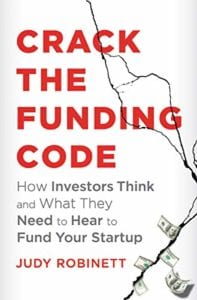
Crack the Funding Code: How Investors Think and What They Need to Hear to Fund Your Startup
I’m honored and thrilled to have a return guest. It’s a very rare thing on The Successful Pitch, Judy Robinett. She is the author of How to Be a Power Connector. She has a book called Crack the Funding Code. That book has all kinds of information on how to get your startup funded. Judy has been profiled in Fast Company, Forbes and Huffington Post. She is the super-connector who has an amazing network globally. Not only have people that are influential but investors from Angel groups to VCs. In over 30 years as an entrepreneur, she herself has served as the CEO for both public and private companies. She’s been on the advisory boards of Illuminate Ventures, which is an early-stage venture capital based in Menlo Park. She is well-connected literally around the world. Judy, welcome to the show.
Thank you so much, John. I’m thrilled to be here again with you. What you didn’t tell your guest is that you’re featured in my book probably because you’re the best guy I’ve ever worked with in my life on pitch decks and understanding what a true value proposition is. I’m excited to be here.
Tell your own little story of origin because that always is so impressive of how did you become this super connector and this expert in this ecosystem of getting startups funded?
I grew up in the same town where they filmed the movie, Napoleon Dynamite, so I was a nobody. I was shy as a kid and had been bullied. I very quickly figured out when I worked for a couple of Fortune 50 corporations that with keeping your head down and working hard, the thought was you’d get noticed. I found out you didn’t. I read the book, How to Win Friends & Influence People, and that helped me to understand the power of strategic networking to get any resources you need to get anywhere because there’s no lack of resources. There are billions of people on the planet. There’s $296 trillion of private global wealth. There’s no lack of money to get funded. What I learned was that most people are in the wrong room with the wrong story. Having been an investor for a number of years and then working with the VCs and accelerators like Springboard, which to date raised $9 billion, had seventeen IPOs and 185-plus strategic sells. I was so saddened when I would meet founders who had a great business idea, usually a solid business model. Unfortunately, they either met up with bad actors or they had felt like they’re running this endless rat maze trying to figure out where the cheese is. I decided I was going to help them figure that out.
When that happens, nine times out of ten people are doing both. Your expertise is getting people in the right room. I want to also say what I’ve observed is your skillset is so immense that you can get them in the right room at the right time. If you are not prepared when you have that opportunity to meet someone one-on-one or get in front of Angel Group or a VC for your ten-minute pitch and you haven’t done your due diligence, it can still all fall apart even if you are in the right room.
This happened to me. I was referred to a gentleman who has an amazing startup called Logical. He has investors and is doing well. He has proof of concept and 148,000 in sells, but he’s not pitched too high-end Angel groups or to early stage VCs. I started from where I usually do with people, “Send me your pitch deck. Send me your financials.” Nine times out of ten, in some level, they suck. I’m being clear and people have done a lot of work. The problem is they don’t know what they don’t know. The next two phone calls I make, one of them is to David Meister, who is a top CFO expert on pro formas for startups. David doesn’t charge a ton, but will go through all of those proformas, help you develop them if you need. He drills down to how do you mitigate risk as viewed by the investor.
[bctt tweet=”Mitigate the risk for investors.” username=”John_Livesay”]
You’ll hear all the time, “You’d better know your numbers.” He delves into your assumptions behind the business model. Usually, the second call I make is to you, John, because people have a hard time so much in the forest that they can’t see the trees. Particularly from an investor’s standpoint, the investors, number one, want to know what the exit is. How are they going to get their money back? How quickly? You have to mitigate risk as viewed by the investors. That’s usually where I start and that is how you get a good story. You can tell me what your business proposition is in two sentences. You have a pitch deck that speaks to the competition, you go to market strategy, who your team is, some of the basics. You’ve done your homework on the financials. That is getting the right story. You can be ready to get in the right room.
I love this concept that when you mitigate the risk, that’s when you get a yes from an investor because people have so much trouble having empathy for what the investor thinks and how many pitches they hear in a year. Can you share your observations? The statistic is only 1% of pitches get funded. Do you find that to be true? How do you help people solve that problem?
I don’t believe that. The majority of startups fail if you drill down, you find out they came from the Small Business Administration or some government agency. The truth is a business may not have failed at all. They may have reincorporated as a different entity. They could have sold to somebody else that made the business successful. It is tough. As Einstein said, “If you’re going to play the game, you’d better know the rules.” One of the big reasons I wrote the book was to help people understand there is no lack of funding. Different phases of your company require different types of investors. You usually start with friends and family. That’s the biggest pot of money that’s available. The next one is the Angel groups. People need to understand there’s no lack of these people.
There are 300 Angel groups. They’re equal from north to south to west to east. You don’t have to get on a plane and go to Silicon Valley or go to New York City. One of those little rules of the game is 75% of Angel investors will only invest in the state where they live because they want to be able to visit you, to coach you, and to help you. Understanding that piece of information and then going on Google and type in Angel groups in Utah, Angel groups wherever. You can do the same with family offices, which now have some 80% of them are now also investing in startups. Having that information, doing a little research, I often tell people to go look at New York Angels in New York City. They’re one of the best Angel groups in the world. They walk through what you have to have ready, what the application process is. If you do that, then you’re geared to be much more successful above that 1% who get funded.
A lot of getting in that 1% Club, so to speak, is having a warm introduction to get into that right room.
That is correct. A VC out of California once said to me, “Judy, if they can’t figure out how to get to me, they can’t figure out how to get a customer.” One of the reasons is people get bombarded with thousands upon thousands of business plans, models, and executive summaries. It comes from someone that they know, like and trust. If you put on the New York Angels that somebody has referred you to them, inside their group of 70-plus, you’re pretty well-assured that you’ll probably get a slot to get in the door. It absolutely helps. A key point is they also have to know you, like you, trust you before they’ll fund you. The number one thing is to start building those relationships.
You’ve often said that there are two big reasons why small startups fail; lack of customers and lack of funding. Can you speak to both of those?
[bctt tweet=”No competition means no marketplace.” username=”John_Livesay”]
This is a quote from one of the founders of Y Combinator. I’ll often meet people and they’ll say, “If I had the money.” The reality is they need the customer. Often people have what they think is a brilliant idea and it turns out it’s a hobby. It’s something that they wanted. It doesn’t necessarily solve the problem for a customer. Until people are willing to open that wallet and pay you, all you have is a hobby. The quicker you can get some funding in the door after you’ve got your customer. Focus on getting those customers in the door first, then it’s much easier to get funding because you have proof of concept.
As one investor said to me, “If you’re selling dog food, I’d love to see those dogs eating the food already,” which I love that image. One of the things you touched on earlier was the importance of competition. I have seen and heard with you sometimes people say, “I don’t have any competition.” One of the key questions that I think people need to be prepared for is what’s your secret sauce? What’s the barrier to entry? Can you tell us about your thoughts and experiences and maybe a story around that?
There are a few key sentences that if I hear them uttered, it tells me instantly that the people are amateurs. One of those is there’s no competition. If there’s no competition, there’s no market. There’s no need for your product or service. There’s always competition. It shows me you’ve not done your homework well. It’s absolutely critical to figure out who your competition is. I was in Belgrade for eleven days working with a couple of startups. One of them I’m already on their Board of Directors and own a part of the company. The second one is a new one to me. They arguably have something that is arguably the next step up from AI, artificial intelligence. Sure enough, three minutes into their pitch, they assured me they had no competition.
I always smile. I made them go do a little research. It turns out everybody from Microsoft, IBM and who else is also playing in this game and somehow could be construed as a competitor. The other thing they will tell me is they need money like the day before yesterday. They don’t see any need for an exit. The exit is the only way the investor gets their money back. This also was from this group. I said, “Nobody is going to invest because they want their money back.” They said, “We would consider doing a strategic sell.” The majority of exits in the United States are strategic sells. Another thing I have people do is get on PitchBook, which is free and there are several competing services that are like that. They can tell you who bought what company, who the competitors are. You can do it by Google, by industry to find out exactly who those competitors are.

Crack The Funding Code: Nobody can create a successful business by themselves.
You need to be able to talk about them in a way that is not insulting to them or coming across as arrogant. Let’s talk a little bit about how important it is. It leads right into the team. Your overall attitude and persona of confidence versus arrogance. Can you talk about what you’ve seen and how can people make sure they’re confident but not arrogant?
One of the biggest turnoffs to investors is a know it all. Investors will immediately say, “Go for it. Just not with me.” That shows that you’ve got a problem with your thinking. Nobody can create a successful business by themselves. That’s a big turnoff. It shows that you’re arrogant. It shows that you’re a fool. You think you know better than the rest of the world. That’s problematic because Angel investors invest. They want their money back, but most of them have been successful entrepreneurs themselves. They love to coach. They love to help you to get to that successful exit. Avoiding as we call it, hair on the deal, not making mistakes that are going to make you un-fundable or that you’ll never be able to sell the company.
My takeaway from that is to be coachable and confident when you pitch.
[bctt tweet=”Be coachable and confident when you pitch.” username=”John_Livesay”]
Being confident is fine but let me tell you, if somebody says, “I don’t know but let me get back to you on that,” that’s a much better answer than lying about it because these investors, many of them see a thousand deals a month. You’re not going to pull the covers over their eyes, but sometimes it’s fear. Everybody knows you’re broke. That’s why you’re there to get money. If you’re smart, you will agree that you want their expertise. You want more than their money. You can be confident. You can say very confident driven things. Also, if you show a little bit of humility and make a couple of comments like, “I hadn’t thought of that. What a great idea. Could we talk about that more?” job one is to build a relationship because you want the second date. They’re not going to meet you and then write you a check. They’re looking for a level of confidence.
They also look for a level of your character. Howard Stevenson who was the head professor at Harvard for many years for entrepreneurs wrote a great little book and it’s for investors. It’s how to pick deals. It’s a great one for people to look through and see what the investors are looking for. He said, “The first time someone lies to him, he’s out of there.” It’s like you would flush your money down the toilet, so it doesn’t matter how great your deal looks, what your ROI is. If there’s an inkling that you’re not telling the truth, you’re history.
Does the book go into some details, Crack the Funding Code, on how to prepare for due diligence once you’ve gotten a yes to make sure that everything is opened up?
Yes. We do have a section on that and probably one of the most important chapters is Chapter Nine, which is mitigating the risk as viewed by the investors. They want to make sure you can execute. They want to make sure you have a solid team. There are many execution risks. You had mentioned barrier to entry. My book does go in into that. It’s good for you to take your blinders off and pretend like the investor is your customer because, at this point in the funding process, the investor is your customer. You need to be open-minded with any concerns or any issues that they raised. This is from usually decades of experience that they have. Often, they’re trying to be helpful and then test you a bit to see what your response is because they want to take a peek under the hood at that character of yours.
In other words, do you get defensive right away or do you stay calm? One of the things I know that you’re all about is putting together a great team because the investors are asking themselves, “Why is this the best team to execute this idea?” Can you speak to the importance of having complementary skills on the team?
We start with a founder and hopefully, they’re a sales guy. If not, then you’d be needing a salesperson first because cash is king and you want that proof of concept that you have customers. I usually tell people to get somebody like David Meister as a fractional CFO because you don’t need a full-time finance person. It is good to have a high-level guy, who can help you as the company begins to grow. That’s important. Often you don’t have money to build out a lot at this point. You can put in your deck if you need a CTO, chief technology person, on or some guru. You can put this person is going to be hired upon completion of this round that you’ve already had interest from them. A rule important one in my mind is positioning the company for success.
Often you as a founder, you don’t have years and years of success behind you. Find two to three people who do have success. I helped a woman get the first CFO from PayPal on her advisory board. Another one I helped get a director out of Microsoft for fifteen years. It literally speaks volumes. People look at the company and go, “If this person is in, they’ve done the research, the due diligence, and they believe in this concept.” The other one is to surround yourself with service providers, your law team, your banker that have a level of expertise. I meet a lot of people and they’ll say, “I’ve got this great bookkeeper that put together my pro formas.” That’s not going to cut it, neither is your accountant. It’s very different getting pro formas done by somebody who understands startups. We engaged with Wilson Sonsini. They’re the number one law firm in the world for startups. It’s like that old commercial when JP Piper speaks, everybody listens and everybody turns. If you have a good banker, good lawyers, it looks like you’ve put together a solid team of people who can advise you. I’m leery. I don’t work with people who tell me they don’t need an advisory board. That’s right up there with, “I know it all. I don’t need any help.”
[bctt tweet=”Most people are in the wrong room with the wrong story.” username=”John_Livesay”]
Can you tell a story of how you were able to help a company get a good exit above what the valuation would have been on paper by assembling a good advisory board?
A company that I worked with out in Park City had developed a biomedical device for permanent sterilization that could be done in a doctor’s office very inexpensively. Initially, she had gone the rounds in Utah trying to find Angels. She kept hearing no. When I was introduced to her, I said, “Let’s up the game here.” I brought on one of Howard Stevenson’s protégés out of Boston, Eileen Shapiro, who has been a top consultant at McKinsey, has been an investor probably for 35 plus years. That helped. It turned out the relationship with her resulted in a much higher significant sell of the company than she would have had out doing it by herself. That’s why it’s so important to have people that are in the industry that you’re targeting. Lots of lawyers can write contracts. You want people who can also open doors for you, who have expertise in the industry that could help you find potentially strategic partnerships.
What would you say is the biggest mistake a lot of founders make who haven’t read Crack the Funding Code?
Probably the biggest mistake is trying to find love and trying to find money in all the wrong places. I meet people that feel like they’ve been kicked in the guts hard and everybody is telling them no. It’s because they haven’t done the match of where the money is, who’s got it, and who’s most likely to fund you. Often, they are missing a couple of components of the story. The big one is mitigating that risk as viewed by the investors. Locally, you can go to Score. You can go to the SBA, the Small Business Development Center. Your local college or university has professors, people who are experts on entrepreneurism. Find a pitch event and that’s where investors hang out. It’s also where people hang out that love startups. We’ll happily give you some advice.

Crack The Funding Code: The higher you go up that food chain in the venture capital world, the more sophisticated those investors are.
You have worked with so many powerful people from Kevin Harrington from Shark Tank to Mark Burnett, who produces Shark Tank and several other shows. You’ve also helped people get in front of a venture capitalist. Let’s say someone who wants to read your book, Crack the Funding Code, because they’re like, “I’ve got some seed round from an Angel Group. I’ve got some revenue, but I don’t know how to break into the venture capital world.” How different I should speak there versus an Angel group? I know Crack the Funding Code goes into that. Can you share some of those insights?
The higher you go up that food chain in the venture capital world, the more sophisticated those investors are, the tougher the questions will be. Back to looking at the New York Angels, then I would have you google White Star Ventures, a top VC firm that’s now global, started in New York. One of their best access has been The Shave Club, $1 billion-plus. You can Google early stage VCs. You can look and see what specifically they’re looking at. Many VCs are very niche focused. They realize they can’t do it all. There are ones that specialize in the oil patch, everything to do with gas and oil industry. There are ones that all they do is life sciences. There are other ones that only do the B2B play or the B2C play, business to customer direct. You need to have done your homework and understood the jargon of the VC world. One of them is the one you quoted, “Does the dog eat the dog food?” Another one, “Is there hair on the deal?” They want to make sure that there’s no potential litigation coming down the pack. That you’ve protected your IP if you have it. How you approach them is very different. There’s a chapter in my book on doing strategic networking that can easily move you forward.
In addition to being this amazing author and consultant to startups, you’ve also a speaker. You’ve spoken at NASA. The White House, you’ve been involved and invited to. Give us a little snippet of what kinds of speaking engagements typically are you called in for.
[bctt tweet=”Until people are willing to open that wallet and pay you, all you have is a hobby.” username=”John_Livesay”]
I’m usually called in on strategic networking. People needing to understand, “This is my goal. I’ve got A2B, but I cannot for the life of me figure out how to get from B2C.” This is another one of Einstein, my favorite quotes, “A and B, you can get there with logic every time. B to C usually takes imagination.” It boils down to strategy. You can create luck. People say to me, “You can’t create luck.” I’ll say, “Go stand on the train tracks for 24 hours. Tell me if you’ve got good luck or bad luck.” How you position yourself is absolutely critical.
The book again is called Crack the Funding Code. People can buy it on Amazon. It’s on Kindle and Nook and every place you can get a book. Judy, is there one last thought you want to leave our audience with about what they need to look for in Crack the Funding Code?
One of the biggest pieces of advice I’ll tell everybody out there is to kick fear to the curb. In Hebrew, there are two words for fear. The first one is when you think the sky is falling, for me, I’m running to my cave with dark chocolate. The second one is like you’ve stepped into this brighter, bigger space than you’ve ever been in. It’s fearful but it’s on inspiring as well. Everybody at some level deals with the fear. When I did my first startup, a franchise restaurant, I thought I was going bankrupt. I went to an attorney scared to death. I’m shaking in my boots. He said, “You’re not even close.” I said, “I’m broke. I don’t have any money.” He said something that changed my life. He said, “Judy, they can break you, but they never can eat you. Don’t let fear persistence wins time over time. It’s not the brightest person in the room. It’s the person who will learn and the person who keeps going.”
Judy, thanks so much. Thanks for being a phenomenal guest. I know this book is going to be a big success and help a lot of people.
Links Mentioned:
- Return guest – Judy Robinett previous episode
- Crack The Funding Code
- How to Be a Power Connector
- Illuminate Ventures
- How to Win Friends & Influence People
- White Star Ventures
- www.JudyRobinett.com
- Quantmre.com
Wanna Host Your Own Podcast?
Click here to see how my friends at Brandcasting You can help
Get your FREE Sneak Peek of John’s new book Better Selling Through Storytelling
John Livesay, The Pitch Whisperer
Share The Show
Did you enjoy the show? I’d love it if you subscribed today and left us a 5-star review!
-
- Click this link
- Click on the ‘Subscribe’ button below the artwork
- Go to the ‘Ratings and Reviews’ section
- Click on ‘Write a Review’