

Evolve Your Success With Samuel Adeyinka
Posted by John Livesay in podcast | 0 comments

Personal development can affect, boost, and evolve your success to any aspect of your life. It is something one should focus on because you can have the opportunity to make a difference. When he was young, Samuel Adeyinka wanted to be a physician but realized that he could do other things related to medicine. That led him to pursue a career in medical sales. He experienced a lot of setbacks and challenges, which enabled him to give importance to personal development. Now, Samuel started his podcast to let people hear and have more information about the medical sales industry. Join him in this episode as he shares more about his inspiring journey to success.
—
Listen to the podcast here
Evolve Your Success With Samuel Adeyinka
Our guest is Samuel Adeyinka, who after graduating from the University of California in Riverside with a Bachelor of Science Degree in Biology, started his medical sales career. Over the next several years, he worked for a variety of biotech and pharmaceutical companies. He then went on to work in various roles, including medical sales development trainer, International Coaching Federation, and a certified coach. He has now started his podcast and Evolve Your Success, which is an organization that delivers digital marketing strategy and training programs to corporations and individuals.
—
Welcome to the show.
Thank you for having me. I’m glad to be here.
Let’s talk about your own story of origin. Did you know from a young age that you wanted to get into medical sales, or how did that road start for you? Do you have some great Biology teachers in high school or someone in your family?
I think everyone can say this. When it comes to medical sales, you did not know at a young age. This was new to a lot of us, probably for the last several years. I wanted to be a physician when I was younger. I was all about bones rise. I memorized every bone at a young age. I used to go around telling people what bones they had. At least I identify that all the time.
I want to be a physician. I thought I wanted that. That’s what led me to UC Riverside. I enrolled in the Biomed program. I got into that program. In that program, you got to spend some time with some physicians. I got to get a couple of mentors and I got to see what goes on at hospitals. I realized that, as much as I like this field, I want to look into other things related to it. I was not sure I wanted to practice medicine with patients.
I said, “Let me look into something else.” I spent some time working in the lab. Through that experience, I learned about this industry called Medical Sales. I worked with a PhD there, he was working on a diuretic, and he would say, “Sammy, you have a great personality. You understand the medicine. I see you have a big interest in the business. You should look into what manufacturers do for drugs and devices. Check it out and see if you like it.”
[bctt tweet=”Be a resource to your client. ” username=”John_Livesay”]
I looked into that. I looked into high-performance liquid chromatography devices and some pharmaceutical companies. With the pharmaceutical companies, I got my first role, moved out to the desert, and loved it. It was an awesome experience. I performed very well. Right going into it my first year, I had at a time in my life, loving what I was doing, and the rest is history.
When do you say desert, is it Phoenix or Palm Springs?
The desert is in the desert of California. Palm Springs, Palm Desert, Indio, those were my stomping grounds, and that is where I originated. That introduced me to the field.
A lot of people who understand science and like to study science are known as a little bit of introverts perhaps. They don’t like to even think of rejection personally, not the personality at all that sales require. When you do find a hybrid of someone who understands science and willing to put themselves out there in a sales environment, it is a magical find.
Usually, there are a lot of personalities like sales. They don’t know the science. I’m sure that combination was, in fact, a huge success. I’m fascinated to see how somebody did suggest it to you. It is amazing how one person in our life can be a major character in our own story of, “Had I not thought about that, I would never have even explored it. I didn’t know it existed.”
When you find something that fits, it is like, “This is what I meant to do.” It is not you are forcing yourself to do it, hate it, and find it awkward or whatever. Let’s talk about it because a lot of people think of pharmaceutical sales. Don’t you have to be a model to do that job because everyone is attractive? It’s crazy. The impressions that people have of the glamour of that job because it is the smartest, the best, and the most attractive, it’s like getting into Harvard or something.
Everyone has this perception that it is a difficult field to get into. You have now taken your expertise in doing it and helping people get into it, which we will talk about for sure later, but I want to get your impressions of it. Were you surprised at how competitive or challenging it was to get into when you first started?

Evolve Your Success: No matter what level of success you’ve reached in your life, you can always evolve it to the next level of success.
I’m going to be honest with you. I wasn’t even thinking about that. It’s funny. I didn’t even realize what I was getting into. When I first started, I was trying to develop my sales acumen. I had never been in sales before. I was working in the lab, and it was a high-performance liquid chromatography. We were studying these graphs and preparing liquid chromatography while running the experiments for this diuretic on live testing. That was what I knew and everything I studied in school, which was Biology.
When it came to sales, I didn’t know. I thought I needed to go develop my sales skills. I looked into T-Mobile, and there was a sales position there. A friend of mine said, “These guys teach you how to sell, you make good money, and they can help you with your first career move.” At the same time, I learned about this pharmaceutical opportunity. There was a company that wanted to work with me and I wanted to work there.
I said, “Do I develop my sales acumen at T-Mobile or even out here at a pharmaceutical company?” When anybody hears this, they’re like, “That’s an obvious choice.” At that time, it was not that obvious to me. I went ahead and went into it. I was excited to be in a role that offered that, doing things, selling, being a part of the business with them, and that excited me. Even before that role, I had this little nutraceutical company where I worked with a few providers. We were trying to have this diet nutraceutical product that we were trying to sell, market, and get out there.
It seemed like a sensible position to take on it. I felt I would learn more about what I was doing and get experienced in this new industry. I was not thinking about the challenge of getting in. Honestly, this was several years ago. It was competitive back then, but it was also not as well known. Now everybody knows about medical sales, medical device sales reps, and pharmaceutical sales reps. The average person knows what a drug rep or a medical device rep does. Now all these people want to get into it, and ever since COVID hit, even more so. It has become this very competitive and aggressive industry where you got to be a certain person and put in the work to get a foot in the door.
[bctt tweet=”Be someone your client can rely on.” username=”John_Livesay”]
The need for companies to train people has changed. When you and I were getting into sales, I got into high tech sales and they would put us through a training program, not only on the products but on the actual selling. I remember being videotaped and you should be giving someone your business card within many seconds of meeting them, in case they forget your name.
All those little tips that you don’t think about, emotional intelligence or social skills, especially if you are selling something expensive, there are a lot of people that get involved in the decision, and you are not going to walk out with a yes. You have to call on, in my case, financial people for leasing, a multimillion-dollar piece of equipment, or the tech people had to speak to the tech people and solve a problem.
It was a lot of training that was great because once you have an understanding of where things are in the pipeline, as well as where somebody is in their buying decision, you are able to make projections on a much more accurate basis. Without all that experience with somebody guiding you, you are making it up as you go along.
We have seen, without the proper training, how frustrating it can be for someone who does not have that training. How did you come up with the name of Evolve Your Success, which you’ve created now a full-service media and training company for both companies and individuals? I love it because it assumes someone’s already got a level of access, and you’re helping them evolve it.
That has always been important to me. No matter what level of success you have reached in your life, you can always evolve it to the next level of success, and human nature initiates that. If the money is great, you want to work on a personal relationship. If the relationship is great, you want to work on the finances. If all these different parts are great, you want to work on the family.
There is always an aspect of your life that you want to improve, you are either going to step toward that on your own, or something is going to pull you into wanting to develop it. That’s something that I’ve recognized pretty early on in my career. One thing that I loved was personal development. I became a fan of that early on because I had my own personal setbacks that let me see.
There is a way people can experience a personal setback and still get back to performing at a high level. I didn’t understand what that meant. I didn’t know what that meant until I started looking into the work of what personal coaches and personal development coaches do. That’s when I got to learn that no matter what you’re experiencing in life, whether it be a divorce, death, job loss, or whatever’s happening.
There’s a way where you can recalibrate, reevaluate yourself and develop from that place and evolve to even greater success than you have ever experienced. Me going through that developed a passion for me wanting to do that with my own career and help people do it as well. Several years ago, I worked with some personal development companies. I got to see what they do and how they work with people. It was completely inspiring to me. I said, “No matter what I do in this life, I have to remain connected to this work.” I started working with sales reps in all kinds of different industries.
This was passion coaching where I can help someone say, “Let’s look at what you are doing. Let’s look at your opportunities, and let’s help you ramp up your sales.” Honestly, what often happens is we end up working on their personal life. Not directly, but to show up a certain way professionally, you got to have certain things in your pocket personally. That is what would always come out when working with all these people.

Evolve Your Success: Whatever’s happening, there’s a way where you can really recalibrate, reevaluate yourself and develop from that place and evolve to even greater success.
This became a habit. What I noticed through that is a lot of these people also want it to be in the medical sales industry. I’m like, “You have all these people that want to improve their sales, their careers, and realize the value of developing personally. It carried over professionally. You have all these people that want to get into the medical sales space.” I said, “There should be something out there that gives them the opportunity to do so.” That is where Evolve Your Success was birthed, we started helping people create those opportunities, and we have been doing that ever since.
As a story keynote speaker, what I have found is how important it is that we are resilient and how fast we get back up after we get rejected, lose a job or a loved one, divorce, or whatever it is. They were all going to have experiences like that knocked us down. The trick is, how fast do we get back up. A lot of people shake it off fairly quickly, and then you see people two weeks, sometimes, even two months still talking about it. You are like, “You are not in the right mindset to move on. That’s why you’re in a slump.”
The other thing I love about what you do that I’ve noticed myself was when I got hired by a healthcare med-tech company, they wanted a sales keynote speaker to come in and teach their people how to tell stories. One of them had reached out to me during the interview process on LinkedIn. I liked and commented on a couple of his posts. He became my inside salesperson because he was trying to get his team to like and comment on doctors’ posts on LinkedIn.
The fact that I did it, he said, “I knew you were the person that would not try to squeeze that concept in, but you were doing it to sell yourself. I knew that wasn’t a good fit for our company.” The fact that you have used selling based on the science of social media to help people connect with people is important whether you’re selling yourself as we do as speakers or you’re in the medical tech world. A lot of them think, “I have to use social media to develop relationships. I’m going to keep hammering away like everybody else and send a bunch of emails going, can I have an appointment?” Tell us about what you’re doing and what makes your experience unique in this science in social media?
[bctt tweet=”There’s always an aspect of your life that you want to improve. You’re either going to step towards that on your own, or something’s going to pull you into wanting to develop it.” username=”John_Livesay”]
It’s the age we live in right now. Right now, we live in the age of social proof. Any influencers, celebrities, anybody you know the first name of that you don’t directly know, you can probably go online and find some social proof about that person. Anybody you know, you can go online and find some social proof about that person.
In this day and age, it is important to build a brand around yourself because the opportunities to provide value for people are endless. When it comes to social media or online technology, healthcare is the last space to realize the value, and healthcare has finally said, “There is a lot of value here to develop a brand for myself.” Surgeons and specialty providers are realizing that.
If I build a brand on TikTok, Instagram or LinkedIn, I am going to get more patients and get noticed. The good work that I’m putting out there in the world is going to be seen. Whether it’s intentional or not, there is going to be a level of credibility to what I do that people will believe in before they meet me. That applies to everyone, and everyone has the opportunity to do that. It makes you more marketable in the marketplace. If you work for a company and you’re ready to take your skillset to a different level, other companies can easily see the good work you’ve done at that organization and say, “Come work for us. You’re doing excellent.” Even within your own organization.
A lot of times, you’re doing all this good work in your role, and outside of your manager, the leadership has no idea all of the good work you’re doing well, but now you have the opportunity to let that be seen with your brand. The people within your organization are saying, “I didn’t know you were working on that. We want to consider you for this role over here. Let’s have a conversation.” There are so many opportunities.
Personal branding is very important. It’s more important it has ever been. I believe that we’re going to continue to go in that direction. I wanted to help in that transition. My whole thing is about developing other people. That’s what I’m big on. In every role that I’ve had, I’ve tried to focus on doing that, providing value for the customers and colleagues. Anybody I’m working with, I want to train them and help them reach their highest potential. Social branding is a great way to do that as well.
You offer this as a service. You help people optimize their profile, which people don’t even think about how important that is. They go, “I only need to be on LinkedIn if I’m looking for another job.” Wrong. You need to brand yourself on LinkedIn, which could even help you get a promotion. You take that another step further, which is, “Now we’ve got your branding done, but let’s get you to be perceived as a thought leader.” Maybe create some good content.
Think about it this way. You’re someone that understands a lot about your product or service. Let’s be honest. A good sales professional, he or she, understands their disease state, condition, and problem that their customers have better than anyone, even better than their customers. Let’s talk about it. You would have a doctor and he says, “I went to med school. I know more than you.”
It is granted, but I spent all this time, my whole livelihood is built on me, understanding this very specific detail of your breadth of knowledge to help you be even better and provide better quality for your patients. There’s got to be something there. On top of that, I spent all this time talking to your peers that do things differently than you do to give insight on how you practice what you do.

Evolve Your Success: In this day and age, it’s important to build a brand around yourself because the opportunities to provide value for people are endless.
I have friends that are providers, and a lot of them say, “A good representative is someone that I can rely on. It’s someone that I can look to them and depend on their knowledge to help me show up better for my patients.” If you are doing that, why not be seen by the right provider so that they can tap on you to be a resource to them. That is where social branding or being out there also does. It gives your customers another way for them to know that you are this person that can give them all this value and potentially lead to an in-person meeting. You become their real customer, doing business, and they are happy about it.
I talk to people all the time that we have worked with that say, “I met this account through LinkedIn. They saw what I posted about so-and-so and they contacted me. Now we were doing business, and their patients are doing better.” That’s awesome. That’s the beauty of what is happening in this day and age. That is something that I like being a part of.
I was interviewing an optometrist for an upcoming talk I’m giving to an eye care company. He said, “The reps used to be able to bring lunch in, and we would have lunch. They could present and pitch. Now they have to catch us between patients. We give them ten minutes.” Everyone is saying the same thing, “Our products are the best. Here are all our stats,” and then it is forgotten.
He goes, “I’m looking for a sales rep that I can rely on, that’s going to bring their expertise.” They’re looking at hundreds of other optometrist offices, and maybe they see a best practice going on there, or maybe I’m short-staffed. They know someone that is looking for a job. When those reps do more than give me stats, I want to do business with them. Most reps don’t think about that. They think, “My job is to pitch you what my knowledge.” That’s not it. That’s why I’m like, “You need to be a consultant and tell stories of a patient using your product, not just the stats, because we know people forget the information.”
You teach storytelling how to communicate your value to a provider. At the end of the day, what I’m all about is being a resource to your customers. When your customer can say, “When I have an issue and it comes to this space, I want to call on John. John will know how to help me in some way, shape, or form.” Your job is to be a resource to him and utilize your product as you do. That is the opportunity that every sales rep can take advantage of and truly be valued in the space that they’re working in.
Your show is called The Medical Sales Podcast. Let’s talk about picking a niche. I love it that you are interviewing all these people, and I was fortunate enough to be one of them that has expertise in this. One of the things you say here is you’ll laugh, you’ll learn, and you’ll be inspired. We need to be like that in person as well. We can’t be a robot putting out information.
[bctt tweet=”We live in the age of social proof.” username=”John_Livesay”]
There is a relationship. You are a person talking to another person, and people want to not only be informed but inspired. I maybe even entertained a little bit. That is a part that people get so focused on, “I’m only myself when I’m at home, and I’m a whole different person at work.” What you are saying that I love is, “No, when you have integrated it all together, you show up.” That is what makes you stand out in the hiring and the selling process.
One of the goals with the Medical Sales Podcast was there is this whole world that everybody hears about. The medical sales world, pharmaceutical sales, biotech sales, medical device sales, medical equipment sales, and I’ve heard patients say, “You drug reps come in, and you take up the doctor’s time.” No one understands what is going on outside of the people doing it.
I said, “There should be a resource anyone can tap into and find out not what the industry is about, the good that’s being done, and the value that every sales rep puts into medicine, but the lives these people are living, doing, care about, moves them, inspires them, and they are beautiful stories.” You were a guest, John. You have heard the episodes. You got some fascinating people doing some amazing things.
When you find that out, you will say, “Thank God they are in this space, and they’re committed to wanting to improve the quality of life through the patient and helping their providers do the best work their providers know how to do.” That’s a beautiful thing and that’s something that should be known by everyone.
I love how you evolved your career, and now you are the expert in getting other people to live the dream that you were living, and you offer many multiple ways to work with you, whether it’s branding on LinkedIn, tips on a podcast or getting coaching. What thought or quote do you have for us about life in general or medical staff?
One thing that we can all take home is no matter where you are, there is a place you can evolve to. We are in the age where if there’s something out there that you want, there’s an opportunity to go for it. You should not feel limited in this day and age. If you’re someone that’s saying, “I want to be in medical sales. I want to be the best medical sales rep ever. This year I want to be number one.” There is a way to make that happen, and you can make that happen. Nothing should make you think any differently.
When it comes to medical sales specifically, it’s a great field, and if anyone is interested, they should look into it and the beautiful careers that can recreate out of it. At the end of the day, you’re doing great work because it’s all geared to the patient. That’s the most important thing. The patient’s quality of life, regardless of what it is you’re selling. If it’s in medical sales, it’s geared to helping a patient live a better quality of life. If that’s what you’re about, that’s a field you should look into.
The best way to find you is EvolveYourSuccess.com. Samuel, thanks for doing what you do in the world. I can’t think of a number of people you have impacted in the ripple effect. That must make you feel good. Thanks for sharing your wisdom with us and your stories.
Thanks for having me, John.
Important Links
- International Coaching Federation
- Evolve Your Success
- The Medical Sales Podcast
- Better Selling Through Storytelling Method Online Course
Wanna Host Your Own Podcast?
Click here to see how my friends at Podetize can help
Purchase John’s new book
John Livesay, The Pitch Whisperer
Share The Show
Did you enjoy the show? I’d love it if you subscribed today and left us a 5-star review!
- Click this link
- Click on the ‘Subscribe’ button below the artwork
- Go to the ‘Ratings and Reviews’ section
- Click on ‘Write a Review’
Love the show? Subscribe, rate, review, and share!
Join The Successful Pitch community today:
- JohnLivesay.com
- John Livesay Facebook
- John Livesay Twitter
- John Livesay LinkedIn
- John Livesay YouTube
The Power Of Playing Offense With Paul Epstein
Posted by John Livesay in podcast | 0 comments

How do you execute purpose-driven leadership? Today, organizations everywhere are struggling and looking for ways to thrive. When you’ve lost motivation, how do you spark the hope and light within you so you can continue making a difference? Learn about the power of playing offense with Paul Epstein. Paul became the go-to fixer for NBA teams, NFL franchises, and league executive offices because he mastered the come-from-behind win. He recognizes that victory comes from the inside. In this episode, he dives into his book The Power of Playing Offense and how you could use this to develop your leadership skills fully. Tune in to this episode to listen to his deep insights on leading with purpose and how to win big.
—
Listen to the podcast here
The Power Of Playing Offense With Paul Epstein
Our guest is Paul Epstein, the author of The Power of Playing Offense. He talks about how people can go from having a job to a career to even having a calling. The through-line of all of his work is helping people find their purpose and he shares his own story of how he discovered his purpose that will tug at your heartstrings. Enjoy the episode.
—
Our guest is Paul Epstein, who I met at a speakers boot camp. To understand how he has become a leading speaker and thought leader in the world of purpose-driven leadership, you have to begin with the path that brought him to finding his why. He has been in the sports industry since his career began, serving in the NFL League, a lot of national sales campaigns for Super Bowls and managing a record-setting sales organization at the San Francisco 49ers.
He’s also been very involved with saving New Orleans, which was once at the bottom of the league attendance and they were in danger of being relocated before he helped rally the city to save their now beloved team. Before all that, we’re going to hear about his own story of origin, where he was working in an entry-level sales position for the LA Clippers, making $7 an hour on a four-hour shift with no promise for growth.
He went on to lead the New Orleans Pelicans, named the Hornets. This development team as they struggled to stay relevant in a football focus region. He realized that sports are a lot more than just sports. It’s a civic pride thing but as big as a leap of faith was to come years later when he discovered his own personal why, which we’ll be certainly asking him about. Welcome to the show, Paul.
Hi, John. I’m fired up to be here. Thank you, my friend.
It’s always fun for me when some of my previous guests know each other and we were talking about Gary Sanchez, a previous guest on my show with the WHY Institute and you’re all about the why. Let’s go into your own story of origin. You can start with making $7 an hour, or you can go even further back on how you’ve been passionate about sports all the time? Do you get that from your dad or how’d that all come about?
[bctt tweet=”From a job to a career to a calling.” username=”John_Livesay”]
Why don’t we start at the $7 because maybe the more compelling part of how you land on $7 is to imagine leaving six figures to make $7? Not a lot of people do that, but in my case, I was one of the crazy ones. It was because prior to that, the six-figure opportunity fresh out of undergrad at USC, I was working for a Fortune 10 organization.
Everything was great. It was rolling and I still remember the story, where for those that are sports fans reading and maybe the name Mel Kiper rings a bell. He is known as the top NFL Draft Guru. He’s a very high-energy type of guy, a fiery personality like I’m talking right now. I’m driving around in my minivan, which was a company provided at 21 years old in ESPN Radio and Mel comes on. He says, “Have you ever wanted to work in sports? Have you ever wanted to work in the NFL, NBA, NHL?” I’m driving. I’m speeding down. “Yes.”
The call to action at the end of the commercial was call 1-877-SMWW-NOW. SMWW stands for Sports Management World Wide. I gave them a call and took their online course. Their promise was if you’re one of the top students, we will open up our Rolodex and network to you in the sports industry. Not only is there a happy ending to this story, it’s the biggest no-brainer in my life to go from six figures and comfortable, but having not feeling a purpose in what I was doing. It was just the paycheck to now. I would have done it for free.
When I think about the things that are best in life, I know we have a great sales audience reading in. What you do if there were no money on the line? Whether it’s a check someone is cutting to you, or it is you as an entrepreneur. Would you sell, whether it’s yourself, product or service, if there was no economic gain in it for you?
When you can answer, not only yes, but hell yes, that’s when there’s a deeper burn in a belief, passion and purpose because that’s how you matriculate from job to career to calling. I went through that journey and transformation. People always ask me, “How do you know?” I always bring it back to when you’re not chasing something. When it feels like, “I would do this for free every day.” I felt blessed that they even paid me $7.
I love what you said there, how to go from my job to a career to a calling. We’re going to tweak that out. That’s great. That’s the ultimate hero’s journey. Now you also wrote a wonderful book called the Power of Playing Offense, which is a playbook for leaders, not team transformation but personal transformation. Let’s dive into the story of origin around that. How’d you come up with the title? Let’s start there.
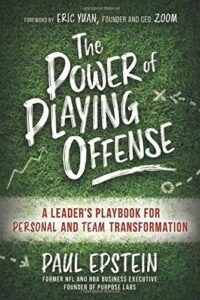
The Power of Playing Offense: A Leader’s Playbook for Personal and Team Transformation
Spending fifteen years in the NFL and NBA, the apple doesn’t fall far from the tree. When you think about the mentality, that in my words, I like to attack each day with a mentality of playing offense, that is this all gas, no brakes type of approach, where we all know there are two types of people in the world. As I spent fifteen years in a high-performance environment like sports, I clearly see the delineation and there are two groups.
I want to ask the readers, think of these people in your life. You know folks on both sides of the fence. One always seems to play on their toes. The other is seemingly always on their heels. One has a mindset where it’s always, “Let’s not lose.” They play not to lose. They’re never going to fail big but they’re never going to win big versus the other feels like, “I’m blessed to have this house money and I am playing to win every day.”
The first group, market, external circumstances always seem to dictate their terms, but the second group operates on their terms. I like to describe that as the first group plays defense, the second group plays on offense. When you play offense, you not only play with purpose and passion, you take control of your future. That is the spirit of how I landed on the Power of Playing Offense.
When you talk about leadership, this was the playbook that I never had because I did positional leadership has all called for a decade and a half. Everyone taught me how to hit goals, metrics, numbers and KPIs. Nobody taught me how to lead people. To me, that’s the secret sauce of business and life. I said, “What is the book that I needed a decade ago and it never came?” I had to fail, fall, pivot, reinvent and go through all of these things and I have no regrets. I’m happy that I didn’t have the book. I wanted to make sure that people in the future didn’t experience some of the same pain.
You’re tapping into a big struggle. I was working with the healthcare tech company and they’re not the market share leader. They want to be, but they’re not. One of the reps said, “We’ve got to stop playing defense because every sales pitch is us defending against the leader of, why aren’t you doing this? They are, whatever the issues are.”
This concept of offense or defense in terms of presenting your content, message or story against someone who has bigger leadership is your area of expertise because you told me before the show that you’ve been selling the underdog your entire career. Let’s transition from top playing defense and start playing offense even if you’re the underdog. How does someone do that?
For context and backstory, I did fifteen years in the industry and for those that are sports fans, if you root for any team for fifteen years, you’re going to make the playoffs, 5, 6 maybe 10 times, if you’re lucky. How about in fifteen years, I enjoyed the playoffs once. I sold a playoff team, 1 out of 15 years, whether I was directly in a sales seat or I was leading the entire sales enterprise.
Now you talk about an underdog. It was a joke in the industry that I was the black cat, wherever I went on the corner of the field of the Is. They’re saying they are going to be a lot of Ws. The first one was the LA Clippers. This is not the Clippers of nowadays, where now they are winning. They were in the shadow of Kobe and Shaq, Lakers. ESPN called us the worst brand in sports and Sports Illustrated said, “You are the worst franchise in sports history.” We had to sell that.
[bctt tweet=”Choice is when your fingerprints are on the blueprint.” username=”John_Livesay”]
I shared this story of the underdog to say that even from a recruiting perspective, if you want to talk about the pitch, what’s the pitch to get somebody to come work for the Clippers at that time. That’s the situation that I found myself in every single day. Over time, we couldn’t house enough people that wanted a bite at the apple because the pitch which came from the heart was, this is not for everybody. A tribe either needs to attract or repel you.
Imagine you’re in the boardroom right now and Paul is the hiring manager. I said to the group, “My job is to hire the best talent. Your job is to control the controllable. I’m not even putting pressure on you to sell.” It was the opposite of what everybody in the industry says, “Where it’s about metrics, goals, numbers and KPIs.” I said, “No. That’s my part. Let me remove that pressure from you, but here’s the hard hat and here’s the lunch pail. I need you to show up with every single day.”
There are three components, work ethic, positivity and coachability. You give me those three things. I’ll take care of you for the rest of your career. This was for a job that had a 6 to the 9-month runway, 10% usually made of the promotion to a senior role. I had what I called the constitution, which was on a whiteboard in my office and everybody could see it. I had them sign. I put the date of 6 to 9 months from their hire date.
I had them sign it and said, I made it sound like a constitution, “I will commit to the values of work ethic, positivity and coachability.” I would sign it right under them. I said, “You give me those three things and in that three-month span, 6 to 9 months from now, I got you and take care of you, not only for that first promotion but for the rest of your career.” That is how we pitched it, fulfilled it, delivered on it and I’m still fulfilling those promises to this day, years removed from the sports industry.
Instead of trying to get people to work at a place that might be seen as, “I’m working here because I didn’t get any other offers.” It became, “This is my first choice because the culture cares about me and it’s a fit with my mindset. I’ll feel proud of working here as opposed to embarrassed.” By taking the external judgments of what you decide, whether something’s good or not. Flipping it internally is what I’m hearing.
I’ll piggyback on that because years later, as I’m recruiting for the 49ers Academy, which I was the proud founder of. This is a decade gap in between stories to show you the matriculation of how this surfaces. At the time of my Clippers story, I didn’t know the difference between extrinsic and intrinsic motivation. Those terms had not entered my vocabulary.

Playing Offense: Anybody interested in more of the research, scienceofpurpose.org is a massive accumulation of how purpose connects to the bottom line and to individual performance.
For everybody reading, into a simple way of thinking about it is, carrots and sticks are the extrinsic motivators. If you do something, I will give you a bonus. If you don’t do something, I put you on a performance plan or you lose your job. That’s a carrot and stick. The intrinsic motivation is, are you motivated from the inside out? Is there a level of internal success, significance, happiness, fulfillment and purpose that you feel in work? Me, as your boss, don’t need to hold you accountable. You hold yourself accountable because you believe in the place, me as a leader, the team and the culture, all that.
I had four cornerstones at the 49ers Academy, the same type of pitch at a time where not a lot of folks were wanting to come to the organization. It was after the honeymoon period, the first 2 to 3 years of Levi’s Stadium. Here are the commitments we make to you. There are four cornerstones, purpose, choice, progress and impact.
Purpose, we will create an environment where the why is greater than the what. Crossed us that we can guide you on the how and as Nietzsche once said, “When your why is strong enough, the how will take care of itself.” We focused entirely on purpose as the foundation and then choice. Rather than saying, “Here’s the playbook, go execute.” It became, “What kind of plays do you want to run?”
Now I’m giving everybody a voice, even as a recruit to say, “What’s the environment that you thrive in? What leader do you love? Just because Paul is wired a certain way, maybe you want some tweaks to that and I’ve got to have some empathy. I’ve got to listen to that. Otherwise, I’m not going to have you maximize your potential.” That was choice. The way I describe choice was your fingerprints will be on the blueprint and people take more ownership when their fingerprints are on the blueprint.
The third cornerstone, progress, I’m a massive believer that if you can make a commitment that when somebody leaves the office, they are better than when they showed up that day. They will keep coming back. Whether you’re the underdog or the market leader, it is equally effective because now it’s not about the paycheck. It’s not even about the company, brand, product or service. It’s about me as a person.
When Paul feels that my company and my leader care about me enough, that they’re going to invest in my development and I’m going to be better when I left than when I showed up, I’m going to keep coming in and grinding. The blood, sweat and tears are going to be organic and authentic, and that’s the third one.
The fourth one is impact. My firm belief is that everybody in life wants to make a difference and feel they matter. They want to do what matters and make a contribution. That impact is the driver of all things good. Whether you’re the Clippers, the 49ers or anybody in between, I said, “Purpose, choice, progress, impact.” If that is you, this is your tribe. It wasn’t for everybody and thanked God it wasn’t, but the people that wanted it made leadership so easily.
[bctt tweet=”Every day is a pitch like life, life is a sale. If you’re not living and leading with purpose, then you’re building your house on quicksand.” username=”John_Livesay”]
They felt like they had found the water in the desert, I’m sure because most players aren’t that clear on what the culture is. You don’t know what you’re signing up for. This concept of intrinsic versus extrinsic motivation is worth double-clicking on. I first came upon that concept when I was selling advertising and Lexus was launching here in the states.
They said, “We compete with BMW and Mercedes. We have done all these studies that certain people buy the BMW like if you’re an agent in Hollywood, you have to wear the Armani suit and drive a BMW because that’s external motivation. I want to impress people with my labels and country club, whatever.”
There’s a whole group of people that buy BMW and Mercedes that are internally motivated. They aren’t trying to impress anybody. They want the car to be well-made and that’s who we have to target because we don’t have the history of branding. Once you have that awareness of it’s not a recruiting tool, it also becomes a marketing and branding tool.
I couldn’t have said it any better and case in point because I’m a big sucker for stats, especially when you’re talking about something like purpose, as much as I do. I think there are a lot of folks that feel like, “It’s a little up in the clouds and that doesn’t connect to performance or the bottom line.” Anybody interested in more of the research, ScienceOfPurpose.org is a massive accumulation of how purpose connects to the bottom line and individual performance.
One of my favorite stats and it ties to what you said is that we’re trying to switch consumers. You’re trying to take somebody that’s not participating or engaging with your brand, product or your service. You’re trying to get them on board with your team. Purposes, one of the greatest drivers, there is about a 73% clip of global consumers that will pivot and change brands based on connecting with the purpose of the brand.
That to me is that intrinsic piece because it’s not the bells and the whistles. I could watch a commercial and I got that. It’s why do you exist as a company, as a person? Are you communicating with your purpose? Are you communicating to the outside world? What your intrinsic motivation is because that will create a pull effect versus in sales. It’s often a push effect.

Playing Offense: If you’re trying to switch consumers, you’re trying to take somebody that’s not currently participating or engaging with your brand or your product or your service. You’re trying to get them on board with your team’s purposes.
As I think about pulling, that’s intrinsic and what’s fascinating about this when I saw the stat of 73% in purpose-driven brands. That’s how global consumers shift. I thought, “This is bigger than branding a company.” You are the brand. We are all our own brands. How we show up each day is how we represent our brand. If we’re not showing up with purpose, we’re going to miss the mark on 73% of the market.
Your book is talking about these five pillars of playing offense that we lead ourselves, others and then, of course, what the future can be as some legacy. The through-line that I see is it all has to start with purpose, especially in certain industries like sales or lawyers, known for being extremely competitive within the same company. That doesn’t work on a sports team and yet in business, you’ve got people who are supposed to be on the same team and yet there is so much infighting going on. Do you think part of that’s because there is no through-line of a bigger purpose?
I think there are two sides to the coin, transactional or transformational. The more that we walk through life and sift through life in a transactional mindset, that’s where the whole scarcity versus abundance piece came from. Here’s a real example. We’re both speakers and we both speak about sales. Do I view you as competition in the sense of is there only so much food to eat that I shouldn’t be coming out on your show? I share it with my audience and now more folks are going to say, “John is pretty awesome. We want to hire him as a speaker.” That’s a scarcity mindset. Versus abundance is there’s enough for all of us and not just enough. We can grow the size of the pie when we support each other. I think that’s the real win.
Here’s the piece on sports and I’ll go back to offense-defense. Everybody loves to be on a winning streak and when there are blue skies. The weather is perfect and I can do no wrong. In that case, the purpose is an inspirational thing. I think the purpose is more effective in a storm. It is more effective when the defense is pushing back.
Take the pandemic as an example, very unexpected and unanticipated. Depending on our age, it was something that most of us had never seen and experienced. The fear, risk, uncertainty and anxiety, defensive elements in life, a lot of them not only external but also in our mind, we housed a lot of those negative thoughts, emotions and feelings. My piece is how deeply do you believe in what you do and why you do it? That’s the purpose and the greater your purpose will be the fuel of your eventual resilience.
In other words, if I believe in what I’m doing, I’m going to continue to get up off the mat because it’s not about a single day, a moment or a transaction. It’s about this long game. The job career calling transformation, as I said earlier, that’s what this is all about. It works on the field, court or ice. It works in the boardroom or the sales trenches. Having that deeper belief and purpose can keep you on the treadmill, especially on the days you want to get off.
[bctt tweet=”One has a mindset where it’s always, let’s not lose. They play not to lose. So they’re never going to fail big, but they’re never going to win big. ” username=”John_Livesay”]
We can all relate to that. There are certain days you feel like exercising and certain days you don’t. You don’t feel like exercising even if you get yourself on the treadmill. You might go, “Just ten minutes. I’m not doing the full 30 or whatever it is.” There has to be some bigger purpose to get you to do something when it’s so easy to stop doing it.
The purpose is to hit a certain goal of your weight, body fat or whatever, like certain goals of hitting a certain sales quota. That’s not nearly as impactful or it doesn’t have the longevity as, “I’m doing this I can live to see my grandchildren.” If you’ve been diagnosed with something or it’s a bigger purpose to why you want to get healthy versus vanity. It suddenly becomes, “We’re speakers. We have to have some endurance on changing time zones and fleet. We got to show up fully present.”
Nobody expects a Broadway star or an athlete to show up on the field, not being in training, rested, ready to go and practice, yet a lot of us show up in our own lives going, “Swing it when I get there. I lost my voice.” Whatever the issue is. There are so many things that we take for granted when we see a professional perform, whether it’s an actor, athlete or a speaker.
I think that all of these things that you’re talking about explain what it is that makes you so successful as an expert on helping people find their purpose so that they can lead others to success, whether it’s in sales or any other endeavor. I want to ask you, as we wrap it up, to give us a story about your own purpose. How did you find your purpose?
I’ll explain what’s more important, which is the color and the background of it. The statement is my purpose is to inspire purpose in others so they can play offense in life and we’ve appreciated the context to this conversation of what those things mean. The Latin definition of inspire is to breathe life into. I’m here in this world to breathe purpose into others.
My purpose is to help you find your purpose. My mission is to help you not only have a mission statement but to be on a mission. My cause is to help you find your cause. That is how I breathe life into people, teams and organizations. I found it at an offsite leadership retreat with the 49ers and frankly, it’s what led to my eventual Jerry Maguire leap out of an industry that I never thought I would leave. I thought I would still be here decades later and be riding the sexy train of the sports business. It was an amazing ride.

Playing Offense: What your intrinsic motivation is because that will create a pull effect versus in sales, it’s often a push effect.
Once I tapped into purpose and I started to understand my core values and my biggest value is impacted. I asked myself a simple question, “Can I create more impact inside of the walls of this team, this industry or beyond those four walls?” When I evaluated the decision like that, I knew that I had to leave and take a leap, but the reason and part of the purpose discovery process is you have to do a lot of life reflection to tap into your authentic purpose.
The biggest memory for me comes from the biggest pain in my life and often, for those reading, your greatest pain can often be tied to your greatest purpose. For me, the greatest pain was losing my dad at nineteen. As an only child and I still remember picking up the call where I got the word that I picked up as a boy, and I hung up as a man. My mom went from a parent instantly to a partner.
What I got to appreciate over the years, because I don’t know if somebody is reading and maybe this will resonate, but I’ve learned more from my dad since the day he passed than when he was alive. It’s because of the stories that I’ve heard from his former students. By trade, my dad was an educator at a continuation high school. For those that are not familiar with continuation high schools, it’s typically a kid’s last chance. They’ve been kicked out of traditional schools. They landed a continuation and there is no next step. The next step is no school will take you.
In a lot of situations where you come from a broken home, you’ve been given up on, disadvantaged backgrounds, the hope and the prayer is that you don’t become a statistic on the street. That’s the environment that my dad chose teaching. Years after he passes, I’m at a barbershop, a few blocks away from the school that he taught at. I’m sitting in the barber’s seat and walks in a 7-foot-tall man, tattoos on every square inch of his body and his face. If you saw it in a dark alley, you are running the other way.
He and I locked eyes and he’s coming right at me. I saw his hand go up and I fully expected that a fist was about to impact but instead, I opened my eyes and I saw a finger that was pointing right at me. He says, “Are you Mr. Epstein’s son?” I said, “Yeah.” He said, “I wanted to come over to say thank you because your dad was the first person that ever believed in me. I’ve had a job for two consecutive months now, and that may not sound like much to you, but it means the world to me.”
John and everybody reading this next part is what got me. This gentleman said, “Your dad gave me a reason to think that tomorrow was worth it.” When I heard that, it changed my entire vision and meaning of life. I understood the impact that he made on people’s lives. That’s why impact is so important to me. It’s not a core value. You asked me what my whys and I gave you the marketing answer along to inspire purpose in others so they can play offense in life. You know what it is, the spirit under that because there’s always a why under the why? The deepest why that I have is to make my dad proud.
[bctt tweet=”The intrinsic motivation is, are you motivated from the inside out? Is there a level of internal success and significance and happiness and fulfillment and purpose that you feel in the work? ” username=”John_Livesay”]
It’s heartwarming. As I say, when we tug at heartstrings, that’s what gets people to open purse strings and gets us the emotional connection that we need because people buy emotionally. If people want to find out more about you, that your website is PaulEpsteinSpeaks.com. The book title again is the Power of Playing Offense. You have something relatively exciting and new to share with us in terms of a partnership you’re doing with the WHY Institute. Why don’t you tease that out a little bit for us?
It’s pretty hot off the press and I’m now as Senior Advisor for the WHY Institute. I know Gary Sanchez, who’s a dear friend. He’s also been a guest on your show. He’s an amazing human being and on a mission. It came from Simon Sinek’s old work and the Golden Circle why, how, what. The problem with the why are most people cannot directly explain it.
Imagine the magic that’s possible when you not only know your why but you know the why of every person on your team and in your organization. I see this tool being able to unlock all of our potentials because we have so much greater empathy when we understand how to speak the other person’s language. That’s what the WHY Institute and the assessment does.
From the heart, that once you can tap into your why, the world starts to become a lot clear, there’s a lot less burnout, fatigue, and you’ll start to feel alive. That’s the closing piece that I’ll share with everybody is a simple thing to share is when you’re living on purpose and life is no longer happening to you. It’s because you’ve activated and aligned your head, heart and hands. When your head and heart are on board, your hands will follow. That is the equation to living and leading on purpose. Align your head, heart and hands, game over, lights out.
Thank you so much for sharing your passion, your why, your stories. I think it’s going to be something that’s going to help a lot of people. Thanks again, Paul.
John, thank you so much.
Important Links
- The Power of Playing Offense
- Paul Epstein
- Gary Sanchez – Previous episode
- WHY Institute
- 49ers Academy
- ScienceOfPurpose.org
- Better Selling Through Storytelling Method Online Course
Wanna Host Your Own Podcast?
Click here to see how my friends at Podetize can help
Purchase John’s new book
John Livesay, The Pitch Whisperer
Share The Show
Did you enjoy the show? I’d love it if you subscribed today and left us a 5-star review!
- Click this link
- Click on the ‘Subscribe’ button below the artwork
- Go to the ‘Ratings and Reviews’ section
- Click on ‘Write a Review’
Love the show? Subscribe, rate, review, and share!
Join The Successful Pitch community today:
- JohnLivesay.com
- John Livesay Facebook
- John Livesay Twitter
- John Livesay LinkedIn
- John Livesay YouTube
Discover Your WHY With Dr. Gary Sanchez
Posted by John Livesay in podcast | 0 comments

There’s a big difference between knowing your why and not knowing your why. When you don’t discover your why, you can’t understand yourself. When you don’t understand yourself, you won’t find the words to articulate your message. John Livesay’s guest is Dr. Gary Sanchez, the creator and founder of the WHY Institute. John discusses with Dr. Gary how important your “why” is in figuring out your marketing strategy. Join in the conversation and discover how you can find your “why” and why you need to!
—
Listen to the podcast here
Discover Your WHY With Dr. Gary Sanchez
Our guest is Dr. Gary Sanchez, the Creator and Founder of the WHY Institute. He talks about his own personal journey, how specific pains and frustrations have been a motivator for him to create solutions. He said that sometimes the fear of looking bad causes people to say nothing, and that if all you’re saying is what you do, then you blend in with your competitors. Find out how to find out what your why is and how it can change your life. Enjoy the episode.
—
Our guest is Dr. Gary Sanchez. He is the CEO and Founder of the WHY Institute. His own personal why is to find a better way and share it. How he does this is by making things clear and easy to understand. What he brings are simple solutions to help people move forward. He and his team at the WHY Institute have worked with over 40,000 individuals, as well as 500 companies, from a small yoga studio to a Fortune 500 company. He helps them get clear, stand out and play bigger. Gary, welcome to the show.
John, thank you for having me. I’m excited to be here.
Your story is fascinating to me. I want to invite you to take us back to your own story of origin. Did you grow up wanting to be a dentist your whole childhood? Was that a new thing? A lot of people may not think of dentists as entrepreneurs, but they really are. Let’s start your story wherever you want. You can start pre-dental school, in dental school, and then we’ll get to how you got to the WHY Institute.
Like a lot of people who are probably reading this, I had no idea what I wanted to do. It wasn’t a lifelong passion or dream that I had to be a dentist. When I was in college, I started with the major of undeclared. I kept that until the last possible second until I almost had an emotional breakdown or something when I had to decide what I’m going to major in. I picked Biology because that was the only thing I had a good grade in. That only prolonged it for a few short months because soon, you got to figure out what are you going to do with the major of Biology. My dad was a dentist. I knew the lifestyle and said, “I’m going to give it a shot.” Off I go to USC Dental School. I enjoyed it. I had a great time there. When I graduated, the advice that I was given from the experts at that time was to build a great product and people will come. Have you ever heard that before?
I have heard that. It’s very Field of Dreams. Build and they will come. Work hard and you’ll get promoted. Build the best mouse trap and somehow, magically people will find you.
That’s exactly it. I took that to heart and spent about twenty years doing that with my brother. We went to the best institutes. We reached the highest levels you could go to as far as technical dentistry. We built a beautiful facility. We had a well-trained team and all the latest technology. For us, that wasn’t enough because everybody says they have everything, even if they don’t. If all you do is talk about what you have, you blend in with everybody who has what you have or what you do. If I went to a cocktail party or something and they say, “What do you do?” I say, “I’m a dentist.” They say, “One of my nephews is a dentist too,” or something along those lines. I’ve spent twenty years perfecting my craft. Their nephew had just gotten out of dental school and we were considered the same. It was very frustrating. How do you stand out in this crowded marketplace? I’m in Albuquerque. There were like 600 dentists here. How do you stand out when everybody says they do the same thing? I’m guessing many of your readers have experienced the same thing.
Yes. Even if you’re not in the professional services industry like doctors, lawyers, accountants, a lot of people think of all that being the same and then that becomes commoditized. You’re an entrepreneur trying to come up with a new idea and maybe you’re trying to even get funding. If you make the fatal mistake of saying, “I don’t have any competition,” then investors say, “Then you don’t have a market.” One extreme or the other is bad. Being lost in a sea of sameness is the kiss of death. That’s the big problem that you’ve solved with the WHY Institute.
The other thing about you that fascinates me is most people would be like, “I’m going to double down, be the best dentist and figure out how to grow my practice, even though a lot of people don’t see what I’m doing is different.” You said, “I’m also going to start something called the Health Chair.” That was way before people were even thinking of that as an investment. We have beds that we now spend a ton of money on sometimes. There’s been Herman Miller of the world that companies get to spend a lot of money on fancy conference room tables and chairs. Was it from a personal pain point where you’re sitting in an uncomfortable chair as a dentist and then that led to this? Those are always the best story of origins as you’ve experienced the pain yourself.
[bctt tweet=”Fear of looking bad causes us to say nothing at all.” username=”John_Livesay”]
Pain is a motivator. Before dental school, I was very active. I was playing professional racquetball. I was traveling around the country, playing all these tournaments. I went from being very active to getting into a dental school where I sat all day long. I would show up at 8:00. I would sit in the chair until 10:00 at night, five days a week. My back was killing me. I kept injuring my back to the point where I couldn’t do much. I had to give up all the sports that I loved. All that skiing, basketball, racquetball, squash and tennis. All the things I want to do, I couldn’t do. I started going to different experts, chiropractors, massage therapists, physical therapists, acupuncture and Rolfing. I went to all these different people to try to get results and nothing would work. I learned that you could not out-therapy bad posture.
That’s like you can’t outrun your diet when people think they can just exercise to compensate for bad eating.
I was at this chiropractor’s office and he gave me this book called The Egoscue Method of Health Through Motion. It’s written by a guy named Peter Egoscue out in San Diego. It was like, “You got yourself into this and you can get yourself out.” It was exactly what I was looking for. I flew out to see him in San Diego. I went through his program. It was about a six-month-long process of straightening up your body, getting your body to function correctly, and then it would heal itself, which was exactly what happened. When I graduated from his program, I had to carry a 200-pound guy on my back through an obstacle course. No problem and I went on. After that, I played in the World Racquetball Championships. I won the World Championships. I had played 52 games in five days.
I learned the value of good posture. Good posture starts with sitting correctly. I started buying chairs. I tried to find a chair that would fit me and I couldn’t find one. I took all these chairs that I bought. I had a whole room full of chairs. I cut them apart and developed the Health Chair. The difference between the Health Chair and any other chair, when you sit down on this, it forms itself to you versus you having to form yourself to it. You push these buttons and the chair forms to you.
Would it be fair to say it’s almost like some of those mattresses that take your body shape a little bit, except yours is automated with technology where you push buttons?
Imagine looking at a regular chair that you see anywhere. Who does that fit? Nobody. It’s a universal size that doesn’t fit anybody. The chair that I developed has two individual backs that go up and down, forward and back individually. When you sit down on it, you push these buttons on the side of it and the chair forms itself to you. You can put the lumbar exactly where you want. You can have as much lumbar as you want. You can just form it to exactly how you like to sit. Periodically, you change the position, so you’re not stuck in one place. That was another better way.
The reason I wanted to talk about this before we go into the WHY Institute was that early seed of, “There’s a problem I’m experiencing and I want to solve it.” Using the skills that you have, not just as a dentist who is good with your hands and understands how the engineering of things, and that whole MacGyver description of what you did with those chairs, it’s like taking spare parts from robots and creating a new one. That led to you experiencing another kind of problem, which was distinguishing the “how do I stand out” problem. You worked with experts like Simon Sinek, figuring out the why. What you’ve done that I am so impressed with is you’ve figured out a way like you did with the chair, where you push certain buttons and then out pops up people’s individual why. You have an actual formula that’s based on that research and now using artificial intelligence to make that available for people in a whole another way.
Let’s rewind the story of, you’re on your own quest. You’re the hero in the story, trying to figure out, “What is my why? How can I explain it to people that makes my dental practice take off?” Once we hear that, then we’ll be able to apply it to whatever our business is. Let’s start with you’re on this quest. You learn some things from Simon, getting to talk with him, not just watch his talk like a lot of us, but get to ask questions and figure out your own why. What was the big click for you of, “Now that I know what my why is, that’s going to help me stand out?” How do you connect those dots?
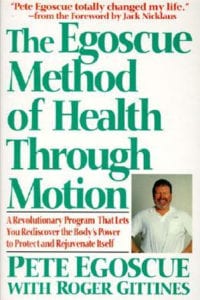
The Egoscue Method of Health Through Motion: A Revolutionary Program That Lets You Rediscover the Body’s Power to Protect and Rejuvenate Itself
I had hired a coach previous to that. His name was John Assaraf, who you might be familiar with and the movie, The Secret. Through John, I learned how to use the internet. I learned how to do websites, SEO, drip campaigns and video marketing. I learned how to get my message out to the world. Now, I can tell everybody about how great I am, but the only problem was what am I going to say that doesn’t make me sound bad, desperate or like I need new patients. Since I didn’t know what to say, I bet a lot of your audience is this way. When you don’t know what to say, so you don’t say anything for fear, which is what I had. As a professional, you don’t want to look bad to the public by what you say.
I didn’t say anything until I heard John interviewed Simon Sinek. Once I heard about this concept of why, how and what, it made so much sense to me. I was like, “That is the missing piece. I’ve got a great what but I don’t know my why. Until I know my why, it’s going to blend in with everybody else.” I became obsessed with discovering my why. That’s when I called Simon. I said, “Simon, I need you to help me discover my why.” He said, “That’s not necessarily what I do, but let’s take a stab at it.” He and I spent about eight months together, going back through my life, looking for clues as to why I do what I do. As we kept working and working, I finally figured out that my why is to find a better way and then share it. My life made so much sense to me. That’s why I developed this chair. That’s why I’ve made the decisions I have. That’s why I haven’t made other decisions. It was all based on finding a better way and then sharing it.
Since that was the case, I went and took what Simon was trying to do and made it better. First, I went from 6, 8 or 10 months to helping people discover their why in about an hour. I can sit down with you, John, and take you through this series of questions. We could develop your why and discover your why in about an hour. I did this so many times all over the world, on stages, on Skype, in different languages that I started to keep track of all the whys that I discovered. I figured out that there are only nine different whys. That was the most important thing I discovered because once I saw that, then I could help someone discover their why in about fifteen minutes. I got more data, developed the algorithm and wrote the software to where you can now go online and discover your why in about five minutes.
Let’s take a pause on all that incredible journey from figuring out yourself, interviewing enough people, and then figuring out a way to automate it so that people can now do that. Let’s zoom out again when companies or coaches don’t know their own personal why, they have a very hard time expressing it in their marketing materials, LinkedIn profiles, and the messages when they’re talking to potential clients. Once you figured out someone’s why, the next steps are now the what fits into the why and the how much like Simon’s talk. Can you give us a story of what you did with your dental practice once you found out your why? What did you say in your marketing materials that made potential patients care that you want to know or find a better way of doing things? You had to figure out what it meant to them.
This is something I know that’s important for you, John. That is authenticity. That’s why telling a story is so important because it’s authentic. When you develop your message, it has to be real. It can’t be some marketing firm that goes into a closet and comes back out and says, “Here’s what you’re going to say, John. Here’s what I want you to talk about yourself.” That doesn’t feel good. It doesn’t feel right. It’s not authentic. It’s not truly you, so you don’t want to say it. When it comes from you, that’s the big difference between knowing your why and not knowing your why. You can not only understand yourself, but you’ll have the words to articulate your message to say it. Your branding, messaging, marketing and culture all become based on your why.
The simplest example is a radio spot that you got in millions and millions of dollars that people are going to love that will bring it all the life. In that radio spot, you’ll notice that I don’t talk at all about crowns, bridges, fillings, gum care, X-rays, pricing, none of that. It’s all based on what we believe that life is better when you have great teeth. You can’t have a good life when you have bad teeth. There are so many people who are being held back from who they were meant to be by their teeth. It doesn’t have to be that way. We’ve developed a process where they can sleep through their visits so they can get the smile they’ve always wanted smile so they can be who they were meant to be. You’ll hear that in the radio spot and it’s very powerful. Often, we get people who are coming into our office saying, “I was driving down the road. I heard that radio spot and that is me. I know I’m in the right place.”
That’s your headline on your website, “Great teeth, better life.” That is connecting the dots. You figured out that your why is all about a better way. Your better way in this case was people hate going to the dentist. Let’s not pretend that’s not a thing. They’re not only worried about paying, but they’re also worried about being scolded, “You’re not flossing enough.” You addressed all of that on your website, which then people go, “He has found a better way for me to not dread going to the dentist.” Would that be a fair connecting of the dots?
It’s very much, no scolding, no lectures, just a healthy mouth in about an afternoon.
[bctt tweet=”When you are passionate about what you do, you have unlimited energy.” username=”John_Livesay”]
People are like, “I’ll do it. Why do I need to be?” We can get into all the details. I happened to be passionate about this study as a hobby that oral health connects to your heart health. Most people aren’t even aware of that. Your premise is based on science again that you can’t be having your best life if your mouth isn’t healthy because we all know heart issues. It’s this concept of, “Why then do I avoid it?” It’s like, “Why do I avoid exercise?” You’re going, “There’s a better way to exercise. There’s a better way to sit in a chair. Now, there’s a better way to take care of your teeth so that you can have a better life.”
What I work with people on is, “We have to grab their attention.” What you’ve done is you’ve taken your why and used it to stand out from the clutter. Instead of just saying to somebody at a cocktail party, “I’m a dentist,” you’re saying, “I help people have a better life.” You might even leave it at that. They’re like, “What do you mean?” “I help people get over their fear of the dentist and the dread of it.” That is a much easier thing to remember and certainly something to look at. If you’re looking for dentists and you hate going to the dentist, he’s promising a better life. It doesn’t matter. They don’t need to know. That’s connected to your why. That’s what sticks. That’s the story that brings it together.
Here’s another way to say it that I use. Instead of just saying, “I’m a dentist,” I’ll say, “I believe that when you have your health, you have a thousand dreams. When you don’t, you have one.” I help people have a better life and reach their dreams by helping them have great teeth. We’re having totally different conversations then, “How much is a crown? How much is a cleaning?”
It’s that whole premise of, what do you notice about somebody first? Is it their smile? Is it their eyes? Is it their whatever? Your confidence level and everything gets connected to all of that. A lot of people don’t connect those dots. You’ve talked to anybody who doesn’t feel confident that they have a good smile and how that shuts them down and not speaking out. They don’t want to draw attention. They speak with their mouth closed. They’re not putting themselves out there. They’re not living their best life because of this shame and guilt around my teeth are crooked, stained or whatever the issue is that takes them away from not feeling attractive. If you can fix that, then the emotional stuff starts to come and soar.
The great part of this interview is, how do I apply this to my career? You have these nine whys. Do you find that people who have similar whys get along better? Your why is to find a better way of doing things. Mine from taking your test is to clarify. Do you find that people who like to clarify get along with people who like to find a better way of doing things? Is there any connection between the compatibility between the whys?
What we haven’t talked about yet is there’s your why, how and what. What I found is that 1 of the 9 whys is your why, 1 of the 9 whys is your how, and 1 of the 9 whys is your what. My why is to find a better way. How I do that is by making things clear and understandable to clarify like you. Ultimately, what I bring is a simple solution, which is simplify. My why is a better way, my how is clarify and my what is simplify. Your why is clarify, which is right in line with how I think. In my case, if it’s not better, clear and simple, I don’t want it. In your case, it’s got to be clear.
We’re speaking the same language. We’re just emphasizing one over the other, but it still feels like we’re in the same lane. One of the outcome is when people hire you to speak or take your workshops to all these companies. If you’re trying to get your boss to take action, promote you or approve something, and you know their why, how and what, and you phrase things in that lens, you’re not asking them to shift gears at all. I think that is the secret sauce. The other thing that you had said that I want to bring out is there are a lot of other companies that are known for testing personality types and people trying to figure out all that, but you’re not in that competitive set at all or before that. Can you clarify that?
There are a lot of great assessments out there. There’s Myers-Briggs, Kolbe, StrengthsFinder, DISC. You go on and on. They are awesome assessments. They are all about how you take action, but not why you take action. The why is the essential first step. When you are trying to figure yourself out, your culture, your marketing or your messaging, the first step that you take is discovering your why, and then everything else will make a lot more sense to you. You’re starting with your why and then your how. Your how is all these other assessments. They’re great, so you use the why first and then you see the other assessments from the perspective of your why. They’ll make a lot more sense to you. They’ll be much more valuable for you when you look at them from the perspective of your why.

Discover Your Why: Telling a story is so important because it’s authentic. When you develop your message, it has to be real.
We’re not competing with them. We’re collaborating with them. Whichever one you like the best as far as understanding your how, that’s great. That will work for you. What’s interesting John is when I talk with a lot of coaches, consultants or speakers, you hear them often refer to the why, “We love the why. We love Simon Sinek’s work. In fact, we help our clients discover their why.” I say, “That’s great. How do you do that?” They’ll say, “We read a couple of books. We talk about different things going on in their lives. We look for clues.” I say, “The client you’re working with right there, what is their why?” They’ll say, “We’re still refining that. We’re working on that.” I say, “What is your why?” They’ll say, “I’m still working on mine too.” It has become this airy-fairy, mysterious thing helping someone discover their why. If it’s that critical, how can you not know it? How can you not be clear on it? That’s where the why discovery came in. That was what happened to me. I heard so much about it from so many different experts that I have to know my why, but nobody ever helped me discover it.
In a way that was scientifically backed up and you’ve done that with the algorithm. The analogy for me is anyone building a house knows you must have a strong foundation. Anyone building a practice, whether it’s a dental practice, coaching practice, sales team, etc., you have to have the why as the foundation. If it’s airy-fairy, you’re not solid and it changes with the wind or whatever the latest trend is, then that’s not how you build a brand. I wanted to give the readers another example of using these nine whys in a format you gave yours so eloquently.
For me from taking the test, it instantly resonated. I am all about my why is to seek clarity. How I do it is teaching people how to tell stories which then creates authenticity and builds relationships built on trust. In sales, that’s what you need. The what of what all this comes down to for me is we found a better way to sell. It’s not pushing information out. It’s pulling people in with stories that target their heartstrings. That’s how I’ve processed this. It gives me a completely different framework to explain what I do.
Let me take a stab at it as well. For you, things have to be in clarity. The only way to get clear on what we’re talking about is to enhance it with a story. Your why is to make things clear and understandable. How do you do that? It was by making sense of these challenges that people are facing. It’s taking in all this information and boiling it down to the thing that’s keeping them stuck. What you bring is a better way to help them move forward, utilizing storytelling. Make things clear by figuring them out and understanding them so that you can bring a better way to help them move forward.
If someone else is maybe an engineer, they love making sense out of complex things. That’s their left brain at work. That’s their why, then they’ll have a different way of expressing that in the world. It is so valuable to all kinds of people, whether they’re entrepreneurs or big companies. Do you have a story of a big company that’s brought you in to speak and having the why, how and what formulated and not guessing at it? You have some incredible testimonials. I’m trying to get you to tell the story of one of them. I’ll let you pick.
I’ll tell you two. One quick that will bring it home very simply because everybody knows about Apple. I have not worked with Steve Jobs, but I know what his why, how and what are. His why is to challenge the status quo. How he does that is by finding better ways and what he brings is a simple solution. You see that in his life everywhere, the way he dropped out of school. He didn’t want to do it the way they said he should do it. He found a better way and snuck into the ones that he wanted to go to. He simplified the process. He found a better way and simplified it. You take his why, how and what and you apply that to Apple.
In everything Apple does, they challenge the status quo and think differently. They go into that market, whether that’s phones, computers, watches or the music industry and then they find a better way. What they bring is a simple solution where a 3-year-old and a 93-year-old can use it and do it. Their why is the exact same why, how and what as Steve Jobs. What is Apple’s tagline? It’s, “Think different.” Where do you think that came from? From Steve Jobs. His why is to think differently. All of their commercials and stuff are about thinking differently and challenging the status quo. Your why, how and what are directly related to the why, how and what of your business if you are the visionary.
As you said, people can relate to that. I want to let them have a second to digest that. When I was selling advertising and I had them as a client, they took that because my whole passion is getting people to see themselves in the story. We were talking about when you communicate and you know someone’s why, it’s much clearer. They go, “Think different, not differently.” Even that alone makes you go, “What? Are you doing something a different way?” They would show people in the ads who thought different like Picasso and you would say, “Oh.” It begs the question, “Maybe I don’t relate to Steve Jobs, but I relate to Picasso. I’d like to be the Picasso of my business, even if I’m not in the art business.”
[bctt tweet=”Pain is a motivator.” username=”John_Livesay”]
By having those kinds of people in the campaign, that’s a great example of the WHY Institute at work because it kept going. It’s not just Picasso, it’s Amelia Earhart. It’s all these people, Maria Callas. It makes you want to know their story. What I love so much about what you’re doing, what we’re doing and why there’s such synergy is, why are those three people chosen to represent think different and bring that why to life? There’s a story that you have to understand of them thinking different like Cubism in Picasso’s case or not letting the fact that you’re a woman stop you from flying and all that. That’s where people are pulled in. The same thing is true whether it’s a dental practice or a Fortune 500 company. Now, your next story.
I was called by a gentleman. He was the CEO of one of the larger investment firms, a $565 billion investment firm. I had helped him with one of his daughters, who was struggling with some things. He said, “I own about 1,500 companies. I’d like you to start working with some of them.” I said, “Okay.” The first one was one of the larger venture capital firms on the East Coast. I went out and worked with the executive team. I took the CEO through discovering his why, which was trust, creating relationships based upon trust, being that trusted source.
What they wanted us to do was redevelop their website, messaging, marketing and more specifically, their presentation deck because they needed to raise a lot of money for their next round. We did that. We went through all of their belief statements and created their tagline. Their tagline became, “Trusted relationships, better outcomes.” We redid their deck. They had all the right things. It was all in the right order to tell the story. They raised $300 million in that next week. He gave me a $10,000 tip. I’ve never had a $10,000 tip. He said, “How much do we pay you?” I told him and he went, “That’s not enough.”
Talk about over-delivery, that’s fantastic. That’s a better way to get paid is to have so much value that people decide they need to pay you more.
That was quite a fun experience. They won. We won. Everybody won. It was a great experience for us. They love the results. They’re still using it. There are lots of stories like that. I’ve done it with school systems, cities, country clubs, banks and so many different kinds of businesses. We’ve gone through this same process. Locally here, we’ve got a country club that had gone bankrupt. We went in, worked with the new owners, developed their why, how and what and used that for their tagline, website and branding. Now, they have a waiting list. It’s on fire over there. There are lots of stories that way. When you get that right, when you start with the right foundation, all the rest becomes a lot easier.
You’re cutting through the clutter. People go, “This is for me. This is not for me.” You’re not trying to be all things to all people. If people want to interact with you, there are so many options. They can listen to your show called Beyond Your Why. They can go to the WHY Institute website and take their WHY quiz and get the results very quickly. They can hire you as a speaker. Companies can put their team through your workshops and training programs. I might be missing something, but please expand if I have.
If you go to the website, there is the WHY Discovery there. You can take that as your first step, discovering your why. The next step is we have launched the WHY.os Discovery, what we call your why operating system. That’s the system that drives you, which is your why, how and what. There will be a discovery there. You can go online and discover your why, how and what. There are ways to either use that to get on the right career path or take your business to the next level, depending on where you’re at in your entrepreneurial stage. Any of those would be great.
It’s not just for yourself but for other people. There’s always an unspoken question when I’m working with salespeople that they need to address, which is, “Will this work for me?” If you’ve told a great story and people see themselves in the story, the answer is yes. They want to go on the journey. What I love and admire so much about your work, Gary, is you’ve done it for yourself. You weren’t somebody who’s like, “I’m going to figure this out and try to see if I can help coaches and their clients figure out their why.” You were like, “No, I’m an entrepreneur. I helped my dental practice soar.”

Discover Your Why: Knowing your why is the essential first step.
You’ve got a proof of concept that works for you. A lot of people might be saying, “I’m still not a dentist. I’m not as smart as Gary.” You go, “No, it works.” As you’ve listed, banks, country clubs, companies, then we start to say, “It would work for me because it’s been proven and it’s scientifically backed.” It’s not something that changes with the wind or the time of day you were born. It’s complementary to existing programs that people might have to see what personalities will work in certain cultures.
At the end of the day, all of this is helping us emotionally connect and communicate. That helps you break through the clutter, but more importantly, it makes you feel seen, heard and appreciated. That’s what the best people, leaders and companies are all doing. They pull people in. You’re doing it in such a way that’s accessible for people without them having to stay stuck in this land of confusion. I can’t thank you enough for being on the show and doing this incredible work that the world needs more than ever.
John, thank you for having me here. I’m a fan of what you’re doing. I appreciate you helping me bring this to the world. Our vision is to be that essential first step in self-awareness. Our goal is to reach one billion people in the next five years to help them discover and live their why and make decisions based upon their why. That’s where we’re headed. I would love for everybody to help us be part of this. It’s going to be a fun journey for everybody involved.
Because if you know that, then you don’t have any regrets on your deathbed. That’s what everyone’s fear. Thanks again.
Take care, John.
Important Links
- WHY Institute
- The Egoscue Method of Health Through Motion
- John Assaraf
- Beyond Your Why
- WHY.os Discovery
- Better Selling Through Storytelling Method Online Course
Wanna Host Your Own Podcast?
Click here to see how my friends at Podetize can help
Purchase John’s new book
John Livesay, The Pitch Whisperer
Share The Show
Did you enjoy the show? I’d love it if you subscribed today and left us a 5-star review!
- Click this link
- Click on the ‘Subscribe’ button below the artwork
- Go to the ‘Ratings and Reviews’ section
- Click on ‘Write a Review’
Love the show? Subscribe, rate, review, and share!
Join The Successful Pitch community today:
- JohnLivesay.com
- John Livesay Facebook
- John Livesay Twitter
- John Livesay LinkedIn
- John Livesay YouTube