

Social Selling With Tim Hughes
Posted by John Livesay in podcast | 0 comments

Do you have a hard time driving more leads from your LinkedIn account? Are you spending most of your time on your social media accounts? In this episode, Tim Hughes, the co-founder and CEO of DLA Ignite, discusses the social selling strategy to influence buyers and change makers. People are looking for experts that can help them. Tim Hughes suggests three things to attract leads: Build a Buyer Centric Profile, Network, and Content. Learn more from these three things to attract leads for your business. Tune in to this episode now.
—
Listen to the podcast here
Social Selling With Tim Hughes
Our guest on the show is Tim Hughes, the author of Social Selling. We talked about how to build trust, how to use social media, and most importantly, how to create a buyer-centric profile. Enjoy the episode.
—
Our guest is Tim Hughes, who is universally recognized as the world leading pioneer and innovator of social selling. He’s ranked number one by Onalytica as the most influential social selling person in the world. In 2021, LinkedIn said he was one of the top eight sales experts globally to follow. Brand24 announced that he was the sixteenth most influential person in marketing globally based on measured social media influence.
He’s also the Cofounder and CEO of DLA Ignite, and the co-author of bestselling books, Social Selling: Techniques to Influence Buyers and Changemakers and Smarketing: How to Achieve Competitive Advantage through Blended Sales and Marketing. He has launched a second edition of Social Selling: Techniques to Influence Buyers and Changemakers, which that’s been completely updated. Welcome to the show, Tim.
Thanks for having me on and spending time with me. I’m really excited.
I think this topic of influence is always something someone’s so interested in. More brands now are saying these earned impressions, people’s recommendations, and word of mouth, coming from someone that people trust are even more valuable than paid impressions. Before we get into all of this and how you became this influential social selling person, I want to hear your own personal story of origin. Did you grow up going, even before the internet was created, “I’m going to conquer this world,” or were you just the young boy at college that you could convince everyone to go to your restaurant of choice versus others? How did that all begin?
I’m a salesperson. I didn’t actually even know what sales was until I was in my twenties. I got into a graduate program at a company like many computer companies that were around in those days. It doesn’t exist anymore. I was in a technical role because I did Electronic Engineering. I made the mistake that a lot of young people make, which is I saw these technical people who were amazing and I thought, “I’m never going to be like that because it’s going to take me so long.” What we always do is measure things by 0 to 100, and we see the experts who are 100, and what we need to do is go from 0 to 1.
I was looking around for something else, and I could see these people out in the car park who had company cars. In those days, they just had started having mobile phones. There were these massive big brick phones. I thought, “I quite fancy some of that.” I went and started working. I got a job working with sales teams. When I was doing that, I really enjoyed it. I then moved into sales. I have now been in sales for several years. That’s my background, new business sales. I’m always the person that goes out and finds new customers and builds trust really quickly.
Let’s dive into that. I have worked as a sales keynote speaker with lots of different companies. I usually get involved. When they are already invited, they have done the RFP, they are in the door, and it’s between them and a competitor. This building trust quickly, especially for those people who have to cold call, I don’t think a lot of people think about cold calling as still a thing. Whether it’s somebody knocking on your door saying, do you want solar panels on your home, to all the medical sales teams that have to cold call on doctors and dentists, to try and get their attention? Let’s start with that because that’s one way of getting new business, and then there’s the other way of getting new business where you fill out a proposal, and you are invited to present. You cover both, I’m guessing.
In the past, I have sold to government organizations where you fill in RFPs. What you are trying to do is actually influence that early, so you are going out and you are contacting people. I started selling back in the ’80s when there was no internet and mobile, and you are just given a printout and said, “Go and call these.” That’s how I started. It was about making sure what you are doing is being able to come across as being the expert.
I started off selling payroll systems. I didn’t know anything about payroll and its technicalities. What you start doing, you start learning about it. You start learning about the verticals that you are selling into and stuff. What you do is feed off one conversation and take it to the next one. You take one conversation and use that as a way of asking questions. It’s that organic thing that takes place.
[bctt tweet=”Make your profile buyer-centric. Social selling is not about you.” username=”John_Livesay”]
What do you think is the biggest mistake people make when they are trying to build trust?
I wanted to set the record straight. As an organization, we have never cold-called ever. We have not ever made one cold call. We have never ever sent a spam email. We don’t have an email database. We deleted it in 2018 to be GDPR compliance. We have never placed an advert. What we do is we are an organization that teaches social selling, and therefore we see ourselves as the highest watermark in the industry. People want to see what good social selling is. They come to people who work for DLA Ignite because we are the high watermark of that. What we are doing is, if you think about what I did in the ’80s, going out and having conversations with people, but I’m doing that on social media rather than necessarily using the telephone to get it.
That doesn’t mean that we are anti-telephone. Sometimes people think and say, “It doesn’t work for us because we can’t do all of our business on social media.” I totally understand that. This is about using social media as a platform for you to get conversations. In the past, I used a telephone as a way to get through to people and start conversations. What I sell and what most people reading this sell, require us to have a conversation. What I’m doing is I’m using social media, and that allows me to have conversations at scale rather than doing it what I did way back in the ’80s.
Let’s loop back to my question because I think it still is relevant, your social selling and reaching out to people of let’s say, LinkedIn. I see one of the big mistakes people make is they ask people to connect, and then they try to sell them something in the same conversation. I’m sure you have examples of other mistakes like that.
The issue that we have now is way back from the 1980s, what we have always done is that we have used interruption as a way of selling. To make a cold call, I interrupt you and pitch. When I send you a spam email, I interrupt you and pitch. When I place an advert, what I do is I’m interrupting your day and basically pitching. Everybody thinks, “Therefore, that’s what you do in sales, you interrupt people.” They go to social media, and what they miss is in the title, social media, which it’s media where you are social. What you will find is that you have got a lot of people, for example, posting brochures. You research shows that nobody comes to social media to read brochures.
Everybody I talk to, I say, “Do you ever do this with your LinkedIn timeline? Boring.” “That’s interesting. I love John’s podcast.” “What’s he doing in that?” Everybody says, “I do that all the time. Don’t the organization do boring?” What you are doing is that this is not about going to social media and posting, this is about going to social media and posting to get a conversation. That’s fundamentally different. In this show, you introduced me before you started recording, and showed me your website and what you do. All of what you do there is a mechanism to create conversations.
That’s probably the best way to build trust, which is to have conversations.
One of the things about trust, what happens is that you like people who are like you. The other mistake that people make on social media is they think it’s about them, it’s about their company. The thing is, I don’t know anything about you or your company. What happens is I’m actually not interested. I’m not interested in what you are selling until I actually know you, maybe like you, trust you, and at that point when I understand that I have a need. Right now, all you have is you. Everybody goes to the market exactly the same way. What they do is that they say, buy my product because I’m great.
My background is in selling accounting systems in IT. All of the accounting system vendors go to market in exactly the same way. SAP, Oracle, Sage, and Xero all say the same thing. As a buyer, you cannot differentiate. What you can do, because we are really clever at this as humans, I can differentiate and say, “I just spent three minutes with John before I came onto this show. I think that John’s a really nice person. If I went out for dinner, I think he would be really interesting to talk to.” We were talking for 3 to 5 minutes, and I came to the conclusion that you would be interesting to talk to during dinner. That’s because as humans, we are really good at that.
Social Selling: Social Selling is not about understanding LinkedIn. It’s about understanding social media and what it’s like to be social.
I was going to elaborate on that and say trust is transferred. The fact that Hesha Abrams, who’s been on this show before, introduced us that trust gets transferred, “I think this is someone that would be a good guest on your show.” I read your book and bio, and I go, “Yes,” and then we start bonding. That concept of trust being transferred is something I wanted the audience to take away from this interview because you are big on that. Those warm introductions cannot be beaten in terms of social selling. If somebody is liking and comments on a post that you have made and you happen to know that person who liked and commented, there’s an example of social selling in action.
It’s about building trust and building it at scale. One of the things that you get a lot of people saying that they don’t do or they don’t like is, for example, posting something personal. Now, if you think about sales and the way that we have solved it for years, you say to a salesperson. How is it that you get the salesperson to trust you? You say, “I took them to the Super Bowl. We went out for a meal.” I said, “Did you take some brochures?” They say, “Don’t be so stupid. Of course, I didn’t do that.” I said, “What did you talk about?” “I talked about the fact that we like barbecues. We go to France.” “You are talking about yourselves?” “Yeah.” That’s how we bond, we learn about each other.
LinkedIn is a platform where you can learn about each other. One of the sales guys that work for me basically has just posted the fact that he’s taken his dogs for a walk. He’s English, but he lives in France. Now, if you have got dogs that are similar to that, you are going to look at that and go, “That looks fantastic. I can see it’s French the way it looks. I love France.” All of a sudden what you are doing is that you are bonding with that person. I won’t bond with someone posting a brochure or some brochure warehouse, or saying how great their company is. What I do is bond with you because I see that you are a human being.
I have a story about that in action, and then I’m going to ask you to share a story either from the book or what you worked with companies on. I was up for speaking at the Olympus medical sales convention, their kickoff meeting, and it was between me and another speaker. During that process, I saw that one of their VPs at a division had reached out to connect with me on LinkedIn. I accepted the request, and then I started looking at some of the posts he’s made. I instinctively just started liking and commenting on a couple of things I resonated with.
Later he told me that when they had the big meeting and they looked at my book and the other speaker’s book, our videos, and all the other things that he raised his hand, and this is always what you want is somebody to be your inside brand ambassador saying, “I really think we should pick John because I’m trying to teach my sales team to like and comment on the doctor’s social media posts. He did it to me. He walks his talk if he comes in, and encourages our team to do that.” I thought, what an amazing story of social selling in action that got me a speaking job. I’m sure there are other examples of that human connection that you might have to share.
We have got lots of examples. One of those is one of my sales team posts a picture of him and his son on the beach. It happened to be during COVID. It was his son’s sixteenth birthday. There was a lockdown. His son wanted to be out with his mates getting drunk, but he, unfortunately, had to go with his boring dad and they live by the sea and he took some photos. I just wanted to get the figures right. Off that post that he posted, he got 165 likes, 37 comments, and 18,000 views, which is pretty okay, and you would have seen lots of things like that on LinkedIn, but the thing is that behind it is a methodology.
That methodology allowed him to harvest that post to get 124 leads, 6 C-level meetings, 2 proposals, and 1 purchase order, and it took him 10 minutes to do that. Now, there’s not one single piece of demand gen out there that allows you to get that level of traction and results by doing something in that shorter time. That’s just an example of where people are using social media as a mechanism to get meetings and conversations that turn into commercial interactions, so sales.
Now, I think a lot of people reading are going to be wondering, is that post on LinkedIn or Instagram, or does it matter?
That particular post was on LinkedIn. One of the things that we talk about is the need nowadays to understand how to walk digital corridors and have digital conversations. What you will find is that a lot of people will teach you about LinkedIn. It’s not about understanding LinkedIn, it’s about understanding social media and what it’s like to be social. What that allows you to do is to pick up that skill and say, “I need to get in contact with the head of human resources. They are not active on LinkedIn, but they walk their dogs, and they have got two Labradors, and I know that they are on Instagram.”
[bctt tweet=”It’s about building trust and building it at scale.” username=”John_Livesay”]
How do I go across to Instagram, and basically enable me to have a conversation, so I don’t go to the person and say, “Buy my product because we are great.” Everybody says that. It doesn’t differentiate you. What you need to do is to do something different. It doesn’t matter whether it’s Twitter, TikTok, or Instagram, it allows you to walk that digital corridor and have that digital conversation. That’s fundamentally different from, “How do I hack the algorithm on LinkedIn,” which actually doesn’t help you.
What I’m hearing you say is it doesn’t matter what platform you are using, be yourself on all of them. Would that be accurate?
What you are looking for is to be your authentic self. In a world where everybody goes to a market and says exactly the same thing. The only thing that differentiates you is your experience, who you are, and what you believe in. That’s the thing that differentiates you as a salesperson.
In our pre-chat, I was talking about you being in England and I have a King Charles Cavalier Spaniel. I shot a short video of me with a baseball cap on taking my dog out for a morning walk. As I was narrating that, I said, when I took my dog to dog training, the trainer asked me, “Are you walking out the door first or is the dog?” I said, “I guess he walks out first and I follow.” He said, “No, you are making a mistake. Dogs are pack animals. You must be the first person out the door to be the leader of the pack” I just had this thought of, “How gay am I, as an openly gay man, that my little King Charles dog is butcher than I am?” That was me being authentically myself.
Dogs actually like hierarchy. You going to need to be a butch, John.
This dog is butcher than I am because he’s walking out the door fast. That was two minutes, and it was a cute little video. That got so many other fellow dog lovers to comment and connect with me. There are lots of ways to be authentic. I thought you’d like that story.
For those that are reading this to understand, if you post pictures or videos about your King Charles Spaniel all the time, they are going to assume that you are a dog walker. The same as if you are posting pictures of yourself on the beach, they are just going to assume that you spend all the time on the beach. When someone comes to your LinkedIn profile, what they need to see is what you stand for. In the B2B space where I work, what they are looking for is an expert.
You may have read the Matthew Dixon book on The JOLT Effect. What people are looking for is an expert. They are looking for somebody that can help them. When they do that, they are looking to see, does that person have that experience. Also, they are looking to see that if they are going to buy something, they are going to build a relationship with you. How do they do that? There are three things that you need to look at, and this is what we do in terms of helping people. The first thing you need is a buyer-centric profile.
What do you mean by the word, buyer-centric?

Social Selling: HubSpot says that the average person spends 2 to 4 minutes on a website.
A buyer-centric profile is a profile that is attractive to your buyer. The mistake that we all make is that, especially in sales, we think it’s about ourselves, and we think, “We are great relationship builders. I have been to President’s Club 5 out of 6 times.” That isn’t what buyers want. What buyers want is, does that person understand my business? Does that person understand my business needs? Will that person sell something, and then disappear? What we are looking for is someone that’s going to help us. What we need to do is come across as that. Now, the more you share about yourself, and we have done research on this, the more people will walk toward you. This is transformation.
When you look over at LinkedIn and you see salespeople, the first thing you think is, “I don’t like you. I don’t believe a word you say. You are just going to try and sell me something I don’t want.” That’s what buyers are thinking. By becoming buyer-centric, people are going, “I think that person can help me.” We know now, because the research shows this, that people under 30 search more on social media than they do on Google. We actually do it at the same time.
Quite often though, we use Google because we know what we want. Give me the capital of Nigeria. Tell me about the best Italian restaurants in London. The problem with Google is if you go to Google now and put in, what is the best CRM system, it won’t tell you. What will happen is there will be loads of people buying that search.
What happens is that people come to social. Quite often, they don’t know what they want. It’s called discovery rather than search. What’s happening is that they come, and make that discovery. They are looking for people again. It’s about thinking about, how can I get people to come and find me. Now, I’m not saying that you sit at home hoping that people are going to find you. We are going to talk about prospects at the moment. For example, for one of our clients, Namos Consulting, we have taught them how to have buyer-centric profiles. The other thing that we taught them is about building a network. What you need is a wide and varied network as you can.
This is about connecting into the account, so not going to them and saying, “Buy my product because we are great,” actually, going to them and saying, “I’m really interested in what you are doing. I’d love to connect with you because I’d like to learn from you.” This is switching it around from me trying to pitch to you. If anyone comes to you and basically flatters you, you fall for it. What you are able to do is then turn that into conversations.
The way that LinkedIn works is as you build up that network, what you are trying to do is getting the people that you are trying to influence, the customers that you are trying to sell to into that network, and all the people that it may influence them. You are doing that because the way that search works on LinkedIn is that it’s based on your network.
You need to get people in that network so that when they start searching, they will find you. For example, Namos Consulting. We taught them 2 of those 3 things. What happened was that one of the buyers was online looking for what it is that they sell, which is Oracle Consulting. The buyer said, “You look like a person that’s interesting.” He walks towards the salesperson, and you just don’t get that. What happened was that turned into a $2.6 million deal. They have subsequently taken another $500,000 out of that customer. This is what I’m saying, this is where people are using social as a mechanism to get conversations, doing it at scale, and making significant money from it.
You said there are three things, have a buyer-centric profile, build a network, and the third one is?
The third thing is content. Content is important because one of the things that we do when we are buying is that we are looking for content and insight. We are looking to be told things that we don’t know. We are not looking for brochures. Brochures and brochureware sit on the website. If I want to see whether you exist as a company, I will go to your website. HubSpot says that the average person spends 2 to 4 minutes on a website. That’s it. “Okay, they exist. I’m back.” I’m looking for a solution to my problem. I know I have got to talk to a salesperson. What I’m looking for is someone that can help you.
[bctt tweet=”A buyer-centric profile is a profile that is attractive to your buyer.” username=”John_Livesay”]
If people are posting authentic content about themselves, in accounting, for example. I think that the top three things impacting telco companies are the three things. For example, I met the chief financial officer of Vodafone, which is our biggest mobile company. I met that person and said to him, “What are the 3 to 5 things that are impacting telcos?” He told me, “You could walk out of that meeting, and turn that into the content.”
You wouldn’t necessarily mention the person or the company, but you could say, “This is insight.” As people say, what do you think? That would create a discussion. What happens is that would then go through people’s networks. You would then find people finding you go, “This person seems to know about accounting in telcos. I think I need to talk to them.” They then start inviting you in.
As a storytelling keynote speaker, I’m constantly posting clips of my talks on my LinkedIn profile. Part of your job as a speaker is to get through the clutter of all the other speakers out there and get bureaus to want to represent you, so you have all ways to build relationships and all that good stuff. You hear occasionally these, what I was calling urban myths, like an actor being discovered at the Schwab’s Drugstore.
Every once in a while, someone will say, “Somebody reached out to me and wanted to represent me, or they heard me speak,” and I thought that would be amazing. I thought that was just for a very few people that I couldn’t imagine that ever happening. A-Speakers Bureau based in Denmark reached out to me on LinkedIn and said, “We have been following you on LinkedIn. We see your clips, and we think we would like to represent you.” I was surprised.
I can believe that story. We get inbound all of the time. Part of that is you set it up. For example, I spoke at one of Hewlett-Packard’s kickoffs. I had basically decided that Hewlett-Packard was one of my key targets, so I connected to a whole bunch of people at Hewlett-Packard. It’s like a source sitting there simmering on great visuals. They then come and contact you. Someone says, “I don’t believe this social selling works.” You say, “How do you think I have got this speaker gig?”
People forget speakers have to sell themselves.
I have sat in front of so many CEOs. They fold their arms and say, “I don’t believe this works.” I say, “How do you think I got this meeting?”
One of the things I want to ask you about your wonderful book, Social Selling: Techniques to Influence Buyers and Changemakers, is the future of personal branding. Everyone always is interested in the future. Since you have your pulse on the zeitgeist, what do you think the future of personal branding is?
I think personal branding is so important. The thing quite often with personal branding is that people see it as being, I see Kim Kardashian, Brian Solis, and these influencers, and think, “I could never be like that.” This is about them thinking I have got to go from 0 to 100, where really where they need to go is from 0 to 1.
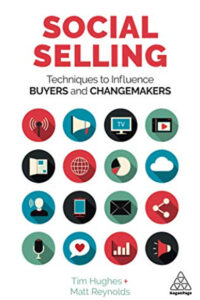
Social Selling: Techniques to Influence Buyers and Changemakers is the future of personal branding
Part of that is saying, “First and foremost, I need to have a buyer-centric profile. I need to do the basics out there to have a profile that is at least attractive to my bias.” Quite often, people don’t understand how to create content. Again, it’s about going to the gym. When I first went to the gym, I thought all the weights were really heavy. After you have been there six months, you go, “These weights aren’t heavy enough.”
Creating content is like a muscle, you just get used to doing it. One of the things that we are still going through a process is getting leaders to understand that this is how you prospect now. Quite often, people think of going onto LinkedIn, changing their profile, and creating content and a network. I can’t be bothered to do it because I have got all these other things to do. This is how we prospect. This is how we as a business run. What people need to do is make that switch to say, “In 2023, we need to stop using 1980s sales methods, and we need to start using 2023 sales methods.” It’s making sure that leaders understand that switch.
I think what you are saying is exactly what I say the old way of doing it is to push out information, as you said, brochures. The new way is to tell stories, which I love to teach people how to tell stories, and you are teaching people how to use social selling. Both of those things pull people in. If your content is story, people remember it, repeat it, and share it. I think that’s really the secret to all of this new way of being magnetic instead of repulsing. You pull people in with social selling and storytelling. Thank you so much. If people want to reach out to you, what’s the best way?
Thank you so much for having me on. It’s been fantastic talking to you. The best place to get me is on LinkedIn. I’m Timothy Hughes on LinkedIn. The website is DLAIgnite.com. I’m also @Timothy_Hughes on Twitter.
Thanks, Tim.
Thank you so much.
It’s so great talking with you. Congrats on the huge success and influence you are having. I’m sure that buyers and sellers are embracing this because nobody wants to be pushy, and you have shown us a new way.
Important Links
- Social Selling
- Tim Hughes
- DLA Ignite
- Smarketing: How to Achieve Competitive Advantage through Blended Sales and Marketing
- Hesha Abrams – Past Episode
- The JOLT Effect
- @Timothy_Hughes on Twitter
- Better Selling Through Storytelling Method Online Course
Wanna Host Your Own Podcast?
Click here to see how my friends at Podetize can help
Purchase John’s new book
John Livesay, The Pitch Whisperer
Share The Show
Did you enjoy the show? I’d love it if you subscribed today and left us a 5-star review!
- Click this link
- Click on the ‘Subscribe’ button below the artwork
- Go to the ‘Ratings and Reviews’ section
- Click on ‘Write a Review’
Love the show? Subscribe, rate, review, and share!
Join The Successful Pitch community today:
- JohnLivesay.com
- John Livesay Facebook
- John Livesay Twitter
- John Livesay LinkedIn
- John Livesay YouTube
Communication Connection: How To Build A Resume That Gets The Job With Daniel Usera
Posted by John Livesay in podcast | 0 comments

First impressions last long, and the first impression usually comes from your resume when it comes to finding the right job. In today’s episode, John Livesay is joined by Daniel Usera, an Executive Assistant Professor at Texas A&M University and a Corporate Trainer and Communication Coach. Daniel is a Nationally Certified Resume Writer and has helped over 500 job seekers find employment by improving their resume, interviewing, and networking skills. He shares the key to building the right resume for getting the right job. Plus, Daniel explains how to improve your LinkedIn page and network successfully. Get more insight on how to land the job of your dreams and build the right connections by tuning in to this conversation!
—
Listen to the podcast here
Communication Connection: How To Build A Resume That Gets The Job With Daniel Usera
Our guest on the show is Dr. Daniel Usera, who is a Communications Consultant, as well as being a teacher of it. He talks about how to have a great resume, how to bring your LinkedIn profile to life as well as how to communicate in a way that has an emotional connection. Enjoy the episode.
—
Our guest is Dr. Daniel Usera, who is an Executive Assistant Professor at Texas A&M University and a Corporate Trainer. His public speaking career started with high school speech and debate, where he won numerous tournaments and made multiple state championship appearances. He then earned a scholarship to do it for Washburn University, where he was a nationally ranked Debater.
After earning his Doctorate in Interpersonal Communication from the University of Iowa, he decided to enter the workforce to gain some valuable industry experience to complement his scholarship. He started as a career coach at a Workforce Development Center in Kansas City, Missouri, where he helped over 500 job seekers find fulfilling employment by improving their resume writing, interviewing and networking skills.
He joined the National Resume Writers Association and became a Nationally Certified Resume Writer. After realizing there was a large market of working professionals seeking his expertise outside of the center, he started his own career consulting business in June 2015, where he produced job-winning documents and interviewing coaching for hundreds of professionals across several industries.
As he now transitioned into a business in corporate training in April 2009 where he teaches essential communication skills, including presentation, customer service, and teamwork, Dr. Usera has held an academic appointment at the Arkansas State University, California State University Channel Islands and Austin Community College. At each institution, he taught Business and Professional Communication courses that helped both graduate and undergraduate students launch their careers and improve their communication. He continues to teach graduate-level Business Communications at Mays Business School. Welcome to the show, Daniel.
Thank you, John. Thanks for having me.
That is certainly a great little insight into how you’ve got to be where you are but I want you to expand on it and you can start anywhere in your career. You could even start younger than where you started all of this training in public speaking. How did you know that this was where you wanted your career to go?
When you are a kid, the world is very open to you and there’s no limit to your creativity, you always have that big dream. That’s a little bit out there. I still remember in 1st, 2nd, and 3rd grade, I wanted to be in the NBA. I saw this movie about Isaiah Thomas with my brother and I was super inspired by his story of how he overcame injury and played good basketball for the Pistons. I was super inspired and the takeaway was I want to play basketball like Isaiah Thomas, but then early on, I was playing Pee Wee basketball and we had this tall red-headed kid in our grade. His name was Billy.
I remember the very first Pee Wee game, I thought I had a good game but I take my first shot and he’s way taller than me. He just packs the ball. You have that moment where you were like, “Basketball is fun but I don’t know if I’m going to be tall enough.” Once you see all these other kids playing and I have a lot of work to do but for a long time, I thought I wanted to become a sports psychologist and do that for a while. I’ve got interested in Psychology. My sister is three years older than me but she’s two grades ahead of me. When she was a sophomore, she started doing a debate in high school. I didn’t think much of it at that time but at dinner time, we would eat dinner as a family, she would start telling stories about her debate experiences.
[bctt tweet=”Research is Me-search.” username=”John_Livesay”]
She would be talking about this one team said this thing, and then I went up there and I said this other thing. She made it sound really cool and fun. When I became a freshman and she was a junior, I started at my very first tournament and she had already built a reputation of being an excellent speaker and an excellent debater. She set the standard of, “You set a standard,” if you will. When I first joined the team, my nickname was Little You because my sister Marissa was the big person. She had laid down the path and it set the standard. I did well at my very first tournament. My sister helped me and she helped me get better.
I ended up building a whole career of my own while she was there. After she left, I went on with it. During that time in high school, I fell in love with speech, debate, speech competition, persuasive speaking and formative speaking. I was doing well. I was pretty much the varsity in my freshman year. I did some state competition all four years and got a scholarship to at Washburn. I thought I was going to be a lawyer. All of these speaking skills and such, I thought, “I’m going to be a lawyer when I go to college and maybe a politician. Who knows?” I started watching lawyer shows in high school. I watched The Practice, Boston Legal, Law and Order. Do you watch any of those?
All of them. Ally McBeal, even.
I did not watch that one because I heard about the dancing baby thing. I was totally enamored with the legal field but in college, I majored in Pre-law, took Political Science and also Communication because I figured, “I was good at it, might as well get a degree in it.” It’s a double major and then minored in Philosophy. In my sophomore year of college, I had this Political Science professor named Dr. Beatty. He was young-ish, maybe 40s or late 30s, something like that, but he made professoring looks so much fun coming to class so energetic, happy, lots of knowledge and experiences. He had met Gorbachev. He had been to North Korea.
He had done all these things. One day in the middle of class, I was thinking like, “I could become a lawyer but I was hearing all these stories about it being 70 hours a week paper-pushing.” One of my fraternity brothers who graduated got a law job or he’s an alum. He was talking about the works in a telephone booth-sized office. He’s working all the time. In the middle of my Political Science class, I thought to myself, “What if I became a professor instead? It has all the skills that I want and all the passions that I care about.” After that, I said, “Sure. It looks like fun,” and no looking back.
To this day, I still wonder you have those key moments in your life where you have to make a big decision. I call them the forks on the road. When you have made decisions about moving to Austin or you have made career decisions, it’s like this big fork in your life. You are like, “If I go left, what would my life look like? If I go right, what would my life look like?” You don’t get to know what would have happened if.
It’s a whole another story even deciding what university you go to. You realize that one decision impacts who you meet, your life, your choices, changing majors and all of that stuff. There’s a movie years ago with Gwyneth Paltrow called Sliding Doors, which is all about in one scenario, she catches the subway in time to catch her boyfriend having an affair. The other one, she doesn’t catch the subway and she doesn’t catch him. It completely changes, whether she stays with him or not, and how that impacts the rest of her life. It’s constantly cutting back and forth.
I love anything around changing one decision. There’s another story playing and in another channel, you never get to see. The thing that fascinates me about your PhD is that your dissertation on online dating interactions. How did that come up? That’s an evergreen topic for goodness sake. First of all, I usually don’t understand half of them. The other is it doesn’t sound interesting to me but this definitely sounds interesting. What was your look at it? Has it changed now since you did it?
I had a professor and actually in the actual dissertation. I quote her saying it, which was a little bit unconventional for a dissertation because it was just a one-sentence foreword. It was, “Research is me search.” At that time, I was studying Interpersonal Communication, particularly persuasion, and this concept is called Facework. Facework is the idea that we all portray a particular image in interpersonal interaction. The image can vary from audience-to-audience, context-to-context. Sometimes an interaction stink puts our image under threat.

Communication: Face work is the idea that we all portray a particular image in interpersonal interaction, and the image can vary from audience to audience, context to context.
For example, if I say, “I’m a very smart person who knows everything about communication,” and then you ask me a basic communication question and I don’t know the answer. I put out this front or the space that I’m this smart guy, but then you call me on it, which is a simple question, and I don’t know the answer. Something has to happen called face work. I have a face threat here. There are different strategies and tactics that I can do to try to make up for the fact that I didn’t know the answer.
It’s quite amazing what the human mind will come up with. It’s predictable what people will do to a degree. I was interested in all that, but then online dating was this booming thing. At that time, I was doing online dating. As a guy on an online dating site, I was always like, “I wonder if I’m doing stuff wrong. What can I do to improve my own profile? How does that tie into what I’m interested in?” In the dissertation, you are spending a year writing, researching and talking about something. When you go to academic events and you say, “I’m writing my dissertation.” You have to be ready to talk about it. I want it to be interesting that means something to other people but also means something to me because I’m the one who has to do all the late work of this.
My advisor would help me a little bit. He was great, don’t get me wrong but the whole point is it’s supposed to be yours and only your project. I picked something that I thought would be interesting, timely and useful. I went with online dating plus, a lot of the dating research had limitations. It wasn’t even a purely selfish thing.
When you study First Interactions like opening interactions between two people who are potentially interested in each other, usually, it’s done in the context of speed dating and speed dating is a context. The problem is speed dating has its own context. It’s rare. It’s not a naturally occurring context. You have to go to speed date and you know that somebody is recording you. That’s going to put you off a little bit.
It’s going to change things. You can’t secretly mic up people in a public setting and then say, “Go talk to people at a singles bar, and secretly, you can’t do that IRB.” What you were able to do is ask people to submit conversations that they have had with people anonymize who they send it to because online dating is already anonymous but to a larger degree, any identifying information and look at the conversations themselves. What I was interested in was, how do people begin the conversation? What were the first messages like? What was those opening? What kinds of topics do people talk about?
There are five different types of openings that I found in my data based on people mostly submitting from OkCupid and Plenty of Fish. Now, I don’t remember all five but there are things like the phatic opening like, “How is it going?” Something that’s like, “How was your weekend?” There is something like the profile opener where you talk about something in their profile, and a random opening in which you asked some random questions. I still remember one, it was like, “Pizza or sushi?” That was literally the first.
It couldn’t be shorter, could it? It could be less threatening.
The person responded. They had a fun conversation. Most of the messages I saw were ones that led to a conversation. It wasn’t just all these bad ones. Somebody submitted pretty bad ones but it was a qualitative study. I couldn’t make generalizations about, which ones work better than others. It was more of what were the types and how did they play out conversationally. It was called Conversation Analysis. It’s what I did.
What I find so fascinating is it directly applies to people’s LinkedIn profiles. Of course, you are not trying to date but it’s the same conversation. How do you reach out to somebody that you don’t know on LinkedIn? How do you open that conversation? Many people make the mistake of you want to connect and I want to sell you something. They are asking someone to marry them that they haven’t had a coffee date yet.
[bctt tweet=”When you network, focus on giving, not getting.” username=”John_Livesay”]
It feels like spam because it’s a sales pitch right away.
A lot of it is. Sometimes, it’s artificial intelligence now looking for certain titles and sending the same email out every day to 50 people or whatever. I do a whole thing toggling back and forth between dating and business in terms of going from invisible to irresistible, and jumping the gun. Being stuck at the friend zone at work is a big soundbite of mine where you get people to say they are interested but they never buy. It’s almost like, “I’m not going to date you because you are in the friend zone.”
The dating stuff now has evolved where they try to help people. “Here are six things you could click on and not even have to type now an opening to a conversation.” The other thing that I instantly find that would let me know that’s not somebody I want to date is when they can’t come up with anything more interesting to say than, “How long have you been on this site?” It’s like, “What am I, a house on the market? You can’t think of one other thing to ask me than that? That’s the last thing I want to talk about.”
It reminds me of The Office, Michael Scott. He’s like, “I’m a dating expert. I have been on 100 first dates or something.”
You are also an expert at helping people to write their resumes. Two questions, the first one is, how closely should someone resume mirror what’s on their LinkedIn profile for consistency purposes?
Here’s the interesting part. Your resume is supposed to be targeted towards a specific job posting, and somebody can have 2 or 3 different resumes depending on the degree of difference between the jobs that they are targeting. For example, if somebody’s account is targeting accounting, let’s say. They have an Accounting background and they should make an accounting resume. That’s geared towards the accounting job postings that have those keywords from accounting job postings and make it sound like you are a born and bred accountant. If that same person is also like, “I like marketing too,” then they need to have a marketing resume that takes their work history and highlights the marketing aspects of their work history, and then sell themselves as a born and bred marketing person. Now, that’s the interesting question.
That’s fine because companies aren’t going to know which resume you submit to where if you apply a Deloitte for an accountant and then XYZ marketing company in New York. They are not going to know how you are selling yourself. On the LinkedIn side, that’s where things get a little bit interesting. You might keep your LinkedIn profile a little bit more generic and talk more about you are a professional overall in these two areas and here’s where you’ve excelled in these two areas. Your LinkedIn becomes more of a broad, full story of you. The resume is an opener that leads you into the funnel of your LinkedIn but your LinkedIn should do.
The resume is boring basically. It’s texts. It’s very technical, resume speak, summary, key skills listed out, your work history, maybe some accomplishments highlighted, bullet points and all that but it’s still very two-dimensional. LinkedIn should be what makes you four-dimensional. This is where you get to share stories. Linkedin is where you get to share videos, share pictures of you accomplishing those things and should be a story page more than anything else. The idea is that you put your LinkedIn profile on your resume and you should be hoping they click on your LinkedIn profile because your LinkedIn has everything else that you could put on a resume that makes you look good because LinkedIn is also a branding enterprise as well.
LinkedIn has allowed you to create a short little 29-second video on your headshot.

Communication: Your resume is supposed to be targeted towards a specific job posting. It’s possible for somebody to have two or three different resumes, depending on the degree of difference between the jobs they are targeting.
You can take advantage of that. Now, it gets complicated because it’s like, “That can lead to discrimination and so forth.” That’s where those things come into play. In the age of Google and search engines, people will find out anyway. If I’m going to be filtered for looking older or looking younger, I would rather filter the process that happened earlier rather than later. Being passed over on the resume side, I don’t think it’s always a bad thing or in the early interview stages if they are screening for bad criteria.
Your resume has to have certain keywords to get past the AI that’s scanning them now to even get you to interview because that’s the big challenge, correct?
Yes. That’s why on the resume side, there are three levels of resume that everybody should have. They should have their super generic resume that has their whole life career history, every single job that you have had. You would rarely deploy that resume ever but let’s say you’re giving it to a recruiter or you are going to put it on a reverse job search like Monster.com, where you post your resume and employers come to you. If you have no idea what you want to do, then maybe you would do that. You have your second level, which is your job-type resume. You will have an accounting resume, and then your marketing resume, let’s say. You then have your third level, which is your company job-specific resume.
It branches off the accounting resume, for example. This is for the accounting position at Deloitte and it’s keyworded directly to Deloitte’s job posting. Whatever Deloitte’s job posting highlights, I’m going to highlight that summary and all that. On the marketing side, ABC company. It’s three levels and it gets more specific. What you send to a job board or a job link is the job-specific resume that you might give to a recruiter. Let’s say, recruiter, comes to you and says, “We are looking to fill accounting positions.” You then would give them your generic accounting resume. You do deploy those but it depends on who you are giving it to.
One of the things that makes you unique is not only can you help someone get all these three different types of resumes. It’s like an investor. Founders need to have three different kinds of pitch decks depending on who they are pitching, then you have the skillset, and I’m going to say expertise, to help them communicate when they do get the interview, whether it’s virtual or in-person because you’re such a communications expert. Usually, someone will say, “I do resumes or I help people with their communication skills.” You could help somebody from start to finish on the whole experience.
I technically can. That’s actually what I do more of. I don’t write resumes anymore. I had fun doing it. When I first went into consulting, I took the dive. I quit my 8:00 to 5:00 job to do resume writing and it was so much fun, but then I realized very quickly that it’s mentally taxing because you have to get to know the person, interview them, you have to figure out how to word this and you don’t always know all the specifics.
Anyways, it’s a lot of fun. What I still do because it’s fun is interview coaching. That’s where we are helping people prepare post-resume. How do I take that document and answer those generic questions, “Tell me about yourself? What are your weaknesses? What are your strengths?” Also, there are very job-specific questions. I’m a full-service guy and I do pitch coaching, too. That definitely resonates too with the idea of the different pitch decks, who you are talking to and all that as well.
A lot of people make a mistake when they are pitching in an investor. They treat them like a customer. If you love this as a customer, you will love it as an investor. They are like, “They have completely different criteria.”
You are exactly right. They have to know the difference between a product pitch and a business plan pitch. It’s nice to know what the product is but what they want to know is, “Is there a market for it? Do you have a production plan? What’s their price point is going to be? Do you know when you are going to be profitable?”
[bctt tweet=”The resume is like an opener that leads you into the funnel of their LinkedIn.” username=”John_Livesay”]
“Do you have a secret sauce?” Any of that.
“What’s your unfair advantage,” as they say? If you say, “Here’s why you need this product, that’s good if they were a consumer.” That’s why business plan pitching is its own thing. I did some coaching with the pitch this summer with that at the contest. It was a lot of fun.
We know you are going to get asked on a job interview after they ask you tons of questions, “Do you have any questions for us?” Some of my friends who have kids on their first job and all that stuff, I try to help them a little bit and say, “What questions are you going to ask them?” I’m sad to say that half of them will say, “How much vacation do I get and when does it start?” They don’t know better.
Your questions are statements in that phase. If my question is, “What’s the tardy policy?” Behind every question is, “Why do you want to know?” I’m asking a question, and then as the inquiry, something that goes through your head is, “What’s the answer and why does this person want to know.” If I say what’s the tardy policy, what’s the vacation, even what’s the pay too early on, there’s a potential statement in there that you may not want to convey at least that early.
The pay is an interesting one because as somebody who you want to make sure that meets your requirements, there are different theories on when you should bring that up. Definitely what’s the tardy policy and what’s the vacation, you don’t want to come across as somebody who may be wanting to use a lot of those.
The question I give them to ask is, “What would it look if I were to exceed your expectations in this job?” You are painting a picture of you are already in the job. Instead of saying, “I’m someone that goes above and beyond.” By asking that question, you are showing it instead of telling it, which is why I love that.
That’s a good generic one too that you can use in almost any phase of the interview regardless if you are interviewing with the HR person versus your potential manager. One thing that I generally coach is part of your interview process when you get ready is you should be doing a ton of homework on the company. You should be looking at their website, mission statement, and products. You should be going to their LinkedIn page and look at their social media. You should become an expert on that company and learn as much as you can about the company as much as possible. As you do your homework, as recruiters call it or your research, some natural questions will probably come up in your research.
What you want to do is prefaced with a little bit of research that you have done. Something like, “I saw on the website that your company announced a partnership with the Susan Komen Foundation. Can you tell me more about how I will be working in service? Can you tell me more about what other initiatives the company is taking towards serving women?” Something like that. Now, I have done two things. First, I showed that I have done my homework, I have done my research and I’m paying attention to this company. Number two, I’m able to use that to ask an insightful question that might be important to me.
It’s a win from both sides, isn’t it?
Communication: Your LinkedIn has everything else that you could put on a resume that makes you look good because LinkedIn is also a branding enterprise.
Yes, because you get that preface in and then you also get that information. Generally, with the questions, you should still ask things that are important to you as a job seeker as somebody who’s going to take on the role. If there’s something unclear in the job posting that you think might be important, for example, when I interviewed for my first job ever, post-graduate school, one of the job descriptions was, teach workshops on the job search. I didn’t know what kind of workshop, so it’s a very easy question for me to ask. The first interview was, “I saw on the job posting that it says, ‘I’m going to teach job search workshops. Can you tell me a little bit more about what those workshops would look like, what the class size might be and how I can best prepare?’” Something like that.
You start by mentioning the job posting and saying, “I read it. I want some particular clarification. I’m paying attention. I know the job posting.” It’s a win-win on both sides. I generally recommend that people write down their questions. Here’s the next part, the delivery of the question. You could ask the questions but what I like to do also for preparation and asking questions is when they say, “Do you have any questions for us?” I will say, “Yes,” and I will pull out a legal pad or a notebook, something professional-looking, and I will already have my questions written out. Sometimes when you do the questions, you forget what your questions are, and then you have to go, “Yes, I had a question. What was it?” You have that.
You don’t want to stumble, so have the questions written out, and then you go to your first question. Have 3 to 5 written out is what I would recommend and then prioritize them. If you look at the clock and there are only two minutes left, pick the most important one. You don’t have to ask all five by any means. You just have five picked out. If they have already answered some of your questions throughout the interview because maybe the interviewer will be conversational and they will talk through things, you can still show your preparation and your listening skills by going through the list and doing something like this.
Let’s say, your first question was about the Susan Komen Foundation. You could say, “My first question was actually about the Susan Komen Foundation and your service initiative with that. What you said earlier was that we are actually going to be doing a lot of events with that, is that correct? Great. Is there anything else that I should know about that?” I can ask a follow-up or I can move on to the second question. “You also answered my second question. My second question was going to be,” and then say the question, “But it sounds like the answer is this.”
You are making them look good like, “We are on the same page because you have already answered a lot of my questions but I’m reinforcing I heard the answers properly.” That’s what builds a connection with people. They go, “We want to hang out with you.” At the end of the day, what you are offering people is the ability to create communications in multiple platforms that create a connection, which is energy.
People forget whether you are a coach, consultant, lawyer or whatever your job is you are selling yourself, people buy your energy. When you are interviewing, you have to stand out in a sea of sameness against everyone else who’s graduating, everyone else who has the skills that are required or if you are an entrepreneur, you’ve got to stand out.
The way to do that is those energy things but it takes some preparation and strategy that you obviously have thought through to help people in these situations. Let’s face it. A few of us interview that often. You are a little rusty and you are crazy to think, “I will just wing it,” versus someone who prepares and ask strategic questions. The big other parts of that are the follow-up. Back in the day, people actually write a letter or a handwritten one even, get in the mail and they would be checking how fast did they do it and all that stuff. Now, it’s acceptable to email something.
I think so, too. I still hear people, “You should write a handwritten note.” I’m like, “Now, it’s a little personal, I feel. Maybe it seems too personal and slow.”
Do you have tips for people like you did with the questions on the active listening part on, the recap on those because you are still selling yourself? We want to avoid those cliché things, “Great meeting you. Thanks for the opportunity.” Everyone says that, so don’t say stuff that’s common as my initial thing.
[bctt tweet=”Going to a networking event is to do two things: to teach and learn. ” username=”John_Livesay”]
Definitely, you want to send a thank you email after your interview with anybody. They gave you their time and this opportunity. It’s an opportunity to reinforce your key points, your summary of who you are, and your branding statement. Depending on when you interviewed and how people they are interviewing, if you were that 9:00 AM interview and they interviewed three more people that day, it’s very easy for you to get buried in memory because you were primacy but a lot of things happen. You want to have another shot to reinforce those memories and reignites the memory bank one more time of you before they decide if possible if you know when you think they will make a decision.
There’s a timing thing that gets involved in. I usually recommend 12 to 24 hours after the interview, send that thank you, email. I don’t want to send it right away when I’m done because if they don’t decide until the next day, I can come in the morning before. I don’t like to be too quick. I feel like you’ve got to let it sit. Maybe the next day after they slept on it because they are more likely to forget about you when they sleep.
It’s almost like the dating thing. You don’t want to be too needy.
That’s what I generally recommend. It’s called the 24 hours depending. As far as the content of the thank you, you do want to thank because after all, it does make a thank you email. You definitely want to start off with a thank you. What I generally like to do is start off with, “Thank you for the opportunity to interview with your company.” I usually say something about what I really like about the company. “In our interview, I learned that you all are driven towards innovating in the green sector and this company is very committed to building a team that will take us to the next level. Here’s what I have learned from what you told me in the interview. Things that you, the interviewer or interviewing committee told me.”
That way I listened again because listening skills are always valuable. I would also say something along the lines, and it depends on what happened in the interview like, “I also know that with my,” then I reiterate 2 or 3 key qualifications in 1 to 2 sentences that basically say, “Here’s why I’m qualified for this role. Seeing how I have done that industry experience and I know a lot about solar panels, I know that we will work well together. If any other materials can further demonstrate my qualifications or sample works that can help you with your decision, please let me know. I look forward to meeting you.” It’s a thank you and a sales letter a little bit but you don’t want to be too overt about the selling because I feel like if you are, it then makes the thank you seen. You have to balance it right.
It’s like a sales call. You need to follow up, it’s a thank you and, “Let’s do this. I really want this.”
That’s more or less the point of the thank you email more than anything else. It’s to indicate that you want this job and you are really interested in the position because here’s what you can also do with the thank you email. Let’s say I don’t want to move on. You may have been there. You interviewed for a job and you were like, “Heck no.” How do you bail out without your burning bridges? You send a thank you email and you say, “Dear company, thank you so much for the opportunity to interview. I enjoyed learning about your company and all the great things that it does. At this time, I would like to pursue other opportunities, but I thank you again for this. I will keep you all in mind in the future.” Something like that and you bailout.
The other thing that is necessary for your expertise is the networking part of this, whether you are looking for another job or not, or you are an employee already, so many people want their employees to network, even if you are not quoted in sales. I know you do workshops and coaching on this. Before I let you go, do you have any tips that you can give people on how to become better networkers, especially if they have gotten a little rusty during a pandemic?
I went to a networking event. That was my first in-person one in a while because of the pandemic. I can definitely understand that. There are a lot you can say about networking. I used to teach a whole workshop on it. If I was going to give some beginner short tips, the first thing is a mindset. Mindset is this. A lot of people think networking events are the place to get things from people. The point of going to a networking event is to get more customers, investors or recruiters to call me. It’s getting mindset.

Communication: Questions are statements in that [interview] phase. Every question is a ‘why do you want to know?’
Getting mindset messes people up because number one, they come in to try hard to the extent that I have seen realtors and insurance agents. I have seen people literally handing out their business cards like it’s a flyer or something like, “Hi, I’m Chris.” These are called cardboard connections, I have no reason because you know you leave the networking event and you have a fat stack of business cards. You have to sort through them.
For that reason, at least to try harder. We call it try-hardism. The second reason is when you go to a networking event, sometimes you don’t meet a client. You based on who shows up. There isn’t anybody there who matches what you are looking for or there wasn’t a recruiter there, whatever your goals are. You start to get frustrated, “Networking events are a waste of time because the one time I went, nobody was there. It’s no point.” If you think that way, you are going to have a hard and bad time.
Again, back to the dating. If you are going to a party, “I have to meet my soulmate or this is a bust. It’s too much pressure.”
The whole point of networking is this. This comes from a book called Make Your Contacts Counts by Anne Baber. It’s a really good book. She puts it well. That’s how I teach my students, too. If you go into a networking event, it’s to do two things. To teach and to learn.
If people want to reach out to you and find out more about, either having you come to coach them, run a workshop on communication or giving better presentations, where should they go?
I have a consulting website it’s www.DanielAlexanderCC.com. I’m also on LinkedIn as well. Send me a connection request on there or a note that hears me on this show. I love to connect with you all. I also teach at Texas A&M. If anybody here decides to get MS in Business or an MBA of any type, I would love to have you in the classroom as well. Texas A&M is climbing the rankings in the MBAs. It’s Top 20, I believe now, in business schools and MBA programs. It’s a great place to be.
Thanks so much for sharing your wisdom and your passion for what you do.
You too, John. I appreciate you, your passion, your energy and all your storytelling. We’ve got to talk more about storytelling. There are a lot to discuss there. Let’s do part two sometime.
Important Links
- Daniel Usera
- Texas A&M University
- National Resume Writers Association
- Monster.com
- OkCupid
- Plenty of Fish
- Make Your Contacts Counts
- LinkedIn – Daniel Usera
- Better Selling Through Storytelling Method Online Course
Wanna Host Your Own Podcast?
Click here to see how my friends at Podetize can help
Purchase John’s new book
John Livesay, The Pitch Whisperer
Share The Show
Did you enjoy the show? I’d love it if you subscribed today and left us a 5-star review!
- Click this link
- Click on the ‘Subscribe’ button below the artwork
- Go to the ‘Ratings and Reviews’ section
- Click on ‘Write a Review’
Love the show? Subscribe, rate, review, and share!
Join The Successful Pitch community today:
- JohnLivesay.com
- John Livesay Facebook
- John Livesay Twitter
- John Livesay LinkedIn
- John Livesay YouTube
Don’t Get Stuck In The Spam Dog House With Patrick Baynes
Posted by John Livesay in podcast | 0 comments

Annoyed by your emails getting caught by spam filters? You need to have a go-to-market plan so you don’t get stuck in the spam dog house. Stay on the right side of the internet and build a positive reputation as a sender. Join your host John Livesay and his guest Patrick Baynes as they discuss how you can increase productivity for better sales. Patrick is the CEO of Nerdwise and he is helping clients by giving out solutions that will help them on their sales journey. Learn how to generate leads and use the internet to your advantage.
—
Listen to the podcast here
Don’t Get Stuck In The Spam Dog House With Patrick Baynes
Have you ever wondered why your emails end up in the spam doghouse? Our guest Patrick Baynes, the CEO and Founder of Nerdwise has the answers for how you can avoid that happening. He’s got a lot of other answers too in terms of how salespeople should be spending their time to get those numbers where they need to be. He said, “Stop hitting brick walls by having bad systems in place. Find out how you can help companies transform their open rates on emails as well as their sales.” Enjoy the episode.
—
Welcome to the show. Our guest is Patrick Baynes who’s the Founder and CEO of Nerdwise. He’s an award-winning entrepreneur and marketing executive. His career started at LinkedIn in 2007, which led to the founding of Peoplelinx in 2009, which was acquired by Frontline. In 2015, Patrick became the CEO of Nerdwise where he leads vision, execution and customer relationships. Welcome to the show, Patrick.
Thank you, John. It’s great to be here. Thanks for having me.
I’m always interested to hear people’s stories of origin. We’ll get to this interesting way to start your career at LinkedIn, which is quite intriguing. Take us back if you would to childhood or school when you went, “I’m interested in computers or connections.” Was it always a dream to run your own company? How did that all start?
I had a moment when I was 16 or 17 sitting in class when I became self-aware. I don’t know if this happens to other people but I remembered having an out-of-body experience and recognizing who I was as an individual and how I was maybe different or unique from other people. I can still remember it clear as day when it happened. I had a little bit of enlightenment around wanting to find my own path and do things my own way.
That’s always been there but the other factor, which is a big opportunity for everyone, is when I was growing up, I only knew about 2 or 3 different career options. My dad was in the military. My neighbors were in financial services. Maybe I knew a football player or a WWE star. I didn’t know a few other people besides what you see on TV. I had an uncle who owned his own company and that made it accessible to me. I could see that path. Tech wasn’t a thing at the time. When I was in high school, AOL was coming up but you don’t think about getting jobs at startups. In any case, the dots connected for me in terms of my career in tech.
In 2006, I saw a video about what it was like to work at Google. They promoted a lot of free-thinking creativity. You spend 20% of your time on the things that you want to work on. You wear what you want to work. Culturally, creatively, it seemed like the best fit for me to look for opportunities in the tech startup sector but also aligned with my interest in starting a business and having my own business one day. That sent me to the search engines looking for tech startups. I got very lucky. That was clever at the time.
I use Google News search regionally. In the regions I was considering moving to, I was typing in a startup tech company, seeing who was making headlines in those various areas. That landed me at an article about LinkedIn opening a customer service headquarters in Omaha, Nebraska. At the time, I didn’t even have a LinkedIn profile. There was like, “If you’re interested in applying, email April Kelly.” It had her email address on there. I sent her a very polite email. I said, “I’m considering moving to Omaha after college and would love to come to check out what you guys are doing.” It was in Omaha because it’s the same founder as PayPal. A lot of the same people. They have about 4,000 employees in Omaha. In any case, I found my way into LinkedIn in the early days and started my track into tech and entrepreneurship.
[bctt tweet=”Spend time on targeted follow-through.” username=”John_Livesay”]
Many people have a dream of making these lists, 30 under 30, Forbes. You made 40 people under 40. Tell us about that.
I’ve coached a few other people who had asked me how I did it. A lot of those lists have a dark side to them. A lot of accounting firms post these top entrepreneurs regionally, nationally and so do a lot of publications like The Business Journals, Forbes, Fortune and Fast Company. The dark side to it is they want to get all of these up-and-coming companies submitting their information so they know who the CEO and founder are. They know all their financial data. Court is a polite word. They court you into being an advertiser, essentially. They give you an award and invite you to dinner. The dinner is $250 ahead if you want to come. They treat you like a piece of meat, to be honest, but it is nice.
Was it Ernst & Young? Is that who you were trying to think of?
That’s what it is. They’re building their database. For Ernst & Young, there might be 40 but they get 4,000 applicants. They get the CEO, founder, their email, financials and a lot of great info. The point is if you want to make one of those lists, you have to know what they’re looking for and they’re looking for prospects. You want to pump up. If it’s a media publication, they’re looking for ad dollars. You want to show that you’re making some money. You can spend some money. They care about things like headcount and revenues.
Maybe if you align a little bit with their brand or their image, similarly for the accounting firms. At the end of the day, it’s the story that you can tell to get those awards. The work that you’ve done, the work you’ve put in to tell those stories is what’s going to get you noticed and get you those awards but there’s a dark side to them.
Were you already at Nerdwise when you got that?
I was at PeopleLinx, if PeopleLinx shot my profile to the moon for a few years when we raised a bunch of venture funding and things. At Nerdwise, we’ve been bootstrapped so not quite as much attention.
The thing that also was interesting to me is the kinds of clients you have at Nerdwise. The one that jumped out at me is years ago. I was selling LexisNexis as a service to lawyers. The premise was if you go into court and your competitor, opposing counsel, has access to the latest case and it’s not in the library yet, they’re going to have a huge advantage over you. It was crazy expensive per minute way before Google Search words on how to find those cases. That is a fascinating company. It’s not the car company for those of you who heard Lexus and thought of the car company. It’s spelled slightly differently. Tell us about that client and what made them pick Nerdwise.
LexisNexis, an amateur where you’re pulling that as a client reference, they’re PeopleLinx client. They were a great client and a great partner. They were a reseller of PeopleLinx, as well as a customer.

Email Spam: In professional services, it’s your people that are driving the business. They are in many cases, the brand, the sales force.
You’re one of the few people I’ve interviewed and I’ve done over 350. When you have someone who’s a customer and a buyer on the other side of the fence, investors love that because you would love it enough as a customer to want to invest in it and vice versa. Maybe let’s back up and explain to people what PeopleLinx did that made LexisNexis want to work with them on both sides of the table like that.
We were the first enterprise level. We could work with smaller companies. LinkedIn focused LinkedIn management platform to help optimize your employee profiles, the types of connections they were making and then the content that they were sharing. We get companies to control over. They could configure, “John, you should have this description of LexisNexis. You should share this article. You should connect with general councils or principals at law firms,” whatever it may be. You could figure those types of recommendations and have teams within your organization that were on a leaderboard competing to be the best on LinkedIn against each other.
It allowed us to provide all this interesting data around how we were improving branding, connectivity into the marketplace, content reach and distribution. We were a little bit early at the time but we were the first in that category. We took off like a rocket ship in professional services because, in professional services, it’s your people that are driving the business. They are, in many cases, the brand, the salesforce. We had all the big four management, consulting companies. We had a lot of the Am Law 100. A lot of financial services companies, Prudential, Allianz, all of them were using PeopleLinx.
We were the most famous company that LinkedIn ever cut API access on as well, which is a whole another story. LinkedIn, not knowing how they want to do, build their ecosystem of partners. They opened up their API. Like any good developer, we built on it. We were a learning platform. We started adding LinkedIn inputs and then LinkedIn said, “We think we want to be in this business. We’re not sure but we think we do.” I spent about six months petitioning them. They cut us off along with dozens of other people. We were a few years ahead of everyone else. That led to the selling of PeopleLinx and getting out of that game.
Was LexisNexis the first customer?
They approached us. They had their eyes on us because we were getting so popular in the legal industry. When either ILTA which is a legal technology conference or another one came around, we had a booth at it. They beelined right for us and said, “We’re so-and-so. We want to learn what you guys are doing.” They knew that it was a hot space. They were hoping we could be a connector between LinkedIn data. They have a CRM at LexisNexis as well. The name is escaping me but it was their CRM group that contacted us initially.
They liked our current client base. They said, “We like reseller programs.” It was like an inbound partner lead. I learned a lot at this stage of my career. I was 27, 28 years old and I was leading partnerships at a fast-growing company. I was learning a lot. They flew up to Philly. We all went out to dinner and then our CEO was right as we were in the room about to sign the reseller and partner papers. Our CEO goes, “Shouldn’t you guys be a customer if you’re going to be reselling us?” They go, “Yes, we should. What does that look like?” We drew up the customer contract right there. They’re getting ready to arm their sales team to resell us. It makes all the sense in the world.
Two weeks later, I flew down to their headquarters. I was training their sales teams on reselling our solutions. It was a great customer and partner for us. For the time being, we’re still very good friends with the whole exec team over there. Many have moved on but we’re all still buddies.
Let’s cut to January 2015. You see a need in the marketplace. Let me ask you the story of origin because I love this as well. What made you come up with Nerdwise?
I made a lot of mistakes out of the gate. In 2015, I was a little bit bright-eyed and bushy-tailed. I learned a lot at my last venture and I’m thinking, “I can do this on my own. I don’t need to raise outside capital.” I had a little bit saved up from my days at LinkedIn and PeopleLinx. I thought, “Building a business is going to be easy this time around.” Essentially, what happened is when I started off, it was a little too product-focused. I’ll spare some of the details but it took me a couple of years. Maybe in the first year, I started to pivot. I listen to our customers and to the market a little bit more.
[bctt tweet=”Don’t punch a brick wall with a bad sales system.” username=”John_Livesay”]
One thing I was good at was generating leads for myself. I learned how to build a lead gen engine at PeopleLinx. I knew how to run sales operations and that side of the house I was pretty good at. I had a good lead flow. One of our first customers, a company by the name of Reflective Energy Solutions, saw me winning all of these new franchise clients. We had a franchise revenue stream that we were going after. He said, “How are you guys getting all of these customers?” I explained my system for generating leads. He said, “Could you do that for us?” I said, “I could do that for you guys.” That moved us.
What we were doing at the time was a form of social media content automation. We had some other bolt-on services and then we started implementing a prospecting system into this one client. It went very well and I realized these guys were willing to spend more money. They get more value out of our service than where I was focused. Over the next few years, we’ve been building out that solution stack, including our own software platform and services. It was a constant iteration. Not maybe the sexiest story there. I’ve learned a lot.
You saw the big problem. You were solving it for yourself and people started saying, “Can you help us grow faster than we currently are? We’re not sure if the problem is we don’t have enough leads, we’re not closing those leads, the competition is beating us in presentations because our technologies maybe not be the best or our pricing’s too high. We don’t know what the problem is but we know that we have to figure out how to hit our goals.” Why it’s so successful and needed is because you don’t take one part of the funnel. You’re tapping into getting more meetings to drive more potential in the pipeline. I don’t see other people doing this.
The increased productivity, how to get two or more selling hours a day is a great premise and what a smart foundation. Every salesperson I have ever worked with when I was in the field, we hate meetings. It’s a waste of time. Do we need to listen to everyone else’s projections for the next three months? Yet you’re supposed to be a team player. We’re going to have another meeting on this.
Sometimes when you burn people out on meetings and many of them being virtual, the core reason for having a meeting is like, “Let’s practice what we’re going to pitch and customize it to this client.” The energy’s not there because there’s another meeting and they’re not differentiating them. That’s my experience and observation. I would love to hear if you agree with that or if you say, “The real problem is or how we help people spend more time selling instead of being in meetings is.”
I do one thing personally that drives 7 out of 10 of my prospects from nuts, which is a surprise to me. It shows where the world is going. I don’t do Zoom calls until I have to. My first call is a phone call and I want to know, “Is this a fit? Is this not a fit?” We then can move down to what I would consider being more of a structured meeting where we block the time. We plan on going through a little bit of a deeper dive. I have prospects sometimes who say, “Where’s the ZoomInfo? I didn’t see ZoomInfo the meeting.” I’m like, “I got five of these. I want to talk first and let’s figure out if it makes sense to do that.” Have a process that you can put people through that make your day and your life that much easier.
I could put on a blindfold and earmuffs and run through my sales process over and over again at this point. It’ll be effective because it’s taken a long time to get it there. In terms of giving salespeople more of their time back, as it turns out in 2020, in 2021 and beyond, there’s a lot of great technologies out there that can augment the activities that we do and the way that we go to work every day. The problem is those technologies require other resources to come together for them to work.
The classic example I use is people will spend tens of thousands of dollars on Marketo, Pardot and Outreach. They’ll buy these expensive platforms for their teams and never get used. It turns out that the sales reps don’t know how to use them, don’t want to use them or the marketing leader tried it for a little while and it fell by the wayside.
I’m starting at a high level. We could put a system here that will take sales activities, make these tools productive and take sales activities. Drive them on behalf of teams using technology but also give them a roadmap so it’s repeatable. We can go back to the well anytime and continue to drive that productivity. I’ll give you an example. If you’re selling into local healthcare, you’re working the old way, pounding phones, researching the next health care company, digging around on their website, figuring out the email and doing all those mundane rat wheel activities. You don’t have to be doing that anymore.

Email Spam: In 2020 and beyond, there are a lot of technologies that can augment your everyday activities. The problem is that those technologies require other resources to come together for them to work.
That’s why ZoomInfo is a $15 billion company because people don’t want to spend their time doing list research. Right there, you’ve taken a valuable sales activity by providing qualified lists to your reps so that they can work off of those lists. What if you could also augment their outreach using an Outreach tool like Outreach.io or Mixmax and so forth? It turns out you need messaging, plan and all these things.
What we’ve done at Nerdwise is almost like a prescription. We interview our clients, learn about where they want to be in the market, where they have the most traction, what their value prop is or what they think it is and then give them a prescription around, “Here’s a system that we can implement very quickly that will help your sales team do these activities that you want them doing anyway.” The key is that there were augmenting real core activities that they should be doing to give them that lift and also give them more direction on how they should be spending their time and taking it off of some of those rat wheel activities.
That’s what we do at the end of the day. A sales rep who’s using Nerdwise doesn’t have to do a lot of the initial research, the initial outreach and follow-up. They get a regular flow of replies meetings. Where we’re going is around marketing intelligence tracking who’s in your funnel but not taking action and giving that to the individuals that we’re working with so they can do what we call targeted follow-through. That’s where reps should be spending their time on the follow-through on opportunities, not on the outreach and follow-up to create those opportunities. They need to have a lot of that work done for them in advance. At least if you can, you should.
I’m looking at one of your case studies with Tech Advisors. You were able to get them an average open rate of 50%. Fifteen is usually way higher than the norm. Are you crafting the content for the emails per client that gets those open rates that the reps maybe don’t know how to write?
In marketing and sales, people will say, “There’s always this tension between marketing and sales.” They’re right. Those two worlds don’t always play nice together but there is so much magic when they do. More and more so, marketing and sales are holding hands and skipping down the street together. That’s happening more often than it used to.
Down to the emails that the reps are sending, we are bringing marketing best practices and marketing elements into their emails that most reps would never have the acumen or experience to do themselves. One example is the go-to-market plan that I talked about. That enables you to know who your audience is very explicitly. If I know that I’m intentionally going after financial services companies, I’m going to use a unique language that’s unique to financial services companies. I’m going to talk about the outcomes that they care about, not generic outcomes.
In financial services, they don’t want sales. They don’t talk about funnels or even leads. It’s about relationships and clients. Maybe pipeline gets talked about a little bit there, effectiveness, closing, reducing, cycles or timeline to your next client, whatever it may be. That language is going to be different. The outcomes are going to be a little bit different. To get those 50% open rates, 50% as low, we’ll go. We have clients at 70%, 80% open rates. It takes a number of factors to get there but you have to start small. There’s lots of testing. I can tell you some fun subject lines if you want.
Let’s hear those. I tell people, “If you think of an email like an ad, a headline that grabs your attention, that subject line is everything.” Most people don’t spend any time on it. They’re following up or whatever, something boring.
The subject line can get you the open but then you got to have the rest if you want to get some action. One thing that we use pretty universally that’s effective is the recipient’s name in the subject line but not in a generic way like, “John, are you interested in this?” We don’t do that but it might be like intro, John Smith/Patrick Baynes. I’m like, “Is this an intro? Am I getting introduced to somebody?” The one that triggers a lot of action and high open rates is sending a reply to that first email so it goes out as a legitimate reply. It’s like, “John, did you see my email? Please, let me know if this Thursday at 2:00 PM works for you.” Some go, “This isn’t automated. That person went back and replied to that.”
[bctt tweet=”Marketing and sales should join hands.” username=”John_Livesay”]
There’s another one that’s fun. This one got me a few months ago and we brought it to our clients. It’s cute and clever touching base. It’s like, “What are we touching base about?” I clicked it. As soon as I clicked it, they got me. Some of those work. I got one with no subject from somebody trying to sell to me and that got my attention. I’m like, “What is it?” Only people who know you might send you a no subject. I pay attention and see what gets me but then you got to have the rest of the story in there.
I want to go back to what you said about how important it is for salespeople to be spending time on targeted follow-through as opposed to trying to find leads. One of the keys to my success, when I was in sales, I was adamant about the follow-through. If I promised somebody I’d have a proposal to them and they said, “Call me back in a week,” or whatever it was, I would do it. I was amazed at the number of people who didn’t.
To me, that’s table stakes. That alone separates you from half of the herd of those who don’t follow up because they’re so distracted by 101 other things. They don’t have a system in place for that targeted follow-up. What have you found works when people are following up versus have you said yes or no yet? Sometimes the follow-up can be like, “Congrats. I saw your quarterly earnings were up. I saw you got some great press.” It doesn’t always have to be pitching something.
It shouldn’t be, almost never pitching something. One of my favorite sayings in sales is, “How do you catch a cat?” Do you know how to catch a cat, John?
I know you don’t grab its tail.
You let it come to you. Even if you’re following up, you don’t go to grab it. You don’t go, “Are you interested? Are we moving forward?” You don’t try to go forward. You got to play it cool. You also have to give them time. You got to be a little bit cool about it. When I do my follow-ups, typically, I’m saying something like, “Does it make sense for us to connect later this week or sometime next week?” It doesn’t make sense. Another one is you can ask, regardless of the sale, “Do you have ten minutes to connect this week?” It’s a quick one. Also, give people an out. If you’re not interested say, “Let me know. I don’t want to keep bugging you.”
Can we talk about the other case study you have here a little bit before I let you go, which is Lynk? I always love when a case story starts with some exposition. Paint the picture. How long ago did they approach you? Where are they? The problem is they’re not growing as fast as they want you to get market share. How do they find you? Where were they in their market share? How did they even become aware they had that problem?
We found them using the same system that we sell to our clients. We generated our own lead from Lynk. When we reach out to clients, from our perspective, we’re offering a way to help them generate more leads, accelerate their pipeline and get them to market faster. There’s a lot of that language in there that resonated with them. They’re a very interesting company. It’s like a blockchain FinTech, very cutting-edge stuff. What we were able to do for them is get them out of their own heads where they were so heavily focused on the technology that they had, where the market was going and all of these things but their target client doesn’t care about any of that stuff.
There are two dots I want to connect. One of your early mistakes was focusing too much on your own product development, which is a common thing that most tech people do. They love it. Their head is down on that. I’m assuming that what’s important to me is important to the people who will need our products. You’re not speaking the language that grabs people’s attention is what I’m hearing. When someone like you comes in and goes, “You got some cool stuff here, blockchain and all that other stuff but nobody cares about how it works. They just care about the outcome.”
Email Spam: You don’t have to do Zoom calls until you really have to. Your first call is a phone call and then you can move down to a more structured meeting.
Even if I had gone back to when I started Nerdwise and I knew that lesson a little bit in a more hardened way, I may be a different business because I would have been so much better at marketing and selling the stuff that I was doing but they got us at the right time. We met them at the right time as well. There was the whole system that we put into play. There was an accelerator but the biggest change that we made to their sales process, their sales outreach, to the stuff that they were doing was getting them out of their heads, showing them, “This is what this should look like to your target client.” The case study says 90 meetings for 30 days. It was outrageous. 1 in every 8 people we reached out to took the meeting.
Did you find a lot of people that work with you don’t have a system in place or the system they have in place needs to be tossed out and you start using yours? Are you starting from scratch? Are you redoing something that exists?
It’s a mix. When I went to a trade show in San Francisco, it was a lot of tech companies and people would say, “What do you do?” I said, “Does your company run outreach sequences for you guys? Do they do any sales orders?” They go, “Yes.” I go, “How’s it going?” A lot of people say, “It sucks. Sometimes it’s good. I don’t know.” Most people don’t know how it’s going. When you get to the person who’s running it and you said 15% open rates, if you have 15% open rates, that means for every 100 prospects you reach out to only 15 of them are even reading your email. You’re punching a brick wall. You’re never going to make headway with that type of performance.
When we engage with the client, either they have no system in place or they’re not getting the performance that they need. I always wish I had like, “Here’s a crystal ball, silver bullet. This is going to get you guys.” People always want to know like, “What messaging you’re using? What subject line is it?” I won’t tell you all my messaging. I’ll tell you all of the subject lines. There were about fifteen things you have to get right for a program like this to work well. I could try to go through all fifteen. There’s a lot of them. Did you know that if you have multiple links in your email, it’s going to get caught in spam filters? Did you know email signatures oftentimes carry 3 to 4 to 5 URLs? Did you know that there are volume issues and trigger words?
Some people are using the wrong technology to do things. Some people have hurt their reputation by throwing 100 prospects into a machine and blasting them and suddenly, they’re in the spamdoghouse. It all starts with a good go-to-market plan. You have to know who your audience is. There’s something called warming up a domain, which is critical. You can Google that term. Microsoft, Google and all of the big players provide clear instructions on how to do this right because people do it so wrong. It’s how you stay on the right side of the internet and build a positive reputation as a sender. That’s how you can get and keep a very high open rate engagement rate with your emails. All of these factors are critical.
The thing that comes to mind is you’re like a master chef. If you only want to make a basic hamburger, that’s not that complicated but if you want a gourmet meal with multiple courses and having it all get done at the right time, that’s a big part of serving a meal.
If you want to serve 100 customers, 5 people, 10 salespeople or 3 markets.
You leave one ingredient out. The temperature’s wrong. You open the oven and it doesn’t rise. That analogy is helpful. It’s not just one thing that makes a great meal nor does one thing that makes a great campaign. Therefore, you need your expertise because you’ve been moving those like what a master chef does. Put one more sprinkle of salt and it’s going to ruin the taste. Without it, it’s bland. That helps people understand what your secret sauce is playing on that analogy. There’s a recipe that you’ve created and it’s your own proprietary. You clearly are getting stellar results that people don’t even know are possible. If someone wants to figure out, “Are we good for what Nerdwise is offering? Will it work for us or not?” What are the criteria? Is it only B2B?
It’s anything in B2B that we can work with. The only challenges I run into are when folks are working on super niche industries like government contracts or something where this may not be the right fit. Sometimes the people don’t have enough of a sales operation, meaning that it’s still an owner-operator, maybe nine folks on delivery or whatever the mix maybe. Even though that can work well, a little bit of maturity around your sales ops helps.

Email Spam: What Nerdwise does is learn where their client wants to be in the market. What their value prop is or what they think it is. Then they give them a prescription of activities that will help them in their direction.
The other thing to go with that chef analogy and I love that I’m walking away here with a story that I can use to go and sell with is chef prep. They need their ingredients the day before. They need to prepare and line up those ingredients. They need to know where they’re going with everything. There’s so much before that comes before the dish, before the next dish and so forth. All of that is critical as well.
Most companies don’t even have a sous chef in sales development or they’re going to the farmer’s market at the wrong time and all the good stuff has gone. That means it continues to work in a lot of ways. Nerdwise.com. You’ve got your own website, PatrickBaynes.com. Anything else you want to leave us with a quote or a favorite takeaway?
A big high five and a thank you, John. I appreciate the opportunity. Great conversation.
Thanks for sharing your insights. What a wonderful story. Thanks, Patrick.
Important Links
- Patrick Baynes
- Nerdwise
- Peoplelinx
- LexisNexis
- Prudential
- Allianz
- Reflective Energy Solutions
- Marketo
- Pardot
- Outreach.io
- Mixmax
- ZoomInfo
- Lynk
- Tech Advisors
- https://www.Nerdwise.com/blog/how-to-leverage-the-power-of-storytelling-in-sales-with-john-livesay
- Better Selling Through Storytelling Method Online Course
Wanna Host Your Own Podcast?
Click here to see how my friends at Podetize can help
Purchase John’s new book
John Livesay, The Pitch Whisperer
Share The Show
Did you enjoy the show? I’d love it if you subscribed today and left us a 5-star review!
- Click this link
- Click on the ‘Subscribe’ button below the artwork
- Go to the ‘Ratings and Reviews’ section
- Click on ‘Write a Review’
Love the show? Subscribe, rate, review, and share!
Join The Successful Pitch community today:
- JohnLivesay.com
- John Livesay Facebook
- John Livesay Twitter
- John Livesay LinkedIn
- John Livesay YouTube