

How Diverse Voices Are Changing The Narrative With Blair Bryant Nichols
Posted by John Livesay in podcast | 0 comments


For years, the dominant voices in the business world were white, male, and straight. But that is no longer the case. Diverse voices are starting to change the narrative. Increasingly, businesses are recognizing the value of diversity in all forms and actively seeking out diverse voices to help them tell their story. When companies embrace diversity, they send a powerful message that everyone is welcome and that all voices matter. We talk about all this with Blair Bryant Nichols, owner of BBN Creative Management. Blair is an expert on developing speakers for corporate events, conferences, and other thought leadership opportunities, including internal and external communications. Join in as he talks about unconscious bias, diversity, and how the right mission and purpose drive success.
—
Listen to the podcast here
How Diverse Voices Are Changing The Narrative With Blair Bryant Nichols
Our guest is Blair Bryant Nichols who manages speakers, authors, and other people who are all about diversity. He is a champion for getting diverse voices heard. We also talk about unconscious bias and how, when you have a mission, that’s what drives success. Enjoy the episode.
—
Our guest is Blair Bryant Nichols. After beginning his career representing hundreds of authors from top six publishers, he moved into the management of founders, entrepreneurs, executives, authors, and celebrities with various work streams, projects, and personal interests acting as a chief-of-staff, manager, or agent. He has deep expertise in developing speakers for corporate events, conferences, and other thought leadership opportunities, including internal and external communications.
As a manager, coach, and consultant, he helps diverse individuals and/or socially-driven companies foster new strategies for operations, communications, business development, and partnerships across all appropriate areas to further develop and enhance their bottom line and brand. Blair is the author of Before You Fall In Love, a series of personal essays on Medium.
He is a former Co-Host of Inside The Greenroom podcast, which is a behind-the-scenes look at the ever-changing landscape of live events and the speaking business. He got his MBA from UCLA Anderson with a specialization in Entertainment Management. He is my particular speaker manager, I’m happy to say. Welcome to the show, Blair.
Thank you, John. I’m constantly reminded I need to shorten my bio but thank you for sharing.
It’s quite a list of accomplishments. I always like to ask my guests to take us to their own story of origin because we love storytelling here on the show. You can go back to childhood, high school, college, or wherever you first felt like, “I like communications. I like connecting with people.” A show you were on in high school that you were like, “I’m going to be in the entertainment business in some way, shape, or form.”
I was a Literature major as an undergrad because I loved books. I thought I wanted to work in government. I realized that law and government didn’t excite me as much. With Literature, I felt like I could explore something that I was passionate about, all while having no idea even that the publishing world existed. Even though I was reading my entire life, I never thought about the business behind it. I set my sights on that and landed at the HarperCollins Speakers Bureau.
My journey, as I’ve started to reflect on it more and more in my career, certainly began much earlier. I went to a Catholic high school in South Carolina. The day before I graduated high school, we were at the church that we were using for our baccalaureate mass, the traditional mass the day before our graduation. It was going to be the time when they were announcing all of the honors for the senior graduating class. There were only 33 of us. It was a pretty small newish school in the area so it was a pretty intimate setting.
The big awards of the night were salutatorian and valedictorian and officially announced those to the community there. I grew up gay. I was in the theater. I was a nerd. I was not an athlete. For me, the imagination, the culmination of my adolescence was going to be this graduation, and being the valedictorian and giving that speech felt like my Oscar moment. You’re giving that speech. You fantasize about finally feeling some validation and reward for a lifetime of anxiety and sometimes bullying. Especially in a Catholic school, questions about your identity, and everything else that’s going on.
[bctt tweet=”The right mission and purpose drive success. ” username=”John_Livesay”]
I like the combination thereof valedictorian and feeling validated. That’s a clever play on words there.
Maybe there’s a connection there. As they got closer to announcing these top two positions, they got ready and they announced, “Salutatorian Blair Bryant Nichols.” I was a salutatorian and everyone clapped. It was a nice moment and then they announced who would be valedictorian and my entire class stood up. I can’t tell you what it felt like at that moment to feel ultimately defeated. It wasn’t just that this classmate had beat me in my GPA, had outperformed me on tests, and we went head-to-head.
What had happened a few months earlier as we were gearing up for the end of the year and there were about four of us with very similar GPAs all taking multiple APs and finishing up with finals. They said that they needed a little bit more time to determine who ultimately would be the valedictorian. What was going on behind the scenes in my conservative Catholic high school was that my headmaster went to the drama teacher, someone I was very close with, and asked if I was going to come out during my graduation speech because that was the rumor.
I wasn’t publicly out. I had told a couple of my friends. I was out to my family who was supportive. My mom was a teacher at the school. She had heard what was going on behind the scenes. Ultimately, what they decided to do was not reward it to the person who had slightly the highest GPA. They decided to let the faculty vote. Now, imagine being my mother and watching her son who should have been rewarded with this top honor, see her peers, colleagues, and boss decide to hold an arbitrary vote. They selected the person who is much more aligned with their faith, who had demonstrably done more in the church, is more involved, and in their eyes, is a better example.
The funny thing is they still let me give a speech. I’m not sure why this was big prevention, but it prevented me from receiving something that I felt like I had earned. As privileged as my life has been and was to that point, it gave me that first taste of discrimination that didn’t sit well. It planted a seed in me that made me want to rebel against society, organizations, and systems that held people back for racist, bigoted reasons and be a champion for diverse voices.
I landed in this industry because I love publishing. It was a great opportunity to get into this world. It took me from HarperCollins to Hachette, Simon & Schuster, GTN, and bigger agencies. It took me from New York to LA and where I still live. Ultimately, it took me to where I’m at now, starting my own business that’s devoted to diverse voices and championing people who are not White straight men.
There are a lot of speakers that I first worked with in this industry that fit that description. In fact, most of the highest-paid speakers ever heard of in that description aren’t celebrities. They’re former CEOs and presidents. They’re the people who you would expect to be receiving these types of paychecks. The people who were getting booked for diversity talks were always the low man on the totem pole. We’re always getting the least amount of fees and we’re considered not as important or valuable as these other speakers.
I’ve come to see and research shows, again and again, the value of diversity, innovation, creativity, and all these different things. I don’t offer speakers of the world who just speak about diversity. You’re not an expert in diversity. You’re an expert in storytelling and sales. You’re a master at it. You just happen to be diverse. That’s what the marketplace wants. They want new perspectives. They want people that represent all sides of the industry, all silos, or whatever it may be, but they want them to also represent different parts of their population of their employees.

Diverse Voices: Nobody wants to be the recipient of stereotypes or prejudices, and yet we all are programmed with it.
Hopefully, by working with people that don’t always look exactly like them, they’re getting what they’re investing in, new perspectives, and ideas. They’re getting something more from that talk, workshop, or whatever it may be because if they just brought in someone that looked and thought like them that reinforced what they already knew, there’s not going to be a lot of change. I’m sure you’ve experienced that in organizations and seen when it goes well and when it doesn’t go as well.
You’re 100% correct because the assumption that everyone is a White, straight male just because you happen to be White and male is consistently surprising to me. You always have a choice on how you come out and let someone know you’re gay. It could be, “My husband and I,” or, “My ex-husband,” in my case, whatever you say that lets people know without having to say I am gay.
It lets people know that the assumption of this is not accurate. Everyone I know who has gone through that process of coming out has faced some level of pushback. “We’re not so comfortable with you.” Especially the hiring process often is, “I want to be able to go have a beer with this person,” and stereotypes that go around that if someone’s gay, they’re not into sports, this, or that.
They can’t possibly relate to my life. There’s way more that we have in common than we have not. If you’re not able to find the connection points with people because of your sexuality, then that’s on you. The perception is a lot of people are like, “I don’t even want to try. I don’t want to take the risk of having it be awkward for me.” You don’t make anybody feel awkward, but they need to understand. What you said is that the different perspectives of diversity, whether it’s gay, a different race, gender, or whatever the issue is, diverse ideas create diverse concepts and creativity.
If you keep listening to your own bubble to get your news, then you never have other perspectives. That’s not where any growth comes from. Your management company is BBN Creative Management. You only manage people who are diverse in some way. I thought that was a fascinating niche. I love the story of where you got your own sense of, “This isn’t fair. This isn’t right. I can’t be the only person experiencing this so I’m going to figure that out.”
Just because someone is diverse, again, the stereotype was, “That must be your topic.” There are so many assumptions that everybody makes about things that they don’t know about. Ironically, it’s the same problem in business that I see a lot. They go, “This is a big company, therefore,” and then they put all the stereotypes about them, “They’re not flexible. They’re not nimble. They treat people like numbers.” That’s not the case in every big company. Nobody wants to be the recipient of stereotypes or prejudices, yet we all are programmed with it. Can you speak a little bit about what people can do besides bringing in people, whether it’s a speaker or employees to make people feel welcome?
I want to comment on some of the things that you said because that idea of having someone that’s like us, that fits our culture, and is going to be a good cultural fit, you hear that a lot. That’s code language for, “They’re like us. They look like us. They think like us. They’re going to fit in. They’re not going to rub anyone the wrong way.”
You want people with diverse ideas. You want people that differ in size, age, and everything. The most successful teams are ones that are diverse and it’s a flat egalitarian-type model rather than hierarchical. You want people that can work together from all different perspectives, but not with one person, the appointed leader in some structure that makes anyone feel less than. That’s just a little bit about teams.
[bctt tweet=”Diversity creates innovation.” username=”John_Livesay”]
One of the things that I love most about working in this industry with people like yourself and getting to meet so many amazing, smart people in their areas of focus is now I’m working with a woman named Vivienne Ming who’s a transwoman married to another woman. It is pretty diverse. She has talked about the neuroscience of trust. She’s been one of those speakers talking about diversity for many years.
Businesses keep inviting her back to make the case for diversity and the case has been made. There’s data and research in reams to support what I mentioned around creativity, innovation, engagement, and pay equity. All of those things that especially my generation and others care so much about now in our workplace. She got interested in why it is so difficult for people to put these changes in place.
Pragmatically, they know what the benefits of diversity are, yet a lot of these trends continue. A lot of these things happened in corporations or small companies or whatever the case may be. She did further research and found that it’s back to our biology. You and I have a sense that we’re similar. We have similar backgrounds. We both grew up in a similar part of the country. We’re White, we’re gay, we’re male, but it’s even down to if your intestinal flora is the same as someone because you live in the same thing. You have a similar diet. It comes down to so many factors that are completely innate that it makes meeting someone else risky.
It’s a risk. It’s effortful. When you go out, you meet someone, and you click, that’s how we all judge whether or not they’re a good match. We’re like, “We’re going to get along well. I didn’t vibe with that person if you’re in LA because that’s your first impression. Oftentimes, that’s the person that’s going to help you grow and change the most, expose you to new perspectives, and make you uncomfortable.
It’s the same thing in hiring, but you’ve resisted that. It seems like, “This is going to be unproductive. This is not going to make things efficient. This is going to make things harder and it’s true. It will. It is effortful to integrate someone different, but the results speak for themselves. This resistance to it is not something that comes down to policy and practice. It comes back to even our own biology.
To answer your question finally, “What can people do?” you have to make that effort. You have to understand and know that psychology, the neuroscience are going to tell you to resist. Think that this person isn’t the right one, but maybe you need to dig a little deeper. Check your own assumptions and biases. Understand, if maybe this is going to be the value add that you need because there’s going to be some friction. There’s going to be something different.
That’s fascinating to think about, “We can take it from a business angle. I can talk to you all day long about the bottom line impact,” but it hasn’t made a bunch of changes. We have to be aware of what’s going on in our minds and our bodies to then be able to overcome that and create the change which will create the organizations that you and I would love to see.
You touched on so many great things there. Let’s unpack that a little bit for the listeners. The first step is the awareness that we all have some bias. The concept is during hiring, in particular, it’s an unconscious bias. I have a little story about that shocker. When I started working at Condé Nast, I worked for a woman publisher who was a brunette.

Diverse Voices: Speaking is not a vocation. It’s an advocation.
I didn’t notice it until after I’d been there a few months that all the women in the New York office that reported to her were also brunettes. I’m like, “That’s interesting.” It wasn’t until she left and then they hired another woman to be the Publisher of W Magazine and she was blonde. Little by little, everyone that was replaced or left was also blonde.
I was the only one that had been there consistently to notice that and I was like, “This is fascinating. Your unconscious bias, even on hair color, let alone anything else, sexuality or race, is influencing who you hire.” Once we realize that it is unconscious, we have to fight because that’s staying in our comfort zone. I like to work with people who in some way look like me literally, in the hair color case. They may be not even aware of it. If I want to have some diverse opinions and override that, I might have to get out of my comfort zone.
As we know in business, if you stay in your comfort zone, that’s the beginning of the end of your business. You’ve got to constantly be stretching, learning, and trying new things. Certainly, this is one area that a lot of people are not instantly thinking of. “This is a way to bring in a new idea from someone who has a completely different perspective than I may have, but certainly some of our employees have it. We want to make this a friendly place for everyone so let’s mix it up a little bit.” That awareness is so valuable.
Let’s talk about some of the other people you represent because there’s a wide variety. I tell people about Bethany Hamilton who is famous for losing her left arm to a shark. People have seen the movie and the book. They say that it is a fascinating level of awareness that someone like that has. You’re not quite as well-known as Oprah, but she has an evergreen message that could have gone the opposite way.
She’s this beautiful woman. She doesn’t have her arm. A lot of people would say, “I’m just going to be a hermit.” She did the opposite. I would imagine that we all have flaws, whether they’re visible or not, disabilities, whatever you want to call that, something that we’re embarrassed about, or that’s not the norm. Someone like Bethany is showing us, “Why don’t I make the most of this?” It makes you grateful you have all your limbs. That is a starting place. I speak to what people love about her.
She’s so unique because a lot of times when you have someone like her who’s an athlete, often they’re well known. They have won the Superbowl or been very popular. I wouldn’t say surfing is the most popular sport by a stretch in the US or anywhere around the world. Her story of perseverance is so unique, at thirteen years old, getting back in the water, and wanting to continue to do the thing that she loved. This traumatic experience could have easily set her back for the rest of her life, and maybe would have heard the story of her survival and that would have been it.
It would have been a news story, but what’s so interesting is that her story has permeated society so much that almost every elementary school includes her story in one of their books by 3rd or 4th grade. My niece in Indiana brought home a book and my sisters called me, “You’re not going to believe this, but Megan is reading a book about Bethany Hamilton right now. I told her that you work with her and she was so impressed.”
I get so many requests from people from big companies and organizations. The reason they’re interested in her is that the kids love her. Whether they’ve talked about it or watched the movie. She’s got her documentary, Unstoppable, on Netflix, too. That’s something so unique. You don’t hear about that often with speakers. That’s not a groundswell coming from the children of the potential meeting planners and organizers. She has that personality, message, and that lightness about her. She’s apolitical. She doesn’t want to choose sides. She is all about health and living a wonderful unstoppable life. She’s been successful for so long at this because she’s not the best speaker.
[bctt tweet=”The most successful teams are very diverse, a very flat egalitarian type model rather than hierarchical.” username=”John_Livesay”]
She’s not in it to be out there like Tony Robbins. She just enjoys sharing her story, helping others, and inspiring, especially young people. That’s something interesting to me. I haven’t worked with a lot of speakers where I felt like so much of what’s continued to carry their story and their everything forward has come from such a young audience. I’ve started to think about how to diversify some of my client’s offerings with children’s books or YA books and start to plant those seeds early because I’ve seen what effect it has on someone like her even her speaking to big companies.
My book, The Sale is in the Tale, is a business fable about someone who’s 30-something. When I was speaking to a client, the guy said, “I saw my son in your story.” That was never my intention, but it made me happy that when you have a story that’s so strong, people younger and older than whatever that person is going through at that moment can relate to it. Speaking of story, let’s talk about Michael Anthony, AKA Michael Unbroken. I am like, “ I’m the Pitch Whisperer. He’s Michael Unbroken.” I loved that. He is all about being the hero of his own story. Tell us a little bit about what Michael Unbroken is doing.
It’s another great case study of how this crazy-speaking world can work. He was at a speaking competition. He won a pitch contest. Someone was there that I used to work with and unrelated. His team reached out to me to be on the podcast that I was previously recording. One of my other clients was at that competition. We started talking. We had a great conversation on the podcast.
He ended up becoming a client and working together more fully. He just has an incredible story about the trauma he endured as a child, how he escaped and rebuilt his life from addiction being massively obese and on his own after, horrific things happen to him. He has made it his mission to end childhood abuse and trauma in the future.
A lot of speakers, especially ones that I align with, have a massive purpose and vision. One of my old bosses used to say, “Speaking’s not a vocation. It’s an advocation.” It’s best when it’s not just there for people who want to sell, who want to make money, who figured out they’ve got a thing that they can offer. There are budgets and we’re just going to keep pitching.
It’s people who are driven about getting out there and sharing a message who have a deeper purpose. It doesn’t matter if they’re speaking to corporate audiences. At the end of the day, they are driven by something higher and bigger and that is him. He’s been driving up the charts on his own podcast and self-publishing books, getting the word out, and completely hustling his way into very influential places with influential people. Hopefully, you’ll be hearing a lot more about him in the future because he hasn’t quite broken through to the general masses, but that’s where he’s headed.
You said something I want to double-click on for everyone reading, which is the importance of having a mission bigger than making money. It’s something that we’ve heard before, but a lot of us forget, we don’t think it’s important, or a company might have it written somewhere on a wall, but nobody visits it and lives it every day.
I know from my own journey when I came up with the mission of helping as many people as possible get off the self-esteem rollercoaster, where you only feel good if things are going well or your numbers are up and bad if they’re not, I, myself, was on that roller coaster many times, up and down. We don’t celebrate the good. You’re already back to worrying about, “How am I going to hit my next goal? What if something bad happens to me if I’m not making my quota, getting laid off, or whatever else?”

Diverse Voices: Generosity leads to intimacy, which leads to candor, which leads to accountability.
I got from a client that you are on this rote which is exhausting. If I can show people through the stories they’re telling themselves in their head, how to step out of that so that any one event doesn’t devastate or elevate your self-esteem. That it stays fairly consistent regardless of outcomes so you’re not seeking. That is a huge takeaway for a lot of people.
They usually engage me to help them win more sales, but then when the message and the mission are coming out, that’s one of the biggest things that people say to me. It becomes awareness that I’m on it. I didn’t ever label it before and you’ve shown me a way to get off of it. That’s when you feel you’re making an impact. That’s what all of us want to do in whatever job we’re doing.
When you think of having that mission and purpose, when you’re sharing that, whether it’s in a sales context or in meeting someone, it gives them more of an emotional connection to you as a person. Even if you tell a great story and make it emotional, if they also know what you’re now, what your purpose is and everything, it sticks with them. I get so many people who find me because they’re excited about my mission or they liked the copy on my website. If you put it out there, people are going to remember you.
People are going to find you. They are going to refer people to you because they’re going to remember, “You need to go talk to Blair. He’s similar. You guys have similar ideas. You guys would align.” The magic is when you’re not just making a nice connection, closing the sale, and keeping it warm and friendly. They’re actively referring people to you. John, how did you turn people into evangelists for you? You’ve done such an amazing job with sales. That has to come through some referrals and word of mouth as well.
The number one thing I do is figure out what the expectations are and challenge myself every time to what can I do to exceed those expectations and go above and beyond. That’s what people remember. “We got some nice feedback or what have you.” I remember giving a talk and the client came up to me. He said, “We never have the same speaker back next year. Do you have any recommendations?”
I said yes and I gave the recommendation. I looped it back to the speaking bureau that had booked me for the job. I said, “I know they also happened to represent the speaker.” That bureau raved about me because I was going above and beyond by giving a great talk and making the client happy but I was pre-setting up for the next one a year out without him having to start from scratch all over again. That’s one thing I do.
It’s challenging ourselves, “What can we do to be irresistible to someone that they remember us and want to do something that makes it special?” I love making introductions. We met through our mutual friend, Sterling Hawkins. If you want to build relationships with people, do that. Think about somebody else and help them. That builds so much goodwill that it energetically comes back to you.
I agree with that. I love making connections. I’m not a matchmaker. I wouldn’t even know where to begin on that. Professionally, I’m the guy who knows a guy, generally, or in most cases, a gal who can help you out. Generosity is exactly the key. I worked for Keith Ferrazzi for three years as his Chief of Staff and his book, Never Eat Alone, is pretty much a guidebook to building relationships.
[bctt tweet=”You want people that can work together from all different perspectives, not with one person, the appointed leader, and some structure that makes anyone feel less than that’s just a little about teams.” username=”John_Livesay”]
There were four points in a circle that is the general framework. Generosity leads to intimacy, which leads to candor, which leads to accountability. It works across the board. If you lead with generosity and actual generosity, not, “I know exactly what I want to ask for once I give them this thing.” You know so often when people are being generous with an ultimatum or an ulterior motive is the appropriate thing.
When you’re truly generous, follow up, make that connection, and help someone with what they’re doing, that’s going to lead to a relationship. You’re going to get real candor and hopefully, the accountability whether it’s an employee or whatever also comes through with these types of relationships. That bureau is going to feel some responsibility to continue to promote you. They want you. You’ve done a great job. You bring the business back.
That’s the accountability on your part. You’re bringing business back to them that you easily could have spun off for yourself and have taken and run with it, which is what a lot of speakers do. They think in the short term and those are the types of people, whether they’re in Hollywood or all over the world, as speakers. They don’t have as long of careers because these people, the ones that you’ve worked with, the ones that I’ve worked with, have been around for a long time. These are long-standing agencies and bureaus. Maybe some of the people will change and go but a lot of the major players are still the major players in this business. It hasn’t completely exploded and consolidated either.
It’s a smart way that you navigate these relationships and how generous you’ve already been with me, how I’ve seen your relationships that you’ve built with the other agencies, and things like that. That’s what excites me about working with you and with others who understand the value of partnership and that this is a long-term strategy.
This is not a get-rich-quick thing that you can maximize in one year and walk away from if you want to get the most value out of it. It’s thinking in the long-term, creating that plan, and being intentional about that. It’s okay to be generous to people that you want to have a relationship with because you want to do business with them. You just have to provide value if you think they’re going to want to have any exchange with you.
Before I say goodbye to you on this episode, I wanted to ask you. AJ is the Founder of the concept of Get Your Shine, which is a personality quiz. Everybody loves a quiz so good for him for creating a quiz. Tell us a little bit about what that is.
AJ, similar to you, he and his partner moved from LA to Dallas during the pandemic. They’ve been living that Texas life out on a ranch there in Granbury. It is not the same as Austin. He’s an incredibly energetic speaker. He used to be the Head of Mojo when Verizon and AOL merged and Yahoo was mixed in there, too. He was traveling the world, speaking to different teams, and getting them excited.
He’s done a lot of coaching with executives on communication and a lot around internal culture and things like that. He created the Shine Scale as a way to talk about the different attributes that help bring you to life. In the same sense of building your confidence, putting your best foot forward, and understanding the areas where you could use some improvement, the scale helps break down some of the things where you’re maybe more heart-focused and where you’re more head-focused. It splits between the two. We need both.
[bctt tweet=”Having your sense of purpose and meaning and why you do what you do can create much more excitement, engagement, and purpose in your life.” username=”John_Livesay”]
Oftentimes in sales, sometimes people are head-focused. They focus on the numbers, the data, and the pragmatic side. They ignore the heart. They don’t make that emotional connection. They don’t tell a great story. They don’t bring out the qualities that make people like and trust you, which is how they buy and make decisions. There are those times and there are times when people are too heart-focused and don’t ever get around to the salient details and the other things. They think the relationship will carry them into that conversation.
You need both. He talks about both sides of that. We’ve done some really interesting workshops for Univision and Verizon, even virtual during the pandemic, and getting their teams to think about their own personal mission statement. Even when you work for a major company, having your own sense of purpose, meaning, and why you do the thing you do can create so much more excitement, engagement, and purpose in your own life.
We’re helping people do that, who were not usually in an environment to participate in those conversations, and who hasn’t been asked to share their origin story ever before. By the end of the session, we’re getting them all to do that. You can tell the shift that comes over them as a team and as an individual, getting to start to look at themselves, and define their work as a part of their identity, rather than just, “This is my function. This is my story over here.”
You’re singing my song because I love working with clients and helping them figure out their stories of origin. Why did you get into healthcare? Why did you become an architect? I’ve had people who’ve worked with people for years, not knowing that story of origin, and suddenly feel closer to them. It’s because stories make us feel connected and bonded. More importantly, they make us memorable. That’s the a-ha factor when you’re meeting so many people. If you have a little story that has a twist to it that does it. If people want to reach out to you, they can go to BBNCreativeManagement.com. Before we say goodbye, do you have a final quote or a book you want to recommend?
I wanted to conclude a little bit more about my story and then I’ll share some recommendations there, too. I thought back to high school graduation when I’ve been examining my origin story as I launched my company and have been speaking to clients and potential clients. It got me thinking even further back and I realized that the salutatorian speech wasn’t the first time I had the opportunity to get up and speak in front of an audience.
I lived in Pennsylvania when I was in middle school. We had moved there when I was starting sixth grade and we moved back to the same town where I’d left in eighth grade. Middle school is not the best time in anyone’s life. It wasn’t the best time in my life. I didn’t make a ton of friends. I didn’t have overall the best experience. I was getting ready to leave at the beginning of eighth grade. We had written essays and submitted them. That was the only assignment, but my teacher decided that she thought I should read my essay aloud.
The irony or the coincidence was I was Bethany Hamilton’s age. The essay was about sink or swim. I went on to describe as a thirteen-year-old male in front of an entire class of other eighth graders that I felt like I had sunk there. I had given a moral about when people are struggling, help them swim instead of sink. Hopefully, I’ve gotten stronger. I do remember the feeling of being recognized, supported, and told that your story is important. Your peers need to hear it.
Rather than my story being about getting back at the people who discriminated against me and there’s been many more than that one high school principal, it’s about the people who lift other people’s voices. Being one of those people, being the support, the love, and the care, not to knock anyone else down or displace anyone, but to help give more room for those types of voices. That is what I’d like to think about more than some of the other more traumatic parts of the origin story. There are a lot of great, amazing books out there. I’d recommend yours. It depends on what you’re looking for.
You guys can reach out to me on LinkedIn, as well as BBN Creative Management. I’m always happy to have a chat wherever you’re at in your business, speaking, or whatever it may be. I’m always happy to meet new people and give my two cents. Feel free to define me online. We can chat more about book recs, too. You can follow me on Instagram. For the first year, I’m finally posting books that I’m reading. I’m trying to be more intentional about that so you can see what I’ve been up to and what else I’m reading the rest of the year.
Thanks so much, Blair, for coming on the show, for becoming my speaking manager, and for sharing your wisdom on how important it is that all of us realize that we can join this mission to be champions for diverse voices, whether it’s ours or anyone else’s. When someone’s down, reach out a hand, and help. If we all start doing that a little bit more, things will change.
Important Links
- Blair Bryant Nichols
- Before You Fall In Love
- The Sale is in the Tale
- Never Eat Alone
- Get Your Shine
- LinkedIn – Blair Bryant Nichols
- Instagram – Blair Bryant Nichols
Wanna Host Your Own Podcast?
Click here to see how my friends at Podetize can help
Purchase John’s new book
John Livesay, The Pitch Whisperer
Share The Show
Did you enjoy the show? I’d love it if you subscribed today and left us a 5-star review!
- Click this link
- Click on the ‘Subscribe’ button below the artwork
- Go to the ‘Ratings and Reviews’ section
- Click on ‘Write a Review’
Love the show? Subscribe, rate, review, and share!
Join The Successful Pitch community today:
- JohnLivesay.com
- John Livesay Facebook
- John Livesay Twitter
- John Livesay LinkedIn
- John Livesay YouTube
How Business Can Build Resilience And Thrive In The Middle Of The Pandemic With Gail Davis
Posted by John Livesay in podcast | 0 comments

Anything can change in a blink of an eye. We cannot dictate what we want to happen in this uncertain world. Join your host John Livesay as he sits down for a conversation with Gail Davis on developing resilience during tough times. Gail has decades of experience in corporate marketing and event management. In this episode, she dives deep into how the pandemic brought changes globally, especially in her business which involves in-person events. She experienced letting go of employees to survive. It was definitely hard, but she believes that the pandemic opened up other opportunities for events in a virtual way. People had to adapt to using the current technologies to help them move forward with their businesses, which paved the way for innovation.
—
Listen to the podcast here
How Business Can Build Resilience And Thrive In The Middle Of The Pandemic With Gail Davis
Our guest is Gail Davis, you might remember, she was a guest back in January 2019. She is here to talk about how she navigated the challenging pandemic, especially to the speaking bureau world where live events were all cancelled. Some great takeaways for us about us for us about how, when you anticipate potential challenges, you are able to respond with an action plan as opposed to reacting from fear. Enjoy the episode.
—
Our guest Gail Davis was on the show in January 2019. Her decades of experience in corporate marketing and event management served as the launchpad for GDA Speakers. Before establishing the company in 1999, she spent years managing the events of the Dallas-based global technology conglomerate, EDS, Electronic Data Systems founded by the famous Ross Perot. While at EDS, she discovered Nando Parrado, a heroic survivor of the 1972 Andes plane crash. He presented an unforgettable speech at the EDS marquee event.
After his successful keynote, he signed an exclusive agreement with Gail. That was her first beginning. We were talking about how much life has changed for everyone in the speaking business and every business around the world since 2019. We had the pleasure of reconnecting in person at Josh Linkner’s event in Detroit. I said, “I would love to have you back on the show. You were such a great guest.” She said, “I would love to come back and talk about what the impact the pandemic has had on my business and how I have pivoted and maybe help some other readers and entrepreneurs do that. Gail, welcome back.
I am glad we made this happen. I feel like I have lived 1,000 lines since we did our first show, which was in early 2019.
It is that whole premise of, we think we have a sense of how the world operates and that we can always get a haircut when we want to. We can go see our friends and family when we have a meal, let alone live events going away. That wasn’t even on our radar of things to prepare for.
[bctt tweet=”Those who act quickly will survive.” username=”John_Livesay”]
That happened to be a leap year. On February 29th, I went to see the Eagles. That is a large concert in an arena, lots of people dancing, singing. The next day, I drove to Oklahoma and I stopped to see my mother. I said, “My business is going so great. 2019 is going to be the best year ever.” I have a fully trained team that has been with me for a long time. I am in a place where I can get away. Everything runs like clockwork.” That was Sunday afternoon, March 1st. On Wednesday, we had our first cancellation. By Friday, we had six and then the tsunami hit.
Let me ask you because so many have that experience of, “This is unraveling. It is no longer a thread in a sweater. This whole thing is coming apart.” At the time, none of us knew how long this was going to last. What was going on in your head? We were both former lifeguards. For me, as a former lifeguard, the training that I had to not panic and stay calm when someone was drowning does kick in sometimes. It can help us in those situations. What was your initial reaction? As a leader and running a big company and having people whose livelihood depends on you and your business, what went through your head? The second question is how did you keep other people from panicking?
I have a very vivid memory of that first weekend in March 2019. One of my colleagues from another bureau called to tell me that an event that was to have played in April of 2019 with Nando Parrado, he was supposed to be in person in Dallas, that client had decided they needed to reschedule. I said, “How are you feeling about all this?” He said, “I’m trying to save the company but I will talk to you tomorrow morning.” That Saturday we spoke. He had been on the phone with one of the sharks from Shark Tank. As he was hanging up, canceling an event, he said, “You have a lot of experience in running a business. What advice do you have?” The advice was those who act quickly will survive.
He told me, “You should run three scenarios with your existing payroll and expenses.” This is March 5th or 6th, 2019 that he is telling me. “Scenario number one, there are no live events between now and May 31st, 2019” I was like, “You have to be kidding. There is no way.” He said, “Scenario number two, no events between now and August 31st, 2019. Scenario number three, no events in 2019.” He was so confident in giving me that advice that I picked up the phone and I called the person that does my bookkeeping and accounting. I said, “I need you to run this for me. We should meet at 8:00 Monday morning to look at the results.” I don’t know prior to that in business, not life, I had seen anything so sober.
I am not willing to go in a hole that deep. What can I do? To answer your second question, I decided at that moment that full transparency and complete honesty was the only way I can handle any of this whether it was talking to a client or my team. I called the team in and I said, “In the last 3 business days, 5 days if you count the weekend, we had 7 events that have been impacted. We don’t know where this is going to go but I want to share with you these 3 scenarios.” That first Monday, I planted the idea. On that day, I let three people go. That is not my style. My style is to try everything under the sun. I almost felt like I was doing him a favor like, “Get down there and get in the unemployment line because the rest of the people are there.”
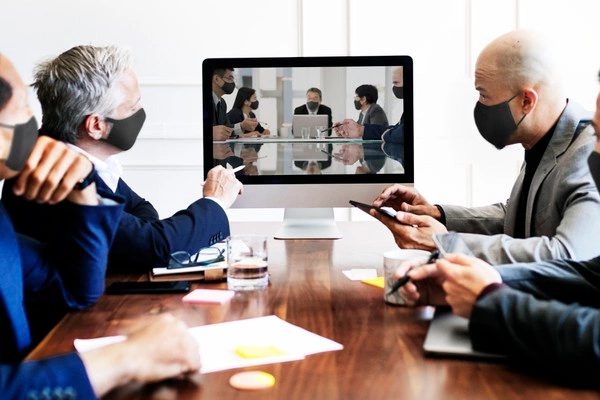
Resilience: At the start of the pandemic, full transparency and complete honesty was the only way you could handle your business, whether it was talking to a client or team.
I’m happy to say one of those people ended up coming back. PPP came along. We were able to stretch it a little bit longer but we are well into scenario number two. We had to let other people go. Scenario three came and went. To be completely honest with you, 2021 was a tough year. It was better but it was still tough because we are still talking about whether it’s variant D or Omicron. Lockdown or not, we are in a global pandemic and it is impacting this industry. That is what I hope we can dive into because when I sit back and I look back, I have a handle on what the good is that we can take away and some sage advice on how to move forward because the one thing that is cliché but true, we don’t know what we don’t know.
As a sales keynote speaker, I thought to myself, “I have to figure out a way.” I had a client say, “This live event, April 2020 is not happening. I’m going to push it back to August 2020.” When that came, “We are going to make it virtual.” How are you going to keep 300 people entertained on a Zoom call? That is what made me realize I have to do something. Zoom burnout became an issue. There are so many new challenges. The funny thing I thought was interesting is sometimes in these challenging situations, other opportunities come up.
In my case, the client said, “In addition to your keynote and workshop, can you teach my team how to look and sound good on Zoom? They are so uncomfortable being on camera and they don’t know how to frame themselves or like themselves.” I thought, “I’m one chapter ahead of you on that.” Trying to order equipment during the pandemic, there are a lot of people wanting professional lighting and mics. It was interesting that became a new need that never existed before. There is a technology that allows me to do some special effects.
The people whether you are a speaker or a bureau owner like you that say, “I’m not going to offer anything or invest in learning anything new unless I am dragged into it last minute.” I thought, “That is not the speaker I want to be.” If there is some new way to keep people engaged, I want to be at the cutting edge of that. It’s going to cost me some money when money is not coming in like it was to invest, learn and get the equipment. I’m going to do it as opposed to waiting until somebody asks me to do it. I wanted to hear if that resonates with you as a bureau owner.
One hundred percent. I remember a conversation with one former employee. I might qualify her as a slow adapter was, “I’m going to go with virtual. I’m going to wait and I’m going to say my specialty.” Which are in-person events. That would not work well for anyone. I love watching speakers. I feel like there are speakers that got on the front end of the technology. On March 10th, 2019, they were building their in-home studio and they were ready to roll. Others sat back and watched, “Who is doing this well? What can I learn from them?” They came into the game. There are some people I love and respect who still are sitting on the sidelines because they don’t think it works for them.
[bctt tweet=”Cross-train your team to build empathy.” username=”John_Livesay”]
For me, I knew that we had to change. I can think that to my first office in Colleyville, Texas, where we had a wall of VHS videotapes that were out the alphabetical by speakers’ last name. We used to buy blank tape and the box scrolls. We had two VCRs. If somebody wants John Livesay, we go grab your tape. We plug it in. We put a blank and we press record then we send the VHS tape in the mail to the client to watch. That is not how it works these days. Only knowing how to do in-person events is like only having VHS tapes. We had to learn it.
My first thing to my team was, “If you don’t already know Zoom, figure it out. Do you know what Teams is? Has somebody talked to you about StreamYard? I need you to get on there.” There were so many that came in at the beginning. “Everyone, I want you to learn.” The funny thing is you showed me your new toy, which is that Stream Deck. I have been doing this for months and I have never seen Stream Deck. The innovation in our industry is ongoing which is one of the gifts of the pandemic for our industry. You can look at it. People are like, “I want to go back to normal.”
I’m not sure normal is ever going to be the way it was in 2019 but there were so many gifts. Most of our sales calls are via Zoom. Prior to 2019, most of my team probably did not have a Zoom account. There are a lot of gifts. I wrote a blog. I used the line that I borrowed from a friend, Sean Hanks is the IASP President. He said, “Virtual events have become an and versus an instead of.” People who for many years had these three in-person events may now go back to those three in-person events but they may be augmenting with this August 2019 event that is going to be virtual because, in the pandemic, that was a home run.
It makes sense to keep that going. I love that. It’s not like, “We are going back to in-person. Virtual is going away.” Virtual is here to stay. There are instances where it makes sense. With international travel, it may be a long time before every person from every country can travel with this. There are a lot of gifts that have come out.
I did a keynote to a company based out of Israel and their entire sales team is global. One person is in Singapore and one person is here. Instead of having to fly everybody in, I was part of their annual kickoff meeting for the year. When I first came to Austin in March 2020, I was all excited. I had my tickets to South by Southwest. When they canceled that, I thought, “This is not something that is going to be fixed in a few weeks.” Here we are in March 2022 and it is still iffy if that is going to come back.

Resilience: The innovation in our industry is ongoing and which is one of the gifts of the pandemic bark industry. You can look at it.
Elton John was going to have two nights in Dallas. He tested positive. He canceled. There is an uncertainty in making plans that are becoming the reality of how we move forward with just about every personal or business decision.
A new skill is required because when I gave that talk down at the healthcare company in San Antonio, they said, “There are only going to be about 25 people in the room. However, we are streaming you live to 500 people so you have to speak to the room and the camera and not forget that there is an audience out there watching.” It was a fascinating hybrid experience. The fun part for me is when a client embraces the change. He said, “I have been talking about you and your book to my team about Better Selling Through Storytelling.
Instead of the normal way of introducing you by reading this introduction, we are going to put you in a private room next to the conference room. We will keep the door open and I am going to start talking and say I have been wrong about the power of storytelling and sales. We should not try and do this anymore. I want you to come in and interrupt me and say, ‘Cut, don’t listen to him. I’m here.’” I thought, “What a great way to break back into a live event.” Be that playful with your clients. It is the people that are willing to keep rolling with the disruption because that is what our brain craves.
Is this going to be the same old? When you have something new like that, it grabs the audience’s attention. You said that you feel like there have been some good takeaways. I gave an example of a client asking me to train their sales team on how to look and sound good on a Zoom call and not be intimidated if the other person keeps their camera off. It is fascinating what stresses people out. What would you say has been a good takeaway? Is the team closer than they ever have been getting through this?
Yes. I believe the team is incredibly cross-trained. When we did our last show, I had twelve people on my team. At one point in the summer of 2019, I went down to what I lovingly referred to as the core four. Those four can do anything other than run payroll. As we would add that in one person that summer, I remember when I was interviewing her she had prior bureau experience and I said, “I need you to do this. Sometimes I might need you to do this.” She said to me, “You need me to catch what needs to be caught.” I was like, “That is what I need.”
[bctt tweet=”Virtual is here to stay. It just makes sense to keep that going even after the pandemic is over.” username=”John_Livesay”]
She came on. She is super cross-trained. That is a very big gift in terms of the team’s closeness. When you are super solid and you haven’t sat in the seat of your fellow teammate, it is easy to get super irritated with them like, “Why are they aren’t meeting this deadline?” We have some new people that this is not the case but the majority of the people on my team are super cross-trained so there is a lot of empathy and understanding of the competing priorities. That is a positive for the team. In terms of the value that we add to clients, our skill or anticipating things we need to consider in the contract is at an all-time high.
Pre-2019, you want John, you want him in Austin and you want him on this day, contract done. Let’s move on. Now we are asking the question, if something prevents John from being there whether John can’t travel, you decide to go virtual, there is a government restriction implies. There is a new variant. I could go on and on. Let’s go ahead and discuss what that looks like. A lot of times they will say, “We are only going to do it in person.” We say, “Let’s talk about that. Do you want to kick the can down the road or do you want to have a contingency? What are we trying to accomplish?”
Sometimes if you are trying to train your team and keep the momentum on your team going, rescheduling the event to a later date is not necessarily the best. We get into a discussion of, “If he didn’t come in person, would he give us a reduction on the fee for virtual?” We have to navigate that. Anticipating and having the conversations that everybody is so tired of having but making sure we have them, we are better prepared. When I looked at how many events were impacted by the original Coronavirus, I still have 8 things we haven’t resolved out of 200.
You go to the Delta variant, we only had 23 and all the 3 are resolved. We know what we were doing, we are just waiting for a signature. So far, we have only had sixteen on Omicron. It is only two weeks old but about half were already resolved. That directly ties to anticipating, thinking, contingency, covering things in the contract. It is a little bit of a pain because you have to do a quick agenda but you have already thought through it. That is a time-saver to everybody because these variants coming up right before the event and we don’t need to be exploring options. We need to implement options.
That is a true sign of a good leader whether you are leading thousands of people, 10 or 4. Anticipating a need. I remember when I had the Banana Republic as a client and they said, “We want to redefine what luxury is. We are never going to be Neiman Marcus in terms of pricing but what if it was anticipating a need before you knew you needed it?” They put a place where you could get your phone charged in the flagship stores in San Francisco and Manhattan Rockefeller Center. They would say to these people, “Would you like us to charge your phone? We will guard it while you shop.” Unexpected luxury. The sales went up 10% because people kept shopping until the phone was fully charged.

Resilience: There’s an uncertainty to making plans that is sort of becoming the reality of how we move forward with just about every personal or business decision today.
There are all kinds of outcomes by anticipating a need before you know you need it. That separates the Banana Republic and you as a bureau. “I like working with Gail’s team because they think of every potential thing that could go wrong and a contingency plan to solve it.” Back in the day, your plane was late, you would miss a plane. You are great at getting another speaker there at the last minute. The microphone, battery or power bank goes out. Your remote doesn’t work. A hundred and one things can go wrong in a live event and you still have to be able to perform.
I had a situation where we had done little tech rehearsals on virtual in addition to the prep call. They were using a different platform besides Zoom or Microsoft. It had not been tested. They had not tested 300 people coming on at the same time, which caused the bandwidth to stop. They were freezing. Luckily, I had somebody on as my tech backup because as a sales keynote speaker, I’m used to people in the corner running the show. I’m not going to go solo on a tech call.
I have somebody on the call with me going, “Your volumes not all right. Something is off with the camera. Let me fix this. My Zoom call can handle 500 people. Let’s all move over to this Zoom link and we will redo the breakout rooms while you are giving the keynote talk so that the workshop will still work as planned.” The client was so grateful because their whole thing almost crashed because of technology. Is it worth it to pay somebody out of my pocket to be on those calls? You bet.
It is funny talking about the challenges and technology. We added to our team one of our logistics managers. She manages all the logistics. She started in the summer of 2019. One day, we realized, “She has never done an in-person event.” She mentioned that in the olden days, it was all about light planes, snowstorms and speakers’ travel delays. It was comical. It was like trying to show someone the old VHS tape and say, “Here is how you plug it in.” She had no frame of reference. She picked it up quickly. She is a rockstar but it was funny that they are talking about digital data. She was a virtual speaker.
All of us have to continually evolve. What I have learned personally is we can never get too comfortable. We all hear people talk about getting out of your comfort zone but you think, “I have invested in learning this skill. I have got a great brand.” You have been in business a long time. “I have a great reputation. My staff is trained,” and then a pandemic hits. You are like, “I get to see if I’m going to reinvent myself. Look at the three possible scenarios, worst-case scenario, scenario number three.” You are still here, not the case through all the bureaus. This transparency and adaptability. The thing I want to double click on that you said, I have not heard many people talk about this and it is so valuable for the listeners is cross-training your team building empathy. There is The Great Resignation happening.
[bctt tweet=”We don’t know what we don’t know.” username=”John_Livesay”]
A lot of our clients are saying, “How can I keep my team from leaving? I have some superstars. I don’t want to have them leave.” I have found that helping companies not only create case stories to help them win more business but getting individual people to tell their story of origin. What got you into healthcare? What got you into the speaking business? They start to find out things about each other that they never knew. It is fascinating to hear other people’s case stories.
For example, with a healthcare client, they said, “My mom was a nurse. That is what got me into it. I was a microbiologist. I didn’t want to spend my life behind a microscope.” “We worked with you for three years. We never knew that about you.” The management and sales teams are telling me, “We feel like we are losing the bond because we haven’t been able to see our sales team in person.” Now that you have had them put their story of origins together on this repository map with their case stories, they feel seen, heard and appreciated in a whole new way.
It has become an onboarding tool for HR that they say, “Get to know your co-workers, share their stories until you make your first sale but also get to know them as people.” What we live for in the speaking business is if a storytelling speaker can impact a culture that, “I’m hired to help you win more sales but if I can help you break down silos because all these stories live in one place and you can start sharing the stories and make introductions to other divisions, that is the joy of all of this.” What you have done here is a role model for all business owners. You have a culture and from day one you say, “It is not just this job description. If that is your mindset, that is not the culture fit here.” Brené Brown’s latest book talks about that. In her people, she was like, “If you walk by a piece of trash and go, ‘That is not my job. I’m not picking it up. That is not why I worked here.’”
A part of the way we developed empathy during the pandemic is each month we would have what we call the leadership meeting. We might have done it weekly at that point. We did Brené’s book, Dare to Lead. The team got super vulnerable. They do the exercises. They would share. It is your point of getting to know their entire story not just, “This is Susie Q over here doing an account.” It is super important.
We start to remember, “Everyone had some challenges in their life or this is something they have always dreamed of doing.” Like your wonderful story of origin. From EDS to hearing a speaker in that launching. Companies need a story. We all want to connect emotionally. That is what the stories do. You have such a great story. I am so excited and thrilled to hear how successful you are continuing to be. If you have survived this, you can survive anything. Any last thought or piece of advice you want to leave our readers on how to embrace the ongoing disruption and changes that we know are going to be part of life now?

Resilience: We need to watch our language when we hear ourselves. We all want this pandemic to be over. But we can’t control it so we have to reframe our mindset. And we have to look for the gifts. We have to look for the opportunity and we have to take that skill that we’ve developed of anticipating changes.
Once someone gave me a book. It was one of those little flipbooks that you go through but the cover said, “Normal Is Just a Setting on Your Dryer.” There is something to that. We need to watch our language when we hear ourselves. Sometimes I’m so tired, I want this to be over. I wanted to go back to the way it was. I want it to be normal. We have to reframe it. We have to look for gifts and opportunities. We have to take that skill that we have developed of anticipating and anticipate what else can change. How else could we modify this? How else can we take this forward? It’s a shift and muscle we have exercised ad nauseam. We will be well-served if we tend to lean into that.
Imagine if you never worked out and then suddenly you had an emergency where you had to swim, run or something. If you keep that muscle active, I’m adaptable and flexible we will go full circle in the lifeguard analogy again. We had to train. When someone was flailing their arms and you couldn’t throw them a buoy because they were too panicked, you knew, “I’m going to have to go in.” Let’s go and embrace the new world. Thank you so much for sharing your wonderful stories with us.
Thank you. It was great. You are always such a good person to visit with. I love it.
Likewise, Gail.
Important Links
- Gail Davis – Past episode
- GDA Speakers
- StreamYard
- Dare to Lead
- Better Selling Through Storytelling
- Normal Is Just a Setting on Your Dryer
- Better Selling Through Storytelling Method Online Course
Wanna Host Your Own Podcast?
Click here to see how my friends at Podetize can help
Purchase John’s new book
John Livesay, The Pitch Whisperer
Share The Show
Did you enjoy the show? I’d love it if you subscribed today and left us a 5-star review!
- Click this link
- Click on the ‘Subscribe’ button below the artwork
- Go to the ‘Ratings and Reviews’ section
- Click on ‘Write a Review’
Love the show? Subscribe, rate, review, and share!
Join The Successful Pitch community today:
- JohnLivesay.com
- John Livesay Facebook
- John Livesay Twitter
- John Livesay LinkedIn
- John Livesay YouTube
Creativity In An Age Of Artificial Intelligence With James Taylor
Posted by John Livesay in podcast | 0 comments

Artificial Intelligence or AI has been taking over varied industries and has become undeniably helpful in today’s fast-paced life. Today, John Livesay interviews James Taylor, founder of C.SCHOOL™ and host of The Creative Life Podcast and TV Show. James talks about creativity and innovation and the use of AI in different professions. He then shares with us his proven five-step creative process that includes preparation, incubation, insights, evaluation, and finally, elaboration. Be inspired by James’ creative mind as he discusses each step and how important it is to do it in the right order.
—
Listen to the podcast here
Creativity In An Age Of Artificial Intelligence With James Taylor
Our guest is James Taylor, who not only has his MBA, but he is a Fellow Royal Society of the Arts, FRSA. He’s an award-winning speaker and an internationally recognized leader in creativity and innovation. For over many years, he’s been teaching entrepreneurs, educators and corporate leaders, writers and literally rock stars, how to build innovative organizations and design the creative life they desire. As the Founder of C.SCHOOL and the host of The Creative Life Podcast and TV show, he’s taught hundreds of thousands of individuals and over 120 countries through his online courses, books, videos and keynotes.
After advising some of the world’s most creative individuals and companies ranging from Grammy-award winning music artists and best-selling authors to Silicon Valley startups, James designed a framework for creativity that helps individuals and organizations achieve exponential growth. Some of his clients have included Apple, Sony, Johnson & Johnson. He’s an in-demand creativity expert. He’s been on hundreds of media outlets. He was a subject of a 30-minute BBC documentary about his life and work. James, welcome to the show.
It’s my pleasure. I always love spending time with you.
[bctt tweet=”Green colors activate idea flow. ” username=”John_Livesay”]
You were always in a different country. I love your passion for sharing all of your insights into what it takes to become a great keynote speaker. I always like to ask my guests what’s your own little story of origin. Your mission is to inspire creative minds. You must have always had one yourself.
I believe we’re all born with unlimited creativity. The problem is as you go through schooling, education and you start work, it gets knocked you a little bit. I see my job is just reigniting that creativity that’s in all of us. Whether that’s the creativity to sell better, to create new products, to change the world, to run companies or countries better. I’m definitely there to re-ignite something I believe was already in you anyway. You need a little bit of help.
Tell us your own story of origin. We talked before that you sold guitars but didn’t play them.
I come from a musical family. My father is a very esteemed music jazz artist. My grandfather was a musician as well. My wife is a professional jazz singer, so I come from the music industry people. My very first Saturday job was working in a music store selling guitars. I don’t play guitar. It taught me the first lesson about selling, which is understanding the customer. It wasn’t about me. It was understanding not so much the technical things a customer wanted, but what did they want that thing to do for them? What transformation do they want?
I was very good at selling very high-end guitars. A lot of the time, it was to the market. They’d have a big 40th or 50th birthday with a zero on the end. I was able to help them reconnect with that thing that they had when maybe they were college and helped use that to sell them a $5,000 guitar. That told me as a fourteen-year-old about the power of selling. I remember reading books by Robert Cialdini and all these wonderful sales experts and that got me initially interested in sales and selling. From there, I moved into the world of managing music artists professionally. I manage a number of Grammy-Award-winning artists.
I’ve managed a band called Deacon Blue, which sold about six million albums. I managed the Rolling Stones. That helped me start to understand how the music industry works about building big global brands, scale, that people can feel passionate and they can feel connected when you can build a tribe and excitement around. In 2010, I received a call from a gentleman in California and he asked if I would move to California to help him grow a technology company. It’s a totally different game. That was the initial start of things.
[bctt tweet=”Breaking down silos is the key to growth. ” username=”John_Livesay”]
What do you see if anything in common between a startup and a musician that’s at a level of winning Grammys?
They’re very good knowing what they do well from that. They’re very good at connecting ideas with people. It always intrigued me spending time with these phenomenal Grammy-Award music artists. They could flip between this quite quiet person sitting there, coming up with ideas, thinking creatively, and then suddenly they would go on stage, it was the same person, but it was like them multiplied by ten. I was always interested in this. My living as a professional keynote speaker, companies bring me in to speak on big stages all around the world. I’ve spoken in 25 countries. I noticed that even looking at the creativity of those, there are a lot of similarities between people like top rock stars and the stuff that I do as a speaker and also when I see great CEOs.
I was speaking at an event in Amsterdam and there was a vice president there. He came up on stage. He is one of the most inspiring speakers I’ve ever seen because he looked around the audience. He could sense this audience was from a group within this company. They were primarily all MBAs, smart people all in their early 30s, mid-30s. He didn’t speak to them about climbing up the corporate ladder, stuff that you might have spoken to maybe someone that was a little bit older, a different generation. He spoke to them about how this company and growing this company could be a vehicle for helping all those people in the room achieve their own personal development, their own genes, their own freedom as well. I thought, “To be able to make that room feel like that, that is phenomenal.” I see that in great leaders. It doesn’t matter whether they are rock stars on stage or great professional speakers or whether that CEO up on stage is inspiring their team.
Speaking of your career, your most popular topic is super creativity, augmenting human creativity in the age of artificial intelligence. First of all, I want to applaud you for putting those two things together because a lot of people think innovation is all about technology and certainly artificial intelligence technology and creativity is a human thing like you’re going to write a song, paint or write. You’ve been able to combine the two. I don’t see anyone else doing this. Talk to us about how you said, “I think there’s something here that artificial intelligence can help us become super creative.”
We all see the stories about artificial intelligence. It’s going to take away everyone’s job. It’s going to be the terminator. Our robots will start taking over the world. That side doesn’t interest me so much. What I’m more interested is about how it changes the future work, what potential it can offer us as humans to augment ourselves. We often meet these terms, creativity and innovation. The way I think about it is there are different sides of the same coin. Creativity is about bringing new ideas to the mind. Innovation is about bringing new ideas to the world. Without creativity, there is no innovation. There are no new products and services. Creativity is the engine of innovation. It starts from there.
If you want to create that next winning company that makes a winning project or product service, it comes from that creativity of you as an individual, but more broadly within the team, the team that you’re working where you assemble to do something together. Where I’m interested in is where I see examples from lots of different industries is you’re going to get lots of jobs disappearing. That’s going to happen. You’re already starting to see that start to take hold.

Creativity And Artificial Intelligence: Creativity is bringing new ideas to the mind. Innovation is bringing new ideas to the world. Without creativity, there is no innovation.
I’m more interested in the people who are in the world of work. How they can start to use some of these technologies like AI and machine learning robotics to augment them, to allow them to do things that in their work, their skillset, their job that they might have thought unimaginable before. The companies I’ve been speaking for, they’ll range from some of the world’s top law firms, accounting firms, sovereign wealth funds, some of the largest financial and banking firms in the world, consumer products, companies, educators, fast food companies, aerospace, all different industries. Within all those industries, you see this happen more and more. Even to explain it from a very simple perspective of myself, my job is to be a keynote speaker.
Companies bring me in or associations bring me on to get on stage. I’m normally, like yourself, either the opening keynote speaker or the closing keynote speaker of a big conference. That’s not often the way. I think about how I use artificial intelligence to augment me in what I do. A few years ago, the way that most speakers had a conversation with the client was they would do a pre-event call and they would say, “Tell me who’s going to be in your audience.” They say, “We have people that are aged 40 to 50. They’re senior managers. They’re 80% men, 20% women, and they would do that.” That’s just the demographics. That’s not that interesting.
I’m more interested in the psychometrics of that room. We can use artificial intelligence. The way that I use it is before I even go in the room as part of my work on understanding the audience in the room, I will use AI to analyze the audience. I will essentially use different ways of doing this. You can use the same technology. If you’re selling and you’re going out and giving a pitch, analyze that key decision-maker in the room. It’s almost exactly the same process. This is how it works. I use IBM Watson, which is one of the many wonderful artificial intelligence systems or programs out there.
All I have to do, if I’m speaking to a large conference, most conferences will have a Twitter handle. I’ll go and give it to the artificial intelligence. What it will do is it will spider all of the accounts where the people are following and tweeting about this conference, for example. It will then give me across 72 different factors, a visual representation of the psychometrics of that particular audience, those people that are going to be attending. It tells me what their needs are, what their values are, what their wants are.
What I can do is I can give the AI my draft keynote presentation and it essentially analyzes that and it can overlay the psychometrics of my presentation with the psychometrics of the audience in the room. It could tell me what I need to work on, what needs to be boosted up, what needs to become down. The way we use this, let’s say, I was giving a pitch to a CEO in New York. The CEO, like many senior executives, didn’t do social media or if they did do social media, someone else is writing it for them. It wasn’t them who’s writing it. What they had done is they’d written an article for one of their trade magazines. All I had to do was I gave the AI 1,000 words that this person had written.
I could use 1,000 words that someone’s spoken. If they’ve done an interview or written, give it to the AI. It automatically told me the psychometrics of that person in the room, that key decision-maker I wanted to influence. I knew having looked at that that this person is authority challenging. As I give my pitch, I want to come across a bit more like a contrarian in my views. I could see that they valued practicality very highly. As I give my pitch, I’m going to say, “Here’s how my service product can be practically applied to help grow your business.” I could also see they valued trust highly, 99% super high.
[bctt tweet=”Caffeine reduces your creativity. ” username=”John_Livesay”]
You might call them case studies. You would call them case stories, which I love. You would tell case stories. You would tell examples because this is going to use more social proof. Robert Cialdini, that trust indicators, social proof and that will help that person feel that the key decision-maker in the room when you’re giving your pitch is going to feel like magic. It’s going to feel like, “This person understands me. He understands this challenge or this issue I’m thinking about, what I’m thinking about in the challenges I’m having in our business.” It’s not magic. It’s data.
You’re speaking their language. If somebody cares about trust being a key factor and that is going to be specific to their personality, whether they want to have proof of your authority or whatever it is. You’re addressing all those issues in advance. Is this something that you have to subscribe to IBM Watson to be able to access and create this analysis from Twitter handle?
If you go into my LinkedIn profile, James Taylor. I have a post there, an article which basically states exactly how it works and how to do it. This is something that you can subscribe to. There is a free version. You can go and test it if you want to go and try out. You can give some written words written by a key decision-maker or somebody who wants to influence. It’s fun. Do it on yourself first of all. If you take this onto the next stage, let’s say if I work in a car showroom, where are we going next with this is if I can take that data. Let’s say I’ve got all of my customers’ social media handles. I’ve had a series of correspondence with them so that is in the system. That will then create the psychometrics for everyone in my customer database, my CRM.
You can start to do very interesting things. Let’s imagine you can have the new Apple glasses that are going to be coming out. Unlike the Google glasses, but much nicer, much cooler. They will be connected to different artificial intelligence. You can connect that to your CRM and you can wear these glasses. Let’s imagine I’m a fourteen-year-old guy in a music store selling guitars. Five people come into the store. I’m wearing my glasses. It’s connected to the CRM of the company, so I know the psychometrics.
Using facial recognition as they come into the room, I can automatically see, “That customer is coming in here. They have a high FICO score. They have a low credit rating. This customer here is being on this webpage a number of times and spending a lot of time on that page about this product. This customer here has spent $10,000 within the past several years.” As a salesperson, who do you go and speak to? It’s all showing a heads up display like a fighter pilot would have. This is happening and I worked with a lot of companies that are starting to build these out across their businesses.
This is the super creativity bit because the AI is not going to write your pitch for you. It’s not going to give you a sales presentation, but it will make you a better presenter of your ideas. Sports teams use AI to analyze their players. Insurance companies use AIs to analyze their brokers. I believe every salesperson should be able to use a tool like this in order to analyze that prospective client, that prospect that they’re going for. When you go and give that pitch, it is absolutely landing on a very emotional level with that person as well. That’s the human bit. The creativity comes from us being able to create story arcs and be great storytellers. They all have side things that you’re brilliant at doing. We augment that with these technologies, which helped provide more data on the analytical side.
[bctt tweet=”Without creativity, there is no innovation. ” username=”John_Livesay”]
You use the AI to give you insights into the data that’s going to emotionally resonate with somebody and turn that data into a story. Would that be a good summary? You said something that I want to capture because I’d love to tweet out. It’s something about artificial intelligence is our mind and creative is the world. Do you remember what you said there?
Creativity is bringing new ideas to the mind. Innovation is bringing new ideas to the world. Without creativity, there is no innovation. Creativity is the engine of innovation. That’s how the two things exist. They cannot sit side by side. Usually what you tend to find is creativity exists more around individuals and teams working together to generate ideas, assumptions, tests, minimal byproducts, those things. Innovation tends to come around to what we call the five-stage of the creative process towards the end. It ends up as being slightly more process-driven, but they go well hand in hand together.
You teased us about the five steps to a creative process. I know that’s a core part of your keynote on this topic, but you’ve been gracious enough to give us a little snapshot of what those five steps are.
The creative process is about how you generate, develop and execute on ideas. Let’s say you have a product and you want to start generating new ideas to get that product to market, or you’re looking to go fundraise. We need to get creative here on the pitch that we’re going to be putting out there into the market or the types of investors that we want to be bringing this deal to. The first stage of the creative process is what we call the preparation stage. This is about generating ideas. It’s about taking and absorbing as much information as possible.
It’s where you’re doing your classic market research. That’s the very first stage. The second stage where a lot of people I see go wrong is they do their research and immediately hope to stop generating ideas. The second stage, which is called the incubation stage, is where you need to put ideas to the back of your mind. It’s almost like forget about it. Go and do something else, switch to another project. You’ll bring and continue working on things in the background. I was going to be looking for patterns, looking for opportunities all the time, but you have to put it to the back of your mind.
One of the fascinating things is even, for example, the colors that you have around you can affect your levels of creativity. There was a study done by the University of British Columbia up in Canada. They found that the color red is the best color to have around you when you do work, which requires high attention to detail. For example, if you’re doing your tax returns, you want to have that color red around you. What they found is the best color to have around you if you’re looking to generate ideas is the color green. One of the reasons we get some of our best ideas when we’re out walking in nature when that color green is all around you. Think about for yourself, do you have that color green around you in your workspace? Are you going out for a walk and talk to me? Are you going to the parks? Places where that color green is activating that part of the brain. You’re basically incubating all of this and this is the stage you’re mulling it over in the back of your mind.

Creativity And Artificial Intelligence: Caffeine is very good at focused work, but not so good for unfocused, open-minded thinking.
I want to give everybody a little story on that because you and I were having a conversation. I said, “I want to show you something to plant the seed in your brain, knowing the way you work.” I didn’t call it incubating, but that’s basically what I was talking about. It’s like let me show you something and I’ll know that will be in your subconscious and that might generate some ideas.
In the US military, at West Point, they teach a version of this. They call it preloading, which is about two hours before you go to sleep at night, ask yourself a question about that challenge that you’re trying to come up with. You sleep on it. You print it at the back of the mind and often when you wake up the next morning, the idea is almost fully formed sometimes. It’s strange. I’ve heard about this. Why is it that I’m a successful X, Y and Z? Fill in the blank.
The brain is a phenomenal, amazing thing. We go to this third stage, which is the insight stage. That’s the a-ha moment, the light bulb moment, however, you want to describe it. When it comes to creativity, it’s the shortest part of the creative process. It’s the bit they make the movies about, when you see the fast action scenes, a big light bulb seems going on. Most creative work is not necessary like that in terms of those moments. There are a couple of things you can do to increase those levels of creativity. One is to understand yourself when you are at your creative peak each day. John, for example, for you, when ideas come easiest to you or you feel that natural idea-generating flow, what time of day does that tend to happen?
First, in the morning, I let myself be open before I even get out of bed or even open my eyes and say, “What am I grateful for? What am I open to receiving? What’s my intention for the day? Are there any insights?” I literally asked myself that question. Are there any insights that I’m open to hearing? It’s amazing. Sometimes it starts and unless you said a few minutes later, I’ll be in the shower. That’s what that joke is about, why do I get all my best ideas in the shower when I can’t write it down? Before all the world comes in and starts with the emails and we’re reacting to everything or the news or whatever it is that distracts us. I’m a big believer of what you’re talking about here, James, which is letting yourself have some time, a little gap of what wants to come up. What is my intuition telling me? What do I want to say or do? Even preparing for this. I started thinking about you and our previous conversations and all the wonderful videos that I watched you do. I’m like, “What would be a great question that would help James get his message across and see what would come up during the conversation. I plant that seed.
You’ve described beautifully from a very poetic standpoint that sensation of what you feel in the morning. We use that time in the morning, that half-awake, half-asleep that other people might be late in the evening or the afternoons after lunch. I’ll describe what’s going on from a chemistry perspective. What’s going on is you’ve been incubating this awesome thing overnight. You might be thinking about it. You’ve been incubating it overnight. In the morning, what’s happening in your brain is fuzzy. You’re open to unconventional thoughts. Alpha waves are rippling through your brain directing your attention inwards to remote associations emanating from the right hemisphere. Also, the brain that says, “That’s a stupid idea,” that hasn’t woken up yet.
This is one of the reasons many people get their best ideas and that half-awake, half-asleep in the morning. Don’t just jump out of bed but give yourself that time to say you’ve been intentional asking those questions, or in the shower in the morning, a lot of people get their best ideas. This is the reason, but the main thing is not everyone’s morning people. Other people get a later in the evenings or the afternoons but know for yourself what time of day you are at your creative peak. As much as possible, use that time to do your deep thinking, your creative thinking, your strategic thinking, move all your calls, emails, meetings outside of that time.
[bctt tweet=”In terms of creativity, there’s a lot of similarities between top rock stars, speakers, and great CEOs. ” username=”John_Livesay”]
We start to generate these insights. It’s funny because even what we eat and drink can affect our levels of creativity. There was a great study done by Martha Farah, who’s a neuroscience professor at the University of Pennsylvania. She found that high levels of caffeine in your diet will reduce your chances of having ideas and insights. I was speaking in Bogota, Colombia and I told this story. I thought 2,000 people in the audience were going to kill me at this stage. Let me give you a little bit of background on that. Caffeine or coffee is very good for the preparation stage, the first stage of the creative process and the last stage because what we’re doing is, we’re looking to absorb what’s the new information. It’s a different thing. When you’re looking to be expansive in your thinking, it would benefit you to dial down your caffeine levels. Switch to tea, water, juices because caffeine is very good at focused work, but not so good for unfocused, open-minded thinking.
That explains it.
There’s stage for generating ideas. We go to this fourth stage of the evaluation stage. I’ve worked with some incredibly creative companies, creative individuals, especially senior advertising industry or some of the high-tech industries. Usually, the biggest challenge is not a lack of ideas. The biggest challenge is around evaluating those ideas and deciding which ones we’re going to pursue and test. That’s the evaluation stage. This is when you start to do things like more ideation, brainstorming sessions. I teach a whole different series of tools. They have to do that well. Also, to break down silos in organizations which is a challenge.
That’s the number one problem I see across every industry I’ve ever spoken, too. Everything is so siloed, no one’s communicating. There’s no database where they could share, the case stories of what’s work at other cities or countries. If you could help people breakdown their silos, then no wonder you’re speaking so often.
It’s also happening on different levels. You’ll see from a generational standpoint where Millennials are communicating in one way sometimes. The Boomers or Gen X are doing it in a slightly different way. Sometimes getting everyone in that same place. I speak a lot in the Middle East and South America where you have a different hierarchy in organizations than you would have in Silicon Valley or in London where it tends to be much more top-down or family businesses. The large family business could be like this as well. I also teach a number of tools there, which is about leveling out the hierarchy a bit so you get the best ideas from everyone in the organization. Not from a senior person that are always dominating the board with their ideas, which is very important. In the final stage is the elaboration, which is like Thomas Edison said, “Success is 1% inspiration, 99% perspiration.” This is the stage that you’re testing your minimum viable products, getting feedback and all these stages, they’re iterative. They go back and forth on this circular. You generate a whole bunch of questions, which then you have to go back to the preparation stage and find out the answers. That’s thinking of the five stages of the creative process.
Thank you for sharing that. To sum up, preparation, incubation, don’t jump right to ideas, insights, evaluation and finally, elaboration. That’s such a great framework for so many different things. We have a mutual friend who is a CMO at Domino’s Pizza. They’re using artificial intelligence to start predicting if you keep ordering the same pizza at the same day and time, the artificial intelligence can start predicting and start the order even before you’ve finished ordering again to help save the time and the delivery. I would love to know a couple of other stories how are lawyers using artificial intelligence?
[bctt tweet=”Creativity is the engine of innovation. ” username=”John_Livesay”]
There’s an event I was doing for one of the top ten law firms in the world and the particular challenge that they were looking at was the customer journey. That stage from someone first having contact with that prospective client all the way to a client for many years. How do you get them to refer other businesses to you to talk about that relationship? This tends to be a long and sometimes complex stage if we choose a couple of different areas that you’re seeing artificial intelligence being used a lot in taking away a lot of the more routine works. For example, there’s a law firm in California called Robot Robot and Hwang. It got started by a young gentleman called Robert Hwang. He trained as a computer scientist. He went and trained as a lawyer and started working for big law firms. He realized how mind-numbingly boring a lot of legal work is, especially the contract side. He would do his law work during the day, and at night, he would go home and he programmed an AI to do the work that he’d been doing during the day. By the end of the first year, he’d essentially replaced himself.
He went and started this new firm called Robot Robot and Hwang. There are three partners in this firm. He is the only human partner. The other two partners are AI. One AI specializes in mergers and acquisitions. The other specializes in intellectual property litigation. This is a very productive, highly profitable type of law firm and very fast-moving. If you have a law firm that you give your business to, asking the question, where are you using AI in your business? If they’re not using an AI, especially to analyze agreements, you might want to be a little bit worried about that because you’re going to start seeing this more and more. It’s a way of reducing risk in the markets. That’s one way. In a completely different way, more from the front end.
I know a lot of your readers come from a more sales perspective and you have things that we call conversational AI. I remember when I was getting started in my career and I was getting inquired for some of my music artists and we’d get ten inquiries a day for them to go and do shows somewhere. I could never quite work. I had to do telephone calls for all these ten people. Some of them had a very little budget, some had a good budget. Some of them it wasn’t right. It wasn’t a good fit. What we can use is a conversational AI to essentially help do the filtering process.
The way that this works, let’s say if you have a website, you have a service or product you provide and you have some online form. Normally what happens is people type in the form. “I’m interested in learning more about this product.” That goes directly to a salesperson. That salesperson picks up a phone and calls you, but it’s much better if you put that through an AI first. What would happen is you give the AI a name. If her name is Barbara and Barbara is your new sales assistant. When Barbara gets the email in, Barbara starts having an email conversation with that prospect. What she’s looking for is an intent, certain keyword phrases that she’s learned over the time that those things put together. Also based upon your email address, which you can tag that to your LinkedIn profile, that shows that your company is perfect for your size. The AI will then say, “Let me schedule a call time with one of our sales team, how is Monday at 2:00 PM or Thursday at 3:00 PM?”
It’s going to feel like a normal human conversation and that AI has access to your calendar so they can put that straight in that salesperson’s calendar. For those people that aren’t a good fit, AI can then recommend, “Here are some other resources, some other training, some other things. You might want to have a look at our blog post, or I’ll put you on our newsletter list,” or whatever the thing is. A salesperson doesn’t want to be doing a call with someone in the wrong stage of the sales process where they are very unlikely to buy.
If you could help salespeople save time on qualifications, then they’re going to be so much more productive and the revenues are going to come in because we are not wasting time on people who don’t plan on buying anytime soon or don’t have the money or whatever the problems are. I want to end this by asking you about why China’s richest man believes that creativity is the most important skill that any one of us are going to need to thrive in this age of disruption.

Creativity And Artificial Intelligence: Your job as a parent is to keep curiosity going in your children because that’s going to set them in a great place when they become adults.
That’s Jack Ma. He’s the Founder of Alibaba. Alibaba did $36 billion in sales in one day. This is massive. You’re having Black Friday or an Amazon sales, that makes that look like small numbers. Jack was very influential in his company in artificial intelligence. He was asked a question, “What skills should we be investing in our young people, in our teams, people at work in our companies, and our citizens and countries?” He said, “Don’t bother trying to compete with a machine on things it could do better, faster and cheaper. You need to focus on that one advantage that you have as a human, your creativity, your curiosity, your ability to innovate. That’s what you need to be focusing on.” That ties in perfectly to some of the things that I’m interested in about this connection between human and machine.
The number one question I get after having spoken at conferences and people come up to me at the end or people ask me on stages like, “I’ve got a son or a daughter and they’re eight years old. What should I be suggesting? What should I be telling them to do in order for them to get prepared for the future?” I say, “Give them exposure to as many different ideas, cultures as possible. Get them as being curious, being creative.” When I say creative, I don’t mean like liberal arts and music. I’m talking about creating a big science perspective as well. That thing that they had when they were very firstborn with of being curious asking why. Don’t let that go away. Your job as a parent is to keep that going in them. When they become an adult, they have that sense of curiosity in their lives and that’s going to set them in a great place.
The Japanese did that in Toyota seven different times. If anybody wants to get more of you besides hiring you as a keynote speaker, you also have products on creativity training. If anyone is interested in music training or speaker training. I’ve been wanting to recommend your speaker training. It’s so in-depth, specific and unique. People can find you at JamesTaylor.me?
That’s it. They can find all those things from there and feel free to connect with me on LinkedIn. I use LinkedIn a lot. That’s exactly how the AI things work that I mentioned. Those are great places to connect.
My big takeaway is we should not be afraid of AI, but we should embrace it and realize that it allows us to be more creative. Thank you, James.
John, thank you so much for having me on your show. It’s been an absolute pleasure.
Important Links
- James Taylor
- C.SCHOOL
- The Creative Life Podcast
- IBM Watson
- LinkedIn – James Taylor
- Better Selling Through Storytelling Method Online Course
Wanna Host Your Own Podcast?
Click here to see how my friends at Podetize can help
Purchase John’s new book
John Livesay, The Pitch Whisperer
Share The Show
Did you enjoy the show? I’d love it if you subscribed today and left us a 5-star review!
- Click this link
- Click on the ‘Subscribe’ button below the artwork
- Go to the ‘Ratings and Reviews’ section
- Click on ‘Write a Review’
Love the show? Subscribe, rate, review, and share!
Join The Successful Pitch community today:
- JohnLivesay.com
- John Livesay Facebook
- John Livesay Twitter
- John Livesay LinkedIn
- John Livesay YouTube