

Who’s In Your Room? With Dr. Ivan Misner
Posted by John Livesay in podcast | 0 comments

When times are tough, you have to hold on to your network and build it like you have never done before. How mindful are you about who you let into your life and career? In this episode, Dr. Ivan Misner, the author of Who’s in Your Room, joins John Livesay to talk about curating the people you associate yourself with. Get to know Ivan’s story of origin as he shares his journey and how he started his whole process from his Brody moment to the success he has achieved so far. John and Ivan discuss the importance of serving your customers first before pitching and how networking can carry you through tough times. Tune in and learn how you can leverage your network more than ever and turn your fear into hope and focus.
—
Listen to the podcast here
Who’s In Your Room? With Dr. Ivan Misner
Our guest is Dr. Ivan Misner, the author of Who’s In Your Room? He said, “We let a lot of people into our room or our life without curating who’s in there.” He also talks about the importance of when you’re networking, don’t pitch people, serve them first. Finally, he said, “You either get frozen by fear or focused by it.” Enjoy the episode.
—
Our guest is Dr. Ivan Misner, the Founder and Chief Visionary Officer of BNI, which is the world’s largest business networking organization. It was founded back in 1985. Now, it has over 10,000 chapters around the world. It’s generated over 11.5 million referrals which results in over $16 billion worth of business for its members. Dr. Misner is from the University of Southern California and a New York Times bestselling author. One of his latest books and also one of my favorites is Who’s In Your Room? He’s been called the Father of Modern Networking by both Forbes and CNN. Welcome to the show.
Thanks, John. I’m glad they’re not calling me the grandfather yet.
I’ve had the Father of Corporate Culture on, Larry Senn. There’s a lot to be learned from people over a certain age with a great experience.
That’s where I am. I’m over that certain age. I’m totally gray-haired. I’m okay with that. I’m just glad I still have hair.
There’s always something to be grateful for. I like to ask my guests their own stories of origin. You can go back to childhood or school. Were you always somebody outgoing, friendly and liking to make friends? How did you start this whole process?
I’m an introvert who is a situational extrovert. In and of itself is a long story. I was not necessarily outgoing in school. I grew up in a low middle-class income community. I was able to get a 50% scholarship to Occidental College, but I couldn’t afford the other 50%. I went to community college and then I went to a state university in California. I did my graduate school both my Master’s and Doctorate at USC. All three schools were very good. Anybody that wants to learn community college can be fantastic. It was good for me. I have a lot of great experiences from that. That’s what led me into the business world.
You decided to get your PhD in Organizational Behavior. What was it about the way people behaved in either networking or hierarchy or any of those that intrigued you the most? There’s so much out there now about this concept of research on this. I’m fascinated that you were one of the forefront of looking at this.
[bctt tweet=”When times are tough, that is the worst time to abandon your network. You need your network today more than ever. ” username=”John Livesay”]
My two areas of focus were Organizational Behavior and Leadership. Warren Bennis, who was the world’s leading expert on leadership in his days, was on my doctoral committee. If you’re ever going for a doctoral degree, don’t put the world’s leading experts on your panel because no matter what your answer is, it will never be acceptable. I did learn a lot from Warren. He was an amazing mentor.
I know that he’s a mentor of Dr. Mark Goulston, who’s also been a guest on the show that connected us.
He and Mark are good friends. I met Mark at an event with Warren Bennis. It was a storytelling event done by Peter Guber, who wrote a book on storytelling. Mark, Warren and I were there along with many other people. I enjoyed my education and I learned a lot about Organizational Behavior. I had a couple of jobs and became a business consultant. I found that you can’t get business through advertisement. It has to be referrals and word of mouth. I created one networking group. I had this vision of an international organization, but I just wanted one group. I wanted to give referrals to my friends and I hope that they would be willing to do the same and we did. In BNI, we only take one person per profession.
Someone came to me in the first couple of months and said, “This is amazing. I can get a ton of business. Would you help me open up my own group?” I said, “No, this isn’t what I do. I’m a business consultant. I don’t run a network.” She said, “This is kind of consulting. You’re helping me build my business.” That’s a stretch. I opened the second group. We had two people who couldn’t join because we only take one person per profession and the professional was represented. They said, “This is great. Would you help us to open up a chapter?” I said, “No, this isn’t what I do.”
They kept pulling you in.
They did. At the end of that year, I had twenty chapters without trying. That was my Brody moment. Do you remember the movie Jaws? Brody was the sheriff. There was a point where he’s on the boat and he looks to the captain and says, “We’re going to need a bigger boat.” My Brody moment was in December between Christmas and New Year’s. I always take time off to reflect and to look to what I want to do in the future. That’s when I realized this was going to be a lot bigger than I expected. You have pushed marketing where you’re pushing and trying to make sales. You pull marketing where you’re getting pulled through the marketplace. I was being pulled through the marketplace and I recognized it. That’s when I decided to create a plan to scale the organization. We now have over 10,000 chapters in more than 70 countries around the world. We pivoted through COVID and moved 10,000 in-person weekly meetings to 10,000 weekly online meetings. It saved the company. More importantly, it saved hundreds of thousands of businesses because we did $16 billion in business during the middle of COVID, which is amazing to me.
Do you find that with a virtual world and quarantine and all those things, that the need to network is even more important than ever?
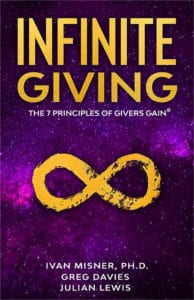
Who’s in Your Room: The Secret to Creating Your Best Life
You need your network now more than ever. When times are tough, that is the worst time to abandon your network. I saw people do it, “These are tough. I’m going to step out.” What’s wrong with you? This is when you need your network more than ever. There are people who are joining BNI now because they haven’t built a network and need to expedite the process of building their network. When times are tough, you need your network more than ever. I’ve been through multiple recessions. I had started this in ‘85. I have found over the years that people either get frozen by fear or focused by fear.
We’re going to make that a tweet. Either you get frozen by fear or focused by it.
We live in fearful times. The ones who get focused by fear are the ones who succeed. That begins with having hope. Hope is more powerful than fear. Hope plus a plan and action will lead you to success. That’s what we try to do in BNI. We start with giving people hope, a plan and helping them take action so that they can generate business during crazy times like we live in now.
Is there one mistake that you see a lot of people making? Ivan, I specialize in helping people tell stories and even an elevator pitch to me is a small story. I see a lot of people making mistakes on that as part of a networking thing. It’s not having a good elevator pitch story, whatever you want to call it. I’m also curious to see all the experiences you have. Are there some things that people should avoid doing when they’re networking?
Let me bifurcate that question into things that I see businesses do wrong in general, and then talk about the elevator pitch. If you want to be successful in business, you have to do 6 things 1,000 times, not 1,000 things 6 times. All too often, I see business people who are doing 1,000 things 6 times. They keep chasing bright, shiny objects instead of doing what they know works because they have mentors. They’re listening to shows like this where there are people who are giving them advice and they don’t listen to it. They jump around. Find things that resonate with you, and then do 6 things 1,000 times. It doesn’t have to be 6, it could be 5, 7, but it’s doing a handful of things and doing them 1,000 times. If I have any superpower at all as a business person, it is that I am a dog with a bone. I am incredibly persistent. I’m a real believer in doing 6 things 1,000 times. That’s the biggest mistake I see.
My best advice for people in terms of doing an elevator pitch is don’t pitch, instead serve. It may mean don’t sell them something instead, help them make a referral or a connection. I believe it’s better to be a master connector than just having a good pitch for your business. If you’re a master connector, you’ll be able to do your pitch. First, you invest in social capital. It is a lot like financial capital. Banks have this crazy idea that you have to put money in an account before you write a check. Social capital is very much the same. What happens is people try to make a withdrawal without making any investment. The thing to do is to first serve. Find a way to help someone, then you can tell people what it is you do, and they’re much more willing to listen and help you.
You make yourself memorable because you understand enough about their story and their business to be able to give their elevator pitch for them to make those meaningful master connections.
Especially if you’re networking up. When you’re talking to successful people, everybody and their mother pitches them. Don’t be one of the crowd. Instead, find a way to help them. I’ve been lucky enough to meet Richard Branson on a number of occasions. I’ve spent a week on Necker Island three times. I’ve been there multiple times, which is his private island. The last two times I was there, I wanted to do a video with Richard for my blog, but I didn’t want to be one of those guys that went, “Richard, would you do a video with me please?” What I did was I went there prepared, looking for things that he was interested in.
The first time we did the video I found that he was talking a lot on social media about The B Team, Business Team. The business can make a difference. The business can be noble or the business should be about people, planet and profit. When I saw him, I said, “Tell me about The B Team. I find that interesting. I read some of your stuff on the internet.” He lit up. He was excited talking about The B Team. I then said to him, “Richard, how can I help you get the word out for this concept? I think it’s brilliant.” He’s like, “You’ve run this network. Maybe you can let your members know.” I’m like, “I’d be happy to. Would you like to do a video? Would that help you?” He said, “That would be great.”
[bctt tweet=”When networking, serve, don’t pitch. ” username=”John Livesay”]
It’s a different angle. Instead of what’s in it for you, “Would it be helpful for you, Richard, if I did this video promoting what you are passionate about?” That’s such a huge distinction, Ivan.
It is and he could have said no.
He could have said, “I don’t need that,” or start quizzing you on how many people are going to see this. The fact is at that level, they’re not trying to prove anything to anybody else, nor are they trying to put anybody else on the spot and make other people feel less than for the most part.
I’ve spent enough time with him and that totally defines him. He is an amazing human being. I thought he would say yes, but he could have said no. The bottom line was I wasn’t pitching him anything. I was willing to serve. Another one when I went back in 2020, we did it again on a different topic. It was all about promoting him and his stuff, which didn’t hurt me but it also served him.
You’ve got momentum. Once you get in the door, the first video, then the second video, the precedent has been set as they say and they trust you, like you and all that good stuff.
We did a third video and you’ll crack up with this. I did a video with Jordan Adler who’s with SendOutCards. He is the main guy there.
I know that company well.
Jordan is a wonderful guy. We asked Richard, “Richard, would you be willing to walk behind us as we’re doing an interview like you just walk by?”
It’s like the cameo like, “I don’t expect to pull into the video.”
He said, “I’d be happy to do that.” If you go to my blog and look for Jordan Adler, you’ll see a video of Jordan and I. We’re talking very animated. Richard Branson walks by, looks at the camera, turns and continues to walk. It was a total setup. Jordan and I were like, “Was that? No.”
People love that kind of stuff because it’s a good story. That unexpected element is what makes a good story. An unexpected element like Richard Branson walking by makes people pull in and then share the video. It’s very clever that it gets to be playful at that level. I love that willingness for someone to give an unspoken endorsement by agreeing to be at it, but it’s his whole brand. I was fortunate enough to be able to fly Virgin to a friend’s wedding in South Africa. You go from LA to London and down there. You cannot believe the attention to detail, from notepads in the lounge to showers and giving massages. I’ve never experienced anything like it all done through a playful lens. It’s not taking itself too seriously, which he doesn’t do either as a person. That’s what is a real big takeaway on this concept that you’re talking about is you need to be your brand to some level and you need to be authentic. You can’t be this stuffy, boring person, and then try to create a brand full of fun and adventure if you’re not like that. He is like that.
I think it backfires on you. When your ego enters the room before you, that catches up with you. His does not.

Network Building: People either get frozen by fear or they get focused by it.
I remember the first time your wonderful book came on my radar and I was riveted. First of all, the concept of the name, Who’s In Your Room? It made me step back and think what an amazing question. I’ve never thought of it like that. My first question is, how did you come up with this title? I know books go through all kinds of choices of titles and book covers. What’s the story of origin on the title of Who’s In Your Room?
That was the first title. It was obvious to us that that was the title. Stewart Emery, my co-author, came up with that title. It was the perfect title. For those of you who haven’t read it, imagine you live your life in one room that has only one door. That one door is an enter-only door so that when people come into your room or into your life, they’re there forever. You’ll never get them out. Luckily, it’s a metaphor, but if it were true, John, would you be more selective about the people that you let into your life?
Yes. After all of us going through quarantine, we have a sense of what that is. We’re much more aware of who’s in our room.
Here’s our argument. We believe it’s more than a metaphor. If you’re reading this, I want you to think of someone you got out of your life. People say to me, “It’s not true. You can get people out of your life.” I want you to think, John, of somebody that you got out of your life. If you’re reading this, I want you to think of somebody that you got out of your life. I’m not going to ask you to name who it is, John, but I want you to think of somebody and why you wanted them out of your life. What was it that they did that made you angry? Do you have a name in your mind?
I do indeed.
I want you to think of a situation that made you angry with that person. They’re still in your head. They’re still in your room and they will be for the rest of your life. For those of you who are reading this, I want you to take your right index finger, put it on your right temple. Your left index finger, put it on your left temple. Your room is everything in between. It’s your head and the relationships that you have. We interviewed Dr. Daniel Amen who’s a psychiatrist and neuroscientist. He said, “When you have a personal or professional relationship with somebody, their fingerprints are all over your brain for the rest of your life.”
Why do we give them free rents? That’s another way of looking at it.
The whole book is about how you need to be more selective about the people that you let into your life. How do you deal with the people that have come into your life before you understood this concept or the people that you had no choice over like family members? It’s very hands-on. Here are specific things that you need to do in order to create the room of your dreams, to curate your room.
[bctt tweet=”Social capital requires deposits. ” username=”John Livesay”]
When I was younger and I would get a call from a recruiter or another company like, “We’d like to interview you.” My ego was so flattered that I would be like, “Really?” Even if it may not be the right job for me, and sometimes people have come into my life going, “I like to be your friend.” I’m like, “Really?” There wasn’t a lot of curating going on. You realize, “Wait a minute.” The whole premise was not curated properly. It’s not that we become defensive or hard to get to know or any of that. It is a sense of defining what the criteria is and earn the space to get into the room.
That space is about your values. You need to get good with your values and know what they are. When I ask people, “Give me your top seven values,” it’s deer in the headlights. They’re like, “Honesty.” “That’s great. Give me six more,” and they’re stumped. You’ve got to get good with your values. Your values don’t have to be the same as someone else’s, but they can’t be dissonant and incongruent. In the book, we have an instrument that you can use to determine your values, but there’s a lot of stuff online as well that comes to grips with what your values are, but the place to start is with deal-breakers.
It’s like dating, “I don’t date a smoker,” or whatever.
I am going to put you on the spot with this because it’s an easy one. Give me a deal-breaker of yours that you have in terms of a business or a professional relationship with somebody. What’s a deal-breaker that you don’t do business with them?
If they don’t have integrity.
That’s a great deal-breaker. For me, it was drama. People who are dripping in drama. We all have drama. I and most people have drama. I mean people that are dripping in drama.
It’s like, “You’re standing in those lanes.”
When Stewart was talking to me about this concept and I thought that drama was mine, I realized I had several people in my room who were full of drama. I knew they had drama but I let them in because I thought I could deal with the drama, but I didn’t recognize that other people didn’t want to deal with that. Even though they were qualified to do it, other people didn’t want to deal with it. It created chaos in my organization. Now that I understand deal-breakers and values, I’m much more careful about who I allow into my room.

Network Building: If you want to be successful in business, you have to do six things 1,000 times.
Do you think our values get formed at a very young age? For me, this concept of growing up in the Midwest of if you say you’re going to do something, you do it and show up on time. All of that stuff was modeled for me by my parents and everything I have. That’s how I operate. That’s my operating system. When I see people who don’t do that, it’s not only surprising, but that’s what’s made it a deal-breaker. I realized that isn’t the case for everyone. They say they’re going to do something but if something else better comes along, then they’ll blow you. I’m like, “What?” There are lots of ways to be out of integrity. You can see it in the business world. If you promise something and you don’t deliver it, it goes on and on. Do you think our values have formed at childhood or do we make them up as we get older?
Many of them are formed in childhood. We do acquire others as we grow older. Some of us rebel against the values or the modeling that was given to us. My father is a great example. His father was not a good father. He would physically hit people. My father rebelled with that. He said, “I am not going to be that man.” He was in the Army. He was behind enemy lines. He had done hand-to-hand combat. He was very good with physical strength and ability, but he refused to be like his father.
Sometimes, someone’s a great role model of what not to do.
That was my point is that you do acquire a lot of your values when you’re young by saying, “Yes, I like that. That resonates with me,” or “No, that’s not who I want to be.” It could go either direction. The problem is it’s modeled and people think that’s the only way they have to be.
With the onslaught of social media, I don’t think a lot of people think of that in terms of the room. As you said, between our fingers is our brain and we are deciding what newsfeeds and who we’re following and all that stuff. That’s also part of who’s in our room.
It’s a huge part and people don’t understand that. One of the things I’ve been saying for more than a year is micro-dose the news. The news is no longer the news. When I grow up, Walter Cronkite would give you the news. When he was giving you his opinion, there would be this thing across the bottom of the screen that said, “This is the opinion of the host.” Now it doesn’t matter what station you go to. What you hear is the opinions layered in between with the news. If you watch one news station, you get a completely different perspective than watching another one. I tell people to micro-dose the news. I no longer watch the news. I use news apps. I will pull up an app and I will look at what I want to see. Generally, I go to a conservative page and a liberal page, then international, BBC. Between the three, I get a sense of what the reality might be. I don’t watch the news anymore because it’s all the opinions, not the news.
Any last thoughts or words of advice you have for us on how to live a better life. Who we let into our room is a big secret to living a better life, having our values defined, giving before taking, there are so many great nuggets you gave us. I thought if there’s any last one thing you want to leave us with.
Do you want to know the secret to balance in life because this is in a book? Forget about balance. We look at the balance, like scales, our business has to be in balance with our personal life, spirituality, and health. I don’t think balance is possible, but I’ll tell you what I think is possible. We can have a life of harmony and that’s different than balanced. Even the graphic for harmony, the yin and the yang are out of balance if you pull them apart. You can have a life of harmony. I have not led a life of balance, but I have led a life of harmony. I’ll give you two techniques to use for harmony. One is be here now. Wherever you are, be there. Don’t be at work thinking about the fact that you didn’t spend time with the family. Don’t be with the family thinking about that project that has to be done at work.
The second one is you have to learn to both let go and hold on. Contrary to popular belief, you can’t have it all. You have to learn how to let go of things that aren’t part of your values. If it’s not congruent with your values, let it go. Those things that are congruent with your values, hold on to for dear life. There are 4 or 5 other techniques that help create a life of harmony. Just looking at it that way makes a lot of business people feel like, “I can do that.” I may not have a balanced life, but I can have a life of harmony. I have led a life of harmony.
What a great statement to make about your life at any age. The book is Who’s In Your Room? The author of the wonderful Dr. Ivan Misner. Thank you so much for joining us and for bringing your wonderful insights and energy.
Thanks, John.
Important Links
- Who’s In Your Room?
- BNI.com
- Larry Senn – Past Episode
- Dr. Mark Goulston – Past Episode
- Better Selling Through Storytelling Method Online Course
Wanna Host Your Own Podcast?
Click here to see how my friends at Podetize can help
Purchase John’s new book
John Livesay, The Pitch Whisperer
Share The Show
Did you enjoy the show? I’d love it if you subscribed today and left us a 5-star review!
- Click this link
- Click on the ‘Subscribe’ button below the artwork
- Go to the ‘Ratings and Reviews’ section
- Click on ‘Write a Review’
Love the show? Subscribe, rate, review, and share!
Join The Successful Pitch community today:
- JohnLivesay.com
- John Livesay Facebook
- John Livesay Twitter
- John Livesay LinkedIn
- John Livesay YouTube
Libby Gill, The Hope Driven Leader
Posted by John Livesay in podcast | 0 comments

 Episode Summary:
Hopes starts when we believe that change is possible. Being a hope-driven leader means believing that whatever you do makes a difference for the entire team. If hope is one of your foundations in leadership, you are leading by inspiring and informing; not by demanding and ordering. Libby Gill believes that when you become this kind of leader, you will be able to determine the outcome of your team’s performance. She shares that hope and happiness are key to keeping up with the velocity of technological changes as leader.
—
Are you someone who’s hopeful or are you someone who’s pessimistic? Our guest, Libby Gill, is the expert on hope. In fact, she’s written a book called The Hope-Driven Leader. She said, “Hope is what is connected to taking action. That’s the difference between hope and optimism even though they are both emotional cousins. It’s hard to be hopeless and happy at the same time.” She gives us specific ways that we can bring hope into our lives and into our careers. Enjoy the episode.
Listen To The Episode Here
Libby Gill, The Hope Driven Leader
I have Libby Gill as my guest. She is the former head of communications and public relations for big companies like Sony, Universal, and Turner Broadcasting. She’s now the CEO of LA-based Libby Gill & Company, which is an executive coaching and consulting firm. She guides emerging and established leaders and organizations like Acura, Capital One, Disney, Honda, the big boys and women. Libby shared her success strategies on everything from CNN to the Today Show, to Time, The New York Times and many more. She’s the author of four books. The latest one is The Hope-Driven Leader: Harness the Power of Positivity at Work. I’m very excited to have her on the show. Welcome, Libby.
Thank you, John. I’m happy to be here.
One of the things that we didn’t touch on in your little introduction is that you’re also a keynote speaker.
Yes, I am. I just did a keynote in Kansas City and it’s exciting. I know you do the same thing, John. It’s a lot of fun to be able to spread your message and get to connect with people whose paths you might not ever cross otherwise.
You had all these great jobs in corporate entertainment, which is very challenging to get let alone decide to make that leap to be an entrepreneur. What made you decide to do that?
I’d been in television. I headed communications at those three studios and after a long time launching television shows and promoting our studio and our celebrities and our executives, what I found I loved was turning my team, my kids, and in my world anybody under 30 is still a kid, into real leaders. That was a joy. The studio could be chaotic and crazy swirling around us and I typically had the youngest and greenest staff of any department because what we did was very time and labor‑intensive. You got to know people and learned what made them tick. I just found that such a joyful process to help people sort out their own career path and help boost them along the way.
What’s some of the things that you find most challenging with leaders since you’ve had a front row seat to them? The biggest thing that people are dealing with now is just the velocity of change. We’re all faced with technological changes. There are always sorts of advances and things. It’s very difficult to keep up, regulations, political atmosphere, all of these things. In the corporate world, it’s just compounded by the fact that the people are managing human beings that have to adapt to all these changes. If you think about it, the rapidity of change right now, the acceleration, this may be the slowest rate of change we ever deal with in our lives again. We’re not going to slow down. We’re going to continue to speed up.

Hope Driven Leader: The biggest thing that people are dealing with now is just the velocity of change.
I’ve seen presentations on this. It’s the hockey stick. Everyone thinks, “I’ll eventually catch my breath again.” It’s not the case at all with artificial intelligence and all the other things coming.
Just think about driverless cars. We think, “Who would have shopped online?” but now everyone does and yet, Amazon’s only been around since 1994. To us, it feels like it’s been here forever. All of these things, Airbnb and Uber, that affect us in our personal lives, artificial intelligence and internet grocery shopping, all the things that have changed professionally. Dealing with people who are really hardwired, we are not very skillful as animals. We look at things negatively and that’s the way we’ve survived. We don’t have a lot of defensive skills. We’ve had to weigh out who’s in our path, what’s in our path, how are we going to respond to this? Our fight or flight response is kicked in to high gear when we’re dealing with all these changes in the workplace, even though we don’t always realize it’s just our primitive brain reacting as it’s supposed to.
It’s interesting you talked about Amazon because one of the things I work with people on is getting their pitch clear and concise. I tell people, “Remember when Amazon just sold books,” and people forget. I said, “They were known for one thing and everybody in business needs to be known for one thing first before you’re known for all the other things you could do.” I’m guessing that that becomes one of the challenges that you see in the corporate world and in the clients you coach, which is they’re trying to be known for a lot of things and then they end up not being known for any one thing.
The truth is you don’t have to be good. Amazon is its own unique category like Oprah Winfrey. You can’t compare anybody to either of those. For most organizations, they only have to be good at a few things, their core competency, and then they can branch from there. That first thing is figuring out, “How do I get everybody marching in the same direction?” We’ve been taught that there is a leadership style, but the fact is there are so many different styles. When leaders can figure out, “What’s my superpower? What am I great at and how do I develop that so I can lead people in the way that works for me?,” that’s up to you.
What’s your superpower?
My superpower is what I write about. I feel I’ve got a good handle on inspiring people to go through all these changes. I went through a lot of changes myself. I grew up on a couple of different continents. I went to six different high schools including two in my senior year. How do you go through all these changes? When I started in the corporate world, in corporate entertainment, I started this little company that was founded by a real legend in the business. Norman Lear was the guy who created All in The Family and all those great shows and I thought, “I’m in this mid-sized company founded by this legend. I’m going to learn so much.” About five minutes later, that company was bought by Columbia Pictures and then by Coca-cola and then by Sony. It was either raise your hand and go with it and figure it out as you go or stay in this little place. I thought, “I’m just going to keep raising my hand whether I know this or not.” In five years, I went from being an assistant in Norman Lear’s company to being head of the publicity, advertising, and promotion for Sony’s television business.
I’m a big fan of his as well. In fact, he has a podcast out so let’s give a shout-out to Norman Lear’s podcast because it’s fantastic. He’s in his 90s, talk about staying relevant, healthy and funny and still working. It’s just amazing. His podcast is called All of the Above with Norman Lear. Since we both are admirers of him, we might as well send people to that podcast as well. Let’s talk about your book, The Hope-Driven Leader. What made you write about hope?
Somebody pointed out to me that I had been talking and writing about hope for a long time and I had a book that came out years ago called Traveling Hopefully. It’s about getting over the negative stories of the past, letting go of that baggage whether it’s personal or professional or whatever it is. I kept talking about hope and I had to sneak it in especially at keynotes because people thought, “It was fuzzy or abstract.” The more I study about hope, I had the good fortune to learn about this body of science that comes out of the medical community and positive psychology called hope theory. It is the research about hope. I was able to turn my personal obsession into a professional one and study and learn about the benefits of being a hopeful leader. That’s what kicked it in to high gear.
Is there a big difference between being hopeful and optimistic?
There is. Obviously, they’re related. They’re emotional cousins. Here’s the difference. Optimism is a generalized sense of, “It’s all going to be fine. It’s all going to turn out okay,” which is great, but hope links that to actions. It makes it specific and situational and focused on the future. In other words, “If I believe this and I behave accordingly, I’m going to go in this direction.” When you see it with an open-eye sense of reality, “This may not be easy but I see the pitfalls. I see the obstacles. I know there are some out there that I may not even see yet, but this is so important. I’m going to keep going towards that vision.” That’s the difference between hope and optimism. It’s action-based.
[Tweet “Hope and optimism are emotional cousins.”]
If we distinguish hope versus happiness, would you say that everyone who is hopeful is therefore happier than those who aren’t?
It’s hard to be hopeless and happy. They are clearly linked. There’s so much research about it now which I love, but according to the data, it is about being having a positive outlook on life and absence of major stressors. We’re not all happy all the time, but many of us have that happiness set point that people talk about. Hope is very much directed towards the future and based on, “If I do this, then this will happen.” It starts with a fundamental belief that change is possible. We think about that and think, “Doesn’t everybody believe that?” Think about someone. We’ve all got someone in our own life that that doesn’t believe change is possible. It’s that, “It is what it is,” person. “No matter what I do, nothing will change.” We all know one or several of those people.
Hope starts with a belief that change is possible and then an expectation that what you do as an individual is what makes the difference. You determine the outcome. It’s not determined by your boss or your spouse or the world at large. It’s up to you. When you put those together and you have that future vision that is so visceral and so intense and so inspiring, and the trick is, and what you’re so good at, John, is then you have to be able to articulate that to others. You’re leading yourself, which is okay but when you’re a leader, you can lead by demanding and ordering and requiring or you can lead by inspiring and informing.
Let’s double click on what you said about not being dependent on outside events to determine whether you make the choice to be happy. A lot of people think, “My boss is my boss and the marketplace is what it is. It’s never going to get better for us. My boss is never suddenly going to be someone who gives acknowledgement or whatever.” What do you say to those people of how they can find hope even if they’re in a culture that doesn’t exude it?
There are people who say, “I’ve got a terrible boss and I’m not going anywhere.” Hope is not rose-colored glasses. You look at that with a sense of reality. That’s the difference between what the hope pioneers, the hope theorists coined true hope versus false hope. In false hope, it’s the person who says, “Maybe someday it will change. My boss will suddenly wake up and be a different human being.” That’s not going to happen. That’s false hope, but true hope is looking at it, “What can I do to influence the situation?” Honestly, if you’ve done everything you can and it’s not getting better and you’re going to work with your stomach in knots, then wake up and look around and say, “This is never going to change, but I can. I can look for another department in my company. I can look for a different job. I can look for another way to handle this.”
That’s where the risk-taking comes in and that’s where as human beings, we trigger those biological fears and we get scared. “What if it’s worse over here? What if I get a meaner boss?” Those things are possible but you don’t know and we never have 100% of the data. It’s up to you to either try it out or make peace with where you are with a less than positive or fulfilling environment. For me, that was never going to happen. That’s why I worked in my corporate career at three different studios and I wasn’t jumping ship constantly. That was over eighteen years. It was always this sense of, “I think there’s another adventure out there. Let me try that.”
Starting your own business in your 40s, I had never run my own business. I’d never even thought about it. That was a pretty daunting time to think, “Let me go be an entrepreneur.” It was just time for a change and frankly if the right corporate job had come along, I probably would have grabbed it. Being a speaker and teaching and writing and training, all of those things, it’s hard to find that job. Instead, I decided I just create it.
We both have done the corporate world and now work for ourselves. For you, was it a difficult transition?
It was difficult in the sense of, “I no longer had that nice universal title. I’m no longer senior vice president of something at a Fortune 500 company.” That disappeared. Then you have that moment of, “Will the phone ever ring or will I figure out what the heck I’m doing?” I had those same fears everybody else does, but I had some money in the bank and I had a plan. I’d never been a great person about soliciting help, but I was the sole support of my kids and myself. I’ve done favors for people for all these years and it’s time to ask and I started asking. At first, you suck it up and say, “Would you mentor me and guide me?” I went to a former boss at Sony who today is one of my real heroes of that corporate world and just asked him if we could have a quarterly breakfast. He said, “No.” “How about monthly? How about you pick up the phone anytime you hit a snag?” He later told me, “I had no clue what you were doing.” I said, “Neither did I, so that made two of us.”

Hope Driven Leader: Raise your hand, be vulnerable and ask for the help you need and you might just get it.
He was a business guy and he shepherded me through this process. He never let me pick up a check. He always answered questions. He introduced me to other people who were so instrumental and that’s the first hurdle people have to get over. Raise your hand, be vulnerable and ask for the help you need and you might just get it. There are a lot of nice people out in the world as you discover when you start asking all of them for help. I discovered the art of the small favor, “Could you help me do this one thing?” It sends a signal that you need some help. You’re not going to suck up somebody’s time and energy without their consent, but that you need a little help and could they do it. You find out how gracious people can be and it’s pretty humbling.
The big takeaway for me is that you built a relationship already with someone who weren’t starting from scratch asking for the small favors or mentoring without having given something to some people in the past. That’s important for people to realize that there’s always something you can give other people who are helping you whether it’s advice themselves. Maybe you’re an expert in social media and they’re not or whatever it might be, to come up with ways to offer your help back because it is a two-way street.
For myself just launching a podcast, I realized the tech part of it, how to edit it and promote it, I didn’t know how to do any of that. I realized that if I was going to invest in my own career, I had to hire some people to help me as well. There’s not only the small favor and the mentoring that you can do, but sometimes you have to hire people to help you as well for skills you don’t have.
You have to do it before you think you can afford it. Entrepreneurs, whether it’s a college intern or a virtual assistant, whatever it is that you bring onboard or whomever, you find that you’ve got to focus on your highest level activity and if that’s marketing and providing the services to your clients, nobody can get out there and give a keynote for us. We’ve got to do that, but somebody can book our travel. You start looking at what can you shift to someone else so that you can focus your time.
Ideally, if you can spend 80% of your time and that’s arbitrary, maybe it’s 60%, maybe it’s 90%, on what you do best and let other people take care of whether it is the technical or the social media or the travel planning or the outreach, whatever that is, so that you can be giving back. Social media is such a good way to provide value to people. Through your podcast, through our platforms, through posting articles on LinkedIn or wherever you do what you do, you’ve got a great way to open doors and give something to people before you start asking. You got to give them some value and build those relationships.
[Tweet “It’s hard to be hopeless and happy at the same time.”]
If someone is a leader at a company, even if it’s their own company or a big company, and they say, “I think my team could use some hope or motivation or just start to get them onboard with what my new vision is going to be, to adapt to all of this disruption happening,” what would be some tips you have for leaders?
I always tell clients, “Don’t overlook the obvious. What you know is in your head but it’s not in everybody else’s head.” The first thing obviously is to share your purpose. Make sure everybody understands, “This is what we do and this is what we care about.” That you’re all onboard together and that they have a vivid picture of the future. You’ve got to connect everybody from your brand new college recruit that just graduated and this is their first job. They’ve got to understand where the future is just like your high-level CFO or another high-level sophisticated employee. We’ve all got to understand and articulate where we’re going.
One of the amazing things that I see, I do a lot of work in healthcare, is when a medical device company that I worked with brought in people who had made the pacemaker for the patient. They connected the person who made that pacemaker by serial number to the patient that had that pacemaker inside them. Can you imagine if you’re a guy, you’re a manufacturer essentially, and suddenly you meet somebody whose device that you built is in their body? Talk about a powerful connection for people that don’t always see the end results. As a leader, you’ve got to connect the dots for people. They could be a file clerk but they’ve got to see, “This is the big picture of what we do. This is how we change lives by our product or services, the information we provide.” That’s your job as a leader, to get people fired up and excited about their role so they don’t feel like, “I’m just a corporate drone or a cog in the wheel.” “No. You’re a vital part of this organization and here’s why.”
That’s one thing and that requires that as leaders, we got to know our people. If you’ve got a company of 25 or 150, you can know every single person. If you’ve got a company of 30,000 or 300,000 people, you can’t know all those people personally, but you can know your top line people. Then they know the level below them. As long as that message is trickling down about, “Here’s what we stand for, here’s what we care about and here’s where we’re going, here’s how you connect to that vision,” then everybody is feeding that sense of hopefulness all the way through the organization.
What brands do you think exude hopefulness that are out there? Is it a Starbucks or is it anything like that that you can point to?
Starbucks is one of them certainly because they’re one of the good guys. We know what Howard Schultz is doing in terms of fair trade and all the things that they put back into the organization. I love those companies like TOMS shoes that has their One for One initiative where they buy a pair of shoes, they donate a pair of shoes. I’ve been over to TOMS’ headquarters which is here in LA. It’s in Venice. Seeing what they do and why it’s so cool and, and how they’ve got those organizations in countries around the world that are set up to provide those shoes. That’s so important to our Millennials. You look at the stats. Millennials are going to connect and look at now. To get just a touch political, but two of the big companies, both Walmart and DICK’S Sporting Goods have decided, “We’re going to do what we can and what we feel is appropriate to stem some of the gun violence that’s out there,” and at risk to their own bottom line.
DICK’S took some of those assault rifles off the shelf, but I think they’re going to get it back. It was the right thing to do. It was a smart thing to do because Millennials want those purpose-driven companies. When they think about, “Where am I going to spend my sporting good dollars? Whether it’s to buy a basketball or whether it’s to buy a hunting rifle, I’m going to go somewhere that gets it. In my worldview, they get it.” Understanding because by 2020, our workforce is going to be 60% of Millennials, so we better understand what they care about. Those are the kinds of purpose-driven companies. We don’t all have to have the same point of view, but we should have a point of view and be able to stand up and say, “This is what I believe and why.”
What I’m hearing is that companies that have a clear purpose and a mission for why they’re in business beyond making money are more likely to have a culture and a mindset of being hopeful than those who don’t have a purpose except to make money. Would that be fair?
Absolutely. I just saw a piece on a show about Beautycounter, which I know because I have friends and colleagues that are involved in it. That started because the founder didn’t want people wearing makeup with all sorts of ingredients that had been banned through much of the developed world but not here in the US. She started with, “I’m going to make these products,” and then found a way to market and sell them. That was a real mission. That started with somebody who had a real purpose.
Is there any little tidbit you can share with us that you haven’t already from what you’ve learned from all the research on hope theory?
One thing is about the way you connect with your teams. It didn’t necessarily come out of hope theory, but some of the research that I did about the engagement with your team. It flies in the face of conventional wisdom that in those big team meetings, which is one of the major complaints of my corporate clients and I’m a big fan of, “Start your meetings at a weird time like 9:21 AM.” It sends a message that, “This meeting is different and it’s important and you better show up on time because we’re starting at 9:21 AM.” Teams are engaged and don’t just sit there and listen and interact with the boss.
There was one MIT study that I cited in my book, The Hope-Driven Leader, where they put devices on people that monitored what their body language was, who they were talking to, who they were listening to, the volume of their voice, and what they found was the level of energy and interaction was as important as the substance of the meeting. The fact that people were talking to each other and they were engaging with people besides the leader, then the other part that was so critical was exploration.
Team members that go out and meet with other people outside of their immediate group or team and bring that information back to the team. The explorers provided a level of not only energy and information, but they brought in new ideas and new risk taking. Things that people could act upon that they might not have stumbled upon in their immediate world. It is that idea of energy and engagement and external exploration. Go to that conference. Listen to that speaker. When I get to go to an event and there are other speakers and the travel schedule allows, I’m first in the door. I want to hear what they have to say and also how they say it because that’s so important to how we engage.
Two things there. What you’re talking about being an explorer reminds me of Tim Sanders’ book Dealstorming, which is all about collaborative selling and having other departments interact with each other and all be part of the same vision. I love that. It’s so funny you brought up other keynote speakers because I’m giving a talk and there’s a speaker that’s speaking the night before on the topic of focus and then I’m giving my talk on Getting to Yes. I’m flying in early so that I can start mingling with the audience at dinner but also hear what that speaker has to say about focus so that I can then incorporate it into my talk the next morning. For the audience, there’s a through line of what they just heard the night before and what I’m saying so it’s all consistent. Doing things like that make you an explorer, make you more relevant, and ultimately then the audience gets more energized.
It connects it all to them. It makes it one overarching theme where you’ve got different information and different takeaways from the other speaker, but it all makes sense in that same world. Just as business people, people are paying a lot of money to go hear some of these people like you speak. Why would we not want to sit in and soak up that knowledge and that information? It’s the best way to learn about our own business.

Hope Driven Leader: Hopeful people tend to be stewards of our own future.
I do have a question for you around the connection research, if there’s any, on hope and health, or optimism. Are people who are more hopeful healthier or when you get a diagnosis of something, does hope come into play?
It’s interesting that you asked that because where I started with the research of hope was having the good fortune to read a book called The Anatomy of Hope by a man named Dr. Jerome Groopman who’s a Harvard-trained oncologist. He was one of the early researchers in AIDS and then he himself had this major pain issue. He had a back problem that for twenty years plagued him and then he went in a completely different way. He went to sports medicine and was able to cure it about 90%, which was interesting. What he said was early in his career as an oncologist and a clinician, thinking he was doing the right thing, he would give so much information about their diagnosis to the patient and their families. Then he realized they were shutting down. They felt so hopeless. It’s like, “There’s nothing I can do.” They didn’t participate in their own healing process. Part of that is mental and part of it is the physical follow through. There is definitely a brain chemical factor. When you feel like, “I’m going to get through this,” your brain releases endorphins and enkephalins that suppress pain, that boost the immune system. He saw that these patients weren’t able to do that.
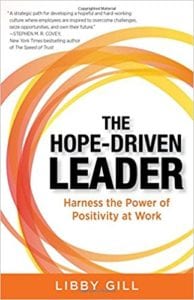
The Hope-Driven Leader: Harness the Power of Positivity at Work
As we often do, he swung too far to the other side and started limiting the information and saw the people were getting that sense of false hope. They felt like, “I guess no news is good news. I’m going to be okay,” even when that wasn’t necessarily true. He had to find that spot in the center where he could give them the diagnosis and the information, but also leave them that sense of possibility even when the situation was dire, that there was always hope, that there was always a possibility. He didn’t rob them of that sense because he knew he was not playing God. He didn’t have all the answers. There’s definitely a connection. In my book, I cite this study that was done in San Antonio where people followed people who self-identified as hopeful and hopeless and the ones who said they were hopeless, no surprise tended to be smokers, they overate, they over drink, they didn’t exercise. They had a shorter lifespan than people who said they were hopeful. Hopeful people, we tend to be stewards of our own future, but people who did not feel hopeless did not. The morbidity rate, it came much younger than the group that identified themselves as hopeful. There is absolutely a correlation.
The book is again The Hope-Driven Leader: Harness the Power of Positivity at Work. Any last words of advice for the listeners?
Just for people to think about how can you feed hope? There’s no neutrality. You’re either feeding it or you’re starving it. In whatever way is meaningful to you, feed hope into your environment.
How can people follow you on social media, Libby?
Go to LibbyGill.com, my website. I’m active on Instagram, LinkedIn, Facebook, Twitter.
Thanks for sharing your hopeful insights and we’re all inspired to feed it going forward. Thank you so much.
Thank you.
Links Mentioned:
- Libby Gill
- The Hope-Driven Leader: Harness the Power of Positivity at Work
- Norman Lear
- All of the Above with Norman Lear
- Traveling Hopefully
- Beautycounter
- Dealstorming
- The Anatomy of Hope
- LibbyGill.com
- Libby’s Instagram
- Libby’s LinkedIn
- Libby’s Facebook
- Libby Twitter
- Libby Gill & Company
Wanna Host Your Own Podcast?
Click here to see how my friends at Brandcasting You can help
Get your FREE copy of John’s latest eBook Getting To Yes now!
John Livesay, The Pitch Whisperer
Share The Show
Did you enjoy the show? I’d love it if you subscribed today and left us a 5-star review!
-
- Click this link
- Click on the ‘Subscribe’ button below the artwork
- Go to the ‘Ratings and Reviews’ section
- Click on ‘Write a Review’