

Referral Diva With Virginia Muzquiz
Posted by John Livesay in podcast | 0 comments


There is an art and science to being a magnetic human. John Livesay’s guest in this episode is Virginia Muzquiz, known as the “Referral Diva” and the Founder of Master Connector. Virginia talks with John about how you can influence without being manipulative. The key is empathy, which is the secret to quality referral partnerships and friendships. The sustainable method of referrals and connection is creating a team. You’ll need affiliates, ambassadors, and advocates who work on your behalf because they like who you are. If you want more tips on how to be magnetic, this episode’s for you. Tune in!
—
Listen to the podcast here
Referral Diva With Virginia Muzquiz
Are you looking for a way to improve the number of quality referrals you get? Our guest, Virginia Muzquiz, is the Referral Diva who’s going to give you a plan on how to get referrals, execute the plan, track it, evaluate and repeat. Enjoy the episode.
—
Our guest is Virginia Muzquiz, who is the Founder of Master Connectors and the creator of Referrals On Demand, which teaches solo entrepreneurs how to turn their network into a referral generating machine. With more than two decades of experiencing, developing and leveraging social capital to build a business, she has been teaching entrepreneurs and small business owners the art and science of filling their sales funnels with high-quality referrals.
She is passionate about increasing prosperity across the globe and uses her business to further the efforts of Ten by Three, an international nonprofit, creating economies of scale in third world countries by turning artisans into entrepreneurs. Her IMPACT FIRST philosophy inspires her clients to make different skills that inspire others to promote, connect and refer them to perfect ideal clients. Virginia, welcome to the show.

Referral Diva: There is an art and science to being a magnetic human and using influence without being manipulative.
Thanks so much, John. It’s great to be here.
Let’s go back as far as you want, your childhood, college, wherever you want to go and give us a little sense of when you start getting passionate about the value of relationships.
Every time someone says, “Tell me your story,” it makes me want to break into song and be like, “When I was a young warthog.” It’s from the lion king, I don’t know why that always cracks me up. I discovered the value of relationships because, as a kid, I grew up without them. I grew pretty independent. My brother is seven years older than I am.
He was off riding his bike when I was cutting my teeth on a tricycle. I didn’t have a playmate or anything. My mom was a woman who took great physical care for me but she was a victim of domestic violence and was deeply abused by her father. She was emotionally unavailable. My dad’s a grumpy old geezer and workaholic.
I grew up alone with Nancy Drew books in trees. I was a Betty Bossypants. I didn’t have a lot of friends. I didn’t have social skills, because where do you learn social skills as a kid? You learn them in your family. We didn’t do that. I grew up feeling lonely, disconnected and constantly seeking relationships and approval. What has happened is over time, I’ve realized that there is an art and science to being a magnetic human. Being able to use influence without being manipulative.
I work with people a lot when they say, “We want to be persuasive without being pushy when we’re selling something.” You have a different distinction around that as far as connecting in general, which is great.
I believe that there is a bit of a science to persuasion and influence but the difference between a narcissistic sociopath and a CEO is empathy. There are a lot of CEOs that are pretty narcissistic. I’m not being critical about that if you don’t understand what you do, what you say and how you walk in the world inspires or alienates people and you’re running around being the victim of your own bad behavior. I did one of those TTI assessments where they’re like, “Here’s your DISC and motivators.” There’s this like skill-based thing and it comes back. I have a 10 for influence and I have a 0 for empathy. I burst into tears years ago. I was like, “I am a sociopath. This is horrible.”
[bctt tweet=”Curiosity is the key to being more empathetic. ” username=”John_Livesay”]
The guy who did the testing said, “The simple fact that you can understand that influence untempered with empathy is a problem. It means you’re probably not a narcissist. You just don’t have a skillset.” I started coaching. Believe it or not, there are coaches who teach you empathy. It’s a vocabulary. I started realizing that understanding empathy was the key to quality selling, quality referral partnerships and, quality friendships. It’s that ability to understand, listen for and have some curiosity about, “What is John feeling in this moment and can I name it?”
I love that you said curiosity. That is one of the most underrated characteristics in a leader and people because it requires you to get the focus off yourself. You need to be interested in what’s going on in the world and learning a new skill. “I’m curious to learn about you. How did you get to where you are?” Any of those things lead to people saying, “You’re taking an interest in me. That makes me feel connected to you.” Ideally, the situation is reciprocal. There’s one thing you wrote in your LinkedIn profile. I’m a fanatic about reading those. It’s a great opportunity for people to tell their stories in a way that either pulls people in or pushes them away. How did the Referral Diva come up?
I was starting out in my coaching practice. It was 2010, 2011. I had purchased the Referral Institute Franchise, which doesn’t even exist anymore. It’s not a thing. The franchise rebranded and then got sold off. I realized the need for differentiation. You get behind a brand but you also need your edge. A friend of mine who was a mentor and an investor in my early coaching practice took me to this agency and said, “We’re going to take you to this agency. We’re going to brand you personally.” It’s going to be great. They’re way ahead of their time. They’re trying to give me a QR code and they’re like, “You need to be on Twitter.” I’m like, “I don’t do social media. It’s a time suck. I don’t want to do it. I’m not interested. I’m not going to Twitter.”
The owner of the agency walks through and goes, “Could you stop being such a diva?” The branding person that was assigned to my thing goes, “That’s it. Referral Diva, that’s you.” I was so incorrigible at the time. The definition of a diva is a woman of extraordinary talent. Not to brag but I’m extraordinary. I’m talented at the things I’m talented at, not much at the stuff I’m not but I’m talented at what I do. I started trying to embrace that side of the Diva brand. We are going forward and officially rebranding to the Referral Alchemist.
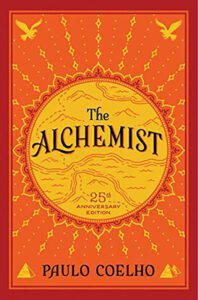
The Alchemist
I love the book The Alchemist. That’s the name of your process, the Referral Alchemy. This concept that you talk about, we’re lucky sometimes we meet a couple of referral archeologists who keep us in mind, referrals and take the time to think about who’s a smart connection. Most of us don’t know how to hang out with those kinds of people, let alone how to be one. It seems to me that you’re solving both problems. You teach people how to become an alchemist in terms of being able to tap into the network in a meaningful way and then how to find others so that you’re spending time with the right people. That helps your own network, which makes you a better referral.
If you look at the Master Connectors logo that I have, it’s a Buckminster Fuller Geodesic like the Epcot globe. The idea here is, first of all, the triangle is the strongest geometric shape. Geodesics are built out of triangles and the best relationships are three-way. I gain influence when I introduce you to a third party. You’re connected to me. They’re connected to me. You’re connected to them. That strengthens our relationships all the way around. The other thing about a geodesic that is unique is that it is the only geometrical structure that gains strength and durability as it gets taller. That has to do with the fact that it’s round and dome-shaped. The taller it gets, the wider base gets. It makes it more stable.
The key to the whole alchemy piece is being able to hub enough connections that you can get anywhere around the geodesic because you have a point of connection somewhere. I’ve got an alchemy epic fail and then an alchemy epic success. The success story is Rob Goyette was on my show and I asked him, “Who do you want to know?” I make it my business to introduce the people I meet to the people they want to know who do you want to know. He said he wanted to meet John Lee Dumas.
It happened that somebody in my network had coached with him and had presented me to John to have him on my show. It was a brand new show, so I was terrified to have this conversation with John Lee Dumas. I didn’t schedule him. If somebody hands you, John Lee Dumas, on a platter, I don’t care how unprepared you are. He’ll make you look good, just say yes but I didn’t have the confidence to say yes.
I ended up calling Zach, telling him, “I’ve got this guy, Rob. Do you still have a connection?” He said, “I don’t but my friend does because my friend lives in Puerto Rico.” Zach introduced Rob to the friend, the friend introduced Rob to John Lee Dumas, John Lee Dumas introduced Rob to someone at this party and those two inked a massive deal.
It’s like the Kevin Bacon, Six Degrees of Separation in a way.
They say everyone is Six Degrees of Separation and that’s not the case. Dr. Ivan Misner and Michelle Donovan did the research. What they found was that only 29% of people are capable of doing it. It’s based on a study that was done where you had to get a letter to a destination and mail it to someone you knew, then they had to mail it to someone else they knew. Only 29% of the letters arrived at their destination. I imagine that there were letters along the way that could have gotten to the destination but for the apathy of the individual who got the letter. I got the letter but I was apathetic about sending it on to the next person.
Most people are weak in the follow-up. That’s a big distinction I see in particular.
It can be fun for me. It’s an adventure. It takes on this LARPing quality, Live-Action Role Play like, “How can I get to the next step? Who else could I ask? Where could I push? Where could I find it?” For me, it’s going on an epic quest. I won’t work that hard for everybody but I’ll work that hard for people who I think are merit that much activity.
[bctt tweet=”Get a referral engine by planning and tracking. ” username=”John_Livesay”]
It’s like the hero’s journey in a way. There are obstacles along the way but then the stakes are high. Let’s get into what problem you’re solving. What happens to someone’s business if they’re only relying on advertising and they maybe get the occasional a lot of the blue referral but they don’t have a system in place to create that or support that coming?
Generally, they’re stuck not getting any clients. That’s the challenge. Here’s the real truth, John. I’m not against paid traffic, print advertising, television advertising or sponsorship but they all take money because if you’re going to do it, you need to be ubiquitous. In order to do that, there’s this frequency element. It used to be people saw you 3 to 5 times and that was enough. Now it’s 12 to 17.
Somebody needs to see your Facebook ad twelve times before they’re going to click on it. How much money do you need to put behind that? You’ve got to know how to beat the algorithms, know your SEO words, have the right message and AB split test. It’s so overwhelming. I’m a $75,000 a year coach. You don’t have a choice but to use referrals. I have this Referrals On Demand system but it’s the most simple form. I use PETE, it’s an acronym. Meet my friend PETE, Plan, Execute, Track, Evaluate. Without it, you won’t have a consistent revenue stream.
Do you find some people are hesitant to make referrals? Let’s say you’re coach and you got a great client. Maybe they’re embarrassed that they’re even using a coach that they don’t want to tell their friends. I see a lot of people who are financial advisors like, “Any referrals you have?” Let’s say you’re doing a good job, whether you’re somebody’s empathy coach or financial advisor and you want them to send you referrals.
You ask, “Should they be giving referral fees?” What’s the process that you teach because I know you have an upcoming course we want to talk about? I’m trying to identify some problems that you’re helping people solve. Most people are afraid to ask, then they ask and they still don’t get it. They don’t know why. That’s what I see.
There are a couple of things here. Number one, referral fees don’t work, so don’t do it. I’ll give you $25 if you send me your mother. That’s not happening. The only place that it works is in joint venture marketing but that’s a whole other ball of wax. We can talk about that but that involves paying people high dollar cost of client acquisition and the average solo entrepreneur doesn’t even know what client acquisition costs are, let alone how much their cost of client acquisition is. There’s that element of that. What I teach is very relevant to joint venture marketing and it is an essential skillset because if I want you to promote for me, I need to build this relationship with you that has some reciprocal value. Referral fees, in general, don’t work. They will not inspire your clients to refer you.
Second thing, your clients are not going to refer you because you do a bang-up job for them. The idea is like, “If you go to a movie, you tell everybody about it. If you go to a great restaurant, you tell everybody about it.” I’m sorry. No, one’s talking about what a great coach you are on an intentional basis. If someone says, “John, you’re killing it. What happened while I was working with Virginia?” Only if someone notices and asks, “Will your clients do it?” Your clients rarely are going to put their neck on the line, mostly because they often don’t know what to say, how to do it or what to work?
The real money and sustainability are in creating a team of affiliates, ambassadors and advocates that willingly work, out of goodwill, on your behalf because they like who you are. They believe in your worldview, what you’re up to and want to further your cause because they think you’re the man and they want to proliferate that.

Referral Diva: The real sustainability is creating a team of affiliates, ambassadors, and advocates who willingly work on your behalf because they like who you are.
People can tell that when they’re hearing or even reading an email, they can tell whether it’s an authentic connection or not. I believe everything’s energy from a quantum physics standpoint, money’s energy, relationships are energy and trust gets transferred. That’s the thing that most people do not realize. “I got to get you to trust me. Let me show you all the social proof,” look you in the eye and all that other stuff that you need. What you’re offering people is the roadmap to how to get trust transferred. That’s how I would sum you up to somebody.
I would say that to be true and a lot of it has to do with clarity, clarity about who I am, what I want, what I’m up to in the world and my purpose. Why am I here on the planet? What am I here to do? What change am I here to affect? It’s the ability to communicate it clearly.
Clear, concise and compelling are my three Cs. I’m constantly teaching people with their storytelling skills. Let’s double click on the concept of you working with solo entrepreneurs. Can you give us 2 or 3 industries? Are they coaches? If so, what kind of coaches? Are they the guy who owns the dry cleaning business? I don’t think that’s who it is. Who’s your ideal client? Who’s this for?
I’m working with midlife expert entrepreneurs is where that’s coming in. Coaches, consultants and I consider a financial advisor, accountant and attorney. They’re all consultants of some sort. People that are using their expertise to solve problems for others. They’re selling something intangible. It’s easy to be like, “I’m selling magic markers. Do you need a magic marker? A magic marker will suit your needs.”
That’s fine but when you’re talking about things like money, deep dark secrets, transformational journey or whatever that is, you start getting into stuff that people are going to hold tight to the vest in the trust level for that. It’s not just I can buy it at Walmart, think this is crap, throw it in the garbage and buy something at Target. That’s not that easy.
Tell us a little bit about what you have coming up with this program, Referral Engine. Is it an online course?
It’s delivered live. It’s a hybrid coaching program. There’s video support. I’ve got the video modules for the support and then we’ll be meeting once a week for Q&A. We’ll be covering things like how do you align your business with your lifestyle? Most people are building a business and then trying to fit life in. My clients decide on life and then they align their business with that.
It reminds me of some people who have kids and then once the kid arrives, everything revolves around the kid. The parents suddenly lose the time to work out. They don’t see their friends anymore and everything’s about the kid’s life. There are other people who have kids like, “The kid is joining our life. The kid is not our life.” I was like, “What a great distinction.” It doesn’t mean you don’t take your kids to birthday parties but that’s what I hear you saying. Is that a great analogy?
It is. By the way, my two girls are capable of sitting on a bench for four hours and entertaining themselves with their thoughts.
No electronics needed?
[bctt tweet=”Align your business with your lifestyle.” username=”John_Livesay”]
No. My kids grew up in the Game Boy era. It boils down to, “What is it that you want to be doing? What kind of life do you want to be?” It’s, “I know what life I want to be living. With whom do I want to take the journey?” I call it defining your tribe. It’s getting in touch with your values, mission, vision, passion, purpose, the impact that you want to have and who do you want to invite in. Dr. Ivan Misner and Stewart Emery wrote a book called Who’s in Your Room.
It’s up to us to decide who we let in. If we let somebody in by mistake, get them out. It’s so good.
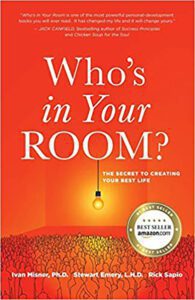
Who’s in Your Room: The Secret to Creating Your Best Life
You can never get them out. Did you know that? Ivan Misner does this. He’s like, “Think of somebody that you kicked out your room.” You said, “Get out of my room.” Did you think of somebody? They’re still in your room. They are still living because they have taken up space in your neural network. Unless you have a frontal lobotomy and you have a cut-out, it’s not going anywhere.
The notion of defining your tribe is, “Who do I psychographically want to take my life’s journey with?” It’s number one. Number two, “How will they know that I get them?” How do we communicate? I’m communicating to you how I see you. What you need to be thinking when I’m talking to you is like, “How did she get in my head?”
That goes back full circle about the importance of listening, being curious and having empathy. When you hear someone express a challenge or a problem they’re having, you can then say, “If you’re having this, I bet there are 100 or 1,000 other people like you.” That becomes part of the concept for your marketing. This whole concept is fascinating of how we communicate and what trust is. Virginia, where can people go to find out more about you and your wonderful program about building this Referral Engine?
You can locate information about the Referral Engine at MasterConnectors.com/ReferralEngine. On the forms there, it says like, “How’d you hear from us?” If you found out about it here, make sure you fill that out and let us know so that John gets brownie points and kisses.
Thank you so much. What a treasure. I love that you’re so passionate. Your daughters are lucky to have you.
Thank you so much, John. I appreciate it.
Important Links
- Virginia Muzquiz
- Ten by Three
- The Alchemist
- Rob Goyette – Previous episode on Business by Referral Podcast
- Referral Engine
- Who’s in Your Room
- Better Selling Through Storytelling Method Online Course
Wanna Host Your Own Podcast?
Click here to see how my friends at Podetize can help
Purchase John’s new book
John Livesay, The Pitch Whisperer
Share The Show
Did you enjoy the show? I’d love it if you subscribed today and left us a 5-star review!
- Click this link
- Click on the ‘Subscribe’ button below the artwork
- Go to the ‘Ratings and Reviews’ section
- Click on ‘Write a Review’
Love the show? Subscribe, rate, review, and share!
Join The Successful Pitch community today:
- JohnLivesay.com
- John Livesay Facebook
- John Livesay Twitter
- John Livesay LinkedIn
- John Livesay YouTube
Raise Your Standards With Mark Evans
Posted by John Livesay in podcast | 0 comments

There’s an old way, and there’s the new way of selling – which side are you on? It’s about time you raise your standards and get intentional with your sales. In today’s episode, host, John Livesay, is joined by Mark Evans, author and Standard Sales Company founder. Mark talks about the significance of building systems into your sales process and salespeople. He also deals with the subject of fear of rejection, the four types of people you interact with, and how to do follow-ups without being pesky. Discover how sales is not something you do to somebody and how to ask the right questions to start meaningful relationships that close the deal.
—
Listen to the podcast here
Raise Your Standards With Mark Evans
Our guest is Mark Evans, the author of Raise Your Standards: The Definitive Guide to Building Seven-Figure Sales. One of the things that Mark is known for is his energy. People call him one of the most enthusiastic people you’ll ever meet. His love of sales and the game of business is infectious. That’s one of the reasons I wanted to have him on the show. He believes that in its very core, sales doesn’t have to be manipulative or sleazy. He thinks it’s the greatest job in the world and he helps companies and individuals reach the seven-figure sales mark and beyond. Mark, welcome to the show.
John, thanks for having me. It’s a treat to be on here.
You are welcome. One of the questions I always love to ask my guests is to tell us your own story of origin. Were you born happy and enthusiastic? Did you love selling as a kid? Take us back as far as you want and tell us how you get to become you.
I come from a family of entrepreneurs. My parents are both entrepreneurs. My wife and her side of the family are all entrepreneurs. My story started back my parents, when I was a young boy probably 3 or 4. They had always been a part of other family businesses and that worked out okay, but they decided to risk it all and start their own business. They moved my entire family, my three sisters and I, about four hours away to a town they had never been in, to a city that they didn’t have any connections with to buy this business. From a young age, I was working with them and that’s where I got my first exposure to realize that sales is critical. It’s the lifeblood of all organizations, especially small and medium-sized businesses. At a young age, that was drilled down into me. It wasn’t just sales for corporate earnings or for a private jet. We weren’t close to that at all, but sales were what led to our family vacations and the tuition to my little parochial school in the town where we came from and basketball shoes. That’s where I got started and fell in love with sales as a young kid.
[bctt tweet=”Don’t just show up without preparation. Be like a chef. ” via=”no”]
I’m fascinated that you grew up with entrepreneurs and you married one. Sometimes for couples, it’s challenging if one is an entrepreneur and one is not or doesn’t have that background. They don’t understand the ups and downs, and the lack of a steady paycheck. It can be a big challenge for people to adjust to. What was your first sales job once you got out of school?
My family is in the printing industry and when I graduated, it was the week where the recession hit. I remember there was a Newsweek article or there was some news publication that probably isn’t even in business anymore that said, “Now is the worst time ever to get a job.” I remember thinking like, “This is something great to see after our graduation ceremony.”
To be clear, this is not the 1932 crash, correct?
Correct.
[bctt tweet=”Use video in your emails.” username=”John_Livesay”]
I’m guessing this was back 2008?
Yes. It’s the 2008 Great Recession. I may be balding but I’m not that old. I graduated and I went to work at a company. This is the start of my new book that’s coming out. I went to work for a commercial printing company and within three days of me being there, they laid off 40% of their workforce. In that same conversation said, “Don’t worry. Mark is here. He’s going to help us.” I said, “Is there someone else here besides me?” That’s where I started and that’s where I got the idea of two types of different companies. One that have and build systems into their sales process, where they’re systematic and intentional with their approach, both in their systems as well as with their salespeople. Those that are scattershot, are showing up and throwing up all over the place, whether it comes to their sales systems or their salespeople in general.
That concept, the old way of selling, “Let’s just throw a bunch of spaghetti up against the wall and see what sticks.” It doesn’t work well anymore. Let’s talk about the three things that you have of mindset, the preparation and the actual work of asking the right questions and getting the yes. Let’s start with the right mindset. Many people, especially if they’re professionals, architects or lawyers, you name it, they don’t like to think of themselves as salespeople. How do you help people who have that mindset?
There’s an old saying that I’m sure you’ve heard as well as the rest of the ones have heard, “If a tree falls in the forest and nobody’s around to hear it, does it fall?” The same thing can be said for companies. If you have a product, a widget or service and it can’t be sold, do you have a company or do you just have a hobby? That’s where I like to start the conversation off with people that say, “We’re not in sales.” You’re in business. I hate to break it to you, but sales are going to be the lifeblood of your organization. It’s going to be critical to everything you do. That’s where I start the conversation off. My book goes into four parts of what I consider the standard sales models. The first is mindset. You have to build your house on rock, not on sand. If you don’t have the proper mindset, whether it’s going to be in sales or whether you’re in any career, you’re not going to have a successful life and I truly believe that. The next part is prep work. John, are you familiar with a concept called Mise en place, a French cooking technique?
[bctt tweet=”Curiosity is a lost art.” username=”John_Livesay”]
I’m not since I don’t cook American, let alone French.
That’s okay. You’ve probably experienced it. Whether you’ve gone out to a great restaurant in LA or you’ve gone to waffle house, not that it’s not great, but let’s call them two different restaurants. Both of those restaurants are using a technique called Mise en place. If you have an 8:00 PM dinner reservation, the chef didn’t show up at 6:30 or 7:00. They’d been in the kitchen all day. They’d been there since 9:00 AM or 10:00 AM prepping, cutting vegetables, getting the meat ready, and getting the sauces right. When you come and experience the restaurant, you get this amazing experience where the dinner service flows and you have a great meal. Many salespeople and many sales-driven companies are showing up and throwing up. They’re showing up with no intention and with no schedule. If we can do this in a restaurant and if restauranteurs, chefs and servers can be intentional with their approach, then why can’t we do that in sales? The second principle that I talk about is all about making sure everything’s in its place before you start reaching out, start emailing, start cold calling or whatever you’re going to do to make that happen.
The tweet will be, “Don’t just show up without preparation. Be like a chef.” People will get that because everyone knows a chef, if you’ve hosted any dinner party, don’t show up when people are arriving to eat. That analogy is fantastic. Going back to the mindset, I want to get your thoughts, Mark, on rejection. People have such a fear of rejection. Since that falls under mindset, any tips that you have in your book or in life on that?
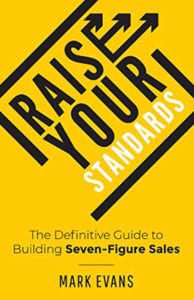
Raise Your Standards: The Definitive Guide to Building Seven-Figure Sales
I saw this study back a couple of years ago or so. I believe that about 90% of all the prospects that you meet, at any given time, aren’t ready to do business with you. Only 10% are ready to do business now. I was having this conversation with a client who was putting all of this weight into every single meeting. He was psyching himself out, to be honest with you. He’s trying to change almost his entire business model because 1 or 2 people have said no to him. We had this conversation, “Not everybody’s going to be ready that day to sign on the line that is dotted, especially the higher end and the higher level of service, widget or product that you provide.” You know this better than anyone, John, when selling luxury goods. Not everybody’s ready to drop six figures on something.
The next part of this is the actual selling and there are a lot of different steps to that. Do you reverse engineer it? Do you think to yourself before you even start building rapport, “How can I create a win-win?”
In creating a win-win and creating that type of scenario, you’ve got to have that in your mind. You’ve got to go in with some intention, but I caution salespeople to come in because I’ve been in situations where what the salesperson thinks I’m coming in for and the solution that I want are apart. We’re almost like train tracks where this person is going in one direction and I want to go somewhere else or we’re completely apart. I do a little reverse engineering, but honestly, I just want to be curious in sales conversations. That curiosity is a lost art and a lot of salespeople could benefit from being curious about the other person across the table, the company, the solution and where that company or person is trying to go.
I love a story, so I’m guessing you have a time where the buyer and the seller had a different track, then you had come in for something. Give people a story so that it locks in, whether you’re buying a car or matches.
I’ve made every mistake when it comes to sales, so I’ve got lots of horror stories if you will. I believe that there are about four types of people and I consider them to be either bowls. If you’re type A, you go get them and take no prisoners type of people. You’ve got your party people, that’s someone like me, energetic. We usually got cocktail parties. You’ve got your fact folks. Those are usually your CPAs and your engineers. The I’s are dotted, the T’s are crossed, and then they want to show you the math behind all of it. Your people pleasers are the type of individual that even if you eat their lunch right in front of them, they won’t say anything. They just want everybody to get along. How we interact with those types of people can be successful in a sales conversation.
[bctt tweet=”Sales is the lifeblood to all organizations, especially small and medium-sized businesses.” username=”John_Livesay”]
One story that comes to mind is I was trying to sell someone who is an electrical engineering manager. It’s almost the definitive individual when you think of fact folk. I saw his garage 1 year or 2 later and it was like you could eat off of it. It was impeccably clean. For the better part of a year as I tried to sell a high-end engineering solution to his company, I was constantly going up to this individual and there’s a way to build rapport and relationship. I was offering him tickets to a local sports team and front row seats. I offered him these great events where we’d have a table where he could network with fellow engineers and fellow people. I didn’t realize that and it didn’t dawn on me until a little bit later, that this person going out in public and trying to meet someone who is a complete stranger is a nightmare scenario for this guy and for this individual. He said, “Mark, I don’t want to be in a crowd. I don’t want to be around people socializing and networking. That’s a nightmare to me.” It was only when I said like, “Yeah.” Instead of trying to push these tickets on them, how about I just provide the facts and the figures that he’s asking for? As soon as I was able to do that, the business became a lot easier. We formed a great relationship.
You also talked about the fourth thing being follow-up and most people don’t do it. I know in my own career, it’s a big key to my success. How do you suggest people follow-up without being pesky?
A lot of people don’t want to be that “used car salesperson” where they feel like follow-up is something scary. They don’t want to be a pest. If you have a solution that’s providing value to someone, it’s in your best interest to follow-up with them. You can change their life if you follow-up and have a good consistent follow-up process. There’s a stat that I read that said something like 20% of salespeople are following up more than 3 or 4 times, whether by call or by email. That same study said that only 80% of all buyers will only respond to or buy something after the sixth or seventh connection attempt. We got this massive difference between salespeople that are stopping at three connects and people that are only buying at 5 or 6. John, for example, how many emails do you get in a general day?
I don’t even know anymore. It’s a lot. I can barely keep track.
[bctt tweet=”As a salesperson, your one voicemail or email is not going to make a difference. Don’t be afraid to follow up.” username=”John_Livesay”]
Probably north of 100, 150 or 200. The average executive gets over 250 emails a day. If you, as a salesperson, are out there thinking that your one voicemail or your one email is going to make a difference and reach out, that’s not going to happen. People are busy. They have lives, kids, spouses and parents that get sick or they get busy going on vacation. I always tell people like, “Don’t take it personally. It’s not up to you. It’s not about you, so don’t be afraid to follow up.”
You’re also a keynote speaker. Who’s your ideal audience?
I try to speak to companies that are looking to go to becoming sales-driven organizations. Maybe in the past, they’ve had a couple of salespeople or not professional sales organization and they want to be proactive when it comes to the sales process. That looks like a variety of different industries, whether it’s software as a service, professional services like CPAs, commercial real estate or realtors. It’s about those individuals and those entrepreneurs that want to grow their business, but they just don’t know how to get to that next level, especially when it comes to becoming sales-driven.
How did you come up with the title of your book, Raise Your Standards?
[bctt tweet=”If you have a solution that’s providing value to someone, it’s in your best interest to follow up with them.” username=”John_Livesay”]
I struggled with a title for a couple of weeks and nothing was coming up at all. I liked the Raise Your Standards part. I have a business coach. His name is Craig Ballantyne and he is out of Canada. He’s a New York Times bestselling author for 3 or 4 times and he’s a great guy. I was beating my head up against the wall for 3 or 4 weeks and within five minutes of one of our first conversations, he said, “It should be Raise Your Standards: The Definitive Guide to Building Seven-Figure Sales.” After explaining what I do and how I help a lot of sales companies, I loved it, but at the same time I was like, “Craig, how could you do this to me? You’ve figured this out right away.”
That’s what good people who have experienced do. I figured it out quickly, but it was 30 years of experience that allowed me to do that fast. We talked that your book can help people not feel pushy, sleazy or even difficult. Is there something in the book using these standards that takes it from feeling complicated or sleazy?
The core thesis of the book is that sales is changing. There’s the old way of selling and then there’s a new way of selling. John, I love your perspective on the new way of selling and you preach an intentional type of sales process. What I’m talking about is your personal interactions. Sales don’t have to be something that you have to do to somebody. You don’t have to use manipulation and kitschy techniques in order to close a sale. All you’ve got to do is ask some good questions, build some great rapport, and understand where that person is trying to go. If you have a solution, a product or a widget that can help them, then it’s your duty to make that pitch to make that ask of them. The sales approach and the sales genre that I’m trying to preach is that you don’t have to change and be the guru in front of a private jet or in front of a Lamborghini. You can work with someone else in order to get a win-win and to create a good long-lasting relationship.
Mark, what do you think makes a good question? We all know the difference between a close-ended question, yes or no or an open-ended question, but sometimes people feel awkward asking people a question. They don’t want to feel intrusive. How do you help people ask good questions?

New Sales Approach: Being in sales is like being a chef. You don’t just show up when people start coming in. There is an intentional approach and lots of preparation before you start reaching out to people.
When it comes to asking questions, that’s the core element of a good sales meeting and a good sales approach. The questions are where the magic happens. The level of depth, level of intention and level of thought that you put into your questions reflect on how you are approaching and how you are respecting your client or your prospective client. The framework that I like is thinking about what’s in it for the other person. Everybody’s tuned into the most, “What’s in it for me?” They’re trying to think of, “Where are they at currently? Where are they looking to go?” Those are the questions I tried because I firmly believed that if you can articulate the problem that your buyer or your prospect is having, better than even they can, they’re automatically going to think that you have some answer.
That’s the a-ha moment for many people. The better you can explain the problem, the better they think you have their solution, which in my mind requires some homework and some empathy. It’s not just, “It sounds like your problem is this,” but put some feeling behind it. “It must be frustrating to struggle with this particular problem and never figure out how to solve it or the same thing keeps happening and all that.” That is what makes people think, “You get me.” You have something where you say, “The first objection is not a real objection.” That intrigued me, Mark. Let’s say a couple goes into therapy and they said, “We’re here because we’re having trouble with our sex life.” The therapist is like, “That’s what you think is the problem, but there’s something underneath that.” How does that work in the sales world where you say, “Your first objection is not the real one.”
I had not heard that part but I liked that. That’s true and it’s an a-ha moment for me. John, if you’ve ever gone into a store even if you’re busy and even if you’re looking for someone and that helpful clerk comes scampering around and says, “Can I help you with anything?” Most people’s first answer is, “No, I’m just browsing. I’m just looking.” People naturally love to buy, but they don’t like being sold to. “I want to buy a new car. I love the thought and the thrill of driving off the lot, but I don’t like being sold at all.” That first objection often is real, whether it’s that therapy case. We put up these guards and barriers because we don’t want to let people in. We don’t want to be vulnerable and answer some questions. You’ve got to break through that.
Are you considered a Millennial or not?
I still fly into that, but I watch a lot of old movies and old books. I’m an old soul.
You’re what’s considered a digital native which is someone who grew up with computers as opposed to older people who had to learn it. You have whole expertise around how to stand out using video email. A lot of people don’t even know you can do it and they don’t even know what video to put in an email. Because this is your digital native, can you give us some tips on that?
One tactical that anybody who’s out there that is cold prospecting or trying to book appointments or book meetings with about anybody can benefit from is through video email. The average executive gets, let’s say 200 plus emails a day. Most of those are all text-based. One way I’ve found and my clients have found that’s effective in standing out in the inbox is a video email. The system that I use is called Vidyard. There’s a paid version and a free version. I use the free version, to be honest with you. I record a simple and easy video that can be converted into a GIF of me waving or me holding something up where I hold up my book and say, “John, it’s Mark. I’m the author of Raise Your Standards. I’d like to talk to you about X, Y, Z. We’d love to do this. I’d love to make an introduction.”
That little video stands out in people’s inboxes. Every time I send this or every time one of my clients starts using this practice, we see their conversion rates immediately jump. We see conversations come out of it. I use this to schedule a bunch of different appointments at a conference that I was attending, a big industry event. I was reaching out to different CEOs and executives and I became almost like this little mini-celebrity at these events. People are like, “I got your video. I loved it. It was amazing.” I’m still seeing the puddling effects or the ripple effects from that.
Give me the name of the service that you use.
There are two. The first is called Vidyard and the second one is a Wistia product called Soapbox.
Do people know that it’s a video in the email with the subject line somehow or you still got to get them to click to see the video?
They’ll see it when the actual video uploads. You can load it directly into your email, especially if you have Gmail or Outlook. In the email itself, there’s a little thumbnail like you would see any thumbnail. It almost looks like a YouTube box and you can turn that into a GIF. There’s motion like I’ll wave in it, I’ll move around or I’ll hold a sign up of that other person’s name. It will say like, “John, watch this video.” People naturally want to click. It’s clever. People can’t help but click on it.
What can sales teams learn from sports teams since you’ve written about this?
There are a ton that they can go with. Let’s start with the CEO, the entrepreneur who’s the head coach. I see a lot of CEOs who are the head coach and also trying to be the quarterback, the linemen, the person popping popcorn and the guy parking cars out in the parking lot. These small and medium-sized business owners are trying to be everything for everybody. The first thing is to start getting a team. Get your star performers and also start getting a good set of other coaches that can help you level up the entire team.
The book again is called Raise Your Standards. Any last thoughts or enthusiastic tidbits you want to leave us with?
In the end, sales are one of the greatest crews you possibly can be in. It doesn’t have to be something that’s manipulative. It can be a great career and at its core, it’s all about helping someone else.
Thanks for being with us, Mark.
John, thanks for having me. I appreciate it.
Important Links
- Raise Your Standards: The Definitive Guide to Building Seven-Figure Sales
- Vidyard
- Soapbox
- MarkPatrickEvans.com
- Vidyard.com
- Better Selling Through Storytelling Method Online Course
Wanna Host Your Own Podcast?
Click here to see how my friends at Podetize can help
Purchase John’s new book
John Livesay, The Pitch Whisperer
Share The Show
Did you enjoy the show? I’d love it if you subscribed today and left us a 5-star review!
- Click this link
- Click on the ‘Subscribe’ button below the artwork
- Go to the ‘Ratings and Reviews’ section
- Click on ‘Write a Review’
Love the show? Subscribe, rate, review, and share!
Join The Successful Pitch community today:
- JohnLivesay.com
- John Livesay Facebook
- John Livesay Twitter
- John Livesay LinkedIn
- John Livesay YouTube