

Heed Your Call – Interview with David Howitt
Posted by John Livesay in podcast | 0 comments
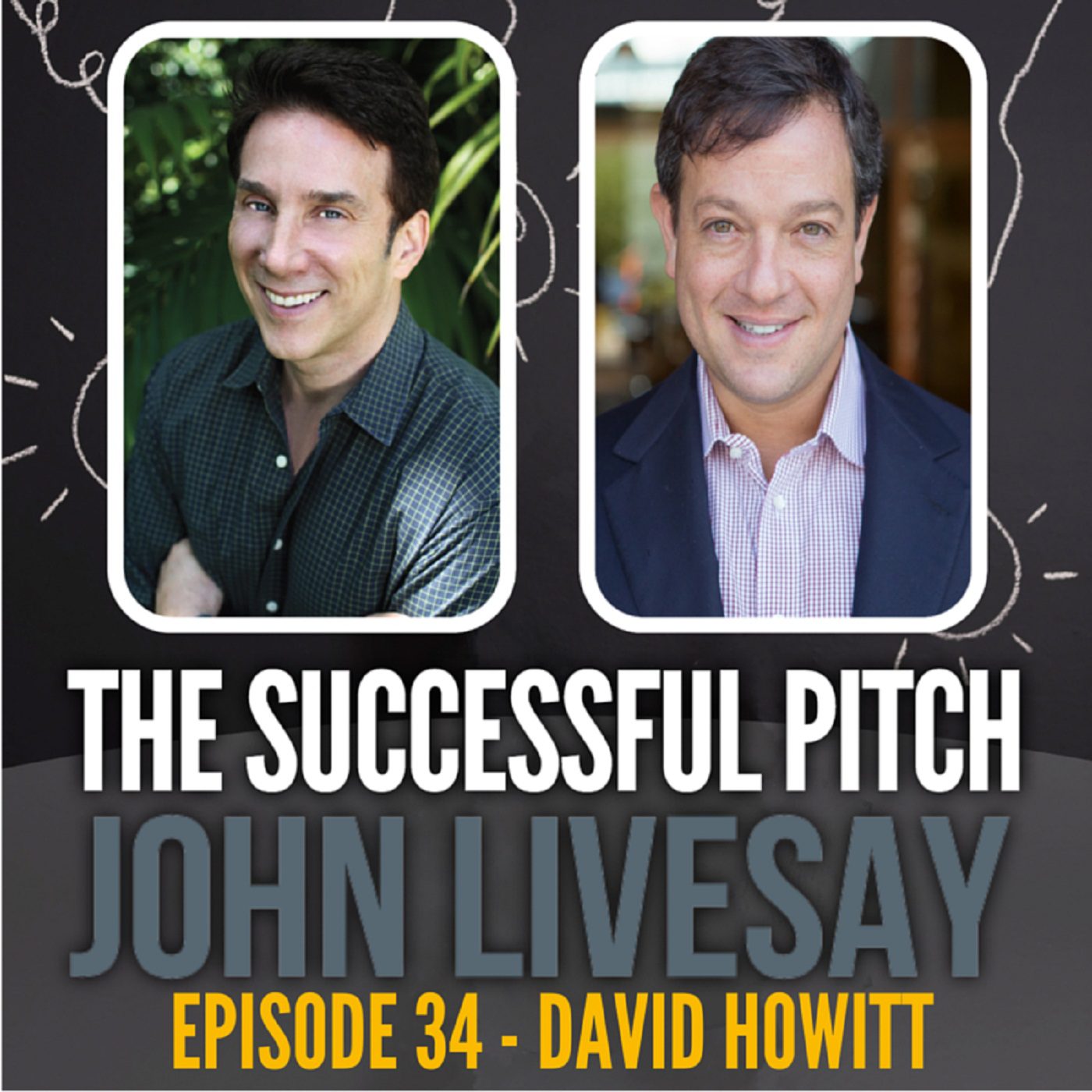
Listen To The Episode Here
Episode Summary
David Howitt is the CEO of the Meriwether Group and is also the author of Heed Your Call. Dave shines a new preservative on the role of a guide or mentor. He says that not all mentors make you feel good, but they can always teach you a very profound and important lesson about yourself and about the world. He also explains why the story of Wizard of Oz and the entrepreneur’s journey are very similar to one another.
Heed Your Call – Interview with David Howitt
Hi and welcome to The Successful Pitch Podcast. Today’s guest is author David Howitt of Heed Your Call. He’s also the founder and CEO of Meriwether. I’ve had the honor of reading his book. It has so much great information about how to be a successful founder and also a successful person. David, welcome to the show.

Heed Your Call: Integrating Myth, Science, Spirituality, and Business
Thanks so much. I really appreciate you having me, John.
I want to start at the very beginning, like most things do, give people a little context of texture. You obviously have quite an impressive background. You worked at Adidas both in their legal division and went into licensing. You and your wife launched Oregon Chai and sold that successfully in 2004.
There’s a lot of journey that you talk about in your book, Heed Your Call, about what made you … So many of us are told, “Do this and you’ll be happy.” Then you find that career path and you’re like, “This isn’t making me happy.”
You’ve managed to have multiple careers. You now have Meriwether Group, which helps founders through variety of things that will get into. If you would, give us a little context of what was it like when you were miserable as a lawyer and where did you find the courage to leave that and start your business with your wife?
I appreciate that introduction. Thank you very, very much. I so appreciate what you do and being on the show and having the opportunity to speak to your listeners. Thank you for that.
In terms of the law firm and my journey, I think like most of us, I stepped into what Joseph Campbell, and we’ll speak more about him, refers to as the known world. Joseph Campbell, who was the foremost authority on mythology, looked through a variety of cultures, spiritual belief systems, time and geography and came away saying that there is one central mythology, one central myth that’s been prevalent through all of those things, which in and off itself is powerful.
In that myth, which he referred to as the hero’s journey, he built a roadmap. This roadmap was the articulation of one person’s journey in life. What I’ve found in reading that is, it’s truly applicable to all of us and applicable to business.

For me, my known world was growing up in a middle class, conservative town in Michigan and having parents and grandparents and neighbors and friends and teachers. All had a central thesis which is, “You should go do this.”
For me, in answering your question directly, my known world was growing up in a middle class, conservative town in Michigan and having parents and grandparents and neighbors and friends and teachers, all of whom I listened to and respected and admired. All had a central thesis which is, “You should go do this.”
For me, that “this” was, you graduate from high school, you go to a four year college and then you go on to some form of grad school. You graduate, you go get a great job somewhere that you may or may not like, likely you won’t like, but that has high level of earning potential. You meet someone, you get married, you have 1.2 kids, buy a house and check all the boxes. I subscribed to that.
My known world took me all the way to the point that I found myself in a very large law firm. One day, I woke up and said, “Boy, I’m miserable. This is really not a happy place for me. I don’t feel like I’m in alignment with what is my truest self. It’s starting to show itself physically, emotionally and spiritually. I need to think about what to do.”
Of course, at that moment, ego jumps in and starts screaming at you. There’s nothing you can do. People will think you’re insane if you quit this job, you’ll go broke, you’ll be homeless, your wife will leave you, your neighbors will think you’re mad. I struggled with it for a while, probably close to a year, before I got to a place where I finally decided to surrender and let go because it was just so painful.
You talk about that in Heed Your Call. We’re so concerned about worrying about what other people think about us and wanting other’s acceptance. We live our life from a place of fear and trying to control things all the time.
I think everyone listening can relate to that, no matter where you are on the startup journey, whether this is your first startup or your fifth startup. There’s a journey. Overcoming fear is a part of it.

“When we surrender, when we finally let go, actually that’s when possibility is at its highest. That’s when creativity is at its highest.” -Deepak Chopra
Huge part of it. It’s interesting John, that in our society, in business and in our personal lives, we’re told that fear or that letting go or that surrender is the equivalent of failure. If you allow yourself to be humbled and to say, “I actually need to let go of this or I’m afraid of this or this is no longer serving me. I give up.” That that is waving the white flag and admitting defeat and being a failure.
In Buddhism, it’s exactly the opposite. One of my mentors and guides, Deepak Chopra, who’s very successful in business and in life said, “When we surrender, when we finally let go, actually that’s when possibility is at its highest. That’s when creativity is at its highest, and that’s where our ability to co-create a result in our business and/or in our lives is at its highest.” It’s by surrendering, it’s by letting go that in fact we invite in the potential to actually align ourselves with our highest and best.
That’s great, we’re going to tweet that out. That will be one of the first tweets from the show. “When we let go, possibility and creativity are invited in.” That’s a great line. I love it. Thank you.
[Tweet “When we let go, possibility and creativity shows up.”]
What I want to say also, everything I’ve tried to put forward in Heed Your Call and that we’re talking about now is stuff that I’ve seen illustrated in the world, in business. I felt like there were a ton of great spiritual books out there and a ton of great books out there on business but maybe not one that had built a bridge between the two.
Having grown up in a home where there wasn’t a lot of woo-woo spirituality around and having gone to law school, really wanted this book to be grounded in actual business case so that maybe the ego for your listeners and for some of the readers can let down a little.
That concept of surrendering and letting go and that allowing for creativity and for possibility is something I have seen demonstrated in so many successful businesses, including Oregon Chai.
One of the things that I really resonate with what you just said that’s in your book is, I’m going to quote, “When we dial up too much of our left brain tendencies and ignore our more empathetic and intuitive nature, our relationship with the collective consciousness diminishes.”
I’m personally really fascinated with that because what I do is I help the founders, tech founders in particular, which are very left brain, about how something works. When they’re pitching, what they don’t realize is they have to move to the right side of the brain, which is the spirituality, the storytelling, the emotional engagement. That’s where all the selling occurs.
You are able to left brain, lawyer, until the cows come home and shift that into a right brain story. Speaking of stories, let’s jump right into, one of my favorite stories in your book is about your grandfather. This great line about, “Instead of why is this happening to me, why is this happening for me.”
[Tweet “Instead of why is this happening to me, why is this happening for me.”]
Everyone has had that question that they ask themselves in their life, in their startup. Please tell us about that story and your grandfather. What an amazing influence.
Thank you. Thank you for that. My grandfather was not a traditionally educated man in the sense of western culture. Didn’t have a big college degree or grad school degree, but he was very successful entrepreneur and a very successful person. He credited that with what he referred to as using commonsense.
When I dug a little deeper on what he meant by that, effectively what he started to articulate, and I later really came to understand, is that comment that you mentioned about what you do, which help people to toggle seamlessly between the left brain and the right brain. What we refer to at the Meriwether Group is the power of ‘And’. You need to have analytics but you also have to have artistry. You need to have intuition in addition to intelligence.
[Tweet “You need to have analytics but you also have to have artistry.”]
Prophets and profits. It’s when we combine our whole brain, when we bring our truest and fuller self, that the magic happens. With regard to my grandfather, I think he embodied that. He had enough of those left brain chops. He understood how to build a profit and law statement, how to look at it income statement, margin, supply chain, the consumer.
He probably wasn’t the best at it but he was certainly capable. He also had empathy and had the ability to understand his consumer deeply and his audience. As you put forward so well, when you’re working with your clients to help them understand deeply. In the book, Heed Your Call, I speak of deep empathy.
Our ability to be connected to the other is so present at any given moment. If we just allow ourselves for ego to quiet down, we truly can walk in another person’s shoes, sit in their seat and truly appreciate and understand what it is that they are living with and/or looking for.
[Tweet “If we allow for ego to quiet down, we truly can walk in another person’s shoes.”]
We can shape our message, we can shape our pitch, we can shape our business, our product or service in a way that is going to be most likely to be embraced by our audience, our consumers. My grandfather talked about these subtle shifts that were really pretty powerful.
The one in which you comment on, when you look at life and certainly in business, you’re going to have multiple times, I certainly still do, where you’re going to hit a wall. Where you’re going to have someone in the organization you’re butting heads with. Where you’re going to have some type of challenge or hardship that is really in your face.
I think most of us, when that happens, we go into this victim mentality of, “Why this is happening? Woe is me. This is so hard. Why do I have to deal with this every day?” But if you can shift that, as my grandfather taught me, and ask yourself, “Why is this happening for me? What is the lesson here? What is the mirror of being held up to me that’s going to allow myself to grow as a professional, as an individual, as a boss, as an employee?”

Guides and mentors are actually there to create impediments for us. They’re there to help us overcome elements of our personality or of our journey.
I think when we look at life through that lens, suddenly the shift allows us to actually approach these challenges through a lens of possibility, instead of a lens of being restricted. Carlos Castaneda, in his books, refers to guides and mentors. I think for most of us, we always think of a guide or a mentor as someone who is there to really help you, who’s your friend, who is there to give you positive reinforcement and tools.
Carlos Castaneda talks about guides and mentors that are actually there to create impediments for us. They’re still your guides, they’re still your mentors. They don’t do it in a way that feels as good maybe, but they’re there to help us overcome elements of our personality or of our journey that are going to allow us to move further down the path.
When you find that in your work, in your job, think of these people as a guide or as a mentor and what it is that they’re there to teach you about yourself or the world.
There’s so many things you’ve said that I want to recap. First of all, I’ve never heard this phrase you said and I love it. We’re going to tweet that out. “Prophets versus profits.” That is absolutely brilliant because it’s the whole ‘And’ philosophy. Your book talks about, you need to be the thinker and the dreamer. You need to be the artist and the scientist. You need to have profits and prophets.
[Tweet “Profit AND Prophet”]
Your analogy in the book of even music has a light and dark keys so that you need both sides to make that sing to the investors when you’re pitching. It all ties together in such a great metaphor that you just said. Thank you for that.
Thank you.
Your book is broken down into three different categories, sections. Initiation, mentors and masteries. I want to touch briefly on each one of those sections just to tease our audience to make sure they go out and buy it and read it.
The initiation, the thing that really stands out for me is, you not only have to hear the call but you have to heed the call. Hence, the title of the book. The mentors that you just touched on, is most people that assumed that mentors are only going to be your cheerleader, if you will. Help you and not give you any obstacles.
[Tweet “You not only have to hear the call. You have to heed the call.”]
What you’ve just said is so interesting. You know what, somebody may not have the label of guide or mentor, but if they’re giving you a challenge, if you shift your perception, they can absolutely become a mentor. Of course, the whole mastery.
Let’s dive into mastery a little bit, which is what we do at Meriwether, which I really want you to, if you wouldn’t mind, walk the audience and listeners through all the different options that you provide founders from the Accelerator to giving capital.
Thank you, John. Appreciate it. Our firm, the Meriwether Group, was really based on the power of ‘And’. Based on being with an entrepreneur and a business owner through all facets of their journey. We ground it on the left brain side with what historically was called a merchant bank.
Merchant banks, back in the day, were had very high touch concieglary partners to business owners and folks who were birthing businesses. They basically locked arms with you and said, “We can help you understand how to grow your business and actually be there to assist you with the work. We can add capital, if that’s necessary, as part of your growth. When you’ve reached your defining moment, we can assist you through an exit that is high watermark economics.”
Those groups were largely bought up by large multinational financial organizations because they were so successful. As often happens, the very things that made them special were lost in those acquisitions. We felt again, from the left brain side, that this model of a more, I would say connected and more holistic partnership in helping these business owners made more sense than forcing them to talk to one group about growth, a different group about capital and a totally separate group about preparing for or going through an exit.
That is very disjointed, it’s very disconnected. It has an inherent risk. For people like your listeners who were working 70 hours a week, trying to start up those different relationships or juggle three different relationships, is often very tiring. That was a left brain concept.
The right brain addition to that is again, back to Joseph Campbell and the hero’s journey. I’ll use an illustration that hopefully your listeners will identify with. The hero’s journey has been a central thesis for a many of the biggest movies and books.

We defined, at the Meriwether Group, the entrepreneur as the modern day hero.
John Lucas cites the hero’s journey as the basis for Star Wars and all of the storytelling. The Avatar movie, Lord of the Rings, The Hobbit. The list goes on. I’m going to use the Wizard of Oz as a way to explain what we do at the Meriwether Group and how it ties back to this notion of the hero’s journey.
We defined, at the Meriwether Group, the entrepreneur as the modern day hero. It’s our belief that entrepreneurs, your listeners, people who are birthing new businesses, disrupting the status quo, looking at the world and asking themselves, “Where has the consumer been deprived of innovation, of relevance and of a really good choice?” Then bringing that to the market.
Those people are modern day heroes. More so than politicians, more so than maybe even folks in NGOs. We want to be in service to that hero. We want to be a guide or mentor to them. You have this founder and they live in the known world. For me, it was growing up in Michigan, we talked about that.
For some of us, that desire to listen to the quiet spot inside of us that tells us, “Hey, this isn’t what you should be doing. Or this path isn’t your highest and best.” For some of us, we actually get to a place where we open ourselves up to listening to that voice. That voice is always there. It’s always present, but we do things to try to quiet that voice. Because that voice is a voice of change and a voice of risks.
Ego doesn’t like that. We employ tactics to try to keep that voice at bay. We say things to ourselves like, “I could never follow my heart. I could never start this business. I could never do this because …” Fill in the blanks. “I have a mortgage. I have kids going to college. I have car payment.”
[Tweet “The biggest regret people have is, “I played it safe. I really wish I hadn’t.””]
[Tweet “”When the student is ready, the teacher appears.” -Buddhist saying”]As the result, we live our lives in the known world. We don’t ever take that shot. As an aside, in writing Heed Your Call, I spoke with a number of end of life caregivers. Mostly through the hospice support. The single biggest regret people have as they’re reaching the end of their life is, “I didn’t take my shot. I lived my life in accordance with other people’s view of who I should be. I played it safe. I really wish I hadn’t.”
Back to Wizard of Oz. You’ve got Dorothy and she’s living in Kansas. That’s her known world. Dorothy feels like there’s got to be something more than a dirt farm in Kansas. She finds herself leaving her known world. We all know she ends up in Oz. This is the founder leaving their job, leaving their career, leaving the vestiges of the known world and taking the leap and starting the company.
Initially, it’s pretty euphoric. Dorothy, it’s beautiful colors with all these people singing and played for her and she’s excited. She has left the bonds of the known world. We all know this, business owners, we know this moment. We celebrate it.
But it’s pretty short lived is what mythology tells us. Eventually you have, as Dorothy did, your “witch” shows up in a puff of green smoke and says, “I’m going to get you, my pretty.” Now, for the business owner, that might be, “This business idea’s cool, but I didn’t think through the supply chain or how I was go to the market or is there enough margin or can this product actually be made?”
You fall into what Campbell refers to as the abyss. The abyss is that moment of despair where we have to actually surrender and let go. We have to give up, drop our arms and literally say, “I give up. I don’t know that I can do this.”
[Tweet “When the student is ready, the teacher appears.”]
Interestingly, it’s that moment in time when the mentors and guides show up. The reason is I think, that before that moment of humbling, you’re not going to be open to the advice or counsel of people around you because you know it all. Because you just started your business, you’re all that. The Buddhists say that when the student is ready, the teacher appears.
I love that.
It’s this moment of surrender where we are now truly open to possibility. That’s when people show up.
Most investors are constantly telling me, “We need to work with people who are coachable.” When you’re telling this story, they must be humble to surrender in this abyss that they’re coachable for the first time, maybe.
Coachable, open to advice, self-aware, they know what they know but they’re also very aware enough to acknowledge what they don’t know and where they need help. We will not consider working with or investing in a company until the founder has been at that point. At that point, your Obi-Wans, your Yodas, and in this case, the case of Dorothy, your lion and your scarecrow and your tin man show up.

They’re there to walk the path with you. They can’t take the journey for you but they’re going to be on the yellow brick road alongside you on your journey.
They’re there to walk the path with you. They can’t take the journey for you but they’re going to be on the yellow brick road, literally the path, alongside you on your journey. They’re going to help you to learn what Campbell refers to as the tools of transformation.
For Dorothy, if you recall, the tin man, the lion and the scarecrow were there for heart, brains and courage. Those are the three things she was going to learn about herself on the journey. For our clients and for your listeners, some of those tools of transformation are going to be finance, operations, sales, marketing, go to market strategy, licensing, business development.
These are what we, at the Meriwether Group, bring to our clients when they’re in that process of transforming the business as truly becoming and where the founder and the owner is deeply on their path of growth. You’re walking down your path, you’re on your journey, you’re learning the tools of transformation and now you reach your defining moment.
For Dorothy, her defining moment, or so she thought it was, was going to see the great and all powerful wizard. She had this notion that the journey was going to be something outside of herself. Of course, you know the story. She gets there and there is no great and all powerful wizard. Initially, she’s destroyed. What has this journey all been about?

Glinda, the Good Witch says, “Silly girl, all you have to do is click your heels together three times.” You’ve always had the power. You are the hero of your own journey.
One of her guides and mentors, Glinda, the Good Witch says, “Silly girl, all you have to do is click your heels together three times.” You’ve always had the power. You are the hero of your own journey. You are capable of doing whatever it is you want to do when you’re in alignment with your truth.”
That is true, of all the businesses we work with. They feel like that defining moment is something outside of themselves, but ultimately it is about them getting to a place where they’re finally in flow. That may mean that’s it’s an exit, a sale of the company. It may mean an IPO. It may be an ESOP or a succession plan or it may be bringing some executives into the leadership team that allows that founder to start thinking about their next journey.
It’s true because of the journey, the world is better and you are better for having taken it. The Meriwether Group, for us, the three main places on the journey are, we can help you build the strategy and help you actually execute on that strategy as a group of former founders, as a group of former business owners and entrepreneurs. We have walked the path. Now we’ll walk it with you.
We can assist you with capital, if that’s one of the tools that you need along the path of growth. If you need capital, we’ll make it available.
Let me ask you about that in particular. Since for so many of the listeners, that’s what they’re interested in. If someone’s going to pitch you for Meriwether Group to invest in them, whether they’ve gone through your Accelerator … Ideally, somebody would start in you Accelerator, hit some milestones. Then you would know them and believe in them. You would continue that relationship and invest in them and then help them exit.
I totally love that journey that you just took us on with the Wizard of Oz. If someone says, “I think I don’t need an Accelerator, but I do need capital. I want to pitch David and the Meriwether Group.” What do you look for in a pitch?
I’ll speak to that but I’ll say that’s not our sweet spot. As a person, on my journey, I’m not entirely interested in just being an investor. For me, I derive a lot of personal satisfaction from being part of the journey. If it’s just, “We need a check. Thank you. We’ll be on our way.” There are time we’ll do that but it’s pretty rare.
It’s usually that we’re working with you, we’re in the journey, we’re part of it. “Hey, we identify together, you need X amount of dollars to really get to the defining moment. We can make that available.”
Having said that, to answer your question, I think a few things are really important in a pitch. Again, I’m going to speak to this in terms of the left brain and right brain. We want to see that you clearly understand the business and you can speak to the financials and you can speak to a plan and articulate the critical components of how you’re going to reach the plan.
We want to see that, as a founder and/or your team, that you have enough self-awareness to know that there are going to be probably areas where you’re going to need help and be aware of those areas. Be humble and not pretend that you know everything. We also want to see, and these are really important, that the business, product or service is disruptive.
[Tweet “We want to see that the business, product or service is disruptive.”]
We define that either as creating a new category where one has not existed, or looking at categories that are tired and complacent and are in need of evolution or revolution. I’ll give you a couple examples.
Please.
Oregon Chai, there wasn’t a chai category. There was tea and tea was a mug of hot water and a bag of chamomile or Earl Grey.
Not even like the British duet. The American version was very …

Oregon Chai
That’s all there was. No one had created a new way to consume tea that maybe gave the consumer an experience that was a bit more like a latte or a cappuccino. We had this dynamic prior to Chai where you would walk in to a Starbucks or a café and your choices were have a really fun, free leaf, aspirational, experiential coffee drink, or get a mug of hot water and a bag of the same stuff that my great grandmother used to dip into her hot water.
We wanted to change that. We redefined the drink. We were disruptive by looking at categories that are tired and stale.
Can I pause one second?
Yup.
I just want to acknowledge your wife’s role with you in Oregon Chai. In the book, you talked about it so much. It was her passion and her tenacity that kept you believing. Even when you didn’t believe, she still believed. I think that’s really important for the listeners to know that when you’re pitching, you’ve got to have the passion and tenacity and held on to that dream.
That’s a great point. Heather was the right brain and I was the left. Unknowingly, we came together. Whether you have a partner or whether it’s just you in any pitch, make sure you have equal parts passion and equal parts presentation.
Have the person, whether it’s you shifting your own role in the presentation or a partner or a key manager that can speak to the boring stuff, but the important boring stuff. You have to have that founder energy that is truly about authentically needing to birth this. It’s truly like having a child.
[Tweet “You need that founder energy that is about authentically needing to birth this.”]
Heather was that incarnate. Every one of the best pitches that we’ve seen that has been successful, of every great brand and business, has had an incredibly strong founder that has imprinted their DNA on the company.
Phil Knight at Adidas. Jobs. These different people who have birthed these companies. I’m looking at categories that are tired and stale. One of our favorite clients, Dave’s Killer Bread, Dave Dahl. This guy spent fifteen years in prison and came out and decided he was going to launch a bread company.
He looked at the category bread and, pun intended, it was stale. There was brown bread and white bread in the same wrapper. But nothing’s differentiated them. He created a brand that cut through the noise. As the result, he went from the Portland Farmers’ Market to having sold his business three weeks ago for $275 million.
What a success story. Congratulations. I know I saw that he’s on your website as one of your clients. You’re being a little humble there. I just want to shout out that you guys helped make that story come true. It’s not him by himself. We’re going to tweet out, “Equal parts, passion and presentation.” That’s great. Really great.
[Tweet “Equal parts passion and presentation”]
I think you got to have both. We want to see both in a pitch to us. If you’re too left brained and you are just super buttoned up on that stuff, it’s not going to capture our attention because there is nothing about it that is aspirational. There’s no passion in it. You’re going to be a company selling widgets.
If you’re too right brained, you have all the beauty and all the meaning and purpose and all of the storytelling. You’re an art gallery or non for profit. That’s wonderful, but we’re not going to be interested.

Nike tells us, “We’re not a company that sells shoes and apparel. We’re a company that shares experiences.”
It’s when you can combine the two, that’s where the magic happens. Interestingly, Google is hiring more MFAs than they are MBAs right now. Nike, who we work very close with, their senior executive team tells us, “We’re not a company that sells shoes and apparel. We’re a company that shares experiences and, oh by the way, we have this product that you can use.”
I think the future belongs to those pitches, businesses and business owners that know how to encapsulate that. How can you be beauty and art and also be profitable and scalable? How can you have passion and also have PNL? When you can braid those together, you are going to create something that the consumer is going to yearn for.
Yes, beautifully said. We’re coming toward the end of the podcast already. It goes so fast with all your great stories. Thank you for giving us a whole other description of the Wizard of Oz and looking at it as the founder going through the yellow brick road and having all the obstacles to overcome and then realizing what the defining moment is.
It’s still inside, even if it’s an exit. You have to keep your path growing. You can’t just stop there because it keeps going. It starts all over again. David, is there one book, besides Heed Your Call obviously, that you would recommend to founders to read about investment or not?
Yeah, can I answer with two?
Please.
Two books?
Yes.

The Hero with a Thousand Faces (The Collected Works of Joseph Campbell)
I referenced a bunch of times in this conversation, in our discussion, Joseph Campbell. It’s a thick one but I think there’s so much in there that can be helpful to a founder in learning about themselves, their business. That’s The Hero with a Thousand Faces. It’s a wonderful book.
The other book is, Siddhartha by Herman Hesse. It’s a quick read. Again, I think there’s so many takeaways in terms of how you approach life and business that could be really powerful for a business owner and founder. Those are two that I would recommend.
Fantastic. We’ll definitely put your book, Heed Your Call, as well as those two in the show notes for people to be able to click it. Your book is obviously available on Amazon. If anybody wants to reach out to you to be part of the Accelerator or just follow you on social media, can you tell us what’s the best way to keep in touch with you or follow you?
Thank you. Our business, the Meriwether Group, we have a website and it’s just MeriwetherGroup.com. There’s a way to reach out to us there. There is a Heed Your Call Facebook community and we try to update that pretty regularly. We have an Instagram account as well, @HeedYourCall. Twitter as well, @HeedYourCall.
Those things should be available to your listeners. I just really appreciate this opportunity to connect with you John, and with your listeners. I would love to hear from you guys. If there’s questions, follow up if you want to talk with us at the Meriwether Group about how we can work together. Comments in book. Anything. I’m here.
Fantastic. David, you’ve been a great guest. We are so honored to learn your life lessons, not only about what it takes to be successful, but this huge takeaway of profits and prophets. The thinker and the dreamer. The artist and the scientist. You are someone who walks your talk and it’s been an honor to have you on the show. Thank you.
[Tweet “The thinker and the dreamer.”]
Thank you. Thank you deeply. Have a great day.
You too.
Links Mentioned
The Meriwether Group
Heed Your Call by David Howitt
The Hero with a Thousand Faces by Joesph Campbell
The Hero’s Journey by Joesph Campbell
Heed Your Call Facebook
Heed Your Call Twitter
Siddhartha by Hermann Hesse
15 Health Benefits of Chai Tea According To Science (+5 Chai Tea Recipes)
Repair the World and Abundance Will Follow | David Howitt | TEDxHollywood
Crack The Funding Code!
Register now for the free webinar
How to get VC funding for YOUR tech company w/ Funding Strategist, John Livesay
Share The Show
Did you enjoy the show? I’d love it if you subscribed today and left us a 5-star review!
-
- Click this link
- Click on the ‘Subscribe’ button below the artwork
- Go to the ‘Ratings and Reviews’ section
- Click on ‘Write a Review’
Be an Olympic Startup – Interview with Todd Herman
Posted by John Livesay in podcast | 0 comments
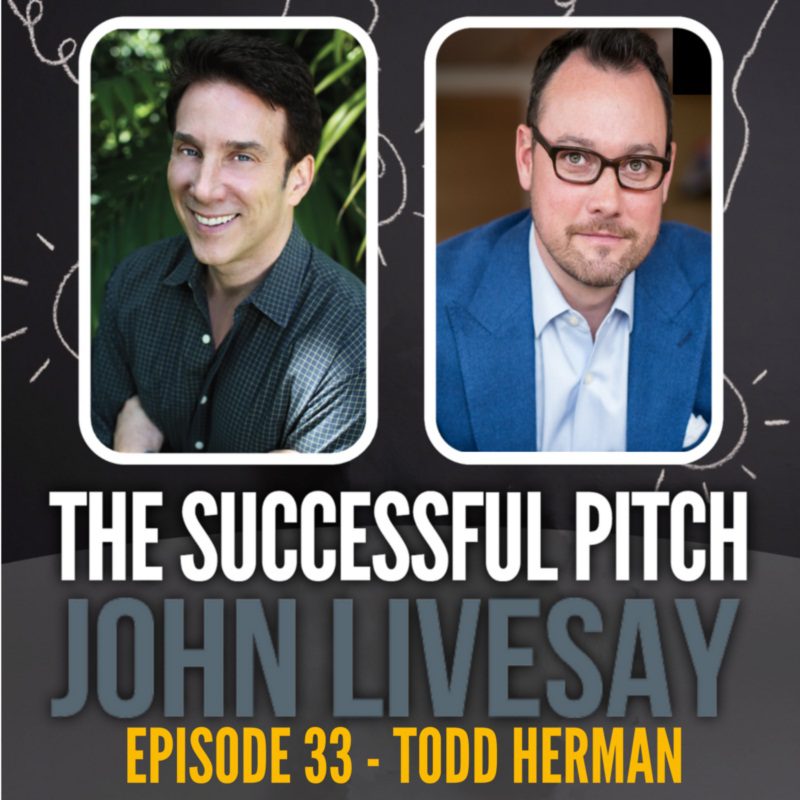
Listen To The Episode Here
Episode Summary
Todd Herman comes to The Successful Pitch podcast with an impressive background. He has successfully exited two companies and he has the Spanish royal family and billionaires as clients. He won the award for The World’s Greatest Salesperson in 2010 and he is also a coach for professional and Olympic athletes. Todd talks to the audience on the importance of creating an alter ego to achieve your goals, why it’s important to take care of the little things, and so much more on today’s show.
Be an Olympic Startup – Interview with Todd Herman
Welcome to The Successful Pitch Podcast. Today’s guest is Todd Herman, who has so many credentials, I don’t know where to start. He has a very successful 90 Day Year program. You’ve heard of the Four Hour Week. Now, you’re going to hear about the 90 Day Year. Todd is also a performance coach to professional and Olympic athletes. He has clients like the Spanish Royal Family and billionaire clients. What impressed me also was he won Greatest Sales Person in 2010 for the International Ad Festival in France. We’re certainly going to ask him to talk about that and more. Todd, welcome to the show.
John, it’s a pleasure to be here.
Todd, I love that you are such an expert on what it takes to become an Olympic or professional athlete. Because our listeners on The Successful Pitch Podcast are all about learning how to pitch to get investors to say yes fast. There are so many similarities between being an [Olympic Startup] entrepreneur and being a professional athlete. I think when you frame pitching to investors as the Super Bowl of meetings, that you are the expert to talk about that.

Olympic Startup: No two groups have a higher threshold for risk tolerance than entrepreneurs and athletes.
There’s a study that just came out a little while ago that my wife shared with me. It’s all about risk tolerance. They found that of groups of people that are out there, no two groups have a higher threshold for risk tolerance than entrepreneurs and athletes. It’s funny because I think that threshold tolerance was like 79 or 82%, something like that. The only group that actually rated just slightly higher than them were generals in the military. Fair enough, okay. We’ll all bow down to them.
For me, because I really dance between those two worlds and going back and forth between working with entrepreneurs on high performance and how can you actually get the maximum amount of value that’s stored up inside of you to show up on the field of play. Everyone uses this word, potential. In my world, in my business, that word is not allowed to be used because I don’t believe in potential.
Potential I think is a crutch that a lot of people like to lean on to basically excuse away a lot of their bad habits or behaviors. What I look at, and the only thing that really an investor is going to look at as well when they’re taking a look at a successful pitch is, even when you watch on Shark Tank people are like, “We like the grand idea that you have there. That would be considered potential. But what’s the real performance? Tell me the numbers.”

Even when you watch on Shark Tank people are like, “We like the grand idea that you have there. But what’s the real performance? Tell me the numbers.”
Even with athletes, I want to know what are your numbers. Don’t tell me what you think you can do. I want to know what’s showing up on the court, on the field of play. The great thing about dancing between these worlds of athletes and entrepreneurs is they’re both manic people that are doing crazy things.
You’ve got crazy ideas to think that you could actually go out there and somehow be the number one sprinter in the world or that you could somehow go into a meeting and walk out with $5 million for this idea that started rattling around in your head months or years ago on your couch. Now, you’re asking people for money. It’s crazy people but I love working with them.
I really like what you said there about the idea that you have for your product is your potential that you have, but what really counts is your ability to execute that idea, i.e. what are your numbers? Investors are saying, “We’re not going to fund anybody who ‘doesn’t know their numbers’. We’re investing in people who know how to execute.”
Todd, you’ve had two successful [Olympic Startup] businesses with great exits so you clearly have been down this path. I want to go back even further. When I was watching a short video you did about a life lesson you learned from your dad, can you share that with the audience?
Sure. I was yelling. I grew up on a farm and ranch in Western Canada. I live here in New York City now but I’m still at my core, a farm kid. We were walking out of a steak restaurant. On the way out, just like most people, I had some meat stuck between the teeth. So very natural for me to snag a toothpick.
When I walked out the door, I tore the toothpick out of the cellophane and then I’d tossed the cellophane on the sidewalk as we continued to walk towards the car. My dad is a man of very few words. Always led by example more than anything else. Very respected in the community.
He stopped, walked back, grabbed the cellophane. He always, just like most good farmers, had a breast pocket with pens and a notebook that he used for the farm. He grabbed the cellophane and he stuffed it in his pocket and kept on walking. I thought to myself, “Wow, that is a perfect example of how you win at life. It’s by taking care of all the little things.”

Olympic Startup: That is a perfect example of how you win at life. It’s by taking care of all the little things.
Most people always focus on the big stuff. But in my experience in working with high performing people is they are fanatical about making sure that details are well taken care of. A friend of mine and someone that I’ve been able to do some work with, Brian Fetherstonhaugh, who is the CEO of OgilvyOne. One of the greatest advertising agencies on the planet.
We were going through and we were doing a presentation together. The gentleman who had put together the slide deck had come in. Brian and myself and his assistant were sitting there. Just watching someone at that level go through that presentation was such a fine tooth comb and picking out just micro little punctuation errors or just the slightest little alignment issues. That’s the CEO.
Most people would think that they wouldn’t care about those things but someone who’s operating at a high level does care about that impression. Because just like the people that are listening are going in to present a successful pitch, glossing over all of those things will be picked up on by people who have a tremendous eye for detail, which are typically people who are very successful.
[Tweet “People who are very successful typically have a tremendous eye for detail. “]
I love that you brought that up.
The analogy is just take care of the cellophane in your life because it matters.
It does. I love that you brought that up, about the details on the slide because I’ve had investors tell me, “If you have a typo on your pitch deck, that’s it. That’s a no. Right off the get go.” What I love so much about that story about your dad is A, you’re a master storyteller. I’m constantly working with my clients to teach them how to become a master storyteller.
You’ve described how old you were, you described that your father is a man of few words and that he literally didn’t say anything. By not saying anything, he said volumes. Then that life lesson that you took and continue to take with you and teach other people.
We’re going to tweet that out, “If you want to win at life, take care of the little things.” That’s a great phrase and a great tweet for the first 30 minutes or whatever we’re going to be talking together. I love that.
It’s so many things. Take care of the little things and be a storyteller. You encapsulated all of that in one quick story. Amazing. Fantastic. As I promised in the intro, I want to hear about how you won Greatest Sales Person in France. Because let’s face it, when you’re pitching, you’re selling yourself and your idea to investors. There must be a great story there.
[Tweet “Win at life by taking care of the little things.”]
That’s actually how I got involved with Ogilvy because Ogilvy and YouTube are partnering up to do this search for the world’s greatest sales person. That was back in 2010, beginning of 2010. Now, I have some successful businesses. The price was going to be a fellowship at Ogilvy.
I wasn’t really doing it to get a fellowship at Ogilvy. How I found out about it was a good friend of mine actually on Twitter sent me a tweet and said, “Hey, Ogilvy, who I know that you absolutely love …” Because David Ogilvy’s book, Ogilvy On Advertising, is one of the first books I give people when it comes to just learning how to communicate or sell or market yourself. It’s still a great bible today on that subject.
She said, “They’re doing this cool thing. I think you could win this.” I went and saw their very tongue and cheek funny launch video for it. What they asked people to do was to submit a two minute video of how you would sell a red brick on YouTube.
I love it.

My whole shtick with the red brick was that the red brick was used to help build empires because the Sumerians who invented the red bricks used it to build pyramids.
As soon as I saw their pitch video, I was like, “I know exactly how I’d sell that red brick.” I was working on an important project at the time. I was like, “I’ll get to this later,” which what I teach all my clients is famous last words, because you will never get to it later. If you’re inspired to do it and it’s something that’s going to really make an impact, do it now.
I did some self-coaching there, got up quickly, threw on a sport coat, wrote out a mini little script. One hour later, I had the video done in the can and uploaded it to basically YouTube. My whole shtick with the red brick was that the red brick was used to help build empires because the Sumerians who invented the red bricks used it to build pyramids. It was also used to build roads to help connect us all because bricks were originally the thing that we used on roads. Ultimately, it has helped to revolutionize homes so that we’re no longer vulnerable to the winds of nature.
At the end of the day, all those [Olympic Startup] innovations started in the mind of one person. Just like them, you probably have an idea, a dream, a goal or something that you have never taken action on. If you buy this red brick, it will be a message to not only you but the world around you that you’ve laid your first red brick. You’ve taken your first step to a life of committed action.
I went on from there and then I said, “If you buy this brick, we’ll donate …” Because it was right around the time that Haiti had the big hurricane roll through and devastate the country. I said all the proceeds will go to the Red Cross at Haiti. Anyways, it will help rebuild that country as well. Metaphorically, it helps to rebuild the nation.
Anyways, that submission video got me down to a final three. Final three of us then were flown over to Cannes, France to the International Advertising Festival. I got a free trip out of it already, I didn’t even win yet. There was myself, a gentleman who was a Hollywood producer and then a lady from Japan.

Motorola Droid, who would use that? Batman would use it.
We all had to do a two minute pitch on stage of how we would sell the new Motorola Droid cellphone. Motorola was a client of Ogilvy’s. Now we were in the biggest theater in all of Cannes, the Cannes Film Festival, the big movies. We’re on stage, we’ve got two minutes.
Me going over there, I had never been to an advertising festival. I had no idea what to expect, what the demographic of the audience was going to be there. I actually prepared five different pitches based on different demographics. When I got there, I found out and realized after meeting a bunch people, that there’s going to be a big chunk of the audience that didn’t have English as their first language or really didn’t even speak English at all. All they’re going to hear is like, wa-wa-wa-wa.
I thought to myself, what is a character, a story, something that when I say a word, it’s the same word across every single culture? I was playing with the idea, Motorola Droid, just the word Droid. It’s a cool cellphone, it’s a technologically advanced thing. Who would use that? Batman would use it.
I started off my pitch with, “If you had the opportunity to design your own mobile device, the Motorola Droid cellphone would be that device. In fact, it would be the device used by Batman.” As soon as I said the word Batman, there was this crowd of Greek advertisers that were in front and I saw this one lady nudge one of her counterparts. She said, “This guy’s good.”
That’s when I knew that I had the audience pretty well. There’s like 1,300 people in the audience. At the end of it, everyone did live text message voting and then the result was I ended up winning this. It was a great experience. I ended up meeting Mark Zuckerberg at the Facebook party. He came up to me and said, “Hey, aren’t you the World’s Greatest Salesperson?”
What a great title.
It went on from there. That’s how I ended up doing a bunch of work with Ogilvy.
Wow, I thought there was probably a good story there. But you gave us two good stories. I love it. I want to break it down, what you did, so that the people listening can really understand just why you won and why it was so good.
When you’re describing something … I tell people, “When you tell a story, give three points for people to take away.” You said, “If you have a dream, an idea or a goal.” It just flows so effortlessly out of your mouth but clearly you’ve thought that out. People are going to say, “I have one of those three things, so this is for me.”
That’s so important when you’re pitching. I constantly work with my clients and say, “You cannot wing your pitch to investors.” Clearly, you did not wing this. You had five different pitches ready, depending on who the demographics are. That’s of course the key to success, is know your audience.

Todd Herman, voted World’s Greatest Salesperson – Olympic Startup
Investors are not all the same. You have to customize your pitch to what their specialty is and what their hot buttons are and what they like to invest in. You nailed that, and on your feet no less, of what’s the word that resonates across the world that you don’t have to speak English. In that case, it was Batman. You became the Batman and won the award.
What a great story. Thank you so much. So much great information there, on how to pitch and how to connect with the audience.
To your point, there’s a reason why rules of three are influence. It’s the whole, “see no evil, hear no evil, speak no evil.” Everyone knows, as soon as you say, “See no evil,” everyone else can repeat the next two things. You’re right, organizing information into threes is exceptionally helpful to the audience.
Now, the Batman thing leads directly into one of your key areas of expertise, which is creating an alter ego. Can you speak to that, Batman?
For sure. My first business that I started was doing mental game coaching with athletes. They weren’t pro athletes at that time because I was starting out. I was young. It didn’t take long before I started working with professional and Olympic athletes. How I got my name was I built up a name as being the person to go to build a secret identity or alter ego to boost performance.
[Tweet “Build a secret identity or alter ego to boost performance.”]
How that came about was I played college football. I was a national rank badminton player. One of the devices that I used for my mental game was not going out on the field of play as myself because Todd has his insecurities and his worries and his concerns about other people judging him.
That’s not going to serve me on the field of play where I need to perform. What most athletes do, which is what they get wrong, is they go on to the field and they carry themselves with them, as opposed to stepping into something else that’s going to perform for them.
People naturally see actors do it. They go out in that stage and they act as a character in order to deliver the results or the emotional response to the audience that makes the story believable. If we want to make your performance believable, why not step into it as someone or something else.

The concept of Olympic Startup is when you go into a pitch, there is a certain rule and there’s a certain framework around how to be successful in that field or in that room.
I’ve got this five step process. I’m in the midst of writing the book on it. I’ve been doing this for well over a decade with clients. As I started doing a lot more work with people in the corporate world or entrepreneurs, there’s a field of play that everyone steps on.
When you go into a pitch, there is a certain rule and there’s a certain framework around how to be successful in that field or in that room. Going in there with trepidation and concern and a lack of belief in what you’ve done, maybe you didn’t prepare properly, is not going to serve you by any stretch of the imagination.
People are investing at the end of the day. Yes, the idea is important and the numbers behind it are important. But they’re still investing in the entrepreneur. Because you and I both know that the odds of the thing that’s being presented actually being 100% the thing that show up in the marketplace. I’ve never seen that happen personally and I invest in products and companies all the time.
We’re investing ultimately in, “Do I believe that this person can actually steward this thing to completion? Can they execute or are they just an idea person who gets excited about something and then drops off three months later and now my money is gone?”
Building out this idea of stepping into a better heightened version of yourself on that field is the fastest way I’ve ever found to help people boost performance and the result that they’re looking for on the field. If you think about it, this is not about being fake. This is not about being unnatural. You are already doing it.
[Tweet “A heighten version of yourself boosts performance.”]
Because, who Todd is, I’ve got two little girls under the age of two and a half. I am very different with them than I am as Todd, the hard charging, spank-you-in-the-ass coach and adviser that I typically have an avatar as being. Who I am in business is very different than who I am in the home with my family. Who I am with my friends when I’m out for a drink or a beer watching the game is still another version of my personality just magnified to accommodate that experience.
It’s just that, when you get this, you become far more intentional and deliberate about who it is that you’re creating so that you can perform at the level that would be considered the highest levels, so that you get the result that you want.
I’m so glad you said that. I was going to ask you about it. You answered the question before I even could ask, which is, how do you have an alter ego and still stay authentic? You said, and we’re going to tweet this, “When you have a better heightened version of yourself, that boosts performance.” That is magic. That is gold. That allows you to still be yourself.
This word authenticity is a very big buzz word that’s out there nowadays. I challenge people all the time. I’m like, “Tell me what authentic actually means?” Here’s my premise, I don’t think anyone on this planet is really authentic. Because if people are authentic, the most authentic moment of your life was when you came out of the womb and you were bloody and you were shitting yourself and you were crying.
[Tweet “Here’s my premise, I don’t think anyone on this planet is really authentic.”]
If you want to be truly authentic that’s how you should be behaving right now. Not to be too explicit, but that’s the reality. That’s what true authenticity is. How do we all get our personality shaped? Yes, definitely being a dad of two little girls, there are just things that are baked into their DNA. My wife, Valerie and I, had nothing to do with that whatsoever. It’s just in them and you can’t explain it.
There’s environmental impacts. There’s social impacts. There’s the friends that we have that helped to shape that personality. Where does their authenticity begin and who they’re showing up in life as that personality begin as well? My challenge to people is, I just don’t believe on the word authenticity. All I care about is performance.
If you are a good person to me, I don’t care if you’re not being authentic in the moment. You’re just nice to me. What do I care if you’re being authentic? The result was my interaction with John was a good experience. Whether you were faking it or not, I don’t care.
Great. The other thing that you’re really on that I find so fascinating and useful is this whole [Olympic Startup] concept of positive thinking versus positive expectations. In Silicon Valley and the startup world, there’s this whole thing called the trough of despair that all startups go through.
You talked about in one of your blogs, about high performers tend to battle depressive states more than other people. Can you talk about that and what causes that and how can we handle those depressive states?
To use maybe a metaphor to help explain it, I think of life as having two classes of fish in the sea. There’s a class of fish that lives at the very bottom. It’s cold down there. It’s dark. Light doesn’t travel down at the bottom there. There’s an exceptional amount of pressure that’s down there.
Now, currents can come along and maybe the fish that’s living down there gets caught in the current and slowly that current starts to bring them to the surface. If that fish doesn’t escape the current and travel back down to where its natural environment is, they’ll get eaten by a predator at that level or eventually they’ll get to the surface and the sun will burn them or whatever the case is. They’re built to be down there.
Then there’s another class of fish that’s at the surface of the ocean and they’re colorful and they’re bright and they jump and they’ve danced at the very top. If they got caught in the current and get taken down to the very bottom, they would die because of the pressure that’s down there.
In my experience of working with thousands upon thousands of high performers at the Olympic level or entrepreneurs, whether it’s billionaires or whatever, they are the people who live at the bottom of the ocean. They can handle the pressure. They can handle the intensity of what it’s like to be in these situations.
[Tweet “High performers can handle pressure.”]
I think the real problem that people are experiencing is that there has been this one rule that’s set up in life that is, life is about being happy and joyful. I disagree because I don’t think that Elon Musk’s sole purpose in life is to be happy. He has said that he is here to solve really big problems for this planet.
You don’t give really big problems to someone who’s lens on life is to have just a fantastic lifestyle. I think that people need to be careful about the rules that they’re setting up in their head and making themselves feel bad because they don’t feel like they’re happy all the time, because they’re in a stressed out state. No, you chose it. Almost you didn’t even choose it, it chose you.
You’re meant to do this because you can handle it. I’ve said that to some entrepreneurs and friends that have struggled with it. One of them remarked back to me, “I’ve been living in just a state of worry and self-judgment for fifteen years.” He sent me an email the day afterwards and he was like, “I have never felt more free. You just lifted so much pain and anxiety and soft judgment off my shoulders. I felt like I was doing something wrong in life because I wasn’t that typically very, very happy person.”

The trough of despair is something that is very common. You’re meant to handle it and it’s okay.
Now, it’s one thing to be able to handle depressive states. I’m not saying that depression is an okay thing. But it is something that people who do big things deal with because our roller coasters are hell of a lot steeper. Which means they’re steep on the climb and that means the very top can be incredible. But they’re steep as well and they can go a lot deeper than other people who just aren’t taking on challenges like we would be.
The trough of despair is something that is very common but the idea that you’re a bad person for experiencing it isn’t true. It’s just the nature of the world that you’re living in. You’re meant to handle it and it’s okay.
Being a former swimmer, I love the analogy of the different levels of the water. I almost want to combine your two metaphors and say, if my alter ego is going to be a deep sea diver, I’m going to put on my deep sea equipment as my alter ego. When I have that on, I know I can handle the pressure in the analogy of the water. I won’t always stay down there. I’ll come up for air when I need to but when I need to get the job done, I’m going to be able to handle the pressure cooker. It’s really helpful.
Absolutely. To carry on with your analogy, if I’m going to give someone a tool then that they can put on and wear to help them manage that deep level of pressure that we go through. It’s the first thing I try to get all my private clients to get into, is meditation.
Here are the numbers. Ten of the top thirteen private equity traders in Wall Street here in New York City, the wealthiest people, will all credit the reason that they outperform everyone else, they meditate every single day. That helps them avoid the emotional highs and lows that everyone else in the market is going through.
Really, what meditation does is it flexes the frontal lobe. The frontal lobe of our brain is the part that allows us to stay focused, to concentrate and to mitigate the limbic emotional part of our system. Whether it’s two minutes, studies have proven, even if you do two minutes of meditation, it’s proven to help manage emotional states. Even just two minutes.
The misconception that people have with meditation is that, “I’ve tried meditation and I can’t get my mind to shut off.” Meditation has nothing to do with your thoughts going away. That’s the misnomer or the myths that’s out there.
[Tweet “Meditation is about being okay with what’s passing through your mind. Your mind is the sky.”]
Meditation is all about being okay with what’s passing through your mind and not getting attached to it. If you think about it this way, I’ll use a metaphor, your mind is the sky. The thoughts passing through it are clouds. What most people do is they get some self-judgment cloud passing through and they get entangled with the cloud, thinking that that’s who they are. I’m telling you, no, it’s not.
I love it.
Here’s the thing, we all think those thoughts. I’ve worked with the ultra-high performers on the planet. I can tell you, they deal with those self-defeating thoughts too sometimes. They just don’t get entangled in it and they continue to execute and take action.
That’s great. We’re going to tweet something out about, meditation is like clouds going through your head. Just keep them moving. Say next, next, next. Don’t get entangled in any one that would bring you down. Just go, next. Keep the wind going, keep the clouds going.
I think that’s so helpful because like you said, so many people are so afraid. “I can’t stop my thoughts. Oh, I don’t have to? I just can’t.” The goal is to just not get stuck on one and perseverate around it and go over it. Keep reliving it. How many times that we’ve done that?
Sorry to interrupt you, John. Think about when you’re just looking at the sky any way. Sometimes, you’re just looking at clouds and you’re like, “Oh, that’s an interesting shape.” The same thing can go with your thoughts. You’re like, “That’s interesting that that thought entered my head.”
[Tweet “Be a more observer of it rather than just identifying with the thought.”]
Be more curious about it. Don’t get entangled into it as, “That’s me. That’s who I am.” It’s more of like, “Oh, that’s an interesting thought. How about that? What about that one over there.” Be a more observer of it rather than someone who’s just identifying themselves with the thought.
I love that so much because I think that’s the key, is not being attached to any one outcome, especially when you go pitch an investor. You cannot be attached to that outcome because they’ll smell it. Just like a date or anything else, you can’t be attached. Is this the person that’s giving me the money? Is this the person who’s going to marry me? Is this, whatever? You just have to not be attached to any one outcome and you’ll be at your top performance.
Stay engaged in the process.
That’s great. You’ve already given us a hint of your book that’s coming and you mentioned the Ogilvy book. Are there any other books that you want to recommend to the listeners before we go?
I think a great book that’s out there, I don’t even know if it’s in publication anymore, but it’s Seeking Wisdom, from Darwin To Munger. It is a fantastic book on just thinking in the context of models. I’m a really big visual models person, whether it’s been diagrams, XY graphs and pyramids and stuff like that.

Seeking Wisdom, from Darwin To Munger
Warren Buffett has said that Charlie Munger is the fastest 30 second thinker on the planet. That’s because Charlie Munger has made it known that he has, I think it’s 96 different mental models that he’s memorized from tons of different disciplines. Whether it’s mathematics or physics or literature or psychology, so that he can think quickly.
He doesn’t get entangled in the whole subject matter. He goes, “What’s that about? What is the idea of confirmation bias about?” When I’m listening to John give me a pitch and he’s telling me why this thing is going to be successful, is he coming at it from a point of data or is it confirmation bias because he’s travelled down that road into this niche or this industry? He’s able to think far more quickly. It’s based in a real data and real science.
It’s a fantastic book. It’s just a really great read. People think that it would maybe be really dry but it’s such a great book.
I think another great book that’s out there that I actually would attribute a good chunk of maybe my messaging that I had, which was successful for the red brick video, is called Metaphorically Selling. Most people wouldn’t have heard of it. It’s not like a bestseller. The lady does such a great job of giving examples of how one speech without a metaphor and one speech with a metaphor connects.

Metaphorically Selling: How to Use the Magic of Metaphors to Sell, Persuade, & Explain Anything to Anyone
You were talking before about stories. Metaphors are just a micro story and a very short sound bite for people. Metaphorically Selling, I recommend that book. She should probably send me commission checks because it’s some of those darn books that maybe she has. It’s a great book and she’s a lovely smart lady that wrote it.
You’ve given us so much valuable insights into how to sell through metaphors, how to look at the numbers and not focus on your potential, not get stuck in your ideas, to get out of trough of despair. Is there any one final piece of advice you want to leave the listeners with?
Continuously take action. That’s it. That’s just the hallmark of how you get yourself out of the trough of despair. Just keep moving and not defining where you’re at with where you’re going to be for the rest of your life.
I want to be careful that we’re treating everyone as if they’re in this trough of despair. Just keep taking action. You never know what’s going to be around the next corner. You just don’t.
“Keep taking action.” It’s that simple. Thank you so much for being on today, Todd.
John, appreciate it. Thank you.
[Tweet “Keep taking action.”]
Links Mentioned
Ogilvy on Advertising by David Ogilvy
Seeking Wisdom: From Darwin to Munger by Peter Bevelin
Metaphorically Selling by Anne Miller
The 90 Day Year Entrepreneur’s Achievement Series
5 Steps To Change Your Life and Make It Stick with Todd Herman
Crack The Funding Code!
Register now for the free webinar
Check out John’s Latest Book
Share The Show
Did you enjoy the show? I’d love it if you subscribed today and left us a 5-star review!
-
- Click this link
- Click on the ‘Subscribe’ button below the artwork
- Go to the ‘Ratings and Reviews’ section
- Click on ‘Write a Review’
TSP030 | Michael Walsh – Slack for Senior Care
Posted by John Livesay in podcast | 0 comments
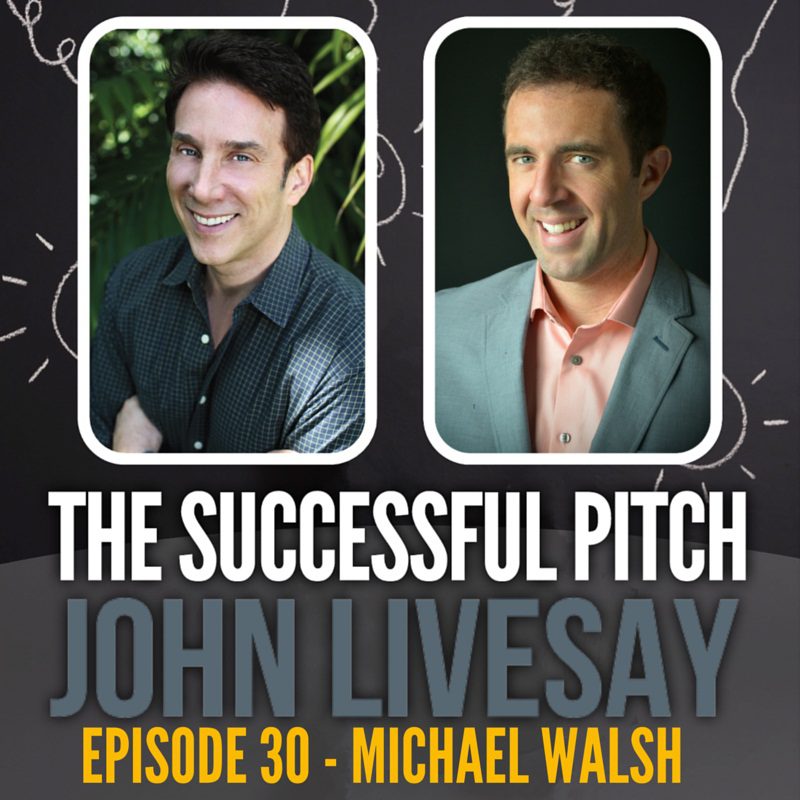
Listen To The Podcast Here
Episode Summary
Michael Walsh is the co-founder of Cariloop and runs the Health 2.0 Dallas chapter. Cariloop is a program that allows people to help manage their older loved ones’ healthcare and needs from start to finish. Michael has raised $500,000 in funding during his first seed round and has some valuable insights to share on what truly makes a successful pitch.
Key Takeaways
- 01:40 – Who is Michael?
- 04:45 – Why was Cariloop founded?
- 10:15 – How/why did Michael pick his accelerator?
- 12:10 – The knowledge and the contacts Michael made at the accelerator were priceless.
- 16:05 – How can entrepreneurs figure out how much their company is worth?
- 20:25 – How has Michael spent the $500k he’s raised?
- 23:10 – How does Michael handle the competitor question with investors?
- 25:45 – Michael believes telling stories is better than pitching.
- 28:00 – Michael recommends the book Delivering Happiness by Tony Hsieh.
Tweetables
[Tweet “A pitch should be a story that you tell investors.”]
[Tweet “What are pain points of your customer that you solve?”]
[Tweet “When you give a customers control during chaos they buy.”]
Links Mentioned
Delivering Happiness by Tony Hsieh
Michael Walsh LinkedIn
Michael Walsh Twitter
Cariloop Website
Cariloop Twitter
Want the Transcription?
Share The Show
Did you enjoy the show? I’d love it if you subscribed today and left us a 5-star review!
- Click this link
- Click on the ‘Subscribe’ button below the artwork
- Go to the ‘Ratings and Reviews’ section
- Click on ‘Write a Review’