

Centered With Steven Puri
Posted by John Livesay in podcast | 0 comments

There are more people who struggle with being consistent in their work than there are who don’t. We get distracted, tired, “lazy,” and just overall end up being unproductive. Ironically, it also gives us the feeling that our time is mostly consumed by work. That’s why in this episode, Steven Puri introduces Centered, an app that will finally help you get your life back by helping you finish your tasks twice as fast as you normally do. Steven shares the inspiration of Centered and talks about how its unique collaboration and competition can help you stay focused and motivated. Tune in to learn more about how you can use Centered to optimize your productivity and achieve your goals.
—
Listen to the podcast here
Centered With Steven Puri
If you’ve ever gotten frustrated at the end of the day that you didn’t get anything done that was on your to-do list, then this episode is for you. I interview Steven Puri, the Co-creator of an app called Centered, and he explains how competition and collaboration can coexist on Centered. Enjoy the episode.
—
Our guest is a personal friend of mine from way back when Steven Puri. His first jobs were as a newscaster interviewer for the number one youth news show in the DC Baltimore market, as a junior software engineer, and Thomas J. Watson Scholar at IBM. As you can see, he’s no dummy. He attended USC in Los Angeles, where we met. He fell asked backward into film production and produced computer-generated visual effects for fourteen movies. Eventually, selling his CGI company to the German media conglomerate Das Werk.
Steven then produced some indie films with friends and went studio side to develop and produce live-action features as a VP at Fox, and an EVP at Kurtzman-Orci at DreamWorks. He got back into building tech companies here in Austin and is the Cofounder of Centered, a Flow State app that provides focus music, distraction, blocking, and an AI-powered coach to get you into the zone and knock your workout. Welcome to the show.
That was a mouthful. Did you breathe air during that?
I’ve been told not to breathe when I’m doing it.
Noted. Thank you. It is great to be here.
Before we get into how wonderful Centered is and why we all need to be in the flow state, let’s go back to this fascinating world of yours known as your story of origin. You can start with USC or wherever you wanted to start the story of working in the movie business and how one thing led to another. Did you grow up knowing you wanted to be in communication or in the movies? If I remember the story, you wanted to be on camera at first. That’s why you were doing the newscasting and then you went, “I’m not sure that I want to be behind the camera.” Is that accurate?
Your memory is amazing. You are right. I stumbled accidentally into an audition in DC when they were looking for new newscasters. There was a youth news show on Channel 5, the Fox station, that was the top-rated youth show in the DC Baltimore market. I happened to be on there. My brother is a pianist and he was invited on as a guest. While I was there, I met one of the hosts. They had four hosts, all high schoolers, and did their own interviews. They wrote their own stories and said, “I’m leaving. They’re holding auditions. If you want to come back next Saturday, you can audition.” I tried it, I auditioned, and did the show. It’s super fun and USC found me. They had a very strong, and still do, broadcast journalism school.
Columbia might have a better print school and they were like, “If you want to be on-air talent, we’ve got a great program for that. We’ll take you now. Come.” Coming to Los Angeles, when we met, that was for me like, “I knew how to code. I was a software engineer at IBM and I’d done this TV show.” Suddenly, those worlds collided where it’s like, “You’re in LA long enough. Everyone you know is somehow related to the film.”
[bctt tweet=”AI coaching to keep you focused.” username=”John_Livesay”]
You also, at a very young age, had this wonderful DJ voice.
I was the voice of the AOL movie phone.
That’s what I used to tease people. My sister and her friends use it.
I know because you can do the AOL movie phone voice.
I can, but you do have a good speaking voice. I’m sure I’m not the first person to tell you that, especially for someone who can code. What was it like? That’s a very glamorous job being in charge of live-action features at a major studio, not 1 but 2. There are now these great movies about The Making of Godfather and you think to yourself, “That is not right. I would never want to be on it.” It’s one problem after another with actors walking off the sets, people threatening to fire actors, and money running out. It’s endless stress and you have no idea if the movie even going to be a hit or not. Is it that chaotic or is that a dramatization?
It’s an interesting question. I’ll give you three tidbits or thoughts. One is it is an amazing job because you can meet anybody if you are a senior executive at one of the motion picture studios. Maybe the shine is somewhat of that now but I’m talking about years ago before YouTube stars were bigger than movie stars. You’re talking about the ‘90s and early 2000s.
You could pretty much call anyone and be like, “We’re thinking of doing a movie about being president. Could we meet with the president? We were doing a movie about the Egyptian pyramids. I met the foremost experts on how the pyramids were made. We want to do a movie about the space shuttle. I met Commander Kelly and hung out.” “What’s it like?” You’ve got to call anybody because they’re like, “A movie studio called me. I have to go have a meeting.”
“This could be my big claim to fame.” Brian Grazer is known for this kind of curiosity.
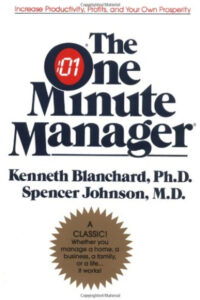
Centered: The One Minute Manager by Kenneth Blanchard Ph.D. and Spencer Johnson M.D.
As a person, he’s amazing in that regard. As an assistant, he’s finding people for him to meet. I have so much respect for that. That was probably one of the most amazing parts. One of the worst parts is that it is your job to say no. People project onto you this massive ability to be like, “I shall make the next insert here.” In reality, your job is all year round to find some reason to say no. They hate you when you’re saying no. Once or twice a year, take your shot. If you’re my boss and chairman of the studio, 12 or 14 times a year, take a shot. You’re talking about hundreds of people coming at you and you’re going, “How can I say no to everyone except one?”
There are a lot of similarities to that between investors and startups, aren’t there?
I got to tell you it’s so interesting because there’s that big Northern and Southern California. there’s North Cal and South Cal division of like, “There are content people down there and all those tech people.” If you took some of those conversations, literally, they searched and replace venture capitalist studios, angel investors, and indie financiers.
This is the funny thing about the film. Going back to your question about chaotic behavior, this is my third point. Film is a fear-based industry. It is so irrational and hard to predict. It is like wildcatting for oil. You get Spielberg and Tom Cruise drill over there and they hit nothing. Two kids, you’ve never heard of drill for oil 50 feet away and they hit a gusher called whatever this year’s hit is. You’re like, “Interesting.”
Blair Witch Project for those of us who remember that.
Blair Witch is a great example. What that means is you don’t have people operating from a place of security because they don’t. Even very successful people from the outside don’t know if their next thing is going to hit or not. They’re neurotic and they take it out on their agents, managers, producers, co-stars, assistants, masseuses, therapists, and astrologers. It’s like you said. It’s a very connected business because it’s fear-based. You’re like, “What if my next one doesn’t work?”
We had a private conversation before the show about a particular actor that you worked with who will remain nameless, but the neurosis that you talk about. Do you see a lot of similarities between successful startup founders and successful actors? Let’s say that person A is this talented, attractive actor, and person B is also an attractive, talented actor, but one shows up on time, is easy to work with, reliable, and not so neurotic. The other one is the opposite. Same thing with the founder. They both have great ideas and tech skills. One is easy to work with. One can explain their concept to investors, but one cannot. Is there a correlation there? Can we take this metaphor or analogy one step further?
You’re right to draw a parallel there. I will say that sadly, the criterion that determines success is not about, “Do they show up on time or do they do this?” It is simply about, “Do they deliver to their audience?” Whether it is I need downloads of my mobile app, to use the service of my SaaS product, or people to tune into Netflix to watch my thing. In my experience, it doesn’t correlate between professional show up a time. The thing it’s interesting is you do get the people who are great salesmen. Sometimes to the point of being sociopathic like the Elizabeth, the Adams, and the Sam Beckman street, and all that, where they’re amazing in the room because they’re so into their own set of fiction.
[bctt tweet=”Go to sleep stress-free knowing that you got everything done.” username=”John_Livesay”]
They can pull you into that dream.
They believe so much.
Investors have said to me that I’ve interviewed on this show, “We invest in the jockey, not the horse, i.e. the people, not the idea.” You’re saying even then, it’s still a gamble. As you mentioned, Elizabeth Holmes was an example of, “We believe that she believed that this product would work.” It’s interesting.
Elizabeth Holmes is a stone’s throw from her to Adam Neumann where WeWork is an office rental company that Adam, through his charisma, made people believe, is a tech company. It’s office desks or office rentals. Andreessen is right behind him. He’s like, “I’m going to turn apartments into communities where people want to plunge their toilets because they love living in my apartment. $350 million from Marc Andreessen, he’s like, “I believe in this guy.”
How did you decide you wanted to get back into tech companies and specifically your own company now Centered? What’s the story of origin around Centered?
Centered is a good buddy. When I left Fox, I started a small tech company. A buddy of mine, Adam, created Siri. I asked him, “I needed an iOS engineer. You know iOS people.” He’s like, “There’s this fantastic guy who worked with me on Siri. I’ll introduce you.” I met him. He showed up. We were in Hayes Valley and went to a beer garden. He’s German. He shows up on his motorcycle with his leather jacket. We hang out and pretty close to the end of the meeting, it’s clear that he’s got his own startup he’s working on and he’s leaving Apple.
He’s all excited about this thing. It was fun when straight out of Silicon Valley and the TV show meetups. We’ve been friends for many years now. He had his own path. He was, a couple of years ago, engineering Postmates, optimized delivery runs to get your little food to you sooner before the Uber deal. He and I were hanging out at Sweetgreen down in the Marina, the one that’s right by Venice.
He was like, “I’m quitting Postmates.” I was like, “Good for you. That’s awesome. What are you going to do?” They talked about, “Why didn’t we go do a mindful to-do list?” I was like, “That sounds boring, AF. I got nothing. I got no passion.” It make me leap out of my chair onto the table and start screaming at people, “Why didn’t they use this mindful pitch?”

Centered: It’s like there is pride in saying, “I have this achievement. I would like you to know about it. I’d like to feel that you recognize how hard this must be and that what I did was valuable.” We built that in. The competition is sometimes fun if you’re in your group with a whole bunch of people.
If that’s a movie pitch, I would’ve said no.
Exactly. The reality is he’s a fantastic engineer and a very smart guy. He sent me a prototype right after Christmas. This is Thanksgiving, he said, “What do you think of this?” It is a great way to draw me in. I said, “This is so much cooler than you described. We could do a flow state app. Let’s think of it as helping people get into that state where they’re hyper-concentrated, they’re doing their best work, or they can block out Instagram and all that.” He’s like, “I don’t speak English as my first language. Maybe I could not explain it the way you’re talking about it, but that sounds cool. Let’s talk about it that way.” That’s how we started Centered.
Did you consider other names?
No. Centered is right out of the gate. Laura and I have a daily yoga practice and it’s felt very much organic to us and all.
For those people who haven’t checked out Centered, what is the elevator story? Who is this for and what makes it unique?
If you ever get distracted while you’re working, you ever think, “Where did today go? I didn’t get my stuff done,” or you have that frustrated feeling when you’re going to sleep at night like, “I’ll get up early tomorrow and I’ll get a jump on stuff I didn’t do,” that was me. If you’re like me, you have had that experience and you want to try a new path. Centered is your new path.
How many users are out there? What’s the percentage of people who feel like the day gets away with them and they don’t get done what they need?
I can count on my fingers. It’d be easier to count the people who don’t feel that way.
[bctt tweet=”Staying on track helps you finish your work twice as fast.” username=”John_Livesay”]
Interesting. Let’s go into, as we used to say in the sales world, the USB. What is the Unique Selling Benefit? There are other apps for meditation. That’s not what this is. There are either other apps that say, “We can help you be more focused. We’ll play the best music for your brain.” That’s also not what this is. I got to see this amazing demo video that you walk people through. From my experience of watching that explainer video, it says, “If you had your personal coach that was going to take all these things that are distracting you and integrate them all together.”
It’s like, “I get distracted by a phone call and social media. I’m late for a meeting. Even if it’s a Zoom meeting, I’m still late. One time, I’m in the zone. I lost track of time and that’s not a good thing. It’s either I’m constantly distracted or I’m in the zone, I’m still missing things and I come across as a total flake. I would like to get things done and be professional.” That’s my takeaway. That’s how I would describe Centered.
That’s a pretty good takeaway. I can do maybe a slightly shorter version of that because I’ve had to talk about it so much, which is there are fantastic focus apps out there that have some of the features. As you said, “This one is cool music. There are great Pomodoro timers. This one is this thing.” The thing that set us apart was we have these AI coaches. It means that when you start work, you can choose from a huge spectrum. If you have ADHD, we have ADHD coaches who provide their voices to our AI.
If you have engineering gurus, you’re like, “I’m a young JavaScript guy. I’m a young open-source acolyte.” We’ve got some of the best names in engineering, ADHD, productivity and life coaching, and fitness. We have yoga instructors and spiritual coaches and they all have their way of talking to you saying, “You press play right before you begin your work.” When you sit down on your laptop, hit play at Centered. Beautiful music starts. All your distractions are blocked and your coach says, “Let’s have a great session, John.”
What all this customization means to users is that it’s still not one size fits all. It’s this customization of if I’m someone with attention deficit disorder, then you think that the audience is needing something like this. If I’m not, this is still for me because the AI is customized that I can find the exact right breaks I want to take and I can constantly say, “I’m taking five-minute breaks every 30 minutes. I need this music because I’m in a different mood than I was yesterday.” It’s not, “Sorry. That doesn’t fit us.” You’re stuck with one size fits all. That’s not it at all. The ability to zig and zag with my particular moods or if I’m my ADHD is acting up, I can program that into the app and it’ll say, “Okay.”
You also get to choose your adventure. You may say, “I love that Steven Puri guy. I want him to be my coach. He’s semi-serious, semi-funny. He’s always got some yoga-like quote to start the day.” The next day, you very much say, “I want that guy who’s super serious, a productivity coach, and has three productivity principles in his framework that are going to make me adhere to his work.” Cassidy Williams is one of our coaches. She’s hilarious. She’s a great engineering influencer who is adorable and fun. It’s like, “Choose your adventure now. What feels good?”
If I was to compare it because I love a metaphor or an analogy. Imagine that you have a coach or a trainer for your workouts or the yoga teacher that you see every day. You might love them. They know you, they know your strengths and weaknesses, and they maybe adjust the workout on your mood and energy level, but it’s pretty much the same person. You’re like, “This day, I want a different coach and I’m not offending the old coach.” They’d be like, “Maybe I want to try a new hairstylist.” People feel loyal to their hair stylists. “I would love a new haircut. I’d like to experiment with something.” My guy is like, “No. That’s a dumb idea.” You’re like, “I’ll go somewhere else.” This is guilt-free customization of whoever you want your coach to be that day.
It is a fantastic metaphor because you’re right. Every time I sit down, you can look at the array of coaches like they’re lined up in a high school gym and be like, “Now I want you,” and they’re available 24 hours a day, 7 days a week. Start your session. They’re there with you. If you finish a task, they’re going to congratulate you like, “John, you finished that 20% faster than you estimated. Congratulations. You’re getting better at monotasking. You are on your phone during a session.” Cassidy Williams is like, “Do you need to be checking your Twitter now?” You’re like, “No.” At the end of the session, they congratulate you and show your hippy scores. You can see you’re getting better day over day, week over week. It’s sometimes nice having a companion there as you work.

Centered: Studies have shown that brain glucose peaks around the first 80 to 90 minutes of work and then starts to decay. You become less and less productive after those first two hours.
That speaks to so many things. The first thing that jumps out to me is the concept of we are brain craves progress, celebrating it and recognizing it. Without any tracking, you don’t track it or recognize it. Secondly, the need to not feel so isolated. If you’re a programmer or just somebody who works from home, you’re killing two birds with one stone there. Our brain is more likely to tackle something that we would like to be distracted from if we know the process might be a little fun. There are a lot of outcomes. Let’s learn what I call a case story instead of a case study of someone who has been using this for a while and how their life has changed, either in their personal or their professional.
What’s interesting is we have had some people who have been users and they have used it frequently. They approached us and said, “Could I now be a coach because I have a whole group of friends that I would love to do this with?” They may have come because they know Kent C. Dodds, who has hundreds of thousands of followers, and Cassidy Williams talks about us. Arianna Bradford, August Bradley, and Nir Eyal who wrote indestructibly books on social media addiction. He’s one of our coaches and he donated his voice. He’s like, “This is great. Every day I can help people in a way that’s way more engaging than they see a tweet for me every other day.” In ten seconds, they read something I wrote on Twitter.
I can sit with an infinite number of people at their table and be like, “I’m here with you.” Our original idea was its people. I have an audience like you John where you go, “I got 50,000 people that would love to hear my fun voice.” We’ve had a couple of radio DJs ask us to be coaches. The most interesting thing is we’ve had some users that every now and then, I’ll see them on the leader board or I’ll see them in a chat talking about it. They say, “I’m the CEO of this 40-person company. It would be funny if all my guys here and girls could hear me. Could I be the coach of my private group for my company?”
We’ve set that up. You can’t search for them. These are private now, so you can’t search for them in Centered. If you work at that company and you sign up with their domain, you get to go and hear like, “The John Livesay, CEO of your company give you all this fun.” They all have their different spin and personalities. One of the most fun things is seeing people rise up and be like, “I now want to lead productivity. I want to share this gift with others.”
I didn’t know this before the interview, so that is a huge milestone.
I have lots of surprises.
I know from interviewing investors that when customers or clients become brand ambassadors or sometimes even investors, that’s the tipping point when the momentum takes over. You’ve got people who are using, selling it for you, or taking it to another level without having to spend every dollar on marketing to get somebody new. That is huge. Let’s talk a little bit about this leaderboard because there are people who do fantasy football and all these other things. There’s the Fitbit tracker and you have your friends that you’re saying, “How many steps did you do versus me.”
I don’t think I’ve ever seen or heard of a focus productivity leaderboard. Maybe there are other people who do it. If we know our brain likes that progress and we have a little competitive nature in ourselves, and also we get encouraged by other people, let’s say you hit a certain score and it’s okay, but your friend is exceptional on that one particular day that they normally don’t have that time spent knocking something out.
[bctt tweet=”Everyone, even very successful people from the outside, doesn’t know if their next thing is going to hit or not.” username=”John_Livesay”]
How great would it be to get a text or smoke signal saying, “Steven, what did you do that made you so productive? I want to acknowledge it and maybe learn something.” How do you feel about getting that message from your colleague? I’m not in a bubble because if you’re in a corporate job or almost any job, you don’t get it. Maybe you get recognized every quarter, annually or bi-annually with some review, but not daily. You then are back to this wonderful book many years ago, One Minute Manager. Catch somebody doing something right even if it’s for a minute and acknowledge it. That is what you have done with this technology.
I appreciate you saying that. You brought up two competing concepts that are at the core of what we’re doing, competition and collaboration. As the Star Wars joke goes, “The force can be used for good or evil.” There are techniques that we use in Centered to help people compete and collaborate. They can be used to make you waste your life in Candy Crush Saga or Instagram or things like that. You’re competing for more likes and they can be used very productively. I know when I saw friends share their bike rides, Apple rings, or Strava things, they’re very proud to go, “Look at this. I rode a 3-hour 12-minute bike ride. I covered 16 miles and this many vertical feet.”
There is the pride of that going, “I have this achievement. I would like you to know about it. I’d like to feel that you recognize how hard this must be and that what I did was valuable.” We built that in. The competition is sometimes fun. If you’re in your group with a whole bunch of friends, you like to see, “Do you know who’s winning in the boardroom?” “I had a great session. I wasn’t distracted. I didn’t open up other apps. I got my tasks done. I got 1,600 points.”
You can also collaborate. In the group chat, we see people ask each other, “I’ve heard about these Pomodoro cycles. Does anyone use them? Do they work? How do you monotask because I have a hard time monotasking?” You see someone else step in and answer them. It’s almost like being in a good Reddit or something where people are stepping up to go, “Let me tell you how that works for me.” That is cool.
Would this be a good sound bite? Competition and collaboration can coexist in the Centered.
Yes.
I love alliteration so I am good to resist. If you look at behaviors, people used to brag back in the day about how little sleep they were getting by on. It was Arianna Huffington who was the tipping point to go, “I almost collapsed and killed myself doing that.” I used to work with people based in New York. They’d take the red-eye, hit the ground from LA, go right to the office, and brag about it. I would always get nauseous. I’m like, “I can’t do that.” Now, people are bragging about how much sleep they got and how they were in REM sleep. That’s helping their fitness and productivity. Things that we never used to measure like, “I know how many hours of sleep I got, but I sure don’t know the quality of it.” It is now being tied into what you’re doing here.
“This is how many hours or minutes you were productive and it’s more or less than yesterday, last week, and last month.” It’s for people who love data and who feel frustrated at the lack of productivity and the overwhelm by being late for things because they’re in the zone, they wonder why they’re not getting promoted or things aren’t making progress that they’re impatient. I would say to almost everybody I’ve met, “If they’re anything like me, I’m barely impatient for things to get done faster. Nothing is ever faster enough in my brain. Why isn’t that book out yet?” He’s like, “It takes a while to get a book published.”

Centered: When doing a task, you need to either be more realistic about what you’re going to get done or accept what you can’t finish in a session.
It’s very interesting what you’re saying, John, if I have to pick up on this because you are right that there was that badge of honor or culture of like, “I’m working harder. I’m sleeping at my desk.” That’s the Japanese Era. Now you have aura rings where people want to compare over their lattes at the blue bottle like, “What was your aura sleep measurement last night?” Something that we thought about with Centered is if we give you a productivity score, what’s the benefit to you? What we want is to say, “The benefit to you is not, ‘You worked longer. Go you.’ You don’t have a life. Your life is miserable but you got 18,000 points.”
Rather we did is we said, “There is established science. There is research on brain glucose levels on how long you can concentrate. We built the score around that. I’ll give you one example. One of the vectors in your productivity score is how long you work. It is not, the longer you work, the more points you get. It’s been shown that after about two hours, your brain glucose has peaked. Somewhere around 80 to 90 minutes in and it starts to decay. You start to become less and less productive after two hours. You don’t earn a single point for working longer.” We want to tell you, “It’s two hours. Go for a walk. Go get a glass of water. Go stretch. Go do something else. Recharge yourself.”
Before the pandemic, when everybody was being so micromanaged, they were afraid to even show that they were away from their desk to go to the bathroom, let alone take a five-minute walk.
We built the points for that one input. It’s not a bell curve but a shift to a bell curve that your brain peaks. In the first fifteen minutes, you’re not in flow. You’re still dropping in, like sleep. If you work for twelve minutes, you don’t get any score. We’re like, “You didn’t get into a flow state. In twelve minutes, you didn’t do that.” There’s some debate about whether people can do it in 15 minutes or 22 minutes. It’s in that zone.
We’re like, “If you work fifteen minutes, you will get a score. You’ll earn the most points per minute, around 80 or 90 minutes. After 120 minutes, you will not get any more points. We don’t want to reward you for sticking around. We want to reward you for taking healthy breaks. Did you schedule and take your breaks? You’ll get points for that.” That’s more we wanted to do.
It’s because when you reward behavior, you reinforce it. You have to measure it, you got to reward it, and then you get the habit.
That’s why we’re having a score. The benefit to you is it’s going to reward you for being healthy and you being healthy is going to be you’re more effective, you’re more efficient, and you have life.
Steven, is there a last thought, a quote, or a book you want to recommend before we say goodbye?
[bctt tweet=”Sometimes, it’s nice to have a companion as you work.” username=”John_Livesay”]
I wish I had premeditated. There were many inspiring quotes. Probably one that I would apply here is that quote from the Mahatma that was about, “Be the change, you want to see in the world.” I would apply that to yourself. I had that moment of, “Why am I going to sleep stressed out about what I didn’t get done and promising myself I’ll get up tomorrow and get a jump on it?” Be the change. Be the person who’s like, “I’m going to set it aside and I do. I block my calendar from 9:00 to 11:00 every day, and I will not talk to you. If you try to reach out to me, you’ll get back something at 11:00 AM.” I saw the phone ring, the WhatsApp goes off, and the emails come in. You’re like, “Where are you? I need to know.” Seriously, you make that commitment to be the change.
Once you become a parent, it’ll be fascinating to see if you can keep that.
Thanks, little Miss Sunshine.
I couldn’t resist. Where do people say, “I need to be Centered?” Where do they go? The app store.
It is free. All you do is go into your Chrome browser on your laptop. Pull out your laptop, open the clamshell, open up your little browser, and type the word Centered.app. That is it. Hit the red button. You’re in. No credit card. Enjoy.
It’s your gift to the world. You are a gift to the world. We’ve established that pretty early on.
John, you are a sweet talker.
Thanks for coming on. If people want to follow you in general, is it LinkedIn or Instagram? What’s the best place for you?
[bctt tweet=”“Be the change you want to see in the world.”” username=”John_Livesay”]
LinkedIn is great. I tweet from time to time about productivity and Centered and stuff like that.
Your handle is your name, I’m guessing.
It’s @StevenPuri.
Thanks for sharing your fun wisdom and helping us all be a little more centered.
I’d like to thank the academy and all the other companies. Thank you, John. This is super fun. Thanks a lot.
My pleasure.
Important Links
- Centered
- One Minute Manager
- LinkedIn – Steven Puri
- @StevenPuri – Twitter
- Better Selling Through Storytelling Method Online Course
Wanna Host Your Own Podcast?
Click here to see how my friends at Podetize can help
Purchase John’s new book
John Livesay, The Pitch Whisperer
Share The Show
Did you enjoy the show? I’d love it if you subscribed today and left us a 5-star review!
- Click this link
- Click on the ‘Subscribe’ button below the artwork
- Go to the ‘Ratings and Reviews’ section
- Click on ‘Write a Review’
Love the show? Subscribe, rate, review, and share!
Join The Successful Pitch community today:
- JohnLivesay.com
- John Livesay Facebook
- John Livesay Twitter
- John Livesay LinkedIn
- John Livesay YouTube
Compete Every Day: What You Can Do Differently With Jake Thompson
Posted by John Livesay in podcast | 0 comments

There’s so much that goes into actually becoming competitive—in sports, in business, throughout your industry. But the best place to begin is by sorting yourself out, and making sure you’re ready to get where you want to go. Jake Thompson is the Founder and Chief Encouragement Officer at Compete Every Day, a lifestyle brand that helps leaders stay motivated, and reach their career, fitness, and life goals. Jake sits down with John Livesay, and gets into the nitty-gritty of what makes you a more competitive individual, and what makes your business ultimately more competitive. Hint: It’s all in you, all the time.
—
Listen to the podcast here
Compete Every Day: What You Can Do Differently With Jake Thompson
Our guest is Jake Thompson. Jake teaches people how to compete every day so they can reach their full potential. He’s got experience as an athlete, an entrepreneur and a speaker, and he’s learned how to change a few choices that everybody makes so that they can be closer to the career, health and life that they were created to reach. The world’s most successful display of a specific mindset and the five traits of a winning competitor is what allows everybody to overcome the challenges we all face in life. He’s got book called Compete Every Day, the seven things leaders do differently so that they can win both in their career and in their life. Jake, welcome to the show.
John, thanks for having me. I’m excited to be here.
I want to ask you like I do most of my guests to take us on your own story of origin. You can go back as far as childhood, high school, college, whatever it was, how did you get to be you?
I grew up in a small town out in East Texas, Piney Woods. For anyone that’s ever seen or are familiar with Friday Night Lights, that is Texas small-town football through and through. We’re about 12,000 to 13,000 people. The town shuts down and packs into the stadiums on Friday nights. I grew up with a massive love for football, sports and competition. I left East Texas and came to the Dallas-Fort Worth Metroplex for college fully with the intention of being a sports agent. I was passionate about staying in that career. It was a competitive industry. I found love working at an internship for a few years. I got my Master’s degree. Then getting into that space and spending a few years in there, I realized that wasn’t what I wanted to do with the rest of my life.
I read a book about the importance of story, ironically enough and how the actions we take, the things that we do, tell others what we believe not only about ourselves, but about the world around us. If we’re constantly pursuing things that only take care of ourselves, that are only padding our own bank account, if we’re not doing anything to make impacts beyond us, then we’re selling ourselves short. We’re selling our story short. I was challenged at that point in my early twenties to evaluate what I had been focused on, what I was telling everyone was important versus how my actions were showing others what was important.
I started going down this path that led me to the idea of Compete Every Day and this brand has started. I came up with the brand message at the end of 2010 while I was doing marketing consulting with a number of companies in the Dallas-Fort Worth area. Eventually, it led me to putting some money into a few boxes of t-shirts and tank tops and selling them out of the back of my car back in 2011 as a side hustle with the one message that, “I believe you’ve got what it takes to show up, compete against your own previous best and I want to remind you of that and motivate you to keep doing that every day.”

Becoming Competitive: You burn yourself out and exhaust your energy by focusing on things outside your control.
There are a couple of things I want to click on that. First of all, this concept of only competing with yourself versus other people. I used to be a competitive swimmer. They’d line you up in heats and you have this race and I remember there’s always a guy that beat me. In breaststroke, you pull your head up out of the water and you take a breath and put it back down and then they measure your time to the thousandth of a second at the touchpads, and I beat him by less than a second. I said, “How did that happen?” They said, “You stay focused on the wall and he turned his head to the right to see if he was ahead, and that half a second of looking caused you to win.” I went, “I wonder if that’s true in life and in business, staying focused on our own progress.” It’s easy for us to start comparing ourselves to other speakers, other companies, “What are they doing? Maybe I should change.” Let’s talk about your insights on how you help people take those lessons from athletics, into the business world where we’re not competing with anybody else but ourselves.
That example is beautiful. I love that. If you haven’t seen that swimming example as well, there’s a wonderful picture of Michael Phelps in one of his Olympic Trials swimming. You see the competitor looking into the lane to his left and Phelps ended up winning that race beggarly and they show the importance of comparison. For all of us, it’s easy, all around us. There are other speakers, companies, and people doing what we’re doing or what we want to do. We need to look everywhere. We need to do exactly what they’re doing. In all reality, what that causes us to do is be like a track star swimmer who’s facing and going toward the finish line straight ahead. Anytime you turn your shoulders or your head, turn your focus off, you slow down. Your body is not designed to go at peak speed forward if you’re looking at somewhere else or if you’re twisted. The same applies to our life, we burn ourselves out and exhaust our energy, honestly, by focusing on things outside of our control.
[bctt tweet=”Being responsive is a competitive advantage.” username=”John_Livesay”]
A lot of my work is talking to people about how do we not only turn the focus inward? What do we control? Every day we control our actions, attitudes and efforts. Those three things regardless of what life has our attitudes, actions, and efforts are always up to us. It’s our choice every day, what attitude we’re going to have. It’s our choice what efforts we’re going to give and it’s our choice what actions we take or we don’t take. For us, once we start to understand it, then we look at what we’re going to do. One of the examples I love using with sales teams is this idea of three yards and a cloud of dust. If you’re familiar with football, it’s the old 1920s, ‘30s South football before they ever threw the ball. A snap and run three yards downfield. You can go from your own one yard line all the way down the field to the opposite end zone and score by doing that. However, it’s not sexy.
No one is putting you on SportsCenter for highlight reels because you didn’t make this crazy, amazing play. However, that’s ultimately what success is. It’s putting your head down, it’s doing one little thing every single day consistently moving that ball that gets us down the field toward our goals. You can’t do that if you’re looking everywhere else. What are we controlling every day? What’s the 1 to 3 things that we’re doing to advance that ball that are on us? We’re not waiting on someone else to make a decision. In sales, this is a perfect example of prospecting, putting out content, contacting people. It takes a second person to make that sale but it’s 100% on you, how many much outreaches you’re doing, how many things you’re creating, how much help and stories are you telling the world to help drive inbound sales as much as you are doing the outbound.
I like what you said there about, “Let’s focus on what we can control, not what we can’t control.” You and I are both keynote speakers. We get typically called in, they like our video, our agent has got us an interview, we do our best to tell them what we’re going to do and then we wait. Anybody who’s been in sales, you go in, you make a presentation, they have other people they have to see, there are a lot of people that have to make it. Their timeframe is different than our timeframe, 9 times out of 10. Getting that job, that sale is our number one priority and then making a decision is not their number one priority. I would love to hear what you do to follow up without being pesty or pedantic like, “Checking in to see if you’ve made a decision.” As if they forgot to tell you one way or the other. If we could give that to the readers, that awareness of, “I can’t control when they make the decision, but how I interact with them, I can control.”
You 100% can. One of the things that I’ve learned or trained myself in this area is the idea of a quick response. If someone were to immediately reach out to you about a gig, sometimes you’re like, “I’m not going to pick up the phone and call them right now or email them back right now, that’s going to make me look I’m desperate.” I’ve switched that thinking to where you can say, “I’m effective and I’m going to be efficient in my time. If you’ve reached out on your computer, I want to jump on this opportunity to help you.” It’s getting that limiting belief out.
From a follow-up, when we get off the phone immediately, the first thing I’m going to do is send an email with a recap of everything we talked about and a personalized video. I’m going to pull out my phone, shoot a quick video talking to you. Especially as a speaker, someone that’s in sales, I want to add some energy, some color, some commentary to the conversation we had on the phone by showing you my face, by showing how I’m going to present to you in person, that I’m excited about it and feel like, “I’ve got this cool video in an email that is personalized, it’s not some standard thing.” It’s going to help you tell that story a little bit better about what you do and how you stand out.
I’ll set a follow-up. When we’re on the phone I’m going to ask, “When would be a great time on your timeline to touch base with you?” You’re going to use like, “Give me that ballpark.” What I’ll do is I’ll shoot them a note on the day, “Following up as promised on this date. I’m going to touch base with you at this point.” If I haven’t heard back, it’s usually about three days later, I’m going to give them a call at that point. I’m going from email, touching base as I promised, following up with a phone call that’s going to allow us to have that conversation on your timeline. Then if we need to, let’s hop on another call, video call and whatnot.
[bctt tweet=”What is the best attitude, action and effort?” username=”John_Livesay”]
For me, it’s always that personalized touch of, “Let’s hop on a call and then let me send you a video with that email follow up.” If it’s someone of, “The timing is not right now.” For us, it’s a timing game on speaking and it maybe 6 months or 8 months from now before we’re ready or perhaps in a month or two, it’s already off their plate, it still may be our top priority but it’s not theirs. I’m going to send them a little packet in the mail, “Here’s some information about one of my programs. Here’s a note.”
What’s always helpful is if you’re someone that will go above and beyond and you’ll find these people on Facebook, on LinkedIn and Instagram and what they’re talking about, what they’re doing, then you have a talking point. If you’re a big sports fan then I can say, “Congrats, your team won. Their state rival wanted to send you this information so your team is set up to win the same way this year.” Something that’s not pestering them but you’ve also touched them in multiple different ways to tell that story, not only, “Here is how I can help you, here’s how I talk about these certain things, teach these certain things. I want you to see how I behave in our interactions that reinforce I’m someone that’s accountable, gritty, persistent, all the same things I want to teach your company how to behave.”
There are several things you said there that are great. In fact, we’re going to tweet this out, “Being responsive is a competitive advantage.” Unlike in the dating world where you might be seen as needy, “I’ll call you back after the date three times,” it’s the opposite here, and that’s fantastic. Also, I like the concept of personalizing something. I always tell people, act as if you already have the job. When I was up for a speaking job at Redfin, which is a real estate company, I thought, “I’m going to call and pretend I’m selling my place and see how they treat me. I’m going to call a competitor and see how I get treated before the interview.” They went, “What did you find out?” You say, “If I do that much preparation for the interview, imagine how much I’ll do if you pick me.” You connect those dots for people.
The other thing you said that I love is, “I saw your team won, congratulations. Let’s help your team and business.” You connect those emotional dots of winning, which is what your brand is all about. I’ve done the same thing, if I’m going to be speaking to a client, I’ll look them up on LinkedIn and say, “I see you worked in San Francisco, China, and now you’re in Europe. That’s an impressive career.” Some little thing that lets them know that you’ve taken a minute to know something about them personally is strong.
How many invitations do we get on LinkedIn or by email of people that’s a standard copy and paste, there’s no awareness of what we do? I laugh because the company name is Compete Every Day and I get all of this email about, “We own gyms and fitness professionals.” They’re selling me equipment if you’re a gym owner, and I’m like, “You didn’t even look at my profile.” A little bit of research, even the tiniest bit helps you stand out and tell the story that you’re invested in this process, this relationship. It’s not a, “Wham bam, thank you, ma’am. Quick, let me get you sold and out the door. Next person up.” You care about continuing on that story.

Becoming Competitive: Great players in sports aren’t so wrapped up in their failure. They immediately decide their next play.
How did you come up with the name, Compete Every Day, for your book and website?
The brand, ironically, took a few different iterations. I always was a competitive guy. I was a smaller kid in sports. For me, a competition was the opportunity to prove I belonged, more than anything I wanted to show I could outwork you and outsmart you, no matter what your talent was. The older I got, the more I started to realize the comparison game we all play is exhausting. There’s always someone ahead of you. There’s always someone behind you. If you’re constantly competing against everyone else, not only you’re going to burn yourself out, but you’re going to be lost because your identity is tied up in every single one of those head to heads, versus saying, “Who was I yesterday? How am I going to show up better in my work today? How am I going to show up more focused, more present with my coworkers, my family? How can I compete?”
[bctt tweet=”Your attitudes, actions, and your efforts are always up to you.” username=”John_Livesay”]
When I started exploring this path, it was the idea of looking at all areas of your life, your health, your relationships, and your career. What would happen if someone were to show up and compete to be their best in every single area? Honestly, I laughed, the first iteration of the company I called Stacked and I was like, “That’s a terrible name.” It had the core philosophies of the idea of stacking them on top of each other and pursuing greatness. Genuinely, I was on a ski trip with two friends and tinkering with designs and sketching things and I said, “What about Compete Every Day?” Both guys were like, “That is you. That fits your personality. You’re the most competitive driven person we know, run with it.” That was December of 2010. It took 6 to 7 months to try to play with things to figure out, what is the best fit for this message?
You referenced Michael Phelps and when I was selling advertising, I had Speedo as a client. They invited him to an event because he was on their payroll as a spokesperson and I got to ask him. As a former competitive swimmer, you can imagine what a thrill that was as an athlete yourself, “I’ve got to meet Tom Brady or something.” What would you ask them? I said, “Everyone says you’re a great swimmer because of your physique. You’ve got these big lungs and your feet are like fins. I bet there’s something else.” He said, “Yes. My coach asked me early on if I was willing to work out on Sundays and I said yes. We’ve got 52 more workouts in the near competition because everybody takes Sundays off.” I thought of that story for you when I saw your brand name, Compete Every Day, because I went, “Most people don’t think of competing. We certainly take Sundays off.” I thought, “What a great little nugget of that for you and your world of athletes.” Is there a professional athlete that you have met or want to meet? What would you ask them if you haven’t met them yet?
Probably, I have a laundry list that I would want to meet. Michael Jordan, obviously, being one of the greatest. I’m fascinated by the stories I’ve heard about him. We’ve all heard the story that he was cut from his high school varsity, and then everybody’s like, “He’s just Michael Jordan. He’s the greatest player ever.” He wasn’t always, he was a good player. In college, he did extra work. The Carol Dweck mindset profiles that if he didn’t follow shots to the basket during games, he would force himself to run sprints after the game, do extra practice. When he got to the NBA, he still was not the greatest player of all time. He was good. It was only by going through the adversity of the Detroit Pistons three years in a row, that he changed his workout routine. He changed how he trained, how he bulked up, how he played the game, encouraged more of his teammates to step up their game from a mental perspective and then went on the run of two different three-peat.
[bctt tweet=”The difference between nervousness and excitement is your preparation. ” username=”John_Livesay”]
He would be someone I would be fascinated to learn how he approached the idea of his habits. What did he see? How did he create the habits he created? What held him accountable to it? He has one of the greatest work ethic drives that we’ve ever seen and it was too much for a lot of people to deal with. I’m curious how he built those. What fires stoked him to develop the right habits and then how he’s stuck to it. A lot of us have habits we want to start. We have things we consistently want to do, but we don’t have that resolve to stick with it for years.
Speak to the level of lessons you learn from sports as it relates to confidence in business. For example, if you’re a baseball pitcher, you’re not going to be perfect and yet do you lose your confidence for the next pitch? They don’t say, “No. I remember who I am.” What lessons have you learned in athletics that can help people with their confidence in business?
There are two areas to that question. The first is, “What’s the next play?” That’s the terminology I use with athletes of asking, “What’s the next play?” There is going to be a bad play that happens in sports, you’re going to throw an interception, you’re going to get a home run hit off of you, just the same as you’re probably going to give a presentation. That sucks. You may lose a deal. Something bad is going to happen. At that point, it’s behind you, and great players in sports aren’t wrapped up on, “I do an interception. I missed the shot.” They’re taken out of the moment. If they’re like, “That happened. What did I learn? What am I going to do differently? What’s the next play?”
For us in life, it’s an idea of getting out of our own head. Most of us, like we talked about when we’re swimming, if we look into the left and the right at everyone else we slow down. The same applies when you’re trying to look behind you at what has already happened in the past, you slow down, you’re taken out of the present. For us, something bad is going to happen but at that moment, you have to say, “What’s the lesson and what’s the next play?” Get your eyes back to the present moment. The second thing is the difference between nervousness and excitement is your preparation. Simply done is preparation. The best way to prepare is by getting your reps set.
You build confidence one choice at a time, one day at a time. It’s like getting your reps. A pitcher is going to throw thousands and thousands of fastballs throughout the course of their career. A quarterback is going to make many passes. All of these basic drills that we see athletes do, they’ve done them time and time again, which makes them good at them in the middle of the game. The same, a lot of us go into sales meetings and presentations and we’re like, “We’re going to wing it.” What that does is it creates more nervousness in us, we’re trying to pull from things and our presentation isn’t as sharp.
[bctt tweet=”The preparation allows you the opportunity to improve.” username=”John_Livesay”]
If we put in the reps of preparing, just like we do when we speak, I had someone talk to me about the presentation, she’s like, “That looked natural.” I’m like, “That 45-minute talk, I’ve given twenty hours’ worth in the last year. All of those little bits, I’ve told those for hours and hours. That’s 60, 70 hours’ worth of content that you saw. The reason I’m able to do that is because I’ve done all the prep, I’ve got all the rep.” The only way we get better at work is by getting our reps in. Most of us are concerned about what we’re going to look like in the beginning. I don’t want to look like, “I’m at this certain level and my company, I can’t look like I don’t know what I’m doing or I’m trying to learn something new. That would look bad on me.” No. Successful people are saying, “I don’t care if I look like a rookie. I don’t care if I look a little bit foolish trying something new. I want to get better.”
Athletes, actors, everyone practices and rehearses and yet sometimes salespeople who’ve been doing it for a while, “I don’t need to practice my presentation.” It’s not going to be customized in and they might stumble and they might confuse people, they aren’t doing the work, especially when the stakes are high and there’s a big potential win. It shows when people have put the preparation in it and when they haven’t.
The preparation allows you the opportunity to improve in the moment. If you think about football, when a play breaks down and a quarterback has to scramble and improvise on the fly, they still know where everybody is on the field. They may have to change where they are, where they’re rolling to, but they still know. When you get up to do a talk or you give a presentation, you know all your story, you know your bit, but then something can happen in the audience, or the client does something and you’re like, “That’s a perfect analogy for this.” You can use that in the moment to tie it in and still continue to flow through the conversation because you’ve rehearsed, you have those reps and you’re well-prepared. Otherwise, if you saw that, you would see it and dismiss it and you would lose the opportunity to tie something in immediately on hand and on purpose.

Becoming Competitive: Grit is the ability to really go get your goals, but more than anything it’s the decision you’re going to put forth 100% effort every single day regardless.
Good actors will do that all the time, they’ve done all that rehearsal and then when the cameras are rolling, there’s a moment where they say something or react something that’s authentic because they’ve done all the prep. Arthur Ashe, the famous tennis pro said, “The key to success is confidence and the key to confidence is preparation.” It’s full circle back to you, Jake. I love your message and what you’re saying and how you let us apply it in our everyday lives. You talked a little bit about grit and I know that’s a big foundation of your talk and your book. Tell us what we can do if we don’t think of ourselves as someone who has grit and how do you define it?
Angela Duckworth does a phenomenal job in her book of defining grit as the ability to pursue goals with relentless inner fire. It’s that propensity to pursue it, that no matter how long it takes, how hard the road is, you’re willing to endure. Duckworth does a good job in her book of showing that talent will factor into success, there’s talent in all of us. You put effort and how much effort you put forth is twice as important, which is why there are people in sales that are incredibly talented communicators and storytellers that are lapped by people with less talent, less natural communicative abilities, but far greater effort. They’re putting in the effort to improve their communication, how they tell their story, how they prepare for their presentations. Effort is a big deal.
For me, grit is the ability to get your goals, but more than anything, it’s the decision that you’re going to put forth 100% effort every single day regardless of how you feel from day one until the day you get there. What that looks like from day-to-day is going to vary, but it’s going to go back to you maintain your grit when you’re focusing on what you control which is today, my attitude, actions, and effort. I’m not worried about tomorrow. I’m not worried about six months from now. I’m only focused on what I’m doing today.
We all get demotivated. We all burn out when we start saying, “I’ve been working on prospects for a month, two months, I’m not getting the leads.” What you don’t see is you’ve been planning some good seeds that are taking more time to develop. A lot of people are going to quit right then instead of saying, “What have I learned from the process? How do I keep planting seeds this year? How do I keep cultivating those relationships so when the opportunity arrives, I’m ready for it?”
Grit is relentless inner fire. You have one of those comments on the t-shirts that you sell on Compete Every Day, outwork your talent. To me, that’s what you define grit as.
It doesn’t matter how good it is that you’re born with, what talents and natural abilities you’re born with, what matters is what you do with them and what you choose to build. That’s a core tenet. One of the chapters of the book is all-around effort and how successful people I’ve seen aren’t as reliant on what they’re born with but continually build it. Even if they were born with unworldly talent, they still choose to outwork it, which has made them legendary in their field.
It’s been fascinating and inspiring. I can see why you’re a great speaker. The book, I can’t wait to get my hands on Compete Every Day. Any last thought or quote you want to leave us with, Jake?
The biggest one that I always go back to is the fact that our careers and our lives are worth competing for. If you’ll be someone that would commit to yourself, not anyone else but just to yourself, to start showing up every day doing the little things and writing the story that you want for your life, success awaits you. It may not be immediate, it may not be a year from now, two years from now but over time, it will start to develop the story that you leave behind on this earth is the one that matters and the one that you wanted.
What a great place to end. Thanks again.
Thanks for having me.
Important Links
- Jake Thompson
- Compete Every Day
- Angela Duckworth
- Better Selling Through Storytelling Method Online Course
Wanna Host Your Own Podcast?
Click here to see how my friends at Podetize can help
Purchase John’s new book
John Livesay, The Pitch Whisperer
Share The Show
Did you enjoy the show? I’d love it if you subscribed today and left us a 5-star review!
- Click this link
- Click on the ‘Subscribe’ button below the artwork
- Go to the ‘Ratings and Reviews’ section
- Click on ‘Write a Review’
Love the show? Subscribe, rate, review, and share!
Join The Successful Pitch community today:
- JohnLivesay.com
- John Livesay Facebook
- John Livesay Twitter
- John Livesay LinkedIn
- John Livesay YouTube