

Command Your Brand With Jeremy Slate
Posted by John Livesay in podcast | 0 comments

Doing business involves trial and error, and some mistakes are bigger than others, but that shouldn’t stop you from striving for the top. Today’s guest is entrepreneur, media expert, author, host of the Create Your Own Life Podcast, and CEO/Co-Founder of Command Your Brand, Jeremy Slate. In this episode, he joins John Livesay to share what it takes to pave your path to success. Jeremy shares his journey and the major mistake that led him to success. The two also discuss how to grow a business and differentiate public relations, marketing, sales and how these three should interact to help you succeed. Plus, he talks about how he got into podcasting and why it’s the next big thing. Get valuable business insight and life advice as Jeremy shares insight from his upcoming book, Unremarkable to Extraordinary: Ignite Your Passion to Go From Passive Observer to Creator of Your Own Life. Stay tuned!
—
Listen to the podcast here
Command Your Brand With Jeremy Slate
Our guest is Jeremy Ryan Slate, who’s an entrepreneur, a media expert, author, CEO, and Founder of Command Your Brand. He studied Literature at Oxford University and is a former champion powerlifter that helps visionary founders to impact the world and better mankind through podcasting and new media to create trust and opinion leader status. He has experienced some of life’s toughest challenges will certainly get into, including a routine surgery that led him into receiving last rights from a priest.
A few years later, his mom had a massive stroke which left her with permanent disabilities. Professionally, he’s tried it all, from teaching and network marketing to selling life insurance but he’s good at creating debt and not paying bills. He had an idea to start a podcast. Rock Your Life was the first one that didn’t do so well.
I love that part of the story because everyone thinks the first thing you try is always going to be a hit. He launched another one called The Create Your Own Life Show, which saw 10,000 listens in the first 30 days, which has led him to speaking to many of his heroes and on stages globally. Jeremy, welcome to the show.
Thanks for having me. I’m stoked to hang out.
You have done a lot in a short amount of time because your podcast literally took off, and you were named one of the top Millennial influencers by Buzzfeed. A lot of people in that generation are still thinking, “I’m not quite sure what I want to do with my life. I haven’t had my big break yet.” You are like, “I have probably lived three times than what most people have lived.” You also have a book, Unremarkable to Extraordinary, that we want to get into as well. Let’s go back to your own childhood or in college. Where did you get this tenacity? Was it from sports or this concept of, “I’m going to create my own life and not follow everyone else’s path?”
It was more of frustration at the life I had. My parents are both two hardworking, blue-collar people, neither of which went to college. They always thought college was that thing that was always imprinted on me like, “You’ve got to do that because that’s going to help you get that career and go wherever it may be.” For me, I created a lot of debt. I basically became a professional student. I’ve got a Master’s degree in Ancient History. It’s not a very usable skill in the world of getting jobs but I have always loved to learn. I have always enjoyed that. At the same time, it was a frustration with the world we are in.
Interestingly, you mentioned in your intro a lot of people in my generation are still trying to figure it out like, “What does that look like?” One of the main problems with that is they’re not willing to try things and fail at them to find the thing they want to do. You’ve always got to keep moving forward, trying things, and working. There’s this weird idea. I don’t know where it came from. “If you find your purpose, you’re never going to work a day in your life.” The first part of that is key, and that’s to find your purpose.
You’ve got to do some stuff to find your purpose. That’s one of the biggest things that has been a key guider in my life. I have worked hard on a lot of different things. Some were right, some were wrong for me but all of those experiences have helped me to become the person I am now. When I look at being back in college at that point in time, I came out in 2011 with a Master’s degree in Ancient History in a bad economy, which is funny looking at now, this economy. We’ve lost 20% of the value of the dollar of that day versus now.
There weren’t a lot of jobs for coming out of school at that point in time, especially for somebody that has a Master’s degree because it’s like, “What are you working, in a museum? What do you do?” I came out and ended up working for a house painter during the day. This is old school, by the way. We did everything by hand, hand scraping, 40-foot wooden ladders. It was wild.
No electric sanders for you, right?
No, we did all old Victorian homes where everything was supposed to be done by hand and things like that. I did that during the day from 7:00 AM until 5:00. I had come home. I had dinner and showered quick, and I had had to be at the gym at 6:00 where I had worked as the nighttime Manager from 6:00 to 11:00, and then I would be sleeping in between that. I ended up running into a priest friend of the family. He’s like, “The Catholic school I used to teach at is looking for teachers. You don’t need any requirements other than a college degree.” I’m like, “I’m in.” For me, it was going through and realizing like, “This isn’t what I wanted to do with my life.”
[bctt tweet=”PR is the cornerstone to growing your business. ” username=”John_Livesay”]
When my mom had a stroke when I was 24, it made me look at a lot of what I’m doing and realize like, “There’s got to be something more than this. You don’t work and be miserable until you are 65 and then end it. What’s the point?” From there, I took that jump to entrepreneurship and tried a bunch of things. It didn’t work. You’ve got to try some things and find out what you like. That’s how you find your purpose.
One of the things that fascinated me about you when I was preparing for this interview was this wonderful combination of intellect and physical fitness. The two are not known to be going together. In other words, there’s the “stereotype of the dumb jock” or “the nerdy skinny intellectual” that studies history all the time. You, right off the get-go, have blown that stereotype out the window.
That are the diametrically opposed parts of my life. I was always the guy sitting in the front asking way too many questions, unable to fit in my shirt.
The biceps are bursting. The assumptions that people make about you, either way, is interesting in terms of your potential because you are now working on this remarkable, extraordinary. Where are the book and the journey? Are you still interviewing people?
The podcast is still always an ongoing thing. We started it back in 2015. That was where the bulk of the conversations that I have had that are in the book came from. We are launching on June 7th, 2022. The advanced reader copy came in. We’ve got the cover design going. We are setting up media, waiting up to the launch. It has been an interesting experience to do that. I have learned a lot, even in the process of putting it together, even that formative process can change you as a person.
To get people at the level that you’ve gotten to be agreed to be on your podcast, you are having to sell yourself. There’s a lot of trepidation that would be worth going through because as both of us being podcasters, launching and wanting the big names or at least somebody with this incredible story, for me, there was the fear of rejection.
If I asked somebody from Shark Tank, especially at the beginning, when you don’t have a lot of episodes under your belt or the fear of rejection, the fear of failure, nobody listens, and then the fear of the unknown of like, “How do you do all this?” You go to school and learn how to be a good host, let alone all the tech stuff behind it. Can you walk us through your process of how you dealt with those three fears, launching your podcast? It’s relevant to launching anything. The first one is, do you ever struggle with the fear of rejection? If so, how do you handle it?

Command Your Brand: You’ve got to try some things and find out what you like. That’s how you find your purpose.
I sold life insurance for a year. That will solve your fear of rejection. The biggest transformative thing in my life was selling life insurance for a year because you’ve got to make 50 to 100 phone calls a day. When you first start, that phone is heavy. Once you realize that people, maybe, will verbally assault you but they cannot physically assault you through the phone, that’s a big freedom point, frankly. For me, that willingness to keep going, I’ve got a lot of that of selling life insurance.
I feel like anybody that’s willing to go get a commission-only sales job or anything like that will learn so much from that experience. You will become better at accepting rejection because of that. To me, you’ve got to do things where you are willing to fail and realize the estimation of effort. That’s the other biggest thing. A lot of people reach out to 1 person or 2 people, they don’t hear anything, and they are like, “I will quit.”
When you realize you’ve got to reach out to 50 to 100 people, whatever it may be, to get what you want, that’s all the difference. I would say for most people, get yourself a commission sales job and an internship where you are good at. Do something like that, and you will find that rejection doesn’t hurt much when you have been rejected a lot.
For me, my whole thing is I never take it personally. No now is a no forever. I’m not so freaked out by getting a no or rejection, I go into the fear of failure. You touched on that a little bit but it’s a separate fear in other words, “I’m going to keep calling people to sell insurance or I sell whatever it is I’m doing.” In this case, getting a great guest on the show.
I remember for myself, when Larry King interviewed me, I was like, “Game on.” I never dreamed that was ever going to happen. I’ve got to be prepared. I don’t want to blow it when I have the amazing opportunity. When you are interviewing somebody, the kinds of people you have had on the show, that could be a little intimidating for someone. I’m not saying it was for you but how do you handle that? What advice do you have around that?
It’s gradients. When I first started, I was afraid of a microphone. I was afraid of those conversations. The first conversations I had is I took a look at people I knew locally that had successful businesses. I went to their houses, and we recorded it on my MacBook, which I did not know how to do audio mapping or anything at that point in time.
The sound quality wasn’t good but it allowed me to have those first conversations with people I was comfortable with and people I know. That’s one of the biggest things. It’s something that I have talked a lot about in the book. It’s consistency, doing things over and over again, and continuing to do it until you get better at it.
[bctt tweet=”Focus on what you can control when dealing with fear. ” username=”John_Livesay”]
That’s how, for me, how you get more comfortable at either reaching out to a guest or that’s how you get more comfortable with doing an interview with somebody. As you mentioned, being on the other side of the mic, even from somebody that’s well known. You have to have more conversations and be willing to handle that. If you do it on your first time, it may not go as well for you because you need to be get used to that. It is that continue doing it. At first, I started in people’s homes, then I went to doing it on Skype, without video, by the way, because I was too nervous to talk to people that I didn’t know with the video on.
We moved from there to then doing it on Zoom. I’m like, “They can see me now. I’m okay with that.” Now I look at where we are at several years later, we do a full video show on YouTube, Rumble, and all those places. We are talking to some great people but I could not do the show now like several years ago. It had to get through, continually showing up and improving every day.
One of the tweets is, “Consistent practice delivers excellence and not being frustrated that you don’t hit a home run in your first time at-bat.”
There’s an Abraham Lincoln quote around that, too. I don’t remember exactly what it is but it’s something like, “I will prepare my day will come.” That’s one of the biggest things. I’m a huge football fan. One of the things that is a big deal is something I like to call a Mo Lewis moment. Mo Lewis was a former linebacker for the Jets. In 2001, he hit the quarterback of the New England Patriots, Drew Bledsoe. He almost killed him, by the way.
After that hit, in walks a little-known guy named Tom Brady. Tom Brady became the starter of the New England Patriots for many years, won six Super Bowls with them and another one with the Bucs. Had he not prepared every single day for his moment to come? There’s no Tom Brady. What you have to look at is you don’t know when that moment or opportunity is coming but you always need to be preparing in the background.
I also find it fascinating that you, as a professional power lifter, and that is all about being seen, and little clothing usually, that you would still have situational confidence almost. To get in front of the camera with your clothes on is still a whole new trip. That’s why as a sales keynote speaker, I always go on the stage the night or the morning before the audience comes in so that my brain does not say, “We have never been up here before. What’s happening?”
I do that same thing, by the way, because you’ve got to feel the room. You’ve got to be able to sense the back of the room, the front of the room, see how big or small the room is, because at the same time, how you show up in that space is going to be vital to how you understand that space.

Command Your Brand: When you let go of that stress, a lot of good things start happening.
Let’s deal with that third fear that I have experienced. This is so valuable for everyone reading. Try and fail until you find what you love to do. Realize that progress is in steps, not leaps. Where you will be a year or three years from now is not even possible now. Don’t even compare it to that. This almost stopped me from doing it is the fear of the unknown. For my solution, don’t go it alone. I have somebody produce the show for me. Let’s face it, we have all been through a pandemic. There’s so much unknown going on in the world now, even after the pandemic is starting to not be such a threat but the fear of the unknown is not going anywhere.
We don’t know what shoe’s dropping next.
How do you, as an athlete, as a successful business person, and running a team of people and ideally inspiring people of all ages but in particular your own niche, I always think that, “You are old. You figured it out but I’m still going to have ten years of being afraid of the unknown.” Some people never stop being afraid of the unknown. What is it that you do, Jeremy, that you think could help people around that?
The thing to take a look at in this situation is you look at what things you can control. “Can I control what John’s doing? No. Can I control what my kids are doing? Sometimes. Can I control what my animals are doing? It depends how well-trained they are.” The only thing you can control is yourself and your reaction to things. Frankly, the biggest thing that I try to make a major thing that I do every day is making sure my fitness, the way I eat, and the way I go through my routine is taken care of.
At the same time, even looking at situations and saying, “How can I manage myself in that situation?” We’ve got some rough situations. If you come at that situation with a head of steam, you are going to make it worse. The only thing you can control is yourself and your reaction to things. When you do that, you can change the game a lot of times. It’s interesting.
I’m thinking where sometimes you get your stressful days. It is what it is. I had one of those days where you say, “Whatever. What comes, comes. I’m going to continue to prepare and keep going in the right direction.” You find when you let go of that stress, a lot of good things start happening because you are not focused on the stress you have loosened and opened up. That’s what you have to take a look at. You can control yourself and your reaction to things. That’s it.
What I’m hearing is when you have a system in place, a structure, and a routine, we all know our children likes structure.
[bctt tweet=”You’ve got to do things where you’re willing to fail and realize the estimation of effort.” username=”John_Livesay”]
Mine doesn’t.
Even our pets like structure. They need to know where they are getting fed at a certain time. Even if a child says they don’t like structure, they really do. They might fight the bedtime. We have seen a lot of parents struggling with the lack of structure with the kids being homeschooled, totally throwing off the routine of kids, interacting with themselves, and having trouble waking up since it’s just a Zoom call, it’s not leaving the house. All that stuff was stressful on a lot of levels.
You need to keep your fitness up no matter what’s going on. It’s a baseline, let’s say, and then the eating, so that you are prepared for whatever surprises because if you are not rested and on a sugar plunge, you are not nearly as equipped to think clearly. Your success on how you help other people become successful, tell us a little bit about what your business model is.
We believe that podcasting is the next great frontier. It is that place where incredible conversations can happen. It’s the direction the media is going. The incredible thing about it is, it’s user-driven. You look at why people watch Netflix and Prime. It’s because they can decide what they want to watch. The same thing with podcasts. People are making the decision to spend time with us and listen to it, their leisure.
That’s an important thing to think about. It’s because of that we have decided that we help people to tell stories on the podcast medium. We have been doing this back since 2016, where we help people to tell a better story. We find the right podcast for them. We helped them get booked in those shows because we see this as the new world PR play to be telling your story on the podcast.
There have been all kinds of research that the number one thing that sells books for new authors are podcasts. Not TV, being in The Wall Street Journal or whatever. Part of it is behavioral. If you are listening to a podcast on your iPhone or whatever, and you go, “That sounds like a good book. I like what that person said in the interview. I probably would like the book,” you are a click away from ordering the book. Whereas if you are seeing somebody on TV, you are like, “Maybe I should get that book.” You’ve got to go find your phone as opposed to the phone being in your hand when you are listening.
That’s even if you watch TV. I don’t even watch TV anymore. I listen to podcasts and that’s it. That’s where I find everything anyway.

Command Your Brand: Public relations should always be the first thing you’re doing because it should be something where you create that “know, like, and trust” factor.
This is part of my background and one point of your niches, there’s a right combination to public relations versus marketing versus sales. First, let’s do a quick definition for people who might not understand the distinction of paid versus unpaid exposure. Let’s start with PR. Most people have a sense of it but what’s your definition of PR?
Public Relations is how you relate to your public but the public, in this way is a type of audience. It’s the people that you want to know you. You may say, “My public is business owners. My public is CEOs.” It’s basically how you want to be known and seen by those people. There are different types of public relations within that. There could be crisis public relations. “If the ships are burning down, you’ve got to figure out how to bail it out.” There could be an awareness campaign or a launch campaign but it’s how you relate and create a relationship with your public or your audience. That’s Public Relations.
Also, it’s not paid for. Whatever you are creating, the content you are creating is newsworthy in some way, shape, or form.
It’s made newsworthy too because the positioning of it and how you position it can make it seem newsworthy.
Versus marketing, which for the most part is paid advertising. Some things can go viral, and then you get unpaid exposure. Part of PR can be seen as part of marketing. For the readers who are entrepreneurs, understanding one is paid, one is non-paid. Marketing and sales sometimes in big companies can butt heads, and the salespeople are demanding.
The sales guys were like, “Those marketing guys stinks.” The marketing guys were like, “Sales guys can’t close all the leads I’m getting.”
What is the right combination if you are a business owner, do you think?
[bctt tweet=”You don’t know when that moment’s coming, you don’t know when the opportunity is coming, but you always need to be preparing in the background. ” username=”John_Livesay”]
It’s all three. I look at it this way. If your sales aren’t working, you take a look at marketing. If marketing isn’t converting, you take a look at public relations. Public relations should always be the first thing you are doing because it should be something where you create that know, like, and trust factor. You could have a great marketing program but if a lot of people are landing on your site and never heard of you, they are not going to convert. They need to know who you are, like you, and trust you. That’s why I look at it as the combination of things. You always work it backwards. If sales isn’t working, you take a look at marketing. If marketing isn’t working, take a look at public relations.
You can work it back the other way now, public relations create the things for marketing to now promote because they are creating the pieces where that can be seen as trustworthy and create that opinion leader status for you. Now you promote those things, and you get them out there, and either paid traffic, a social media campaign or something like that, to then get somebody in front of you to sell. When you look at it that way, you can work it back and forth, and you can find out what’s wrong in your organization if one of those things isn’t working well.
A lot of people think, “I don’t even need PR. I’m going to focus on spending ads. That should drive people to my funnel, and then I will close them.” You are like, “You forgot a big part of that ingredient there.”
There’s a misconception in that too, John because a lot of people will say, and this happens in sales conversations for us, “I’m going to wait until people find me.” To me, that tells me that you don’t quite understand how the media world works. When you understand how the media world works, they are not looking for feel-good stories all the time because they are more interested in telling you about, “Something on the news at 10:00 could scare you and buy our products.” They are 24 hours a day trying to fill a new cycle of things that do get eyeballs and attention. For you, you have to be the one willing to get out there, tell your story and get it in front of people because they are not going to be looking for you.
Let’s close up our interview with a happy story, not a sad story or a scare you story, of how you were able to make your brand grow 71% in the economy, and what other people can be doing to get those same kinds of result.
Frankly, the biggest thing that we did was the whole COVID situation, we have been a digital company since 2015 or 2016. We had that foot above. What we did is when companies started laying people off, we started hiring. That was the biggest thing we looked at. Now there is a talent pool of people that were not available to me a year ago or a month ago or whatever it may have been. We started hiring because we are like, “You can work from home. You are incredibly talented. We are excited to have you.” We focused on hiring. The next thing we focused on was our training. Our company training was okay but now if we are going to hire all these good people, we need to train them better.
We focused on having better company training. That was vital. The other thing we focused on is better processes. Especially since we are hiring and training more people, you need a better-written process. When we write our processes, we call them hats. It’s the hat you wear to do a job. Within that, it’s, “How should that person be? What should they be doing on a daily basis? What is every single step to what they are doing every single day?” Our job descriptions are like little books. There’s so much to them. Focusing working on our business rather than in it was one of the biggest things that helped us to growth because we were able to locate the right people, put the right processes there, and focus on how can we train them better. When you do that, everything else you are doing works better.
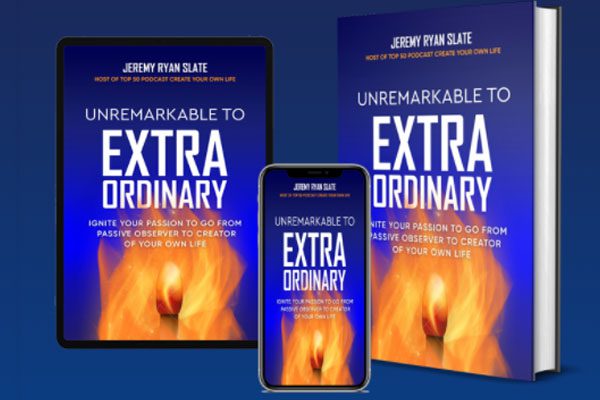
Unremarkable to Extraordinary: Ignite Your Passion to Go From Passive Observer to Creator of Your Own Life
That’s a huge takeaway. Most people don’t spend the time training people. They figured, “I’m hiring you. You should be able to hit the ground running.” We don’t even talk about our culture and whether you are a fit or not.
That’s a huge misconception.
If you don’t have clear expectations or boundaries like we were talking about with children and pets, for the employees, they don’t know. “Is it okay if I come in at 10:00?” “Not really.” “Nobody told me.” I can set up a problem right off the get-go. “Here’s what we do. This is our workday. We are totally flexible. As long as you get the work done, you can come in what time you start.” Everyone is different. That training as a speaker who gets hired to sometimes also train after the keynote and help people get a new skill because the skills you have are not enough. You have to constantly be learning new skills is my experience.
That’s one of the things. If you are not growing, you are dying. You always need to be growing and working on what you are doing. That goes back to what we have been talking about all through this conversation. It’s about incremental improvements and consistent improvements. You have to be thinking about the same thing for your team. They should be training weekly, whether it’s on some sort of new process, some process you have been running for all, whatever it is, they need to be improving as much as you do because that’s how you keep your organization growing.
If people want to listen to your podcast, it’s called Create Your Own Life. If people want to learn how you can help them with their branding, they should go to CommandYourBrand.media.
CommandYourBrand.com or CommandYourBrand.media, either one will get them to us.
Any last thought you want to leave us with?
I would encourage people to go out and grab my book, which is now in pre-order. It’s going to be released on June 7th, 2022, which distills down a lot of what we talked about and brings that into something that you can bring into your life to make some huge improvements and find your extraordinary. It’s Unremarkable to Extraordinary. They can get that over at GetExtraordinaryBook.com.
Jeremy, thanks again for inspiring us all to put a little structure in our life and get some practice in.
John, thanks so much for having me. It’s a lot of fun.
Important Links
- Command Your Brand
- Create Your Own Life Show
- Unremarkable to Extraordinary
- YouTube – Jeremy Ryan Slate
- Rumble – The Create Your Own Life Show
- CommandYourBrand.media
- Larry King – YouTube, Larry King interviews Sales Keynote Speaker John Livesay
- Better Selling Through Storytelling Method Online Course
Wanna Host Your Own Podcast?
Click here to see how my friends at Podetize can help
Purchase John’s new book
John Livesay, The Pitch Whisperer
Share The Show
Did you enjoy the show? I’d love it if you subscribed today and left us a 5-star review!
- Click this link
- Click on the ‘Subscribe’ button below the artwork
- Go to the ‘Ratings and Reviews’ section
- Click on ‘Write a Review’
Love the show? Subscribe, rate, review, and share!
Join The Successful Pitch community today:
- JohnLivesay.com
- John Livesay Facebook
- John Livesay Twitter
- John Livesay LinkedIn
- John Livesay YouTube
Evolve Your Success With Samuel Adeyinka
Posted by John Livesay in podcast | 0 comments

Personal development can affect, boost, and evolve your success to any aspect of your life. It is something one should focus on because you can have the opportunity to make a difference. When he was young, Samuel Adeyinka wanted to be a physician but realized that he could do other things related to medicine. That led him to pursue a career in medical sales. He experienced a lot of setbacks and challenges, which enabled him to give importance to personal development. Now, Samuel started his podcast to let people hear and have more information about the medical sales industry. Join him in this episode as he shares more about his inspiring journey to success.
—
Listen to the podcast here
Evolve Your Success With Samuel Adeyinka
Our guest is Samuel Adeyinka, who after graduating from the University of California in Riverside with a Bachelor of Science Degree in Biology, started his medical sales career. Over the next several years, he worked for a variety of biotech and pharmaceutical companies. He then went on to work in various roles, including medical sales development trainer, International Coaching Federation, and a certified coach. He has now started his podcast and Evolve Your Success, which is an organization that delivers digital marketing strategy and training programs to corporations and individuals.
—
Welcome to the show.
Thank you for having me. I’m glad to be here.
Let’s talk about your own story of origin. Did you know from a young age that you wanted to get into medical sales, or how did that road start for you? Do you have some great Biology teachers in high school or someone in your family?
I think everyone can say this. When it comes to medical sales, you did not know at a young age. This was new to a lot of us, probably for the last several years. I wanted to be a physician when I was younger. I was all about bones rise. I memorized every bone at a young age. I used to go around telling people what bones they had. At least I identify that all the time.
I want to be a physician. I thought I wanted that. That’s what led me to UC Riverside. I enrolled in the Biomed program. I got into that program. In that program, you got to spend some time with some physicians. I got to get a couple of mentors and I got to see what goes on at hospitals. I realized that, as much as I like this field, I want to look into other things related to it. I was not sure I wanted to practice medicine with patients.
I said, “Let me look into something else.” I spent some time working in the lab. Through that experience, I learned about this industry called Medical Sales. I worked with a PhD there, he was working on a diuretic, and he would say, “Sammy, you have a great personality. You understand the medicine. I see you have a big interest in the business. You should look into what manufacturers do for drugs and devices. Check it out and see if you like it.”
[bctt tweet=”Be a resource to your client. ” username=”John_Livesay”]
I looked into that. I looked into high-performance liquid chromatography devices and some pharmaceutical companies. With the pharmaceutical companies, I got my first role, moved out to the desert, and loved it. It was an awesome experience. I performed very well. Right going into it my first year, I had at a time in my life, loving what I was doing, and the rest is history.
When do you say desert, is it Phoenix or Palm Springs?
The desert is in the desert of California. Palm Springs, Palm Desert, Indio, those were my stomping grounds, and that is where I originated. That introduced me to the field.
A lot of people who understand science and like to study science are known as a little bit of introverts perhaps. They don’t like to even think of rejection personally, not the personality at all that sales require. When you do find a hybrid of someone who understands science and willing to put themselves out there in a sales environment, it is a magical find.
Usually, there are a lot of personalities like sales. They don’t know the science. I’m sure that combination was, in fact, a huge success. I’m fascinated to see how somebody did suggest it to you. It is amazing how one person in our life can be a major character in our own story of, “Had I not thought about that, I would never have even explored it. I didn’t know it existed.”
When you find something that fits, it is like, “This is what I meant to do.” It is not you are forcing yourself to do it, hate it, and find it awkward or whatever. Let’s talk about it because a lot of people think of pharmaceutical sales. Don’t you have to be a model to do that job because everyone is attractive? It’s crazy. The impressions that people have of the glamour of that job because it is the smartest, the best, and the most attractive, it’s like getting into Harvard or something.
Everyone has this perception that it is a difficult field to get into. You have now taken your expertise in doing it and helping people get into it, which we will talk about for sure later, but I want to get your impressions of it. Were you surprised at how competitive or challenging it was to get into when you first started?

Evolve Your Success: No matter what level of success you’ve reached in your life, you can always evolve it to the next level of success.
I’m going to be honest with you. I wasn’t even thinking about that. It’s funny. I didn’t even realize what I was getting into. When I first started, I was trying to develop my sales acumen. I had never been in sales before. I was working in the lab, and it was a high-performance liquid chromatography. We were studying these graphs and preparing liquid chromatography while running the experiments for this diuretic on live testing. That was what I knew and everything I studied in school, which was Biology.
When it came to sales, I didn’t know. I thought I needed to go develop my sales skills. I looked into T-Mobile, and there was a sales position there. A friend of mine said, “These guys teach you how to sell, you make good money, and they can help you with your first career move.” At the same time, I learned about this pharmaceutical opportunity. There was a company that wanted to work with me and I wanted to work there.
I said, “Do I develop my sales acumen at T-Mobile or even out here at a pharmaceutical company?” When anybody hears this, they’re like, “That’s an obvious choice.” At that time, it was not that obvious to me. I went ahead and went into it. I was excited to be in a role that offered that, doing things, selling, being a part of the business with them, and that excited me. Even before that role, I had this little nutraceutical company where I worked with a few providers. We were trying to have this diet nutraceutical product that we were trying to sell, market, and get out there.
It seemed like a sensible position to take on it. I felt I would learn more about what I was doing and get experienced in this new industry. I was not thinking about the challenge of getting in. Honestly, this was several years ago. It was competitive back then, but it was also not as well known. Now everybody knows about medical sales, medical device sales reps, and pharmaceutical sales reps. The average person knows what a drug rep or a medical device rep does. Now all these people want to get into it, and ever since COVID hit, even more so. It has become this very competitive and aggressive industry where you got to be a certain person and put in the work to get a foot in the door.
[bctt tweet=”Be someone your client can rely on.” username=”John_Livesay”]
The need for companies to train people has changed. When you and I were getting into sales, I got into high tech sales and they would put us through a training program, not only on the products but on the actual selling. I remember being videotaped and you should be giving someone your business card within many seconds of meeting them, in case they forget your name.
All those little tips that you don’t think about, emotional intelligence or social skills, especially if you are selling something expensive, there are a lot of people that get involved in the decision, and you are not going to walk out with a yes. You have to call on, in my case, financial people for leasing, a multimillion-dollar piece of equipment, or the tech people had to speak to the tech people and solve a problem.
It was a lot of training that was great because once you have an understanding of where things are in the pipeline, as well as where somebody is in their buying decision, you are able to make projections on a much more accurate basis. Without all that experience with somebody guiding you, you are making it up as you go along.
We have seen, without the proper training, how frustrating it can be for someone who does not have that training. How did you come up with the name of Evolve Your Success, which you’ve created now a full-service media and training company for both companies and individuals? I love it because it assumes someone’s already got a level of access, and you’re helping them evolve it.
That has always been important to me. No matter what level of success you have reached in your life, you can always evolve it to the next level of success, and human nature initiates that. If the money is great, you want to work on a personal relationship. If the relationship is great, you want to work on the finances. If all these different parts are great, you want to work on the family.
There is always an aspect of your life that you want to improve, you are either going to step toward that on your own, or something is going to pull you into wanting to develop it. That’s something that I’ve recognized pretty early on in my career. One thing that I loved was personal development. I became a fan of that early on because I had my own personal setbacks that let me see.
There is a way people can experience a personal setback and still get back to performing at a high level. I didn’t understand what that meant. I didn’t know what that meant until I started looking into the work of what personal coaches and personal development coaches do. That’s when I got to learn that no matter what you’re experiencing in life, whether it be a divorce, death, job loss, or whatever’s happening.
There’s a way where you can recalibrate, reevaluate yourself and develop from that place and evolve to even greater success than you have ever experienced. Me going through that developed a passion for me wanting to do that with my own career and help people do it as well. Several years ago, I worked with some personal development companies. I got to see what they do and how they work with people. It was completely inspiring to me. I said, “No matter what I do in this life, I have to remain connected to this work.” I started working with sales reps in all kinds of different industries.
This was passion coaching where I can help someone say, “Let’s look at what you are doing. Let’s look at your opportunities, and let’s help you ramp up your sales.” Honestly, what often happens is we end up working on their personal life. Not directly, but to show up a certain way professionally, you got to have certain things in your pocket personally. That is what would always come out when working with all these people.

Evolve Your Success: Whatever’s happening, there’s a way where you can really recalibrate, reevaluate yourself and develop from that place and evolve to even greater success.
This became a habit. What I noticed through that is a lot of these people also want it to be in the medical sales industry. I’m like, “You have all these people that want to improve their sales, their careers, and realize the value of developing personally. It carried over professionally. You have all these people that want to get into the medical sales space.” I said, “There should be something out there that gives them the opportunity to do so.” That is where Evolve Your Success was birthed, we started helping people create those opportunities, and we have been doing that ever since.
As a story keynote speaker, what I have found is how important it is that we are resilient and how fast we get back up after we get rejected, lose a job or a loved one, divorce, or whatever it is. They were all going to have experiences like that knocked us down. The trick is, how fast do we get back up. A lot of people shake it off fairly quickly, and then you see people two weeks, sometimes, even two months still talking about it. You are like, “You are not in the right mindset to move on. That’s why you’re in a slump.”
The other thing I love about what you do that I’ve noticed myself was when I got hired by a healthcare med-tech company, they wanted a sales keynote speaker to come in and teach their people how to tell stories. One of them had reached out to me during the interview process on LinkedIn. I liked and commented on a couple of his posts. He became my inside salesperson because he was trying to get his team to like and comment on doctors’ posts on LinkedIn.
The fact that I did it, he said, “I knew you were the person that would not try to squeeze that concept in, but you were doing it to sell yourself. I knew that wasn’t a good fit for our company.” The fact that you have used selling based on the science of social media to help people connect with people is important whether you’re selling yourself as we do as speakers or you’re in the medical tech world. A lot of them think, “I have to use social media to develop relationships. I’m going to keep hammering away like everybody else and send a bunch of emails going, can I have an appointment?” Tell us about what you’re doing and what makes your experience unique in this science in social media?
[bctt tweet=”There’s always an aspect of your life that you want to improve. You’re either going to step towards that on your own, or something’s going to pull you into wanting to develop it.” username=”John_Livesay”]
It’s the age we live in right now. Right now, we live in the age of social proof. Any influencers, celebrities, anybody you know the first name of that you don’t directly know, you can probably go online and find some social proof about that person. Anybody you know, you can go online and find some social proof about that person.
In this day and age, it is important to build a brand around yourself because the opportunities to provide value for people are endless. When it comes to social media or online technology, healthcare is the last space to realize the value, and healthcare has finally said, “There is a lot of value here to develop a brand for myself.” Surgeons and specialty providers are realizing that.
If I build a brand on TikTok, Instagram or LinkedIn, I am going to get more patients and get noticed. The good work that I’m putting out there in the world is going to be seen. Whether it’s intentional or not, there is going to be a level of credibility to what I do that people will believe in before they meet me. That applies to everyone, and everyone has the opportunity to do that. It makes you more marketable in the marketplace. If you work for a company and you’re ready to take your skillset to a different level, other companies can easily see the good work you’ve done at that organization and say, “Come work for us. You’re doing excellent.” Even within your own organization.
A lot of times, you’re doing all this good work in your role, and outside of your manager, the leadership has no idea all of the good work you’re doing well, but now you have the opportunity to let that be seen with your brand. The people within your organization are saying, “I didn’t know you were working on that. We want to consider you for this role over here. Let’s have a conversation.” There are so many opportunities.
Personal branding is very important. It’s more important it has ever been. I believe that we’re going to continue to go in that direction. I wanted to help in that transition. My whole thing is about developing other people. That’s what I’m big on. In every role that I’ve had, I’ve tried to focus on doing that, providing value for the customers and colleagues. Anybody I’m working with, I want to train them and help them reach their highest potential. Social branding is a great way to do that as well.
You offer this as a service. You help people optimize their profile, which people don’t even think about how important that is. They go, “I only need to be on LinkedIn if I’m looking for another job.” Wrong. You need to brand yourself on LinkedIn, which could even help you get a promotion. You take that another step further, which is, “Now we’ve got your branding done, but let’s get you to be perceived as a thought leader.” Maybe create some good content.
Think about it this way. You’re someone that understands a lot about your product or service. Let’s be honest. A good sales professional, he or she, understands their disease state, condition, and problem that their customers have better than anyone, even better than their customers. Let’s talk about it. You would have a doctor and he says, “I went to med school. I know more than you.”
It is granted, but I spent all this time, my whole livelihood is built on me, understanding this very specific detail of your breadth of knowledge to help you be even better and provide better quality for your patients. There’s got to be something there. On top of that, I spent all this time talking to your peers that do things differently than you do to give insight on how you practice what you do.

Evolve Your Success: In this day and age, it’s important to build a brand around yourself because the opportunities to provide value for people are endless.
I have friends that are providers, and a lot of them say, “A good representative is someone that I can rely on. It’s someone that I can look to them and depend on their knowledge to help me show up better for my patients.” If you are doing that, why not be seen by the right provider so that they can tap on you to be a resource to them. That is where social branding or being out there also does. It gives your customers another way for them to know that you are this person that can give them all this value and potentially lead to an in-person meeting. You become their real customer, doing business, and they are happy about it.
I talk to people all the time that we have worked with that say, “I met this account through LinkedIn. They saw what I posted about so-and-so and they contacted me. Now we were doing business, and their patients are doing better.” That’s awesome. That’s the beauty of what is happening in this day and age. That is something that I like being a part of.
I was interviewing an optometrist for an upcoming talk I’m giving to an eye care company. He said, “The reps used to be able to bring lunch in, and we would have lunch. They could present and pitch. Now they have to catch us between patients. We give them ten minutes.” Everyone is saying the same thing, “Our products are the best. Here are all our stats,” and then it is forgotten.
He goes, “I’m looking for a sales rep that I can rely on, that’s going to bring their expertise.” They’re looking at hundreds of other optometrist offices, and maybe they see a best practice going on there, or maybe I’m short-staffed. They know someone that is looking for a job. When those reps do more than give me stats, I want to do business with them. Most reps don’t think about that. They think, “My job is to pitch you what my knowledge.” That’s not it. That’s why I’m like, “You need to be a consultant and tell stories of a patient using your product, not just the stats, because we know people forget the information.”
You teach storytelling how to communicate your value to a provider. At the end of the day, what I’m all about is being a resource to your customers. When your customer can say, “When I have an issue and it comes to this space, I want to call on John. John will know how to help me in some way, shape, or form.” Your job is to be a resource to him and utilize your product as you do. That is the opportunity that every sales rep can take advantage of and truly be valued in the space that they’re working in.
Your show is called The Medical Sales Podcast. Let’s talk about picking a niche. I love it that you are interviewing all these people, and I was fortunate enough to be one of them that has expertise in this. One of the things you say here is you’ll laugh, you’ll learn, and you’ll be inspired. We need to be like that in person as well. We can’t be a robot putting out information.
[bctt tweet=”We live in the age of social proof.” username=”John_Livesay”]
There is a relationship. You are a person talking to another person, and people want to not only be informed but inspired. I maybe even entertained a little bit. That is a part that people get so focused on, “I’m only myself when I’m at home, and I’m a whole different person at work.” What you are saying that I love is, “No, when you have integrated it all together, you show up.” That is what makes you stand out in the hiring and the selling process.
One of the goals with the Medical Sales Podcast was there is this whole world that everybody hears about. The medical sales world, pharmaceutical sales, biotech sales, medical device sales, medical equipment sales, and I’ve heard patients say, “You drug reps come in, and you take up the doctor’s time.” No one understands what is going on outside of the people doing it.
I said, “There should be a resource anyone can tap into and find out not what the industry is about, the good that’s being done, and the value that every sales rep puts into medicine, but the lives these people are living, doing, care about, moves them, inspires them, and they are beautiful stories.” You were a guest, John. You have heard the episodes. You got some fascinating people doing some amazing things.
When you find that out, you will say, “Thank God they are in this space, and they’re committed to wanting to improve the quality of life through the patient and helping their providers do the best work their providers know how to do.” That’s a beautiful thing and that’s something that should be known by everyone.
I love how you evolved your career, and now you are the expert in getting other people to live the dream that you were living, and you offer many multiple ways to work with you, whether it’s branding on LinkedIn, tips on a podcast or getting coaching. What thought or quote do you have for us about life in general or medical staff?
One thing that we can all take home is no matter where you are, there is a place you can evolve to. We are in the age where if there’s something out there that you want, there’s an opportunity to go for it. You should not feel limited in this day and age. If you’re someone that’s saying, “I want to be in medical sales. I want to be the best medical sales rep ever. This year I want to be number one.” There is a way to make that happen, and you can make that happen. Nothing should make you think any differently.
When it comes to medical sales specifically, it’s a great field, and if anyone is interested, they should look into it and the beautiful careers that can recreate out of it. At the end of the day, you’re doing great work because it’s all geared to the patient. That’s the most important thing. The patient’s quality of life, regardless of what it is you’re selling. If it’s in medical sales, it’s geared to helping a patient live a better quality of life. If that’s what you’re about, that’s a field you should look into.
The best way to find you is EvolveYourSuccess.com. Samuel, thanks for doing what you do in the world. I can’t think of a number of people you have impacted in the ripple effect. That must make you feel good. Thanks for sharing your wisdom with us and your stories.
Thanks for having me, John.
Important Links
- International Coaching Federation
- Evolve Your Success
- The Medical Sales Podcast
- Better Selling Through Storytelling Method Online Course
Wanna Host Your Own Podcast?
Click here to see how my friends at Podetize can help
Purchase John’s new book
John Livesay, The Pitch Whisperer
Share The Show
Did you enjoy the show? I’d love it if you subscribed today and left us a 5-star review!
- Click this link
- Click on the ‘Subscribe’ button below the artwork
- Go to the ‘Ratings and Reviews’ section
- Click on ‘Write a Review’
Love the show? Subscribe, rate, review, and share!
Join The Successful Pitch community today:
- JohnLivesay.com
- John Livesay Facebook
- John Livesay Twitter
- John Livesay LinkedIn
- John Livesay YouTube
Discovering Your Inner Purpose With Dr. Benjamin Ritter
Posted by John Livesay in podcast | 0 comments

With so many things happening around us, we tend to lose focus on why we are doing something or what we can really gain out of it. But by understanding our inner purpose in life, we can get a better grasp of our reality. In this episode, John Livesay sits down with speaker, author, and the Founder of Live For Yourself Consulting, Dr. Benjamin Ritter, as he shares how he changed the course of his career from being a government employee to a full-time coaching professional by discovering what he really loves to do and where his strengths lie. Dr. Ben also delves into his Three C’s of Leadership and explains how every workplace should have the ability to redesign itself according to the tide of times – even a global pandemic.
—
Listen to the podcast here
Discovering Your Inner Purpose With Dr. Benjamin Ritter
Our guest on the show is Dr. Benjamin Ritter who runs a consulting business called Live For Yourself. He helps people who are unhappy in their careers get unstuck. We talk about that we don’t have to be attached to the path that we are on. Finally, we also talk about that you, as a leader, have to work on clarity, confidence and control. Enjoy the episode.
—
Our guest is Dr. Benjamin Ritter who is a leadership, career and empowerment coach. He is a national speaker, podcaster, author, mentor and he’s passionate about guiding others in finding and creating a sustaining career they love. With many years of experience coaching and a background in organizational leadership and adult learning theory, he understands how to navigate any career path you decide you want to travel. Since launching his coaching practice, he’s guided hundreds of professionals towards creating the career they love and impacted thousands through his events and media content.
From empowering young professionals to take accountability and feel empowered over their own job level with satisfaction to guiding senior leadership on how to stand out from the competition, develop executive and discover meaningful work. Ben is an expert in his field and guides people towards truly living for yourself at work and in life. I get to call you Ben because we’re friends as opposed to Dr. Benjamin. Welcome to the show.
Please call me Ben. You can call me Neb sometimes. For some reason, people want to turn my name around.
You and I are relatively new to living in Austin and that’s part of the joy is getting to meet people. We both are also from Chicago. It’s been fun to look at the similarities and our passion for helping people in different ways. Would you mind taking us back to your own story of origin? You can talk about childhood or school and where you got this premise of, “I’m going to live for myself.” I don’t think that’s normally a concept that we think about. I’m sure there’s a great story of origin there.
[bctt tweet=”Being clear with what we can and what we love to do is the first step in discovering our inner purpose.” username=”John_Livesay”]
I never thought I’d be a coach. I still don’t think I’ll be a coach, even though I’m a coach. At every single major turning point and milestone in my life, especially the ones where I felt lost, stuck, underutilized and questioning things, having those existential moments that we all tend to have, coaching popped up. The first time it ever happened, I was training to become a professional athlete in college and I didn’t make it. There were many things that happened to that.
I had my major canceled in college. I had hip surgery when I thought I was going to go abroad and play. I went abroad to play and got told that if I stay there, then I might have a chance, but I only had a semester left in school. There were many different rough points in that separate story. I lacked confidence there. When you set yourself up to achieve something outside of yourself, all you do is focus on achieving it. You hold yourself accountable to that and you define who you are by that, and then you don’t achieve it. Along the way too, you struggle to achieve it. You experienced some tough internal dialogues.
When I finally realized that I wasn’t going to make it, when I realized that I had to make the decision to make this my main priority or take away this priority for my life, I had to figure out how to redefine who I was. Luckily, we had the internet then. It wasn’t still that prominent, but I went online and searched something along the lines of, how to be confident, how to find yourself, what is the meaning of life? All of these keywords that you think you might type if you’re questioning life and searching for them on the internet, which is an interesting strategy, which I don’t think is as interesting nowadays.
What came up was this field of personal professional development. What came up were articles upon articles and books upon books on how to become more attractive, how to become more confident, how to become successful in business. It was never, “This is the meaning of life.” You’re probably more likely to find books like that nowadays than you were back in 2005. In my search engine results, that didn’t pop up. I spent the next 4 or 5 years studying that industry, studying all the material I could find, and not just studying it though, but going out and applying it.

Inner Purpose: Without clarity, you don’t have confidence, so you don’t know what the next step is.
As I mentioned, confidence was a big issue of mine. All of the material that you find on confidence as it relates to men is mainly focused on attraction, dating and being social. I would go out by myself to bars. I would walk up to strangers on the street. I would do things to make myself extremely uncomfortable to ensure that I never felt those things were uncomfortable. I probably lend a lot of those experiences to my stage presence, my ability to walk into a room, to my networking capabilities nowadays. That was the first little pinpoint in my life where coaching became influential and became something important to me.
If you fast forward a little bit, coaching came back when I got out of grad school. I couldn’t get a full-time job for about two and a half years because of the recession. I wanted to work in the federal government and public health policy at that time. I was doing some work for the Illinois Department of Public Health. I thought I was going to keep doing work for the Illinois Department of Public Health after grad school but the world had a different story. It had something else planned for me. I got a job offer from the Illinois Department of Public Health, from the CDC, and from two other health departments, but they were all canceled after I signed them.
It was almost like clockwork into the next day or within three days, they were pulled back due to funding. That was a two and half-year period of time where I was getting a job and then not getting a job. I made it work. I bartended and then interestingly enough, I was out by myself one day being social, because this is a habit that I kept. Someone approached me and said, I know what you’re doing. You need to meet my boss. The next day, I ended up getting hired to run a nationwide bootcamp program for men in relationship to interpersonal dynamics. For the next year, I was leading men on bootcamps in how to be more social, how to be more attractive, and how to have more confidence. At the same time, I ended up getting federal funding for six months of free life coaching for public health professionals. This is hilarious because there was no funding for a job. It was a grant that I applied for through networking, through going off on my own and meeting people.
Coaching again came up. I never thought about it as a full-time job. It was always a way for me to make some side money. It was a way to develop because after working for this guy, I ended up seeing an opportunity starting my own business. I started my own coaching practice but again, as a side hustle, there was demand to make some money. Fast forward another 6 or 7 years, I’m working in healthcare which I got that job because of the networking and meeting someone across the bar. I get selected to become an executive in my system. Because of that, I get the opportunity to receive sixteen months of leadership training from our Director of People who was a coach, who then becomes my coach. All of a sudden, I realized, “This could be a job. I could do this for a living.” I’m sitting here going into work on a daily basis feeling stuck, underutilized and feeling like, “This isn’t the place that I belong.”
[bctt tweet=”Are you truly living for yourself in a way that is positive and proactive towards what you care about and what puts you front and center?” username=”John_Livesay”]
Every job I’ve had up to that point was a reaction to the environment that something I needed to do because I needed to put money in the bank. I needed to create a career journey for myself. I finally felt empowered at that point in time to ask myself, “What is it that I want to do? What are my strengths?” I now have control. I have the ability to live for myself at this very instant. I don’t have to be held in handcuffs to the economy or to what people think I’m able to do or not able to do. I went and asked my coach, “How do I do what you do? How do I do this?” We came up with a little bit of a plan. I went back to my boss. I asked her to be involved in the talent development space. She said, “You can do this. Talk to the department. Get involved in projects.” I had a lot of energy for the first time in probably six years at this job. I felt like I was going to do something that I wanted to do, and then we got acquired. Everything I was going to do stopped.
I’m proactive and action-oriented, so plan B is I’m going to find a job in this field. All of them were about half my salary because I had no resume experience in this other than my side coaching business coaching men. That doesn’t make a resume seem lofty. I don’t have a lot of expertise in talent development and coaching individuals from my side business, at least not on my resume. I’ve been running this coaching practice for 5 or 6 years. I have experience doing this. I know I’m good at it because I got hired to do this in the past and I have a lot of media attention for it. I was writing for AskMen and Men’s Health at that time. I was getting interviewed on a live stream Facebook show with 100,000 or 200,000 people. I can prove it. I was in the Apollo Theater in Chicago as a panelist for The Great Love Debate.
There was stuff that was like, “You’re good at this,” but it wasn’t the industry I wanted to do it in. I’m like, “I’ll take all this knowledge and I’ll start my own business again. I know how to do this, but I’m going to do it in an industry that I’m passionate about, that I care about.” This is always a theme in my business development stages. How do I get seen as someone credible with no experience here? How do I sell myself to individuals? I’m like, “I know how to get media attention, but I’m still 30 and I want to work with executives. How does that work? I want to work with managers. I want to go into organizations. How are they going to believe me? I’m going to get my doctorate. I’m going to get the golden key to open up the door to at least get people to listen to me.” That led to me getting published in this field because I got to do some research in it and I got to speak on it. It did skyrocket my business. It probably sped up the timeline for more than a few years in terms of becoming successful. That’s what I’ve been doing for the past few years.
That’s not an easy feat getting your PhD, but that gives you the credibility. A lot of people write a book to try and get that credibility, but the PhD is at a whole other level of commitment and time. What I hear as a consistent theme is a lot of resilience going on. This awakening that you were stuck in something that you didn’t love and there are many people out there that feel that same way and because you’ve been in their shoes, you know what it feels like. The irony of you can change jobs, but you still have similar challenges if you’re not doing what you love. Would that be a fair assessment?

Inner Purpose: Your purpose isn’t bigger than you because you create your purpose.
Taking what was way too long of a story. I’m distilling it down and saying that I’ve been stuck. I’ve been underutilized. I’ve been overworked and I’ve made decisions for my career that weren’t based on what I wanted and mutually living for myself. They were based on what I thought I needed to do at that time. Instead, I hit a point in my life where I wanted to change that. I dove into what I cared about, what challenges I wanted to face. I plotted the course and I went to take action.
The good news is not everybody has to get a PhD like you did to have credibility and find their dream job or your consulting firm is Live for Yourself, LFY. You have something in there that I wanted to double click on which is The Three Cs of Leadership. This applies whether we’re leading other people or leading ourselves into a career we love. Can you talk a little bit about what those three Cs are?
It was working with clients and I had the Live Framework, which is a decision-making tool to live a much more aligned life for yourself. I was noticing that through working with clients, we were developing core traits within themselves like these pillars. I identify those pillars as the three Cs of self-leadership: clarity, confidence and control. If you have these, you’re able to lead yourself. You’re able to take action towards what you truly care about. Often, when I first start working with clients, they have this pain and they have this desire for change, but they don’t truly know what they stand for, what they care about, and how they’re going to get there. Because they don’t know that, they don’t have confidence in themselves. If you don’t have confidence in yourself, you’re never going to take action. If you get clarity and confidence, all of a sudden, you can prioritize that in your life. You can have control over your life.
I have not heard anybody phrase it like that. Without clarity, you don’t have confidence so you don’t know what the next step is. They build on each other. It’s not like you work on three things simultaneously necessarily. It seems to me like you do one, you get clear, which gives you the confidence to then have the ability to control. That concept of control from your perspective now, having felt like you’re not in control. All of us are experiencing what it’s like to not be in control when a pandemic comes. Let’s say we have some clarity, we worked on our confidence, and then all these other outside things, whether a funding going away or a pandemic. How do you advise people to get a sense of control when there are many things going on outside of their control?
[bctt tweet=”To gain full control of our lives, we first need to figure out why we are doing something and if we really love doing it.” username=”John_Livesay”]
First, if we start with clarity and confidence at least at any given point in time, we know what we stand for. We know what’s important to us. If we have that and outside of us, we’re not able to go along the path that we set ourselves to go on due to a global pandemic or shutdown, anything that can happen because we don’t have control over the external world, we then can reflect and say, “I still want to live these values. This plan doesn’t work anymore,” but those values are still the goal. The goal is not, “I want to achieve X, Y, Z.” The goal is, “I want to live a life that allows me to apply the values and strive towards what I care about in any fashion.” The first step to control is understanding that no matter what happens outside of yourself doesn’t change what you can feel about yourself.
As long as you keep applying your values throughout your life, you wake up and you know what you care about, you feel like you’re making an impact towards what you care about, and you can do that in any way possible. There’s an infinite number of ways for you to apply your values in the world. That’s what control is. It’s noticing what isn’t working anymore and a couple of different avenues that could work that could allow you to feel fulfilled on a daily basis. Just believing that you’re capable of that, that you have the choice and the ability to take action in a new way or a new path that’s still is important, and that your ego isn’t attached to whatever this other path was because the path itself isn’t important. It’s what you’re working towards and how you’re living on a daily basis. That in itself is inspiring and motivating that lends us to take greater control of our life and apply it to our life.
That’s going to be a great tweet, “Outside events don’t change what we feel about ourselves.” That’s a big a-ha. I know for myself, when I was laid off, it was like a kick in the gut, overwhelming and scary. You realized, “I haven’t lost my identity. My job is not my identity.” Getting re-centered around that was a big moment and realizing that if we don’t do what you’re saying, we’re going on l the self-esteem roller coaster. We only feel good if things are going well and bad if they’re not. To reframe that is wonderful. This premise of not getting attached to the path that we’re on, that’s a big one. We tend to like comfort zones and routine. We think, “If I’m doing this, then the outcome is that. I’m staying on this path. I can’t vary from that path.” In your own life, whether it was your athletic career getting derailed or a company getting defunded, you have to constantly be willing to not be attached because you said there’s something bigger than the path which is your purpose.
Your purpose isn’t bigger than you because you create your purpose. We lose sight of that often. There’s this interesting mindset of you need to think that the world is bigger than you because that keeps you motivated and that there’s more. I like to turn away from that and say, “You create all the things you care about.” You’re more than everything else around you. You come first or your health comes first. When you wake up and don’t feel good, it’s okay. Let’s figure out what’s going on in me, not what I have to do outside of myself.

Inner Purpose: An important component to motivate and engage your employees is to help them find their stories – why they’re doing what they’re doing and what matters about that work to them.
If we were able to have that focus and say, “My purpose is important because it’s a tool for me to find more happiness in my life.” All of a sudden the, “I need to do this because it’s my purpose,” changes from, “I enjoy doing this because it brings me happiness and it matters to me.” I give it energy, power and intention. I will define it as my purpose, but only to the point where it brings me a level of happiness. That doesn’t mean that struggle can’t create happiness. Waking up and building a business, figuring out solutions and the stress from that is something that I enjoy. That can be filtered through this lens of, “This is how I’m enjoying my life right now,” but the “This has to happen,” or “I’m not valuable,” that’s where I get lost.
I like to think that we’re the movie director of our own life. We can say cut, we can recast it and change locations as opposed to being at effect of everything that’s coming at us. We’re the thinker thinking the thoughts. That’s the whole concept of we created the purpose, therefore, the purpose isn’t bigger than we are.
I was listening to an interview and the guest said a few things that resonated with me. One of them was, “Are you the actor or the character?” I think in our life, we need to be the actor. The character is who we’re playing at the time, the things that happened to us, but it doesn’t define who the actor is. If we know who the actor is, it all allows us to play a variety of roles.
The other thing that you’re good at and when people hire you to come to speak is helping people find jobs satisfaction and get motivated even if it’s a job that they’re just doing for the money. It’s not necessarily something that they see as a career, but it’s what they need to do now. That could be working at a fast-food restaurant. Companies could bring you in to say, “How do we motivate somebody who is not making a lot of money and the job is fairly routine, yet we’re pressuring them to give amazing customer service?” When you have a client like that, how do you help them keep these people motivated and feel like what they’re doing is meaningful.
[bctt tweet=”Each and every single day, we don’t live in that broader world. We live in that right now.” username=”John_Livesay”]
I was running in Lady Bird Lake in Austin. We were running by this kayak shop and there were already people lined up getting their kayaks. I was like, “It’s a cool scene here.” As I was running, I saw the guy lifting the kayaks up and bringing them to the water, going back, talking to the customers and getting the oars. I had a thought that I have all the time. When I’m in Chicago, watching someone shovel the streets of snow, which I’m happy we don’t have here. I always think to myself, “What motivates them? What gets them going to do this job each and every single day?” It doesn’t connect with me. I don’t know if I would want to do that each and every single day, and doing what I enjoy doing.
You work on this. You find people stories. You help people figure out why they’re doing what they’re doing and what matters about that work to them. That is such an important component of figuring out how to motivate and engage your employees. It’s one of the pillars. It’s what motivates you, what drives you, what brings you to the office? It doesn’t have to be the paycheck. It could be, “My kids get to go to the school that’s a little bit safer. We get to have a special dinner once a week because now, we have a little bit more disposable income. My dad did this and we get to resonate and share stories about what it’s like to give people kayaks and then see the smiles on their faces,” or whatever it is. It’s their drive.
“I don’t have to worry about filing reports or sitting behind a cubicle.” I did that for five years. It could literally be anything that touches someone that sparks somebody. It’s very easy to forget these stories because these are the broader world. Each and every single day, we don’t live in that broader world. We live in that right now. A manager, a leader or a speaker can come in and remind them of those stories. It’s like what you do as well in terms of sales. You remind people of their stories to help them be more energized. You teach them strategies on how to remind themselves of their stories on a daily or weekly or monthly basis.
That’s probably the most important component of all the different things that I’d speak about in terms of job satisfaction. The other two are figuring out what work your employees love to do and what work they don’t love to do. Getting in there as a leader and crafting their work to be more fit to their strengths and likes, and helping minimize the work they don’t like to do, or knowing what work they don’t like to do, and then praising them for that work. It’s figuring out ways to make the work that they don’t like a little bit more enjoyable. It’s maybe giving them some more freedom to say, “You don’t like to do this work you do on Wednesdays, do it from home.”

Inner Purpose: You are literally the center of your own universe. To that point, you are the most important leader that you’re ever going to be.
You can come up with strategies to help someone to enjoy certain aspects of their job they don’t like. The other aspect is the social context of the way that we work. Where is the conflict in your department? Are there conflict between two specific members? Figuring out ways to mediate and solve that conflict, and then also to figure out who are friends at work and try to pair them up more and more together. At least build in time for them to talk not about work stuff, but venting about personal stuff, and being the conduit to positive relationships within work itself.
I think to allow that a lot of people are having to work from home versus being in the office so much, they don’t realize how much value there is in those water cooler moments, catching people in the hallway, “How was your weekend?” a little bit of a download or grabbing a coffee with somebody to vent. Without those release valves, the stress builds up and the sense of isolation that work is more than a paycheck. When someone like you with your expertise can come in and help people reframe that, sometimes those little moments of scheduling people to go on break together that like each other. That little detail showing that you care enough about them can make a huge difference. I love that specific example as well as the example of the person unpacking the kayaks.
There’s one more thing to add because I think it’s important in the remote world. It’s the resources. This goes along with the actual work that somebody is doing. What do they need to do their job? Many organizations sent everybody home and they’re like, “Go for it.” I don’t have a working webcam. Do I have to buy new headphones? Can I get a second screen? I don’t have pens. I don’t have printer paper. I don’t have a journal. I know these are extra expenses, but as a leader, have you ever sat down and spoken with your employees and say, “Think about your workflow. Where are the struggles? Is your computer slow? Is there a program that’s not working? Do you wish you had a different type of program? You have pens? Do you want me to send this stuff to you?”
You think about the level of productivity like, “I don’t have a stapler.” “I can go order one on Amazon,” but it’s like, “I could probably use a stapler.” That’s overlooked because organizations thought working from home was a day off. They thought it was like Fridays at least in Chicago. You work half day on Fridays or you don’t work. Nowadays, there has to be a very different mentality in terms of, do your employees have the tools and the resources they need? Are the same work boundaries also in place, which we didn’t even touch on? That’s just a side.
As you said, it’s the details, whether it’s a break time with someone you like and/or what do you need to do your job? Let’s not assume that you’re going to have it all figured out by yourself. Originally, they’re like, “This might be a month. We’re not going to worry about it.” Now, it’s much longer. The resources become much different. This is going to be a long-term thing versus a short-term thing. I’ve worked with people on basic sound and lighting. If you’re going to be presenting, especially if you’re in a sales role, people need to see your face. You’ve got to be properly lit so they can trust you. That’s a thought you’ve never take into consideration. When you’re seeing people in person, you don’t worry about the lighting in the conference room, but you need to worry about the lighting on a video call at home. Any last thought or a favorite quote you have that you want to leave us with?
If you haven’t noticed, I’m very big in personal empowerment and personal accountability. I think that’s also highlighted through my story, but personal accountability and responsibility that is healthy that is focused on you being at the center of everything. It’s not other things being at the center of everything. You are your own universe. Even in general, you’re preceding the world around you. You’re making that up. Everything you’re seeing is based on your brain and your eyes in how you see the world. You are literally the center of your own universe. To that point, you are the most important leader that you’re ever going to be. Are you truly living for yourself in a way that is positive and proactive towards what you care about and puts you front and center? If you do that, life gets a little bit more enjoyable.
It’s like the oxygen mask on the airplane. You’ve got to put it on yourself first before you could save a child, and a lot of us don’t do that. We put everything else ahead of that, including our career at the expense of our happiness and our health. You are definitely helping other people realize without that, inner happiness is not something sustainable because you burn out in one way or the other. If people want to find you, they can go to LiveForYourselfConsulting.com. Ben, I can’t thank you enough for sharing your own story, your insights that are certainly well-earned and much needed right now. I’m looking forward to hearing how you continue to make a difference in big and small companies.
Thank you.
Important Links
Wanna Host Your Own Podcast?
Click here to see how my friends at Podetize can help
Purchase John’s new book
John Livesay, The Pitch Whisperer
Share The Show
Did you enjoy the show? I’d love it if you subscribed today and left us a 5-star review!
- Click this link
- Click on the ‘Subscribe’ button below the artwork
- Go to the ‘Ratings and Reviews’ section
- Click on ‘Write a Review’
Love the show? Subscribe, rate, review, and share!
Join The Successful Pitch community today:
- JohnLivesay.com
- John Livesay Facebook
- John Livesay Twitter
- John Livesay LinkedIn
- John Livesay YouTube