

Body For Wife With James Fell
Posted by John Livesay in podcast | 0 comments

Losing weight is one of the most challenging part of many people’s lives these days. James Fell, a highly regarded science-based motivator for lasting life change, spills some details about his book, how to embrace change in life, and how he found purpose as a speaker. He takes us back to his own story and how he got the inspiration to write his books. As he shares the foundation of being fit, he also breaks down his fitness techniques into three simple stages – learn, prepare, and do – and the five stages on how to make behavior change.
—
Listen to the podcast here
Body For Wife With James Fell
My guest is James Fell who is an expert in transformation, not only of our bodies but our mind and our careers. His website is called Body for Wife because he wanted to get in shape before he got married. He’s taking those lessons he learned and he allows us to learn how to transform any area of our life. He says, “When you have a vision that pulls you towards the future, you don’t have to push yourself so hard.” He identifies the keystone habits that we need to start doing in order to change. He said even planning is a form of taking action.
James is a highly regarded science-based motivator for lasting life changes with millions of readers around the globe from his two books. He has the mission of helping people achieve sudden insight into what inspires them to live the life they know they’re meant to be living. He’s got two books, the first one was Lose It Right: A Brutally Honest 3-Stage Program to Help You Get Fit and Lose Weight Without Losing Your Mind. The other one is called The Holy Shi!t Moment: How Lasting Change Can Happen in an Instant. James, welcome.
Thanks so much for having me, John.
You are very transparent on your website, which is Body for Wife, as opposed to Body for Life, about your own journey. I would love to have you take us back to your own story of origin.
The whole Body For Wife thing traces back to being 25 years old and having realized that I let myself get in pretty terrible physical condition. I wanted to propose to my then-girlfriend and just as an impetus to change that, “I’ll get in shape before I propose.” Years later, the Body for Life program was popular and I had a bunch of friends that were on it and I made a joke one day that I was on the Body for Wife program and they all laughed. It became this in-joke between friends. What happened with my transformation to becoming a writer was that I was 40 years old and I’d been working in the business field for a dozen years in and doing quite well, but it wasn’t anything that I was super passionate about.
I was making money and supporting my family and I didn’t hate my job, but I certainly didn’t love it. One thing I did love was writing. Before my MBA, I did a Bachelor’s and a Master’s degree in History and writing was something that I used in my job all the time and something that I enjoyed. I thought, “I want to be a full-time writer.” Health and fitness were something that I knew a lot about. I found a position that allowed me to work twenty hours a week in an executive director role and then threw myself into this writing career. Within a year, despite being a Canadian living in Canada, I was a fitness columnist for the Los Angeles Times.
[bctt tweet=”Planning is a form of action.” username=”John_Livesay”]
From there, it snowballed and I evolved over time into less health and fitness and more in general motivation because I found that when it came to losing weight, there were many different ways to do it. There’s a line in the book that there are more ways to get in shape than there are beers in a Munich autumn. I thought, “I’m going to focus more on motivating people to find the way that works best for them.” Over time, that expanded out into this new book being a general science-based motivational book that allows them to do anything including changing their bodies, but also changing their careers or their relationships, going back to school, their mood state, anything that they would like to change.
Let’s start at the foundation of getting fit because how you do one thing is how you do everything. It seems to me that that’s a common theme. If you can figure out how to master your eating and your health, then you can apply those skills and mindset to your career. Would that be accurate?
It absolutely is. It was talked about in Charles Duhigg’s book, The Power of Habit. It’s called a keystone habit and I was talking about this before Duhigg’s book came out that people who lose weight and keep it off, who transform their lifestyle habits in terms of eating and exercise, they develop a very powerful skillset. Because losing weight is one of the hardest things people will ever do, which explains why the failure rate is so high. When you train yourself to exercise on a regular basis and train yourself to eat better in an environment that wants you to be fat, you’re constantly bombarded with messages and the ease of ordering tasty treats. To be able to build that discipline and that routine that allows you to counter those environmental pressures, then those are transferable skillsets that you can then apply to other aspects of your life that can be very rewarding in your career. I witnessed this again and again. I witnessed over and over that people that transformed their bodies didn’t stop there. They moved on to change their careers, their relationships and their entire lives.
In this book about not losing your mind because people can get so frustrated and overwhelmed, you broke it down into three stages: learn, prepare and do. Let’s talk about how we can come up with a keystone habit using those three stages. What would you suggest?
I would say a great place for anyone to start is to start walking. There are a number of reasons for that. There was a piece that I wrote called, “Are you a temporarily embarrassed fitness model?” It’s a play about Temporarily Embarrassed Millionaires. The point is that many people are sold on this idea via magazines in the weight loss industry that they’re temporarily embarrassed fitness models. If they do this one weird trick or whatever it is, they’re going to have rippling abs, bulging biceps, massive packs and all that stuff. The reality is that only a very small portion of the population has the genetics, the time and the will to create a physique that looks like that. Instead, we should focus on what is achievable in the early stages and go from there and see where it takes us.
The thing about walking is the benefits to it are tremendous. It is the number one form of exercise in the world and it is very easy. It doesn’t require a gym membership. You just put on your shoes and you go out your door. It can give you time to think or listen to a podcast or take your phone with you. It’s like, “I need to call my mom because I haven’t talked to her for a while.” I will often put my headphones in and call my mom and go for a walk. The thing is starting that habit gets you in the mindset of, “I exercise now. This is a part of who I am. I am a person who is regularly, physically active.” From there that can get you thinking about, “Since I’m physically active, maybe I should start considering what I put in my mouth.”

Losing Weight: People that are fairly entrepreneurially minded are in a position to have a transformational role.
It can create baby-step changes there. If you get to the point where you’re going further and further in your walks, you’re finding that you’re enjoying it and you’re getting more energy, you may decide that you want to try something more ambitious. Maybe you want to run, maybe you want to start getting a personal trainer to come over and teach you how to do some things at home. Maybe you want to join a gym, maybe you want to qualify for the Boston Marathon. Who knows? You never know where that’s going to take you.
Let me go to the new book, The Holy Sh!t Moment. What motivated you to write this? I’m interested to know. We can’t transform our bodies overnight but you say lasting change can happen in an instant.
We can’t transform our bodies overnight, but we can change our minds very quickly. That was something that I had witnessed in my years of writing about health and fitness. A lot of people went through this dramatic change of thought where they knew that this time, it was going to work. The idea for the book came to me on a bike ride. I’m one of those guys that I do a lot of my best thinking when I’m either riding my bike or out for a run. How it popped into my head was that I was riding my bike and listening to some music and having a great day. I was thinking about what my next book was going to be about. I hadn’t come up with a great unique story idea yet.
I saw this guy running toward me and he was wearing a Boston Marathon shirt. It popped into my head like, “I did that. I qualified for and ran the Boston Marathon.” That started a bit of a cascade of remembrance because it got me thinking about how things really changed because when I was younger I was the guy in the back of the pack in gym class when we had run. I was the guy that got picked last when they were selecting sports teams. There I was, I did something. I didn’t just start running marathons. I qualified for Boston, which I don’t know if you know anything about it, but it’s hard. It made me think about all of this transformation that I’d gone through from who I used to be and who I became.
I went from being a terrible student to being a good student and lots of other different things that changed. It made me remember that there was a transformative experience I had where I went from flunking out of university to acing my courses. It was a single life-defining moment that I had. I fondly remember that experience where my life changed in just the space of a few seconds. I could have just left it right there, but then it started to continue to turn over in my head. This idea popped in saying, “I wonder what the science is behind that.” The whole life-changing epiphany, what do we know about what’s happening in a person’s brain? All of a sudden, I screeched to a halt on my bike and almost fell over because I forgot to unlock my feet from the pedals.
Let’s talk about that because one of the things that we know scientifically is exercise can be an antidote to despair, but what other things can people do? You are a speaker to sales organizations like I am. Salespeople have to deal with a lot of rejection. What tips do you have for your audiences on how to deal with rejection and getting despair feelings?
[bctt tweet=”What is your keystone habit?” username=”John_Livesay”]
That traces back to that life-changing moment that I had when I read a quote that says, “Action is the antidote to despair.” If a person is on a mission, the life-changing moment is about being delivered a powerful vision about something you feel that you must fulfill. You’re on a mission and it’s going to happen no matter what. You are endlessly energized to make it happen. I experienced that with my writing career where there was a lot of rejection. It was one of those things where you knew that there were going to be failures, but you were going to stay the course. You are going to be adaptable. You are going to figure out what didn’t work and then try something different. You’re endlessly motivated because there are still these little bits of progress.
This is one of the things in the book. The neuroscience behind the life-changing moment is the role of dopamine. Dopamine is called the neuromodulator of exploration. When we have a transformative experience like this, there’s a big rush of dopamine that says, “This is exciting, this is powerful and this is potentially very valuable, so you should chase after it.” It pushes you along this path. It’s the ongoing reward of dopamine that is absolutely critical because dopamine recognizes progress. If you do something that even is a little bit helpful in helping move you toward that reward, dopamine gives you a little positive boost that says, “You’re doing it. You’re making progress. Keep going.” That is something that can drive you forward for years. As long as you’re making little bits of progress, those failures, that rejection doesn’t matter.
I’ve heard it said that our brains crave progress. You’ve just explained the science behind why that’s true.
That’s what it’s about. There’s an example in the book of a woman. She worked in a call center for a health insurance company. She was very helpful to a caller one day when she went way above and beyond the call of duty from what her job described. After her shift, she realized that she was meant to do much more with her life than just work in a call center. She ended up going back to university and eventually getting her PhD in Pharmacology and now works in health policy in DC. She’s been immensely successful in speaking at illustrious universities and getting published in prestigious journals. It was years and years of toil and effort that it was that constant role of dopamine that pushed her through semester after semester and doing her research. In my writing career, it was getting published in that small magazine for the first time and then getting published in the LA Times and then having my Chicago Tribune articles being published in dozens of papers around the world and having viral blog posts. Each little thing, each little time, even though there was also a lot of rejection and a lot of criticism, there were still those successful milestones that kept pushing me and continue to push me to this day.
James, what you said there is so valuable for everyone reading because if I look at you from the outside looking in, I’m like, “He’s got it all. He’s handsome, fit and he has a beautiful wife. He’s published everywhere. He’s never had a bad day in his life. He doesn’t understand my struggles. He never eats anything bad. He’s never tempted to eat anything bad. Anything he writes turns the turns to gold. He never gets rejected.” It’s great that you share that even while there’s some progress, there’s going to be some rejection and struggle. People can say, “It’s not all or nothing.” I want to talk about these five stages that you have in your book on how we make a behavior change. It’s so well done from a standpoint of exercise, but we can transfer that to let’s say a group of salespeople who have to try and do something new like storytelling in their sales or make cold calls that they don’t want to do.
A lot of it is the same resistance that might go into exercising. The stages you talk about are pre-contemplating something. You’re not even aware of what you’re not aware of. You’re talking about the couch is comfy and you can’t even imagine everyone would believe it. You contemplate, “Maybe I should go outside.” You prepare and you talk about, “I like this a little bit. I’m outside.” You take action where habits are starting to form. Finally, there’s the maintenance. One of the biggest challenges in any weight loss is getting that habit to stick. There’s a critical moment you talk about in your book that divides us from a before and after place and you say it happens in this gap between thinking and doing. Can you bring that to life for us?

Losing Weight: We can’t transform our bodies overnight, but we can change our minds very quickly.
What you just described is called the transtheoretical model of behavior change that was developed by James Prochaska in the 1970s. I interviewed him and talked to him about that. The book is about that life-changing epiphany. It happens between contemplating and planning because planning is still a form of action. You’re still doing something.
That’s a great quote for the tweet. “Planning is still a form of action,” because it gets us out of the all-or-nothing thing.
The actual boots-on-the-ground action is imminent and you’re just getting ready to make sure that those steps that you take are the right ones. The big boost happens between where you’re thinking about it but you’ve not made a decision to do anything yet. When you’re in the planning stage, you are doing it. There’s this critical moment between the two where you make that leap between thinking about it and doing it. It can involve a snap decision, a transformative experience. The interesting thing about this is the weighing of pros and cons. What happens is it’s not that the cons of change go away, they just become unimportant. The reason why they become unimportant is that you feel a sudden massive boost in the pros of changing. Where suddenly, “I don’t care what the cost is. I don’t care what it takes to do this. The mission has become so vitally important that I’ve got to do it.” It creates a massive boost in energy. There’s a great quote from Steve Jobs that goes, “You don’t have to be pushed. The vision pulls you.” Those few words, “The vision pulls you,” is what it’s all about. You’ve suddenly received this powerful vision of something that you’ve got to do and you’re going to find a way to make it happen.
I love that because I always talk about the old way of selling is to push your message, information. When you become a storyteller, you become magnetic because you pull people in with a good story. Whether it’s a vision or a story that makes people pulled into your world, it keeps the energy going, otherwise you burn out. Almost everyone in every industry that you’re speaking to these days has to embrace chaos, whether it’s the entertainment industry or with Netflix disrupting the basic stations. Netflix gets disrupted by Disney getting into their business of streaming or Hulu. Nothing is staying the same. You have a concept about how to embrace change. Can you talk about that?
When it comes to people wanting to change something about their lives, they have a tendency to stay on the same track and expect things to just change without ever experimenting with different types of things that they could possibly be doing. The whole concept of embracing chaos is about the whole chaos theory where there’s a micro change in the environment that has a ripple effect down the road where you end up with a vastly different outcome. If you do something a little bit different, you never know what the vastly different has could be. We have a tendency to do things the same way over and over again. If you start experimenting with doing different things, maybe nothing is going to result, but maybe something will. You want to try different approaches in your job, different approaches to storytelling and see what results.
In the book, this relates to the life-changing epiphany, the transformative experience. We talked about getting people to go out for a walk. That can start to trigger different types of things where they may become very passionate about cooking so that they end up eating better. They may start getting great idea generation for their careers. They may decide that they love being outside and start hiking or taking up cross country skiing or who knows what. It’s all about not doing the same thing over and over again because when you open yourself to new experiences, you open yourself to new ways of thinking.
[bctt tweet=”Learn, prepare, and do.” username=”John_Livesay”]
I talk about getting out of our comfort zone and getting into the learning zone. As you’ve mentioned, learning how to cook maybe or something different. One of the quotes you have in your book that I love is, “A ship in harbor is safe, but that’s not what ships are built for.” We have to figure out, “Is my purpose to get in a comfort zone and stay there or am I built for something else?” How did you find your purpose?
There have been a few different times that that’s happened.
How did you find your purpose to be a speaker? Let’s talk about that.
I haven’t thought too much about that one. That was a bit more of a natural outgrowth of the writing. That’s not a good example for me. The speaking one was something that just evolved over time.
Let’s play with this a little bit because this is what I do. I pull people’s pitches out so that I can help them explain why somebody would want to hire you as a speaker.
I can speak to that a bit because I’ve been doing this writing thing for a long time and now I’ve got this book that I think is very applicable for a speaking career. There’s good money to be made in speaking. I’m financially motivated that way. I’m going to start working on this keynote speech. I remember giving the first keynote that I was quite nervous about with this new material. It was a good crowd of about 150 people and I practiced a lot. I got up there and I remember there was a couple of things that resonated. One was that they laughed at my jokes. They were a very raucous crowd where my jokes seemed to land.

Losing Weight: The big boost happens between where you are thinking about it but have not made a decision to do anything yet.
Afterward, there were a bunch of people that came up and wanted to talk to me and told me how much they enjoyed it. At that moment I realized, “Money may be great, but I loved giving this presentation. That was a lot of fun. I want to do that again. I wanted those laughs. I want to please the crowd and have them be enjoying what it is that I have to say.” That was a pretty transformative experience where I said, “My attitude toward my speaking career changed this night because it’s no longer just about money. It’s about getting out there and helping to change lives and being an entertaining person that gets a lot of laughs.”
You were connecting with people. I would say that’s your number one purpose. You’re inspiring them to figure out what’s the one thing they can do to transform their lives so that they don’t stay stuck like a ship that’s built for more. That’s how I would summarize your purpose.
There’s another line in the book that’s related to that. Earl Nightingale said, “Most people tip toe their way through life hoping to make it safely to death.” It’s negative in its messaging but it got me thinking about it and saying, “That’s true.” A lot of people are so careful in the way that they approach living. I’m thinking, “I don’t want to make it safely to death. I want to make it unsafely to death.” Life is more of a thrill ride and adventure. I want to say that I took risks and I had fun. It doesn’t mean I want to die young.
You’re not living it from a place of fear. You’re living from a place of embracing new challenges. That’s how I would sum that up.
Also, with exploring. I want my body to be a worn-out husk when it finally gives it up.
It’s been interesting and inspiring to hear you talk about your own journey, from getting in shape for your marriage to writing this book about how we can learn to override our need to urge to stay comfortable and the steps to do that. Is there any last thought you want to leave us with?
[bctt tweet=”When you have a vision that pulls you towards the future, you don’t have to push yourself so hard.” username=”John_Livesay”]
A lot of it has to do with changing the way that we think about things. The mind is a very powerful thing where it can suddenly imbue you with an overwhelming sense of drive. We may not be able to change our careers, our bodies or our finances in a moment. Those are things that take hours, months or years of work. What can change in a moment is your attitude toward it. Where the work that it takes suddenly changes from feeling drudgery into feeling it’s your destiny that you must fulfill. The way that we unlock that boundless motivational power is by thinking about it and then not thinking about it. You do a lot of analytical aspects of, “What could be my powerful vision? What is it that’s important to me that I would like to fulfill? What would that look like?” It’s doing some research, doing some homework and then doing the exact opposite where you don’t think about it because the answers to these types of problems come when you’re not actively trying to solve the problem.
That’s why sometimes we get great ideas in the shower.
Shower thoughts are immensely powerful because you’ve got that white noise effect where the world gets shut off. You’re not looking at your phone. The warm water is comforting. Some of the greatest ideas come in the shower. Another one is going for a walk. I talked about listening to a podcast on a walk, but the best ideas are going to come when you’re not doing something like listening to a podcast or an audiobook. Music is okay, but going for a walk, going for a run, going for a bike ride, being out in nature is one of those things that philosophers over the ages have extolled the virtues of the creative insights to be gained while on a walk. This is about enhancing your creativity because these great ideas that instilled so much motivational power in you have you being creative in your thinking. It’s something that suddenly occurs to you as this such a wonderful idea that you feel you’ve got to do it.
The momentum will keep you going, as you said, the dopamine and our ability to stay focused on our progress. Thanks again, James, for sharing your wisdom and your insights.
Thanks, John. I appreciate you having me on.
If people want to follow you, they can go to your website, which is BodyForWife.com.

Losing Weight: The mind is a very powerful thing where it can suddenly imbue you with an overwhelming sense of drive.
That’s correct. I’m very active on my Facebook page, which is BodyForWife and a little less active on Twitter, which is also @BodyForWife.
We’ll be sure to follow you there. Thanks again.
Thank you.
Important Links
- Body for Wife
- Lose It Right: A Brutally Honest 3-Stage Program to Help You Get Fit and Lose Weight Without Losing Your Mind
- The Holy Shi!t Moment: How Lasting Change Can Happen in an Instant
- The Power of Habit
- BodyForWife – Facebook
- @BodyForWife – Twitter
- Better Selling Through Storytelling Method Online Course
Wanna Host Your Own Podcast?
Click here to see how my friends at Podetize can help
Purchase John’s new book
John Livesay, The Pitch Whisperer
Share The Show
Did you enjoy the show? I’d love it if you subscribed today and left us a 5-star review!
- Click this link
- Click on the ‘Subscribe’ button below the artwork
- Go to the ‘Ratings and Reviews’ section
- Click on ‘Write a Review’
Love the show? Subscribe, rate, review, and share!
Join The Successful Pitch community today:
- JohnLivesay.com
- John Livesay Facebook
- John Livesay Twitter
- John Livesay LinkedIn
- John Livesay YouTube
Every Job Is A Sales Job With Dr. Cindy McGovern
Posted by John Livesay in podcast | 0 comments

Believe it or not, in whatever job we have today, there is always sales involved with it. This episode’s guest aims to bring a better reputation for sales. Known far and wide as The First Lady of Sales and the author of Every Job Is a Sales Job, Dr. Cindy McGovern believes that it is a life skill, not a job skill, that has to be followed up with gratitude. With a negativity attached to the term, Dr. McGovern aims to change the way we look at sales. Coming from a place of abundance herself, she shares some tips on how we, too, can have that similar mindset especially when we feel nervous.
—
Listen to the podcast here
Every Job Is A Sales Job With Dr. Cindy McGovern
Our guest is Dr. Cindy McGovern who is known far and wide as The First Lady of Sales. She has a doctorate degree in organizational communication and a Master’s degree in marketing. She earned her reputation by building and rebuilding the entire sales program from the bottom up. Dr. Cindy, who is the CEO of Orange Leaf Consulting, has helped hundreds of companies and individuals throughout the world from small to huge create dramatic and sustainable revenue growth. Dr. Cindy is an expert in the areas of sales, intrapersonal communication, leadership and change management. She can quickly figure out whether an organization or individual needs to be more successful. Her knowledge of many industries helps leaders implement new behaviors needed to succeed.
One reason for her success is she serves both as a teacher and a coach, working together with individuals regardless of the role or where they are in their career to co-create their future. She doesn’t tell her clients what to do. She listens, learns about their success and challenges, and helps them create strategies designed to be effective long after her visit has ended. As an in-demand speaker, Dr. Cindy has presented both national and international conferences on the topics near and dear to me. These are sales, management, leadership, interpersonal communication, organizational change conflict resolution and collective bargaining. Dr. Cindy, welcome to the show.
Thank you so much for having me. It’s an absolute pleasure to be here, John.
Let me ask you about your own story of origin. You can take us back to your childhood, high school, college. How did you know you wanted to get into communication and sales in the first place?
The funny part of that is I didn’t want to get into sales. In fact, I railed against getting into sales for quite some time because I thought it was icky. To go back to my story, I grew up in Florida and went to Florida State Communication School for my doctorate and went to be a college professor. I thought that’s what I was meant to do. I wanted to help people. I wanted to teach communication. I felt like that was the lacking skillset in a lot of folks that we don’t get to embrace that. We learn math, we learn reading, but we don’t get to embrace the communication which is what we do all day and every day. I thought, “This is going to be my life’s mission.” I got into it and started consulting in the summer. I realized I could help adults, too, not just the 18 to 24-year-olds and I started doing that. Fast forward, I went into consulting full-time.
A few months into my consulting career, I was put into a sales role and I totally flipped out. I was like, “I’m going to get fired if I don’t figure this out.” I started trying to figure out how to make sales work for me. I couldn’t do the old-school sales approach and the pushy sales thing that was my definition of sales. When I started to look into it, I realized that’s not sales at all. That’s manipulation, that’s conning, that’s not sales. I realized that sales are simply uncovering what someone else needs and being able to find a way to solve that. When you tell the story around whatever you have to offer is going to fill the need that they have. When I figured out that there was a kinder gentler way sell, I started doing it and I started getting awards. I woke up one day and went, “This is no different from what I’ve done in my entire life. I just didn’t call it sales.” That led me to create a career around helping non-salespeople sell more effectively.
You and I speak the same language for this concept. In fact, your book is called Every Job is a Sales Job. A lot of people have such resistance. When I was hired to speak to Anthem Insurance, they said, “This audience is a group of nurses and MBAs. None of them want to call themselves salespeople and yet we need them to sell. We don’t need them to get the contracts, but they need to sell the doctor on the data that we have versus the doctors trying to keep people from being readmitted to the hospital. When they get an objection, they don’t know what to do.” I thought, “Let’s ask them to be storytellers instead of salespeople.” That was the secret way in the door of allowing people to do that. Dr. Cindy, you have so much knowledge, both in the classroom and in the field, selling has been in the sales force. What is that causes people not want to think of themselves as a salesperson? Why do sales have a negative connotation for so many people who are either doing it or not doing it?
I nicknamed it the Ick Factor. It’s the manipulation tactics that we’ve been recipients of, unfortunately. It’s what’s stereotyped in the media. If you see sales in a movie, it’s rarely the heroine. We think of sales as time-share sales, used car sales or this thing where we’re going to push something on you versus what it is. We have transactions all day every day. Every interaction is a transaction of some sort. That’s where the idea of the ick factor comes from, its stereotype of it. You and I know this, having been in sales for so long, even salespeople don’t use those tactics anymore.
[bctt tweet=”Sales is a life skill, not a job skill. Follow up with gratitude and always be curious.” username=”John_Livesay”]
It doesn’t work. When I was on the field, it was, “Throw a bunch of stuff up against the wall and see what sticks.” What a crazy way to run your business.
The old Glengarry Glen Ross does not apply any longer.
What are the favorite things you had to sell? What are the favorite products or services are you most passionate about or you love doing?
One of the things I love to sell is what we do at my consulting firm which is helping people to make more money in their companies by getting their non-salespeople selling. That’s my favorite thing. For the salespeople reading, I love you, too. I love taking the insurance underwriter to use insurance on something and getting them to realize that every conversation they have is a sales conversation. Every opportunity to make that person’s day with physicians, with nurses, with health grades these days and patient satisfaction scores. All these interactions matters, but rarely do these folks see themselves as salespeople. I go into an organization and they come in. You see them come in with arms crossed going, “I don’t need sales training.” I’m secretly in the corner going, “Yehey,” because I know I can help them. More importantly, I can help them get more of what they want in their career, too.
Your book, Every Job is a Sales Job, is broken up into two parts. Would you mind taking them in and describing what those two parts are for us?
The first part is the ick factor and addressing why we feel this way and helping people to realize that they do sell every day. They have been selling and to make sales out of the boardroom and put it in the life classroom. I don’t think it is a business skill, I think it is a life skill. I think sales should have been taught in high school and we’ve gotten gipped. I am truly on a mission to change the way people look at sales. By the time I am done with this, we might need a new word for it. I want people to see it differently. Part one is helping to empower the reader that it’s not this horrible thing that I thought it was, too. I share my story in the book saying, “I am you. I didn’t wake up from the womb selling. In fact, I resisted it and I was one of the worst resisters.”
Part two is teaching you how to take the skills of sales professionals to get ahead. If you are a manager reading this, it’s going to teach you how to get buy-in from your team so you get those non-salespeople selling. If you’re the reader, entrepreneur, solopreneur or the CEO reading this for yourself, it’s going to help you realize how you can get ahead at work. I’m going to teach you how to get a raise. I’m going to teach you how to get the promotion through my five steps which are plan for opportunities, establish trust, listen to the other person, asking for what you want and following up with gratitude. Gratitude is a big part of my sales process. I know you feel this way, too. I am grateful that I get to wake every day and do this. I get paid to fly around the world and help people make more money and get what they want. That’s a pretty sweet gig.
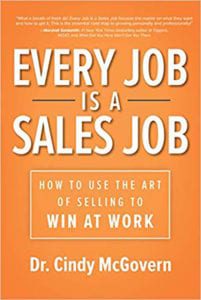
Every Job is a Sales Job: How to Use the Art of Selling to Win at Work
You’re living your passion, you have a purpose and you’re getting other people to get inspired and think of that. The old-school way of selling was, “Follow-up. Don’t let those leads get cold.” This concept of follow-up with gratitude is something I have not heard anybody else say before. I would love a story of either how you’ve done it or someone you work with has done it.
I’ll tell you one of mine. You follow up with gratitude whether you made the sale or not. What we forget is every interaction we have, even you are in a sales conversation, you’re leaving that person with an impression of you, your company, your product or your service. You want to leave them a good commercial to tell. So often, even salespeople go, “They didn’t buy from me, they’re not my customer.” That’s called a prospect and they still are. They’re going to tell your story so make sure they have a good one. One of my favorites was there was a regional manager for a company I had met at a conference. We had a wonderful conversation, but it wasn’t the right time. It was clear to me that he wasn’t buying anything. That’s fine. I sent him a handwritten note, that’s one of my things. I thanked him for his time and for the opportunity to even explore whether we can work together. I wasn’t pitching anything in the thank you. It was truly the gratitude of saying, “Thank you for giving an hour of your time to learn about your company and your passion and what you guys do. If things change, I would love to continue the conversation.”
Continue to follow up, but with gratitude. If I found something that felt appropriate for him, I would send it. At the time, he was living in Tennessee. I would see things from time to time and send it, but always from a grateful place of, “I appreciated the fact that you and I got to have a conversation.” A couple of years later, my phone rings. He says, “We’re ready.” That’s all he said. I was like, “Who’s ready? Who is this?” He said, “You’ve shown me that you practice what you preach, that you weren’t just selling me.” “No, I’m not going to sell you something you don’t need in any way shape or form.” Nor do I want the readers ever to do that. My way of following up with him, it was a no. He ended up sending me business in those couple of years. He knew other regional managers who were ready. It was creating these minions out there selling for you but in an authentic way. For me, I was who I am. I wanted to help him and send him some cool stuff about Belmont Basketball.
That analogy keeps going back to that big decision that everybody has to make of whether you think the world is a friendly safe place. Do you believe in a place of abundance? Do you believe in a scarcity mindset and have a place of fear in how you respond and act in the world? Those people who come from a place of abundance typically are the ones that share and look for things to be grateful for.
I definitely come from a place of abundance, but I didn’t always. It was a learned mindset.
What tips from Dr. Cindy in what I can do to shift into a more abundant mindset when I start being nervous?
Pause and look around. It’s that easy as that. So often, especially in sales, we get on the hamster wheel and when we’re trying to hit quota, trying to hit goals or, “I have to make this many calls” or whatever it happens to be, you get stuck in that treadmill. It’s pausing and going, “There are seven billion people on the planet. I have seven billion people to sell to. I’m not going to run out.”
This episode is an example of two people who have an abundant mindset. They could choose, if they chose not to, to view each other almost as competitors. In fact, we have a lot of similar people we know in common like our mutual friend, Judy Robinett, who has been a guest on this podcast. We’re using the same publicity firm and our books are listed together on the 47 books that sales teams should have on their shelves. You kick it off on your releases and I’m right behind you. I love that co-branding that is happening almost unplanned. It’s choreographed together that we were meant to connect and know each other. Nothing makes me happier than to promote another speaker and author who is out there helping people not have the ick feeling around sales. That is thrilling to me, to see this co-branding, co-support going on. If you’re going to say that, “Sales doesn’t have to be icky.” “How are you going to demonstrate that?” This is a classic example of us working together to promote your book. A lot of people ask me, “If sales have an icky factor and I have to get people to trust me, what can I get people to trust me?” What are your tips, Dr. Cindy?
That’s number three in the book is establishing trust. A lot of it has to do with listening. In particular, salespeople feel like they have to talk, show, present and speak. That’s not it at all. Most of my sales conversations, I do little talking. I simply ask questions. It’s Always Be Curious. That’s my ABC. Not Always Be Closing but Always Be Curious.
[bctt tweet=”Sales is simply uncovering what someone else needs and being able to find a way to solve that.” username=”John_Livesay”]
Mine is ABK, Always Be Kind.
That’s 100%. The simpatico between you and I are both doing and being able to help people out there, that piece of establishing trust is important. I know that this is something you live as well. I want them to trust me because whether they buy from me or not isn’t the outcome. My job in that sales conversation is to understand what they need and see if I have a fit for it. In order to do that, I have to ask the right questions. I have to help guide the conversation so I get enough information. It’s the diagnosis at the doctor’s office. It’s Dr. Cindy, I’m diagnosing.
I was speaking to Redfin which is a technology real estate company. They were telling me part of their challenge is with the sales team, especially those on the phone. Even though someone’s called in to ask about the potential house they want to buy, they’re afraid to ask questions. When you go to the doctor and the doctor asks, “How long has that knee been bothering you, John?” I don’t feel like that’s intrusive. Yet, sometimes salespeople feel intrusive. If your secret to building trust is to ask questions and stay curious, how do you help people who feel intrusive asking questions or they haven’t earned the right in their head? Any tips on that?
That’s one of my steps in planning. You have to plan for the conversation in a different manner. There is a huge difference between visits and meetings. Salespeople go on a lot of visits with clients or prospects, but that’s not a meeting. A meeting is a conversation to uncover what else you need that I could be servicing whether that be a current client, a growth client, a potential client or a referral source. When I talk about going into a true meeting, you have to set the pace for the meeting. If you don’t do that, then it does feel invasive. You can feel the other energies resisting you. They are racing for the pitch of, “What are you trying to push on me?” versus opening it to dialogue and starting the conversation by saying something like, “I am excited to talk to you and learn more about your business. We’re about to get real personal real fast, but whatever we talk about it’s going to stay here. Are you cool with that?”
Automatically, your likability factor is off the charts. People will trust you for that because you’ve been real and authentic. That’s what I work with people on. Don’t ask people questions like, “How’s your day going?” It’s not relative to the conversation. It doesn’t feel authentic like you’re interested. It’s a cliché question. These questions that you’re talking about require effort on the salesperson’s part to prepare. Ask smart questions that people don’t resent answering because it shows that you’ve done some homework.
This concept of setting the pace, I want to double click on that. I talk about it in terms of landing a plane. When we fly from LA to New York and they make the announcement that we’re landing in New York, no one stands up and says, “What? We’re landing?” Everyone knows we’re going to land. Salespeople need to land the plane. You know exactly how long the flight is going to be before you get on. Being a co-pilot with your buyer is important. That is exemplified by what you said about, “Let’s set the pace so we know how long this is going to be.” The conversation is going to be this long. If you decide to work together, the typical sales cycle is this long.
When you are talking about what you do for companies in this collaboration across divisions, which is what I heard you say, is important. Another guest of the show, Tim Sanders, wrote a book about this called Deal Storming. You’re doing what he’s doing, what I’m doing. It’s all about trying to help people realize that you need to work across departments and not be cycloid. Not only is the old way of selling not work anymore, but the mindset also has to change, that, “That’s not my job. I don’t care.”
There are many things I want to ask you about. The thing that jumps out about this is you talking about how kids are the best salespeople on the planet. If anyone is a parent or an uncle or aunt, they know that to be true. It reminds me of that great book a long time ago, All I Really Need to Know I Learned in Kindergarten. My sense is that kids don’t take rejection personally, but I would love to hear your thoughts on why kids are such great salespeople and what can we learn from them.

Sales As Life Skill: Your job in a sales conversation is to understand what people need and see if you have a fit for it.
They are resilient, nothing affects them. What I think is so amazing about kids is they’re clear on what they want. They have a plan. It’s like, “I see those Oreos. I want them and I am going to have them whether you tell me I can or not. There will be five of them in my belly before dinner.” The plan is clear and nothing is going to derail them. As adults, we get distracted with shiny objects, “That’s my plan. Look, a squirrel.” We start looking everywhere and we’re not focused on the goal. The kid is focused on the goal and it’s a singular goal. They are lasered in on it. That is the first thing.
The second thing is they don’t take it personally. Somewhere along the way, we get hurt by rejection What’s funny is we get told no all-day-everyday. It’s just in different ways. One of the things I do in my workshops when we start talking about no is I’ll ask everybody, “Who in here has been told no now?” Every hand goes up. “Thank God you survived. You’re fine. It’s okay.” It’s something for them to realize that it’s simply a word. It’s a response.
This brings up a topical conversation which is the premise of, “How do we not lose our identity when we get rejected?” That’s what’s devastating for many people. I talk about it in terms of, “I never reject myself just because somebody says no to me.” I used to or somebody else could have gotten me, yes. Maybe they’re right, my product isn’t as good as the other one they were going with. I just went, “What am I doing? I’m rejecting myself.” There was a Dodger’s pitcher that didn’t pitch a great game and they still managed to win. The reporter afterward says, “Do you ever lose your confidence after throwing so many bad pitches?” He said, “No, I never lose my confidence because I know who I am.” I thought, “I can’t wait to talk about that with Dr. Cindy.” That fits both of our philosophies of not only do we fall off the floor because someone said no to us, but we don’t lose our confidence. What do you think of all that?
I want to meet him. I couldn’t agree more. What I think happens is we attach our identity to the success or failure of that moment. That has nothing to do with who you are. If somebody doesn’t want to buy my services or hire me to speak, that means I’m not a fit for that circumstance. That’s okay, that’s fine. I talk about it in the book, it’s a no for now. I know you know that term, too. If I’ve done a good job of figuring out what they need, maybe that’s a referral for you. Nobody does this life alone. I talk about that in the book, too. We all help each other. We are on a similar mission, similar paths like others. I send business to other consultants because what we do is narrow and deep. We grow business, period. That’s it.
It’s the same thing with speakers. I’ll often give a good talk and someone says, “You’re great. Next year our theme is this and we never have the same speaker back. Who else should you think we should talk to? You know us well now.” That’s gold. “You need to talk to Tim Sanders, you need to talk to Dr. Cindy.” “Fantastic.” To get on that radar is the key. The other thing you talk about is how we can apply your five-step sales process to unemployment. I was laid off from Condé Nast. I felt like I lost my identity a little bit. I had to regroup, reinvent myself and back on the noose. Andrew Luck, the NFL player, decided he doesn’t want to keep playing, much to the shock of a lot of people. Michael Phelps, when he stopped swimming in the Olympics, he stumbled a little bit. Whether we choose unemployment, where we’re not going to swim in the Olympics or not going through that cycle of injury and rehab or we get laid off. What are your tips? How can we not lose our Identify and be resilient?
The first thing is creating your plan around what you are going to do. If your plan is to golf every day and do nothing, great. That’s a great plan, go do it. Have a plan regardless. That’s where people, especially unemployed or between jobs whether by choice or not, flounder a bit. You had a routine before now and it stops overnight. You were going to an office, to the field to practice and all of a sudden you wake up and go, “I don’t have to wake up at 5:30. Now, what do I do?” Your identity was tied to that. The steps are the exact same. It’s creating that plan of what you want and looking at what’s going to be next. If it is being fully retired and living an abundant life in that regard, fantastic.
I talk about this a lot with the gig economy. If you are in the gig economy, every job is a sales job 24/7. You have to be constantly looking for that next gig. That’s a planning tool. You’ve got to have a vision for that. For entrepreneurs and start-ups, it’s interesting because they have this plan of an idea. Do they have a plan of launch? Do they have a plan beyond the headlights? If I am working with start-ups, I want them to look at, “How are we going to this transition and then the next transition? If you hit that plateau, because you will, how are you going to punch through that?” I’m making sure that they have those plans for not just today, but 90 days from now or six months from now. I am a plan-a-holic, I love to plan.
That’s great sales training, make a plan and work it. You can’t work it if you don’t have it. How did you get the name of being the First Lady of Sales?
[bctt tweet=”If you are in the gig economy, every job is a sales job 24/7. ” username=”John_Livesay”]
Whoever was the first one to say this, please contact me because I don’t know where it came from. It was one of those nicknames that stuck. I remember I was giving a speech in the south and somebody said something about, “This little lady is going to speak next.” One of the people in the room goes, “She’s not some little lady. She’s the First Lady of Sales.” Someone in that room had said it again later and it snowballed. I thought, “That’s pretty good. I’ll hang on to that.”
I think you need to trademark that if you haven’t already.
I did. It’s mine.
Our clients give us the copy we need to identify their pain points and even help us brand ourselves. That is a classic example of that. When I was back talking to Anthem and I said, “What else is happening after my keynote?” “We’re going to do a role play at the end of the day. We’ll have people shout out objections and have people try to answer them.” “I’ll stay and do that part of the workshop and whisper in their ear if they get stuck.” Some of the things I said in the keynote since they’re not experienced with handling a lot of objections. When I did that, people are like, “You’re the Pitch Whisperer. Can you be in my ear in the field?” I mentioned that story to Inc. and they said, “We’re going to quote that.” The stories of origins, I can never get enough of them. Dr. Cindy, who is your ideal audience to speak in front of? Who is your ideal avatar? Who eats this up more than anybody?
While I love the salespeople, I like the support folks. I like the folks who do not see themselves as sales. I want your engineer, your underwriter, your admin team. Those are the untapped resource within your organization.
Any particular industries and insurance you mentioned, any other kind?
Insurance is where I work on quite a bit, real estate, title, property and casualty insurance. I’m getting into the medical space and law firms. Those are the areas where I do quite a bit of work. We’ve worked with manufacturing companies out of Taiwan. It’s usually where a company is in transition. They want to break through that plateau, they’ve gone through a merger or they’ve got their first round of funding. They’re ready to go to that next level. Part of what we bring into the table and what I want to empower them is to make sure everyone in their organization is telling their story of who that company is. They’re walking advertisements. When they walk out of that door at night, from 5:00 in the evening until 8:00 the next morning, they are a walking advertisement. Got to make sure they’ve got a good story.
I’ve seen this time and again even with an architecture firm I’ve worked with. The support staff knows they didn’t win a particular bid to redo a law firm. They ran into one of the partners at a bar that picked another law firm. They said, “We heard you went with someone else. Bummer.” I cringed and I said, “I know you’re a Millennial, but we might want to work on how you express that in a way that makes it feel a little more personal.” Getting everybody on the same page is a definite need to do. If you have one thought to leave our readers with, either about your consulting or your wonderful book what would it be?

Sales As Life Skill: You are a walking advertisement of your company or organization. Make sure you got a good story to tell.
My goal is that we change the way people look at sales. The one thought I’d like to leave everybody is the fact that you do sell every day, you can sell every day and you’re already successful at it. If you’re employed, you’ve sold successfully at the job interview.
You got yourself hired.
That’s what it is. I want people to realize that they can do this. It’s not this horrible thing. I want my book to help you be able to do it more effectively, to get more of what you want. You’re good at sales, hear that.
The book is called Every Job is a Sales Job: How to Use the Art of Selling to Win at Work. Who doesn’t want to win at work? Dr. Cindy, thank you so much for being here.
Thank you for having me, John. It has been a pleasure.
Important Links
- Every Job Is a Sales Job
- Orange Leaf Consulting
- Judy Robinett – Past episode
- 47 books that sales teams should have on their shelves
- Redfin
- Tim Sanders – Past episode
- Deal Storming
- All I Really Need to Know I Learned in Kindergarten
- DrCindy.com
- Better Selling Through Storytelling Method Online Course
Wanna Host Your Own Podcast?
Click here to see how my friends at Podetize can help
Purchase John’s new book
John Livesay, The Pitch Whisperer
Share The Show
Did you enjoy the show? I’d love it if you subscribed today and left us a 5-star review!
- Click this link
- Click on the ‘Subscribe’ button below the artwork
- Go to the ‘Ratings and Reviews’ section
- Click on ‘Write a Review’
Love the show? Subscribe, rate, review, and share!
Join The Successful Pitch community today:
- JohnLivesay.com
- John Livesay Facebook
- John Livesay Twitter
- John Livesay LinkedIn
- John Livesay YouTube
Croissants Vs. Bagels: Building Meaningful Relationships with Robbie Samuels
Posted by John Livesay in podcast | 0 comments

Episode Summary
Interacting with others in different situations is not as easy as it seems because people vary. Robbie Samuels, a relationship-based business strategist, introduces us to the different ways people interact at events through his bestselling book called Croissants Vs. Bagels. Recognized as a “networking expert” by Inc., Harvard Business Review Ascend, and Lifehacker, Robbie redefines networking and encourages people to stop wasting their time networking and start building meaningful relationships instead. He discusses the three common complaints people have about networking, the downside of being a unicorn, and how to handle bagels versus croissants.
—
Listen To The Episode Here
Croissants Vs. Bagels: Building Meaningful Relationships with Robbie Samuels
Our guest is Robbie Samuels, who’s a keynote speaker and relationship-based business strategist. He’s been recognized as a networking expert by no less than Harvard Business Review and Lifehacker. He’s the author of the bestselling book, Croissants vs. Bagels: Strategic, Effective and Inclusive Networking at Conferences, and has been profiled in the Harvard Business Review, Forbes and Fast Company. His clients include associations in Corporate America like Marriott and General Assembly. He’s been featured in several books, one including Stand Out: How to Find Your Breakthrough Idea and Build a Following Around It by our mutual friend and former guest, Dorie Clark. He has guest lectured at many educational institutions including Harvard. He is the host of his own podcast called On the Schmooze, which features his network strategies. I’ve been lucky enough to be a guest on that. I couldn’t wait to have him on the show. Welcome, Robbie.
Thank you so much for having me, John.
I always like to ask my guest to take us back to their own story of origins and yours is going to be interesting. Were you an outgoing kid or were you shy? How did you get into being this expert in helping people connect and become networking?
I have never been accused of being a wallflower. I am very much an outgoing extrovert. I get energy from being around people. The way I got into this is that I was running a meetup group that grew to thousands of members and hosted hundreds of events. About a year in, I brought the regulars out for coffee and said, “What do you love about this space?” They told me how welcoming we were. They love coming back. They love the people they were meeting. I said, “I need you to be a clique that’s not cliquey.” They were like, “What does that mean?” I said, “Come fifteen minutes early. Greet people who arrive, help hand out name tags. We’ll do all those things. Wander the room and make sure people are comfortable.” That’s when I got a lot of deer in headlights because the people I was talking to, 70% to 80% of them were shy and/or introverted. It did not come naturally to them to do the thing that I was asking of them. Even though they loved the idea, it made them feel nervous. That’s where I did some one-on-one coaching. It led to me doing a workshop and that’s several years ago. That’s where this all grew out of, this idea of how do you create leadership qualities from folks that didn’t think they had it in them to have a host of mindset.
We want to be a clique but not be cliquey. I instantly thought of clicking on something. I bet you’re talking about cliques that used to form in high school, for example. You were either a jock or you were this or you’re that. What’s the inspiration for writing the book? Where did you get that great title?
[bctt tweet=”Think of yourself as being resource rich.” username=”John_Livesay”]
Croissants vs. Bagels is a concept of what I’ve been speaking on since almost the beginning. I had tested the idea through that group and Dorie Clark wrote about it in Stand Out. That was the piece that stood out for her. People started to ask her. When she would present on her books, she would have a slide about me, which she still does this. People would come up to her and say, “Does Robbie have a book?” I didn’t have a book. I’m also a speaker. It’s like a necessary requirement to have a book. I knew I had content, but I being an extrovert, didn’t find it easy to have the discipline to write down everything, sit quietly and do all of that.
Finally, I set a deadline. I had it done in July 2017. I was struggling with the title because that’s an important piece of this. I talked to Dorie and she said, “You have to call it Croissants vs. Bagels.” I was excited about the idea because it’s a concept that’s sticky. In case people reading are now curious, the bagels are those tight networking circles that are impossible to break into, those shoulder-to-shoulder huddle that we hate seeing at conferences and events. If you open up your body language, if you’re in that circle and you make space for others to join, you’re creating a croissant and it’s the croissants that we want to look for.
They’re a little softer, buttery, French, sophisticated and all that good stuff. A lot of people have a negative connotation around the word networking because they perceive it to be either a waste of time or a bunch of people pushing business cards on each other. How do you redefine it?
It’s interesting that you say that because there was a study by Northwestern and Harvard that determined that people do find it icky. It makes them feel dirty. The networking that study was testing was people who were thinking about it as a transactional piece like, “What can I get?” They were going in with a need. They were trying to get things. The people in that study who did not experience it in an icky factor where the senior executives because when they show up, they do not need things. They’re showing up to offer. They have all kinds of resources, referrals, connections, introductions, mentorship and budgets. They’re showing up resource-rich. I believe all of us can think of ourselves as resource-rich. We all have connections and opportunities to support each other. Even if you’re looking for a job, which is one of those moments when you do have a distinct need.
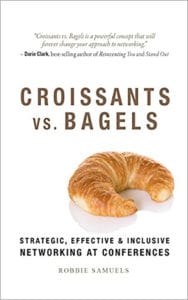
Croissants Vs. Bagels: Strategic, Effective, and Inclusive Networking at Conferences
It’s about finding the right job and the right fit. For the right hiring manager, you’re a dream. It’s about having that in you and thinking, “What’s my experience, passion and how do I present myself?” That is about having a solid pitch, like saying, “I need a job in nonprofit, rings no bells.” My database comes back to null. If you were clear with me about who you were, what your passions were, I could think of people to introduce you to. It’s a win-win for everyone. For me, it’s about relationship building. I want people to stop wasting their time networking and start building great relationships. Most of the time, people aren’t thinking about the real value of being present in a room with others.
Your book, Croissants vs. Bagels, you talk about three common complaints and nobody loves three problems and three solutions more than I do. Let’s attack that from that. The first complaint is meeting strangers is scary. Your solution to that is?
First, you should remember that your best friends started out as strangers. It’s a good reminder. If you think about it, you’ve already had some practice doing this. I’m also doing some research ahead of time so you know who to keep an eye out for what you might have in common with people, conversation starters, things that you can congratulate people on, compliment people on because you know a little bit what’s going on in their life. It makes them less scary, less of a stranger and more of someone that you haven’t met yet.
The second one, which is a big one for most people, is networking is exhausting. How do you help people not feel exhausted or even anticipate the exhaustion so that they avoid it?
This is definitely true for introverts. I could go for days meeting people. It doesn’t mean I’m effective. I might be hugging and air-kissing the whole room and not necessarily making the right connections. For introverts who need to think about how to manage their time and their energy in particular, it’s about knowing what you need to do in the time that you have. If I could tell an introvert, “If you dedicated an hour at the event, had all of your needs met, you did everything you need to do and you can go home after an hour, head held high, not feel like you’re slinking away, would you want to do that?” They’re like, “Yes.” I’m like, “There are a few hours with a prep that you’re going to do before you even get to the event. In that time that you do have the energy that you have, you’re super present. You know exactly who you want to talk to. You know what you’re going to talk about. That you’re not going to show up and hide in the corner. That hour is wasted and you could have stayed home and messaged the people on Facebook. If you don’t talk to people and you write them a message afterward, it’s not a follow-up message, it’s an email.
I love that you give people an exit strategy and that requires some preparation. People, especially if you’re introverted, would rather spend three hours preparing for who they want to talk to and meet and what they’re going to say. That one hour is limited and you can go, “I can survive anything for an hour.” The other big one is people think it’s a waste of time. You have a whole thing about let’s be strategic, which allows us to be effective. You also put in the word inclusive. How does that work so that we don’t waste time?
[bctt tweet=”There is a difference between collecting business cards vs. building relationships.” username=”John_Livesay”]
A lot of times when we head to a conference, which is one of the reasons I talked about that in the book is that we have the experience of going to conferences and organizing all the logistics to get there, travel, hotel, booking the ticket for the actual event. We’re not necessarily clear on the intentions we have around the event. In some way we’re going for the content, that’s what’s driving us to go. You can get content from the comfort and safety of your home. You don’t have to venture across the country to go meet people. If you’re going to do that, leave your house and go across the country, you should be there for connections, not content.
The wasting of our time is when we get to the end of a long weekend, if we’re a shy person, we may not have talked to many people and thought, “This was wasting my time. I’m exhausted.” If we’re outgoing, maybe we’d collect a stack of business cards, but we didn’t prioritize one over the other. They’re all like in a stack, which means they’re not going to be easy to follow-up with, which means we’re probably not going to follow-up, which means we’re thinking, “Whatever. This has wasted my time.” A lot of this is clear. Before you even get to the event, write your follow-up email draft. You’re not sending this to anyone. You are getting clear on why this event, in particular, out of all the events you could’ve gone to, who you’re trying to meet? What inspiration you’re looking for? What information you’re looking for? What can you offer this space?
What is the value that you’re bringing to the space? Write yourself a little draft now you’re going to personalize it when you get home. The other thing I suggest doing is on your calendar putting an hour after the event when you’re going to do the follow-up messages. If you have the draft and you’ve scheduled an hour, within two days of coming back from your event. During the event, you track the cards that were a higher priority conversation, maybe a little more in-depth, a little more engaged. Sometimes we’re standing in those tight bagels circles and someone starts handing out their card and everyone starts handing them out. It feels like you’re in a poker game.
Those shouldn’t have equal weight to the conversation you had for twenty minutes over lunch. I like to because we’re in Western culture, turn the corner of the cards that I want to keep track of. I always carry a pen. I like to jot a little note about the conversation. When I get home, I drop all the cards on the table, the ones that turn corners stand out to me. I have my draft. I have my time set aside. I’m likely to send the messages I need to. Everybody gets a LinkedIn invitation. Those small number of people will get a personalized email message as well. It won’t feel like a waste of time if we have some strategy, thoughtfulness and an intention before we even get there.
I love how you’re pre-loading and post-loading the whole concept. Creating a draft is so much easier to edit than starting from scratch that helps the momentum. If it doesn’t get scheduled, it doesn’t get done. The need to put that hour in a day or two after the event is crucial. One of your quotes in here that’s one of my favorites is “There’s a difference between collecting business cards and building relationships.” Can you give us a story of someone that you met at a convention that turned into a relationship and that paid off for both of you?

Building Meaningful Relationships: Being inclusive and being strategic are tied together.
I was at a big event in the Boston area where I live. It invited a lot of different sectors. It wasn’t nonprofit, business, government or education, it was all of them, which is one of the most difficult spaces to navigate. You’re trying to find your people. We were all there because we love the city. We were a part of this big campaign they were doing. I first told people, at the time I was working in nonprofit so people would turn and point, “No, you should meet so and so.” I’d say, “I do advocacy work.” They would point me to someone who does advocacy work. I’d say, “I do this kind of work.”
Someone said, “You should meet, she’s not here, let me tweet at her.” This guy tweets an introduction to this other woman, who I run into at an event months later, and me. That’s several years ago. We have done events together. She’s hired me. I’ve supported her work. She supported my work. What’s amazing is she wasn’t even in the room. All of that transpired because I was super clear on the people I was trying to meet and use part of that big picture, who I was looking for and assumed that everybody I was talking to was a connector. In some ways that’s true, some people are, but I knew that they knew at least one other person. I wanted an introduction to another person. I hope that I would leapfrog through the event to meet the people I truly needed to. That connection has absolutely paid off.
You talk about being effective once you already have your strategy in mind, but that strategy will only get us so far. What do you mean by that?
I also realized that I might not have talked about inclusion when you asked that question. I want to dovetail into that as well because being inclusive and being strategic are tied together. If you show up at the event and you do walk up to people, but the first thing out of your mouth is something off-putting, makes them feel like in other. Here’s an example that we’ve probably all heard at least if not said, “You’re tall. How tall are you?” If you’re over twelve years old, you should probably stop saying that. It could be about hair texture, skin color, heights, accents, names, things that people get commented on all day, every day. You’re not unique for having pointed out the obvious. That calling out differences is the thing that makes people feel like, “Do I belong here? I don’t feel like I fit. Am I welcome here?” It’s not doing you any good because they may have been a great connection, but you now have fallen into the trap of what everyone always says to them. They’re not going to think highly of you or want to stay engaged.
Inclusion is a strategy, which is why make the effort of going and talking to people and saying the thing that is off-putting? Calm that inner voice and as you get to know each other, I always think at some point maybe I’ll be like trading grandma recipes. I’ll talk to them about the thing that I had noticed or they’ll also be willing to ask me as well. We don’t want to lead with the obvious difference, but instead focusing on ways to engage people and welcome them into the space. That’s the part of the strategy and also the strategy of having your email draft ahead of time, talking to hosts and organizers, and asking for introductions. These are all things, getting there early so that you’re one of the people that everyone meets as they come.
[bctt tweet=”There is a difference between collecting business cards versus building relationships.” username=”John_Livesay”]
It can be a strategy taking on a host mindset so that as you greet people, I always think at a conference in the morning when they have coffee out. Everyone doesn’t know each other yet. They’re registered. There’s a cocktail table where you can lean with your coffee. I always stand at an empty table with my coffee. I look around and anybody who comes by, I wave them over. When I see someone trying to juggle their muffin and their coffee, I say, “Come here. You set it down right here.” Having that host’s mentality gives me an opportunity to talk to people that maybe I wouldn’t have otherwise. I do that at lunchtime. I’ll start a table and waving people over from the buffet. They don’t seem like they have a place to go. For me, it means that I’m going to have interesting conversations that I may not have had the opportunity to do so.
I love what you said about to generate the host table. I would have to say, even for myself, when I’m at those events, I tend to look for a seat that’s open at a table that already has people versus I’m going to sit by myself and try to get people to join me. If nobody does, I feel like a loser. You have a different mindset. You’re like, “No, start your own table, be a host and start inviting people over.”
If you are nervous and wondering where to be in, there are people who are even more nervous is my thought. To me, I also keep an eye out for the demographic outliers as well as the physical outliers. The physical outliers are the wallflowers. If it’s your first time attending the event, I don’t recommend going and talking to wallflowers because even though it may be a great conversation, it’s going to be a super awkward ending because they don’t know anyone and you don’t know anyone. You might be like, “John, it was nice talking to you. I’m going to go to the restroom.” You’re like, “Great talking to you too. That’s a good idea. I’ll join you.” You’re like, “I was trying to get out of this conversation.” If you’re new, go and find the openings in the large groups. For someone who’s been going a few times, it’s a nice thing to go over to the people on the sides of the room and bring them in. Similarly demographic outliers, someone who’s much older or much younger, people of color in mostly white space like going and engage the person who is visibly a little different and helping them feel engaged, not othered is a nice way to continue that host mindset.
Do you have any other graceful exit strategies besides, “Excuse me, I have to go get a drink or go to the bathroom?”
My favorite way to end a conversation is dependent on whether I’m new there or I know a lot of people. If I’m new I’ll say, “I don’t know that many people here. Is there anyone you think I should meet?” Usually, there’s a little bit of brainstorming because they know a little bit about me from the conversation we’ve had. I’ll be like, “That sounds great. Would you make an introduction? Would you introduce me?” Generally, that’s like, “I see them over there.” They walk me over and I get the introduction. I thank them. They can either stay with the conversation or they mostly wander off to do their own thing. Now I had been holding my hand over to that space. I am not left to stand by myself.

Building Meaningful Relationships: It’s exhausting to be a unicorn because you get all these pestering curious questions that make you feel like you’re under a magnifying glass.
The other thing I will tell you, John, is to make a note of how many people are in the circle with you. If there’s a three or four or more and you want to step away, you murmur something. You’re like, “I’m going to go,” you’re going to tap out. You’re like, “Let the person next to you know.” If there are three and one person leaves and it’s not you, now there’s two. When there’s two, you have to think are you inviting someone over? Are you coming up with some elaborate thing? Are you introducing them? Are they introducing you? Part of this is you leave before it’s time. You leave a conversation while it’s still got a lot of energy and makes them want to come and talk to you again. That’s another piece of this.
I have that philosophy with parties too, do not be the last person there when the host is saying, “We’re out of booze.” You talk about being inclusive and that there’s a downside to being a unicorn. Can you first define what a unicorn is? What is the downside?
You’ve heard probably the phrase “Always be yourself unless you can be a unicorn and always be a unicorn.” If you’re picturing what would a day as a unicorn be like? Is it rainbows and sunny skies? It’s probably more like, “A unicorn, I’ve never met a unicorn. Can I touch your?” All these intrusive, curious questions. A unicorn in this example are people who have that difference. It’s visible. They’re in a room that others are coming up to them and be like, “Can I touch your, can I ask you about this? I like your accent.” It can be exciting to be a unicorn, but sometimes it’s exhausting to be a unicorn because you get all these pestering curious questions that make you feel like you’re under a magnifying glass. In some ways, people are like, “I want to examine you.” That’s the downside. We’ve all experienced this to some degree or another. Some of us look like the people in the room more often than not. We also have had moments of being like, “I’m definitely the only blank here. How am I going to find people like me?”
We should call upon that to remind ourselves what it’s like to be in that space. That energy can be used to create a space where people can show up and bring more of their full selves. To clarify this for your audience, it’s not about the difference. A compliment is about something that they have chosen versus who they are. If someone has sunglasses on, a scarf, a piece of jewelry or an awesome jacket, those are compliments saying something nice. A guy has a tie that matches his shirt like a subtle connection. I love that. My dad taught me if you pick up a subtle color and a tie to match this color. I’m like, “You’ve got the style. Where do you shop?” That’s a compliment. If I said to the same guy, “You’re tall. How tall are you?” It’s not a compliment. It’s an observation and one they’ve heard before.
When you’re talking about fashion, I used to sell advertising for W Magazine, a fashion magazine. There was a phrase we had about the readers. It was, “Everyone puts on clothes, but not everyone gets dressed.” The people who read this magazine get dressed. That’s a fun way to compliment somebody who’s looking dapper, whether they’re male or female and say, “You got dressed, didn’t you?” I know you referenced that line and that’s a fun, unique way to connect with someone. Since you’re talking about your dad and you are a dad, do you have any tips for parents who might find that their child is a little introverted in school or in social situations?
[bctt tweet=”We don’t have to be extraordinarily outgoing or an extrovert to succeed.” username=”John_Livesay”]
It’s about finding those strength and working towards that. We put a lot of pressure on ourselves, our children and on each other to be something that we may not. Maybe they’re not the most outgoing kid, but what do they enjoy? If they enjoy it, they’ll put energy into it. They may find leadership doing that thing which they enjoy. Leadership is something that they will take the rest of their life. They don’t have to be extraordinarily outgoing or an extrovert to succeed. There are a ton of examples of people who are quite introverted that have been enormously huge impacts on our lives and our culture. Rather than trying to make them into something that they’re not, that they feel bad about, you can perform being more outgoing. A lot of people have adapted and learn how to do that, but it’s exhausting and not very fulfilling. Instead, guide them towards the things in which they feel good about, they can excel at and help them find leadership opportunities within that space, which will give them the confidence they need to make great decisions going on in life. That’s what I hope to do for my kids is hear them and listen to what they say as opposed to trying to make them the image in which I have for them. That’s difficult as a parent, but I think it’s a good idea to have that goal.
What I find interesting is when you try to force yourself or a child to be something you’re not is exhausting. If you do the old way of networking, that’s exhausting. If you are your authentic self, you’re energized, whether you’re in a networking situation or interacting with anybody. That’s a nice little barometer to see if you’re in the zone or not. You give these great keynotes about the art of the schmooze. Who’s your favorite audience to give this to?
My favorite audience is women at a Women’s Leadership Summit. I’ve gotten invited. I feel privileged to have been invited into that space a few times, maybe a half dozen times. It’s such a pleasure. The work that I do and how I speak about it resonates. My ideal coaching clients are entrepreneurial women in their 50s and 60s. It resonates with the corporate audience as well. Even using the word exhausted, that’s definitely a word women would use more than men for how the experience is. I’ll also make jokes and one of my earliest podcast episodes and blog posts was titled When Will Women Win the Right to Pockets?. You haven’t ever had to think about pockets then that’s a privilege in itself because women struggle with this all the time when they’re trying to get dressed in a nice way, they often have to sacrifice practical things like pockets.
The fact that I comment on that, have strategies for that, and I say things like, “It’s important to wear layers because the room is going to be freezing. The men are wearing suit coats.” The temperature is set for them. You’re in a sleeveless dress. You might want to bring something. They’re so appreciative that I’m naming that reality. I’m giving them tangible things that they can take action on. It’s not asking them to be anything other than who they are that I’m not asking them to reach outside of that. Now it’s outside their comfort zone to some degree to do some of this, but I’m not asking them to be someone else.
How do you develop such empathy for women in their 50s and 60s?

Building Meaningful Relationships: We need to be leveraging, reviewing, and rekindling connections with people that we’ve met.
I am 45 so I am closer to that than I look perhaps. I’m also an out trans guy so I would socialize as a girl and into being a woman. I have a better understanding of that space. It also comes with the empathy I have around introverts and shy people. I’ve never been those things and yet I can still put myself in that place and appreciate where they’re coming from. I learned a lot about being a leader is often about taking a step back. I learned that by having great people around me that I wanted to listen to. If I didn’t make space for them, they wouldn’t be heard. For me, it’s been a real practice.
The reason I love working with these women is that they’re motivated. They’re at a time in their life where they want more. They’re ready to take their business to the next level, but they also have a lot of trepidation about how to do it and feel like they’re starting over. They’re a novice when they’ve got 30 plus years of experience in the world. They forget about that. They, in particular, forget that they have a professional network that will support them in whatever the next level or transition of their business is. That’s my goal is relationship-based business strategies. They do not have to start from scratch. This is not scientific but 80% of who you need to know to be successful, I believe you’ve already met.
That’s such an a-ha moment for people. First of all, it keeps it from being so overwhelming. You think, “How is it that I’ve already met this person? I haven’t thought of asking him the right question or who else they might know?” All those things take it from this overwhelming, exhausting mindset into, “I have to think about who I’ve already met.” That’s a very different proposition.
It changes what networking is because we usually think of networking as having to meet new people. That’s only about 20% of what we needed to be doing. We need to be leveraging, reviewing and rekindling connections with people that we’ve met. It could be someone from five and ten years ago that you used to work with. If you would be happy to hear from them, you should be reaching out to them. If you’d be like, “It’d be so cool to hear from them again.” I do exercises where I have my clients brainstorm twenty names of those kinds of people without any connection to the work they’re doing or how it might benefit them.
Get in the habit of reconnecting because when you do make a great connection, you’ll already have the systems in place to schedule it. You’ll know how to do a Zoom call. You might have scheduling software to make it super easy. You’ll have the mindset to say, “Let’s follow up and make this happen.” When you go to a conference, it’s more likely you’ll follow up when you’re at a meeting when you meet someone at a restaurant. It doesn’t matter where you are. You have some of the habits around that set in place. It is habit forming. We have to get into the practice of our lives.
If you have one last tip you want to leave us with about how to handle bagels versus croissants, what would it be?
When you come into the room, look for the croissants. If you haven’t done the prep, if you haven’t prewritten your email follow up message and you haven’t thought about this space, take that as the moment to do it. If you remember to look for the croissants that will have a networking moment happen a little bit of strategy session with yourself, “Why am I here? Who do I want to meet?” Even that momentary pause before you go into the room can absolutely set some intentions that will create great outcomes. I look for the croissants.
What a great takeaway message. It’s visual, it’s sticky and it reminds you to be one yourself the next time you’re at an event and help other people. Robbie, thanks so much for being a guest on the show. The book is Croissants vs. Bagels. If you want to learn more about Robbie, go to his website, RobbieSamuels.com. Thanks again, Robbie.
Thank you.
Links Mentioned:
- Croissants vs. Bagels: Strategic, Effective and Inclusive Networking at Conferences
- Stand Out: How to Find Your Breakthrough Idea and Build a Following Around It
- Dorie Clark – Past episode
- On the Schmooze
- When Will Women Win the Right to Pockets? – Past episode of On the Schmooze
- RobbieSamuels.com
- www.RobbieSamuels.com/TSP
- https://www.Amazon.com/Croissants-vs-Bagels-Networking-Conferences-ebook/dp/B0746TDZRY/ref=sr_1_fkmrnull_1?keywords=croissants+vs+bagels&qid=1558121830&s=gateway&sr=8-1-fkmrnull
Wanna Host Your Own Podcast?
Click here to see how my friends at Brandcasting You can help
Get your FREE Sneak Peek of John’s new book Better Selling Through Storytelling
John Livesay, The Pitch Whisperer
Share The Show
Did you enjoy the show? I’d love it if you subscribed today and left us a 5-star review!
-
- Click this link
- Click on the ‘Subscribe’ button below the artwork
- Go to the ‘Ratings and Reviews’ section
- Click on ‘Write a Review’