
Build Your Tribe with Philip Folsom
Posted by John Livesay in podcast | 0 comments
Episode Summary:
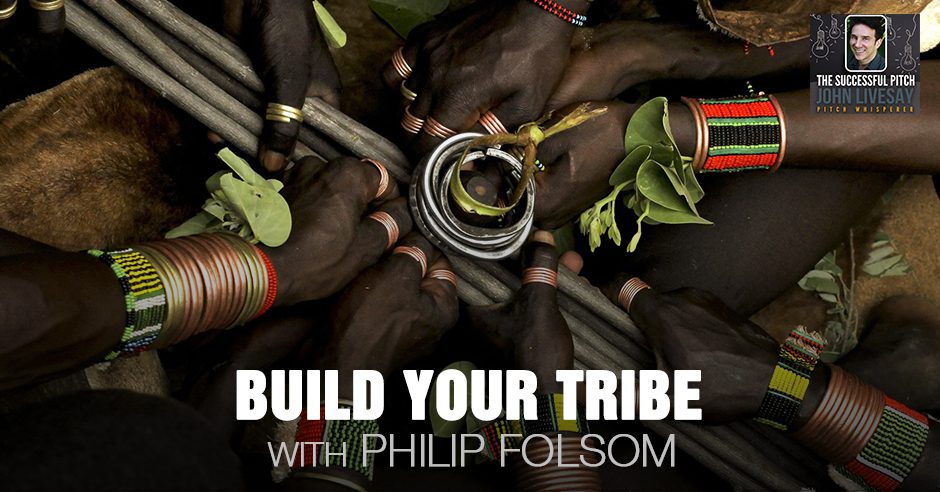
It is not anymore about the team, it is now about the tribe. Industry leader in team building and leadership Philip Folsom shares how to build your tribe in business and in life. Moving away from the concept of a team, a tribe has become the people who are beyond acquaintances or transactional business partners. Philip talks about how to build a legitimate relationship-based collaborative connection. He gives great insights into creating an environment where people feel safe and healthy, which ultimately increases productivity and loyalty. Making a play on words, he also puts forward the notion that to decide is connected to suicide and homicide where you are literally killing off other ideas. Philip goes deep into all of this as he lays down in metaphors on why we need better relationships in our businesses.
—
Listen To The Episode Here
Build Your Tribe with Philip Folsom
My guest is Philip Folsom. He’s gone into the dark woods. What he learned there is that individuals and organizations can do and be anything if two things are in place. One, a model of success and two, the tools to reach it. He’s got game-changing tools that have improved over 500,000 people’s lives in the last many years through his work. He’s acknowledged he’s an industry leader in team building and leadership, especially the Los Angeles High Ropes Challenge courses where he has a Professional Development Adventure Program. He came from Washington State. He has a great story he’s going to share about being raised by a single mom and joining the Army at seventeen. His own hero’s journey of hitting rock bottom and coming back up and helping everyone who works with him and encounters him heal. Philip, welcome to the show.
Thank you, John. It’s a pleasure and an honor being here.
I like to ask my guests to take us back as far as they want to the story of origin. Did you always know you loved animals? Tell us about your journey. You can you can start when you joined the Army or you can start earlier than that. I want to give people a timeline of what happened to you that caused you to become an expert in this.
Part of the theme when we talk about the hero’s journey or any type of narrative related to that is that it’s only by going into the shadow that we are able to excavate our gold. That’s a vital component of my story and all of ours. I grew up in classic pre-trauma environments of some neglect and some poverty. It was pretty abject challenges when I was growing up. My dad left early. I went into the Army at seventeen. Like a lot of us, I didn’t go in out of patriotism. I went in there as a means of escaping the situation I was in. In the Army, I had some acute trauma piled on top of chronic trauma. When I got out it was brought to my attention that I had some challenges that I had to deal with. I dropped out of grad school and went on to as a contemporary Vision Quest experience where I studied meditation. I studied equestrian therapy and Outward Bound adventure programming and archery.
What I discovered about myself was that there was healing to be done. It was a choice that became available to me. One of the big themes is the choices of the function of awareness. A lot of people simply aren’t realizing that they have the opportunity to heal and expand and grow and connect and claim the title of hero of their own story. I was always a minor character. In fact, inside of me, there still is a little kid who is marginalized, unsuccessful and terrified of being revealed. I have to acknowledge him. I keep him right next to me. I don’t let him get behind me. I don’t let him blindside me and undermine me. I want to have that little rat sitting right next to me so I can keep an eye on him. I can choose to have him sit down. I get to be the full king of my kingdom now instead of the minor Prince character.
[bctt tweet=”Going beyond team building is tribe building. ” username=”John_Livesay”]
Let’s talk a little bit about the equestrian therapy and how that tie into also what you’re doing with the SPARTA Project?
Equestrian therapy is incredibly powerful. My horse guru is Cheyenne Price. She’s an amazing six-foot blonde horse guru. She has the ability to utilize her animals and tap directly into whatever secret stuff is going on. Horses are prey, which is different than us. We are predators. We have eyes in the front and we are designed for acquisition. One of the secrets of success is to be able to turn whatever it is that we want to have a shift in our life into an acquisition story instead of an avoidant story. Predators don’t like to lose anything including weight. Instead of losing weight, I want to gain fitness. All of a sudden, this reticulate activating system gets triggered and we look for opportunities to gain fitness. The horses are the opposite. They are prey animals, so they move away from energy. It’s a different dynamic. If you can learn how that communication system works, all of a sudden it allows us this tremendous desktop experience of being able to manage our emotions and connect with those things. They see right through you.
The moment you walk into the round pen, here’s a big naked 2,000-pound animal that knows exactly what’s going on with us energetically. We’ve stuffed down our animal nature to the point where we are in our head a lot of the time. Horses can’t afford to do that and they don’t have that available. They know if you’re a bully. They know if you’re an impostor. When I trump in with all of my masculinity and my boots and whatnot, they call me immediately on it like, “You’re not all that.” Come down to your real level and then we can engage with a conversation and a relationship that’s healthy. Once you’ve earned that respect and trust, now we can engage with some different forms of more robust conflict. The horses are one of the animals I use. The other one are wolves. That’s probably not been my favorite thing over the last couple of years.
In fact, your tagline is, “The time of the lone wolf is over.” If you wouldn’t mind sharing why does a lone wolf cry? How does that relate to wolves never biting each other as dogs do? That’s a fascinating insight you have.
We have to start with the reality that we are pack animals. In addition to being predators, we’re pack animal. We have things called mirror neurons, which is this synaptic, legitimate neuron-type that we have that gets triggered when we are connected with another member of our tribe. It releases serotonin. It also is the source of empathy and compassion. We need each other. We need it at a cellular level if we’re going to feel good about ourselves. Wolves are the same. Wolves are also a pack animal. They’re predators. They have mirror neurons and so do horses. What’s happened in our society is that instead of being in our kinship-based tribal systems, we have gotten successful that we’re living in these giant mega tribes. We have moved out of that sweet spot of about 50 to 75 people that we can maintain deep relationships with. We’ve shifted from being personal, connected and collaborative, vision, mission, value-sharing partners to these impersonal relationships we move around with and it’s anxiety-producing for us.

Build Your Tribe: One of the secrets of success is to be able to turn whatever it is that we want to have a shift in our life into an acquisition story instead of an avoidant story.
What happens is when we’re looking at the big drivers of wellness, health and success, it comes down to relationships. This has been studied scientifically from not only longevity but in your specific field of sales and business success. It’s all about relationships and getting those skills. The wolves, why I use them are that they are designed to hunt big game. We are also designed to hunt big game. Except for our big game now and we start looking at our lives is the game of doing something that provides meaning, purpose, service and something bigger than us. If we are going to be able to move towards those big goals in our life, we need other people. We need them beyond an acquaintance or a transactional business partner, but a legitimate relationship-based collaborative connection.
It always comes down to the team and over and over. No matter how big or small the company is, it’s how well does that team get along and respect each other.
Beyond team is a tribe. The tribe is people who are not only connected at a mission or accomplishment level and a visual level which is here’s our job. Beyond the job is what’s the why? What’s the meaning? Why does this exist? Why am I being willing to share and donate eight hours of my day to this cause? It needs to be that important. That’s a tribe.
Part of the way the wolves operate as a pack in their particular tribe is they may fight, but they don’t ever bite each other. Can you explain the difference of how dogs fight versus wolves and how that impacts us in our business life?
When we need somebody, if you have a partner that you need to be able to show up and deliver for you to sell a house or in the case of SpaceX to be able to get to Mars. You’re talking big game stuff. You need those people to do their job. You can’t afford to have them be compromised in any way, which means instead of vague, undermining, politicking gossip, competing with those people. You want to now be reciprocal and be the best cheerleader those people you can because they are an extension of yourself. When we’re talking about tribal or partnership relationships, you want that partner to be absolutely at their sharpest, their most powerful and they’re most resilient. You can’t afford to undermine them. In the case of wolves, they can’t afford to bite each other. It takes ten wolves to pull down an elk.
[bctt tweet=”Choice is a function of awareness.” username=”John_Livesay”]
If they compromise the strength of the pack by infighting, they all starve. This is a hard-wired behavior amongst the wolves because they have that taboo against biting each other. It’s a survival mechanism. All of a sudden, they have the opportunity to express and discharge conflict almost nonstop. They squabble. They talk. They snarl. They posture. They also play because once they have discharged any of that immediate conflict that they’re having, then they get to be completely clean with each other. They run off and play and engage with whatever they’re doing without having that weird, toxic, stuffed down experience that we have when we can’t express our feelings. Sigmund Freud calls that the Theory of Hydraulics, “Whatever we shove down, it’s coming out somewhere else.”
I’ve heard the term that it’s leaking out the anxiety or the stress. What you’re doing with the SPARTA Project, it’s a non-profit for veterans and emergency first responders who are dealing with post-traumatic stress. How does your work with the wolves if at all impact that? What are you doing to help people overcome that?
We are running a cohort. It’s a five-day residential free program for veterans and first responders. This is an all-female cohort starting. We’re proud to be running this program. We run off donations. If you or somebody else you know is interested in giving back to a lean, non-profit, TheSPARTAProject.org is the name of that. We use what’s called a parallel process, which means we are going through this journey along with the veterans because all the good facilitators, all the good storytellers, yourself included. You’ve come from a place where you had to go on that journey. You had to go into the woods and you discovered that the only way out is through. We have to get all the way through the story. We have to resolve.
It’s different than the medical model where there’s a smart person telling you how you should live your life or how you should refill your strategic objectives at work. Good people are co-creators. You mentioned that even when you’re talking about engaging with your clients in a co-creation process. It’s the difference between a doctor and a midwife. The doctor gets to deliver the baby. The mothers who are reading this blog, you know the doctor didn’t deliver the baby. You delivered the baby. The truth is that we’re here to facilitate the creation of whatever that project or healing is for our clients and where they are to be. Sometimes a cheerleader, sometimes its support, sometimes it’s an accountability partner.
That’s what we’re doing with the veterans and first responders are we’re going through this journey with them because we’ve been through the dark woods. We know what’s in there. We know the road that will get us out. The wolves heal each other. Here’s another shout out to a great lean nonprofit, ApexProtectionProject.org. They rescue and rehabilitate wolves and wolf dogs that have been abused, mistreated and neglected. They bring them out to their sanctuary. They slowly integrate them into their healthy pack and the pack heals the wolves. This is how we as humans are going to heal each other are that we need to build the relationships. We need to be able to discharge our shame. We need to be able to go through and feel the pain and get honest with each other. This is true at a relationship level and also at an organizational level. When you’re looking at all the big societal challenges that are happening in our industries, at some point we’re going to have to go all the way through this piece and get the healing done.

Build Your Tribe: In our own journeys, we had to go into the woods and discover that the only way out is through.
The other thing that is surprising about you because you present an extremely alpha male. The way you dress and the fact that you’re outdoors with animals and wolves and horses. You’ve got the hat. You’ve got the whole Indiana Jones vibe going on. Yet you also spent several years as a professional ballet dancer. I’m fascinated to hear that story. How did you go from being in the Army and hitting rock bottom? Ballet is traditionally something that people start very young or something that typically only wealthy people are involved with. It’s a cultural artsy niche. How did that come about?
If I have received any divine blessings, one of them is the ability to go on weird journeys that for some reason people are not allowed to do. I can thank my strange parents for that. I grew up on a commune. I grew up pretty alternative and maybe that little chunk of experience allowed me to go on some weird journeys that are different than other people. Thanks, mom, thanks dad for that. One of them was I got out of the military and I had to take a PE class in community college. I was going through all of my challenges and trying to reintegrate. I was trying to do things as far off of the military as I could. I was looking for balance. The military is highly structured. It’s hyper-masculine. Here was an opportunity to get a PE credit and do something that was much more expressive and much softer. I took a ballet class in a community college. I enjoyed it. It was fun. The teacher said, “I’d be willing to give you some free classes if you come down and do some of the partnering work.”
I was out of the Army. I was twenty years old and strong. It sounded like fun to me. I was taking classes one evening and a bunch of strangers showed up in the class that I hadn’t seen before. I was taking classes with kids. It turned out it was an audition class for the Spokane Ballet Company. There weren’t any tall guys and the prima ballerina of the Spokane Ballet at the time was Rachel Ferrelli, a big six-foot Italian lady. The ballet director said, “Have you ever wanted to be a dancer?” I said, “What does that mean?” “I’m looking for a partner for Rachel Ferrelli and all you got to do is learn how to partner well and look good in tights.” I said, “Let’s do that.” It led me down to Los Angeles. I danced at the Los Angeles Ballet and I danced with a bunch of companies down here. I was never a good dancer. I had done enough martial arts and I looked good in tights.
I know a lot of professional athletes, football players, in particular, do a lot of ballet work to be agile and things. It all fits into your work because you’re working with companies like Sony, DreamWorks and Apple helping them as a high-performance tribe culture coach. Can you tell us what that looks like? Who would hire you? What problem are you solving typically? Give us an example or story of an outcome of someone after working with you.
Stepping back from that, I spent many years doing team building at a local company in Los Angeles. What I was noticing is that it wasn’t changing anybody. I was seeing the same clients that would show up year after year. They were having the same challenges. I realized something that our industry is doing is not creating sustainable results. I’m in my 50s right now. We start looking at legacy. You start thinking about the purpose. What impact did I leave with this? Did I move the conversation forward? I would define that as the transition from passion, which is kindling, it burned hot, fast and easy. It’s me-centric and then transitioning from that passion into purpose, which is like a big log. It’s something that carries a tremendous amount of energy, but it’s hard to get it lit. We get to into this point in our career where we’ve got a lot of skills and we’ve done our 10,000 hours to achieve mastery. We start looking at those bigger purpose conversations of, “What I want to do in the world?” Usually, it’s not about us anymore. It’s about what’s the service component. I eventually started realizing that I had to do a couple of things in my career if I was going to achieve organizational transformation with my clients.
[bctt tweet=”It’s only by going into the shadow that we are able to excavate our gold.” username=”John_Livesay”]
I needed to start understanding strategy. I also needed to start understanding the culture of the organization because it’s easy to change people short-term. If we go out and do something together, there’s going to be an immediate boost in morale, trust and some other fast-burn drivers of energy. We immediately are going to revert back to our baseline of behavior and that baseline is culture. We need to be able to go into a culture and we need to fix that. What is culture? What are the components of it? That was when I got to start growing in my true passion, which beyond healing people is understanding humanity. I studied Paleoanthropology at UCLA. How does our species work? It turns out that journey is a perfect dovetail to upgrading the culture of organizations because the reality is we’re no longer kinship-based animals. We are career-based. Our work teams are the new tribes. That is the anthropological reality.
I’ve studied with the Maasai in Africa and all over the world. When we go in to study these people, there are certain formats about looking at how a culture works. That’s the same thing that business consultants are doing. They’re going in and going, “How was your alignment with vision? Does everybody understand exactly what the mission parameters are? Your strategy? Your tactics? How is morale? How are your values operating?” This is straight anthropology work, but it also allows people to co-create and participate in their culture. This is that time where we get to now have access to all of this tremendous information of humanity and be able to create the cultures that we want to have at work, which is hopefully they’re going to be healthy. More importantly, they’re going to be high-performing. That means we’re going to be able to be competitive, innovative, resilient and have high retention. These are all things that from a business standpoint are the primary profit drivers of the business. Culture does that for them. I work at SpaceX. I do a lot of work with Red Bull. I work at Universal and other industries.
What you’re helping them do is create a safe environment where people can express concerns or confusion or even new ideas without being heavily ridiculed or criticized. That healthy feedback loop from working with you on adjusting their culture allows companies to attract and retain top employees and to even be more productive with those that are there.
One of the unique things that myself and some other people are doing is that you cannot decrease safety. It doesn’t work. Creating safe spaces at universities where there’s no hate talking, it’s not ever going to work. At some point, you have to shape an environment where people are either resilient enough to handle pushback or they’re treating each other as extensions of themselves. At which point they can give feedback, but they’re not biting each other. You cannot write trust and safety up on the break room wall and go, “Now we have a safe environment.” It doesn’t change anything. You have to shape the environment so that it’s changing behavior.
You do that by taking people out into nature and doing all these group activities together that build trust and bonds as opposed to being an intellectual concept.

Build Your Tribe: When we make a decision, we’re killing other ideas.
Those big challenging activities, which are my adventure Vision Quest stuff. I do ropes courses and other big epic things. Those are not creating character, they are only revealing it. The creation process happens during reflection and process. This is one of the things that we don’t do well and most organizations don’t because we are over-programmed and we don’t have time to reflect. A lot of the time we are simply jumping right into, “What’s happening in Q2? We need to get those numbers.” There needs to be that moment of breath where we go, “Are we in alignment? Are we creating the outcomes and the experience that we want to have?” This is something that is on a micro level with us and also on the macro level with big industries is there should be at least some breath in between Q1 and Q2 where you go, “Are we in alignment with our vision and values? Are those things correct?”
When we make a decision, we’re killing other ideas. In the business world, if you’re in sales, in particular, you’re asking people to buy what you’re offering. Therefore, you have to have some empathy that if they buy what you’re selling, they’re going to be making some changes and other options or ideas are therefore being killed off. Can you elaborate on that? It also helps people with addictions, which was mind-boggling to me with food. Anything you can talk about around that would be interesting?
When we look at the word decide, it contains the same entomological root as a homicide, suicide. It means in Latin to cut or kill. When I decide something, I’m killing off my other options. In economics, that will be your opportunity cost. If I want to find out how I’m making decisions, I need to pop the hood and take a look at what are my priorities. Even the word ‘priorities’ is a new term. Usually, that’s only a priority. It’s singular. What is the one priority of all those hundreds of things that I want to experience more of in my life? What’s the one that bubbled to the top and I made that decision and killed off all the rest of those things? That one top priority would be my highest operating value. When we’re looking at either individual or organizational decision making, change management. If we want to ever get in the driver’s seat of being able to make intentional directional courses as we move through our world, I need to at some point take a look at what are my values? Those values are driving the decisions of the things that I’m killing off. Organizational values are not simply a fun thing to put on your website in the break room. If they’re correctly implemented, then they are guiding the navigation of your organization.
Philip, you’ve been a great guest. Your website is PhilipFolsom.com. They can sign up for a newsletter. What’s the best place to follow you on social media might be?
I’m Philip Folsom at LinkedIn, Instagram and Facebook. That’s my website as well. Please jump on my newsletter because there is more of this strange esoteric but hopefully relevant and powerful information coming. In addition, there’s a monthly open program for people who want to spend a day with the wolves and me. There are cool change agents and seekers. I encourage you to stay involved. Keep changing the world and that starts with ourselves. It’s been an absolute honor, John.
[bctt tweet=”People don’t realize that they have the opportunity to heal, expand, grow, connect, and claim the title of the hero of their own story.” username=”John_Livesay”]
Thanks, Philip. It’s been insightful, entertaining and inspiring. I can’t wait to keep up with new ways you are impacting the world with animals and tribes.
Links Mentioned:
- Philip Folsom
- Outward Bound
- SPARTA Project
- SpaceXApexProtectionProject.org
- LinkedIn – Philip Folsom
- Instagram – Philip Folsom
- Facebook – Philip Folsom
- www.wolftribe.life
Wanna Host Your Own Podcast?
Click here to see how my friends at Brandcasting You can help
Get your FREE Sneak Peek of John’s new book Better Selling Through Storytelling
John Livesay, The Pitch Whisperer
Share The Show
Did you enjoy the show? I’d love it if you subscribed today and left us a 5-star review!
-
- Click this link
- Click on the ‘Subscribe’ button below the artwork
- Go to the ‘Ratings and Reviews’ section
- Click on ‘Write a Review’
Pivot, Disrupt And Transform with Marcia Daszko
Posted by John Livesay in podcast | 0 comments

Episode Summary:
How leaders behave directly impact the course of the business. They are the ones that lead the people in the team to work towards a common goal and succeed. As we know it, everyone has the capacity to become a leader. The only thing therefore is to be good at it and not the judging critique that blames others. One of the world’s leading business strategists and catalyst for leadership and organizational transformation, Marcia Daszko, talks about how leaders beat the odds and survive with her book, Pivot, Disrupt, and Transform. Marcia gives the three-step process that tells people to stop focusing on the bottom line and performance appraisals, and shares how leaders should ask the right questions. On top of that, she talks about the foundational business strategies that will soon work towards improving and innovating to ultimately serve the customers.
—
Listen To The Episode Here
Pivot, Disrupt And Transform with Marcia Daszko
Our guest is Marcia Daszko and she’s one of the world’s leading business strategists and catalyst for leadership and organizational transformation. She’s got over 25 years of proven success running her own consulting firm and workshops for executives. She’s also a researcher, a graduate level teacher, a keynote speaker, and an award-winning writer. She’s been an adviser to Fortune 500 companies, government agencies including the Pentagon. Marcia, welcome to the show.
Thank you for having me.
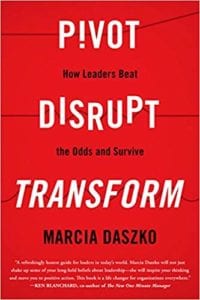
Pivot, Disrupt, Transform: How Leaders Beat the Odds and Survive
Your book is fantastic it’s called Pivot, Disrupt, Transform: How Leaders Beat the Odds and Survive. You’ve got some great testimonials from authors like Ken Blanchard who wrote The One Minute Manager, which is one of my all-time favorite books. Before we double click and do a deep dive into this great book of yours, can you take us back to your story of origin? You can go back as far as you want. Your childhood, high school or college. Where did you start getting interested in leadership?
I never thought of myself as a leader because I was so excruciatingly shy. Although my friends when they hear me say that they laugh and roll their eyes and wonder. They see something maybe I don’t see. I grew up in the Midwest in Iowa. My family moved to California when I was in college. I transferred out here. I attended Santa Clara University and San Jose State University and ended up getting my master’s in mass communication. I worked for various companies in corporate communications and marketing. Then one of the organizations that I worked with was owned by Dr. Perry Gluckman a statistician who had a group of colleagues’ consultants who worked with organizations to help them learn and apply Dr. Deming’s philosophy of leadership and management. For those who don’t know, Dr. Deming was a man who went to Japan at the invitation of General MacArthur after World War II to help turn around Japan and help them become a global competitor. In the 1980s, he came back to the US and worked with the CEOs of General Motors and Ford to help save our auto industry.
That’s an impressive background that’s certainly a huge impact and now that changing with Korea and China. I was looking at how China’s overtaken Japan lately in gross national product and all that good stuff. What made you want to write this book?
Once I had begun working with Dr. Perry and Dr. Deming they became my mentors. I learned from them that everyone within them has natural leadership. How I learned that is because my two mentors pulled it out of me. Over time, they taught me how to consult and that’s how I got into consulting years ago. We worked from small organizations to companies like the Fortune 500. I wrote the book because in my 25 years plus of consulting, I had seen the fork in the road for leaders. Some leaders struggle and fail and others succeed wildly. It’s like, “Why does this happen and why are some struggling so much? Why is it that we have 6,000 startup companies in the Silicon Valley Bay Area and probably 90% of them won’t go out of business? Why is it that there was a list of Fortune 500 companies that came out in the in 1955 and more than 60% of those Fortune 500 corporations do not exist anymore?” Some were merged in, but many went out of business. When we think about Montgomery Ward, Pan Am, Circuit City, and Blockbuster, they disappeared pretty fast. Does that mean that companies like IBM, Walmart or Shell Oil like we’ve seen with Sears or Target, will they go out of business? I wrote the book because I wanted to help leaders who have so many challenges see that there’s a better way. There’s a different way. There’s a bold way. There’s a courageous way to lead and it’s not that hard.
What would you say would be the one takeaway? Let’s give some great insights right off the bat. If someone is saying to themselves, “If everyone has natural leadership within them, how do I find that? What is it that I can do to discover that if I don’t have a mentor?”
I would ask people to follow their own strategic compass. If they’re thinking about their own leadership and/or they’re thinking about leading their team or their organization, even at home. That they think about what are we trying to accomplish. What am I trying to accomplish and getting people together. Knowing nobody works alone. How do we learn, work, and improve together? That is key. If you don’t have that question answered well, then everything else following it, you’ll struggle and eventually fail.
[bctt tweet=”Everyone has natural leadership within them. ” username=”John_Livesay”]
You’ve got a three-step process here where you tell people to stop focusing on the bottom line and performance appraisals. They need to start doing something new, which is asking some questions and seeing what they can do to encourage an environment of change. Finally, the transformation part of being more resilient. What do you mean stop giving performance appraisals? What do you mean stop looking at the bottom line? How else would we run a company? What do you say to that question?
We need to go back to the aim. What are you trying to accomplish? If you say, “We’ve started this company and now we have 200 employees. We need to start implementing performance appraisals,” I would ask again, “What are you trying to accomplish?” “We want to we want to coach people. We want to give people feedback. We want to help and so on.” That is usually the answer that I get around performance appraisals. What has happened is performance appraisals end up being in practice what people use to judge, rate, rank, criticize, and blame people for. The problem is the people worked in the system. They didn’t create the system. They can’t change the system. Yet, people want to hold them accountable for the system’s results. If they don’t like the results they blame and judging criticize the people, but it wasn’t the people. People come to work to do a good job. They want to be proud of their work. They want to contribute. They want to serve customers. They want to work together. Yet we saw the performance appraisals that we rank and rate the people which creates internal competition. Then we tie it to a compensation system that again is more limiting. Then we say, “Our corporate values are teamwork, collaboration, and integrity.” Yet they don’t see that there’s a huge gap between the two in the practice of even using performance appraisals which is a total waste of time. They are in direct conflict with what they say their values are.
Having been in the corporate world myself and selling advertising for Condé Nast for a number of years and selling my multi-million-dollar mainframe computers, nobody likes them. I have managers who used to dread doing that. It was a huge amount of time and they were under a lot of pressure from top management to not give anybody perfect scores. You must find something to ding somebody on so that there’s something for them to improve on. Otherwise, if you tell them they’re doing a great job, they will stop working so hard. Like, “Next year, hopefully, my three will go up to four on creative ideas or some weird category that they create.” There’s a great quote in your book from Dr. Myron Tribus, “Looking at results is like driving the car by looking in the rear-view mirror.”
That summarizes what you’re saying here. That you can’t motivate or even come up with an inspiring vision of what the future could be if all you’re doing is evaluating someone’s past performance. This concept of teamwork, I always found so amusing, especially in a sales department. They do rank you and yet they want you to all work together. Oftentimes, you would split accounts. Like if Lexus is based here and there are agency is based here, but that wasn’t always the case. Sometimes I’d have a client that the agency was in LA and the client was in New York. The rep in New York and I had to work together and split the commissions if we got the business or we grew the business, but it was still a competition of who’s the top sales person this week and this month, this year. It’s a very bizarre compete, work together, and you’re going to get paid on how you perform, not so much how the magazine performs.
That’s why another thing that I suggest is that not only does a company get rid of the performance appraisals, but they also get rid of incentives, arbitrary, numerical goals, and commissions. That’s a unique, bold, radical revolutionary thinking for most organizations because it’s not best practices. That’s what part of the book is saying too is stop best practices and management fads. If you step back and think, what are you trying to accomplish those don’t help you?

Leadership: Salespeople are successful if they ask the best questions.
You also talked about helping people understand why they lose customers to the competition. That’s a fascinating topic for me particularly because I had to win back a client at one point. Then I’ve helped other companies put a strategy together on how to win back a client. A lot of people don’t have a clue that winning back a client is very different than getting them in the first place. Can you expand on your insights on what companies can do to prevent losing clients and what they might do to get them back?
I have beautiful examples of that. Personal examples that’s what brings everybody to heart. If leaders think about what they are passionate about and get their whole organization focused on supporting each other to serve customers. Doing what they love to do to serve customers, they tap in on being close to their customer. It’s not by surveys and focus groups. It’s by talking to their customer. What do you like? What do you want? What do you need? It is beyond that because it’s not the customer’s job to tell you that they want the fax machine or that they want the iPhone. It’s the companies, the leader’s job to create the future. To create new products and services that are innovative and will serve and satisfy new customers and new markets. For example, for me, I was a very loyal customer of American Airlines years ago. I had more than three million miles on American Airlines. Whenever I would fly with colleagues I would say, “Come on my flight.” Even though there are tickets generally on average worth $50 more than the competition, I would stay loyal. Then their service over time drastically changed. It was a change of CEOs that was part of it. There were mergers after that and then they pulled out the San Jose market as a hub. That drastically impacted our ability to have as many routes and so forth.
The point being, their customer service drastically went down. One time, I got on 40 flights with American Airlines. On those flights, 39 out of 40 I didn’t get a hello, a thank you or a goodbye. As a premier flyer, I wrote them a letter. Months later, I got a wrinkled form letter back justifying their behavior. That’s when I said, “That’s it. I’m done.” I fly American Airlines only if I absolutely have to. I would say they’re a little bit better, but they still have so far to go. I have no interest in flying them. Plus, their seats are the tightest together. You could starve on their flights. I love JetBlue, I love Southwest Airlines. The point being that it didn’t cost them anything to say hello, thank you, and goodbye. It cost nothing for that customer service. I knew that leadership had changed because when leadership doesn’t have the mindset to serve customers, it’s for them maybe all about the bottom line or they’re competing with their peers or whatever it is, it shows up in the people who are touching the customers.
Let’s dive into the second part of the book, which is if we’re going to stop focusing on the bottom line and giving people these performance evaluations, we should be doing something new. That’s the first thing you start talking about, which is also fascinating to me. I also believe that salespeople are successful if they ask the best questions. You were talking about leaders asking questions. Can you expand on that?
What we need to help leaders do then is yes let go of the old because otherwise, if you are trying to start something new but you don’t get rid of the old, I always say it’s like trying to put strawberry jam on moldy green bread. Let’s get rid of the old is essential. Leaders need to start thinking and asking different questions. These are not questions like, “Why did you do this and why did you do that?” Instead, the questions of, “What are we trying to accomplish?” It’s a strategic compass, which I have in the book. “What are we trying to accomplish together? By what method will we achieve it together? What are the values that we’re going to stand for with our customers, with our markets in our community and with our colleagues? Who are our customers? What do they need and how do we know?”
[bctt tweet=”Looking at results is like driving by looking at your rearview mirror.” username=”John_Livesay”]
That’s significant because that means we’re going to collect data and look at that data over time and not react to it. Based on what we see about that data over time, what are the trends? Is it stable? Are we serving customers or not? Then we ask the final questions which are, how do we measure progress? How do we measure success? Most management teams and executive teams, when they have management team meetings, most of them are focusing on and that might be a day or two at a time. You’ve been in the sales team meetings where you spent a day or two or three talking about the numbers and the quotas and goals. You kept manipulating the numbers. I’ve seen those meetings and they’re a sad use of time. I share with my clients that we focus on discussions about the aim, about quality, and about the customer. About serving customers, about the systems, the processes that we need to create and improve, and enable to flow so that we can then get the results that we want.
The last thing in a management team meeting that we need to talk about if we have time are the results or the goals or the numbers. Everything that you do before that are the things that create the numbers. If you don’t like the results, if you don’t like the bottom line, if you don’t like the profit margin or the profits you need to go back. Leaders need to go back and spend 90% plus of their time thinking about, “How do I create an organization where everyone understands what the aim is and how we create the systems and processes so that we have these strategies?” Quality is a business strategy. Improvement is a business strategy and innovation is a business strategy. We need to have those three as foundational business strategies. Then we can go through the organization, work together and see how we improve and innovate to serve our customers.
It sounds like a very different use of time than what I used to have to do, which was once a week all sales reps from around the world will be on this long conference call. We have to say, “For this upcoming issue, I’m going to bring in ten ads. I have five of them who verbally said yes. Another ten that are 50/50 and maybe another seven or so that are less than 50%. Then they say, “We take 90% of the verbals, 50% of the 50/50 and then 10% of all the others. You still are short a couple of pages. Where are you going to get them from?” Then you’d have to listen to everybody else’s story. Then they go, “If we add up all the numbers that everyone says they’re promising and committing to bring in, here’s the number for the month. That’s not high enough for what our goal is.” We will do that for three months out. Tedious, painful, and unproductive. Everywhere I work, that’s what it was. That was the given way of doing it.
It’s the best practice, it’s the management bat. It’s the way we always do things even though the way we always do things isn’t helpful, isn’t innovative, isn’t serving customers, isn’t fun and isn’t motivating. That process you described is demotivating. It doesn’t make me feel good. I’m not happy when it’s over, it’s like, “I’m so relieved.” It’s all about the numbers. It’s not about things that you can get passionate about like serving customers and being creative. It sucks the life out of people.
Then they would add a layer on to it where it’s like, “You promised that you bring in as many ads.” Something fell out. You promised to the whole room as if getting people to commit to something makes them do it. If they don’t feel bad enough that something fell out.

Leadership: Once you make the decision to pivot and start trusting your people, you cannot go back and start trying to manage from fear again.
One of my friends had 1,200 sales people in his corporation. He had sales of $500 million. He was constantly competing for his share of the pie. He was frustrated with it and looked for a better way. That’s when he decided to transform his organization. He spent a year transforming his own thinking about leadership. Then he decided to change his system. He made the plan to do it. He communicated both to his key executives, his key salespeople, his employees, and his customers what he was going to do before he did it, then took all of his 1,200 salespeople off of commission and off of incentives. No more performance appraisals. He did many things to transform his organization and then he took it from $500 million to $2 billion in six years.
People think that salespeople aren’t motivated unless they’re tied to a performance and that’s not the case. I love this concept where you have here on how we transform as leaders, the old way and a better way. The biggest level is the high level of fear, anxiety, and stress or in the old way of, “If you don’t make your numbers, after three months you’re going to be fired.” There’s a constant fear-based culture. This is multiple companies, this is not unique to one. The better way you propose is to reduce the fear and build trust that if you have a bad month or two, we’re going to look at you your attitude and your work ethic. All other things besides just the numbers deciding whether or not you keep your job. Is that a fair summary of what you’re saying on the better way?
[bctt tweet=”You can’t motivate or even come up with an inspiring vision of what the future could be if all you’re doing is evaluating the past.” username=”John_Livesay”]
The better way is that the leader is finally going to lead instead of being judge and critique and blame the king or queen. Their job as a leader is to create an environment where everyone understands and contributes to the aim of the organization, and people support each other. That means that it’s up to the leader to communicate effectively, to build trust and they do that through communication. I’m not saying to put out a memo or an email or anything saying, “Here are our mission, vision, and objectives.” That old static document has to go away anyway. Instead, the leaders are the people that are communicating a hundred times a day but they’re asking questions. They see that their job is to develop all of the people’s natural leadership in the organization. Not just the top ten people or the management team, it’s everyone. Their job is to reduce fear and build trust. Over and over again, they have to be asking questions, listening and then responding to find out what are the barriers for you in doing your job. For you personally, for your team, for this department for this division, what are the barriers getting in the way of them supporting each other? In them learning, in them developing as a team, and in them serving customers. We have to ask more questions.
One of my clients, I was sitting down with him one day. It was one of the first meetings and I had a feeling that he would get value out of seeing that list of the old way and the better way. I went over it with him and he looked at it and he said, “I’ve been doing the old way. Can I change and start doing the better way?” I said, “Yes.” Overnight he transformed. He scared the wits out of his management team. His executive assistant asked me, “What did you do to him?” I said, “What are you talking about?” She said, “He’s changed so much. It’s great, but will he change back?” I said, “When he’s under stress, he might change back but that’s why I’m here. Until he’s not wobbling on that bicycle, but he’s riding that bicycle and that’s then who he is. He’ll transform. He transformed his thinking overnight and said to me, “Marcia, over the 30 years that I’ve been managing this organization, I wish I would have known that I had a different option than the one that I was never taught in school. That I’ve never learned from anyone else before.” He felt a huge sigh of relief being able to lead, coach and develop his people and create an amazing organization versus being the critic he used to be.
That’s one of my favorite takeaways from a book. Once you make the decision to pivot and start trusting your people, you cannot go back and start trying to manage from fear again. Your final words in the book are, “Think different, act different, and be different.” Thank you so much for being on the show. The name of the book is Pivot, Disrupt, Transform: How Leaders Beat the Odds and Survive. How can people find you? If people want to hire you as a consultant, what’s the best way to find you?
They can go to my website via MDaszko.com. Through the book, my contact information is in there. They can call, email or reach out. I look forward to helping leaders however I can.
Links Mentioned:
- Marcia Daszko
- Pivot, Disrupt, Transform: How Leaders Beat the Odds and Survive
- The One Minute Manager
- MDaszko.com
- Quantmre.com
Wanna Host Your Own Podcast?
Click here to see how my friends at Brandcasting You can help
Get your FREE copy of John’s latest eBook Getting To Yes now!
John Livesay, The Pitch Whisperer
Share The Show
Did you enjoy the show? I’d love it if you subscribed today and left us a 5-star review!
-
- Click this link
- Click on the ‘Subscribe’ button below the artwork
- Go to the ‘Ratings and Reviews’ section
- Click on ‘Write a Review’
Negotiation Secrets From An FBI Special Agent with Chip Massey
Posted by John Livesay in podcast | 0 comments

Episode Summary:
Growing a business means having to go through high-pressure situations. Sometimes, you get involved with misunderstandings among clients that take a toll on the entire business relationship. Talking about the art of negotiation in these kinds of situations is someone who is no stranger to this. Chip Massey, CEO of Plowshare Communications, is an FBI Special Agent who worked as a hostage negotiator. Sharing his experiences as an agent, he re-aligns it with how people running businesses can take some of the key points he learned in establishing a connection as quickly as possible. He talks about how to create instant rapport as well as how to de-escalate tense conversations with angry clients threatening to leave. Spilling negotiation secrets, he provides great insights that you can apply to your business.
—
Listen To The Episode Here
Negotiation Secrets From An FBI Special Agent with Chip Massey
Our guest is Chip Massey, who is the CEO of Plowshare Communications, which advises business leaders on strategic negotiations on how to accelerate the sales process by building strong, powerful, and trust-based relationships. For more than two decades, Chip has served as an FBI Special Agent and hostage/crisis negotiator. During his tenure, his work has ranged from collaborating with the CIA to crack espionage rings to high profile corruption cases to the post 9/11 counter-terrorism investigations in Washington, DC. As a hostage negotiator, he’s worked extensively in crisis situations including international kidnappings and fugitive apprehensions.
While he was within the Bureau, Chip was noted for his ability to quickly build rapport and his deep expertise interviewing both victims and criminal suspects. He spent several years coordinating with the FBI’s Victim-Witness Program as well as directing the FBI Citizen Academy in DC. Before that, he was a Methodist minister, so he brings his early training in crisis intervention and a gift for public speaking to bear. As someone who grew up in the Methodist Church in the Midwest suburbs of Chicago, I can’t wait to welcome him to the show. Chip, welcome.
Thank you so much, John. It’s a pleasure to be here.
Let’s have you paint a picture, Chip, of your own story of origin. Where did you grow up? How did you decide you wanted to be a minister and then how did that parlay into what you’re doing now?
I grew up in Dover, Delaware. My family had a dairy farm and we grew crops, we had cows and the whole shebang there. It wasn’t until I got to college that I was trying to figure out where I was going to fit in. Farming was a very lonely existence. It seemed that way to me. I loved the contact and calmness of people and I loved hearing their backstories. That’s what led me on to figure out what was going to be my next step. In college, I thought that it was going to be a ministry for me, being able to reach out to people in that regard and deal with their problems and be of help. Follow that, I went to seminary and then went into an appointment at a two-point church. Since you’re familiar with the Methodist system, you know that those are two churches that you’re responsible for. It was a rural area. I knew the people. I know the mindset.
[bctt tweet=”Empathy is the secret weapon the FBI uses. ” username=”John_Livesay”]
My thing about that, John, is it was a fantastic experience in terms of getting to know people and finding out their deepest problems and how I could be of a help. You could find a person that was in a crisis every day in that job. That was both fulfilling and also humbling because you have these people that trust you with everything that’s going on in their world and their life. You are the one representative of what God’s plan or direction is for their life. They’re looking for you to be of help. That was tremendous and fantastic, but it was also hard for me and my family. It’s a 24/7 on-call all the time and you’re gone to a lot. I knew in the back of my mind that I wanted something else. I felt something was missing. I don’t know if you can resonate with that or not but I knew that there was more that I needed and I wasn’t entirely happy in the position.
I can completely resonate with that. There have been stories throughout the decades of movies. Even if you think of Yentl, the Barbra Streisand movie back in the day, there’s got to be something more. That sparks the entrepreneurs’ spirit too. It’s like, “I don’t want to just work for somebody for the rest of my life. I have more to do. I have a book in me. I have a talk I want to give.” You were giving talks every week but there’s a sense of, “I’m here for a bigger purpose. I’m here to do something else besides just this.” Not that whatever I’m doing is not enough or okay, but that inner urge to express yourself in a bigger way is something a lot of people can relate to.
It is tying into that, honoring that and following that. Instead of saying, “I’d like to do that but,” “It would be fantastic, but,” there was something in me that was pushing forward. I went ahead, I looked into it and I talked to some people who were agents. I didn’t know what those guys did. I’ve seen the various shows like everybody else, in movies but I didn’t know what their day-to-day life was like and I didn’t know if that was going to be a solution for my current situation and whether I needed to look at something else. I knew what was inspiring for me and was pivotal in choosing the FBI as a career was the movie, Mississippi Burning. There was this government entity that was dedicated to taking down the Klan. They were above the politics, they were above the prejudices, they were enforcing the laws of the land, of the constitution. They were going to do it and they were going to stay there until it was done. It made a real impact on me. What a force of good that was. That’s what got me toward that lane and looking in that direction. You take a test. It’s how it starts out. You fill out a form, you turn it in and then the process goes from there. You are interviewed if you pass a certain test and then you take a battery of tests. It goes on and on.

Negotiation Secrets: That inner urge to express yourself in a bigger way is something that a lot of people can relate to.
Is it a personality test or an intelligence test?
I would love to tell you that it was based on intelligence and personality. I don’t think that’s what it was. At least when I took it, there was a criterion. It is more of a judgment screen. There was also a math portion, which I thought that a door slam shut in my face, I’m done. My math was not the greatest. There was also a writing portion. That was part of the screening process. There was also where you had to go through the medical clearance, you had to go through a polygraph, and then they went and did the background check with your neighbors, people that you’ve known and teachers. Most of your audience knows the drill on that. It’s extensive.
I preached my last sermon that Sunday morning and that afternoon, I reported to Quantico. I told the classic because you had to go around and introduce yourself and where you’re from. You’ve got guys there that are Special Forces, lawyers, accountants. There was a judge in our class. There were former police officers, pilots and here’s Chip Massey, a minister. It was a great experience. Thinking about it, I wish the academy would open up something that the general public could go to and participate in. Aside from the stress that they put you under in a class, there are so much interesting things to learn that people would benefit from.
[bctt tweet=”How To Create Instant Rapport.” username=”John_Livesay”]
Is it like the law school thing where they say, “Look to your left, look to your right. Only one of you will still be here by the end?”
They don’t do that. There is the idea, “We’re going to weed out the weak.” That’s what it comes down to. In my class, we started out with around 50, we ended up with 44 so not many washed out, but some wash out because of injury and that happens all the time. Some after the first few days of them telling you, “This is the real world of being in law enforcement,” some people that were not totally in tune with that and what that meant would also decide to part ways. They had a vested interest in making sure that you were going to get through this if you were the kind of person they were looking for.
Do you get to specialize and say, “I want to be a hostage/crisis negotiator,” or everybody has to carry a gun and go through and then you can specialize, almost like med school? You have to become a doctor and then you can become a specialist. Is that the way it was?
Exactly, that’s it. Everybody starts out as a special agent. That’s your title. Anything else you do is a collateral duty. We had people that were on SWAT Teams, that’s a collateral duty. We had people that are Evidence Response Team, that’s a collateral. It goes on and on, but your main focus is still investigations of crime. The way the Bureau is set up is that there are two houses. There’s the National Security side of it and then there’s the Criminal side of it. You will be selected to participate in one of those programs and in general, you stay within that lane. There is movement. I started out in National Security and moved eventually to Criminal. It took some time. You have to establish yourself, establish a reputation that you’re a hard worker, that you’re able to perform and you know how to have success. That’s how it works.

Negotiation Secrets: Establish a connection as quickly as possible.
I’m curious to ask you about what it was like to collaborate with the CIA because there was so much controversy after 9/11 that that was part of the problem, that the FBI and the CIA were not collaborating and sharing information. Do you have a story around that?
It was amazing to me when I first reported to the Washington field office. I was on an espionage squad and our specific area of focus was on Americans that have been co-opted by a foreign power to provide information. It was our job to track those people. On this specific squad, we were involved with trying to find a spy that we believed Russia had co-opted and was operating within our US government, which brought us to the CIA. We had certain allegations and information that led us to a specific individual at the CIA. It was a case officer. We were devoting a lot of resources to try to find who that person was. Part of that is to work with the agency, the CIA and figure out who this person is. There were tremendous people over there. I’m continually astounded by the level of professionalism, abilities and talents. These are fantastic people. It is both gratifying to see that not only do you believe in your own home as an FBI agent in the FBI, but you also have this huge respect and belief in the CIA and what they do. They’re fantastic analysts and case officers. It was a fantastic experience.
You’ve been featured as one of the people at the Carnegie New Leaders program at the US Military Academy at West Point. You have multiple places that are having you come and speak on these techniques to corporate leaders about how to build professional relationships quickly and profitably, which allows them to grow their business. Let’s double-click on how we create instant rapport as opposed to people checking their phone or just walk out of there going around, “That didn’t go well.” What clues are there that we can do to prevent that from happening?
The first thing that we would say in terms of a hostage negotiation skill set, what we want to do is we want to establish a connection as quickly as possible. The same is true in the business world. The stakes are different, certainly. One person that is holding somebody for ransom and on the other hand, you’re trying to make a connection to somebody who is in and out of a conversation with you, not engaged with you. The first thing that we would do and I advise my business leaders to do is to find that thing that is going to pull them out of that phone, that text and that email.
[bctt tweet=”Whatever I’m doing now is not enough.” username=”John_Livesay”]
One time when we were on an arrest, a lead came out of the Philadelphia field office. We were to find this person and make the arrest, take them to court and so forth. It turned out that there was a bad address that we had. He wasn’t there. This is bad news because there is a huge force out to accomplish this and you’ve got a guy out there in the wind, you don’t know where he is. We had a phone number for him. That’s all. They’re trying to make a decision. They’re contacting the heads of the field office. “What do you think is the best course of action?” They’re like, “We don’t know. Let’s talk about this.” Eventually it was, “Let’s try to call this guy.” I’m on the arrest team and who are you going to give the phone to but the negotiations? They hand me the phone and say, “Can you call?”
I’m thinking in my head, “What am I going to say to this guy if he picks up?” If it’s me and I’m on the run, I’m not picking up a phone that I don’t know the number to. I’m thinking I probably got one in a thousand shot he’s going to pick up. I’m thinking, “What do I say if he does?” I’m putting some things together and I’m looking around this area where he’s from, in the Bronx. I put the number in, it rings, it goes, it rings forever. It seemed like it probably was ten seconds. You hear that there is a connection, but there’s nobody talking. My next thing is, “My name is Chip. I’m here to help you.” I leave it hanging for a little bit longer and still nothing. I then say this, “How bad does your life suck right now?” I let that hang. It seemed like forever.
I’ve got all these people breathing down my neck. The bosses are waiting for the call. They’re like, “What’s going on? What’s happening?” Teams are looking around. It’s tense and then I hear, “What’s your name again?” I went on from there and I said, “I’m an FBI agent but I want to see if what I’m thinking about is right. You can say nothing or you can grunt, whatever, but I’m guessing that your life sucks because you don’t know where you’re going to sleep most of the times. You can’t keep staying at the same place. You can’t use an ATM. You can’t show yourself too much around with too many people that you’re familiar with because you don’t know who’s going to drop a dime on you.”

Negotiation Secrets: “The key to success is confidence and the key to confidence is preparation.” – Arthur Ashe
You’re putting yourself in their shoes, painting the picture.
That’s it, John. You key on the things that you already know that exist in their world.
They may not have even thought about it like, “You’re right. I can’t go to an ATM.”
It could be. Two weeks in, he’s been successful thus far to live on the lam but it’s draining. Hollywood glamorizes Bonnie and Clyde being on the run and so forth, but the fact of the matter is it sucks. It’s draining. You don’t have any friends. You can’t call home because if you’re doing it right, you’re not going to make those mistakes. That’s the same thing I tell my business leaders. It’s that if you’re going to meet a client for the first time or you’re going to meet a prospect for the first time, you had better do your homework before you even pick up that phone. By that I meant as an agent, before we would do any interviews, any interaction with the public in an investigation, we find out as much about that person as we could. Most of it was a result of public databases. It was Googling, it was finding out on LinkedIn, it was seeing if did they have an IG profile, what they were saying on Twitter. All these things. Some of it is going to be strange or fabricated or not in line with who they are, but you’re going to pull some things. You’re going to tease out some information that’s important.
It reminds me of a quote from Arthur Ashe, “The key to success is confidence and the key to confidence is preparation.” I’m a big proponent of that when it comes to sales and any situation. You’ve described a tense conversation but in the business world, those happen a lot even if someone’s not on the lam. Losing a client, they’re mad at you and people have a very hard time with their emotional IQ not getting them back or defensive. How do you help clients deescalate these tense conversations when they’ve got an angry client threatening to leave?
[bctt tweet=”If you’re going to meet a client for the first time, you’re also going to meet a prospect for the first time. ” username=”John_Livesay”]
This is perhaps one of the greater opportunities for a breakthrough. This is the thing that gets me excited when I explain this concept to clients because it’s counterintuitive. We are designed by nature that when we’re under attack, when we feel that there is something that could be pulled from us, we become defensive. We contract. We try to come up with things as to why this is a dumb idea. One of the things I like to do is I talk about the relationship you have with your significant other. If you think about the last time you were in a fight, you were in an argument, were you thinking about the greater points that they were making when they were yelling at? Or were you thinking that, “I should take some of this to heart and there’s something here I can change or there’s something here I know that I could modify, this is an excellent point?” No, none of that is going through anybody’s head. We’re waiting for that person to pause because we’re looking to attack. We’re looking to jump in at that point, go for the jugular and say, “No, it’s you that’s wrong and here’s why.”
This is the thing I say, “Did anybody solve a problem in that? You might have won a fight in your mind, but what did you gain?” What is your goal? If your goal is to understand and create a better relationship, you failed. If your goal was to win a fight or to dominate the other person, you did that well. Congratulations. I say to them the same thing. If principles of de-escalation are the same thing, what you need to do is put yourself in their shoes and you have to keep the goal in mind. This takes training. As I said, it’s counterintuitive. It doesn’t come naturally. You have to keep at it. Every interaction you have with somebody when you’re under that kind of stress and when that threat is present, you have to train yourself to think, “What do I want to do here? What is my goal?” My goal is I want to keep this client happy. I want to make good on the promises that we made them. I want to find out deeply where we messed up.
I want to show them that it’s important to me and this is where empathy comes in. Empathy is huge and I am glad that it’s being touted now as being an important skill. The FBI uses it. The FBI use it not because we want to be soft and cuddly. We use it because it is deadly efficient. It is the quickest way to get into somebody’s world and then to bring them to a more rational mindset. That’s all part of the de-escalation process. If somebody is at a ten, like my guy on the lam and they’re attacking, it’s my job to bring them down. How do I do that? By showing empathy.
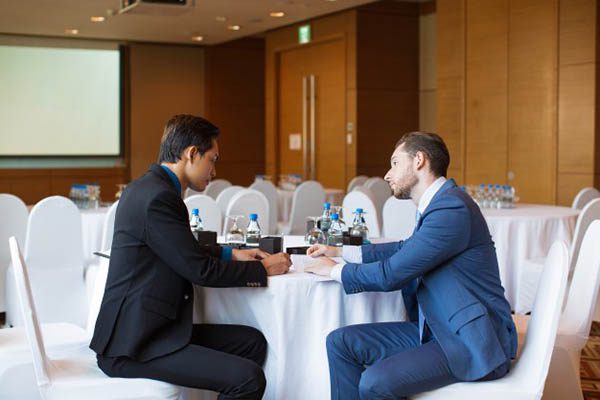
Negotiation Secrets: Utilize empathy, reach out with those feelings, and then use your active listening skills.
The third part of what you do, which is so crucial, is building trust. You have this wonderful blog about My Dog Is A Better Listener Than You. I’m guessing that listening and trust go hand-in-hand. Can you tell us about that?
We say it all the time, “I need to be a better listener. You’re not listening to me.” We hear these comments and we think about these things. In reality, we do suck at listening. It wasn’t until I took the certification course to be a hostage negotiator that the skill set of active listening opened up to me. I’ve heard about it, I’ve been trained about it in the past but this took it to a different level. I’m not only listening for the information that they’re trying to give to me and trying to portray themselves at, but I’m listening for the things that are emotional. I’m listening to the content that holds value to them because what I want to do is I want them to put the gun down. I want them to walk out of the house.
I can’t get there from the jump, so I need to work that through. I need to hear their side. I need to hear what’s going on and I need to connect to that. The only way to do that is by them talking to me and me listening to the point where I can identify with what they’re saying. I can see it. I can feel it. I can almost smell it. What are their fears? What are their concerns? Who’s done who wrong?
I’m utilizing empathy, reaching out with those feelings, active listening skills and I’m going to pick up on things that they’ve said. “You said that the person that fired you, you felt it was unjust. What else can you say about that? How was it unjust?” I get them to unpackage more and more about it. You never let a motion go by without identifying it. We’re talking about a very tense situational anger with a client. Not only are you angry but it sounds like you have a real deep resentment toward us. If you key on those things in their world, the more they’re going to come to you. They’re going to open up. You use those open-ended questions, you expand, you get more robust answers and they then begin to feel that this is now a collaborative process. This person is hearing me. I use that with my dog. My dog, when I am around the house and she’s engaged with me, she’s looking at my face. The dog is reading that but the dog is also picking up on my body language. She sees when I’m rushing around, she knows when I’m trying to get out of the house or she sees when I might be frustrated. She also knows when I’m going to go for a snack and she makes sure she positions herself to be right there. There’s so much that we leave on the table and that’s what I try to get across to my clients. If you’re not deeply listening to somebody, you are missing cash on the table. I guarantee you, you’re missing opportunities.
[bctt tweet=”You better do your homework before you even pick up that phone. ” username=”John_Livesay”]
Double-clicking on, “It sounds like you’re not just angry, but that you resent us. Is that accurate?” What you’re doing there is you’re describing the problem. I’ve said this many times when people are pitching to get a new client. The better you can describe the problem that someone is experiencing, the more they think you have the solution. That’s another way of looking at what you described there. This concept of listening as a way to not lose cash, I’ve had several clients that have said, “We have a whole list of cold case files.” We call them the dead accounts we’ve lost. We didn’t even know how to begin to get them back so I work with them on repairing and rebuilding those relationships through listening. Nine times out of ten, the number one reason why clients leave is, “You didn’t listen to me. I told you I was concerned about that deadline not being met and it didn’t get met. I’m leaving because you didn’t listen to me.”
Even if it was an old team of people that now there’s a new team, you still have to own what the old team did. Getting people to understand that the people have to feel listened to and before they can start trusting you again, to maybe hire you again, it’s quite a journey and so many people make the mistake of, “We’ll go in with a lot of research and numbers. I’m not going to listen to you and showing how smart you are.” You’ve got to repair this stuff first. You offer different kinds of workshops for different kinds of companies. There’s basic negotiation, there’s the intermediate, then there’s the executive intensive. Who’s your ideal client for the executive intensive?
That would be the leadership team or anybody that has client-facing responsibilities. I’m looking for people that are trying to have a breakthrough in how they connect to their clients and how they deal with their employees to bring up the organization as a whole. That would be the people that could benefit from that the most.
How can people reach out to you? Are there any social media platform you will encourage people to follow you on?
I’m on LinkedIn, Instagram and Twitter, @ChipJMassey.
Chip, thank you so much for being a great guest and sharing your wisdom from your experience working in incredible intense situations that we can now apply to our own lives, where the stakes aren’t quite as high but the same lessons can definitely be applied.
Thank you. It was a pleasure.
Links Mentioned:
- Chip Massey
- Plowshare Communications
- My Dog Is A Better Listener Than You
- LinkedIn – Chip Massey
- Instagram – Chip Massey
- @ChipJMassey on Twitter
- https://www.ChipMassey.com/
- Quantmre.com
Wanna Host Your Own Podcast?
Click here to see how my friends at Brandcasting You can help
Get your FREE copy of John’s latest eBook Getting To Yes now!
John Livesay, The Pitch Whisperer
Share The Show
Did you enjoy the show? I’d love it if you subscribed today and left us a 5-star review!
-
- Click this link
- Click on the ‘Subscribe’ button below the artwork
- Go to the ‘Ratings and Reviews’ section
- Click on ‘Write a Review’