
TSP023 | Lex Deak – Deal Flow At Your Fingertips Tinder Style
Posted by John Livesay in podcast | 0 comments
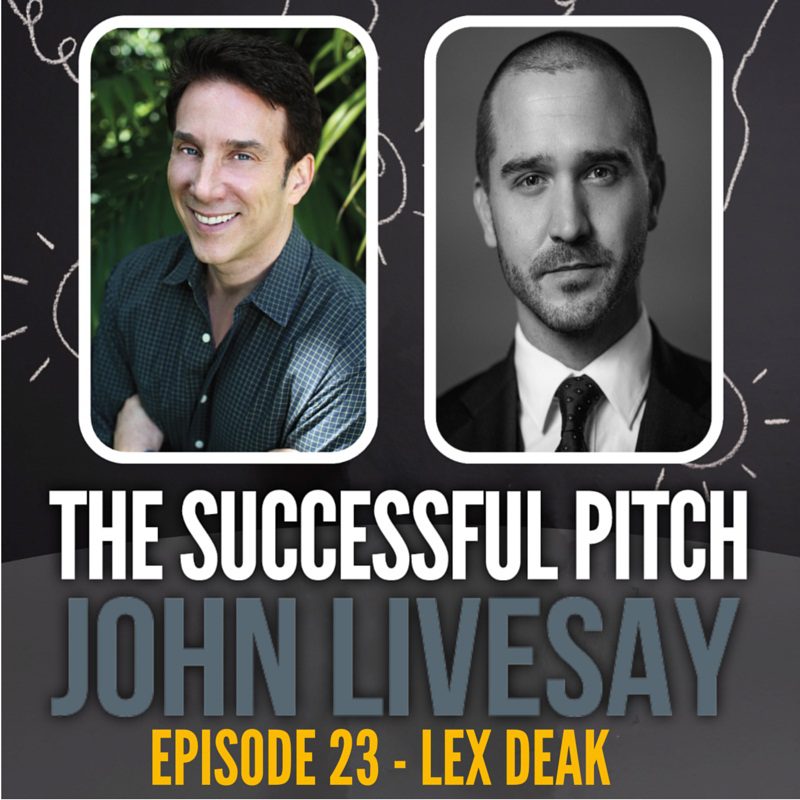
Listen To The Podcast Here
Episode Summary
Lex Deak is the Founder and Managing Partner for QVentures, the Founder and CEO for Tendr Deals (renamed to OFF3R), and he is also the Ambassador for The Supper Club. QVentures has funded 14 companies and Lex talks on one key company that stands out from the rest. Lex also talks on the importance of listening more than you speak at a entrepreneur networking event and why it’s important to read books you disagree with. It all comes down to diversifying yourself and keeping yourself knowledgeable on upcoming trends.
Key Takeaways
- 01:35 – What’s Lex’s philosophy on ‘the entrepreneurial spirit’?
- 05:00 – What is The Supper Club?
- 07:30 – As a young entrepreneur, you should listen 5x as much as you talk.
- 08:15 – How did QVentures get started?
- 11:45 – Lex talks about Stratajet.
- 14:35 – An angel investor has to be impressed with the product as well as the founder/team.
- 17:20 – Lex talks about Tendr Deals
- 23:50 – What problems is Tendr Deals solving? John does a recap.
- 27:30 – What are some of Lex’s favorite books?
- 29:10 – Lex disagrees with a lot of what he reads, but diversity is the key.
- 29:55 – You can follow Lex on Twitter @LexDeak
Tweetables
[Tweet “The definition of an entrepreneur is an artist in business who creates something.”]
[Tweet “Listen 5x more than you talk when you are in a room with people smarter than you.”]
[Tweet “TENDR gets rid of investors’ inbox fatigue.”]
[Tweet “When you’re reading something, the whole perspective is diversity.”]
Links Mentioned
The Super Club
STRATAJET
OFF3R
The Snowball: Warren Buffett and the Business of Life by Alice Schroeder
The Chimp Paradox by Steve Peters
Big Data For Dummies by Judith Hurwitz, Alan Nugent, Fern Halper, and Marcia Kaufman
Zero to One by Peter Thiel
Lex Deak Twitter
QVentures Twitter
Tendr Deals Twitter
Want the Transcription?
Share The Show
Did you enjoy the show? I’d love it if you subscribed today and left us a 5-star review!
- Click this link
- Click on the ‘Subscribe’ button below the artwork
- Go to the ‘Ratings and Reviews’ section
- Click on ‘Write a Review’
TSP023 | Lex Deak – Transcription
Posted by John Livesay in Uncategorized | 0 comments
John Livesay:
Hi and welcome to The Successful Pitch podcast. Today’s guest is Lex Deak, who is the CEO and Co-Founder of QVentures, a network of investors as well the CEO and Founder of TENDR, which is very similar to Tinder, the dating service, except instead of swiping through people you want to date, you swipe through deals you might be interested in. It’s deal flow at your finger tips is the way he described it.
He goes on to describe one of the startups that his company QVentures founded and why they really responded to not only the technology, but the founder’s focus, likability, and leadership qualities. You’re going to learn a lot about what it takes to be a successful entrepreneur who gets funded from listening to Lex speak about these areas. He says you should listen five times as much as you talk when you’re around other people. You want to be in a room where you’re not the smartest person in the room. Welcome to the podcast.
Lex, welcome to the show.
Lex Deak:
Hey John, thanks for having me.
John:
Lex is calling in from the UK and as listeners know, I’m based here in Los Angeles, so I love the global world of investing. Lex, before we get into how you’re possibly running and starting two companies simultaneously, I’d love to have you talk to our listeners about your whole entrepreneurial spirit. I know you’ve been doing it for a long time and you’ve had many other successful companies. What is it that you think makes an entrepreneur successful, especially in the eyes of an investor?
Lex:
Well, that’s a great question, John. I mean, if you try and distill what entrepreneurial spirit is, I think you’ll fail. It means something different to everybody and it means something different across cultures as well. If you look at, you look at the world itself, entrepreneur, it’s of French origin. If you break it down, it really just means to undertake a task or to begin something and I think that’s probably, for me, where the essence of being an entrepreneur lies. It’s in getting up off of the sofa, off of the couch, and actually beginning something, okay.
There’s no, when you say you’re an entrepreneur, it’s a bit of an awkward word sometimes, because you don’t know, is this guy a billionaire living on a boat or is this guy living on handouts and dreaming? There’s no, there’s connotation as to the level of success when you say you’re an entrepreneur, but the commonality is generally that person has gone out and created something, right, so an artist in the sphere of business and commerce perhaps.
Successful entrepreneurs, in my experience, tend to, tend to have a balance of skills. They will be polymath with strong social skills, a self-awareness, importantly, an awareness around their own failings and people that they need on side to help them to create successful ventures where to fill in the gaps. Some classic lines about not wanting to be the smartest person in the room, you need to be, you need to be self-aware enough to realize where you may not be as strong as you possibly could be. You need to be determined, you need to be confident enough, but not cocky, and that’s quite a fine line to skirt. You need to believe that this person is going to knock down doors, but they’ll say, sorry and thank you in the process.
John:
I love that.
Lex:
So, aside from that, the successful ones have a commercial awareness where they’ll look towards ideas and businesses that are scalable that will generate revenues. It may not be early on, but at some point they will create value or revenues and, you know, I guess that’s probably a good starting point. There’s all different flavors in an entrepreneur, right.
John:
That’s a great starting point. In fact, we’re going to tweet out what you said as the definition of an entrepreneur is an artist in business who creates something. I love that. If you start to think of yourself as an artist and your canvas is the business world as oppose to painting something, it totally re-frames how you approach yourself self-definition goes right into what you were describing, which is the importance of self-awareness and how do you see yourself and how do you attract the right people to join your team.
The other thing I really want to tap into from what you just said is social skills, because the traditional stereotype of a tech CEO in particular is someone who may not have great social skills and you’ve addressed that in the UK with The Supper Club, which is this wonderful event and networking opportunity. Can you tell us a little bit about that and how that might help someone who is a little weak in the social skill area develop that?
Lex:
Yeah, I mean, The Supper Club is arguably the country’s preeminent entrepreneur group. You also got YPO, you’ve got EO here, but The Supper Club is an invitation-only club, which comprises around 300 members. The average turn-over per member is around 15 million dollars and in order to become a member you have to be the owner/operator of the business. You have to be the one. You can’t be in professional services, you can’t be in consultancy, and there are a few other criteria as well.
Generally all of that is in place to seek out people who are employing north of 50 or 100 people and looking to grow their businesses and so form there is generally in terms of a dinner. So, The Supper Club hosts between half a dozen to a dozen events per month. They are all intimate affairs, roundtable discussions that are shared around a specific topic and you know what, John, it’s like, I can only liken it to entrepreneurs anonymous, you know?
John:
What a great image.
Lex:
You stand up and often in business, you know, if you’re a co-founder, it’s very difficult to talk to your co-founder about certain issues. Friends and family they’ll be, you know, they’ll show you insight, but generally on the personal side of things, rather than the specifics of your sector and, you know, paid advisers are in the business of getting paid more, so their advise will probably be a little bland and in the interest of self-preservation, so a club like The Supper Club allows people to speak freely and to seek advice from their peers in this pool of strictly vetted people and some people go there and they listen more.
Some people go there and they talk more, but everybody leaves with something and I think if you are, if you’re somebody who’s at the earlier stage in their entrepreneurial career and you want to soak things up, you should seek out these sorts of groups, because you never stop learning and you should, especially as a younger entrepreneur or an inexperienced entrepreneur, you should be listening not just twice as much as you talk, but five times as much as you talk, because you have to soak so much up. It’s difficult, but you can help yourself by listening, right.
John:
Right. I mean, that’s another great tweet. Listen five times as much as you talk.
Lex:
Yeah, at least, right.
John:
So, let’s talk about QVentures, you’re the founder and managing partner, which is another fascinating highly vetted and curated network of global investors. You have, I believe, over 60 offices around the world. How did you come up with this idea?
Lex:
So, this was really in response to all that was happening with alternative freelance, the evolution of online platforms, disruption of VC. It felt like there was a good opportunity to do something in this space and actually referring back to The Supper Club and this entrepreneurs’ group, you know, the learnings from that group was so strong, I thought we could apply the same ethos to an investment network, an angel network.
So, that was the mission we set out with and we needed to partner in order fast track the growth of the network and so I approach the Quintessentially Group, which has been going for around 15 years and it’s arguably the world’s largest network of high networth with over 150,000 members and offices in over 60 countries and they, you know, they comprise family offices, ultra high networth, entrepreneur investors.
The whole smorgasbord of investors and members and I thought, well, you know, this is probably the best partnership that we could do, so we went into a joint venture and created QVentures, which is a hybrid, really of an online platform, a membership club, again, strictly vetted, and an angel network. We launched that around 12 months ago, since then we’ve done around $16 million dollars in fund raising into 14 companies, we’ve had about a dozen individuals placed on to the boards of companies so that’s the membership and the interaction aspect and we’re only just getting started so we’re now expanding our offices into the US, we’re expanding into the middle east and into Asia. We’re expanding the team, so we should be up to around 30-40 people by the end of the year. It’s going really, really well.
John:
It sounds fantastic. I mean, the growth potential and the fact is, correct me if I’m wrong, but from what I read on your website on QVentures, it seems like there’s such a need for this hybrid model, because there’s a big gap between what venture capitalists start at and what most angel investors are comfortable of giving, but the startups need money in between that amount and that’s what QVentures is solving, is that accurate?
Lex:
Yeah, that’s exactly it. We’re filling in the series A gap or I’ve heard it called the mega seed round. It is that gap between where angels will stop and VCs will come in. Super angels ultimately as well, who often are the LP in VC funds, actually, but they are seeking direct access to deals and so it’s a difficult space to fill and most attention has fallen either side of this gap, but I think there’s an increasing demand for it and it’s driven by the entrepreneurs in the business owners. Those are the ones who are building our future and we drive these sorts of demands.
John:
Right. Can you give us an example of one of the 14 companies that QVentures has funded? How did, did they come in on a pitch day or how did they pitch to QVentures to see if they’re worth of being one of the fortune 14 that get funded?
Lex:
It’s through personal introductions generally speaking. We wouldn’t discount a cold approach, but given we engage so meaningfully with our members, that personal introduction of a network, it just adds more weight and increases the chances, so one deal in particular, which is a company called Stratajet, which is, it’s essentially Uber for private jets and it’s a great business.
There’s a lot of very deep tech underneath it. They are the only ones in the space who have actually built the technology platform to enable penny perfect real-time quotes and you know, for those guys, we were just firstly blown away by the level of technology that they had built. I mean, it’s a year and a half worth of having some very clever people build some very clever stuff.
The founder had this – he was ex-military and he had this approach, you could imagine being in the trenches with this guy, everything was planned out, he knew exactly what he wanted to do. All of his business strategies had a code name as if he were, you know, as if he were still in military.
John:
Wow. I love it.
Lex:
Along with that bullishness in the organization, he’s also a lovely chap. Easy to go for a beer with and someone you’d believe in. The valuation what fairly reasonable. It’s operating in a market where there’s some huge winds and because of our association, our partnership with Quintessentially, which is a lifestyle and luxury brand, private jets fits quite well with that, so it was an easy one for us.
John:
That’s such a great example, Lex. Thank you. The big takeaways for me are that personal introduction, those warm intros, however you want to phrase it are so important, which goes back to The Supper Club and the need to network and develop your social skills and be self-aware and get this team and despite how exciting the idea is, it also sounds like you were equally impressed with the founder’s personality of being likeable, a leader, an organizer, and taking his essence, what made him unique of his military background and applying that to naming his different strategies, which then, of course, makes him memorable and I really think that’s one of the key things when you’re a startup pitching investors is you have to, you know, you hear, I’m sure, many pitches within a week, a month, and for them to really grab your attention, it has to do all those things. You have to be impressed with the product, but you have to be equally impressed with the founder, would you agree?
Lex:
Totally. Yeah, I mean, it’s the marriage of those two things. If you have an impressive founder or founding team, an impressive business, you know, as long as the metrics stack up and the timing is right and it’s in a scalable market place, yeah, it’s hard to find, you know, it also relies upon, you know, some of the things you can’t necessarily control. Your mood on the day, their mood on the day. We’ve all been at parties where you’ve been introduced to somebody who you’ve been told you’re going to get on with like a house on fire and then you’ve had a bad day at work and you turn up there and the other guy is not feeling very friendly and you think, ah, this is no good.
You catch somebody when the sun’s out on a barbecue and you’ve had a couple of beers and suddenly this guy is your best friend and you love everything about him. So, you know, there are these planets aligning aspect to things which I think people need to recognize and, you know, it is a small part of it, but it does play a part.
John:
Well, timing is everything. It’s from, you know, whether a joke works or not in comedy to whether you click with somebody in a dating situation or whether you click with someone in a business professional relationship. You can increase your chances of clicking by making sure that even if the person you’re meeting is in a bad mood, that you’re not, right?
Lex:
Yeah, absolutely. That you can control, you’re right.
John:
So, let’s talk about TENDR. I mean, my goodness, you’re getting all kinds of press and excitement around that, congratulations. I’m wondering if Supper Club sort of lead you to QVentures and I’m wondering if QVentures is what allowed you to say, you know what, there’s yet another need that I see here in QVentures, This sort of one stop shopping for crowd funding, seems fantastic. I’d love to hear where it came from and what you’re doing with it.
Lex:
Yeah, great, well, you’ve already hit on a personal point on it is a logical progression and I think just a word of advice to any founders who have multiple interests and like to explore things, if you can keep those things fairly aligned to one another, then you’ll sleep a bit better at night, because there’s synergies in what you’re doing, you know, if you want to have a bagel stand and you want to have a tech company and you want to have a travel company, you might struggle to control them, but anyway, yeah. TENDR is this great aggregation play in what is becoming quite a fragmented market place. We’re lucky in the UK in that our – the legislation here is allowed for crowd funding and it’s a favorable environment for doing it and London is such a hot place for fin-tech.
I know Title 4 and the Jobs Act is now allowing and opening the doors to crowd funding for equity in the US, but it has been incredible evolution over the past two years here to watch these platforms spring up and do deals. Do serious volume, increase employment, empower entrepreneurs, create all these new businesses, but as an investor, its, you know, there’s noise out there, right. I mean, we all get inbox fatigue. You know, getting something landing your inbox from 15 different platform, there’s a good chance you’re not going to get around to it and it’s becoming more difficult.
So, in my mind, there’s a need for an aggregator and it was important that aggregator was frictionless and really simple and ultimately and this applies in so many deals, the essence of the deal can be boiled down into a five or ten second sound byte, so if I had an idea that this deal might be, I’d call you up and say, John, we’ve got this deal. It’s Facebook for dogs, Warren Buffett is investing, it’s 90% funded.
Now, if you’ve got a lean towards that kind of a deal, then that’s enough information to get you to the point of saying, hold on, actually, yeah, maybe I’ll grab a coffee with this guy and find out a bit more about it or I’ll get so more information. If I sent you all the information in one go, you’d think, well, I’m going to wait until the weekend until I’ve got some time and then I’ll get on to then.
So, I had the idea for this actually about two years ago. I initially wanted to build an app for QVentures, but my stake holders pushed back and said I might be over engineering solutions for a problem that wasn’t there. I slightly disagree still, but I’m happy, you know, I can console myself that we now have TENDR and so it took awhile to kind of come from being an idea into realizing that and we started work on it the beginning of this year, maybe around Easter time.
I had the support of the platform, so that was key, so a lot of – you know, when you build an aggregator, there’s an element of cheek around it, like you’re trying to shortcut or you’re trying to leverage the work of other people and you’re just trying to sit on top and I think that can be true, however having built my own platform and having great relationships with all of the other platform owners, I was in a good position to say, guys, look, let’s build something here as a tool for the ecosystem, as a tool to drive new investors and to increase transparency and I got them on board and that was great, because it said no to all the other approaches that they had had from people trying to build aggregators, so we set off about doing that.
We’ve got the two main platforms in the UK, the biggest platform in Europe, half a dozen other sort of secondary and then half a dozen sort of tertiary platforms below that. We launched just over two weeks ago. So far we’ve had around 150,000 actions taken from the app, so that’s a like or a dislike or a share. So, great numbers. We’ve got users in around 30 countries now.
John:
Oh my gosh.
Lex:
Yeah, we’ve got inbound interest from the primary platform owners in, gosh, in Israel, in Singapore, in India, in Australia, in Spain, in France, in Hong Kong, and a number in the US who are now looking at getting involved, so we’re going to move very, very quickly and we’ll be international within the next couple of months and then we’ll also start to add on other opportunities, so equity is really interesting, because there’s content around it, but investors may want to also see debt opportunities, loan opportunities, invoice factoring, and so it’s really easy for us with the API we’ve built to work with the platform owners in presenting those, so yeah, it’s really, really exciting. I’m over the moon with the progress that we’re making, but we want to build this into a serious billion dollar business and I believe that we can.
John:
I believe you can too with your track record and what you just described. For the listeners, just so they know, it’s TENDR, which is a play on words. It’s spelled slightly different than Tinder, the dating app, but TENDR, without the E at the end works like Tinder, the dating app as you swipe through the deals, correct?
Lex:
Yeah. It’s basically tinder for deal flow. Really, really simple. You swipe right if you like it, you swipe left if you don’t. You can have push notifications once you’ve liked deals reach a certain percentage of their funding target. You can change which platforms you want to see. It’s all really nice and lightweight and attractive. I should say at this point that actually there is another business in the states called TENDR, which is spelled the same way and I would just like to take the opportunity to make sure people understand the difference. TENDR.com, you can go to and create wedding lists or rather, you create cash gifts for couples that are getting married. It’s really elegant, it’s really nicely designed. I wouldn’t want to take any traffic away from those guys, but we are TENDRDeals.com and hopefully people won’t get too confused.
John:
Great, we’ll be sure to put that in the show notes with the exact correct link for TENDRDeals.com. What you said earlier, I just want to recap, because there’s so many valuable things when you’re describing Tendr deals. Inbox fatigue being the big problem solve, getting a no from the QVentures people did not stop you, and finally, this whole concept of if you can’t give me a five or ten second sound byte to intrigue me enough to want to know more, then I have to put that off into when I have time to really do a deep dive to understand something and what TENDR deals is solving, it seems to me, is this quick sound byte concept with something that people are used to doing, which is swiping through and saying yes or no. So, you’re not asking people to do a deep dive just whether they’re initially interested or not and then they can come back to it, right?
Lex:
Exactly that. It’s a bookmarking tool. It’s not intended to be the basis upon which people make decisions. Of course, early stage investing is a fairly risky business and it’s important that people are aware of the risks, but as a tool for bookmarking to revisit later, probably on desktop and do a fully interrogation, it’s a great tool and not just for investors, it’s also for entrepreneurs who want to stay abreast of what deals are out there and what’s getting funding for journalists who want to stay on top trends, even for service provides for recruiters and marketers who will be looking at these companies listed as targets and potential customers in the future.
John:
One of the things that’s impressive to me is the fact that it updates people on how far a deal is being funded without you having to physically go back every time. If you said you like something then you get an update as a continues to get closer to the funding amount, is that accurate?
Lex:
Yeah, that’s it, exactly.
John:
So, that gives a huge value too, because let’s face it, people like to be apart of something successful and don’t want to miss out, right?
Lex:
Yeah, yeah.
John:
So, the more they see something trending, they’re like, ooh, I better get on that, right? So, that’s a huge time saver for people.
Lex:
Yeah, it is. I mean, there’s the, you know, it’s basic psychology and investors are no different, right. We hurt. We follow the leader and that’s not a bad thing. It’s an important evolutionary principle that you need to follow somebody and the assumption is if a enough people follow then that leader must be going in the right direction. I know there’s plenty of political debate against that being a good thing, but that’s probably not for now.
John:
Right, so for startups to – it’s a great source to see what people are obviously interested in investing and if they want to be part of what people are looking at on Tendr deals, they should be part of other crowd funding elements, because you’re aggregating that. There’s no way for someone who’s not part of something that you’re aggregating to get involved, correct?
Lex:
That’s correct, yeah. We only want to promote deals that come from reputable platforms that have the relevant compliance and regulations. Yeah, you would not be able to list directly on Tendr, it’s only via our partner platforms.
John:
Great. Lex, this has been so incredibly interesting. The last five minutes or so that we have left, I want to ask you some quick takeaways. One of my favorite questions to ask people like you is, what kind of books are you reading either to keep yourself inspired as a person, like the self-awareness you talked about earlier or what books do you recommend for startups who are looking for funding?
Lex:
Oh, well, I’ve read a lot of biographies, autobiographies of business leaders. One of my recent favorites would be Warren Buffett, Snowball, which is a great read. It’s a thick book, but it’s well worth it. I’ll read a number of self-help kind of self-improvement books or books to raise your mindfulness and awareness. The Chimp Paradox is fairly interesting. I will read books around my area if it’s something relatively new to me, so at the moment I’m reading a, it’s actually a Big Data For Dummies book.
John:
You’re hardly dummy, Lex, but okay.
Lex:
It’s just, you know, it’s a nice way to get a broad feel for a new space that you might be entering and then anyone who has been successful in that space, I recently read Peter Thiel’s Zero to One startup book. I think, it’s important when you read these things to remind yourself of your own perspective on what it is you believe. You can’t take all these tidbits and bits of these anecdotes as given. You know, I disagree with a lot of what I read, but I think you just need to soak it up, diversity is the key, right.
John:
Ah yes, well there’s a great quote right there. When you’re reading something, the whole perceptive is diversity, you don’t have to agree with everything, but it gives you a perspective broader than your own and you still filter everything through what works for you. The other thing I really love that you said is, if you’re going to be someone like you who runs multiple businesses concurrently, make sure they are in the same genre, so that you can maximize your contacts and expertise. That’s such a great one. So, how can someone follow you on social media, what’s your twitter account, what, you know, if investors are interested in being part of your Supper Club or QVentures or how do we, you know, how do people find Tendr Deals.
Lex:
The social bits, if you want to follow me, it’s @LexDeak. If you’re interested in our super angel investment club, that’s @QVenturesCo and if you’re interested in Tendr Deals, that’s @TendrDeals and there are all fairly active accounts. My own one is mostly about those two businesses, but often musing about various unrelated things, which you may or may not find interesting, I’ll leave it up to you.
John:
I’m sure we will. Anything that enters your mind would be of interest to anyone who is in this world. It’s been fantastic having you on the show. I’m looking forward to watching the success of Tendr go stratospheric, I’m sure it will globally. Congratulations on such a clever and unique app.
Lex:
Thanks, John. That’s all very kind and thanks for taking the time and it’s been great talking.
John:
Wonderful.
TSP022 | Beekman Boys – Transcription
Posted by John Livesay in Uncategorized | 0 comments
John Livesay:
Hi and welcome to The Successful Pitch podcast. Today’s guest are The Fabulous Beekman Boys. You might know them as the winners of The Amazing Race. Josh Kilmer-Purcell who was a former advertising executive and Brent Ridge who was Martha Stewart’s health and wellness expert, got laid off from their jobs and turned that around when they brought a goat farm in upstate New York and started selling soap from the goats. They have an incredible story of taking an idea and growing it and making it hugely successful.
There’s over 50 different artisan products that they now sell on their website. Their products are carried in major department stores like Anthropologie and Target. They have great insights on how to get people to work together well, how to get people to say yes to what you’re offering, and how to work with your neighbors in a way that allows you to win every time. I think you are really going to enjoy this authentic, fun interview.
Guys, welcome to the show.
Brent Ridge:
Thanks so much for having us.
John:
One of the things that really impressed me is the strategies you have for living your life is the strategy that allowed you to win the amazing race as well as the strategy that how you run your business and I’d love to have you guys just talk about those three things right off the get go.
Josh Kilmer-Purcell:
Well, sure. Well, I appreciate you calling it a strategy, because they weren’t very strategic, they just happened, but the fact that they became a strategy, but when, as you alluded to, when we lost our jobs and we had to find a way to save our farm, we learned a lot of things in that process and we learned that life can actually be pretty simple and that there are three rules that can get you through just about anything and those three rules are: Work hard, never quit, and help your neighbor.
And, they seem really basic and they are really basic, but we guarantee you, if you apply them to any challenge in your life, you’ll come out better than where you started and I think the story we told about the amazing race was the most application of those rules, because when you’re competing for a million dollars, racing for a million dollars, the last thing you’d think you will do is help your neighbor. You’re competing against them, but we had learned those strategies and they’d worked for us in life, so even in the race we helped our competitors finish puzzles, you know, we waited for them to finish their challenges, we helped them find clues, and at the end of the day, I don’t know why that kept us in the game, but it kept us in the game till the very end and then we won, so it worked.
Brent:
And that really is, as Josh said, wasn’t something that we sat down before hand and wrote down on paper and a business plan here’s our strategy for growth as a company, but it, you know, just to give your listeners who may not be familiar with our story a little bit of content, we’re two city guys. We had these great careers in the city.
As you said, I was working at Martha Steward and Josh was an advertising executive and we bought this, at the time, was an empty farm in this tiny little village, Sharon Springs, New York, about three and a half hours outside of New York thinking it was just going to be our weekend getaway, you know, we were going to do a little gardening and grow some food.
And then shortly after we brought the property, a farmer who was losing the place where he had his goats wrote a note and put it in our mailbox and said, hey, I’m, you know, losing the place where I have my goats, can I bring the herd to your farm to graze and at that time we just thought it’d be great to have a petting zoo and so we, you know, said, for sure, bring them. The property had like a caretaker’s house on it, so he moved in there and it was that openness and that willingness to bring him on that really ultimately was our saving grace, because that was in 2007.
In 2008, we both lost our jobs during the recession and literally had a million dollar mortgage on the farm and no income coming in and for people who were working in media in New York City at that time, you could not see when the jobs were coming back.
Josh:
Ever having a job again.
Brent:
So, we became very close to losing the farm until we kind of literally pulled ourselves up by our bootstraps and said, okay, what are we going to do here to make this happen and you know, sat out and said, okay, what do we have? You know, we have some marketing background, we’re relatively intelligent people, and we have goats, so what can we do with that? We started making products using goat milk.
Josh:
Started with goat milk soap and goat milk cheese and then started working with our neighbors who are great artisans and crafts people. Blacksmiths, weavers, potters, and started, they were wonderful crafts people, but they didn’t know how to sell their wears to a wider audience, so we folded them under the Beekman 1802 umbrella and we sort of, now we work with over 52 artisans and selling to natural chains in Williams-Sonoma, Anthropologie, Bloomingdale’s, Target, so it’s been an adventure, but three things, work hard, never quit, help your neighbor.
John:
You know, that’s so valuable for our listeners, mostly the people who have a dream of starting up their own business or are in the process of it. We’ve all heard, work hard and don’t give up, especially as a startup, that’s so easy to do it. You have to keep going back to the why did I start this in the first place, but really what resonates with me and makes it so unique is, you guys don’t just walk, you walk your talk, you just don’t come up with the talk.
So, you time and time again, this helping your neighbor from literally letting the neighbor’s goat graze on your farm for free, which then allowed you to start selling goat soap and milk, then helping people on The Amazing Race and now you’re doing something that’s even more revolutionary.
I want to sort of jump ahead, we’ll come back to other topics, but can you tell us what you’re doing, with, you know, you were able to pay off your million dollar mortgage from winning The Amazing Race, but I sort of teased the audience a little bit. What are you doing now with something called Mortgage Lifter to, again, help your neighbors?
Josh:
Well, before we ran The Amazing Race, our big challenge, as you said, was paying off this mortgage and we sort of tongue and cheek decided we’re going to sell a pasta sauce made out of an old heirloom tomato and the name of that tomato was called the Mortgage Lifter tomato. It was named that in the great depression by a farmer who sold so many that he paid off his mortgage, so we said we’re going to plant these tomatoes, these heirloom tomatoes and we’re going to make a pasta sauce and that will help us pay off our mortgage.
Now, that was in April 2012. In May, we ran The Amazing Race and we won and we had enough money to pay off our mortgage and when we returned, we had all these tomatoes out in the field and we said, you know what, we’re going to continue with our plan, call it the Mortgage Lifter, but we’re going to pay it forward. We’re going to pay our winnings forward and the profits, 25% of the profits from this product we give back to other small farms.
The first year we were able to give away $15,000. We recently gave away another $18,000, but we really believe we had that good fortune of getting cast on The Amazing Race and winning and not all small farmers are going to be able to do that, so we decided to pay it forward and it has now become sort of a virtuous circle, because love that message so much that they started buying so much of the product we weren’t able to supply the tomatoes anymore.
So, now we’re able to contract with other small farms to supply the ingredients, so it’s a virtuous circle. Not only are small farm ingredients going into the product, but then the profits are going back to other small farms to help them scale up.
John:
It’s such a great story of living your brand. You have this great expression that you’re not just storytellers, which you are compelling storytellers and that’s the key obviously pitching anything either pitching yourself to get on the Amazing Race, pitching your products to be sold in all these stores, but you know, you don’t just tell a story, you live the story and this is a classic example. When you said that, you know, you’re not just storytellers, we’re story livers, that resonated with me so much and I want to encourage all the listeners to think about, if you’re telling your story to potential investor, someone who is going to carry your product, someone to join your team, are you in fact living the story that you’re telling like the Beekman are doing? It’s just so great.
Brent:
Yeah and I think that, you know, the consumer these days is so well versed in branding and..
Josh:
Marketing.
Brent:
Marketing, it’s really hard to just be a storyteller anymore, because people can see through that, they can see a made up story or something fabricated just for the purpose of selling a product, so I think a story of living is going to be a much more important, you know, going forward for people who are looking for more authentic products.
Josh:
Not only that, but when business people have some success based on their story, it’s often very easy to lose track of how you started, you know, you don’t want to be the Mrs. Fields sitting at the head of a corporate table. You have to remember where you started and to that end, Brent and I, we always take every Sunday to be on the farm and working on the farm and doing all the chores. We still do all the chores we ever did, but that, on Sundays, we’re not flying around the world, we’re not being business people, we’re actually living the story that we started out with, because I think if you just stop doing that, you lose sight of what made you successful in the first place.
John:
It’s such a great example. I mean, we hear major corporations saying how important it is for the top executives to get their hands dirty, if you will. If you’re running a hotel chain, work behind the front desk and take reservations, really get in touch and you literally are getting your hands dirty, I love that you call them chores, doing the chores around the farm to keep the farm going so that you live the brand so well. One of the things that really impressed me on your website are all the reasons you give consumers to buy from a wide variety of your products.
I mean, the fact that you have 50 artisans, so it’s everyone in the neighbor that you’re living in is benefiting from your marketing savvy, obviously, and you’re selling something unique, and that is so important when you’re pitching anything to anybody is, what makes this so unique. In a world where no matter where you go, you go to a certain place, it’s like that same product is available. Would you tell our listeners the story of how you turned a challenge with the cost of the soap into a positive. It’s such a great story and an example of unique products.
Josh:
When we first started making the goat milk soap, we’re struggling, we’re a new business and then we got a call from Anthropologie and they said we want to buy 43,000 bars of your soap and we thought, you know, it was the best thing to ever happen to us, we thought we were going to be rich that day and then they said, we only want to pay 23 cents a bar and at the time our cost was north of a dollar a bar.
And so we went to the soap maker and we said, you know, Deb who lives down the street from us and we said, how can we reduce the cost and she said, well, I just don’t know if I can do it and we said, what are the fix costs in this and she said, well, it’s not the ingredients, but when you make real home made natural goat milk soap, as it cures, there’s a fine layer of ash that forms on the surface and she said, that’s what costs so much money. I have to go through and shave each of that layer of ash off by hand, so there’s a labor cost, you know, the expense.
And we thought about it and we couldn’t figure out a way to get the price down and then we realized, we said, Deb, is it only natural soap that has that layer of ash on it? And she said, yes, if you make it with chemicals, it’s super clean, you don’t have to worry about it, and so now, even today, when you buy our soap, there’s a little card inside that says, you know, this is all natural 100% real goat milk, because there’s a fine layer of ash on the top of it. So, we turned that negative into a selling point.
Brent:
I think that’s how, you know, any business is successful is that you find a liability or an expense and you figure out how to turn that into an asset and just like when we were first starting out and we literally thought the only thing we had was a million dollar mortgage and we sat down and said, you know what, no, here are the assets that we have and that’s what a lot of people don’t do when they get mired down in the liabilities and the expenses is think, is take a step back and say, okay, yes, I might have those liabilities and expenses, but let me do an inventory of my assets and how can I use those to solve a problem in a creative way.
John:
We’re going to tweet that out, how can I use my assets to solve a problem in a creative way. It’s so useful in this example of, you know, we have goats, we’re going to make goat soap, oh, but wait, there’s a problem and that’s the number one issue that investors ask startups when they’re asking for investment is what’s the cost of acquiring a new customer, what’s the cost of your product versus what you’re selling it for and you had this what seemed to be an insurmountable distance between your cost to make the soap and what the store was willing to pay for it and yet you figured out a way to get the cost down and turn that reason why it was so expensive into a positive that then it makes it unique and makes people connect to your brand.
I mean, the story just goes on and on and there’s so many lessons there, it’s absolutely fantastic. The other thing that you have on your site that is, you know, when I talk to investors and I say, what’s your criteria for funding a startup and they’ll say, we invest in the jockey, not the horse and so it’s all about the team and you guys certainty as a team together have been through all kinds of challenges of your relationship and being laid off and working together and pulling together, but what you created and you are so open with on your website, Beekman1802, is what kind of culture are we having and how do we pay our people? It reminds me a lot of Howard Schultz giving benefits to his part time employees way before benefits were a common thing. Can you share with us your philosophy of compensation and your team and what you look for in your team?
Brent:
Yeah, well, we’re located, our company is headquartered in a very small village in rural upstate New York, one of the most conservative and impoverished counties in all of New York state and so attracting job candidates is pretty difficult, so not only do we seek to offer people something that’s relatively competitive from a salary and benefits package, but offer people a chance to be apart of something with a bigger mission and I think that’s what’s resonating with so many of the young people who are joining team Beekman. We’re still a relatively small company. I think 11 full-time employees. So, I think everyone who works here sees a much bigger picture and being apart of that.
Josh:
And there’s not a lot of opportunities in rural areas to grow, so we have a growing business and it’s a place where you can actually grow your career. A lot of very talented and intelligent people don’t want to rush head long into the cities anymore. So, how can we create a company that can offer you a career, but still be in a rural area.
Brent:
We opened up our flagship store here in Sharon Springs, New York. There was a lot of deliberation about whether we should invest in creating a flagship retail location in this little village.
Josh:
Population 547.
Brent:
You know, when we sat down and, again, it was being the jockey and trying to think about where this is going to go. We looked at companies like L,L. Bean in Maine or Orvus or Vermont Country Store, which are similar located in very rural environments, but have become destinations and so now what we’ve seen by putting so much effort into the flagship store and investments in the flagship store, because our model for the flagship retail store was the old, you know, grand department stores in New York City where they pay attention to every single fixture and every single detail, it’s not about how much product can we cram on the shelf and discount it and what not.
So, we really did want to create this old-school retail experience and now we do have people who come from all over the world just to see this retail store in this little tiny town, you know, Sharon Springs, New York and so it really worked for us to do that and likewise, it gives a reason for the brain drain to stop. For decades, there were no opportunities for kids when – you know, when we graduate our 25 kids from the highschool each year, there was no opportunity for them, so by doing, by creating this brand, we create reasons for people to stay around.
John:
It goes back to, once again, you’re helping your neighbors, which is just amazing. You have so many products that are so unique and specific to your brand. I want to talk about your cook book and being invited to ring the bell at NASDAQ. What a huge honor. Can you take us back that day? What did it feel like? Tell us some of the reasons, this is your chance to, you know, brag a little bit or I’m happy to do it for you on how you think they selected you and what was it – I mean, people write books all the time and launch a book, but very few authors get invited to ring the NASDAQ bell.
Brent:
Well, again, I think that NASDAQ is, you know, an exchange for discoveries and innovation and they were looking for new business, I think they were looking for small businesses who represented something different and a new way of thinking and obviously for them, they’re trying to highlight businesses that they think at one point will be listed on the NASDAQ exchange, so they really approached us because they were interested in our story and the type of business that we’re growing and the type of fundamentals that we were sitting so that we could be the representation of what they stand for, but for us it was just a huge marketing opportunity, because, you know, you’re not only ringing the bell and getting the experience of doing that, but for five minutes, they’re putting your brand on the billboard at time square and for all the world to see, so it’s just a really once in a life time opportunity for us and we were so happy to be selected. Again, I think it goes back to beginning authentic and not only telling the story, but living the story.
John:
Great. Let’s talk a little bit just because I want the listeners to really remember this tomato sauce for the Mortgage Lifter. How can people support that? It’s only sold at Target and you have something really clever about pictures that I think would be fun to hear.
Josh:
Oh yeah, well we.
Brent:
Well, it’s not only sold at Target. You can buy it on our website.
Josh:
Right.
Brent:
You can also find it at Disney Resorts, actually.
John:
Oh, congrats!
Brent:
Yeah, they choose a handful of small American companies to feature in the resorts and Beekman was one of them.
Josh:
But one of our challenges, of course, now we were on the shelves of a major national retailer and we’re sitting next to Prego and Ragu and they have giant marketing budgets and coupons in every newspaper every week and we didn’t know how we could counter that.
Brent:
And cheaper product.
Josh:
And cheaper products, so we decided we needed to get the story out and we turned to social media, we have a wonderful social media following, we call all of our followers Beekman neighbors, so we called upon all of our Beekman neighbors to help us get the world out and in lieu of a big ad campaign, we said, it’s you guys, you have to get the word out, so we invented something called the Shelfie and instead of a selfie and the week it launched, we said go to Target – we knew they all wanted to buy the sauce, they had been part of the product, they were as excited as we were it was in target.
We said, go to Target, clear out the shelf, take a picture of you with this empty shelf holding an empty jar of sauce, go ahead and call it a Shelfie, and post it on your Facebook page. So, we had tens of thousands of people posting a Shelfie of them, you know, them and the sauce, and then all of their friends were saying, what is that? I’ve never heard of that. Why are you doing this? So, we really, again, we turned to our Beekman neighbors to help us.
John:
Leveraging your social media following to become brand ambassadors so that word spreads virally and people are feeling good about paying more for a product that’s wroth more because it’s from farmer, it’s actually why we pay more for organic food, but even though it’s in a can, so not only are you doing something good for yourself by buying products that are healthier, but you’re making a difference in the world and then having fun with social media all at the same time.
It’s just such a great example of creativity, overcoming, how you compete with the big guys, which leads me to, I want to have you just chat with our listeners about some of the things you’ve learned from having goats. I remember you talk about don’t fight with a big goat or something along those lines.
Brent:
Oh yeah, you have to know who the goat is with the big horns.
John:
Yes.
Brent:
And anybody who has watched goats at play or in a pasture will know that they are always butting heads.
Josh:
And the goat with the bigger horn always wins. It just does.
Brent:
Yep and so, you know, the listen that we learned about that is that regardless of what business you’re going into or what community you’re working in, you always need to identify who the goat is with the biggest horns.
Josh:
And then don’t go up against that person, don’t go fight against your competition that’s bigger than you are. Either work with them or go your own way.
Brent:
And if going your own way, understand that knowing the goat who has the biggest horns, you’re going to ave to strategize how you’re going to get around those bigger horns. So, whether you’re going to use them to your benefit or you’re going to to run the other way, you still have to identify who that goat is with the biggest horns.
Josh:
One of the examples that we use for that is Martha Stewart. You know, Brent worked for Martha Stewart for many years and then in the recession when Martha had to close his division, of course, Martha laid off Brent as part of the downsizing and then when we launched our company, a lot of reporters sort of wanted to use that fact in our favor and say, you guys are the new Martha Stewarts, how do you feel, you were laid off from Martha Stewart, now you’re building this big brand and, you know, isn’t this sort of pay back or aren’t you – you know, are you the anti-Marthas’ and in reality, Martha has been a fantastic supported and a wonderful partner and she has bigger horns than we do, so we knew it was futile to try and take that position of being the anti-Martha or we’re going to be bigger than Martha or better than Martha. Instead say, no, she’s the master, she’s the Goddess, and she’s always been supportive of us and continues to be supportive of us.
John:
Yes, she came to your wedding, for God sakes, so that really shows how wonderful it can be when you’re aligned with other people doing similar things, not direct competitors or even direct competitors, just when you have that mindset it’s so useful. Is there anything else that you’ve learned from your goats that you can share as a metaphor for our listeners in the startup world?
Brent:
Oh, we should maybe give one more. What’s our other favorite one?
Josh:
Oh, let’s see.. What about the first goat down?
John:
Oh, I love that.
Josh:
So, goats, goats, there’s no place more comfortable than someone else’s tummy, that’s sort of what we’ve learned from them. What you see with our goats when they all come in at the end of the day, they come in and stand around, stand around, because they live in a barn and the barn floor is hard and it’s not the most pleasant and then one of them lays down and then that first goat lays down, the next goat lays down and puts his head on this stomach and then it continues down. Every goat puts their head on someone else’s stomach, because it’s more comfortable, but we always say, sometimes you have to be that first goat down and go ahead and take the sacrifice and be the one that lays down on the cold hard floor.
Brent:
So, if you’re working in a team or a community and..
Josh:
You find everyone complaining.
Brent:
Everyone’s complaining, maybe you’re complaining that things aren’t getting done. Well, that’s because someone has not agreed to be the first goat to lay down. Someone has to be that first goat that someone else has the tummy to lay on.
John:
I love it.
Brent:
Yeah, a lot of people don’t learn that lesson.
John:
And if you are, then things get down and things move forward. Do you have any last minute tips you can give our listeners? I mean, obviously you had to pitch your whole career to get stores to carry your products. When you’re pitching a new store whether it’s Target or Disney Resorts, is there something you do or say that makes it useful? Do you tell stories? How do you get people to understand and want to buy your product?
Brent:
Well, you know, every product that we design is directly inspired by the farm, so we can tell, we don’t start out designing a product with a niche already in mind, like we don’t look at the market and say, oh, well there’s not this, let’s create that to fill this void. We are creating things that we need on the farm and are inspired by what we’re directly doing on the farm, so when we go in to talk about that product, we tell the entire creation story about how this product was formed and why it’s different than the next thing sitting on the shelf and as I said, all these people who work in retail, they understand that today’s consumer can read through any brand-building BS and so by being able to tell that creation story, they understand that what we’re creating is different than what someone else might be pitching them.
Josh:
We also find ourselves when we walk into a room, just having conversations. I think when you fall into the mode of, you know, we’re pitching you something and we’re going to see if you bite, we see it more as it’s going to be a partnership and we’re going to present our story, our wears, our ideas, and the person on the other side, they’re either going to accept and become a partner or not and it’s not a game to try and get them to be a partner, it’s – they’re either the right person on the other side of the table or they’re not and if they’re not, nobody goes home upset.
Brent:
Yeah, and you always pitch your product in terms of how you’re going to help that other person’s business.
Josh:
I can think of no positive outcome than having to convince someone to work with you.
John:
Right. That’s incredibly valuable information. It really is a partnership and you’re interviewing them as much as they’re interviewing you and therefore, you’re not begging or pushing, you’re just saying, here’s who we are, let’s see if this is a fit, if it’s not, no hard feelings and that reduces the stress and the pressure on you and the person you’re pitching, would you agree?
Josh:
Exactly.
Brent:
Absolutely.
Josh:
My other tip is sit on the same side of the table.
John:
Oh.
Josh:
At the years of advertising, there was always the agency on one side and the client on the other side and I learned that if I sat down right next to the client instead of the other side of the table…
John:
Yes, that’s a great tip, Josh. Thank you. So, you literally turn your neck to the left or right when you’re talking to them as oppose to, wow, body language, everything, you can never get enough of those tips. That’s fantastic. So, how can people follow you guys on social media, go to your website, go to your newsletter, tell us all the goodies.
Brent:
Well, our website is http://beekman1802.com/ and if you send an email through the website, Josh and I read every single emails still and we manage all of our social media accounts and we’re on Facebook, Instagram, Pinterest, and Twitter, and YouTube. We’re Beekman 1802 Boys and again, if you send us a question on any social media or respond to something we posted, it’s the two of us. We’re the only two with access to our social media, so you know, you’re getting an authentic response when we respond.
John:
Just like the soap.
Brent:
Just like the soap.
John:
Fantastic. What’s next for you? Do you do a one year plan or a big plan? Do you have, we want to be at a 100 artisans a year from now or how does that all come together?
Josh:
We try to launch about 20 new products a month.
John:
A month!
Josh:
We try to keep it very interesting and refreshing knowing that almost, because most of our products are still very artisanal and small runs. We know that there’s not going to be a single product that’s going to be a billion dollar product, so we try to meet our customer expectations, but always offering something new and something unique and is small runs, so that when you get something from Beekman, it’s going to be special. We always want to maintain that specialness.
Brent:
If people are looking for anything specific coming up, we have our style book coming out in September. We have our magazine, new magazine launch coming out in October called Beekman Almanak and then towards the end of the year, we’re hoping to have a bigger relationship with Target to announce.
John:
Oh, how exciting. We’ll be working for that. Your tag line is, The Farm is Bigger Than Its Fences. I just love and I think that’s a great way to end the show. No matter whether it’s your own farm, like you literally have a farm or your farm metaphorically is your business, just remember, it’s bigger than whatever boundaries you initially physically put up and you’ll be successful like these guys.
Josh/Brent:
Thank you.
John:
Thanks for joining us today.