
TSP025 | Nasir Ali – Transcription
Posted by John Livesay in Uncategorized | 0 comments
John Livesay:
Today’s guest on The Successful Pitch podcast is Nasir Ali who wears three different hats. One, he’s an angel investor in upstate New York at Seed Capital Fund. Two, he’s involved with StartFast Accelerator and finally he’s the co-founder and CEO of a non-profit in upstate New York where he allows all the people up there to re-connect and network. Remembering that Syracuse, New York is the home of the places like IBM and Kodak and they are now revitalizing that idea to become the next Silicon Valley. One of the things that Nasir said that is investors solve the unknown needs of founders.
In other words, founders who are new don’t even know what they don’t know and experienced investors like Nasir and his team help them solve those problems fast so they can stay focused to achieve their milestone. The other thing he said is, investors need to find founders who are coachable, but not impressionable. In other words, the founders need to be strong enough in their decisions to know what they believe in. Enjoy the episode.
Hi and welcome to The Successful Pitch podcast. Today’s guest is Nasir Ali who is the CEO and co-founder of a non-profit called Upstate Venture Connect. He also is involved with StartFast Venture Accelerator and as if that’s not enough, he’s also involved as an angel investor in New York with Seed Capital Fund. Nasir, welcome to the show.
Nasir Ali:
Thanks, John. Thanks for having me.
John:
I don’t even know where to begin, but I want to jump in if we can talking about how did you get so passionate about helping startups in upstate New York since that seems to be the core theme across all three of the things you’re doing.
Nasir:
Sure, so it started off with my own desire to be an entrepreneur and coming out of management consulting during the 90’s and trying to have a couple of my own startups in the Washington, DC area, unfortunately perfectly timed with the 1999-2000 crash, but I learned a lot of lessons and one of the lessons I absolutely learned was that I love startups and I love the people who think of starting a new company, because there’s something so amazingly optimistic about it and I ended up moving from Washington in 2004 to Syracuse, New York and Syracuse like much of the northern areas of the country has seen a tremendous amount of growth during much of the 20th century followed by, you know, a prolonged downturn, I would say, as many of the old industrial companies and, we were the home to IMB and GE and Kodak and Carrier and so on, so the question when I arrived here on everyone’s minds was, so where’s the next one? You know? How do we get back to the days when we were astride the world and the answer very clearly to the business community in Syracuse was that we have to grow new companies. So, it was a perfect opportunity for me to jump in and start something new.
John:
I love it. It’s such a fascinating history. I don’t think a lot of people realize IBM and Kodak come from such a specific place that there were really the, Syracuse was really the Silicon Valley of its day when you think about it in those terms and it’s so fascinating and wonderful that people like you are re-invigorating something and a place and people with such great roots to make that come back in almost in a way what Detroit’s done, right, in making that come back to life with new technology and all that good stuff.
So, how do you decide when you’re an angel investor? Let’s start there, because that’s really interesting I think to a lot of our listeners is the seed capital fund of CNY really has such a great website that goes into your investment process and it’s laid out so clearly that I think it’s worth taking a minute just to walk our listeners through that and, you know, first step obviously is asking people, you know, for an angel investment with a questionnaire that you really spell out exactly what you’re looking for and then the next step is this business plan review where the promising candidates are invited to present to the screening committee.
I’m really interested in talk about that with you, because the podcast is call The Successful Pitch and I’m guessing that’s where the pitch comes in after someone’s filled in the questionnaire that they meet with you guys and decide and pitch you in some way, so if you could speak to what makes a good pitch, that would be a great start.
Nasir:
Yes, let me talk a little bit about our process and why we instilled that, because the Seed Capital Fund and its investors had a dual objective, which was to both look for promising companies, but also to educate emerging entrepreneurs so that they know what to expect when they’re thinking of coming up with funding, so the reason for that website going into such detail is because we’re not just about saying yes we want to invest, no we don’t to invest. We also want everyone who is thinking about it to come away with a little more information and a little more insight around that.
That being said, you know, one of the advantages that we have as a group is that there are 42 investors and we’re all in at – in the same way to the same extent and there’s enormous diversity of experiences and knowledge and one thing that all of us, I think, have in common that being said is that all of us are looking to the person who is pitching to us, who is presenting the company as an investment opportunity to us, to ask the question, you know, yes, is this the person that we feel comfortable writing the check to.
So, everybody has unique technologies. Particularly for the Seed Capital Fund, we were looking at companies that were coming out of most of our region’s universities, so these were, you know, really brilliant insights and innovations and the question as to whether somebody makes it or not was really a function of is this person acting like a SEO that understands that it’s less about the product and more about the customer and the market.
John:
I love that. Let’s take a minute and really recap that for everybody, because it’s such an important distinction. Are you acting like someone who has a great product or when you’re pitching, are you acting like someone who is already a CEO and thinking about the customer and that is huge and the big thing that you said that really jumps out at me is across all 42 of the different investors that are part of this group.
I think of you guys almost like a mutual fund, right, I mean, if someone’s lucky enough to get money from your firm, they have so many great resources to tap into besides the money, but the whole concept comes down to everyone of all 42 of you want to “feel comfortable with the person” and that feeling is so difficult for someone who is technically oriented, because that’s very left-brain text speak where they are talking about how something works and to get them to realize that the number one criteria is not the technology, it’s do we feel comfortable with you. Do you have any insight into what someone, a founder, can do to make investors feel comfortable, besides acting like a CEO?
Nasir:
Certainty. I think that one of the mistakes that many early first-time founders make is that they try to put every single thing that they know into the pitch and they try to be as comprehensive as they can be and what I try to tell some of these entrepreneurs is, look, the opportunity to pitch to a group is essentially like sending your resume to somebody for looking for a job. The goal of the resume is not to get you the job.
The goal of the resume is to get someone to call you in for an interview and the equivalent for any investor is the pitch is meant to get you to the point where the investors say, you know, that looks really interesting and I’m intrigued enough and I would like to learn more, so why don’t we begin due diligence?
John:
Exactly. Get to the next round, basically. Yes.
Nasir:
Exactly. So, that is somehow something that I think, you know, many people who are trying this for the first time, they feel like, okay, I’m up there, I’m up there for 10 minutes and this is my chance to impress and so the way that I’m going to impress them is that I’m going to either tell them a lot about the technology or tons about the market, but somehow in there what we’re looking for is, does this person have the ability to succinctly present their business in a manner that would convince a customer and also an investor, right?
John:
Great, because if you can succinctly in few words, but very easily understood, present what problem you’re solving to an investor, then they assume you can do the same for customers and that getting new customers to understand this will be easy and fast and that what grows the company, but if it’s so complicated and so much information coming at you and the user experience let’s say in a mobile app is so complex, you don’t know what to click on next where as an investor the pitch deck isn’t flowing smoothly, it just creates a lot of confusion and overwhelm and then you just say, ugh, I’m going to pass, because this was too hard. There’s too many people who can do it right versus those who can’t, right?
Nasir:
Right.
John:
Do you have an example of someone who grave a great pitch that everybody said, that’s our person and let’s fund them and now you have given them some money? I know there’s some great companies listed on the site.
Nasir:
Sure, yep. So, we have, one of our companies is a fascinating company called Chequed and their website is Chequed.com and this company, the SEO of this company approached us about five years ago and Greg Moran is his name and Greg had already helped grow another successful company in the HR information services space and he came out to speak to us and it was fascinating, because what Chequed does is automated reference checking and the idea is, his idea was, look, there are so many employers out there who are hiring people left and right and it’s become a pipeline issue for them where they are basically either having to make decisions very quickly, but the labor market is tight or they’re overwhelmed by applications if the labor market is soft.
John:
Right.
Nasir:
In either case, if you are, whether you’re a Subway or Marriott or a Disney or whatever, you’re literally hiring thousands of people out of tens of thousands of applicants on an ongoing basis and there’s just no way that you’re going to get good references. If somebody has just spent a lot of time chasing people down on the phone, so they came up with a behavioral assessment that essentially automated the task of the person who is applying asking for a reference and, you know, from the references electronically and the intelligence of the system would give you a sense of whether there’s consistency in the responses and whether those responses are a good fit with the kids of behaviors that you would like a person to exhibit in the job that they’re being qualified for.
John:
Wow, so just the very way that they’re giving references is telling you something about whether they’re a fit for your culture or not, if I heard you right.
Nasir:
It’s not so much culture, it’s really what the job requirements are. So, this is not so much a personality test. What’s it really saying is, I have a position which acquires a person to be, you know, punctual, it requires them to be detail oriented. It requires them to, you know, send reports that are well-written, things like that. So, depending upon the job description, you can ask for certainty capabilities and it’s very, very difficult to get people to answer those questions when you’re trying to reach them on a phone, you know, but if you present the information – so, when Greg came to us, you know, his pitch was essentially built around two or three very simple elements. His pitch was built around the difficulty of doing reference checks, which everyone in the audience had to do at some point and they knew what a pain could be.
John:
They could relate to it easily, yep.
Nasir:
He then talked about what happens when you have to do that at scale and essentially if people are randomly hiring then they’re also losing a lot of money by hiring people who are not a good fit and then they’re having to re-hire for those positions. So, people could relate to that and then the third piece that was interesting was, you know, we were in the middle of a recession and so the trick question that he had to answer was so, what happens when everyone is looking for a job? He goes, well, the interesting thing about this solution is, it works regardless of whether you’re in a bull market or a bare market.
John:
I love that, because that was so fascinating to me when you were describing that. If it’s slow, you’re overwhelmed by applicants, but if it’s a fast, then you don’t have time to really make in depth decisions, so either way whether there’s a supply and demand issue, positive or negative for applicants, you still need this product and to think that through like that that it’s not seasonal, for another way of looking t it, is great. That’s so wonderful.
So, you guys invested with his company and now it’s up and running. That’s a great success story and a great example of a pitch that clearly identifies a problem in a way that’s easily understood and the investors can relate to and that makes it easy for them to say yes. I love that. Thank you, that’s a great, great example. So, let’s just quickly, you know, once someone has that pitch done, then the due diligence comes and then the funding and then what I think is really interesting is what you guys are offering, which is this post-investment oversight in assistance, that’s so key for startups to make sure that it’s not just the money that they’re getting from someone. Can you talk a little about what it is that you do that helps these founders not just with the money?
Nasir:
So, it’s important to us that we invest in companies that where we have some group of our members has an understand of the market and/or the technology, because once you make an early state investment as an angel or a seed stage VC in a company, it could be, you know, if the company is successful, it could be a ten-year or longer relationship and over that time frame, particularly in the beginning before the big venture capitalist or the private equity players or others have arrived, the first time entrepreneur has a lot of needs that they don’t even realize or recognize.
John:
The unknown needs. I love that.
Nasir:
Exactly, so the role that we play in that regard is to, you know, we might take a board position or we might become an observer on the board, but what we’re really looking for is do we have weekly or monthly communications setup where one or more of our members are in touch with the team and aware of what is happen and able to interject or respond to our request in a timely manner, because sometimes they need someone to open a door for them. Sometimes they need to know where they can go buy a certain type of expertise or a certain part. Sometimes they need to understand more about distribution channels.
Sometimes, you know? They need to hire interns from local colleges or universities, so all of those are day-to-day blocking and tackling things that for an experience CEO and an experienced team, they’re used to doing it, they’re expecting it, but for first time companies like many of the ones we are investing in, those are all things where we can add value and we can help them essentially keep them pointed towards the metrics that they need to hit in order to make the next progression for their – step in the progression for their company, you know?
John:
I really found two really valuable things there. We can actually tweet this out. Investors solve unknown needs of founders, that’s a great tweet to really capsulize what you said and this other issue is, what’s second nature for people like yourselves who have done this many times is you have resources and you know exactly what to do whereas if it’s your first time out, you’re going to get frustrated, you’re going to waste a lot of time and that wasted time is what’s going to keep you from staying focused to hit your milestone and that’s the number one issue that I see really bringing huge, huge value.
Nasir:
Yes, so one of the constant conversations that we’re having is if somebody puts a plan in front of us and says, “Here’s what we think we need to do.” We apply the question, okay, if you do this, how is this getting you to where you need to go, because there’s always this trade off between what’s important and urgent and the rest of this stuff, right?
John:
Right, that’s key. It’s productivity and it changes all the time, because something you didn’t anticipate, something that becomes an emergency and then your goals get all shifted in alignment, what’s the priority? Can you speak a little bit about two things: One, the need to be coachable, which is what you just described, so that people are open to the input and secondly, some of the investments you’ve made, I’m sure, had to change direction.
Nasir:
Oh yes, that’s always the case.
John:
Always.
Nasir:
So, coachability is in some ways a double-edged sword. It’s like entrepreneurs by definition are very driven people and you are always looking, you know, for people who are coachable, but not necessarily impressionable.
John:
Oh, I like that differentiation.
Nasir:
Because there are some people who will go out and do whatever they want to and not listen to anyone and there are some people who will listen to whatever it was the last person said and think that’s what I need to do.
John:
Yes, yes.
Nasir:
So, the coachability is a really critical piece because coachability has built into it the ability of the CEO to discern, you know? To not just be responsive to what somebody is asking them to do, but to understand, you know, how to make it not be action-based on opinion, but action-based on data.
John:
Exactly. There’s a great tweet right there, be coachable, but no impressionable. It’s great, I love it. Alright and the second part of that question is just really getting into the need to, you know, the famous word pivot and when do you decide and when do you know? Is it the data that tells or is it your gut?
Nasir:
So, in our view it’s almost always the data. You know, if you’re not gathering the data, it’s hard to figure out what you’re pivoting on or towards, because the data either points you away from something, but it also points you towards the next thing, right, and I’ll tell you one of my favorite companies, this one is in our StartFast Accelerator portfolio, they’re called SpinCar.com and this is a group of wonderful young entrepreneurs and they came to us in 2012 and we had just started our 2012 program and they had some challenges that they needed to overcome, they needed to bring on a full-time technical co-founder, there were also other issues, so we sort of mentored them for a whole year and then they came into our program in 2013 and between that 2012 period and today, they have gone through four very, very significant pivots.
John:
Wow, can you tell us what the four are? The recent two?
Nasir:
Yeah, so when they first came to us, they said our name is “Glifer” and what we’re about is transforming ecommerce by blending what you see on the printed page with what appears on your screen when you look at it through let’s say the camera on your iPad, so it was a 3D image rendering that would pop up based on the camera recognizing a page that were there might be a shoe or a watch or whatever that you see in the magazine and we said, well, that’s interesting, but you know, let’s look and see where things go.
They went from that into saying, okay, we really think that there is this whole sort of paper and tablet thing as a, you know, something that’s going to continue into the long term, but we think that there is marketable value in becoming a robot company where they are creating 3D imagery for all kinds of objects and artifacts that could then be put on, you know, different ecommerce sights and so on, so they wanted to be a robot company.
We said, well, you know, the cost versus the benefit, the data doesn’t seem to support that, so, then we went into – they said, okay, so we’re going to become swipe to spin, because now what we have is, we have an automated way of taking pictures taken from all around an object and creating a rotatable, you know, image that can be put into any website and we think this is how a lot of, you know, web platforms that people are using to publish magazines and so on are going to want to adopt this, because this is a new way for them to get ad dollars and, you know, they raise money on that and what ultimately they found that was not an early adopter market for them, because there was a lot of enthusiasm among the editorial side of the e-magazine world, but not so much on the ad side, which is where they really needed to get and, you know, again, everything is built around data, so they tried that.
They had some really good relationships, but the market wasn’t responding the way they wanted to and then one day they walked into a used car dealership with one of our mentors who had, you know, built many companies, software companies, and sold them in this space, and they walked out with a purchase order, because what turned out was that every used car is different.
So, if the dealer can actually just walk around the car and take a set of pictures and upload it to their site, they will create the 3D visualization of that actual car, which can then go on their website, the dealer’s website, and the engagement rates are through the roof and everything is measurable and now you know what is happening everywhere in the market.
You get that data and then you can tweak things, because now you can compare across regions, across brands, across dealerships, across sales, and so on, and they never look back and that’s why they’re now called SpinCar.
John:
What a great name too, because you literally get the concept of what it does and I love that it kept evolving, but it kept some consistencies like that expertise in 3D, ecommerce, and now the robot and then to go from advertising and then shifting back into sort of a version of ecommerce when people are buying used cars, you know, from what they see on websites, but nobody wants to be surprised and see a dent on the other side, now by seeing the car in 3D that eliminates and obviously the engagement goes way up. So, that’s a great, great example of pivoting, having the right team, and using their expertise and letting data guide you. Thank you so much for that great, great story.
So, just to talk a little bit about StartFast, it’s obviously the accelerator program for three months and I love your three Fs, Focus, Feedback, and Funded and obviously you have your on version of demo day, which is again, pitching. Can you speak to the – do you train people during the three months on how to pitch? What happens on demo day? Take us there.
Nasir:
So, the answer is we absolutely train and we train very, very hard. So, demo day is more of a celebration, but it’s an opportunity for these teams to essentially hone their pitch and to present it to about 300 people, many, most of whom are accredited investors, so that they can – and get the engagement and the interest for follow-on funding.
John: Nice.
Nasir:
So, you know, it takes several forms, obviously we coach them on the elements of what should be part of their pitch. The idea is it should be a 5-7 minute pitch and what we also do is we start to train them on how to pitch, everything from how do you stand, where do you look, how do you make eye contact, how do you present yourself, how do you modulate your voice, how do you articulate and emphasize certain points, how do you, you know? Pause to get an reaction.
All of those things, so we have people who are coming in who are not just experienced investors and entrepreneurs to guide them. We also have people who are coming in who can talk to them as a voice coach, who can talk to them as an acting coach who can work with them on how to make the look and feel of their slides consistent and represent their brand, so all of those things kind of come together on demo day.
John: It’s so valuable, the consistency of a brand, you know, when I coach clients, I’m always talking to them about, you know, when you listen to music, it’s not the same volume and the same speed, you have to vary your pace and the irony is that when we get nervous in front of a group of people and there’s a lot on the line, we tend to talk really fast and the slower you speak, the more authority you have, which is very counter-intuitive. We’re like, I only have this much time! But yes, you’re going to come across much more confident, so I’m thrilled to hear that you have that kind of training for your people and those accelerators and finally, congratulations on winning the 2015 Innovations award with the Upstate Venture Connect, which is this non-profit eco-system that you are a co-founder in. Tell us what inspired you to take on yet another way to give back to the community.
Nasir:
Well, I have to credit my partner Martin Babinec for that impetus. I had been helping put together the elements of the eco-system together in Syracuse for about five years when I met Martin. Martin is, among other things, the founder of TriNet, which is really sort of one of the iconic piece of the infrastructure of Silicon Valley in terms of helping companies scale very quickly and hire people without having to take on all the, you know, compliance and complexity of benefits, management, and so on around HR issues as they are getting money to bring new people on board.
So, Martin is also an upstate New York resident who lives about an hour east of Syracuse and we started talking about what he was obversing in all of these emerging eco-systems around the country where his company was very active and growing every – places like Austin and Boulder, not just the usual Boston/New York/Silicon Valley and so on and we started talking about what it would look like if we could, you know, essentially scale up some of the experiments that I had been running in Syracuse through the Seed Capital Fund creation, through the creation of Syracuse student sandbox to engage students who are in our community and who then, you know, stay within the campus walls, never experience contact with the local business community and leave and then they go start amazing companies like Android, for instance, to name just one.
So, the opportunity was there and he was fully committed and he convinced me at the end of the year to say, okay, we should start up Upstate Venture Connect and what we should do is essentially start recruiting other entrepreneurs around the region and see what we collectively can be doing to, you know, put more capital into the system, bring more mentors to the floor, start more sandbox type programs so that more of the half a million college students in our region have the opportunity to connect with someone who can help them launch the business that they’ve been dreaming of, so that was five years ago and we’ve just, you know, had a tremendous amount of success in starting new angel funds throughout the major cities of upstate New York and we’re also seeing more and more students getting connected to established entrepreneurs in these communities.
John:
That’s great. What a wonderful success story and across all three of these different things I think they all support each other the more the community grows, the more people there are to join the accelerator and then ideally some of those people who graduate the accelerator program are fortunate enough to be part of what you’re doing with Seed Capital for the bigger investments than they get from an accelerator, so it all works together so well and so smartly, it’s such a great eco-system you’ve created.
When you’re talking to anybody across any of these three companies or brands, is there one particular book that you recommend that they read to help them no matter where they are in their process as a person or as a business leader?
Nasir:
You know, I have, there usually is one book for everyone, but isn’t one book for everyone.
John:
Yes.
Nasir:
So, for people who want to learn more about how to build an entrepreneurial eco-system and community, I usually recommend Brad Feld’s book on Startup Communities and the other book that I always refer to is the Rain Forest by Victor Hwang and Greg Horowitt.
John:
Oh, I don’t know that one.
Nasir:
And Greg was very much responsible for a lot of the interesting things that were happening around San Diego in the beginning of their eco-system with San Diego Connect and Victor has worked all around the world and really has a different leads to which he views the building of communities and the idea of how you, in order to scale industrially, you need uniformity and you need control, but in order for creativity and new ideas to flourish, you really need a rainforest-like system where, you know, what looks like a weed will grow into a mighty oak or something.
John:
Oh my gosh, that’s such a great line. Creativity needs a rainforest that what looks like a weed could grow into something beautiful, beautiful. Great, great, great. We’ll be sure to put those links in the shows notes so people can get those books and speaking of the links in the show notes, how can people stay in touch with you and follow you and tell us all the different websites and ways to keep up with all three of these.
Nasir:
Sure, absolutely. So, you UVC, Upstate Venture Connect is UVC.org and we’re UVConnect on Twitter. StartFast.net is the StartFast website and our Twitter is Start_Fast and you can reach me at Nasir (at) UVC.org.
John:
Terrific. Thank you so much for this incredible insight into how to make a great pitch, how to pivot, and just chockablock full of really great insights from what you’re looking for in the person that you invest in and I think it’s really, really a great insight that people are going to listen to over and over again. Thanks again, Nasir.
Nasir:
Thank you so much. It’s my pleasure.
TSP024 | Mike Brown – Internet Natives Are Changing How Business Is Done
Posted by John Livesay in podcast | 0 comments
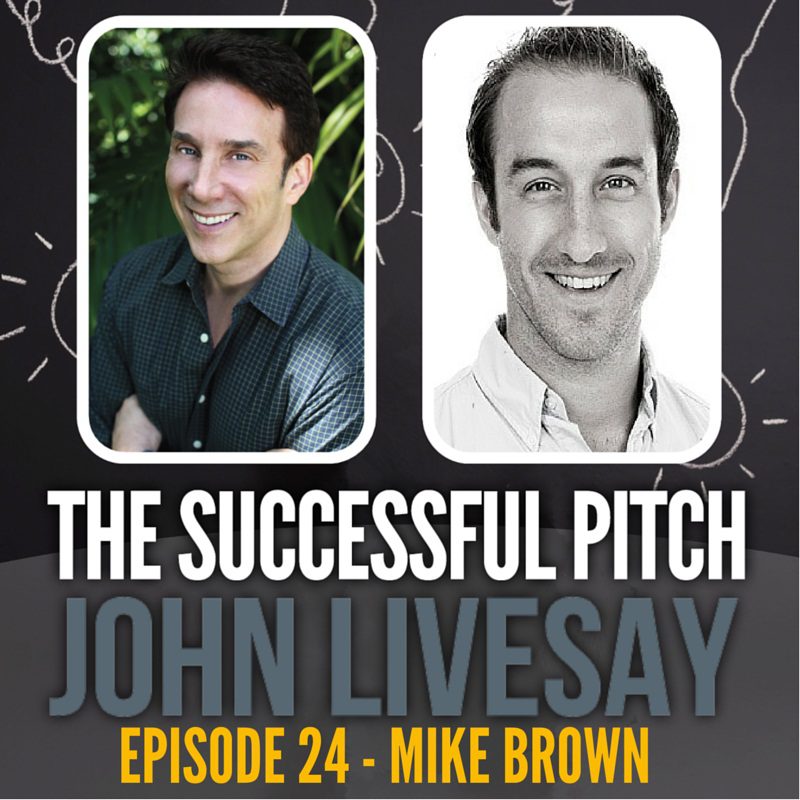
Listen To The Podcast Here
Episode Summary
Mike Brown Jr. was an Associate for Virgin and worked closely with Richard Branson where he used Richard Branson’s money to invested in early stage software companies. He also worked as the General Partner for AOL Ventures before becoming the Founder of Bowery Capital. Mike shares his thoughts on what he calls, ‘internet natives’ and how they’re now at an age where they’re reaching C-level positions in large corporate companies. He also shares his thoughts on who he decides to take to the next level in his pitch deck.
Key Takeaways
- 01:45 – How did Mike become a VC?
- 08:10 – What’s Bowery Capital’s process like?
- 12:00 – What’s a good pitch deck?
- 13:05 – Write down 10 key sentences that you want to convey to an investor.
- 14:05 – Keep your pitch simple. Those 10 headline/sentences are key.
- 15:25 – Why are you qualified to solve this problem? Why are you qualified to run a company?
- 22:30 – Bowery focuses heavily on who they invest in and how they can help the companies.
- 24:05 – Sales deck versus a pitch deck?
- 26:10 – The best founders are the most passionate and not necessarily the best sales people.
- 27:20 – Internet natives are making purchasing decisions and are being hired into C-level positions.
- 33:20 – Mike has an amazing podcast called Bowery Capital – Startup Sales Podcast.
- 34:45 – Mike recommends two books. The Sales Acceleration Formula by Mark Roberge and Traction by Gabriel Weinberg.
Tweetables
[Tweet “Write down the 10 key sentences that you want to articulate to an investor.”]
[Tweet “Best #founders are the ones with the most passion about why their idea is the best one now.”]
[Tweet “Internet natives changing the way #business is done.”]
[Tweet “Successful founders can answer why you are uniquely qualified.”]
Links Mentioned
Bowery Capital Blog
The Sales Acceleration Formula by Mark Roberge.
Traction by Gabriel Weinberg.
Wanna Host Your Own Podcast?
Click here to see how my friends at Podetize can help
Get your FREE Sneak Peek of John’s new book Better Selling Through Storytelling
Better Selling Through Storytelling
John Livesay, The Pitch Whisperer
Share The Show
Did you enjoy the show? I’d love it if you subscribed today and left us a 5-star review!
- Click this link
- Click on the ‘Subscribe’ button below the artwork
- Go to the ‘Ratings and Reviews’ section
- Click on ‘Write a Review’
TSP024 | Mike Brown – Transcription
Posted by John Livesay in Uncategorized | 0 comments
John Livesay:
Today’s guest on The Successful Pitch podcast is Mike Brown Jr, the Founder of Bowery Capital and also the host of Bowery Capital Startup Sales podcast. Mike had a really interesting beginning to his career where he worked for Virgin and was advising Richard Branson on which startups to invest in and then he was recruited away to do the same thing for AOL and he realized that he had the bug to do his own company and started Bowery Capital a few years ago.
Mike has really identified, what he calls, internet natives, people who have grown up with the internet and are now reaching the CMO-level in companies where they are comfortable and see the value of replacing old ways of doing things with new technology. Mike has incredible insights on how he decides which pitch deck to want to take to the next level and how he and his team make decisions fast. Enjoy the interview.
Hi and welcome to The Successful Pitch podcast. Today’s guest is Mike Brown Jr who is the Founder of Bowery Capital as well as a podcast host himself called Bowery Capital Startup Sales. Mike has a really interesting background that I can’t wait to hear more about including working with Richard Branson at Virgin, AOL ventures with a background at Morgan Stanley before launching his own capital VC firm. Mike, welcome to the show.
Mike:
Thanks, John. I appreciate it.
John:
Mike, can you tell us about how you became a venture capitalist and how you went from working at Morgan Stanley to working with Richard Branson and helping him invest some of his money?
Mike:
Yeah, so the quick background on how I came to be a venture capitalist, which Branson’s work, obviously involved investing in technology companies. I too was a research analyst at Morgan Stanley. I covered a lot of the electronics manufacturing companies as well as the system’s hardware and the PC industry and so my background, pretty much, since the beginning has been in business software, has been in B2B and core structure of technology and in 2006, I got a call from a headhunter who was interested in placing me in the venture fund of Virgin, so Richard Branson had an interest in investing in the US and doing a lot of fun things and so I interviewed and got the job.
It was a really formational experience for me, because I had not been in the venture industry, I had not gotten to see what investing and technology companies was like and so it was excellent experience for me to really, you know, see how to invest in a business, how to help grow it, how to scale it, and I sort of take a lot of those lessons with me today to Bowery.
So, that experience, I did that about three and a half years and ultimate got the opportunity to move into a more senior role at AOL and that was essentially doing the same thing, you know, investing a company’s money in startups or technology and with AOL, there were obviously some nuances and differences. We obviously had just spun out from Time Warner and so there was a huge upgrade cycle. They had a lot of legacy technology and so swapped old for new and a lot of our portfolio companies benefited greatly from that and then basically after about six and a half, seven years, I, well, I’ve been doing this for a multitude of other people for a long time and launch the firm and I was pretty passionate about the emergence of the service and the next generation business software. Marketers thought that this was the place to play.
John:
And how did you come up with the name of your VC, Bowery?
Mike:
Yeah, so there’s two threads to that story. One, we were down, around the Bowery, so we spent a lot of time down there and really enjoyed the neighborhood and the feel and obviously we were very into things like CBGBs, which, you know, the kind of rock and roll and coolness of the name was definitely a piece of it, but I’ll be honest with you, naming a venture capital fund was not the easiest thing in the world and you basically go through this process of thinking in your head you have these great names and they’re all named after, you know, a street or an animal or a lake or some kind of things and essentially what ends up happening is you run cursory Google searches and you try and debate with your lawyer about, well, this is not really a venture capital firm, but it still might correlate to your industry, so you get basically dinged every time by your lawyer. So, in sum, half of it was we really liked the neighborhood and the name, the other half of it was, there were not a lot of options and it was one of the better ones that we had.
John:
You know, that’s really valuable to our listeners, because, you know, a lot of startups spend a lot of time, trying to figure out the right name and the cool name and something that represents the brand and so I think it’s very helpful for them to hear that you also have to deal with the same challenges when you’re launching a venture capitalist firm. Everyone has the same challenges when you’re starting something new and it doesn’t matter that you’re the one with the money to give out, you still have the same path to walk. What I really find fascinating is, you know, so many startups think, you know, I have basically three ways to get money: friends and family, Seed, and then VCs, but with your work experience, there’s a whole division in Richard Branson’s company and AOL company that, would you say they compete with VCs or – but it certainty sounds like another alternative for startups to get money.
Mike:
Yeah, I think today the lines are blurring. They compete, they be-friend, they work together sometimes, other times they don’t, so it’s kind of all over the place these days, but you know, corporate venture really has defined a large portion of my background and it’s where I really got my start, right, I can’t say I worked at another VC fund that was independent, so I think it serves a purpose and I think if people know what they’re getting into, it’s very, very valuable.
Again, a lot of people come and ask me about my experiences in corporate venture capital and how to think about it from the entrepreneur’s standpoint and I sort of just coach people, ask a lot of questions and get a real feel for what their investment process actually is, who is the ultimate decision maker, how the parent company works with the portfolio, the investments that they make, and you’ll get a pretty good feel one way or another whether this is worth your time to go down the path or this is a little bit scary, I’m not so sure I want to embark on that or take someone like that money’s.
John:
One of the things I noticed on your LinkedIn profile is you have such a clear description for startups of who Bowery Capital is, what your sweet spot is, and the thing that really impressed me is how fast your process works, can you speak a little bit to that and is that a huge contrast in the Virgins and AOLs of the world?
Mike:
Well, yeah. It’s definitely, if I can make my own investment decision, it’s definitely a large contrast to a corporation making an investment.
John:
Yeah, the speed alone, right?
Mike:
Yeah, but that’s born out of, I think, really, more born out of the necessity for us to move quickly and our own interested in not wasting an entrepreneur’s time and so I think a part of that comes down, I think everybody talks about not wasting an entrepreneur’s time and oh, we move fast, and oh, we can get things done quickly. I think the thing for us that was most important was the process orientation associated with saying that, so we do things like, we force entrepreneurs to share a deck in advance with us.
A lot of times we will send our own materials through so they have a pretty good idea of exactly what we do well in advance in the meetings, so this way we don’t come to the first meeting just doing the classic, you know, tell me about you, and then tell me about you, and so it sort of gets into a much more, a much more sort of action oriented discussion and you can really dig in on very key topics that you, as the investor, care about, and provided you’ve read through the deck and you’re informed about the business.
It’s a much better way to kick off that first meeting and the on the back-end, we have a process internal to our firm where we have basically an admin who forces the process to only go three weeks, so if we haven’t done our research or we have market sizing questions or an issue about a certain company, we really narrow in on what we need to do to get to a yes and the person who is leading the deal will really be forced to kind of concluded one way or the other before three weeks is up, so this way we really old ourselves accountable to that time frame.
You gotta remember too just as a kind of last point and a more high-level point, most of what we’re investing in business software, we’ve defined a total universe or a market and so we kind of have views or perspectives on where those worlds will go.
So, I would say about 75% of our investing, we’re usually taking meetings with founders where we like their approach and we already have an interest in the opportunity that they are going after. It isn’t sort of something where we need to do a tremendous amount of work upfront to get up the learning curve.
There’s still 25% of the investments that we make where it’s totally new white space areas that didn’t even exist three to five years ago, which we are fine with, but on the balance, our view is really if you can come to that first meeting prepared and ready to dive in on specifics and then if you keep your process to what you say, it is, we think we at least do right be the entrepreneur in that way.
John:
That’s great. Let me ask you about the pitches that you see that determine whether or not you want to have a meeting, the pitch deck themselves. You must have heard so many pitches in person and seen so many pitch decks, do you – and since this is a successful pitch podcast, do you have any real insights as to what makes you think is a good pitch deck and more importantly, what’s a good pitch when you meet the people?
Mike:
Yeah, so on the pitch deck, I think really just there’s one or two comments that I’ll make. So first, I think people have a tendency to sort of over text everything. We tend to find a lot of these decks come in, they’re just a massive amount of text on them and for a venture investor, you know, most folks are looking at ten to 15 opportunities a week at this point and so you kind of want to have your pitch and your deck really crafted to mirror what a person like me or another venture investor is going to be interested in it, which is to say, you’re only going to have a few minutes where I’m going to open the attachment and flip through it. So, I tend to tell entrepreneurs before you ever start creating the deck, write down the kind of 10 key sentences that you want to articulate to an investor. Have that flow from the standpoint of like telling a story and then make those ten sentences, basically just be the title components of your individual slides.
John: That’s fantastic information. We’re going to Tweet that out. Ten key sentences that become your ten headlines, right?
Yeah, exactly, because then a venture investor can see – and you’re probably going to say things like, this is the problem or here is my solution, this is the market size, then an investor doesn’t necessarily have to really read the meat and potatoes of the deck, they can literally just look at the top ten, you now, headlines, and see, oh, okay. I understand what this is and they will either be interested in that or not. So, that’s one thing I always say, don’t, you don’t need a lot of bullets and text in all of these documents, because at the end of the day, someone is only going to spend, you know, two or three minutes looking at it before they’re going to reply to you.
And then the second thing is, especially – and this is a little bit more specific to software that we invest in. I really like folks to be able to articulate singulate sales or marketing strategy out of the gate. What are you doing to really build, you know, the first first million dollars of annualized reoccurring revenue and how are you going to approach that, so you usually will see a slide that says, hey, this is a, you know, low price piece of software, so we’re deploying an inbound marketing strategy with these six different channels from the start or on the opposite end of the spectrum, hey, we’re selling very high-priced software for, you know, six-figures plus into a chief technology officer. We’re going to hire two or three sales people and this is sort of how exactly we’re going to go approach and attack the market.
So, those are two I would say pre-talking to me or pre-pitching me face-to-face and then just to kind of close, the one last thing I’ll say on when you are face-to-face with someone like us, I think now especially we’re in a marketing environment where many people are viewing entrepreneurship as sexy and interesting and we’ve seen the volume of pitches and meetings increase substantially, even over the past two or three years.
I would say being able to answer why you are uniquely qualified to solve this problem and then second that you’ve sort of translated your system from being an individual, successful contributor to being the CEO of a company, those are two vastly different things and so, remember, you can’t really become – most people have a system that they work within which is, I know how to do really well myself and they’re obviously rewarded for their successes and they keep that system in place, but that doesn’t scale.
So, when you come into a meeting with a venture investor, being able to articulate, hey, I’ve, you know, learned X, Y, or Z and that’s going to help me translate my own system into being more of a manager or hire a vision person, right, because as a CEO of a company, it’s awesome if you were the, you know, first technology person at X, Y, or Z now large company, but only means that you’re going to be good at being a technology person in that company. If you can’t really translate that into now I’m going to manage people, now I’m going to set vision, now I’m going to actually, you know, make sure the business doesn’t run out of cash, things like that are really, really important in that first meeting with us.
John:
Sounds like you really have to have two great skill sets and sometimes you only have one and not the other. In other words, you have to show why you’re uniquely qualified, as you said, why you are the person to come up with this unique software idea and then the other element of it, why are you qualified to run a company and, as you said, all the things that inspiring people to join your team and managing cash flow and having a vision and keeping ahead of what’s going on that those skills are not necessarily in the same person, so if you’re strong in one, you better develop the other and have some stories to back up before seeing someone like you, is that an accurate recap?
Mike:
Yeah, I think that’s right.
John:
What do you think about when someone says, you know, I’m uniquely qualified to do this, but my co-founder is the one that has the skills to really run the companies. Are you comfortable with that?
Mike:
Yeah, totally and many times that’s the approach that founders will take. One is traditionally sort of business-oriented personality. The other is more technical in scope. So, we have no problem with that structure.
John:
And then when someone is actually pitching you, many investors have told me, you know, we bet on the jockey, not the horse. I don’t know if that’s the case for you, because you’re being so specific that the horse has to be somewhat software-oriented or do you find that sometimes you invest in someone and they pivot?
Mike:
Well, yeah, I mean. They’re all pretty – the horses are at least running the same race for the most part. I think it’s a fair categorization. We’re pretty specific about where we invest, so I don’t think there’s all sorts of different horses, if you will, but yeah, the jockeys are definitely very different and they come from all walks of backgrounds.
Some of them have been in sales, some of them have been in technology, some have been in marketing, some have been former CEOs of companies, so that differs a ton, but then relative to your point about the pivot, I think most of our portfolio today and this is probably historic for me – the pivot in business software that I tend to see is more around product pricing or actual go-to-market, not working in one segment and moving to another, so it’s less around the idea and the, we thought we were going to start a business in, you know, X-space and we moved and pivoted into Y space.
It is more around, hey, we thought this was the price point that we were going to have traction in market with and it turns out that we actually can’t charge this much or we can change this much or here were the five to ten features that we knew were going to work and only three of them worked. So, I see less broad business model changes in B2B and I see more iterations or shifts in strategies within the company.
John:
Ah, got it. That’s helpful. So, sometimes it’s a strategy shifts, not necessarily a product shift?
Mike:
Yeah. I also think, remember, your cap usually, especially at the seed stage, your capital and resource constraints, you just, you don’t have a ton of money and you don’t have a ton of people, so it’s a little bit different than consumer internet or consumer software, because you can launch very quickly figure out over a two to four month period what’s working, what’s not, and can kind of pull back pretty quickly. Again, that’s a very butchered view….
John:
That’s okay.
Mike:
…doesn’t invest at all in consumer internet, so but, yeah, that’s what I would say about it.
John:
Great. The other question I wanted to ask you is, because it seems to me that when someone is deciding whether they want to work with you, that one of the things that you really bring to the table is this sales expertise, because you have to ram up your company and you have such an in depth skill set to help someone find the right sales people, hire them, get case studies, grow and grow and grow, can you speak to what you’re doing beside just investing your money?
Mike:
Yeah, sure. We have, I mean, I have a team here that focuses is largely around sales and marketing related activities. So, what we wanted to do at Bowery was be both very focused about what we invest in and then be very focused about how we help the companies, so essentially the way this manifested itself is three broad buckets.
We are either helping with pre-sales activities, sales activities, or post-sales activities, and we put them in those buckets just for, you know, presentation purposes, it’s not as clean as that as most people will know, but usually companies will come to us having just formed their business and taken in a small amount of paid in capital. Let’s say a million, two million dollars.
They’re usually are not a former head of sales of a company of a first sales hire at a company, so they, I mean, they need help with a lot of things, but one of the things they need help with is the sales component or the revenue generation component of the business and so pre-sales in our world correlates strongly to, okay, let’s get you ready to sell.
So, for folks that deploy and inside sales or outside sales driven model, we’re doing project that specifically focus on things like setting up all their CRM and marketing automation systems, building a lot of the call-scripts, a lot of the qualification frameworks, all the sales pitch decks.
John:
Let’s talk about that, if you don’t mind.
Mike:
Sure.
John:
Can you compare and contrast creating a sales pitch deck as oppose to a pitch deck to get investors? Obviously, I would say there are some similarities. In other words, don’t suddenly put a lot of text on those sales pitch decks either, right?
Mike:
Well, yeah, depends. So, it depends, you know, it depends how your product is sold and it depends how technical, you know, you need to think about the things like the actual IT buyer here and the specificity of the ideal customer profile, but generally speaking, I would say, you really want to deploy a model that mirrors kind of – touching on the why you should care – assuming it’s kind of a first sales pitch, think about it more from the standpoint of talking to an IT buyer versus talking to a venture capitalist and what you tend to find is the largest component of differences, a venture investor will be pretty well up to speed about, you know, where the market is at and what the peer group is doing and the competitors and all these kind of things versus if you’re going in cold and talking to, you know, mid-level IT buyer at a company that isn’t necessarily evaluating, you know, some VNRFP as maybe just trying to find information stuff.
You really want to take the approach of defining why, you know, from the market standpoint this makes sense to have a conversation on, then driving into how that problem or market opportunity relates to their business, that person’s business, and then specifically how you can help solve that problem. So, it’s kind of the three rooms type of concept.
John:
I like that. The three rooms. You know, to me, if you know how to create a pitch deck for investors, you can apply a lot of those same skills, what problem am I solving for you and why me to getting revenue for your company, would you agree?
Mike:
Yeah, sure, and from my end, the best founders that we find, you know, especially are incredibly passionate and pitch their product the best, right, so you can see that come through when they’re talking about the opportunity. They may not be the best sales person out there, but they certainty know the challenge and the problem said and they have a great way of articulating why this matters.
John:
I love that. We’re going to Tweet that out. The best startups are the ones that are most passionate and why this matters, no necessarily the best sales people. That might be a little long for a tweet, but the essence of it is fantastic.
Mike:
Just qualify. In the very, very early days of the business, right, obviously they need to, they then need to hire the best sales people and…
John:
Right and that’s why you have your whole podcast, right, to help them figure out how to do that.
Mike:
Right.
John:
You know, we’re coming to the end already of our time, but before I let you go, I really want to ask about what I see here that’s so insightful. I’ve never seen it anywhere else, which is that this whole shift of internet native entering the C suite is really want driving the growth of what you’re investing it. It’s fascinating to me the people who sort of didn’t grow up with the internet and social media are now in love with technology and seeing that the solution to growing businesses and that’s what’s causing like even sales force you have as being replaced newer technology. Can you speak to that?
Mike:
Yeah, so this is, I mean, it’s the core tenant of what we care about. So, let me give a little bit of background, so when I really joined AOL Ventures, the core folks that I was talking to, not from a entrepreneurs that would come through our door standpoint, but more the friends of AOL and the interested people in technology that where they’re predominantly on the marketing IT side or in core infrastructure like a CTO or a CIO. A lot of what was happening in 2010, 2011, 2012 was particularly exciting to me, because you started to see 20 somethings and 30 somethings either getting enormous amount of budget, leadership, authority, whatever it is in their company and that, to me, was very unique. You had this kind of shift happening.
Most of the time this was driven by a CEO or a group of executives who felt out of touch or not as nimble as some of their peer group, so they would either hire in or promote some of the junior staff in marketing or in technology and so when I started speaking with a lot of those folks, it was very clear that they were really making IT purchasing decisions and that was pretty unique, right, because 10 years ago you really could only go to the top of a company and most of the time a CIO or a CTO and say, you know, here’s my pitch and I want to go through a procurement process and all these sort of things and you had sort of this downward push of PNL, which we had never really seen before.
So, that’s kind of the spark that got me thinking, oh, okay, I wonder if there’s something here and as I sort of gathered more information and research, I realized wow, okay, this is happening at all levels, so not only do we have sort of VPs getting a lot more budget approval and a lot more authority to make purchasing decisions, but we have old generational people essentially retiring out of executive roles or getting pushed out of executive roles to make way for the next generation of IT leaders and then on the complete opposite end of the spectrum, we had individuals at corporations being given the authority to make purchasing decisions.
So, this is the classic, you know, any one can buy Slack, because it’s $9 a month and their manager will not care, because it’s so low of a price point, so you could now build software companies bottoms up, right. You could sell it into individuals or individual within a business unit and then aggregate that demand and move up the ACV, the annual contract value stack to then ultimately go to the C-level person and say, hey listen, we already have 200 people that are using our software, why don’t you just do a master agreement?
John:
Talk about proof of concept, right?
Mike:
Yeah, right, exactly, and so all of these changes and the nature of the IT buyer to me were incredibly, you know, exciting. Look, I still think – so I’m extraordinary bullish and I think we’re in a great time to be a software entrepreneur and the one thing I’ll say, if there’s one thing that I, if I look back over the past two years that I thought would happen faster, the rate of change in this, you know, grouping of internet natives coming into the C suite and the VP suite, I mean, it’s taking a fair amount of time, there’s a lot of friction, there’s a fair amount of inertia.
Companies just don’t move that quickly. You have a ton of people who appear to be very smart IT purchasers. They’re on the conference circuit, they speak a lot, they’re very outward with their content marketing, but they actually don’t really buy that much IT, so there’s a bunch of things happening where I think we still have a fairly long way to go, but by enlarge, there’s been some incredible new hires and promotions in fortune 500 all the way down to kind of middle market companies and then even small businesses starting to take an interest in IT purchasing and sort of either swamping old for new or literally buying brand new software that never existed in our company five to ten years ago.
So, that’s kind of the what Bowery is all about. We’re trying to do – my ultimate hope is that we invest in some of of these companies, obviously, and they sort of change the way business operates. They kind of change the way business, you know, business is done and that’s kind of the dream, I guess.
John:
It’s a great dream. I mean, it’s basically just the phrase, internet natives, I think is fantastic. Internet natives are changing the way business is down. I mean, that’s the takeaway tweet for me. Mike, how can people stay in touch with you? Obviously, we want to promote that you have this amazing podcast that you really go deep on how to hire the right people, especially for this market. Like, if someone is an engineer, they may or may not have the personality to be a sales person. So, tell us about your podcast and stay in touch with you.
Mike:
Yeah, to stay in touch with us, you can just go to BoweryCap.com/blog and you can read all of our content and look at our podcast and things like that and I would say the easiest way to get in touch with me is through a referral or, you know, one of my colleagues here at Bowery and the sales podcast, I mean, it was really driven largely by our own internal portfolio’s interest in having, you know, leaders or contributors in the sales continuity really talk about very current and tactical issues as it relates to challenges they face and so we’re about 30ish episodes in now and we’ve had some heads of sales or people in various software organizations that really kind of give a good point of view on very, very specific topics.
John: Fantastic and is there one book that you really like or you would recommend for startups to read either about life or the business?
Mike:
That is a very loaded question. You know, one book I would recommend that all entrepreneurs read, or actually, I’ll give two books that I really recommend to folks. So, there’s a chief revenue officer by the name of Mark Roberge. Folks who are listening will probably know Mark. He’s really one of the only individual sales contributor, so he started as the first sales hire at HubSpot and he worked his way all the way to basically run the revenue organization, he’s the chief revenue officer and manage a team of 200+ people. He’s a very difficult thing to do given the organization tends to really need more leaders to come in above the prior leader, especially as you prep for sort of going public and things like that.
You know, many of these chief revenue officers get slotted out of those roles, so Mark has got this amazing trajectory going, taking HubSpot from zero to 100 million in sales and he wrote this book called The Sales Acceleration Formula, where he covers very, very, very specific topics. How he hired his sales people. How he did the actual selling, how his customer success team helped manage the sale. It’s an extremely tactical book that’s very, very helpful for anyone that’s going to start a SaaS organization.
John:
Well, it’s got a great title. Sales Acceleration Formula. I love it.
Mike:
Yeah and then the second I would say is a man by the name of Gabe Weinberg. So, Gabe founded a business called DuckDuckGo, which is in the search business and, again, Gabe comes at it a bit different, but wrote a book called Traction and as you think about sort of a SaaS business and really kind of deploying a marketing agenda or getting customers online, if you really want to be good at growth, this is a great, great read for anyone. So, I really recommend those two.
John:
Those are great recommendations. We’ll be sure to put those in the show notes as well as the link to your podcast.
Mike:
Oh, cool.
John:
Thanks again, Mike. It’s been a great, informative show about how to really target your pitch and a deck and how to grow your business fast. Thanks again.
Mike:
Thanks for having me.