
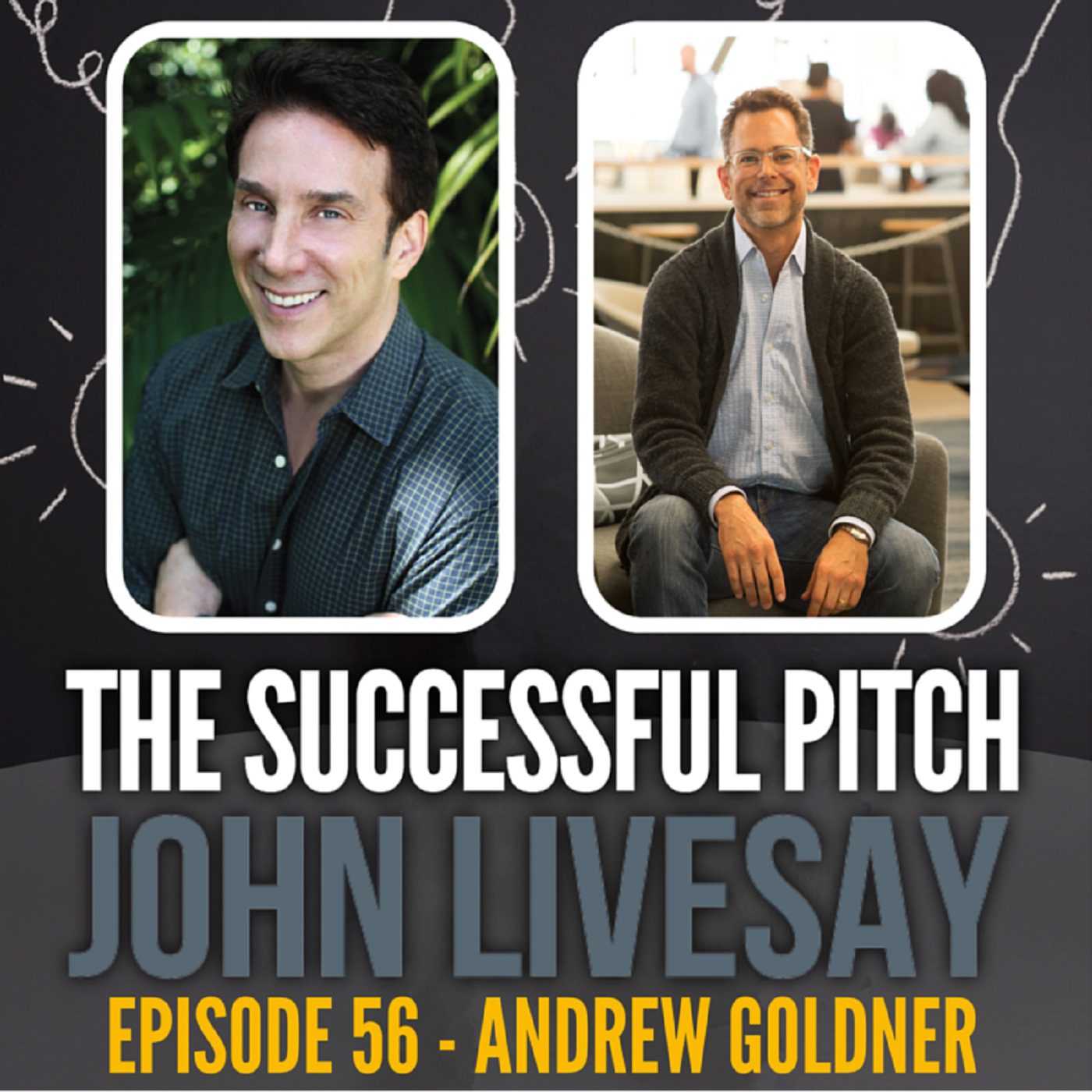
How To Connect With A VC, Andrew Goldner | TSP056
Posted by John Livesay in podcast | 0 comments
Listen To The Episode Here
Episode Summary
Andrew Goldner is the co-founder of GrowthX, a trust-network of innovators and investors. GrowthX is more than just a venture capital fund because it focuses on generating value for others first, before making a pretty penny. Prior to starting GrowthX, Andrew was a global business leader and senior technology consultant. Andrew discusses with John on what makes GrowthX different, as well as why startup founders do not need to move locations to build their vision.
What Was Covered
- 01:50 – How did Andrew go from Reuters to becoming a VC?
- 05:15 – You don’t have to move locations to get funded.
- 08:10 – What is the vision of GrowthX?
- 09:00 – Unless your customers are in that expensive zip code, why even move there?
- 11:45 – GrowthX will be featuring the founders’ faces on their website instead of their company logos.
- 14:25 – GrowthX plays for the long term and is more intently focused on building stronger relationships than bigger and better profits.
- 16:50 – When you first join a startup, it’s best to just sit and listen to those around you before acting.
- 18:55 – What kind of attitude does it take to become a good startup founder?
- 21:15 – How can startup founders remain focused?
- 23:25 – Remember, you have a set of priorities and others need to respect that.
- 24:30 – Don’t mistake ‘being busy’ as ‘making progress’.
- 28:00 – Is the fund you’re trying to reach really the right fit for your vision?
- 29:25 – How hard is it really to change someone’s behavior? Andrew explains.
- 32:35 – Visit Growthx.com for more info!
Tweetables
[Tweet “Busy doesn’t mean you’re making progress.”]
[Tweet “Focus on quality of investor meetings, not quantity.”]
[Tweet “Humility is a trait investors seek in founders.”]
[Tweet “Attitude allows you to get off the self-esteem roller coaster.”]
Links Mentioned
The Successful Pitch
GrowthX
Essentialism by Greg McKeown
Andrew Goldner’s Twitter
GrowthX Twitter
Want the Transcription?
Crack The Funding Code!
Register now for the free webinar
Share The Show
Did you enjoy the show? I’d love it if you subscribed today and left us a 5-star review!
-
- Click this link
- Click on the ‘Subscribe’ button below the artwork
- Go to the ‘Ratings and Reviews’ section
- Click on ‘Write a Review’
TSP056 | Andrew Goldner – Transcription
Posted by John Livesay in Uncategorized | 0 comments
John Livesay:
Welcome to The Successful Pitch. Today’s guest is Andrew Goldner, who works at GrowthX, which is a VC fund. He has a really fascinating background from working at Thomson Reuter in Asia to being a lawyer to now being a VC. He has a whole explanation of what it takes to be successful to get funded as a founder and the qualities they’re looking for in a person, which include humility and the ability to focus. He said being busy doesn’t mean you’re making progress. You need to have thoughtful intention of what you want to accomplish every day and then be transparent to your team so that you can get what you need. He’s really big on focusing on the quality of the meetings you have with investors and not the quantity. Enjoy the episode.
Hi, and welcome to The Successful Pitch Podcast. Today’s guest is Andrew Goldner, the co-founder of GrowthX. Andrew has a very interesting background that goes all the way back to when he was winning the Journalist of the Year award for Thomson Reuter in 2009 and then has now become a VC. So he has quite an interesting background. He’s a mentor at Golden Gate Ventures. He also mentors Startup Mexico, helping them become innovators there. He has a whole wide range of experience and we can’t wait to hear him tell us all about his insights and what it takes to become a successful founder and get funded. Andrew, welcome to the show.
Andrew Goldner:
Thank you very much, John. I’m happy to be here.
John:
I always like to have people tell us how they got to where they are and, certainly, we don’t get many journalists becoming venture capitalists. So that’s an interesting story. I’m guessing you had a passion for journalism and somehow it transitioned into shifting from telling stories to making them.
Andrew:
It’s actually a little bit different than that. I would love to claim myself among the profession of journalism. I’m not actually a journalist. At Reuters, I was the publisher, and so to a certain extent, I was a suit in the corner. But I had the distinct honor of working alongside of some of the best journalists in the world at Reuters after Thomson and Reuters came together. I do think that I appreciate journalism and understand the rigors of journalism and I think I was fortunate, from that perspective, to connect with journalists. But, I, myself, am not a practicing journalist.
John:
Got it, and yet you got honored with Journalist of the Year in 2009. How did that come about?
Andrew:
Yeah, that was very special. I mean, every year, Thomson Reuters and Reuters, historically, has gathered some of the best journalists from across the file. David Schlesinger, the editor-in-chief at the time instituted something very new that year, which was pushing innovation in the newsroom, which is a lot of what we were working on together and I was fortune enough to be working alongside of some of the top journalists in Asia Pacific when we innovated around the idea of taking the Reuters messaging platform and bringing in journalists into a chat room so that clients could interact directly with journalists as they were at the edge of news and provide an edge to those clients such as FX traders. It’s something that we started regionally and ended up going globally and it still operates today.
So, at the time, pushing innovation and wanting to recognize it, David created that new award and so I and the team that I was fortunate enough to work with were awarded the Journalist of the Year for that work.
John:
Well, to me, it seems like the bridge between that award and what you’re doing now is that it all stems from a passion for innovation.
Andrew:
That’s absolutely right, John, and I appreciate that perspective, and I think if you look at my nonlinear path, I think there are a couple of themes that are consistent and, certainly, entrepreneurs and innovation is one of them. I try to do that inside of a law firm. I did that inside of Corporate America. I did that on my own. I’ve done that at early stage companies and now, of course, doing that at GrowthX.
It was an extraordinary time to be at Thomson Reuters and to be associated with Reuters News. There was a tremendous amount of innovation that’s gone on that continues to go on and, of course, the changes that are taking place in the media space are dramatic and so innovation has certainly played a role.
John:
So, tell us a little about what you do at GrowthX and what makes it so unique in that the way you do seed funding has its whole premise that you and I talked about earlier which I just love which is you don’t have to move to get funded.
Andrew:
Yeah. Well, to think, there is a couple of different components to the story of what we’re trying to do at GrowthX. We want to try and keep it simple but the reality is we are trying to innovate and do things differently, and so it’s less of an obvious story. I’d say the first component around GrowthX is that if you look at the history of GrowthX, we were born as a consulting firm that provided market development services to seed stage startups. The idea being that seed stage capital is plentiful nowadays but because the cost and complexity of launching a company and a product are so much less than they used to be, the reality is that you differentiate yourself at the early stages of a company.
Nowadays, less so about the product and more so about how do you take that product, apply it to a market, go to market, find product market fit, earn predictable revenue, and scale, and the reality is that, though seed stage capital is plentiful, the expertise in Silicon Valley and startup cities around the world in going to market, finding product market fit, earning predictable revenue is actually in quite short supply.
So we started out as a consulting firm, earning both cash and equity and, through that work, we were able to prove that our market development expertise is actually a more valuable form of currency than investment capital because as we were building that consulting firm working alongside venture capitalists, they were deploying money and getting a certain amount of equity in return, we were deploying our human capital and not only get compensated with cash, but we were earning significantly more equity than the angel and seed stage investors were getting at that same time.
So that was really the genesis. So GrowthX quickly grew from that into a venture capital model because we thought that there was a way to capture more value for everybody involved and align more long-term with everybody involved, and that includes the founders and the portfolio companies, the limited partners, the general partners, the co-investors. Everybody in our community, we think, is more better aligned as a venture firm that invests dollars in human capital as opposed to just consulting services.
John:
So tell me about some of the vision you have. I know you’re starting to do some work in markets like Nashville and Dallas that are not traditionally known as — well, Dallas has a Hubbub up but Nashville is certainly not. Letting people live where they live and still get access to seed capital, what’s the big vision for GrowthX? Are you going to be –?
Andrew:
I appreciate you asking because it’s obviously a lot more interesting than it is with the structure of the fund. The reason I bring it up is because they’re related. The reality is we started out with the premise that you’ve been referring to, which is that you ought not have to leave your home to build your company. The founders of GrowthX find it surprising that founders from around this country and around the world move themselves to one of the most expensive ZIP codes in the world in order to position themselves better to raise money when, in reality, they’re causing themselves to need to raise more money and for those people that have spent time in Silicon Valley, it’s a wonderful place but it also is high-paced and can be a bit of a rat race and so getting lost in Silicon Valley is an easy thing to happen to young founders.
So, our premise is unless your customers are in Silicon Valley, why move here? There’s more opportunity to work with developers in your hometown and leverage developers elsewhere. Keep the cost base low, stay focused, and let’s see if we can bring venture capital to you.
So, when we broke it down and said, “Well, how do we solve that? How do we do that at scale?” because of the economics of venture capital, it’s what led us towards the model that I just discussed which is being local in these communities. Being insiders as opposed to outsiders just visiting with a GrowthX team there that not only deploys capital and is an active member of the entrepreneurial community, but also can build a team of market development experts who can help these seed stage companies with the traction requirements that they’re going to need to satisfy to then raise series A venture capital is how we’re going about doing it.
So, yeah, our first office was opened up in Nashville. My partner, Brad Holliday is a 20-year veteran of the space in around the southeast and so we were lucky enough to connect up with Brad and have him as a partner in the fund, open our first office outside of Silicon Valley in Nashville, Tennessee, and we’re very active around that state. Tennessee has done probably the best job of every state that we’ve been exposed to in terms of the intentional approach to using entrepreneurism to fuel economic growth. Launch Tennessee runs a network of accelerators around that state and they’re just doing a terrific job and, by the way, playing to their strengths, which is part of the theme as well.
You have companies that are assuming they need to come to Silicon Valley to raise money or to accelerate their growth. But the reality is, again, unless there’s a history of “been there done that” or the customer base here in Silicon Valley, why not go somewhere like Memphis if you’re going to do logistics at the seat of FedEx. Or if you’re going to do health tech or music, why not do it in Nashville. Or if you’re going to do CPG, why not do it at The Brandery in Cincinnati. Or if you’re in retail, why not do it at REVTECH in Dallas with Nordstrom and Neiman Marcus.
So I think we’re looking for opportunities to enable communities that are playing to their strength and enabling their startup communities and we want to play a very important role, not just as outsiders, but to be there and physically present.
John:
I love that. Can you speak a little bit, Andrew, about your other big disruptive shift a little bit in that everyone talks about the importance of the team and building a network of trust? But what I love that you said to me earlier was that your GrowthX is going to be featuring the founder’s faces as opposed to the logos of the companies that you’re funding.
Andrew:
Yeah, thank you for asking. I mean, we’re working on a new website right now. What we’ve got up is just kind of a placeholder and we’re being very serious about this website because it is going to be our face to the world and we want it to embody all of these concepts that we’re building the culture of GrowthX with.
I think, typically, when you go to a fund website, you’ll see the portfolio with logos. Our view is that it should be community and human-centric and so our landing page is going to be filled with the faces of our founders. You’ll be able to dig in and hear their stories – to read about and learn their stories – and certainly hear about what they’re working on now. But, ultimately, we’re building a community of people. We refer to it as a trust network.
John:
It’s so great because when you have a trust network, then that’s ultimately what the investors are investing in is you and they have to trust and like you before they’re going to invest in you and most people lead with the product when they’re pitching as opposed to leading with who they are.
Andrew:
Well, that’s absolutely right. One of my founders — co-founders at GrowthX is Will Bunker. Will is the founder of what became Match.com and, after exiting that, has become a very active angel and venture investor and he was doing a significant number of relatively small investments and he came up with the idea of the trust network. Because the reality is when you’re doing over a hundred different investments, which he has in his portfolio, at the pace he’s making those investments, the only real way to do that is to build a network of trust and to do that by focusing on relationships and not transactions.
So that as you’re looking to do deals or as deals are brought to you, you trust the person who brought you that deal. You layer on a little bit of your diligence but you can make the quicker decision, and when you’re looking at a deal and you want to act fast, you can look into your trust network and say, “Who is a subject matter expert that we can enable to help us think through this? Who are the co-investors that would be strategic or otherwise helpful to this company and how can we enable them to come in?”
Again, because we optimize for relationships and not transactions, we’re not looking to take a piece of every relationship that we form. When we connect an LP in our fund to another fund, we don’t look to benefit in any way other than helping to grow relationships. When our LPs invest directly in the startups in our portfolio, we don’t force them to form a sidecar so that we can take a couple of different points of carry in addition to that which we have in our portfolio. When we introduce startups to other investors, we don’t sharp elbow ourselves into a larger position. I know, by the way, if, ultimately, there’s an investor that makes more sense than us then we’re in for the long-term. We’re playing this the long game and so if that particular opportunity doesn’t pan out for us, that’s fine because there’s plenty of other opportunities and if it works out for someone else in our community, we’re just as happy.
John:
Well, that so speaks to your character and, as you said, the long-term vision and not forcing something that’s not a fit and trusting that the right thing will be a fit. One of the things you wrote that I just love the analogy is An Astronaut’s Guide to Life in a Startup and, specifically, this whole concept of humility as it relates to a minus one, a zero, and a plus one, can you bring that to life for us?
Andrew:
Well, I mean, that’s something that came right out of the book that Commander Hadfield wrote that was my inspiration for that piece. You know, again, when you enter into an organization, if you’re striving too hard and too quickly to show off just how much value you can add or how smart you are, you end up distracting and detracting more than actually adding value, and a startup is an extraordinarily sensitive entity. It’s one thing to step into an organization of 55 thousand employees; it’s another thing to step into one with only 5 that’s only been around for five months.
So, absolutely, one of the things that we talk about and certainly something that we look for in the founders that we’re investing in is that idea is your best case when you enter into something new – as odd as it may sound – is to really try to be that zero, to just try to sit and listen and learn. Don’t be too quick to act. Don’t be too quick to think that you have to show off your value or your intelligence. The most important thing is that you have a neutral impact until you’re able to then add value and then reach for the opportunity to become a plus one. But, you know, as Commander Hadfield wrote, proclaiming your plus oneness at the outset virtually guarantees you’re going to perceived as a minus one regardless of the scales that you actually apply regardless of how you actually perform.
So, it is certainly a lesson that I’ve learned. I’m proud to apply it and it’s certainly something that we look out for when we’re speaking with founders.
John:
Well, it’s almost like if you say you’re cool, you’re not cool.
Andrew:
Yeah, I mean, I think, to a certain extent, that’s true. I think humility is something that’s very important. We’re often asked at GrowthX, as a fund, of course, “What do you guys look for? What do you invest in?” and I think the answer they’re searching for is, “Industries, sectors, stage, business model.” Our answer is a little different. Our answer is it’s very human-focused and our number one response is we’re looking for founders that lack hubris. I’m biased. I grew up in Cleveland, Ohio, so I have a bias to Midwest and the life lessons that you learn at an early age growing up in the Midwest. I think humility is an important thing for people to have.
John:
Well, I’m just supporting your bias because I’m from the suburbs of Chicago and I gravitate towards people from the Midwest. I think just growing up in an environment where there’s so much snow and you just help your neighbors that you don’t even know get out of the snow because you hope somebody will do that for you sets the whole tone for your mindset. Speaking of mindset, in addition to humility, you talk about attitude and focus in this great article. Can you speak a little bit about what kind of attitude does it take to keep bouncing back when things don’t go right?
Andrew:
Well, listen, I think that is. Attitude really fortifies. I think it was Elon Musk that famously said that the startup adventure is like chewing broken glass while edging yourself towards the abyss. It’s an extraordinarily uncomfortable thing. It’s literally living minute to minute, hour by hour, day by day outside of your comfort zone. It’s what makes it an extraordinarily difficult journey and when you’re going through that and you’re feeling not just the inter-month highs and lows. This isn’t just the intra-week high and lows. This is the intra-day high or lows. From one hour to the next, you could go from cloud nine to the deepest of doldrums and you may simply have been set off by an email from a venture capitalist.
What fortifies, what gets you through it is the attitude. There’s going to be a lot of challenges and a lot of miracles between startup and success. The one trait, at least, that I’ve been – that I’ve observed – when I have met with entrepreneurs across continents, the thing that is the most common among them isn’t the full stacked development skills. It’s not their high IQ. It’s just that orientation to stay calm and carry on.
John:
Yes, I call it getting off the self-esteem roller coaster where you’re going up and down.
Andrew:
Very well put. I’ll tell you what, when everything is flying high, when everything is going well, it’s easy, right? But when you’re facing the end of your runway, when you’re not sure how you’re going to pay your employees, when a deal that you were certain you were going to land and you were counting on ends up flipping the wrong direction, that’s when true character shines.
John:
Right, and in your final aspect, it’s so important, especially running a company, is how do you stay focused and not get distracted? You have some great insights on that.
Andrew:
Well, it’s a very difficult thing to do. I mean, honestly, there I’d refer to Greg McKeown and his book, Essentialism. It’s a must-read and it’s not just a must-read for anybody who’s an entrepreneur that asks me to suggest a book but anybody that I speak to who’s asking for advice on a book to read or is struggling through what so many of us struggle through nowadays in the age of information and constant attention and awareness and access is the ability to focus and prioritize and I think there’s a lot of extremely powerful messages that Greg portrays through Essentialism. For me, one of the single strongest ones is the idea of being intentional of what your priorities are, otherwise you’ll find yourself spending most of your time working through other people’s priority list.
John:
Yes, that’s so great because you’re constantly reacting and you’re not focusing on what you need to get done then you don’t make any progress, right?
Andrew:
That’s exactly right and, you know, I like to share with people in the context of this type of conversation. I would no more ask you to subjugate your priorities to mine than I would accept you asking me to subjugate mine to yours and though very few people, hopefully that you run into, are open and obvious about wanting you to subjugate yourself and your priorities to them and their priorities, the reality is that the subtleness of their behaviors or the subtleness of their reactions to your relationship, that’s the message that comes through loud and clear. When they’re impatient about an email response, when they’re needing something fast, or when they want you to reply and they push you, the reality is that you have a set of priorities and you need to communicate those clearly to the people in your community and do so with respect and if those people don’t show you the respect back and appreciate that you need to focus on your priorities and that you’re looking forward to engaging when you have that opportunity, well, that’s an invitation for someone to nurture themselves out of your community.
John:
Yes, or out of your company because sometimes you can hire people who are so needy and impatient that they don’t understand that you have other people to answer and other things to get done besides what they need done.
Andrew:
That’s absolutely right and I had this conversation often in the context of fundraising because not only do I spend all day every day with the fund and meeting with founders, but I also give a fundraising workshop and I do it as frequently as I’m invited and helping founders understand how to avoid the number one mistake that I believe a founder makes when raising investment capital and that is the mistake of being busy for making progress.
In Silicon Valley now, for a variety of reasons, it’s not difficult to get a meeting with an investor but the reality is is that investor aligned and is it an ideal investor for the story you’re telling, the company you’re trying to build, the stage you’re at now? So I find, often times, a hand will go up in the audience at the workshop and, “Well, Andrew, I appreciate what you’re saying but I’ve been working with one VC. I really want them on board. I’m really trying to help them understand the following things. They don’t seem to understand it so I need to make sure — I need to tell my story differently so I can help them understand these things or the questions that they’re asking don’t seem to be relevant but I need to make sure they understand them because I have to get them on board,” and my response is, “Listen, if you’ve taken the time and you’ve been thoughtful and intentional about defining, through logic, what the profile is of the investor that’s going to be most likely to be interested in what you’re doing now and it’s consistent with the story you’re telling and the company you’re building, you know right away that this person you’re speaking with, it’s just not a relevant person for you to be raising money for right now.” The traction effort delta. I’m getting money from them — it’s alluring and so be respectful, be polite, suggest that maybe this isn’t the right opportunity but you’d like the opportunity to engage later, and speak with the people that appreciate what you’re doing and that get what you’re doing and want to dig in from the right perspective as opposed to somebody you think is distracting.
In a roundabout way, I’m asking your question right back. The focus, I think this is how you focus. I mean, focus doesn’t happen without being thoughtful and intentional about it and whether it’s what I’m going to accomplish today in spending the first 15 minutes of my day being thoughtful about what my priorities are and then being polite and transparent with everybody else to let them know what I need to focus on today and hope that they’ll appreciate that and stay in the community or whether it’s what I’m going to accomplish in 2016. I think the same applies is the way that you stay focused is by being intentional about what your priorities are and whether it’s a post-it note on your monitor, a reminder app on your iPhone, whatever the case is, whatever it is that you need to do, keep it front and center.
John:
We’re going to tweet out a couple things you said. One, being busy is not equal to progress and the second is focus on quality not the quantity of meetings you have with investors.
Andrew:
That’s exactly right. I mean, I’m amazed at how often I am meeting with a startup and when I ask them what their fundraising strategy is, it is essentially to reach out to Google or Quora, find out what the top investors are in their geography or at their stage, to alphabetize those, to drop them into an Excel Spreadsheet or Google Sheet, to share that Google Sheet out with their friends and invite everybody to please annotate it with who they have relationships with, the strength of those relationships, and their willingness to make an introduction. But at no point have they even stopped to consider whether that fund or that person is the right person for the story they’re telling and the product they’re building. Is this the right person? Is there a reason that they will be attracted to what you’re doing, not just generally deploying capital?
So, for me, when I give my fundraising workshop or I’m speaking with entrepreneurs, I quote Albert Einstein and it’s one of the few opportunities I have to quote Einstein, when he says if he had an hour to solve the world’s problems, he would take 55 minutes to find the problem and only 5 minutes to solve it. I think that’s one of the most important quotes because it reeks of intentionalism and that’s a word that I probably overuse but it seems so useful, especially in the context of moving at the speed of startup. It’s very easy to jump into action but the reality is, by first spending a significant part of the time being intentional and defining what it is you’re trying to accomplish before you jump into action, it can actually be more productive.
John:
Well, you get a lot more rapport with someone if you show them the respect of doing a little bit of homework on who they are and what’s important to them.
Andrew:
I think that’s right.
John:
Well, before I let you go, we’re actually going to mention — put the Essentialism book in the show notes for everybody. But I do want to ask you about the Cargo Chief story about how hard it is to change people’s behavior when you’re putting a new product out.
Andrew:
Oh, Cargo Chief. Well, you know, Cargo Chief is just a fantastic, fantastic company. It’s out of the Bay Area. The CEO and co-founder Russ Jones is an outstanding man – proven track record. Essentially, Cargo Chief is the Saber of long haul trucking. Imagine if there were 10 thousand different airlines and if you wanted to go from New York to Chicago, you had to pick up the phone and call each of them and ask them if they were going to Chicago and whether they had a seat on their plane and then keep calling until you found one that was going where you wanted when you wanted and, in many ways, that’s how long haul trucking works currently and Cargo Chief is doing something extraordinary to innovate around that so that they can know the lane and capacity of every truck on the road in America.
We started working with Cargo Chief and helping them to find product market fit pretty early on and I think one of the things that we identified early is that when you’re building a two-sided marketplace when you are introducing an innovative product, you need to be careful not to drink too much of your own Kool-Aid in that the product might be innovative. It might ultimately lead to efficiencies in cost savings or higher profits but human behavior tends to trump everything else and changing human behaviors is extremely difficult and one of the things that we have found with innovative products, especially in the marketplace, it’s difficult to build up liquidity in that marketplace when you’re forcing to change your behavior from launch without having any true value to offer to or to be perceived by the customer.
So the advice that we offer and, certainly, the work that we do at GrowthX when we’re working alongside of select portfolio companies and helping them get product market fit is to figure out how to engage current behaviors and provide a significant amount of value by engaging those current behaviors and then, over time, as you introduce more value and deliver more value, then you can begin to change behaviors.
John:
So great. That’s really, really helpful. Andrew, how can people follow you on social media. Give us your Twitter and all that good stuff.
Andrew:
Oh, I appreciate that. So, personally it’s @agoldner. GrowthX is @GrowthX_SF, and growthx.com. We love having visitors, we love to hear from people. It’s a placeholder now but give us about four weeks and I think people are going to enjoy what they’re going to see. It’s going to be an opportunity for them to join the community and interact, introduce themselves, and we feel very fortunate to be in the space we’re in at the time that we’re in it to be meeting founders every day who are devoting themselves to ideas that they believe in and we think of those as opportunities and we always want to express our appreciation and we love hearing from founders. So if we can be useful, we want people to reach out.
John:
That’s great. I love the attitude, I love the intention, I love the focus, and, most of all, I love the message of humility because that requires a lot of emotional intelligence, which is what a true leader like you have.
Andrew:
Well, thank you, John. I really appreciate it. I’m honored to be on the show among your other esteemed guests. I really enjoyed this conversation. Have a wonderful day today.
John:
Thanks for listening to The Successful Pitch Podcast. If you like the show, please go to iTunes and write a review and encourage your friends to write reviews too. It really helps get the word out. You know, people say that the longest distance is between someone’s mouth and their wallet. People can tell you they’re going to invest but when it comes time to write the check, they don’t do it. So how do you get people to say yes and then follow through? Visualize yourself on the left side of a riverbank and you have to cross the river and on the other side of the river is where the funding happens.
So, first, you make up your idea and then you make it real and then you make it recur. Once you start dipping your toe into the water to get to funding, that’s where I can help. I get you across that river faster than you would on your own with a lot less frustration that you will get when you hear a bunch of no’s and you don’t know why. So, if you want some help getting funded faster with less frustration, go to my free funding webinar, sellingsecretsforfunding.com/webinar and sign up and get in depth information on how you can get funded fast. Thanks.
TSP055 | Nihal Mehta – Transcription
Posted by John Livesay in Uncategorized | 0 comments
John Livesay:
Welcome to The Successful Pitch. Today’s guest is Nihal Mehta, who is the partner at Eniac Ventures. He’s invested in so many great startups that you’ve all heard of from Airbnb to Uber. He has a really great look as to what he is looking for when he decides who he’s going to fund. 65% of it is all about the team. He wants them to not just be hungry, but be ravenous and be mission-driven, so compelled to make a difference, and he’s also looking for someone who’s got a big vision and a big market, and then he likes to see product demos because he wants to see if it works and he wants to play with it.
He’s a real specialist in the mobile world. He has a whole focus about, “As a founder, you should create the lightning and your team should be able to catch it,” and he also really talks about the need to fund founders who are humble and care about the right things. For example, really being mission-driven but not really caring about fancy cars. So those are the secrets that you’re going to learn today. Enjoy the episode.
Hi, and welcome to The Successful Pitch Podcast. Today’s guest is Nihal Mehta, who is the founding general partner of Eniac Ventures, which is a mobile venture firm. He’s founded five startups and invested in more than a hundred since 1999. Clearly, a very busy man as one of the things he did was LocalResponse: the revenues grew over 2,000% over a three-year period, which was able to place the company at the #204 slot on the 2014 Inc.’s 5000 fastest growing companies, and on the Forbes list in 2013, he was #67. So, clearly, he knows what he’s doing. He’s invested in things ranging from AdMob – which got sold to Google – Airbnb, and, of course, the famous Uber. He was named the semi-finalist for Entrepreneur of the Year and, in 2012, a top 100 coolest people in New York tech by Business Insider. So, clearly, that’s somebody I want to get to know. Welcome to the show.
Nihal Mehta:
Thanks for that crazy introduction. It’s an honor to be here. Thanks for having me.
John:
Oh, you’re very kind to say that. You know, one of the things I want to jump into, which I normally don’t do is you have this wonderful video called A Day in the Life where there’s no white space on your calendar. I just so responded to that as, “What a smart branding statement for you, your company.” I mean, I literally felt like I got to experience what a typical day was for you starting with walking your dog to work. What gave you the idea to create such a great video?
Nihal:
Yeah. I think it’s interesting, actually. It took a while to get that video on the calendar but I like to, especially during the day, just kind of run super hot in terms of optimizing your time and maximizing and then literally, having meetings every 30 minutes. I think it’s important, obviously, to have some time to follow up but, I think, during the days when everybody’s active and when you can get the most face time with folks and then kind of early mornings or late nights, you can kind of do more asynchronous things like catching up on emails or doing your work. So I feel like during the day when people are out and about is your time to make the most impact and have meetings and I’ve always done that.
John:
It’s a fascinating look at your focus is on mobile and yet you’re such a big believer in face to face, which I love the dichotomy because so many people think, “Oh, I’ll just text everybody,” and you’re like, “No, we’re going to have meetings.” One of the things that really stood out in that video was you’ve created a circle of trust. Can you talk to us a little bit about what you do and how you came up with that?
Nihal:
Yeah, I think every – so, I’m now a full-time venture capitalist, but every startup that I had created prior to becoming an investor, I think it’s really important to have a very strong management team. Especially when you’re out there pitching to investors or large customers, you need somebody to make sure the trains are running on time. So, I think I’ve been fortunate to have those at some of my companies and those companies have done well and I’ve been unfortunate to have put – not set up stellar teams at some of the companies as well, and those companies are not doing so well.
But if you look at some of the folks that are probably the most ambitious in the industry, if you look at people like Elon Musk with Tesla and SolarCity and SpaceX or if you look at Jack Dorsey with Square and Twitter, I think that’s probably the number one thing that they all say is make sure you have a killer team, a killer M team that can run the show and your job is to kind of create the lightning and their job is to catch it and make sure they can distribute it internally. But it’s definitely easier said than done. It’s a pretty big challenge to be able to do that.
John:
Well, it’s what I hear over and over again from investors like you that you’re looking for and whether you decide to fund a startup or not, when they pitch you is the importance of the team. Do you have any lessons learned that you can share with founders about how to create a good team? I’m guessing part of it is being able to articulate the vision or, as you described, to create the lightning.
Nihal:
Yeah, I think, for us now, investing from Eniac, we want to make sure the founding team is self-sufficient, meaning, they can build and ship the products themselves, and that basically requires a technical co-founder and I think our bar is higher than most where we will not invest in a business unless they have a technical co-founder. So this is somebody that, maybe, is full-stack or they can at least build a prototype and ship it, and the reason we demand that is because, first of all, if the company can’t raise additional funds, the market goes south or for whatever handful of reasons, that founding team can still work all day long, all week long, all night long to get product out. They don’t have dependencies on other folks. So, I think that’s really important.
Two, I think, when you’re building a team to garner respect of people that you recruit, you should definitely know the trade. Know the trade enough to speak the language and if you can’t, then it’s going to be very hard for you to recruit amazing people that respect you. So I think that’s another reason why we require a technical co-founder. So that’s kind of our emphasis on teams as it can be two or three folks. It doesn’t have to be a large team. Two or three folks can build and ship the product and build the company and raise seed financing and then make all the other critical hires, afterwards.
John:
Great. Can you take us back to your early days? Did you always know you wanted to end up here? Did you know you wanted to be a venture capitalist as opposed to an angel seed investor? How did you craft that? Obviously, you’ve been a very successful entrepreneur yourself first and that must help a lot.
Nihal:
Yeah, I think – I never imagined myself, actually, to being a venture capitalist. I was always a computer nerd growing up. I, like many others, kind of disassembled and reassembled the computers and root drives and operating systems at a young age. Was always tinkering, had, basically, all the phone lines and fax lines in my household occupied with bulletin boards constantly transmitting files or messages or whatever it is, pre-internet in the late ’80s and early ’90s.
You know, I was always super passionate about computers and connections, and so I think my inspiration was, I always say, kind of my only real job was working for Microsoft in 1998 as an intern the summer before my senior year of college, and getting to the valley, being a computer nerd at that time, was a dream. It was an oasis driving up and down 101 and seeing the first Yahoo billboard. This is pre-Google and kind of the gold rush that was happening.
That really got me excited, and I think I came away from that summer back to college knowing that I wanted to start something. I wanted to start a tech startup and so I did that right after college, literally accepted a job with a bank in New York, which was kind of the typical track for folks coming out of UPenn – where I graduated – but I never worked a day in my life at that bank. Instead, I started my first startup and I never looked back, and that was an amazing experience.
John:
Can you take us back? Was there a moment when you said, “I’m not going to take the expected safe route and work for a bank. I’m going to go do a startup even with all those risks and I may not have tons of experience since I’m just out of school but I’m investing in me.” Was there a moment when you said – that you made that decision and was it easy?
Nihal:
Yeah, I think, now, we coach folks, entrepreneurs all day long and we tell them to fail fast. I think, find a way to just fail fast and learn from your failure, get back up, and go at it again. The best learning will come from you swinging the bat and trying it out. Now, as a VC, I don’t tell your founders to fail fast. We hope that they’ve already failed and they’ve learned their lessons and now they’re back at it, much smarter and more experienced for a win. But I think that’s what you got to do. You got to go through the ups and downs of startups. You’ve got to learn from your own experiences. You can’t learn from just reading TechCrunch all day long. You got to get out and do it yourself.
So I was fortunate after school, after college, my parents who became entrepreneurs about 30 years ago after immigrating to this country from India, I got to see their ability to control their own destiny by not going to work anymore, but working for themselves and working from home and, eventually, in offices that kept on getting bigger and bigger and they were definitely the strongest force in my career for telling me, “Listen, there’s nothing like it and the worst-case scenario, you can go and work for this bank. The best-case scenario, you’re going to hit it out of the park and, in the worst-case scenario, you’re going to learn a ton,” and I think my first startup failed. We actually declared bankruptcy after flying super high and hundreds, maybe thousands of other startups had declared bankruptcy in 2001 during the first bubble burst.
I’m really glad I experienced that because, literally raising money, going from 2 folks – myself and my co-founder – to 40 folks, commercials on MTV, billboards on I-95 all the way down to 2 folks, and then declaring bankruptcy was an amazing experience. It was very humbling, as well and I think, after experiencing that trajectory up and down, you feel kind of invincible. You feel like you can kind of do anything. You can start anything because the worse thing that will happen is you get right back to what you’ve already experienced, and it took a little bit of time to shake it off, you know, dust yourself off, but then when you get back up, you’re much stronger and I think I’m really happy I had that experience as my first entrepreneurial experience in ’99 to 2001. That was about 14 years ago after we had to declare bankruptcy and I think I’m a much stronger entrepreneur and a much stronger investor because of that.
John:
Oh, I have no doubt. One of the things I’m constantly coaching founders on when I’m helping them with their pitch and how to approach investors is you need to stay humble and yet confident at the same time and, in your video about Day in the Life, you talk about going to a certain restaurant that looks like nothing that you could just walk by and when you go in, it’s got delicious food but the ambiance and the people there are still humble and I love that. Is there something you can speak about when you’re evaluating people who are pitching you and deciding whether you’re going to invest or not? The factor of how to balance confidence with humility?
Nihal:
Yeah, it’s actually really funny. We had an off site just last week. We’re going through our portfolio and kind of looking at — specifically analyzing lessons learned from either successes or failures and now, almost 80 or 90 companies, and there seems to be kind of a success ratio that’s kind of inversely proportional to how smooth or put together the entrepreneur is.
It’s almost like we want founders to be super scrappy, they don’t really care what they’re wearing or how they necessarily come off as super polished, but they’re super passionate about their company and their products and they think about it all the time and I think there’s a reason why Steve Jobs and Mark Zuckerberg wear the same clothes every day, and Zuck was quoted by saying, “Listen, it’s one less decision that I have to make on a daily basis,” and there’s something powerful there. It’s like you’re literally red lined to the max where you don’t have any extra time and so, literally, one less decision makes all the difference and we look for founders that really just care about the right things. They don’t care about fancy clothes and fancy cars and smooth talk and name-dropping. They care about building great products very quickly, getting data from their customers, and iterating as fast as they can to grow a very big business. So, those are some of the lessons that we’ve learned and, obviously, we’re getting better with, hopefully, with about every investment kind of identifying those types of founders.
John:
So much of pitching is all about storytelling, don’t you think?
Nihal:
Yeah, I think so. I think you definitely have to convey your message articulately. I think, these days, I always say the best pitch deck is a product. Give me a test flight. Instead of taking me through 30 slides, we probably are already somewhat familiar with the market and already somewhat familiar with the vision. Just show me the products. That also puts a little bit of a pressure and onus on entrepreneurs. I think there’s a lot of folks that cannot build and ship mobile product quickly and that kind of puts pressure on them and that’s a natural filter for us if teams are not able to show us a product that they can build quickly and iterate on it quickly as we’re tracking them, then that’s a potential red flag. But I think that’s the best deck; that’s the best way to pitch your product is, “Here, download my product. Now, play with it.”
John:
I love it. There, obviously, is a beyond a working prototype for the most part by the time they get VC money, right?
Nihal:
Yeah, I think that’s right. Listen, prototype these days is pretty easy to build, if we have a strong founding team. Again, a strong tech co-founder; you can put something together in a week. My wife runs a non-profit called Girls Who Code and she always jokes to me about it. She teaches, literally, 14-year-old girls who come in knowing nothing about computer science and in six weeks, they’re publishing to the App Store. They’re literally publishing apps for iOS company App Store. So, she jokes to me, “If 14-year-old girls can do it, you can find founders that can do it, too.”
John:
What do you think makes a good pitch besides having a great product and a great team? Are there other things like barriers to entry that you look at? Is there any other things that you think that are really important questions you ask that you wish founders had answers to that they typically don’t?
Nihal:
That’s a good question. I think we really look for three things in a team or in a pitch in a business. So, the biggest by far we mentioned is the team. I’d say that’s probably 60, 65 percent of the weight of our decision. You know, the team needs to have a tech co-founder. They need to have some history of working together. We like founders that are kind of one of two things. If they have both, even better. So, one is that they’re super hungry, maybe because of a recent failure, maybe from their last business failed, or maybe they exited but they didn’t make any money or they just made a little bit of money so they got a little taste but it could have been much bigger. So, they’re just hungry. They’re literally ravenous; they’re ready to go, you know?
John:
Got it.
Nihal:
So that’s kind of one quality. The other quality is that they’re mission-driven that they’re building a business that’s much bigger than themselves. They literally want to change the world in this little niche that they’re focused on. The best example I mentioned – Elon Musk. We’re building space travel to Mars by 2020, SpaceX. We’re going to build sustainable travel, Tesla, all of these things is very mission-driven.
So, occasionally, you got a combination of both. You get somebody that’s just come off of failure that also wants to change the world, and I think those are very unique folks with unique experiences that we want to seek out and fund and fund. So, that’s the team that’s 60, 65 percent of the equation. The other second 20% is a vision in the market. So, this is — we’re not investing in a Foursquare for puppies. This is a –
John:
Right, big enough.
Nihal:
We want a big swing. We want a company that can be at least a billion-dollar market cap independently. So, these are big industries that the entrepreneur’s going after disrupting or augmenting, and so we’ve got to make sure they think big and the market is big enough for them to grow a very big company.
Then, the remaining 15, 20 percent is the current products and it’s okay if it’s a prototype. We rarely invest in anything that’s pre-prototype, pre-launch. We want to make sure that the team is capable of building and shipping. We want to play with it. We want to also give some time to track the team to see how quickly they iterate. Get some users through the funnel, get some revenue through the funnel, whatever it might be.
We’ve all been entrepreneurs before so we know products are going to change a ton, they’re going to twist and turn, they’re going to pivot a bunch, but we want to just get our hands on some prototype and see how good the team is at responding to feedback and data from their customers.
John:
Well, I have two questions from what you just said; that’s great information. When you’re talking about mission-driven, in addition to being ravenously hungry, the mission-driven could be as big as what Elon Musk is doing, but it could also be what you had talked about earlier, I think, which is, “I’m mission-driven to make mobile ads become more relevant where people see them as content and might even welcome them as opposed to seeing them as a distraction.” Would that be a good example of being mission-driven?
Nihal:
That’s right. Yeah, that’s absolutely right. Your mission can be anything within your niche that you just feel super passionate about. Again, it’s much bigger than just yourself. It can be anything. It’s like, “I’m going to make a shoe that’s going to blow away all other shoes” or “I’m going to make ads that will not annoy users that will add value to their experience” or whatever it might be. But I think you can sense that mission-driven nature from the way the founder kind of talks about their business, how they articulate their passion.
John:
The other question I have for you is very specific about when someone’s talking about their product and you were starting to allude to getting some revenue and some people through a sales funnel. Do you ask them or hope that they have already thought this through about how much it’s going to cost them to acquire a new customer?
Nihal:
Yeah, I mean, we definitely look at unit economics for businesses that — I mean, both B2B and B2C. So, what is the acquisition cost for the customer versus what is the lifetime value? Usually, companies at the seed stage are thinking about it, but they don’t have enough data reinforcing these calculations. I think, today, those are what series A guys dive into a lot more than seed investors. I think we just want to make sure that the founders have thought about it and that there’s a path to profitability based on customer acquisition costs and lifetime value. So I think that’s important.
More important than the economics is how are you going to get customers? Let’s talk about distribution, and I think, obviously there’s Google Play and App Store and just by building and chipping an app doesn’t mean you’re going to get thousands of users overnight. You need to have a strategy. You need to have, for a consumer business, network effects are very important. So, being able to leverage your graph in Facebook or Twitter to turn the service on to others, having certain viral loops for B2B businesses where you might have less network effects, making sure your product is just so good that it just spreads by word of mouth.
John:
Yes, the virality. The earned impressions, right?
Nihal:
Yeah, I think distribution’s much more important than the economics, at the seed stage, at least.
John:
Got it. Well, you’re at the venture capital stage so you’re looking also, probably, at in addition to all these other things, what the exit strategy is to make sure you’re going to get your money back and there’s reasonable time, right?
Nihal:
Yeah, I think we’re probably a little bit different than other investors. Actually, I had a few conversations earlier today about this. We don’t invest in quick flips. We want founders to really shoot for the moon. There’s a pretty interesting quote that I heard a few weeks ago. “When you shoot for the moon, you land on the stars,” and I think –
John:
Haha, yes.
Nihal:
— it’s probably the other way around, but from an astronomy perspective.
John:
All right. Yeah, the concept is – yes.
Nihal:
But I think there’s something to be said about just going big and literally trying to build a multi-billion dollar, independent enterprise. You know, companies are bought; they’re not sold. So, as we’re going up, as your trajectory is climbing, that’s good if you have many opportunities to get bought and it might make sense, based on market conditions based on ROI to your shareholders to seek out those opportunities when they arise. But I think we’re wary of entrepreneurs creating businesses to sell them or for the sole purpose of selling it to another company. We don’t invest in quick flips. We want companies to really thrive and grow as large as they can become independently.
John:
Great. Is there a particular way you like to meet founders? Do they have to be so tall – like at Disneyland, you have to be this tall to ride the ride. Do they have to have achieved a certain amount of seed funding before they can even have a conversation with you? If so, then what’s your favorite way to – is it through warm intros? How do you like to find people?
Nihal:
We actually put on our website that you can reach out to us through somebody that we both know. I think that’s another natural filter is we’re out there all the time. We’re at events, we’re on Twitter, the four partners have fairly large independent networks. So if you can’t get to us, then there’s probably something wrong. If you can’t get to us directly, then you’re probably going to have a hard time fundraising because we’re pretty accessible. I even respond to LinkedIn and Twitter.
But I think the best intros come from credible introductions from other folks, from other investors or we actually love other founders in our portfolio making introductions. Then that’s a growing segment of our inbound deal flow. But, I think, between founder referrals, other co-investors, and just our networks, that’s probably about 70 or 80 percent of the, say, 300 to 400 deals that we get on a monthly basis and those are inbound. The other kind of 20, 30 percent are when we catch up with other co-investors, maybe the series A guys where deals are too early for them or even the pre-seed guys where deals are graduating their programs. But vast majority are inbound.
John:
Do you have a specific category? Since you have such an expertise in mobile, do you typically like to invest in things that have some connection to mobile or is it broader than that?
Nihal:
Yeah, mobile first is our thesis so that means – I think we all define it a little bit differently – but I find it can exist outside of mobile and because it’s mobile, it’s incredibly disruptive. So think about a business like Uber just can’t exist outside of mobile and just that’s little, that geolocation, GPS, satellite, whatever it might be. It makes that service magical and so it really can’t live outside of mobile.
You know, within mobile first, half the businesses we invest in are B2B, half B2C. I think we’re looking every quarter, our thematic approaches change a little bit. I think, right now, we’re looking more at mobile marketplaces, both on the demand side and on the supply side, mobile logistics, augmented reality and virtual reality, drones, mobile healthcare, mobile real estate, artificial intelligence that’s powering personal utilities. Messaging is the new app and chat is the new app. These are some of the themes, I think, that we’re thinking a lot about.
John:
Yes, I love all those topics, artificial intelligence and messaging in particular. Recently, the New York Times did a story about how Apple wants apps and Google wants people to search the web. Do you have thoughts around that?
Nihal:
Yeah, I mean, I think they’re all trying to just drive more traffic to their own bottom line. I think the app – the native app experience is still much better than native web, today. I think there probably will be a day where mobile software follows desktop software. You know, now desktop software is all in the Cloud – it’s all browser based. But 10, 15 years ago, we all had CD-ROMs and that’s how we would install software.
So I think we’ll probably get there one day – I think, probably, 10 years from now when speed is not an issue, when the browsers are so beautiful, and the OSes are so beautiful that you can’t tell the difference between native and web. But, today, I think the app is definitely the way to really capture the best experience of your company. You don’t have to ship a bunch of apps on a bunch of different operating systems.
We recommend founders just prototype on mobile web to get closer to product market fit and then roll out an app and all of us kind of roll out the iOS first just because it’s just much easier to iterate and test on and then, once you’ve kind of figured it out – it’s like the Instagram strategy – then roll out Android when traffic is growing and I think you’ve figured it out.
John:
Is there any one book that inspired you or that you would recommend founders to read either about life or business?
Nihal:
That’s a good question. There’s so many books out there that – I’m trying to think of a few. Let me grab a – let me see what’s in the Kindle right now.
John:
Okay. I love it when it’s this live. It’s happening now. He’s literally opening up his Kindle.
Nihal:
That’s right. I have two phones. I have an Android Note — a Samsung Note that I kind of read and consume media on and then an iPhone that I do most of my messaging on. So the Kindle is loading. I think, Zero to One was pretty good this year by Peter Thiel.
John:
Yes.
Nihal:
I think, from a founder perspective, I think there’s a lot of pretty awesome tips and tricks in there. I think, Ben Horowitz, The Hard Thing About Hard Things, was also very good. The Everything Store with Jeff Bezos and the Age of Amazon. Nick Bilton’s Hatching Twitter. Malcolm Gladwell’s David and Goliath. These are just kind of – this is just from this year.
John:
That’s great. No, those are all exactly what – we’ll put all those in the show notes with links to link them up. How can people follow you best? On LinkedIn and on Twitter and all that good stuff. Since you’re –
Nihal:
I think I’m pretty active, fairly active on Twitter. Just @nihalmehta.
John:
Fantastic. Well, you’ve been an incredible guest. Thank you for sharing your insights. I love your focus on what makes a good team, and I’ve never heard it described as ravenous before but definitely going to remember that and this whole concept of being mission-driven, which you certainly are. Thanks again for being on the show.
Nihal:
Thanks so much for having me.
John:
Thanks for listening to The Successful Pitch Podcast. If you like the show, please go to iTunes and write a review and encourage your friends to write reviews, too. It really helps get the word out. You know, people say that the longest distance is between someone’s mouth and their wallet. People can tell you they’re going to invest, but when it comes time to write the check, they don’t do it. So how do you get people to say yes and then follow through? Visualize yourself on the left side of a riverbank and you have to cross the river and on the other side of the river is where the funding happens.
So, first, you make up your idea and then you make it real and then you make it reoccur. Once you start dipping your toe into the water to get to funding, that’s where I can help. I get you across that river faster than you would on your own with a lot less frustration than you will get when you hear a bunch of no’s and you don’t know why. So if you want some help getting funded faster with less frustration, go to my free funding webinar, sellingsecretsforfunding.com/webinar. Sign up, and get in depth information on how you can get funded fast. Thanks.