

How to become the Picasso of Pitches
Posted by John Livesay in blog | 0 comments

 Everyone knows that the best pitch paints a picture.
Five years ago I had the opportunity to meet Francoise Gilot in her charming New York apartment that had her paintings as well as those of Picasso all around in every room. Picture being in an art gallery that just happened to be a place where she lived.
Francoise Gilot is the mother of Paloma Picasso and lived with Picasso during the 1940s and is a painter in her own right. She speaks with a charming French accent and has a light that sparkles in her eyes even though when I met her she was in her late 80s.
She said to me that “During the 1940s there was a shortage of canvas because of the war. ”
What she and other artists did was paint over their masterpieces. She said it very matter of fact with no remorse or sadness. She looked at one painting and said to me :
“This is the 5th painting I painted on this canvas. I think the 3rd one under it is my favorite.”
I asked her “What does it feel like to paint over your masterpieces?”
She said to me “When you have to express yourself, you can’t stop yourself. I still hold the memory of what I created in my mind and that is really where art lives after all.”
To me it was sad that the world would never get to see her favorite painting that was long ago painted over and lost forever. However, the story has stayed with me all these years and I get to share it with people who then are inspired to “paint over their masterpieces” or pivot as startups call it today.
Even when you have a shortage of materials in your startup, you still have the urge to create something that is your unique expression. Some creations become world famous and change the world and some are secrets only known to the person who created it.
Are you willing to paint over your Picasso?
Are you willing to become the Picasso of Pitches?
Are you showing as much passion and drive to your clients as an artist like Francoise Gilot did so that your pitch makes an emotional connection like a piece of art?
Click here to learn more.
TSP010 | Danny Cohen – Moneyball Is The Same Game As Getting A Funding Home Run
Posted by John Livesay in podcast | 0 comments
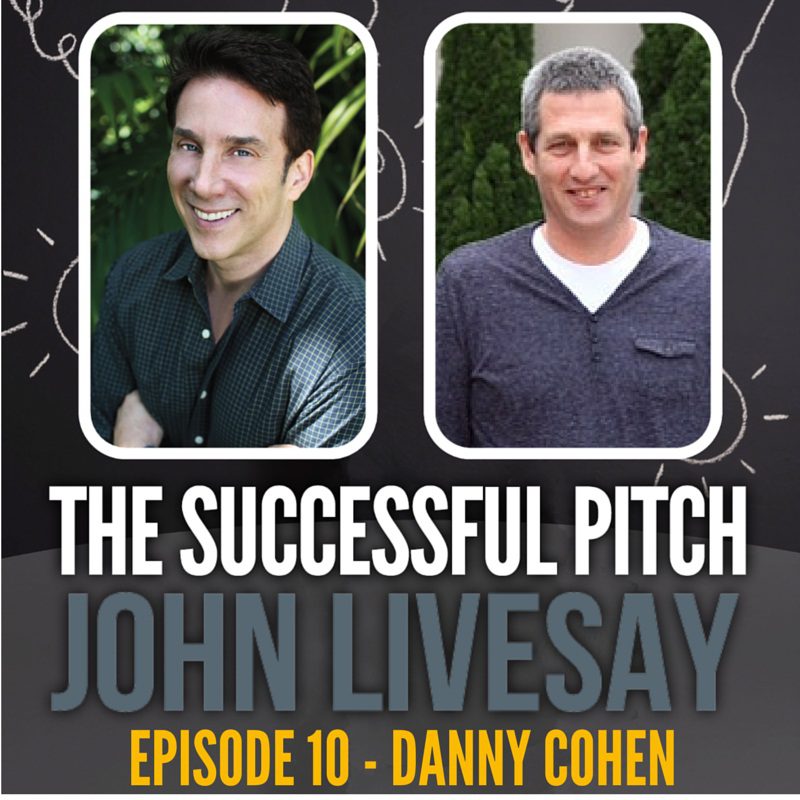
Listen to the podcast here
Episode Summary
Danny Cohen is the General Partner at Carmel Ventures, which is based out of Israel and has been a Venture Capitalist for the past 15 years. He says his company receives over 500 pitches a year, yet they only do about 7 deals. He gives the honest truth about what a VC looks for in an entrepreneur and talks to John about his favorite pitch, successful startups, and much more.
Key Takeaways
- 02:00 – Why did Danny decide to become a VC?
- 05:10 – The amazing story behind Watch Doc being sold to Blackberry.
- 09:10 – What is OutBrain?
- 12:15 – You can’t fire your investor, which is why you have to choose them carefully.
- 17:50 – The entrepreneur has to understand the market dynamics and their customer base.
- 20:55 – Don’t try to raise funds all in one week. Schedule 3-4 meetings, get feedback, and try it again.
- 23:45 – Danny really loves business books catered around sports.
Tweetables
[Tweet “Relationships are so important no matter where you live.”]
[Tweet “Tell a story that everybody can understand.”]
[Tweet “What is your motivation beyond money that made you do your startup?”]
Links Mentioned
Viola Notes
Israel Venture Capital 3.0
Want the Transcription?
Share The Show
Did you enjoy the show? I’d love it if you subscribed today and left us a 5-star review!
- Click this link
- Click on the ‘Subscribe’ button below the artwork
- Go to the ‘Ratings and Reviews’ section
- Click on ‘Write a Review’
TSP010 | Danny Cohen – Transcription
Posted by John Livesay in Uncategorized | 0 comments
John Livesay:
Hi and welcome back to The Successful Pitch. Today’s guest is Danny Cohen who is based in Israel, but fortunately was in San Francisco, so we were in the same time zone since I am in LA. He works for Carmel Ventures. They get about 500 pitches a year and do seven deals, so that 1% of every pitch they hear getting funding is true and you said you really need a warm connection to even get in the door. He talks about the movie Moneyball as a great example of using statistics and team work in sports and the comparisons of how that’s relevant in getting your startup funded.
He has a lot of great information and huge success stories about companies that he’s been involved with. It got bought by Blackberry and tells the importance of story telling and what makes someone tell a story in a way that makes it memorable. It has to do with passion. You’re going to enjoy Danny as much as I enjoyed talked to him. Enjoy the show.
Hi and welcome to The Successful Pitch. Today’s guest is Danny Cohen from Carmel Ventures based in Israel and lucky for us he is in San Francisco today and able to be in the same time zone as I am and we’re thrilled to have him on the show to talk about his expertise in investing. He’s had the career already. He had another company invested in Watch Doc, which recently was bought by Blackberry and iView, which received 35 million dollars in five different rounds. So, he has a lot of insights to share with all of us today. Danny, welcome to the show.
Danny Cohen:
Thank you so much.
John:
Danny, I, as you know, gave a brief, brief introduction as to your career, but can you take us back to when did you decide that you wanted to have a career in investing. What made you interested in startups in the first place?
Danny:
Great, thanks for the question. Again, thanks for the opportunity. I’ve actually been in the venture capital business since 2001. So, I started in August 2001, probably one of the worst times to go into investing and I’ve been investing basically ever since, it’s almost as close to 15 years now. I kind of before that, I had a career in both startups and technology companies in Israel. I did, I had technology background and some business experience and I really thought that the most interesting thing for me is to worth with many companies and be at the forefront of technology and opportunity and I thought that venture capital would be the right way. To be completely honest, when I went into it, I thought I’ll do it for two-three years and then move on and here I am 15 years later.
John:
Clearly you like it and it likes you if you’ve been doing it that long.
Danny:
Yeah. I hope so.
John:
You obviously had to pitch when you were on the tech side and now that you’re on the other side of the desk for 15 years, what would you say is one of the key things that you look for when you’re hearing a pitch to decide whether or not you wanna have another meeting or possibly investing?
Danny:
I think through the years it’s always a combination of understanding your numbers and telling a great story, right, or maybe I should say it the other way around. First of all, telling a great story and then also understanding really what the numbers are all about. To be fair, we’re all in the pitching business. Entrepreneurs pitch to us, we pitch LPs, LPs pitch to endowment – everybody’s pitching and I think overall what makes best outcome is when you have a very clear understandable story that everyone can understand, right, and then that you’re on top of your game, right, you’re on top of your numbers, you understand exactly the numbers of the industry, the numbers of your specific business, what’s really happening, to tell the story backed by real data. I think the combination of those is the best way to go.
John:
What I hear you saying is, the consistency of a good story with good numbers gives the impression of confidence and that you’re investing in a person that knows what they’re talking about and can explain it easily and get you inspired, right? And excited hopefully with the numbers and the story.
Danny:
Absolutely. One thing to say about the story when I was very early on in my career when I didn’t understand what entrepreneurs were talking about. I always thought it was because they were so smart and I was not as smart, right, which may be true, but I’ve come to understand that it doesn’t matter, right. You gotta tell a story that everybody can understand.
John:
So, speaking of stories, do you want to tell us a little bit about the stories of either iView, the internet online advertising is my background, so that’s particularly interesting to me what you guys did there and how you got so much funding in those years.
Danny:
For many years I was with a different fund called Gemini in Israel and I did both Watch Doc and iView with them and I also did when I was there a great company called OutBrain and that company, Carmel investors in that as well, that’s how I met the Carmel folks and over time gave me the opportunity to kind of move on and join Carmel as a partner.
So, that’s kind of my personal story in how my investments in the past kind of got to join Carmel, specifically maybe just to say a word about Watch Docs, it sold, it was announced earlier this week that it got sold to Blackberry, which I think is a great story because this is a company that innovated document sharing and secure message collaboration market and that’s what Blackberry was all about back before the iPhone existed.
Blackberry now is at the point where I think they need to a little bit reinvent themselves and here they are leveraging a great technology company out of Israel to build kind of their next generation solutions and market that, it’s changing fast for them.
John:
Well, with this recent scandal of emails being leaked from Sony, you can see now more than ever the importance of protecting files and documents, right?
Danny:
In Israel right now, we are seeing a whole bunch of cyber security companies and that whole security market is really booming and the threats are real more than ever. So, in general it’s a great time to be investing in security companies and in Israel technology in general.
John:
Talk to us about the difference, because you have such a great prospective on, you’ve obviously come to the US frequently, but what is the big difference between what’s trending in Israel versus what’s trending in the US? Is it cyber protection or is there other things going on?
Danny:
I would say that, in general, and we’re pretty proud of this, Israel is becoming almost like a little Silicon Valley and I say that is that now we’re really, you can find almost every category, you will find a company in Israel, maybe not the best company, but you’ll definitely find a company.
So, if Newark is all about digital media and maybe LA is about entertainment. Israel you see a little bit of everything. Pretty much I think what you see like in Silicon Valley. Saying that, is really entrepreneurs tend to be very tech focused, so usually there’s some sort of a core technology is Israeli entrepreneurs do. That, of course, happens in Silicon Valley as well, but sometimes you see here companies that are more market orientated and build maybe a service less technology orientated sometimes. So, I would say in Israel it’s very much technology orientated.
John:
And obviously relationship orientated. If you tell that story of how you went from the previous company with OutBrain and that’s what gave you that link to get into Carmel Ventures, relationships are so important no matter where you live, because that’s really what you’re investing in, isn’t it? The team, the people, and having warm connections and warm introductions?
Danny:
Absolutely and I always tell entrepreneurs, you know, many VCs put on your website kind of an email saying if you want to call us, use this email info at you know, venture.com or something like that. I always say it’s a trap. The reality is if you really want to get the attention of a VC, you gotta get a warm introduction, never cold call a venture capitalist. Always get someone that he knows to make an introduction, that’s a much, much better way to start on the right foot. The pitching process.
John:
Right and within that warm introduction, make sure the time is right, right. Don’t get introduced before you have all your numbers ready, right. What is it that you’re looking for? Is there like a check list of what they must have? Do they have to be revenue for you to consider them or are you interested in pre-revenue.
Danny:
Pre-revenue will a lot of times, look, especially these days when the market is so hot, right, and valuations go up very fast, we want to go in early, because it’s an opportunity for us to get sometimes better deal terms. So, when I say you need to be on top of your numbers, it doesn’t mean that you need to have revenues, but you need to understand the underlining numbers of your industry, that’s what basically we are looking for. So, it can be definitely like pre-revenue, even pre-launch, as long as you have a good grasp of kind of the dynamics of the market you’re going after.
John:
Do you, as Carmel Ventures only invest in entrepreneurs that are based in Israel?
Danny:
A lot of times they start in Israel, but sometimes we can find them in Silicon Valley. We can find them in London, we can find them in Berlin. We can find them in a lot of places, but we invest in entrepreneurs that have a strong Israeli connection.
John:
Since you brought up OutBrain, I’d love to hear more about that. What’s the story with OutBrain and how did that come to your attention?
Danny:
I invested way back in 2007, it was a seed round, actually, with an entrepreneur that has built already an online advertising business, quite successful, called Quigo that AOL acquired, so it was a great entrepreneur that really wanted to make a change or do something in the content distribution or content recommendation. He didn’t know exactly what he was trying to do, but he had this idea to try and get more personalize content in front of people and move forward, you know, almost eight or nine years. Now, OutBrain is the leading provider of content recommendation on almost every publisher in the United States.
So, if you go to CNN.com, at the bottom of every article it would say, you know, people that read this may also be interested in this. This is basically now an area that OutBrain invented and is by far the leader in that space, right. So, I would say it was a great entrepreneur with a big vision to change something fundamental in the industry. Did he know exactly what he was going to do and that it’s going to end on that specific real estate on the bottom of the article, probably not, but that doesn’t matter, right? In general, it was a good story with a great entrepreneur.
John:
Well, let’s talk about that a little bit. That concept, you know, I’ve heard in the past from other investors that sometimes it takes people three times to pivot before they really land on something, but you’re still interested in investing, because you’re investing in them. Can you speak to that a little bit?
Danny:
Yeah, so first of all, I think in general it’s very important as an investor to like the general the idea and not always the specifics of the idea, right. I’ll give another example of another company I was involved with a company called Adap.TV. They were also into video advertising space and AOL acquired them for $450 million dollars a couple of years back and from the day they started till the day they were sold, they were always in video advertising, but when you double click on it, they were in different.
Their offering in video advertising changed dramatically from the day they started to where it actually ended, right. The bet was, again, on a really good team, on a defective video advertising, because it can be huge, not specifically on their initial solution where they pivoted from over time.
So, my point is we want to like the general market you’re going after, right. So, for example, let’s say now we’re looking at 3D. We will be looking and saying, we like the 3D printing market, we feel like you’re a good entrepreneur, you seem to have a good head start in a direction, that’s great. Will we think that it’s going to end exactly where you started, probably not, but that doesn’t matter.
John:
That’s such an important distinction. Thank you for that. Can you speak a little bit more about what you look for in a good team, in a good leader? I mean, there’s so many qualities that are sort of unspoken. Obviously integrity and honesty and compatibility, likeability, you gotta wanna really connect with these people before you invest, right? It’s almost like a marriage.
Danny:
It’s definitely like a marriage. I always tell that to entrepreneur is well, it’s a marriage. One to me that’s important it’s a half catholic marriage in the sense that they can – you can never fire your investor, that’s why entrepreneurs need to choose their investors very, very carefully, right. I think all that you said is all relevant, right. They need to be smart and likeable and, you know, with great capabilities, and maybe great technology or business background. There’s one idea which I always look for which for me personally is always important.
Also try to answer the question why. Why are they doing this? What is the motivation of what they’re trying to do. Hopefully it’s not money, hopefully it’s something beyond that and if you really, if I think I understand that and I subscribe to that motivation, I think that’s a big, big way in kind of getting at least my attention.
John:
Well, what you just said Danny is so valuable to the story telling aspect of the pitch, which is really where my sweet spot is helping people get a story that’s compelling, memorable, and interesting and it all goes back to that why that you just talked about. Why are you doing this not – because there’s so many different ways to make money, so there has to be some kind of personal decision of I am so passionate about this, I love this category, let’s say 3D printing, I’m fascinate by the ability to make a lung for someone that couldn’t have a lung and save a life. If you start telling those kinds of whys, then people, they sit up, right. Would you – is that what you’re talking about?
Danny:
Absolutely. So, it could be a passion about the industry, it could be, you wanna prove to someone or something hat you can do this, maybe you were an entrepreneur before, but not an CEO, now you want to become the CEO, but there’s a lot of things, but you got to tell in a good way why exactly you’re going after that and, by the way, you talk about story telling, what you said now is so relevant, right, tell your story with a lot of passion, right, make – that’s true in life by the way in general, right.
You know, when you sit in a room or you have coffee with someone, you have a beer with someone, you hear a story, you know, if there’s passion, if there’s, make it interesting, people want to hear more about it and same thing goes when you’re pitching an investor.
John:
When you think of your top favorite two or three pitches, stories, that you heard over the 15 years you’ve been doing this, any one or two stand out that you want to share with us?
Danny:
Yeah, you know, actually one of my favorite companies was a company I invested 10 years ago. It didn’t work out at all, so our fund lost a lot of money with that, but it was an entrepreneur, friend of mine now, that wanted to make something different in the tech support space and I thought then and I still think today the technology, as it gets more and more advanced and more people use it, a lot of people need help and, you know, using technology in the correct way and I thought there was room to make a big company in that and he told a beautiful, beautiful story about how the world needs service for tech support and I totally bought into it, put in a lot of money, and it didn’t work out, but it’s still one of my favorite pitches, you know. I was blown away.
John:
Wow. Well, not every pitch that gets funded works out, but that’s the beauty of it. You obviously have some huge success stories of those that have worked out. What is your thoughts on scalability, is that one of your key criterias that you wanna look at something that gives you like a ten time return investment or the scalability key.
Danny:
As a fund and we specifically at Carmel, we are very focused on what we call home runs, so we wanna look for companies that will make it really big, right, that’s the core of our model. So, if we see a company that’s great, it’s interesting, great entrepreneur, good story, we think it’s going to be, generate two-three x for us, we pass on it. We need to see the big, big story.
So, I think scalability is a big part of telling or understanding that big outcome, right, and we say scalability, that means in technology, so we understand that your solution can scale, but also your business model can scale, right, that it’s a business model that is not built on hiring 1,000 sales people, right, that’s something that has network effect to it. So, scalability needs to be in a whole set of parameters not only just in the technology.
John:
That’s so key. Can you expand a little bit on what you just talked about when you decide to invest in a company, where do you want that money, you know, obviously they have to have a business plan at – let’s say you’re giving somebody a million dollars, how long is it going to last, should they be spending – what percentage of that money do you like to be spent on marketing, sales, product development. Is there any kind of formula or is it unique in every situation?
Danny:
Totally unique in every situation. I would say when we fund, we usually don’t like to fund just development, because in most cases, especially in internet and software, the development is – it’s not that it’s not hard, but usually people, especially in Israel I think succeed in that. I think it’s the product market fit that we want to see.
So, I would say that we try to fund, given enough money that we can get initial product market fit. That would be a general kind of what we’re looking after. You know, when does that happen? It depends from company to company. Another rule of thumb as we try to get money that will last at least 15 months, okay, so why? Because we need at least 12-18 months before you are, before you get something going and you’re ready for the next round of financing. If the raise is going to last for 69 months, it’s not enough.
John:
When you’re looking at this product market fit, is there something that you’ve heard recently that you say, ah, that person really knows what solution their product is solving and they understand this fit that really makes me want to invest?
Danny:
I would say it goes back to really understanding the market dynamics. So, when I hear an entrepreneur say, look, I went out to the market, you know, I wont name him, but there’s a guy, a friend of mine, I actually didn’t back him yet, hopefully I will someday, but he’s a great entrepreneur in Israel and when he started in his business, he didn’t start his company before he talked to 25 relevant customers and really heard their story was able to kind of integrate that into something and say, okay, I really understand now the problem, I think my technology is going to work at this, now I’m going to start my company and I think that’s a great move and not all entrepreneurs do that. They don’t always have that degradation of really good market feed back of what they’re trying to do.
John:
Well, really goes back to the cart before the horse example, right, with the example you just gave, he made sure that there was a need for something before he went and made it by talking to at least 25 people and getting an in depth understanding of why they would need that and use it as oppose to like, oh, let’s make this and hope somebody wants it, right?
Danny:
Absolutely.
John:
How many pitches do you think you hear in a week or a month?
Danny:
I would say, I mean, it depends, right, but I would say on average probably five to ten a week. So, almost like one a day.
John:
So, we’re looking at..Let’s just calculate conservatively five a day, so 20 a month. How many of those in a month do you typically fund? As Carmel Ventures say we look for those home runs.
Danny:
At the end we are five partners and each of us will do one to two deals a year, so I would say we probably do at the end probably around seven deals now, just to be correct in what I said before. I personally see about one pitch a day. Carmel in general, we see that that goes across about five partners, right, so we would see, I would say, almost 500 or 400 a year or something like that and out of that we would fund, as I said, probably four to eight.
John:
Right, so that 1% number that everybody keeps hearing is accurate for you and it’s certainly seems to mirror that if my math is correct.
Danny:
Absolutely, absolutely.
John:
With my numbers, so it really just shows the importance of nailing it and how much competition there is and how much preparation is required. When you get to pitch someone like you in my mind, that’s the super bowl of meetings. Don’t waste it. Be as prepared as possible, have your numbers in place, don’t waste your time, because do you typically say to somebody, I’m not interested now, but come back next month or – how many – you’re so busy hearing pitches you have to really move on to the next pitch, right?
Danny:
A lot of times we say at the end of the meeting, we’ll say thank you, it was great. You know, here’s some feedback, but it’s not for us, right. We try to be very quick in that. Sometimes, you know, few a week kind of get our interests going and then we maybe invite for another meeting or have another partner see it and hear it, but you’re right.
When I tell entrepreneurs when they’re starting the process of fund raising I say, don’t, don’t make all your meetings in one week. Why? Go to three or four, tell your story, get the feedback, go home, and kind of listen to what you heard, and things are working great, that’s awesome. But if it’s not working, change it, then go to three-four more investors, you know, re-do it, get the feedback again, because if you kind of, you use all your bullets in one week and then you understand your pitch was wrong, you know, what are you going to do now? That sucks.
John:
Danny, that is such valuable advice. I can’t thank you enjoy for that, because so many people think, you know, I’m going to dedicate this week, I’m going to go see as many people as I can and do it over and over again and what you just pointed out is the odds of you nailing that are pretty slim, so get the feedback, take some time, readjust, work with whoever you’re working with to help you make that pitch as good as it can be, and maybe change the order of the slides, maybe answer a question that’s not getting answered in the deck.
What’s the kind of question that you typically ask an investor after they pitch that you wish they had an answer for that you don’t hear? For example, one of the investors told me that they ask people pitching them, you know, what’s the cost to acquire a customer and they said you’d be amazed how many people don’t have a number.
So, is there a question that you typically don’t get answered in the pitch that you ask and you go, oh, they don’t have an answer and that’s an automatic no. Is there something like that that you would love to get people advice on make sure you have an answer on this question or these kinds of questions?
Danny:
First of all, there’s no automatic no, even if they don’t have the answers to the question, it can still be a yes. Why? Because it’s such a great story, right. It’s kind of like, wow, I really, all the rest doesn’t matter. So, there’s never an automatic no. You know, sometimes the cost, for example, the cost of acquire a customer, a lot of times people don’t know that because it’s too early. They are still not in the market yet to really know that.
What I want people to understand is, let’s do a math of the market size, right. I’ll give you one thing that people do, which for me is always kind of annoying, right. They would say, it’s a billion dollar market and you say, okay, that’s right, overall of this and this category can be worth a billion dollars, but is what you’re selling worth a billion dollars and let’s do the math for a second or if you think that what you’re selling is a billion dollars today, who is getting those billion dollars today? You’d be surprised how many people scratch their heads and say, oh, I don’t know where that billion dollar market is going, right, so before you throw a number out there, again, come up with some sort of understanding or underlining backup to why you’re seeing those number and understand those numbers.
John:
That’s great, that’s great. Danny, time goes so fast with somebody like you. Thank you so much for sharing all these insights. Before I let you go, I just want to ask you a couple more questions, one is do you have a book that you particularly have found useful information, inspiring, that you would recommend or doesn’t have to be even about investing, but just running a business or just about life in general.
Danny:
I think in general my favorite business books are all about sports.
John:
Great, yes, yes, let’s use sports analogies. It’s all about the team, yeah?
Danny:
Yeah, there you go and home runs. Moneyball is, of course, a great example for that and I think it’s been a great movie and I think that one is really kind of has a lot to say about, you know, looking at data in a different way and that kind of helps you perform differently and I think that’s very relevant for business. There’s a good book called, it’s a little bit older now, I don’t know; ten years I think, that came out after the first streak of super bowls won by the Patriots called Patriot [#24:34?] and that has some pretty interesting insights about how you tell a very sophisticated story as a coach to all the players out there and kind of get your employees or your players to really understand the kind of overall picture even though they have a very, very small part in the overall kind of lay out of the team.
John:
That’s so valuable because not only does your own team internally have to see the big picture, but the investors, if they’re going to be part of your team, need to see the big picture as well and that’s a great, great ending.
So, the best way for someone to follow you is it LinkedIn, do you post on Twitter, how, if someone has a connection that they feel they do have a warm introduction, what would you recommend if somebody wanted to follow you, pitch Carmel Ventures?
Danny:
So, just in general for LinkedIn is always great. Carmel we have a blog that we are proud of that we’re investing a lot of time in. It’s called the Viola Notes. So, check that out. Viola-notes.com. I also have a personal blog called Ilvc3. So IsraelVC3.com and those are all good ways to kind of hear what we think about life in general and none of this works and email always works.
John:
Okay, great. Those blogs are really valuable information everybody, because when you read someone’s blog, you really get inside their head and then you can speak to things that are relevant to you, so if you’re going to have the opportunity to ever talk to Danny, be sure to bring up Moneyball as a reference point and anything he mentions in his blog. Danny, thanks again. You’ve been a great guest.
Danny:
Thank you. I really enjoyed it. I enjoyed the conversation and looking forward to hearing it online.
John:
Great.