

Selling Your Company For Millions – Interview with Tom Scott
Posted by John Livesay in podcast | 0 comments
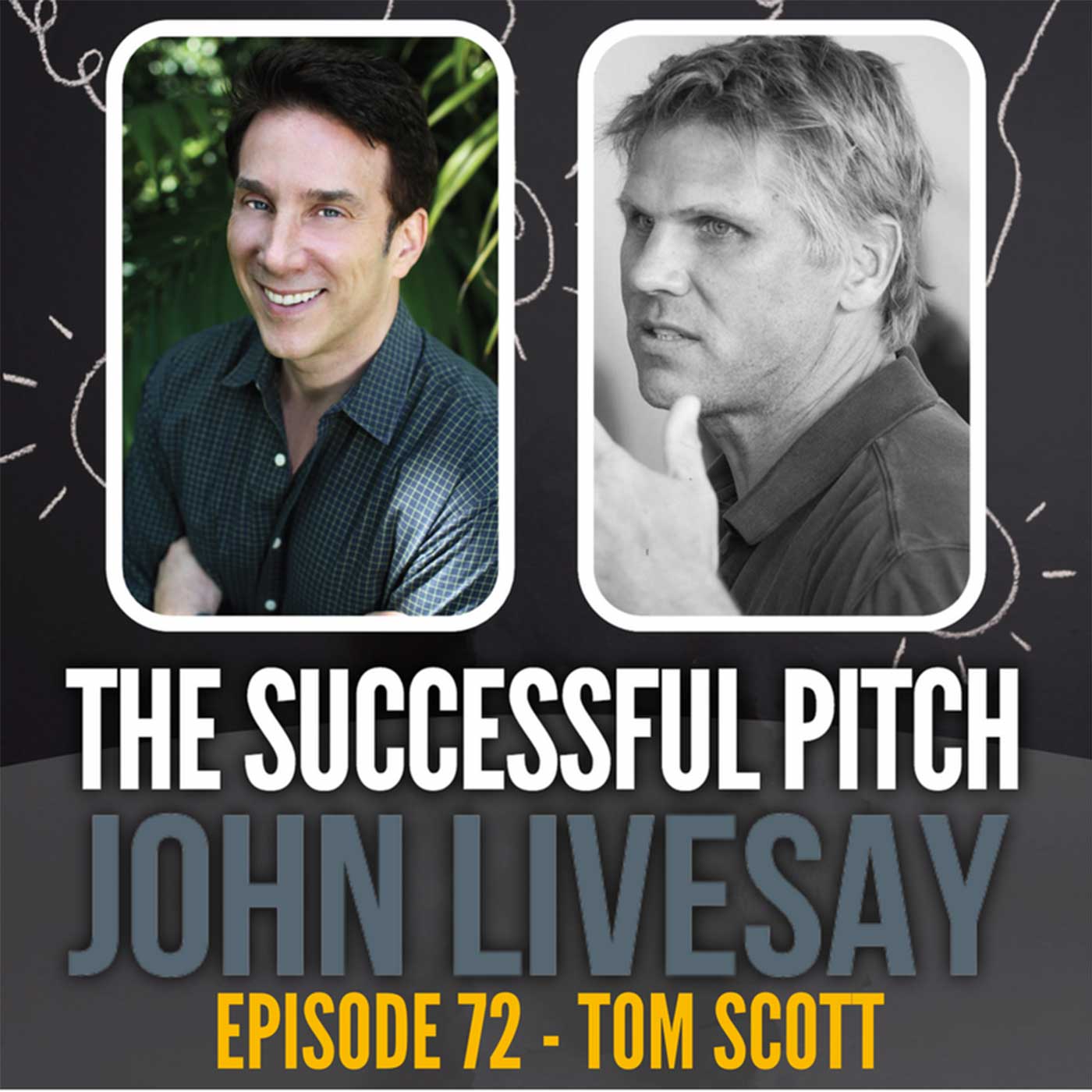
Listen To The Episode Here
Episode Summary
Tom Scott emerged as an entrepreneur at a young age when he started selling provisions to people stuck at gas lines in Maryland. When Scott and his college pal, Tom First, tried mixing peach juice and water in a blender in 1989, they did not imagine their little experiment would result in the creation of a multi-million dollar company. Tom discusses his success with Nantucket Nectars and his latest project, The Nantucket Project.
Selling Your Company For Millions – Interview with Tom Scott
Today’s guest is Tom Scott who is the CEO and co-founder of the Nantucket Project and he was the CEO and co-founder of the Nantucket Nectars which started in 1989 and got sold to Cadbury Schweppes in 2002. He has gone on to do so many amazing things, including being a film and television creator that’s won awards at both the Cannes and Sundance Film Festival. He created something called The Apple Pushers with Ed Norton, a documentary on that. He’s an expert in storytelling, and knows all the secrets that go into making a great pitch. Tom, welcome to the show.
Thank you. I’m glad to be here. Thanks for having me.
It’s my pleasure. I want to first start with, if you don’t mind, because you’re such a successful entrepreneur, taking our listeners back to how you and your co-founder came up with the idea to create Nantucket Nectars and you’re competing against major brands like Snapple and all that good stuff.

Selling your company for millions doesn’t happen overnight.
How did we come about it? We had started a business many years ago that was a floating store. We were doing this in the summers in college. The notion was you had all these yachts that would come in to Nantucket Harbor. In order to get to the land, they’d have to take a launch and it was a pain in the neck. What if you could just bring a store to them? So we did. We started selling coffee and muffins to these yachts in Nantucket Harbor.
Among the things we started to make to sell was juice. I should say that, depending on how old a listener is, in those days, there was no such thing as Tropicana Pure Premium as an example. Generally speaking, not even generally speaking, maybe entirely speaking, if you got a juice off a shelf in a store, it was pretty crappy. What we were making at the time was a fresh juice. It was different and it was more refreshing and it was something special. That’s how we started with the path. Took a lot of different twists and turns, but that’s how we got in the juice business.
I love that the initial problem was that there weren’t good juices and you solved that by creating a floating store to take it out to people who would be willing to pay a premium price for something good.
Yeah. It’s so true. It just didn’t exist. Really what we were doing, and I just, I always feel this is so important, we were making it for ourselves. Simple as that. This was something we wanted.
The passion was authentic. You would drink this stuff. It’s not something you’re really trying to force on people. When you’re telling them about it, it comes from an authentic place. When you’re telling anybody, whether it’s a potential customer or potential investor, what have to offer, that you can’t fake that passion, right?
No. I’m one of those people, and you hear it more and more, if … I think it was Henry Ford. “If I had listened to my customer, I would have ended up making a faster horse.” I’ve always made things for myself. Every part of my career, I’ve been making something I want. I have to be honest, I stumbled into that. But one of the things I’ve come to know very clearly is I’m decent at making something for me, but if I have to imagine the attributes of what somebody else wants, it’s just not who I am. It’s not my makeup. It’s not how I think about business.
[Tweet “Make Your Product Something for Yourself So Your Passion Is Authentic”]
Right. The same thing is true of a lot of other innovators like Steve Jobs and the iPad. If he just waited for people to say, “I need an iPad in addition to my laptop and iPhone,” he probably wouldn’t do it. Just like the Henry Ford example. You guys were selling multiple things. What was it about the nectar, the juice, that made you guys think, “This is what we should focus on.” Because that’s a big challenge for a lot of entrepreneurs, is focus.
It’s true. I’m going to say most valuable to us at that time was naiveté. We didn’t know what we didn’t know. We had a whole lot of energy. Because we had so much energy, you can move mountains. You will aggressively try things that others might think foolish. Some of those things, you’re going to find out probably were foolish. But plenty of those things, you’re going to find out were not. It’s vital. It’s vital. I would tell you that we came to learn and practice incredible focus. But in the beginning, the idea of stepping into such a crazy and competitive field had much more to do with naiveté than it did with anything else.
I’m going to tweet that out from the episode. Energy gives you what it takes to try new things. That’s a great line of that. Of course if you’re drinking healthy nectar, I’m imagining that’s giving you good energy, right?
Mostly. Some of those things … Drinking too much juice is probably not a good idea either, but it’s probably true with most things.
[Tweet “Energy gives you courage to try new things.”]
There’s a happy medium. Yes. You started the business in 1989. You and your cofounder are going along, did you ever need any outside funding or was all the revenue coming in just from sales?
No. More than anything else, again, I’m sorry I’m being a bit of a broken record here, but I didn’t know what a venture capitalist was. In those days … When I was 24 years old, somebody called me an entrepreneur. I thought, what a jerk. This guy is calling me a shyster. I was a relatively well-educated guy. I’d gone to Brown University. I didn’t know exactly what the word entrepreneur meant when I was 24 years old.
The reason I tell that story is, it was a different time. It was a different time. The idea of series A, series B, venture capitalists, Angel rounds, all that stuff is new. None of that stuff existed in the collective conscience of pop culture. So many of those, the pieces of the puzzle that went in to growing the company, we were unaware of. I never would have thought, I wouldn’t have even known where to go to get money. In part because I didn’t even know you need money for cash flow. We didn’t even understand what cash flow was. We did wonder how or why we were always running out of money.
The long story short is, we were very frugal. We had other jobs at night. We did what we could to survive. We therefore ran a very efficient business. Now, I did have to take a loan from my father. In the history of the company, we raised approximately 2 million dollars, which is unheard of today. We borrowed … Eventually we were able to get a line of credit from a bank based on receivables and inventory. It was an asset backed loan. We grew the company into the many millions of dollars exactly that way, which is just very different than I think the way people think about these things today.

Before you’re able to think about selling your company, you need investors; angel or otherwise.
One of the things that’s probably not different is how to build a great team. Whether you are pitching an investor, Angel or otherwise, they all want to know who’s on your team. You’ve obviously created a great culture, not only at Nantucket Nectars but what you’re doing with The Nantucket Project. Can you tell us what you look for when you are deciding whether to hire somebody to join your team? Do you first decide what your culture is and then see if that person is a fit?
It’s funny. I was doing an interview this morning. I’m all about chemistry. I’m all about the chemistry with that person. Are they a good person? Can you riff with that person? Can you trust that person? Can that person place their trust in you? Etc. it’s huge for me. It’s huge. I don’t always get it right. I’ve got to say, nobody ever gets it right. Hiring people is not a, you don’t get 100% on that. Some of the people I’ve worked with at Nantucket Nectars started as truck drivers and ended up as the president of the company. That’s a literal example.
Wow.
There’s been many of those throughout my career. I’m okay with on the job training often. I really just believe the amount of energy and focus somebody puts into something, if they’re reasonably smart and they’re reasonably aggressive and they’re reasonably entrepreneurial, I think you can work with a lot of different kinds of people.
I love that. Energy and focus again. There it is. It just keeps coming back over and over as again, the key criteria for hiring the right people to fit your culture. You’re going along, obviously, you weren’t planning on selling your company for millions at that point. From 1989 to 2002, there was no strategic exit strategy for anybody. What made you decide to consider selling your company and ultimately selling it? Were you worried about what you were going to do after it sold?
Yeah. The answer is yes, I was worried about what I would do after I sold. Here’s the thing. We worked very hard. I think most people who start businesses do. Nothing unique about that. You spend a lot of years on the road, you spend a lot of years selling, staying in lousy hotels, always afraid of making payroll. It’s a tough thing. In particular, I think at our age and we were relatively naïve at the time, it’s fatiguing. I think we had 150 distributors around the country. You got to visit each of them about twice a year. Do the math. That’s a lot of travel, a lot of trips, a lot of sales, a lot of stuff. Because our names were on the label, it was very … People found it critical to meet with us as individuals, Tom and I.
The answer as to why we sold, we never tried to sell the company. We never hired investment bankers. There came a day when we were hotly pursued. In the end, there was probably 7 different companies talking to us. We wheedled it down and ended up making a decision to do what we did with, what was initially Ocean Spray became Cadbury Schweppes, based on the fact that we liked those people, based on the fact that we felt they could do good things with the company in the future, etc.
You asked also, was I afraid? I was a little bit afraid, but I should tell you that I had been so busy for so long. There came a day when I just decided it was time for me to leave. Because after selling the company, they wanted us to stick around. It wasn’t a match for me. I definitely freaked out. I felt like, what in the world am I going to do now? I never considered having to film my days.
You have the opposite problem at the time.
That’s right. That’s the story of how we ended up making that decision.
How long was it between selling your company for millions in 2002 and starting The Nantucket Project? Tell us, was it … and how did you come up with this great concept of having this annual conference? I’m going to let you describe the vision for it because you can do it much better than I can.
You said at some point earlier, I’m paraphrasing, but I’ve been successful in businesses first. I’ve also been unsuccessful. I’ve had a number of misses. Even at Nantucket Nectars, if you took snapshots at different periods along the way, you would wonder, when you looked at some of those snapshots, how in the world this company is ever going to make it? It’s just part of the gig.
I mention that because when we were at Nantucket Nectars, we made our own ads, we made our own radio ads, we made our own printed materials. We had a staff inside that we would do it with. We never used an ad agency. But I loved storytelling and I’ve always loved films. I went to the first ever Aspen Ideas Festival. I think that was 2003. I also was a big fan of TED way back. We used to have a designer who worked with us at Nantucket Nectars and he said, “Let’s go to TED.” I said, “Get us the tickets.” He said, “No problem.” Then he told me the price. I was like, “Forget it. We are not going to that.” We couldn’t afford it.
To me, I love discovery and I love people who go to the front-lines of anything and they come back and they share discoveries with us. I just think there’s something so beautiful about it. Particularly now, it’s like we have such availability of information, which is a good thing. But we also have a massive quantity of noise. There’s just so much noise in the world. When you can get a concise telling of interesting new things right from the horse’s mouth, to me it’s like mental cocaine. I just find it so exhilarating. I think when you mix it together, in other words, when you have a number of people passionate about the same things and sharing similar things, it’s a wood stock of ideas. It’s like a Grateful Dead show of information. That’s how I think about.
[Tweet “Pitch is a concise telling of new things.”]
Tom, you just defined what I like to define as the perfect pitch, which is a concise telling of new things. It triggers our lizard brain. “Ooh, something new, I’m learning.” As you said, mental cocaine. Because we crave that. If you have that when you’re pitching for a customer, a team member or an investor, you can tell a story that engages people, then you’re light years ahead of others who can’t. Correct?
Yeah. I think so. Look, yes, I think the answer is absolutely yes. I was watching the Golden Globes the other night. You’re looking and Jeff Bezos is sitting there and winning. NBC gets zero nominations. You’re thinking, “Oh my God, do we live in a different world!” A show called Mozart in the Jungle. I don’t even know what that is but I thought, “I want to see that.” Just the title feels new. It feels like a discovery.
Here’s the thing, I think oftentimes, if you’re starting something or you’re new in a business, you want to tell that story. Here’s the frustrating truth, if you’re making something, you have to make the thing. I don’t care if it’s a juice or a service or whatever it is. I’ve got to tell you, I think the odds of you making that thing well right away, really low odds. You need to become a master at making something. You can’t skip the time part. You can’t skip the commitment part. You can’t skip the trial and error part. You can’t.
Until you know what that product is because you’ve been on the battle front and you’ve been building it, only then will you know what it is or how it works or how it could be better or why it’s better than everybody else’s. Literally, you’re just not going to know. Only then can you package what it is you’re trying to do. I feel like so many people want to tell a story before they actually even made it and it gets in their way. It just gets in their way. They say, and I’m doing air quotes right now, they say “creative things.” I always say, be creative in your, making your product, then the telling the story would be easy. Just translate. Translate the thing you’re doing to someone so they can understand it. If A, they don’t understand it B, they’re not turned on by it, I’m guessing your thing ain’t all that interesting.
[Tweet “Can’t skip the trial and error time it takes to make something great.”]
I love, we’re going to tweet that out. You can’t skip the trial and error time needed to make something. That’s so important to remember because a lot of people go, “Why isn’t this an overnight success?” Rarely is anything an overnight success, something to keep in mind if you ever want to go about selling your company down the road. You decided to take your storytelling skills from making your own ads at Nantucket Nectars into creating The Nantucket Project, which is this annual conference, and just decided to become a television and film creator and producer.

An event during the Nantucket Project Conference.
That’s an amazing pivot, if you will, as an expansion of your skillset. But a lot of people have dreams of, I like movies, I like storytelling, but they don’t get to do what you did. What was it that allowed you to figure out your way into that world?
One of the things about The Nantucket Project, if you go to The Nantucket Project, you’re going to learn many things. Some of them, you may never hear about again for the rest of your life. Some of them, you may pursue them as a career. It’s not trite to say that Steve Jobs, Bill Gates and Mark Zuckerberg share … They probably share several things in common, but they share one really interesting thing in common, which is they’ve never graduated from college. All 3 of them, these 3 cultural business icons didn’t finish college. Now, well, how did they learn all the stuff they had to learn to do what they do? The answer is, they love what they do. They’re going to figure out how to learn the things they need to learn in order to do what they do. I think if you know that … You know that Bill Gates didn’t go to computer school. He didn’t. Neither did Steve Jobs. They didn’t go to computer school or iPad school or touchscreen school. There’s no such thing. They just learned.
I can promise you, they were bad at it at the beginning. I promise. The first day, they weren’t good at it. They didn’t even understand it, the first day. They went one day after one day after one day. I just believe that. It’s that whole thing of, how do you eat an elephant? One bite at a time. I think one of the things, and I’m going to turn 50 in a couple weeks, I’ve been around a little bit. I’ve been around. The older I get, the more I realize that those silly old things your grandfather said, they tend to be true. How do you eat an elephant? One bite at a time. That’s the answer. How do you learn how to do, you go from one thing to the next. One step at a time. How do I know for me or for anyone I think, where to go next? Where’s your inner being telling you you want to go next? What are you really in to?
It’s that whole follow your bliss, follow your passion. I definitely want to ask you about, you went from not being able to afford to go to a TED conference to co-directing and co-producing an amazing documentary on your ideal films, on Richard Saul Wurman, who created TED and he’s an architect. He has a line in there that, “Most information doesn’t inform,” which I just thought was great. Can you tell us about what it was like to interview him and what gave you the idea?
Yeah. You mean for the film with him?
Yes.
He is the master. This guy talked about information architecture, information anxiety before Steve Jobs graduated from high school. This goes way back. He’s had a crazy and interesting career but his design mind, and I don’t mean that in the way of just design meaning graphic design or artistic design, but computer design and thinking design and speaking design, he has a design mind.
You asked earlier about, how do you learn this or that? The number of things that he has learned and the way he goes about it and the way he treats the packaging of things he learned or other people learned, it’s just one of a kind. TED is a cultural prize. It’s a powerful brand and a powerful concept. This is the guy who started that. This is the guy who built that. Imagine some of the things he’s seen and done. To my knowledge, I’m going to guess you knew very little of him prior to reading, to seeing that film. Am I right?
You are absolutely right. I pride myself in being pretty up on architects. I have friends who work at Gensler, I saw the documentary on Frank Gehry. But he was somebody I never heard of and his story is just amazing. The fact that you co-directed and co-produced that was phenomenal.
Again, hopefully you see my passion for TED and for him in that film.
Definitely.
It’s a film of a certain kind. It’s probably not going to be next to the Avengers or The Force Awakens in terms of viewership. But for people who are curious about a certain kind of thing, I’m proud of the film.
Yes. What else are you working on now that you are excited about that we can look forward to seeing soon?
It’s funny, last week we had our first 2016 speaker meeting for The Nantucket Project this year. It’s back to the drawing board. What I would tell you is, when we do this, when we face another year and book another year of speakers, it’s more about learning than it is about knowing. What I mean is, you’ve got to stay open to the fact that whatever’s going to be interesting in September probably barely exists right now.
Right. Whether it’s robotics or 3D printing or virtual reality, whatever.
Yes. If you were going to ask me at the moment what am I into, I’m into figuring out what I’m into.
Great.
There will probably be a few films in development about those things that we’re preparing for next year. Listen, this should be a TV show. The Nantucket Project should be a TV show. The TV show is something like 60 Minutes. It has segments something like 60 Minutes, but it’s a show about ideas and each of the ideas are carried out in some form of a film that are really instructive, like the Richard Saul Wurman film that you saw. In success, that’s where this goes.
Also, I think what you’re saying Tom, is give yourself a little permission not to know everything all the time, during the creative process. I think that’s a valuable takeaway. Before I let you go, I just want to ask you a couple more questions. One is, what’s a book that you would like to recommend about business or life or philosophy or as you said, following your inner being? Anything at all, any topic. I would love to hear what inspires you author-wise.
 The two best books I’ve read recently, one is Just Mercy by Bryan Stevenson. It’s about race in America. I saw him speak a few months back. He was incredible. He was as good as anyone I’ve seen in years. I’m watching him and I’m looking and I’m thinking, okay, the guy is smart, because he’s definitely smart. But his brilliance was in the fact that he’s gone to the front lines of death row and race in the south in America. He’s made observations that are his observations. He’s come back from that front line and he shares with us those observations. I bet it’s easy for him. I could be wrong and I’ve never spoken to him about it. I could be wrong. That’s what comes through in this book. Race is such an interesting topic that I’ve looked at it in a full variety of ways throughout my life. But if I’m honest, in the last several years, it’s been through the TV or through the newspaper. To hear something that you can really get your brain around from somebody like him, that was amazing.
 The other one I would say is probably one you’ve heard a few times, is Ed Catmull book called Creativity Inc. on Pixar. I just love it. I love everything about Pixar. It’s really good storytelling. I think it’s interesting to hear, to read a creative book from a science guy because that is hard. He’s much more of an Xs … I say that, he has a science background. He has his Xs and O background, he has a technical background. But he speaks, he writes very well about creativity. I just love that book.
Finally Tom, how can people follow you in social media? What’s your Twitter account? Let’s give out the website for The Nantucket Project.
I am not a social media guy. It’s interesting. It’s not that I’m against it. I like our people to speak for themselves. Maybe I’ll have something to say sometime in the future, but now I let my company speak for it. It’s The Nantucket Project. You can follow The Nantucket Project on Facebook and Twitter and Instagram. I think we do a pretty good job. I am really focused on making this TV show I mentioned to you come to life and pray for that to work. Then I think we’ll be able to speak to lots of people in a powerful way.
Fantastic. Well, it’s been an honor. You’ve given us so many great insights on selling your company for millions. I’m very excited to see what comes up next considering your track record, which is always a good predictor of people’s passion and focus over and over again, figuring out how to make something new happen. I can’t wait to see what you bring to us. Thanks for being on the show.
Great. Thank you so much. It was great to meet you.
Links Mentioned
J Robinett Enterprises
John Livesay Funding Strategist
Nantucket Project Website
Nantucket Project on Facebook
Nantucket Project on Twitter
Just Mercy by Bryan Stevenson
Creativity, Inc by Edwin Catmull
Crack The Funding Code!
Register now for the free webinar
Check Out John’s Latest Book
Share The Show
Did you enjoy the show? I’d love it if you subscribed today and left us a 5-star review!
-
- Click this link
- Click on the ‘Subscribe’ button below the artwork
- Go to the ‘Ratings and Reviews’ section
- Click on ‘Write a Review’
TSP072 | Tom Scott – Transcription
Posted by John Livesay in Uncategorized | 0 comments
John Livesay:
Today’s guest on The Successful Pitch is Tom Scott, the CEO and co-founder of Nantucket Nectars, which got sold in 2002 to Cadbury Schweppes. It was a huge success story. He shares with us what it takes to be a successful entrepreneur and have a successful exit like that. He said you have to make a product for yourself, and so he and his co-founder loved the juices and made it for themselves. Then, he talks about how important it is to be concise when you talk about new things when you’re pitching. He said you can’t skip the trial and error time that it takes to make something really great, and he goes on to talk about The Nantucket Project, which is a version of TED conferences with incredible speakers. He has great insight into the founder of TED because he did a documentary on the gentleman, Richard Saul Wurman, who said, “Most information doesn’t inform.”
The interview begins in 45 seconds right after this information on how you can get funded fast.
Are you a founder struggling with your investor pitch? Do you need warm introductions to the right investors to get your startup funded? Do you need a funding road map to get you there fast? All of this and more can be found in Crack the Funding Code. Join host, John Livesay, and Judy Robinett, bestselling author of How to Be a Power Connector and board member of Illuminate Ventures, on their free Crack the Funding Code webinar. Simply go to judyrobinett.com – that’s J-U-D-Y-R-O-B-I-N-E-T-T dot com – and click on the webinar tab to see how to tap into their network of investors from around the world. There’s a link in the show notes as well. You’re only one click away from getting funded fast.
Hi, and welcome to The Successful Pitch Podcast. Today’s guest is Tom Scott, who is the CEO and co-founder of The Nantucket Project, and he was the CEO and co-founder of Nantucket Nectars, which started in 1989 then got sold to Cadbury Schweppes in 2002, and he has gone on to do so many amazing things, including being a film and television creator that’s won awards at both the Cannes and Sundance Film Festival, and he created something called The Apple Pushers with Ed Norton, a documentary on that. So, he’s an expert in storytelling and that’s all the secrets that go into making a great pitch. So, Tom, welcome to the show.
Tom:
Thank you. I’m glad to be here. Thanks for having me.
John:
Yeah, it’s my pleasure. I want to first start with, if you don’t mind, because you’re such a successful entrepreneur, taking our listeners back to how you and your co-founder came up with the idea to create Nantucket Nectars, and you’re competing against major brands like Snapple and all that good stuff.
Tom:
How did it become about? You know, we had started a business many years ago that was a floating store. We were doing this in the summers in college, and the notion was you had all these yachts that would come into Nantucket Harbor, and in order to get to land, they’d have to take a launch, and it was a pain in the neck. What if you could just bring a store to them? So, we did. We started selling coffee and muffins to these yachts in Nantucket Harbor, and among the things we started to make to sell was juice. I should say that depending on how old a listener is, in those days, there was no such thing as Tropicana Pure Premium, as an example. Generally speaking — not even generally speaking, maybe entirely speaking. If you got a juice off a shelf in a store, it was pretty crappy, and while we were making at the time was a fresh juice, and it was different, and it was more refreshing, and it was something special. That’s how we started. I mean, with the path, took a lot of different twists and turns, but that’s how we got in the juice business.
John:
I love that the initial problem was that there weren’t good juices and you solved that by creating a floating store to take it out to people who would be willing to pay a premium price for something good.
Tom:
Yeah. Now, it’s so true. It just didn’t exist, and really what we were doing, and I always feel this is so important, we were making it for ourselves. As simple as that. This was something we wanted.
John:
So, the passion was authentic. You would drink this stuff. It’s not something you’re trying to force on people. So, when you’re telling them about it, it comes from an authentic place, and when you’re telling anybody, whether it’s a potential customer or potential investor, what you have to offer, you can’t fake that passion, right?
Tom:
No, I’m one of those people, and you hear it more and more. I think it was Henry Ford. “If I had listened to my customer, I would have ended up making a faster horse.” I’ve always made things for myself, and every part of my career, I’ve been making something I want, and I have to be honest, I stumbled into that, but one of the things I’ve come to know very clearly is I’m decent at making something for me, but if I have to imagine the attributes of what somebody else wants, it’s just not who I am. It’s not my makeup. It’s not how I sort of think about business.
John:
Right. Well, the same thing is true with a lot of other innovators like Steve Jobs and the iPad. If he just waited for people to say, “I need an iPad in addition to my laptop and iPhone,” he probably wouldn’t do it, just like the Henry Ford example. You guys were selling multiple things, so what was it about the nectar, the juice, that’s made you guys think, “You know what? This is what we should focus on,” because that’s a big challenge for a lot of entrepreneurs is focus.
Tom:
You know, it’s true. I’m going to say most valuable to us at that time was naiveté. We didn’t know what we didn’t know and we had a whole lot of energy, and because we had so much energy, you could move mountains, and you will aggressively try things that others might think foolish. Now, some of those things you’re going to find out probably were foolish. But, plenty of those things, you’re going to find out were not, and it’s vital. So, I would tell you that we came to learn and practice incredible focus. But, in the beginning, the idea of stepping into such a crazy, competitive field, had much more to do with naiveté than it did with anything else.
John:
I’m going to tweet that out from the episode. “Energy gives you what it takes to try new things.” That’s a great, great line of that. Of course, if you’re drinking healthy nectar, I’m imagining that’s giving you good energy, right?
Tom:
I mean, mostly, mostly. Some of those things, drinking too much juice is probably not a good idea either, but it’s probably true with most things.
John:
There’s a happy medium, yes. So, you started the business in 1989, you and your co-founder are going along. Did you ever need any outside funding or was all the revenue coming in just from sales?
Tom:
No. We, more than anything else — again, I’m sorry I’m being a bit of a broken record here but I didn’t know what a venture capitalist was. In those days, when I was 24 years old, somebody called me an entrepreneur and I thought, “What a jerk.” This guy’s calling me a scheister. Now, I was a relatively well-educated guy. I’d gone to Brown University. I didn’t know exactly what the word “entrepreneur” meant when I was 24 years old and the reason I tell that story is it was a different time. It was a different time. The idea of series A, series B, venture capitalists, angel rounds, all that stuff is new. None of that stuff existed in the collective conscience of pop culture.
So, so many of those pieces of the puzzle that went into sort of growing the company we were unaware of but I never would have thought. I wouldn’t have even known where to go to get money, in part because I didn’t even know you needed money for cash flow. We didn’t even understand what cash flow was. We did wonder how or why we were always running out of money.
But, the long story short is we were very, very frugal. We had other jobs at night. We did what we could to sort of survive. We, therefore, ran a very efficient business. Now, I did have to take a loan from my father, but in the history of the company, we raised approximately $2 million, which is unheard of today and eventually we were able to get a line of credit from a bank based on receivables and inventory. It was an asset backed loan, and we grew the company into the many millions of dollars exactly that way, which is just very different than I think the way people think about these things today.
John:
One of the things that’s probably not different is how to build a great team. So, whether you are pitching an investor, angel, or otherwise, they all want to know who’s on your team, so you’ve obviously created a great culture not only at Nantucket Nectars, but what you’re doing with The Nantucket Project. Can you tell us what you look for when you are deciding whether to hire somebody to join your team. Do you first decide what your culture is and then see if that person’s a fit?
Tom:
You know it’s funny, I was doing an interview this morning. I’m all about chemistry. I’m all about the chemistry with that person. Are they a good person? Can you riff with that person? Can you trust that person? Can that person place their trust in you, etcetera? It’s huge for me. It’s huge. I don’t always get it right, but I got to say, nobody ever gets it right. Hiring people is not a — you don’t hit 100% on that kind of thing. But, definitely, there’s some other people I worked with at Nantucket Nectars started as truck drivers and ended up as the president of the company. I’m saying that’s a literal example. So, there’s been many of those kind of throughout my career. I’m okay with on-the-job training often, and I really just believe the amount of energy and focus somebody puts into something, if they’re reasonably smart and they’re reasonably aggressive and they’re reasonably entrepreneurial, I think you can work with a lot of different kinds of people.
John:
I love that. Energy and focus again. There it is. It just keeps coming back over and over as, again, the key criteria for hiring the right people to fit your culture. Now, you’re going along. Obviously, you weren’t planning on selling the company, and then from 1989 to 2002, there was no strategic exit strategy for anybody. What made you decide to sell and were you worried about what you’re going to do after it’s sold?
Tom:
Yeah. The answer is yes. I was worried about what I would do after I sold. Here’s the thing. We worked very hard. I think most people who start businesses do. Nothing unique about that. But, you spend a lot of years on the road. You spend a lot of years selling, staying in lousy hotels, always afraid of making payroll. It’s a tough thing. You know, it’s a tough thing. And, in particular, I think, at our age, and we were relatively naive at the time. It’s fatiguing and I think we had 150 distributors around the country and you got to visit each of them about twice a year. Well, do the math. That’s a lot of travel, a lot of trips, a lot of sails, a lot of stuff, and because our names were on the label, it was very — people found it critical to meet with us as individuals, Tom and I.
So, the answer as to why we sold. We never tried to sell the company, we never hired investment bankers. There came a day when we were sort of hotly pursued, and in the end, there was probably seven different companies talking to us. We whittled it down and ended up making decisions to do what we did with — what was initially Ocean Spray became Cadbury Scheweppes based on the fact that we like those people, based on the fact that we felt they could do good things with the company in the future, etcetera.
You asked, also, was I afraid. I was a little bit afraid, but I should tell you that I had been so busy for so long, there came a day when I just decided it was time for me to leave because, after selling the company, they wanted us to stick around. It wasn’t a match for me. I definitely freaked out. I felt like, “What in the world am I going to do now?” I didn’t ever consider having to fill my days.
John:
You had the opposite problem, right? At the time, yeah.
Tom:
That’s right. So, anyway, that’s kind of the story of how we ended up making that decision.
John:
So, how long was it between selling it in 2002 and starting The Nantucket Project. Tell us was that — and how did you come up with this great concept of having this annual conference, and I’m going to let you describe the vision for it because you can do it much better than I can.
Tom:
You said, at some point earlier, and I’m paraphrasing, but I’ve been successful in business and startups. I’ve also been unsuccessful. I’ve had a number of misses. But, even at Nantucket Nectars, if you took snapshots at different periods along the way, you would wonder, when you looked at some of those snapshots, how in the world this company’s ever going to make it. I think it’s just part of the gig. I mention that because when we were at Nantucket Nectars, we made our own ads, we made our own radio ads, we made our own printed materials, we had a staff inside that we could do it with.
We never used an ad agency, but I loved storytelling, and I’ve always loved films, and I went to the first ever Aspen Ideas Festival. I think that was 2003. And I also was a big fan of TED way back. We just had a designer who worked with us at Nantucket Nectars and he said, “Let’s go to TED,” and I said, “Get us the tickets,” and he said, “No problem,” and then he told me the price. “Hey, forget it. We are not going to that.” We couldn’t afford it. But, the way I — to me, I love discovery and I love people who sort of go to the front lines of anything and they come back and they sort of share discoveries with us.
I just think there’s something so beautiful about it. Particularly now. It’s like we have such availability of information, which is a good thing. But, we also have a massive quantity of noise. There’s just so much noise in the world, and when you can get a concise telling of interesting, new things right from the horse’s mouth, to me, it’s like mental cocaine. I just find it so exhilarating. I think when you mix it together, or in other words, when you have a number of people passionate about the same things and sharing similar things, it’s like a wood stock of ideas. It’s like a Grateful Dead show of information and that’s kind of how I think about it.
John:
Well, Tom, you just defined what I like to define as the perfect pitch, which is a concise telling of new things. It triggers our lizard brain. “Ooh, something new, and I’m learning,” and, as you said, mental cocaine, because we crave that, and if you have that when you’re pitching for a customer, a team member, or an investor, if you can tell a story that engages people, then you’re light years ahead of others who can’t, correct?
Tom:
Yeah. I think so. I think so. I mean, look, yes, I think the answer’s absolutely yes. I was watching the Golden Globes the other night and you’re looking and Jeff Bezos is sitting there and Winnick. NBCs get zero nominations, and you think, “Oh my God, do we live in a different world.” A show called “Mozart in the Jungle”. I don’t even know what that is, but I thought, “I want to see that.” Just the title feels visual. It feels like a discovery.
You know, here’s the thing, and I think oftentimes, if you’re starting something or you’re new in a business, you want to tell that story. Here’s the frustrating truth. If you’re making something, you have to make the thing. I don’t care if it’s a juice, or a service, or whatever it is. I got to tell you, I think the odds of you making that thing well right away, really low odds. I mean, you need to become a master at making something, which you can’t skip the time part. You can’t skip the commitment part, you can’t skip the trial and error part. You can’t. And until you know what that product is because you’ve been on the battlefront and you’ve been building it, only then will you know what it is or how it works, or how it could be better, or why it’s better than everybody else’s. Literally, you’re just not going to know. Only then can you package what it is you’re trying to do, and I feel like so many people want to tell a story before they actually even made it and it gets in their way. It just gets in their way.
They say — and I’m doing air quotes right now. They say “creative” things. Well, I’m always saying be creative in making your product, then telling of the story will be easy to translate. Translate the thing you’re making to someone so they can understand it, and if either A, they don’t understand it, or B, they’re not turned on by it, I’m guessing your thing ain’t all that interesting.
John:
Well, we’re going to tweet that out. “You can’t skip the trial and error time needed to make something”. That’s so important to remember because a lot of people go, “Why isn’t this an overnight success?” and rarely is anything an overnight success. So, you decided to take your storytelling skills from making your own ads at Nantucket Nectar into creating The Nantucket Project, which is this annual conference, and just decided to become a television and film creator and producer. That’s an amazing pivot, if you will, as an expansion of your skill set, but a lot of people have dreams of, “I like movies; I like storytelling,” but they don’t get to do what you did. What was it that allowed you to figure out your way into that world?
Tom:
Yeah, one of the things about The Nantucket Project, if you go to Nantucket Project, you’re going to learn many things. Now, some of them you may never hear about again for the rest of your life, and some of them you may pursue them as a career. It’s not trite to say that Steve Jobs, Bill Gates, and Mark Zuckerberg share — they probably share several things in common, but they share one really interesting thing in common, which is they never graduated from college. All three of them, these three cultural business icons didn’t finish college. Well, how did they learn all of the stuff they had to learn to do what they do? The answer is they love what they do and they’re going to figure out how to learn the things they need to learn in order to do what they do.
I think if you know that — like you got to know that Bill Gates didn’t go to computer school. He didn’t. Neither did Steve Jobs. They didn’t go to computer school or iPad school or touchscreen school. You know, there’s no such thing. They just learned, and I can promise you they were bad at it in the beginning. I promise, the first day, they weren’t good at it. They didn’t even understand it the first day, and they went one day after one day, after one day, and I just believe that. It’s that whole thing of “how do you eat an elephant?” One bite at a time.
Well, I think one of the things — I’m going to turn 50 in a couple weeks, so I’ve been around a little bit. I’ve been around a little bit, and the older I get, the more I realize that those silly old things your grandfather said, they tend to be true. How do you eat an elephant? One bite at a time. That’s the answer. How do you learn how to go from one thing to the next? One step at a time. How do I know, for me or for anyone, I think, where to go next? Where’s your inner being telling you you want to go next? What are you really into?
John:
Yeah. It’s that whole “follow your bliss, follow your passion”. Now, I definitely want to ask you about you went from not being able to afford to go to a TED conference to co-directing and co-producing an amazing documentary and your ideal films on Richard Saul Wurman, who created TED, and as an architect, he has a line in there that “most information doesn’t inform”, which I just thought was great. Can you tell us about what it was like to interview him and what gave you the idea?
Tom:
Yeah. He is the master. You know, this guy talked about information architecture, information anxiety before Steve Jobs graduated from high school. I mean, this goes way back. He’s had a crazy and interesting career, but his design mind, and I don’t mean that in the way of just design, meaning graphic design or artistic design, but computer design, and thinking design, and speaking design. He has a design mind. You asked earlier about how do you learn this or that. The number of things that he has learned, and the way he goes about it, and the way he treats the packaging of things he learned or other people learned is just one of a kind. TED is a cultural prize. It’s a powerful brand and a powerful concept. Well, this is the guy who started that, and this is the guy who built that, and imagine some of the things he’s seen and done, and to my knowledge, I’m going to guess you knew very little of him prior to seeing that film, am I right?
John:
You are absolutely right and I pride myself in being pretty up on architects. I have friends that work at Gensler. I saw the documentary on Frank Gehry. But, he was somebody I’d never heard of and his story is just amazing. So, the fact that you co-directed and co-produced that was phenomenal.
Tom:
Yeah, well again, hopefully, you see my passion for it and for him in that film.
John:
Definitely.
Tom:
You know, it’s a film of a certain kind, right? It’s probably not going to be next to the Avengers or The Force Awakens in terms of viewership, but for people who are curious about a certain kind of thing, I’m proud of the film.
John:
Yes. So, what else are you working on now that you are excited about that we can look forward to seeing soon?
Tom:
You know, it’s funny. Last week, we had our first 2016 speaker meeting for The Nantucket Project this year and it’s back to the drawing board. What I would tell you is when we do this, when we sort of face another year and book another year of speakers, it’s more about learning than it is about knowing. What I mean is you got to stay open to the fact that whatever’s going to be interesting in September probably barely exists right now.
John:
Where there’s robotics, or 3D printing, or virtual reality, whatever, right?
Tom:
Yes, yes. You were going to ask me, at the moment, what am I into? I’m into figuring out what I’m into.
John:
Great.
Tom:
There will probably be a few films in development about those things that we’re preparing for next year. Listen, this should be a TV show. The Nantucket Project should be a TV show, and the TV show is something like 60 Minutes, and it has segments something like 60 Minutes, but it’s a show about ideas, and each of the ideas are sort of carried out in some form of a film that are really instructive, like Richard Saul Wurman film that you saw. In success, that’s where this goes.
John:
Well, also I think what you’re saying, Tom, is give yourself a little permission not to know everything all the time.
Tom:
Yeah.
John:
During the creative process, right? I think that’s such a valuable takeaway. Well, before I let you go, I just want to ask you a couple more questions. One is what’s a book that you would like to recommend about business, or life, or philosophy, or as you said, following your inner being? Anything at all is — I would love to hear what inspires you, author-wise.
Tom:
Two best books I’ve read recently: one is Just Mercy by Bryan Stevenson. It’s about race in America and I spoke earlier — I saw him speak a few months back. He was incredible. He was incredible. He was as good as anyone I’ve seen in years and I’m watching him and I’m looking and I’m thinking, “Okay, the guy is smart because he’s definitely smart,” but his brilliance was in the fact that he’s gone to the front lines of death row and race in the south in America and he’s made observations that are his observations, and he’s come back from that front line, and he shares with us those observations. I bet it’s easy for him.
I could be wrong and I’ve never spoken to him about it, but I could be wrong, and that’s what sort of comes through in this book. Race is such an interesting topic that I’ve sort of looked at in a whole variety of ways throughout my life, but if I’m honest, in the several years, it’s been through the TV or through the newspaper, and to hear something that you can really get your brain around from somebody like him, that was amazing.
But, the other one I would say is probably one you’ve heard a few times is Ed Catmull’s book called Creativity Inc. on Pixar. I just love it. I just love everything about Pixar and it’s really good storytelling. I think it’s interesting to read a creative book from a science guy, because that is hard. He’s much more of an X’s — I say that. He has a science background, he has an X’s and O’s background, he has a technical background, but he writes very well about creativity, and I just love that book.
John:
We’re going to put both of those in the show notes for the listeners. Finally, Tom, how can people follow you on social media? What’s your Twitter account? Let’s give out the website for The Nantucket Project.
Tom:
Yeah, you know, I am not a social media guy. It’s interesting. It’s not that I’m against it. I just like our people to speak for themselves and maybe I’ll have something to say sometime in the future, but now I let my company speak for it, and it’s The Nantucket Project. You can follow The Nantucket Project on Facebook and Twitter and Instagram, and I think we do a pretty good job. I am very focused on making this TV show I mentioned to you come to life, and pray for that to work, then I think we’ll be able to speak to lots of people in a powerful way.
John:
Fantastic. Well, it’s been an honor and you’ve given us so many good insights. I’m very excited to see what comes up next, considering your track record, which is always a good predictor of people’s passion and focus over and over again, figuring out how to make something new happen. I can’t wait to see what you bring to us. Thanks for being on the show.
Tom:
Great. Thank you so much. It was great to meet you.
John:
Thanks for listening to The Successful Pitch Podcast. If you liked the show, please go to iTunes and write a review, and encourage your friends to write reviews too. It really helps get the word out.
You know, people say that the longest distance is between someone’s mouth and their wallet. People can tell you they’re going to invest but when it comes time to write the check, they don’t do it. So, how do you get people to say yes and then follow through? Visualize yourself on the left side of a riverbank and you have to cross the river and on the other side of the river is where the funding happens.
So, first, you make up your idea and then you make it real and then you make it reoccur. Once you start dipping your toe into the water to get to funding, that’s where I can help. I get you across that river faster than you would on your own with a lot less frustration than you will get when you hear a bunch of no’s and you don’t know why. So, if you want some help getting funded faster with less frustration, go to my free funding webinar, sellingsecretsforfunding.com/webinar and sign up and get in depth information on how you can get funded fast. Thanks.
TSP071 | William Green – Transcription
Posted by John Livesay in Uncategorized | 0 comments
John Livesay:
Today’s guest on The Successful Pitch is William Green. The author of The Great Minds of Investing. One of the great minds he interviewed in his book is Warren Buffett, who has such great lines like “Predicting rain doesn’t count. Building arks does.” It’s all about the action you take, and Warren Buffett also told him “You can’t do a great deal with a bad person.” So the kinds of people that you attract into your business and who you choose to pitch to, it’s equally important, and finally, he said “Live your Life by an Inner Scorecard.” That’s how Warren Buffett lives his life and he doesn’t worry about what other people think of him. I think you’re really going to enjoy the episode where William talks about the super power in life and investing. Stay tuned to find out what that is.
The interview begins in 45 seconds right after this information on how you can get funded fast.
Are you a founder struggling with your investor pitch? Do you need warm introductions to the right investors to get your startup funded? Do you need a funding road map to get you there fast? All of this and more can be found in Crack the Funding Code. Join host, John Livesay, and Judy Robinett, bestselling author of How to Be a Power Connector and board member of Illuminate Ventures, on their free Crack the Funding Code webinar. Simply go to judyrobinett.com – that’s J-U-D-Y-R-O-B-I-N-E-T-T dot com – and click on the webinar tab to see how to tap into their network of investors from around the world. There’s a link in the show notes as well. You’re only one click away from getting funded fast.
Hi and welcome to The Successful Pitch. Today’s guest is William Green. The author of The Great Minds of Investing. William has written for many publications both in the U.S. and Europe including Time, Fortune, Forbes, Fast Company, The New Yorker, The London Spectator, and The Economist. He edited the Asian edition of Time while living in Hong Kong, and then moved to London to edit the European, Middle Eastern, and African editions of Time. As an editor and co-author, he has collaborated on books such as Guy Spier’s much-praised memoir, The Education of a Value Investor, and Guy I’ve known recently and he’s fantastic, and that’s how we actually were fortunate enough to connect. He’s also coming up with an autobiography of a legendary art collector. Born and raised in London, and received a master’s degree in journalism in Columbia. He’s now in New York. Guy, I can’t thank you enough for introducing us, and William, welcome to the show.
William:
John, it’s such a pleasure to be here with you. Thank you.
John:
I always like to ask my guest, how do they get started in the world of journalism, investing, and how did you become passionate about that. So, can you take us back to your childhood if you don’t mind?
William:
Sure. I grew up in London and I grew up in a very bookish family. My father was a very literary judge. My mother was a writer and so everything really was about words and language and the like. I went to Eton which was this kind of very posh English school, which was where people like Prince Harry and Prince William went. So I was sort of supposed to be this great English gentleman, and I thought I’d be a man of letters, and I went off to Oxford and I studied English literature. So, so far so good, so I leave 20, 21 thinking I’m going to become a famous novelist, and then to my surprise I discovered the stock market. Basically, I had owned a small apartment with my brother at London and we sold it. So I had a little bit of money and I — you know, not a great deal because in those days land and property wasn’t as valuable, and I needed to figure out what to do with the money. So I started to study investing, and what I found was really intriguing, was that there was this kind of elite group of investors who are just incredibly smart, who had this record of kind of beating the market over many years. They were kind of these master game players, and I think there was a part of me that had always been sort of very lazy, and never really wanted to get my hands dirty. I never would have summer jobs where I would do other things, sort of really serious and painful. So I always had this fantasy that I will just make money by using my brain.
So when I was about 15, I had become obsessed with horse racing. Again, because I thought “Here’s a great way of making money without doing any real work.” So I think what happened to me when I discovered investing was I thought once again “Okay, this is this really cool area where if you’re really smart you can actually outwit the crowd.” So initially what happened to me, my interest in business and investing really was born out of my total laziness. I just wanted to make money without having to do a lot of work. Then as I became a journalist in my early 20s, I had this incredible opportunity to go interview some of these people. So I would go off, say, to the Bahamas, to interview Sir John Templeton, who is this guy who had averaged 15% a year returns for 38 years, and ends up making $400 million selling his company. I would actually get to see these extraordinary people up close, and so what started in a way is this kind of naughty somewhat lazy indolent boy wanting not have to do very much work, actually became this kind of intellectual passion because I looked at these guys like Templeton or Peter Lynch who I interviewed, or Michael Price who is on the cover of Fortune is, the biggest SOB on wall street.
I would look at these guys and think “So what do they have that other people don’t have?” Why when most people are kind of going with the flow, doing okay and like sometimes doing well, then kind of failing, and then kind of being fearful and not really fulfilling their potential. Why is there this group of people who perform extraordinarily well, that they win over the long term? So, what I found that’s been kind of enduring fascinations to me really over the last 25 years, has been this idea that if you want to be more successful both as an investor and also in life, in business, in your family life, you should really study people who are extraordinarily successful and then kind of reverse engineer them, and figure out why they win.
So I’d say my interest in these people kind of became a little bit more profound as I got older, and sort of ceased to be just about how you make money and became more about how do you become successful in business, how do you become successful in life, what matters in life, what disappointed them, what fulfilled them. So in a sense what I’ve been trying to do for the last 20 odd years, is to kind of figure out what can I learn from these people that will help me in life. I think, probably, that’s the kind of overarching theme of what am I writing and also the speaking that I do. That’s really the question is how do you actually kind of reverse engineer these people so you can become more successful yourself and hopefully happier yourself.
John:
One of the blogs that you wrote on your LinkedIn profile about Warren Buffett is so fascinating and just full of great quotes. Is there something from there or the one that resonates with me is about taking action. Predicting rain doesn’t count, building arks does, is there one theme that you’ve noticed not only in Warren Buffett but other people you interviewed that are successful entrepreneurs that you can expand on that quote with?
William:
I think one of the things that’s really fascinating about Buffett, one of the reasons why he resonates with people so deeply is because he has extraordinarily values. So here’s a guy who’s unbelievably smart, right, I mean he clearly has an IQ that’s off the charts. But I think the reason when you read something like that piece on LinkedIn that he resonates with you, is that he’s actually talking about some fairly deep values. So if I remember rightly, the first quote from him was something where he said “You know, when I look back up my life and figure out what the reason was why I’ve been so successful,” he said “Really, the key was the unconditional love that he received from his father.” So here’s someone who we think is just going to tell us how to get rich, and actually, he’s talking about unconditional love. So I’m looking at these quotes from him like that and I’m thinking, “Well, so how do I become the better father?” Right? Because I have a 14-year-old daughter and a 17-year-old son, and so I’m thinking “Wow, that’s really interesting,” like Buffett is actually saying that that the reason why he has become this guy who has $70 billion and has beaten the market over 50 odd years, is actually because of the love of his father.
So, I think what’s really interesting with someone like Buffett is that it’s not just about how do you beat the market, how do you make money. It’s about these broader values, these broader ideas of what kind of works in life, and when you look at the way that Buffett runs his business, he has a tremendous emphasis on integrity, decency. There’s a wonderful line from Buffett at one point where he says, you know, “You can’t do a good deal with a bad person.” So, I actually think what’s really striking about Buffett on many levels is his profundity as a thinker about life not just about business. So, kind of what fascinated me with Buffett is that I figure there were at least people like Robert Hagstrom with his great writers about why Buffet’s such an incredible investor. And my fascination increasingly over the last couple of years has been what can we learn from Buffett about having a more successful life? I think that idea of integrity and honesty that he represents and these values like trustfulness, and authenticity, these are incredibly powerful ideas.
One of the reasons why he’s been so successful is that he has a reputational advantage. So you know that if he’s going to take over your company, he’s going to leave you in places. The CEO, he thinks you’re doing a great job. He’s going to treat you decently, he’s going to let you have some autonomy. So, I think for a lot of us we look at the business world and we kind of think if you want to be really successful you have to be at stake, and I think what’s fascinating about Buffett is that you really said that’s not actually entirely true. There’s this other sort of more enlightened way to be a capitalist were actually, being decent becomes very powerful.
There was a fascinating speech that Buffett gave many years ago where he was talking about his partner, Charlie Munger. If I remember rightly he said something like “When I look back over the last 41 years, or something like that, that I’ve been in business with Charlie, I’ve never seen him take advantage of a single person,” and that’s an incredible reputational advantage. I think this is something that kind of applies to all of us that you have to figure out do you want to get ahead by kind of whacking everyone in the face with your elbows on your way up or do you want to try to do it this other way?
John:
That’s that great quote that you have in your blog from Warren Buffett. It takes 20 years to build a reputation and 5 minutes to ruin it.
William:
Exactly, and these two friends of mine Guy Spier and Mohnish Pabrai had a charity launched with Warren. I think it was in 2009 where they paid $650,000 to have that. They won this charity auction to have lunch with them, and one of the most memorable things, particularly for Guy that Buffett talked about was this whole concept of the inner scorecard. The way Buffett presented it, he said “You know, you have to ask yourself would you rather be the worst lover in the world but known publicly as the best, or be the best lover in the world but known publicly as the worst?” His point was, you have to have kind of this internal barometer of how you behave, and he said his father was the greatest sort of inner scorecard guide. His father was a congressman. At one point, I think there was some change in the salary scale of a congressman, so they told his father “Okay, so you’re going to get an extra couple of thousand bucks.” His father said “No, I was the elected a salary of 12 and a half thousand,” and so that’s how much I’ll take and he returned the money to the treasury.
So I think this had a huge impact on Buffett, this idea that you should act in a way where you look yourself in the mirror every morning and you just think, you know, yeah, I’m okay with who I am. We shouldn’t lionize Buffett or any of these other guys. They’re all flawed just as we are, I mean Buffett, Buffett, you know, had problems with his relationships, with his marriage that — clearly had an extraordinary wife who divorced him and who he continued to adore and remain close to. It’s not like you can look at these people and say “This is a saint and everything is perfect,” and that’s not to be discouraging about Buffett who I really do revere. I think it’s just to remind that we’re all kind of deeply flawed, but when you look at people like Buffett it gives you something to kind of aspire to because you start to think, okay, there’s a different way to do business that might only seem naive, but actually there’s a tremendous advantage to behaving in an ethical decent fair way.
John:
What you said about living your life by your own inner scorecard for me, really is just a great reminder that you can’t live your life worried about what other people think about you.
William:
I think that’s really the key, and this actually — this was one of the very profound lessons I had very early in my career as a writer when I went to Bahamas to see Templeton, I actually — before I had my interview with him, I sneaked behind a tree and was watching him exercising. He would go into the ocean every day and would kind of pump his arms and legs under the water for 45 minutes using the resistance of the water to exercise. I’m looking at this old guy, at the time I think he was 86, and his face is slathered with this horrible white goop to protect him from the sun.
John:
Sunscreen?
William:
Exactly. It’s super thick and he’s got this ridiculous hat on with floppy ears to — top it with ear flaps, and I was looking at him I was just thinking, “Here’s a guy who just absolutely does not care what anybody thinks about how he looks, how he exercises, how he thinks,” and it struck me, it became kind of a metaphor in my own mind, but he had this extraordinary ability to go his own way and to think to himself.
Someone had a lovely phrase to describe it when I was interviewing people about Templeton, where he said it was the willingness to be lonely, and I remember asking Templeton where did this come from? and he said — and actually it was funny because I said to him, “Who would it be that has the biggest influence on you?” and he said, “Really, nobody. Nobody influenced me.” I thought this was kind of an incredibly arrogant thing at that time. Then he started talking about his parents, and he said that they would go in these road trips when he was a boy, and they would put him in charge from a fairly early age of 7, 8, or 9 of navigation. They said that they basically left him totally in charge of this, so he said there was one occasion, where, finally, after a couple of hours, he realizes that he’s taken them 200 miles in the wrong direction, and they haven’t told him. So they really were just saying, “You’re free to make your own mistakes,” and this for him became this enormously powerful thing. He was able to go his own direction and one of the reasons why he became one of the greatest investors of the last century was that he had this philosophy that you would buy at what he called the point of maximum pessimism.
So for example during World War II, he made this extraordinary investment when the world seemed to be ending. He bought something like a 104 stocks for under a dollar each. I think it’s something like 36 of them were in bankruptcy at the time, and he told me that basically, over the next 5 years, he quintupled his money because the world kind of righted itself and he had the strength of mind to sort of to go his own way to think for himself. I think whether you’re a great contrarian value investor like him or you’re a great entrepreneur, you have to have this tremendous ability to think for yourself and kind of the emotional strength to go against the crowd, and kind of the confidence to go against the crowd. It’s not something that many people have, I think, to have that, that degree of independence of mind, but I think when you see people like that, it makes you realize this is what I have to aspire to, I need to have a little more courage.
One of the things also that Buffett said to Mohnish and Guy at their lunch is if you want to get better at something, hang out with people who are better than you, and you can’t help but get better. Buffett’s partner Charlie Munger says that includes hanging out with the eminent dead. You should be reading books about Ben Franklin, and whoever, anybody you admire. You’re reading books about them and you’re figuring out what can I take from Steve Jobs or from whoever it might be that I can use in my life. I think it’s fascinating that these people like Buffett and Munger who we kind of regard as these sort of — these titans at the moment, actually, have done exactly the same thing where they’ve been studying people who were better than them, and figuring out what do I learn from them.
John:
Two things you said that I just really like a lot which is one, not only do we now have to let go of what other people think about us and you’ve painted great picture of him in the ocean with all that sunscreen and the hat, but we don’t have to wait to be in our 80s before we can let go of worrying about what other people think. Most people think, well, when you get to a certain age like that then you’ll let go of what other people think, and you’re really inviting us at any age to stop worrying about what other people think in that story about how his parents let him get lost and make his own mistakes. To me the thing that really stands out is not only did they let him make his own mistakes, but then they didn’t beat him up and make him feel bad about making it.
William:
Yeah, that’s an important point. I hadn’t really thought about that, and he said this really had a lifelong influence on him, the fact that they allowed him to make those mistakes. I think with all of these people, the ability to make mistakes and then not be kind of crushed by them is absolutely key. Because it’s very easy when you look at the life of an extraordinarily successful entrepreneur, or tycoon or investor, and they tend to be so many billionaires over the years. These are remarkably successful people and you look back at their life with the sense of it was almost inevitable. Actually, when you’re living the life in the present tense rather than looking back at it, there was nothing inevitable about it. There were moments where these people were totally crushed.
There was a time early in his career when Charlie Munger lost his son who died. He lost all his money trying to basically pay the medical bills. His marriage ended. Munger is the one guy who most investors regard as even smarter than Buffett. When you look at him now, he’s 91, 92 years old and he makes these incredible sort of a miraculous statements. He speaks like God, but it’s just like with tremendous intelligence. It’s as if he always knew the truth, and actually when you look at his life, these were very, very hard earned lessons. He invested on margin at one point, I think in the 70s, and almost went under. So when he’s talking about how to avoid stupidity, how to get ahead by actually avoiding folly and stupidity. He’s not talking at someone who’s just looking at everyone else and saying, “You guys are idiots.” He’s saying, “I screwed up. I almost destroyed myself through stupidity,” and here’s what I’ve learned about how not to be foolish again.
So I think that ability — not just taught us to learn from your own mistakes but as Buffett said, it’s great to learn from your own mistakes but it’s much better to learn from other people’s mistakes. So to read about someone like Munger getting almost undone by investing on margin and then the world going haywire and him being exposed. Those are very powerful things, and I think these are habits that all of us should develop. This ability to look at extraordinarily successful people and say what did they do wrong, and also what did they do right? Not to lionize them to say you know, so why was there emotional life and a wreck? Why did their marriage go wrong? It’s like with your parents, I tell my kids you should learn from the stuff that I do right, but also learn from my idiocy. Like don’t repeat the stupid things that I do.
John:
When we show people our flaws, I think that vulnerability is what makes people be able to relate to us.
William:
Yeah, I think that’s very powerful and one of the people in this book, The Great Minds of Investing that I wrote. One of the people I connected to most was this guy Mohnish Pabrai, right, you said, he’s a very close friend of Guy Spier’s as well. Mohnish is fascinating because he takes these — when he stumbles upon a very important idea, he totally internalize it that makes it sort of 100% what he does. One of the massive ideas that he encountered in life was from this book Power vs. Force by this guy David Hawkins, and Hawkins talks a great deal about authenticity, about being totally truthful, and just not lying. You can see when you spend time with someone like Mohnish that he just — I went to India with him for about 5 days a few weeks ago, and whatever question you ask him, he’s going to tell you the truth.
I think when you spend time with people who are less honest, you start to sense it and Mohnish’s view is that whether it’s intuitive or kind of explicit, you actually sense when somebody’s lying to you or holding something back. So I think one of the things that strikes me is this sort of powerful lesson from these guys like Buffett, Munger, Mohnish Pabrai, Guy Spier, is this idea of becoming more and more authentic to who you are, more and more truthful. One of the things that Mohnish discovered which I thought was fascinating was during the financial crisis, he had a terrible time and his fund was down 60 or 70% from peak-to-trough. He said he went to his shareholders and he just said, “Yeah the market suck. It’s been a tough time,” but he said “That’s not really the reason why I losses were so bad.” He said, “The reason that our losses were so bad was that I made this mistake, this mistake, and this mistake.” He said the amazing thing was that almost nobody bailed out of the fund, because he said, “Really, what people want is for you to tell them the truth.”
John:
I love that. We just have to really play that up so much William, because it’s something that needs to be underlined and bolded especially for the listeners when they’re thinking of pitching an investor, they must be 100% truthful. They can’t hide anything, because it will come out in due diligence and then the deal will go sour, or when things — they get an investor, and things aren’t going well, they need to be able to tell the truth to the investor and own up to the responsibility of what they did wrong and why they’ve learned from it and not do it in order for the investor not to suddenly micromanage them.
William:
I think you’re absolutely right. This really applies to everything. So it applies to when you’re running a business, it applies to when you’re talking to your kids, it applies to everything. So if you’re going to pitch your company to venture capitalist, they might not know specifically what you’re lying about, but I think they sense when you’re holding something back. I think there’s something tremendously liberating when you just decide, you know what? I’m going to tell the truth and we’ll see where the chips fall. I had this myself because there was a period when my career hit kind of a rocky stage, and I got laid off during the financial crisis, and for a while you’ll feel kind of a shame and you’re like, okay, so maybe I should hide this and I should kind of pretend that everything’s great. Then after a while you start to think, you know, to hell with it, I’m just going to be honest about what’s going on in my life. I’m not going to hide the fact that I’ve gone through tough times. I’m not going to hide the fact that I’ve written stories that got killed by major magazines or whatever.
Once you start to do that and you start to say, alright, so you want to appear under the hood and you want to see the dirt in there, it’s actually tremendously liberating because you don’t have to remember what you’re lying about. I think the extraordinary thing is that people start to look at the truth tellers, I mean, this is not to say we’re all super truths, we all still — you know, there are degrees of honesty and dishonesty. I think people look at investors, CEOs, writers, whatever it is, who are trying to tell the truth loop of pushing towards this level of integrity and honestly about themselves and what they’re doing, and I think they sense it.
I think of one of the things that’s really interesting that I’ve found in life, people always say opposites attract. I don’t think that’s true at all, I think like attracts like. As you start to behave sort of somewhat better in your own life, and to be more truthful and more open about your flaws and your failings and the like, I actually think you draw into your life a better quality of person. So you might find that if you lie or prevaricate where you kind of conceal a little bit about the problems with your company or your career or your background, but you do still manage to sell, you do still manage to get founders and the like, but they’re probably not going to be the people you actually want to have in your life. You’re drawing less high quality people into your life and so, what I found really fascinating is when I’ve seen people like my age power, I spare to behave in this way whether they’re trying to be more decent or more open and more honest about their flaws and their failings, their mistakes. They draw an incredible group of people around them, and so I think it’s a sort of superpower in life. Once you have that superpower, it stand this.
John:
I love that. We’re going to tweet that out. The super power in life is being honest and authentic.
William:
I think so, and exposing your vulnerability and your mistakes because people sense whether they can trust you or not.
John:
Yes, and when you take down your mask, which is another way of saying that, and show your flaws a little bit to people, and don’t pretend that everything’s always perfect, not only you’re going to attract the right investors, but as a startup you’re going to attract the right quality of people to join your team, because they won’t feel like they have to be perfect to join your team. They’re like, well, if you as the founder are willing to share your flaws and not be hypercritical about them, then maybe that will be a place where I could make a mistake and not feel like I’m going to be fired tomorrow, and then that’s what’s going to attract really great people on your team, and as we all know, having a great team is one of the keys to being successful.
William:
I think it’s hugely important as a manager, if you treat people — when I look back on my own career, when I look at the best bosses I had, hope you know I work for people who were bullies and who were not that talented. I couldn’t wait to get out, and when I work for people who were really really decent and kind and supportive, I would do anything for them. You don’t want to sound naive about these things. There are incredibly smart people who get by being sons of bitches. I think there’s this other way where you see people who behave very decently and they attract great people in their lives. I was trying to think about it, who was it, there was someone I interviewed recently. He was a multibillionaire who is running one of these big funds. He had a partner, and he just said to me “We haven’t argued in 30 years. We’ve never had a difference about anything in 30 years.” That’s an incredible thing to say where you treat someone — you treat your partner that decently. Actually yeah, I remember it, it was Mason Hawkins who’s a close friend of Buffett’s and he runs a firm called Southeast Management. He was just saying — he said to me my partner is just the most decent human being you’ve ever met. What a wonderful thing to be able to say about the person you work with every day.
John:
Right. I can probably bet a lot of money that that’s the kind of person they are looking to invest into. They want to only be around people that match their values and their sense of integrity.
William:
Exactly, and one of the things Hawkins said to me that was really fascinating was that he was talking about the type of people who he hired and he had about sort of 6 characteristics he looked for. But actually he said that the single most important thing he look for employees he hired was generosity. He said he look for people who — he knew they were going to have excess income, he knew that we’re going to become rich as they were good in what he did, and he wanted to know that they were going to be prepared to share some of that wealth. He said the extraordinary thing was that you actually, you discovered that the people who were prepared to share their wealth and be very philanthropic, had much more longevity in the investment world that they work — if you were just working for yourself, if it was just about how do I buy a faster car, or a red Ferrari, or a bigger house, or whatever, then that kind of drive at a certain point wanes a little bit, but what he was saying is that he felt that when there was a sightly sort of broader course than just your own ego in getting the best bull balls and toys and the like. You actually did a better job, and I think again there’s nothing wrong with buying a beautiful car, if you’re very successful of buying a beautiful house. These things are all fine, but I think one of the things that strikes me with these guys who have been very, very successful is some of them are really pretty evolved and thoughtful about what the money does and doesn’t buy them, and the ones who strike me is sort of most impressive in terms of models on how you want to live your life are the ones who haven’t lost sight of things like generosity, philanthropy, having a good work environment and the like, and the ones who are really just out to sort of dominate the world and prove to their father that they think they were better than they thought. Those guys can be incredibly successful but they tend to create a lot of chaos both to the people around them and also in their own lives.
So I think — Think again when you’re trying to study people that have been very successful, you want to figure out what are their relationships like both inside their company, with their wives, and the like, with their kids, how they’re messed up with their kids, and then look at them be like also — so what do I want to be like. I had this fascinating exchange with a guy called Irving Kahn, who died at the age of 109 last year, and was one of the famous value investors. He was too sick to talk to me in person when he was 108, so I gave him various questions that his grandson who is in his 30s, sort of went over with him for several days, and then his grandson came back to me with the answers that he’d written up. One of the things I said to Irving Kahn is when you look back on the last 108 years, what’s the secret not just revert of a very kind of profitable life or a very long life, but a successful life. He said “It’s all family, it’s all relationships,” and he said — when he looks like, he’s really proud of the fact that he built a company Kahn Brothers that has 3 generations with his family working for it, and it’s really successful and does the right thing by its clients. But it’s that combination of having built something worthwhile that sort of force for good in the world, his company, and the fact that he has healthy kids, healthy family, and good relationships.
I think that’s really striking when you see someone with that kind of 109 year perspective saying yeah, it’s not that I’m dying with the most money, or the most toys.
John:
It’s great. Well, it’s full circle to the beginning of the episode where you talked about Warren Buffett’s whole focus on, unconditional love from his father being one of the keys to his success. What a great, great insight you’ve given everybody. You think about themselves, how to approach investors with authenticity so that you attract the right investors, and just how to be a happier person through this whole mindset, and that’s why your book’s got a great title, The Great Minds of Investing, and everyone’s going to assume oh well, it’s all about the mindset of how to make money, but it’s that and so much more. So I highly recommend everybody getting that. We’re also going to put the book you mentioned, I believe you said Power vs. Force in the show notes?
William:
Yeah, I think it’s an important book. It is an important book.
John:
So William, how can people follow you on social media? What’s your Twitter and all that good stuff?
William:
They’re welcome to visit my website which is williamgreenwrites.com, that welcome to find me on LinkedIn and become friends with me there. I don’t tweet as much as I should and so I’m struggling even to remember what my Twitter handle is. Sorry about that.
John:
Alright. No worries. Well, we can certainly follow you on LinkedIn and visit you on your website as well. So, thank you so much for being on the show today. It’s been an honor.
William:
Thank you so much, a real pleasure of me John.
John:
Thanks for listening to The Successful Pitch Podcast. If you liked the show, please go to iTunes and write a review, and encourage your friends to write reviews too. It really helps get the word out.
You know, people say that the longest distance is between someone’s mouth and their wallet. People can tell you they’re going to invest but when it comes time to write the check, they don’t do it. So, how do you get people to say yes and then follow through? Visualize yourself on the left side of a riverbank and you have to cross the river and on the other side of the river is where the funding happens.
So, first, you make up your idea and then you make it real and then you make it reoccur. Once you start dipping your toe into the water to get to funding, that’s where I can help. I get you across that river faster than you would on your own with a lot less frustration than you will get when you hear a bunch of no’s and you don’t know why. So, if you want some help getting funded faster with less frustration, go to my free funding webinar, sellingsecretsforfunding.com/webinar and sign up and get in depth information on how you can get funded fast. Thanks.