

Focus on Your Progress with John Livesay
Posted by John Livesay in blog | 0 comments

[vc_row row_type=”row” use_row_as_full_screen_section=”no” type=”full_width” angled_section=”no” text_align=”left” background_image_as_pattern=”without_pattern”][vc_column][vc_column_text]John Livesay is guest on The Entrepreneur Way podcast hosted by Neil Ball
[/vc_column_text][/vc_column][/vc_row][vc_row row_type=”row” use_row_as_full_screen_section=”no” type=”full_width” angled_section=”no” text_align=”left” background_image_as_pattern=”without_pattern”][vc_column][vc_empty_space][vc_column_text]Listen Now![/vc_column_text][/vc_column][/vc_row]
TSP073 | Lee Caraher – Transcription
Posted by John Livesay in Uncategorized | 0 comments
John Livesay:
Today’s guest on The Successful Pitch is Lee Caraher, who is the author of Millennials & Management: The Essential Guide to Making it Work at Work. Lee said, “Communication is currency,” and that the millennials can be broken up into three different age groups: the 16 to 22, the 23 to 28, and the 28 to 36, and they each have different skill sets and different mindsets. It’s so important to know this when you’re creating a team, and also when you’re pitching to people who are millennials. She said you need to frame a problem and the scale of that problem. You need to have inspiration as to why you’re doing this. Finally, you have to make sure that your approach is unique. She said, “Innovation is what causes scale, not just efficiency.” She said the three big questions when you’re pitching are what are you doing? Who are you doing it for? And what difference are you going to make?
The interview begins in 45 seconds right after this information on how you can get funded fast.
Are you a founder struggling with your investor pitch? Do you need warm introductions to the right investors to get your startup funded? Do you need a funding road map to get you there fast? All of this and more can be found in Crack the Funding Code. Join host, John Livesay, and Judy Robinett, bestselling author of How to Be a Power Connector and board member of Illuminate Ventures, on their free Crack the Funding Code webinar. Simply go to judyrobinett.com – that’s J-U-D-Y-R-O-B-I-N-E-T-T dot com – and click on the webinar tab to see how to tap into their network of investors from around the world. There’s a link in the show notes as well. You’re only one click away from getting funded fast.
Hi, and welcome to The Successful Pitch. Today’s guest is Lee Caraher, who wrote a wonderful book called Millennials & Management: The Essential Guide to Making it Work at Work. Lee has over 20 years’ experience in Silicon Valley, producing integrated work teams that get a great deal done and have fun at the same time. She’s known as a communication strategist for practical solutions to the big problems. She founded Double Forte in 2002 to work with good people doing great work for good companies. Her clients span from well-loved brands and high tech startups not only in the San Francisco Bay Area, but Boston, New York, and even Europe. So, she struggled with trying to figure out how to work well with the millennial clients, and more than half of her own staff is under 32. So, she wrote this book saying, “I was fed up with the negative stereotypes that millennials are burdened with that they’re determined to figure out how to create a culture where boomers, and Gen X’ers, and millennials can all thrive together.” Lee, welcome to the show.
Lee:
John, it is so great to be with you. Thank you so much for having me.
John:
Well, I love people who have fun at work and have high energy, and like to solve problems, because that’s what the key to get funded is is what problem do you solve and is it a big enough problem that I could get a big enough return on my investment, right?
Lee:
Right.
John:
So, that’s what our audience loves to hear. But, before we get into how you started Double Forte – obviously you’re an entrepreneur yourself – take us back to your experience in being an entrepreneur even before Double Forte.
Lee:
Sure. Before Double Forte, I worked for Interpublic, a very large multinational media firm, and before that, I was at SEGA of America, the video game company, when SEGA of America was about a billion and a half dollar company. I left SEGA to go to Interpublic Companies in the dotcom boom, and I worked with, I can’t even count, how many startups and took more than 20 public and all that kind of stuff, and got acquired. Then, the boom crashed, right?
John:
Mm-hmm.
Lee:
In 2001, at 9/11, I decided — really, 9/11 was a big moment in my life when I decided that I didn’t want to be in the big firm anymore. I really wanted to be able to craft what was important to me and create that workplace that meant that I was doing what I wanted to do more than flying around the country and sort of waving my magic wand. I had 750 people when I was in that company. They are very, very generous to me, but 9/11 really crystallized sort of that wasn’t for me; it was for somebody else. So, my intention was actually to take a whole year off.
I had two young children and I went to yoga and then I organized my house and I did all these stuff. I’m the chief bacon officer in my house. My husband is the chief home officer – that’s what we call each other – and I basically drove my husband crazy. With the color coding and the flower arranging, which people who know me are like, “You flower arrange?” Well, I don’t say I flower arrange. I say that I aspire to put the flower in the right place. I mean, I ask for books for the holidays. I mean, it was terrible. Oh, my gosh. I had three glue guns. I just really — it was just destructive. But, I drove my husband crazy and he’s like, “We’re not going to make it if you don’t use your time outside of the house.”
I have always been intrapreneurial. I’ve always been very intrapreneurial. I started two companies for Interpublic Company, and at SEGA, I did all this intrapreneurial stuff as well. But, I was sort of pretty risk averse. Then, in 2002, it was clear that I needed to go back to work. I wasn’t going to last a year glue gunning everything, that’s for sure. I am the breadwinner and we had all these unexpected expenses and blah-blah-blah. And I was looking for jobs. I was in the running for two very big jobs and then my mother got sick. I live in San Francisco and my parents lived in Wisconsin and my mother got sick. She got diagnosed with four months to live and it was very clear that I was going to go be with her.
So, I withdrew and I couldn’t take either of the jobs because I was going to go be with my mom when she needed it. And, out of necessity, I created my company because I had to bring home the bacon and I had to be in Wisconsin, and my home is in San Francisco. In my kind of work, when you’re inhouse, you don’t really have the freedom to be wherever you want to be, even in today’s world. So, I decided that I really like this job that I do. I didn’t like how it gets expressed in a large, publicly traded media company, but I love what we do. Like, figuring out what to say and who to say it to, and helping people really understand their story and how to convey it. Because, people aren’t really good at it, you know?
I feel like when you’re really close to an idea, it’s harder, and harder, and harder to explain it to someone who’s not close to it. So, that’s when I decided to start Double Forte, and here we are 13 years later, and I guess I’m now fully fledged entrepreneurial. Because, when you’re an entrepreneur, what you start and what you are in are probably two very different things. A plan is wonderful, but really, the goal is more important.
John:
I like that.
Lee:
You know, plans should be in sand, but goals need to be in concrete. Then, you react to or respond to what the conditions are. So, we have probably reinvented ourselves four times since we started in 2002 to respond to the economy, to what the world’s doing in communication, to the competitive situation and to who we want to serve. So, today, in 2016, we’re going to be 14 in a few months. I’m not sure I thought that when I started, but here we are, and it’s new every day, which is what keeps me interested.
John:
I’m going to tweet that out. “A plan is in sand, but goals should be in concrete.” That’s a great line. That’s really helpful. Well, let’s take a second and take a little deeper dive into what you said earlier because since you’re such a master storyteller in crafting something, especially if it’s techy. You do it for the media, but the same skills apply for crafting a pitch for investors. Do you have any tips on how to take something that’s fairly complicated or techy? How do you craft that for the media? They said the listeners could think about how they could do that for their pitch to investors.
Lee:
Yeah, I think the most important thing in crafting your story is to frame your story with a problem, and to describe the problem and the scale of the problem quickly up front, and then to explain. So, that’s number one: what’s the problem, what’s the scale of that problem? Number two: what is your inspiration to solve that problem? And number three: what is your approach to solve that problem and how does it differ from what’s in the marketplace today?
So, if you can be very clear about this is a problem and it’s big. It’s worth so many dollars, number one. Number two, that you have a passion to solve it and why you were inspired to do it. I think investors are looking for people who are smart, who are business-savvy, but who are just compelled to do something to get it done, and they have a big passion for that problem they’re solving. At least good money, right?
You know, in an investment, there’s bad money and there’s good money. It’s all money, it’s all dollars, but bad money, from my perspective, and I have a lot of clients get bad money, bad money is money that just looking for that quick ROI, not really there to serve and help you get there. Not a connector, not help, but mostly just criticizing and diverting you from the goal. Diverting you from the goal and saying, “That wasn’t your plan.” Well, I’ve never seen a plan that executed 100% ever in my career because you just can’t control everything. The purpose of a plan is to know where you should be so you can try and get it back to the point.
But, in my experience, good money is from people who support the passion and the brains of the founders. So, if you can scale the problem immediately, like give a big — there should be some dollars there, you know? Number two, why are you inspired to solve this problem? And number 3, how are you going to do it? What’s the innovation? Because scale comes in innovation. Scale doesn’t come, necessarily, in just getting more efficiency. Scale comes in innovation and investors are looking for innovation and scale to get their ROI out in a productive way.
John:
Ooh, that’s another great one. “Scale comes in innovation, not efficiency.” Love that. That will make a great tweet. It’s all about, yes, finding the good money that supports the passion of the founder, and then that goes to the whole point of whether you’re creating a team of people to work with you or investors, they all need to fit into the same culture. So, that’s the perfect segway into your expertise around millennials. Let’s just define for everybody exactly how old millennials are right now.
Lee:
Sure. So, millennials in 2016 will turn 16 to 36. So, it’s 20 years. It’s a big band, right? I break them down into three sections. The first section is the oldest section. So, 28, to 29-year-olds to 36-year-olds, and these people came into the marketplace after 9/11. As adults, they’ve never been to the gate to pick up a family member or a girlfriend, or a boyfriend or a friend. They’ve never done that at the airport. They are used to giving their IDs to get into a building. Their idea of privacy and security is very different from their older colleagues.
Next group is probably 23 to 28, somewhere in there, and these people came into the workplace, into the work market after 2008, 2009, and this is the group that’s had the toughest time finding work commence with their education. And there are still millennials looking, trying to catch up to where they thought they should be, given their education and the economy, right?
Then, the third group is going to be 16 to about 22. So, people who are in school. So, high schoolers and college students. This group of people learned entirely different from that oldest group. The iPad did not exist for the oldest group, and now schools have iPads for every kid and they’re looking at videos at night and doing their homework in the classroom during the day. So, they learn very differently. They’ve had very different kinds of technologies. The whole generation definitely benefits from being technology savant, for sure. They’re digitally native, right? They all benefit from that. But, the youngest group is probably going to benefit from it the most.
John:
So, it’s so funny because, in business, really, luxury, high-end companies do well and really low-end, the Walmarts of the world, and it’s that middle ground. Same thing with restaurants. Fast food or really expensive restaurants, and then that middle ground always seems to struggle the most, and the same thing is true the way you broke up this millennial age group that that middle ground is struggling to get where they need to be. I’m fascinated. I never thought of it at the 28 to 36-year-olds never dropped people off at the airport and all that stuff because of 9/11, right?
Lee:
Right.
John:
Yeah, you just get yourself there and I’m not going to wait in line to pick you up, and it doesn’t mean that I don’t love you. It’s just that they’re going to consider it, right?
Lee:
Well, I guess, there’s too much — you know, there was a time, in some airports around the country, that you couldn’t even get to the airport unless you showed your boarding pass, you know?
John:
Right.
Lee:
But, definitely, have never been to the gate, have never gone through security to get to the gate to say goodbye at the gate, or welcome someone at the gate ever.
John:
Yeah, those emotional closing goodbyes. You told me, before we started this show, that you spoke at the White House about this. Tell me about that experience. How did that come about?
Lee:
They called me.
John:
Did you think it was a prank call?
Lee:
I did. In fact, I thought it was a prank call, so I said, “I’m very happy to talk with you. I’m on my way to a meeting. If you can email with what you need and what the dates are, I will be happy to call you back,” and sure enough, an email came through at whitehouse.gov. I was doing a keynote in D.C. about millennials in the government, and I think some of their people were there. So, they have seen the roster and they invited me to come. It was an amazing experience, you know. That is a dedicated group of people who are doing just — you know, no matter where you are on the political spectrum, the people who are in the White House working every day for us, they’re just doing tremendous work, and I just gave a workshop on, mostly about interns, they have over 150 interns at a time, and how to productively work with interns so that everybody benefits.
Interns, no matter where you are – it has nothing to do with the White House – but interns, today, a lot of companies start with interns to try them out before they buy them, you know? Not the White House. The White House works very differently. But, in commercial world, and interns often show up into the business world just ready to go in that business pitch with you, like, “Well, you know, first we need to change your wardrobe and then you don’t get to go to the top sales guy day 1 kind of stuff.”
So, there’s just a lot of expectation, false expectation, that have been set by the media, and by parents, and by education, I think, about what an internship’s all about. I have lots of stories in my book about interns and interns are the life blood, frankly, of the future, because millennials who are getting out of college, they’re super smart. Super smart, super capable, they have a lot of energy, and they want to matter. They want to matter immediately, and you have to sort of figure out a way for interns to matter, and not go into — not drop down into your boss’s desk and say, “Hey, what’s going on?” Because that is normal. That happens all the time. How I work with companies who use interns is just helping them set expectations before they show up and explain what you’re going to get out of being an intern in the company.
John:
Now, you’ve been called the “Millennial Whisperer”. How did you get that title?
Lee:
Oh, my gosh, my friend called me that and she tweeted it out. She goes, “Lee is the Millennial Whisperer,” and I was like, “Oh, my gosh. That’s a little pretentious. I can’t call myself that. But, then all of a sudden, all my friends were like — they’d call me and say, “Okay, we have this millennial, I have a problem with him. I didn’t know what to do,” and I would help them figure it out, sort of like the Dog Whisperer, I guess. Cesar, right?
John:
Right. I love it.
Lee:
So, it just picked up from there. I prefer the “Millennial Champion” because a lot of what I read when I was researching my book — well, the book came about because I failed miserably at hiring and keeping millennials. I hired six millennials within — or my company did, hired six millennials within about eight weeks of each other and they all were gone within three months. One person could be their problem, two people could be, maybe, their problem, but all six at the same time, that had to be us. When I started looking into it, I didn’t know there was such a thing as a millennial at the time. It was all negative; it’s so negative, and I just can’t be negative every day. An entrepreneur is an optimistic person. An entrepreneur believes that they have a future that they can make things happen, right?
John:
Sure.
Lee:
And I’m an optimistic person. Frankly, if you don’t have millennials in your business, you don’t have a future in your business. So, my point of view is there’s got to be a positive way to do this. So, we figured it out in the company, and my book came out of that. So, more than a whisperer, I prefer to be a champion because I want people to know that I’m not — I hope I’m not being patronizing when I talk about it.
John:
Right. Well, for people who are working on building their team to talk about when they get funded to an investor, one of the things you’re going to be doing is hiring X, Y, Z developer, and this kind of thing, but as they continue to grow, as you said, they’re going to have to hire some millennials if, in fact, they’re not a millennial themselves.
Lee:
Exactly.
John:
What tips do you have for them to make sure that the millennials fit into the culture and they don’t have high turnover.
Lee:
I think the most important thing is to be crystal — well, several most important things. One, be very crystal clear on what the values and the company is there for. What is the mission of the firm, what is the mission of the company, what are you trying to do, and what values drive the company? Because, that will dictate what the behavior is acceptable and what behavior is not acceptable. In general, millennials are looking for something that’s going to make a difference. So, if you can’t articulate yourself in making a difference, you will have very little chance of getting the A-list, the top notch talent in the millennial generation.
The second piece is setting expectations really early, like day 1. Here’s how we work here. Every company has a different schedule. We work with a lot of technology companies. We’re lucky if they show up by 10:30. I’m strolling in 10:30. Other companies, 6:30 in the morning, they’re all there at the gym and then they’re all in their seats by 8 o’clock. So, what is the culture of your company? When do we expect to see people? What is the work from home policy? When is all hands on deck? What do you expect? Because, you should not — I hate that word “should”. It’s so full of judgment.
But, if you expect them to understand that your day is 10:30 to 8:30, and you don’t say so, well, if they leave at 6 o’clock, you can’t be irritated with them because you didn’t tell them, and this happens all the time. All the time. The hours thing is the biggest point of contest. Like, “Well, they should know that these are our hours, or they should know I’m here at 8 o’clock. They should know that they’re late at 9:30.” I talked about this woman in my book and I said to her, “Well, how would she know?” “Well, I’m here at 8 o’clock.” “But, she’s not. So, she doesn’t see you! So, how would she know? For all you know, she thinks you got there at 9:29.” That one woman, she thought she was going to have to fire this younger woman and I said, “Well, you can’t fire her without telling her that she’s been late and what the expectation was,” and then I said to her, “Well, how long has this been going on?” “Six months.” I’m like, “Oh, my goodness. Well, be prepared for her to be pissed off because you let her be wrong for six months and you said nothing.”
Which leads me to tip 3, which is give a lot of feedback. Don’t let someone be wrong. No one wants to be wrong. Don’t let someone be wrong for a long time. Just get in there and say, “You know, that was a good effort, and let me talk with you about how we can improve it next time.”
John:
Love it. No one wants to be wrong. That’s such a great line. Let’s flip the story now. Let’s pretend that we’re over 40, over 50 even, and we’re pitching millennials, and the millennials might think they know more than we do, and we have more experience than they and we’re the ones pitching them for money. We might automatically think, “Oh, they’re only going to give money to other millennials and not somebody who’s older than they are.” How do you help people shift all that negative thought?
Lee:
Yeah, well that does happen, and I think sometimes it happens because if millennials have been burned by their older colleagues or their older cohort, then — or if anyone’s been burned, right? It’s not just millennials, then they show up with a bias. So, how do you break through a bias and think, one, you have to figure out where the bias is because you don’t want to go in assuming there’s a bias, because that is just irritating and disrespectful. There’s no way to get no money faster than being disrespectful. The difference is people think disrespectful means something different depending on who you are.
Then, I think the explaining the company in the context of the future and making — if you’re 54 and you’re talking to a 29-year-old investor, your research better be about that generation and what their potential is in that generation and how you know that. Not just saying, “Oh, we could fix it.” But, you have millennials on your team or you have a panel of millennials or whatever it is, if you’re not relating it to the future generation, well, that’s a little tough.
John:
That’s a great tip.
Lee:
Number one, and then number two is are you relevant? I think I say to boomers and X’ers all the time, X’ers this year will turn 51. So, they’re 37 to 51 and boomers are 52 to 69, something in there. We all expect we’re going to work longer than we plan to, and if you’re not relevant to the millennial generation, which is the largest generation, you are going to be co-opted out of a job pretty quickly even if you’re the CEO or not, or if you’re just a worker, whatever work to be. How you stay relevant, like are you reading the things that millennials are reading? Are you using apps on your phone? The reading thing alone, like do you know what the scheme is? Do you know what these different apps are? Had you used them at all? And just being versant in that stuff. So, so important because if you’re not versant in the way millennials communicate and how they get information, well, there’s going to be a big divide before you even start your pitch on what problem you’re trying to solve.
John:
Right. Well, just that whole communication preference, right? If you leave somebody, God forbid, a voice mail, nobody does that anymore, for the most part, or you say, “I sent you an email, although I prefer text,” and you’re not really comfortable with texting or there’s something else you prefer. I prefer Snapchat. Who knows, right? Or, send me a message on Skype. There’s so many different variations that you have to keep being flexible to whatever the language is of the day.
Lee:
Of the other person.
John:
Whatever their currency is, I guess.
Lee:
Yeah, their communication is currency, right? The person you’re trying to influence is the person who has the card. You got to move to them. They’re not going to move to you. Then, once you got them, then they can move to you, particularly in the money situation, right? So, if you’re on Slack, maybe your company is on Slack or not. Some companies only work in Slack, and they don’t use email or whatever it is. But, finding out how people like to communicate is probably the first — you got to keep track of all that stuff because you might go up and down Sand Hill Road one day and go from an email guy to a text person to a phone person to a “I only meet in person” person. Keeping track of who does what is super, super important.
John:
And crafting your pitch accordingly. You have to have a short pitch, a long pitch, on and on and on. This has been great. So insightful and such a unique perspective on how to communicate a pitch not just to investors, but to craft that great team that everybody needs to be successful, and to show investors that you have a diversity within your company not only races, but also ages.
Lee:
Age is so important.
John:
Yeah, so that you can have a future focus. So, is there anything else you want to leave us with? The time goes so fast when someone like you with such great takeaways: “Frame your problem and scaling it,” “the inspiration,” “why me?”, and of course, the innovation, “what makes us unique?”, and really focusing on what is your mission and how do you make a difference at this company? It’s going to make a big difference on whether you can attract top talent and keep them. Then, of course, the feedback and expectations. I mean, those are such amazing takeaways from today’s episode. Is there any last little bit of insights that comes to mind that you want to leave us with?
Lee:
Yeah, I think that, sometimes, all those things sound so daunting, right? Like, “Oh, my gosh. I remember doing all this stuff,” and in the end, it just boils down to very simple concepts: what are you doing, who are you doing it for, what difference are you going to make? If you can just get it right down to those very short sentences on those kinds of things, then people can grab on. Then, the point is to be consistent and to just keep doing it. You cannot overcommunicate today. If you’re over 50 or over 45 and you’re used to sending a memo or an email, and that’s it, think about — this is one thing. From your advertising days, right?
John:
Yes.
Lee:
We used to use the number 7. The seven times you had to see something to maybe convey your message. Well, today, we use the number 35, and I’m not telling you to do things 35 times to the same person, but you need to think about the fact that you’re in that. This is the situation. People are seeing things 35 times before they actually grab onto them. So, one time does not do it. You got to find multiple times to reinforce, reinforce, reinforce. Don’t worry about it. Until someone says, “Shut up,” you have not conveyed it.
John:
Good point. But, with all the social media distractions and everything, to break through the clutter requires a lot of frequency.
Lee:
And a lot of focus.
John:
And a lot of focus. Ooh, there you go. The two F’s: frequency and focus. I love it. You’ve been a terrific guest. We’re going to put your book in the show notes where the people can click and buy it. “Millennials and Management” is the name of it. How can people follow you on social media and what’s your Twitter and all that good stuff?
Lee:
My Twitter is @leecaraher L-E-E C-A-R-A-H-E-R. My personal website is www.leecaraher.com where you can find my company, Double Forte, and all my book and my speaking stuff.
John:
Terrific. Thanks again, Lee.
Lee:
Thanks so much. It was great to be with you.
John:
You too.
Thanks for listening to The Successful Pitch Podcast. If you liked the show, please go to iTunes and write a review, and encourage your friends to write reviews too. It really helps get the word out.
You know, people say that the longest distance is between someone’s mouth and their wallet. People can tell you they’re going to invest but when it comes time to write the check, they don’t do it. So, how do you get people to say yes and then follow through? Visualize yourself on the left side of a riverbank and you have to cross the river and on the other side of the river is where the funding happens.
So, first, you make up your idea and then you make it real and then you make it reoccur. Once you start dipping your toe into the water to get to funding, that’s where I can help. I get you across that river faster than you would on your own with a lot less frustration than you will get when you hear a bunch of no’s and you don’t know why. So, if you want some help getting funded faster with less frustration, go to my free funding webinar, sellingsecretsforfunding.com/webinar and sign up and get in depth information on how you can get funded fast. Thanks.
How To Pitch Millennial Investors with Lee Caraher
Posted by John Livesay in podcast | 0 comments
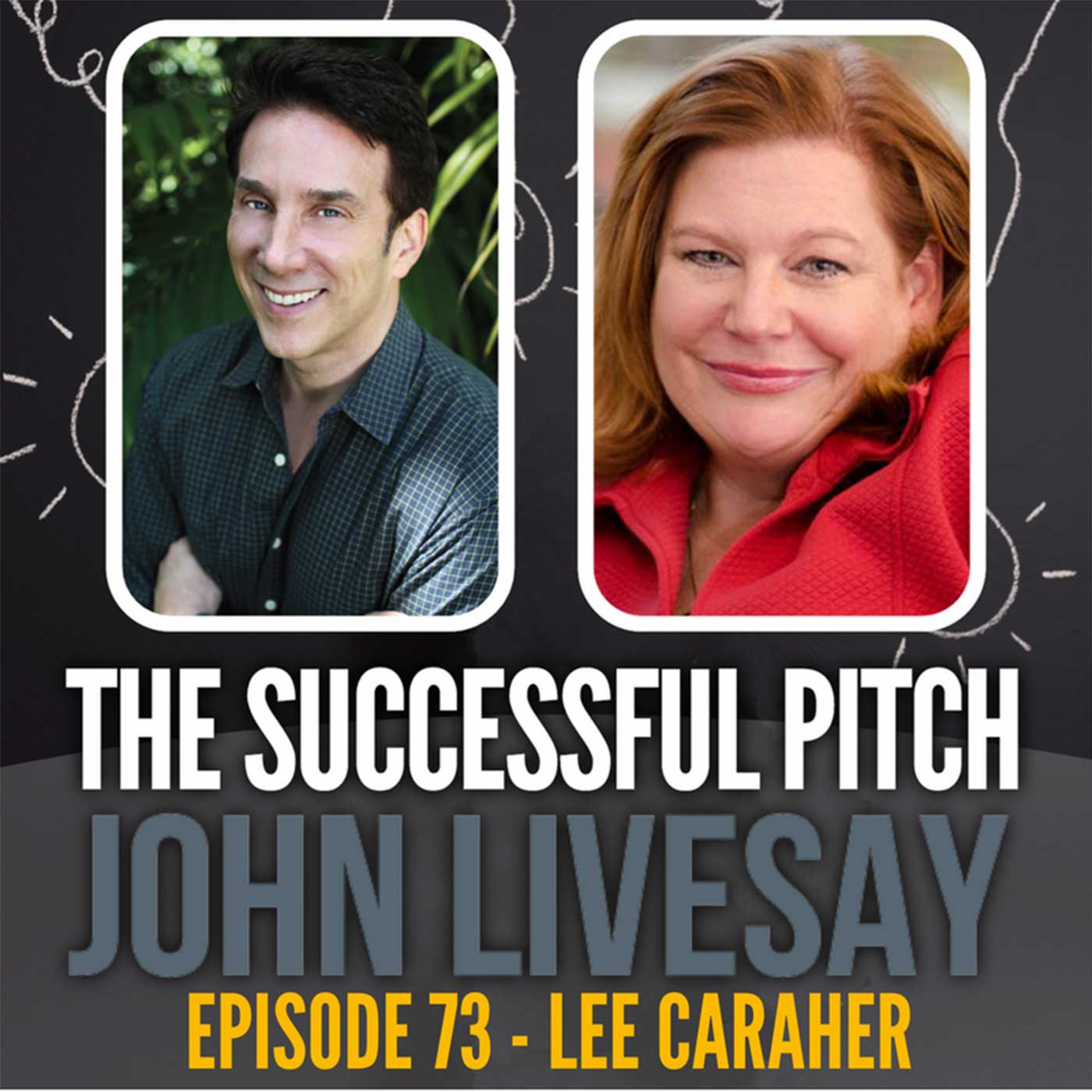
Listen To The Episode Here
Episode Summary
Lee Caraher is a CEO and an acclaimed communications strategist, known for her practical solutions to big problems. She started Double Forte as a new kind of communications firm, designed to work with good people and tell their stories. She is the author of Millennials & Management and discusses on today’s show how the older generation can connect with a millennial team member or be able to pitch millennial investors.
How To Pitch Millennial Investors with Lee Caraher
Today’s guest is Lee Caraher who wrote a wonderful book called Millennials and Management, The Essential Guide to Making It Work at Work. Lee has over 20 years’ experience in Silicon Valley producing integrated work teams that get a great deal done and have fun at the same time. She’s known as a communication strategist for practical solutions to the big problems. She founded Double Forte in 2002 to work with good people doing great work for good companies. Her clients span from well-loved brands and high tech startups not only in San Francisco Bay Area but Boston, New York and even Europe.
She struggled with trying to figure out how to work well with the Millennial clients, and how to pitch the Millennial investors. More than half of her own staff is under 32. She wrote this book saying, “I was fed up with the negative stereotypes that Millennials are burdened with,” that they’re determined to figure out how to create a culture where Boomers and GenXers and Millennials can all thrive together. Lee, welcome to the show.

Millennials and Management by Lee Caraher
John, it is so great to be with you. Thank you so much for having me.
I love people who have fun at work and have high energy and like to solve problems. That’s what the key to getting funded is, is what problem do you solve and is it a big enough problem that I could get a big return on my investment. That’s what our audience loves to hear. Before we get into how you started Double Forte, obviously you’re an entrepreneur yourself. Take us back to your experience in being an entrepreneur even before Double Forte.
Before Double Forte, I worked for InterPublic, a very large, multinational media firm. Before then, I was at Sega of America, the video game company. Once Sega of America was about a billion and a half dollar company, I left Sega to go to InterPublic Companies in the dotcom boom. I worked with, I can’t even count how many startups and took more than 20 public and all that stuff and got them acquired. Then the boom crashed.
In 2001, at 9/11, I decided … Really, 9/11 was a big moment in my life when I decide that I didn’t want to be in the big firm anymore. I really wanted to be able to craft what was important to me and create that workplace that meant that I was doing what I wanted to do more than flying around the country and waving my magic wand. I had 750 people when I was in that company. They were very generous to me but that really crystalized that wasn’t for me. It was for somebody else.
My intention was actually to take a whole year off. I had two young children. I went to yoga and I organized my house and I did all this stuff. I’m the chief baking officer in my house. My husband is the chief home officer. That’s what we call each other. I basically drove my husband crazy. With the color coding and the flower arranging, which people who know me are like, “You flower arrange?” I flower arrange. I say that I aspire to put the flower in the right place. I asked for books for the holidays. It was terrible. Oh my gosh. I had three glue guns. It was just destructive.
I drove my husband crazy and he’s like, “We’re not going to make it if you don’t use your time outside of the house.” I was always been entrepreneurial. I’ve always been very entrepreneurial. I started two companies for InterPublic Company. At Sega, I did all this entrepreneurial stuff as well. I was pretty risk averse.
In 2002, it was clear that I need to go back to work. I wasn’t going to last a year glue gunning everything, that’s for sure. I am the breadwinner and we had all these unexpected expenses, blah, blah, blah. I was looking for jobs. I was in the running for two very big jobs. Then my mother got sick. I live in San Francisco and my parents lived in Wisconsin. My mother got sick, she got diagnosed with 4 months to live. It was very clear that I was going to go be with her. I couldn’t take either of the jobs because I was going to go be with my mom when she needed it.
Out of necessity, I created my company. I had to bring home the bacon and I had to be in Wisconsin and my home is in San Francisco. In my kind of work, when you’re in house, you don’t really have the freedom to be wherever you want to be, even in today’s world. I decided that I really like this job that I do. I didn’t like how it gets expressed in a large publicly traded media company, but I love what we do. Figuring out what to say and who to say it to and helping people really understand their story and how to convey it because people aren’t really good at it.
When you’re living close to an idea, it’s harder and harder to explain to someone who’s not close to it. That’s when I decided to start Double Forte. Here we are 13 years later. I guess I’m now fully fledged entrepreneurial because when you’re an entrepreneur, what you start and what you are in are probably two very different things. A plan is wonderful but really the goal is more important.

Before Lee could figure out how to pitch millennial investors, she had to figure out her company plan and goals.
I like that.
Plans should be in sand but goals need to be in concrete. You react to or respond to what the conditions are. We have probably reinvented ourselves four times since we started in 2002 to respond to the economy, to what the world is doing in communication, to be competitive in the situation and to who we want to serve. Today in 2016, we’re going to be 14 in a few months. I’m not sure I thought that when I started but here we are. It’s new every day, which is what keeps me interested.
“A plan is in sand but goals should be in concrete,” that’s a great line. That’s really helpful. Let’s take a second and take a little deeper dive into what you said earlier. Since you’re such a master storyteller and crafting something, especially if it’s techy, you do it for the media but the same skills apply for crafting a pitch for investors.
[Tweet “A plan is in sand and goals should be in concrete.”]
Do you have any tips on how to take something that’s fairly complicated or techy? How do you craft that for the media so the listeners could think about how they could do that when they pitch millennial investors or otherwise?
I think the most important thing in crafting your story is to frame your story with a problem and to describe the problem and the scale of the problem quickly, upfront. That’s number one. What’s the problem, what’s the scale of that problem? Number two, what is your inspiration to solve that problem? Number three, what is your approach to solve that problem and how does it differ from what’s in the marketplace today?
If you can be very clear about this is a problem and it’s big, it’s worth so many dollars, number one. Number two, that you have a passion to solve it and why you were inspired to do it. I think investors are looking for people who are smart, who are business savvy but who are just compelled to do something, to get it done and they have a big passion for that problem they’re solving.
[Tweet “Good money supports the passion of the founder.”]
At least good money. In investment, there’s bad money and there’s good money. It’s all money. It’s all dollars. Bad money, from my perspective, and I’ve had a lot of clients get bad money, bad money is money that, just looking for that quick ROI, not really there to serve and help you get there, not a connector. Mostly just criticizing and diverting you from the goal. Diverting you from the goal and saying, “That wasn’t your plan.” I’ve never seen a plan that executed 100% ever in my career because you just can’t control everything.
The purpose of a plan is to know where you should be so you can try and get them back to the point. In my experience, good money is from people who support the passion and the brains of the founders. If you can scale the problem immediately. It should be some amount of dollars there. Number two, why are you inspired to solve this problem? Number 3, how are you going to do it? What’s the innovation? Scale comes in innovation. Scale doesn’t come necessarily in just getting more efficiency. Scale comes in innovation. Investors are looking for innovation and scale to get their ROI out in a productive way.
[Tweet “Scale comes in innovation, not efficiency.”]
That’s another great one. “Scale comes in innovation, not efficiency.” I love that. It’s all about finding the good money that supports the passion of the founder. That goes to the whole point of whether you’re creating a team of people who work with you or investors, they all need to fit into the same culture. That’s the perfect segue into your expertise around Millennials. Let’s just define for everybody exactly how old Millennials are right now.
Millennials in 2016 will turn 16 to 36. It’s 20 years. It’s a big band. I break them down into three sections. The first section is the oldest section, 28 to 29 year old to 36 year olds. These people came into the marketplace after 9/11. As adults, they’ve never been to the gate to pick up a family member or a girlfriend or a boyfriend or a friend. They’ve never done that at the airport. They’re used to giving their IDs to get into a building. Their idea of privacy and security is very different from their older colleagues.
The next group is probably 23 to 28 somewhere in there. These people came into the workplace, into the work market after 2008, 2009. This is the group that’s had the toughest time finding work commensurate with their education. There are still Millennials trying to catch up to where they thought they should be, given their education and the economy.
The third group is going to be 16 to about 20. People who are in school. High schoolers and college students. This group of people learned entirely different from that oldest group. The iPad did not exist for the oldest group. Now, schools have iPads for every kid and they’re looking at videos at night and doing their homework in the classroom during the day. They learned very differently. They’ve had very different kinds of technologies.
The whole generation absolutely benefits from being technology sevant for sure. They’re digitally native. They all benefit from that. The youngest group is probably going to benefit the most.

In knowing how to pitch millennial investors, it’s key to recognize the educational environment they grew up in.
It’s so funny because in business, really luxury high end companies do well and really low end, the Walmarts of the world. It’s that middle ground. Same thing with restaurants. Fast food or really expensive restaurants and then that middle ground always seems to struggle the most. The same thing is true with the way you broke up this Millennial age group. That that middle ground is struggling to get where they need to be. I’m fascinated. I never thought of it, the 28 to 36 year olds never have dropped people off at the airport and all that stuff because of 9/11, right?
Right.
You just get yourself there. I’m not going to wait in line to pick you up. It doesn’t mean I don’t love you. It’s just that they’re not going to consider it.
There was a time, in so many airports around the country, than you couldn’t even get to the airport unless you showed your boarding pass. Definitely have never been to the gate, have never gone through security to get to the gate so they could say goodbye at the gate or welcome someone at the gate, ever.
Those emotional hellos and goodbyes.

Lee has been a speaker at The White House on millennials in the workplace.
You told me before we started the show that you spoke at The White House about this. Tell me about that experience. How did that come about?
They called me.
Did you think it was a prank call?
I did. In fact I thought it was a prank call so I said, “I’m very happy to talk with you. I’m on my way to a meeting. If you can email me with what you need and what the dates are, I will be happy to call you back.” Sure enough, an email came through from @whitehouse.gov.
I was doing a key note in DC about Millennials in the government. I think some of their people were there. They have seen the roster and they invited me to come. It was an amazing experience. That is a dedicated group of people who are doing just … No matter where you are in the political spectrum, the people who are in The White House, working every day for us, they’re just doing tremendous work.
I gave a workshop mostly about interns. They have over 150 interns at a time. How to productively work with interns so that everybody benefits. No matter where you are, has nothing to do with The White House, interns today, a lot of companies start with interns. You try them out before you buy them. Not The White House. White House works very differently. In commercial world.
Interns often show up into the business world just ready and go in that business pitch with you. First, we need to change your wardrobe. You don’t get to go to the top sales guy Day 1. There’s just a lot of expectation, false expectation that have been set by the media and by parents and by education I think about what an internship is all about.
I’ve got lots of stories in my book about interns. Interns, they’re the lifeblood frankly of the future because Millennials who are getting out of college, they’re super smart, super smart, super capable. They have a lot of energy. They want to matter. They want to matter immediately. You have to figure out a way for interns to matter and not go in to, not drop down into your boss’s desk and say, “Hey! What’s going on?” that is normal. That happens all the time.
Protocol.
How I work with companies who use interns is just helping them set expectations before they show up and explain what you’re going to get out of being an intern in the company.
You’ve been called the Millennial Whisperer. How did you get that title?
Oh my gosh. My friend called me that and she tweeted it out. She goes, “Lee is the Millennial Whisperer.” I was like, oh my gosh, that’s a little pretentious. I can’t call myself that. All of a sudden, all my friend would call and say, “We have this Millennial. We have a problem with him. I don’t know what to do.” I would help them figure it out, like the Dog Whisperer I guess. Cesar, right?
Right. I love it.
It just picked up from there. I prefer the Millennial Champion because a lot of what I read when I was researching my book … The book came about because I failed miserably at hiring and keeping Millennials. I hired six Millennials, or my company did hire six Millennials within about eight weeks of each other and they all were gone within three months.
One person, could be their problem. Two people, could be maybe their problem. But all six at the same time? That had to be us. When I started looking into it, I didn’t know there was such a thing as a Millennial at the time. It was all negative. So negative. I just can’t be negative every day. An entrepreneur is an optimistic person. An entrepreneur believes that they have a future, that they can make things happen. I’m an optimistic person.
Frankly, if you don’t have Millennials in your business, you don’t have a future in your business. My point of view was there’s got to be a positive way to do this. We figured it out in the company and my book came out of that. More than the Whisperer, I prefer to be a champion because I want people to know that I’m not … I hope being patronizing when I talk about it.

“If you don’t have Millennials in your business, you don’t have a future in your business.” – Lee Caraher
For people who are working on building their team to talk about, when they get funded to an investor, one of the things you’re going to be doing is hiring XYZ developer and this kind of thing. As they continue to grow, as you said, they’re going to have to hire some Millennials if in fact they’re not a Millennial themselves. What tips do you have for them to make sure that the Millennials fit in to the culture and they don’t have high turnover?
There’s several most important things. One, be very crystal clear on what the values and the company is there for. What is the mission of the firm, what is the mission of the company, what are you trying to do and what values drive the company? Because that will dictate what the behavior is acceptable and what behavior is not acceptable.
In general, Millennials are looking for something that’s going to make a difference. If you can’t articulate yourself in making a difference, you will have very little chance of getting the A list, the top notch talent in the Millennial generation.
The second piece is setting expectations really early, like day 1. “Here’s how we work here.” Every company has a different schedule. We work with a lot of technology companies. We’re lucky if they show up by 10:30. Strolling in, 10:30. Other companies, 6:30 in the morning, they’re all there at the gym and then they’re all in their seats by 8:00. What is the culture of your company? When do we expect to see people? What is the work from home policy? When is all hands on deck? What do you expect?
Because you should not … I hate that word should. It’s so full of judgment. If you expect them to understand that your day is 10:30 to 8:30 and you don’t say so, if they leave at 6:00 you can’t be irritated with them because you didn’t tell them. This happens all the time. All the time. The hours thing is the biggest point of contest.
“They should know that these are our hours,” or, “They should know, I’m here at 8:00. They should know that they’re late at 9:30.” I talked about this woman in my book. I said to her, “How would she know that I’m here at 8:00?” But she’s not there at 8:00 so she doesn’t see you. How would she know? For all you know, she thinks you got there at 9:29. That one woman thought she was going to have to fire this younger woman. I said, “You can’t fire her without telling her that she’s been late and what the expectation was.” I said to her, “How long has this been going on?” “Six months.” I’m like, “Oh my goodness. Be prepared for her to be pissed off because you let her be wrong for six months and you said nothing.”
Which leads me to tip three, which is give a lot of feedback. Don’t let someone be wrong. No one wants to be wrong. Don’t let someone be wrong for a long time. Just get in there and say, “That was a good effort and let me talk with you about how we could improve it next time.”
Love it. No one wants to be wrong.
No one does.
That’s such a great line. Let’s flip the story now. Let’s pretend that we’re over 40, over 50 even and we’re about to pitch Millennial investors. The Millennials might think they know more than we do and we have more experience than they and we’re the ones pitching them for money. We might automatically think, “Oh, they’re only going to give money to other Millennials and not somebody who’s older than they are.” How do you help people shift all that negative thought when they pitch Millennial investors?
That does happen. I think sometimes it happens because if Millennials have been burned by their older colleagues or their older cohort, or if anyone’s been burned, it’s not just Millennials, then they show up with a bias. How do you break through a bias?
I think one, you have to figure out where the bias is because you don’t want to go in assuming there’s a bias because that is just irritating and disrespectful. There’s no way to get no money faster than being disrespectful. The difference is people think disrespectful means something different depending on who you are.
I think explaining the company in the context of the future. If you’re 54 and you’re talking to a 29 year old investor, your research better be about that generation and what the potential is in that generation and how you know that. Not just saying, “We can fix …” You have Millennials on your team or you have a panel of Millennials or whatever it is. If you’re not relating it to the future generation, that’s a little tough. Number one.
That’s a great tip.
Number two is, are you relevant? I say it to Boomers and Xers all the time. Xers this year will turn 51. They’re 37 to 51. Boomers are 52 to 69, something in there. We all expect we’re going to work longer than we plan to. If you’re not relevant to the Millennial generation, which is the largest generation, you are going to be co-opted out of a job pretty quickly. Even if you’re the CEO or not, or if you’re just a worker, if you’re a worker bee.
How you stay relevant? Are you reading the things that Millennials are reading? Are you using apps on your phone? The reading thing alone. Do you know what theSkimm is? Do you know these different apps are? Had you used them at all? Just being versed in that stuff. So, so important because if you’re not versed in the way Millennials communicate and how they get information, there’s going to be a big divide before you even start your pitch on what problem you’re trying to solve.

Be versed in the way that Millennials communicate.
Just that whole communications preference. If you leave somebody, God forbid, a voicemail, nobody does that anymore for the most part. Or you say, “I sent you an email.” They’re like, “I prefer text,” and you’re not really comfortable with texting. Or there’s something else they prefer. “I prefer Snapchat.” Who knows? Or, “Send me a message on Skype.” There’s so many different variations that you have to keep being flexible to whatever their language is of the day.
Of the other person.
Whatever their currency is.
Communication is currency. The person you’re trying to influence is the person who has the card. You got to move to them. They’re not going to move to you. Once you got them, then they can move to you. Particularly in the money situation. If you’re on Slack, maybe you’re company is on Slack or not. Some companies only work in Slack and they’d only use email or whatever it is.
Finding out how people like to communicate is probably the first … You got to keep track of all that stuff. You might go up and down Sand Hill road one day and go from an email guy to a text person to a phone person to a “I only meet in person” person. Keeping track of who does what is super, super important.
[Tweet “Communication is currency.”]
To pitch Millennial investors, you need to craft it accordingly. You have to have a short pitch, a long pitch, on and on and on. This has been great. So insightful, such a unique perspective on how to communicate a pitch, not just to pitch Millennial investors but to craft that great team that everybody needs to be successful and to show investors that you have diversity within your company. Not only races but also ages.
Age is so important.
So that you can have a future focus. Is there anything else you want to leave us with? Time goes so fast when someone like you with such great takeaways on frame your problem and scaling it, the inspiration, why me and of course the innovation, what makes us unique and really focusing on what is your mission and how do you make a difference at this company is going to make a big difference on whether you can attract top talents and keep them. Of course the feedback and expectations. Those are such amazing takeaways from today’s episode on how to pitch Millennial investors. Is there any last little bit of insights that comes to mind that you want to leave us with?
I think sometimes all those things sound so daunting. “Oh my gosh, I got to remember to do all this stuff.” In the end, it just boils down to very simple concepts. What are you doing, who are doing it for, what difference are you going to make? If you can just get it right down to those very short sentences on those kinds of things, then people can grab on.
The point is to be consistent and to just keep doing. You cannot over communicate today. If you’re over 50 or over 45 and you’re used to sending a memo or an email and that’s it? This is one thing. From your advertising days, we used to use the number seven. The seven times you had to see something to maybe convey your message.
Today, we use the number 35. I am not telling you to do things 35 times to the same person. You need to think about the fact that you’re in that, this is the situation. People are seeing things 35 times before they actually grab on to them. One time does not do it. You got to find multiple times to reinforce, reinforce, reinforce. Don’t worry about it. Until someone says shut up, you have not conveyed it.
Good point. With all the social media distractions and everything, to break through the clutter requires a lot frequency.
And a lot focus.
And a lot focus. There you go. The two Fs. Frequency and focus. I love it. You’ve been a terrific guest. Millennials and Management is the name of your book. How can people follow you in social media, what’s your Twitter and all that good stuff?
My Twitter is @LeeCaraher. My website, my personal website is www.leecaraher.com where you can find my company, Double Forte, and all my book and my speaking stuff.
Terrific. Thanks again, Lee.
Thanks so much John. It was great to be with you.
You too.
Links Mentioned
J Robinett Enterprises
John Livesay Funding Strategist
Lee Caraher Website
Millennials & Management by Lee Caraher
Double Forte Website
Crack The Funding Code!
Register now for the free webinar
Check Out John’s Latest Book
Share The Show
Did you enjoy the show? I’d love it if you subscribed today and left us a 5-star review!
-
- Click this link
- Click on the ‘Subscribe’ button below the artwork
- Go to the ‘Ratings and Reviews’ section
- Click on ‘Write a Review’