

TSP082 | Charlie O’Donnell – Transcription
Posted by John Livesay in Uncategorized | 0 comments
John Livesay:
Today’s guest in The Successful Pitch is Charlie O’Donnell who has incredible information about how to get your startup funded fast. He loves to invest in startups who are based in New York, and he loves to be one of the first investors. Everything from tech to retail. He said knowing who to pitch is half the battle. Getting in front of the right investors is all about being authentic and having empathy. One of his other big takeaways is language has immeasurable impacts so be careful of the words you choose to use when you email someone or talk to them. And creativity is more important than compromise. Finally, treat people like you believe they can be better than they are. For more nuggets of wisdom, be sure to listen to this episode.
The interview begins in 45 seconds right after this information on how you can get funded fast.
Are you a founder struggling with your investor pitch? Do you need warm introductions to the right investors to get your startup funded? Do you need a funding road map to get you there fast? All of this and more can be found in Crack the Funding Code. Join host, John Livesay, and Judy Robinett, bestselling author of How to Be a Power Connector and board member of Illuminate Ventures, on their free Crack the Funding Code webinar. Simply go to judyrobinett.com – that’s J-U-D-Y-R-O-B-I-N-E-T-T dot com – and click on the webinar tab to see how to tap into their network of investors from around the world. There’s a link in the show notes as well. You’re only one click away from getting funded fast.
Hi, and welcome to The Successful Pitch Podcast. Today’s guest is Charlie O’Donnell who is the sole partner and founder at Brooklyn Bridge Ventures, the fun make seed and pre – seed investments and was the first venture firm located in Brooklyn where Charlie was born and raised. I love the fact that Charlie says he never spends more than three consecutive weeks outside of any of the boroughs in New York City. He is a hard fast New Yorker who has done Ford triathlons, but what’s even more impressive is his reputation for being able to spot important companies early in the process. In fact, he’s been identified as an early Twitter investor.
Charlie:
Well, I nudge the early Twitter investor part.
John:
You nudged it.
Charlie:
I was never at the top but…
John:
Okay, but you were able to capture that. Yes. Since you were working in venture capital since 2001, you have apprenticed your way through the asset class with roles on the Union Square venture team, and you were involved with General Motors pension fund. What’s impressive to me Charlie is you are only one of the dozen people to be named Business Insider’s 100 Most Influential People in New York tech five times or more and you’ve served on the board of the New York Tech meetup and you write a great blog called This is Going To Be Big, and you’ve spoken at all kinds of great places. So without any more intro welcome, welcome.
Charlie:
Thank you thanks for having me. I’m beginning to think that maybe I need to — that my bios are a little over the top. It feels a little overwhelming.
John:
Nah! Well, when you’ve accomplished that many things people love to know what that is. I mean everybody wants to be an influencer and everybody wants to know what it takes to get their pitch funded but before we get into all of the experience you’ve had, obviously growing up in Brooklyn, can you take us back to when did you decide you wanted to get involved in tech startups?
Charlie:
Sure. Well, you know Brooklyn is not exactly, or at least when I was growing up, not exactly a Silicon Valley East, but there are pieces of what I do and how I do it that showed up early on. So you know we were pretty early to having a computer in the house. My dad came home with an IBM PS2 in 1987 when I was eight. I don’t think we’re totally sure what we are going to use that computer for but I think my parents just felt like we should be a house that has a computer in it. So, I took to it early and got very comfortable with it. I think on the investing side you know when you grew up in New York Wall Street looms large. Both of my brothers were in the brokerage industry, my godfather bought me some IBM stock when I was born and so I knew what stocks were from a very early age, I used to track them. I mean the nice thing about even in pre – internet days having a couple of shares of IBM is that every night on the local news they would tell you what IBM did because that was one of the biggest companies out there that people were following.
John:
Sure.
Charlie:
The other thing was being very community oriented. I grew up in a great neighborhood. I grew up in Bensonhurst, which at the time the largest Italian section in the five boroughs. It was a place where you knew your neighbors and you knew your friend’s grandparents because they live on the same block or next door to you, your neighbors are called aunt and uncle. And so, there was this community feel that I always looked for and then I didn’t find it strove to create it and so when I joined the tech community very early in some of the early days of the neuro tech community where I couldn’t find that I try to always put people together because I was used to kind of knowing the people around me by name and knowing who they were connected to. All of those things go hand and hand with sort of how I do my job. I’m into tech and on the investing side of tech but the knowing that venture capital really existed and how it worked, actually I got lucky with a high school internship.
John:
Wow!
Charlie:
My high school, Ridge High School in New York is a really fantastic school. They knew better than to keep a bunch of seniors around in the third semester after we applied to our schools and so they basically kicked us out. They said “Well okay, either do a community service project or do an internship but don’t hang around and interrupt everybody else’s learning.” And so I wound up at the General Motors pension fund from February until June on my senior year of High school doing some pretty interesting projects largely because I knew how to use spreadsheets because we have had a computer in the house for ten years.
John:
Wow.
Charlie:
And so because I went to school locally at Fordham I bounced back and forth during the school year, was able to intern there throughout the summer, part time during the year so I stayed there at that internship for four years and venture capital happened to be the asset class that had an opening when I graduated so I could have just as easily wound up in real estate or fixed income or anything but the venture capital and private equity group had the opening and GM had been invested institutionally in a lot of the top tier funds that you know, the excels and Cline’s and batteries and in ’88, since like the late 70s. No one ever thinks a VC is having to pitch for their money but that’s what they did with us in that group. I mean all those funds came to pitch the group I was working in.
John:
That’s interesting. No one has ever brought that up quite before. I’ll like to hear a little bit more about that. Obviously, investors like you gets lots of pitches but I’m sure you have a lot of expertise in what makes a good pitch from having to pitch yourself. Can you explain when you were pitching for getting the money for your fund what you learned and how that’s helped you evaluate?
Charlie:
Sure. Well, first of all, knowing who to pitch is half the battle, right. Because when you have the right person sitting across from you it makes things so much easier. One thing I learned early on in my fund raising is figuring out who a small venture partnership that was doing very early stage seed investments was right for because most of my network was institutional investors like CalPERS or you know the Canadian pension plans or people who are way too big for the size fund that I have. And then other VCs don’t usually invest in each other’s funds. I had to build up that limited partner network, that high net worth network from scratch because that’s one thing I didn’t have in Brooklyn.
My dad was a fireman and my mom worked in the school system and so we didn’t really have that kind of a network. I didn’t go to an Ivy league school. It was all about leveraging my existing network and leveraging my brand to actually a major driver for getting in front of the right people to pitch was actually PR, was having relationships with media. I got a really fantastic article in Crain’s that announced the launch of Brooklyn bridge ventures which was sufficiently vague, as to not worry the SCC. I got a random inbound from person who was at a pool of partners’ capital form a hedge fund and they said to me “We’re looking to diversify our assets. This seems like a strategic fit. It’s in our backyard.” And so it wasn’t pitching them from zero, it was making sure the other person on the table was sort of halfway there. Then figuring out what is it that this other person is wanting. A lot of it is being empathetic which I think that a lot of people pitch. Sometimes I’m on the receiving end of pitches where it literally feels like someone has pointed a fire hose at me and just let it go full blast and as not ask any questions about what I’m into or what my concerns are or whatever and crafted the pitch accordingly.
That’s so important. I think that’s where I have excelled, and where my fundraising success came from because I’ve identified the right type of individual that my fund was a fit for and I was very authentic about it. I really believe it is, and I can list a bunch of reasons why and have a really good conversation around that. It comes from a really authentic place.
John:
There’s so many great takeaways there Charlie. We’re going to tweet out “knowing who to pitch is half the battle”, that’s a great line. And this whole concept of “when you know who you are and you are authentic about your brand, that gets you in front of the right people” so that’s a great combination of that.
Let me ask you to expand a little bit on this authenticity because people hear that a lot and I’m not sure everybody gets what that really means. The thing that makes me so happy to have you on the podcast today is this blog you wrote about the things you believe, to me that is a great example of authentic branding. There are so many of them. I’m just going to read off two or three and ask you to expand upon where did you get that belief and maybe tell us a story.
Charlie:
Sure.
John:
I believe that if you aim for compromise you will be less successful than if you aim for creativity. Ooh, that’s good. Let’s talk about that one.
Charlie:
Sure. I think compromise is one of those words that people say “well you know you’re always going to have to compromise.” On one side, can ring as two people meeting in the middle which I was better than them fighting it out forever or never coming to agreement but it always struck me as kind of each person getting half. I was never really been comfortable with that, right. You want one thing; I want the other. We’re both going to have to settle. What if there was some third thing that we could come up with? Maybe going into this conversation neither one of us had expected or wanted or whatever but it could make us both feel fulfilled and that’s really what I seek is — Let’s satisfy everybody but let’s keep an open mind that the answer to satisfying everyone may not be something that either one of us are thinking that we want. Sometimes that involves really going in understanding the other person. I see you have — don’t want to take x amount of dilution and I really want to put this much money into the company. Let me ask you, why are you concerned about dilution? Oh well, I’m concerned about dilution because I don’t want to lose control of the company. Ah okay. Well we can accomplish that using the board. The ownership doesn’t necessarily mean control so maybe you just didn’t realize that and I thought it was a push and pull over price but it’s not really about price. It’s this other thing that we didn’t go in and talk about so try to be — come up with creatives solutions, I think is something that I think is a better thing than always settling and compromising. I mean I don’t want to say that I think people should just dig their hills in and fight it out forever but I think creativity can solve a lot of problems.
John:
Well it ties right back to what you said earlier about the importance of empathy and asking questions like what is your concern here and getting clarification on that. Well, let’s dive into one of the other things you talked about since you said clarifying on a word. I believe that actions speak louder than words but that language has immeasurable impact. Insurance around that have been example of language having immeasurable impact.
Charlie:
Absolutely. This is a more recent lesson that I’ve learned. A lot of it has to do with ideas of empathy. You know for example there’s a lot of conversation about diversity in the tech community right now. There has been a sort of a growing volume of conversation around it over the last couple of years. When you asked people how different things make them feel and you explore that and you accept without judgement, your mind’s opened up to a lot of things about language. For example, somebody was asking me about how do we get more female founders to come and pitch at our venture? I think they call it battlefield. I just thought there for a second, I was like I think I know the problem.
John:
The word battlefield, right?
Charlie:
Yeah. The fact that you’re acquainting pitching your company with a fight. I mean to totally generalize this, right. The level of aggression embedded in that language is going to skew more male or with people who identify as male, right. And you just never won’t think about that until you talk to somebody who had been identified as male and voice their concern about that. I kind of get that I never really thought about that because as a white guy there is a lot of things I don’t really think about. I try and be a little more conscious of that type of things. So language means a lot of different things to a lot of different people and so what words you use is very important. It’s important in things like titles in organizations, it’s important in how you approach people. Some people cannot even identify the word that makes them feel not right but they just get an email and they just say “I don’t know if this is the type of person I want to work with.” There is just something in there about word choice or whatever that really makes a difference.
John:
Wow! That’s great. Well, I’m sure you have a big philosophy around the importance of a team when you are listening to a pitch and you have this quote here “I believe that if you treat people like you believe they could be better than they are, they will be.” which I think is a perfect platform to jump off about that quote and just your whole philosophy of how important the team is when you invest.
Charlie:
Yeah. No, absolutely. I think you should have high expectations of people. I think you should do everything that you can to get them there. I think sometimes we are very supportive of founders and new ideas and all that sort of stuff but we say that we’re supportive and we think about it as like a pat on the back. Sometimes, we don’t deserve a pat on our back because we didn’t do our best or we didn’t meet our potential. You can applaud the effort but sometimes you need a little bit dose of reality to say “Hey, you know what? That pitch wasn’t very good actually. It wasn’t very convincing.” Let me tell you that. I’m not telling you that to put you down. I’m telling you that because I’m thinking you’re capable of more. If I didn’t think you were capable of more, I wouldn’t bother giving you any criticism over it because what would be the point? I would just be wasting my breath.
John:
There you go. Nice. Nicely said because the intention behind the feedback makes all the difference in the world doesn’t it.
Charlie:
Ah-huh. Ah-huh.
John:
Let me ask you Charlie about what is it in your gut instincts that made you say “Hmm. Twitter and Foursquare are going to be good investments?
Charlie:
Well, to put it in a context, I am a portfolio thinker I am not a deal guy. I got trained as an institutional investor that had fiduciary responsibility over a task at General Motors pension fund where I kind of grew up as an investor, is big into asset allocation and portfolio risk, these concepts that don’t usually sort of pop up in venture capital. When I think about an individual deal or an individual company, I think about it in the case of this deal is the right amount of risk I should be taking, has the right amount of upside, and has the potential to get there but I don’t convince myself that I know that this company versus that company is going to be a winner. You don’t know. There is a heck of a lot of things that could go wrong from Point A to Point B, but I think when I look out and say “Okay, this is the type of deal or if I did this kind of deal 30 times over in a portfolio we’d be doing fine.” And so that, I sort of differentiate between good decisions and good outcomes. There are lots of instances where I think people have invested in companies that shouldn’t have had a good risk profile and kind of made it work anyway. It feels a little bit lucky but I’m pretty sure if they did that 30 times in a portfolio it wouldn’t work out. When I looked at — when I saw Twitter, and I guess the total reference comes from there is a small mention in Nick Bilton’s book Hatching Twitter about how as a former Union Square analyst who still had a connection to Fred Wilson, I was at South by Southwest in 2007 which was the kind of Twitter year and the thing that sort of kicked of South by as the place to find the next big thing. That’s when Twitter kind of really took off. It took off because nearly 80% of the people who were on Twitter were at South by. You got this really funny sort of glimpse into the future of like “Oh, this is what it would be like if everyone was on Twitter.”
To me if you were at South by, it is really obvious, so I don’t think of myself as being special. I would have been really special had I noticed that before I saw that critical mass because my tenth Tweet that February was “Hmm. No one seems to be on Twitter. Am I bored of this already?” Then so, once I got to South by, I was like “Oh I kind of get this.” What’s fascinating is the parts of it I found interesting, the idea that you could text somebody without giving them your phone number. This layer of identity on top of the phone but not tied to your number was really interesting to me, intellectually interesting but not too far after that we went to mostly app driven world that had nothing to do with text. So that wasn’t the thing that drove Twitter.
I also thought that it was a great way to pull a community together because there was a nice balance of the number of people at South by, the number of text that came in and all that sort of stuff. But really, once Twitter got on the scale, it got much more of a broadcast mechanism than anything. I mean they largely turned off some of their kind of community features. You can’t see when someone @messages someone else unless you are following that person too. You know that sort of reply thing and you know — so some of those early features weren’t necessarily ultimately made it scalable but it was certainly to me an interesting enough experiment and certainly an interesting team and a growing mobile market. It was like “No. That’s the kind of thing that if you were a high risk – high return kind of player, you should probably be around that. I can’t say it was any kind of Nostradamus like “Well, we’ll all be tweeting in the future, right.” But there is this thing like you should be doing this kind of thing, right. That’s the way I look at that.
John:
I love what you described as Twitter pivoting within what originally started off as and what it actually has it become because I think so many people forget that, right. They forget that even the best team and the best idea still makes minor pivots along the way until they really hone in on what people want and how to use it.
Charlie:
I mean could you imagine at South by Southwest, that there used to be a feature called Track that you could pick a phrase like SXSW and have it texted to you every single time anyone mentioned that. I mean that seems like a nightmare today.
John:
Yes. Right.
Charlie:
But at the time, there was like not that many people on Twitter and not that many people at South by but it was actually sort of a nice pace and so product decisions that were made then are completely different than the kind of product decisions that we need to get made now. I think that’s a struggle for a lot of companies especially a lot of consumer companies where your initial user base may not be the masses, may not be where it scales, maybe your initial trendsetters and early leaders you might have to abandon a little bit to take it to the rest of the community which is hard for a lot of companies.
John:
Yes. Is there any type of tech startup now that you specifically are looking to fund or something that you’re working at now that you want to talk about?
Charlie:
That’s early. That’s basically the category. What I look for is — My rules are very basic I focus on New York companies. If the company has already raised $750,000 in a previous round, then it is too late for me. I want to be part of your first million dollar spent. I want to be there from the beginning helping to put in best practices, helping to figure out what the goal should be with the seed round, work through those early hiring decisions which you can make a huge impact on. Other than that, I could not have a more diverse portfolio. I mean I invested in everything from — I love the investment in a consumer electronics company called Canary which is doing extremely well and can be purchased at your local BestBuy and Amazon and all sorts of other places, to I’m in a Brick and Mortar ice cream shop, the number one rated ice cream shop in the country Ample Hills which opens up in Disney in May and is absolutely the happiest place on earth per square foot.
John:
And so it doesn’t have to be tech. It sounds like it’s an ice cream shop, right.
Charlie:
No it doesn’t. To me, it’s more about the aim of the amount of enterprise value you’re trying to grow in this company. Usually you get up to a certain size and it is mostly tech businesses but if you go back, call it 25 years ago in venture capital, a good chunk of the venture capital world thirty years ago was retail rollouts, Staples, P.F. Chang, Dick’s sporting goods were venture backed companies.
That was a way to get growth. You figure out a store model and second store model, and a third store model and you just keep building stores and you grew some pretty large companies that way. I mean who wouldn’t have wanted to be an angel investor in Shake Shack or SoulCycle or any of these types of retail businesses. But in the late 90’s, when all of this sort of e-commerce, e-dot coms took off, most of those retail investors shifted over to the internet. And so retail investors if you weren’t doing this dot coms and IPO nine months after you invested in them, you kind of missed out and so people shifted their focus and they didn’t go back and so there hasn’t been a ton of retail investing. It’s actually come back into favor a little bit now because some of the VCs started doing it as angels, their favorite restaurants, their favorite coffee shop. It’s a fun new set of challenges. It’s interesting. It’s all about place making. And so there is that but there is also the realization that just because you don’t have a roof over your head doesn’t mean you have very different economics. The Blue Aprons of the world still spend a lot of money on customer acquisition whereas Ample Hills don’t have a marketing budget for customer acquisition. We make stores and we put an ice cream shop in the line forms and people pass by it because they like ice cream. We don’t need to spend dollars to acquire customers, we just need to spend dollars on rent.
John:
Interesting. Well, you said some really great things here about what makes a good pitch. Don’t make the investor feel like they got a fire hose coming at them, be authentic, be empathetic. Is there anything else you want to add to that great advice before I let you go? So what makes a good pitch for you?
Charlie:
Sure. I think one thing that I think is important is to listen specifically to what the objections are and make sure your answers really specifically address the objections. If I tell you well, you know I’m just not sure that this is a venture sized opportunity that can create 250 million dollars of enterprise value to respond with this is a really big opportunity because a lot of people have this problem. Well, that doesn’t really address the problem on two levels. One is how big is big, right? Because there could be a big problem that has a 30-million-dollar exit as its natural life which should be plenty great if you could bulletproof strap it. It will be pretty good if you could angel invest but probably not good enough for a venture firm.
Just saying that something is a big problem doesn’t mean there’s a lot of value to be extracted from solving it for customers. There might be unwillingness to pay or whatever so I think just making sure you get investors over each of those hurdle very specifically to be able to say “Well, each one of my customer is worth x and you know I have pipeline for Y and if I have this much growth or every salesperson can generate this many dollars and look I’m already doing it with two sales people. It only takes five million dollars to ramp it up to 30.” Then here’s what exit multiples are for this business granted we know that this is not the way it’s going to pan out but at least you’re giving me back what I was asking about.
John:
Yes, right.
Charlie:
Versus this vague big and important. I don’t know what that means from a sizing perspective.
John:
Language has immeasurable impact like this quote you said earlier.
Charlie:
Yeah.
John:
Final question, what kind of book would you recommend listeners to read either about investing or entrepreneurship or life in general?
Charlie:
I think I will go with the life in general category. I am a big fan of taking thought models from completely other random places and reapplying those because I think it’s a great training for how to approach new problems. If you can for example take — there is a book called The 48 Laws of Power, and it was a very popular management book but the author of The 48 Laws of Power collaborated with 50 Cent, the rapper to write this book called The 50th Power. It was all about 50 Cent’s career both legal and illegal and the principles of management that you could distil out from his success.
Now, I’m not saying that you should go out and be a drug dealer and then try and turn out into a rapper but the idea that you can pattern match across such diverse situations, I think is just really good brain training so go pick some completely other hobby, beekeeping or whatever it is. I think you will find many different facets of the world operate a lot more similar than you think. It’s kind of part of the story behind where good ideas come from, Steven Johnson’s book where it’s all about cross pollination. No pun intended with the bees but to take ideas from one place, turn on slightly a couple of degrees on one direction, bring it to something else like that’s where creativity comes from because if all you’re doing is reading startup book after startup book you’re just going to be thinking the same as everybody else versus somebody who comes up things from a new angle.
John:
I love that. We’ll make sure to put both of those books in the show notes. I’m sure you are able to take a lot of athletic endeavors that you do and transfer that to being an entrepreneur as far as stamina and tenacity and all that good stuff too.
Charlie:
I do a lot of thinking on my bike.
John:
Yes. People can follow you at Twitter and you have one of the most unique Twitter handlers I’ve ever seen. In fact, when I saw it I thought how was that not taken but I’m guessing because you were an early Twitter user, is that right?
Charlie:
Well, CEO is actually my initials.
John:
Yes. Okay.
Charlie:
Yeah. So Charles Erik O’Donnell, the CEO is always sort of kind of a thing even before I wound up in venture and it doesn’t really have that much to do with starting companies or being in charge of stuff. CEO NYC was just kind of — that’s who I was. I am CEO and I live here in NYC and so nobody else took that.
John:
The double meaning is fantastic you have to admit, right.
Charlie:
No, absolutely. I have — I will admit to people tweeting at me telling me that they have seen my car parked on the street because I am one of those people that has a custom plate and so it’s very easy to spot my car.
John:
Nice. Well, you have consistency in your branding that’s why you’re so successful.
Charlie:
There you go.
John:
Charlie, it’s been such a pleasure. We’re going to have people follow you @ceonyc and of course I want to give a shout out to your incredible blog, tell people how they can find that. This is going to be big is the name of it.
Charlie:
True. thisisgoingtobebig.com or they can google my name. I’m usually the first brand person either that or the wheel of fortune announcer, but I’m not that.
John:
Fantastic. Thanks again.
Charlie:
No problem.
Thanks for listening to The Successful Pitch Podcast. If you liked the show, please go to iTunes and write a review, and encourage your friends to write reviews too. It really helps get the word out.
You know, people say that the longest distance is between someone’s mouth and their wallet. People can tell you they’re going to invest but when it comes time to write the check, they don’t do it. So, how do you get people to say yes and then follow through? Visualize yourself on the left side of a riverbank and you have to cross the river, and on the other side of the river is where the funding happens.
So, first, you make up your idea and then you make it real and then you make it re-occur. Once you start dipping your toe into the water to get to funding, that’s where I can help. I get you across that river faster than you would on your own with a lot less frustration than you will get when you hear a bunch of no’s and you don’t know why. So, if you want some help getting funded faster with less frustration, go to my free funding webinar, sellingsecretsforfunding.com/webinar and sign up and get in depth information on how you can get funded fast. Thanks.
What Makes A Good Pitch – Interview with Charlie O’Donnell
Posted by John Livesay in podcast | 0 comments
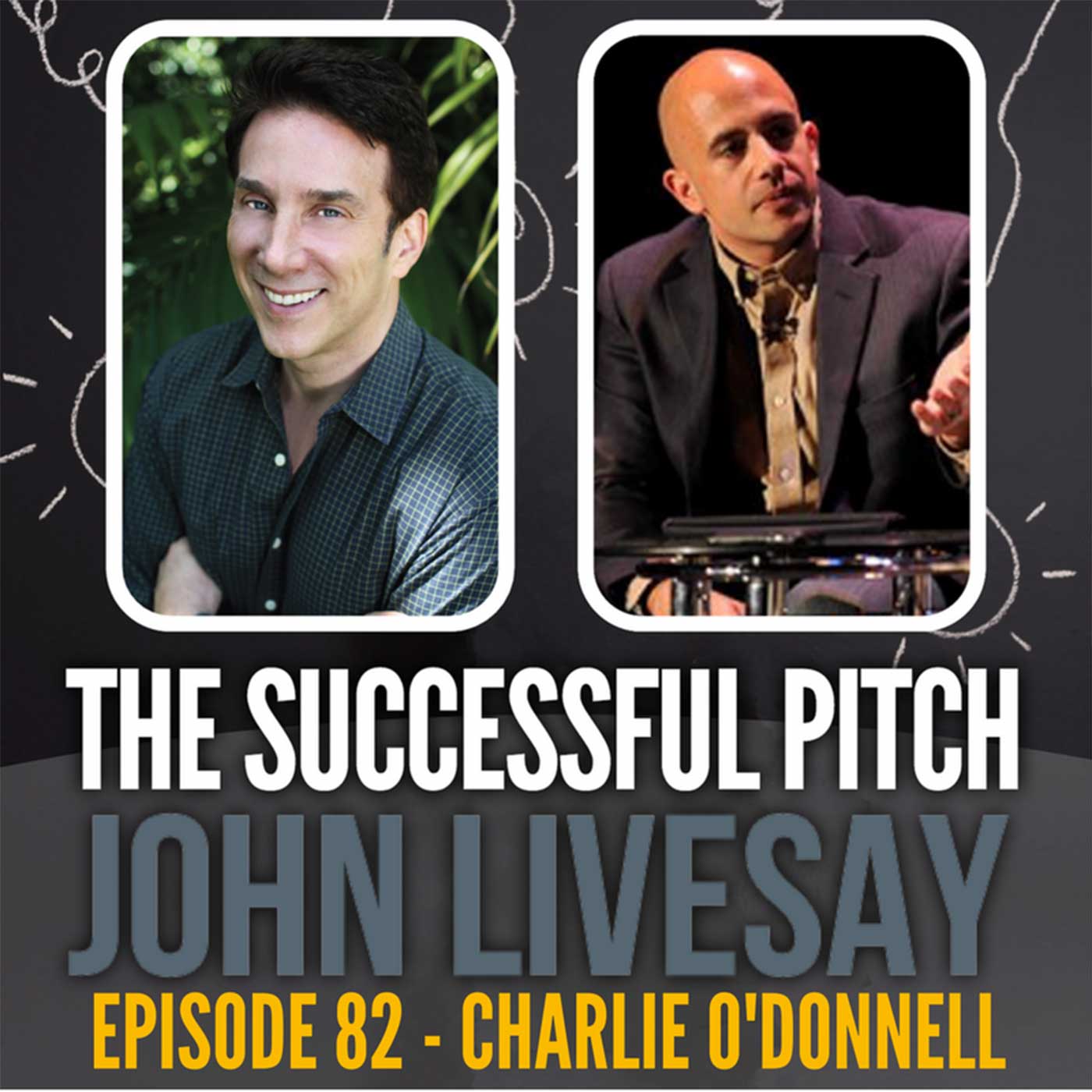
Listen To The Episode Here
Episode Summary
Charlie O’Donnell is the founder at Brooklyn Bridge Ventures and has been an active member of the New York City startup community for over a decade. As an investor, Charlie looks for New York-based startups that have yet to raise 750k in a previous round. Charlie discusses the key lessons he’s learned from pitching to various companies in his career on this week’s episode.
What Makes A Good Pitch – Interview with Charlie O’Donnell
Hi. Welcome to The Successful Pitch Podcast. Today’s guest is Charlie O’Donnell who is the sole partner and founder at Brooklyn Bridge Ventures. The firm makes seed and pre–seed investments and was the first venture firm located in Brooklyn, where Charlie was born and raised. I love the fact that Charlie says he nebver spends more than three consecutive weeks outside of any of the boroughs in New York City.
He is a hard fast New Yorker, he’s done Ford triathlons. What’s even more impressive is his reputation for being able to spot important companies early in the process. In fact, he’s been identified as an early Twitter investor.
I nudged the early Twitter investor part.
You nudged him.
It didn’t have a fund at the time.
You were able to capture that, yes. Since you were working in venture capitals since 2001, you have apprenticed your way through the asset class with roles on the Union Square venture team and you were involved with General Motors pension fund.
What’s impressive to me Charlie, is you’re only one of a dozen people to be named Business Insider’s 100 Most Influential People in New York Tech five times or more. You’ve served on the board of the New York Tech Meetup and you write a great blog called This is Going To Be Big. You’ve spoken at all kinds of great places. Without any more intro, welcome, welcome.
Thank you. Thanks for having me. I’m beginning to think that maybe I need to … That my bio is a little over the top. It feels a little overwhelming.
When you’ve accomplished that many things, people love to know what that is. Everybody wants to be an influencer and everybody wants to know what it takes to get their pitch funded. Before we get into all of the experience you’ve had, obviously growing up in Brooklyn, can you take us back to when did you decide you wanted to get involved in tech startups?
Brooklyn is not exactly, or at least when I was growing up, not exactly a Silicon Valley East. There are pieces of what I do and how I do it that showed up early on. We were pretty early to having a computer in the house.
My dad came home with an IBM PS2 in 1987, when I was eight. I don’t think we’re totally sure what we are going to use that computer for. I think my parents just felt like we should be a house that has a computer in it. I took to it early and got very comfortable with it.

What makes a good pitch: I think on the investing side, when you grow up in New York, Wall Street looms large.
I think on the investing side, when you grow up in New York, Wall Street looms large. Both of my brothers were in the brokerage industry, my godfather bought me some IBM stock when I was born. I knew what stocks were from a very early age. I used to track them. The nice thing about, even in pre–internet days, having a couple of shares of IBM, is that every night on the local news they would tell you what IBM did because that was one of the biggest companies out there that people were following.
The other thing was being very community oriented. I grew up in a great neighborhood. I grew up in Bensonhurst, which is at the time the largest Italian section in the five boroughs. It was a place where you knew your neighbors and you knew your friend’s grandparents because they lived on the same block or next door to you. Your neighbors are called aunt and uncle.
There was this community feel that I always looked for. If I didn’t find it, strove to create it. When I joined the tech community very early in some of the early days of the New York tech community, where I couldn’t find it, I tried to always put people together because I was used to just knowing the people around me by name and knowing who they were connected to.
All of those things go hand and hand with how I do my job. I’m into tech and on the investing side of tech. But the knowing that venture capital really existed and how it worked, actually I got lucky with a high school internship.
My high school, Ridges High School in New York, is a really fantastic school. They knew better than to keep a bunch of seniors around in the third semester after we applied to our schools. They basically kicked us out. They said, “Either do a community service project or do an internship, but don’t hang around and interrupt everybody else’s learning.”
I wound up at the General Motors Pension Fund from February until June on my senior year of high school, doing some pretty interesting projects. Largely because I knew how to use spreadsheets because we had had a computer in the house for ten years.

What makes a good pitch: I stayed there at that internship for four years. Venture capital happened to be the asset class that had an opening when I graduated.
Because I went to school locally at Fordham, I bounced back and forth during the school year, was able to intern there throughout the summer, part time during the year. I stayed there at that internship for four years. Venture capital happened to be the asset class that had an opening when I graduated.
I could have just as easily wound up in real estate or fixed income or anything, but the venture capital and private equity group had the opening. GM had been invested institutionally in a lot of the top tier funds, excels and cliners and batteries since like the late 70s. No one ever thinks of VCs as having to pitch for their money, but that’s what they did with us in that group. All those funds came to pitch the group I was working in.
That’s interesting. No one’s ever brought that up quite before. I’d like to hear a little bit more about that. Obviously investors like you get lots of pitches, but I’m sure you have a lot of expertise in what makes a good pitch from having to pitch yourself. Can you explain when you were pitching for getting the money for your fund, what you learned and how that’s helped you evaluate?
First of all, knowing who to pitch is half the battle. When you have the right person sitting across from you, it makes things so much easier. One thing I learned early on in my fund raising is figuring out who a small venture partnership that was doing very early stage seed investments was right for. Because most of my network was institutional investors like CalPERS or Canadian pension plans or people who are way too big for the size fund that I have. Then other VCs don’t usually invest in each other’s funds.
[Tweet “What makes a good pitch: Knowing who to pitch to is half the battle”]
I had to build up that limited partner network, that high net worth network from scratch, because that’s one thing I didn’t have in Brooklyn. My dad was a fireman and my mom worked in the school system. We didn’t really have that kind of a network. I didn’t go to an Ivy League school. It was all about leveraging my existing network and leveraging my brand to. Actually a major driver for getting in front of the right people to pitch was actually PR, was having relationships with media.
I got a really fantastic article in Crain’s that announced the launch of Brooklyn Bridge Ventures, which was sufficiently vague as to not worry the SEC. I got a random inbound from a person who was at a pool of partners’ capital from a hedge fund. They said to me, “We’re looking to diversify our assets. This seems like a strategic fit. It’s in our backyard.”
[Tweet “What makes a good pitch: Figuring out what is it that this other person wants”]
It wasn’t pitching them from zero. It was making sure the other person on the table was halfway there. Then figuring out what is it that this other person is wanting. A lot of it is being empathetic, which I think that a lot of people who pitch … Sometimes I’m on the receiving end of pitches where it literally feels like someone has pointed a fire hose at me and just let it go full blast and has not asked any questions about what I’m into or what my concerns are or whatever and crafted the pitch accordingly.
That’s so important. I think that’s where I have excelled and where my fundraising success came from. I’ve identified the right type of individual that my fund was a fit for and I was very authentic about it. I really believe it is. I can list a bunch of reasons why and have a really good conversation around that. It comes from a really authentic place.
There’s so many great takeaways there, Charlie. We’re going to tweet out, “Knowing who to pitch is half the battle.” That’s a great line. This whole concept of when you know who you are and that you’re authentic about your brand, that gets you in front of the right people. That’s a great combination of that. Let me ask you to expand a little bit on this authenticity, because people hear that a lot and I’m not sure everybody gets what that really means.
The thing that makes me so happy to have you on the podcast today is this blog you wrote about the things you believe. To me, that is such a great example of authentic branding. There’s so many of them. I’m just going to read off two or three and ask you to expand upon where did you get that belief and maybe tell us the story.
Sure.
I believe that if you aim for compromise, you will be less successful than if you aim for creativity. That’s good. Let’s talk about that one.
I think compromise is one of those words that people say, “You’re always going to have to compromise.” It, on one side, can ring as two people meeting in the middle, which is better than them fighting it out forever or never coming to agreement. It always struck me as each person getting half. I just never really been comfortable with that. You want one thing, I want the other. We’re both going to have to settle? What if there was some third thing that we could come up with?
That maybe going into this conversation neither one of us had expected or wanted or whatever, but it could make us both feel fulfilled. That’s really what I seek is, is let’s satisfy everybody but let’s keep an open mind that the answer to satisfying everyone may not be something that either one of us are thinking that we want.
[Tweet “What makes a good pitch: Aim for creativity over compromise”]
Sometimes that involves really going in and understanding the other person. “I see you don’t want to take X amount of dilution and I really want to put this much money into the company. Let me ask you, why are you concerned about dilution?” “I’m concerned about dilution because I don’t want to lose control of the company.” “We can accomplish that using the board. The ownership doesn’t necessarily mean control.”
Maybe you just didn’t realize that and I thought it was a push and pull over price but it’s not really about price. It’s this other thing that we didn’t go in and talk about. Trying to come up with creative solutions I think is something that I think is a better thing than always settling and compromising. I don’t want to say that I think people should just dig their heels in and fight it out forever, but I think creativity can solve a lot of problems.
It ties right back in what you said earlier about the importance of empathy and asking questions like, what is your concern here, and getting clarification on that. Let’s dive into one of the other things you talk about since you said, clarifying on a word. I believe that actions speak louder than words but that language has immeasurable impact. Can you give us an example of language having immeasurable impact?
Absolutely. This is a more recent lesson that I’ve learned. A lot of it has to do with these ideas of empathy. For example, there’s a lot of conversation about diversity in the tech community right now. There has been a growing volume of conversation around it over the last couple of years.
[Tweet “What makes a good pitch: Language has immeasurable impact”]
When you ask people how different things make them feel and you explore that and you accept without judgment, your minds opened up to a lot of things about language. For example, somebody was asking me about, how do we get more female founders to come and pitch at our venture? I think they called it battlefield. I just sat there for a second, I was like, “I think I know the problem.”
The word battlefield.
The fact that you’re equating pitching your company with a fight. To totally generalize this, that the level of aggression embedded in that language is going to skew more male or with people who identify as male. You don’t think about that until you talk to somebody who may not identified as male and voice their concern about that. I get that. I never really thought about that, because as a white guy there is a lot of things I don’t really think about.

What makes a good pitch: Language means a lot of different things to a lot of different people. What words you use is very important.
I try and be a little more conscious of that type of thing. Language means a lot of different things to a lot of different people. What words you use is very important. It’s important in things like titles in organizations, it’s important in how you approach people. Some people can’t even identify the word that makes them feel not right. They just get an email and they just say, “I don’t know if this is the type of person I want to work with.” There’s just something in there about word choice or whatever that really makes a difference.
Wow, that’s great. I’m sure you have a big philosophy around the importance of a team when you’re listening to a pitch. You have this quote here, “I believe that if you treat people like you believe they can be better than they are, they will be,” which I think is a perfect platform to jump off about that quote and just your whole philosophy of how important the team is when you invest.
Absolutely. I think you should have high expectations of people. I think you should do everything that you can to get them there. I think sometimes we are very supportive of founders and new ideas and all that sort of stuff. We say that we’re supportive and we think about it as like a pat on the back. Sometimes, we don’t deserve a pat on our back because we didn’t do our best or we didn’t meet our potential.
[Tweet “What makes a good pitch: Treat people like you believe they can be better”]
You can applaud the effort, but sometimes you need a little bit of a dose of reality that say, “Hey, that pitch wasn’t very good, actually. It wasn’t very convincing. Let me tell you why.” I’m not telling you that to put you down. I’m telling you that because I think you’re capable of more. If I didn’t think you were capable of more, I wouldn’t bother giving you any criticism over it because what would be the point? I would just be wasting my breath.
There you go. Nice. Nicely said because the intention behind the feedback makes all the difference in the world, doesn’t it?
Yes.
Let me ask you Charlie, about what is it in your gut instincts that made you say, “Twitter and Foursquare are going to be good investments”?
To put it in a context, I am a portfolio thinker. I am not a deal guy. I got trained at an institutional investor that had fiduciary responsibility over a task, so General Motors Pension Fund, where I kind of grew up as an investor, is big into asset allocation and portfolio risk. These concepts that don’t usually pop up in venture capital. When I think about an individual deal or an individual company, I think about it in the case of this deal is the right amount of risk I should be taking, has the right amount of upside and has the potential to get there.
[Tweet “What makes a good pitch: The right amount of risk and upside.”]
I don’t convince myself that I know that this company versus that company is going to be a winner. You don’t know. There is a heck of a lot of things that could go wrong from Point A to Point B. I think what I look at is this is the type of deal, or if I did this kind of deal 30 times over in a portfolio, we’d be doing fine. I differentiate between good decisions and good outcomes.
There are lots of instances where I think people have invested in companies that shouldn’t have had a good risk profile and made it work anyway. It feels a little bit lucky but I’m pretty sure if they did that 30 times in a portfolio, it wouldn’t work out.
I guess the Twitter reference comes from, there’s a small mention in Nick Bilton’s book, Hatching Twitter, about how as a former Union Square analyst who still had a connection to Fred Wilson. I was at South By Southwest in 2007, which was the kind of Twitter year and the thing that sort of kicked off South By as the place to find the next big thing. That’s when Twitter really took off.

What makes a good pitch: It took off because nearly 80% of the people who were on Twitter were at South By.
It took off because nearly 80% of the people who were on Twitter were at South By. You got this really funny sort of glimpse into the future of like, “This is what it would be like if everyone was on Twitter.” To me, if you were at South By, it was just really obvious. I don’t think of myself as being special.
I would have been really special had I noticed that before I saw that critical mass, because my tenth Tweet that February was, “No one seems to be on Twitter. Am I bored of this already?” Once I got to South By, I was like, “I kind of get this.” What’s fascinating is the parts of it I found interesting, the idea that you could text somebody without giving them your phone number. This layer of identity on top of the phone but not tied to your number was really interesting to me, intellectually interesting.
Not too far after that, we went to a mostly app driven world that had nothing to do with text. That wasn’t the thing that drove Twitter. I also thought that it was a great way to pull a community together, because there was a nice balance of the number of people at South By, the number of texts that came in and all that sort of stuff.
Really, once Twitter got into scale, it became much more of a broadcast mechanism than anything. They largely turned off some of their community features. You can’t see when someone @Messages someone else unless you are following that person too, the reply thing. Some of those early features weren’t necessarily ultimately what made it scalable.
But it was certainly, to me, an interesting enough experiment and certainly an interesting team and a growing mobile market. I was like, “That’s the kind of thing that if you were a high risk, high return kind of player, you should probably be around that.” I can’t say it was any kind of Nostradamus like, “We’ll all be tweeting in the future.” There is this thing like, “You should be doing this kind of thing.” That’s the way I look at that.
I love what you described as Twitter pivoting within what originally started off as and what it actually has it become, because I think so many people forget that. They forget that even the best team and the best idea still makes minor pivots along the way until they really hone in on what people want and how to use it.
Could you imagine at South By Southwest that there used to be a feature called Track that you could pick a phrase like SXSW and have it texted to you every single time anyone mentioned that? That seems like a nightmare today.
Yes. Right. The volume.
At the time, there was not that many people on Twitter and not that many people at South By that it was actually a nice pace. Product decisions that were made then are completely different than the product decisions that we need to get made now. I think that’s a struggle for a lot of companies, especially a lot of consumer companies, where your initial user base may not be the masses and may not be where it scales. Maybe your initial trendsetters and early leaders, you might have to abandon a little bit to take it to the rest of the community, which is hard for a lot of companies.
[Tweet “What makes a good pitch: Product decisions made then are different than now.”]
Is there any type of tech startup now that you specifically are looking to fund or something that you’re working with now that you want to talk about?
Early. That’s basically the category. My rules are very basic. I focus on New York companies. If the company has already raised $750,000 in a previous round, then it is too late for me. I want to be a part of your first million dollar spent. I want to be there from the beginning, helping to put in best practices, helping to figure out what the goal should be with the seed round, work through those early hiring decisions, which you can make a huge impact on.

I’m in a brick and mortar ice cream shop, the number one rated ice cream shop in the country, Ample Hills
Other than that, I could not have a more diverse portfolio. I led the investment in a consumer electronics company called Canary, which is doing extremely well and can be purchased at your local BestBuy and Amazon and all sorts of other places. I’m in a brick and mortar ice cream shop, the number one rated ice cream shop in the country, Ample Hills, which opens up in Disney in May and is absolutely the happiest place on earth per square foot.
It doesn’t have to be tech, it sounds like if it’s an ice cream shop.
No, it doesn’t. To me, it’s more about the aim of the amount of enterprise value you’re trying to grow in this company. Usually, you get up to a certain size and it is mostly tech businesses. If you go back, call it 25 years ago, in venture capital, a good chunk of the venture capital world 30 years ago was retail rollouts. Staples, PF Chang’s, Dick’s Sporting Goods were venture backed companies.
That was a way to get growth. You figured out a store model and a second store model and a third store model and you just keep building stores. You grew some pretty large companies that way. Who wouldn’t have wanted to be an Angel investor in Shake Shack or SoulCycle or any of these types of retail businesses.
In the late 90’s, when all of this sort of eCommerce, dot coms took off, most of those retail investors shifted over to the internet. Retail investors, if you weren’t doing this dot coms and IPO nine months after you invested in them, you kind of missed out. People shifted their focus and they didn’t go back. There hasn’t been a ton of retail investing.
It’s actually come back into favor a little bit now because some of the VCs started doing it as Angels. Their favorite restaurants, their favorite coffee shop. It’s a fun new set of challenges. It’s interesting. It’s all about place making. There’s that but there’s also the realization that just because you don’t have a roof over your head doesn’t mean you have very good economics.
[Tweet “Having a roof over your head doesn’t mean you have good economics.”]
The Blue Aprons of the world still spend a lot of money on customer acquisition, whereas Ample Hills doesn’t have a marketing budget for customer acquisition. We make stores and we put an ice cream shop in the line forms and people pass by it because they like ice cream. We don’t need to spend dollars to acquire customers, we just need to spend dollars on rent.
Interesting. You’ve said some really great things here about what makes a good pitch. Don’t make the investor feel like they got a fire hose coming at them, be authentic, be empathetic. Is there anything else you want to add to that great advice before I let you go as to what makes a good pitch for you?
I think one thing that is important is to listen specifically to what the objections are and make sure your answers really specifically address the objections. If I tell you, “I’m just not sure that this is a venture sized opportunity that can create $250 million of enterprise value.” To respond with, “This is a really big opportunity because a lot of people have this problem.”
[Tweet “What makes a good pitch: listen to objections and answer specifically.”]
That doesn’t really address the problem on two levels. One, is how big is big? Because there could be a big problem that has a $30 million exit as its natural life, which should be plenty great if you could bootstrap it. It’d be pretty good if you could Angel invest. But probably not good enough for a venture firm. Just saying that something is a big problem doesn’t mean there’s a lot of value to be extracted from solving it for customers. There might be an unwillingness to pay or whatever.
I think just making sure you get investors over each of those hurdles very specifically to be able to say, “Each one of my customer is worth X and I have pipeline for Y. If I have this much growth or every salesperson can generate this many dollars. Look, I’m already doing it with two sales people. It only takes $5 million to ramp it up to 30. Here’s what exit multiples are for this business.”
Granted, we know that this is not the way it’s going to pan out, but at least you’re giving me back what I was asking about. Versus these vague, “Big and important.” I don’t know what that means from a sizing perspective.
Language has immeasurable impact like this quote you said earlier. Final question, what kind of book would you recommend listeners to read, either about investing or entrepreneurship or life in general?
I think I will go with the life in general category. I am a big fan of taking thought models from completely other random places and reapplying those, because I think it’s great training for how to approach new problems. There is a book called The 48 Laws of Power. It was a very popular management book. The author of The 48 Laws of Power collaborated with 50 Cent, the rapper, to write this book called The 50th Law.

In The 50th Law, hip hop and pop culture icon 50 Cent (aka Curtis Jackson) joins forces with Robert Greene
It was all about 50 Cent’s career, both legal and illegal, and the principles of management that you could distill out from his success. Now, I’m not saying that you should go out and be a drug dealer and then try and turn that into a rap career. But the idea that you can pattern that across such diverse situations, I think it’s just really good brain training. Go pick some completely other hobby, beekeeping or whatever it is. I think you will find many different facets of the world operate a lot more similarly than you think.
It’s part of the story behind Where Good Ideas Come From, a Steven Johnson book, where it’s all about cross pollination. No pun intended with the bees. Take ideas from one place, turn them slightly a couple of degrees in one direction, bring them to something else. That’s where creativity comes from. Because if all you’re doing is reading startup book after startup book, you’re just going to be thinking the same as everybody else versus somebody who comes at things from a new angle.
I love that. We’ll be sure to put both of those books in the show notes. I’m sure you are able to take a lot of the athletic endeavors that you do and transfer that to being an entrepreneur, as far as stamina and tenacity and all that good stuff too.
I do a lot of thinking on my bike.
People can follow you at Twitter. You have one of the most unique Twitter handlers I’ve ever seen. In fact, when I saw it I thought, “How was that not taken?” But I’m guessing it’s because you were an early Twitter user, is that right?
CEO is actually my initials. Charles Erik O’Donnell, CEO is always a thing even before I wound up in venture. It doesn’t really have much to do with starting companies or being in charge of stuff.
Got it.
CEO NYC was just, that’s who I was. I am CEO and I live here in NYC. Nobody else took that.
The double meaning is fantastic, you have to admit.
Absolutely. I will admit to people tweeting at me, telling me that they have seen my car parked on the street, because I am one of those people that has a custom plate. It’s very easy to spot my car.
Nice. You have consistency in your branding, that’s why you’re so successful.
There you go.
Charlie, it’s been such a pleasure. We’re going to have people follow you @CEONYC. Of course, I want to give a shout out to your incredible blog. Tell people how they can find that. This is Going to be Big is the name of it.
It’s ThisIsGoingToBeBig.com or they can Google my name. I’m usually the first ranked person, either that or the Wheel of Fortune announcer. I’m not that guy.
Fantastic. Thanks again.
No problem.
Links Mentioned
J Robinett Enterprises
John Livesay Funding Strategist
This Is Going To Be Big Website
Brooklyn Bridge Venture Website
Charlie on Twitter
Charlie on LinkedIn
The 50th Law by 50 Cent and Robert Greene
The 48 Laws of Power by Robert Greene
Crack The Funding Code!
Register now for the free webinar
The Successful Pitch – Book Trailer
Share The Show
Did you enjoy the show? I’d love it if you subscribed today and left us a 5-star review!
-
- Click this link
- Click on the ‘Subscribe’ button below the artwork
- Go to the ‘Ratings and Reviews’ section
- Click on ‘Write a Review’
TSP080 | Steve-Rohr – Transcription
Posted by John Livesay in Uncategorized | 0 comments
John Livesay:
Today’s guest on The Successful Pitch is Steve Rohr, the co-author of the book, Scared Speechless. How many times have you gotten up to pitch or give a talk and you get nervous and you don’t know what to do? Well, Steve has all the secrets to calm your nerves so that you take over your body instead of your body taking over you when you get nervous. He said the audience, or the investors, are not your enemy. They want you to succeed. They’re rooting for you. He also said that your pitch is meant to be said, not read. So, you need to practice it, and if you say it conversationally, it will not come across robotically. Then, he tells a secret about storytelling and the underdog effect that if you put this into your pitch, you’re going to memorable and irresistible to investors. Listen to find out what the underdog effect is.
The interview begins in 45 seconds right after this information on how you can get funded fast.
Are you a founder struggling with your investor pitch? Do you need warm introductions to the right investors to get your startup funded? Do you need a funding road map to get you there fast? All of this and more can be found in Crack the Funding Code. Join host, John Livesay, and Judy Robinett, bestselling author of How to Be a Power Connector and board member of Illuminate Ventures, on their free Crack the Funding Code webinar. Simply go to judyrobinett.com – that’s J-U-D-Y-R-O-B-I-N-E-T-T dot com – and click on the webinar tab to see how to tap into their network of investors from around the world. There’s a link in the show notes as well. You’re only one click away from getting funded fast.
Hi, and welcome to The Successful Pitch Podcast. I’m honored and thrilled to have a personal friend as the guest today. His name is Steve Rohr. He is the co-author with Dr. Shirley of an amazing book called “Scared Speechless: 9 Ways to Overcome Your Fears and Captivate Your Audience”. And since this is a podcast all about pitching, we need to know how to captivate our audience and not be scared and come across confident.
Steve is a college professor and works in the entertainment public relations. Currently, he’s the show publicist for the Oscars, if you can imagine what that job is like. His involvement in public speaking spans two decades. He doesn’t look old enough to have done that. He holds an MA in Communications from Arizona State, and for three years, he co-hosted a psychology show with his co-author, Dr. Shirley. This is his first book, but this is not his first time at the rodeo on helping people be good in front of other people. Steve, welcome to the show.
Steve:
Thank you, John. I’m happy to be here.
John:
One of the things I always like to have our guests talk about is how did you become such a successful publicist, and what made you want to write this book? But, take us back even further to now you’re teaching people how to be good in speaking, but when did you decide that you wanted to be a good speaker?
Steve:
Well, yesterday actually. It’s about time that I’m good at something. No, actually, I was pretty shy as a kid, to be honest. You know me, John, but if you were just to meet me out in the world, you would think that that would be a huge lie. But, actually, I was very, very shy as a kid and couldn’t really find my way, and I eventually wandered into a drama/speech class in high school and really found my tribe, and people were just as weird as I was and I fit right in and learned the skills that actually have propelled me to where I am today. I credit everything that I have today to my skill building in public speaking so many years ago.
So, that’s the pitch there, but along with that, I never planned to be a publicist. It never occurred to me to be a publicist as I was wandering through college and then started in business. I started in television first, in television news and worked in news for a couple of years, and then fell into publicity and have been doing it for 15 years, representing talent, clients, authors, experts, and the like, and then did this psychology show by accident as well. My life is just full of these accidents, right?
With Dr. Shirley, who is a fantastic psychologist, one of the most noted Latina psychologists in the country, she’s been all over T.V. — Dr. Drew, the doctors and their like, and just started out as her producer and suddenly found myself on the air. We ran for three years, and one of the shows we did was about public speaking and the fear behind public speaking. Because nobody really talks about it.
Everybody says, “Yeah, I’m super nervous,” but nobody explains why you’re nervous in a concise and accessible form. You know, you’ve got the textbooks out there written by academic people and then you have a lot of books online and everywhere else that are public speaking books. But, guess what, John? They’re not really written by public speaking experts, believe it or not. Many of these books are written by authors who have a business background and international relations, French even. And while that’s fine, it really kind of struck us as odd.
So, we combined the two worlds. We combined the psychology of public speaking with the how-to of public speaking in what we think is a pretty accessible, we think, funny – because we think we’re funny – read for people called “Scared Speechless”.
John:
Well, the title is fantastic, by the way, because it’s memorable and it grabs your attention, and that’s what you have to do when you’re pitching. So, congratulations on a great title.
Steve:
Thank you.
John:
One of the things you talk about that I really thought was so fascinating is we all know we get nervous, or the adrenaline kicks in, but we don’t really know why, and you talk about it from a historical standpoint of view from our brain that’s standing out used to mean we could possibly get rejected, and rejection would lead to being ejected from the tribe. Can you walk us through what our brain is doing?
Steve:
Yeah, we’re going way back, John. It’s before the 1980s. It’s way far. The ancient times for our ancestor. We have, in our noggin, something called the “primitive brain”, and it’s pretty primitive and it hasn’t changed for 700 years. It is the defense mechanism part of our system that alerts us to danger. So, that’s our fight or flight response, and so this has been in our world forever and ever and ever, so back in the olden times, it would trigger us not to go into that dark cave where we could possibly be eaten, or pet that very hungry looking tiger. So, it really was a great survival mechanism for us.
Now today, we’re scared of public speaking. It’s the number one fear in America. Death is second. Spiders are on that list someplace, but definitely, public speaking is the number one fear. And, guess what, it has to do with our primitive brain, because our primitive brain is fantastic, yet unfortunately, has not evolved very much in 700 million years. So, it actually thinks that going to that cave or petting that hungry tiger is the same thing as standing up in front of a group of people and speaking. It cannot tell the difference.
So, we are terrified, and it’s a good thing, right? It’s a good thing that we’ve got nerves because it keeps us alive. It’s kind of a tricky thing when you’re standing in front of other people or about to pitch, because your brain is saying, “Uhh, these people are going to eat you.” So, you have to use a modern adaption and you have to think as a modern sensible person to say, “Well, you know what? They’re probably not going to eat me. They could bite me, but they’re not going to eat me.”
You talked about the rejection aspect of it and the tribal connection. Well, we used to wander all over the Earth in tribes, right? We didn’t have cities and we just kind of had our group and we stayed with our group for our entire lives, and it was a matter of survival. If you got kicked out of that tribe or got lost somehow, or were separated from your tribe, you stood a very good chance of being killed within minutes, right? Because outside the tribe, you have no protection whatsoever. So, our primitive brain then says, “You must stay in the tribe, you must stay in the tribe.”
Now, when we get up in front of people to speak, oh gosh, we do not want to be rejected from this tribe. We don’t want to be rejected, we don’t want to stand out too much from the tribe, and so our primitive brain then goes into high alert and says, “Look, buddy, you cannot be rejected from this tribe, so run away, hide in the bathroom, do whatever you can to avoid speaking in front of these people.” So, again, you have to accommodate with your modern sensible self to say, “You know what? I’m not going to get kicked out of this tribe. Number one: is this the tribe that I want to be in? And number two: I’m not going to spend the rest of my life wandering around the parking lot on my own, right?” It’s just not going to happen.
John:
So, what you’re writing about and saying to us is so valuable, Steve, because if we realize that we’re programmed to panic in these situations, then we don’t get surprised when that fear comes up. We just go, “Oh, this is part of my programming,” but I’m now in charge of my body, not the other way around, so I get to tell my body, “Look, this is not a dangerous situation. Don’t worry about the rejection.” In fact, you also have some really great things to do that also counter any fear that might happen. So, if you’re scared speechless. In other words, if you go blank and your mind doesn’t know what to say. You’re so scared you get speechless, what is one of your big tips there?
Steve:
Well, first of all, I think that you can preempt your primitive brain a little bit in this regard, because we know that when we get scared speechless, it’s a physiological change that happens in our body as well. So, that’s why we sweat, that’s why our mouth goes dry, that’s why our legs start shaking uncontrollably, because it’s a physical act. It’s a physical event.
So, I always encourage people to stretch out. Not just warm up your tongue, but warm up your entire body. Stretch like you’re going on a run. So, it signals to your body that something is about to happen. It gets your body primed to take on that fight or flight so that, suddenly, when it does happen and you’re in front of people and your shoulders go to tense up, guess what? You’re already loose. You’re already warmed up. You’re ready to go, right?
The second part of that story is, well you go blank. Yeah, this is a big fear for people. Huge fear for people because we think that, number one, the audience is our adversary. We think that the audience is judging us. Why do we think that? Well, because we judge people all day long. So, of course, we think that and we put ourselves in the audience position and we think we’re going to be judged.
Well, here’s the truth, John. Here’s the absolute truth. The audience is not your adversary, not even close. Here’s why we know this is true. Number one: if you’ve ever sat in a room where a speaker starts to struggle, they go blank, they start to panic, how are you feeling at that time as an audience member?
John:
You feel empathy for them. You want them to figure out what they want to say because you want them to get better.
Steve:
That’s right. You go into immediate secondhand embarrassment, okay? So, maybe now you’re sitting on the edge of your seat and you’re trying to will words into that speaker’s mouth, right? If you were to look around at that point, the rest of the audience would be doing the same. The audience is not your enemy. The audience wants you to succeed. They are rooting for you. They are championing you. When it comes to pitches, same same. Nobody wants to go into a pitch meeting and not have something great happen. Their wish, their desire, their hope is to go into the pitch meeting and hear something that will be a solution for them, right? A financial solution, a creative solution, any kind of solution. So, they’re going in for that purpose. Along the same line, when is the last time you walked into a room where there is a speaker and you said, “My gosh, I hope this person is really boring?”
John:
Never. We’re going to tweet that out from the show, by the way. That’s such a great line. “The audience is not your enemy. They are rooting for you, and even if the audience is investors, because they are looking for a good deal. It’s their job to hear a good pitch and make money and they hope that you’re the next person in.” It’s almost like a casting agent looking for a great actor to be a star in a movie. They want to see good additions.
Steve:
That’s absolutely right. So, of course, if you don’t want a boring speaker, what do you want? You want a lively, entertaining, great speaker. You want to be entertained. That’s why we know that audiences are not your enemy. So, if you go in with that mindset instead of going into it thinking, “Oh my gosh, well they’re going to rip me to pieces.” No, they’re not at all. Then, the chances of you going blank go way down. Now, if you do go blank. Here’s our trick: you ask a question. You ask a question. So, they don’t know what your speech is, they don’t know what your pitch is. They have not been writing it with you or practicing it with you. They do not know where the pauses are. So, if you come to a place where you just go blank, it’s okay, because they don’t know that isn’t some dramatic pause you’re taking.
John:
Right. You write about it being a rhetorical question even. They don’t even have to answer, right? It’s just to get them thinking.
Steve:
Yeah, you go back to the last thing you said, and then you ask a question. You ask either a rhetorical question or you ask a real question, and here’s how this works. The audience are humans, and as humans, when we’re asked a question, we automatically go into answer mode. This is what happens. Suddenly, the audience is no longer focused on you. They’re inside their head coming up with an answer, and this will buy you time, and perhaps, a lively discussion along the way. Whatever it does, it’s going to take the pressure of you immediately so you can get back on track and move forward.
John:
Now, one of the things you write about that I’m a big proponent of is the superhero pose. Can you tell us what the science is behind that, and what the advantages of doing it are, and what it is?
Steve:
Well, you know, we always think that our brain has to command our body. But, what if our body commanded our brain? What if our body sent signals to our brain that we were okay? What about that? Well, this is true. It can happen, and the superhero pose is standing upright, being confident, even when you feel like maybe you’re dying inside, right? What this does, it just gets your body to send a signal to your brain to say, “We’re okay. We’ve got this. We’ve got this, alright?”
So, one of the ways you can see this is true is if you’re ever — say you’ve got to go to someplace that you really don’t want to go to: a crappy meeting with crappy conversation and crappy food, and you’re in a crappy mood. What if you smiled like a crazy fool in the car on the way there. Crazy big joker smile. Force yourself to smile. By the time you get to that meeting, I bet you that you will be in a better mood. It’s so much easier to smile at that point, and your attitude will be changed by the time you walk in that room.
We know this. We know that a power stance, we know that your body can also send signals to your brain, we know the smile works. So, instead of thinking of it brain to body, think of it body to brain, and I think you will be pleasantly surprised by how you feel and how confident you become.
John:
I love it. Now, one of the things I’m a big proponent of is telling a story that makes your pitch memorable and pulls at the heartstrings. Can you talk to us about your thoughts about storytelling, and in particular, the “underdog effect”.
Steve:
Yeah, absolutely, Well, storytelling is one of the oldest ways that humans communicate. Back in the days before the ’80s, we had to sit around and tell stories, and that’s how we shared our history, that’s how we shared the social amores of the time, how we made sense of the world and our place in it. So, storytelling is absolutely programmed into the human brain, and it’s, again, the most powerful way you can communicate. Storytelling in pitches and speeches will automatically resonate with your audience because we are programmed, as an audience, to listen to your story and then try to find references in our own life, in our own stories that match up. So, automatically, we’re on board. And guess what? We remember stories.
So, if you’ve ever heard a speech or pitch, and that was a great speech and you thought it was a great speech forever and ever and ever, I will bet you that you don’t remember one statistic in that speech, but you might remember somebody talking about their grandmother, or you might hear them talking about how they struggle to achieve something, which is the underdog story, and the underdog story is incredibly powerful as a rhetorical tool.
The underdog story is, of course, just what it sounds like. Somebody who is trying to achieve something with insurmountable obstacles in front of them, and the underdog does not have to win, by the way. He does not have to win. Now, studies have shown that we are so rooting for the underdog that we’ll even root for a cartoon character or an animation to win.
There’s a study at one university where they showed two animated sequences. The first sequence was this little guy trying to push this big stone up a hill. Didn’t make it. The second animated sequence was another animated guy pushing a stone up the hill and doing it pretty easily. Then, they asked the participants who they were rooting for, and to a person, they said, “The guy who was struggling. The guy pushing this animated, *animated*, stone up the hill.”
What does that tell us? It tells us this is a very powerful rhetorical strategy, and I believe it’s powerful because at some point in our lives, at some point in all of our lives. I don’t care if you were born with a silver spoon in your mouth, or very humble circumstances, or what color you are, or what flavor you are, at some point in your life, you felt like the underdog, and so you could relate to it. You can relate to it.
John:
That’s so valuable because investors are looking for you to be a little bit vulnerable in your stories of a time you had to persevere, and pivot, and not give up. So, you can’t come across as if you’re perfect and you’ve never had a challenge and everything’s just been easy breezy your whole entire career because they want to hear about you being the underdog and coming out on the other side. Because they know there’s going to be bumps in the road and they’re looking for you to tell them a story that makes you memorable and that they want to invest in you, and that’s a great tip.
Steve:
That’s absolutely right, John. It’s about resilience. We value resilience, people who are resilient in their life. Look, investors are human beings. You cannot sit in a room and look at people as a dollar sign. You have to look them as real people, real people who’ve had struggles, because chances are very good, those people are not sitting on all that capital because everything was smooth sailing in their life. Each one of them has had to struggle and overcome some incredible odds to get where they are, and they want to know that you are resilient enough to keep on going when the going gets really tough.
John:
Yes, that’s so important. Can you talk to us about self-talk and the way that we talk to ourselves and what we should be saying to ourselves before we get up and pitch, or give a talk?
Steve:
Yeah, John. We’re terrible when we talk to ourselves. You know, we talk to ourselves all day long. This is true. Some of us talk to ourselves more than others, quite frankly, but we know, from research, that when we talk to ourselves, we are teaching ourselves things. We’re helping ourselves, we’re guiding ourselves along. If you do this little trick, next time you lose your keys, John – not that you would.
John:
Oh, I’ve done it.
Steve:
Okay, I do it a lot. If you just go around the house saying, “La-la-la, expletive, expletive, expletive,” that’s one way to do it. The next time you lose your keys, just say this, “Keys, keys, keys, keys,” and you will find your keys faster. You will find your keys faster. But, here’s the thing. We talk to ourselves, but we’re not very nice. In fact, we’re pretty terrible the way we talk to ourselves.
Women will, at some point during the day, tell themselves they look fat. Guys will tell themselves they’re an idiot or they’re a loser and, well, we’re teaching ourselves that too, and it’s one of those things where you have to look at it and say, “Would I ever say this to my child? Would I ever tell my child that they look fat, or they’re a loser, or they’re an idiot?” I would guess not. I would guess not, and if you’re willing to do that as a parent, then God help you. But, we’re not going to do it, but yet it’s so easy for us to do that to ourselves. So, we need to stop because when we’re going into a situation where we need to control our nerves, manage our nerves, and we need to really do our best, we don’t need another voice, especially our own, saying that we’re going to mess it up.
So, you need to stop, and here’s my trick for stopping because it’s not easy, but here’s my trick. You stop. You stop. Here’s what I ask, I ask that tomorrow, just tomorrow, the first time and only time that you say something negative about yourself, I want you to stop. Just stop. You can turn it around and say something nice. You can just stop. Whatever it is, just tomorrow, just one time. So, after that one time you’ve done that, you can curse yourself out for the rest of the day, go to town, right? But, just that one time will give you the awareness that you need because, at that point, I want you to notice how you feel, and I bet you feel like you’re in control. That’s the way you need to be to be successful in public speaking, or pitching, and in life.
John:
I love it. Awareness gives us self-control. So, just become aware of what you’re doing. If you’re unconscious or unaware, you can’t fix or change or improve your nerves, or your negative self-talk. It’s really, really helpful.
Steve:
There’s another voice in our head, John, that I just wanted to touch on with you. It’s the inner critic. The inner critic in our head that says, “You’re not good enough, you’re slow, you’ll never make it.” This voice is so excellent. Excellent at reaching us the moment we need to be at our very best. It will get louder, and louder, and louder, because it’s part of our primitive brain. It’s our primitive brain shouting at us to get away from the hungry tiger. Because, again, the primitive brain doesn’t know the difference between a hungry tiger and pitching. So, it feels like we’re in grave danger. It makes sense, right? And the closer you get to that meaning, the louder and more adamant it will become, this voice that says, “You’re a loser, they’re going to hate you, you’re going to fail, you’re going to go blank, you’re going to mess up, this is going to be disaster,” because your primitive brain wants to save your life.
Here’s what you do. You talk back to it. I’ve had times where this primitive brain was yelling at me because I was in such grave danger. No danger at all, but grave danger because I was taking a risk. I was walking into fear and I shouted it down in my house after the police left. No. I shouted it down and told it, “Go away!” You can scream at it, you can swear it, make it go away, and I promise you it will. It will come back, but you can make it go away. Now, if you are not a screamer, you can negotiate with it, and say, “Look, I get it, primitive brain. I get what you’re trying to do. You’re trying to help me. This is all natural, but can we wait? Can we put a pause on that for a second? Because I need to go and do this very important thing. You can come back later, you can come back tomorrow, or whatever. But, at this time, I just need you to take a minute and step out of the room,” and that will work too. It will work too.
John:
That’s a great conversation you’re having with yourself. Elizabeth Gilbert talks about this all the time. She says she talks about putting fear in the backseat of the car when she’s still driving the car, not fear is driving the car. It’s the same kind of thing that you’re talking about: two great speakers talking about a similar way to handle fear in different ways, but still really, really valuable, which just gives people the power to realize that they’re in control of their thoughts, not the other way around.
Steve:
That’s right.
John:
Can you tell us, Steve, about the importance of practice and what tips you have on practicing your speech or your pitch?
Steve:
Sure. Most of us spend 99% of our time writing our pitch or writing our speech. We do this all the time, and then we spend maybe 1%, or maybe just 3 minutes in the car on the way to the pitch practicing it. Wrong. First of all, you can never over-practice. It’s impossible to over-practice. You know this because think about the last time you gave a speech or presentation on the drive home, you probably thought to yourself, “I could have done it better. I wish that I had practiced a little bit more.” You can never over-practice. It’s impossible to over-practice.
John:
Let me ask you a question that I sometimes get asked when I give that advice to people. “I’m afraid I’m going to sound like a robot if I over-practice.” What do you say to that?
Steve:
Well, here’s the trick. Most times we write our speeches, our pitches, we write them as essays, but we need to write our speeches and pitches to be said, not to be read.
John:
Ooh, that’s good.
Steve:
To be said, not to be read. So, English majors have a really tough time writing speeches and pitches because they want to use real sentences and they want to avoid jargon, and they want to use huge words to be impressive. This is not the time. So, in English, you can get an A. In Speech, you get a D, because you need to write your speech to be said, not to be read.
John:
We’re going to tweet that out.
Steve:
Here’s how you can make that happen. You write your speech out loud. So, you don’t spend 99% of your time writing this speech and 1% practicing because once you get to that 1%, if you haven’t written it in a conversational way, you don’t have time to go change it again, so you’re going to sound like a robot. Every time you hear somebody give a robotic speech, listen to the words, and you will tell that they have not written this speech out loud.
And by that, I mean you sit down and you’re writing things out. You’re writing all your ideas out, and maybe you try saying it out loud. “Oh, wait a second. That doesn’t sound quite — huh, that’s a little wordy, isn’t it?” So, then you go back and you adjust it, and maybe you can work out an idea that you’re writing down just out loud. “Oh, this sounds a lot better, or maybe I can use a more active word here,” or maybe, “Wow, this word, nobody’s going to understand this word. Maybe I should just cut to the chase, right?”
John:
Let me just stop you there because that’s so important. I’m constantly telling founders, “Do not use acronyms or complicated words in your pitch, even if the investors understand it. You don’t want to confuse people because the confused mind always says no.” So, keep it simpler than you think you need to. This is not the time to impress people with how smart you are with a bunch of complicated terms and words.
Steve:
Yeah, it’s a huge waste of time. It’s a colossal waste of time. You just need to really communicate with your audience, and I’m glad you say that to your peeps, John. That’s really, really important. You writing your speech out loud, you work it out. one of the tips I always say is you put one thought per sentence. You put only one thought in every sentence. So, this means that if you have to take a breath, if there are a bunch of commas in your sentence, you have far too many words. It’s one thought per sentence.
Now, listen to newscasters, listen to broadcast people, especially on television, and you will hear them use one thought per sentence, and the reason they do this is, you know, moms are getting ready for work in the morning, dads are playing with the kids, and in the background, you’ve got the news going on. Now, your audience only has one chance to hear it, one chance to hear it, and to absorb what you’re saying. So, one thought per sentence. It’s a lot easier to use shorter sentences as well, and you can use one word. You can just use one word. And when you’re writing a speech to be read, then you can’t just use one word. It’s improper. That’s why you always write your speech to be said, not to be read, and you write it out loud.
John:
Let’s say one of the listeners has been invited to pitch to a room full of angels and they have to stand up and give their pitch. It’s 10 minutes. How do you recommend they practice that?
Steve:
A lot.
John:
How? Should they stand up or should they just read in the table? In the mirror?
Steve:
You’re going to be standing up. You absolutely have to stand and deliver. You have to act as if you are actually doing the speech. If you have practiced your speech sitting down, and even lounging on your couch eating popcorn, and by the time you get up to stand up to give your speech, it’s going to sound a lot different, and it’s going to feel a lot different, and your body’s going to go into some wacky shock because it doesn’t know what the heck is going on. But, if you have stood up and given that speech 25, 50 times in your living room, guess what? You have your body on your side then, and your body can do your bidding.
John:
Nice. Steve, this has been so helpful. I just want to see how can people — we’re going to put in the show notes where to buy Scared Speechless, but where can people follow you on social media? What’s your Twitter and all that good stuff?
Steve:
Well, my Twitter account is @RealSteveRohr, and Instagram, @realsteverohr, and I’m on LinkedIn. I have 7,000 LinkedIn folks. Please join me. And if you want more information about our book, Scared Speechless, you can go to drshirleyandsteve.com. That’s drshirleyandsteve.com, common spelling.
John:
Fantastic. It’s been a great interview. My favorite line that we’re going to be tweeting out is, “A pitch is to be said, not read.” But, you’ve given us so many other great tips about how to deal with our fears and how to be resilient when you’re giving a talk, and most importantly, what we say to ourselves so that we don’t talk ourselves out of being successful. Thanks again, Steve, for being on the show. You’ve been an incredible guest.
Steve:
It’s my pleasure, John. Thank you.
John:
Thanks for listening to The Successful Pitch Podcast. If you liked the show, please go to iTunes and write a review, and encourage your friends to write reviews too. It really helps get the word out.
You know, people say that the longest distance is between someone’s mouth and their wallet. People can tell you they’re going to invest but when it comes time to write the check, they don’t do it. So, how do you get people to say yes and then follow through? Visualize yourself on the left side of a riverbank and you have to cross the river, and on the other side of the river is where the funding happens.
So, first, you make up your idea and then you make it real and then you make it re-occur. Once you start dipping your toe into the water to get to funding, that’s where I can help. I get you across that river faster than you would on your own with a lot less frustration than you will get when you hear a bunch of no’s and you don’t know why. So, if you want some help getting funded faster with less frustration, go to my free funding webinar, sellingsecretsforfunding.com/webinar and sign up and get in depth information on how you can get funded fast. Thanks.