

Unbias With Stacey Gordon
Posted by John Livesay in podcast | 0 comments


Unconscious bias stops you from seeing someone qualified enough to do the job. John Livesay’s guest in this episode is Stacey Gordon, author of UNBIAS: Addressing Unconscious Bias at Work. Stacey discusses with John how experiencing exclusion as a black female herself inspired her to write this book. People often hire people who look like them. We have a misguided notion that whatever we have done is the best way to do it. We dislike difference and change. Listen to this episode to discover how we can work our way to diversity and inclusion. Tune in and be unbiased!
—
Listen to the podcast here
Unbias With Stacey Gordon
Our guest on the show is Stacey Gordon, the author of UNBIAS. She said people recruit for differences but hire for sameness. Find out what she means. She also said a coworker is not a relationship, it’s a label and that real leaders do, in fact, see color. Enjoy the episode.
—
Our guest is Stacey Gordon, who is leading the intersection of diversity, inclusion and workplace culture. In her role as an Executive Advisor and Diversity Strategist, Stacey coaches and counsels executive leaders on these strategies while offering a no-nonsense approach to education for the broader employee population. She’s the creator of the number one resume course at LinkedIn Learning and an Unconscious Bias course which has consistently been the second-highest viewed course on the platform. It is translated into at least four languages and featured by LinkedIn, Microsoft, and Virgin America, which is now Alaska Airlines. Stacey, welcome to the show.
Thank you, John.
I see that you also teach at Pepperdine, where you got your MBA. My friend, Claudio Ludovisi, has been in the Marketing Department attracting people like you to come to take their MBA. It’s certainly a beautiful campus and a beautiful place. You have a book out called UNBIAS: Addressing Unconscious Bias at Work.
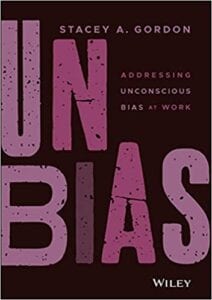
UNBIAS: Addressing Unconscious Bias at Work
It was released, and we are still promoting and talking about it and spending a lot of time focusing on the tenets of the book.
Before we dive into the book, let’s do a little background on your story of origin. You can take us back to childhood, school or wherever you want to start your story.
I always say, “Where do I start on this journey?” There are so many places I could go with it. I’d like to talk a little bit about the fact that the work that I do, I think my background, my childhood helped me prepare for this, which I did not know. Because I have always been the odd person out and it makes it very easy for me to relate to others, to be comfortable talking to different types of people and inserting myself in things even when I probably wasn’t invited or I wasn’t expected to show up. It’s like, “I’m here.”
Did you grow up in Southern California?
No. I grew up in London and then my family moved to Brooklyn, New York.
What was it about that place that made you feel like you didn’t fit in?
I did not fit in London because I was always one of the only black kids in my school. It was pretty tough for a little while there. I had friends that stopped talking to me because their parents told them that they couldn’t play with me anymore because I was black. I had kids that would hurl stuff at me and also, I remember being in that era too, where there’s a lot of very large Indian and Pakistani population. A lot of the cornerstones over there are owned by individuals who were Indian or Pakistani. There was a lot of hate crime, stores being burned down, swastikas being put up on the walls and a lot of riots and things going on. I was a kid and I don’t remember exactly what was happening, but I remember being scared.
One of the whole premises of childhood is to try and feel safe and I’m sure that was hard on your parents if they felt like you didn’t feel safe.
It was probably why we moved to Brooklyn. My mom’s family lives in Brooklyn and everyone there was black, so we’ll all get along. It’s like, “Not really,” because now I’m a black kid with a British accent in Brooklyn.
You still stand out. How did you decide you wanted to come to the West Coast, go to Pepperdine and focus on this particular niche? Obviously, you have lots of choices of what to do with your degree.
I spent a lot of time in New York City. It was expensive and again, being a person of color, it was like, “Do I want to stay in Brooklyn? At the time, we had a lot of crime and a lot of things going on. Is this where I want to grow up and raise a family eventually?” I lived in Manhattan for a couple of years. We couldn’t afford to continue to do that and realized that we had to leave in order to try to be able to make our dollars stretch, which is how we ended up on the West Coast and eventually in the LA area. We have been here longer than I’ve lived anywhere else.
That’s funny when you cross that mark. I grew up in the suburbs of Chicago for the first 21 years and then I remember passing 21 years in California before moving here to Austin and I was like, “I’ve been in California longer than I was in my childhood.” Let’s dive into the book and your website is Rework Work. That’s intriguing to me. Tell me how did you come up with that story.
[bctt tweet=”Coworker is not a relationship; it is a label. People recruit for difference but hire for sameness. ” username=”John_Livesay”]
I love the title and the name of our company. It came out of frustration as a lot of things sometimes do. I was working as a recruiter. I was running a recruiting company and at the time, I was operating under the Gordon Group. That was the name of my company. I was talking about that the usual, client work and the things that were going on. I was so frustrated. I said, “We need to rework recruiting, onboarding, training, advancement, and everything. We need to rework work.” I thought, “I like that. I wonder if anyone’s using that.” No one was using it. I did a trademark search and did the whole thing. It was like, “Wow.”
I’ve spoken to a lot of recruitment firms for their annual meetings, whether they’re Korn Ferry or another company, they all have to compete to sell themselves to get hired by a big company to find their next C-Suite level people. That was an interesting journey to look at their business model and how similar it is to other companies like architects. They have practice areas where people specialize in a special kind of thing.
A lot of recruitment firms are trying to get diversity within their own company, as well as offer diverse choices to companies that are hiring. The thing I keep hearing, and I want to get your opinion on this, is there’s not a lot of choices out there that fit that criteria. Has that always been the case? Do you see it changing if that is the case? For example, in the venture capital world, there are very few women, let alone women of color. If they want to fix it but don’t have people that have the skills to hire to fix it, how do you advise them?
They have the skills. There are very few women in the venture capital world because we won’t hire women in the venture capital world. They exist. I have to keep telling people like, “We’re not tooth fairies or the unicorns. We do exist.” The problem is that unconscious bias stops you from seeing me as somebody who was qualified enough to do the job when honestly, I’m probably twice as qualified as half the people there to do the job and I’m being real. There are people who are absolutely positively qualified to do it, but they are not seen as qualified as such. If we use the example of one of the women who is now going to be representing America in track, a black woman. She got blue hair. I’ve seen different pictures with different-colored hair. She’s got tattoos all over her. She is queer and got long nails. Here we are. We’re celebrating her. She’s going to represent the United States.

Unbias: Unconscious bias stops you from seeing someone qualified enough to do the job.
If that woman showed up at your job and said that she wanted to be hired, you would usher her out. She wouldn’t even get her foot in the front door. Here we are celebrating this person for being able to do the job she’s tasked to do regardless of how she looks. We have to realize that always we have been able to do the job, but because of how we look, we have not been seen as able to do the job. We have been turned away. We have been discriminated against, ignored and passed over. It is time for that to change.
One of the things you talk about is unconscious bias. It’s one thing if someone says, “I want to work with people that look and sound like me.” That’s obviously conscious bias.
Conscious bias is discrimination.
It’s one thing for people to know they’re doing it and maybe own up to it internally or whatever, but the problem from my perspective is there’s a lot of people who are unaware. That’s what your expertise is that it’s not biased, it’s unconscious bias. I’ve seen this when I was selling advertising at Condé Nast and I had worked at different magazines. I’m like, “All the women here are brunettes,” or at another place, “All the women here are blonde.” It was on some weird level, people are hiring people who looked like them and that’s within the same race. I can only imagine and I think that was an unconscious choice. The blondes wanted to hire blondes and vice versa.
We have a misguided notion that whatever we have done is the best way to do it. Others who do it the way that we do it, we like them. We don’t like difference and change. We recruit for difference, and then we onboard for sameness.
People hire for difference, is that what you’re saying?
We recruit for difference and we onboard for sameness or hire for sameness.
You’re saying, “I want to look at a lot of different kinds of people,” but at the end of the day, you hire someone who’s like everybody else in the company.
The thing is though, we go out there and we say, “We want diversity and difference,” but when you hire that person and you bring them in, you then say, “Do it the way it’s always been done.”
You need to fit into our culture. Don’t be yourself basically.
It’s like, “Why did you bother to go out and look for diversity in the first place?” When they don’t fit in the box that you want them to fit in, then you fire them or you say, “They weren’t a good fit. It didn’t work out.” The other thing is this notion that because there are fewer people that they’re not as qualified and that is so far from the truth. Every time I hear someone say, “I’d love to hire a woman in tech, but I don’t want to lower the bar.” I’m going to be honest. I want to punch them in the nose because that is so insulting. There are so many people who have not been given the opportunity and I get it all the time.
People say, “I treat everyone fairly. We hire people for skills.” That’s absolute BS because when you have your friend, Mark, who you’ve been hanging out with for months or years, that person gets the benefit of information and mentoring from you and learning the ropes informally. When it is time to promote, he’s ready because you’ve been grooming this person, but everyone else, you don’t talk to them. You don’t invite them to lunch, hang out with them on the weekends, golf with them and provide them with the same level of access.
One of the things you talk about is you help employee resource groups. Can you tell us a little bit about what that is and how that works?
[bctt tweet=”Conscious bias is discrimination.” username=”John_Livesay”]
Employee resource groups, you have an employee business group, business resource group, they used to be called affinity groups. A lot of companies now are creating them if they don’t already have them. There has been some controversy with that, too. It’s like, “Why are we separating? Why do we need to have a women’s group, black group, LGBTQ group, and Asian group?” The reason is that we have to focus on what are the systemic problems within the company that are affecting that so that we can all work towards fixing them. It’s not a group that is only for black people to join, it is a group that is focused on what is preventing black people from being promoted within your company. It’s not a group for only the gay people to join. It’s a group that everyone gets to participate in to look at what might be some of the barriers and some of the obstacles that we have created that would be problematic in this workplace.
It wasn’t that long ago. I would say even in the ’80s, they were looking for people who had families to promote because they’re like, “We like to have a guy who’s got a wife and maybe a kid or two, so they’ve got all this responsibility, mortgage, and child support to pay that they’re not going to take any risk and leave the company or start their own thing.” That’s our world. If you were single regardless of your gender preference or race, that alone used to ixnay you if you weren’t married. The list was so long of what was expected. Now that we’ve identified it clearly, I don’t think it’s a surprise to anyone reading, except maybe the depth of it might be a little eye-opening hopefully, but how do you help companies solve this problem?
The way that we do it is by exactly what you said. There’s a laundry list. There’s no point looking at the laundry list of things that we need to fix. It’s not about the individual laundry list of demographics and issues. If you’re single, you get discriminated against for this reason. If you have a baby, you’re discriminated against for that reason. You’re tall, short, blonde, fat, ugly, white, or whatever. As humans, we are always going to find reasons to exclude people. It is in our DNA.
The job is to know that and to counteract it. We have to be aware. That is the first step in the book. It’s awareness. We’ve got to be aware. We have to open ourselves up, be educated, and realize that this is a problem. We all do it and be open to realizing that this is what we all do, so then when we make decisions, we can remind ourselves that, “I need to make this decision and not make one that is going to be based on my gut feel, fit, or anything that I can’t quantify. Instead, I’m not only about to make a decision. I need to make sure that I’m going to make this decision based on facts and actual data that I have at my fingertips.”
So many people pride themselves on making gut decisions on the hiring and you’re saying, that’s probably going to tap into some unconscious bias. The other thing you talk about is leaders lead teams who trust and I’d love to hear how you help leaders build trust.
One of the ways that leaders build trust is by being open and being authentic, even getting to know people. We show up to work every day and we believe that we have a relationship with somebody because they’re a coworker. A coworker is not a relationship status, it is a label. We think that it’s okay. I’ll use this example because this used to drive me nuts. When I was pregnant, people would walk up to me and they would touch my belly without my permission. We’ve now come to realize that’s probably a little skeevy. We probably shouldn’t be touching people regardless of the fact that they’re pregnant. I used to complain about it and people would say, but they want to participate in the joy of you bringing a child into the world. “You, sir, are a stranger. I don’t care.”
It’s not about you. It’s not about what you want.
It’s the same thing. We want to get into these tough conversations. We want to have difficult conversations about race, sex, politics, etc., but I don’t know you. We haven’t created a relationship. Before you can dive in, we have to create a relationship. I need to get to know a little bit about you. I don’t need to know your intimate, deepest, darkest secrets, but I do need to know who you are as a person. I do need to know that you give a crap about me as a person. Once I know that, then we can start to develop some trust, then we can start to have some of these difficult conversations. Instead, we want to pull together a bunch of strangers, throw them in a room, and say, “Let’s have this conversation.” It’s like, “Whoa, Nelly! I’m not ready.”

Unbias: We have to focus on the systemic problems within the company affecting that group so we can fix them.
Until trust is built, then it’s someone’s sense of entitlement that allows them to touch a stranger’s belly without their permission. There are actual statistics taking females alone, let alone any other diversity, that female CEOs tend to outproduce men in the roles and yet, excuse predominantly male. There’s actual data, if I’m correct, that backs up that companies that have more diverse people working there have more diverse ideas and therefore, it can even be a competitive advantage than a company that does not. Is that accurate?
The statistics they are out there. If you look at Deloitte, McKinsey, and Catalyst, there are tons of statistics around the benefits of having a diverse workforce. The piece that’s missing though, is we also have to remember that we have to be inclusive because when you have a diverse workforce without inclusion, you have tokenism. We’re got putting people of color into positions strictly for window dressing.
We had a client and their job was to go out and do the sales pitch to get the work. They would make sure that they brought a woman and/or a person of color on that pitching team, but then those two people didn’t get to participate in the actual work. They didn’t get the opportunity to work on the project. Their face got to be on the project, on the documents and everything that went out. They got to be part of the pitching team, but they didn’t get to actually have the benefit of working on that project. That is tokenism. That is using somebody’s likeness to get ahead and that is not something that we want to be doing. That’s diversity with no inclusion.
You also talk about leaders’ need to not build trust, but listen. Obviously, if someone has, “I don’t like strangers touching my belly when I’m pregnant or anytime,” I’ve experienced this as an openly gay man where people say insensitive jokes and you feel like, “Should I say something? Who do I say it to?” If I say something, they’re like, “For God’s sake. Just get a sense of humor. Don’t be so sensitive.” Do you see that happening a lot around all kinds of things?
There are two things about that. One is, there is the sense that, “No one’s got a sense of humor anymore. We can’t joke anymore. Everyone’s so sensitive.” My response to that is we’ve always had to watch our mouths. We have parents. There are people in our lives who we respect and when we respect those people, we take into account their sensitivities and we pay attention to that. If my mother does not want me to curse, but I happen to curse like a sailor when I’m with my friends, when I get home, I find a way to somehow stop the F-bombs from coming out of my mouth. If I go to church and I talk to my pastor, I’m going to find a way to talk to that person and be respectful. Why is it that if you know that somebody doesn’t want to hear this specific joke or doesn’t think that’s funny that you want to be able to say, “No, it’s my right to be able to be an a-hole,” which is fully what it boils down to? You don’t respect that person enough to be sensitive to how they would like to be treated.
The final thing I want to talk to you about and you talk about it in your book, UNBIAS, is leaders see color. I think, again, an unconscious comment that white people can say to people of color is, “I don’t see color.” They think it’s a good thing to say and it sounds like you’re saying it’s not.
It’s absolutely not because it’s a lie. When we talk about building trust, how can I trust anything that comes out of your mouth when you start with something that is false on its face? You see color. You see that I’m black. This is not something that you do not see. You are not blind. It’s the first thing you see about me. You may even notice that before you notice that I’m female. When you say that, it puts everything else that you say into question because you start with something that is an absolute lie. What you should say is what you were trying to say instead, which is that I treat people the same regardless of color, ethnicity, or gender and then my question to that would be, “Do you? Let’s look into that.” The reason you won’t say that is because I can counter with that question and you would have to answer it, and that will be tough for you to have to do.
[bctt tweet=”When we respect people, we take into account their sensitivities, and we pay attention to that. ” username=”John_Livesay”]
Or even look at. It’s easier to gloss over it. I’ve never heard anyone frame it that way that it’s a lie and therefore, everything else is not based on truth. No relationship, work or personal without that foundation of truth is a house of cards. Any last thoughts or quotes you want to leave us with before we tell people how to reach you? Obviously, the book again, UNBIAS: Addressing Unconscious Bias at Work.
I want to say thank you. Our goal is to reach as many people as possible. However, we can do that, whether it’s purchasing the book, for your companies, for your company leaders, sending it to a friend, watching the Unconscious Bias course on LinkedIn Online Learning and all of those different things. What I’m seeing is that people are impacted positively and are realizing that they need to make a change. That honestly is the beginning and that’s what we need. We’ve got to start somewhere.
Let’s start with increasing our awareness. Stacey, thank you so much. Congratulations on all your success and I’m going to be cheering you on every step of the way as I watch you continue to grow.
Thank you.
Important Links
- Stacey Gordon
- UNBIAS: Addressing Unconscious Bias at Work
- Unconscious Bias – LinkedIn Learning
- Better Selling Through Storytelling Method Online Course
Wanna Host Your Own Podcast?
Click here to see how my friends at Podetize can help
Purchase John’s new book
John Livesay, The Pitch Whisperer
Share The Show
Did you enjoy the show? I’d love it if you subscribed today and left us a 5-star review!
- Click this link
- Click on the ‘Subscribe’ button below the artwork
- Go to the ‘Ratings and Reviews’ section
- Click on ‘Write a Review’
Love the show? Subscribe, rate, review, and share!
Join The Successful Pitch community today:
- JohnLivesay.com
- John Livesay Facebook
- John Livesay Twitter
- John Livesay LinkedIn
- John Livesay YouTube
How To Get Co-Workers To Like Each Other With Jason Treu
Posted by John Livesay in podcast | 0 comments

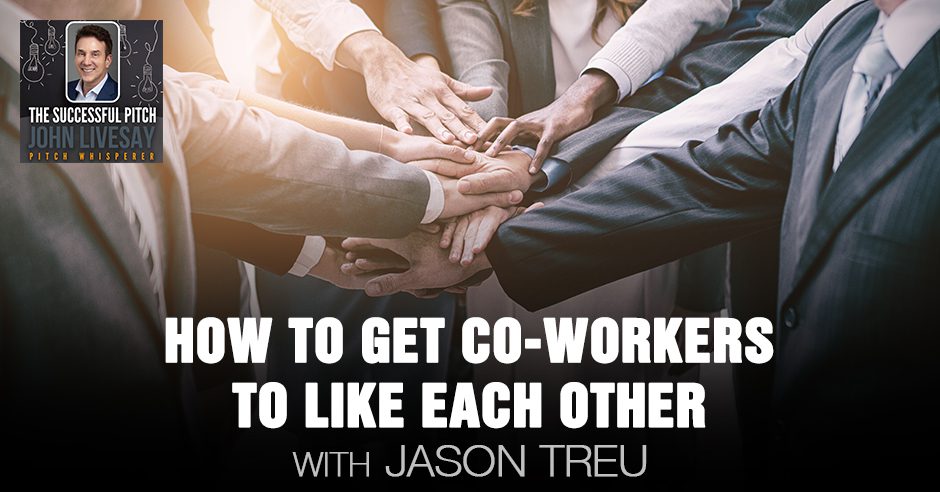
Growing a company is not all about generating revenue. It also means honing your employees to work alongside each other to reach a growth goal. On today’s show, John Livesay interviews Jason Treu on the importance of having a harmonious workplace. Jason is the bestselling author of Social Wealth and a TEDx Talk speaker. He teaches on building relationships and shares some tips on how to get co-workers to like each other. He also talks about his free downloadable game called Cards Against Mundanity, a game which builds deep, meaningful relationships with anyone in minutes.
—
Listen to the podcast here
How To Get Co-Workers To Like Each Other With Jason Treu
Our guest is Jason Treu, who’s an Executive Coach. He works with executives and entrepreneurs to maximize their leadership potential and performance. He also helps them build and execute their career blueprint. He’s the bestselling author of Social Wealth, a how-to guide on building extraordinary business relationships. He was featured at the TEDxWilmington where he debuted his breakthrough team-building game, Cards Against Mundanity. Finally, he’s the host of the podcast Executive Breakthroughs, bringing game-changing CEOs, entrepreneurs and experts that share their breakthroughs and breakdowns. Jason, welcome to the show.
Thanks for having me on the show and speaking to your fantastic tribe.
I always like to ask my guests to take us back to their own story of origin. You can go back to childhood, high school, college, wherever you’d like that you could say, “This is when I started to figure out my path.”
It was back in high school and college when I had the foresight to start getting involved in organizations, volunteering and serving other people. Through that, I started to see the glimpses of when we can work together, we can do great things. Also, the opposite when we can’t, we can do little at all. It’s how do we get the best out of other people and then get the best out of us. I even thought to myself about all my teachers that I had and I loved. It was because they could reach me and bring the best out of me so I could get more engaged. Vice versa, you also give them a lot of energy and enthusiasm because of how you show up to their class. Early on, doing all those things manifested in me doing more and more things externally. Even though I’m an introvert, I found a lot of my energy was working with other people.
[bctt tweet=”The magic of building relationships is in groups, not one on one. ” via=”no”]
It’s good to figure that out. That’s a great takeaway. Just because you’re an introvert doesn’t mean you don’t have a career working with other people. It doesn’t mean you have to be in an office doing accounting or something and never talking to anybody.
A lot of times when you talk to introverts, and I’ve been doing this quite a bit, the biggest challenge and biggest gap is they want to have as many conversations as extroverts. It’s the path getting there that is exhausting for them so they hung out. I’ve done this over the last couple of years as a pet topic. If you could instantly have deep vulnerable conversations that mattered to you, would you have considerably more topics around that? Almost everyone said yes. What they don’t like is the small talk and the other things that’s required to get there so they are opt-out. It’s too much work for them mentally and how they’re built in order to get to that point. If they could be transported there, that would be a whole different subject. That’s an interesting thing that people leave out when they talk about the difference between introverts, senile, ambiverts and extroverts.
How did you come up with the title of your TEDx Talk? I know you talk about that every leader needs to show some vulnerability. If there’s anything I’ve learned from giving my own TEDx Talk, which happens to have been at the same location you did, is the need for vulnerability. It’s a different talk than being an inspirational motivational speaker.
A hundred percent, because you’re having to give a speech in a little short amount of time that you have to convey a significant amount of information, meaning entertainment, which is the hardest thing to do. I look at a 45 to 60-minute talk that is much easier because you have a lot of leeways and you can try a lot of things. That’s great but when you’re having a short talk, you can’t. You’re not practicing this and giving this 100 times. You’re doing it once or in front of a small number of people ahead of time. You don’t know what a bunch of strangers are going to think about what it is that you ended up saying.
When I started on the journey doing the talk, one of the things I was looking at doing was to stand out or do something different like a how-to speech. One of the challenges doing TED Talks is because there are so many of them, it’s hard to use it as a solely branding thing. I wanted to do it that it would force me to create something along with it and people could walk out of it doing something with it. That’s the other thing that’s frustrating me with TED Talks. They’re inspirational, motivational and they’re at a higher level or whatever it is they’re trying to convey. The problem is when you do stop listening to it, what do you do with the information? I feel that’s always a shortcoming. It’s the same thing at a conference or anything else you go to. How you make it real is the bottom line.

Building Meaningful Work Relationships: The thing about a group of people is that you have to get them all working together.
That helped me think through how was I going to make it actionable and then I look back to the biggest challenges. My clients, my friends or anyone that I was talking and coming in contact with was about their ability to get the most out of the people that were working around them. Either they were managing their coworkers or managing up, it didn’t matter. I felt that was the problem to tackle because that’s where they felt most out of control. It pretty much controlled a lot of their success, existence, happiness and fulfillment, but they were unsure of how to do it on a consistent basis and how to build the relationships with people, individuals, groups and external however you want them to gather and make that work.
The title of your TEDx Talk, How to Get Coworkers to Like Each Other, is the surprise there because it would be, “How do I get coworkers to like me,” or, “How do I get along with coworkers?” You’ve got an interesting and unique twist here of not trying to get them to necessarily like or get along with me because we’ve had a lot of content on, “How do I get along with somebody I don’t like.” Yours is more focused on, “How do I get coworkers to like each other?” Speak on what’s one of the big takeaways from your TEDx Talk on that.
The thing about a group of people is, you have to get them all working together. At the end of the day, we’re dependent on groups. We talked about this before. You have a podcast team behind your podcast. Getting them to all work together and bought in, thinking strategically, adding in ideas can help you or make your show significantly better. Their relationships with each other are hugely dependent on your success. When you can facilitate that, it’s the key. If you’re with a group of people, which typically happens, or a team working in a company of any size, there are usually some people who get along and some people don’t. You never get to be in that place where you’ve created something great.
I always like to tell people, “Think about a time in your life when you accomplished something that was significant and you were with a group of people that you felt invincible around, either personally or professionally. It happened to all of us at least once in something that we had done. Even if it’s a brief flash, it could even be like a school sports team or something as small as that. Not even having to do with work. If you could recreate that feeling, emotion, communication and success into every single team you are on, imagine what success that would be in your life and what it could do for you.” I thought to myself, “That’s one of the holy grails that people struggle with.” It’s not your relationship with other people. You could have great relationships with all the people you work and interact with but if they don’t have it with each other, you end up having to do significant work. You’ll never be able to do the things that you could do if they had them independent of you.
That leads to what is something that leaders can do because they all get stuck and maybe even hit rock bottom. I wrote an article about going from Rock Bottom to Revenue Rockstar when I got laid off. That’s what my TEDx Talk is all about, how do we pick ourselves back up? You talk about that in terms of uncovering our blind spots
[bctt tweet=”What is your biggest blessing in disguise? ” via=”no”]
One of the things I’ve found when I’m doing any work with a group of people or anything is it comes down to your level of self-awareness. When I’m doing conflict resolution work with people, to take that as an example, you have to stem this trust and build trust. The challenge comes in when you can see your blind spots and the challenges that you have. It’s hard to come to the table and be vulnerable and put them out because that’s what other people see in you, but you can’t see yourself. When you can identify and communicate that to other people, they know that change is real and they know that you’re committed to it, but that’s the problem. We can’t see our own blind spots the way our brain is organized for survival patterns and other things when we’re able to have a deeper conversation.
That becomes the problem because those are the things that hold us back the most. That’s the problem with almost every leader. The data is 95% of people think they’re self-aware but only 10% to 15% are. You can look at all studies and it’s pretty close to that. That’s the problem. The higher you get, the more you overestimate your abilities because you don’t have people around you that are willing to tell you the hard truth because of risks and other things. You never get to the point where you’re constantly iterating and getting better and hearing the truth. We all need to be able to do that. The thing is, you have to look inside yourself and you need to get help from the outside in order to figure that out because we can’t see that. When you can, you can take a massive leap forward because a lot of this stuff has to do with past patterns, things that you grew up on and the blueprint of you seeing the world.
Self-awareness to me is not about all the things I’m not doing well. A lot of that is pattern recognition. Recognizing the things that you’ve been doing that may, in a lot of instances, have helped you. I’ll work with salespeople that are good at dealing with objections because they don’t hear them. They don’t hear no; they hear yes. The problem is when you start being successful. When that happens, you can’t do that in managing people. You become horrible at it and you’re unable to get the best out of other people because you’re not listening to them. You’re trying to direct them to the answers that you think they want or you believe they do.
A lot of that’s illuminating those things for people and sharing things. Perhaps you grew up in a family of six people and you would yell over your siblings to get your parents’ attention. You grew up early on valuing and knowing that listening was not a good thing because if you listened, you would never get hurt and nothing ever would happen. You used to talk over other people. The problem is in business, if you stop listening and asking questions, the higher up you go in, the more successful you want to be. That’s a significant blind spot but it’s not a thing you did on purposely. It’s something you learned because you had to.
Let’s talk about how that comes to life with this free game that you created for everybody. How’d you come up with the name, Cards Against Mundanity?

Building Meaningful Work Relationships: Self-awareness is about recognizing the things that you’ve been doing that may, in a lot of instances, have helped you.
I did a little twist on Cards Against Humanity and I talked to a lot of people. One of the things out of my TED Talk was I wanted to figure out a way to help people build a high level of trust and to get deep conversations with people to move it forward. Essentially, take a complete stranger and be able to have a conversation that you could only have with the closest people in your lives and feel comfortable doing it. I found this research by Professor Arthur Aron. I was looking at a New York Times article and I read about a woman falling in love and going to a bar, asking a guy 36 questions and they end up getting married.
I was like, “That’s pretty interesting.” She had asked him many questions in a bar? I clicked on the study and essentially what he did was he asked vulnerable questions and have complete strangers do it. Over the course of 45 minutes, what happened is 30% of the people created the closest relationship in their lives. To me, it is pretty incredible. To think that that would be possible for someone to do that. They replicated this study so many times with different people and geographies that I wondered if it would work in a group.
The first time I ended up doing it, I took his questions and got together people at a restaurant on a Saturday night and had someone else organize it. I didn’t do it. I found an acquaintance of mine and I asked them to bring people that I didn’t know on Facebook or LinkedIn. I asked the first twelve questions he had. I figured that for an hour I test it out and see what’s going to happen. After an hour, the people were sharing things that I thought it was like in a reality TV show. I’m watching these things and you think to yourself, “I can’t believe these people are sharing all these things with other people.” Some of these people knew each other, but some of these people did not. They didn’t know me at all. I wanted to leave and I said, “Thanks for showing up.” People grabbed me and I couldn’t go. I joke at people who are saying, if I ever had to go to prison, knock on wood or be arrested, I would know how it feels because I couldn’t leave. They wanted to know what the other 24 questions were.
I sat there for three hours and I went through these things. They were getting more excited as you were going along. I did this two more times to see if it was real. At that point, I realized that the magic of how you build great relationships isn’t necessarily one-on-one, it’s in groups. Through groups, the sharing is insulated and you’re protected because if you share it with anyone outside of it, all these people know. It stops you from doing it because you’ll be a pariah. You find connections with at least a couple of people who have similar experiences and emotional experiences about things when you answer the same question. That’s the key. They have to be deep questions such as, “What’s the most important lesson you learned in the last year? Tell me about the person you’d like to thank who helped you become the person you are. Tell me about your biggest blessing in disguise.” When you start to get to that with a group of people, that’s where the magic starts. You can break the trust curve and the relationship-building curve.
Also, “What is your biggest blessing in disguise?” Not your biggest blessing, but for me, what makes that question interesting is because it’s in disguise. When it’s in disguise, people can’t go to the cliché answers like, “The biggest blessing is getting married,” “My kid,” or whatever they might say. If they have to think about what is it that’s in disguise where they’re like, “Getting laid off,” it doesn’t look like a big blessing, but it turns out like it did become a blessing. I’m fascinated by this whole concept. One of the connection questions you haven’t heard, “If you could pick a year of your life to do over, what would it be and why?” I bet people have a lot to say about that.
[bctt tweet=”A big challenge among introverts is having as many conversations as extroverts. ” via=”no”]
People say it honestly. The other thing I’ll have a small percentage of people say, “I wouldn’t do anything over because I got here the way I am.”
That’s a good insight too.
You’ll see a small percentage of people that will mention and say something like that. These can be taken in many different ways with people that every group organically goes in a different direction with it. The other thing that happens too, which is pretty magical and which I didn’t realize until I started doing this in large groups is if you do it in a room with hundreds of people or you could dive in for thousands, but close to that is everyone treats everyone like they’re in their groups. The magic in a group like that is they extend it everywhere because they’re in that moment and they know everyone else did it and they want to talk to them so they treat everyone differently. There’s a complete mind shift in a group when you do this. When you look at good speakers, they do similar type things to this in the entire group. They take variations of this and that’s what they do to build more trust, rapport, likability and other things with other people and great salespeople too.
The best salespeople do this in a different form. In essence, what it does is it allows people to see how you do that at the highest level. Once you get there, like any other tool, you can modify and use it and make your own strategies and implement it the way that works for you. You can use it in a multitude of stuff where you could ask a couple of questions. You can do it in a group, use it for hiring and onboarding. Fifty thousand applications building rapport and sales engagements. I call it like a Swiss Army knife. There’s a place I start off with. At the end of the day, building trust, relationships, teamwork, communication and all these things that he does exceptionally well are the foundation points of every single thing we do in our business and personal lives.
The core to this is psychological safety that people feel they’re not going to be judged, won’t be shared out of the group if they share something confidential and you set that criteria up so everybody has an agreement on the matter.

Building Meaningful Work Relationships: Networking per se is not just the people you’re meeting, it’s the people behind them. The indirect network is really the goal and how successfully you can mine that.
You do, and there’s also a group implicit thing. I’ve gone back with people and I’ve never heard it happen. I follow up with people all the time because the group insinuates it. If you do it one-on-one and you share something, you don’t know whether you get a buy in or not and you don’t know the rest of what was said. If you’re getting 5, 6, 7 people and they’ve all heard it, you have a lot harder time explaining why you shared something in confidence. All those people will self-police because you’ll be so scared of the ramifications for doing that in a group like that. There are some cases that someone could do it somewhere, but we’re talking about the minuscule chance of all the people I’d done it and gone back and doing it right.
I’ve counted at least 25,000 people who have done this so far. I would say probably a little estimate. It’s hard for me to track everyone, but I’ve never gone back and asked for all the groups of people and speaking where it ever occurs. Physiological safety is absolutely a critical thing and people don’t understand the value of that. That’s the higher-level place where magic has gone, especially in business. That’s where the great ideas, innovations and breakthroughs start to happen. You can co-create that with other people in the group or team or organization.
In your book, Social Wealth: How to Build Extraordinary Relationships, you talk about something called your Social Wealth GPS. We all know what a GPS is in terms of getting us from point A to point B. We all know about wealth, money and building tips but you’re talking about something different here. You’re talking about social wealth. What’s a social wealth GPS we can use?
It’s your relationship capital. At the end of the day, it is about having a group of people and networking per se. It’s not only the people you’re meeting, but it’s also the people behind them. It is an indirect network. It’s the goal and how successfully you can mine that is pretty significant. It’s hard too. These are things that are a lifelong thing that you have to put in but at the end of the day, the capital that you have with other people is the most valuable form of capital in the world. They’ll do anything for you and vice versa.
When you can create those relationships that aren’t like a bank account in terms of give and take, but in terms of unlimited resources either way, that’s where you can create a massive level of social capital both professionally and personally. It’s something that once you understand how it works, you can do it successfully. The problem when engaging with people is you don’t know where you’re going to find them and you don’t know whether you’re going to find a giver, a matcher or a taker, like Adam Grant mentions, in any engagement that you have with someone. You have to operate the boundaries and know how to give without attachments. Once you start understanding a blueprint of all this stuff, it’s much easier to operate and to build those types of relationships that you ultimately want and have usually in short supply. You can have them in a significant way. You only have to understand how to do it.
[bctt tweet=”Being curious and learning is what life’s all about. ” via=”no”]
That’s one of my favorite parts about hosting this podcast. It’s the relationships I get to start and create with my guests. I’m sure you have examples and stories yourself of either being a guest on the show or having someone on your podcast and how that’s led to multiple things because you’re in a situation where you’ve got some social wealth starting where you’re saying, “How else can I help you and how else can you help me?” You’re already helping them by having them on your show or whatever. They tend to say, “Who else can I introduce you to as a guest?” or whatever it is that you need at that particular moment.
As a keynote speaker, people will often say to me, “You were great. Do you have any other speakers you can recommend?” There are all kinds of ways that people can give back to you once they have you on their radar, have a rapport with you and feel comfortable about knowing who you are and what you do to help people. They go, “This team could use the card game because you’re having some trouble with the people not getting along and I know the guy.” That’s an example of that coming to life.
This is a long-range thing when you’re building this too. The short-term opportunities is for you all the time but if you keep doing it, partly the greatness is you don’t know who you’re going to need when they need them and you don’t know what someone is going to do 5, 10 15, 20 years from now, especially in a world of social networking. For the first time in the history of doing anything, you can track people because before, you could never do that unless you kept in touch with them. You would never know. If you lived in San Francisco and someone lived in New York City, how would you keep track of them? Before the advent of social, you couldn’t.
Networking, business relationships, and relationships in general, we’re entering a new phase where having a lot of them is more important because you’re going to ebb and flow in your life. You will have something that’s at least somewhat of a warm lead or relationships or at least it’s not completely cold like an introduction where you don’t know anyone. There are a lot of things I don’t think we don’t fully understand because we haven’t gone through a full cycle of someone’s life where they’ve had access to this from start to finish or at least from early adulthood onwards.
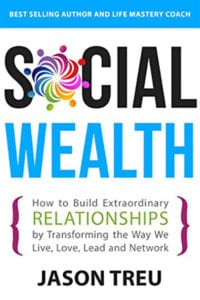
Social Wealth: How to Build Extraordinary Relationships By Transforming the Way We Live, Love, Lead and Network
Before I let you go, I want to ask you about your comment that curiosity is a requirement for long-term success and not short-term success. Can you give us the story around that?
One of the things I found in life is when you’re curious, you start asking questions. One of the things I saw was when I was speaking at a huge HR conference for the State of Maryland, one of the guests there was Buck Showalter who used to be the manager for the Baltimore Orioles when they were better. One of the things that he said that helped him manage, be successful, stay in Major League Baseball and do the things he did was he kept asking questions from people. He was curious on how things had to work.
When he went to Baltimore as a manager and the team wasn’t doing well, he brought them into the corporate office and showed them the ticket sales, walked in and said, “Everything that you do is connected. These people have to eat and feed their families. The phones aren’t ringing. If you don’t play on the field well and when you don’t care, look what happens to this as an entity. You have a responsibility to think bigger.” That’s because he got curious and he always talked about how he asked questions to other people in his managers, leaders and team before he jumped to a lot of conclusions.
When he was going to go recruit baseball players, he would go and meet their parents, their family and ask questions to other people about their character and other things even before the baseball questions came along. He said, “Today’s world of people is obsessed with analytics and everything else.” The difference isn’t there anymore. The difference is in the people, relationships and getting the most out of them and being curious. That’s something that can serve us all well. It’s consistently be curious and learn because that’s what life is all about.
What a great way to end. Jason, let people know how they can find you and your wonderful game card.
You can go on a website. It’s JasonTreu.com. You can get the cards at CardsAgainstMundanity.com and my books on Amazon and through the website. Coaching, teamwork, team building services and other things are on the website too.
You’ve inspired us to figure out new questions to ask and new ways to stay curious.
Thanks.
Important Links
- Jason Treu
- How to Get Coworkers to Like Each Other – Jason’s TEDx Talk
- Social Wealth
- Cards Against Mundanity
- Executive Breakthroughs – Jason’s Podcast
- TEDx Talk – John Livesay TEDx Talk
- Rock Bottom to Revenue Rockstar – John Livesay Article
- New York Times – Article
- Better Selling Through Storytelling Method Online Course
Wanna Host Your Own Podcast?
Click here to see how my friends at Podetize can help
Purchase John’s new book
John Livesay, The Pitch Whisperer
Share The Show
Did you enjoy the show? I’d love it if you subscribed today and left us a 5-star review!
- Click this link
- Click on the ‘Subscribe’ button below the artwork
- Go to the ‘Ratings and Reviews’ section
- Click on ‘Write a Review’
Love the show? Subscribe, rate, review, and share!
Join The Successful Pitch community today:
- JohnLivesay.com
- John Livesay Facebook
- John Livesay Twitter
- John Livesay LinkedIn
- John Livesay YouTube