

Financial Health Doctor For Female Founders with Jill James
Posted by John Livesay in podcast | 0 comments


Keeping yourself healthy is definitely worth the investment and in order to do that, your financial health has to be in tip top shape as well. The financial health doctor and CEO of SIF Industries, Jill James, joins this episode to share her knowledge about financial health. She goes into the details of what financial check ups can do for your business and what are at stake if you decide not to have your finances checked. In addition to this, she gives some amazing tips on how to pitch and get funding for a VC. On this topic, she also talks about having an exit strategy and what you need to prepare in order to justify a VC. In addition, she touches on how to be successful in a small business as she emphasizes the importance of knowing and understanding the economics of your business.
—
Listen to the podcast here
Financial Health Doctor For Female Founders with Jill James
Our guest is Jill James. She’s the CEO and Founder of SIF Industries, which is a consulting and coaching firm that puts women on the fast track from founder to CEO. She started her career in banking with JP Morgan but she got the startup bug while in the Chicago Booth for her MBA. She’s had roles in product management, marketing, sales, and C-level leadership at six VC backed startups with four exits. She holds a BA with Honors in Political Science and an MBA in Strategy, Entrepreneurship, and Marketing from the University of Chicago. She’s an advisor to Boutique Box and is on the board of many programs and she lives in Los Angeles where I am from. Welcome to the show, Jill.
Thank you, John. It’s great to be here.
Let’s dive into your own story of origin and bring that little intro to life. You can go back to childhood, college, high school, or wherever you want. You had some interest in entrepreneurship and marketing. You had that little a-ha moment that I talked about while you’re at Chicago Booth but if you want to go further back than that, feel free.
I’m originally from a small town in Wisconsin and when I say small town, I mean a small town with 1,000 people with no stoplights. We had a stoplight one summer. It was exciting. Everybody wanted to drive across the bridge and drive in the stoplight. I was there my whole life until I was eighteen and both of my grandparents had small businesses. I grew up going to Northern Wisconsin in the summer and working in my grandparent’s old-fashioned soda shop. From the time I was six years old, I would pull the candy. I love to make the hot fudge sundaes and we made sodas from scratch with the old-fashioned pump and the soda machine.
I grew up doing that and my other grandparents had a trucking business. I didn’t realize it until later in life, but it was interesting to see one that was a true family-owned small business and one that had a little bit more scale. It became a major employer in our area because of the scale of the trucking business. Foundationally, I think of myself being raised by teachers, but I do have a lot of small businesses in my family and a lot of my aunts and uncles have large families. A lot of them have their own businesses. It’s certainly something that was always around me, even though I was much more on academic, go to college, and gets a job track.
[bctt tweet=”You have to understand the economics of your business.” username=”John_Livesay”]
I didn’t know what I wanted to do going to college, but I had a chance to explore things at Chicago and I was lucky that I got some great internships and I accidentally applied for a banking job. I thought it was a consulting job. I don’t know how that happened but I ended up working at a bank. I took the job that was the most interesting to me. I got exposed to a wide array of how stuff works but also being from a small town, I had some personal challenges with the idea that the budget of my town was a rounding error for the people I was working with. That was hard for me. I thought we could put that money to better work in the world.
That was the start of my path to going smaller. I got in the tech boom. I went to a couple of tech startups and that was the first exit. We built a trading platform for domain names back when that was the start of that thing with the first opening of ICANN and that’s how I got out of banking. When that all crashed, I did operate back in banking again. That’s how I went banking but that time I went back and I was a financial advisor to individuals with small businesses.
That’s probably the most instructive in my career of learning how the tax system works, learning how personal finance works because as a banker, you don’t know any of that. You know how to make a lot of money on a large scale, but I would work with people who are doing that. They had no idea how the personal finance system worked and they had no idea how small businesses worked. That has been the best job I’ve had for my whole career because I had to learn to sell and I also learned how you make money and how being a small business owner can help you make more money than you may get in a job.
I know that the readers are going to be interested in the fact that you have been involved with six startups that are VC backed. Rarely do I see somebody who’s had that many. I can hear the audience going, “Please ask her what’s the secret to pitching to a VC to get funding?” Did you learn any tricks or tips that you could see that when we say this, they open their pocketbook? One of my sound bites is when you tug at people’s heartstrings, they open their purse strings. A lot of investors I’ve interviewed talk about, “We’re more interested in the team and the idea,” and things like that, but I’m sure you must have some insights.
I never pitched anything that was zero revenue or pre-revenue. For me, it was always, “We have some money. We need to get to the next round. We need to offer some services. We need to accelerate or I need to get this round of funding, but I need the financials and somebody who can help me talk to that side of the business.” What I’ve seen both in terms of they want to see the team, but you also have to understand the economics of your business. That is true, whether you’re VC backed or self-funded and it’s one of the biggest holes in our knowledge as business owners of understanding our unit economics. That’s the foundation of my business.

Financial Health Doctor: Look at the potential of the business, what’s it going to take to get there, and how many rounds before you can hit that profitability point or before the business could be self-sustaining.
That’s almost all I do with people, even though we have a lot of things that we call it but it’s helping people understand their unit economics and why that’s powerful. That to me is if you can show that you have the margins on the scale to justify VC, it makes it a lot easier for them to give you the money. If you have already shown that you can make sales without their help and you’re using the money to accelerate and get a better team that also de-risks by a lot. Being able to show that you already have that product market fit and preferably on something that you bootstrap especially for women where it’s harder to get funding, that goes a long way to help them say yes.
I interviewed Brian Smith, who’s the founder of Ugg, those wonderful boots. Once he got his messaging right, it was first sold to surfers. It wasn’t a fashion statement at all. It was only sold in surf shops, but then it took off and he needed all this money to scale so that’s an example of a business that had some proof like you’re talking about revenue. To scale and hit the orders that were coming in, you needed that money. I always tell people, if you want to get your startup funded, whether it’s a seed round or VC route, if you’re got revenue coming in, you need to know your story. You need to have a pitch and you need to know your numbers. One without the other is a no go.
Even if you have a great pitch and great story and you don’t know your numbers, when they ask you, “What’s the cost to acquire a new customer?” you’re like a deer in headlights. If you’re only about the numbers and you don’t have a story to tell people, what problem you’re solving in a way that is unique and what your secret sauce is and all that stuff that they can then repeat and be proud that they are investing in something. The secret sauce is combining those two things. The other question I have for you, because you’ve had four exits, how important is it to have an exit strategy when you’re trying to get VCs to fund?
It’s important for you as a founder to understand how much money it’s going to take before that looks attractive and what that means for your actual earning potential. In some cases, I’ve seen slips where you’d be better off being self-funded than taking a couple of Angel investors. By the end of the amount of dilution that you accept, you have to be a massive company in order to get any money for you, let alone the people wh work so hard for you and stock options. You should look at what’s the potential of the business, what’s it going to take to get there and how many rounds are you looking at before you can hit that profitability point or before the business could be self-sustaining?
Also, is there any off-ramp? Are there breakpoints where if you had to self-sustain at that level, it would be fine? That’s what people have gone through in 2020. It’s like, “There’s no more funding coming. We only have this many months of runway. We’re going to have to be self-sustaining and we were counting on two more rounds.” There hasn’t ever been a thought of, “If I had to do that, what would it look like?” It’s a different mental model of we’re going to grow as fast as we can and find this customer and we’re going to get repeat revenue, recurring revenue, and lock these people in for as long as we can.
[bctt tweet=”Part of the financial health checkup is finding the things in your business that are profitable at the scale that you need.” username=”John_Livesay”]
Before we started the show, we were chatting about one of your earlier customers. She’s like, “I can sell but I’m not great at making a profit.” That is your own little story of origin of you doing a financial health checkup and it’s so odd to me that most people don’t think they need this because we all know we need to take our car in for a checkup, an oil change, or whatever. We know we need to take ourselves for checkups. If you’re a parent, you take your kids for those too and you should be doing it as an adult too. Somehow with our finances, we don’t want to look under the hood. Can you speak to what the stakes are if people don’t do a financial health checkup?
It brings up your stress and anxiety. I see many people that I start working when I say, “What do you think you’re going to make this year?” They’re like, “I don’t even know what I’m going to make next week. There’s no predictability now. There’s nothing I can count on.” Part of the financial health checkup is finding the things in your business that are profitable at the scale that you need. At this point, I primarily work with self-funded founders so we’re looking for enough margins in their business that we can drive their growth goals and mostly use debt and conventional financing techniques in order to grow their business to where they want to go.
A lot of them are in businesses where they need to prove that they can be a certain size before they could get an investment around $10 million or $20 million and they’re more $100 million to $500 million but they have that potential. We have to figure out where are those margins in your business. Also, get smart about who’s on your team, both in-house and out of house, that extended source team or a professional team of people you need who have the expertise and have an operating budget.
You would not believe how many people have no idea, even with financial statements, what they are spending on their business, and what the required things are to make their business run. In the financial health checkup, we look at how do we stack your revenue in a way that gets you to where you want to go profitably, pay you what you want to be paid, have enough money left over in the operating budget for the stuff you have to pay for, and get you the people that you need so you don’t have to work 100 hours a week.
We talked about how the riches are in the niches a lot on this show and you’re focused, and it’s a great example that you target and work with female founders, who tend to be creatives or not have a lot of managerial backgrounds. If someone is like, “I’m great about animation. I’m a photographer or anything that’s at all creative. I don’t know anything about how to manage a business, let alone scale, hire people and all that stuff.”

Financial Health Doctor: Investing is about things that drive your growth forward and there are a lot of things that we do without intention that should be done with intention.
It’s clear and it makes it easy for people to refer you and that’s why I talked about having the importance of a great elevator pitch. You need to be able to have a soundbite and go, “Jill James, you’re a creative person and you’re a female founder. She could help you.” It makes it clear and that’s what makes everyone reading go, “Am I that clear on who I help and what problem I solve?” You’ve got that dialed in. I’m sure a lot of your business comes from referrals, is that correct?
Absolutely, and this is the first year I’ve ever done any real outbound marketing and that was only because I wanted to start an offer of a more scaled product. Part of my personal mission is each year to double the number of people that I impact. I hit a point where I could not double without offering some skilled service. That required some outbound marketing and or they define those people who are looking for more of a group planning approach, instead of my one-on-one clients, which come from great referrals from my past clients.
You’ve got some great content here about are we spending or are we investing? Can you distinguish it for us? For some people, they’re like, “I’m going to invest in myself and take this course and learn how to run ads on Facebook,” or whatever it is they’re doing. You’re like, “Are you spending money that’s not going to give you a return on investment?” How do you define the two? How does someone know whether they’re investing or spending?
Spending is the thing to have to do to run your business. Spending is taxes, keeping the lights on, and having internet. It’s those things when LA sends your nasty bill every February. Investing is about things that drive your growth forward and there are a lot of things that we do without intention that should be done with intention like our marketing budgets and investments. If we have inventory that’s an investment. Our branding is an investment and PR is an investment. Many people think of these things as cost centers, “How much is that going to cost me? I’m scared to spend it because it’s not guaranteed that you’re going to get it back.” At a certain point, you have to have a bit of faith and understanding of your business.
If you put $1 in, you can get $2, $3, or $4 out. If the spending has the potential to do that it’s investing. I tried to look at what are the things in my business that if I put $1 in, will I get more than $1 back within a certain amount of time? I make bets on those. I gradually stretch what my comfort zone is to make more and more investments in my business. What I’m going through now is a major rebrand. When I saw the cost, I had a heart attack and I was like, “How much money is this going to put me into this next tier in terms of investment?” This is the payoff over the next months. I wrote the check and I started doing it. Our spending mentality says, “This is scary. I don’t know if I should spend this money.” Our investing mentality says, “What are we going to get back and where will we go into this fuller vision?”
[bctt tweet=”In a small business you have to be high margin and high service. That’s the only way to be successful in a small business.” username=”John_Livesay”]
One of the things I love to do is help salespeople and we’re all selling. If we’re working for ourselves or our own business, we’re selling ourselves or selling ourselves to get hired or get clients or about getting funding. Taking what I call, boring case studies, I’m sure you have lots of those in your MBA days, banking days into case stories. Can you tell us a story, you don’t have to give the name if you don’t want to, of a client that came to you struggling? They didn’t have what you call a financial oxygen mask on first. We all know that story of putting the mask on yourself before your kid and most entrepreneurs don’t think like that. They’re like, “I’ve got to save the business and I’m not making any money. I don’t have money to pay my mortgage or whatever.” Is there a story or client that comes to mind that you could take us on this journey? The goal for every reader is, “I see myself in the story.”
Some of them I’m still working with. We’ve been working together for a few years. I met her at a conference. I sat down next to her at lunch and started asking her what her business was. She was reselling someone else’s product and I asked super financial questions off the bat. When I meet people, I’m like, “How much do you make? What is your margin?” It’s those comfortable lunchtime conversations you have when you sit down at a conference. We started to talk about this and she said, “I know my margins and they’re fine. I’m reselling somebody else’s products. There’s nowhere I can go with this.”
We did a financial health checkup for her and what we realized was with the connections and the book of business, and everything that she had and what she was adding is customer service. It was super valuable for that customer. She also had relationships with producers in the space so we started looking at first more comfortably, what would we white-label? We make a white label product for somebody else. We started to go down that road and as we looked at it, she said, “I could not get this under my own name. I could sell this directly.” We switched from a resale product that, given the shenanigans the company was playing was between 15% and 20% in growth margin to a product that’s more 60% of gross margin.
We tested it out. There was no harm in floating this new brand and it turned out that her book of business was hungry for it. They jumped on it and the business has taken off over the last two years, in a way I don’t think we even anticipated. When I said, “What would be a nice size of business for you?” That’s about 1/3 of what her business is now. I find it over and over if your margin and you focus on your customer, what they value about what you do, which is sometimes not the product sometimes the customer service making their life easy. There’s a lot of value to that, especially for people in services, anybody who’s running around trying to hustle for money. If it’s time for money exchange, anything you can do to make their life easier then that’s valuable to them. She tapped into that and had a great product that was easy to say yes to but then added customer service on top of it.
It’s been an incredible growth story and having those pillars every time we get into, “The sales are overwhelming. What should we do next?” We say it like, “Does it serve the customer that you want to have? Does this feed into your customer service mentality?” We go back to those pillars and it’s like, “Do this. Don’t do that.” We can have as a foundation and it instantly makes clear, “What’s the right thing to do? Where should we put the money? How should we build this in the next stage?” I loved that we randomly met at lunch and I asked way too personal questions about her business.

Financial Health Doctor: The world is going to change no matter what. You can lead. You can follow, or you can fight for the past.
One of my other guests, Judy Robinett, wrote a book called How to Be a Power Connector and she says, “Talk to strangers.” There’s a classic example of you talking to a stranger at lunch. You were randomly sat next to if you believe in random things, I don’t but I love that. There’s something else that’s important that you’re able to help your clients with is identifying who you say no to, in terms of clients. Are these the clients that are never going to be happy, want refunds, and demand more of your time than what they’re paying for? Can you speak to that a little bit?
One of the things that I believe in small business is we have to be high margin and high service. That’s the only way to be successful in a small business. When I find small business owners or potential customers who again, cannot wrap their heads around the difference between spending and investing, and what’s it all about. Their comparison point is, “What can I get on Upwork, or what can I get my cousin who’s in college to do it?” I can’t compete with that person but I also know that they have no value and expertise. The time and direct answers that I can get for you, I focus everything on my business. Let’s get to the value that you need as fast as possible and I have a price for that.
If on the first day there’s something that we can do, that’s great. I’m going to tell you. I’m not going to dance through and be like, “The punch lines coming in four weeks.” I want to work with my clients in a way that if we have a great answer, let’s go with that. Let’s do it. That’s the whole point. It’s not to do the process. I have the framework. The framework works but when you hit that moment in the framework. You take off, you run with it. There’s no reason to wait like what many consultants do have, “Let me give you the big report. Let’s get to the end of this.” I want to do everything in a way and I want to have the client and customer aligned, so the minute that we realize what the breakthrough is going to be for the business, we start doing it.
It’s almost like if someone’s going for a checkup and they’re fine but if someone’s coming into the hospital and they’re having a heart attack, nobody wants a process. They want, “Can you save my business? It’s financially running out of oxygen fast. If you see a solution, please don’t make me wait for it.” What a great takeaway. If anybody wants to reach out to you, they can go to SIFIndustries.com, or they can google you that way as well. Jill, are there any last thoughts or things you want to leave us with? A favorite quote or anything?
One of the things I like to say to my clients is, “The world is going to change no matter what. You can lead. You can follow, or you can fight for the past.”
Jill, thanks for sharing your wisdom on how we should all get financially healthy. I look forward to hearing more of your success case stories.
Thanks, John. It’s been great.
Important Links
- SIF Industries
- Boutique Box
- Brian Smith – Previous Episode
- How to Be a Power Connector
- Judy Robinett – Previous Episode
- Better Selling Through Storytelling Method Online Course
Wanna Host Your Own Podcast?
Click here to see how my friends at Podetize can help
Purchase John’s new book
John Livesay, The Pitch Whisperer
Share The Show
Did you enjoy the show? I’d love it if you subscribed today and left us a 5-star review!
- Click this link
- Click on the ‘Subscribe’ button below the artwork
- Go to the ‘Ratings and Reviews’ section
- Click on ‘Write a Review’
Love the show? Subscribe, rate, review, and share!
Join The Successful Pitch community today:
- JohnLivesay.com
- John Livesay Facebook
- John Livesay Twitter
- John Livesay LinkedIn
- John Livesay YouTube
How To Pitch To An Investor With Minnie Ingersoll
Posted by John Livesay in podcast | 0 comments

In the world of entrepreneurship, investing in people is crucial. Today, John Livesay interviews Minnie Ingersoll, the Co-founder of Shift Technologies Inc., host of LA Venture Podcast, and a Partner at TenOneTen Ventures. Minnie had an amazing career at Google and now works for a venture capital company in Los Angeles. She reveals how she looks at things and decide on which startup she’s going to fund. She also shares some insights on how you can keep going even in times when you don’t feel like it. Learn more about how you can pitch your ideas to an investor in this fascinating episode.
—
Listen to the podcast here
How To Pitch To An Investor With Minnie Ingersoll
Our guest is Minnie Ingersoll, who’s a partner at TenOneTen Ventures and the COO and Co-Founder of Shift. She’s also the host of her podcast called La Venture. Shift is an online marketplace for used cars. Minnie started her career as an early product manager at Google, where she founded the access team across functional product, policy, and engineering team that spun off Google Fiber. After more than a decade, she made her exit from Google to begin her entrepreneurial journey with Shift, a company she co-founded and scaled to over $100 million. She is a longtime Silicon Valley product leader and operations executive with experience building and scaling impact through elegant technical solutions and great teams. She’s moved back to Los Angeles after twenty-plus years in the Bay Area and we couldn’t be happier to have her on the show and in Southern California. Minnie, welcome to the show.
Thanks, John.
I would love you to tell us your own story of origin. You can go back to childhood, college, wherever you want, where you started thinking, “I like technology,” “I want to get into the startup world,” or when Google got on your radar. How did that happen?
I grew up in Southern California. I grew up in Pasadena. My parents are both academics and I was a nerdy kid but it was before it was cool to be nerdy. It was nerdy to be nerdy. I went to Stanford thinking I had studied math, but this is in the ‘90s. There was much going on in the computer science department. It was at the forefront of society and the changes that were happening. I studied computer science, which was a good move. In retrospect, I’m glad I did that. I joined a company in the IPO in March of 2000. Right before everything burst, so went to business school. We IPOed but weren’t profitable. That was a challenge.
I went to business school and I wanted to go back to startup life. I was sure after business school that I was not meant to be in the banking world or something. I was looking for a small startup. I ended up joining Google when they were 500 people. I thought it was huge at the time, but I joined when it was 500 and I stayed for several years. I stayed from 500 to 60,000 people. It was a crazy ride. The quick version of it is that’s how I got deep in Silicon Valley. It seems like a straight trajectory from Stanford computer science, but to me, it felt like a bumpy journey, but that’s how I got going before I started my own company.
What lessons did you learn watching Google grow from 500 to 60,000 to help people who want to scale like that? You’ve got growing pains, obviously.
I’ll give you the formula and you too can go to a $60,000 trillion company. There were many lessons. It sometimes depends when I zoom out and zoom in. The macro thing that a lot about is what our company’s role in society. That’s a challenge you have on your 60,000 or 100,000 people. I’m increasingly a believer that you have to build something that’s good in the world and you have to think about what’s best for the user. It’s become a trite expression but I do think that’s how you build things with long-term impact. It’s also one of the things that I look for now that I’m a VC.
[bctt tweet=”Are we making something good in society?” username=”John_Livesay”]
Fast-forwarding a bit, one of the things I look for is, “Are we building something good in society?” On the more practical side of things, I learned all sorts about operationally how do you hire well? How do you do 360-reviews well? How do you set up your HR department or OKRs? All of those things were valuable when I started my own company. I said, “I’m not going to try to think about how we should do OKRs, write snippets or do 360 reviews. Google had a whole infrastructure of people who analyze this and we’re going to copy from them.” That was on the tactical side, useful.
What are some of your insights? I know, as an investor, you’re always looking at the team. You got to see the importance of building a good team at Google scale and they have an in-depth process. I read once that it’s harder to get in Google than it is and Harvard, there are many people wanting to go in. Do you have any big picture tips for founders where they’re building a team or what you look for in a team?
I spend a ton of my time interviewing people both at Google and at Shift. Unfortunately, the biggest thing that I take away from that is that it takes a ton of time. Everyone says they want to build great teams and you should. It’s worth the investment, but realize that building great teams might be a third of your time or something. Think about that. It’s not an hour a day. It’s multiple hours every day to do it right. The other thing I believe is there’s no way of shortcutting the time but the time also needs to be spent upfront. There are times when you’re hiring twenty people like software developers and it’s all the same role but a lot of times, especially at a startup, you’re hiring twenty people into twenty different roles. Each role is a different role.
Having all of that alignment on what you’re looking for upfront and spending a lot of time more than you think identifying what success looks like in the role, and therefore what are the qualities that someone would have that would lead them to be successful in the role. Now, you know the qualities. You know what success looks like and thinking about what are the personas and going after identifying those people. A lot of times, in a startup, you’re being proactive, you’re not sorting through the resumes that come to you but you’re proactively seeking out the best engineering director for a company that meets your criteria. It’s someone who’s gone through hyper-growth that has a similar stage startup. It’s those things and going after those people proactively and relentlessly. There’s a lot of that that is all the upfront stuff.
I spoke at the Coca-Cola CMO Summit, which was connected to Google and Silicon Valley, who did the summit. The next day we went to Google because Google and Coca-Cola are extremely close and partnered together. One of the things that impressed me is the culture of Google. They said that they had someone come to speak about the importance of food and the quality of the food. “You feed the people you love,” was a line that was stuck with me. I thought, “What a great culture to create that you’re caring about the people enough to not only feed them free food, but we feed them quality food. The amount of time and effort that goes into feeding all those people around the world with different cultures and different needs.” That’s an interesting insight that it’s no longer a perk, but also part of a cultural mindset. Since we have you with your expertise there. Everyone’s heard KPI, Key Performance Indicators and OKR, Objective Key Results that Google uses. Are they the same or are there some differences for people to have in their heads?
I can’t say I’m the expert here. When I think about KPIs, I’m thinking about what are the key performance indicators that I need to measure on an hourly, daily, weekly, monthly, quarterly, or yearly basis. There are different things and they’re usually measurable metrics. They might be things that you do want to measure on a daily basis but there may be things you want to measure on a monthly basis, but you don’t want to measure on a daily basis. Figuring all of that out is an amazing skill but you don’t want to measure things too much at times.
You don’t want to measure things too little, but you also don’t want to measure things too much and figuring out all of that structure. The KPI doesn’t encapsulate the objective. The key thing about an OKR, which is an objective and key results is it’s about tying those OKRs, the key results back to an objective. The objective might improve our users’ happiness or something. I don’t know if that’s a great example, but figuring out what the key results are to tie back there. That’s usually done on a quarterly basis. Whereas your KPIs might have KPI dashboards that are measuring things on an hourly basis.
Since you now have your own investment company, what is it that you look for? Are there specific industries that you’d to invest in? What are you looking for within those industries besides a great team and making as we said something good in the world?

Hiring The Right People: One of the goals in having a first meeting is to get to a second meeting.
Google stuff is interesting. For every VC, the thing that I have heard the most is you look for people to invest in people, product and markets. We’re no different from that. It’s interesting to dig deeper into all of those and think about what do those mean. When I’m looking at people for me, there are a variety of different things. The meta thing that runs throughout it is I want people to think for themselves. I’m going to tell you what I’m looking for but what I care about is people who are thinking for themselves and not trying to reverse engineer the VC.
I’ll tell you what I’m looking for. When people come to me and tell me, “Here’s my TAM SAM SOM slide.” The little bubbles. There’s a bubble here a bubble there. I can’t remember what SOM stands for. The Total Addressable Market I know is the TAM. If they come to me because they’ve been told that that’s what they’re expected to do and they put that slide up front, I want someone who looks me in the eye and explains to me why this is an amazing opportunity. What this is a big opportunity. That’s what the TAM SAM SOM is supposed to be. This is a big opportunity. Explaining to me how big the industries are in a way that’s educating me, that’s interesting like putting it on a bubble that’s not.
You’re singing my song. Tell a story that turns the numbers into a story.
For me, I’m interested when I’m being educated that engages me. I’m a little less of an entertain me storyteller as much as educate me. That’s interesting to me if you’re educating me but be authentic. Figure out what it is that is authentically why you believe this is a big market and tell me that story. Make me believe this is a big market but don’t put it on some TAM bubble because someone has told you to. That’s one of the big things. One of your goals of having a meeting is to have me want to have a second meeting. That’s not necessarily educating me on everything you’re doing.
There’s a personal connection. I sit on panels all the time and people come up. They’re eager and they stand in line and they have 1 to 2 minutes to make some elevator pitch. They try to cram everything it is about their businesses as if I’m going to remember it in 2 minutes. Their goal should be finding another time to sit down and discuss things. It’s making that personal connection. There are times that I’m not all that interested in the investment but I want to make an investment in the person. I genuinely want to be helpful.
Introductions are everything. It reminds me of someone asking somebody to marry them on a coffee date. You don’t jump in like that.
In terms of the people side of things, I’ll use an example, I’ve got three kids and they all go to the same daycare and I can see that the daycare doesn’t have any technology that’s serving them in terms of their CRM or their marketing tools. I’m a developer, I know how I can build a better system for the daycare versus someone who tells me, “I run ten daycare franchises. I built up my software myself for my own business. I know exactly what is needed. I’ve been creating this for myself and this is what I’m going to do with the rest of my life whether or not you give me money.”
There’s a subtle difference there or maybe not that subtle. I’m looking for someone who deeply knows the business that they are building and not only came up with the idea of observing the world. They had one poor experience and they decided to solve it but this is their life work. They run ten daycares. They’re going to be continuing to build software for daycares because that’s what they’re going to be doing, regardless of whether this venture gets funded. They’re going to keep at it for the rest of their lives because this is their business and their thing.
[bctt tweet=”Investors want someone who looks them in the eye and explains to them why investing in them is an amazing opportunity.” username=”John_Livesay”]
What you said reminds me of the difference between casually looking at something and going, “Maybe I can fix that,” versus, “I’m immersed in this. It’s my life and I’m on the inside. I’m working with lots of different people and this isn’t a casual observation but more of an immersive experience. My perspective is different as a founder from that difference.”
We like big markets but we were looking for someone who’s spent their career in that market and had a unique insight. Sometimes in terms of a pitch, it’s less a pitch and more of maybe it’s educating us on the market. I don’t mean that to be exploitative, “I’m taking the meeting so I can be educated.”
I look at anybody who’s invested trying to get an investor like you and one of the things I always tell people is, “Do your homework. Look at the other companies that this venture capitalist has invested in to try and see some through-line,” I’m going to take a stab, I would say, “It’s not rocket science but, company’s name, data science and Interviewing.io. I would imagine that you like to invest in things and not only have a big market but also have a lot of technology behind it from looking at your portfolio.” Would that be accurate?
Yes. I was giving you a piece of generic advice about how I like to think about a pitch. At TenOneTen we tend to invest in engineers turned entrepreneurs or companies with deep engineering DNA to them. Software and data being our focus as opposed to hardware. There are other difficult things. I also host a podcast where I interview VCs and I asked one of my VC friends what he likes to invest in and he said, “A company that he feels that he could run.” I thought that was an interesting lens. That probably takes it further. I don’t feel that I could run someone else’s company. I’m investing in early-stage so into seed-stage companies. Most of them don’t have them fully built out executive teams. A lot of times there’s gaps and things they’re still looking for advice on. I want to invest in companies that I feel that I have some expertise in. For us at TenOneTen, I have two partners. We all have built software and data companies and gone through that hyper-growth of building software companies. That’s what tends to be what we look for where we feel kindred.
What a fascination that you and your partners you’re immersed in this. You know this business you’ve and you’ve been in the trenches. As a speaker, when I can speak to an audience, which is typically salespeople whether they’re tech salespeople or whatever it is they happen to be selling. I’ve been in their shoes and I know what they’re going through, whether healthcare or technology. That sales, mindset and objections. That gives you completely different credibility than, “We would imagine what it would to be in your shoes as a software person or a data person.” You’re like, “All three of us have done it.” Which I find completely fascinating.
To your point also, one of the reasons I do a podcast, one of the things I love about your show is there is something about doing your homework, which is what you’re saying. When you listen or when you read people’s blog posts, it’s a much easier way to improve approach someone intelligently if you’ve done your homework on what their investment theses are. Things like podcasts and reading their Twitter wherever someone is active. Read all of that allows you to do a much better pitch.
The customization or comment on the posts you make all that good stuff, you also have wonderful insights into what it’s like to scale an idea and turn it into a series D company. For those who may not be familiar with that alphabet dollar amount, would you share with us? People who have a sense of seed may be up to a million and series A is $3 million to $4 million. People don’t hear that much about series D. What is D? Let’s answer that first and talk about what it takes to scale an idea to get to that level.
I’ve been located in the Bay Area and seed, A, and everything’s gotten bigger. TenOneTen we’re in LA, we invest across the country, but are the typical size round that we’re investing into as a $2 million seed. As are more 10 on 40 or something, meaning a $10 million raise on a $40 million pre-money valuation. At Shift we raised $3.2 million seed, we raised a $20 million A, a $50 million B, a $30 million C and $120 million, depends how you counted something D. It’s something like that. I’m not sure I did exactly right.

Hiring The Right People: Podcasting is an easier way to approach someone intelligently.
That’s helpful. Thank you.
I left after we’d raised about $100 million. It was after our seed. Hopefully, my math there adds up approximately correctly. Since then we raised this other $100 million-plus D. It’s the grand total of about $200 million raised.
The biggest difference is seed because you don’t have any real revenue. By the time you get to a series A, you’ve got revenue coming in the pitch is quite different. It’s no longer, “We think this will work, we have some proof of concept, but not a lot.” As they go up in dollar value, do the pitches change dramatically once you’ve got revenue coming in between A and B? Does it stay fairly consistent in terms of more and more proof?
It definitely changes. It’s different things that different investors will be looking at. Even now that most people are doing a pre-seed, even at seed, most of the companies we invest in have revenue. Even at seed. There are still different lenses. Do you know what the rule of 40 is? If I get it correctly, but it’s a balancing act between your speed of growth and your profitability. To some degree, later-stage investors will be looking for that balance. If you’re not profitable, that’s okay because there’s a story that can be why you’re not profitable because you are launching many new markets and expanding so quickly. Each market takes you eighteen months to get to profitability but there’s a repeatable model. People will be looking at different things. It doesn’t have to be profits, but it has to be rocket ship growth. There are a lot of people who are sophisticated about what metrics to expect in different industries in different models.
You talked about when you were with Google and other companies the importance of spending time getting the right team and interviewing them. Now as a venture capitalist, you’re competing with other venture capitalists because everyone has their brand like a company does, to get the right deals as opposed to necessarily to get the right, “Team,” is still connected to a team. Are there certain strategies and tactics that entrepreneurs can use and learn that you’re doing as a venture capitalist to get your name aware and get to be people’s first stop, if you will?
It’s challenging because I want entrepreneurs who are not spending their time necessarily only going to conferences, meetups and having their name known. There is some of that but I want people who are building businesses. It’s the same thing with VC. I want to be building my business and helping my companies. Doing a raise is a tricky thing where you want to be hot as it when you’re raising. Some of that does have to do with timing. You want people to be aware of you, but you don’t want them to be aware that you’re raising and that you get stale. Build a great business and everyone will want to invest is the answer. I do see people who have been raising for 6 and 8 months.
They get a stale feeling and I don’t necessarily think that’s a good thing but I do think that investors will start to question, “You’ve been raising for six months and no one else has invested. Am I the sucker who’s investing after everyone else has passed?” I hope we can maintain our independent thought and deals on the face of them. If an entrepreneur can go out and say, “Let me get you excited about what I’m building but I’m not raising it.” You can’t get in now. Here I am I’m not raising money but I’m building something incredible and I can get excited but I still have to be patient. Be patient for three months and get excited to be like, “I hope he comes back to me and wants to raise money from us.” It starts to be a little too much. Let’s play the game too hard but there’s some reality to it.
It’s almost like selling a house and getting multiple offers versus a house that’s been on the market a long time and no one’s making an offer. It’s either priced too high, not in a great location and there’s something wrong. I like this concept of starting relationships before you start to raise and not being in such a needy place. That’s where it all comes down to. I’m also curious to ask your perception of being a woman in a traditionally male world. How do you navigate that? How can anybody who might feel an outsider for one reason or another that doesn’t fit this traditional, we went to Stanford, but you’re not a man. There are lots of different variations on not being that. Whether it is race, religion, different schools, sexuality choices, all those different diversity things all have a commonality. How did you navigate that? How can that maybe help us?
[bctt tweet=”Build a great business and everyone will want to invest. ” username=”John_Livesay”]
It’s a tricky one. I have an insider background in terms of computer science. I wear hoodies myself. I do. There’s one aspect which is I can’t say enough, which is the thing for yourself aspect which is I don’t want people to feel that they have to know the system, figure out the system and worry, “I don’t know exactly what it is you want to hear from me because I wasn’t part of the system,” or something. Therefore, they try to be someone they’re not. There are people who think that if you’re not part of the system, you feel that you’re missing the secret formula to how to build the slide deck that gets you a million dollars versus building something incredible that you know is the incredible thing that you were meant to build. It’s an easy thing for me to say, which is, I have two pet peeves. I have many, but one is people who tell me I’m not technical enough. I don’t have a degree in computer science. My degree in computer science was before the internet existed. It was. We didn’t have email. There was no client-server interaction. We were building programs in Pascal that ran on computers not on the internet.
I remember those cards you had to type.
I wasn’t typing cards, but my point is there are no aspects of what I learned in school now. There were no blockchains, product management, and daily stand-ups. To be relevant in tech, you have to be constantly reinventing yourself and learning what’s new. Don’t feel that because you didn’t have a degree in computer science, you can’t understand someone said, “I don’t know what an API is?” You can figure it out. There are inputs and outputs. Similarly, I went to business school, so I can say this with people who told me, “I can’t build a forecast. I don’t know what a model is.” I didn’t go to business school or learn this. Let’s say you’re some smart technical person who can figure out what an Excel spreadsheet does it. Don’t feel that you’re missing something because you’re not.
We have to be empowered that you may not have this specific training but get somebody on your team who does or figure it out yourself.
I’ll go one step further. I didn’t learn that much in either of those schools so you miss out on that.
Are there any last thoughts, quotes or a book you want to leave us with?
I have all these quotes that all come from my mother.
Besides, “Clean your room?”
She would say, “Chop wood, carry water.” Chop wood, carry water comes back to another one of hers which is, “Show up, tell the truth, and hope for the best.” Both of those come from the aspects of you don’t always have to enjoy doing the thing that you’re doing and many times you don’t enjoy it. From the outside have this lovely career and people are like, “Isn’t Google the greatest place to work?” The truth is it sucked at times. At times, I didn’t want to get out of bed. In multiple times my life, I’ve not felt like it. Now, I love what I’m doing. I love where I am but that has come from having to get up and put one foot in front of the other. It’s eighteen different expressions all in one but there are times you have to keep going because it is better on the other side at times. I like to remind people you have to do the thing and tell the truth and hope for the best.
What a great way to end. Thanks to your mom for that great wisdom that gets passed down, which is what we all hope for in some shape or form is some legacy. Thanks for being a great guest.
Important Links
- Minnie Ingersoll
- Shift
- La Venture – Minnie Ingersoll Podcast
- Interviewing.io
- Better Selling Through Storytelling Method Online Course
Wanna Host Your Own Podcast?
Click here to see how my friends at Podetize can help
Purchase John’s new book
John Livesay, The Pitch Whisperer
Share The Show
Did you enjoy the show? I’d love it if you subscribed today and left us a 5-star review!
- Click this link
- Click on the ‘Subscribe’ button below the artwork
- Go to the ‘Ratings and Reviews’ section
- Click on ‘Write a Review’
Love the show? Subscribe, rate, review, and share!
Join The Successful Pitch community today:
- JohnLivesay.com
- John Livesay Facebook
- John Livesay Twitter
- John Livesay LinkedIn
- John Livesay YouTube
Crack The Funding Code with Judy Robinett
Posted by John Livesay in podcast | 0 comments

Episode Summary:
—
Listen To The Episode Here
Crack The Funding Code with Judy Robinett
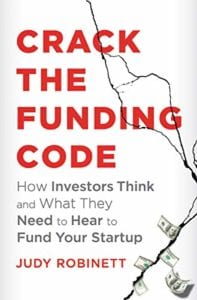
Crack the Funding Code: How Investors Think and What They Need to Hear to Fund Your Startup
I’m honored and thrilled to have a return guest. It’s a very rare thing on The Successful Pitch, Judy Robinett. She is the author of How to Be a Power Connector. She has a book called Crack the Funding Code. That book has all kinds of information on how to get your startup funded. Judy has been profiled in Fast Company, Forbes and Huffington Post. She is the super-connector who has an amazing network globally. Not only have people that are influential but investors from Angel groups to VCs. In over 30 years as an entrepreneur, she herself has served as the CEO for both public and private companies. She’s been on the advisory boards of Illuminate Ventures, which is an early-stage venture capital based in Menlo Park. She is well-connected literally around the world. Judy, welcome to the show.
Thank you so much, John. I’m thrilled to be here again with you. What you didn’t tell your guest is that you’re featured in my book probably because you’re the best guy I’ve ever worked with in my life on pitch decks and understanding what a true value proposition is. I’m excited to be here.
Tell your own little story of origin because that always is so impressive of how did you become this super connector and this expert in this ecosystem of getting startups funded?
I grew up in the same town where they filmed the movie, Napoleon Dynamite, so I was a nobody. I was shy as a kid and had been bullied. I very quickly figured out when I worked for a couple of Fortune 50 corporations that with keeping your head down and working hard, the thought was you’d get noticed. I found out you didn’t. I read the book, How to Win Friends & Influence People, and that helped me to understand the power of strategic networking to get any resources you need to get anywhere because there’s no lack of resources. There are billions of people on the planet. There’s $296 trillion of private global wealth. There’s no lack of money to get funded. What I learned was that most people are in the wrong room with the wrong story. Having been an investor for a number of years and then working with the VCs and accelerators like Springboard, which to date raised $9 billion, had seventeen IPOs and 185-plus strategic sells. I was so saddened when I would meet founders who had a great business idea, usually a solid business model. Unfortunately, they either met up with bad actors or they had felt like they’re running this endless rat maze trying to figure out where the cheese is. I decided I was going to help them figure that out.
When that happens, nine times out of ten people are doing both. Your expertise is getting people in the right room. I want to also say what I’ve observed is your skillset is so immense that you can get them in the right room at the right time. If you are not prepared when you have that opportunity to meet someone one-on-one or get in front of Angel Group or a VC for your ten-minute pitch and you haven’t done your due diligence, it can still all fall apart even if you are in the right room.
This happened to me. I was referred to a gentleman who has an amazing startup called Logical. He has investors and is doing well. He has proof of concept and 148,000 in sells, but he’s not pitched too high-end Angel groups or to early stage VCs. I started from where I usually do with people, “Send me your pitch deck. Send me your financials.” Nine times out of ten, in some level, they suck. I’m being clear and people have done a lot of work. The problem is they don’t know what they don’t know. The next two phone calls I make, one of them is to David Meister, who is a top CFO expert on pro formas for startups. David doesn’t charge a ton, but will go through all of those proformas, help you develop them if you need. He drills down to how do you mitigate risk as viewed by the investor.
[bctt tweet=”Mitigate the risk for investors.” username=”John_Livesay”]
You’ll hear all the time, “You’d better know your numbers.” He delves into your assumptions behind the business model. Usually, the second call I make is to you, John, because people have a hard time so much in the forest that they can’t see the trees. Particularly from an investor’s standpoint, the investors, number one, want to know what the exit is. How are they going to get their money back? How quickly? You have to mitigate risk as viewed by the investors. That’s usually where I start and that is how you get a good story. You can tell me what your business proposition is in two sentences. You have a pitch deck that speaks to the competition, you go to market strategy, who your team is, some of the basics. You’ve done your homework on the financials. That is getting the right story. You can be ready to get in the right room.
I love this concept that when you mitigate the risk, that’s when you get a yes from an investor because people have so much trouble having empathy for what the investor thinks and how many pitches they hear in a year. Can you share your observations? The statistic is only 1% of pitches get funded. Do you find that to be true? How do you help people solve that problem?
I don’t believe that. The majority of startups fail if you drill down, you find out they came from the Small Business Administration or some government agency. The truth is a business may not have failed at all. They may have reincorporated as a different entity. They could have sold to somebody else that made the business successful. It is tough. As Einstein said, “If you’re going to play the game, you’d better know the rules.” One of the big reasons I wrote the book was to help people understand there is no lack of funding. Different phases of your company require different types of investors. You usually start with friends and family. That’s the biggest pot of money that’s available. The next one is the Angel groups. People need to understand there’s no lack of these people.
There are 300 Angel groups. They’re equal from north to south to west to east. You don’t have to get on a plane and go to Silicon Valley or go to New York City. One of those little rules of the game is 75% of Angel investors will only invest in the state where they live because they want to be able to visit you, to coach you, and to help you. Understanding that piece of information and then going on Google and type in Angel groups in Utah, Angel groups wherever. You can do the same with family offices, which now have some 80% of them are now also investing in startups. Having that information, doing a little research, I often tell people to go look at New York Angels in New York City. They’re one of the best Angel groups in the world. They walk through what you have to have ready, what the application process is. If you do that, then you’re geared to be much more successful above that 1% who get funded.
A lot of getting in that 1% Club, so to speak, is having a warm introduction to get into that right room.
That is correct. A VC out of California once said to me, “Judy, if they can’t figure out how to get to me, they can’t figure out how to get a customer.” One of the reasons is people get bombarded with thousands upon thousands of business plans, models, and executive summaries. It comes from someone that they know, like and trust. If you put on the New York Angels that somebody has referred you to them, inside their group of 70-plus, you’re pretty well-assured that you’ll probably get a slot to get in the door. It absolutely helps. A key point is they also have to know you, like you, trust you before they’ll fund you. The number one thing is to start building those relationships.
You’ve often said that there are two big reasons why small startups fail; lack of customers and lack of funding. Can you speak to both of those?
[bctt tweet=”No competition means no marketplace.” username=”John_Livesay”]
This is a quote from one of the founders of Y Combinator. I’ll often meet people and they’ll say, “If I had the money.” The reality is they need the customer. Often people have what they think is a brilliant idea and it turns out it’s a hobby. It’s something that they wanted. It doesn’t necessarily solve the problem for a customer. Until people are willing to open that wallet and pay you, all you have is a hobby. The quicker you can get some funding in the door after you’ve got your customer. Focus on getting those customers in the door first, then it’s much easier to get funding because you have proof of concept.
As one investor said to me, “If you’re selling dog food, I’d love to see those dogs eating the food already,” which I love that image. One of the things you touched on earlier was the importance of competition. I have seen and heard with you sometimes people say, “I don’t have any competition.” One of the key questions that I think people need to be prepared for is what’s your secret sauce? What’s the barrier to entry? Can you tell us about your thoughts and experiences and maybe a story around that?
There are a few key sentences that if I hear them uttered, it tells me instantly that the people are amateurs. One of those is there’s no competition. If there’s no competition, there’s no market. There’s no need for your product or service. There’s always competition. It shows me you’ve not done your homework well. It’s absolutely critical to figure out who your competition is. I was in Belgrade for eleven days working with a couple of startups. One of them I’m already on their Board of Directors and own a part of the company. The second one is a new one to me. They arguably have something that is arguably the next step up from AI, artificial intelligence. Sure enough, three minutes into their pitch, they assured me they had no competition.
I always smile. I made them go do a little research. It turns out everybody from Microsoft, IBM and who else is also playing in this game and somehow could be construed as a competitor. The other thing they will tell me is they need money like the day before yesterday. They don’t see any need for an exit. The exit is the only way the investor gets their money back. This also was from this group. I said, “Nobody is going to invest because they want their money back.” They said, “We would consider doing a strategic sell.” The majority of exits in the United States are strategic sells. Another thing I have people do is get on PitchBook, which is free and there are several competing services that are like that. They can tell you who bought what company, who the competitors are. You can do it by Google, by industry to find out exactly who those competitors are.

Crack The Funding Code: Nobody can create a successful business by themselves.
You need to be able to talk about them in a way that is not insulting to them or coming across as arrogant. Let’s talk a little bit about how important it is. It leads right into the team. Your overall attitude and persona of confidence versus arrogance. Can you talk about what you’ve seen and how can people make sure they’re confident but not arrogant?
One of the biggest turnoffs to investors is a know it all. Investors will immediately say, “Go for it. Just not with me.” That shows that you’ve got a problem with your thinking. Nobody can create a successful business by themselves. That’s a big turnoff. It shows that you’re arrogant. It shows that you’re a fool. You think you know better than the rest of the world. That’s problematic because Angel investors invest. They want their money back, but most of them have been successful entrepreneurs themselves. They love to coach. They love to help you to get to that successful exit. Avoiding as we call it, hair on the deal, not making mistakes that are going to make you un-fundable or that you’ll never be able to sell the company.
My takeaway from that is to be coachable and confident when you pitch.
[bctt tweet=”Be coachable and confident when you pitch.” username=”John_Livesay”]
Being confident is fine but let me tell you, if somebody says, “I don’t know but let me get back to you on that,” that’s a much better answer than lying about it because these investors, many of them see a thousand deals a month. You’re not going to pull the covers over their eyes, but sometimes it’s fear. Everybody knows you’re broke. That’s why you’re there to get money. If you’re smart, you will agree that you want their expertise. You want more than their money. You can be confident. You can say very confident driven things. Also, if you show a little bit of humility and make a couple of comments like, “I hadn’t thought of that. What a great idea. Could we talk about that more?” job one is to build a relationship because you want the second date. They’re not going to meet you and then write you a check. They’re looking for a level of confidence.
They also look for a level of your character. Howard Stevenson who was the head professor at Harvard for many years for entrepreneurs wrote a great little book and it’s for investors. It’s how to pick deals. It’s a great one for people to look through and see what the investors are looking for. He said, “The first time someone lies to him, he’s out of there.” It’s like you would flush your money down the toilet, so it doesn’t matter how great your deal looks, what your ROI is. If there’s an inkling that you’re not telling the truth, you’re history.
Does the book go into some details, Crack the Funding Code, on how to prepare for due diligence once you’ve gotten a yes to make sure that everything is opened up?
Yes. We do have a section on that and probably one of the most important chapters is Chapter Nine, which is mitigating the risk as viewed by the investors. They want to make sure you can execute. They want to make sure you have a solid team. There are many execution risks. You had mentioned barrier to entry. My book does go in into that. It’s good for you to take your blinders off and pretend like the investor is your customer because, at this point in the funding process, the investor is your customer. You need to be open-minded with any concerns or any issues that they raised. This is from usually decades of experience that they have. Often, they’re trying to be helpful and then test you a bit to see what your response is because they want to take a peek under the hood at that character of yours.
In other words, do you get defensive right away or do you stay calm? One of the things I know that you’re all about is putting together a great team because the investors are asking themselves, “Why is this the best team to execute this idea?” Can you speak to the importance of having complementary skills on the team?
We start with a founder and hopefully, they’re a sales guy. If not, then you’d be needing a salesperson first because cash is king and you want that proof of concept that you have customers. I usually tell people to get somebody like David Meister as a fractional CFO because you don’t need a full-time finance person. It is good to have a high-level guy, who can help you as the company begins to grow. That’s important. Often you don’t have money to build out a lot at this point. You can put in your deck if you need a CTO, chief technology person, on or some guru. You can put this person is going to be hired upon completion of this round that you’ve already had interest from them. A rule important one in my mind is positioning the company for success.
Often you as a founder, you don’t have years and years of success behind you. Find two to three people who do have success. I helped a woman get the first CFO from PayPal on her advisory board. Another one I helped get a director out of Microsoft for fifteen years. It literally speaks volumes. People look at the company and go, “If this person is in, they’ve done the research, the due diligence, and they believe in this concept.” The other one is to surround yourself with service providers, your law team, your banker that have a level of expertise. I meet a lot of people and they’ll say, “I’ve got this great bookkeeper that put together my pro formas.” That’s not going to cut it, neither is your accountant. It’s very different getting pro formas done by somebody who understands startups. We engaged with Wilson Sonsini. They’re the number one law firm in the world for startups. It’s like that old commercial when JP Piper speaks, everybody listens and everybody turns. If you have a good banker, good lawyers, it looks like you’ve put together a solid team of people who can advise you. I’m leery. I don’t work with people who tell me they don’t need an advisory board. That’s right up there with, “I know it all. I don’t need any help.”
[bctt tweet=”Most people are in the wrong room with the wrong story.” username=”John_Livesay”]
Can you tell a story of how you were able to help a company get a good exit above what the valuation would have been on paper by assembling a good advisory board?
A company that I worked with out in Park City had developed a biomedical device for permanent sterilization that could be done in a doctor’s office very inexpensively. Initially, she had gone the rounds in Utah trying to find Angels. She kept hearing no. When I was introduced to her, I said, “Let’s up the game here.” I brought on one of Howard Stevenson’s protégés out of Boston, Eileen Shapiro, who has been a top consultant at McKinsey, has been an investor probably for 35 plus years. That helped. It turned out the relationship with her resulted in a much higher significant sell of the company than she would have had out doing it by herself. That’s why it’s so important to have people that are in the industry that you’re targeting. Lots of lawyers can write contracts. You want people who can also open doors for you, who have expertise in the industry that could help you find potentially strategic partnerships.
What would you say is the biggest mistake a lot of founders make who haven’t read Crack the Funding Code?
Probably the biggest mistake is trying to find love and trying to find money in all the wrong places. I meet people that feel like they’ve been kicked in the guts hard and everybody is telling them no. It’s because they haven’t done the match of where the money is, who’s got it, and who’s most likely to fund you. Often, they are missing a couple of components of the story. The big one is mitigating that risk as viewed by the investors. Locally, you can go to Score. You can go to the SBA, the Small Business Development Center. Your local college or university has professors, people who are experts on entrepreneurism. Find a pitch event and that’s where investors hang out. It’s also where people hang out that love startups. We’ll happily give you some advice.

Crack The Funding Code: The higher you go up that food chain in the venture capital world, the more sophisticated those investors are.
You have worked with so many powerful people from Kevin Harrington from Shark Tank to Mark Burnett, who produces Shark Tank and several other shows. You’ve also helped people get in front of a venture capitalist. Let’s say someone who wants to read your book, Crack the Funding Code, because they’re like, “I’ve got some seed round from an Angel Group. I’ve got some revenue, but I don’t know how to break into the venture capital world.” How different I should speak there versus an Angel group? I know Crack the Funding Code goes into that. Can you share some of those insights?
The higher you go up that food chain in the venture capital world, the more sophisticated those investors are, the tougher the questions will be. Back to looking at the New York Angels, then I would have you google White Star Ventures, a top VC firm that’s now global, started in New York. One of their best access has been The Shave Club, $1 billion-plus. You can Google early stage VCs. You can look and see what specifically they’re looking at. Many VCs are very niche focused. They realize they can’t do it all. There are ones that specialize in the oil patch, everything to do with gas and oil industry. There are ones that all they do is life sciences. There are other ones that only do the B2B play or the B2C play, business to customer direct. You need to have done your homework and understood the jargon of the VC world. One of them is the one you quoted, “Does the dog eat the dog food?” Another one, “Is there hair on the deal?” They want to make sure that there’s no potential litigation coming down the pack. That you’ve protected your IP if you have it. How you approach them is very different. There’s a chapter in my book on doing strategic networking that can easily move you forward.
In addition to being this amazing author and consultant to startups, you’ve also a speaker. You’ve spoken at NASA. The White House, you’ve been involved and invited to. Give us a little snippet of what kinds of speaking engagements typically are you called in for.
[bctt tweet=”Until people are willing to open that wallet and pay you, all you have is a hobby.” username=”John_Livesay”]
I’m usually called in on strategic networking. People needing to understand, “This is my goal. I’ve got A2B, but I cannot for the life of me figure out how to get from B2C.” This is another one of Einstein, my favorite quotes, “A and B, you can get there with logic every time. B to C usually takes imagination.” It boils down to strategy. You can create luck. People say to me, “You can’t create luck.” I’ll say, “Go stand on the train tracks for 24 hours. Tell me if you’ve got good luck or bad luck.” How you position yourself is absolutely critical.
The book again is called Crack the Funding Code. People can buy it on Amazon. It’s on Kindle and Nook and every place you can get a book. Judy, is there one last thought you want to leave our audience with about what they need to look for in Crack the Funding Code?
One of the biggest pieces of advice I’ll tell everybody out there is to kick fear to the curb. In Hebrew, there are two words for fear. The first one is when you think the sky is falling, for me, I’m running to my cave with dark chocolate. The second one is like you’ve stepped into this brighter, bigger space than you’ve ever been in. It’s fearful but it’s on inspiring as well. Everybody at some level deals with the fear. When I did my first startup, a franchise restaurant, I thought I was going bankrupt. I went to an attorney scared to death. I’m shaking in my boots. He said, “You’re not even close.” I said, “I’m broke. I don’t have any money.” He said something that changed my life. He said, “Judy, they can break you, but they never can eat you. Don’t let fear persistence wins time over time. It’s not the brightest person in the room. It’s the person who will learn and the person who keeps going.”
Judy, thanks so much. Thanks for being a phenomenal guest. I know this book is going to be a big success and help a lot of people.
Links Mentioned:
- Return guest – Judy Robinett previous episode
- Crack The Funding Code
- How to Be a Power Connector
- Illuminate Ventures
- How to Win Friends & Influence People
- White Star Ventures
- www.JudyRobinett.com
- Quantmre.com
Wanna Host Your Own Podcast?
Click here to see how my friends at Brandcasting You can help
Get your FREE Sneak Peek of John’s new book Better Selling Through Storytelling
John Livesay, The Pitch Whisperer
Share The Show
Did you enjoy the show? I’d love it if you subscribed today and left us a 5-star review!
-
- Click this link
- Click on the ‘Subscribe’ button below the artwork
- Go to the ‘Ratings and Reviews’ section
- Click on ‘Write a Review’