

Financial Health Doctor For Female Founders with Jill James
Posted by John Livesay in podcast | 0 comments


Keeping yourself healthy is definitely worth the investment and in order to do that, your financial health has to be in tip top shape as well. The financial health doctor and CEO of SIF Industries, Jill James, joins this episode to share her knowledge about financial health. She goes into the details of what financial check ups can do for your business and what are at stake if you decide not to have your finances checked. In addition to this, she gives some amazing tips on how to pitch and get funding for a VC. On this topic, she also talks about having an exit strategy and what you need to prepare in order to justify a VC. In addition, she touches on how to be successful in a small business as she emphasizes the importance of knowing and understanding the economics of your business.
—
Listen to the podcast here
Financial Health Doctor For Female Founders with Jill James
Our guest is Jill James. She’s the CEO and Founder of SIF Industries, which is a consulting and coaching firm that puts women on the fast track from founder to CEO. She started her career in banking with JP Morgan but she got the startup bug while in the Chicago Booth for her MBA. She’s had roles in product management, marketing, sales, and C-level leadership at six VC backed startups with four exits. She holds a BA with Honors in Political Science and an MBA in Strategy, Entrepreneurship, and Marketing from the University of Chicago. She’s an advisor to Boutique Box and is on the board of many programs and she lives in Los Angeles where I am from. Welcome to the show, Jill.
Thank you, John. It’s great to be here.
Let’s dive into your own story of origin and bring that little intro to life. You can go back to childhood, college, high school, or wherever you want. You had some interest in entrepreneurship and marketing. You had that little a-ha moment that I talked about while you’re at Chicago Booth but if you want to go further back than that, feel free.
I’m originally from a small town in Wisconsin and when I say small town, I mean a small town with 1,000 people with no stoplights. We had a stoplight one summer. It was exciting. Everybody wanted to drive across the bridge and drive in the stoplight. I was there my whole life until I was eighteen and both of my grandparents had small businesses. I grew up going to Northern Wisconsin in the summer and working in my grandparent’s old-fashioned soda shop. From the time I was six years old, I would pull the candy. I love to make the hot fudge sundaes and we made sodas from scratch with the old-fashioned pump and the soda machine.
I grew up doing that and my other grandparents had a trucking business. I didn’t realize it until later in life, but it was interesting to see one that was a true family-owned small business and one that had a little bit more scale. It became a major employer in our area because of the scale of the trucking business. Foundationally, I think of myself being raised by teachers, but I do have a lot of small businesses in my family and a lot of my aunts and uncles have large families. A lot of them have their own businesses. It’s certainly something that was always around me, even though I was much more on academic, go to college, and gets a job track.
[bctt tweet=”You have to understand the economics of your business.” username=”John_Livesay”]
I didn’t know what I wanted to do going to college, but I had a chance to explore things at Chicago and I was lucky that I got some great internships and I accidentally applied for a banking job. I thought it was a consulting job. I don’t know how that happened but I ended up working at a bank. I took the job that was the most interesting to me. I got exposed to a wide array of how stuff works but also being from a small town, I had some personal challenges with the idea that the budget of my town was a rounding error for the people I was working with. That was hard for me. I thought we could put that money to better work in the world.
That was the start of my path to going smaller. I got in the tech boom. I went to a couple of tech startups and that was the first exit. We built a trading platform for domain names back when that was the start of that thing with the first opening of ICANN and that’s how I got out of banking. When that all crashed, I did operate back in banking again. That’s how I went banking but that time I went back and I was a financial advisor to individuals with small businesses.
That’s probably the most instructive in my career of learning how the tax system works, learning how personal finance works because as a banker, you don’t know any of that. You know how to make a lot of money on a large scale, but I would work with people who are doing that. They had no idea how the personal finance system worked and they had no idea how small businesses worked. That has been the best job I’ve had for my whole career because I had to learn to sell and I also learned how you make money and how being a small business owner can help you make more money than you may get in a job.
I know that the readers are going to be interested in the fact that you have been involved with six startups that are VC backed. Rarely do I see somebody who’s had that many. I can hear the audience going, “Please ask her what’s the secret to pitching to a VC to get funding?” Did you learn any tricks or tips that you could see that when we say this, they open their pocketbook? One of my sound bites is when you tug at people’s heartstrings, they open their purse strings. A lot of investors I’ve interviewed talk about, “We’re more interested in the team and the idea,” and things like that, but I’m sure you must have some insights.
I never pitched anything that was zero revenue or pre-revenue. For me, it was always, “We have some money. We need to get to the next round. We need to offer some services. We need to accelerate or I need to get this round of funding, but I need the financials and somebody who can help me talk to that side of the business.” What I’ve seen both in terms of they want to see the team, but you also have to understand the economics of your business. That is true, whether you’re VC backed or self-funded and it’s one of the biggest holes in our knowledge as business owners of understanding our unit economics. That’s the foundation of my business.

Financial Health Doctor: Look at the potential of the business, what’s it going to take to get there, and how many rounds before you can hit that profitability point or before the business could be self-sustaining.
That’s almost all I do with people, even though we have a lot of things that we call it but it’s helping people understand their unit economics and why that’s powerful. That to me is if you can show that you have the margins on the scale to justify VC, it makes it a lot easier for them to give you the money. If you have already shown that you can make sales without their help and you’re using the money to accelerate and get a better team that also de-risks by a lot. Being able to show that you already have that product market fit and preferably on something that you bootstrap especially for women where it’s harder to get funding, that goes a long way to help them say yes.
I interviewed Brian Smith, who’s the founder of Ugg, those wonderful boots. Once he got his messaging right, it was first sold to surfers. It wasn’t a fashion statement at all. It was only sold in surf shops, but then it took off and he needed all this money to scale so that’s an example of a business that had some proof like you’re talking about revenue. To scale and hit the orders that were coming in, you needed that money. I always tell people, if you want to get your startup funded, whether it’s a seed round or VC route, if you’re got revenue coming in, you need to know your story. You need to have a pitch and you need to know your numbers. One without the other is a no go.
Even if you have a great pitch and great story and you don’t know your numbers, when they ask you, “What’s the cost to acquire a new customer?” you’re like a deer in headlights. If you’re only about the numbers and you don’t have a story to tell people, what problem you’re solving in a way that is unique and what your secret sauce is and all that stuff that they can then repeat and be proud that they are investing in something. The secret sauce is combining those two things. The other question I have for you, because you’ve had four exits, how important is it to have an exit strategy when you’re trying to get VCs to fund?
It’s important for you as a founder to understand how much money it’s going to take before that looks attractive and what that means for your actual earning potential. In some cases, I’ve seen slips where you’d be better off being self-funded than taking a couple of Angel investors. By the end of the amount of dilution that you accept, you have to be a massive company in order to get any money for you, let alone the people wh work so hard for you and stock options. You should look at what’s the potential of the business, what’s it going to take to get there and how many rounds are you looking at before you can hit that profitability point or before the business could be self-sustaining?
Also, is there any off-ramp? Are there breakpoints where if you had to self-sustain at that level, it would be fine? That’s what people have gone through in 2020. It’s like, “There’s no more funding coming. We only have this many months of runway. We’re going to have to be self-sustaining and we were counting on two more rounds.” There hasn’t ever been a thought of, “If I had to do that, what would it look like?” It’s a different mental model of we’re going to grow as fast as we can and find this customer and we’re going to get repeat revenue, recurring revenue, and lock these people in for as long as we can.
[bctt tweet=”Part of the financial health checkup is finding the things in your business that are profitable at the scale that you need.” username=”John_Livesay”]
Before we started the show, we were chatting about one of your earlier customers. She’s like, “I can sell but I’m not great at making a profit.” That is your own little story of origin of you doing a financial health checkup and it’s so odd to me that most people don’t think they need this because we all know we need to take our car in for a checkup, an oil change, or whatever. We know we need to take ourselves for checkups. If you’re a parent, you take your kids for those too and you should be doing it as an adult too. Somehow with our finances, we don’t want to look under the hood. Can you speak to what the stakes are if people don’t do a financial health checkup?
It brings up your stress and anxiety. I see many people that I start working when I say, “What do you think you’re going to make this year?” They’re like, “I don’t even know what I’m going to make next week. There’s no predictability now. There’s nothing I can count on.” Part of the financial health checkup is finding the things in your business that are profitable at the scale that you need. At this point, I primarily work with self-funded founders so we’re looking for enough margins in their business that we can drive their growth goals and mostly use debt and conventional financing techniques in order to grow their business to where they want to go.
A lot of them are in businesses where they need to prove that they can be a certain size before they could get an investment around $10 million or $20 million and they’re more $100 million to $500 million but they have that potential. We have to figure out where are those margins in your business. Also, get smart about who’s on your team, both in-house and out of house, that extended source team or a professional team of people you need who have the expertise and have an operating budget.
You would not believe how many people have no idea, even with financial statements, what they are spending on their business, and what the required things are to make their business run. In the financial health checkup, we look at how do we stack your revenue in a way that gets you to where you want to go profitably, pay you what you want to be paid, have enough money left over in the operating budget for the stuff you have to pay for, and get you the people that you need so you don’t have to work 100 hours a week.
We talked about how the riches are in the niches a lot on this show and you’re focused, and it’s a great example that you target and work with female founders, who tend to be creatives or not have a lot of managerial backgrounds. If someone is like, “I’m great about animation. I’m a photographer or anything that’s at all creative. I don’t know anything about how to manage a business, let alone scale, hire people and all that stuff.”

Financial Health Doctor: Investing is about things that drive your growth forward and there are a lot of things that we do without intention that should be done with intention.
It’s clear and it makes it easy for people to refer you and that’s why I talked about having the importance of a great elevator pitch. You need to be able to have a soundbite and go, “Jill James, you’re a creative person and you’re a female founder. She could help you.” It makes it clear and that’s what makes everyone reading go, “Am I that clear on who I help and what problem I solve?” You’ve got that dialed in. I’m sure a lot of your business comes from referrals, is that correct?
Absolutely, and this is the first year I’ve ever done any real outbound marketing and that was only because I wanted to start an offer of a more scaled product. Part of my personal mission is each year to double the number of people that I impact. I hit a point where I could not double without offering some skilled service. That required some outbound marketing and or they define those people who are looking for more of a group planning approach, instead of my one-on-one clients, which come from great referrals from my past clients.
You’ve got some great content here about are we spending or are we investing? Can you distinguish it for us? For some people, they’re like, “I’m going to invest in myself and take this course and learn how to run ads on Facebook,” or whatever it is they’re doing. You’re like, “Are you spending money that’s not going to give you a return on investment?” How do you define the two? How does someone know whether they’re investing or spending?
Spending is the thing to have to do to run your business. Spending is taxes, keeping the lights on, and having internet. It’s those things when LA sends your nasty bill every February. Investing is about things that drive your growth forward and there are a lot of things that we do without intention that should be done with intention like our marketing budgets and investments. If we have inventory that’s an investment. Our branding is an investment and PR is an investment. Many people think of these things as cost centers, “How much is that going to cost me? I’m scared to spend it because it’s not guaranteed that you’re going to get it back.” At a certain point, you have to have a bit of faith and understanding of your business.
If you put $1 in, you can get $2, $3, or $4 out. If the spending has the potential to do that it’s investing. I tried to look at what are the things in my business that if I put $1 in, will I get more than $1 back within a certain amount of time? I make bets on those. I gradually stretch what my comfort zone is to make more and more investments in my business. What I’m going through now is a major rebrand. When I saw the cost, I had a heart attack and I was like, “How much money is this going to put me into this next tier in terms of investment?” This is the payoff over the next months. I wrote the check and I started doing it. Our spending mentality says, “This is scary. I don’t know if I should spend this money.” Our investing mentality says, “What are we going to get back and where will we go into this fuller vision?”
[bctt tweet=”In a small business you have to be high margin and high service. That’s the only way to be successful in a small business.” username=”John_Livesay”]
One of the things I love to do is help salespeople and we’re all selling. If we’re working for ourselves or our own business, we’re selling ourselves or selling ourselves to get hired or get clients or about getting funding. Taking what I call, boring case studies, I’m sure you have lots of those in your MBA days, banking days into case stories. Can you tell us a story, you don’t have to give the name if you don’t want to, of a client that came to you struggling? They didn’t have what you call a financial oxygen mask on first. We all know that story of putting the mask on yourself before your kid and most entrepreneurs don’t think like that. They’re like, “I’ve got to save the business and I’m not making any money. I don’t have money to pay my mortgage or whatever.” Is there a story or client that comes to mind that you could take us on this journey? The goal for every reader is, “I see myself in the story.”
Some of them I’m still working with. We’ve been working together for a few years. I met her at a conference. I sat down next to her at lunch and started asking her what her business was. She was reselling someone else’s product and I asked super financial questions off the bat. When I meet people, I’m like, “How much do you make? What is your margin?” It’s those comfortable lunchtime conversations you have when you sit down at a conference. We started to talk about this and she said, “I know my margins and they’re fine. I’m reselling somebody else’s products. There’s nowhere I can go with this.”
We did a financial health checkup for her and what we realized was with the connections and the book of business, and everything that she had and what she was adding is customer service. It was super valuable for that customer. She also had relationships with producers in the space so we started looking at first more comfortably, what would we white-label? We make a white label product for somebody else. We started to go down that road and as we looked at it, she said, “I could not get this under my own name. I could sell this directly.” We switched from a resale product that, given the shenanigans the company was playing was between 15% and 20% in growth margin to a product that’s more 60% of gross margin.
We tested it out. There was no harm in floating this new brand and it turned out that her book of business was hungry for it. They jumped on it and the business has taken off over the last two years, in a way I don’t think we even anticipated. When I said, “What would be a nice size of business for you?” That’s about 1/3 of what her business is now. I find it over and over if your margin and you focus on your customer, what they value about what you do, which is sometimes not the product sometimes the customer service making their life easy. There’s a lot of value to that, especially for people in services, anybody who’s running around trying to hustle for money. If it’s time for money exchange, anything you can do to make their life easier then that’s valuable to them. She tapped into that and had a great product that was easy to say yes to but then added customer service on top of it.
It’s been an incredible growth story and having those pillars every time we get into, “The sales are overwhelming. What should we do next?” We say it like, “Does it serve the customer that you want to have? Does this feed into your customer service mentality?” We go back to those pillars and it’s like, “Do this. Don’t do that.” We can have as a foundation and it instantly makes clear, “What’s the right thing to do? Where should we put the money? How should we build this in the next stage?” I loved that we randomly met at lunch and I asked way too personal questions about her business.

Financial Health Doctor: The world is going to change no matter what. You can lead. You can follow, or you can fight for the past.
One of my other guests, Judy Robinett, wrote a book called How to Be a Power Connector and she says, “Talk to strangers.” There’s a classic example of you talking to a stranger at lunch. You were randomly sat next to if you believe in random things, I don’t but I love that. There’s something else that’s important that you’re able to help your clients with is identifying who you say no to, in terms of clients. Are these the clients that are never going to be happy, want refunds, and demand more of your time than what they’re paying for? Can you speak to that a little bit?
One of the things that I believe in small business is we have to be high margin and high service. That’s the only way to be successful in a small business. When I find small business owners or potential customers who again, cannot wrap their heads around the difference between spending and investing, and what’s it all about. Their comparison point is, “What can I get on Upwork, or what can I get my cousin who’s in college to do it?” I can’t compete with that person but I also know that they have no value and expertise. The time and direct answers that I can get for you, I focus everything on my business. Let’s get to the value that you need as fast as possible and I have a price for that.
If on the first day there’s something that we can do, that’s great. I’m going to tell you. I’m not going to dance through and be like, “The punch lines coming in four weeks.” I want to work with my clients in a way that if we have a great answer, let’s go with that. Let’s do it. That’s the whole point. It’s not to do the process. I have the framework. The framework works but when you hit that moment in the framework. You take off, you run with it. There’s no reason to wait like what many consultants do have, “Let me give you the big report. Let’s get to the end of this.” I want to do everything in a way and I want to have the client and customer aligned, so the minute that we realize what the breakthrough is going to be for the business, we start doing it.
It’s almost like if someone’s going for a checkup and they’re fine but if someone’s coming into the hospital and they’re having a heart attack, nobody wants a process. They want, “Can you save my business? It’s financially running out of oxygen fast. If you see a solution, please don’t make me wait for it.” What a great takeaway. If anybody wants to reach out to you, they can go to SIFIndustries.com, or they can google you that way as well. Jill, are there any last thoughts or things you want to leave us with? A favorite quote or anything?
One of the things I like to say to my clients is, “The world is going to change no matter what. You can lead. You can follow, or you can fight for the past.”
Jill, thanks for sharing your wisdom on how we should all get financially healthy. I look forward to hearing more of your success case stories.
Thanks, John. It’s been great.
Important Links
- SIF Industries
- Boutique Box
- Brian Smith – Previous Episode
- How to Be a Power Connector
- Judy Robinett – Previous Episode
- Better Selling Through Storytelling Method Online Course
Wanna Host Your Own Podcast?
Click here to see how my friends at Podetize can help
Purchase John’s new book
John Livesay, The Pitch Whisperer
Share The Show
Did you enjoy the show? I’d love it if you subscribed today and left us a 5-star review!
- Click this link
- Click on the ‘Subscribe’ button below the artwork
- Go to the ‘Ratings and Reviews’ section
- Click on ‘Write a Review’
Love the show? Subscribe, rate, review, and share!
Join The Successful Pitch community today:
- JohnLivesay.com
- John Livesay Facebook
- John Livesay Twitter
- John Livesay LinkedIn
- John Livesay YouTube
Get VC Funding – Interview Lylan Masterman
Posted by John Livesay in podcast | 0 comments
Listen To The Episode Here
Episode Summary
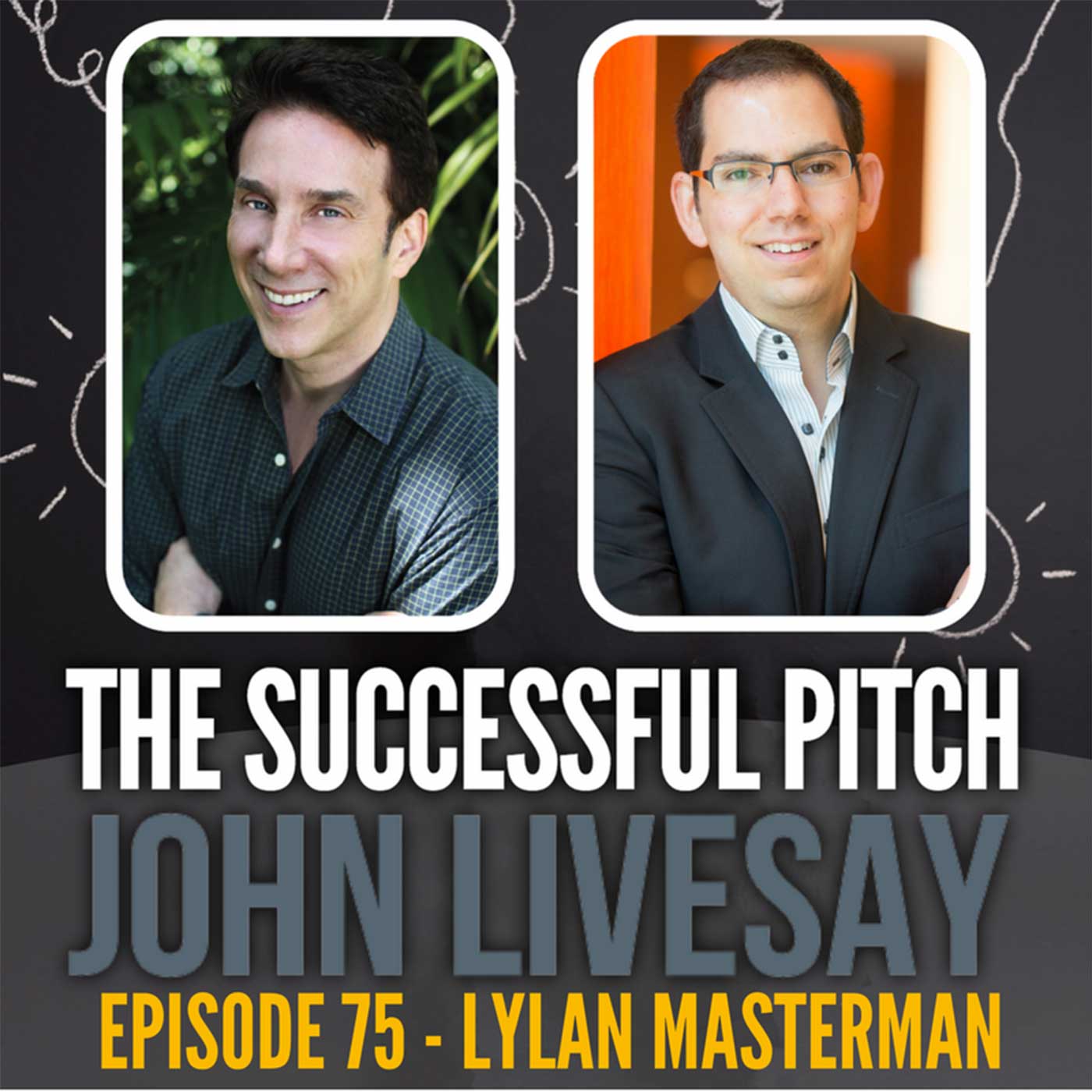
Lylan Masterman is a Venture Capital Investor at White Star Capital and a Kauffman Fellow. Lylan shares helpful tips for selecting good board members as well as being a good board member yourself. At White Star Capital, Lylan focuses primarily on late Seed and Series A investments, but he does offer advice on how an entrepreneur can successfully navigate between Series A to Series B rounds. Listen in for more!
Get VC Funding – Interview Lylan Masterman
Hi and welcome to The Successful Pitch podcast. Today’s guest is Lylan Masterman, who is a venture capital investor at White Star Capital in New York. He has primarily focused on late seed and series A investments. He’s also a Kauffman Fellow, where he is doing academic research project on the Internet of Things. He previously worked as a software engineer in product management for 15 years. He joined Atlas division of aQuantive in 2004 where he focused on big data. He helped lead the company’s Rich Media advertising technology platform.
He’s also led product organization for 4 early stage companies. Prior to joining that he worked at Microsoft and he’s also worked at Sierra Ventures, which is a San Francisco based VC firm. We’ll be sure to ask him the differences between San Francisco and New York, as I’m sure there’s quite a few. Lylan, welcome to the show.
Thank you, John. It’s a pleasure.
Before we get into all the wonderful things you’re doing at White Star Capital now, would you take us back to your days of being a software developer at IBM and then being a program manager at Microsoft? Did you have a vision that you were eventually going to get into VC? How did you go from that to where you are now?

White Star Capital
I was a computer science geek. I went to the University of Waterloo which, for people who are not familiar with the school, it’s considered the MIT of Canada. For the people in France, it’s the Polytechnique of Canada. From there, my last internship or coop in the ’90s was at Microsoft WebTV in California. My manager at the time, we had discussed career options. There were some people down the hall who were product managers, or by Microsoft parlance, program managers.
We talked and we agreed that that could be a really good path for me because I was getting frustrated spending hours on end, trying to fix a bug in the code that was a missing semicolon. I like the interpersonal aspect while also leveraging my technology background. I went to Microsoft full time in Redmond. I was on the first team to launch a Visual Studio .NET. The first ever .NET team in C#and J#.
Then I went to a company that I’d never heard of that time actually, in Seattle, called Atlas, part of aQuantive. We doubled and tripled the business year over year. It was just fantastic. I ended up having four jobs simultaneously. I was running the Rich Media product, behavioral targeting product, user experience, and internationalization all at the same time. Because that’s what you do when a company is growing quickly. In my last year there, Microsoft acquired us for the $6 billion, which at the time was larger than all of Microsoft’s other acquisitions combined.
That’s quite an exit there.
Yeah. Skype subsequently surpassed us. What was interesting there is that Mike Galgon was one of the co-founders of aQuantive. At one point I approached Mike for a little bit of mentorship. I was considering to go do my MBA. I was already in my 30s, so it was now or never. Mike was a great mentor for me. In the discussions, we talked about the history of aQuantive. The web was different back then, knowledge about Venture Capital is different back then. Your show was not on back then.
That’s true.
Mike, he told me about the history of starting aQuantive, which was then called Avenue A. He told me about how he and his co-founders started it, but also how he raised money from venture capitalists. I didn’t even know what a venture capitalist was. Similar to how my manager at Microsoft in the ’90s urged me think about product, Mike didn’t necessarily urged me to think about venture, quite the opposite. But he did awaken my interest into it, even though he didn’t necessarily think that would be necessarily a best choice of career. Because it’s a dark side and all.

Get VC funding: I would find the one person in the firm who I thought had the most similarities to me and I would email that person.
I started thinking more and more into it. I thought, “I might just absolutely love this.” It was a perfect timing for my career because I was going already to business school. Business school’s a great time to try something new. While at business school, I decided that I was going to try venture capital. I did not know that the economy was going to tank and that I’d be looking for an internship in 2009. What I did is I networked.
For me, what that meant was I looked up every single VC firm I was aware of or could learn about online. I read the bios of every partner in principle in the firm. I would find the one person in the firm who I thought had the most similarities to me or most affinity to me, as some people put it, and I would email that person.
I’ll give you the colloquial version of the email. Of course the email was very formal, but the colloquial version email basically said, “Hey, we have this in common. We both study mathematics, we’re both Canadian, we both work in online advertising, etc. I think what you do for your career is interesting. Do you have 20 minutes? I’d like to pick your brain.”
I love that so much because I’m constantly telling the listeners, you must do your homework on the investors you are fortunate enough to pitch. What you just did was, this is also obviously how you got a job, but it’s that same … Look at the similarities because you want to make sure that who you’re even approaching for money has a lot of things in common with you, whether it’s background, experience, connections. What you just shared is gold. I love it. Keep going.
One of the investors I reached out to is a New York investor, Geoff Judge. In my conversation with him at the end of the call, he said, “Hey, Lylan. I like you. I think you have some good potential. There’s no space at my firm to take on an intern, but let me introduce you to somebody.” He introduced me to his friend, Mark Fernandez.
Mark’s admin wrote me back and said, “Mark would be happy to have a call.” I did what you’re trained to do. Lie. “I very much would appreciate a call but I happened to actually be going to the Bay Area in a few weeks. Is Mark available to meet in person?” She said, “Yes.” Then I booked my plane ticket.
I met Mark in person. Mark made it very clear to me at the beginning of the meeting, they had never hired an intern before, they had no desire too. What I subsequently learned also is that the head of Sierra Ventures, the founder of Sierra Ventures, is Peter Wendell, who actually teaches venture capital at Stanford GSB. One can reason that if Sierra were to bring on an MBA intern, it would be from someone from GSB.
[Tweet “Get VC funding: Tenacity and persuasion is required to get someone to say yes.”]
By the end of the in-person meeting, Mark seemed interested. I think my technical background combined with fact that I was already in my 30s, didn’t need to be overly coached, had an impact. He knew that he could bring me on and I could run independently. I just owe so much to Mark for giving me that break. It was an absolute joy. From there, I had a great experience at Sierra, and then I applied for the Kauffman Fellows program.
Let me just ask you to pause because there’s another gem there. The objections you got at Sierra. Most people would just say, “Oh well.” Lying is not something we ever propose people do, but you were willing to go the extra mile, put your own money and spend your own money, your own dime, to get yourself there for that interview that didn’t look promising. But you still were willing to do it.
That’s that extra mile that a lot of people, “I’m not going to do that unless I really think I have a good shot.” You still went. You get there. All you do is hear a bunch of objections about why they never do it, and if they do it, it’s going to be from somebody from someplace else, and then you are able to turn that around. That’s the kind of tenacity and persuasive selling skills or storytelling that’s required to get someone like you now to say yes.

Get VC funding: Show that you researched me and you didn’t just simply do a copy and paste.
Very much so. The idea of what you said earlier, of researching somebody, of understanding their background, understanding your commonalities if there are some. You don’t need to have some but at least show that you researched me and you didn’t just simply do a copy and paste. Maybe we’re drastically different about something and you want to talk about that. That’s fine. Just show me that you didn’t do a copy and paste and that you’re willing to do a little bit of effort just the way I continue to do.
It can even be somewhat playful. “I see you speak French, I eat French fries, does that count?”
I haven’t received that one but, yeah. At least it would show some level of research.
And some playfulness. If you want to stand up from the crowd, sometimes you have to do something a little out there like that. You’re doing well there. Tell us about the Kauffman experience.
At Kellogg, Azeus Jelani was a year ahead of me. He’d been selected for the Kauffman Fellows program. I learned a little bit about it from him. I looked up the list of Kauffman Fellows through the history of the program. There are many fellows who are part of the who’s who of venture capital. The program is a two-year program where we meet once a quarter for three or four consecutive days. In the times that we meet once a quarter, there is a fixed curriculum.

Get VC funding: The curriculum is specifically on how to make us a better technology investor.
The curriculum is specifically on how to make us a better technology investor. The curriculum doesn’t relate to term sheets and financial terms. It’s assumed that we learn that on the job or we’ve already learned it. If we don’t then we can just ask. Let me give you two of my favorite examples of the curriculum. One example was how to be a better board member. What Kauffman did is that they invited internationally recognized VC’s who are known as being exceptional board members.
Is this advisory board members or a board member of directors?
The board of directors, because generally as a venture capitalist, that’s …
You’re on the board.
Absolutely. That training was outstanding.
Do you have one or two takeaways on what makes a great or how can you become a better board of director?
Everything that happens in Kauffman is Kauffman confidential.
Sorry, okay.
No, no. What I can say, because a friend of mine actually recently published this and so he leaked the information first, if you will.
Fair enough.
In addition to having great board members come in and speak to us, we had an entrepreneur come in and speak to us. A well-recognized CEO. At one point, the question was asked of him about his board and his level of appreciation for the board. There were many of his board members who he felt did not contribute as much as they’re capable of, they were not as helpful. He thought that all those individuals had the networks, had the skills, had the intelligence, had all the attributes required to be helpful, but just had never invested enough time and effort and mental energy.
[Tweet “Get VC funding: Time, effort and mental energy.”]
When we asked him which of these people would you want in your board. Again, the answer was surprising or was disappointingly low. The key takeaways there were often about some of the simple stuff, John. Simple. Read the deck, as a board member, read the deck a week in advance. Assuming the CEO sends it to you a week in advance. If you have questions, start asking those questions in advance so that you’re not stalling the board meeting unnecessarily.
Those are the three key elements to be successful in anything, whether it’s pitching for funding, being a good board member. It’s all, like you said, simple things. Put in your time, put in the effort. Not just effort of being busy, but mental energy. I love that. That’s such a great line.
If you just do what intuitively feels like the right thing and you make your portfolio become your priority, that should naturally occur. There’s a lot of the small things too. Your behavior in the board meeting. How often are you checking your cell phone or email? Are you writing down notes for yourself about what’s been discussed and about your follow up and your action about how to be helpful. That’s important stuff.
Sure. It shows you care.

Get VC funding: It takes an attentive board member to recognize a seminal moment and to make a certain recommendation.
It does. We should care because our job is on the line, our personal income is on the line, our reputation is on the line. In the life of most companies out there, the CEO is driving the company. But there can be one or two seminal moments where an outsider, as in a board member, will observe something that the operational team, the CEO, the C-levels, the VP’s, will not observe because they’re stuck in the wheats. It takes an attentive board member to recognize a seminal moment and to make a certain recommendation. Or to even ask the intelligent question that allows the CEO or the team to reach a certain conclusion.
I love that. That’s so great, because it works both ways, doesn’t it? When you’re pitching someone like you to get funding, you better be sure your phones turned off. You better be sure you’re listening to what you say and maybe even taking a note during the pitch meeting. You show that you’re engaged.
Absolutely. It’s fine to have your laptop open the whole time if it’s clear that you’re taking notes and you’re not overly multitasking. Or if there is something urgent in your life going on and you’re expecting a certain phone call, just say so.

Get VC funding: When I know I have another meeting, instead of being the guy who is always checking the time, I set myself an alarm.
One little thing that I try to do, and I think I do more often than not, is when I do have a meeting with someone and I know I have another meeting coming up thereafter, instead of being the guy who is always checking his cellphone for the time or checking his watch, I set myself an alarm. That way there, I’m not rudely checking the time. I trust that my alarm will notify me when it’s time to start wrapping up the meeting.
Nice. That’s very helpful. You’re meeting once a quarter. Obviously it’s a huge commitment. How to learn to be a better board member. Is there anything else you can share from those confidential quarterly meetings of what you’ve learned or no?
There was another session on how to best define your personal brand and your firm’s brand. You can imagine that the VCs that we invited to speak on the branding side were different than the board member side. Some people are much better at one than the other. For us to be able to pick and choose and learn from the best at each part of the curriculum is key to Kauffman.
On the branding, it’s all the normal stuff that we talk about, just applied to venture. Branding is especially difficult for VCs who are considered generalist. A generalist is defined as a VC who invest in many different categories.
You don’t specialize. “We only do medical or we only do fintech,” then people will say, “Okay, that’s your brand.” There’s still so much branding that can be defined. I can’t wait to talk about White Star’s branding in a second. Please keep going about, I’m really curious about what they might have told you about how important it is to have your own personal brand.
[Tweet “Get VC funding: Have a personal brand that is memorable.”]
Your personal brand and your firm brand need to be very complimentary. I certainly hope so. At the same time, we are each individuals. We each have our own way of being memorable within the firm. That’s how it is, I hope, with all firms. Be it that you organize events, be it that you wear some kind of peacock, to use a term.
At the end of the day, those are great hooks into what is the core of you and your firm. It’s fine to have that little memorable thing that gives someone a reason to remember you. Then they also have to remember you for the key two things, which are being really, really nice and being incredibly helpful or useful. Because a nice person who’s not helpful is just not all that valuable.
We’re going to tweet that out. “You must be nice and helpful, not just nice.”
[Tweet “Get VC funding: Be nice and helpful.”]
It’s absolutely critical. There are some people out there who are known as the nice guys or the nice women. It’s important to be nice, but the buck does not stop there.
I also like this concept of your personal brand is defined by what can you do to be memorable. That’s another great tweet. It’s so important. Is it something you wear, a certain hairstyle, colored socks, or you’re known as the go-to guy for events or you’re known as a go-to guy for being able to help people with their pitch or whatever it is.
That stuff is a little bit kitschy but it works, as long as it’s done effectively. Then there’s just the core fundamental parts of branding. One of the firms that I admire the most in the whole wide world is Emergence Capital. Emergence is truly a top firm, a fantastic portfolio. The people I know there, I can’t speak highly enough of.
[Tweet “Get VC funding: People know you for something important.”]
At Emergence, they defined themselves early on as the firm that invests in SaaS, before people even knew what a SaaS was. They use a couple of other terms around SaaS. Because they started investing in SaaS before the term SaaS I think was even defined. They invested early on in SalesForce.com. That’s a strong form of branding. All the other stuff helps.
First, on capital. What do they invest in? There’s something nice about either by your name or just how you define yourself externally that people know you for something important and as applicable to many entrepreneurs.
Let’s talk about the branding of White Star Capital. Before the show started, you told me a little story about how they came up with that name, White Star, for the VC.
White Star fundamentally, we are a transatlantic firm. We have investments in many parts of Western Europe including London, Paris, Berlin, Stockholm, and also in North America including New York, Montreal, Toronto, Ottawa. We even have some investments in LA and San Francisco. Looking at the history of what brings both sides of the Atlantic together, White Star Cruise Line, I may not have the exact details straight here, but it’s effectively the first cruise line, commercial cruise line, to cross the Atlantic.
Perfect. That said it all, right there. Even the little logo has a white star obviously. It instantly brands you as a place that is international and cutting edge, you being the first and all that other great stuff. In your bio, I talked that you lived San Francisco as a VC and now you’re in New York as a VC. I rarely get the chance to talk to people who’ve done both coasts and they’re so different. What would you say are some of the differences about being a VC based in New York versus San Francisco?
The differences are shrinking, I must say that, because New York is becoming very much more focused on all the industries of technology. It’s no longer so strongly focused on ad tech and fintech and fashion media and so on. That being said, the competitive dynamics in the west coast historically in the last few years, even though it is slowing down a little bit now, are different. The time it takes to make an investment at the Bay Area has shrunk because of the competitive situation.

Get VC funding: The time it takes to make an investment at the Bay Area has shrunk because of the competitive situation.
My friends who are Bay Area investors, in order to make the best investments, some of them have learned to be more proactive at creating investment theses or mini theses, if you will. Identifying some sub sector of tech and researching it in advance so that when it comes time to actually speak with a certain company that’s trying to raise the amount of money that you generally invest, that you already have your market knowledge, and so you don’t need to do catch up.
The reliance that a lot of VCs have an investing in companies that’s introduced to them, that’s decreasing. It still exist, it’s still very strong. But the proactive investors who go out there and say, “Here’s what we invest in. Here’s what we’ve established in thought leadership. Here’s where we have strong knowledge.” That allows you to make investment decisions a lot more quickly.
Now, one of the pride and glories of your portfolio is the Dollar Shave Club, which is such a success story. Can you share with us where you got involved? Was it seed into series A or how did you get involved with the Dollar Shave Club?
We are investors in a company called Science. Science is also located in LA, as is Dollar Shave Club. Science is effectively a startup incubator. They call themselves a studio. That’s what really what they are, is a startup studio. One of the startup studio companies that came out of Science was Dollar Shave Club.
By being an investor in Science, the head of Science is very good at letting his investors know when there’s something good coming from his program, from his studio. That’s when we learned about Dollar Shave Club. This was before the video came out. It was very good timing.

Get VC funding: We learned about Dollar Shave Club before the video came out. It was very good timing.
A funny story with Dollar Shave Club. I was having coffee with a friend of mine in venture capital a couple of months ago. He had taken a deep look at Dollar Shave Club, but he ended up passing. His reasons were very sound at the time. No product, no traction. They say they’re creating some video that’s going to go viral. Yeah, right. Then of course, they do the video, it goes viral. All his friends who didn’t even know that he had even looked at Dollar Shave Club are now sending him the video.
It kind of like rubbing it in your face. You can’t predict what’s going to viral or not. That’s for sure.
They didn’t know that they were rubbing it in his face, as you put it. He was like, “Darn it.” Looking back at his notes, his logic was sound.
Somehow you still did get involved with that, and it’s been a huge success.
It worked out really, really well. The most recent round of financing was quite large. The number of products that the company now has, it’s a lot more than just shaving products.
I know. I’m a customer. Everything, from what to wipe your butt with. It’s hilarious branding, but it stays consistent. It’s all funny.
It is.
It’s great. Talk about disruptive. I just love it. Now, can you share with our audience, since it’s called The Successful Pitch, what you think makes a good pitch?
Ultimately, giving a good pitch, I liken it to the word “story”. I assume some other VCs have told you the same thing. It has to be a story that gets an investor excited. Now, don’t get me wrong. Some of the best stories for me are really unsexy, boring businesses. But at the end of the day, money is sexy.
That can be misinterpreted by some people. But people who understand, the crux of what I’m saying, the genesis of what I’m saying, is that you can be doing a startup on improving database, server, something. You tell your friends, your non-geek friends, about improving something with database. Or you tell your parents, if your parents are not technically inclined, about improving something on database stuff. That doesn’t sound all that glamorous in a way.
[Tweet “Get VC funding: At the end of the day, money is sexy”]
It’s not like working on a social media startup. But still, a company that’s working on massively improving a database in some form or doing some artificial intelligence product for the enterprise, those can often also be really compelling businesses. They’ll generate meaningful revenue and meaningful recurring revenue.
It’s great. Do you often have people come to you at seed and then you’re there for their second rounds? Is that a common experience?
Yeah. There are times where we are the first institutional investor. Sometimes, that’s often a seed round. There are times where there are already great seed investors and it’s time for the company to raise an A. Those seed investors, they don’t have the capital, the check size gets too big for them. We’re there for the A. Ultimately, that’s a core part of the White Star strategy, is to do the late seed and the series A, and then help our companies get to the B. That’s very important, to the help and get to that next step.
What would you say, besides growth and traction and hitting the milestones, are some of the things that are so important to help somebody get from series A to series B?
The quality of the team.
[Tweet “Get VC funding: Quality of team is more important the more money you raise.”]
Just the same as the seed. It’s amazing how that never goes away, does it?
Yeah, but you know, suddenly when you’re trying to raise your … For every round, every subsequent round, there are higher expectations on the team. One of my colleagues, Christian Hernandez, out of London, one of the founders of White Star, he blogged about this recently. How it’s important to be leading a company that is today’s company, not yesterday’s company. Today’s company, the CEO may have been also historically doing most of the finance or heading up product.

Get VC funding: As your company continues to scale, you need to bring on leaders in each of those job functions.
At some point, the company should get big enough that the CEO should not have time to do both. You need to bring in a head of finance or the head of product, etc. It’s fine to go dabble a little bit in those areas and to coach on those areas. Ultimately at the end of the day, as your company continues to scale, you need to bring on leaders in each of those job functions.
Including, I would assume, a more impressive board of advisors than you might have at the seed round, correct?
The board of advisors can be helpful. When an entrepreneur tells me that h or she has an extraordinary board of advisors, I look at the names, I look at the titles and all that. Then what matters most to me is, these are great names and all, but what have they done for you lately? How active are they? Are they people that are in the office regularly or are they people that you have a call with one hour a week? Are they people who say, “Call me up, I’ll try to help you,” and at the end of the day, they end up calling you once or twice a year.
Very different levels of involvement.
That’s critical. Because at the end of the day, the people who are working the greatest number of hours on average in the company are often, not always, but often the most influential.
[Tweet “Get VC funding: people working the most hours are often most influential.”]
Interesting. Is there a book that you would recommend founders read about life or funding or anything you just think is important for them to know as people?
I’m going to avoid a lot of the obvious books. I’ll go a little bit off the beaten path. There is one book that I still remember something from even though I read it in 2009. The book is called The Trusted Advisor. In The Trusted Advisor, they talk about the formula for being a trusted advisor. Really, it’s not about being a trusted advisor. It’s the formula for trust.
I love it.
The formula, I call it the CRIS formula, and you’ll see why. To develop trust, you must have a high level of credibility, reliability, intimacy, and then a controlled level of self-interest. CRIS. I try to break this rule. I try to find errors in this. Ultimately, it really did come down to those four. Credibility, reliability, intimacy, and just don’t have too much self-interest.
[Tweet “Get VC funding: Credibility, reliability, intimacy and controlled self-interest.”]
Wow. Control self-interest. That is a really tough one for a lot of people. It all goes back to have a little empathy for your customer and a little empathy for the investor.
Absolutely.
Nice. It’s been such a pleasure having you on, Lylan. Is there a way that people can follow you on social media? What’s your Twitter and all that good stuff?
My twitter handle is @LylanM. I don’t publish much on LinkedIn. Actually, LinkedIn, I think I’m also LyanM. I have a specific blogging strategy that I haven’t launched yet. Stay tuned. Ultimately, through the White Star network. I’ll be publishing through there probably on Medium. Who knows?
That’s great. It’s interesting because I take the podcast and transcribe that to Medium as well. We’ll be able to do that as well for you. Thanks again, it’s been a pleasure. I love this trusted advisor criteria and how important it is for the team to continue to evolve as the funding gets bigger. Those are incredible takeaways.
I appreciate it. Thanks, John.
Links Mentioned
J Robinett Enterprises
John Livesay Funding Strategist
Lylan Masterman Website
Lylan on LinkedIn
Dollar Shave Club Website
The Trusted Advisor by David Maister and Robert M. Galform
Crack The Funding Code!
Register now for the free webinar
The Successful Pitch – Book Trailer
Share The Show
Did you enjoy the show? I’d love it if you subscribed today and left us a 5-star review!
-
- Click this link
- Click on the ‘Subscribe’ button below the artwork
- Go to the ‘Ratings and Reviews’ section
- Click on ‘Write a Review’