

What Is Your Competitive Edge? With Jose Palomino
Posted by John Livesay in podcast | 0 comments

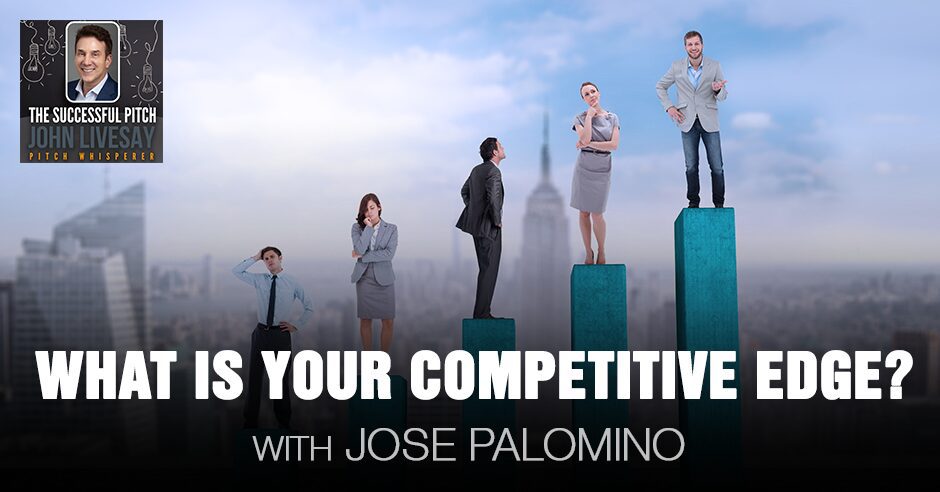
Do you know what your competitive edge is? It’s what sets you apart from your competitors and attracts customers. In this episode, Jose Palomino, CEO of Value Prop Interactive and expert in value proposition, defines what competitive edge and how you can determine what it is for your business! He gives tips on making the most of your operational advantages and turning them into customer magnets. Want to learn more? Jose also discusses The Competitive Edge Program, which walks people through designing, deploying, driving, and getting those incremental wins that set you apart—in less than 12 months. Find out more about Value Prop’s powerful new program and how it can help you win more business!
—
Listen to the podcast here
What Is Your Competitive Edge? With Jose Palomino
Do you know what your competitive edge is? If you want to get some insights on how to define it, then this episode with Jose Palomino, who’s an expert in value proposition, is for you. He said, “Not only do you have to show that you’re saving time and money but you have to show how you’re reducing the hassle of the whole experience as well as reducing the risk.” Enjoy the episode.
—
Our guest is Jose Palomino, who’s the CEO of Value Prop. He’s helped over 100 business-to-businesses unlock over $250 million in new growth. He’s got decades of experience helping these business-to-business owners work through and overcome their strategic marketing and sales challenges. He’s also the author of the foundational book Value Prop and host of The Revenue Throughput Podcast. He holds an MBA and teaches candidates strategic marketing management. Welcome to the show.
It’s great to be here, John. Thanks for inviting me.
Let’s go back to your own story of origin, Jose. You can go back to school, college or your youth. How did you get interested in business in general and specifically, finding your niche in B2B?
That’s a long story, so I’ll give you the very short version of it. I didn’t start out knowing I wanted to be in business. I wanted to be a comic book artist. I was a comic book collector. I started taking courses in some of the New York City-based where I was born and raised, art schools like Parsons and FIT to learn anatomy and things like that. I was doing that but meanwhile, I didn’t pay the rent or even buy a bag of chips. I have to figure something out. I started working doing whatever. It led to me working in back-office operations for a major brokerage house.
I had a real affinity for numbers, processes and working hard. I learned at the age of 20, 21, what it meant to bang out work if you had to do it. That became something where I said, “I will never be outworked.” I could be outsmarted maybe, but I won’t be outworked. Everyone wants to say it’s a four-hour workweek, this and that. The reality is most of successful people know how to work hard when they have to work hard. That journey took me into starting a business a couple of years later, notably in selling comics to collectors.
[bctt tweet=”Be innovative, indispensable, and inspirational.” username=”John_Livesay”]
Through that, I had to learn programming to build an inventory system on one of the first IBM PCs that were available. That’s how I got into technology and business entrepreneurship. Since that journey, I ended up mostly going into IT-based companies, ended up working as an analyst working for some large IT companies, including one very large computer manufacturer. That’s when I transitioned to sales and marketing. I moved into sales roles whilst carrying a bag as it were. I didn’t look back from there.
What’s interesting about your background to me, Jose, is you have toggled back and forth between sales and marketing. You were CMO, as well as being a sales director. I don’t see a lot of people doing both. They usually pick a lane and stick with it. Sometimes as you probably know, marketing and sales don’t get along so well at big companies. There is a lot of pointing of fingers. What a wonderful perspective you bring to your clients. What is the big myth that you think is out there those salespeople have about marketing and vice versa?
A lot of them are based on some facts. Maybe it’s not a myth but a real belief. Sales think that marketing is only concerned with aesthetics, the look of the brand, the material, stuff like that. You’ll hear statements like this, “They don’t get it.” Marketing’s thinking like, “We’ve given these guys and gals everything they could need to be successful. Why aren’t they putting points on the board?” You have this sense from both sides, especially those who are in large companies where those things get very siloed shortly. The reason we are not getting to the top of the mountain is because of the other guys.
Success has many fathers. If we’re kicking butt, then everybody’s happy, high fives all around. The stress points are always when things are a little bit not great and you have to figure that out. What’s changing is the move, especially in larger companies. The technology towards what’s being called account-based marketing will come downstream, which is account management for large accounts. They have to give it a new name and so on.
There’s going to be an increasing melding of those disciplines. Things that used to be seen as strictly marketing activities, salespeople have to be good at. The big change there, John, I see is this. Marketing by definition, has a longer time horizon as they look at things. They have to look at a 1-year, 3-year plan or maybe the 6-month plan if they incorporate things like event marketing and things like that. They have a schedule for the future.
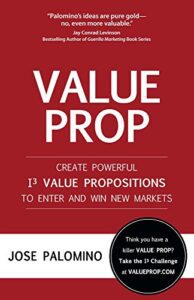
Competitive Edge: Value Prop
Your sales team, on the other hand, in a lot of organizations, have to live week by week. I’ve seen multibillion-dollar companies have a weekly stand and deliver calls on the pipeline. A salesperson is thinking, “I got to make this stuff happen now.” The marketing person is saying, “We have to make this thing happen this year.” That’s the disconnect. Until they understand that one feeds the other both ways, that’s when you have that separation. It’s a hard thing to crack.
I’ve worked with companies where within different sales divisions they’re siloed. Marketing is pulling their hair out saying, “Why aren’t we growing an existing client with another division but the other divisions have no clue what the other ones are doing? There are no even intros being made.” That’s B2B and law firms. It’s this lack of cross-selling and marketing. We don’t need to keep spending the same money if we already have a relationship with a client, a hospital or whatever the industry is. I see that as a big problem that I’m guessing you might have some ideas around solving.
It all comes down to this, especially sales, more so than marketing. Marketing folks with formal marketing titles like chief marketing officer, director of marketing, so on usually have some very small or no variable compensation in their package. It’s very negligible if it’s there at all. Gunning for raises is what you’re doing.
Sales is all about variable comp by and large, still in B2B. If you tell me there’s a sister division that has a great product that would be useful for my customer, the first question I’m going to ask because I’m carrying a bag is, “How will I get paid for that introduction?” “You got to be a good corporate citizen.” That’s fine. I agree. I should be a good corporate citizen.
Meanwhile, I tell my boss that when he’s hammering me to hit my goal, unless you’re going to give me a goal and align me to it financially, I’m incentive to ignore it no matter how well you tell it. I’ve seen bosses from the front of the room. “We’re going to bring the year synergy. This is a year we bring it all together. We’re going to deliver the total value to our customers.”
I say, “Yes, but your comp plan doesn’t reflect any of that.” Salespeople are always going to say, “You can tell me whatever you tell me but whatever the comp plan says is what I’m going to do.” In substantial, you want people to be good corporate citizens and high in integrity. Those are the things that you don’t pay for in a general sense.
This is the thing I always emphasize when I probably work with sales teams. In an average selling year, you have at most 220 selling days in a year, 55 selling days a quarter, 17 per month. It’s rough math. If you asked me to use up 2 or 3 of those 17 selling days in a month, you’re cutting into bone. Unless you’re going to give me some either quota relief on the other side say, “We need you to focus 20% of your time here,” reducing your quota, that’s never going to be the way it’s going to go. It goes the other way.
You’re not going to get the behaviors you think you should get. No amount of fist-pounding is going to get a few. You can try to browbeat people. You got to bring alignment and say, “What’s in it for you?” It is the question you have to answer for your customers but you have to answer that for your internal stakeholders as well.
Let’s bust another myth. I see a lot of sales management saying, “These reps are doing well. He or she killed it. They exceeded their quota. Let’s hire another salesperson and break that territory in half, then we’ll get even more.” The rep is furious. The myth is, “Let’s hire more salespeople to get more sales.” You say that’s not true. Tell us what you mean.
[bctt tweet=”Show your offer reduces hassle and risk.” username=”John_Livesay”]
Especially in the mid-market, it’s different if you’re talking about a company that routinely has 100 territory reps like billion-dollar companies. If you’re owner-led or in the mid-market, you’re a $10 million, $20million, maybe a $50 million company, maybe you have 8 sales reps. You are attracted to that kind of thinking because you’re thinking, “I don’t have to be a rocket scientist to say if I have 10 people and add 1 rep, that’s 10% growth. It should be.” The challenge I would say to that leadership team is this. If you hire the right or wrong person, you’re going to be into it for $100,000, $150,000 in costs, all of that, plus the possibility of deflating your top performers.
There are all these negative things that can happen but I’m not saying never hire a salesperson. The reason you’re looking to hire salespeople is because you’re having some struggles and you think you need to increase sales. You say, “I need to have more coverage.” Then I would say, “Take a look at your sales process first and the other moving parts of your sales continuum from the customer’s point of view.”
Are you sharply focused on your right target market? Have you thought through of your value proposition in the last year? Supply chains are still being stretched. That’s very different than what the world looked like years ago. Have you rethought your value proposition in that context? Have you thought through your lead generation? Things are changing. Things that work technique-wise, LinkedIn blasting don’t work anymore. Emails work differently. Trade shows as a strategy. Does your industry still have its trade show?
Until you ask those questions and get at, “Do I have my house in order?” It’s like your house is laid and being built. You say, “I’m going to add some carpenters to it.” Maybe it’s the plumbing that’s holding you up or the electrician. Maybe you’ve had bad weather and having another carpenter means another payroll. That isn’t going to get the house built any faster. You have to get to the root of it before you start designing solutions.

Competitive Edge: “What’s in it for you?” It is the question you have to answer for your customers, but you have to answer that for your internal stakeholders as well.
Also, are your current sales reps doing things the way you think they should have? You look at how they do things. Are they making customers happy? Last but not least is critical, especially where we are where supply chain and expectations are being all over the map. People don’t know what to expect. If you said yes to all of the above, are you delivering successfully on your promises as a company? That will unwind sales. That makes people that were loyal customers go back into the markets and say, “I got to find a different solution.” This happens time and again.
Adding a salesperson could be the exact right thing to do but not until you’ve checked off. It’s a few things, value prop, target market, your marketing programs, are they creating the leads for you? Are you delivering on your promises? Do you have a sales process? If you bring your sales team into a room with a whiteboard and you say, “Draw our process,” if they’re drawing like customer calls, we call back, make proposals, sell the deal, that’s not a sales process unless you’re purely transactional and you’re selling paperclips.
A lot of challenges that I hear lately in the marketplace, especially since the pandemic, in the healthcare industry, where pharmaceutical or medical equipment reps, talk to doctors between surgeries, especially if the rep is allowed in the surgery. Bought by the office, drop off some Starbucks and catch the doctor between patients, that’s gone. I don’t see it returning anytime fast.
These are people that have never been trained on how to formally request an appointment or they have to present on Zoom and not in person. There are all kinds of obstacles that people are having for the first time in their career. Do you have some insights into that? Do you see that happening with your clients?
Here’s the thing. Probably within the first six months of COVID becoming a real thing, from March of 2020 towards the fourth quarter of 2020, there was a sense among many people I talked to that when we get back to where we were. That isn’t happening and we see that with workers not wanting to go back to the office. I talked to one sales team that had huge success. They’ve embraced and leaned right into it. It’s all Zoom all the time. They were like a ten-person team. They saved $500,000 on their travel budget. It’s real money. It’s a big organization that scales.
[bctt tweet=”The reality is most of the successful people know how to work hard when they have to work hard.” username=”John_Livesay”]
Here’s the other thing. A lot of customers are saying like, “It’s okay. I don’t need to spend three hours entertaining somebody when we can have a half-hour call and get to the thing of it.” I’m not saying face-to-face doesn’t matter. Relationships matter. All those things matter. The reality is they mattered at the beginning of a relationship. They matter less over time. Have you ever seen the old Ed Sullivan show? There’s a lot less energy needed to keep the plates going.
You’ve got trust built up. If you’re delivering on your promises, you’re in good shape.
You don’t need to do all of that. I would say to that team, “Whatever it is that’s keeping you from what was normal to you years ago, go with a blank sheet of paper and say, ‘If I landed from Mars and I had to make a living doing this job, what would I say is possible within what I see with my eyes, not with my nostalgic eyes?’” Your eyes will get you in trouble. You’re hoping for something that may never come back.
Always think about it this way. Where are you now? This is very often overlooked, John, but where are your customers? What do they want? How do they want to be dealt with? That’s the thing you have to zero in on. How does the buyer want to buy? We can’t give a buyer a script and say, “When I say this, you say that,” if it were that easy.
The traditional way of a sales funnel is you reach out to somebody, develop a rapport, maybe set up a meeting to do some needs analysis or they send out an RFP that describes what the needs are. I’m hearing more often that clients are less willing to share what their needs are. It’s on the RFP or we’re interested to talk to you but we don’t want to spend any time sharing what our challenges are or our pain points. Is that the lack of time or is it not even a trend? What are your thoughts around that?
It is a very big trend and it depends on the category. For example, if an executive is looking to hire an executive coach, they’re going to open up and have a much more open dialogue because they want to see how they feel about that. That’s one example. Let’s say I’m buying a 3D printer for manufacturing. There are $300,000 machines available from three different manufacturers. My expectation is I can totally investigate, get the specs, see the testimonials, the machine and operation online before I talk to anybody. Further, I expect that a salesperson can look me up on LinkedIn. They can look up my company website and they should know.
Let’s cut to the chase is going to be a more common theme. You’ve hit on something very strong and true, John. Chit-chat is going to be far less. I know that people will say, “How are you going to build a relationship?” You build it through trust. Trust means that you say what you mean, you mean what you say and you deliver on what you promise. That’s what a buyer in an industrial B2B category is most looking for. “Can I count on you?”
From that, you earn the right to say, “I’m glad we got this 3D printer installed. There are some other applications that we’re finding some clients are having success with. Can I ask you a few questions around your situation to see maybe there’s something there that you can use and save 20% of production time?” All of a sudden, a person says, “Sure, because you made me look good.”

Competitive Edge: As much as sales veterans don’t like this, the buyer is increasingly at the wheel of the process.
As much as sales veterans don’t like this, the buyer is increasingly at the wheel of the process. They probably always were but we felt like we could do Jedi mind tricks. We could set up funnels. We’re running through people through stages and stuff. The buyer is saying, “No, I’m not having any of that.” They’re not playing along any longer. Sales teams that adapt to that reality will do well. Those that try to squeeze the buyer back into the nice, neat submarine of stages and stuff like that, you’re going to find a lot of kicking back.
You talk about getting back to some basics, which is making sure that the sales and the marketing messages fit the value proposition. Do you have an example of a company that has a great value prop and maybe one that didn’t? That would be helpful. We can talk about the confusion that can happen with marketing and sales don’t understand it.
I’ll give you two quick examples that might help frame the idea of what value proposition is. At the end of the day, value proposition is the idea that answers the question, “Why should anyone buy X from you at Y price?” It’s not the tagline. The tagline comes from a good value proposition. It’s the actual truth. I always say, “Stay true truth your business or your product line if you have multiple product lines.”
I had one client that delivered home heating oil. That’s a declining market. That’s existentially threatened. There’s nothing you could do about that. You can’t do anything to the oil itself. Automatic delivery of heating oil is done on the basis of a timeworn algorithm that all the oil companies use. It allows them to figure out when Bob McAllister is going to run out of oil out of his 285-gallon tank. There’s no Wi-Fi or anything like that. It’s all done through this algorithm as usage, weather, dewpoint, things like that.
This company, a client of mine, was having a lot of overtime runs because they had to do last-minute runs on a Saturday, so it costs a lot of money. They commissioned a superior algorithm. They spent a lot of money on it. I asked him about it. I said, “How’s that worked out?” He said, “We did 60,000 deliveries.” I said, “How many did you miss?” We’re supposed to be exact. He said, “9 over 60,000.” That’s like 99.999. I said, “Is anyone even close to you?” “No one’s even close.”
We started marketing a no run-out guarantee. We said, “If we let you run out of oil, we will fill the tank for free at our expense.” That’s a big thing. 285 gallons is $4 or $5 a gallon. It’s a lot of money. They were able to do that confidently. What ended up happening is they acquired, as a result, the higher end of that market. Even as the customer said, “I don’t want to tolerate any risk of me having a cold winter night where my oil company lets me run out of oil.” We were able to turn an operational advantage into a marketing and sales advantage.
[bctt tweet=”You have to get to the root of it before you start designing solutions. ” username=”John_Livesay”]
Another company in a totally different category, a pure B2B, made a machine that mixes powder. They’ve had it for years. There are lots of companies that do this, but they have unique technology and they are like the best-kept secret. The person who bought the company did very well, operationalizing, efficiencies and how they build a machine. We realized something talking through it. I said, “This machine does what the alternative technology would require three machines.” You need one to do the same thing and it does it like twice as fast. Those are huge advantages that they have to take forward.
They did a lot with video on their website. They promoted this one-stop-shop advantage and sure enough, the company has grown. It’s done very well. The principle of what makes a good value prop is a lot of things. In my book, Value Prop, I talk about I3. It says, “Is it innovative? Are you bringing something new to your market? Is it indispensable? Is it useful over time? Is it inspirational?” Is your execution something that somebody in the trade would go, “That’s pretty cool how they did that?”
Somebody not at a trade may find that very boring. That looks like steel. They don’t care but somebody in the trade would take it. I’d also say there are four things from a selling to marketing perspective that is essential for any value proposition to be effective in B2B. There are four things that buyers are always going to look for. “Can you save me time? Can you save me money or make me money? Can you reduce my hassle factor?” Especially in times like this, where everything seems like a drag and a hassle. “Can you reduce my risk?”
“I don’t know you and I’m buying you a 3D printer. I’ve never used your model before. What assurances do I have? What if you don’t perform as well as your demo say you do?” You have to look at those four things in your value proposition and your promises to the customer. You have to say, “This is how we’re going to save you time, money, hassle and risk.” If you can do that, you’re going to win a lot of business and at least get an at-bat.
What I love about that is most people are talking about saving time and money. If you’re the one that’s talking about personal issues like what keeps you up at night, the hassle factor is, “I can set it and forget it. I’m done. You’re in.” It’s all that kind of stuff because it’s an emotional buy even if it’s B2B. Those are some emotional solutions that you’re giving to someone. Is this making my life easier or harder?
We’re in the process of shopping for a new refrigerator. We had a built-in. It’s getting old, so we need to replace it. I said, “You’re going to take it out of my house?” They said, “We don’t do that.” I’m thinking like that’s like half the solution. What I want is the new refrigerator in the spot where the old one was. I don’t want to deal with the 250 pounds, all refrigerator, having to dispose it and call people up. Make sure that whatever you’re offering your customers is a complete answer to their question, not half of it. If their thing isn’t quite as good as yours but they solved my whole problem, they’re going to get the business.

Competitive Edge: Make sure that whatever you’re offering your customers, especially now, is a complete answer to their question, not half of it.
You were generous enough to offer a free gift, which is your book to the readers. What websites should people go to get the free book?
Our book has been on Amazon and still on Amazon in hard copy but if they want and I’m happy for them to have a PDF of the book Value Prop, it’s available at ValueProp.com/book. They can download a free copy of our foundational book for our programs Value Prop.
You’re also coming out with something new to give people a Competitive Edge because I’m always dealing with clients that say, “We feel like we’re drowning in a sea of sameness. Everyone sees this as a commodity. “Give us a little hint about what that is.
The Competitive Edge takes value prop to the next level. It’s saying this and it’s a powerful thought, especially in the mid-market, “Not every company is going to be able to create Apple.” They’re not going to be able to create the next Google. It’s reality. You’re a $20 million company making a small machine or apart. You’re not going to be the Apple.
Think about the Olympics. In the Olympics, the winner wins by a fraction of a second but they get the entire gold medal. They don’t get a fraction of the gold medal. They get the whole gold medal. In B2B, especially in the mid-market, when you win the deal, your competitor did not. They don’t make you share the deal.
If you lose, you might get a phone call that sounds like this, “You were close. We liked your proposal.” You try to tell that to your boss, “We were close but you can’t cash.” The Competitive Edge program walks people through how to get those incremental wins that set you apart at a very practical level in your day-to-day competition. To find out more about it, we have a nice page set up to describe the details of this program. It’s at ValueProp.com/edge.
I hear a lot of clients say, “We’re tired of coming in second place when we pitch against our competitors.” Unlike the Olympics, there’s no medal and money for second place. What a great way to frame. Let us all zoom out a little bit and figure out what is the value prop. Put yourself in the other person’s shoes. I know that this book, PDF and this additional edge will help a lot of people start closing more sales and get along with marketing better. Thank you so much, Jose.
It’s my pleasure, John. Thanks for having me.
Important Links
- Jose Palomino
- Value Prop
- The Revenue Throughput Podcast
- ValueProp.com/book
- ValueProp.com/edge
- Better Selling Through Storytelling Method Online Course
Wanna Host Your Own Podcast?
Click here to see how my friends at Podetize can help
Purchase John’s new book
John Livesay, The Pitch Whisperer
Share The Show
Did you enjoy the show? I’d love it if you subscribed today and left us a 5-star review!
- Click this link
- Click on the ‘Subscribe’ button below the artwork
- Go to the ‘Ratings and Reviews’ section
- Click on ‘Write a Review’
Love the show? Subscribe, rate, review, and share!
Join The Successful Pitch community today:
- JohnLivesay.com
- John Livesay Facebook
- John Livesay Twitter
- John Livesay LinkedIn
- John Livesay YouTube
Branding Secrets: Creating A Good Story With Jenny Fernandez
Posted by John Livesay in podcast | 0 comments

Your brand is what makes or breaks your business. That is why it is crucial to create one that speaks not only to you but also to your audience. In this episode, John Livesay talks with the global branding expert, disruptor, and innovator, Jenny Fernandez, about some innovative marketing techniques that will see your business’ growth. Sharing more branding secrets behind her success, Jenny lets us in on the crucial role storytelling plays when crafting one of your own. She talks about how stories humanize a brand and drive breakthrough ideas to improve the consumer journey. When creating one, it is important to put it through the lens of the consumer and not just you. Join in on this great conversation to learn more about how to create a good story, one that allows you to reach more and create a bigger impact.
—
Listen to the podcast here
Branding Secrets: Creating A Good Story With Jenny Fernandez
Our guest is Jenny Fernandez, who’s a global branding expert. She’s worked with such brands as Ritz Crackers, Oreo cookies and Trident gum. She shares stories of how she used innovative marketing techniques for each one.
—
Jenny is a global brand marketer, a disruptor and innovator driving business teams and organizational transformation to accelerate growth through consumer insights, strategy, media, social and digital marketing, and team empowerment. She has been a leader across many different categories, including CPG and entertainment. She’s working literally around the world from all over North America and Asia. She is a consumer obsessed storyteller. I love storytelling, that’s why I couldn’t wait to have her on. She’s passionate about brands and humanizing data to drive breakthrough ideas to improve the consumer journey. She’s a coach and advisor to business and marketing professionals and startup teams. She’s been a graduate school adjunct professor and she’s got all kinds of expertise in branding, building brands and targeting. Jenny, welcome to the show.
Thank you, John. Thank you for having me here.
We have a lot of mutual friends including the wonderful, Judy Robinett. I want to give a shout out to people who make these great introductions. To reinforce to all the people reading how important it is to continue to build your network so that people clearly understand who you help and what problem you solve. Even if they don’t need you, they can keep you in mind for people who do. With that being said, Jenny, why don’t you take us back to your own story of origin? You can go back to childhood, you can go back to when you were getting your MBA at Northwestern, wherever you’d like. How did you get interested in branding and all that?
I will share that I moved to New York, to the United States when I was twelve. I am from the Dominican Republic. As a little kid, I came to New York and I was impressed by the number of people that I’ve met and the diversity. I have become what I call a global citizen, somebody who’s interested in understanding what moves people, what drives them and knowing that it is an exchange. If you’re able to understand what they want, what they are looking for, then you’re able to deliver on that need. They can pay it back when you do need that back. That’s like what Judy mentioned in terms of driving value and delivering value so that you can get value back later on.
You came here at twelve and then suddenly you decided, “I’m going to go get my MBA in marketing.” You ended up working for Kraft Heinz Company for seven years. Tell us a little bit about what that was like and what lessons you learned there?
I ended up joining Kraft Foods after my graduation from business school from Kellogg School of Management. It was an amazing experience. It was all about people. I had a lot of great alums who introduced me to the school who had attended Kellogg as well. It was a dream job. Imagine being able to talk and market the brands that you grew up with like Oreo cookies and Ritz Crackers, it was amazing in joining that environment and working with agency partners that knew and were champions of the brand and knew how to create a story. They introduced me to the whole idea of storytelling and in being able to, first of all, understand the audience that you’re working with. Understanding the message they want to hear and how they want to hear, it was compelling.
[bctt tweet=”Be obsessed with telling stories to consumers.” username=”John_Livesay”]
Let’s talk about a couple of those brands since it’s a big part of many people’s childhoods, mine included. The Oreo cookie, dunking it in milk, taking it apart and licking off the cream-centered filling. I spoke at the Coca Cola summit for all the CMOs who happen to carry Coca Cola at the quick service restaurants like Domino’s Pizza, etc. I was sharing the stage with another gentleman, Cal Fussman. He spoke for fifteen minutes, I spoke for 30 minutes, then he closed it. He literally described it as, “We’re like an Oreo cookie. I’m the opening and the end, John is the creamy filling.” I thought that’s a brand that’s big in people’s minds that it can now be used as an analogy. I thought you’d love that little story on the Oreo cookie brand. When a brand has been around so long, it becomes a challenge to come up with a fresh story while staying true to its origins. Tell us what you did on the Oreo cookie?
I helped manage the Oreo brand in the Asia Pacific. I moved to China back in 2012. I was managing thirteen countries including China, Southeast Asia, Japan, Korea and Australia. What was amazing is that every market was in a different life stage for the brand. The product had been in China for twenty years but it was only a four-year-old product in India. It was a different story that we needed to tell. One of the challenges that we have faced in the brand as we were looking to make it a global brand was, we needed to celebrate the 100 year anniversary for Oreo. Can you imagine how do you celebrate 100 years when the brand is just 20 or 4 years old? We went back to thinking, what is it that people love about the brand and what is it in people that drive them? We had this idea of celebration. Who doesn’t love a birthday? We said, “Join us in celebrating and join us in communicating your celebration of Oreo.” We got so much content and many beautiful videos. It was a great program put together with information from the consumer. That was amazing.
That’s the a-ha moment, everybody who’s reading. When you’re going to promote something, you need to put it through the lens of the consumer and not just you. I heard Geoff Cottrill, who had been the CMO of Converse, and they were having an anniversary and talking to their target market. He said, “What do you think of that?” I said, “It makes you seem old. Unless there’s something in it for us, why do we care, even around 100 years or whatever it was?” The fact that it becomes a birthday celebration and show us how you’re celebrating and having people submit social media content is great. That leads me right to the question, what do you think makes a good story? When you’re looking at all these contents and you’re deciding, “Of all these stories that we’re hearing, which ones are we going to promote on our social media?” What makes a good story, whether you’re creating it for the brand or you’re getting a story from your consumer?
It’s understanding what is the universal DNA that brings all consumers together. If you understand how they relate to the brand, then you can cut across cultures, across markets, across the social status. It’s about the humanity in us and what are they seeing in the brand.
Storytelling tags at the heartstrings. It transcends class and culture when we all relate to it. We know what it’s like to have a birthday, we know what it’s like to be happy, etc. Do you have a story you can share on what you did on Ritz Crackers, since that’s another big brand that you worked on and people know?
For Ritz, it was more about innovation. Ritz is a product that consumers use almost like a bread replacement. It’s a little sandwich. They create special recipes. They took the brand in a different place. We wanted Ritz to be a hand to mouth product and snack, but they decided to use it with cheese, with other more substantial ingredients. I was working in breakthrough innovation team and I wanted to leverage technology, the pop-up copying technology, to create a product that was going to be light, airy and hand-to-mouth eating, almost like a chip that we could attract younger consumers that were more on the go and wanted convenience products. They just wanted to put their hands in the bag and start eating. That was my main focus.

Branding Secrets: PR has become more and more a big powerful tool for startups to generate interest, not only from consumers but also from investors and retailers.
I used to eat Ritz Crackers with peanut butter. I don’t know if that’s just me or if other people did that too. Let’s talk about what your definition of innovation is and how that relates to brand marketing. If you’re trying to reach a younger market, how do you reach them in an innovative way? Let’s do Ritz as a story. Typically, marketing sits in scenarios where you give a brief for people who haven’t worked in this and say, “Here’s our target market. Here’s the problem we’re trying to solve. Either they’re not using us for snacking, they don’t know about us, we’re not on their radar or the marketing channel we’re using isn’t reaching them.” What did you do to be innovative to reach people?
If you don’t mind, I’ll talk about a different brand. I was working on Trident Gum. The gum business was interesting because we hadn’t spoken to an entire generation. We were trying to use product innovation in a way that wasn’t true to the brand. We were doing dessert flavors and trying to find replacements for sweet snacks and chocolates through our gum. That’s not why the consumer bought our brand. The consumers told us, “We want Trident because it is functional, because it’s going to clean my teeth.” Do you remember the commercial four out of five?
Yes, recommended. It’s not a substitute for a piece of cake or a cookie.
It’s about making you feel confident than when you need a clean mouthfeel. You are going to have one. We went back to basics and we communicated and partnered with the women’s soccer team for the World Cup. That was an amazing partnership because we were leveraging another brand, the soccer brand that talked to the same consumer we wanted to reach again. When you do a brand partnership like that, you’re basically borrowing equity.
People think fresh breath, you want to be having that for kissing. You went a completely different way around confidence and women who are playing a sport. It’s not the traditional, “This woman is concerned about her fresh breath for a kiss. These are women who are wanting to be healthy and confident. We’re tapping into that energy,” which is completely different. That’s a great example of innovation. Do you have any other stories of co-branding? That particular topic fascinates me where brands borrow the equity of another brand. It makes it a win-win for both. If you have any other stories of that, I’d love to hear them.
I’ll go back to Oreo. We did it an entire global partnership with Paramount, where we were working with Transformers 4, the movie. It was controversial internally because people thought, “Why do you want to do a brand that is about fighting and wars in space with a wholesome cookie?” Frankly, if you think back to the bigger picture, Transformers the movie came years ago. That was the origin of that movie. The kids that grew up watching transformers are the parents who are bringing their kids now. It’s a full circle. It was perfect because it’s about understanding who the consumer is. It catered to the entire family. The teenagers in the US that bought all the stuff were loving the movie, so did the moms who wanted to bring their young kids and have all their products that were more sensible within the Oreo brand. It allowed us to have an entire partnership globally that every market can get behind. Talk about the power of big and small, when you’re able to bring all of the markets within one brand and have a great program that returns on investments.
[bctt tweet=”If you understand how consumers relate to the brand, then you can cut across cultures, markets, and social status. ” username=”John_Livesay”]
You’re also involved in the startup world. Tell us a little bit about that and what advice you have for people who are starting a brand and looking for funding. What do they need to do to make sure that they get funding from investors in terms of branding?
I have a great interest in the startup world. You love coaching, I’m sure. Marshall Goldsmith has said, “What got you here will not get you there.” The skillset and the grit that somebody has to build their own business is different from the skillsets that they need in order to scale it up. When you need to level up yourself on your business, you need to be able to go to the biggest distributors, the big retailers like Target or Walmart and present a big pitch and present their case and be able to say, “Why am I going to invest in you and bring you in-house?” It all goes back to when you have a bigger decision to make on a bigger scale. You have to have a great understanding of who your consumer is. What is your true value proposition and how you differentiate versus your competition so that you can make a case for that?
The traditional way of getting into these stores was first, how many stores do I get tested in? Where on the shelf, am I? Am I at the bottom, the middle, or the top? Now with digital, it becomes a whole another way of branding. Can you speak to that? You need both channels, I’m assuming. You’re going to need to be sold in the grocery stores, in the Walmarts of the world. You also need to have some online presence or even beyond Amazon at least.
Direct to consumer is an amazing channel. You can have your own media. You have your own website. If you can partner with the likes of Amazon, you’re able to be where the eyeballs are. You don’t have to attract consumers to you. The consumers are already there. It’s great to have that kind of partnership. You can leverage social media and paid media to generate a lot of excitement about your brand. PR has become more and more a big powerful tool for startups to generate interest, not only from consumers but also from investors and retailers.
Let’s talk about PR because I think that’s an overlooked nugget. If you do it right, unlike the advertising which you have to pay for, it can be great on a pitch deck to give credibility and some social proof that you’ve been covered in Fortune or Inc. or whatever it is. What suggestions do you have for people? It’s pitching in a different way. What lessons have you experienced? I can certainly share mine but I’d love to hear yours of what it takes to get a journalist interested in you? Is it a sound bite? Is it thinking about it in terms of what’s interesting to their readers versus them trying to sell their product? What are your thoughts on how does a startup gets good PR?
There are two different ways or avenues that a startup can pursue. One is having a great founder story. That can be a way for you to position yourself as a founder, as somebody who is an expert in the field, somebody who’s innovative and creative, and somebody who has something valuable to say. I would definitely recommend founders to start building an amazingly compelling story. They can put it on their website. They can send as a PR kit to reporters. For themselves, to get themselves into conferences so that they can start talking about their business. They can start building personal brands. That’s a great way to have a PR angle.

Branding Secrets: You don’t have to be the best and have the best product, but you have to outlast your competition.
Another one would be about the actual product or service that they’re delivering. For that, it has to have a good anchor. They want to talk about innovation that’s coming up and how their value proposition is leading edge. They have the ability to speak to reporters or speak to magazines and tell them why their business is leading in that area. They can do that proactively either by hiring an agency, but if they want to go bootstrapping, anything from HARO, Help A Reporter Out. They have their own media kit and article to start creating free valuable media on Medium or Thrive to have the ability to create a sexy story that talks about why their product or service is differentiated.
Do you have an example or a story of someone you’ve consulted with that has done a good job of this?
Not somebody that I consulted, but a friend and a guest speaker to one of my classes at NYU, this is Ju Rhyu. She’s the CEO of Hero Cosmetics, which is a Korean patch that you use to heal acne. She has an amazing story. She was visiting Korea for vacation, and she had a bit of a breakout. She found these amazing products that she had never been exposed to in the US. She thought, “How can we not have this?” She decided to leave Corporate America and go on her own and bring that back. She started sending out these PR kits and working with a small bootstrap agency to create a message and to showcase why her product was differentiated. You can have the unveiling of those boxes where you see the product and you try it out. Getting influencers is a great way to do so. You can show the consumer how does it work and why is it effective. You can have a brand ambassador talk about your product.
One of the tips I’d love to leave everyone who’s reading this with is work on coming up with a sound bite because the media loves sound bites as a hook when you’re being interviewed either on camera or for an article. One that’s worked well for me is, “Are you stuck in the friend zone at work?” Both Fortune and Inc. interviewed me around that question because it grabs your brain. You’re like, “I know what the friend zone is in dating. What does it look like to be in the friend zone at work?” Three signs you’re in it and three signs to get out. It can be that basic but it pulls people into the article, then I quote me as the author that is selling through storytelling and a sales keynote speaker who’s helping people craft a story.
A lot of people in sales have been stuck in the friend zone at work with clients. It all ties together in that way. Having your founder’s story is important to take people on a journey that answers two big questions, which is why you and why now? When you have those things in a PR pitch, it also pulls in the reporters. Remember, the press is always concerned about, why now? It’s all about what’s going on now. You need to have that as part of your overall messaging. It’s the same thing when you’re doing a call to actions with consumers. Why now? Why do you need to get an Oreo cookie to celebrate our birthday or your own birthday, whatever it is? What’s next for you, Jenny?
What I’m looking to do is continue to partner with entrepreneurs that I can help them scale up their business, scale up their careers. Something that I tell a lot of them is you don’t have to be the best. You don’t have to have the best product but you have to outlast your competition.
[bctt tweet=”The skillset and the grit that somebody has to build their own business is different from the skillsets they need to scale it up. ” username=”John_Livesay”]
It’s like the TV show Survivor.
That’s right. At the end of the day, it’s not about being first to market. It’s about delivering great value and a great product that answers the consumer need. This is what gets to the crux of it. You have to have a great value proposition. You can communicate and that can be accessed by consumers. That’s why both direct to consumer marketing and getting distribution in big retailers is the way not only to provide that access but even to amp up your marketing.
Any last thought, quote or book you’d like to recommend?
There are a couple of books that I would love to recommend. One is Marshall Goldsmith’s What Got You Here Won’t Get You There. I do believe there is a sense of coaching and growth mindset that all of us need to have in order to scale up and level up our careers and businesses. That’s something I recommend to everyone. Judy Robinett with her networking book, because you have to have value to add to the networking mindset. One of the experiences and the questions that I ask my entrepreneurs and the people I work with is, “Do you feel a little dirty after going to networking events?” Most people do because it becomes a power struggle where you don’t have the upper hand. If you wait to network until you need something, you’re too late.
Judy’s books, it’s How To Be A Power Connector and her new one, Crack The Funding Code. I feel the same way about selling. Nobody wants to be pushy. The joy of becoming a storyteller is that you pull people in instead of pushing. How can people find you, Jenny?
Everybody can find me on social media, on LinkedIn and Twitter and on my website, JennyMFernandez.com. You can find me there as well.
Thank you so much for being such an insightful guest and sharing these stories of specific brands that we all know and love, and what you’ve been able to do around the world. I can’t wait to see what you do next.
Thank you so much, John. I appreciate it.
Important Links
- Jenny Fernandez
- Judy Robinett
- Hero Cosmetics
- What Got You Here Won’t Get You There
- How To Be A Power Connector
- Crack The Funding Code
- LinkedIn – Jenny M Fernandez
- Twitter – Jenny Fernandez
- Better Selling Through Storytelling Method Online Course
Wanna Host Your Own Podcast?
Click here to see how my friends at Podetize can help
Purchase John’s new book
John Livesay, The Pitch Whisperer
Share The Show
Did you enjoy the show? I’d love it if you subscribed today and left us a 5-star review!
- Click this link
- Click on the ‘Subscribe’ button below the artwork
- Go to the ‘Ratings and Reviews’ section
- Click on ‘Write a Review’
Love the show? Subscribe, rate, review, and share!
Join The Successful Pitch community today:
- JohnLivesay.com
- John Livesay Facebook
- John Livesay Twitter
- John Livesay LinkedIn
- John Livesay YouTube
The SLAM – Startup Launch Assistance Map With Jon Warner
Posted by John Livesay in podcast | 0 comments

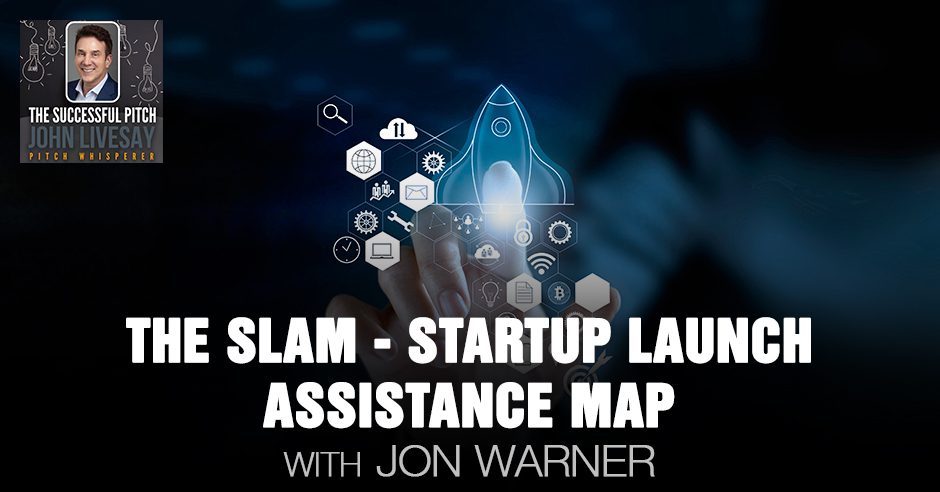
Everyone dreams big, no matter how simple it is. When building a startup business, you already have success in mind. The question is do you know how to bring that success from your head into reality? Jon Warner, the CEO of Silver Moonshots and author of more than 40 books, talks about how to increase the chances of launching a successful startup business. He shares in detail the steps in how to build a strong foundation in the early stages of your business as mentioned in his book SLAM. He conveys the importance of narrowing your niche and understanding the needs of your target audience as one of the first steps you should be doing.
—
Listen to the podcast here
The SLAM – Startup Launch Assistance Map With Jon Warner
Our guest is a five-time company CEO, Jon Warner. He’s a widely respected entrepreneur, expert, and mentor. He’s founded and led three startups, one was a failure, one that did not trouble the score, and one successful exit. He’s got the gamut of experiences. Jon’s career started in the corporate world with air products, working in the US and across Europe before joining ExxonMobil. At Exxon, Jon worked in the UK, Australia, Nigeria, and he ended his career there as a deputy CEO.
Following his several years in the corporate world, Jon founded and grew a management consulting business called the Worldwide Center for Organizational Development, which has had over twenty people carrying out a wide range of strategy assignments for all kinds of companies. He was also a founder and CEO of two other startups, a digital publishing company and a bill pay and payments software platform that operated globally. Since his exit from the latter, he’s been working California-based to mentor and invest in disruptive startup companies, especially in the area of technology, deployment, healthcare and aging tech in particular.
He’s now the CEO of Silver Moonshots, a research organization and virtual incubator for startups focused on a 50-plus population which is growing. Jon is a noted speaker around the world. He lectures on entrepreneurship. He’s a prolific author. He has a book called SLAM. There are also a lot of things about GRAND SLAM in there with all kinds of fun, clever things. He’s a graduate of the UK’s top Warwick University. Jon, welcome to the show.
Thank you, John. It’s good to be here.
Let’s start at your own personal story of origin. You can go back as far as you want to university or even as a kid. Did you always know you wanted to be an entrepreneur?
I did. I quickly got into doing anything I could to get out of the house and then earn an extra buck. Early on, that was delivering the newspapers in the days when that was possible to wash other people’s cars and various other things. I liked earning money that I’d generated through my effort. It got a little light switched on pretty early for me.
[bctt tweet=”Do you have a side hustle? Who should be on your team? What is the unmet need you solve?” username=”John_Livesay”]
We have this image of going to school. You have a PhD in Psychology of Neuroscience. Were any of the people walking around in the capes as we see on Harry Potter?
Not quite. That might get a bit of fictionalizing going on there.
You’ve written this great book called SLAM. Who do you think is going to benefit from reading this?
There are a number of people. The broad category is entrepreneurship. It’s anyone who’s interested in becoming an entrepreneur, is an entrepreneur. That’s the broad category. The reason I wrote it however is there’s a subcategory within it I particularly liked. That is people who’ve got side hustles, people who aren’t necessarily working full-time on entrepreneurship or their idea but would like to go and get that bigger, faster, stronger if they could, and maybe they didn’t have the roadmap for that to happen. That was who was in my mind when I was putting that book together.
Everyone’s clear that the word SLAM is a fun acronym. Do you want to tell everybody what that stands for?
The whole process which the book revolves around is the Startup Launch Assistance Map and that spells the word SLAM. What it is there to do is to support that whole process of exploration as you try and validate your startup idea. It encompasses a second acronym in terms of the way the process works, and you have to do them sequentially. Once you’ve gone through the validation phases, there are eight steps in there, you flip it over and you start thinking about execution. It’s an acronym called GRAND. On that basis, you are going to another eight steps to make sure that you get to where you need to go, which is growth and traction fundamentally.

Launching Successful Startups: It’s important to create the right team, the people that do the bits of the work and make you stand out and shine.
The interesting thing about the concept of a GRAND SLAM is you say start with SLAM and then go to GRAND. I thought that was a clever positioning there. Let’s apply some of these steps from SLAM since we start with SLAM into a side hustle of so many people want to be a speaker. I know a lot of people that have their own consulting agency or they’re running a digital marketing company, or they’ve had experiences as entrepreneurs and founders of themselves, or they’re maybe professors. There are lots of different people who have expertise. They have a main job, but they also want to be a speaker and maybe become a full-time speaker. In order to do that, you have to have speaking as a side hustle.
I know when I was working full-time at Condé Nast, I’ve started my speaking career several years ago where I would speak to some of the advertisers that I was responsible for getting as an added value perk. I would speak to their sales teams, whether it was a car company or a fashion or jewelry company that was advertising with my brand. I would say, “I’m going to train your salespeople on how to be better salespeople. There was run the ad to get the traffic and the dealership and then let me come speak to your salespeople about how to close more sales.” That’s how I started it as a side hustle. I love to use that lens. The first thing you talk about in SLAM and this is important for anybody who wants to be a speaker as well is, “What’s the unmet need? What’s my unique message that somebody would even want to have me come speak about?” Can you address that, Jon, on your experience of how important that is?
It’s crucial and it’s probably the most important step to get right and take your time doing so. Step one, any entrepreneurship venture would be to go and uncover that unmet need with the target audience that you’re aiming at. What I see a lot of entrepreneurs do is thinking, “I’m going to be selling ultimately to the whole world, so who cares? I’m going to be like Facebook. This is going to be huge. Everyone’s going to be the path to my door.” That’s not how it happens.
Even Facebook started in one university with first years in that university. You need to establish a beachhead of customers who have a need that you can solve for. In the speaking realm, that’s about thinking about what people want to hear about, what do they hear from me about, my topic, and how much it’s going to resonate with that beachhead market is something you want to dig into. The best way to go and do that is going and talk to a few people and find out who is likely to be that audience who’s got their hair on fire about an issue and expertise on.
I always like to remind everybody that Amazon just sold books first before selling everything under the planet and got a good concept there. If you personally had experienced the problem, whether you’re a speaker or not and you have this is the problem I know, I always like to say, “The better you understand the problem, the better you have the solution both for your customers and investors.” As a speaker, if you’ve been in the shoes of your audience, not only does that establish credibility and rapport, but it goes to this first point of SLAM which is the unmet need. One of the things that might be helpful for the readers is an example of that. I’ll give people mine and then I’d love for you to contribute one that you might have thought of that’s not necessarily in the speaker world but something you’ve dealt with your broad base of experience. The way I position what I talk about is that the old way doesn’t work anymore of selling and the new way is this. That framework can work for almost anything and it pulls people in.
I say, “The old way of selling of just pushing out a bunch of information or throwing up a bunch of stuff against the wall and hoping something sticks isn’t going to be successful anymore. The new way is instead of pushing, you become a storyteller who pulls people in and makes you become magnetic.” People instantly go, “This is something I might want to know about and have a speaker come to talk about, because it’s so clear of what the problem is.” I love your feedback on when you paint that picture if the old way doesn’t work anymore, as you said hair on fire, so what are you going to do?
[bctt tweet=”Anyone who’s interested in becoming an entrepreneur is an entrepreneur.” username=”John_Livesay”]
What I’d like to do, John, is unpack that because you, as The Pitch Whisperer, are doing something even cleverer than the way you’ve described it. Let me tell you how clever you were. What you did is you recognize that the entire market of getting out there and speaking was enormous. You immediately narrowed it down and said, “People need to pitch the things. They need to pitch for something. It might be pitching for a promotion. It might be pitching for a pay rise.” In your case, you went fairly all-in on pitching for investments and saying, “In that room, there are people who need to get money and it’s a special relationship.” You need to tell the story to investors as a beachhead market so that they will listen and the product that you are supplying is going to be exciting to the people listening to that pitch.
What you’re doing is daring them to make that presentation in a story-oriented way. What you did was gone cleverly in my opinion into the unmet need by slicing the marketplace into a specific audience. A customer persona people could imagine and say, “I’m going to go out and talk in that area, write books in that area, talk about it on my podcast.” In so doing, you allowed yourself to dominate that segment. That’s the key. What you’ve then described is the way you now delivered on the product side of that, which is step three, because you are now adding unique value in terms of giving people a way of making that happen so you’ve become top of line as a guy who can help you while I’m pitching for investment.
What’s interesting referencing the Amazon example again is once I had that beachhead of investors and founders that I’ve helped get funding, I’ve now broadened it to companies like Honeywell or Coca-Cola. Even Redfin, which is a tech company disrupting real estate bringing me in as the sales keynote speaker to show them a new way of selling, because of my experience selling media for Condé Nast. I’ve been in their shoes. I know what it’s like to have a quota. I know what it’s like to be seen as a commodity. I know what it’s like to feel burnt out. Here’s the solution that works for me and it can work for you if you become a storyteller, X, Y and Z.
Those double-click of unmet needs for one market and then expanding it beyond others. What’s interesting for people to hear because whether you’re reading this and you’re a startup pitching an investor to get your startup funded or are equally important if not more so. As you know, Jon, startups love to see customers paying for something you’ve created to make sure there’s some proof of concept that you talk about, is one of the key value propositions in SLAM. You need to be able not just to sell your product to investors but sell it to a customer who’s going to pay for it.
When I was being interviewed and this will happen to everybody, it’s typically between you and in my case, two other speakers or if you’re the founder pitching an investor, it’s between you and all the other investors or the other founders pitching that one investor. They said, “I was up to speak to an executive search firm.” They said, “Have you spoken to other people in our industry before?” That’s a lot of people, especially if you’re trying to grow your business, so that objection comes up a lot. There’s some real value here of how to handle that that you talked about in SLAM.
The way I handled it was I said, “I haven’t spoken exactly to the executive search firm industry which has to pitch themselves to get new clients to find their next CEO.” I have spoken to another industry that has a similar business model to what you have which in my case was Gensler, an architecture firm and they have people who specialize in practice areas like you do. They have to go up against two other firms for an hour and pitch. They weren’t telling stories. They were presenting the designs and you are going in there. When you double-click, I said, “What’s the biggest challenge you have when you have that one-hour pitch?” This is so important to take away from what you said on this unmet need. Sometimes, people don’t even know what it is, but if you can identify it for them and then show your solution, Jon, that’s when your magic kicks in.

Launching Successful Startups: Once you’ve determined your value proposition is unique and different, you need to corroborate all of that.
One of the other things to add John to that is that the secret here is and it’s counterintuitive by having at least initially a narrow beachhead so you go out and maybe you help people to go and pitch to seed investors for example. That’s an incredibly narrow niche. You credential yourself as being able to deliver your value proposition so your ability to go and tell a story, to go and get people to cross the river as you often like to say, get to the other side. When you do that, people recognize you can jump to other segments because you’ve already proven you can dominate that one segment. They then buy it. You can add segment after segment and before you know it, you are the person who does pitching well in whatever circumstance. That’s what’s happened to you for several years.
We had an example of talking to the CEO of DHR International, this executive search firm. He said, “When it’s between two other firms and us, we always ask if we can be the last.” Research has shown that whoever goes last typically is more memorable. However, here’s the unmet need that you talked about, Jon. You can’t control that. It’s up to them what order you go in. When I identified that as an unmet need, we might ask to go last. We can’t control it. We hope we do so it increases our chances of being memorable. The real problem is you need to be memorable and you can’t depend on what order you go in. What you can control is telling a story that makes you memorable and when you do that, no matter what you’re pitching, you could be first and you set the bar. That’s why they ended up hiring me when he understood how I was solving that for his audience. The book SLAM says, “That’s your core foundation to getting a yes, whether it’s funding clients or pulling in people on your team,” which is the second part of SLAM.
Let’s talk about the importance of team and if you don’t mind, I’d also like to add in the importance of culture that goes with it which I know is a little bit of what you talked about in the second part of the GRAND elements. I want your opinion here, Jon, on how important is it for you to create a team even at the very early stages that understand the culture you’re creating so that they know if it’s a fit for them or not.
The keyword here for me is the right team. Once you’ve uncovered the unmet need and the beachhead market that’s got their hair on fire about that need, your job is to think who it that consoled for those problems is. Clearly, the founder is the main person if you’re a speaker. If it’s a one-person band, it’s you, but you’ve got to think about what else that sector needs for me by way of expertise, by way of production values, by way of the way communications occur, distribution of information before and afterward. Even a speaker will have a fractional team around them, an army of people that might do bits of the work. They make you stand out and shine. In a company, you’re going to be recruiting people progressively and what you want to do early on is shape that team so that its culture is completely consistent with what you’re trying to deliver by way of value.
The team is the old adage that a lot of people on the investment side invest in the jockey and not the horse. The jockey is always the team and the quality of that team and it’s not a single founder or the person who had the idea. It’s the people they surround themselves with, both advisory and direct, fractional, full-time, part-time, and all the rest of it. That’s why it’s step two on the SLAM map. It is almost as important as covering that unmet need.
Even as a speaker, I’ve had to find people that I feel are the best team to be my speaking agents or to create the website and the design of what my brand is, even down to the color choices. If I don’t have a clear sense of who I am, what I stand for, what I want my brand to stand for, how can I possibly explain it to the people on my team? That’s what its visionary skills, painting that picture keeps going back to SLAM number one. Here’s who I helped, here’s the problem myself, and because of this, here’s the feeling I want when people go to my website or when you’re looking for an agent.
[bctt tweet=”Entrepreneurship is a venture where you uncover the unmet needs of your target audience.” username=”John_Livesay”]
What’s your beachhead as you say, Jon? I get very specific with them. I’m like, “Here are my five specialties, technology, healthcare, real estate, automotive, and design.” Anything as a sales team in those areas that’s who you pitch me to. Think how much easier I made it for the speaking agent to know exactly what to put me up against, and who to recommend. Otherwise, it’s like you’re a sales keynote speaker. Do you know how many there are? What’s your hook? What’s your niche? All those things are blurry until you can define it that short and crisp. That’s what SLAM helps people do.
What you’re wrapping around that is having a clear vision in terms of what you’re doing, in terms of meeting that unmet need with the product you want to supply. I like Peter Thiel’s statement in his book Zero to One because you also want to get people who can take a step to change the difference in terms of that beachhead market issue. They do get a result. If you’re pitching for investment, what’s a great result? I got investment or at least I shortened the time it took me to get the investment I needed. If you’re delivering that, people beat a path to your door so your cost of acquisition of new clients goes down as a result of that.
For example, to have those stories ready to go at a moment’s notice, whether it’s your elevator pitch or you’re in the call and it’s between you and two other speakers or you and some other investors, or you and two other clients that you’re pitching. I will say, “That’s the value of storytelling. Would you like to hear the story of how I helped this architecture firm win a billion-dollar airport renovation?” That’s the value proposition. You already know the outcome. Here’s the story that you can then use to win your next big pitch for the business. We’ve got the unmet needs, the team, and now the value prop then we want to test this out and the social proof is great for that.
What you’ve got in steps one, two, and three which is on the diagram of the SLAM map and the book elucidates is the rock on which you’re going to go and build your speaker career or your startup or whatever it might be, a side hustle. Your value proposition is unique and different, but you do want to corroborate all of that. Step four is the corroboration step and it’s a pivot point. It’s almost a fulcrum around which the rest of the map operates. You’re constantly testing with your audience whoever they may be that the assumptions and the beliefs that you have about what can be successful are true in their words and their eyes, not you guessing. It’s corroborated by the target customer you’re aiming at, that they are doing the corroboration. The more you do that, the more you do risk your startup and the more attractive you become to new customers and indeed investors you want to come and invest in you.
Here’s an example of that. The irony of me having to sell myself to get hired, to be the speaker, to DHR International, the executive search firm, was that after I was giving my keynote, I also did a workshop for them. They would say, “There are competitors, other search firms that have placed more executives in our particular niche.” How do we handle that objection? I tell them the exact same story of how I connected the dots from an architecture firm using the same business model to their business model and what other companies have you worked with that you could do that front to answer that objection. They went, “Oh.” The test was that’s how I’m in front of you. I know this works and you can use this too so that’s where it becomes great.
The next part of what you talked about in SLAM is the market size. I’m always talking to people about putting their own roadmap together in terms of invisible to irresistible and all the steps along that ladder. You can’t keep working with your core clients because things happen. People leave. Businesses get disruptive like Disney buying Fox. Suddenly, Fox is not hiring a lot of people and if you’re in charge of finding executives for Fox and you haven’t been growing your market in other areas, you’re in trouble. Speak a little bit about what somebody should be looking at in terms of market size. What can I do to see how big this could get or how do I scale something?

Launching Successful Startups: Podcast is an excellent example of content strategy where you can leave a legacy and people can access it through time.
It’s all about scale trajectory and velocity in this section. What you’re doing is saying, “How big is the pond I’m fishing in and is it going to be big enough to give me the velocity, the growth, or the traction that I need?” Your beachhead market might take you quite a long way, but it might not stay the same. Things change in the world of log so what’s going to be your approach and how big is that market? In some cases, the pond is not going to be big enough and it’s not going to grow fast enough.
You might have to look beyond this, and your job is to measure this. Your ambition might be different. You might want to say, “I’m in a lifestyle business. I’m a lifestyle speaker. I’m more than happy doing twenty gigs around the country may be and that’s enough for me.” If you want to go and be Anthony Robbins and you want to go and do a multimillion-dollar business out of all of this in books and promos and everything else, you’re going to have to think about the market in a different way. The key is to have metrics around that that are rigorous so you know where you’re heading, and you can do risk at that side of it as well in terms of that whole analogy of fishing in the pond.
You talk about in SLAM the next thing is how to reach these people. Are you going to use Instagram or Facebook or something else completely different? One of the things is this concept of lateral thinking and not doing what everybody else is doing to reach your target.
You can perhaps get the clue that even in the price that you’ve taken, you should have started forming a view of where beachhead mark you’re aiming at, at least initially, hang out. What do they pay attention to? Are they reading blogs? Are they reading emails? Can you reach them by email? Is it social media or which platform within it? Do they hang out at trade shows? There are a number of channels. You can’t be in all of them. You don’t have the bandwidth in time and you don’t have the money usually on the tip to do all of them. You’ve got to be careful about the channels and make sure they’re consistent with where people pay attention and then you want to go and put your budget together so that you can test those channels on an agile basis. Go to market is a practical way of saying, “How am I going to get the message to the particular audience that I found in the unmet need section right back at step one?”
One of the things I’ve done that I want to give as an example for people to start putting their thinking caps on is using a podcast as a marketing tool. One of the things I’ve done is there are quite a few speaking bureaus out there. Some you have to be exclusive with but a lot of them you do not. In other words, as a speaker you can be represented by multiple bureaus and they each have the different clients that they pitch different speakers to. However, you can imagine how many speakers are pitching them to represent them all the time.
I was fortunate enough to get a gentleman named Bernie Swain who wrote a book on entrepreneurship and started the Washington Speakers Bureau which represents almost all the former presidents including going back as far as Reagan. He reached out to me because I had created a podcast that had value and he wanted to be on it. He didn’t even know I was interested in the speaking business. I did him a favor by having him promote his book on the show which then gave me that first leverage so I could go to other speaking bureaus, many of whom based their business model on his and say, “Would you like to be on my podcast to tell your story of how you started your entrepreneurial bureau? By the way, one of the leaders in your field, Bernie Swain, has been on my show.”
[bctt tweet=”Always think of how to add value to your customer because their pain is costing them.” username=”John_Livesay”]
That was relatively easy. Suddenly I have something of value to offer them. During that interview, they get to like and know me and then many of them, almost all of them I believe have said, “We want to represent you now.” If I call them cold and said, “Let me tell you about me,” without giving anything, it’s not the easiest thing to do like an actor getting represented by an agent. I wanted to throw that out there as an example of lateral thinking of what is that I can do that I don’t see other speakers doing well. Many speakers that have a podcast, some do like Tim Ferriss, but are they using it to get bureau agents to represent them? He doesn’t need to but somebody at my level, like looking at the landscapers you talk about in SLAM and figuring out what is it I could do with the resources I have and the way that no one else is doing and then that comes to life.
It’s an excellent example. In fact, it’s an example of a content strategy but not traditionally most people would think about blogging or going out on social media platforms but a podcast is a wonderful way of leaving legacy content that people can access throughout time and you can put these things up on other platforms as well at the same time so that people can listen to, other than credential you as someone that can help them. It’s a very good example.
One bureau was celebrating its 20th anniversary so they use being on my show as part of the promotion for that. It all worked out and then the final element of SLAM is the actual business model. How am I going to make money?
This is crucial and it’s the step before the last because you do want to enter the ecosystem in step eight on the SLAM map, but it’s probably the one that matters the most from an investor perspective because if you can’t make money in terms of what you’re doing, you’re going to be in trouble. There are many ways to do this and it’s not about pricing. It’s not about slapping a price and saying, “I’m going to charge something similar,” or any startup that thinks that way. The key here is thinking about how do I add value to that beachhead customer and their needs because their pain is costing them something emotionally or actual money or resources or sheer frustration and friction.
What you’re doing is come along and say, “I’ll take that pain away. What’s that worth to you?” If you can do that, you are demonstrating value-added and sometimes it’s like 2x, 3x, 5x. If you’re doing that, you have a monetization model that’s working and again, you become investable because people can see that the face for those of you that are high so it needs a lot of care and attention to craft the business model well whatever it may be.
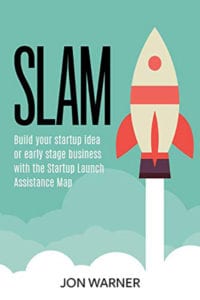
SLAM: Build your startup idea or early stager business with the Startup Launch Assistance Map
What you’ve created here, Jon, I believe is almost like a Sherpa helping someone climb Mt. Everest. Without a map, without someone like you with all your expertise and guidance saying, “Do this then do this. Don’t do this out of order.” It’s like you’re trying to help somebody bake the cake who’s never baked a cake before. They forget to preheat the oven or they don’t put all the ingredients in them or whatever it is and then they wonder why it doesn’t rise. You have given a proven step-by-step process that’s so valuable. I’m sure there are many people who wish they’ve had this earlier in their career, but the good news is it’s available now. You’re sharing your wisdom, your expertise. The book is called SLAM. Tell us how else people can work with you?
I spend my time mentoring startup organizations of all types. My passion space is healthcare and within that, I particularly like the 50-plus population and companies that are solving for all the unmet needs for people who are 50 and more. They tend to get marginalized by society. There are many needs and not in healthcare. It’s in many other realms at the same time. Anybody who’s got a side hustle ideating around this or a small company that’s thinking about the older adult community I’m particularly interested in working with. I run a virtual incubator every quarter. Eight companies come into that virtual environment. We make a six-week sprint to go and go through the SLAM process.
That’s something they can look upon the SilverMoonshots.org website. It’s listed right there. I’m happy to engage. I’m happy to explain the SLAM process. Some of the resources, the actual map itself, both front and back, are on the website at SlamProcess.com. Those are free resources for people to download all of the questions and all of the eight steps on the SLAM slide are there. You can turn it over when you’ve got product-market fit and validation and go to the execution side, the GRAND side, and hopefully get a GRAND SLAM over time.
It does become your Bible what you’ve created for people because it’s done with so much thought and visual. It is so well done and so well executed. Congratulations on that. There’s a whole video that goes with it, a map. You’re like the GPS for businesses.
I hope it’s a good tool to help people explore. I hope people don’t think of it as a cage. It’s an enabling tool I hope to explore your idea.
Thanks for being with us, Jon.
I appreciate it.
Important Links
- SLAM
- Jon Warner
- Silver Moonshots
- Zero to One
- Bernie Swain – Past episode
- SlamProcess.com
- Better Selling Through Storytelling Method Online Course
Wanna Host Your Own Podcast?
Click here to see how my friends at Podetize can help
Purchase John’s new book
John Livesay, The Pitch Whisperer
Share The Show
Did you enjoy the show? I’d love it if you subscribed today and left us a 5-star review!
- Click this link
- Click on the ‘Subscribe’ button below the artwork
- Go to the ‘Ratings and Reviews’ section
- Click on ‘Write a Review’
Love the show? Subscribe, rate, review, and share!
Join The Successful Pitch community today:
- JohnLivesay.com
- John Livesay Facebook
- John Livesay Twitter
- John Livesay LinkedIn
- John Livesay YouTube