

Online Courses Create Freedom By Teaching Your Gifts With Danny Iny
Posted by John Livesay in podcast | 0 comments


Online courses are becoming more common today. These courses have become a way to share your gifts with others. John Livesay is joined by Mirasee CEO and bestselling author Danny Iny as they discuss sharing your gift and the freedom provided by online courses. Danny talks about the art of telling a story and using it to engage people and committing to learning. Learn how to be known for that one thing with which you can give the most value to the world.
—
Listen to the podcast here
Online Courses Create Freedom By Teaching Your Gifts With Danny Iny
Danny Iny is the guest on The Successful Pitch. He’s known for being an expert at online courses but as you’ll find out he’s an expert in many other things as well. He talks about what you want people to be able to do after they’ve taken your course. How well do you want them to do it and under what circumstances are they going to be able to perform? He says, “The other key is learning about something is different than living it.” Find out why he says that a quality course is like a fine piece of art. Enjoy the episode.
—
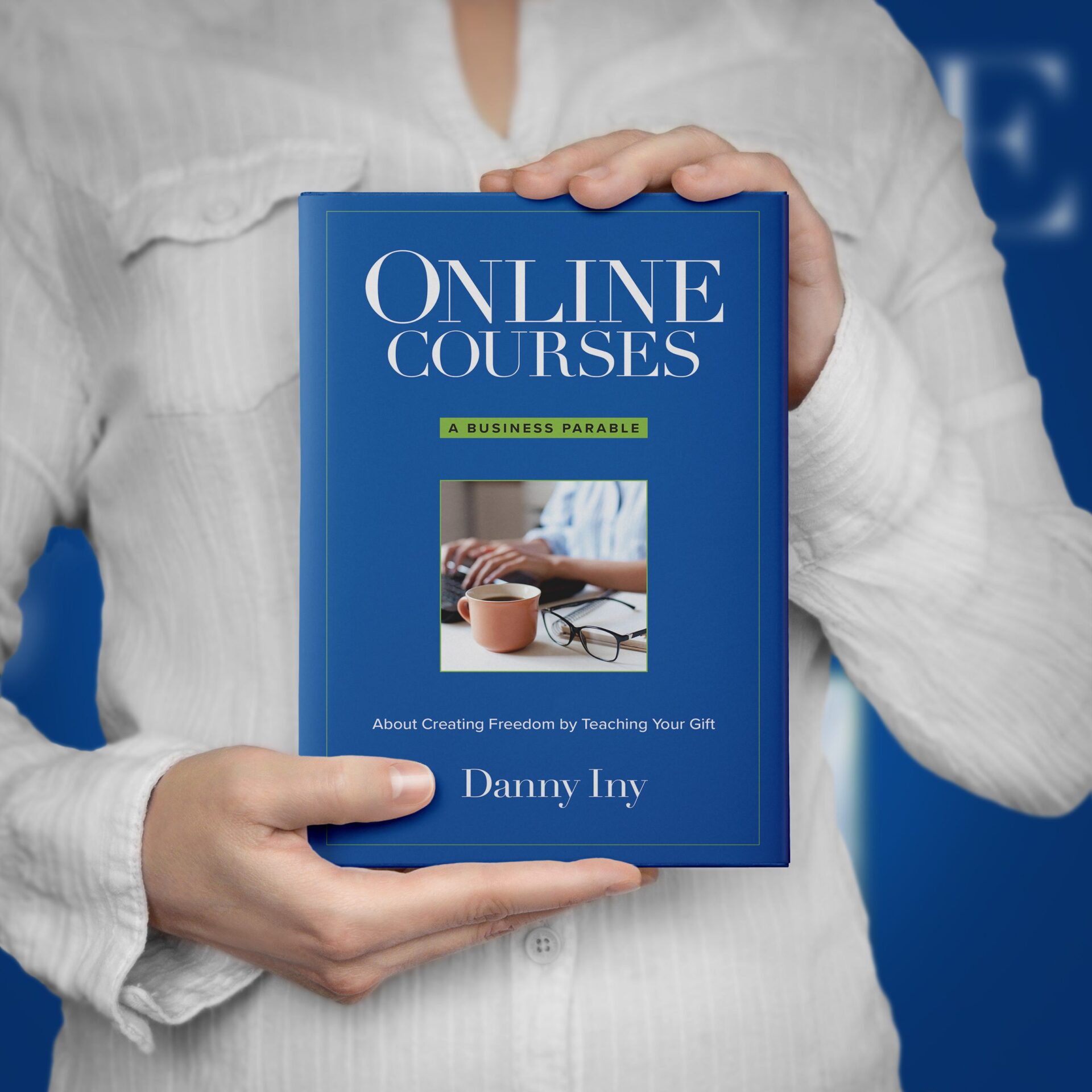
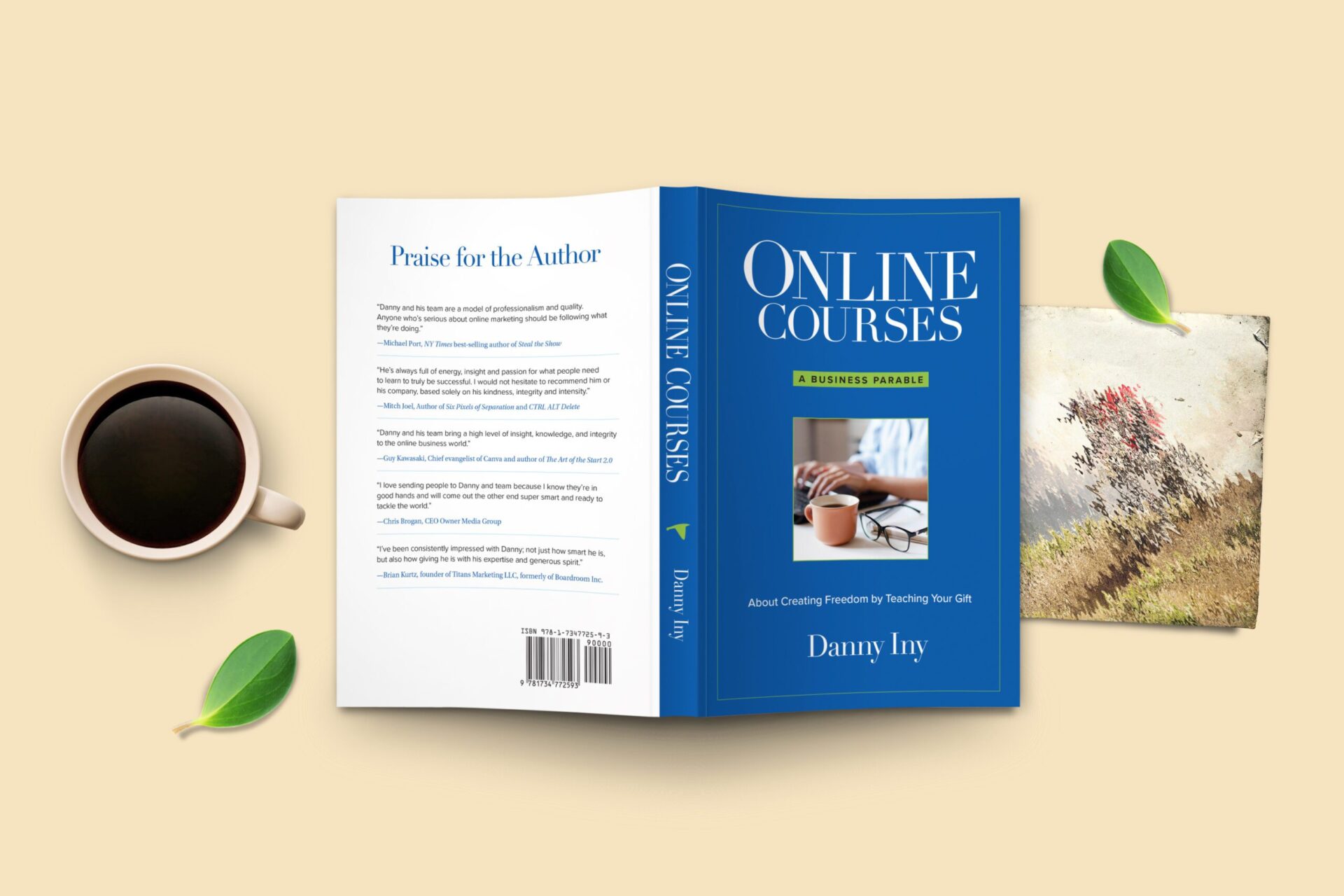
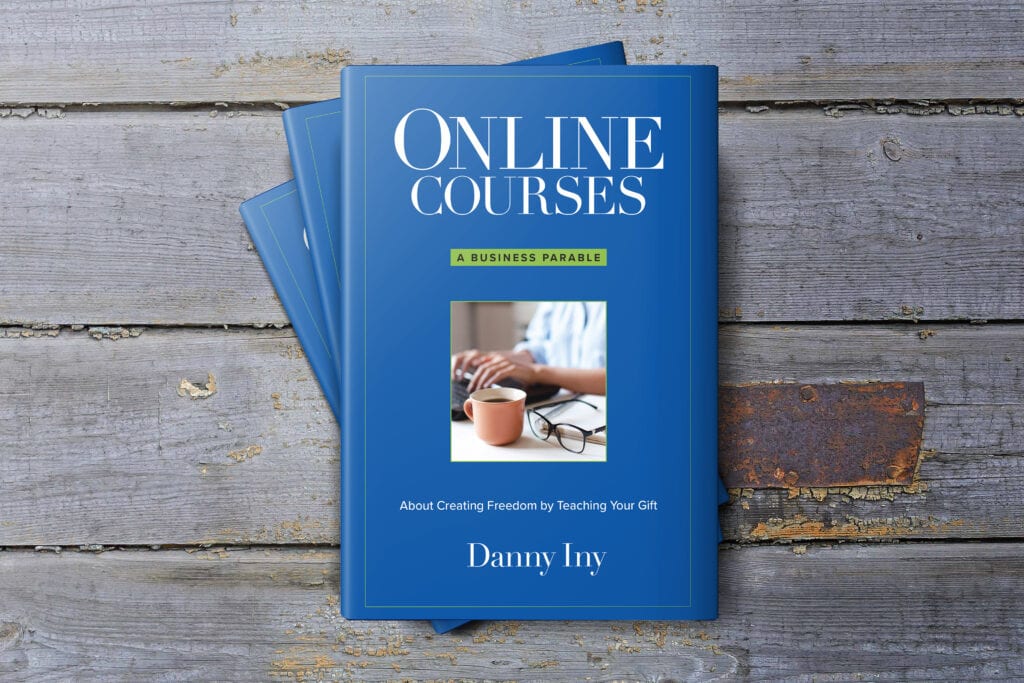
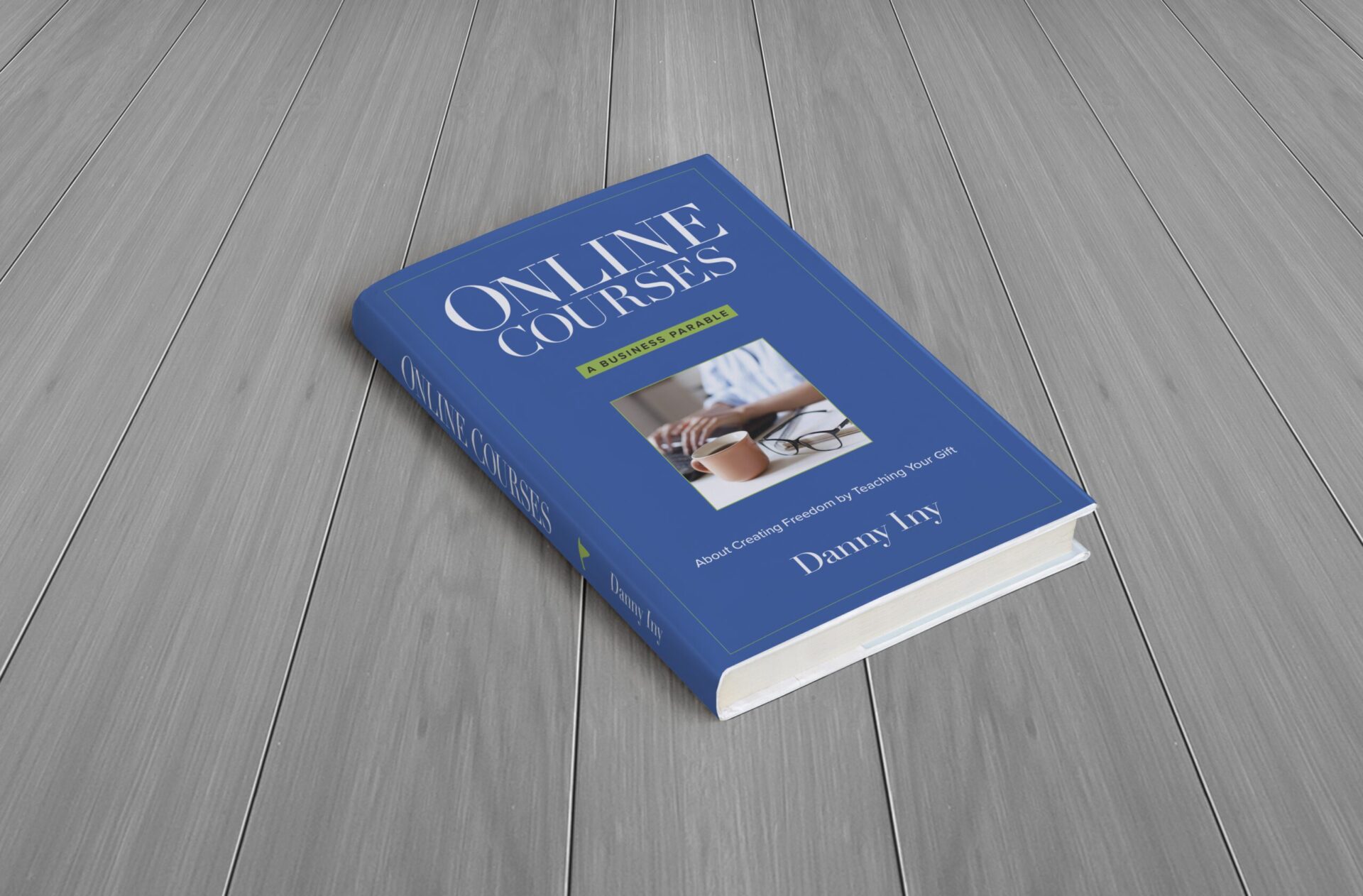
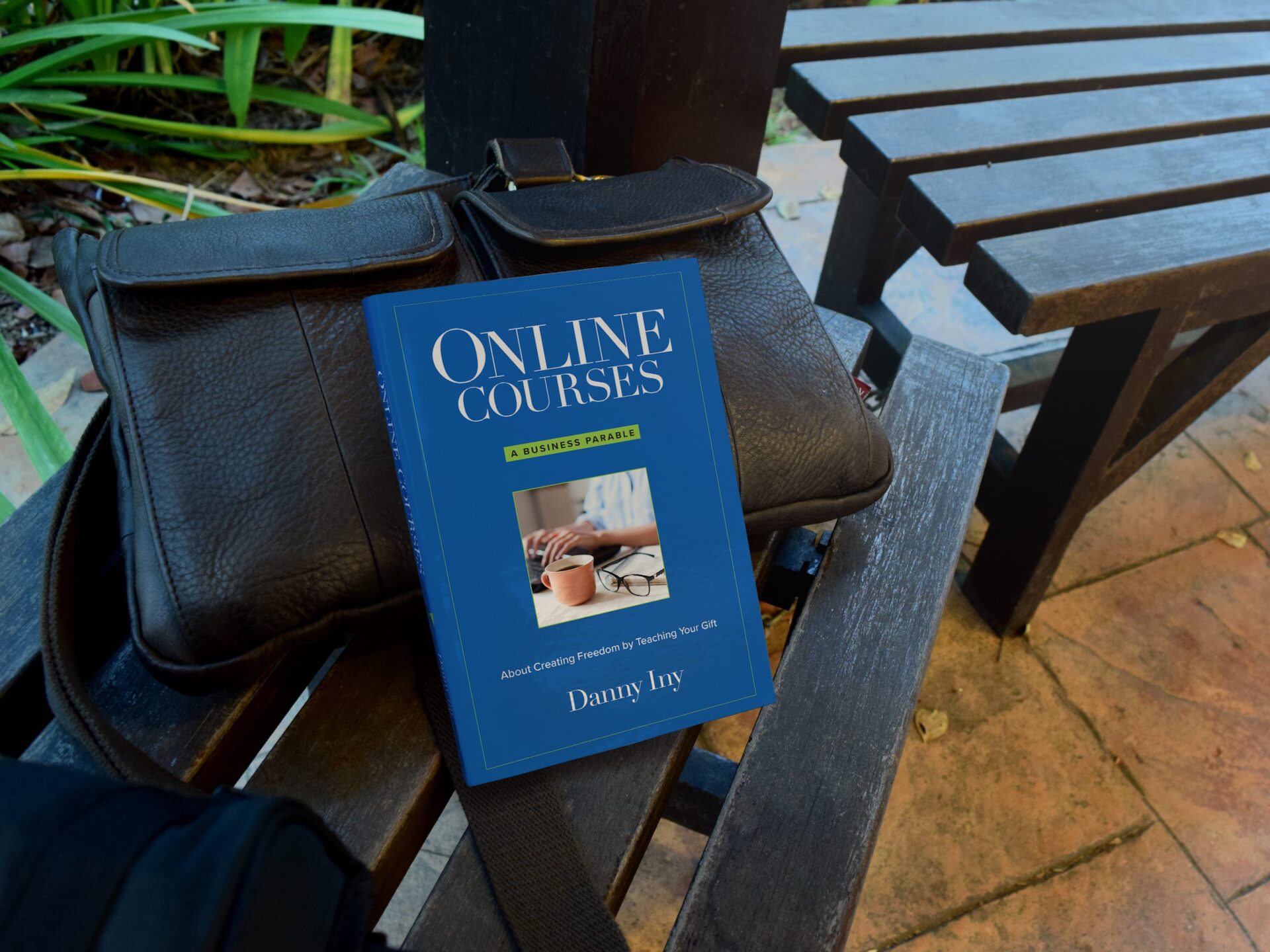
Our guest is Danny Iny, the Founder and CEO of Mirasee, which is a leading voice in the world of online courses. He’s been featured in the Harvard Business Review, Entrepreneur and contributes regularly to publications including Inc., Forbes and Business Insider. He’s spoken at institutions like Yale University and organizations like Google. His work on strategy training won special recognition from Fast Company as a world-changing idea. He’s also the author of Online Courses: How to Create Freedom by Teaching Your Gift. Welcome to the show, Danny.
[bctt tweet=”A quality course is like a piece of art.” username=”John_Livesay”]
John, thank you so much for having me. I’m super excited to be here.
I love that enthusiasm and energy. One of my favorite questions for my guests is to tell us your own story of origin. You can go back to childhood, school or wherever you want but was this process something that your parents said or did. Have you always loved learning? I’m fascinated to hear how this journey began.
I only started thinking of myself as an entrepreneur in the mid-twenties, which is funny because I dropped out of school at fifteen to start my first business. I’ve been an entrepreneur for longer than my adult life. Here’s the first entrepreneurial experience that I can remember. I was in the seventh grade. I was twelve years old and there was a cafeteria at my school and they had different lunch options. My parents would give me $2 to get lunch for the day, which got you the typical option but I like the $3 option.
Online Courses: The only people who are perpetually starting a business are the ones who are not very good entrepreneurs.
It shows us how back in time this is because I don’t think kids can get anything for $3 now.
I’m sure it was subsidized but this was a little while ago. I wanted the $3 option and I noticed that my friend would get his lunch and he would get a soda, which was $1. He would get usually a Coke or Sprite but he was a good friend. I knew that he didn’t especially like Coke or Sprite. He liked cream soda, which they didn’t sell at the cafeteria. I figured out that I could get a rack of those cans of cream soda from Costco and it would cost me $0.15 or whatever and I could sell a soda to my friend for $1. He gets what he wants to drink for the same price and now I can afford my $3 lunch. At the time, people would be like, “You’re charging your friend for a drink?” I’m like, “He’s paying the money anyway. This way, he’s getting what he wants.” This is how I’ve always thought of entrepreneurship. I didn’t see myself as an entrepreneur. I was looking for opportunities and solving problems.
[bctt tweet=”What do I want people to be able to do after working with me?” username=”John_Livesay”]
That word wasn’t anything I heard in school. Everyone I knew, even if they did have their own business, they owned a dry cleaner or an air conditioning company. It was nothing in tech or online because that wasn’t happening then. It was either you go work for a company or your family business. The entrepreneurial part of it was not solving a problem. It was a business that an individual owned. It’s a fascinating thing to think of.
It makes sense if you think about it. Let’s presume you’re good at this entrepreneurship thing. The starting of the business takes a small amount of time and the running of the business takes a long amount of time. The only people who are perpetually starting businesses are the ones who are not good at it. Any entrepreneur who’s any good that you know, you’re most likely to know them in the stage where they’re running the business because that’s most of the time that they spend in that interaction.
Teach and Grow Rich: Share Your Knowledge to Create Global Impact, Freedom and Wealth
Let’s go from that in your journey of Mirasee, which is about reimagining business in general. You have seven core values. Many people may have values. They don’t post them. They don’t think about them. They don’t put them into action. You and I were chatting before the show about how impressed I am that you do put your values into action. Openness, transparency, respect, appreciation, humility and empowering other people, I wanted to see if there was a story behind how these values came about. Do they all come at once? Was it something that continued to evolve?
There is a story. In the fairly early days of this business, we had a different name at the time because we rebranded a few years into it when we realized the original name sucked. We had a team of 7 or 13. We were small at the time. We were doing a company retreat. I was going to say people flew in. At the time, everyone’s local. This was a long time ago. We’re in the chalet up north and we’re codifying our values. The way we did that and this is learned from a gentleman named Patrick Lencioni. We start by asking everyone, “Take a piece of paper and write down the name of 1 or 2 people on the team who exemplify what it is to work here. This is private. You’re not sharing this with anyone. This is for you as a reference point.” You’re going to write down for yourself what are the things about these people that make them exemplify what it is to be here.
We took that list, put it up on the board and we have 111 things. You collapse the list because the same thing shows up seven times with different languages and you start sorting it. You cross off the aspirational things. It’s like, “It’s not so much that this is who we are. This is who we wish we were.” That’s not a core value. You cross off the things that are hygiene factors like, “Showering won’t make you happy but not showering will make you miserable.” There are things that don’t exemplify who you are. It’s a pay-to-play in the industry. We promptly respond to our customer service emails. Any decent company has to do that. That’s not a special unique thing so we cross off the hygiene factors.
[bctt tweet=”A quality course is like a piece of art. It’s only good in the eye of the beholder. There’s no such thing as an objectively good course. ” username=”John_Livesay”]
We cross off the accidental stuff. For example, at the time, almost everyone who worked at the company was into board games. That wasn’t a core value. That happened to be the case. It was a happy accident. We cross all those out and what’s left is a candidate for a core value and we haggle, negotiate and we’re like, “What is most important to us to codify?” We arrived at six core values. Those were our values for a long time and they are real and substantive. We talk about them all the time. We acknowledge each other for them. It’s not a poster on the wall, although it is a poster on the wall behind me.
Over several years, we started noticing that there were a few ways in which our values were being misunderstood by people who were newer to the organization because they didn’t have all the context to understand it. That’s when we looked at those values and we’re like, “Let’s clarify the language here. Let’s pick this up there. This one has to split in two.” That’s how we arrived at the seven values that we have now and this has been the case for a couple of years now. It’s ever-present in running our business.
Let’s go to what made you write this latest book. This is not your first book by any means. I’m always interested in the story of origin as a fellow author. I know that coming up with a title can be challenging. There are usually many versions of it before you land on it. Because you’ve written other books, there has to be a creative urge to express something that hasn’t been said before. The subtitle grabs it.
Online Courses: Reading a book about parenting is very different from sitting across from a three-year-old who’s screaming and throwing spaghetti all over the place.
In some ways, I don’t know that a lot of people think that an online course is a roadmap to creating freedom by teaching their gifts. Let’s break down those words, freedom, a gift and an online course. If you put those things together, I don’t know that a lot of people will go, “That’s a book title.” A lot of people will be like, “What does one have to do with the other?” A part of the way that you break through the clutter is giving people and bringing something new to look at going, “What?”
The title was pretty easy. The substance was hard. I’ve written several books about online courses. At some point, I’m searching for a reference to what’s out there. I noticed there is no book called Online Courses and yet that’s what people are going to be looking for. It was pretty clear that the next book is going to be called Online Courses and teaching your gift and creating freedom. This is what our business is all about. That was obvious so that’s what the subtitle is going to be. In terms of the content and style of the book, this was a different book than other books I’ve written. I’ve written several books about online courses. I wrote Teach and Grow Rich in 2015 and it came out with a second edition in 2017. Leverage Learning in 2018. Teach Your Gift in 2020. Effortless in 2021.
I’ve written about this a lot and based on the reviews that are out there, people seem to like it. In aggregate, they have close to 1,000 five-star reviews. I found that despite people liking the book, often there was a disconnect between what they’re learning in the book and being able to go and do stuff with it. That disconnect is about the fact that there’s a difference between learning about something and the lived experience of doing it. Hearing someone telling you about their ski journey is different from being at the top of the hill looking down and it’s terrifying. Reading a book about parenting is different from sitting across from a three-year-old who’s screaming and throwing spaghetti all over the place. They’re different experiences.
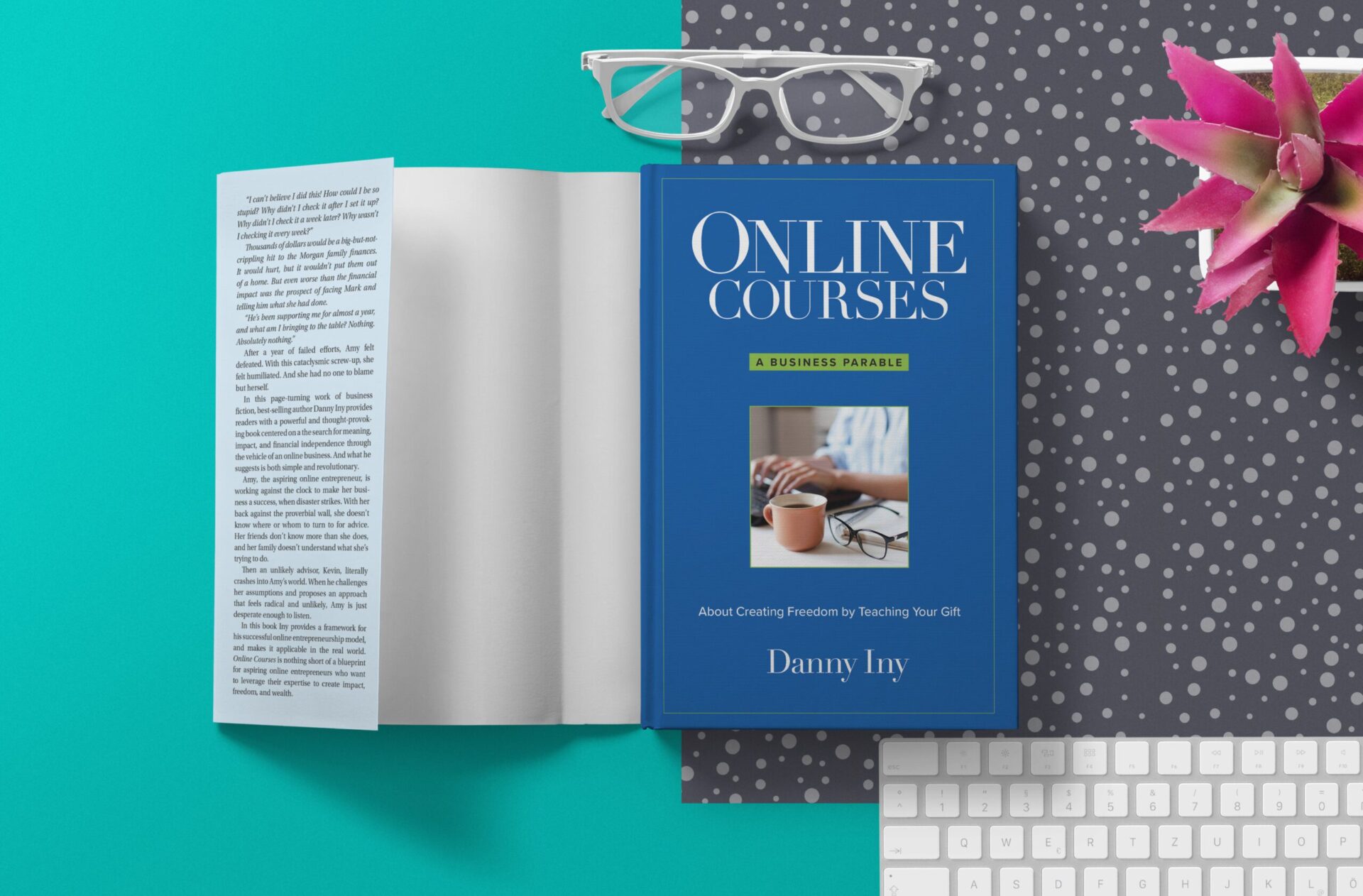
I wrote this book as a business parable. It tells the story of this fictional character. She is modeled after the thousands of people that we’ve trained in this process to show what are the steps in the journey of figuring out what you want to do. What are the demons that you have to struggle with? What are the places where people stumble and need to overcome? What are the challenges that get in their way? It’s meant to be an opportunity for getting the information and learn about all the steps. It’s also an opportunity to ride shotgun on that journey and see what it feels like experientially. That’s what I was trying to do with the book.
I’m going to go out on a limb and predict that it’s going to be as successful as Who Moved My Cheese? back in the day because it’s a parable. Parables are what I’m all about, which is storytelling. When you craft a story that people see themselves in as opposed to listing, “Here are the pain points you might be suffering,” and it goes to, “Here’s a story of Amy.” Suddenly you’re seeing yourself in the book and you’re like, “My name is not Amy but I feel the frustrations that she feels. I went and did something that was a big waste of time as opposed to spending time with my family and feeling guilty for trying to be in two places at once.”
Suddenly the neck gets wider and wider and it’s not even gender-specific but entrepreneur-specific. That’s where you go, “I know ten people that would love this. What a great gift.” That’s where the magic happens in a story as well. When you tell a great story, people remember it and share it. That’s where your brand ambassadors start happening and that’s what makes you memorable. Instead of creating yet another manual on how to launch and create an online course, which you’re certainly an expert at that. If you have a roadmap, you’ve done it.
Part of the reason people join your courses, masterminds and hire you for private coaching. I’m glad that you said it was a little bit harder than even the title because anything that breaks through the clutter is a little bit harder. Do we need another manual? Maybe not. You’re not doing that. You’re giving us the experience of living it as opposed to learning about, “Here are the six steps to figure out what your gift is. You might get frustrated,” whatever the journey is. It’s the classic hero’s journey that there are going to be days that you think, “Why did I even try this?” It’s the trough of despair that entrepreneurs go through so often. If you wanted people to think of this book, what would be one of the main things you would hope they would get out of reading it besides realizing that they have a gift that if they figure out how to monetize it, it’ll give them some freedom?
The number one thing that I’d want people to take away from that, beyond the subject matter and the opportunity of online courses is that if this book does well, it will be because people feel seen when they read it. They’ll be like, “Someone gets it. It’s not just me.” That is something that is so important and necessary for all of us as human beings to not feel isolated and yet it’s such a disconnect for a lot of entrepreneurs.
The reality is that most of the people in our lives, as supportive as they might want to be, don’t understand. They don’t have any frame of reference for what it is that we’re undertaking for the ambiguity, uncertainty, unpredictability and the amount of our identity that we’ve put into what we’re trying to do for the hopes, dreams, ups and downs and the highs and lows. Everything else will be a byproduct. If this book does well, it’ll be because people feel seen and able to relate when they read.
What good parents do is make their children feel seen, heard and acknowledged. What a lot of entrepreneurs or people in big companies forget is their employees have the same needs. It doesn’t go away, “Watch me jump in the pool.” Mom or dad doesn’t go away because you get into Corporate America and the recognition program of all of that. For me, I’ve helped companies make their employees feel seen by asking them what their story of origin is. What made you get into healthcare, for example? Whatever it is that people go, “No one’s ever asked me that before.” It bonds people together.
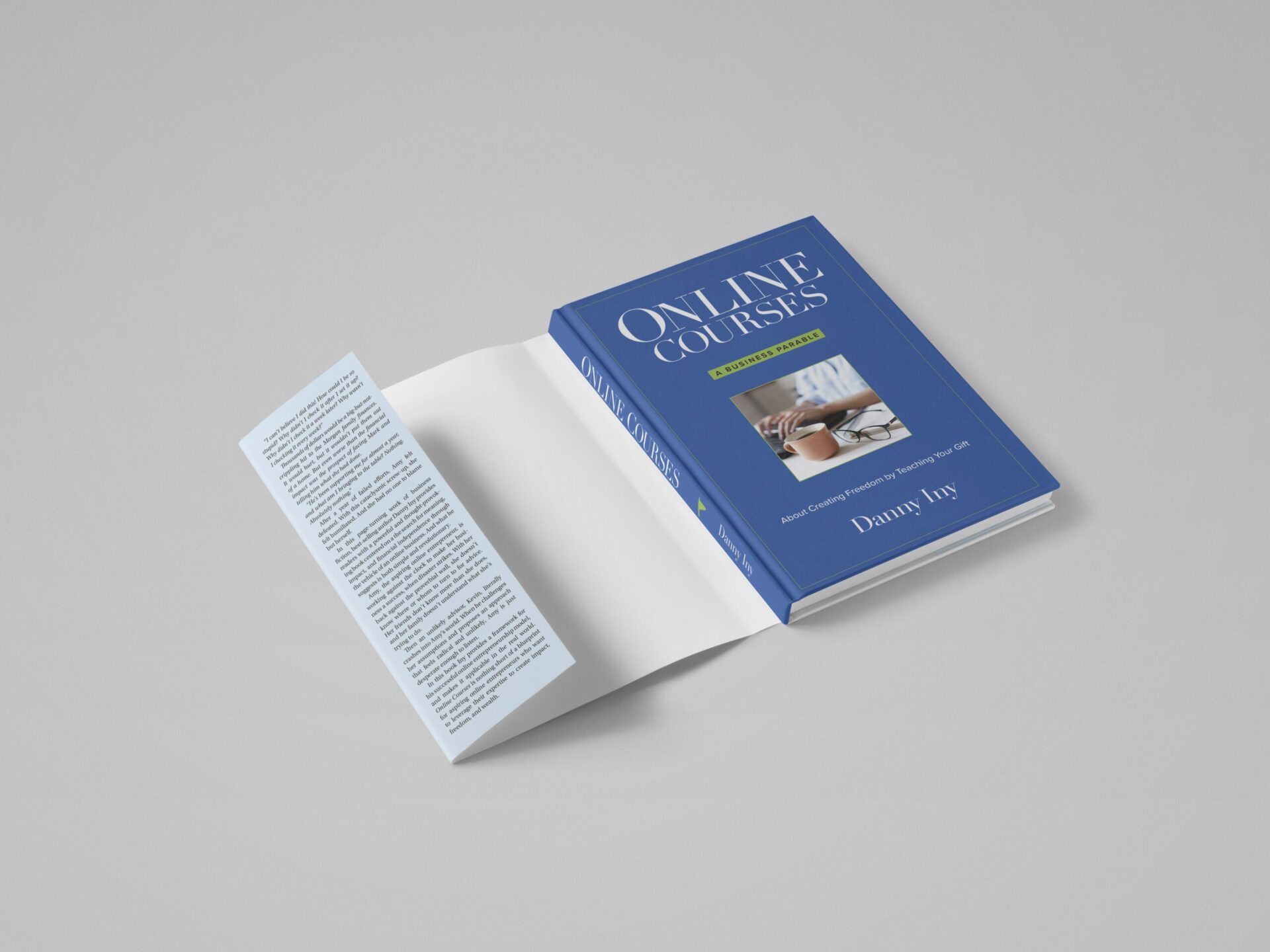
One of the things that I like about your writing, Danny, is the specificity, how specific you are. For example, there’s one line here, “Amy noticed a milk-colored stain on his left shoulder, the sort that a baby would make spitting up on you.” If you are the person that notices those details and you, as a writer, can get that specific because you probably know that people put their baby on that left shoulder, there are 101 details that go into that then we’re in the story. Part of the secret to becoming a good storyteller and a good writer is the exposition, the who, what, where, when. You have such a gift of pulling us into this parable that we’re no longer feeling we’re learning something but we’re in a story. We would be in a movie theater or Netflix. That taps into a different side of our brain, doesn’t it?
It does and it’s gratifying to hear you say that. This is my 11th or 12th book. As I sat down to write this, my first thought was, “I have no idea how to do this.” It’s like I’m completely starting from scratch. What I kept in mind a lot because I’ve been listening to a lot of audio content and audiobooks is I thought a lot about what this is going to sound like. We’re getting it produced. That content isn’t ready yet but we’re getting it produced. I’ve got a team of actors. It’s going to be amazing. I say that while knocking on wood. It’s the famous last words, “I hope it will be amazing.”.
There are people who love this whether it’s a podcast or an audiobook especially if it’s a story and you hear the sound effects like the knocking at the door and you start imagining it coming to life. The other thing that you did that is going to make that Audible so successful and I always teach people that when you tell a story, tell it as if it’s in the present tense that the dialogue is happening now. For example, when I give a keynote talk to sales teams, I talk about the time I got to meet Michael Phelps. I went up to him and I said, “You’re so successful because your physique is crazy, fins and lung capacity. I’m guessing there’s something else.” He said, “Yes, John. When I was young, my coach said to me, ‘Michael, are you willing to work out on Sundays?’ ‘Yes, coach.’ ‘Great. We got 52 more workouts than the competitors.’” I then say to the audience, “What can you do? What are you willing to do?”
That story is connected to an outcome that people can see themselves in but I tell the audience, “If I told you that story in the past tense, I met Michael Phelps. I asked him what his secret is. He told me he worked out on Sundays.” It’s not nearly as interesting. You don’t feel like you’re in the story. You probably wouldn’t remember it as much. I act out with the coach’s voice, what his young voice is. You feel like you’re eavesdropping in on the coach and Michael having a conversation, which is eavesdropping in on the conversation that I had with Michael.
That’s the sophisticated level of storytelling. I’m telling you a story about somebody who then told me a story. The way to keep that all relevant that you do so well in this book is I feel like I’m in the story and listening to the dialogue. That is not something that a lot of authors or storytellers know how to do. We always need some details of interstates left. It’s half an hour later now. We need to know where we are. You also do a great job of expressing internal thoughts and feelings that then get expressed into dialogue. That’s the other thing I wanted to ask you about. When you work with people on helping them create a course, how important is it that they’re identifying the challenges, the pain points that they’re solving in the course by having some specific empathy and ability to describe it?
It’s critical. Here’s the thing, a quality course is like a piece of art. It’s only good in the eye of the beholder. There’s no such thing as an objectively good course or an objectively beautiful piece of art. There is an art that is liked by people. There are courses that are valuable to people. Creating any good course starts with, “Who is this for?” A technique borrowed from the world of instructional design is called Backward Integrated Design. You ask yourself at the end of the day when they’re through with the course, “What do I want them to be able to do?”
You go a level or two deeper. You say, “Not what do I want them to be able to.” You want to ask yourself, “How well do I want them to be able to do it and under what circumstances?” It’s like an active listening course. I’m teaching active listening. It’s like, “Do I want them to be able to go through the motions with their partner in this little exercise? Do I want them to be able to do it in the heat of the moment during an argument with their spouse?” That’s a different level of skill in adopting the techniques. Do you start with who is this for? What will they value? What is the end goal? You work backward in terms of what you’re looking to build. Otherwise, it’s all pointless.
It’s reverse engineering in a clever way. Who do I want this to be for? What do I want them to be able to do after they take the course? What do I want them to be doing in specific circumstances? Was there something else? Was that the gist of it?
What do I want them to be able to do, how well and under what circumstances?

The how well is fascinating because my online course, The Sale is in the Tale, is all about teaching people how to become better storytellers as a sales tool. I will say sometimes that even if you think you’re a good storyteller, this is going to get you to the black belt level. People go, “Oh.” I’ll have students who go, “I always thought I was a pretty good storyteller but now I realized that there is a lot more I can learn to become a great one. Asking these kinds of questions is valuable.” I’m glad you shared it.
When I hired a coach who was a specialist in helping people give a TEDx Talk, we did a similar series of questions where he said, “Let’s pretend it’s at the end of your talk. What do you want the audience to feel, think and do?” That will determine the end of your talk. We’re starting to work on what’s your ending going to be with those three outcomes. That process whether you’re creating a piece of art that’s known as an online course or a piece of art that hopefully is your talk or whatever story you’re telling and whatever format, Audible in your case, we’re coming up next. It’s all about having an emotional impact.
Emotional and tangible. Whatever we do is meant to accomplish an objective so let’s not leave it to happenstance. Let’s not do this and hope it leads to that outcome. Let’s be strategic about making sure that’s where it goes.
You offer such a wide range of ways to interact with you. You’re also a speaker and you get called in major places. Are companies like Google interested in learning how to create an online course for their employees? This is one of my favorite topics that you’re talking about, not just how to get to be the best but how to stay the best. If you look at certain actors, they stay at the top of their game. The other ones, you’ll never hear of again or like a Blockbuster or Kodak. This ability to get to the top and stay at the top, my first question around that is what’s harder, staying at the top or getting to the top?
Staying at the top. I don’t know if you remember the movie Dangerous Minds in the ‘90s with Michelle Pfeiffer. She does this exercise with the kids. She says, “Everyone has an A as of now. You just have to work to keep it.” In the end, she’s got all these kids with A’s and they’re like, “It doesn’t count because you gave us the A to start.” She’s like, “Anyone can earn an A once. You kept the A for the whole year.” That’s the hard part.
The other part of what you do is very niched, which is the unspoken problem that a lot of companies don’t like to talk about, the cost of turnover. You’ve got to spend time interviewing, training, onboarding. Are they going to fit and become family? Meanwhile, there’s this gap of talent and productivity that’s not happening because you’ve got a gap that somebody left. The joke is nobody leaves a job, they leave a bad boss. You’ve been able to figure out how to take your skills and training. Is it because part of the problem is people aren’t onboarding properly and that’s why people aren’t able to attract and keep the best talent?
There’s a flywheel that goes in either direction. It can be a vicious spiral of not onboarding people well and you don’t have good support or infrastructure. You don’t have a good culture. You don’t have good values as an organization. It’s not a good place to work so you don’t attract customers. You don’t make much money so you can’t support people well. It’s a downward spiral. They can also go the other way. You invest all of your relationships. You invest in relationships with your customers and the people that you work with. You constantly look to get a little bit better. You have values that both attract and repel. Clear and articulated values should attract the right people and repel the wrong people. Does that mean you never make a bad hire? No, but the frequency goes down. You catch it sooner and you keep getting better. That’s what it is.

It’s almost testing ads online. You get to test. You iterate and let’s change that headline or image so now it gets better. Is it always giving us the best potential buyers? No, but the leads and the frequency get better. It’s the same thing with the hiring process using your structure and your insights on how to attract the best and repel. That’s the old concept that a lot of people have forgotten. If you try to be everything to everybody, you’re nothing. A big mistake I see a lot of entrepreneurs are making and I would love your insight on this because it keeps coming up, “What I do is complicated. I do ten things.” Even Amazon sold books first and got proof of concept. Trying to do more than one thing before you get some traction is a mistake that I see a lot. Do you see that? If you do, what advice do you have for people that make that mistake?
I do see that a lot and I made that mistake earlier. What I’ve come to understand is there is a difference between all the things you could do, all the things you should do but even beyond that, what you are known for. I am the online courses guy. That is what I do. I teach people how to take their expertise and turn it into online courses. Do I know other things? Can I do other things? Do I even help my students with some other things? Yes but that’s not ever what I lead with. I teach people how to build and sell online courses. Once they know, like and trust me and they’re in my world, we can talk about other things if appropriate. To the world, to the people who are not yet my customers, I teach people how to build and sell online courses.
It’s hard to top that. That’s brilliant. “Be known for one thing,” that’s going to be a tweet for sure. Amazon was known for selling online books for a long time. Imagine if they tried to launch selling everything they sell now and have TV shows. People are like, “What?” That ability to enter your world is my favorite description of that. What else have you got and what else can you help me with becomes a natural journey that you take us all on. Any last thoughts or quotes you want to leave us with?
In the spirit of the story, something that I tell my students often is the journey of online courses, the journey of business will involve ups and downs and setbacks and challenges along the way. What I often tell my students is that failure is only failure if it happens in the last chapter. Otherwise, it’s a plot twist and the spirit of the story.
That’s a great description. That’s a plot twist. The story’s not over yet. I love it. Thanks, Danny.
Thank you so much.
Important Links
- Mirasee
- Online Courses: How to Create Freedom by Teaching Your Gift
- Teach and Grow Rich
- Leverage Learning
- Teach Your Gift
- Effortless
- Who Moved My Cheese?
- The Sale is in the Tale
Wanna Host Your Own Podcast?
Click here to see how my friends at Podetize can help
Purchase John’s new book
John Livesay, The Pitch Whisperer
Share The Show
Did you enjoy the show? I’d love it if you subscribed today and left us a 5-star review!
- Click this link
- Click on the ‘Subscribe’ button below the artwork
- Go to the ‘Ratings and Reviews’ section
- Click on ‘Write a Review’
Love the show? Subscribe, rate, review, and share!
Join The Successful Pitch community today:
- JohnLivesay.com
- John Livesay Facebook
- John Livesay Twitter
- John Livesay LinkedIn
- John Livesay YouTube
Every Job Is A Sales Job With Dr. Cindy McGovern
Posted by John Livesay in podcast | 0 comments

Believe it or not, in whatever job we have today, there is always sales involved with it. This episode’s guest aims to bring a better reputation for sales. Known far and wide as The First Lady of Sales and the author of Every Job Is a Sales Job, Dr. Cindy McGovern believes that it is a life skill, not a job skill, that has to be followed up with gratitude. With a negativity attached to the term, Dr. McGovern aims to change the way we look at sales. Coming from a place of abundance herself, she shares some tips on how we, too, can have that similar mindset especially when we feel nervous.
—
Listen to the podcast here
Every Job Is A Sales Job With Dr. Cindy McGovern
Our guest is Dr. Cindy McGovern who is known far and wide as The First Lady of Sales. She has a doctorate degree in organizational communication and a Master’s degree in marketing. She earned her reputation by building and rebuilding the entire sales program from the bottom up. Dr. Cindy, who is the CEO of Orange Leaf Consulting, has helped hundreds of companies and individuals throughout the world from small to huge create dramatic and sustainable revenue growth. Dr. Cindy is an expert in the areas of sales, intrapersonal communication, leadership and change management. She can quickly figure out whether an organization or individual needs to be more successful. Her knowledge of many industries helps leaders implement new behaviors needed to succeed.
One reason for her success is she serves both as a teacher and a coach, working together with individuals regardless of the role or where they are in their career to co-create their future. She doesn’t tell her clients what to do. She listens, learns about their success and challenges, and helps them create strategies designed to be effective long after her visit has ended. As an in-demand speaker, Dr. Cindy has presented both national and international conferences on the topics near and dear to me. These are sales, management, leadership, interpersonal communication, organizational change conflict resolution and collective bargaining. Dr. Cindy, welcome to the show.
Thank you so much for having me. It’s an absolute pleasure to be here, John.
Let me ask you about your own story of origin. You can take us back to your childhood, high school, college. How did you know you wanted to get into communication and sales in the first place?
The funny part of that is I didn’t want to get into sales. In fact, I railed against getting into sales for quite some time because I thought it was icky. To go back to my story, I grew up in Florida and went to Florida State Communication School for my doctorate and went to be a college professor. I thought that’s what I was meant to do. I wanted to help people. I wanted to teach communication. I felt like that was the lacking skillset in a lot of folks that we don’t get to embrace that. We learn math, we learn reading, but we don’t get to embrace the communication which is what we do all day and every day. I thought, “This is going to be my life’s mission.” I got into it and started consulting in the summer. I realized I could help adults, too, not just the 18 to 24-year-olds and I started doing that. Fast forward, I went into consulting full-time.
A few months into my consulting career, I was put into a sales role and I totally flipped out. I was like, “I’m going to get fired if I don’t figure this out.” I started trying to figure out how to make sales work for me. I couldn’t do the old-school sales approach and the pushy sales thing that was my definition of sales. When I started to look into it, I realized that’s not sales at all. That’s manipulation, that’s conning, that’s not sales. I realized that sales are simply uncovering what someone else needs and being able to find a way to solve that. When you tell the story around whatever you have to offer is going to fill the need that they have. When I figured out that there was a kinder gentler way sell, I started doing it and I started getting awards. I woke up one day and went, “This is no different from what I’ve done in my entire life. I just didn’t call it sales.” That led me to create a career around helping non-salespeople sell more effectively.
You and I speak the same language for this concept. In fact, your book is called Every Job is a Sales Job. A lot of people have such resistance. When I was hired to speak to Anthem Insurance, they said, “This audience is a group of nurses and MBAs. None of them want to call themselves salespeople and yet we need them to sell. We don’t need them to get the contracts, but they need to sell the doctor on the data that we have versus the doctors trying to keep people from being readmitted to the hospital. When they get an objection, they don’t know what to do.” I thought, “Let’s ask them to be storytellers instead of salespeople.” That was the secret way in the door of allowing people to do that. Dr. Cindy, you have so much knowledge, both in the classroom and in the field, selling has been in the sales force. What is that causes people not want to think of themselves as a salesperson? Why do sales have a negative connotation for so many people who are either doing it or not doing it?
I nicknamed it the Ick Factor. It’s the manipulation tactics that we’ve been recipients of, unfortunately. It’s what’s stereotyped in the media. If you see sales in a movie, it’s rarely the heroine. We think of sales as time-share sales, used car sales or this thing where we’re going to push something on you versus what it is. We have transactions all day every day. Every interaction is a transaction of some sort. That’s where the idea of the ick factor comes from, its stereotype of it. You and I know this, having been in sales for so long, even salespeople don’t use those tactics anymore.
[bctt tweet=”Sales is a life skill, not a job skill. Follow up with gratitude and always be curious.” username=”John_Livesay”]
It doesn’t work. When I was on the field, it was, “Throw a bunch of stuff up against the wall and see what sticks.” What a crazy way to run your business.
The old Glengarry Glen Ross does not apply any longer.
What are the favorite things you had to sell? What are the favorite products or services are you most passionate about or you love doing?
One of the things I love to sell is what we do at my consulting firm which is helping people to make more money in their companies by getting their non-salespeople selling. That’s my favorite thing. For the salespeople reading, I love you, too. I love taking the insurance underwriter to use insurance on something and getting them to realize that every conversation they have is a sales conversation. Every opportunity to make that person’s day with physicians, with nurses, with health grades these days and patient satisfaction scores. All these interactions matters, but rarely do these folks see themselves as salespeople. I go into an organization and they come in. You see them come in with arms crossed going, “I don’t need sales training.” I’m secretly in the corner going, “Yehey,” because I know I can help them. More importantly, I can help them get more of what they want in their career, too.
Your book, Every Job is a Sales Job, is broken up into two parts. Would you mind taking them in and describing what those two parts are for us?
The first part is the ick factor and addressing why we feel this way and helping people to realize that they do sell every day. They have been selling and to make sales out of the boardroom and put it in the life classroom. I don’t think it is a business skill, I think it is a life skill. I think sales should have been taught in high school and we’ve gotten gipped. I am truly on a mission to change the way people look at sales. By the time I am done with this, we might need a new word for it. I want people to see it differently. Part one is helping to empower the reader that it’s not this horrible thing that I thought it was, too. I share my story in the book saying, “I am you. I didn’t wake up from the womb selling. In fact, I resisted it and I was one of the worst resisters.”
Part two is teaching you how to take the skills of sales professionals to get ahead. If you are a manager reading this, it’s going to teach you how to get buy-in from your team so you get those non-salespeople selling. If you’re the reader, entrepreneur, solopreneur or the CEO reading this for yourself, it’s going to help you realize how you can get ahead at work. I’m going to teach you how to get a raise. I’m going to teach you how to get the promotion through my five steps which are plan for opportunities, establish trust, listen to the other person, asking for what you want and following up with gratitude. Gratitude is a big part of my sales process. I know you feel this way, too. I am grateful that I get to wake every day and do this. I get paid to fly around the world and help people make more money and get what they want. That’s a pretty sweet gig.
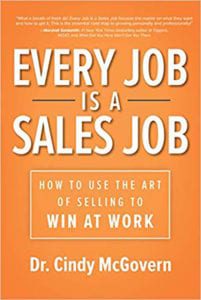
Every Job is a Sales Job: How to Use the Art of Selling to Win at Work
You’re living your passion, you have a purpose and you’re getting other people to get inspired and think of that. The old-school way of selling was, “Follow-up. Don’t let those leads get cold.” This concept of follow-up with gratitude is something I have not heard anybody else say before. I would love a story of either how you’ve done it or someone you work with has done it.
I’ll tell you one of mine. You follow up with gratitude whether you made the sale or not. What we forget is every interaction we have, even you are in a sales conversation, you’re leaving that person with an impression of you, your company, your product or your service. You want to leave them a good commercial to tell. So often, even salespeople go, “They didn’t buy from me, they’re not my customer.” That’s called a prospect and they still are. They’re going to tell your story so make sure they have a good one. One of my favorites was there was a regional manager for a company I had met at a conference. We had a wonderful conversation, but it wasn’t the right time. It was clear to me that he wasn’t buying anything. That’s fine. I sent him a handwritten note, that’s one of my things. I thanked him for his time and for the opportunity to even explore whether we can work together. I wasn’t pitching anything in the thank you. It was truly the gratitude of saying, “Thank you for giving an hour of your time to learn about your company and your passion and what you guys do. If things change, I would love to continue the conversation.”
Continue to follow up, but with gratitude. If I found something that felt appropriate for him, I would send it. At the time, he was living in Tennessee. I would see things from time to time and send it, but always from a grateful place of, “I appreciated the fact that you and I got to have a conversation.” A couple of years later, my phone rings. He says, “We’re ready.” That’s all he said. I was like, “Who’s ready? Who is this?” He said, “You’ve shown me that you practice what you preach, that you weren’t just selling me.” “No, I’m not going to sell you something you don’t need in any way shape or form.” Nor do I want the readers ever to do that. My way of following up with him, it was a no. He ended up sending me business in those couple of years. He knew other regional managers who were ready. It was creating these minions out there selling for you but in an authentic way. For me, I was who I am. I wanted to help him and send him some cool stuff about Belmont Basketball.
That analogy keeps going back to that big decision that everybody has to make of whether you think the world is a friendly safe place. Do you believe in a place of abundance? Do you believe in a scarcity mindset and have a place of fear in how you respond and act in the world? Those people who come from a place of abundance typically are the ones that share and look for things to be grateful for.
I definitely come from a place of abundance, but I didn’t always. It was a learned mindset.
What tips from Dr. Cindy in what I can do to shift into a more abundant mindset when I start being nervous?
Pause and look around. It’s that easy as that. So often, especially in sales, we get on the hamster wheel and when we’re trying to hit quota, trying to hit goals or, “I have to make this many calls” or whatever it happens to be, you get stuck in that treadmill. It’s pausing and going, “There are seven billion people on the planet. I have seven billion people to sell to. I’m not going to run out.”
This episode is an example of two people who have an abundant mindset. They could choose, if they chose not to, to view each other almost as competitors. In fact, we have a lot of similar people we know in common like our mutual friend, Judy Robinett, who has been a guest on this podcast. We’re using the same publicity firm and our books are listed together on the 47 books that sales teams should have on their shelves. You kick it off on your releases and I’m right behind you. I love that co-branding that is happening almost unplanned. It’s choreographed together that we were meant to connect and know each other. Nothing makes me happier than to promote another speaker and author who is out there helping people not have the ick feeling around sales. That is thrilling to me, to see this co-branding, co-support going on. If you’re going to say that, “Sales doesn’t have to be icky.” “How are you going to demonstrate that?” This is a classic example of us working together to promote your book. A lot of people ask me, “If sales have an icky factor and I have to get people to trust me, what can I get people to trust me?” What are your tips, Dr. Cindy?
That’s number three in the book is establishing trust. A lot of it has to do with listening. In particular, salespeople feel like they have to talk, show, present and speak. That’s not it at all. Most of my sales conversations, I do little talking. I simply ask questions. It’s Always Be Curious. That’s my ABC. Not Always Be Closing but Always Be Curious.
[bctt tweet=”Sales is simply uncovering what someone else needs and being able to find a way to solve that.” username=”John_Livesay”]
Mine is ABK, Always Be Kind.
That’s 100%. The simpatico between you and I are both doing and being able to help people out there, that piece of establishing trust is important. I know that this is something you live as well. I want them to trust me because whether they buy from me or not isn’t the outcome. My job in that sales conversation is to understand what they need and see if I have a fit for it. In order to do that, I have to ask the right questions. I have to help guide the conversation so I get enough information. It’s the diagnosis at the doctor’s office. It’s Dr. Cindy, I’m diagnosing.
I was speaking to Redfin which is a technology real estate company. They were telling me part of their challenge is with the sales team, especially those on the phone. Even though someone’s called in to ask about the potential house they want to buy, they’re afraid to ask questions. When you go to the doctor and the doctor asks, “How long has that knee been bothering you, John?” I don’t feel like that’s intrusive. Yet, sometimes salespeople feel intrusive. If your secret to building trust is to ask questions and stay curious, how do you help people who feel intrusive asking questions or they haven’t earned the right in their head? Any tips on that?
That’s one of my steps in planning. You have to plan for the conversation in a different manner. There is a huge difference between visits and meetings. Salespeople go on a lot of visits with clients or prospects, but that’s not a meeting. A meeting is a conversation to uncover what else you need that I could be servicing whether that be a current client, a growth client, a potential client or a referral source. When I talk about going into a true meeting, you have to set the pace for the meeting. If you don’t do that, then it does feel invasive. You can feel the other energies resisting you. They are racing for the pitch of, “What are you trying to push on me?” versus opening it to dialogue and starting the conversation by saying something like, “I am excited to talk to you and learn more about your business. We’re about to get real personal real fast, but whatever we talk about it’s going to stay here. Are you cool with that?”
Automatically, your likability factor is off the charts. People will trust you for that because you’ve been real and authentic. That’s what I work with people on. Don’t ask people questions like, “How’s your day going?” It’s not relative to the conversation. It doesn’t feel authentic like you’re interested. It’s a cliché question. These questions that you’re talking about require effort on the salesperson’s part to prepare. Ask smart questions that people don’t resent answering because it shows that you’ve done some homework.
This concept of setting the pace, I want to double click on that. I talk about it in terms of landing a plane. When we fly from LA to New York and they make the announcement that we’re landing in New York, no one stands up and says, “What? We’re landing?” Everyone knows we’re going to land. Salespeople need to land the plane. You know exactly how long the flight is going to be before you get on. Being a co-pilot with your buyer is important. That is exemplified by what you said about, “Let’s set the pace so we know how long this is going to be.” The conversation is going to be this long. If you decide to work together, the typical sales cycle is this long.
When you are talking about what you do for companies in this collaboration across divisions, which is what I heard you say, is important. Another guest of the show, Tim Sanders, wrote a book about this called Deal Storming. You’re doing what he’s doing, what I’m doing. It’s all about trying to help people realize that you need to work across departments and not be cycloid. Not only is the old way of selling not work anymore, but the mindset also has to change, that, “That’s not my job. I don’t care.”
There are many things I want to ask you about. The thing that jumps out about this is you talking about how kids are the best salespeople on the planet. If anyone is a parent or an uncle or aunt, they know that to be true. It reminds me of that great book a long time ago, All I Really Need to Know I Learned in Kindergarten. My sense is that kids don’t take rejection personally, but I would love to hear your thoughts on why kids are such great salespeople and what can we learn from them.

Sales As Life Skill: Your job in a sales conversation is to understand what people need and see if you have a fit for it.
They are resilient, nothing affects them. What I think is so amazing about kids is they’re clear on what they want. They have a plan. It’s like, “I see those Oreos. I want them and I am going to have them whether you tell me I can or not. There will be five of them in my belly before dinner.” The plan is clear and nothing is going to derail them. As adults, we get distracted with shiny objects, “That’s my plan. Look, a squirrel.” We start looking everywhere and we’re not focused on the goal. The kid is focused on the goal and it’s a singular goal. They are lasered in on it. That is the first thing.
The second thing is they don’t take it personally. Somewhere along the way, we get hurt by rejection What’s funny is we get told no all-day-everyday. It’s just in different ways. One of the things I do in my workshops when we start talking about no is I’ll ask everybody, “Who in here has been told no now?” Every hand goes up. “Thank God you survived. You’re fine. It’s okay.” It’s something for them to realize that it’s simply a word. It’s a response.
This brings up a topical conversation which is the premise of, “How do we not lose our identity when we get rejected?” That’s what’s devastating for many people. I talk about it in terms of, “I never reject myself just because somebody says no to me.” I used to or somebody else could have gotten me, yes. Maybe they’re right, my product isn’t as good as the other one they were going with. I just went, “What am I doing? I’m rejecting myself.” There was a Dodger’s pitcher that didn’t pitch a great game and they still managed to win. The reporter afterward says, “Do you ever lose your confidence after throwing so many bad pitches?” He said, “No, I never lose my confidence because I know who I am.” I thought, “I can’t wait to talk about that with Dr. Cindy.” That fits both of our philosophies of not only do we fall off the floor because someone said no to us, but we don’t lose our confidence. What do you think of all that?
I want to meet him. I couldn’t agree more. What I think happens is we attach our identity to the success or failure of that moment. That has nothing to do with who you are. If somebody doesn’t want to buy my services or hire me to speak, that means I’m not a fit for that circumstance. That’s okay, that’s fine. I talk about it in the book, it’s a no for now. I know you know that term, too. If I’ve done a good job of figuring out what they need, maybe that’s a referral for you. Nobody does this life alone. I talk about that in the book, too. We all help each other. We are on a similar mission, similar paths like others. I send business to other consultants because what we do is narrow and deep. We grow business, period. That’s it.
It’s the same thing with speakers. I’ll often give a good talk and someone says, “You’re great. Next year our theme is this and we never have the same speaker back. Who else should you think we should talk to? You know us well now.” That’s gold. “You need to talk to Tim Sanders, you need to talk to Dr. Cindy.” “Fantastic.” To get on that radar is the key. The other thing you talk about is how we can apply your five-step sales process to unemployment. I was laid off from Condé Nast. I felt like I lost my identity a little bit. I had to regroup, reinvent myself and back on the noose. Andrew Luck, the NFL player, decided he doesn’t want to keep playing, much to the shock of a lot of people. Michael Phelps, when he stopped swimming in the Olympics, he stumbled a little bit. Whether we choose unemployment, where we’re not going to swim in the Olympics or not going through that cycle of injury and rehab or we get laid off. What are your tips? How can we not lose our Identify and be resilient?
The first thing is creating your plan around what you are going to do. If your plan is to golf every day and do nothing, great. That’s a great plan, go do it. Have a plan regardless. That’s where people, especially unemployed or between jobs whether by choice or not, flounder a bit. You had a routine before now and it stops overnight. You were going to an office, to the field to practice and all of a sudden you wake up and go, “I don’t have to wake up at 5:30. Now, what do I do?” Your identity was tied to that. The steps are the exact same. It’s creating that plan of what you want and looking at what’s going to be next. If it is being fully retired and living an abundant life in that regard, fantastic.
I talk about this a lot with the gig economy. If you are in the gig economy, every job is a sales job 24/7. You have to be constantly looking for that next gig. That’s a planning tool. You’ve got to have a vision for that. For entrepreneurs and start-ups, it’s interesting because they have this plan of an idea. Do they have a plan of launch? Do they have a plan beyond the headlights? If I am working with start-ups, I want them to look at, “How are we going to this transition and then the next transition? If you hit that plateau, because you will, how are you going to punch through that?” I’m making sure that they have those plans for not just today, but 90 days from now or six months from now. I am a plan-a-holic, I love to plan.
That’s great sales training, make a plan and work it. You can’t work it if you don’t have it. How did you get the name of being the First Lady of Sales?
[bctt tweet=”If you are in the gig economy, every job is a sales job 24/7. ” username=”John_Livesay”]
Whoever was the first one to say this, please contact me because I don’t know where it came from. It was one of those nicknames that stuck. I remember I was giving a speech in the south and somebody said something about, “This little lady is going to speak next.” One of the people in the room goes, “She’s not some little lady. She’s the First Lady of Sales.” Someone in that room had said it again later and it snowballed. I thought, “That’s pretty good. I’ll hang on to that.”
I think you need to trademark that if you haven’t already.
I did. It’s mine.
Our clients give us the copy we need to identify their pain points and even help us brand ourselves. That is a classic example of that. When I was back talking to Anthem and I said, “What else is happening after my keynote?” “We’re going to do a role play at the end of the day. We’ll have people shout out objections and have people try to answer them.” “I’ll stay and do that part of the workshop and whisper in their ear if they get stuck.” Some of the things I said in the keynote since they’re not experienced with handling a lot of objections. When I did that, people are like, “You’re the Pitch Whisperer. Can you be in my ear in the field?” I mentioned that story to Inc. and they said, “We’re going to quote that.” The stories of origins, I can never get enough of them. Dr. Cindy, who is your ideal audience to speak in front of? Who is your ideal avatar? Who eats this up more than anybody?
While I love the salespeople, I like the support folks. I like the folks who do not see themselves as sales. I want your engineer, your underwriter, your admin team. Those are the untapped resource within your organization.
Any particular industries and insurance you mentioned, any other kind?
Insurance is where I work on quite a bit, real estate, title, property and casualty insurance. I’m getting into the medical space and law firms. Those are the areas where I do quite a bit of work. We’ve worked with manufacturing companies out of Taiwan. It’s usually where a company is in transition. They want to break through that plateau, they’ve gone through a merger or they’ve got their first round of funding. They’re ready to go to that next level. Part of what we bring into the table and what I want to empower them is to make sure everyone in their organization is telling their story of who that company is. They’re walking advertisements. When they walk out of that door at night, from 5:00 in the evening until 8:00 the next morning, they are a walking advertisement. Got to make sure they’ve got a good story.
I’ve seen this time and again even with an architecture firm I’ve worked with. The support staff knows they didn’t win a particular bid to redo a law firm. They ran into one of the partners at a bar that picked another law firm. They said, “We heard you went with someone else. Bummer.” I cringed and I said, “I know you’re a Millennial, but we might want to work on how you express that in a way that makes it feel a little more personal.” Getting everybody on the same page is a definite need to do. If you have one thought to leave our readers with, either about your consulting or your wonderful book what would it be?

Sales As Life Skill: You are a walking advertisement of your company or organization. Make sure you got a good story to tell.
My goal is that we change the way people look at sales. The one thought I’d like to leave everybody is the fact that you do sell every day, you can sell every day and you’re already successful at it. If you’re employed, you’ve sold successfully at the job interview.
You got yourself hired.
That’s what it is. I want people to realize that they can do this. It’s not this horrible thing. I want my book to help you be able to do it more effectively, to get more of what you want. You’re good at sales, hear that.
The book is called Every Job is a Sales Job: How to Use the Art of Selling to Win at Work. Who doesn’t want to win at work? Dr. Cindy, thank you so much for being here.
Thank you for having me, John. It has been a pleasure.
Important Links
- Every Job Is a Sales Job
- Orange Leaf Consulting
- Judy Robinett – Past episode
- 47 books that sales teams should have on their shelves
- Redfin
- Tim Sanders – Past episode
- Deal Storming
- All I Really Need to Know I Learned in Kindergarten
- DrCindy.com
- Better Selling Through Storytelling Method Online Course
Wanna Host Your Own Podcast?
Click here to see how my friends at Podetize can help
Purchase John’s new book
John Livesay, The Pitch Whisperer
Share The Show
Did you enjoy the show? I’d love it if you subscribed today and left us a 5-star review!
- Click this link
- Click on the ‘Subscribe’ button below the artwork
- Go to the ‘Ratings and Reviews’ section
- Click on ‘Write a Review’
Love the show? Subscribe, rate, review, and share!
Join The Successful Pitch community today:
- JohnLivesay.com
- John Livesay Facebook
- John Livesay Twitter
- John Livesay LinkedIn
- John Livesay YouTube