

Relationship Selling With Jim Cathcart
Posted by John Livesay in podcast | 0 comments

Selling is more than just pitching your product. John Livesay’s guest today is Jim Cathcart, a professional speaker, Hall of Famer, and author of Relationship Selling. In this episode, Jim explains how effective selling combines the elements of storytelling and relationships. Did you know that consumers are guided by their feelings when they purchase? That’s right! So if you’re empathetic to your customers and you have a relationship with them, efficient selling becomes easier for you. Want more strategies on relationship selling? Join in!
—
Listen to the podcast here
Relationship Selling With Jim Cathcart
Our guest is Jim Cathcart, a giant and a Leader of speakers and salespeople. He is the author of Relationship Selling. He has spoken to over 3,000 different events over many years and has been to China over 73 times, speaking to those crowds. We talk about the will to win requires the will to work. When you go for creating a story that people feel they are in, that is a success story. Enjoy the episode.
—
Our guest is Jim Cathcart, who has for many years written over twenty books and had over 3,300 paid speaking engagements, including 70 plus engagements in China. He has been selected as one of the top five speakers on sales and service. He has delivered many talks in many countries that he is an industry leader. His clients span all industries. He is listed in the Professional Speaker Hall of Fame. He is the author of twenty books but one of the big ones is Relationship Selling. I’m so thrilled and honored to have him on. Jim, welcome to the show.
Thank you, John. It’s great to be with you.
Your TEDx Talk has over two million views. Congratulations. That’s the power of a good story.
We are in your line now.
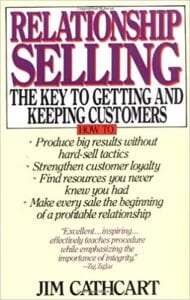
Relationship Selling
You talk about your story of origin in your TEDx Talk. That is one of my favorite questions to open the show with. Would you share with us how you’ve got into the speaking business, how hearing one person sometimes can change your life and who that was for you?
There may well be someone or multiple ones reading this, who get an idea from what we are saying. Nothing necessarily that it’s our idea but that they have an idea because of what they hear. The direction of their life starts to change and becomes profoundly more meaningful and fulfilling than ever before. It certainly happened for me. I grew up in Little Rock, Arkansas. I was born in 1946. It’s the beginning of the Baby Boom. My dad was a telephone repairman. My mom was a housewife taking care of me, my little sister and my invalid grandfather and grandmother who were with us.
I expected a normal, ordinary unremarkable life. I was not a superior student. I was a good student but not on the honor roll. I never was an athlete. I had not been encouraged to go for the gold ring, try to do a big deal and make my life an epic success. I just figured I grew up, be a nice guy, have an ordinary home in an ordinary neighborhood, be a middle manager at the phone company, retire at 65 and die at whatever the statistical date was for my gene pool.
One day, in my twenties, newly married, no college degree, no money in the bank, 50 pounds’ overweight, two-pack-a-day smoker, new baby at home, I’m working for a government agency, the Housing Authority. I was an assistant to the loan specialist, which was just above entry-level. He didn’t need an assistant. I was bored to tears. I was making $500 a month and had nothing to do most days. One day, I was sitting there. I had read all the books on urban renewal for the Housing Authority. That didn’t interest me so I had read the Bible cover to cover at work in three months.
[bctt tweet=”Nurture your nature.” username=”John_Livesay”]
In the next room, there is a radio playing. The voice I heard was not John Livesay, it was Earl Nightingale, the Dean of Personal Motivation. That day in 1972, he said something that has stuck with me and changed the direction of my life, “If you will spend one hour extra every day studying your chosen field, in five years or less, you will be a national expert in that field.” I thought, an hour a day, five days a week, 50 weeks a year, that is 1,250 hours.
If I studied one narrow subject for that, not one subject like medicine but one like skeletal structure, bone surgeon orthopedist, at five years, take longer than that to get my Medical degree but five years of study only on orthopedics, I would be a very knowledgeable person on orthopedics. I wasn’t interested in medicine. I was interested in what the guy on the radio was doing. I said, “I want to do what Nightingale is doing but I didn’t know what that was. I knew it was the field of human development. This was at the beginning of what became later known as the Human Potential Movement.
There were no such thing as professional speakers. They existed but nobody had categorized them as such. There weren’t many of them. The National Speakers Association hadn’t yet been formed. The self-help section of the bookstore or the library didn’t exist. There were a couple of books, Think and Grow Rich, How to Win Friends and Influence People, The Power of Positive Thinking, end of the category. Now, the entire sections of a bookstore would be devoted to that. I didn’t know how to get into his field nor what it meant. I decided to take his advice. I dedicated myself to a one-hour minimum, usually 2 or 3 hours, every day I could, studying what the scientists call applied behavioral science, how to be successful. I read those books I mentioned. I met people who had read those books and that started more collaboration. I heard records, a large disk that has a little hole in them. Kids don’t even know what the records are in a lot of cases. I listened to long play records of Earl Nightingale, Napoleon Hill and W Clement Stone. This was even before Zig Ziglar. I heard audio cassettes. I became fanatical about the field of personal development.
Within a couple of years, I was leading group discussions on goal setting and interpersonal skills, things like that, in the Jaycees, the Junior Chamber of Commerce for free after working on weekends. After a year or so of that, I’ve got a job leading training courses other people had written. I then was able to go out on my own. Sure enough, five years later, I was a full-time trainer and speaker, teaching courses, at first other people’s courses, and then my own. I bought a psychological research firm. I did my own original research and now I have written twenty books and done more things than I ever dreamed of doing back in the day. There is more to that story if you want to explore it.

Relationship Selling: If you spend one hour extra every day studying in your chosen field, you’ll be a national expert in that field in five years or less.
There is so much to unpack there. Every speaker has an intention, goal and objective of making an impact. To hear a story of somebody well known making that impact, totally changed the trajectory of your life. Think of all the people that have now had that ripple effect. That is part of the reason why I love that story so much and the willingness to do the work.
I co-authored a book with Brian Tracy in 2020 called The Will to Win. My chapter was the theme chapter, the will to win, positioned his first and mine last. Other co-authors did chapters in between. Mine was the will to win requires the will to work, the will to show up, the will to endure the pain, the will to be embarrassed and humiliated from time to time by failing, the will to persist when you feel like there is no hope. Somewhere there is an answer. There are lots of will tools that total up to the will to win. The desire to win is useless. The will to win is a whole bunch of other things that combine.
We are certainly going to make that one of the tweets from the episode, “The will to win requires the will to work.” Nobody loves that alliteration more than I do, Jim. I like that on so many levels. One of your more famous books, certainly something that had a big influence on me is this concept of Relationship Selling. I heard you in another interview talking about there is no such thing as a natural-born seller.
There are natural-born talkers. It’s like your specialty is storytelling. There aren’t natural-born storytellers but there are people who have a natural ability to quickly learn storytelling. Some people find that very difficult to learn but can. Once you understand story structure, concept, how to interact with people, how to articulate a particular story in a way that makes it both emotionally and intellectually appealing, that’s learnable. I went to my 30th high school class reunion some time ago. I remember talking with one of my old classmates who said, “What are you doing now?” I said, “I’m a professional speaker.”
[bctt tweet=”The best story is one where people feel they are in it.” username=”John_Livesay”]
He said, “What do you speak about, just anything?” I said, “Sure. They just pay to hear my voice.” He said, “Did what?” I said, “No. Of course, not. I have a specialty. That is what I focus on. It’s sales and human development.” This guy said to me, “You always were a good storyteller.” I said, “What? I was?” He said, “Yeah.” I said, “I wish somebody told me.” John, I didn’t know I was a good storyteller. I grew up in a family of storytellers, in a culture in the South, where storytelling was commonplace. I’ve got a kick out of doing it. I enjoyed performing so I had a little flair to it. It was starting to develop even back in high school.
It’s so funny sometimes I will get off the stage, back in the day, literal stages or even virtual talks, people say, “You are a natural.” I used to go, “What? I worked on this.” Now I just smile and say, “Thank you.” That is a very high compliment because you can’t see the word behind it that is struggling.
Let me interrupt for a second and complete the answer to your earlier question, natural-born salespeople. There are eight stages in the sales cycle, preparation, targeting the right people, connecting with them so that you gain their trust, assessing their needs and wants, solving their problem, convincing them to commit to buying, assuring that they are satisfied, managing yourself and managing your sales career. That’s a different skillset. You might be natural at 1 or 2 of those. For the others, you are going to have to learn or buy resources or subscribe to something that will provide that for you.
I’m so glad you went through all eight. For me, the bookends are the two of the most important ones. Let’s start at the end. This is the one I think most people do not even have an awareness of let alone do, which is managing your career and your own persona as a professional and continuing to learn, refining your skills and not being so dependent on anyone’s job to be at that mercy. At the beginning of it is the need for preparation. One of my favorite quotes is from Arthur Ashe, the tennis pro, “The key to success is confidence. Key to confidence is preparation.” I know in my sales career, that was always the key to my success. I was willing to prepare for every single call. Most people, “I have been doing this long enough. I will just wing it. I will see what comes to me in the moment or whatever.”
Think and Grow Rich: The Landmark Bestseller Now Revised and Updated for the 21st Century (Think and Grow Rich Series)
It’s like the person that gets up to give a speech and they say, “I had these notes,” but tear it up and they wing it. Afterward, it just makes me want to go up to them and say, “You could have been so much better.” It’s not that you need to read this. It’s just that if you don’t do that, organize everything and then follow some format, then we are not going to be in on it. What is going on for you?
Do you think Clint Eastwood gets in front of a camera without rehearsal? No. Do you think Tiger Woods doesn’t practice? Of course, he still does. Yet somehow some people think they don’t have to do that. The other thing you talked about is storytelling and selling is those little details. In your TEDx Talk about How to Believe in Yourself that has over two million views for a reason. It’s because you paint a picture in such detail that people see themselves in it. One of the phrases you talk about is going to McDonald’s regularly, getting a relationship going and then everyone’s worst nightmare. You get the audience to describe what that is. I’m going to let you pick the story up there. I think you know the detail. I’m looking for people’s mindset is as opposed to just being a crowd.
I had the habit of going to breakfast alone every morning for many years. I would do that because that was when I would get focused. That is when I would do the business side of selling, which was my first book and that was with Dr. Tony Alessandra. That was the managing sales part of that and managing your career. I went to McDonald’s every morning. I would not take a stack of work. I would take an empty pad. I would write goals and work on them. This is with McDonald’s for the first several years. When I found a cool coffee shop in La Jolla, California, I upgraded a bit on the cuisine.
At McDonald’s in Tulsa, Oklahoma long ago, I went there every morning. One morning, I pulled up and saw what you would hate to see at McDonald’s, which is empty buses in the parking lot. The way I set that up with an audience is I tell them about this habit of breakfast alone. One morning, I saw the sign of my restaurant in the distance and I do the little golden arches. They snicker and then I tell them, it’s McDonald’s. I say, “In that morning when I’ve got to the parking lot, I saw the danger sign.” Now in a McDonald’s parking lot, if you want to eat there, what would be the danger sign to you? Someone always yells out, “A bus.” I pause, I just do the gesture, “Two” and I say, “Two buses empty and a McDonald’s parking lot equals what in the lobby?” They start thinking and I say, “45 people per bus, you got 90 head ready to graze in the lobby of this McDonald’s. I’m about to add one to the mix.” When I’m telling the story, I do it this way, “I squeezed through the door into the crowd. I’m looking for the line that moves the fastest, the one that will always stop if you get in it.” Sure enough, that happened.
[bctt tweet=”The will to win requires the will to work, the will to show up, and the will to endure the pain.” username=”John_Livesay”]
I heard my name, “Mr. Cathcart.” I look around like I’m there again, “Mr. Cathcart” and I look up at the front. It’s the woman that works there. Grandma is her nickname. Her name is Marilyn. I said, “Yes?” She said, “Your breakfast is ready.” I’m leaving out some parts of the story that set that up. She knew me from seeing me every morning and me always ordering the same thing. When the crowd was there, she got my order, fulfilled it and set it off to the side. She said, “Mr. Cathcart, your breakfast is ready,” and went on serving other people. After I have told this story and had some laughs, I go back to the audience and analyze the scene. I say, “What did it cost her to do that?” They tell me it’s the cost of the breakfast. I said, “No.” It took her fifteen seconds of extra time. Since she said the breakfast was free that morning, she didn’t charge me. It took her the net cost of that breakfast. The revenue loss is the gross cost. What do they get? Six years of customer loyalty while I was in Tulsa, followed by 45 years of free advertising, including the ad that I just gave.
You talk about the big takeaway for everyone is we do the majority of things in our life, buy things, return as loyal customers based on how it makes us feel.
We do the things we do to achieve the feelings we want, the feeling of being correct, strong, successful, safe. The feelings we want, not just to attain the things we need.
That is one of my favorite insights into human behavior, which if you understand yourself, that completely changes how you sell. From there, people can have relationships, as you said in your book.
How to Win Friends & Influence People
It also helps you be a better listener and a better empathetic person in selling because if you understand that all people, self-included, do the things we do to achieve the feelings we want then it begs the question. I’m about to make a sales presentation to John. What does he want? What feelings does he want from the things I represent as a product or a service? Does he want the feeling that he is going to be more successful with me because there is a higher margin of profit? Does he feel like he is going to be able to relax a little bit more because I’m saving him time, money and effort? Does he want to be admired more because he is the first on his blog to have one of my products? There is a feeling behind it. If you understand the feeling, everything else will commit to working.
Would you agree then based on what you just said that people buy emotionally and then back it up with logic?
People say, “They buy with logic.” No. They analyze with logic, rationalize, justify and then they make the decision. Do I want it or not? Yeah. Is that enough information? Yeah. That one, just a calculator going, “Do, do, total.” That was a shift from logic to feel. That moment of decision occurs at the feeling level but we get there through the logical passage.
What do you think makes a good story when someone is telling a story either as a speaker or as a salesperson?
[bctt tweet=”We do the things we do to get the feelings we want rather than just the things we need.” username=”John_Livesay”]
They feel they are in it. I have never given that an answer before because I have never had anybody asked me that way, not a fellow storyteller like yourself. The number one element of a story is they feel the moment has been suspended. They are now in the story. I was on my motorcycle. I pull up to the intersection. This guy looks over at me. He hadn’t decided yet, whether I’m a jerk and an idiot for driving a motorcycle or I’m cool. I give him my best Fonzie. He goes, “Hey.” I know I have made it. I just made that up on the spot while we were talking. Didn’t you feel like you were there at the intersection?
I visualized you in a leather jacket. I visualized the Fonzie. I visualized everything. I loved how it was so binary, the choices, it’s very funny. What advice would you have for someone who either wants to get into speaking or wants to grow their speaking career?
I have had a lot of people especially in China put you on a pedestal over there. “Teacher, “Master, what do I need to do to become a great speaker?” First, become a great person and then agree to speak. I’m serious about that. That is not just a flip and answer. If you are not a good person, then your speeches are going to be data dumps or performances. They are not going to be a real sharing between people. If you want to become great at something, figure upfront. You’ve got to become a great person. To achieve and sustain, there is the keyword, sustain great things. Anyone who came by accident hit a homerun one or a homerun once but you are not going to repeat that or even get close to repeating that unless you have got it all together.
How do you become a great speaker? You become a better and better person every day of your life, a more understanding, caring, disciplined, professional, knowledgeable, skilled, practice, structured, playful and interested person. Do you want people to be interested in you? Be interested in them. Like my son, when he worked at a mailbox when he was in college, he said, “Dad, you know how to get a lot of mail? Send a lot of mail.” How do you become an interesting person or get people to be interested in you? Take an interest in them. As a speaker, how do I get rid of my nervousness? Stop thinking about yourself. Think about the message you want them to receive and about how they might best receive it. Forget yourself and your nervousness will disappear.
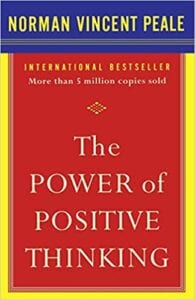
The Power of Positive Thinking
Stop thinking about yourself and start thinking about them.
Only about them and that takes a lot of learning to do. Also, if you want to be a good speaker, go speak 100 times for no pay in any circumstance that you can find, in a basement of a church, in the summertime, in the South with no air conditioning at 160 degrees and 100% humidity. Go speak on the bay of a fire station to five people that didn’t want to be there and you have got them for half an hour, speaking on behalf of the local civic club. Go speak in somebody’s living room with kids running around and distractions and they didn’t turn off the TV. Go speak in front of a bunch of people that hate being there and resent you and would rather beat you up. Speak in a bar when there is too much noise and the jukebox is playing and people are yelling. I’m talking about giving speeches, not conversation.
Also, never speak to an audience that you can’t bring something valuable. It’s not about making a sound with your mouth. It’s about making sense with your mind and theirs, making that connection. They say, “I’m a good speaker.” Are you a good speaker when someone dies in the audience? Are you a good speaker when the building catches on fire and the rooms got to be evacuated? I have had all these things happen. I have had emergent medical emergencies. Luckily, no one died in the audience. Are you a good speaker when they announced that the founder of the company passed away this morning? Now, here is our guest speaker. Are you a good speaker when the room is four degrees and everybody is just dying to go somewhere warm? What about when they are all drunk? People say, “I’m a good speaker.” Prove it. Let me choose the circumstances. You choose the audience, I will choose the circumstances.
I see so many similarities between what you said about speaking and actors. I finished listening to Matthew McConaughey, his Greenlights book. He is a fascinating, interesting person separate from his acting career.
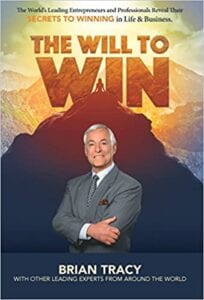
The Will To Win
He was a student of Og Mandino, one of my former friends. He has passed away now. He is one of my all-time heroes.
Actors are willing to work off-Broadway for very little money or no money to practice their craft. There are a lot of similarities there. I think it’s the willingness to see yourself almost as an artist, which actors tend to do. I don’t know that a lot of speakers see themselves that way. That is what my big takeaway is from what you described.
I went to a meeting in Santa Barbara one time. I was all dressed in a suit looking lovely. I remember the client was a company you never hear about anymore. I don’t know if they exist in that form, Wang computers. Wang was a big corporation back in the day. I arrived at this resort in Santa Barbara. I’m in the meeting room. I’m there early because I’m the keynote speaker. The meeting room was set up completely wrong. It’s set up in a tunnel, like a board meeting for 60 some odd people. That is like speaking in a railroad car. I said to the houseman, “Excuse me. The room is all set up wrong. It needs to be classroom style.”
He said, “Do you want to change it? You change it yourself.” It’s just a few minutes before the people started arriving. I made a snap decision. I said, “Leave my room.” He said, “What?” I said, “Go,” because it was clear he wasn’t willing to help. He left the room and I locked the door. I took off my suit, tie, shirt and stripped to the waist. I reset the whole room. I then went to the restroom. I cleaned up a little bit. I put the suit back on. I unlocked the door. I said, “John, welcome to the meeting. Come on in.” All the people came in. We went on with business as usual.

Relationship Selling: If you want to be a good speaker, go speak 100 times for no pay in any circumstance that you can find.
Doing what it takes, people. That is a great story to leave and on. That is such a visual and a willingness to do what it takes to make it right, not just for the audience but for yourself. Let the audience put you on a pedestal. Don’t put yourself on a pedestal. I know you have been on a pedestal and you have earned that. In China with thousands of people coming to clamor like a Tony Robbins experience. I can’t thank you enough for sharing your passion, wisdom and most of all your humor with us.
You are very welcome. I’m enjoying our new friendship. Since we live in the same area, we’ve got to make plans to get together. I look forward to that. This will be the first of many occasions like this.
If people want to find you, where should we send them? What website?
Send them to Jim Cathcart anywhere on the web. I’ve got Cathcart.com, Wikipedia page, LinkedIn, Facebook, YouTube. Most all of it is free so dig in and enjoy. Send me a message.
Thank you so much. Thanks again, Jim.
It’s my pleasure. Take care, John.
Important Links
- https://Cathcart.com/
- Relationship Selling
- Think and Grow Rich, How to Win Friends and Influence People
- The Power of Positive Thinking
- The Will to Win
- Wikipedia – Jim Cathcart
- LinkedIn – Jim Cathcart
- Facebook – Jim Cathcart
- YouTube – Jim Cathcart
- How to Believe in Yourself – YouTube
- Greenlights
- Better Selling Through Storytelling Method Online Course
Wanna Host Your Own Podcast?
Click here to see how my friends at Podetize can help
Purchase John’s new book
John Livesay, The Pitch Whisperer
Share The Show
Did you enjoy the show? I’d love it if you subscribed today and left us a 5-star review!
- Click this link
- Click on the ‘Subscribe’ button below the artwork
- Go to the ‘Ratings and Reviews’ section
- Click on ‘Write a Review’
Love the show? Subscribe, rate, review, and share!
Join The Successful Pitch community today:
- JohnLivesay.com
- John Livesay Facebook
- John Livesay Twitter
- John Livesay LinkedIn
- John Livesay YouTube
Risk Forward With Victoria Labalme
Posted by John Livesay in podcast | 0 comments

What does it take for you to start embracing uncertainties? Taking a giant leap towards the unknown results in fear, but doing so can bring you to extraordinary things you may have never expected. What is the right attitude in the face of risks? John Livesay brings in actress Victoria Labalme to dissect the many nuggets of wisdom discussed in her book Risk Forward: Embrace the Unknown and Unlock Your Hidden Genius. She talks about how strict goal-setting may never lead to success, the five myths of achievement, and the right time to say no. Victoria also explains how art can be utilized to level up your businesses and change communities even in the smallest ways possible.
—
Listen to the podcast here
Risk Forward With Victoria Labalme
Our guest is Victoria Labalme, the Author of Risk Forward. She talks about trusting your hidden genius and how we have to learn how to embrace the fog of not knowing, and that sometimes goal setting can lead you astray. You’re going to enjoy the episode.
—
My guest is Victoria Labalme who is the Founder of Risk Forward and Rock The Room, which is a full suite of programs designed to help people express their hidden genius. Her strategies have been embraced by more than 700 organizations, entrepreneurs, senior executives and thousands of individuals around the world. As a performing artist and member of the Speaker Hall of Fame, she is known for her keynote performances. I can vouch for that. We shared a stage at the Coca-Cola CMO Summit. She is also known for her workshops, her private consulting, and online learning. Welcome, Victoria.
Thank you so much for having me, John.
It’s a joy to get somebody with so much talent, creativity and fun on the show and you have this wonderful book, Risk Forward: Embrace the Unknown and Unlock Your Hidden Genius. My first question before we get to your own story is did you start this book before the pandemic or did it happen to be a great timing?
I started it many years ago. I did a TEDx Talk on this topic back in 2016.
That’s what a thought leader does. They have their pulse on the zeitgeists of what people are going to need before they even know they need it, and that’s certainly you. Let’s go back to your own story of origin. I know you do such a fascinating job of this in your talks. You decide where you want to start the story whether it’s school days or the moment you decided, “I’m going to be an actress,” or wherever you want to start.
Growing up, I found that I was often making choices that took me down paths that are different from other people. I know many can relate. I made these choices that other saw were odd. I went to college out west and my family was back east. I decided to sign up for a 75-day expedition when my friends were signing up for graduate school. I was going left when everyone was going right. When people were getting married, I was staying single. When people were having babies, I was off dating different types of men. I always carved my own path. The thing that I found is that there was this judgment along the way where people would say, “What are you doing? What’s the plan? What’s the goal?” Whether it was your major or whether you’re going to get married or what your career was going to be, and I often didn’t know. Many people had a lot of different interests. We all often do, but we’re taught that’s wrong.
[bctt tweet=”Goal setting can lead you astray.” username=”John_Livesay”]
Pick one thing and major in it for the rest of your life.
It’s a counterproductive proposition for people who are multidisciplined, multitalented, and multi interested. I did lots of different things and oddly enough, me going into the not knowing, not getting married, not having a career path, not knowing how I’d put everything together led me to an extraordinary career. The book is about how we can go from this not knowing and follow what lights us up and find our way forward.
One of your early careers was being an actress. Give us a few highlights of Sex and the City back. I know you were on one of those episodes. I know people are always curious to hear some of those details.
I talk about that in the book. I tell a great story from being on Sex and the City. To answer your question, I started doing television commercials as an actor. I was interested in physical expression. I studied with a French mime, Marcel Marceau. I started studying all kinds of acting, performance, writing, directing choreography, character work in comedy. I got picked up by the manager who manages Robin Williams and Billy Crystal. I started doing all kinds of television appearances in a film with Robert De Niro and Harvey Keitel in documentary acting. My career started to take off and then something suddenly happened at the end of the 1990s. It was 2001. I witnessed 9/11 from my window and very much like the pandemic now, the whole world changed. I found myself again in a phase of not knowing and what’s next.
I started helping presenters, executives and entrepreneurs express themselves on stage and on-camera because I had this background. I had no idea how that was going to turn out. Someone had invited me to the National Speakers Association. They’d seen me in a comedy club and said, “You should come.” I thought, “I don’t want to be a speaker. That’s cheesy. That’s motivational. I want to be famous.” After 9/11 and like us in the pandemic, a lot of people started re-evaluating their choices. I thought, “How can I help? Here’s a place people are asking for my contribution. I’m being called to contribute.” I said yes. That yes was not knowing where it would lead. I had no plan. I had no goal but it took me into a whole new territory and I started in the world of speaking. I went from acting and performing to speaking in corporate, associations, and entrepreneurship. That career took off and that’s now how we met. I started coaching executives and entrepreneurs on storytelling, on presentation, on camera, on stage, in meetings and in life.
What I’ve found has happened since the pandemic is, I’ve been getting a lot of requests from sales teams saying, “In addition to teaching our team how to tell better stories to win business, can you help them be better on a Zoom call? None of them feel comfortable on the camera and they don’t have good lighting and there are some basic skills that they’ve never needed before?” What you are doing now is at a whole new level of, “This isn’t a nice thing to have a note. This is a must thing to have a note.”
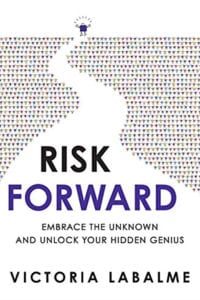
Risk Forward: Embrace the Unknown and Unlock Your Hidden Genius
I’m finding too that a lot of the people I’ve been helping are about how to bring out their own unique gifts. What you’re seeing with a lot of Zoom is everyone’s starting to look the same with their green screen background in their whizzbang technology. If you’re going to stand out and bring out what I call your hidden genius, what do you have that’s different from everyone else? How do you capitalize on that and trust that even if no one else is doing it? Part of what people get from reading the book Risk Forward and the whole methodology is to trust that, the permission to trust that what they’re doing is cool.
We also talk about how to navigate our way through the fog of the unknown, which is such a great visual. We’ve all been in fog. We’d have fog lights on our car and yet sometimes we have woken up a little foggy, pick our brain for whatever reason and no judgment. I’m fascinated to know when someone’s trying to embrace the unknown which is, “How long is this pandemic going to last? Should I change careers?” What is your advice in the book that can help people navigate that?
To circle back to what you called out, there are seven phases in the book and the first is to embrace the fog. I call it The Fog of Not Knowing. Most people see not knowing as something negative. In fact, in the pandemic, everyone says, “How do we get out of this? How do we have certainty again?” The assumption is that it’s bad to be not knowing. What the Risk Forward makes the case for is there’s huge potential in not knowing because in that gap or in that phase, one of the biggest mistakes we can make is to try to rush out as quickly as possible. To use the fog as an exact metaphor, it’s like jumping through the fog and you run into a wall. You go down a path that’s not right for you because you’re so panicked to get out.
The first phase is to embrace it and to say, “This might not be such a bad thing.” I’m not in any way saying that the pandemic is a good thing in the sense that people are losing their lives, their jobs, the economy has challenges, people are stressed in their marriages with their kids on Zoom. There’s a lot that’s very difficult, but there are also a lot of people saying they’re re-evaluating their lives and their choices. The fog is that gap between knowing and not knowing, that we want to not rush out of it too quickly.
You also talk about that sometimes taking action can be a mistake and I’m guessing that’s completely tied in to what you said about rushing into something because many people will tell everybody, “The worst thing you can do is think about something and don’t take any action.” That’s not always the case. If you run into a wall, there’s got to be a fine balance between no action and action too fast.
I have a client named Anne who like many people got into this treadmill of success. She was very successful and she felt like she had to keep going. She had to keep producing and people would always say, “You got to keep going. Why not?” It’s the more is better mentality. She came to me and she said, “I’m exhausted.” The thought of doing these next projects makes me drained. It’s not feeling good. What I want to do is risk forward and take a break. It’s not risking forward to always go for it.
[bctt tweet=”Embrace the fog of not knowing.” username=”John_Livesay”]
It’s not because you have an excuse like, “I’m pregnant. I’m sick.” This is like, “I’m taking a break because I want to.”
She lives in South Africa and she had the option to go into the bushes as they call it in South Africa. She said, “I want to not do this next series of projects. I want to pause on this. I want to honor myself and take a little break.” For her, that was the risk forward. That’s where the taking action. You’re that speed to market, go for it. We are in such a production type of culture where you’re evaluated and praised for your achievements, rather than acknowledge that sometimes it’s okay to take that break. She’s a private client. I was working with her in the Risk Forward private, VIP experience. She took the break and when she came back, she had clarity about where she wanted to go. Her launch did even better because she had taken that time off. She would have eroded her focus by doing all these other projects.
The big companies like Google give their team sabbaticals because they realize the value of it. You know this from your acting, the worst thing in the world to go to an actress, “What are you working on now?” If you’re somebody in the corporate world, “Have you gotten promoted lately?” Nobody wants to get stuck in that. That is a perfect segue into your tackling the five myths of achievement. Let’s pick the biggest myth and double-click on that a little bit.
The myth of goals would be the most or the myth of goal-setting. I have a phrase in the book which is, “Goal-setting can lead you astray.” I firmly believe that because there’s something called goal contagion. For example, and you probably know this because we’re in a similar field, when I run my Rock The Room programs so often people would come to me and they’d say, “I want to do a TEDx Talk or a Ted Talk. I want to have a New York Times Bestseller.” I thought, “You and 1,800 other people. Where did that come from? Did that come from within? Is that because everyone around you is doing it?” When I was in Hollywood, in my days of doing film and projects, this is now somewhat passed but all the directors used to wear leather jackets and have their hair in a ponytail. It’s like you see young women walking down the street in their flip flops, they have long hair, they’ve got white T-shirts, cutoff jeans, and all the girls look the same.
All the Millennial guys look the same with their beards.
There was a phase when all the guys would have their hair in that tuft on the top of their head with a little crisscross. I used to say like, “I want to put a golf ball in there and whack it like it’s a little tee.” The point is everyone starts to look the same. Whether it’s the cul-de-sac, the community, or the culture, what I’m encouraging in the book is to step back and make sure that what you want is what you want because otherwise, that goal will lead you astray. I’ve seen this so much in the entrepreneur, the speaker market, the corporate market, and the artists market where people have some target that is coming from without. They get it and they’re miserable, or they don’t get it and they’re miserable.

Embracing Uncertainties: One of the biggest mistakes is to try to rush out as quickly as possible.
I should tell you where the whole term comes from, but the risking forward is about following the inner current. Some of the most celebrated companies and creative endeavors didn’t begin with clarity and a goal. I worked with the leadership team at Starbucks, Microsoft, PayPal. I’ve worked with people on the opera stage. I worked with people with PBS Specials, huge talks around the world, Hollywood directors. I will tell you across the board, whether it’s corporate or Hollywood or anything in between, some of the most celebrated creative individuals and corporate individuals had no idea what they were doing. They were following that inner current.
It’s that gut. The classic story around that comes to mind is Steve Jobs creating the iPad. People were like, “Nobody wants that.” Do something even if no one else is doing it whether it’s a product launch or your own brand as opposed to going, “It looks like in order to be a speaker, you must have a New York Times Bestseller and give a TED or a TEDx Talk. Let me check those boxes off and then maybe I get to live my dream.” “Is that really your dream?” is what I hear you saying. If it is your dream then out of that, those things will happen more organically than outside references being, “I don’t want to write this book but I guess I have to.”
On that note, for years, people would say to me, “Where’s your book? You’ve got to have a book.” I don’t feel compelled from the inside out to write a book. I would only be doing it because I “should do it.” Finally, I got the idea of what I want to do. The idea came from within and it’s not your typical book. It breaks the mold because I have a background. I was doing all kinds of artistic disciplines, one of which was drawing and painting. The book is highly visual. It’s highly designed. Every page is different. Each chapter is unique unto itself. You can see this on Amazon. We have a little video that’s going up so you’ll be able to see that. This is full color. When people say, “I’m going to get the audio.” I go, “You’re going to miss out if you get the audio.” You’ve got to get this because the thing is you can read the book in any order. I didn’t want to make people feel like they could pick it up and read it in any section.
That is smart of you because creative people are not linear thinkers or linear learners. Rob Angel who created Pictionary is a client of mine. He took my online course and said, “I love that the modules could be done in any order.” It never even occurred to me because I tend to be linear that somebody might want to do that. I said, “Great.” You’re so smart to make your book like that for people like Rob Angel, who I’m sure will love this book.
Some people do like the linear and some people don’t. It sounds like what you’ve built in your course is both. It’s not that you have to do it out of order or you have to do it in the order, it’s you can choose. That’s exactly how my book is written. You can certainly read it from front to back or you can read it in one section.
It gives people the freedom to go, “I want to read that chapter again or that module again and reinforce one thing.” It does that. There are many good things that you have here. This concept that’s part of our uncomfortableness and anxiety around the unknown is a lot of people like structure, discipline and routine. Whether you’re training your dog or raising children, that’s all part of that world. We don’t realize how much we like it until things are uncertain, “When will I be back on the stage again?” You have a way to reframe that. Instead of thinking of it as the enemy, which we’ve all heard that wonderful quote, “What we resist persists.” If we’re going to resist uncertainty then you’re always at battle with yourself. How do you reframe that to being an asset?
[bctt tweet=”Some of the most celebrated companies and creative endeavors didn’t begin with clarity and a goal.” username=”John_Livesay”]
Things have always been uncertain. We’ve been under the illusion that they are not. I think 9/11 woke us up to that. When you have an emergency in your family whether that’s an accident that happens, an unexpected diagnosis, an unexpected death or a job loss, then we start realizing, “Things might not have been as secure as I thought.” The only thing that’s constant is change, as they say in the world of Buddhism. If we start by recognizing, things have always been uncertain. Part of why people are waking up so much now is they know that tomorrow is not guaranteed. They could have a job loss, we could have any kind of civil war. We could have any issue in our Coronavirus land.
People are waking up to the moment. That’s the first thing. That’s a good thing to wake up to the unpredictability and recognize that. The second thing is I’m all for clarity and goals. They’re great. What I’m arguing against is when we’re not yet clear. That window is fertile and it’s full of promise. In the book, I give people four questions that they can ask when they’re in that phase. They’re more than that but I call it the four questions. I’ll give you the first which is, “What interests me now?” That’s the key part.
Years ago, I took a workshop with a guy named Remy Charlip. He was this wonderful children’s book author, director and choreographer. He started the workshop not by having us introduce ourselves by what we have done because our past can hold us back. We feel we have to follow in line with what we’ve done. I’ve already produced ten films, I have to produce eleven. If I’m known for being this top salesperson, I have to continue to be a top salesperson. Instead, they’re going, “What interests me now?”
That pressure to not keep doing what’s been successful like Matthew McConaughey. You’re in sync with him completely because I watched him being interviewed. He said, “I’ve done rom-coms and made a lot of money. I don’t want to do that anymore.” He had to stop and put the pause button on. It was a while before he got another offer. He was willing to take the risk that might be the end of his career. Had he not, he’d never gotten those dramatic roles.
I have a line in the book which is, “Risking forward requires saying no.” There are times when it requires saying no.
I had a gentleman named Matthew Kimberley on and he said, “Your business should be a love story.” As a storyteller, I love that. You should be in love with what you’re doing, and you say we should approach our business as an art. I thought the two things together were a nice way for people to start going, “Maybe I could figure it out as a love story. How do I think of it as an art form?” What is your definition of art? Let’s start there.

Embracing Uncertainties: Today’s society has a production type of culture where you’re evaluated and praised for your achievements, rather than acknowledge that it’s okay to take that break.
It’s the expression of what’s inside of you. To that end, there’s a section in the book where I talk about something called the Prism Effect. I’ve been talking about this for many years. The idea is that each of us is this full range of colors. That’s your passions, your past, your personality. How do you harness that hidden genius of yours and bring it into your daily life even in the smallest of ways? For example, there’s a woman who is an administrative assistant. She happens to love the Oscars. She rolls out a red carpet by her desk every year in the Academy Award week. She is making a little piece of art in her own way. It’s small. I have another example in the book about the manager who loves poetry. She brings a line of poetry to every Monday morning meeting. This to me is turning your business into art even in the smallest of ways.
Even someone who’s making their coffee. Those people can be artists with those designs they make in the cappuccino.
Years ago in my office Downtown in Manhattan, the guy who was our janitor in the building used to lay out the garbage bags on a sidewalk in the most beautiful formations. He would enjoy that process. I find for myself that we all fall into the conveyor belt of our day, but if you step back and not get caught in the data, the duties, the deadlines, the details and say, “How do we make this moment a piece of art like the way I picked up the phone?”
What you’re encouraging all of us to do is broaden our term that unless I am a painter, I am not an artist. There are many forms of being artistic in communicating and expressing yourself. The most successful artists I’ve ever seen are making their art for themselves and not worrying about the masses. That goes full circle back to what you’re doing and saying.
That’s a scary thing. What I’m about to say goes counter-cultural to a lot of what people are teaching now so brace yourself. There are a lot of talks now about, “Who’s your avatar?” This crept up in the last number of years. An avatar is being, “Who’s your target market? Who’s your ideal client.” Because I came from the arts, we don’t think that way. We’re not thinking, “Who’s that ideal outcome?” It’s, “What is it I’d like to say? How do I say it in a way that’s going to land with people?” and then test it. This book, for example, a lot of people said, “Who’s the target meter?” I thought, “It’s resonating with people in their twenties who are out of college, or people who are in their 70s who were facing a creative project, or people who were in their 40s who were trying to find their new phase in life and a career transition. The book is for anyone who’s looking for that next step in work or in life.”
They’ll probably use it multiple times throughout their life if they start using it in their twenties. They’ll pick it up later in life and go, “I need to dust this off many years later. Now I need another hit of courage to take another risk.”
[bctt tweet=”Risking forward requires saying no.” username=”John_Livesay”]
You’re so intuitive because that is the vision for the book. I said, “I want this to be the kind of book.” It is the book that people will gift and give to others, and treasure for years to come, and keep for decades.
You’re certainly a treasure. Anyone who gets to hear you speak, that’s for sure. I want to ask you what interests you now? You’re always got something going on. In addition to your book launch, I’m sure there’s something else where you’re thinking, “What interests me now is?”
My full-on thing is the book and getting it into people’s hands because it’s beautiful. The response is quite moving for those who’ve read it early. It’s such a joy. We’re building this incredible community of people who want to risk forward in their work and in their life. What interests me now is hearing the stories of people who read this book and hear who it’s touching.
If people want to share their story of what they’ve done after reading your book, how should they do that? Is it by posting a review on Amazon? What’s the best way to do it?
There are three ways. Number one, they can post the review on Amazon. Number two, they can join us. We have not only a book but we’re creating a community inside. It’s called RiskForward.com/resources. Inside of that is not just the book. There’s more. For anyone who wants to also post their stories, they can come to me on my social media handles and post their stories there. In Amazon, the book and social.
What are your social media handles?

Embracing Uncertainties: When you’re in a period of transition, you are not wrong for not knowing because at the edge of it are the beginnings of the extraordinary.
@VictoriaLabalme but you can always find me through the #RiskForward.
It’s not just a book, it’s a movement. You read it here first. Victoria, any last thought or quote you want to leave us with?
When you’re in a period of transition, you are not wrong for not knowing because at the edge of not knowing is the beginning of the extraordinary.
It doesn’t get better than that. We’ll be sure to put the links to Risk Forward and Victoria’s website. Thank you so much for being on the show.
Thank you so much for having me.
Important Links
- Risk Forward
- Rock The Room
- Amazon – Risk Forward: Embrace the Unknown and Unlock Your Hidden Genius
- RiskForward.com/resources
- @VictoriaLabalme – Twitter
- Better Selling Through Storytelling Method Online Course
Wanna Host Your Own Podcast?
Click here to see how my friends at Podetize can help
Purchase John’s new book
John Livesay, The Pitch Whisperer
Share The Show
Did you enjoy the show? I’d love it if you subscribed today and left us a 5-star review!
- Click this link
- Click on the ‘Subscribe’ button below the artwork
- Go to the ‘Ratings and Reviews’ section
- Click on ‘Write a Review’
Love the show? Subscribe, rate, review, and share!
Join The Successful Pitch community today:
- JohnLivesay.com
- John Livesay Facebook
- John Livesay Twitter
- John Livesay LinkedIn
- John Livesay YouTube
Storytelling With Impact: The Secrets To Giving A TEDx Talk With Mark Lovett
Posted by John Livesay in podcast | 0 comments

A former corporate executive who was saved by storytelling, Mark Lovett spent many years in the computer industry in Southern California. After getting out of that, he started consulting and got dragged by one of his clients to be a co-organizer of TEDx San Diego back in 2010, eventually producing twenty TEDx events over a six-year period. Today, Mark joins John Livesay to share his secrets to giving a TEDx talk and telling stories that can impact the lives of others. Shake off your fear of public speaking. Listen to this episode and start sharing your wisdom with the world.
—
Listen to the podcast here
Storytelling With Impact: The Secrets To Giving A TEDx Talk With Mark Lovett
Have you ever wondered what it takes to get to TEDx or a TED Talk? Do you think you have a story with an idea that’s worth sharing? Have you ever wondered what it’s like to organize a TED event? This episode is for you. Mark Lovett has given TEDx Talk and organized multiple ones. He shares with us all the secrets that go into creating a story with impact. Enjoy the episode.
—
I’m honored that we have Mark Lovett here from Lisbon. Mark and I knew each other when we lived in Southern California together. He was running the TEDx for San Diego for many years. He went on to do it down in between the border of Mexico and California. He even has done a TEDx in a prison. He is the expert not only on TEDx but how to tell a great story. Mark, thank you for joining us.
It’s a pleasure to be here, John.
Let’s have people know a little bit more about you. Would you mind expanding on your background?
I like to tell people that I was a former corporate executive who was saved by storytelling. I spent many years in the computer industry in Southern California. I got out of that and started consulting. It was one of my clients who started TEDx San Diego back in 2010, but that’s a program that only started in 2009. He was one of the first TEDx right out of the gate. He dragged me into the process to be a co-organizer. As the story goes, after one of the events, he puts something in my wine and I woke up the next day with a licensed to TEDx San Diego in my hand. Over a six-year period, we produced twenty TEDx events.
The big ones inside Symphony Hall were 1,800 people. You mentioned the one we did on the border where we built a stage in the United States and the stage in Mexico. There was the border fence right in the middle. We alternated our speakers back and forth from one country to the other. We did TEDx inside a state prison. One of our events was a youth event and that’s where the speakers, the performers, and the emcees were all high school students. My only rule was no adults allowed on stage.
I bet the kids love that.
[bctt tweet=”Tired of coming in second place? Stop playing defense.” username=”John_Livesay”]
They were thrilled. It’s like, “We don’t have any teachers or principals and we’re going to run this thing?” That whole process got me into speaker coaching, which has been a wide variety of things, from seminars to one-on-one. You and I met through a Speaker Adventure, which was a program I put on with another amazing speaker coach. We would bring six people together for a weekend and do intensive storytelling training. Storytelling’s become a lot of fun and it’s the passion of my life.
What I find interesting is many people will say to me, “I don’t have a story and I don’t have any interesting things to talk about.” You’ve shown that everyone from a high school student to someone in prison has a story. Can you speak to that a little bit of how can people who may not feel that they have a story, where should they start looking?
That is a common comment that I get from people also, “I don’t have a story to tell. I’m just an average person and I haven’t done anything great.” I said, “Interesting. No story to tell. You’ve never had any experiences in life? You’ve never made any mistakes? You’ve never had any successes? You’ve never learned a single lesson in your entire life?” They go, “No, let me tell you about,” and they’re rattling off. They were a football star in high school or they got in a car wreck and almost died but they recovered from it. When you dig into it, everyone does have a story. They have learned something. They have wisdom to share with other people. Once you can bring it out of them, then you get the ball rolling and then they get into the storytelling mode.
I once heard someone say that, “Your mess is your story.” That is a different way of looking at it because you’re saying, “You’ve never made a mistake. You never had any experience where you learned a life lesson.” Once we start to look at our lives, we think there is a story. The other issue is, “I’m not good at telling stories.” We’ve solved one problem. We’ve given people two places to look in their life, mistakes you’ve made and the lessons you’ve learned. Before anybody feels comfortable telling a story, even at a party, let alone in front of the people for business purposes, they think, “I stumble through it.” Let’s talk about that. How much practice is required when someone does give a TEDx Talk?
Let me back up a step to the overall point and then we’ll get into the TEDx. Unfortunately, there’s one of these urban legends that get out there that says, “People fear public speaking more than death.” I used to teach a class at the University of California, San Diego in storytelling and everyone would nod their head like, “I’ve heard that. I believe that. That’s the most frightening thing.” I said, “I’m going to give everyone in the class a choice. Option A, you come up in front of the class and speak for five minutes. Option B, I have a guillotine out in the parking lot. You can walk out to the parking lot and it’s off with your head. How many of you are going to choose to go out to the parking lot?” Nobody raises their hand.
In that class, the first night, there are a lot of nervous people. By the sixth class, everyone is up there delivering stories and they’re blown away by the other students. They’re all saying, “I had no idea you were such a great speaker.” It’s not that we’re afraid of public speaking. As humans, we are afraid of doing anything that we’re not good at and that we’re going to do in public because we don’t want to embarrass ourselves. Once you can start practicing to your point and get used to it, you realize, “I can do this. I tell stories all the time. I still tell stories to my family, friends, and at work all the time. Up on stage is a little different, but I can do it.”
Giving A TEDx Talk: When you dig into it, everyone does have a story. They have learned something and they have wisdom to share with other people.
That reminds me of a book I read called Scared Speechless. My friend Steve Rohr wrote it. He said, “What’s going on in our brain is that from a tribal standpoint, stick with the herd. If you get hurt or you’re limping behind, that’s when you get picked off by a predator.” Our old brain is wired. If we’re standing in front of an audience, the herd is out there. You’re all by yourself. What are you doing? You’re going to get hurt. The other common thing I hear is that, “I get butterflies in my stomach. I get nervous and I hate that feeling.” I’m going to give everybody a solution to that, which is the goal.
It is not to get rid of those butterflies in your stomach, but to get those butterflies in your stomach to fly information. Get the nervous energy out of your stomach and into the room. If we make a gesture, then we’re putting energy into the room. It comes out of our stomach. The biggest thing is to get out of your head, worrying about how you’re doing. As you said, we’re afraid of embarrassing ourselves and of being judged, “Will they like me? Am I good enough?” The key to getting those butterflies in your stomach is don’t try to get rid of them. Get them to fly information. What are your thoughts on that?
It’s common. A lot of times, people think, “Only the amateurs get butterflies in their stomach.” I’ve talked to many professionals, they’ve been on stage 1,000 times and they still have that nervous energy. To your point, they turn it around to help them rather than to detract them from giving a speech. What I try to tell people is, “Think about this before you’re going on stage. The fact that you have this honor to connect with an audience and you’re going to give them a gift of your wisdom. This is a lesson you’ve learned, an idea that you have, an experience that you have and you’re going to share it. The audience is sitting there because they want to hear your story. They’re not passing judgment on you. Instead, they’re showing love to you.” When I tell that to people, they look at me strangely like, “What do you mean? These people don’t even know me. How can they love me?” They get out there, give a talk and then they come off stage. They go, “You were right. I could feel the love coming out of the audience. I could see the smiles. I heard the laughter. I got the applause.” They start feeding on that energy. Once you bring the energy of the audience and then the butterflies go away.
What I found when I gave a virtual keynote as opposed to doing it in front of an audience, we had that energy going back and forth. I wasn’t sure if the energy was going to come. I knew I could put the energy out, but I didn’t know because everyone’s on mute. I thought, “I’m wondering if this is going to still be the impact that I’m looking for.” Sure enough, it was. The element of connection and the joy of storytelling comes through virtually, which is fantastic to know. We can do a Zoom breakout rooms and we’ve got chats, we’ve got some questions here already.
Before we jump into that question, let’s just recap what we’ve covered so far. Everyone has a story. Look at your mistakes or lessons learned. Overcome your fear of giving the talk because you wouldn’t get those butterflies in your stomach to fly information. Get out of your head, worrying about embarrassing yourself. It’s one of the key elements, so we don’t feel like we’re going to stumble is practice. That would be the next logical thing of, “I know what I’m going to say. I’m not afraid of having to be perfect even.” The practice part also supports getting those nerves to go away.
The more comfortable you are, the more relaxed you’re going to be on stage. We used to always talk about when we did Speaker Adventure. There’s this process of moving the talk from your head down to your heart. It’s always in your head when you’re trying to remember, “What’s my next line? What’s the next thing I’m going to say?” Once you rehearse it enough times, it starts to become easier and easier to recite. It’s what’s often called the happy birthday effect. I’d walk up to anybody on the street and said, “Start singing happy birthday.” They wouldn’t stop and say, “What are the lyrics to that?” They would start singing happy birthday because they’ve done it so often. For me, there’s this circular process of writing, rehearsing, and editing. I try to get students involved in that as soon as possible.
[bctt tweet=”Go from pushy to persuasive.” username=”John_Livesay”]
I’m a big proponent for writing out your talk because the writing is where ideas start to flow and then stand up and rehearse this talk. All of a sudden, you’ll start hearing yourself going, “That sentence doesn’t sound right. I would never say that word. This sounds a bit disjointed.” One of the big reasons is that we read differently than we hear. When you’re reading a book, it’s not the same as somebody giving a speech. When you start writing your talk, you’re going to write it as though you’re reading it and it’s going to read well. When you start speaking it, you’ll notice all these things that don’t work quite right. You sit down and you start to edit it. Make your sentences shorter, more concise, use simpler words, and then get up and rehearse. When you do that, 30, 40, 50 times, some people roll their eyes and go, “I can’t believe I’m going to do it that many times.” You start to feel it. You start to get that happy birthday effect.
I love that happy birthday effect. That is clever. One of the mistakes that I see a lot of people are making is pushing out a bunch of information and I want to talk about that. What’s causing that? I’m going to tell his concept of, “We have to get people to know, like, and trust us.” People say, “What does that look like?” The problem with know, like, and trust is, you think, “If I have to get people to know me before they want to trust me, that’s going to cause me to push out a bunch of information.” You’ll get confused about it. You think, “I’ve got to explain to everybody why they would need to know me and why they need to like me.” When that happens, people get bored and they checked out because nobody remembers a bunch of information. That’s where storytelling comes in.
The old way of doing this is you got to know, like, and trust, therefore, “I got to give you a bunch of information, then maybe you’ll like me and trust me.” I tell people, “You’ve got the order wrong. You need to start with trust,” That’s a gut thing. In fact, the handshake came about to show you didn’t have a weapon in your hand. It goes from the gut to the heart. The more you show empathy for someone and can describe what their pain point is, especially as you were describing the mistake you might have made when you share that in a TEDx Talk or any situation. People feel like, “I have empathy for what that felt like. I’ve been in that situation.” It goes to our head where we want to have a story that gives people some actionable takeaway where they think to themselves, “This advice you’re giving me would work for me.” Tell me about some of the best TEDx Talks you’ve seen and coach people giving that use this formula.
I go all the way back to the ancient Greeks and the Romans, which is where rhetoric started. Aristotle had three principles that mirror what you talked about. Those are ethos, pathos and logos. Ethos is where we get the word ethics and it’s your credibility. Whether somebody believes in you, whether they trust you, whether they feel confident that you know what you’re talking about. Pathos is the emotional side, which is liking somebody. You want to touch somebody emotionally. I love the fact that you reverse the order on these because it’s the third one, the intellect. Logos is where we get logic from. Your argument needs to come off as being logical, but that logic comes after the emotional connection and after that credibility.
That gut, heart and head are important there. One of the ways that you do that is by being authentic on stage. Dumping out a bunch of information, then you sound like a college professor, “I’m reading from a textbook and here’s all the information that I’m trying to convince you that this information is true.” People need to be able to connect to you as a human first. One of the ways to do that is to put a human story within your story. Even if your story is technical, let’s bring in that human element. For example, we did a TEDx at the Salk Institute. I coached all the speakers. One of the scientists, his specialty was electron microscopy.
It’s a beautiful technology, but he would get down to the molecular level of what they’re seeing. They’re watching cells split and divided, all this stuff. I said, “I love all of that. Let’s take a step back and tell me who you are. How did you get into this?” I was certain he was going to tell me, “I knew I wanted to be a scientist when I was five years old. I had a microscope and I would look through a telescope.” He said, “When I was growing up, I wanted to be a tennis pro.” I said, “Unbelievable.” He goes, “I realized I wasn’t good enough, so I decided to go to college.” I said, “You wanted to be a scientist?” He said, “No, I was a Philosophy major.” It turned out his girlfriend had told him he needed to take an elective and she said, “Why don’t you take one of these organic chemistry classes?”

Giving A TEDx Talk: Your argument needs to come off as logical, but that logic comes after the emotional connection and, after that, credibility.
He stumbled into this class. He got into the lab and he says, “This is it. I’m hooked.” It completely changed his life. I said, “We need to put a piece of that in your talk so the people can understand you took a human journey to get to the point where you became a scientist. You weren’t born a scientist. You weren’t running around in your diapers with a little stethoscope.” He ended up giving a great talk connected with the audience because almost everybody’s had this issue of, “What’s my career? Am I going to change careers? What am I going to be when I grow up?” He tapped into that, “What am I going to be when I grow up?” It took him into the information piece.
When I work with people in the business world, salespeople, or helping people with their own story for an interview to get a job, I talk about the four parts of a story. You’d exhibited them brilliantly. I can refer back to what you said. The first part is the exposition, the who, what, where, when. You describe a problem, and then there’s a solution, and then there’s the resolution. Harry posted a question about, “How do we approach a complex story and reduce it to eighteen minutes for a TEDx Talk?” The same is true whether you’re given an hour in front of a client, if you’re a salesperson. Many times in my career they said, “I know we said you have an hour, you only have twenty minutes.”
You have to be agile and flexible. If we look at what you described for us, the Salk Institute. That’s Jonas Salk, who created the polio vaccine. You’re doing a whole TEDx. We know that’s going to be complicated and scientific. You then tell the story of all the problems this scientist was getting into the real nitty-gritty. There was no emotional connection to what he was saying. The solution you came up with was an unexpected story. It was not a linear story. Suddenly, we know about his life by chance of discovering how much he loves science and had a knack for it. That becomes a huge resolution to the story of whether you’re thinking if you might stumble upon something just like scientists do when they discover a cure, where they’re not even trying to cure something.
We know many examples of that, like penicillin or even Viagra. Many things were not originally discovered that way. Something that’s complex about molecules and scientists, we’ve taken them on that journey using exposition, a problem, a solution, and then I feel that the secret sauce to a great story is the resolution. I talk about The Wizard of Oz. Part of what hooks that movie is that little 3, 4-minute when Dorothy’s back home and saying, “You were there.” Suddenly she puts all the pieces together of what life is all about. If that movie ended with her in the hot air balloon going back home, then we’re like, “Okay.” We need those takeaways, don’t we?
In the story that I told about that speaker, once he connected with the audience and he got into the technology of electron microscopy, how they’re able to watch the AIDS virus, how it infiltrates a cell and how it replicates and all of this, he came out of that. He said, “What we’re learning now, we’ll be able to use to investigate many other diseases.” I’ve been thinking about him lately because of COVID-19. The fact that his research is exactly the research that looks at that molecular level to say, “How is the virus acting? Is it mutating? Is it changing? How is it affecting humans? Why is it killing one person and the other person doesn’t even know they have it?” He brought it back to that human level. He was saying to the audience, “Even though what I work on is very technical, the reason I do this is because it will change your life. The scientific discoveries that we’re going to make will change the world of disease prevention and control.” The people walk out of that talk feeling like, “My life is going to be different. Especially, my children’s lives are going to be different because of what he’s doing.” It came right back to that human aspect.
Let’s give everybody another example of storytelling. I was hired by Olympus Medical to be their keynote speaker for their 250 salespeople that call on doctors. They wanted to bring storytelling into their culture. Tapping into another TED speaker, Simon Sinek, who’s all about the why and not the how or the what. The thing is it was an a-ha moment for their executive marketing director. This started the journey where they said, “Everything we’re putting out in our marketing materials and what’s coming out of the salespeople’s mouth is about the what and the how, not why we’re doing this. Let’s find a speaker who can talk about storytelling and selling and help us get to our why.”
[bctt tweet=”The more comfortable you are, the more relaxed you’re going to be on stage.” username=”John_Livesay”]
They started their journey of looking and used Google search. My Better Selling Through Storytelling book came up. They saw I was a speaker and then I was up against another speaker. What’s ironic about all this is I help people use storytelling to sell their product or service better, and yet the audience forget that I had to sell myself using the same skills. I talked to them about, “What does it look like? What would this be?” I tell a story of how I helped an architecture firm win $1 billion airport renovation by telling a story that took people on a journey as opposed to showing a bunch of before and after pictures with statistics. When I started to work with the Olympus Medical people, I said to them, “What are you saying now?” “Our equipment makes surgeries 30% faster.”
I said, “That’s a nice feature. There’s no story there. There’s no emotional connection.” It’s very left brain analytical. They start doing the math for how many more surgeries? How much money could you make? I said, “What does that mean? How long is a typical surgery without your equipment?” “Two and a half hours,” “With it?” “Thirty percent faster is an hour and half.” I said, “How about if we tell this story to a doctor? Tell the story of another doctor.” Here’s the secret, everybody. When people see themselves in your story, they want to go on that journey with you. They said, “Dr. Higgins was using our equipment compared to what he had been using. You can imagine how happy he was that he was able to go out into the waiting room and tell the patient’s family who was waiting to know if their loved one was okay or not, as they look for cancer, made it and got good results an hour and a half earlier than normal. For that family in the waiting room, if you’ve ever been there, every minute feels like an hour.”
The doctor said, “This is why I became a doctor because I wanted to be able to deliver good news. The fact that I could deliver good news and heal people earlier than making someone out there waiting.” They said, “That gives us chills. We’ve never thought about the patient’s family benefiting from this.” Let’s talk about characters in a story that we bring in. How do we target people’s heart strings, so inevitably they want to open their purse strings and buy from us? What do you think about the importance of describing characters like that?
I think it’s key. I had a wonderful opportunity to work with an entrepreneur. He was starting a brand new company. They were still in stealth mode. Nobody knew they existed. Their product hadn’t been released yet. I came in and I said, “This is odd. I work with entrepreneurs and CEOs, but they have existing businesses.” He said, “I want all of my employees to become storytellers. I want them to start thinking about stories in what they do.” We brainstormed a couple of options. One was I gave a workshop to everyone on the general principles of storytelling.
We had a unique idea that we got everyone to buy into. That was we were going to make a commercial for a product that didn’t exist yet. We storyboarded the process and we said, “This is not you as an engineer or a marketing person telling the world how great your product is. We’re going to focus this little movie on two people, the one person who’s bringing out this product and the other person that is going to be one of the customers. Tell us a story of who this person is who’s developing this product. Once that product gets in the market and a customer gets a hold of that product, what are they going to do with it?” The focus was that the customer’s life was going to be better or to your point, they were going to be happier because every successful product ends up with a happy customer.
They have a smile on their face, they’re satisfied. Maybe it solved a pain point. Maybe it reduced the amount of time. Maybe it relieves stress. We did a storyboard. A couple of the employees in the company were pretty good with cameras and a couple of the engineers had daughters who would have been in theater. We wrote this out and they filmed a little movie about these two people. It humanized the whole process of why their product existed in the first place and the change that happened to their customer. When they showed this little video to the rest of the company, everyone’s eyes got big.

Giving A TEDx Talk: Once we are emotionally attached, there needs to be the logic underneath. Without the logic, it’s just a feel-good story, and there’s no takeaway from that.
They were watching someone’s life change in front of them. For most businesses, you don’t get to see that. You can make the sales call, you win the order, you ship the product, and then that company might sell that again to somebody else. You don’t get to be in that waiting room to touch on your story and you don’t get to see the look on the family’s face when they go, “Thank you so much. We were sitting here worrying minute by minute. It’s good to hear this news sooner rather than later.” By doing that, they were able to visually show that customer being happy. I would encourage other people to do something like that, to envision how the customer’s going to feel when your product has an effect on them.
Here’s a big myth like, “I’d rather die than get up and speak.” Another myth is people buy logically. There’s no emotion in any decisions. People buy emotionally and then back it up with logic. A lot of my tech engineer audiences and clients are shocked by that because they think everything they’re doing is logical. I said, “I promise if you go into an expensive sports car dealership, they’re not talking about how many miles per gallon it gets. They’re talking about how sexy you’re going to look and feel and how much fun it’s going to be.” That part of the joy of storytelling is it elicits emotion and then drives us going from there. This concept of storytelling. I want to go back to that with another story and then an example of that. This premise that, “Do we have a story or not?” Everybody has a story.
As we’ve talked about, you can tap into your stories from looking at the mistakes that you’ve made or lessons that you’ve learned. Businesses tend to talk about things through a case study, which has been around forever. It’s boring. They usually go, “We worked with this client.” You’re listening to someone recite a bunch of information. The magic is when you turn a boring case study into a compelling case story, almost like The Wizard of Oz that goes from black and white to color, people are suddenly pulled in saying, “I want to go on that journey.” When I was working with that architecture firm, we turned that fairly traditional boring case study.
I said, “What’s the exposition?” “Years ago, Jet Blue hired us at JFK to renovate the airport. One of the problems we had to deal with was wrapping up all the floors in the middle of the night. We had all our vendors on call from 9:00 at night until 9:00 in the morning in case something went wrong. At 2:00 in the morning, a fuse blew and we had the vendor there in twenty minutes fixed it. At 8:59, the last tile went down and then all the stores opened on time at 9:00 AM. A year later, sales are up 15% because we’ve designed a place that attracts and keeps people shopping longer.” That’s a case story as opposed to a lot of before and after pictures. Instead of getting up there and saying, “We use critical thinking to anticipate problems.” That was part of the story. We had all our vendors on call. Even the little visual of, “At 8:59, the last tile went down.” A little bit of drama in a story is important. Would you speak to that of how good TEDx Talk could use this?
I love that visual that you mentioned of putting down that last tile. We are geared these days to the Hollywood version of that storytelling. It’s right down to the last second and the hero has no chance of winning. He pulls it off in this miraculous fashion and we feel good because the hero was successful. There’s that emotional connection between the success of the hero and our desire to be successful also. Back to your point about the emotions versus the logic, it’s true. There are a lot of studies that have been done where people say, “I make my decisions logically. It’s based on the facts.” Studies have shown that emotion always leads. Once we are emotionally attached, there needs to be the logic underneath. Without the logic underneath, it’s just a feel good story and there’s no takeaway from that. That’s important for people to remember that they do need the data, but it needs to support the emotional piece of the story.
When we are working with TEDx speakers, that’s much the same process. They start off with, “Here’s all of the data that I want to put out there.” We come back and say, “How can they connect to you? How can your data connect to the audience?” In the case of the scientist, what he was doing was technical, but the result of what he was doing was going to touch people’s lives. We had a young woman on our stage talking about the integration of San Diego and Tijuana, Mexico and the fact that these two cities sit on the most heavily trafficked land border in the world. People think it’s far away and it’s a foreign country. When you bring people together, you see how cultures interact. Instead of this becoming a political issue or a physical issue or even some immigration issue, all of a sudden, she brought them down to culture.
[bctt tweet=”Every successful product ends up with a happy customer.” username=”John_Livesay”]
She’s like, “Think of the music that we share across this border or think of the art that we share.” She even told a funny story inside of her big story, which was, “When your friends come to town, they all want to know where can I get the $2 tacos?” The Taco Tuesday had become this religion in the United States. She brought this laughter into the audience where everyone in the audience could connect because they all knew what Taco Tuesday was. If you need to know about commerce across the board, maybe they didn’t understand all of the ramifications of two cultures, but it brought it down to this very common point. When you can do that, then you can layer the statistics on that. People now trust you because you’ve met them where they are. You’ve put yourself in the audience’s shoes.
Harry has another question for us. It taps into what you were saying about how Hollywood has influenced our perception of what a good story is and how we get pulled in and Robert McKee is known for being a big teacher of scriptwriting. There’s Joseph Campbell, who’s also known as creating the story structure of the Hero’s Journey. I’ve got some examples of how both of those things intersect to Hero’s Journey within movies. Did you pull from both when you’re working with people on their TEDx Talks and companies?
I like to pull from a variety of sources. I love to go back in history, so I can bring some of Aristotle and Cicero into the mix to say, “Look how old storytelling is. Before any of these electronics came out, the only way we could convey a message was through verbally speaking in front of a crowd.” Get into the Hollywood genre, which the Hero’s Journey is a part of that. Some people like to talk about the three-act play in the theater. There are some elements you can pull out of that. There’s a whole area of expertise called narrative nonfiction.
This is where you take a nonfiction, but instead of presenting it like a newspaper report, you present it as a story. If you’ve ever seen movies like The Right Stuff or Black Hawk Down, true stories, but they were wrapped in a narrative. You can pull techniques from each of these different genres to convince people that onstage, you can be telling a true story. Do it in a narrative fashion where you have characters, emotions, plot points and a resolution. These basic principles can all be pulled together.
Let’s share with people some of the genres of storytelling and then we’re going to talk about a movie that uses it and a brand that uses it. Rags to riches is a common example of storytelling. The movie that uses it is Cinderella when she gets completely transformed into something amazing. We hear rags to riches stories when we hear about Oprah. She was born poor. The fact that she’s a billionaire, brands use it. Johnnie Walker Scotch used to be this poor Scottish farmer and now he’s Johnnie Walker. When I was giving a talk at the Coca-Cola Summit for their CMOs, I met the Marketing Director at Auntie Anne’s Pretzels, which are sold in airports and shopping centers. I said, “How did this all start?” She started selling pretzel on a farmer’s market and clearly scaled up from there.
The next one is a quest, going on this journey. For me, nothing says that better than Lord of the Rings. Lord of the Rings is all about finding that ring, “I must get that back.” Their tagline is used to be, the pursuit of perfection. We’re on this journey together and how do we get there? The next one is a rebirth genre. This is It’s A Wonderful Life, when he’s trying to figure out, “How I can get a second chance at my life?” Prudential uses this in their brand marketing. They talk about in terms of storytelling structure. They say, “Your retirement is your third act. It’s not a continuation of middle age, it is a rebirth.” It’s very obvious. Back to our favorite, your decision of, “Do I stay home or travel?” It takes on all kinds of meaning during the COVID-19 situation but from a storytelling standpoint, that is The Wizard of Oz.

Giving A TEDx Talk: Every audience is going to be different. Every audience has a unique perspective on the experiences they’ve been in.
We talked about the importance of this resolution. This is all part of the storytelling. When people are going to go back to traveling again, Expedia uses this genre when they say, “Go book a trip on Expedia, had this amazing adventure and then come back and tell all your friends about it.” It’s important that people are taken on a journey so that they can relate to it. One of the biggest problems I help companies and salespeople do is become memorable. When I was talking to an executive search firm, he said, “It’s between us and two other people. We each get an hour to come in and present.” We always say, “Can we go last? We’ve done some research hoping that whoever goes last is more memorable.” I said, “If that’s what you’re depending on to be memorable, you’re in trouble.” Can you speak to the power of how stories make us more memorable?
I did a webinar with a bunch of hosts from Airbnb and these were their experiences. They’re used to people coming into town and having these great experiences. Right now, there are no travels. They’re looking at, “Once travel opens up, how am I going to retool myself? How am I going to improve my company?” I said, “People when they’re in storytelling mode, it happens in three phases.” This happens in a lot of industries, but travel is the top example. I said. “The first storytelling that they get into is when they see your product. They start telling themselves a story of, “When I have that experience, what is it going to be like? I’m going to be walking through a city. I’m going to be surfing. I’m going to be tasting wine.” They have to have a good enough story in their head for them to hit the buy button and to even purchase your product in the first place.
The second level of storytelling is when they do go on vacation. They’re in your city and you’re taking them on a hike out through the mountain ranges. They’re in a real-time story. It’s no longer imagination. Every step is a little piece of the story, the other people who are on the tour, and all of the things that they see. The third part of the story is once they go home and that’s when they’re telling all of her friends. That’s where that memory becomes solidified because they started out envisioning the process and then they experienced it. They’re telling their friends.
I think Apple did this well. To give one quick example, I remember these giant billboards when the iPod came out. It would have this girl dancing with headphones. She’s holding an iPod. They were like, “That’s it.” There’s no text. There are no specs, there’s nothing there. The whole story was people driving by that billboard, “I could be that person. If I was that person and I had that product, I could be listening to music everywhere.” They go out and they buy the product. They’re running on the beach and they’re listening to their favorite music. The third part of that story is they go tell all their friends, “You can’t believe how great this product is. It’s changed my life completely. I can listen to my favorite music everywhere that I’m at.”
Once you get someone to become your brand ambassador and sell your story, they have more impact than you telling your own story. When you’re trying to get a client to hire you as a speaker like I do, or to get a client to buy your product versus another product for a hospital or whatever it is you’re selling, you need to have somebody inside who can remember your story. They’re not going to remember 30% faster necessarily, but they’re going to remember that story. There are a lot of decision-makers these days. You need someone who can remember your story and tell it for you.
That’s why I’ve created an online course called Better Selling Through Storytelling to help people learn how to become better storytellers, so that they are able to start increasing the amount of sales that they’re closing. They just keep going up to bat and going, “I’m not getting anything.” They get burned out. I know I was there. I was on that roller coaster of pushing and pushing and hoping something stuck on the wall like spaghetti. With storytelling, you don’t have to push hard. You can pull people in. One of my clients said, “We are tired of coming in second place when we go up for these presentations.” They go, “We looked at three and sorry you came in second.” Unlike the Olympics, there’s no reward. There’s no medal for second place in business. You just don’t get the business.
[bctt tweet=”People will trust you when you’ve met them where they are, when you’ve put yourself in their shoes.” username=”John_Livesay”]
When I started working with them, they’d sent their team through this course to learn how to turn these boring case studies in the case stories, they won three new pieces of business back-to-back. They were statically happy. When I was working with Gensler, the architecture firm renovating the Pittsburgh Airport, the stakes are so important in a story. You have to have people to care. I’ve never worked on anything that had the stakes that high, $1 billion with its stake on who told the best story during that interview hour. This concept of nobody wants to be pushy. A lot of people hate even saying that they’re salespeople because of the image of an old used-car salesman pushing stuff.
Kurt Beecher, who was the CEO of Sugar Mountain Foods, they make this amazing cheese up in Seattle. He said, “Can you come teach my team how to become persuasive but not pushy? How would you do that?” I said, “Teaching them how to tell stories,” because when you teach people stories, they’re in the story. You’re not pushing. You’re pulling people in. We touched on the importance of people forget what you say right after you leave the room. That’s why going last was a hope strategy, which is not at all something you can control, but you can control telling the best story.
Even if you have to go first, you set the bar and people will remember you and then share that story. I love this phrase and I hear it a lot in the healthcare industry. People say, “I’m trying to talk to the doctors in between surgeries. I feel like I’m an annoying pest.” I said, “Stop pushing out a bunch of information and tell him a quick story. The story doesn’t have to be something about your product. ‘You look overwhelmed. You reminded me of another doctor who was so overwhelmed. He didn’t have time to go to the bathroom and get his lunch and I bought him his lunch. Would you like me to do that for you?’” It’s amazing. “I can’t wait to see you again. Do you have any more stories for me?”
There’s always time for a good story, not for being bored by a bunch of information. People talk about, “Is there anything storytelling can do to help me become better? I feel invisible. My calls didn’t get returned. People go, ‘Who are you? What’s the company again?’” I said, “You got to start with a story to get on somebody’s radar.” Have a catchy line in your subject line and your email. I help people do all of this. They go from invisible to feeling irresistible and then you get people wanting to work with you. You’re not pushing anymore. You’re pulling them in.
This online course goes through everything we talked about but in much greater detail. You can do it at your own pace. It’s only ten-minute modules. There’s a little quiz to make sure you understood things. You don’t even have to do it in order. I’ve made it so it’s not cumulative. Rob Angel, the creator of Pictionary said, “I skipped around on the things I wanted to learn first.” I said, “It’s designed for you to do that.” He was able to use what he learned in this to help him tell better stories for his talks as well as when he was getting interviewed for his new book. If I’ve put together a lot of bonuses and for everybody on this particular mastermind, not only do you get invited to a Facebook group where you can work with me once a week with everyone else in the course and have me help you with your pitch.
I’m giving people a one hour bonus to work with me one-on-one that normally goes for $500 an hour. You can see the value of signing up will give you an hour after you’ve gone through the course for me to help you do this. If you’re selling something for $50,000, like the Olympus Medical people do, and you’re closing five out of ten pitches and through becoming a better storyteller, you close six out of ten. That’s a great benefit to you. The course investment is only $497 and I come up with a 60-day guarantee. If your sales aren’t up by 10% after taking the course, I give your money back. Why? I don’t want people to feel like this is a risk. I’m passionate and my purpose is to help as many people as possible become storytellers because I know it can help change the way you feel about yourself and the impact you have on people.
If you go to this website, JohnLivesay.com/sales, you can sign up and you’ll get the bonus hour to work with me one-on-one. The Olympus Medical people put their entire team of people through it after my keynote. They kept reinforcing what they’ve heard. You’re in a similar situation where you’ve heard a mini version of my keynote and the course will reinforce this. You can imagine how much better your life is going to be where there’s storytelling in your toolbox instead of a hammer, as Maslow said, “Looking for something to hit a nail.” Mary Ann, thanks. She said she loved that there’s always time for a good story. You talk yourself out of it saying, “No one has time to listen to my story.” If you’re going to learn how to be clear, concise, and compelling with your stories, people always have time for that. Don’t you find, Mark?
The key thing to remember there, and you’ll hear about storytelling all the time, is to know your audience. Every audience is going to be different and every audience has a unique perspective on the experiences they’ve been in. Even if you sell one product to 100 different clients, all 100 of those clients are going to have their own story. You do need to do your homework. Put yourself in their shoes and understand what does success mean to them. Success to you means, “I made the sale,” there’s nothing wrong with that. If you’re focused on what is success for them, what does that story look like? Your story can be more tailored to take them on a journey in their mind, from where they are now to a place where they’re successful. We talked about customers being happy, that’s the same thing. They want to feel like, “This was a good choice. This was the wise move. This made my life, my company, and my customers better.”
I want to thank you, Mark, for giving us your wisdom and your insights and all that experience putting on many TEDx Talks and now you’re helping people around the world. If anybody’s interested in learning how to give a TEDx Talk, I’ve referred several of my friends to you and everyone. You coached me on mine. I will forever be grateful for that incredible experience. Storytelling is it, gang. That’s why I wanted to invite Mark on because we’re both in that same mindset of whoever tells the best story has the best TEDx Talk or the best chance at their career. Thank you all for joining us and I’m looking forward to getting to work with you, hopefully on telling your story. Someone’s asking how people can get a hold of you, Mark?
If you go to StorytellingWithImpact.com, that has all my information. You can connect to me through there. Like John, I also have an offer on my website for people who want to get on a Zoom call with me. My rates are similar normally, but in this time of COVID, I’ve been giving people a free hour session with me. It’s been amazing. I’ve heard a lot of great stories, not just about business, but mainly about what people are experiencing going through quarantine. You can book a time with me if you want, and we can chat too.
You get an hour bonus with me if you sign up for the course. Mark’s been generous enough to throw in an hour of his time. I can tell you will get a lot out of it than I have. Thanks again, everybody. Go out and tell great stories.
Take care.
Important Links
- Mark Lovett
- Speaker Adventure
- Scared Speechless
- Better Selling Through Storytelling
- Sugar Mountain Foods
- JohnLivesay.com/sales
- https://www.StoryTellingWithImpact.com/
Wanna Host Your Own Podcast?
Click here to see how my friends at Podetize can help
Purchase John’s new book
John Livesay, The Pitch Whisperer
Share The Show
Did you enjoy the show? I’d love it if you subscribed today and left us a 5-star review!
- Click this link
- Click on the ‘Subscribe’ button below the artwork
- Go to the ‘Ratings and Reviews’ section
- Click on ‘Write a Review’
Love the show? Subscribe, rate, review, and share!
Join The Successful Pitch community today:
- JohnLivesay.com
- John Livesay Facebook
- John Livesay Twitter
- John Livesay LinkedIn
- John Livesay YouTube