

Own It With Robert Hunt
Posted by John Livesay in podcast | 0 comments

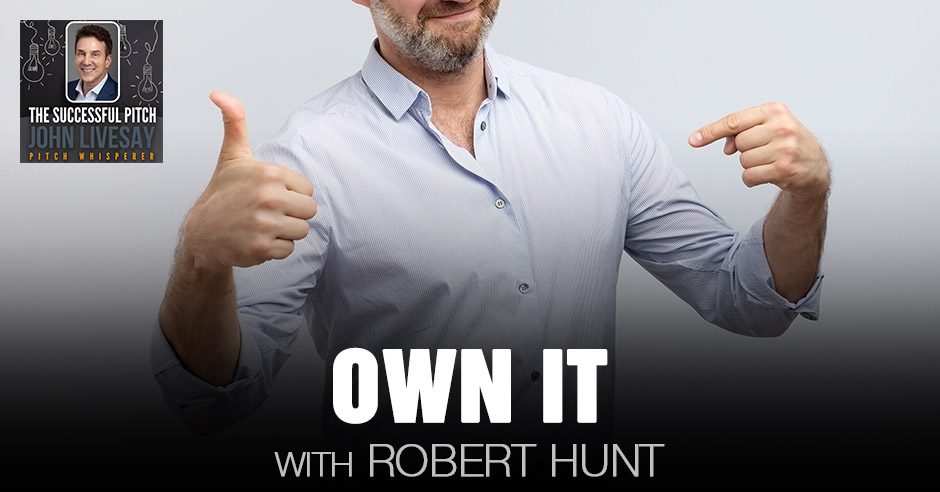
With the trials and problems you face every day, do you blame other people or specific circumstances? It’s time to own it. John Livesay sits down for a conversation with Robert Hunt about the importance of accountability. Robert is the business owner and forum leader of Renaissance Executive Forums Dallas. He has been a marketing and sales leader most of his career, but in 2013 he decided to transition his focus to leading business owners and CEOs in monthly peer-to-peer advisory groups. He helps leaders remove obstacles that keep them from being their best. He believes that it’s his purpose in life, and God has wired him to pursue this passion. In this episode, he shares valuable insights on handling stress and pressure as well as the importance of accountability in business and leadership.
—
Listen to the podcast here
Own It With Robert Hunt
My guest on this show is Robert Hunt, who helps CEOs figure out how to remove things that keep them from being their best and more often than not, it has to do with head trash. He said the difference between pressure and success is knowledge because when you have the knowledge, you can make a plan. Enjoy the episode.
—
My guest is Robert Hunt, who’s a business owner and forum leader of Renaissance Executive Forums Dallas. He’s been a marketing and sales leader most of his career, but in 2013, he transitioned his focus to leading business owners and CEOs in monthly peer-to-peer advisory groups. His first group started back in 2013 and it’s been working with small and medium-sized business owners and CEOs in Dallas, and helping them remove anything that’s keeping them from being their best. He also has a new book coming out on accountability. Robert, welcome to the show.
You make it sound so exciting when you say a book in accountability. I also have one on how to grow onions. I don’t think anyone’s going to get excited about it, but I’m super excited about the book.
Do you have a title that might be snazzier than the topic?

Peak Accountability – Navigating the Climb to a Victorious Life
We decided at one point we were going to call it Peak Accountability. As we started writing it, we thought, “If someone walked by a bookshelf at an airport or someplace and said, ‘A book on accountability, let me get that.’” I don’t think it’s going to be a grabber. We’re probably going to use the phrase that is the turning point of accountability, which is nobody cares. We’ll probably call the book with a big black cover, red light in red words, Nobody Cares.
It sounds harsh, but if you want to stop being a victim in your life, you have to have this mindset that nobody cares about the reasons why you can’t do this or that. At the end of the day, it’s all up to you and you either own it or you don’t. If you want to own it, you can fix it. As long as it’s someone else’s problem, you don’t have any control over your life. I don’t like being a victim. I want to have the freedom to do things and make a change, but that means you have to own it.
That’s a great tweet you gave us, “You own it or you don’t.” Let me ask you about your own story of origin. What was life like before you started helping CEOs? Give us more details about your background in sales and marketing.
I grew up in Southern California. My career was a marketing agent, coordinator, manager and sales guy. I had a lot of careers in the sales and marketing area. I moved to Texas in 2010 because California was imploding and I needed to get out. It felt like the right time. When we came here, I was doing marketing consulting. I met a guy who had bought the franchise rights for Renaissance Executive Forums. He was telling me what they do. I was listening to him and thought, “People pay you money to help them. That seems so foreign.”
As a marketing guy, you’re always trying to make everything look better than it was. You’re trying to address, “We’ve got all these problems, unhappy customers and the product doesn’t work. Why don’t you get out there and figure out how to tell our story?” I said, “Why don’t we just be a great company and then it’s easy for me to tell the story,” but nobody wanted to go down that road. That was too much work.
[bctt tweet=”Remove things that keep you from being your best.” username=”John_Livesay”]
What I was hearing when I tell that story is I thought, “That aligns with my personal purpose in life,” which became my company’s focus. My purpose in life is I help people remove things that keep them from being their best. That’s how God has wired me. It’s what I’ve done all my life, but I never got paid for it. It’s been this cool opportunity to take my purpose and my passion and have a job that does that. It’s been the greatest combination ever.
I can’t wait to hear a story of an example of one thing you’ve removed for somebody that allows them to be better.
I think the most successful leaders already know what to do, they’re just not getting it done for some reason. A lot of times it’s head trash. I found that you can know to do ABC, but when you’re stuck trying to do it, you can’t get that first step. Coaches don’t tell people what to do. You ask them, “What do they want to do?” They say, “What would you do? What’s the first step?” You said, “Let’s do it right now.” You don’t hold their hand, but you’ve helped them get over the thing that holds them back. Tiger Woods does not need his coach telling them how to hit a ball. He does need his coach to say, “I thought you were going to keep your elbow down. Your elbow is up in the air. Why are you doing that?”
When my clients tell me, “I want to spend more time with my family. I don’t think I’m having the life I want to have.” “What would that look like? What are you going to do? What’s the first step?” All I do is ask him more questions and more questions. They usually self-discover what the solution is. It’s rare that I have to bring up something as an idea to somebody because they’re smart, successful leaders. They run a business with lots of employees. They do it for years, but sometimes the head trash makes it where they can’t see clearly.
I’ve heard of the monkey mind and negative self-talk. I’ve never heard of head trash before, which I love because what a great concept that we can click on it and put it in the trash bin.

Own It: As long as it’s someone else’s problem, you don’t have any control over your life. Don’t be a victim. Have the freedom to do things and make a change, but that means you have to own it.
It sounds that easy, but it is because when it’s not your problem, you look at it objectively. I had a coaching session with a client. He was supposed to do a one-page business plan. It’s a really simple one-page business plan. I gave it to him three weeks ago and he says, “I’ve done the mission vision, core values and purpose but I can’t seem to get my first five strategies down.” I said, “You’re making this too hard. What would you do? If you’re going to drive to New York, what would you do? Get a car. What else? I need some gas. What else? I need a map. What else?”
You got three things, a car, gas and a map. You’re halfway there. I said, “What do you have to do?” He was focused on trying to have additional sales. What’s the first thing you have to do to get more sales? I have to find customers. What’s the first step in finding customers? We started talking, but for some reason, every time he opened up the document, it was giving him anxiety. It’s like this huge test that if he did it wrong, he’d have to wear big Baba glasses. I said, “You’re making this too hard.”
People at that level are worried about perfectionism. Is that part of the problem?
There’s a lot of beat down through COVID from 2020. I think people are a little shell-shocked. I have two sets of clients. One that said, “This was an amazing time of reset. I’ve changed my life, my business. I’ve done all these healthy things and we’ve had amazing growth.” I have another set of group members who have been beaten down. They have to lay off their favorite employees, lose their favorite customers, mortgage their house and all these things to stay alive. It’s been a beat down.
This guy’s been in the beat-down mode. He lost his office building. He had to go move in with someone else to keep going with their business. They lost a lot of great clients. It’s been a hard year. I think at some point you get frozen in stress or uncomfortableness. I think that you need someone who says, “It’s not that big deal. Get a piece of paper, write down the first word. What’s the next word?” That’s that role I play as a coach. He knows what to do. We just had to get some more head trash out.
[bctt tweet=”The difference between pressure and stress is knowledge.” username=”John_Livesay”]
You reminded me, Robert when you said that, of a former guest on the show, Rob Angel, who created Pictionary. When he was trying to start the idea for a game, he got overwhelmed like you were talking about. It was pre-COVID obviously, but “Who am I to do this? I don’t know anything about this,” so and so. He finally made it so simple as you were talking about a roadmap. He got a dictionary, a pad of paper and a pen. He said, “What would be the first word I would make for my game that someone would have to draw?”
He looked up and said, “Aardvark.” He wrote it down and goes, “That would be fun to draw and people would laugh. Now I’m a game-changer and a game creator.” That’s the name of his book Game Changer. You described that almost verbatim. Just start. His whole thing is about finding your aardvark. The fascination of interviewing multiple guests and getting to connect the dots of stories like that is my passion. Thank you for that. That was fascinating to hear you describe it like that of how people cannot make it too hard for themselves and take some next step as opposed to being a deer in headlights, if you will.
I heard this great phrase that says, “The longer you wait to take the first step towards your dream, the lower the chances you’ll ever achieve it.” When I met the guy, who had the franchise rights to this organization here in Dallas, I had no experience facilitating means. I’d never coached anybody for a living and I didn’t have any money saved but I knew that was what God had created me for. I’m wired for that guidance and that role. I knew I had to do it.
I went home and talked to my wife and I said, “I feel like this is the job, the place. This is where everything I am comes together with my passion and my journey.” We knew we had to do it. It was exciting and scary at the same time. Because we took that first step and I got my first group going in six months, which seems like a long time, but it’s fast to do this. You go to some businesses and you’re like, “You don’t know me, but do you want to be in a group with a bunch of your leaders.”
It’s like when I started my show asking certain people to be on the show, “Robert, Kevin Harrington, would you like to be on the show?” It’s a little tricky at the beginning to get people to say yes. Once you’ve got some track record, like you do, it’s a lot easier for people to go, “Look at all these other people who’ve gotten so much out of it.” To launch something is a challenge mindset-wise and momentum-wise. You said something that I find interesting and hopefully helpful to everyone reading, which is, “I knew I was wired for this.”

Own It: There’s no reason you can’t do anything. When you keep blaming why you can’t, you’re a victim and everyone has power over you.
I’m guessing one of your offerings, one of your secret sauces, is you can help other people figure out what they’re wired for, which then leads to another level of confidence beyond, “I think I can do this. I want to do it. I hope I can do it.” I didn’t hear any of that from you. I heard, “I’m wired to do this.” From that grounded faith-based sense of awareness, what a difference that makes?
I think a CEO’s number one job is to cast a vision that everyone else can get excited about. Where there’s a lack of vision, people perish. It is what the Bible says. The reality is that the people who come to work for you don’t need step-by-step on how to do their job. They need a vision of what it looks like when it’s done. Even with my own self, if I don’t have an exciting vision of why I’m doing what I’m doing, it becomes mechanical and it’s frustrating and boring.
When I close my eyes and I see my group members all together in one room and I can see the load of the world they carry being lifted off their shoulders because they’re in a room with other people who know what they’re going through and they feel loved, encouraged, challenged, motivated and inspired. When I see that in my mind, it makes me want to make those awkward phone calls to people who don’t know me and go, “I know you don’t know me, but I know a lot of people. You probably hate cold calls as much as I do. I’m going to ask you three questions and I’ll get off the phone really quick.” If they respond, they do. If they don’t, there are 10,000 more CEOs that I can call here in DFW.
What I find fascinating about what you’re doing is that people come for one thing and then get multiple benefits beyond it. Reading your testimonials, it’s like, “I got so many different perspectives on one problem. The comradery and the relationships I’ve made.” It’s like one thing if you joined the Chamber of Commerce or something else, maybe to network, but that’s not why people are coming. Yet there’s all these additional bonuses of that and that ripple effect.
[bctt tweet=”Some things sound easy, but it really is because you look at it objectively when it’s not your problem. ” username=”John_Livesay”]
I know for myself, when I worked with a healthcare tech company, they hired me to train their team on how to tell better stories to win more sales, “If you help us increase our market share and tell better stories to beat the competition, we’re happy.” Not only did that happen, but then they took all the stories and put them on a repository map. It started breaking down silos, which is as you know, a big problem in every industry. The silos are being broken down because people never knew anybody else’s stories to even make an intro. They had a client in one division, but they never made intros because they never knew a case story.
It’s amazing the similar problems that everybody has no matter what industry they’re in, their journey and their experience. We have four things that we always see in common. People, cash, technology and time. Those four things are the same for every single company. My largest group map, my largest size company is the president of the Coca-Cola bottling company, Southwest here in Dallas with 8,000 employees under his responsibility. He’s a super cool guy. He’s down-to-earth and genuine.
The smallest companies probably did a couple million and yet we all have the same problem when we get together. How do I get more employees to show up for work? How do I get more employees to care? How do we manage cashflow when I can’t buy any chemicals to make stuff or to do jobs? I can’t get raw materials. I can’t get people to show up to do the work. Even the customers who are having problems have enough employees to let us do the work. We’re all dealing with the same stuff. Nothing’s different. It’s a just different color, shape or size.
When you put things into buckets like that, and then you say, “How are other people solving the problem of people,” for example. The other outcome of that repository map where all the stories were, I’d also ask the salespeople to tell their own personal story of origin. What got you into healthcare? “My mom was a nurse. I was a microbiologist. I didn’t want to spend my life behind a microscope,” and all that.
Now, it’s an onboarding tool for new people. The number one thing I hear of people managing salespeople is how do we attract and keep top talent? They’re responsible for it. During the pandemic, they weren’t seeing them in person at annual meetings and this repository map became a way for the team to feel seen and heard. I wanted your insights on that because when we’re kids, we jump in the pool and we say, “Watch me jump in the water, mom or dad.” We want to be seen and heard as kids and validated. That doesn’t go away when we’re in the business world.

Own It: When you feel stressed out, it’s because you don’t have a plan. A plan doesn’t have to be that complicated.
If anything, you need more because it’s such a beat down. What we’ve done is we’ve replaced the relationships we used to have where you would know what house to go to in the neighborhood because all the bikes were stacked out. We’ve got to where I don’t have any friends. I have contacts. I have 4,000 contacts on LinkedIn. People are constantly sending me notes, “Do you know this guy?” I’m like, “I don’t even know how I met that guy.” People send me a request and I stopped accepting requests on LinkedIn for a while.
I would say, “If you want to know me, my phone number or email is right there on my LinkedIn page.” I put it right there. Call me if you want to talk. I don’t need more people on my LinkedIn page. What it did is it gave you this false sense of friendship. There’s a cool song out right now called Pictures of Mountains. It’s beautiful. It talks about no one’s heart ever skipped a beat by looking at pictures of mountains. It says, “I sit outside this restaurant reading reviews of what’s going on inside.” It tells about how we’ve lost connection with the world. It’s poignant for now.
Getting back to being in the moment and not so overwhelmed that it paralyzes us is what I heard from that. Let’s talk about your book. Congratulations, first of all. I know how much work goes into it. You’re obviously already envisioning what it’s going to look like on a shelf and would you pick up a book like that? That’s a tip right there for everybody. Reverse engineer, whatever you’re working on, and then what would it look like? What section of the bookstore is it in? Can I visualize myself speaking at Barnes & Noble? Who would show up? What would I talk about? What’s the problem I’m solving?
We all know what happens when there’s a lack of personal accountability and then going back to managing people. Many people in sales are micromanaged a little bit with CRMs and they all hate filling them out. We need to know how many calls you’re making a day. You need to be accountable. We somehow focus more on the number of calls instead of the quality of the relationships and how close we are to getting a sale. I’d love to hear your thoughts on that.
[bctt tweet=”The longer you wait to take the first step towards your dream, the lower the chances you’ll ever achieve it. ” username=”John_Livesay”]
In that sentence right there, I see so many things that are in that book because the only people who get micromanaged are the people who aren’t doing their job. If I’m rocking it, if I’m a superstar, they don’t even care what I’m doing. They don’t care when I come to work or when I go. The only people who get, “How many calls did you make?” It’s because your numbers are bad. That’s why we’re asking that question. People are so unaware of accountability at the very beginning.
We think like, “Everything’s going on. I take care of my stuff. You take care of your stuff and everything’s fine.” They’re constantly complaining about how the world is not delivering on what they expected or they’re not getting this or that. When some level of accountability comes up into their picture, they’re so quick to dismiss it. If you and I are meeting for lunch and you show up late, you go, “Traffic was horrible. Isn’t traffic always horrible?”
You could have come here 20 minutes early and sat in the parking lot and read your emails. We have a computer on our phone. There’s no reason we can’t be somewhere and still be productive. We look at ways and go, “It’s seventeen minutes to that restaurant, no problem. I’ll do one more email.” All of a sudden, there’s a traffic jam and now you’re late. When the first time they become aware of accountability, whether this is you personally, or you at work or whatever environment you’re in, you blame, then you make excuses or you say, “I can’t,” or at the last part, you wait and hope.
All those four things, you’re a victim. You’re not in control. “I tried that, but this guy was a bad boss. I didn’t get that job. I didn’t get promoted.” If you are a rockstar and you had a bad boss, they’d fire him and keep you. The fact is we want to blame and make excuses and say, “I wasn’t growing my business at the clip that we’re supposed to grow for years.” I’d say, “I’m not good at sales,” but I wouldn’t do anything about it.

Own It: Pressure’s good pressure makes us push to be our best. It makes us creative. It makes us see things beyond where we are today.
I would say, “I’m never really good at sales.” Why don’t you get some sales training? I signed up and paid an awful lot of money to Frank Gustafson in the Fort Worth area. I met with him every week and learned the Sandler philosophies of sales to not only clean up a lot of my head trash, which was keeping me from making sales calls in the first place. My close rate went from 10% to over 90%. It’s because I got sales training and got my head around why I was doing it. Now, it’s amazing.
There’s no reason you can’t do anything. When you keep putting the blame as to why you’re a victim, everyone has power over you, the government, your spouse, your family and the world. When you go, “This is horrible. I hate it.” You acknowledge reality. You embrace the suck and go, “This is going to be a long road, but I’m going to do it.” You make a plan and get it done. Now, you’re the victor over it. It may still take a long time, but you can still control it. If the problem belongs to you, you have the ability to solve it. If the problem belongs to somebody else, you’re a victim. I don’t want to be a victim. I want to solve my problems.
It’s a great perspective on it. It’s that whole premise of, “Is this something I can control?” Live events are canceled. I can’t control that right now. It may be coming back a little bit, but then getting canceled again and all that back and forth. I wanted your opinion on this. The thing that helps me bounce back up, be resilient, which is a key that CEOs need. They need to inspire their team to be resilient is doing what you said. Is this something I can control or is it not?
The awareness that things are not always linear. When I realized that, it helped me. I’m like, “We’re all going to get vaccinated. Everything will go back to normal.” Then it goes, “There’s another variant.” This event got canceled and you thought it was going to be a comeback. It’s a setback. That could be a metaphor for anything. “I fixed this problem. Why isn’t this happening yet?” If you aren’t willing to roll with what’s coming and not realize everything is linear, I think that manages your expectations a little bit.
[bctt tweet=”It may still take a long time, but you can still control it. If the problem belongs to you, you can solve it. ” username=”John_Livesay”]
My mom told me when I was a kid that there are two things you shouldn’t worry about, things you can control and things you can’t control. The reality is a lot less is under control than you think there are. I say, “Business isn’t good, I’m going to go get sales training.” I get sales training. Now I’m a great salesperson. If also the market is tanking and nobody’s buying that stuff anymore, all your great sales training still doesn’t fix the problem if you’re in the same market, selling the same stuff that nobody wants to buy.
I control another aspect. I’ll go to another market or launch a new product. There’s a lot that’s out of your control. You need to be resilient. The CEOs that I have had the most respect for in watching how they have lived their lives and run their business, they’re resilient. They’re not all the best at what they do. They’re not the most brilliant or whatever, but they’re resilient and decisive. They are willing to make decisions, not always the right ones, but they make them and own them. They’re resilient. When something goes wrong, they bounce back and they don’t give up. That’s a huge part.
If someone wants to explore, I am guessing you have to be a CEO in the Dallas area to be part of your forum, correct?
Yes. There are other groups across the country that deal with Renaissance Executive Forums. I focus here in the DFW area.
Obviously, anybody can buy the book?
Yeah.
Any last thought or a quote you want to leave us with, Robert?
[bctt tweet=”There are things you can control and things you can’t control. And the reality is a lot less is under control than you think there are. ” username=”John_Livesay”]
I had a conversation with someone who was stressing out and I reminded him that the difference between pressure and stress is knowledge. When you feel stressed out, it’s because you don’t have a plan and a plan doesn’t have to be that complicated. Sometimes it’s the first step. When you are stressed, it’s like, “Everything’s out of control. What am I going to do? I don’t know what to do.” You then come up with a plan and then you have pressure. Pressure’s good. Pressure makes us push to be our best. It makes us creative. It makes us see things beyond where we are now.
When you feel stressed and overwhelmed, stop. Get some knowledge and let that motivate you to be your best. Sometimes that comes through research, learning and reading, but in our world, it comes through being a part of a group or of other business owners that we lead. I think that’s where great group learning occurs. You end up getting more questions about the things you hadn’t thought about before you make a bad decision.
It’s a great way to end. It’s great information and a distinction between pressure and stress. Thanks, Robert.
It’s my pleasure.
Important Links
- Robert Hunt
- Rob Angel – Previous episode
- Game Changer
- Kevin Harrington – Previous episode
- Better Selling Through Storytelling Method Online Course
Wanna Host Your Own Podcast?
Click here to see how my friends at Podetize can help
Purchase John’s new book
John Livesay, The Pitch Whisperer
Share The Show
Did you enjoy the show? I’d love it if you subscribed today and left us a 5-star review!
- Click this link
- Click on the ‘Subscribe’ button below the artwork
- Go to the ‘Ratings and Reviews’ section
- Click on ‘Write a Review’
Love the show? Subscribe, rate, review, and share!
Join The Successful Pitch community today:
- JohnLivesay.com
- John Livesay Facebook
- John Livesay Twitter
- John Livesay LinkedIn
- John Livesay YouTube
Humor That Works: The Value Of Humor In The Workplace With Andrew Tarvin
Posted by John Livesay in podcast | 0 comments

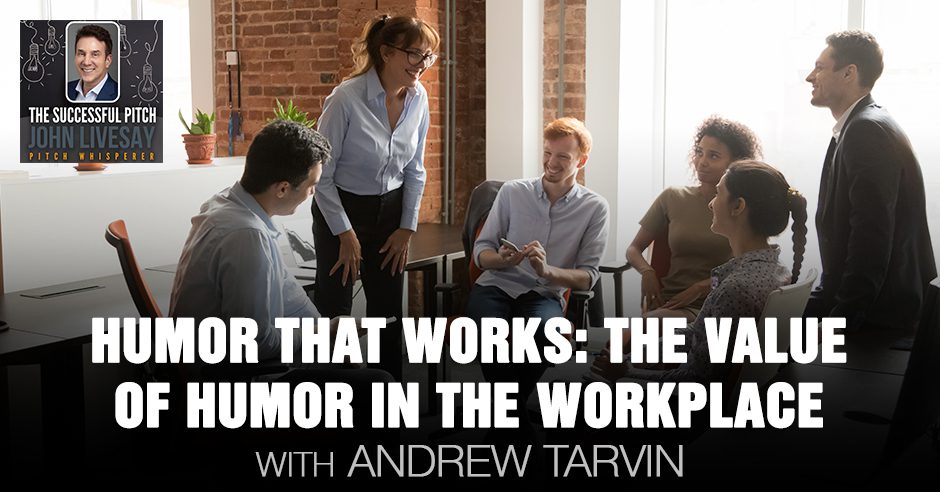
How do you manage the stress of working 90,000 hours in a lifetime? In this episode, Pitch Whisperer, John Livesay, shares more than a few laughs with Humor That Works author, Humor Engineer, speaker, and facilitator, Andrew Tarvin. Andrew reveals how being forced to join an improv comedy group started it all. He teaches us the value of humor in the workplace to increase satisfaction, engagement, and manage stress. Andrew also lets you in on the secret of humor MAP, how you can be a humor curator, and how you can communicate in a way that people will listen and respond to, and have fun with at work.
—
Listen to the podcast here
Humor That Works: The Value Of Humor In The Workplace With Andrew Tarvin
Our guest is Drew Tarvin who is the world’s first humor engineer, teaching people how to get better results while having more fun. As a speaker, he’s delivered more than 500 talks in front of 35,000 plus people with organizations like Procter & Gamble, GE, Microsoft, PepsiCo, and many others. As an author, he’s written three bestselling books, including Humor That Works: The Missing Skill for Success and Happiness at Work. He is also the primary contributor to the Humor That Works blog and has written more than 400 posts on business topics such as humor, leadership and decision-making garnering over one million page views every year. As a thought leader, Drew has been featured in The Wall Street Journal and Forbes best company and had been a guest for more than 40 podcasts. He has a social reach of more than 25,000 followers. The most impressive to me is his TEDx Talk that has been viewed over four million times. Drew, welcome to the show.
Thank you for having me.
[bctt tweet=”Get a humor habit-one smile per hour. ” username=”John_Livesay”]
Would you take us back to your childhood? Were you always somebody who is funny or were you more the engineer?
I’ve always been an engineer. I was born in engineers to the standpoint that I was born three weeks early. Even in the womb, I was ready for efficiency. I was like, “We don’t need a full nine months. We can go right now.” I went to my high school reunion not too long ago and people found out that I did comedy and I talked about humor. They’re like, “You’re not funny.” I was not the life of the party or the class clown. In my senior year, in my Senior Superlatives, I was voted the teacher’s pet. I’m much more engineering-minded, academic-minded and socially awkward a little bit. It wasn’t until college that I discovered improv and stand-up.
I’ve seen some of your improvs. It’s hilarious and it’s funny. How did you marry the two? You talk about dating a lot in your improv that I saw.
I talk about all the topics. When you do improv and stand-up a little bit more, you start to develop a persona or a point of view. I’ve realized that my point of view is an engineer’s point of view on the world. Not only think of things like productivity and communication but also things like dating or emotions. For me, as an engineer, emotions are just data, which I have learned is the wrong thing to say when someone is crying. You find that perspective and persona. I went to Ohio State University and got a degree in computer science and engineering. While I was there, my best friend wanted to start an improv comedy group. He needed people and forced me to join. That started my journey of improvisation.
A year later, a bunch of us in the improv group started doing stand-up comedy as well. That began the journey of learning about humor. What was interesting to me is by the time I graduated, I was working at Procter & Gamble as an IT project manager. I was drawing a lot from what I learned from improv and stand-up as a way to be more effective in the workplace. I was communicating in a way that people listen and I was sending emails that people read and responded to. I had fun in my own work. That’s where that discovery started to happen a little bit.
What motivated you to write your book?
People ask me, “How long did it take you to write the Humor That Works?” In some ways, it’s like, “About six months of sitting down and writing,” but the real answer is about ten years. I have been filling in the corporate humor space for the last several years while I was still working at P&G. It was really to say, “How can we provide one cohesive guide for the people that are out there that are like, ‘I do want to enjoy my work a little bit more. I am interested in getting a little bit better results. I want to look forward to going into the workplace or going into this meeting of this pitch that I have. I want to be excited about it instead of dreading it.’” I wanted to create a resource for people to be able to do that.
[bctt tweet=”Be a humor curator versus a humor creator. ” username=”John_Livesay”]
You talk about in your book, Humor That Works, that there are three ways that humor helps. The first one is it helps us beat stress. Can you talk about that?
There are 30 benefits backed by research case studies and real-world examples in terms of how humor helps in the workplace. One of the primary ones is beating stress. As I’m sure many of your readers know and you know that stress by itself isn’t a bad thing. The stress of a pitch coming up or the stress of a meeting that you have with a client that you’ve been working with or the stress of additional roles overall improves your capacity. It forces you to get better as a presenter, as a speaker and as an employee. You’re getting more efficient and all of that. Stress by itself isn’t a bad thing. It’s how we grow. Chronic stress, when we don’t relieve that stress, that’s when we see an increase in muscle tension and blood pressure and a decrease in the immune system, all the negative effects of stress.
It’s much like when you’re working out. When you grow, it’s not when you’re working out, it’s when you rest. It’s when you refuel and recharge your body and that’s something that we don’t do as well when it comes to our work capacity stress. Humor is a great way to relieve stress and all the negative effects of stress. If you start laughing or if you’re smiling and you have the release of endorphins that comes with appreciating humor, you see an increase in blood flow and an increase in the immune system. You see a decrease in blood pressure and muscle tension. Laughter and humor can be a great counterbalance to the stress that we deal with every day.
They’ve done the research that can even help people heal who are dealing with illnesses in the hospital and stuff watching comedies and things like that. You talk about how humor can help engage employees and it unites us in a way. What if the person who’s managing a team says, “I would love to be funny with my team. I’d love to use humor to beat some stress, but I am not funny or I can’t tell a joke to save my life.” How can you help them with your book and your talks?
It’s a great question because a lot of people have this worry. A lot of people think that the ability to use humor is innate. That it’s something that you’re born and able to do. The reality is that it’s much more of a skill. It’s much more of cooking where you grew up in a household where one of your parents cook and you learn from there, you picked it up. You might feel like you have a little bit of natural talent. There are certainly some things that come into play, but you probably got better over time. If you’re like me and you start cooking a little bit later in life, which I’m still not good at, I can at least follow a recipe. I can follow a guideline and I do get better over time. I’m an engineer, so when you’re like, “Add a pinch of salt,” I’m like, “How much is a pinch?” I don’t want to just wing it. I need to know.
Humor is a similar skill that can be learned. It’s something that you can learn some of the general techniques and improve. What we say in our programs is that we can make anyone funnier, not necessarily across the board funny where you’re going to get a Netflix comedy special as soon as you’re done with a workshop. We can take you from wherever you are and improve. That improvement comes from a couple of key things. Maybe one of the most important things for people to recognize listening is to use humor effectively in the workplace. You don’t have to be a humor creator, instead, you can be a humor curator. You can find interesting humor that you like.
If there’s a Ted Talk that you like, you want to share that out. If there is an image that you come across online that you find funny or a gift that you want to respond to in a text, you can share those things. You didn’t have to be the one that created it, but instead, you can curate it and put it into a context that makes sense. Not only does it make people laugh, but it also gets a result that you’re going for. It makes people pay attention because you have an interesting image at the beginning of your presentation that makes people laugh and draws them in a little bit more.
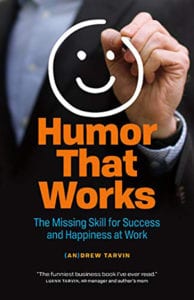
Humor That Works: The Missing Skill for Success and Happiness at Work
I like that because it takes off some of the unknown fear of, “Is this going to land?” If it’s somebody else’s content that’s been proven time and again, a cartoon or whatever it is from the New Yorker, odds are it’s going to get a smile. We’re going to tweak that out as a quote from you, “Be a humor curator, not a humor creator.”
That’s a great starting point for other people or after you get more comfortable with that, you might move to like, “I do want to create some. I want to tell my own story. I want to come up with an image myself.” Do you want to craft a joke? Those are all things that you can learn as well and it takes a little bit of time. It takes practice like any skill but it is something that people can learn for sure.
Besides being a humor curator, is there something else that you were going to give as a tip for getting people funnier?
One key is recognizing, “I can be a humor curator. The other thing to recognize is that the goal of using humor in the workplace is not to be funnier. It’s not to be funny and it’s not to be seen as the class clown or to get people to be like, “You’re hilarious. You should do stand-up comedy.” The goal is to be more effective and to get better results. When you look at the broader definition of humor, it is defined as a comic, absurd or incongruous quality causing amusement. One of the keys is to think less about, “How do I be as funny as possible?” and more about, “How do I make things a little bit more fun?” It goes back to that point that you said that humor can be helpful to engage a team or engage an audience. I’ll ask you a dumb question, but I still want an answer to this dumb question. The dumb question is, “Would you rather do something that is fun or not fun?”
Fun, please.
It’s a dumb question, but that stands to reason that if you were to make your pitch a little bit more fun, do you think people are more likely to pay? If you were to make your own work a little bit more fun, would you be more likely to stay engaged with it longer? If you were to make your commute even a little bit more fun, would you be a little bit less stressed about it happening?
Is there an easy step that someone can make to make something more fun like a commute or just a presentation?
That brings us to the third big tip that helps people. It’s understanding what we call a humor map. Your humor map stands for your medium, your audience and your purpose. Your medium is, “How are you going to execute the humor?” Is it to yourself sitting in a car? Is it to a potential client in a pitch meeting? Who is the audience? Is it just yourself? Is it people that you’ve worked with for years? Is it members on your team that you’re trying to engage more? The final piece is your purpose and this is the most important one. Why do you want to use humor? It’s not about just to be seen as funny. This is why some people were like, “Didn’t Michael Scott in The Office try to use a lot of humor and wasn’t even more of a client?” It’s like, “His reason for using humor was more about seeking validation,” which is not a great reason.” Your reason might be, “I want to use humor. Maybe I’m going to start this presentation with a story that has some humorous moments to it. Not only do I get people paying attention because it’s not a boring presentation, but rather get them interested in the story and that story sets up the thesis of what I’m going to talk about.”
[bctt tweet=”Keep a humor diary creator. ” username=”John_Livesay”]
What you said that I love is that humor is a skill like cooking because often, I give talks on how to be a better storyteller. People often say to me that I’m not a good storyteller and I said, “It’s a skill you can learn.” I want to get into your expertise as a keynote speaker because a lot of people think, “If I had to give a talk, I have to open up with something funny or show a funny cartoon.” I was giving a talk and I was more concerned with telling a story. I was running that story by a friend and I said something that made the friend laugh. I wasn’t consciously trying to be funny. I was just being myself and I thought, “I wonder if I said that in front of a crowd if it would work,” and it did.
Let me tell you what I said and you, as the humor expert, might be able to say why that works. I was opening the talk and I said, “The first thing I do every morning is taking a freezing cold shower. Research has shown that it helps fight depression, burns fat and trains your brain to tolerate discomfort and get out of your comfort zone. The research had me at burns fat,” and that got a laugh. I was saying the three steps of what the research said and then I said it to my friend as an aside because he’s fit. “That’s why we need that thing to get me doing it.” What makes that funny without consciously knowing what I did that made that funny?
There are a couple of things that make it compelling. One, it started a talk with something interesting rather than jumping into content right away, you’re talking about starting this. Immediately upon sharing this story, you’re putting people in their head of taking a cold shower, “Would I do that?” There are some people that are going to be for it and some people that are against it. You’re giving reasons and justifications, which are great. What are the three reasons again?
It fights depression, burns fat and teaches your brain to tolerate discomfort.
[bctt tweet=”Stress by itself isn’t a bad thing. It forces you to get better as a presenter, speaker, or employee. ” username=”John_Livesay”]
You think about like you hear that and you think about, “It burns fat. It’s interesting.” Maybe the more of teaching your brain to go against discomfort or being used to it. That’s the best benefit. That’s the primary one. Burns fat seems like the least important one of those three qualities that it provides. The fact that you then come back to it and say, “You had me at burns fat.” Whether it helps you be more comfortable in discomfort, I don’t care about it, but this applies and there’s this interesting skill that you have. Part of the skill of humor is your ability to create humor. Part of it is your sense of humor. It starts with their sense of humor on what do you find interesting. Part of it is your ability to create and there’s this concept that comes from UCB, which is an improv school in New York and LA that says, “If this is true, what else is true?”
You can even extend that joke a little bit further where you can say, “You had me at burns fat. If this is true, what else is true? If standing and taking a cold shower burns fat, what else could be true?” It could be like, “I have stopped working out. Now I just take three cold showers a day and that’s my workout.” You can extend that, but it can be a surprise. This is where humor is interesting and why I love it as a problem solver and as an engineer is you never know what’s going to work. One, when you make other people laugh as you said, this started in a conversation and you make them laugh, that’s a great thing to take note of. What most comedians would do is they’ll have a humor notebook and the humor notebook is simply a repository where they write down funny things, interesting thoughts or anything that they’re curious about.
You put that in a humor notebook and that way, later when you want to add humor intentionally to something rather than starting from scratch. Rather than be like, “Something funny happened a few weeks ago. What was it that could work?” You just go to the notebook and then copy that down. The fact that that trigger of someone laughing got you to think about it. You could put that in a notebook and then you’re like, “If it made someone laugh in conversation, maybe it will laugh in the stage.” From that, there are things that you can iterate and you could play with like, “Is it funnier for burns fat to be first, second or third in that list?” Maybe it’s funnier for it to be first because it’s a little bit more of a surprise when you bring it back. That way, you don’t care about the two other ones or maybe it’s funnier if that’s the third thing and it creates what we call a comic triple.
There are certain devices within comedy. One of the most common they made that is the simplest explanation is a comic triple where you give a list of something. In that list, the first two things are normal expected things in that list and then the third thing is something that’s a bit unexpected and that will create a laugh. It might be like, “Maybe burns fat and the comment about burns. That’s the most important one to me. Maybe that comes last.” I can’t say for sure, but that’s where the practice and iteration come from of like, “The next time you do it, you might tweak it.”

Humor That Works: The goal of using humor in the workplace is not to be funnier. It is to be more effective and to get better results.
What we’re giving everybody are real-life examples of how they can start to play around with starting a humor map and starting a humor journal. The other reason I was excited to have you on, Drew, is because we’re both speakers. When I was hired by Anthem Insurance to give a keynote to their audience on how to be better storytellers to sell, they said, “In the end, we’re going to have an improv session and the audience is going to shout out objections. Some of the people are going to pretend to be doctors and some are going to pretend to be Anthem people.” I offered to stay, be on stage and whisper in people’s ears if they got stuck. I would say some things from the keynote to keep the conversations going because for those who don’t know, improv is all about “yes, and.” I’m sure you have some stories of how you have taken some of your lessons and expertise in improv and applied it to the business world.
A large part of the way that we train, less so in the keynote setting, although every single one of my keynotes almost always incorporates some applied improv. Applied improv is simply taking concepts, ideas or exercises from the world of improv and applying them to something else like communication skills, leadership skills, problem-solving and innovation. Our workshops are often heavily steeped in applied improv and that’s because it’s an effective way to train. Rather than me talking about communication. If I get you doing an activity about it, you’re going to have the a-ha moment yourself. There’s going to be some team building that goes along with that and you’re going to remember it a little bit longer while you’re practicing this skill. We use a lot of it.
You mentioned the core fundamental principle of improvisation of “yes, and,” even that explains the humor in the workplace because the average person will work 90,000 hours in their lifetime. That’s a long time. That’s longer than everything that’s on Netflix as far as I know. “Yes, and” is a mentality. It is not about being a yes person. It’s not about blindly saying yes to everything and being Pollyanna optimistic about all of that. It’s about seeing a situation and deciding to build on it as opposed to talking about all the things that are wrong. It is about picking one thing that you do like and building on it. The “yes, and” mentality of using humor is, “Yes, I’m going to work 90,000 hours and I might as well enjoy them. I might as well find ways to make the work that I do a little bit more fun.”
Even that mentality is fundamental to how we do things. There are principles to applications from improv that you apply. One of the things that I like about improv is the idea of not present with an apology face. I’m sure you talk about what storytelling you’re with. Pitching is where you present an idea and you discount the idea yourself before you’ve ever even heard it. You’re like, “I’m thinking of this and it’s dumb. It’s probably not good at all.” When you see it, you’re like, “Is this okay maybe?”
[bctt tweet=”Rather than being innate, humor is much more a skill. It can be learned. ” username=”John_Livesay”]
The other thing I work with people on is don’t open your presentation to win a new client with, “I’m excited to be here now.” Nobody cares that you’re excited. It’s not about you. What you are also doing that I have not seen anyone else do and this is valuable is humor reducing turnover. People don’t realize how expensive it is to leave a job open, the time required to interview and check references. I spoke to an executive search firm and they’re constantly talking about, “We don’t even get our commissions if the person doesn’t stay in the job for two years.” If humor can help solve that problem, it’s going to be a huge takeaway for you. I keep thinking to myself, “If I have a job to do and I’m having fun with the people I work with, even if the job may not be exactly glamorous or fun. I get another offer for slightly more money, but no one there looks like you’re having fun, I might just stay where I’m having fun. The time will go faster if nothing else.”
They’ve done studies to show this. Once you get to a certain salary level and I think at least in the US, as of a couple of years ago, it was $75,000. The increase in pay from $75,000 does not move employee satisfaction. If people similar to you and other jobs at other companies are making $500,000 and you’re making $75,000, there might be a difference there. In general terms, money isn’t going to have a huge change in terms of your satisfaction score if it’s somewhat comfortable. An increase of say $5,000 a year may not move the needle, but enjoying your work absolutely will. One of the things that they have found is that 31% of employees leave their company because of their manager. They like what they do, they like the project that they work on and the company, but if they don’t like their manager, it’s not that they’re like, “It’s just a manager. Let me find someone else.” They’re like, “I’m just going to leave.” If you can, as a manager, find ways to not only make work more fun for yourself but make it a little bit more fun for your direct reports, that’s where you see an increase in engagement and retention and a decrease in turnover because it’s a cultural thing.
One of the things that people say about P&G all the time is the reason why they stayed or the thing that they miss the most if they did leave was the caliber of people. It’s partially the culture that exists. I’m one of those people that agree with that although it’s not seen as a funny culture, it’s not like seeing Southwest, Zappos or anything like that, it was a culture of empowerment. I proclaimed myself the corporate humorist at P&G and no one stopped me from doing that. They embraced it and they allow me to be who I was and leverage my own strength. Those types of benefits certainly helped to reduce turnover.
[bctt tweet=”Laughter and humor can be a great counterbalance to the stress that we deal with every day. ” username=”John_Livesay”]
You have many great tips on your website, Humor That Works. One of them is this concept of giving a pirate name to people. Did you do that at P&G?
Yeah. We had all types of fun with our project, simple things. We did prior names early on, but then we switched to one of the things that I liked doing. It was giving personality assessments to my team rather than Myers-Briggs or other ones we would do like, “Which Disney princess are you?” “I am a Pocahontas.” We would have nicknames based on Disney princesses, Star Wars characters and that stuff, any fun thing where you can create camaraderie for sure.
Let’s talk about your TEDx Talk. How did you come up with the name? How long did it take you to prepare for that?
I’ve had the fortune of doing two TEDx Talks. The first one, I did at Ohio State and was all about humor in the workplace, the general idea and the concept of it. I was approached by TEDxTAMU because I’ve done some guest lectures there. They were looking for speakers and they reached out. I shared with them a couple of different things that I was working on. I had wrapped up being a nomad and traveling all 50 states in a year, speaking and performing at all 50. I was like, “I can talk about that or I can talk about this other thing.” What I’m realizing is that one of the things holding people back from using humor in the workplace is that they do believe it’s this innate thing. My thing was like, “No, humor is a skill and it can be learned.” They’re like, “That’s new to us. We thought that it was natural. If we weren’t funny, then we were just out of luck.”
That’s where the premise of this skill of humor came. As far as prep goes, as the engineer in me, I wrote up a blog post all about it. I have a personal blog that went into it, but I did a ton of work for it. I knew that it had the opportunity to potentially get in front of a number of eyes and to help a lot of people. I did a ton of stand-up shows to prep for the talk. I did a number of speaking engagements where I rearrange the outline of the talks that I could do the full eighteen minutes of the talk nonstop just to learn because I iterate. That’s how I learn what’s funny, what doesn’t work and what does work. I did a tremendous amount of additional research for it, so I don’t remember the exact numbers, but I have a blog post detailing the whole thing. It was quite a bit of research to get it to that point that I was like, “This is something that I’m proud of.”
It’s important to share that behind the scenes preparation with people because a lot of people will say, “You’re a natural speaker. You’re a naturally funny person.” You don’t realize that it comes across naturally because I prepare. If you try to get up and give a talk, be funny or do anything in your career without the preparation, odds are it’s not going to land the way you think it will. Many people are not a big fan of preparation, but it sounds like you and I are on the same page with that.

Humor That Works: ‘Yes, and’ mentality is not about being a yes person. It’s not about blindly saying yes to everything, but it’s about seeing a situation and deciding to build on it.
There’s something that tends to resonate with a lot of the engineering groups and IT people that I speak with. There is a big difference between being efficient and being effective. It might be more efficient for you to wait until the last minute to plan your presentation to throw into. It might be more efficient to add a bunch of texts to your slides so that you don’t have to memorize what you’re going to say. It might be a little bit more efficient to not memorize it and read from notes, but it’s not going to be long-term more effective. You put in the hours for that rehearsal and that practice. Over time, one, it doesn’t take nearly as long. If you have a Patriot presentation skill and you’re building those skills over time, there might be things that you can reuse. If they talk with you and work on a story, it’s not like that story can only be used once. They can use it multiple times as they go through and every time they answer the question, “What do you do?” Every time they start a presentation by giving the background of why they started and whatever it is that they started. It becomes efficient in the long-term because it is effective in the long-term.
This has been fascinating to learn that humor is a skill that can be learned like cooking and that we can be a humor curator versus just a humor creator. The concept of efficiency and effectiveness is fascinating to me. Are there any last thoughts you want to leave us with including how people can hire you as a speaker, buy your book and all that good stuff?
If people are interested in learning more about humor in the workplace, we have a ton of resources on HumorThatWorks.com. It’s free blog articles and a free newsletter. There’s a link to the book there. There’s information about our workshops and our coaching. If they’re interested more in using humor, that website is a great place to go. If they want to connect with me personally or have specific questions, they can find me at Drew Tarvin on all social media. Whether that’s LinkedIn, Instagram, Twitter and Facebook, they’re all under that same handle.
The thing that I would say for the readers if you’re thinking like you’re an engineer, “What do I do differently after having read this?” The one thing that we encourage is simply to start thinking one smile per hour. Think about what’s one thing that you can do each hour of the day that brings a smile to your face or the face of someone else. What that does is it starts to develop a humor habit. You’ll start to notice small, subtle ways, “I’m on this commute. How can I make it a little bit more fun?” I’m saying, “Maybe I’ll bring up John’s podcast and listen to a couple more episodes as I’m driving. Maybe I’ll have a concert and rock out to some Hamilton in the car.” If you start to do that, you’ll develop a humor habit. You can build your skill, whether as a curator or a creator as you go. Hopefully, each day you’ll get a little bit funnier and have a little bit more fun.
Thanks again, Drew.
Thanks for having me.
Important Links
- Drew Tarvin
- Humor That Works: The Missing Skill for Success and Happiness at Work
- Humor That Works blog
- First one – Drew Tarvin’s TEDx Talk
- TEDxTAMU – Drew Tarvin’s TEDx Talk
- Drew Tarvin – LinkedIn
- Instagram – Drew Tarvin
- Twitter – Drew Tarvin
- Facebook – Drew Tarvin
- HumorThatWorks.com
- Better Selling Through Storytelling Method Online Course
Wanna Host Your Own Podcast?
Click here to see how my friends at Podetize can help
Purchase John’s new book
John Livesay, The Pitch Whisperer
Share The Show
Did you enjoy the show? I’d love it if you subscribed today and left us a 5-star review!
- Click this link
- Click on the ‘Subscribe’ button below the artwork
- Go to the ‘Ratings and Reviews’ section
- Click on ‘Write a Review’
Love the show? Subscribe, rate, review, and share!
Join The Successful Pitch community today:
- JohnLivesay.com
- John Livesay Facebook
- John Livesay Twitter
- John Livesay LinkedIn
- John Livesay YouTube