

Pitch Deck Fire – Interview with Stacie Shaw
Posted by John Livesay in podcast | 0 comments
Listen To The Episode Here
Episode Summary
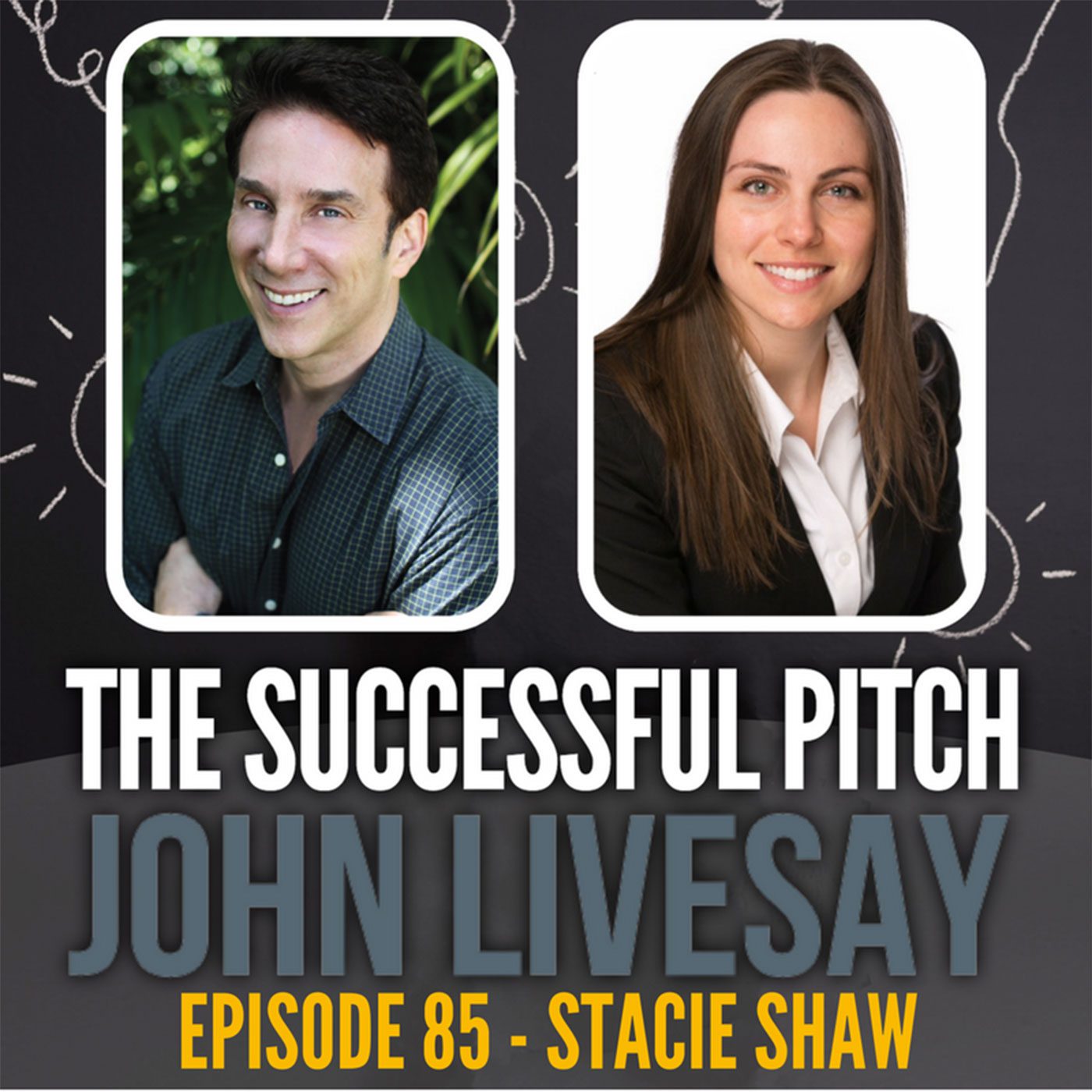
Stacie Shaw is the Founder of Pitch Deck Fire, where her company creates engaging and effective pitch decks for startups. As Stacie says, she is a startup storyteller! Entrepreneurs need to realize that when investors are hearing your pitch for the very first time, they are hearing it with their more primitive reptile brain and not their analytical brain. This is why you need to make your pitch incredibly simple and easy to understand, even if what you do is a complex.
Pitch Deck Fire – Interview with Stacie Shaw
Hello and welcome to The Successful Pitch podcast. Today’s guest is Stacie Shaw who is the founder of Pitch Deck Fire. She is a startup storyteller specializing in pitch deck design and presentation which we all know is so important. Stacie, welcome to the show.
Hi, how’re you doing, John?
Good. I’m so happy to have you here because as you know the podcast is called The Successful Pitch and you and I are on the same page of one of the things that it takes to have a good pitch, which is storytelling.
Definitely.
But before we get into that, I want to hear about you, Stacie. Did you know you wanted to be a storyteller? How did you get to be an expert on pitch decks?
Yeah, that’s great question. I’ve worked with several companies as a leader as well as a founder of startups and found very quickly in building those companies that how you tell your story about your startup really affects how people get energized and excited to be a part of that story. It helps with getting funding, it helps with getting clients, it helps with getting your employees. How you actually tell your story really affects your success. I figured that out pretty quickly in the businesses that I’ve worked with.
Where did you go to college? Did you know when you were in college this is what you wanted to do? Tell us of a situation or one of the companies you worked on where you went, “I’m going to go out and become my own entrepreneur.” I want to hear that journey.
I went to college at Emory University and studied business. I knew I really enjoyed companies, understanding how they worked, the market that they were in, and how they grew their companies. When I started my career, I worked at really large corporations as a management consultant and figured out pretty quickly that I wanted to focus on smaller companies, more growth-oriented companies.

Pitch Deck Fire: There’s an art to it, there’s an art to storytelling and to design
From there, I launched companies of my own, learned how to grow a company, and how to tell that story from a marketing perspective within the company as well as to potential investors and things like that. From my experience, I have experience in design and in business strategy, and the combination of those two things is really what led me to pitch decks and to Pitch Deck Fire because it’s a great balance of my right and left brain.
There’s an art to it, there’s an art to storytelling and to design of course. On the business side of it, it has to be very closely linked with that when you’re doing a pitch. When you’re pitching, it is about your company and about the details of what’s going to make you successful, but there’s that combination of the art. I think it’s the two of those together that really drew me to launching Pitch Deck Fire and to helping all the clients that I’ve helped.
I love to have conversations about left brain, right brain, creative side versus analytical side. Most people are dominant in one and very uncomfortable in the other, don’t you find?
I do find that for sure, and I find that a lot with my clients. Definitely, I think people tend to self-identify as one or the other. Whether we’ve been told that we are one or the other, you’re either a right brain or a left, and you’re either type A or type B. I don’t know that that’s the case, I think we all have a little bit of both but definitely people put themselves in that bucket. I think there’s always an opportunity to be a little bit of both and it to bring both to the table in everything that you do.
Let’s talk about the importance of how something looks when you first see it. If you put yourself in the shoes of an investor for example and they see 2,500 pitches in a year, and pick 25 to fund, they’re looking for a reason to saying no. If you have a typo, ugly slides, too many words, etc., you’re automatically a no, don’t you think, Stacie?

Pitch Deck Fire: The professionalism of your slide deck, of your pitch deck is really important.
I think definitely that’s the case. The professionalism of your slide, of your slide deck, of your pitch deck, of everything you come to the table with, is really important. Having even tiny mistakes like that, a typo here, too much text, anything that makes it look less professional, while it may not register in an investor’s mind, they may not see, “They misspelled that word, that’s why I’m not going to go with this company or invest in this company.”
It will be a factor and it will be something in the back of their mind. It won’t be a conscious thing but it will be in the back of their mind to where it will add up all together and make them feel a certain way about you or your pitch, perhaps a negative way. That’s the danger of those little mistakes.
On your website, Pitch Deck Fire, you have a great section in here about, what is a pitch deck? Let’s start there. What should people include and what design makes it appealing?
A pitch deck is pretty simply a visual representation of your company. You might be using it to pitch to an investor for funding, you might be using it to send to, let’s say, an accelerator for an acceptance to an accelerator. You might even be pitching to get clients, it may not even be for funding. It could be, “This is my service offering and we want to bring you on board with that service offering.”
[Tweet “Pitch Deck Fire: A pitch deck is a visual representation of your company.”]
It’s just a visual representation of your company. It’s a way to put a story behind who you are, what you bring to the table, what’s unique about your service offering, your product, whatever it is that you do, and why they should go with you. There’s always an ask or something you’re seeking with a pitch deck. With funding, perhaps it’s, “I need a certain amount of money so I can grow my company.”
For clients, it’s, “I want you to come on board. I want to provide my services to you.” There’s always that ask and it’s a challenge with pitch decks to make sure that the focus of the pitch deck is on your company and not on that ask. The ask is after they’ve fallen in love with you.
It’s like you have to date somebody first before you get married.
Exactly, for sure.
There is a big difference in my mind between a pitch deck for an investor and a pitch deck for a customer. Sometimes I see a lot of people thinking, “I’ll just pitch them like I do a customer.” I’m thinking, oh my god that’s a big mistake because the investor is not a customer. They’re not going to buy the product, you don’t have to go into all the details of a product demo that a potential customer might need to see, correct?
Definitely. When I lump them together I’m saying they’re both pitches but they’re definitely very different in terms of what you include, what you don’t include and the flow of how you go about a pitch. To be honest, all companies are going to have a very different pitch. It’s going to always depend on your audience. The audience is absolutely key to how you put together your presentation.

Pitch Deck Fire: Some audiences are going to care about some information and some are going to care about very different information.
Because some audiences are going to care about some information and some are going to care about very different information. If it’s an investor, definitely they’re going to care about things that are much more macro about your company than a potential client is going to care about.
A potential client wants to know that you know your stuff and you can provide the services that you say that you can provide. A potential client is going to want to know what about the market and what are your competitors and how is it that you’re going to excel in that macro scale of things, the bigger scheme of where you play with the company?
The other thing I think is so important is if you’re given ten minutes at an angel group to pitch, you probably don’t want to have more than ten slides, right?
Agreed. The less is more. In fact, one of the things that I think about a lot when I’m building decks for my clients and helping them put together their story is that we … This is going to sound really scientific for a minute here and I promise I’ll get back to Pitch Deck.
We have three parts to our brain. We have the reptile brain, which a fight or flight part of our brain, worries about things that are too complex and those things scare it. We’ve got our mid-brain and then we also have our pre-frontal cortex part of our brain. That’s more the analytical, the reason part of our brain. The part that understands complex systems that can put together essentially stories or analysis.
[Tweet “Pitch Deck Fire: Don’t confuse investors with complex concepts”]
What I find really interesting is that when we build a pitch deck, we’re using our pre-frontal cortex part of our brain. We’re going to analyze our company, we’re going to try to put together that story. But I think what we’ve failed to realize is that we’re actually pitching too.
When someone’s listening to a pitch deck, they’re listening with their reptile brain, especially in the beginning of a pitch deck. Things that are very complicated or messy, especially messy on the slides, heavy, heavy information early in the presentation is a really dangerous thing because we’re going to scare away our audience.
I love that.
Clearly they’re not going to fight or flight and run away, but definitely it’s that part of their brain that’s listening to us. We have to keep that in mind we’re putting together our decks.
Our brains don’t want to work that hard. That’s the bottom line.
Exactly.
They’re like, “Don’t make me think this hard. Just tell me simply what it is you do. I don’t want to have to understand the idiosyncrasies of artificial intelligence in the first five seconds of what you’re talking about. You will overwhelm me.” I like to say the confused mind always said no.
That’s the danger of confusing people. Everyone thinks they’re so special. “What I do is so complicated.” I’m like, “Then our job is to make it simple.” It doesn’t mean it’s not sophisticated, it just means you have to really understand it well, according to Einstein, to be able to explain something simply.
[Tweet “Energy is contagious when you pitch”]
Exactly. Simplification does not mean that the company is simple. It’s the way we explain it is simple so that we can get people on board with the complicated idea. We’re just simplifying how we talk about it. That’s really, really important with pitch decks because you have very limited attention span and time to get someone’s attention, regardless of who they are, but especially a VC or an investor who is looking at a lot of these companies. It needs to stand out and the best way to do that is to make sure you’re talking to the audience correctly. You’re not overwhelming them with information. You’re being simple and explanatory early on in your presentation. It’s absolutely key.
What’s going on here is the investor, the listener, is listening through their reptile brain of fight or flight. “Is just too hard to understand or I’m going to check out, or is there something that’s grabbing my attention?” You, as the presenter, the founder, are also having your fight or flight response kick in usually because you’re nervous.
That’s definitely true.
What are your tips of overcoming nerves when you’re presenting?
That’s a great one. It’s definitely the biggest challenge I think you have when you’re pitching, is the nerves. Because it feels like this massive position that you’re in. You’re in front of someone very important doing something very important for your company. You want to do it right. There’s a lot of pressure built up onto that. I think there’s a couple things that I recommend to my clients that will help you with those nerves, help you be more confident.
[Tweet “Pitch Deck Fire: Practice in front of strangers”]
The first one is the most important one, it’s just practice, practice, practice, practice, practice as much as you possibly can. In front of other people that are not a mirror, that are not family and friends. Try to get in front of other people to really get the right level of practice because you’re not going to be as nervous in front of a mirror as you are in front of a VC or in front of your friends and family or your co-workers. You definitely want to put yourself in as close a position as you can to really get that practice down. I think it helps you be much more confident when you get into that position because you’ve done it before.
That’s the tip. Because most people go, “I know I’m supposed to practice.” Before we get to the other tips, because I want to hear them all, let me just ask you a little about this practicing. Because sometimes, I have people say to me, “John, I don’t want to sound like a robot, I know what I’m doing, I don’t want to practice too much.” Do you think there’s such a thing as practicing too much?
I would say yes and no. No, there’s not a thing as practicing too much. That is not a thing, but there is practicing too much in the wrong way. If you wrote down verbatim every exact word that you wanted to say and then practiced that over and over again, you will sound like a robot. That’s not the best way to practice.

Pitch Deck Fire: If you practice and you say it a little different each time, you’re going to sound conversational.
What I recommend is when you practice, write down roughly what you want to say, then turn that into bullet points and then take those bullet points and just remove all the ones that are not key. Just leave in the most important bullet points so what you’re left with is a skeleton framework of what it is you want to say.
Because you know your company and you know your stuff, and if you don’t say it the exact same way every time, that’s not a big deal. It’s whether you cover the points you wanted to cover in the right order. That’s what’s key. Practicing with all the words figured out, that’s bad. Don’t do too much of that. You will sound like a robot. If you practice those bullet points and you say it a little different each time that you practice, you’re going to sound conversational. Like you know what you’re talking about and you will not fall off track and you won’t sound like a robot.
I love that distinction Stacie, thank you so much for that. What else do you have for us about overcoming the butterflies in our stomach?
There was a study awhile back about your body language and about how your body language affects how you feel. We know that how we feel affects our body language. If you’re standing very close, that means that you were feeling maybe sad or inside yourself or depressed maybe or something.
It’s actually true the other way around as well. The way you stand has a lot to do with the way you feel. It will affect the way that you feel in the opposite direction. One of the things that this study had basically recommended or had proven was that before you do a public speaking engagement, to feel more confident, there’s something called the superman pose.
[Tweet “Pitch Deck Fire: How you stand impacts how you present”]
I know it well, I love it, yes.
You know, it good. You stand in the superman pose. You stand feet apart, hands on your hips, up tall, keep your back up straight, like Superman or Superwoman. What that will do is it will give you a boost of confidence. I recommend doing that before you pitch, maybe in the bathroom, maybe in the parking lot before you go in or something like that. Just to put your body and your mind in the right frame so that you have the confidence in your presentation.
Love it. We’re going to practice in front of strangers, we’re going to do the superhero pose. Any other tips to overcome nerves?

Pitch Deck Fire: When you stand, it just does a lot for the way you’re going to speak and project.
Where possible, try to stand. Like you said before, we have our reptile brain that goes in a fight or flight mode as soon as we start a presentation. Especially in the beginning because all of a sudden you’re there and there’s just this rush of adrenaline through your body. When you stand, your diaphragm is positioned in such a way that you can breathe more easily and deeply. When you do that, you will not have the same, I would say, stutter and shakiness that comes with that adrenaline rush at the beginning of your presentation.
Sometimes it’s not possible. Maybe you’re at a lunch meeting. You’re not going to stand in the middle of a restaurant and talk to your investor. But a lot of times you’re standing in front of a presentation. Make sure you stand. It might feel awkward, everyone else is sitting and you’re the only one standing in this room. When you stand, it just does a lot for the way you’re going to speak and project and it’s going to calm your nerves quicker in the presentation.
Great. Now that we’ve talked about the importance of how you present something, let’s dive into one of your big areas of expertise, which is the graphic design element. What mistakes do you commonly see that people have on their pitch decks before they work with you?
Biggest mistake is always too much text or too much information, too many bullet points. There’s just a lot you want to say and it feels like it all has to be on that slide, and it doesn’t. If you know what you’re talking about, which you will when you practice, you won’t need to use your slides as a cue so you don’t need that as a crutch. A lot of people I think put a lot of that information on the slide as a crutch. From a design perspective, less is always more.
[Tweet “Pitch Deck Fire: Your pitch deck needs to support and not detract.”]
The biggest thing I recommend is removing as much text as you possibly can from slides. The overall presentation and design of the deck needs to support and not detract from your presentation. If you have too much on that slide, like I said before, reptile brain goes crazy, doesn’t like it, they’re not looking at your slide anymore. They’re not even listening to you anymore. They’re just thinking about something else completely, looking out the window, whatever it is. It needs to support and not detract. It needs to be more simple. That’s the biggest thing I see, is just too much text, too much information.
Also, I’ve seen on some of your samples that you are very consistent, and I love it, with the color schemes you use throughout the whole deck.
Definitely, yes. Everything should be very customized and branded to your company. It’s that thing I said earlier about that little bit of professionalism. It’s not that they’ll choose you for those things. It’s just that all added together, it feels good. The investor inside, they’re going to feel good, it feels consistent, it feels like I get it, I get the vibe of this company. Because you already have a brand. Most companies do.
If you bring that branding to your pitch deck and you keep it really consistent throughout, then it’s just going to feel good to your audience. It’s hard to explain, but it’s unconscious. They feel the consistency in the design you’ve put together.
Now let’s talk about how some people think one pitch deck fits all. There’s a pitch deck that you present and then there’s a pitch deck you send.

Pitch Deck Fire: Build two decks at the same time. The one you’re going to stand in front of and the one that can stand without you.
Yes, definitely. I think that’s a huge trap and part of why we get those decks with tons of content on them, way too much content, is that people think you have one pitch deck. You may have more than one pitch deck. It may be the same pitch but you have different versions of that deck that you’re going to use for different things. Sometimes, you’re going to be presenting in front of your deck and you’re going to be standing there and talking and so it needs to support you, it can have less information.
Other times, you need your deck to stand on its own, when you’re going to send it ahead of maybe leave behind after your presentation. You want to give them one that has more information in it. Often what I do for my clients is build two decks at the same time. The one you’re going to stand in front of and the one that can stand without you.
I also know that you do some market research to get to the right data points. Can you talk about that?
Definitely. Some of my clients don’t have all the information that you need from a perspective about where your market is, how you compare to your customers and how you fit. It’s a very important piece of when you’re talking to potential investors, is how is this company is going to be successful.

Pitch Deck Fire: It’s a very important piece of when you’re talking to potential investors, is how is this company is going to be successful.
Part of that is talking about where we play, what is the space we play within. We help with that. We have clients that come in and they have a great product but they don’t quite know maybe the size of their market or what is feasible for them to acquire as a part of that market in terms of market share.
Maybe they understand who their competitors are but don’t have a clear understanding of maybe how they’re better. I hope most companies always have some idea of it, but we definitely help with getting that more formalized so that we’re telling that story and making sure that we really explain the full story of how that company is going to acquire customers and grow within the market that they play.
One of the questions that people always gets asked, and if you haven’t even thought about it you’re in trouble, you become the deer in headlights, I call it, which is what’s your barrier to entry from competition or a bigger company getting more funding and duplicating what you’re doing. All of those things that I think really need to be thought out and have some answer.
Definitely, they do. It’s something that, at least when I help the clients that I work with, that come to it with all sides. I have the business background to where I can help describe the market that you play. I can help determine how do we talk about those barriers entry. How do we bring up within this story all of these details, what’s important to talk about from a business strategy, or how the business is formed, business model, whatnot, perspective, in addition to the design aspect.

Pitch Deck Fire: One of the challenges that my clients have faced is they’re trying to do it themselves.
I think one of the challenges that my clients have faced before working with me is one of two things: either they’re trying to do it themselves, which is, I commend entrepreneurs, they always have that optimism that they can do everything. As an entrepreneur in the past with other companies that I founded, I was the same. I tried to do everything myself.
I think you don’t know what you don’t know and it’s definitely something to keep in mind. Someone else who is more experienced in something like pitch deck design can help with preventing you from hitting those points where you don’t know what you don’t know and prevent you from making mistakes that you might otherwise make if you try to do them yourselves.
We talked about at the beginning the importance of storytelling. So you have a case study or a story you can tell us of how you took someone’s original pitch and turned it into a story that got them some funding?
That’s a good question. I do it a lot with a lot of my clients in terms of helping to get that story together. When I say storytelling, what I’m really talking about is we’re putting together this pitch, we need to excite and interest our investors and our audience. Doing that is going to be very different for company A versus company B, depending on how that company is organized or what it is that they bring to the table that’s unique.
[Tweet “Pitch Deck Fire: We need to excite and interest our investors”]
Say I had a company who had a really amazing team. They are just so experienced in the industry. They’ve been in there 20 years. They know what they’re doing. That’s what really makes it so that they could capture this market. They’re the exact right team for this market. The way I tell their story might focus on that, it might start with that. The flow of that presentation would start with, “We know what we’re doing.” That’s how we tell that story.
Whereas if I had another company, company B, they may not have the team. Maybe they’re newbies and that’s not the thing that’s special about them. What’s awesome is they have come up with this idea that takes over this niche market, this problem that nobody ever thought of before but when you say it, it’s like, “Yeah, that totally should exist.” I know you’ve heard of some of those, John.
Yes.
Those kinds, I’m going to tell that story differently. We’re going to focus a little bit more on that problem statement, that this is the visceral negative current state that we’re in, this is the challenges that this specific group faces. Then go into how amazing our idea is and what the future state is. That juxtaposition between negative current state and positive future state is a really important one when it comes to storytelling. Talking about that for that a company would be the way I would go about that story.
[Tweet “Pitch Deck Fire: Negative current state and positive future state”]
When you’re working with people, do you first say, “Let’s get the content down and then work on the delivery,” and not try to do both concurrently?
That’s a good question. Most of the time yes, because I think it’s good to know what you are going to cover before you talk about how you’re going to cover it. You have to get yourself to ground zero to, “This is what I’m wanting to convey,” before you start to talk about about how we’re going to go about conveying that.
That’s a lot of what I do when I’m building decks with my clients, is we need to figure out what we know first, figure out what we need to know, what we need to add to that in terms of content. From there, we can talk about how do we do that story, how do we define the flow of this presentation so that it really engages our audience.

Pitch Anything
Nice. Are there any books about life, business, pitching, anything at all, that you want to recommend to our listeners?
Definitely, I like Pitch Anything. It’s a good book that I have read in the past. They talk a little bit about that reptile brain and how we are pitching to the reptile brain. I think that’s a really good one. From just more of a business standpoint and a life standpoint, there’s a good book called Essentialism. It’s by Greg McKeown.
What I like about Essentialism is the basic premise of that book is do only that which is essential. Decide what it is that you want to do, let’s say with your life, or it could be honestly, with your pitch deck. Do only that which is essential. All the other stuff is extra and it’s too much. If you focus, you’ll be more successful.

Essentialism
I love that. I once had an investor on The Successful Pitch tell me, “So many people come to me and they’re trying to boil the ocean.” I thought, what a great analogy. You need to focus.
Fantastic, yes.
There we go. Stacie, it’s been a delight. How can people follow you, learn more about how to get a good pitch or how to practice with you?
You can follow me on Twitter. I’ve got Pitch Deck Fire on Twitter. We’ve got Facebook and LinkedIn. Check out our website. We have articles that we post all of the time. I’m actually working on an article right now called Your Pitch Deck Should Be Like A Mullet. If you’d like to know more about that, that will be on my blog as well.
Nice. Your blog is on your website?
On the website.
On your website, fantastic. Stacie, I can’t thank you enough. We’re going to remember that we need to practice in front of strangers, not just the mirror. I love that take away. Thanks, everybody.
Thank you, John.
Links Mentioned
J Robinett Enterprises
John Livesay Funding Strategist
Pitch Deck Fire Website
Pitch Deck Fire on Twitter
Crack The Funding Code!
Register now for the free webinar
Fox 11 News Los Angeles John Livesay The Successful Pitch book
Share The Show
Did you enjoy the show? I’d love it if you subscribed today and left us a 5-star review!
-
- Click this link
- Click on the ‘Subscribe’ button below the artwork
- Go to the ‘Ratings and Reviews’ section
- Click on ‘Write a Review’
Pitch Deck Fire, Stacie Shaw | TSP085
Posted by John Livesay in podcast | 0 comments
Listen To The Episode Here
Episode Summary
Stacie Shaw is the Founder of Pitch Deck Fire, where her company creates engaging and effective pitch decks for startups. As Stacie says, she is a startup storyteller! Entrepreneurs need to realize that when investors are hearing your pitch for the very first time, they are hearing it with their more primitive reptile brain and not their analytical brain. This is why you need to make your pitch incredibly simple and easy to understand, even if what you do is a complex.
What Was Covered
- 03:45 – How did Stacie get started?
- 04:45 – When did Stacie decide it was time to be self-employed?
- 07:20 – How well your pitch deck is designed is very, very important.
- 08:15 – What should people include in their pitch deck?
- 09:55 – Don’t pitch an investor like a customer. Your investor isn’t your customer!
- 11:15 – The less is more in your pitch deck.
- 11:30 – We have three parts to our brain. Stacie explains further.
- 13:30 – Explain your idea in a simple way to investor.
- 13:40 – Investors have a small attention span.
- 14:55 – Stacie shares tips on how you can be more comfortable with an investor.
- 15:55 – Is there such a thing as practicing too much?
- 17:55 – Body language also affects the way you feel.
- 20:15 – What are some common graphic design mistakes Stacie sees in a pitch deck presentation?
- 22:30 – One pitch deck fits all? No!
- 25:40 – Entrepreneurs try to do everything themselves, but as something as important as a pitch deck, you do want to seek out help.
- 26:30 – What makes an amazing story and how can entrepreneurs leverage it?
- 29:30 – Stacie recommends the book Pitch Anything: An Innovative Method for Presenting, Persuading, and Winning the Deal, by Oren Klaff
Tweetables
[Tweet “Practice in front of strangers”]
[Tweet “Dont confuse investors with complex concepts”]
[Tweet “How you stand impacts how you present”]
[Tweet “Energy is contagious when you pitch”]
Links Mentioned
J Robinett Enterprises
John Livesay Funding Strategist
Pitch Deck Fire Website
Pitch Deck Fire on Twitter
Crack The Funding Code!
Register now for the free webinar
Share The Show
Did you enjoy the show? I’d love it if you subscribed today and left us a 5-star review!
-
- Click this link
- Click on the ‘Subscribe’ button below the artwork
- Go to the ‘Ratings and Reviews’ section
- Click on ‘Write a Review’
The 2AM Principle – Interview with Jon Levy
Posted by John Livesay in podcast | 0 comments
Listen To The Episode Here
Episode Summary
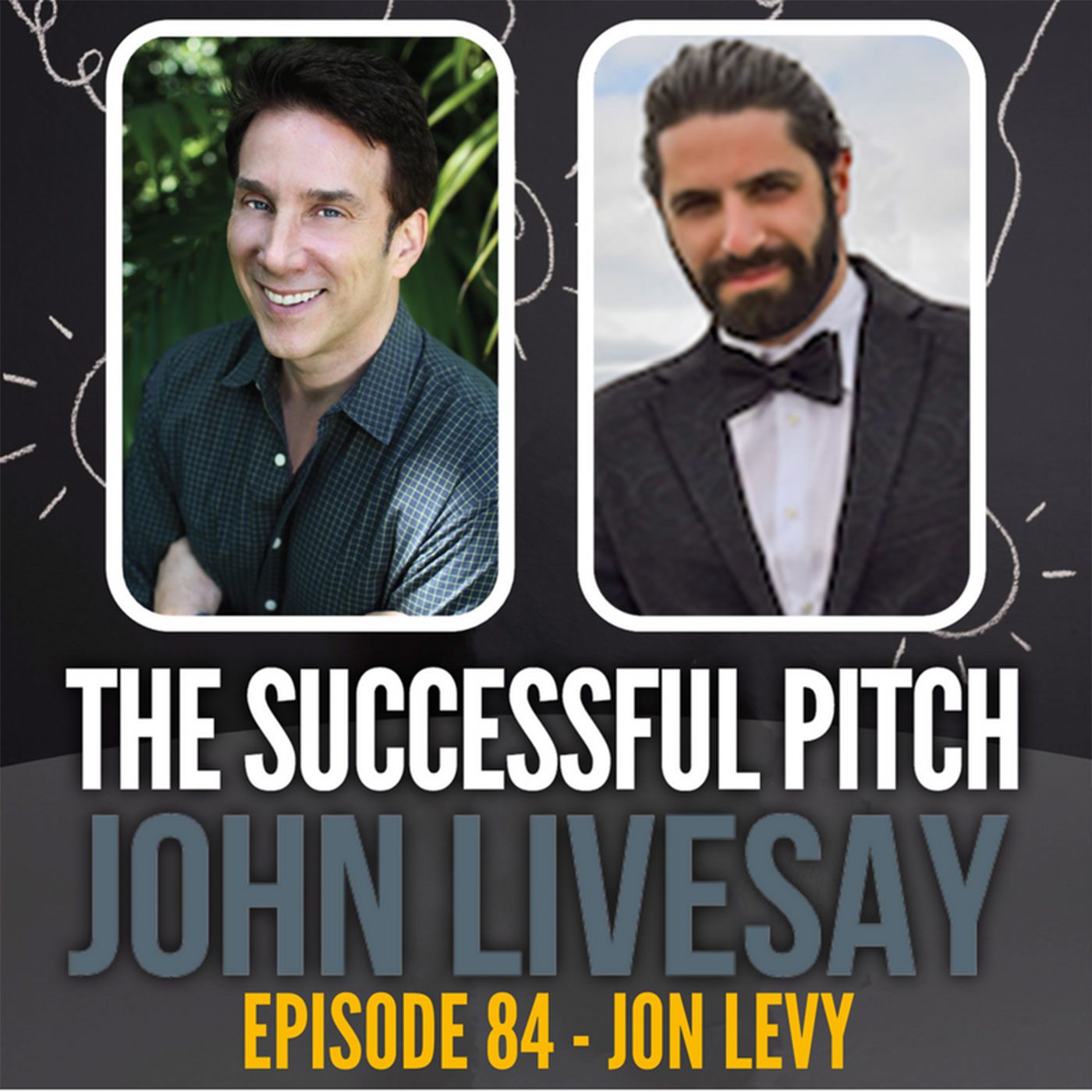
Jon Levy is a behavior scientist, author of the book, The 2AM Principle, and a keynote speaker. Jon’s work largely focuses on two main areas: Influence and Adventure. While researching what makes and creates an ‘influencer,’ Jon created a private community and dining experience (with a twist!) for industry leaders. Through this dining experience, Jon has discovered the keys to designing a great social experience, and uses this knowledge to help brands cultivate strong influencer programs.
The 2AM Principle – Interview with Jon Levy
Hello and welcome to The Successful Pitch podcast. I am very excited to have Jon Levy on today because Jon is the author of The 2AM Principle. He is literally a human behavior scientist, a consultant and keynote speaker. He’s the expert on influence, networking, and most importantly for me, adventure. That’s the element that people don’t usually have I their lives, let alone in his business.

The 2AM Principle: Discover the Science of Adventure by Jon Levy
He’s going to give us some great tips on how to have your business become an adventure and what that does for your world. He’s known for having these incredible dinners that The New York Times has written about, and how that transforms your life when you give people a reason the get together in a unique situation. Jon, welcome to the show.
It’s great to be on. Thanks for having me.
One of the things that I really find so fascinating about you is, starting with your Twitter handle, not just your name but the initials after it, TLB. Would you tell everybody what that stands for and why? Because I think that’s a really fun place to start.
Absolutely. I was about 17 years old. I was about to graduate from high school. I was thinking what do I want next. I noticed that a lot of the adults around me were seeming unenthusiastic about life. Like the only reason that they got out of bed was that they didn’t die the night before. I wanted to understand why it is that I can hang out with my nieces and nephews and they’re excited about everything all the time. There’s a certain point where things change.
I went back and started reading a lot of children’s books. One of them that I read was Peter Pan. Peter Pan has this group of rambunctious kids that go along with him on his adventures. They’re called The Lost Boys. I wanted to dedicate my life to wonder and adventure in the hopes that that same excitement that we see in youth is retained throughout life. It serves as a constant reminder, an admiration of these characters. It’s JonLevyTLB, or the lost boy.
Isn’t that great? One of the things I’m constantly telling my clients when they’re pitching for funding is you have to be memorable and you have to brand yourself in a way that people instantly get who you are and what you do. You do that better than almost anybody else I’ve ever had the pleasure of interviewing. Because it’s so specific and it pulls people. Can you tell a little bit about how you started the idea of these incredible salon dinners?
Just to give the listeners a sense of what these dinners are. Twelve people are invited at a time. None of them know each other. They’re not allowed to talk about what they do or even give their last name. They cook dinner together. When they sit down to eat, everybody gets to guess what everybody else does. They find out that it’s a famous author sitting across from a Nobel Lit, the president of a television network sitting across from the editor in chief of one of the top magazines in the world, or a two time Olympic Gold Medalist sitting across from a famous actor or actress.
I’ve hosted about 900 people across close to 100 dinners. Everything you could imagine, from members of royalty through Grammy award or Tony and essentially any kind of award winning artist or even Fields Medal winners or mathematicians. It’s developed into this community that’s pretty wild and incredibly humbling to spend time around.

Part of the 2AM Principle: Salon Dinners
It’s so interesting because investors say all the time, if you can’t figure out how to get a warm introduction to me, you probably can’t figure out how to get to your customers. You have some amazing ideas not only of what you’ve done and how it’s changed your life. But also you have some suggestions I think from listening to some of your other interviews, on how people can not have to spend a lot of money and make it their own.
Without a doubt. One of the things that I suggest is that if you want to connect with people, the first thing is it’s not about networking. Networking brings up ideas of people at conferences, handing out business cards and trying to find clients. It’s a very one way interaction, where I’m trying to collect as many names or people. It’s up for a specific objective. There’s nothing wrong with that. It’s just not a very powerful context to be in.
The reason is that if you look at research by Nicholas Christakis and James Fowler, they wrote a book called Connected. It’s all about these surprising impacts of our social networks. What they started off studying was the obesity epidemic. They were curious if it passes from person to person the way a cold does or if it’s a percentage of the population, like Alzheimer’s. You don’t get Alzheimer’s because you’re hanging with somebody who has it. It’s not contagious.
What they found was obesity actually transfers from person to person. If you have a friend who’s obese, you’re chances increase by 45%. Your friends who don’t know them, 25% increase. Their friends by 10% and their friends by 5%. What they actually also found was that everything passes through our networks like that, from happiness to voting habits to smoking habits, exercise, all that.
This also means that if I meet somebody extraordinary, it’s not only important that I get to know them and spend time with them. But that they end up spending time with my friends, because that will lead them to having a positive impact on my friends, who will in turn have a positive impact on me. It’s less about networking and more about community building.
What you’re describing Jon, sounds like the ripple effect, the whole wave, the physics behind it.

The 2AM Principle: Consider the ripple effect of those around you.
It’s absolutely that. If you can find the right people and bring them together, then by having a positive impact on each other and being able to change the cultural conversation taking place, you can achieve essentially whatever it is that you want for your life, your business, your community.
The mission of the influencers became to impact the quality of our members lives, their communities and hopefully, one day, the world with the understanding that by bringing extraordinary people together, we would be able to have further and further reaching goals. Not only that, but the age or the time when a single human being could have a dramatic impact on the world has changed. Now, you need such a diversity of knowledge and experience to create major impact.
What you need to look at are groups of people from varied backgrounds. I’m a huge supporter that let’s say you have a startup. It’s a tech startup. You’re used to hanging out with tech people. Adding another tech person might be nice but it won’t necessarily increase your knowledge. You all are reading the same books, you all are hanging out at the same social circles. It’s a bit of a stagnant experience. Adding somebody in finance, adding somebody in medicine, all of these people that bring new ideas that can trigger inspiration and also expand your second degree network significantly.
A study was done that looked at how people actually get their jobs. What they found is that most people get their jobs based on loose ties, the people you kind of know. Because there are far more of those than the people that we know closely. If we diversify our communities, then it increases, in general, the number of people that we kind of know or have ties to.
[Tweet “Quality of our lives is defined by people we surround ourselves with & conversations we have with them”]
It’s so valuable. Speaking of reading the same kind of books and not reading the same kind of books, The 2AM Principle is a very different kind of book for people to read. I love the title. Let’s start with that. What does it mean, The 2AM Principle?
Let me start off with, I spent a lot of my life searching for adventure. Last year, I went to all seven continents. Every ideal big travel project, like I once did one where every month, I travel to the biggest event in the world, wherever it was.
What I found is that there’s this line in the sand where either things become completely, exceptionally fun and exciting, or you should just go home. There’s no benefit. In New York, that line is 2 AM. The book title is The 2AM Principle, Discover the Science of Adventure. The 2AM Principle is that nothing good happens after 2 AM except the most epic experiences of your life.
If you’re going to stay up past that point, you better make it incredible. Also, know that in different cities, it’s a different time. In Chicago, it might be 1 PM. In certain Latin American countries, it might be 3:00 or 4:00 in the morning because you don’t even go out until 2:00.

The 2AM Principle: Seek adventure and experiences
In your book, The 2AM Principle, you have a great definition of adventure. Would break those three concepts up for us?
Gladly. One of the things I really was happy with when I was looking to define adventure was, as an entrepreneur, to find the incredible overlap that it has with the entrepreneurial experience. As I see it, an adventure is an experience that is one, exciting and remarkable. This is important because as a society or as a species, we’ve passed out our knowledge through an oral history. If it’s not worth remarking about, actually speaking about, it’s not culturally significant.
As an entrepreneur, if what I’m doing isn’t remarkable, if it’s not worth talking about, it’s not relevant as a company. If you’re pitching, if you’re selling, whatever it is, you have to really be able to express that element of what you’re producing that is remarkable, that people will then talk about. Two, posses adversity and/or risk, preferably perceived risk. What does that actually mean?
In an adventure, you have to overcome an obstacle. But people often confuse these dangers, like climbing Everest, with perceived risks, like going parachuting. The important thing is that as an entrepreneur, there’s always this impression that we take on immense amounts of risks. If you look at the most successful entrepreneurs, they mostly take risks that are highly mitigated, highly calculated. Did you ever read Originals by Adam Grant?
Yes.

Warby Parker, the glasses company, has elements of the 2AM Principle in it’s business model.
Excellent book. Grant is a brilliant researcher and writer. One of the things I love is he shares the story of the founders of Warby Parker. These people are brilliant because what they did is they kept their I think jobs and internships long past the point that Warby Parker was profitable and showing signs of success. The reason was that there’s no need to take on the additional risk.
You can have a startup without throwing everything else aside that does great and that makes money and grows at a healthy pace. Once it’s fully established at a point where you can support yourself and you’re not spending your time worrying about how are you going to pay for lunch or you start eating Ramen noodles, then you go full time into it.
It’s almost like the Maslow principle. Get the basics handled of food and shelter, and then you can start doing self actualization. The Originals really talks about you can be yourself. Don’t think that if you’re not an early bird, you’re not going to be successful. That’s I think a big sync with what you’re all about too. Be who you are. No matter what time of day that is, then you can work.
Without a doubt. People often ask me for advice on networking and so on. One of the things that I often emphasize is that there’s this perception that the right way to be in American culture is this extrovert, larger than life personality and so on. There’s no real evidence that suggests that makes you more successful. In fact, you just have to be respectable of if you’re an introvert. That’s the way you are. You just have to take on different practices.
Be remarkable, mitigate your risks. The third of an adventure?
It’s exciting and remarkable, it’s possesses adversity and/or risk. The third is it brings about growth. The person you are at the end is distinct from the person who started. If you look at any great journey, it’s not necessarily reaching the objective that’s important. It’s the growth that the characters take on or experience as a byproduct. They get to be expanded versions of themselves.
That really explains in a new way for me that whole phrase that I heard as a kid and never really understood, which is it’s about the journey, not the destination. When I was a kid, it was like, what are you talking about? These car rides are boring. I want to get to where we’re going. Now, the way you framed it, I totally understand that it’s about the growth you experience during that journey. Not just arriving at whatever location you’re getting to.
Yes. I got out on these wild adventures. I drop myself off in a foreign city. I won’t have a place to sleep, I don’t know anybody, I don’t speak the language. Either I convince somebody to put me up for the night or I sleep on the street. I have a clear mission and an objective. It’s not necessarily about the success of it. If I have to pull an all-nighter and just walk the streets, I’ll survive. I’ll be fine. The type of person that I have to be in order to get a stranger to take me in is an expanded version of myself.

The 2AM Principle: be an expanded version of yourself.
This is what fascinates me about you Jon, and how it relates to getting investors to trust a startup to invest with them, is they have to trust them first. You’re giving an extreme example of someone having to trust you that they just met you, to invite you to spend the night on their sofa or what have you. It really is a micro chasm of what’s going on when someone is getting an investor to trust them to give them all this money.
Without a doubt.
What’s an expanded version of yourself? How could someone take what you do, I’m going to have you tell what you do to expand yourself, and then go, “The next time I’m in front of an investor or even just connecting with people at an event, how can I be an expanded version of myself to break down the initial trust issues?”
One of the things that I do as a practice is that if something scares me and it’s going to kill me, it’s probably a good idea to do it.
That’s like that opening to your book. Tell that story really quick, because that’s so riveting.
Oh my God. It’s about 9:00 in the morning, July 7th, 2014. I’m in Pamplona, Spain and I’ve just made it through the running portion of running with the bulls. I end up at the stadium. There’s this really weird thing called the winner effect, which is if you have a success, your body fills with testosterone to prep you for the next battle, so you have a higher chance of being a winner. The problem is that if you keep winning and keep winning, you flood with so much testosterone that you don’t make really good decisions. In nature, animals spend too much time in the open.
Vegas.
That’s exactly right. They’ll get killed or they’ll get into unnecessary fights and die. In my case, what I thought would be a really good idea would be to run up to a bull and smack it. I do that a couple times. I realize, what would be super cool is if I let a bull jump over me at the entrance. That’s how they get in and out. I take the safest position I could and the bull comes in full speed.
It slips and tries to make the jump, but I realize I’m totally in a bad situation. It misses its jump and lands on my back and crushes me. I lose all feeling in my torso. Literally, everything goes silent, times stops. I’m pretty sure, in that moment, that I might be paralyzed because I can’t feel anything. I can’t move.
I have this internal conversation where I’m like, “Jon, you’ve decided to live a life as this adventure. It may have totally screwed you. You have to be okay with the fact that you did this and that it was just a fluke and you may not get out of this and you may be in a wheelchair for the rest of your life.” I was like, okay, I can handle that.
Time started again and I somehow managed to stand up and search for medical assistance, but nobody could help me because they were literally dragging bodies out of the way from people who were hit 10x worse than me.
Eventually what we found was that, I went to Triage, that it had crushed my left shoulder. Luckily, miraculously, nothing was broken. But the pain was so intense. I started going unconscious. I ended up needing wheelchair service at the airports and all that and six months of physical therapy.

The 2AM Principle opens with Jon’s experience running with the bulls in Spain.
And a great opening to your book, The 2AM Principle.
Absolutely, well worth it.
Man, thank you for that. I just had to let everybody hear that story personally because reading it is a page turner. Now, back to how do you, so we can learn from you, create an expanded version of yourself to create trust in a stranger to let you spend the night on their sofa?
There’s a few things. There’s two ways to look at it. One is understanding the science behind it. The second is understanding the practices that fulfill on that. From the practices standpoint, I speak to everybody. I speak to everybody and embarrass myself pretty consistently. The reason is that I’m willing the be uncomfortable. I believe that the scope or the size of your life is in direct proportion to how uncomfortable you’re willing to be.
That’s fascinating. The bigger your willingness to be uncomfortable is, the bigger your life will be. Would that be accurate?
Yes. Your tolerance for discomfort will define the size of your life. I am willing to be incredibly uncomfortable. It’s something that I embrace. I know not everybody is like that. I’m very clear that most of the concerns that I have are completely perceptual. I end up feeling like a jackass after, but those feelings will fade. What I’ll learn in the process about engaging people is invaluable. That’s the practice.
The science behind it is interesting. There are certain things that clearly make people trust you more in general. Assuming you don’t have a creepy smile. There’s also some interesting characteristics, like the Ben Franklin effect. The Ben Franklin effect is we all know that if I do you a favor, you’ll like me more. That’s reciprocity. These are general rules. They don’t apply to every single person, but in general.
The Ben Franklin effect, Franklin had this contentious rival politically. Rather than try to win him over, he decided that what he would do is ask a favor. That way, the rival will have to invest effort into their relationship. He asked to borrow this rare book, the man does it. What happened was his demeanor totally changed after that point because now he’s invested into the relationship rather than fighting something.
I’m a strong believer in asking people for favors. Because one, it will get them to invest into the relationship. Two, then it will make you more likely to invest into them. It serves to build a community, which is something that I’m always committed to. When you’re asking for favors, there’s additional research that suggests that you should stack them from small to large.
Meaning, if I can get you to invest a little bit of effort, you’ll then invest even more effort because I am seen as somebody worthy of your effort. If I wanted to ask a stranger for complex directions, I would first ask them for the time and then for the complex directions. Because once they’ve invested, they would be willing to invest more.
[Tweet “Why do people like us more if we ask them to do us a favor?”]
Love it. That’s so valuable. It’s almost counter intuitive to think, how can I ask somebody I don’t know a favor? But you really explained it well. Before I let you go, I want to dive into this last topic because it’s so fascinating for everybody, which is routine is the enemy of excitement.
I’m a huge fan of routines for productivity. I get up, I do my first most important thing every morning. I knock it out. I have routines for everything from fitness to communication habits. But routine fundamentally is not an exciting experience because the more we’re exposed to something, the less novel it will be. If you want to lead an exciting life, you have to be willing to go outside of your routine. You have to go explore things that are novel and different from what you’ve already experienced.
[Tweet “You don’t have fun – you create fun”]
That’s great. The other thing that’s a big takeaway from your book on the 2AM principle, and I highly recommend everybody to get a copy instantly, is you don’t have fun, you create fun. The moment you stop creating it, it will disappear. I think that totally shifts everyone’s perspective. If you go to Disneyland, if you’re at Disneyland, I’ve had fun here before or I hear it’s a fun place. They brand it as the most magical place on earth. I better have a lot of fun. Guess what, you could be miserable at Disneyland. You have to bring the fun.
Yeah, it’s a mental state, it’s an attitude and it’s something that requires practice. People often are surprised by the amount of effort I put into ensuring my own happiness. It is a lot of work. Our natural state isn’t happiness. We have to work at that the way we work on our relationships, the way that we have a fitness routine for our health and wellness. Everything is a practice that’s deserving of its time and attention.
And the benefits are so worth it, like you said. If you want to have a small life, stay in your comfort zone. If you want to have a big life, constantly push yourself. I can’t thank you enough, Jon. The book is The 2AM Principle on Amazon and wherever books are sold. You Twitter is @JonLevyTLB, for The Lost Boys. How else can people follow you and keep track of your adventures?
On Snapchat, Instagram, you’ll see completely insane photos, sometimes of my great friends that I met through the dinners, traveling around the world. You can also find me on my website, JonLevyTLB.com.
Love it. Thank you so much.
Thank you.
Links Mentioned
J Robinett Enterprises
John Livesay Funding Strategist
Jon Levy Website
The 2 AM Principle: Discover the Science of Adventure, by Jon Levy
Jon Levy Twitter
Crack The Funding Code!
Register now for the free webinar
John Livesay on Fox 11 News Los Angeles – Tips for Getting What You Want
Share The Show
Did you enjoy the show? I’d love it if you subscribed today and left us a 5-star review!
-
- Click this link
- Click on the ‘Subscribe’ button below the artwork
- Go to the ‘Ratings and Reviews’ section
- Click on ‘Write a Review’