

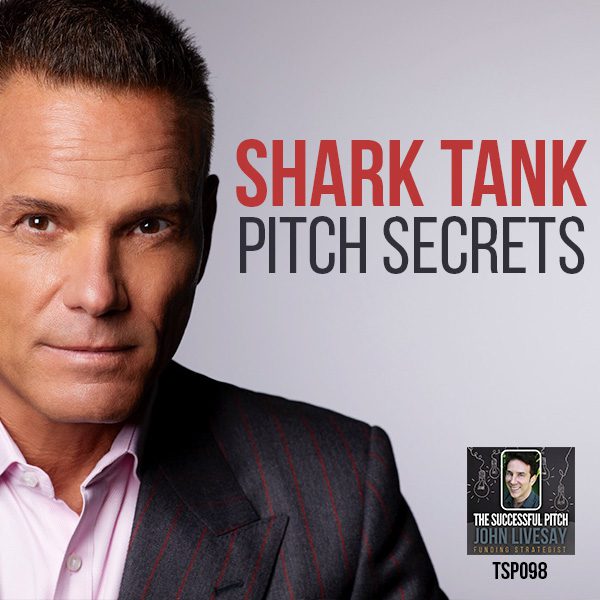
Shark Tank Pitch Secrets with Kevin Harrington
Posted by John Livesay in podcast | 0 comments
 Episode Summary
 Today’s guest on The Successful Pitch is none other than Kevin Harrington, one of the original judges on Shark Tank. If anybody knows what it takes to have a good pitch, it’s Kevin Harrington. He’s literally heard over 50,000 pitches in the many years he’s been doing this, from listening to pitches for infomercials to listening to pitches on Shark Tank. He has a really great key here which is that, “Consistency is the ultimate motivational tool.” He said, “When you’re out there, you need to show the investors how they’re going to get their money back.” He gives an example of exactly the kind of pitch he would like to hear in order to get him to say yes. He said, “You need to test before you invest.” He gives us great insights into what a magical transformation is that he is looking for when he hears a pitch.
Listen To The Episode Here
Shark Tank Pitch Secrets with Kevin Harrington
Hi. Welcome to The Successful Pitch podcast. Today, I am thrilled to have Kevin Harrington. You probably know him as one of the original Shark Tank judges. He has been so successful in so many different areas. He has written multiple books, one called the Key Person of Influence, and he is definitely a person of influence. He is known not only for his expertise on Shark Tank, but he is the inventor of the infomercial, the As Seen on TV pioneer. Now, he’s involved with Quantum Media, which is a digital media agency. He hears so many pitches. He’s going to give us insights into what makes a great pitch. Kevin, welcome to the show.
Hey, John. You said a mouthful there, thank you for all that.
I’ve been a big fan of yours for multiple years. I’ve watched a lot of your clips on television and your areas of expertise. I always like to go back to someone’s story of origin. Did you always know you wanted to be an entrepreneur?
I was lucky. I grew up one of six kids in Cincinnati, Ohio. My father was an entrepreneur and he always said, “Kevin, I want you to be an entrepreneur, own your own business, control your own destiny.” Now, my mother, her father was in banking, so she came out very conservative, “Oh no, I’d really like for you to be a doctor or a lawyer.” They struggled a little bit. The good news is I have two older sisters. One married a doctor, one married a lawyer. I got to be the entrepreneur.
[Tweet “Shark Tank Pitch: Consistency is the ultimate motivational tool.”]
Everybody filled the different dreams of your parents, so you got to do your own expertise there. One of the things that you’ve recently written about in Forbes is that, “Consistency is the ultimate motivation tool.” I’d love to have you talk about that.
I think that when I look at the infomercial business and I look at the infomercials space, that is an industry of consistency. We take Tony Little, who goes on in HSN and gives his pitch. Then, he hones it. Every time he comes on, he has to be consistently the same. He comes back week after week, month after month, year after year, and we’d take that infomercial and it continues that whole path, all around the world. When I get involved with products and companies and people like the Tony Littles of the world, I get involved once they have reached that level of knowing what the consistency of that pitch is and how powerful it is. Then we capture it on tape, put it up in front of millions of people and take it around the world.

Shark Tank Pitch: It’s a much more authentic world in the world of marketing and business today than it was even ten years ago.
Yes, consistency is important. That’s in a product but also running in the business. It’s the same thing. Why is McDonald’s so successful? It’s the special sauce. They give you the same thing. No matter where you go, you’re going to get that same quality little cheeseburger, whatever it is you’re getting. That’s why franchising works. Ultimately, successful businesses are good because they deliver on a promise of consistency. It’s important. People today, they don’t mind paying a little extra or the right price for something, whatever the deal might be. But they expect to get the same thing each and every time. I think, it certainly is as the millennials are coming out. They don’t want to be messed with. It’s a much more authentic world in the world of marketing and business today than it was even ten years ago.
I think we can use this as a through line for the whole episode because consistency is so important in what you’re doing with Quantum Media. When you’re talking about helping businesses increase their conversion rates and use social media and all these other digital tools to create a brand, it’s so important that brand would be consistent.
Absolutely. Let’s put it this way. In the world of marketing, when we first started, I didn’t even know what an infomercial was, we didn’t call it infomercial, we’re just putting them up. But it got down to where we were running our shows, looking for consistent dollar per phone call. We had an allowable with the station where we said, “Okay, we’re going to let you run this show and we need to get $10 for every time the phone rings.” That’s our allowable, that’s our consistency.

Shark Tank Pitch: If you’re not consistent in the world of digital, it’s even a bigger problem today.
In the world of digital marketing, it’s pretty much the same thing. If you’re going to go on Facebook and you’re going to use affiliates and you’re going to do different things, you have to be able to provide consistent everything. Because if you’re shipping your product within 48 hours and that’s consistent, and all of the sudden you have a delay on inventory and you’re shipping in three or four weeks. Your returns are going to go from 5% to maybe 20%. If you’re not consistent in the world of digital, it’s even a bigger problem today. In the old days, we could say at the end of an infomercial, “Hey, call the number, we’ll ship it within four to six weeks.” Can you do that in today’s world?
No. Not with the drones in Amazon and everything. That’s funny.
“Did you mean four to six hours or four to six days?” Don’t give me four days. I want this in 48 hours. The world expects authentic consistent performance. They just don’t allow for the alternative anymore.
It’s all about giving people an expectation that you can meet and then being consistent with meeting those expectations. Because the minute you lose credibility in an infomercial, on what you’re promising your clients from Quantum Media, or what the ad is promising people if they click on it that they don’t get, then everything goes out the window. Now, you have heard so many pitches. Let’s talk about of course your experience with Shark Tank, how did Mark Burnett pitch you to be a judge?
I’m going to tell you that in one second. I got to finish one point you just made. In today’s world, with the star system of rating people’s products and stuff, that is the other reason why consistency is so important. Because in the old days, you could ship something, if it wasn’t perfect, people didn’t have a way to complain other than call the number and say, “You know what? It’s not exactly what I wanted.” Now, you get one or two stars, you get yanked off the air, you get yanked off a website. You’ve got to be consistent. We’ll close that subject down.
I love that loop. Thank you. Even an Uber driver gets rated now, so everybody gets rated.
I was sitting there. I had done about 300 or 400 infomercials with Tony Little and George Foreman and Jack LaLanne and the juicer and all these different fancy shows and things. Taking them all around the world, built a public company with $500 million in sales and had done literally billions across the board. One day, Mark Burnett was on the line and he’s like, “Hey, Kevin. This is Mark Burnett. I’m a TV producer.” I said, “Mark, I know exactly who you are. I’m in your industry.” He said, “Look, I got a new reality show I’m doing. Would you come out to LA? I want you to meet my team and tell you what we’re up to. It’s something I want to see if you might be interested.”I said, “Mark, what an honor to get this phone call. I appreciate it. Thank you. But any kind of heads-up you could give me so I can be thinking about it? Is there any news on it yet?”He said, “No, it’s coming out but we haven’t shot it yet. It’s called Shark Tank. Don’t worry, just come on out here. I’ll tell you more about it when you get out here.”
I said, “Mark, wait a minute. I’m not sure that this is going to be for me. I do know you do some crazy things to people on that Survivor Island show. I don’t know about a show called Shark Tank. What are you going to do to me?” He thought about it and said, “Look, it’s not crazy like that. It’s a business show, Kevin.” That’s when I said, “If it’s a business show, I’m interested, if you’re involved Mark.” My wife said, “How is Shark Tank a business show?”
It was kind of funny. Think about this. When I was shooting Shark Tank, nobody knew what it was. I tell my wife, “I’m heading out to LA. I’m shooting Shark Tank.” She says, “What are you going to do?”I said, “I’m going to be investing money.” She said, “Wait a minute, they’re not paying you? You have to pay them?” “That’s how it works, yes.” She said, “How much are you going to invest?” I said, “I don’t know. It could be hundreds of thousands, it could be millions.” She said, “When would we get that money back?” I said, “I don’t know, maybe never.” She said, “Why do you want to be on this show?”
[Tweet “Shark Tank Pitch: I’ve heard over 50K pitches over the years.”]
When you think about it, I was investing one of the first deals I did, I’d put a half a million into a company. She closed the doors six months later. It was a very risky endeavor and I was one of the original sharks in putting money up and wheeling and dealing and all that. I think the bottom line is this, once we got distribution, once it was on the air, once it got the buzz, then everybody understood. “Okay, there’s the Shark Tank show. Yes, I understand. Kevin’s on that show called Shark Tank.” Then, it started paying off for me. Much like why are we doing a podcast today. I’ve taken now 50,000 pitches over the last 30 years. This is why Mark Burnett wanted me, because I had taken so many pitches before I’ve even got on Shark Tank that I was an experienced pitch taker, if that’s the right way to say. I go to tradeshows every week somewhere. I’ll do 30 tradeshows this year. I’ll invest in products in every show that I go to, whether it’s the pet show or the fitness show or the beauty show or the golf or the toy fair or the house wares or the hardware. That’s what I do for a living and that’s what I love to do.
The one thing I can tell you, John, is that I have learned what it takes to give a good pitch because I’ll sit there in a day, I took 96 pitches in one day. Just think about this, do five minutes times 96, it’s 500 minutes, and do it back to back to back, it’s an eight hour a day and beyond, and there was time in between. Sit there for eight to ten to twelve hours and take pitches, you’re going to learn a thing or two when you get to 47 and you think you’ve taken 500. You’re ready for a little break in the action and you’re ready for a good pitch. I learned a thing or two about good pitches. That’s what I love sharing with people right now. That’s part of my DNA.
I’ve been called The Pitch WhispererR because that’s equally something I’m passionate about as well. I love helping people become great story tellers, and you and I are on the same page. I’ve heard you talked about the need for a pitch to have a magical transformation. Can you describe what that is for you?
I’m in a very visual business, in the world of as seen on TV products. If it’s Tony Little in fitness, we want to see people losing weight. We want to see people getting stronger. If it’s acne, we want to see their bad skin get cleared up. Just think about it. If it’s a kitchen gadget, we would take a little gadget and turn an apple into a bird, “Wow, what was that? That was pretty amazing.” The bottom line is this magical transformation sells. It’s before and after, before and after. It’s visual, it’s demonstrable, and it works. We know that it does.
[Tweet “Shark Tank Pitch: Magical transformation sells.”]
People ask me a lot of times, and you’re the expert to ask this question to. How real is it on Shark Tank compared to when somebody pitches someone like yourself in front of an Angel group? Because I know you’re involved with the Angel Investor Network as well. The contrast obviously is quite different, but I’d love to hear your answer on TV versus reality.
Look, the one thing that I would always say, Shark Tank is a great show but Mark Burnett is a television producer and he looks for ratings. He’d come down halfway through a day and say, “Nobody has invested any money, what’s going on here? If we’re going to have good television, we’ve got to have some deals.” We’d say, “Mark, you want good television, but we want good deals.” There’s a mix there. We could make fun of people or whatever, which I never really particularly wanted to do that. I was more of a constructive guy. Mr. Wonderful, that’s his brand, to make fun of people. That’s okay. He built his brand on that. Me, I like to empower entrepreneurs.
I would say this, that Shark Tank was about making good TV and getting good ratings and getting lots of viewership. They’ve done a good job of that. Along the way, you’ve got to have a mix of some good deals, or the sharks aren’t going to be interested. I’d be sitting there and somebody would come out with something that you just knew. They were looking for ten grand, for 20% of their company, they haven’t even started and it’s this crazy idea, and you just knew this one that it was just made for television.
Do you think that Mark Cuban, who owns a multibillion dollar enterprise and the Dallas Mavericks, is interested in really investing ten grand in one of these teeny little deals? It’s made for TV that they had to do, whereas when we’re pitching equity deals like Angels network and some of these things, these are hardcore deals where we want to see research. We want to see competitive analysis. We want to see exit plans. We want to see the risk analysis where we can really get into the hardcore crunch of the deal.
I did dozens of deals on Shark Tank and I know Cuban’s done probably, I think I read an article that he had done about 35 or 40 deals. He said a third of them are making some money or in business, a third of them are out of business and don’t know it, and a third of them are never going to make it and are virtually done. Two-thirds were done almost and just selling and not really understanding that they really don’t have a business.

Shark Tank Pitch: People forget, when they come on Shark Tank, it’s not really about them. It’s about how do they get the shark to want to write the check.
I think that’s probably not too far off the investor rule in investing in Angel-kind of deals, is if you can get a third of your stuff to work, that’s probably pretty good. However, I wonder how many of the third that are still in business, as Mark says, are actually going to have any kind of an exit to where he might get his money back even. That’s really the ultimate thing. People forget, when they come on Shark Tank, it’s not really about them, it’s about how do they get the shark to want to write the check. That’s the perspective people pitching a lot of times forget. They’ve got to get the shark to write the check. It’s more about understanding really the motivation of the shark to want to be your partner.
Would you say, for someone like yourself who has heard as many as 96 pitches in one day, that having a really compelling story is a way to get people to standout out of all those pitches? You remember the story more than the product, typically?
I’ll say this. I think the story is important, absolutely. I want to hear the story, but at the end of the day, I focus on a couple of things. I want to know, is there an exit strategy, because one of the challenges is this. If it’s a private company, let’s say somebody wants to have half a million dollars for X percent of their private company. There is never a distributions in these small companies. They always need more money. Here’s my half a million, I’m not going to get it back for a long time unless you sell the company or go public. I want to know that there’s an exit strategy.
This is the other trick that I talk about, and Mr. Wonderful uses this one quite a bit. Is there a way to accelerate the pay back to the shark? When I say shark, to the investor. I’ll give you an example. If somebody says to me, “Look, I want your half a million. I’ll give you 20% of my company, but I’ll give you 100% of the profits until you get all your money back. Now you’re whole. Now you own 20% for the rest of your life. You don’t have to be worrying every day, “Where’s my money? Where’s my money?” You got your money back right away. Now, you can focus on building the business to the exit.
I tell people to always focus on getting that money back to the shark. If you’d notice, O’Leary, in many cases is talking about, “Okay, you’re a donut business. I want 50 cents for every donut you sell,” as a way to monetize his investment. That’s because he realizes that he’s going to be riding these people like crazy if he just has equity and he’s never seeing any distributions. But if he’s getting 50 cents back on every donut sold, he’s getting a distribution on a weekly basis and having the chance to have equity also.
I love it because not only does the investor get their money back sooner than the exit strategy, but also it takes the pressure off the founder not to have an exit strategy until they’re really ready because the investors already made their money.
Exactly. In all of the years of watching and doing Shark Tank and being there myself for 175 of my own segments, never did one person ever actually lay it out to me, the shark, “Hey, look. I’m so focused on you to get your money back fast. My goal as the entrepreneur here is to tell you that I’ve got a great business, here’s my plan, here’s my execution, here’s my team. But my goal is to get you your money back within one year, and this is how I’m going to do it.” If somebody came with that storyline, that’s going to be powerful pitch.
It’s really about showing empathy for the investor as opposed to what you need, isn’t it? I love that, Kevin.
I’ll give you an example. I had a company I got involved with. They needed $20 million. We went out and did a raise. They said, “Would you help us go on the road show?” I said, “Absolutely.” They said, “Look, give us a couple of weeks up in New York. We’re going to have people coming in one at a time, have a couple of group meetings. We’ll have you, if you could. There’s a couple of billionaires as part of this, if you could maybe go and sit in their big building that they own at the corner of 15th and Madison or something. We’ll make a couple of appearances here and there.” I made 90 something pitches over that two and a half week period of time.

Shark Tank Pitch: What is it that you like? What have been some of your most successful investments?
We made 90 something pitches to individual investors. The first thing that I did was sat, talked, got to know them for a few minutes. What is it that you like? What have been some of your most successful investments? They would instantly tell me what it was going to take for them to get the money. “This is what I’ve been doing. When I invested in this deal, I love it. I ride it out for years, and boom, boom, boom.” They would basically, within five minutes, tell me what it was I needed to do to convince them that we might have the right investment for them. Sometimes, you’ve just got to sit and listen.
It also sounds like you’re really smart in asking the investors before you even pitched what their criteria is of what makes them say yes. Also, you get them in the mindset of remembering a positive experience before you even pitch, which I think is also very clever.
Exactly. Because on Shark Tank, the advantage that people have today is they can watch all the Shark Tank segments, and they see what Barbara is looking for, what excites O’Leary, how to make those pitches. But when you’re one-on-one with an investor you just met for the first time, how are you going to pitch them? You’ve got to get in their head real fast. That’s what I like to do.
Kevin, one of the key things I know is so important to investors like yourself is, who’s on the team? Recently, I interviewed Laura Wagner of Digitzs. She put together such an impressive team of people from Apple and PayPal and Google, plus herself. Is that a key factor for you when you’re looking at a company that’s pre-revenue and maybe even pre-minimum viable product, is will they have a great team?
Yes. There are various things that I do look for. If someone says to me, “What is the one thing that an entrepreneur really needs to do to be successful?” I say, “They’ve got to have passion and vision and all that. But they need to surround themselves with experts and a dream team that supports their strengths and weaknesses, and more supports their weaknesses than strengths.” I think at the end of the day, Laura surrounded herself with some amazing people and was very, very successful in doing that. What was interesting is that when she first tried to raise some money via crowdfunding, she had some challenges. The bottom line is, it landed soft in the first part and then when we brought the shark stuff and brought more of this dream team aspect to the table, it has super charged what she was doing. The bottom line is we had some very powerful stuff happen as the dream team came together.
You’ve had your pulse on success for so long, from being on the cutting edge of what’s going on in infomercials, being one of the first Shark Tank judges when there was a lot of risk for you, it obviously paid off. Now, you continue to invest in a lot of startups. Let’s talk about where you see the future with what you’re doing with Quantum Media. What is it about that that you feel is so exciting and has so much growth, and how can people possibly use Quantum Media, and who are you targeting?
What’s happened is there’s been a disruption in a lot of industries. Uber has disrupted taxis and Airbnb is disrupting hotels. Not that they’re putting all these out of business, necessarily. They’re tightening up some of these industries. The TV industry has been disrupted itself. There is 50% fewer viewers on TV. By the way, there is big financial drain in the world of television right now. ESPN is losing millions of viewers every single year. ABC owns ESPN and Disney, they’re hurting because of this. What’s happening is, where do the eyeballs go? If they’re not watching TV, they’re watching digital. They’re on digital. They’re on Facebook. They’re on Pinterest. They’re on Instagram.
The bottom line is that there’s this mass exodus to other places. What do I do? I follow the eyeballs. Quantum Media, what we’ve done, five years ago, it was 80% TV, 20% internet digital. Now, I’m 80% digital, 20% TV. We’re doing campaigns for major corporations, for products across the board. We call it a test before you invest kind of a format and do a lot of stuff long before we go to TV, because TV is so expensive. Quantum Media is our new baby. We shoot very inexpensive videos, test them up on social media channels to see what the results are before we go to the next steps. It’s the new way for us. Digital is without a doubt the future in my mind for not only testing products but also rolling them out and, as you started off this conversation, getting the consistency you need as an entrepreneur.
[Tweet “Shark Tank Pitch: Test before you invest.”]
Nice. We’re going to tweet that out. I love that line, test before you invest. What a great sound bite that is. That’s fantastic. I know that people are probably going to want to follow you on social media. Your handle is @HarringtonKevin. You have thousands and thousands of people listening to your advice. I just want to personally thank you for being such an advocate and inspiration for so many people, myself included.
John, it’s been a pleasure to be here today. Thanks for having me. Keep the pitches coming for both of us. I love to take the next home run pitch. I love every single day when I wake up because I never know what I might be pitched that day. That’s what keeps my days exciting, is knowing that I’m going to be hearing some cool new things. I look forward to doing some more business with you. Good luck in your podcast ventures and taking new pitches.
Thanks a lot, Kevin. I appreciate you being on the show.
Thank you.
Links Mentioned
- J Robinett Enterprises
- John Livesay Funding Strategist
- Kevin Harrington
- Key Person of Influence
- As Seen on TV
- Quantum Media
- @HarringtonKevin
Crack The Funding Code!
Register now for the free webinar
The Successful Pitch – Book Trailer
Share The Show
Did you enjoy the show? I’d love it if you subscribed today and left us a 5-star review!
-
- Click this link
- Click on the ‘Subscribe’ button below the artwork
- Go to the ‘Ratings and Reviews’ section
- Click on ‘Write a Review’
Shark Tank: Secrets To Success – Interview with Michael Parrish DuDell
Posted by John Livesay in podcast | 0 comments
Listen To The Episode Here
Episode Summary
Michael Parrish DuDell is an entrepreneur, keynote speaker, and the bestselling author of Shark Tank Jump Start Your Business, the official book from ABC’s hit show Shark Tank. Michael was given a 30-day deadline to finish the book and was on the set of Shark Tank frequently getting to know the investors. Listen in for some key Shark Tank insights and get a behind-the-scenes look at how to pitch the Sharks.
Shark Tank: Secrets To Success – Interview with Michael Parrish DuDell

Shark Tank, Jump Start Your Business
Hi and welcome to The Successful Pitch Podcast. Today’s guest is Michael Parrish DuDell. He’s an entrepreneur, a speaker, and the author of Shark Tank, Jump Start your Business. He’s been called one of the top 3 most popular Amazon authors for a reason. He’s also a Millennial generation expert. He’s been on a lot of media from CNBC to CNN to New York Times. He’s worked with Seth Godin. He was involved with GE’s relaunch of Ecomagination. He has a very interesting background. I can’t wait to dive in. Michael, welcome to the show.
Thanks so much for having me.
I’m sure a lot of people would love to talk about Shark Tank the whole time, and we will definitely get there. But I am always curious to see, how did you become a Millennial generation expert?
It helps that I’m a Millennial myself. There are a lot of people out there that talk about the generation and that maybe speak on the generation, but in fact don’t have that firsthand experience of being part of the generation. We know a lot about Millennials, but one of the things that we know, numerous studies suggest, is that Millennials learn best from other Millennials and that Millennials prefer to be around Millennials. It just sort of helps that I’m of that generation.
[Tweet “Millennials learn best from Millennials and prefer to be around Millennials.”]
That’s the short answer to a much longer answer, which is that in 2007, I became the Senior Editor of a site that’s now been sold and changed a lot. Back in 2007, when digital media was first becoming a force to be reckoned with, the conversation that we were having was a conversation with Millennials for Millennials. That led to a lot of different kinds of work, to speaking, to writing, to consulting.
It was quite on accident that over the years, I turned into this Millennial expert and positioned right in the future of work in the small business space. There’s actually a lot of overlapping between some of the things we talk about in the book, some of the topics that I generally speak about and this idea of the next generation who’s going to be carrying the torch and taking over the future of business and entrepreneurship.
I don’t think a lot of people realize that the Millennials are even bigger than the Baby Boomers. The Baby Boomers have all this reputation of being so huge and changing everything, but there’s more Millennials, am I right?
Yeah, that’s exactly right. As it turns out, Millennials are the largest generation in the history of the world. It was the Baby Boomers, but we have beat them. We’re about 80 million members strong. That means a lot. That means that we have an overwhelming ability to make purchasing decisions that affect numerous businesses. That means that when it comes to voting and when it comes to a lot of other activities that majority makes a difference, we’re going to be leading the way.
The conversation around Millennials and how Millennials grow and evolve into leaders and into adults, I think that’s a fascinating conversation. I’m really honored to be a part of it.
I love it. Can you tell us about how you came across Seth Godin and what you did with him on the Domino Project?

Michael was chosen by Seth Godin to work on The Domino Project with him.
Seth Godin is one of my all-time favorite people. I worked for him, as you just said, in 2011 as part of the Domino Project, which is a publishing company that was started with Seth, by Seth, and powered by Amazon.com.
It’s funny how we met. My literary agent is the same literary agent as someone named Josh Kaufman who wrote the book, Personal MBA. It’s also Seth’s literary agent. Gosh, I guess it would’ve been 2009, maybe. I was 25, I pitched a book to her. She said, “Listen, there’s no way I can sell this book, but I think you’re interesting. Stay in touch.”
I did, and over the course of the years, we got to know each other very casually as acquaintances, and this opportunity happened. I saw her on Facebook page that Seth was looking for somebody. I applied just like the thousand other people that did, and the rest is history.
Do you have any sense, Michael, what it was about your application or your interview that made him pick you out of all the people that wanted to work for him?
No. I don’t. That’s a really good question. I think Seth, over the years, has really been able to fine-tune through. It wasn’t a traditional, “Submit your resume.” It was an essay question-based Google form that really required a lot of examination and a lot of personality in order to stand out.

Seth Godin has cultivated his ability to lead and he has a good sense of the kind of people that he works really well with.
Like anybody who has cultivated their ability to lead and to manage and to run businesses, I think he probably has a good sense of the kind of people that he works really well with and he can see that through that sort of thing. Of course, it didn’t hurt that I knew somebody that knew him.
But, yeah, I think he just sort of knew. It wasn’t just like you submitted and you get accepted. There was a whole interview process. It was a process. I think there were close to a thousand people that applied, about 13 of us were brought in for a group interview. Of the 13, I believe 6 were chosen to work on the project.
Wow. There’s so many similarities there, Michael, to pitching to get funded, to pitching to get on Shark Tank, the same kind of numbers. What you said, two things: one, a warm introduction is always a great way to get in front of an investor. Number two, showing some personality. That’s what people respond to, whether you’re pitching to get hired, pitching to get funded, pitching to get on Shark Tank, would you agree with that?
Absolutely. Listen, there’s a million people that have a million different ideas and it all comes down to differentiation. The way you differentiate yourself is by leading with your personality, by leading with that competitive advantage, which for a lot of people, it’s who they are.
Nice. Differentiate with your personality. That’s part of who your personal brand is. How did you get from the Seth Godin connection, and you’ve mentioned Amazon, to getting selected to write the book for the Shark Tank show? I’m sure that was equally competitive.
[Tweet “Differentiate with your personality.”]
Yeah. There’s a little bit of a gap between those years. In 2011, I worked for Seth. Then I went over to work as the editor of ecomagination.com right as GE was relaunching that property. It was a really great culmination of all the things that I’d done in my career. I’d worked in the environmental movement in the editorial capacity. I’d worked in the business sector. I’d had this conversation with Millennials. This combined it all.
Ecomagination was all about talking about the solutions to some of the rather large challenges we’re facing from an environmental standpoint through the lens of business and how business can make a difference. I’m a big believer that business, probably even more than any other entity, is the one thing that can make a tremendous difference in this world. I was very proud to sort of help lead that up.

I’m a big believer that business, probably even more than any other entity, is the one thing that can make a tremendous difference in this world.
From there, I started my own firm, consulting and doing a lot of trainings and workshops all about things like media, content, Millennials, that sort of world. Through that actually, it was a very random story, the same literary agent who I’d known, who connected me with Seth, she and I had met a few days before, I’d been looking for a book project. Randomly, she got a call from the editor at Hyperion, which has since been sold now. It’s part of Disney.
They said, “Listen, we’re writing this book for Shark Tank. We’re looking for an up-and-coming entrepreneur and author who’s familiar with the brand, who has experience in branded content to come in and write the book. It wouldn’t be ghostwritten. Name is on the cover, work with the sharks. Do you have anyone that’s interested?” There was a caveat. The caveat was that the entire book, from start to finish, had to be completed in 30 days.
Oh my gosh.
Right. If anybody who’s out there who’s listening to this, and is a writer or has written, they know that 30 days is an incredibly short amount of time to write a book. If you’re doing the numbers on a 60,000 word book equals about 1950 words a day, every day, without a break. There was a few writers submitted. I don’t know how many different agencies submitted.
Basically, they’d give us these assignments and we turned it in about 2 weeks later. They chose me. I went off to Florida to lock myself in a room and write a book in 30 days. Now we just finished the second one, so it did well.
Fantastic. What’s the second one called?

Shark Tank; Secrets to Success
The second one is Shark Tank; Secrets to Success. The first one is Shark Tank, Jump Start Your Business. The first one is very much a 101, how do you start tapping into some of the knowledge of the sharks and entrepreneurs.
The second book picked up where the last one left off. I traveled around the country and met with nine of some the most successful entrepreneurs from the show, and told their story. From childhood all the way to where they are now, how they built their business, the trials and tribulations, and how, ultimately, they succeeded as entrepreneurs.
Fascinating. I know that you were actually on the set a lot, is that correct?
Yeah. I wasn’t on a lot but I was on a few times and got to be there during the filming of the fifth season, some of those episodes. That was really cool.
What did you see is the biggest challenge people have when they make a pitch?
In that context, the biggest challenge, and perhaps it is the biggest challenge in general but definitely in that context, it’s the nerves. It’s the fear of being in the spotlight. It’s a very high stakes situation. If you’re not used to being in front of the camera, that makes it even more terrifying. It’s getting out there and really being afraid that, A, you’re going to be eaten alive by the sharks. B, maybe that camera thing is scary and the world could possibly see it and you could mess up and all of that.
I think that gets in the way most of the time. I think if you’ve made it all the way to the show, you have all the answers, you’ve done the research into what they’re going to ask and you know about your business, hopefully. I think, most of the time, it’s the fear that stands in the way.
[Tweet “I think the biggest challenge is the fear that stands in the way.”]
Well, let’s talk about that, because it’s a high stakes game whether you’re on Shark Tank or in front of an Angel group or a VC to deal with nerves. Do the people on Shark Tank, the producers require them to practice a lot before they start rolling the cameras, to try and make sure they don’t make a total fool of themselves?
Yeah. They do get a practice round the day before. They’ve been up there. Never in front of the sharks, they don’t get a chance to do it in front of the sharks. What you see on television is the real deal. They have practiced it. Over the course of the few months, usually, before they get there, via remote, they’re working with the producers and folks from the show to really nail down their pitch and make it something that is really enticing to the sharks. There is a good amount of coaching before they get up there.
I’ve also read and heard that they have to stand there in front of the sharks for a few minutes while they set the lights and the sharks automatically start judging them, of how comfortable are they in their skin before they even open their mouth.
Yeah. It’s pretty funny. It’s the nature of television. You have to get the shots and that there has to be some sort of production quality on top of all of that. There are some little things like that that maybe make it a less organic experience than one might think.
I’ve read a lot, even from the sharks, about how long they’re standing up there. I’ve read some people say, “Oh, they were up there for 5 minutes,” and some people say, “Oh, 10 seconds.” When I was there, I would say, the average was about 30 to 45 seconds. Which is an awkward amount of time but it’s a part of the process, and they know it’s going to happen.
I just think that’s so valuable for our listeners because whether you’re on Shark Tank or in front of an Angel group, the minute you enter the building, leave your home even, you are on. You’ve got to have your game face on. You can’t just say, “I’m going to turn it on when I start speaking.” You can’t wait until you open your mouth. People start looking at you, how comfortable you are, how confident you are just from the moment you walk into the room.
Absolutely. It’s crucial that you’re prepared and ready to go from the second you leave the house, honestly.
[Tweet “Be prepared and ready to go from the second you leave the house.”]
The other question I have for you is, I’m constantly telling clients, “Don’t get defensive.” When you get a question from an investor or a shark, don’t get defensive. Because the minute you get defensive, you’re not coachable and they don’t want to work with you.
Exactly. Look, when somebody is deciding whether to invest in a company, they’re not just looking at what the business does. They’re not just looking at the product or service. They’re looking at the person and they’re looking at the potential. Depending on the investor and their strategy and what’s worked for them, they’re probably putting weight on one of those categories more than the other.
If you look at the sharks on television, I can tell you right now, Barbara Corcoran, it’s all about the person. She said this in the book and she says it time and time again. She will happily take a business that she doesn’t think can make it, a product that’s not going anywhere, turn it around. As long as the person is someone that she feels she can invest in. The person is honest, the person has integrity, the person’s fun, and that she wants to spend considerable time and energy with.
[Tweet “Do research on what the investors care about before you pitch.”]
You look at someone like Lori and, yes, she cares about the person, but she’s a product investor. She really is looking at the potential of that product and how that product fits in the portfolio of what she does and of her other investments.
It depends on the investor. The best piece of advice is to do as much research. Whether you’re on Shark Tank or pitching at some sort of pitch competition, or even just having a meeting with an Angel, to do as much research into who this person is and into how they like to be approached, spoken to, and position your product that way.
Yes. I’m so glad you said that, Michael. It’s all about the due diligence that you do on the investor as much as they’re going to do on you.
Absolutely. We’re getting into business with these people, so there is this idea that when somebody’s approaching somebody for money, the power dynamic is, “I’m asking you for something.” That’s totally wrong. You have to approach it as you’re giving somebody an opportunity to be a part of something that’s going to make them money. This is an equal partnership.
[Tweet “Approach it as giving somebody an opportunity to make money.”]
When I think about pitching, I don’t like the idea of this subservient mindset where, “I really hope they give me a deal.” It’s 50-50. If you’ve done your job right, you’re walking in with a business that has the potential to make these people a lot of money. You’re offering them an opportunity.
That leads right into this fear of missing out that happens. I’ve had Charles Michael Yim on the podcast and he got all five sharks, pre-revenue, to put money in because they liked him and his idea so much. They had this fear of missing out, “I want in. I want in.” Do you see that often?

Charles Michael Yim got all five sharks, pre-revenue, to put money in because they liked him and his idea so much.
Yeah. I think that’s a valuable tactic, not just in pitching but across the board in business. We’re taking risks all day. Nobody knows what’s going to work and what’s not going to work. We can make some assumptions about things based on previous situations. But at the end of the day, there’s no proof that this formula or this plan is going to work.
When you can position it in the right way and you can get people interested in what the potential could be, you can certainly help them with the idea that if they miss out, this is going to be a once in a lifetime thing.
When you did the second book, the Shark Tank; Secrets to Success, did you have more than 30 days to do the second one, I hope?
Yeah, I had about 90 days, but that required a lot of flying and a lot of interviews. That was all packed into those 90 days. It was a very intense process.
Equally intense.
Equally intense. Absolutely.
Anything with the word shark in it is intense. That’s just a given, I guess.
Yeah, and I think it works for the show because I was put under a very tight timeline and very tough rules and regulations around writing this book, and doing it and turning it on deadline. I think that makes sense for the nature of the show because really, the show is all about being an entrepreneur.
When you’re an entrepreneur, the one thing that all entrepreneurial people have in common is that they get it done no matter what. A professional shows up, a professional does the work, and a professional doesn’t miss deadlines. The books are very much an embodiment of that philosophy and an embodiment of the brand.
Now, can you tell us a story from Secrets to Success? I always love storytelling. I think that’s the best way to communicate your message. If you’re talking about someone’s childhood all the way through, it’s always the why behind the why this particular idea to make their business, right?
Yeah. There’s so many great stories in there. I talked to some incredible founders. Anyone that’s gone through the process of starting a business probably has started more than one and always has a lot of great stories.

Their parents gave them an air popper to make popcorn. They never had any idea that 20 years from that day, they would be back in the popcorn business.
One that sticks out immediately is I spent some time with the two cofounders, the brother and sister pair that put together the company Pipsnacks, which is famous for Pipcorn, which is the little mini-popcorn. One of the stories I really love from their experience is that when they were a kid actually, I think they’re two years apart, and they wanted to make some extra money. I think they were like maybe, 8 and 10. Their parents gave them, they had an air popper to make popcorn. They never had any idea that 20 years from that day, they would be back in the popcorn business.
As kids, they would make their own popcorn and they would go out on the street and they would sell it. I just thought that’s always really neat because when you see something like that, again, at that time, as a kid, you have no idea you’re going to, one day, build a multi-million dollar popcorn company. But you see that the seeds are planted early. I just thought that was a really fascinating part of their adventure. There’s a lot of great stories like that in the book, so you got to check it out.
No pun intended, the seeds were planted early, right?
I know, I was avoiding that.

Even when you watch on Shark Tank people are like, “We like the grand idea that you have there. But what’s the real performance? Tell me the numbers.”
No, I love it. The popcorn seed. The kernel, the idea planted in their childhood developed into something really, really wonderful. What is next for you, Michael? Are you going to be going on a speaking toward to promote Secrets to Success with the Shark Tank or write another book?
Yeah. That’s a great question. I’m all around speaking. Speaking is probably the biggest part of my business right now. I’m on the road, sometimes every week, sometimes every other week. I’m doing a lot of speaking, a lot of training around this idea of helping business and leaders figure out, what is the next generation? What are some of the ways that they can really move forward and enter the future of work in a way that’s going to work in the environment and that’s going to attract the best people, the best consumers, the best employees? A part of that is telling the story of Shark Tank and the story of the entrepreneurs that I spoke with.
One of the key factors that investors look for, whether they’re Barbara or anybody I think, is who’s on your team besides you? If people can learn from you how to assemble a great team to execute their vision, that really is a big, big factor to, not only whether they get funded, but whether you’re successful or not. Are there any tips that you have for the listeners on how to assemble a great team and not only get them but keep them?
You mentioned Barbara and I have to bring up that Barbara and I have a real disagreement on this one subject. We’ve talked about it two or three times. This one issue is the role of self-awareness in an entrepreneur’s life. I happen to believe that the more self-aware you are, the more successful you are. Barbara believes the exact opposite. She believes that good entrepreneurs lack self-awareness because they have to be crazy to continue to go forward. If they’re crazy then they’re not self-aware.
[Tweet “Self-awareness is the secret to success.”]
We’ve debated a little bit about this. She hasn’t convinced me and I haven’t convinced her, but I happen to believe that that is where self-awareness is probably the most important. Because when you’re building a team, a lot of people want to work with their friends or their family, and that’s great.
However, the key to a good team is understanding your strengths and your weaknesses and building a team around that. I can’t tell you how many times I’ve met cofounders that really, honestly, have the same skill set. I’m a little unsure when I meet these people, why they partnered together, because they’re both bringing the same thing to the table.
For me, a good team is, like Seth, what we talked about with Seth, knowing who you work with. But also understanding the depth of experience required, the various facets you need to pull from. That starts with knowing what you bring to the table and what you do not, because we all have a lot of strengths but we also have those weaknesses.
[Tweet “Build a team that has different skill sets.”]
We’ve talked about two of the judges, Lori and Barbara. Let’s just touch base on your impressions of Mark Cuban.
Mark Cuban, I will say, is the busiest guy I’ve ever met. That’s what I always say. When I need to get interviews with Mark, I have to walk back and forth to the bathroom with him, follow him to the lunch table. He’s a really, really passionate investor. He’s always engaged. He’s always involved. He has a lot of strong opinions. Whether you agree with the opinions or not, I think that’s really admirable for somebody whose business is so diversified and he’s in so many different areas.
Of course, there’s Kevin, Mr. Wonderful. How did he come up with Mr. Wonderful, do you think?
Actually, I did know that story at one point and I don’t remember it now. It was when he was doing Dragons’ Den, the Shark Tank Canadian version. In Canada, he was on that show for I think almost first five or six years. He’s not on it anymore. Somebody in the Tank called him that and it stuck there and that he continued to use it and it works for him.

Dragons’ Den
I think one of the things about Kevin is, he’s one of my favorite sharks. He’s just like you see on TV in that he is a very disciplined, firm businessman. But every time, and I’ve spent time with him, he’s a super nice guy. I’m not trying to get after his money, so that’s another piece of it. But he’s the first one to follow me back on social. He’s the first one to email me. I think he’s a really good guy.
Frankly, I feel more comfortable when I understand an investor’s motivation and it’s not hidden under pretense and guise. We know who Kevin is, we know what matters to him. I think there’s something admirable, even if it’s not popular, being able to say the hard truth and being able to be that person so that people know what they’re getting in bed with.
Yes. Some people, you have to have a great story, a great pitch, but part of that pitch has to be, you have to know your numbers. If Shark Tank has taught us anything, I think it’s you can’t just have a great idea. You have to know your numbers.
Yeah. Obviously. If you’re in business, you have to know your numbers. You have to understand where you’re heading and where you came from.
[Tweet “You have to understand where you’re heading and where you came from.”]
The issue of valuation, how much your company’s worth, especially if it’s pre-revenue, and your growth projections, that seems to be the biggest thing that trips people up on TV and in real life, actually.
Yeah, because it’s impossible to account for. It really is impossible because there isn’t any way to judge a company’s success before they’ve been successful. There’s a lot of ways to make smarter guesses, but it’s all guessing.
If you’ve had successful exits, if you will, either going public or another company buying your company, both in real life and on TV, that really reinforces the shark’s confidence in investing you and maybe even gives you a little bump in your valuation, don’t you think?
Yeah. Listen, as many proof points as you can show that whatever you’re doing is working in the market, is going to help you ultimately. There’s no doubt about it. If you can come in with some great deals, some great partners, and some great proof, it helps strengthen your valuation and, ultimately, your position in the tank or in front of any investor.
The actual number, that’s always hard because it’s pretty difficult to know for sure how a business is going to do. That’s part of the risk involved.
[Tweet “As many proof points that what you’re doing is working in the market is going to help.”]
What I’ve heard you say about pitching is deal with your nerves, make sure you’re practiced, know your numbers, do your due diligence on the investors, and finally, be likeable. Have a unique personality it makes it come through. There’s some really great tips here, Michael. I can’t thank you enough.
Let me clarify the last one really quick because I think this is the most important thing actually, on how to pitch anything at anytime, anywhere, and it’s just this. Ready? If someone says, “What’s the one thing?” The one thing is this, just be a human. I cannot tell you how many times, I’ve watched so many pitches in my life, that I see somebody who is charming, smart, magnanimous, great, stand up in front of a group of people and turn into the most boring person in the world. Turn into somebody who, honestly, I wouldn’t invest in, and I know the person. It is that fear. It is the nerves that kick in.
[Tweet “Be A Human When You Pitch. Don’t be Boring.”]
The fact is that you just have to remember, and I think this is the key in business, in general. You’re talking to a human, and you are a human. What you’re talking about is a business. Sure, fine. But, you have to lead by being someone that is relatable, and honest, and authentic, and transparent, and whatever that looks like for you, that’s how you lead. You got to go up there and show your personality.
I love it. That’s great, great advice. I couldn’t agree more. One of the things you said earlier was the more self-aware you are, the more successful you are. I agree with you 100%. Is there a book, besides your two wonderful books, that you would recommend people reading to become more self-aware?

The War of Art: Break Through the Blocks and Win Your Inner Creative Battles
A book on self-awareness? I don’t know if I have a book recommendation on self-awareness. What I can tell you is a great book recommendation as far as learning how to face the fear and how to improve your relationship with doing good work. One of my favorite books of all time is the War of Art by Steven Pressfield. This is a book I read four times a year. It’s all about this idea of moving beyond that voice in your head that says, “I can’t do this. I’m not fit to do this. There’s someone else that could do it better.” learning to recognize that voice, to manage that voice, and to move ahead in spite of that voice.
I think that’s a book that I really enjoy and that I think could help people as they move forward. As far as self-awareness, for me, it’s practice makes perfect. Every month, we try to get a little better. Every year, we try to get a little better. Really knowing yourself, I happen to think, is the best way to be a good leader and to run a good business.
We’ll put your two books, Shark Tank; Jump Start your Business and Shark Tank; Secrets to Success, as well as the one you just recommended, War of Art, in the show notes for everybody. This whole concept of practice, focus on your progress, let go of having to be a perfectionist, I think is really another great tip. Michael, how can people follow you? What’s your Twitter handle and all that good stuff?
People can find me on Twitter @notoriousMPD, those are my initials, Michael Parrish DuDell. You’ll see, if you go on Twitter, that I have not been active for almost a month, maybe even a little longer. I took a month break from social media, in that way. I’ll be back later in the summer with some more stuff on Twitter. Until then, you can find me on my website, and that is MPDHQ.com.
Fantastic, Michael. Thanks, you’ve been a terrific guest. I can’t wait to see what else you’re going to do next, because these books are gold for everybody.
Thanks for having me. I really appreciate it.
Links Mentioned
jRobinett Website
Selling Secrets For Funding
Michael Parrish DuDell Website
Michael Parrish DuDell Twitter
The Domino Project
Personal MBA
Shark Tank Jump Start Your Business by Michael Parrish DuDell.
Shark Tank Secrets to Success by Michael Parrish DuDell.
The War of Art by Steven Pressfield
Michael Parrish DuDell Broadcast Reel
Crack The Funding Code!
Register now for the free webinar
Author John Livesay at NewsChannel 5
Share The Show
Did you enjoy the show? I’d love it if you subscribed today and left us a 5-star review!
-
- Click this link
- Click on the ‘Subscribe’ button below the artwork
- Go to the ‘Ratings and Reviews’ section
- Click on ‘Write a Review’
How To Win Shark Tank – Interview with Charles Michael Yim
Posted by John Livesay in podcast | 0 comments
Listen To The Episode Here
Episode Summary
Charles Michael Yim is a successful serial entrepreneur and has appeared on Shark Tank and other news outlets. Charles was the first one in the history of the Shark Tank show to get funding from all of the sharks. Charles also came in first place out of 10.000 startups after competing for Sir Richard Branson’s startup contest. Charles talks on his success with Breathometer, the differences between Sir Richard Branson and Mark Cuban’s business style, and his upcoming book.
How To Win Shark Tank – Interview with Charles Michael Yim
Hi and welcome to The Successful Pitch podcast. Today’s guest is Charles Michael Yim who is the CEO of Breathometer. You might know Charles from seeing him win on Shark Tank. Charles, welcome to the show.
Hey, how’s it going? Glad to be a part of it.

Breathometer is the leader in breath analysis technology.
Thank you. We really appreciate you sharing your wisdom, your insights [on how to win Shark Tank]. One of the things that I really notice about someone like you is people see you on TV and they think, “Oh, overnight success,” and you’ve been doing this for quite a while and you had several successes before Breathometer. I think that’s really one of the keys that investors look for, is serial entrepreneurs, because you have a certain tenacity and you learned a lot and all that good stuff. Can you speak to your background a little bit? I know you were at some other companies and huge success there as well?
Sure. Like what you just said, you can’t just become an entrepreneur overnight. It’s more of a risk and reward scenario in that, it’s once you start, it’s really I’d like to think, is hacking away, you start hacking away at it. I think when you start, 50% is complete. But I think climbing up the mountain, addressing adversities, driving through a certain level of perseverance and tenacity and ambition. That’s what kind of gets you passed the line.
Breathometer, my current company, is technically my third founding company. I built and sold my last two and so I’ve had a couple of successful exits. I would say my first company is where I sharpened my teeth and that’s where I made several failures and many mistakes, but the important thing is that you get back up and you learn from them and you do better the next time. Ideally, you do it fast enough where you can still survive or your company can or your business can still survive.
What gave you the idea for Breathometer? Most entrepreneurs tell me, “We saw a problem and we wanted to solve it.” It was all about, at first, helping people not drink and drive, right? That was, before they get pulled over by the police they have to take a breath test.
In terms of inspiration, it really came from Jack Dorsey’s wear product. If you’re familiar with it, it’s a pin and processing product geared towards small to medium sized businesses. I saw a dongle and I kind of connected the dots. With the smartphone, I thought to myself, why couldn’t I just switch out the sensor inside for a bio-sensor instead and apply it towards essentially an alcohol breathalyzer kind of product, value proposition.
I used it back in college and I always erred on the side of safety. I put two and two together. Consulted with a few close, trusted friends. Next thing you know, I had a working, breathing prototype within about three months.
What I love about that story, Charles, is that you didn’t have to reinvent the wheel from scratch. You actually got inspired by someone else’s startup. What a great story that is, I love it, and say, how can I make this better? What’s also fascinating to me, please correct me if I’m wrong, but from what I understand is you’ve taken Breathometer to way more than just making sure of you’re alcohol level. It’s actually helping people make sure they don’t have bad breath. Who doesn’t need that, right?
Yeah, there’s quite a few applications that breath can apply to. I think about 6 months into it, I started collaborating and connecting and partnering up with Stanford university, my alma mater, as well Cleveland Clinic. Cleveland Clinic by far has basically the most advanced breath analysis lab that I would think, that I’ve seen at least. Breath analysis actually been a science for quite some time. A lot of consumers aren’t aware, but there’s breathalyzer-type machines in these Kaiser Permanentes in the world. They can cost as much as a quarter million up. You typically need a prescription and, I would say, extra added fees so you can have access to one.
It ranges in terms of applications. Everything from allergens, gastrointestinal issues, asthma. It really goes on and on. For us, we started with alcohol, but then we’re venturing into true medical or digital health applications like oral health, like health and fitness, being able to detect certain levels of fat burning through one’s body. But again, all through breath, because breath has roughly about 300 biomarkers whereby at least 25% are applicable towards human conditions.
All the people who are buying Fitbit and keeping track of their calories could also be buying your product to keep track of their fat burning through their breath analysis for ketosis and things?

Could you pair it with a Fitbit product or what have you or some type of step tracker? Sure.
Correct, and you don’t even have to worry about calorie counting anymore, or quite frankly, how many steps you are taking. Yeah, could you pair it with a Fitbit product or what have you or some type of step tracker? Sure, but if anyone really knows health and fitness, it really boils down to 80% of what you’re eating versus 20% in terms of your workout.
If you nailed down your diet and you’re not necessarily calorie counting but understanding how much fat you’re really burning and optimizing that, essentially that’s the holy grail. That’s how you really shedding pounds and staying at a certain optimal and healthy fitness range.
I think that’s what’s going to be partly responsible, if not a lot, of the incredible growth that you’ve already had. What I saw was that the growth for Breathometer was, 2014 you were at $4 million and then you project 2016 to be at $14 million, is that accurate?
Yeah. That’s right.
That’s phenomenal growth and obviously it’s not just from awareness from Shark Tank, although there’s a great story there. You were pre-revenue from the video I saw, right, before you went on Shark Tank?
Correct. We were pre-revenue. We’ve been revenue-generating for quite some time. Next year will be even a bigger year. Now we’re launching our third product and we’re already working on our forth and we already have our 5th in the R&D phase. All, again, geared towards different applications, not just alcohol.

Charles Michael Yim was the first person on Shark Tank to ever get all five sharks to invest with him.
What’s interesting about you on so many levels is you’ve broken history multiple times. You were the first person on Shark Tank to ever get all five sharks to invest with you. What’s interesting is they all said you checked off all the boxes.
You had a great product, you knew your numbers, you were a great business person, and you were doing something that was great for society, so everybody felt good about investing in that. Did you know before you went in [to win Shark Tank] there that you were checking off all those boxes or is that just who you are and the way you’ve done business in the past?
It’s the latter. I didn’t have necessarily a checklist going in there. I would say I definitely did my fair share of preparation. I definitely made sure I knew my numbers and I run a pretty tight ship so I knew my business inside out, so I was well prepared. I think as most people kind of define luck, there was a little part of luck in it where when the opportunity arises, you’re prepared and so you can take advantage of the opportunity. There was a lot of preparation that I think was key.
In terms of product, obviously there’s bias, but I definitely feel it’s compelling. Obviously, I have experienced and of course there’s a great cause behind it. I think, there’s a combination of factors, but a good portion of being prepared and the rest just being the right fit.
One of my favorite quotes is from Arthur Ashe, who said the key to success is confidence and the key to confidence is preparation. I’d love to have you share with our listeners what kind of preparation did you do before you went to pitch Shark Tank and what do you now before you pitch investors?
[Tweet “The key to success is confidence and the key to confidence is preparation.”]
I think with Shark Tank, which was very acute to Shark Tank, was I actually met with quite a few successful fellow Shark Tank entrepreneurs that have already been on the show and did well, started interviewing them. Understanding, are these investors are actually the real deal? Can they really add value to your business? Pro-tips, if you will, prior to being on the show.
In terms of just what I do in general, I’ve been in the board room several times. Again, it’s my third company. I’ve, overall, probably closed over $50-60 million dollars in funding, VC funding, single-handedly. I’ve been around the Valley. I think in terms of just being prepared being able to anticipate questions investors will ask, that’s extremely key [to win Shark Tank].
I have a pretty good head on my shoulders now and I think that just comes along with, as you say, preparation and that built confidence. In addition to that, just having the experience underneath your belt. When you’ve been around the block a few times, it gets easier. It gets easier, for sure.
[Tweet “When you’ve been around the block a few times, it gets easier.”]
Those questions include everything from what does it cost to acquire a customer to what’s your vision. There’s so many questions to be prepared for and anticipate. I want to brag about you. You closed $2 million in 2013 and now you’re going for $20 million. Is that accurate?
That’s right. Yeah, we already closed a good chunk of it already. More than 50-60% and we’re closing the rest of it now.
When you go from that kind of $2 million to $20 million, that’s such an incredible growth and obviously, based on huge success. Do you get different questions when you’re going for $20 million than you do when you’re going for $2 [million]?
Certainty, you do. Definitely, especially when you have a company that changes from, transitions from pre-revenue to revenue. Pre-revenue is more about product validation and ultimately product launch and assessing the risk points of the company in terms of being able to at least just ship the product.
When you’re in the second phase where we are, at series A, it’s user acquisition cost. How much does it cost to bring on a user? What’s the LTV, lifetime value of the customer? What’s the cohort analysis look like? How long are you retaining your customers and how long are they staying with you. Are they happy? Are they satisfied? If they’re not, you got to quickly address them.

There’s different certain level of expectations based on the growth stages that you’re in. There’s always good and bad with that.
Additionally [to help you win Shark Tank], what’s your roadmap and do you have the team that can support that? Do you have the engineering? Do you have the product? Do you have the financial assets or foundations to be able to support something like that? What are the markets you are targeting? Who is truly your demographic? Who is your customer at the end of the day?
You need to know quite a bit more about your product or products and your customers and then mechanics and foundation of your business, because at that point, you’re no longer an infant. You’re more like a toddler.
I would say we are in the transition and the interesting phase where we’re a toddler now, but we’re quickly transitioning to become a true teenager. There’s different certain level of expectations based on the growth stages that you’re in. There’s always good and bad with that. There’s going to be natural pain points, there’s going to be growing pains.
Scaling a business, hiring quick enough, but hiring quality individuals that can truly add value to the business, finding the right investors, support partners, and dealing with the distribution, international scaling, localization, regulatory. We’re a medical company at the end of the day, so we have to deal with the FDA. There’s complaint regulations we have to address, legalities.
There’s a ton of stipulations that we have to go through. It’s just a complete different set of questions from where we once were, first airing on Shark Tank. It’s a different ballgame. Just to mind you, we are truly a Silicon Valley company at heart.

I think Shark Tank, if at all, gave us a considerable boost.
When I say Silicon Valley, what I refer to and what that means to me is that we’re very much a technology company and we’re a culmination of both hardware and software. I think Shark Tank, if at all, gave us a considerable boost. We’re an atypical company in terms of how we’ve gotten to where we’ve gotten and the momentum we’ve built so far.
Can you speak a little bit about the team? I saw on your LinkedIn profile, you have some of the same people from your previous successful companies working with you again. Obviously there’s great synergy there when you have your team following you and you guys have a shortcut. They know what you expect from them and vice verse.
That’s so important for investors, is who is the team, and you mentioned it. Anything you can do about how you find your good team? How do you keep them from company to company?
That’s a great question. I think repetition is pretty key. You need to be able to treat your people and your team members well. I think if there’s a certain level of mutual respect there, I think naturally it’s going to lead to basically a, I would say, a clan, if you will. A group of you that go from one company to the other and creating success at one place and then hopefully repeating that, making that a recurring situation.
I think it’s a lot about that. It’s just great teamwork, team synergy and treating each other with an equal amount of respect. I think that naturally occurs. I there’s a second part of that, just team building. I think that’s probably one of the most important assets or talents that one founder can have when you’re building a company.
Because if you, for instance, don’t know a certain aspect or don’t have an in-house expertise on a particular topic for a business, maybe you don’t know, but you could hire someone that does. You can hire, believe it or not, a lot away out of your problems as a startup. If you don’t know it, bring someone in-house and they’ll figure it out for you.
[Tweet “Teamwork is respect and collaboration”]
I love that so much. The teamwork is built on respect and collaboration. Which is really what you’re saying is, collaborate with people who have skills that you maybe don’t have and then everything is stronger than it was before. It’s really fantastic insights. Do all five Sharks engage with you equally while you have that many investors?
No, I think it’s more on an as needed basis. When I first got funding and it was from all five at the very beginning, it was pretty much all five cylinders pumping at the same time. It’s pretty intense. Once you start scaling to a series A and when you establish a rapport and built up the relationship, it’s more on an as needed basis. We’re no longer that little tiny company that we once were. Now, it’s basically on demand basis more so than anything.
We have now institutional investors that are involved, that tends to be why we have a much larger round. In addition to that, we have a formal board now, which is very different. I’m not the only one just kind of calling the shots. I have a legitimate board that come from the institutional investor side that help mandate policy and make decisions with me.
We haven’t even gotten to your other big accomplishment, which is winning first place out of 10,000 other startups with Sir Richard Branson. Congratulations on that. You have Richard Branson and Mark Cuban backing you. I would think that’s quite a nice calling card for investors. Tell us a little bit about the Sir Richard Branson experience?

Charles Michael Yim won first place out of 10,000 other startups with Sir Richard Branson.
Richard Branson, it was more of his version of Shark Tank, if you will. It’s an opportunity for the community to basically, I would say, add fuel to the fire. If you already had something going, like Breathometer did at the very time we entered the competition, it basically acted as a catalyst and expedited our growth. We were exposed to a lot of investors. That’s what lead to our series A. and a lot of basically partnership opportunities as well. We had a lot of opportunity to interface with Richard Branson himself, his team, was able to go on his private island, Necker, so that was pretty cool. I’ve been twice since.
It’s just a phenomenal opportunity to meet great people, really expose the brand to a great community. There was just nothing but just give, give, give and take, take, take in terms of just a mutual exchange. Overall, it was a great experience and probably had equally as difficult, if not more difficult odds, in terms of coming through. But pleasantly surprised, we took first place. It was an amazing ride.
I bet. What advise did Mark Cuban and Sir Richard Branson give you? I would assume they have different points of view. Since you’re one of the few people who is fortunate enough to know them both, I would love to her your insights and how they compare.
I can tell you what I was able to take away from each so far. I think what I get from Mark Cuban, he’s a very much of an entrepreneur than an investor type that is all about building a business and doing the grind and just getting things done. I definitely got that from him. At the end of the day, he just wants to make sure that you’re doing your best and you’re building a real business.
[Tweet “Mark Cuban is all about getting it done.”]
I think what I get from Richard Branson is creating authentic genuine value. We have, for instance, a potential application for lung cancer. He was really just focused on that. He’s like, great, you can build businesses. A lot of people do build businesses, but if you really have a lung cancer application here, you talk about really saving lives.
[Tweet “Richard Branson wants authentic value.”]
I think what I got from him was just the bigger picture in that contributing back to the community, contributing back to the world. Doing something great while building something that you’re passionate about. That’s the winning formula there.
Building something great while making a difference in the world. That’s a great line. I love it. It’s really helpful. As if that’s not enough, you are also going to be an author. Tell us about your upcoming book.
[Tweet “Building something great while making a difference in the world.”]
I’m writing a book. It’s going to be three parts. My inspiration was from the show because after airing on the show, now I’ve been a part of five episodes and soon to be airing on the new spin-off show, Beyond The Tank, as well.
I’ve developed a public persona, if you will. I get approached quite a bit in public. I have parents coming up to me saying, “Hey, you inspired my kid to start his on business,” and blah, blah, blah or, “They want to learn from you.”
That got me thinking in that, maybe there’s something to here. That inspired me to write a book [about how to win Shark Tank]. The title may be something like Making of a Shark. Meaning that if you take some of the tips that I provide, perhaps you can build something of your own [and win Shark Tank too].

We had a lot of opportunity to interface with Richard Branson himself, his team, was able to go on his private island, Necker.
It’s three parts. It’s part one, my bio background. It’s a brief background of me and how I came to be as a lemonade stand kid to a full entrepreneur. Part two is my behind the scenes behind Shark Tank and then Richard Branson’s Xtreme Tech Challenge.
Part three, where I think the majority of value in the book is, my ten step guide, if you will, of how to come up with an idea, how to validate the idea, go to product discovery, whether it be product or service. Get investment for it, whether it be crowd funding or personal investors. Then taking it and releasing it to market, and then eventually scaling it. This is kind of a proven formula, if you will, that I’ve done personally with my last three companies, so I know it works.
I’ve broken it, I’ve distilled it down to very simple points where any average consumer, someone from middle America can pick it up and read it and go run with it. It’s my way to give back. I think it’s great if you’re successful, but if you can give back a little bit, that’s when the win is.
I’m being repped by one of the top agencies in Hollywood, they’re called APA. They’ve done Kim Kardashian, they’ve done Restaurant Impossible. They’ve done Gordon Ramsey and a bunch of stuff. They’re repping me at this point. I’ve already started writing the book, so we’ll probably launching in the next, I would say, 8-9-10 months.
How exciting. It sounds like a great content. It’s got enough celebrity hook of the behind the scenes with two major people, Mark Cuban and Sir Richard Branson, and then the actual meat and potatoes. One of the things that jumped out at me when you were describing the book, which I want to pre-order the minute it is available, is the idea.
So many people have so many ideas. How do you know or any tips you can give us in advance to your book, how do you know that this is the right idea to really pursue [so you can win Shark Tank]? Do you test it with crowd funding or do you test it with consumers or check out the competition? What’s your criteria for knowing that, in this case, Breathometer was going to be the right idea?
You hit a lot of the main points. Again, it’s essentially you need to one, validate the idea. That can be done through crowd funding. Secondarily, you need to do research. Figure out what the market size is like. Is there a predicate device, is there a market? The third part of it is, what truly is the potential penetration or traction of it? Those are kind of three of some of the primary characteristics or profile requirements. If you see and you recognize a potential, then at that point it’s a matter of execution.
[Tweet “If you see and you recognize a potential, then at that point it’s a matter of execution.”]
Great. I also know that you are involved with the Stanford StartX Accelerator program, which is another way of giving back, obviously. You must hear a lot of great pitches. Just to get into those accelerator programs is extremely competitive, almost like trying to get on Shark Tank. The number of people who apply and the number of people who get in.
I’ve recently been the pitch mentor at StartFast in New York, so I know that experience. I would love to hear your insights as what’s it like working with the Stanford Accelerator?
Like you said, it’s a tough accelerator. I entered, applied, being a Stanford alumni. That’s one of the main requirements. Aside from that, you need to have a legitimate idea or product or service. If you are selected, like you said, it’s tough, then you can go to the acceleration program. We did that and we did well. We gained a Chief Medical Officer. We got funding from Stanford University. That was nice. Now we’re working with them on the essentially respiratory side of things.
Moving forward, I now, like you said, give back. I’m actually now a mentor for the Stanford StartX Accelerator personally. I do get exposed to quite a few pitches. I think my two cents there is a lot of people get really caught in the, “Hey, I’ve got a cool idea and it sounds really cool, and what if it was this, what if it was that.”
I think my advice there is, and this is in my book again, that you should think about, when you create a company or product or service for that matter [to win Shark Tank or do something on your own], is always look through the lens of a problem-solution framework. What I mean by that is your target should be, are you solving a real problem? If you are and you have an innovative and a legitimate solution, you will have more than likely built a product or service that can provide real value.
[Tweet “See your idea thru the lens of what problem do you solve.”]
If you do, that’s when you have a basis for a company or a business. I find too often that, I would say, beginner entrepreneurs that just go out in the world wanting to create something but in actuality, they’re just creating something. That doesn’t mean that they’re generating or going to essentially create a business.
That’s incredibly valuable. Who do you help and what problem do you solve are two of the key questions that I think startups need to have in their head before they ever get to an accelerator, let alone an investor, and be able to say this isn’t just something that’s fun, it’s actually solving a problem. In addition to your upcoming book, are there any other books that you’d like to recommend to startups?

Art of The Start
That’s a good question. I am a big fan of Guy Kawasaki. That’s actually how I broke into the startup world. He has a book called Art of The Start. That’s pretty big for me. Let’s see. I think Eric Ries has a pretty good book. It’s called Lean Startup. You get an idea of how to run lean and mean and the fundamentals of running a startup and surviving. There’s also Tim Ferriss, 4 Hour Work Week.
I’m a big firm believer in working smart and obviously working hard, but working smart goes a lot further than working hard. Believe it or not, I run this company and probably in the middle of launching another company.
It’s just juggling the two acts where if you can get your current company or the company you’re working on to a stable state, a manageable state where you have senior management and at that point it’s self-sufficient and you are really delegating responsibilities, then potentially you’re at a point where you can actually start something else and make the best use of your time. Staying active, it’s all about a juggle act and it really comes down to how good you are at multitasking. I think that’s pretty key [to win Shark Tank].
I love it. How can our listeners follow you, be sure that they know when your book comes out, Twitter, LinkedIn? What’s the best way to keep track of, you have a blog or anything that you want people to read?
I’m pretty active on social media. I have a pretty significant following, especially after airing on Shark Tank and what have you. I am quite often pretty active on Facebook. You can find me under Charles Michael Yim. I technically go with my middle name as well. On Instagram, Twitter, I’m always under @CharlesMYim. You can follow me on there.
Otherwise, I’m always on the news or on TV with Squawk Box on CNBC and then potentially CNN soon and what have you. Shark Tank and now Beyond the Tank. You can follow me on TV as well. I’m constantly involved in blogs, whether it be TechCrunch or Mashable or Venture Beat.
Fantastic. Charles, I can’t thank you enough for being on the podcast today and sharing your wisdom [on how to win Shark Tank]. Congratulations on all your success. We’re looking forward to your new book and watching you on Beyond the Tank and other shows as well.
Cool, awesome.
Thanks again.
Thank you.
Links Mentioned
The Art of The Start by Guy Kawasaki.
The Four Hour Work Week by Tim Ferriss
The Lean Startup by Eric Ries
Charles Michael Yim Twitter
Crack The Funding Code!
Register now for the free webinar
The Successful Pitch – Book Trailer
Share The Show
Did you enjoy the show? I’d love it if you subscribed today and left us a 5-star review!
-
- Click this link
- Click on the ‘Subscribe’ button below the artwork
- Go to the ‘Ratings and Reviews’ section
- Click on ‘Write a Review’