

Closers Are Losers With Jeremy Miner
Posted by John Livesay in podcast | 0 comments


Failing to close a deal as a salesperson is one of the most upsetting things that can happen to you. But what if I told you that it was actually your fault that you didn’t get the sale. Selling is about change and most salespeople sell the product, not what the product can do for the customer. Join John Livesay as he talks to Jeremy Miner about integrating human behavior into the sales process. Jeremy has been in sales for 7 years! He is the founder of 7th Level. He is the co-author of The New Model of Selling and is the host of the Closers are Losers podcast. Learn how human behavior affects your customer’s sales objections. Find out how to get people into your products with some of Jeremy’s modes of communication. Start closing all your deals today!
—
Listen to the podcast here
Closers Are Losers With Jeremy Miner
Our guest on the show is Jeremy Miner, who has a book out on selling. He said, “Be a problem solver, not a product pusher.” He talks about how objections are preventable. Finally, the whole premise of selling is about change and that you need to learn how to disarm people so that they are less resistant to it. Enjoy the episode.
—
Welcome to the show. Our guest is Jeremy Miner, who is Chairman of 7th Level, a global sales training company that was ranked very highly by Inc. Magazine. He is also a contributor to Inc. and has been featured in The Wall Street Journal, Forbes, and many others. He says this great quote, “The single most effective way to sell anything to anybody is to be a problem solver, not a product pusher.” For Jeremy, the embodiment of this philosophy has made him one of the world’s wealthiest sales professionals. Not just America, the whole planet.
In his sales career, he was recognized by Direct Selling Association. His earnings as a commission-only salesperson were in the multiple seven figures every year. Clearly, he is doing something right. He is the host of the podcast, Closers Are Losers. His new book, The New Model of Selling: Selling to an Unsellable Generation, is out now. Welcome, Jeremy.
My co-author there is Mr. Jerry Acuff, a good friend of mine. He is the CEO of Delta Point Consulting, a large sales training company on the East Coast. We wrote that together. It will be fun and games for the kiddos to read on the bookshelf. We are excited about it.
You are a big reader, but before we get into your passion for reading, take us back to your own story of origin. How did you get into the world of sales?
I was not born out of my mother’s womb with advanced questioning skills or tonality training. That is something that you have to acquire if you want to be great at what you do. I got into sales many years ago as a broke, burned-out college kid. I got my first job selling home security systems door-to-door. I was one of those guys you feel sorry for coming around in your door. I did not know what I was doing.
Eventually, when I knew what I was doing, do not feel sorry for me at that point. I was making a lot of money as a college student. I felt like I was Jeff Bezos. I was this little punk college kid. I got in. The company recruits everybody. It was a straight commission. They see who makes it. Most don’t. Eighty-nine percent do not make it. They give you a script, give you a couple of books by the sales gurus, take you out in the van, and drop you off in a neighborhood. Usually, a not so safe neighborhood
Hence, the need for security systems.
“Go make some sales, tiger. We will pick you up after dark.” That is pretty much what it was. I thought selling was going to be easy because that is what everybody in the office told me. I remember my sales manager saying, “When they open the door, be excited. Talk about how great the product is. People are going to love it.” I am like, “I will do that.” I was excited. I was telling about the features, the benefits, and all this great stuff that it was going to do, but I noticed that I started getting a lot of objections at every single door, “We cannot afford it. We do not need it. We already have somebody for that. Your price is too high. I have already talked with somebody else last year. I need to talk to my spouse. I need to think it over. Can you call me back in a week, a month, a year later?”
[bctt tweet=”Be a problem solver, not a product pusher.” username=”John_Livesay”]
I am like, “This is going to be harder than what I was told.” I remember about 7 or 8 weeks into all that rejection, barely making any sales. When you are paid straight commission, if you do not make any sales, you might as well work for minimum wage. You are going to make more money minimum wage. I remember one night in particular. I was standing on the curb. The sales manager was about to pick me up. If you have ever done door-to-door, you are walking around 10 or 12 hours, so your legs get tired. In the summer, you are sweating all the way down. I remember sitting there. I had not made any sales for the day. I had worked for twelve hours. That whole week, I had worked 60-plus hours and I made zero sales.
This is the end of the week. I had $0. I was newly married and I had a kid on the way. I barely turned 22. I was still in college. At that point, I felt broken. How am I going to go home and tell my wife at the time that we do not have enough money to pay rent? “We are going to have to move in with your parents and live in the basement.” That was going to be one of those. I thought that maybe selling was not for me. I remember that night, especially. When the manager picked me up, he plugged in a Tony Robbins CD.
This was back in the old days. I love Tony. Tony said something like this, “Most people fail for the simple reason, they do not learn the right skills that are necessary to succeed.” He went on to say that everybody is taught skills for the most part. He said, “People who fail are the ones who do not learn the right ones.” I am like, “Maybe I am not learning the right skills.” This light bulb went off like, “Maybe the company was training me and what I was learning from the gurus at the time, maybe they were not the right skills. Maybe they did not work very well anymore.”
I had this major dilemma because the company would give us all these books. They were teaching us that the most persuasive way to sell was here, but at the same time, I was in school. My degree was in Behavioral Science and Human Psychology. My professors and all the works I was reading were saying that the best way to persuade and communicate was on the other end. It was completely opposite of each other. The gurus were saying it was here. Behavioral Science and Psychology was saying it was on the other.
I am like, “What am I supposed to do? The theory with Behavioral Science and a bunch of other things with Psychology, how do I bring that into the sales process?” Once I started to do that and learn how to work with human behavior, instead of pushing like most salespeople, I learned how to get prospects to pull me in. Once I started to discover that way of communicating, selling became very easy and profitable. That is my boring background.

Closers Are Losers: Bring the theory of behavioral science and merge it into the sales process. Once you learn how to work with human behavior, instead of pushing like most salespeople, you’ll get prospects that’ll pull you in.
Is that connected to your methodology, the NEPQ?
That is where it started, Neuro-Emotional Persuasion Questioning. That methodology developed from my background in Behavioral Science and Human Psychology.
For those who are not familiar with Neuro-Linguistic Programming, most people are aware of what EQ is, but you have got the letters in a unique way. Can you tell us what that is and how somebody could start to use it?
It is much different than NLP. I like NLP. There are some things that are good in NLP, but typically, if you are using some of it in a one-to-one selling environment. It is not quite as effective, in my mind than selling one to many. It is a little bit different there. When I was in college studying Behavioral Science, it was broken down into three main categories. I am not going to give everybody the scientific terms. I am going to give you something that everybody would know on here.
Sales and communications are broken down into three forms. All of you reading this right now, once you understand where you are in these three forms, where your current sales ability is compared to where it could be, it will completely change everything for you. I do not care if you are already making $10,000, $15,000 or $20,000 a month. There are ways you can make a lot more selling the exact product or service you are now. The first mode of communication, we would call this arrow one type of sales. Think boiler room selling. What is the first image that comes to your mind when I say boiler room selling?
[bctt tweet=”Most people fail for the simple reason that they don’t learn the right skills that are necessary to succeed. ” username=”John_Livesay”]
That movie and they are all, “Coffee is for closers.”
We are the least persuasive when we tell people things or we attempt to dominate them, posture them, manipulate them or push them into doing something we want to. As you said, Wolf of Wall Street. I am assuming Jordan Belfort. They portray him that way. I do not know if he was that way. That is how he is portrayed in Hollywood. Who knows? He is like, “I have got a great opportunity for you.” We talk about the features and benefits of what we do. We push them, tell them why they need to buy, and why we are the best. It is like telling your spouse that they need to do something for you and then you keep pushing them. What do they typically do back? They push back. It is human behavior 101.
If you push, people resist more. Most of the time, they push back. I will give you a few examples of the least persuasive way to sell because so many salespeople are still taught this way. Presenting. We are all taught that you have to have a great presentation. We have to show them how great our services and products are. We have to have an hour and a half pitch deck. We have got the best this. We have got the best that. Does not every single salesperson say that they have the best product and service? It is like watching The Bachelor. I do not know if you have watched The Bachelor, but they come out the host every year. They say, “This is the most dramatic Bachelor of all time.”
I am like, “You said that last year and the year before and the year before.” You stop believing it after a while. There is not going to be any salesperson who will say, “John, our service is fifth-best in the market.” Everybody says they are the best. When we hear things like that as a consumer, it goes in one ear out the other. We do not trust that. We trust people less when they say things like that or they talk down their competitors because we are used to everybody doing it.
According to the data, it is not very persuasive if your presentation is more than 10% of your entire sales process and/or conversation. The average salesperson is about 50%. That is a massive problem. “Telling is not selling.” We have all heard that saying. Telling your story is important like we talked about when I was on your show, but it has to be a structured story, not a winged story that does not have any relevance in a sales pitch. We have all been taught that we have got to give a great pitch.

Closers Are Losers: Sales and communications are broken down in three forms. And, once you understand where you currently are in these forms, everything will change for you.
According to the science, it is not a very persuasive way to do it. It is how you pitch. Do you ever watch Shark Tank on CNBC? When the entrepreneurs come out, they are excited. They are going to pitch the sharks. Watch the body language of Mark Cuban, Barbara, Mr. Wonderful, Kevin, and Daymond John. It is because of the way they are presenting that.
The big one is assuming the sale. According to the data, very low on the persuasion poll, especially if you are more of a complex selling environment that requires multiple calls and touches. I think me and you talked about that. That is the first form. The second form of communication, I will boil that down to this. I will call it consultative selling. Everybody knows what that is. We are more persuasive when we attempt to have a real discussion with the prospect.
Consultative selling, for the most part, would be known in books like SPIN Selling by Neil Rackham. The professor that came out in the mid-’80s taught that you need to ask logical based questions to find out the client’s needs. What is a potential downfall of the approach when you are only asking logical-based questions? We call those surface-level questions.
The prospect is going to give you logical-based answers in return. As you and I talked about, do people buy on emotion or logic? One hundred percent on emotion. Brain studies show that. We are more persuasive than boiler room selling, manipulating, and trying to pressure them, but you are still going to play the numbers game because you are not bringing up very much emotion by asking the same old questions. “John, what is keeping you awake at night?”
You cannot use those types of classic questions because your prospect hears them all the time or, “Who, besides you, would be involved in the decision?” It is boring surface level. Instead, re-language that. You can say this, “Sally, can you walk me through your company’s decision-making process to solve challenges like this? Walk me through.”
[bctt tweet=”It’s not very persuasive if your presentation is more than 10% of your entire sales process. Telling is not selling.” username=”John_Livesay”]
She is going to start thinking in her mind about what the decision-making process is. It causes their brain to go in a different range. The third mode of communication, everyone might know as dialogue. That is arrow three. We are the most persuasive when we allow others to persuade themselves. That is where we come in with Neuro-Emotional Persuasion Questioning. The key is where we ask certain questions and techniques that work with human behavior that get that prospect to want to open up, to want to engage and pull us in rather than us push them forward.
That is the question that everybody asks me, “How do I get somebody to persuade themselves? Can I show up and say, “Mr. Prospect, persuade yourself? By the way, here are the wiring details.” No. You have to learn the right questions to ask at the right time in a structured situation. We talked about storytelling as a structured process that gets the prospect to sell themselves and pull you in. Those are the three.
Do you think that the main reason there is such a delay and people’s sales cycles keep getting longer and longer is that everyone’s got a different reason for making a decision? What are some questions that people can ask to create some urgency?
I am always brutal in telling people what I think. When we go in and do audits with companies, it is all the same. Buying decisions only stall for the most part because sales teams are still being taught sales techniques that work against human behavior that trigger sales resistance and create uncertainty and doubt in your prospect’s mind. When your prospects have doubt and uncertainty, what are they going to do? They put on the brakes because they are uncertain. That is triggered by what we are saying and/or not asking.
I had somebody ask me at an event one time, “If you could describe selling in one word, what would that be?” It took me a few seconds and I am like, “It would be change.” That’s all that selling is. It is how good you are at getting your prospect to view, in their mind, that by changing their situation, that means purchasing your product, service, or whatever your solution is. By them doing that, that is far less risky for them than doing nothing at all. Staying in the status quo, the problem stays the same and nothing ever changes, which is more risky for them.

Closers Are Losers: You have to realize as a sales professional or as a business owner, you’re not selling the thing. Instead, you have to sell them the results of what that thing does for them.
Whether you want something better or the prospect is trying to get away from pain, it is about change. If selling is about change, here is your massive problem. Human beings do not like change. Selling is all about change, but human beings, the way we are wired, we do not like change even though we say we do. Why do we not like it? We feel unsettled. We feel a bit uncomfortable, especially when it is initiated by some pushy salesperson that is ready to pitch us in the first twenty seconds of a conversation.
Human behavior shows that we value something that is more known to us or something that is more consistent in our lives over something that is unknown. Think the battered spouse syndrome. The spouse keeps coming back and we are like, “Why do they keep coming back?” It’s because they fear the unknown over coming back to what they know even though they do not like it. Isn’t that crazy?
A lot of people are like, “Why does the wife or husband keep coming back for the verbal abuse?” You are like, “They fear the unknown, even over something that they hate.” We have to realize as a sales professional or as a business owner, you are not selling the thing. We have companies that come in and they are like, “I am in HVAC. I am competing on price because they can get the same HVAC XYZ system.” I am like, “Stop. All you are talking about is selling them the thing. You have to sell them the results of what that thing does for them. That is what you are selling.”
If you are a real estate agent, you are not selling them a home. You are selling them the results of that home and what that home will do for them. Maybe it is to get them out of a bad neighborhood into a safer neighborhood. If it is a multimillion-dollar home, you are selling them on the thing on that home that is going to give them the status in their brain to fulfill an emotional need. If you sell an insurance policy, you are not selling them a policy. You are selling them financial protection when the spouse passes away and the other spouse does not have to worry financially. That is what you are selling.
If you are selling cyber security to Wells Fargo, you are not selling the software. You are selling the results of what that does, which is going to protect their customers from fraud. We have to start thinking, “We are not selling the thing. We are selling the results of what that thing does.” You asked me a few good questions. One thing that we can do is, let’s say, we get through a first call of discovery call. Let’s say you sell B2B. You are talking to a company. Your next step would be to schedule a demo. Before you do that, let’s say you are three-fourths of the way in that conversation. You have helped them find out what their situation is. We call that their current state.
[bctt tweet=”Selling is change.” username=”John_Livesay”]
You have also found out where they want to be. We call that their objective state, like what their future looks like. What is the gap between all these problems your questions have allowed them to see and did not know they had? What I want to do is when they see what their future looks like, and they start to feel what it is going to feel like once all these problems are solved, we want to rip that feeling away from them where they emotionally have to defend themselves on why they have to change now, not later. When you start to become good at this, you hardly ever get, “We need to keep looking around. I want to think this through.” That is a trigger response.
I might ask them, “What are the possible ramifications if your company does not do anything about solving this and it keeps getting worse? What happens to you guys, then? Have you thought about what would happen if your company does not do anything about this?” Those are generic consequence questions. Whatever you sell, you would supply that in. Let’s say I sold lead generation. I am selling leads to like SMB companies that need a higher quality lead. Let’s say their problem is their salespeople are speaking to lower quality leads, they are overspending on leads, leads are stagnating, and they keep going down.
I might say something like this, “Hold on. What happens if you guys do not do anything about this? You keep getting these lower quality leads to your sales teams and your sales keep stagnating another 3, 6, even 12 months from now. What happens at that point?” That gets them to think of the consequences of what happens if they do not do anything about solving that problem now.
You started your story about talking about all the objections you got when you were doing door-to-door. You also say that there is a way to overcome objections and prevent them from ever happening.
I think people think I am crazy when I say that. They are like, “What? How do you prevent objections from happening in their mind?” It is easy. I would rather focus on preventing objections from happening and have way more laid out sales. I am assuming you are the same way, John. That is why you have structured stories because here is the thing. I am always like, “Where is the science behind where that came from? That guy is an ass.”

Closers Are Losers: Most sales objections are triggered by you, the salesperson in what you’re saying. You’re triggering uncertainty and doubt in their mind. So instead of saying “sign the contract”, say “authorize the agreement”.
When sales trainers say, “The more objections you get, the more interested they are.” What study shows that? The more objections you get, the less likely they are going to buy. If that was the case, you would not have any lay-down sales. What about the lay-down sales that had zero objections? Where does that come in? It does not make any sense.
I want to prevent the objections from happening. If they do, I know how to handle them. We call that objection prevention. Salespeople do not like it when I say this. Most objections are triggered by you, the salesperson and what you are saying. Not asking is triggering uncertainty and doubt in their mind. A lot of salespeople, and I still cannot believe they are still saying this, but they will be like, “John, I need you to go ahead and sign the contract.”
Sign and contract are two words that typically trigger sales resistance in a lot of people because no one wants to sign a contract that walks them into something they might not want down the road. If I make that languaging more neutral, I do not trigger that. If I say, “John, the next step is to authorize the agreement.” It means the same exact thing. Sign the contract, but if I say, “Authorize the agreement,” it is the same thing, but it is far more neutral.
With this concept of getting in our own way, as a sales keynote speaker, I find that audiences do not take responsibility for the reaction they get from someone. If you show some empathy and anticipate an objection, keeping in mind that most people are wondering, “Will this work for me?” If you say, “You might be wondering now if this is going to work for you,” and then you give them an answer, you have shot that objection down before they even say it.
It is exactly that. We train a lot of car dealerships too, and retail stores. What does every salesperson do when somebody walks into the store? “How can I help you?” What type of reaction did they get 95% of the time?
[bctt tweet=”Buying decisions only stall because sales teams are still being taught sales techniques that work against human behavior. ” username=”John_Livesay”]
“No, thanks. I am just looking.”
If you already know that you are going to get that, do not say, “How can I help you?” You are going to cut that objection off like you did on that stage. What you did is brilliant. You simply go into the objection and say, “Thanks for coming into the dealership today. Are you guys out looking around?” They are like, “Yes.” They say, “Do you know what you are looking for?” You are right into the conversation. It is their objection. They cannot say, “I am looking around now.” I just said, “Are you guys out looking around today?” “Yes. For sure.” “Do you know what you are looking for?” You are right into it. It is so simple. What you did there was brilliant on stage.
Let’s talk about closing. This concept of ABC, we joked about it a little bit with the boiler room mindset. I have replaced that with ABK, Always Be Kind, in the way you talk to yourself and other people because you cannot give that out. What is your alternative to the old way of Always Be Closing?
We use the ABDs. Always Be Disarming. What do I mean by disarming? Throughout all of that presentation, you do the same thing when you are on stage, John. You are disarming throughout the whole presentation. You know what objections the audience has. You know how to prevent them from the beginning of what you say on stage, all the way to the end. You are continually telling stories to disarm them to become open to what you are offering at the end. That is all you are doing.
If you are in a one-on-one sales situation, whether you sell business-to-business or business-to-consumer, your ultimate goal is to get that person to purchase what you are offering to solve their problems. You are doing them a favor by paying you to solve their problems. You have to look at yourself as that salesperson that does that.
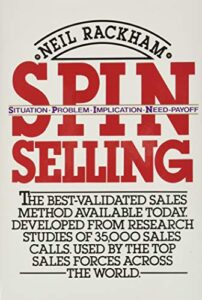
SPIN Selling
You are continually asking the right questions in that process that continually disarms the prospect where they want to keep engaging and opening up to you. One good way to do that is if you have somebody that is closed off, let’s say that you finally weed your way throughout the organization of the company. You are selling to a Fortune 1000 company. You are talking to the division head, the main person. That is your sixth appointment. You have finally figured out how to get through.
Let’s say that person is hard as nails. They do not want to open up to any of your questions. You are going to stop that conversation halfway through. Let’s say you are on Zoom or even in person, you can lean in and say, “Me and you here, off the record, what is holding you back from being able to X, Y, and Z?”
You cannot do that in the first ten seconds because there is no trust. You cannot force your way into that conversation. You know they are not opening up. They are staying surface level with you. You simply stop. You lean in and say, “Between me and you, off the record.” People open up. You do not use it every time. You’ve got to know when to use it. You cannot use it in the first two minutes because there is no trust throughout that conversation. That is a way to disarm a prospect to get them to open up.
We have gone full circle because you talk about selling is all about change. You are disarming people. You are mitigating the risk to do that change. That is a great summary of your skillset and the training you offer and your new book that is co-authored. It is going to be something that people are going to want to run and get The New Model of Selling: Selling to an Unsellable Generation. If people want to reach you, Jeremy, where should they go?
If they want to learn about what we do or even get some free resources from us, they can join one of our free Facebook groups. Send them to www.SalesRevolution.pro. We got about 18,000 C-level executives, salespeople, and entrepreneurs in there that want to get better and sell. Right when they join, check your Facebook Messenger because somebody on my team will message you over a free training called the NEPQ 101 Mini-Course. It is with my CEO, Matt.
Matt will break down different questions that you can use for different sales situations we know that you are going to be in on a day-to-day basis that will help you sell more. We go live in that Facebook group 3 or 4 times a week with different Q&As and different trainings for B2C and B2B. They are welcome to join that if they want to get some sources to sell more.
Thank you so much for telling us about your own story of origin and how you have learned to be prepared and even prevent objections and closing by making people feel safe to open up with, “This is off the record.” Thanks again, Jeremy.
Thanks, John, for having me on.
Important Links
- Jeremy Miner
- 7th Level
- Closers Are Losers
- SPIN Selling
- www.SalesRevolution.pro
- https://SalesTraining.ClickFunnels.com/optin164548828699
- Better Selling Through Storytelling Method Online Course
Wanna Host Your Own Podcast?
Click here to see how my friends at Podetize can help
Purchase John’s new book
John Livesay, The Pitch Whisperer
Share The Show
Did you enjoy the show? I’d love it if you subscribed today and left us a 5-star review!
- Click this link
- Click on the ‘Subscribe’ button below the artwork
- Go to the ‘Ratings and Reviews’ section
- Click on ‘Write a Review’
Love the show? Subscribe, rate, review, and share!
Join The Successful Pitch community today:
- JohnLivesay.com
- John Livesay Facebook
- John Livesay Twitter
- John Livesay LinkedIn
- John Livesay YouTube
The Influence Board With Jay Allen
Posted by John Livesay in podcast | 0 comments

Have you experienced being bombarded with cold calls and not knowing what to do with them? Especially when quarantine and social distancing have become the new normal, receiving these calls has probably been a lot more frequent that we just can’t find the time to answer them all. Introducing you to someone who has created a solution to that, John Livesay sits down with the founder of The Influence Board, Jay Allen. He shares with us the platform he has created that helped influential executives deal with cold calls and how he is letting people connect with the right decision-makers and make the world a better place.
—
Listen to the podcast here
The Influence Board With Jay Allen
Jay Allen is the Founder of the Influence Board. He noticed that a lot of influential executives were being bombarded with cold calls and they didn’t have time to do that. He created a solution for that. He helped build it with their input, which has allowed it to scale. Find out how he’s letting people get into the right decision-makers, while also making the world a better place.
—
Our guest is Jay Allen. He’s founded and managed six major networks of influential business leaders over the years with over 5,000 executive members from the major companies in the US and Europe. He has years of experience as an entrepreneur, strategic advisor, and executive leader. He is an influencer among private companies and large strategic corporations. He’s overseen strategic business development for a number of emerging technologies. He’s also the Founder of the Influence Board. Jay, welcome to the show.
Thank you. It’s great to be here, John.
Let’s go back to your own story of origin. You can go back to childhood or school. Tell us a little bit about how you got interested in business in general.
It all started with a passion for marketing. I went to college for international marketing and loved it. I grew up in the industry a little bit, but quickly discovered that the salespeople were making a lot more money than me. I transitioned at one point from marketing to sales. It was a tough transition. I’m a relationship person. The impact of rejection of cold calling was tough for me. I had a lot of anxiety about cold calling. I reached a point where I said, “Do I want to do this as a career?” I knew I needed to do something a little different. It was that inflection point in my life where I decided to take a slightly different trajectory. I ended up reaching out to ten executives I had never been able to get a meeting within two years of cold calling. I invited them to lunch to meet each other and I told them, “No vendors. You’re all going to pay for your own lunch.” I was shocked when all ten showed up.
I learned a valuable lesson that day that was a guide to everything I did after that. These influential people have a hard time growing their network of other valuable contacts. The networking events they get invited to aren’t high value because 80% of the people in the room want to sell them something or hand them a resume. The fact that I reached out and said, “These nine other executives want to have lunch with you. We’re going to get to know each other. No vendors. You’re buying your own lunch,” was a completely novel idea to them and something that was of high interest. Over the years, I went from a below-average salesperson that hated cold calling to one of the most connected people in Colorado by becoming a personal networking assistant to the most powerful and influential people in Colorado. That led me to do sales in a different way and continuing sales but not having to cold call the way I used to.
That is valuable for everyone reading. You’re solving a problem, which is what everybody has to put the lens on. The problem is that influential people have trouble growing their network without being inundated with a lot of other people pitching them things or wanting to hire them. They’re talking to their peers and learning from them without feeling like someone is trying to sell them something or get them to hire them. Smart executives realize the value of their network. You need it not when you have a job, but when you don’t have a job. They’re forward-thinking enough to realize, “This is a good use of my time. I might use something I could use in my job. Especially if it’s my peers, we probably have similar challenges.”
You and I were talking about some of the similar challenges that healthcare companies have with COVID. If a pharmaceutical company is talking to a manufacturing company and they’re both realizing, “We’re having trouble getting in the virtual door.” They might have some interesting conversations of sharing some things that are working. You were in that lunch even though they were all buying their lunch, but that’s not when you were pitching. I’m sure that’s the case. I want to reiterate for anyone who’s reading and going, “I’m going to try that.” It’s still not your chance to pitch. You’re just listening.
I coined a phrase, the law of two favors. My philosophy was if I have an ulterior motive or I’m trying to get in the door and close a deal with one of these executives and that’s why I reached out, I can’t tell them that until I’ve done them two meaningful favors. Once I’ve done them those two meaningful favors, I can bring that up and we can have a conversation. Selling to a friend is a much different experience than selling to a stranger. I wanted to establish that relationship of trust and friendship and cross the bridge of them knowing that regardless of the outcome of any transaction, we’re going to be friends. When I do the ask, they can say yes or no and have confidence that it’s going to have zero impact on our personal relationship.
Selling to a friend is different than selling to a stranger, that’s going to be one of our tweets from the episode. The problem I see with many salespeople is they’re short-term focused, “I’ve got my quota this month, this quarter. I don’t have time to make friends.” They’re not seeing the long picture. It’s like, “I’m moving on,” as opposed to maybe a no could be a yes down the road. That is not how you build a successful career, let alone a network. You have to invest. Those relationships are my big takeaway.
I’ll even give you an example. One of the executives in that first group of ten was the head of IT for a large technology company in Colorado. I had never been able to get past his admin. He had a brutal admin. He showed up at this lunch. One thing I discovered in the conversation over lunch is that he was engaged to be married. His fiancé was trying to land a job. I asked some more questions about what she was looking for. I made a few phone calls. I ended up landing her an interview. She ended up getting the job. The executive invited me to their wedding reception. We became fast friends.
I had an opportunity to sell into his company. When he changed jobs, I helped make some introductions for him to transition to a new job. I had some opportunities to sell into the organization that he went to at that time. He moved out of the country. When he moved back to the United States, years later, I was the first person he called and we reconnected and had an opportunity to sell to the new company that he moved into. It’s those long-term opportunities that made a difference in my career.
[bctt tweet=”Selling to a friend is a much different experience than selling to a stranger.” username=”John_Livesay”]
I remember when a client of mine in a healthcare company hired me to speak to their sales team. We had many conversations before and then we met face-to-face. He introduced me to his boss and all of that was the night before the event. He turned to me and he said, “I feel like I’ve made a friend.” I said, “You have.” That’s what you want to have. When you can make somebody look good to their boss or if I was calling on ad agencies and I make them look good to their clients, that’s when people know, “You don’t see me as just another job. You see me as a person.”
That premise of speaking and becoming friends with somebody at one company and they left and went to a competitor and they brought me with them. They’re like, “I want you to do what you did for me at the other company to this company.” Those warm introductions. When someone is hired, they obviously have a little honeymoon period going on. If they say, “I want to bring this speaker or trainer in,” it’s different. They go, “This is your first six months to show yourself and that’s why we brought you.” It’s a great example of all that.
I want to talk about your days at product development at American Express because I’m sure you learned some fascinating life lessons there working for such a big company versus working in other situations. When people get to work for a big brand like that, I know when I was at Condé Nast, you see things. Your resources, for one, are different from smaller situations. What was your big insight from being at American Express?
At American Express, like some of the other companies I was at, I was always part of a small entrepreneurial segment of the organization. Not all companies do that and do it well. American Express was one that did it well. They were interested in branching into a new space, which was the debit card or stored value card space for college campuses. The project I was on was, how do we develop both the platform and the marketing message to go to these college campuses, and provide them a stored value card that the parents could load up and would work at places that accepted American Express around campus? It was a great concept. The team there was entrepreneurial. You don’t often see that within a large company. It went well that that division ended up being acquired by Maritz, a performance improvement company out of St. Louis. I had the option of moving to St. Louis, which I didn’t take. I wanted to stay in the West.
What I find fascinating about you is you have your pulse on the zeitgeist. What I mean by that is like Wayne Gretzky’s quote, he aims his puck for where the puck is going and not where it is. You started the Influence Board years ago. Who could have predicted that the need to help people get appointments with key influencers would be at an all-time high during a pandemic when you can just drop it in office or see somebody between surgeries if you’re calling in the medical things? It’s almost like a relationship. You need to plant those seeds early on. You saw a need for this when you started it. Share with us how you came up with the idea and what it does.
What’s interesting is this concept has been attempted a couple of times in the past that I’ve seen and it has not succeeded. The reason it didn’t succeed is because it was being built from a salesperson’s perspective. I’m a salesperson. I want to access these influential hard to reach executives. I’m going to build a technology platform that allows me to donate to their charities. They build it and then they try and convince executives to come onto the platform. They’ve never been able to get traction. I had a completely different approach. I wanted the executives to build it. I wanted the executives to architect it and to solve the problems that they were having.
The problems they were having is they’re getting 30 calls and emails a day from vendors they’ve never heard, and trying to sell them stuff and get their time. They don’t have that much time. They can’t listen to all these people and figure out if there’s a fit. What they wanted was, “Can I forward all these emails into a system that can inform the vendor on my areas of interest and need? If they’re in the box, they can submit a meeting request. If they’re not, they know and they don’t have to waste their time.” That was part of it.
A lot of these executives are a little older and are at a point in their life where they want to make a difference in the world. They want to give back. They’re sitting on charitable boards. They want to make a difference. They wanted to weave in the ability to support charitable causes and make a difference in the world into the process that we’re building. It took us a long time. We’ve commercially launched just a few months but we have been working on this for years, testing different concepts. We tested an auction concept. We looked at different ways we could implement this and figured out what worked and what didn’t work.
We built it with all the tools the executives needed to meet compliance requirements and everything they wanted as far as the toolsets. When we rolled it out, we got immediate executive adoption because it was everything that they wanted with all the toolsets that they needed. We’ve been onboarding about 100 executives a month. We’re about 900 executives on the platform and that will accelerate. We’re going to see thousands of executives coming on board each month due to the interest level that’s been sparked.
My first big takeaway is when clients build something, they adapt to it quickly. As opposed to, the old way of doing things. An engineering standpoint is the engineers build this, and now marketing has to figure out how to sell it. We haven’t talked to a prospective customer. We don’t have any idea what they want or need or if they’re going to like this, let alone pay for it. You reverse engineered that mindset and that’s why it’s working and growing fast. I’m guessing there were some challenges in terms of the executives still having to answer to a board, even if you’re the CEO. The board is like, “Is this allowed?” It’s the compliance issues. Why is it your charity and not the company’s charity? Something along those lines. Can you get into any of the details of how you navigated that?
At the core of this platform is a means for an executive to offer an hour of their time for an exploratory meeting in return for a meaningful donation to a worthy cause of some kind. The money doesn’t go to the executive. It doesn’t accrue. It didn’t come to them. It’s not taxable to them. The vendor is paying the charity. We came up with a whole list of compliance capabilities and compliance guidance that we would give the executives as they came onto the platform. Things such as you’re not to use this platform for vendors involved in an active RFP. You wouldn’t use this platform for a meeting with a company that you’re already doing business with.

The Influence Board: At the core of The Influence Board’s platform is a means for an executive to offer an hour of their time for an exploratory meeting in return for a meaningful donation to a worthy cause of some kind.
We gave them tools. When they accept the meeting requests, they have the option of checking a box and waiving the donation if they want. If they feel there’s any conflict of interest, they could waive the donation. They can still take the meeting but there’s no donation involved. We recommend they commit 1 or 2 hours a month to this. It’s not a regular process. It’s 1 or 2 hours a month that they’re doing this. If they want, they can take their lunch hour to have the meeting so it’s not on company time.
You got that flexibility. You’ve thought this through.
I’ve been surprised. We got through compliance at Western Union and got greenlighted for their executives, a financial institution with a lot of controls around it. We’ve gotten a greenlight from compliance departments of municipalities, government organizations. We feel we’re on solid ground relative to giving the executives the tools they need to ensure they use the platform properly.
Now that you have some momentum, you’re in my sweet spot, which is turning these case studies into case stories. Also, being able to either post the case stories in written form or maybe even a video where someone’s saying, “I’m glad I took this meeting from the Influence Board. Now I have found a solution to a problem I couldn’t find without having to spend hours and hours of weeding through pitches and things.”
We’ve gotten some good stories from executives and vendors alike. I heard from a vendor that said that they landed a meeting with an executive they had been trying to reach for well over a year unsuccessfully. They were extremely happy. We’re seeing about a 20% to 33% median acceptance rate on the platform. If you submit ten meeting requests, you get 2 or 3 meetings. For this caliber of the executive to make ten cold calls once and get 2 to 3 meetings is unheard of. It’s delivering on the promise.
The other sweet spot for the Successful Pitch theme is on your platform, people have an opportunity to write into the reason for the meeting and upload some information for backup. The ability to pitch yourself and prove to the executive why your bid should be the one they pick, given everything is the same and that everyone’s giving the same amount of money to their charity of choice. To increase your odds, if you’re already getting 10% to 33% yeses, wouldn’t it be great if you knew how to be in that 30% or even make half your requests more irresistible? I thought it would be fascinating for us to brainstorm a little bit for anyone reading because it works for everything, but certainly for people on the Influence Board. What have you seen works and what hasn’t worked?
We standardized the format for submitting a meeting request on our platform. That was intentional. It came from the executives. We asked them, “What do you want the meeting requests to look like?” It came down to three things. Each one of the meeting requests has three parts. You get to make a 300-word bold claim. Tell me exactly how you’re going to solve my problem. Give me the metrics. What percentage improvement can I see? You don’t have to substantiate the numbers. Make the claims. Make a bold claim so that I know where you’re headed as far as solving my problems.
Part two is a video. What they want is a video of you talking to them. They get a sense of who you are as a person. People do business with people they know and like. This is an opportunity to make a human connection. The third part is the boring part, which is you can attach three documents that support the claims you made in your bold claim. Where we’ve seen the creativity is on the video. There was one person who shaved his COVID beard on the video saying, “This meeting is important to me. I’m cleaning up, finally.”
“I’m putting on long pants instead of shorts for this even though you’ll not see it on Zoom.”
There was another guy who knew that the executive played the guitar and was in a little band. He played the guitar on his video and he gave his pitch to music. We’ve seen some interesting creativity. We try and give guidance on best practices. John, you’re the expert at this. If any of your clients are doing it, I’m sure their bold claims are going to be fantastic.
Let’s talk about the two examples. Many of us have seen the Dollar Shave Club commercials. It’s a great use of humor. Humor works when it’s self-deprecating. Not humor at anybody else’s expense. It’s not about telling jokes. Be playful and get people a sense of who you are as a person by willing to be a little self-deprecating. One of my favorite quotes is from Arthur Ashe, the former tennis pro, “The key to success is confidence. The key to confidence is preparation.” The fact that somebody took the time to go find out what that person’s personal interests were and then customize the video through that music language is the extra effort that makes people stand out. Those techniques and then also the basics like have a good lighting and a good mic. Don’t film yourself on a video phone that isn’t professionally done because you still need to come across as professional. That’s the challenge of like, “I don’t need to spend a lot of money on it, but I need to spend some effort on it.” It’s this ability to speak in sound bites. One of my sound bites is when you target people’s heartstrings, they open their purse strings.
[bctt tweet=”Quite frankly, everybody hates cold calling.” username=”John_Livesay”]
One of the things that I would advise everyone who is creating a video for the Influence Board would be, do some research on the charity. Speak to how that charity resonates with you personally in your video, over and above the bold claim you’re making of why you should have the meeting. Those details are what’s going to make somebody trust and like you more and remember you more. Remember, you only have a few minutes. Some of them are probably not going to watch the whole video. You must have a strong opening. I know you and I are brainstorming on creating some basic, three mistakes to avoid. It’ll work for everybody, especially when the stakes are high. Do you ever get the objection from a vendor saying, “We don’t have budgeted money to donate to a client’s charity?” I’m guessing you’re saying, “You probably have a budget for travel and expenses that’s not being used at the moment.”
It’s interesting where people have found the money to do this, from a number of places. Their T and E budget has dropped dramatically. Instead of a $400 plane ticket, you can donate $400 to charity and get that meeting that you need to get. The other thing is a lot of them have stranded event sponsorship dollars because the events didn’t happen. They had budgeted for sponsorship and they see this as better use of funds. They were going to sponsor an event hoping that they would run into the right person at the event, and hoping they would have a conversation and it might turn into a meeting. For the same money, they could guarantee themselves a certain number of meetings on our platform.
At least your target is everything.
On our platform, you pay nothing unless someone says yes to the meeting. You’re only spending the money when you get the outcome that you want.
You’re making a donation to someone’s charity and you’re selling something of fairly high cost, the ROI is huge. Also, I want to take people behind the curtain a little bit of what I did there and what I want to encourage people to do on their videos when they’re creating them for the Influence Board. Anticipate an objection before the person voices it and answer it in your video. I haven’t been in Corporate America like you. We know the objections are we don’t have this budgeted. If you address that in your video, that’s not going to be the objection.
I gave an example of how you get clients. If you think someone has an objection like, “We’re happy with our vendor. You’re more expensive than what we’re spending now.” Address that in the video before you get to the meeting. It’ll make people think, “He’s in my head. He’s already anticipating what my concerns might be.” If you can address those concerns in the video, then they’ll think, “Maybe there is a reason to talk to you.”
That’s a great point.
Any last thoughts or advice you have for people who are struggling to get into the virtual room these days? How can the Influence Board help them?
We try to make it as easy as possible. It’s free to join the Influence Board and takes 30 seconds to create a profile. Once it’s created, you can download our entire database of executives into Excel. You can sort, slice, dice and figure out if there are some good targets for you in there. You could submit your meeting requests. It doesn’t cost anything to submit them. You only donate to charity when you win the meetings you want with the executives that are high priority for you. It’s a seamless process.
It’s fantastic. I’m sure you have wonderful case stories for both the vendors and the executives who are happy that they’re doing it.
We have some superuser executives that love the platform. It’s been fun to see them see this new way to manage the vendor cold calling dilemma. It’s turned into something that they hated. Quite frankly, everybody hates cold calling. The vendor hates making the cold calls. The executive hates getting them. This has turned the whole process into something fun and interesting and has renewed enthusiasm among the executives. When they get a meeting request, “Is the video going to be cool and inspiring?” It creates some intrigue and excitement that hasn’t been there in a while.

The Influence Board: People do business with people they know and like. This is an opportunity to make a human connection.
People like to be entertained, as well as informed and inspired. When we can encourage people to put their empathy hat on to what it’s like to be that executive, getting constant requests. The more you can put yourself in their shoes and think, “What a win this could be for them.” If I have something that can help make their job easier and better and they’re getting something for the charity, they’re going to be happy they took this meeting. If you can convey that emotion in your video, that’s what’s going to make people intrigued enough to want to hear more.
That’s great.
Thanks so much for joining us, Jay. If people want to find you and the Influence Board, where should they go?
InfluenceBoard.com and my info is there as well.
We’re going to look forward to continuing to watch this soar and scale much like you’re helping your clients who are on the Influence Board.
Thank you, John. It’s great to be here.
Important Links
Wanna Host Your Own Podcast?
Click here to see how my friends at Podetize can help
Purchase John’s new book
John Livesay, The Pitch Whisperer
Share The Show
Did you enjoy the show? I’d love it if you subscribed today and left us a 5-star review!
- Click this link
- Click on the ‘Subscribe’ button below the artwork
- Go to the ‘Ratings and Reviews’ section
- Click on ‘Write a Review’
Love the show? Subscribe, rate, review, and share!
Join The Successful Pitch community today:
- JohnLivesay.com
- John Livesay Facebook
- John Livesay Twitter
- John Livesay LinkedIn
- John Livesay YouTube
Every Job Is A Sales Job With Dr. Cindy McGovern
Posted by John Livesay in podcast | 0 comments

Believe it or not, in whatever job we have today, there is always sales involved with it. This episode’s guest aims to bring a better reputation for sales. Known far and wide as The First Lady of Sales and the author of Every Job Is a Sales Job, Dr. Cindy McGovern believes that it is a life skill, not a job skill, that has to be followed up with gratitude. With a negativity attached to the term, Dr. McGovern aims to change the way we look at sales. Coming from a place of abundance herself, she shares some tips on how we, too, can have that similar mindset especially when we feel nervous.
—
Listen to the podcast here
Every Job Is A Sales Job With Dr. Cindy McGovern
Our guest is Dr. Cindy McGovern who is known far and wide as The First Lady of Sales. She has a doctorate degree in organizational communication and a Master’s degree in marketing. She earned her reputation by building and rebuilding the entire sales program from the bottom up. Dr. Cindy, who is the CEO of Orange Leaf Consulting, has helped hundreds of companies and individuals throughout the world from small to huge create dramatic and sustainable revenue growth. Dr. Cindy is an expert in the areas of sales, intrapersonal communication, leadership and change management. She can quickly figure out whether an organization or individual needs to be more successful. Her knowledge of many industries helps leaders implement new behaviors needed to succeed.
One reason for her success is she serves both as a teacher and a coach, working together with individuals regardless of the role or where they are in their career to co-create their future. She doesn’t tell her clients what to do. She listens, learns about their success and challenges, and helps them create strategies designed to be effective long after her visit has ended. As an in-demand speaker, Dr. Cindy has presented both national and international conferences on the topics near and dear to me. These are sales, management, leadership, interpersonal communication, organizational change conflict resolution and collective bargaining. Dr. Cindy, welcome to the show.
Thank you so much for having me. It’s an absolute pleasure to be here, John.
Let me ask you about your own story of origin. You can take us back to your childhood, high school, college. How did you know you wanted to get into communication and sales in the first place?
The funny part of that is I didn’t want to get into sales. In fact, I railed against getting into sales for quite some time because I thought it was icky. To go back to my story, I grew up in Florida and went to Florida State Communication School for my doctorate and went to be a college professor. I thought that’s what I was meant to do. I wanted to help people. I wanted to teach communication. I felt like that was the lacking skillset in a lot of folks that we don’t get to embrace that. We learn math, we learn reading, but we don’t get to embrace the communication which is what we do all day and every day. I thought, “This is going to be my life’s mission.” I got into it and started consulting in the summer. I realized I could help adults, too, not just the 18 to 24-year-olds and I started doing that. Fast forward, I went into consulting full-time.
A few months into my consulting career, I was put into a sales role and I totally flipped out. I was like, “I’m going to get fired if I don’t figure this out.” I started trying to figure out how to make sales work for me. I couldn’t do the old-school sales approach and the pushy sales thing that was my definition of sales. When I started to look into it, I realized that’s not sales at all. That’s manipulation, that’s conning, that’s not sales. I realized that sales are simply uncovering what someone else needs and being able to find a way to solve that. When you tell the story around whatever you have to offer is going to fill the need that they have. When I figured out that there was a kinder gentler way sell, I started doing it and I started getting awards. I woke up one day and went, “This is no different from what I’ve done in my entire life. I just didn’t call it sales.” That led me to create a career around helping non-salespeople sell more effectively.
You and I speak the same language for this concept. In fact, your book is called Every Job is a Sales Job. A lot of people have such resistance. When I was hired to speak to Anthem Insurance, they said, “This audience is a group of nurses and MBAs. None of them want to call themselves salespeople and yet we need them to sell. We don’t need them to get the contracts, but they need to sell the doctor on the data that we have versus the doctors trying to keep people from being readmitted to the hospital. When they get an objection, they don’t know what to do.” I thought, “Let’s ask them to be storytellers instead of salespeople.” That was the secret way in the door of allowing people to do that. Dr. Cindy, you have so much knowledge, both in the classroom and in the field, selling has been in the sales force. What is that causes people not want to think of themselves as a salesperson? Why do sales have a negative connotation for so many people who are either doing it or not doing it?
I nicknamed it the Ick Factor. It’s the manipulation tactics that we’ve been recipients of, unfortunately. It’s what’s stereotyped in the media. If you see sales in a movie, it’s rarely the heroine. We think of sales as time-share sales, used car sales or this thing where we’re going to push something on you versus what it is. We have transactions all day every day. Every interaction is a transaction of some sort. That’s where the idea of the ick factor comes from, its stereotype of it. You and I know this, having been in sales for so long, even salespeople don’t use those tactics anymore.
[bctt tweet=”Sales is a life skill, not a job skill. Follow up with gratitude and always be curious.” username=”John_Livesay”]
It doesn’t work. When I was on the field, it was, “Throw a bunch of stuff up against the wall and see what sticks.” What a crazy way to run your business.
The old Glengarry Glen Ross does not apply any longer.
What are the favorite things you had to sell? What are the favorite products or services are you most passionate about or you love doing?
One of the things I love to sell is what we do at my consulting firm which is helping people to make more money in their companies by getting their non-salespeople selling. That’s my favorite thing. For the salespeople reading, I love you, too. I love taking the insurance underwriter to use insurance on something and getting them to realize that every conversation they have is a sales conversation. Every opportunity to make that person’s day with physicians, with nurses, with health grades these days and patient satisfaction scores. All these interactions matters, but rarely do these folks see themselves as salespeople. I go into an organization and they come in. You see them come in with arms crossed going, “I don’t need sales training.” I’m secretly in the corner going, “Yehey,” because I know I can help them. More importantly, I can help them get more of what they want in their career, too.
Your book, Every Job is a Sales Job, is broken up into two parts. Would you mind taking them in and describing what those two parts are for us?
The first part is the ick factor and addressing why we feel this way and helping people to realize that they do sell every day. They have been selling and to make sales out of the boardroom and put it in the life classroom. I don’t think it is a business skill, I think it is a life skill. I think sales should have been taught in high school and we’ve gotten gipped. I am truly on a mission to change the way people look at sales. By the time I am done with this, we might need a new word for it. I want people to see it differently. Part one is helping to empower the reader that it’s not this horrible thing that I thought it was, too. I share my story in the book saying, “I am you. I didn’t wake up from the womb selling. In fact, I resisted it and I was one of the worst resisters.”
Part two is teaching you how to take the skills of sales professionals to get ahead. If you are a manager reading this, it’s going to teach you how to get buy-in from your team so you get those non-salespeople selling. If you’re the reader, entrepreneur, solopreneur or the CEO reading this for yourself, it’s going to help you realize how you can get ahead at work. I’m going to teach you how to get a raise. I’m going to teach you how to get the promotion through my five steps which are plan for opportunities, establish trust, listen to the other person, asking for what you want and following up with gratitude. Gratitude is a big part of my sales process. I know you feel this way, too. I am grateful that I get to wake every day and do this. I get paid to fly around the world and help people make more money and get what they want. That’s a pretty sweet gig.
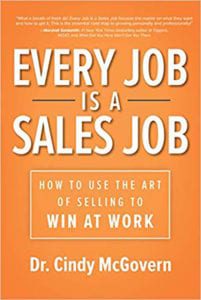
Every Job is a Sales Job: How to Use the Art of Selling to Win at Work
You’re living your passion, you have a purpose and you’re getting other people to get inspired and think of that. The old-school way of selling was, “Follow-up. Don’t let those leads get cold.” This concept of follow-up with gratitude is something I have not heard anybody else say before. I would love a story of either how you’ve done it or someone you work with has done it.
I’ll tell you one of mine. You follow up with gratitude whether you made the sale or not. What we forget is every interaction we have, even you are in a sales conversation, you’re leaving that person with an impression of you, your company, your product or your service. You want to leave them a good commercial to tell. So often, even salespeople go, “They didn’t buy from me, they’re not my customer.” That’s called a prospect and they still are. They’re going to tell your story so make sure they have a good one. One of my favorites was there was a regional manager for a company I had met at a conference. We had a wonderful conversation, but it wasn’t the right time. It was clear to me that he wasn’t buying anything. That’s fine. I sent him a handwritten note, that’s one of my things. I thanked him for his time and for the opportunity to even explore whether we can work together. I wasn’t pitching anything in the thank you. It was truly the gratitude of saying, “Thank you for giving an hour of your time to learn about your company and your passion and what you guys do. If things change, I would love to continue the conversation.”
Continue to follow up, but with gratitude. If I found something that felt appropriate for him, I would send it. At the time, he was living in Tennessee. I would see things from time to time and send it, but always from a grateful place of, “I appreciated the fact that you and I got to have a conversation.” A couple of years later, my phone rings. He says, “We’re ready.” That’s all he said. I was like, “Who’s ready? Who is this?” He said, “You’ve shown me that you practice what you preach, that you weren’t just selling me.” “No, I’m not going to sell you something you don’t need in any way shape or form.” Nor do I want the readers ever to do that. My way of following up with him, it was a no. He ended up sending me business in those couple of years. He knew other regional managers who were ready. It was creating these minions out there selling for you but in an authentic way. For me, I was who I am. I wanted to help him and send him some cool stuff about Belmont Basketball.
That analogy keeps going back to that big decision that everybody has to make of whether you think the world is a friendly safe place. Do you believe in a place of abundance? Do you believe in a scarcity mindset and have a place of fear in how you respond and act in the world? Those people who come from a place of abundance typically are the ones that share and look for things to be grateful for.
I definitely come from a place of abundance, but I didn’t always. It was a learned mindset.
What tips from Dr. Cindy in what I can do to shift into a more abundant mindset when I start being nervous?
Pause and look around. It’s that easy as that. So often, especially in sales, we get on the hamster wheel and when we’re trying to hit quota, trying to hit goals or, “I have to make this many calls” or whatever it happens to be, you get stuck in that treadmill. It’s pausing and going, “There are seven billion people on the planet. I have seven billion people to sell to. I’m not going to run out.”
This episode is an example of two people who have an abundant mindset. They could choose, if they chose not to, to view each other almost as competitors. In fact, we have a lot of similar people we know in common like our mutual friend, Judy Robinett, who has been a guest on this podcast. We’re using the same publicity firm and our books are listed together on the 47 books that sales teams should have on their shelves. You kick it off on your releases and I’m right behind you. I love that co-branding that is happening almost unplanned. It’s choreographed together that we were meant to connect and know each other. Nothing makes me happier than to promote another speaker and author who is out there helping people not have the ick feeling around sales. That is thrilling to me, to see this co-branding, co-support going on. If you’re going to say that, “Sales doesn’t have to be icky.” “How are you going to demonstrate that?” This is a classic example of us working together to promote your book. A lot of people ask me, “If sales have an icky factor and I have to get people to trust me, what can I get people to trust me?” What are your tips, Dr. Cindy?
That’s number three in the book is establishing trust. A lot of it has to do with listening. In particular, salespeople feel like they have to talk, show, present and speak. That’s not it at all. Most of my sales conversations, I do little talking. I simply ask questions. It’s Always Be Curious. That’s my ABC. Not Always Be Closing but Always Be Curious.
[bctt tweet=”Sales is simply uncovering what someone else needs and being able to find a way to solve that.” username=”John_Livesay”]
Mine is ABK, Always Be Kind.
That’s 100%. The simpatico between you and I are both doing and being able to help people out there, that piece of establishing trust is important. I know that this is something you live as well. I want them to trust me because whether they buy from me or not isn’t the outcome. My job in that sales conversation is to understand what they need and see if I have a fit for it. In order to do that, I have to ask the right questions. I have to help guide the conversation so I get enough information. It’s the diagnosis at the doctor’s office. It’s Dr. Cindy, I’m diagnosing.
I was speaking to Redfin which is a technology real estate company. They were telling me part of their challenge is with the sales team, especially those on the phone. Even though someone’s called in to ask about the potential house they want to buy, they’re afraid to ask questions. When you go to the doctor and the doctor asks, “How long has that knee been bothering you, John?” I don’t feel like that’s intrusive. Yet, sometimes salespeople feel intrusive. If your secret to building trust is to ask questions and stay curious, how do you help people who feel intrusive asking questions or they haven’t earned the right in their head? Any tips on that?
That’s one of my steps in planning. You have to plan for the conversation in a different manner. There is a huge difference between visits and meetings. Salespeople go on a lot of visits with clients or prospects, but that’s not a meeting. A meeting is a conversation to uncover what else you need that I could be servicing whether that be a current client, a growth client, a potential client or a referral source. When I talk about going into a true meeting, you have to set the pace for the meeting. If you don’t do that, then it does feel invasive. You can feel the other energies resisting you. They are racing for the pitch of, “What are you trying to push on me?” versus opening it to dialogue and starting the conversation by saying something like, “I am excited to talk to you and learn more about your business. We’re about to get real personal real fast, but whatever we talk about it’s going to stay here. Are you cool with that?”
Automatically, your likability factor is off the charts. People will trust you for that because you’ve been real and authentic. That’s what I work with people on. Don’t ask people questions like, “How’s your day going?” It’s not relative to the conversation. It doesn’t feel authentic like you’re interested. It’s a cliché question. These questions that you’re talking about require effort on the salesperson’s part to prepare. Ask smart questions that people don’t resent answering because it shows that you’ve done some homework.
This concept of setting the pace, I want to double click on that. I talk about it in terms of landing a plane. When we fly from LA to New York and they make the announcement that we’re landing in New York, no one stands up and says, “What? We’re landing?” Everyone knows we’re going to land. Salespeople need to land the plane. You know exactly how long the flight is going to be before you get on. Being a co-pilot with your buyer is important. That is exemplified by what you said about, “Let’s set the pace so we know how long this is going to be.” The conversation is going to be this long. If you decide to work together, the typical sales cycle is this long.
When you are talking about what you do for companies in this collaboration across divisions, which is what I heard you say, is important. Another guest of the show, Tim Sanders, wrote a book about this called Deal Storming. You’re doing what he’s doing, what I’m doing. It’s all about trying to help people realize that you need to work across departments and not be cycloid. Not only is the old way of selling not work anymore, but the mindset also has to change, that, “That’s not my job. I don’t care.”
There are many things I want to ask you about. The thing that jumps out about this is you talking about how kids are the best salespeople on the planet. If anyone is a parent or an uncle or aunt, they know that to be true. It reminds me of that great book a long time ago, All I Really Need to Know I Learned in Kindergarten. My sense is that kids don’t take rejection personally, but I would love to hear your thoughts on why kids are such great salespeople and what can we learn from them.

Sales As Life Skill: Your job in a sales conversation is to understand what people need and see if you have a fit for it.
They are resilient, nothing affects them. What I think is so amazing about kids is they’re clear on what they want. They have a plan. It’s like, “I see those Oreos. I want them and I am going to have them whether you tell me I can or not. There will be five of them in my belly before dinner.” The plan is clear and nothing is going to derail them. As adults, we get distracted with shiny objects, “That’s my plan. Look, a squirrel.” We start looking everywhere and we’re not focused on the goal. The kid is focused on the goal and it’s a singular goal. They are lasered in on it. That is the first thing.
The second thing is they don’t take it personally. Somewhere along the way, we get hurt by rejection What’s funny is we get told no all-day-everyday. It’s just in different ways. One of the things I do in my workshops when we start talking about no is I’ll ask everybody, “Who in here has been told no now?” Every hand goes up. “Thank God you survived. You’re fine. It’s okay.” It’s something for them to realize that it’s simply a word. It’s a response.
This brings up a topical conversation which is the premise of, “How do we not lose our identity when we get rejected?” That’s what’s devastating for many people. I talk about it in terms of, “I never reject myself just because somebody says no to me.” I used to or somebody else could have gotten me, yes. Maybe they’re right, my product isn’t as good as the other one they were going with. I just went, “What am I doing? I’m rejecting myself.” There was a Dodger’s pitcher that didn’t pitch a great game and they still managed to win. The reporter afterward says, “Do you ever lose your confidence after throwing so many bad pitches?” He said, “No, I never lose my confidence because I know who I am.” I thought, “I can’t wait to talk about that with Dr. Cindy.” That fits both of our philosophies of not only do we fall off the floor because someone said no to us, but we don’t lose our confidence. What do you think of all that?
I want to meet him. I couldn’t agree more. What I think happens is we attach our identity to the success or failure of that moment. That has nothing to do with who you are. If somebody doesn’t want to buy my services or hire me to speak, that means I’m not a fit for that circumstance. That’s okay, that’s fine. I talk about it in the book, it’s a no for now. I know you know that term, too. If I’ve done a good job of figuring out what they need, maybe that’s a referral for you. Nobody does this life alone. I talk about that in the book, too. We all help each other. We are on a similar mission, similar paths like others. I send business to other consultants because what we do is narrow and deep. We grow business, period. That’s it.
It’s the same thing with speakers. I’ll often give a good talk and someone says, “You’re great. Next year our theme is this and we never have the same speaker back. Who else should you think we should talk to? You know us well now.” That’s gold. “You need to talk to Tim Sanders, you need to talk to Dr. Cindy.” “Fantastic.” To get on that radar is the key. The other thing you talk about is how we can apply your five-step sales process to unemployment. I was laid off from Condé Nast. I felt like I lost my identity a little bit. I had to regroup, reinvent myself and back on the noose. Andrew Luck, the NFL player, decided he doesn’t want to keep playing, much to the shock of a lot of people. Michael Phelps, when he stopped swimming in the Olympics, he stumbled a little bit. Whether we choose unemployment, where we’re not going to swim in the Olympics or not going through that cycle of injury and rehab or we get laid off. What are your tips? How can we not lose our Identify and be resilient?
The first thing is creating your plan around what you are going to do. If your plan is to golf every day and do nothing, great. That’s a great plan, go do it. Have a plan regardless. That’s where people, especially unemployed or between jobs whether by choice or not, flounder a bit. You had a routine before now and it stops overnight. You were going to an office, to the field to practice and all of a sudden you wake up and go, “I don’t have to wake up at 5:30. Now, what do I do?” Your identity was tied to that. The steps are the exact same. It’s creating that plan of what you want and looking at what’s going to be next. If it is being fully retired and living an abundant life in that regard, fantastic.
I talk about this a lot with the gig economy. If you are in the gig economy, every job is a sales job 24/7. You have to be constantly looking for that next gig. That’s a planning tool. You’ve got to have a vision for that. For entrepreneurs and start-ups, it’s interesting because they have this plan of an idea. Do they have a plan of launch? Do they have a plan beyond the headlights? If I am working with start-ups, I want them to look at, “How are we going to this transition and then the next transition? If you hit that plateau, because you will, how are you going to punch through that?” I’m making sure that they have those plans for not just today, but 90 days from now or six months from now. I am a plan-a-holic, I love to plan.
That’s great sales training, make a plan and work it. You can’t work it if you don’t have it. How did you get the name of being the First Lady of Sales?
[bctt tweet=”If you are in the gig economy, every job is a sales job 24/7. ” username=”John_Livesay”]
Whoever was the first one to say this, please contact me because I don’t know where it came from. It was one of those nicknames that stuck. I remember I was giving a speech in the south and somebody said something about, “This little lady is going to speak next.” One of the people in the room goes, “She’s not some little lady. She’s the First Lady of Sales.” Someone in that room had said it again later and it snowballed. I thought, “That’s pretty good. I’ll hang on to that.”
I think you need to trademark that if you haven’t already.
I did. It’s mine.
Our clients give us the copy we need to identify their pain points and even help us brand ourselves. That is a classic example of that. When I was back talking to Anthem and I said, “What else is happening after my keynote?” “We’re going to do a role play at the end of the day. We’ll have people shout out objections and have people try to answer them.” “I’ll stay and do that part of the workshop and whisper in their ear if they get stuck.” Some of the things I said in the keynote since they’re not experienced with handling a lot of objections. When I did that, people are like, “You’re the Pitch Whisperer. Can you be in my ear in the field?” I mentioned that story to Inc. and they said, “We’re going to quote that.” The stories of origins, I can never get enough of them. Dr. Cindy, who is your ideal audience to speak in front of? Who is your ideal avatar? Who eats this up more than anybody?
While I love the salespeople, I like the support folks. I like the folks who do not see themselves as sales. I want your engineer, your underwriter, your admin team. Those are the untapped resource within your organization.
Any particular industries and insurance you mentioned, any other kind?
Insurance is where I work on quite a bit, real estate, title, property and casualty insurance. I’m getting into the medical space and law firms. Those are the areas where I do quite a bit of work. We’ve worked with manufacturing companies out of Taiwan. It’s usually where a company is in transition. They want to break through that plateau, they’ve gone through a merger or they’ve got their first round of funding. They’re ready to go to that next level. Part of what we bring into the table and what I want to empower them is to make sure everyone in their organization is telling their story of who that company is. They’re walking advertisements. When they walk out of that door at night, from 5:00 in the evening until 8:00 the next morning, they are a walking advertisement. Got to make sure they’ve got a good story.
I’ve seen this time and again even with an architecture firm I’ve worked with. The support staff knows they didn’t win a particular bid to redo a law firm. They ran into one of the partners at a bar that picked another law firm. They said, “We heard you went with someone else. Bummer.” I cringed and I said, “I know you’re a Millennial, but we might want to work on how you express that in a way that makes it feel a little more personal.” Getting everybody on the same page is a definite need to do. If you have one thought to leave our readers with, either about your consulting or your wonderful book what would it be?

Sales As Life Skill: You are a walking advertisement of your company or organization. Make sure you got a good story to tell.
My goal is that we change the way people look at sales. The one thought I’d like to leave everybody is the fact that you do sell every day, you can sell every day and you’re already successful at it. If you’re employed, you’ve sold successfully at the job interview.
You got yourself hired.
That’s what it is. I want people to realize that they can do this. It’s not this horrible thing. I want my book to help you be able to do it more effectively, to get more of what you want. You’re good at sales, hear that.
The book is called Every Job is a Sales Job: How to Use the Art of Selling to Win at Work. Who doesn’t want to win at work? Dr. Cindy, thank you so much for being here.
Thank you for having me, John. It has been a pleasure.
Important Links
- Every Job Is a Sales Job
- Orange Leaf Consulting
- Judy Robinett – Past episode
- 47 books that sales teams should have on their shelves
- Redfin
- Tim Sanders – Past episode
- Deal Storming
- All I Really Need to Know I Learned in Kindergarten
- DrCindy.com
- Better Selling Through Storytelling Method Online Course
Wanna Host Your Own Podcast?
Click here to see how my friends at Podetize can help
Purchase John’s new book
John Livesay, The Pitch Whisperer
Share The Show
Did you enjoy the show? I’d love it if you subscribed today and left us a 5-star review!
- Click this link
- Click on the ‘Subscribe’ button below the artwork
- Go to the ‘Ratings and Reviews’ section
- Click on ‘Write a Review’
Love the show? Subscribe, rate, review, and share!
Join The Successful Pitch community today:
- JohnLivesay.com
- John Livesay Facebook
- John Livesay Twitter
- John Livesay LinkedIn
- John Livesay YouTube