

Bend The Healthcare Trend With Mark Gaunya
Posted by John Livesay in podcast | 0 comments


No matter who you are or where you are in life, you should give kindness freely because leaders know how to adapt and blend with people. Learn and grow your business by being the right kind of leader. Join your host John Livesay as he talks with Mark Gaunya about the healthcare system, his passion for health and well-being, and its exponentially positive cultural and financial impact on businesses and organizations. Mark develops innovative solutions to complex challenges to save clients time and money. He is the Co-author of Bend the Healthcare Trend, a book written to demystify consumer-driven health and wellness plans with client case studies to share theory and show application. He discusses gratitude, learning, insurance and much more. As a leader, we need the inspiration to grow personally and professionally, and this episode boosts that and your leadership mindset.
—
Listen to the podcast here
Bend The Healthcare Trend With Mark Gaunya
Our guest is Mark Gaunya who is an entrepreneur on a lifelong mission to make healthcare easier and more affordable for everyone. He’s been recognized by the Benefits Pro as a Top 5 Broker of the Year finalist, and the Benefits Adviser as a Top 30 Thought Leader nationally. He develops innovative solutions to complex challenges to save clients time and money.
He’s passionate about consumerism, health and wellbeing, the exponentially positive cultural and financial impact on like-minded businesses. He’s the co-author of Bend the Healthcare Trend, which is a book that helps to demystify consumer-driven health and wellness plans. He is also the co-author of Inspire to Act and Inspire to Act For Kids, which are two books about living with an attitude of gratitude with 100 short stories about paying it forward. I can’t wait to know more about that. Mark, welcome to the show.
[bctt tweet=”Kindness has no age restriction. ” username=”John_Livesay”]
Thank you, John. I appreciate the opportunity to be with you.
Would you take us back to your own story of origin? You can go back to your days when you were at the University of Rhode Island or before that. How did you get interested in wanting to be involved in the healthcare world and insurance in particular?
My story of origin goes back all the way to my parents. My mom and dad were healthcare people. My mom was a nurse and my dad was a physical therapist by training. They were both very passionate about helping people and they are entrepreneurs. They built a company from the ground up. It was outpatient physical therapy. They had six facilities in three different states. After I graduated from the University of Rhode Island, I went to work with them for the first five years of my career. As a kid growing up, I learned all about the health care system, how it works, and how it was designed to help people. I learned how healthcare is delivered to people from the provider side of healthcare.
When I helped my parents sell their company and retire, I decided I wanted to learn how the insurance side of the business works. To be honest, the story was I want to go where the checks are written rather than where you wait to receive income. I went to go work for Blue Cross Blue Shield in Washington DC. That’s where I cut my teeth in the insurance business. I had a guy, my first mentor in the business, who put me into a leadership role with no sales management experience. He saw something in me and gave me an opportunity. Fortunately, I parlayed that into a career in insurance. I did a couple of what I call tours of duty in the insurance business.
I lived in Chicago for a period of time. I worked for Cigna Healthcare out there. I then left Cigna to be part of a startup health insurance company called Destiny Health, which is the expansion of an international organization firm that was based in Johannesburg, South Africa. They’re the ones who were pioneers in the whole notion of consumer-driven healthcare. It’s what we now know as health savings accounts. I moved away from Chicago back to the New England area where I’m originally from and met my now business partner, Jennifer. Through that journey, she and I became business partners in 2005. We run an employee benefits brokerage, consulting firm, and also a regional and national program called Captivated Health for a middle-market organization. The net of it is I’ve worked on the provider side, the consumer and the employer side. I have a 360-degree view of how healthcare works.

Bend The Healthcare Trend: How Consumer-Driven Health and Wellness Plans Lower Insurance Costs
That’s a fascinating perspective. As a child, you had a front-row seat as to how it all worked and what was wrong, and then you decided to get experience in every area of everyone who’s at the table. That’s the way I would describe that.
That’s an accurate way to state that. I’m not a clinician. I never have science in me. I appreciate it. I was not clinically gifted but I am business gifted. The business of health care and decided to learn the business of healthcare from every angle so that I could do something about it in my future years.
Don’t you think that gives you empathy and credibility? When you’ve been in someone’s shoes, it gives you both empathy and credibility. That’s the case for me when I get up in front of sales organizations and speak. I know what it feels like to have quotas, deadlines and to not take rejection personally, and all those things that everyone is struggling with on a day-to-day basis. Suddenly, I know you also speak to the industry. You have so much empathy and credibility because you’ve been there. Before we started the pre-chat, we talked about your friendship starting before your business relationship with Jennifer at Borislow Insurance. Can you tell us a little bit about how that evolved?
Jennifer was on the broker advisory council for an insurance carrier who was looking to do a joint venture with that company, Destiny Health. That council had to approve the transaction and I was the sales leader for that insurance company. The two of us hit it off instantly. The transaction went through and they asked me to head back to New England to head up the strategic partnership. My parents were retired and they were living in Cape Cod. This would give me a chance to be close to them which was a great decision because my mom passed away. I wouldn’t have had that time with her hadn’t I done that.
I met Jennifer and we became very good friends with each other. When I landed here in the Boston area, she was the person I would call and say, “What’s the market saying about my product and service?” She would tell me things that I didn’t necessarily want to hear but I needed to hear them. Truth be told, if I’m being honest about it, she and I are both passionate golfers. We spent a six-hour round in the golf course which is long, in the same cart together. That’s where our friendship was formed. She then tried to recruit me to go work for her. I didn’t have any desire to be employee number fourteen for her. At the time, it was a small benefit firm. We talked about becoming business partners and came together. As I always say to everybody, our business partnership was born out of friendship as opposed to the other way around, which makes it special.
You have a second edition. You told me that you were quite innovative and mailed that out. I’m going to ask you about that in a second. This concept of, “Why is health insurance expensive?” It’s basic because healthcare is expensive. There is a way to give people some power and knowledge. That seems to be the intent of the book. Who’s this book for?
[bctt tweet=”Empathy and credibility are a winning combination.” username=”John_Livesay”]
The book is for employers who are sponsoring health insurance and health benefits for their employees. It’s written for CEOs, CFOs and leaders of HR who are looking for a practical guide to transform their culture into one that educates people. If you look at the healthcare literacy rate in this country, according to the Kaiser Family Foundation, it’s 14%. That’s not okay that people are walking around not even understanding the language of healthcare. How are we going to expect them to be educated about making decisions if they can’t even understand the language?
We created this as a practical guide for employers to understand and demystify or debunk a lot of the myths that are promoted in the media or in the healthcare space by the players who designed the healthcare system. When you look at that, you say, “How do we navigate that?” What we did through this book is we created a practical guide that was ten chapters. It shared the theory in each chapter and then it would share a practical case story of a client who benefited and deployed that theory into practical application and what the impact was to their plan.
One of the things you have in your book that I love is this culture of health and wellness. Certain companies will give credit to help encourage people to join a gym and things like that. I’m guessing there are some other things that people can do when they have a company, big or small, to have a better culture for health and wellness.
We believe in the five-element construct of creating a culture of health and wellbeing. It even transcends wellness into overall health and wellbeing. Our five elements are physical, financial, workplace, community, mind and spirit. We look through those elements at any client we work with, and any business can do this and meet your people where they are. You can make progress in each one of those and we call that the whole person concept.
If we think about it, everybody wants to be physically and financially well. They want to understand the purpose of the work they’re doing and are tied to a bigger vision than that of themselves. They want to give back to the community and they need to spend some time taking a breath, meditating, doing yoga or whatever the case might be because life is still very busy. When you wrap all those five things together, you can transform the culture of any organization or elevate a company that’s already focused in those areas, but help their employees and family members ascend to an even higher level of wellbeing.
One of my favorite phrases is, “If it’s not measured, it doesn’t get done. If it’s not scheduled, it doesn’t get done.” We have something in chapter eleven called The Report Card. What is that about?

Healthcare Trend: A manager is somebody you have to follow, and a leader is somebody you choose to follow.
The report card essentially is our way of coming back to measuring the data, so taking a baseline assessment. When we work with a client, the first thing we’ll do is get any data analytics we can get our hands-on. It depends on the size of the employer, but demographic information, claims information, and we’ll do an environmental survey. We’ll go and look at the environment that the employers are working in. Especially with COVID, you see a lot of people are working at home. That environment has been somewhat challenged, but understanding the environment. The third is interests. What are the employees interested in? It’s those three data elements. Financial and data metrics, environment metrics and employee interests that you can then use as your raw material to measure, “What areas do we want to focus on and improve? What does the data tell us? What are the areas where we need to focus and improve?”
You and Jennifer went on to co-author Inspire to Act. You talk about how important a simple act of kindness is. When I speak to sales teams, the old way of selling is ABC, Always Be Closing and coffee is only for closers. I did that with ABK instead of ABC, which is Always Be Kind, starting with the way you talk to yourself. We can’t possibly be kind to our coworkers, let alone clients, if we’re not starting with some kind of internal thoughts ourselves. You collected this wonderful book of which all these stories of how positive connections with people have a direct impact on how we feel about ourselves. Is there a story in Inspired to Act that you want to share?
This idea or this book is born out of our culture of living an attitude of gratitude. We held a holiday party every year for our employees and we decided to shake things up a little bit. What we did was two weeks before our holiday party, we gave everybody $100 with a letter of instruction. At the time, we had twenty employees roughly. We had them go out into the community and do random act or acts of kindness. The only requirement was they had to come back to the holiday party and tell everybody what they did with the money.
The stories, many of them made you tear. One story, in particular, I can remember is one of our employees who went into the hospital emergency room. There was a family, they had a $100 copay at the emergency room and this person was fighting for his life. They didn’t have the money to pay the copay and the hospital was giving them a hard time. Our employee walked in and paid the $100 copay so that the family member could get the care. At that moment in time, he happened to be in the emergency room when something like that happened. It made a real big difference in that person’s life.
I always say when you tug at people’s heartstrings, they open the purse strings. That’s the power of storytelling. You start to imagine yourself in that story and what it would feel like that $100 could cause someone you love to not get the care they need to live. How would you feel if you were in that situation? On the flip side, how great would you feel if you had the money to help them? That’s a great example of that story. Many people say, “I don’t know if I’m a leader.” You have got this great quote in your book from John Quincy Adams, “If your actions inspire others to dream more, learn more, do more and become more, you’re a leader.” I love that so much because you and Jennifer didn’t have thousands of people working with you when you first started, but yet you were both leaders. Can you speak to aspiring people who want to become leaders?
First of all, Jennifer was one of the kindest people I know on the planet. She shared with me a quote that I’ll never forget when we first started working together, “No one cared about how much you know until they know how much you care.” When she shared that with me, I stopped and looked at her. I’m like, “What makes the two of us a great partner is that’s what we both not only believe but how we behave.” Leaders are somebody that people follow even when they don’t have to. A manager is not that. A manager is somebody you have to follow and listen to. A leader is who you choose to follow and listen to.
Jumping back to your other book, I want to close that open-loop I created. You sent copies at your own expense of that book to whom and to help them understand what they were dealing with because they weren’t healthcare experts. Can you tell that story?
[bctt tweet=”Creating a culture of health and well-being is a must. ” username=”John_Livesay”]
This was back in 2009. I co-authored the book and we were debating the Affordable Care Act, otherwise known as Obamacare at that point in time. I wanted our senators to stop, think and understand how the healthcare system works and from a prescriptive standpoint, how they could understand the principles that would set the foundation to change things for the better for people. I authored a letter and sent it out to all 100 US senators.
Sadly, I only received three thank you notes. Not even one from my home state of Massachusetts. That’s the sad part of the story. I did get three. One from Senator Collins up in Maine. She’s a wonderful human being. She’s become a friend of mine because I do a lot of work in the public policy area. I’m the Legislative Chair for the National Association of Health Underwriters. I get a chance to work with her and other people like that. I got a thank you note from Senator Hatch in Utah who was a very big believer in health savings accounts and consumerism. I also got a thank you note from Senator Inouye in Hawaii. A pretty good geographic dispersion but nobody from my own home state. I’m pretty sure most of them did not take a look at the book. Nonetheless, we made an effort to make a difference there.
We got to acknowledge the people who did send you a thank you, which is great. One of the reasons we’re aligned is the power of kindness and storytelling. I was working with an orthopedic surgeon who has created some new products for his industry and wanted some help on crafting stories to explain that to potential investors and other doctors. He said, “One of the benefits of learning how to become a better storyteller is with my child.” He has a seven-year-old daughter who used to say, “Daddy, tell me a story. Don’t just read me one.” He said, “Honestly, I was a deer in the headlights. I didn’t know how to tell a story until I started working with you. Now, I cannot just use storytelling from my career but with my child.” You and Jennifer took this Inspired to Act and have a new edition for children with the line, “Kindness has no age restriction,” which has got to be one of my all-time favorite quotes. How are people using this with children?
If you think about the whole notion of gratitude, it’s not something you’re born with. You have to be taught how to demonstrate gratitude. We believe that starts at a very young age. I have three children and I had them contribute stories to this but the idea would be, you don’t have to have $100. It doesn’t even have to be about money. How about you opened the door for somebody, or you say please and thank you when you want and get something, or you offer to be there for somebody as a shoulder to cry on when things are not going well? That book was written for kids 6 to 16 so that they can develop that habit of gratitude.
When you develop the habit of gratitude, it then becomes something ingrained in you. As an adult, I still write handwritten thank you notes and I do it every week. I do it because no one receives mail now. Most people don’t or a text. That’s a part of that person. In my case, it’s me. I’m putting a part of me on paper with my handwriting, telling you that you impacted my life in some magical way, or I’m amazed at how you conduct your life or whatever the case might be. That practice gets you out of yourself and focused on other things, which I think many of us get trapped in our heads. I know I do from time to time. That’s why the act of gratitude or meditation has been a huge gift.
That leads to helping children and what you’re doing as a Founding Principal and CEO of Captivated Health with helping schools. Can you tell us how you’re helping schools get control of their health care future?
We created Captivated Health in 2014. We do a lot of work with private schools where you might send your child to what you would be called a prep school. You pay for your child to attend the school. It could be a boarding or day school. We work with over 100 of them all across the country and growing in that space. We had three risk consortiums, three groups of schools that were buying together in their state but not buying together on a national basis. What we did is when Obamacare came into existence, it was going to make it very challenging for those schools to continue to purchase together.
Yours truly had to go and figure out, “How are we going to keep these guys together and help them overcome some of these challenges?” That’s how Captivated Health was born. Ten of our schools decided to be the founders of this program with us. We didn’t build this on our own. We collaborated with our school clients to create a community that was focused on four principles. Those four principles are members first, consumerism, health and wellbeing, and self-governance. If you look at those four principles, it’s table stakes.
The first principle of members first, I ask our team all the time, always ask yourself this question before you come in and advance an idea, “If you are a member of this health plan, would you want whatever it is you’re about to tell me?” If the answer is no, then please don’t bring it forward even if you know it will save us money. Principals and consumers, and everybody in the program, the employers offer a health savings account, which these plans have been beaten up by the media that they’re high deductible. Who wants to buy a high deductible plan? Nobody does. Who wants to buy a lower premium plan? Everyone will raise their hand. The idea of using words to help people understand healthcare.

Healthcare Trend: If we step back from the healthcare system and understand that it wasn’t a system built for the people, we could be aware that we can take control of our future by first acknowledging that.
As I mentioned to you, the literacy rate is 14%. Making sure people understand the language of healthcare is how you help liberate them to make better choices in the future because they understand the language. We use the slogan, “Knowledge is in power,” but if you look at the reflection, “Knowledge is me power.” The third element is creating a culture of health and wellbeing, which you and I already talked about in terms of the five elements. The fourth and final principle is self-governance. These groups and schools are taking the risk of what we call self-insuring the medical expenses of their people. They reinsurance to protect them from any person who might have a bad year or bad illness. They use other protection to give them a little bit of their financial liability but there’s risk involved based on how their plan performs from one year to the next.
What the self-governance principle does is created a set of bylaws. Those bylaws mirror our own US Senate, where it doesn’t matter the size of the school. They have one vote. Our Northern New England schools, their original ten pioneers, were very passionate about this because they said, “As this grows in scope and scale over time and larger schools come into the next, we don’t want our voices to be lost.” They created a structure with a chair and a vice-chair, and then they created four committees. Governance, membership, finance and engagement.
Those committees are staffed with HR and CFO executives who collaborate together in areas of concentration and represent their members. They have an annual meeting of the membership every year we hold in October, where they get together. They share stories of the programs that they’re running and the differences they’re making in the lives of their people. Is saving money and creating margin cuts for all non for profit important? Yes, but it’s not the driving force. The driving force is to make healthcare easier and more affordable for their people and schools.
At the end of the day, everybody wants to feel, be seen, heard and appreciated. Whether you’re managing people, your children or in this case, schools, everyone’s voice is equal regardless of the size. Mark, if people want to reach out to you in any of these areas, whether it’s learning more about gratitude, about how you can help them with their insurance or other schools, what’s the best way?
[bctt tweet=”No one cares about how much you know until they know how much you care.” username=”John_Livesay”]
My personal email address is [email protected], or they could go to our website, www.Borislow.com or in the example I shared with you about our program Captivated Health if they wanted to learn more about that. It’s spelled exactly as it sounds, www.CaptivatedHealth.com.
Any last thought or quote you want to leave us with?
If we step back from the healthcare system and understand that it wasn’t a system built for the people, understand that we can take control of our future by first, acknowledging that. Secondarily, understanding that the key to unlocking our future is to educate our people. We can find the interest of the people in the organization so everybody can get the same or higher quality healthcare at a fraction of the cost. They can reinvest those dollars in other areas to make whatever value proposition they’re providing their area a lot more powerful.
Thanks again, Mark.
Thank you, John.
Important Links
- Bend the Healthcare Trend
- Inspire to Act
- Inspire to Act For Kids
- Borislow Insurance
- Captivated Health
- [email protected]
- Better Selling Through Storytelling Method Online Course
Wanna Host Your Own Podcast?
Click here to see how my friends at Podetize can help
Purchase John’s new book
John Livesay, The Pitch Whisperer
Share The Show
Did you enjoy the show? I’d love it if you subscribed today and left us a 5-star review!
- Click this link
- Click on the ‘Subscribe’ button below the artwork
- Go to the ‘Ratings and Reviews’ section
- Click on ‘Write a Review’
Love the show? Subscribe, rate, review, and share!
Join The Successful Pitch community today:
- JohnLivesay.com
- John Livesay Facebook
- John Livesay Twitter
- John Livesay LinkedIn
- John Livesay YouTube
The Long Game With Dorie Clark
Posted by John Livesay in podcast | 0 comments

Think long-term. Plan for the long game and learn to reinvent yourself. Just how important is it to do this when it comes to your career? You are about to find out. Join John Livesay as he sits down with author and executive education professor at Duke University’s Fuqua School of Business, Dorie Clark as they discuss long-term strategic planning and how to reinvent yourself for success. Pay close attention and learn the ins and outs of self-assessment and self-improvement.
—
Listen to the podcast here
The Long Game With Dorie Clark
Our guest is Dorie Clark, the author of the book The Long Game: How to Be a Long-Term Thinker in a Short-Term World. She said, “Just because something is long, it doesn’t mean it’s slow. The effort we put into something compounds over time as interest does with the money.” Enjoy the episode.
—
I welcome back a guest, Dorie Clark. She’s been named one of the Top 50 Business Thinkers in the world by Thinkers50 and was recognized as the number one communications coach in the world by Marshall Goldsmith Leading Global Coaches Awards. Dorie is a consultant, a keynote speaker and an author. She teaches executive education at Duke and she’s the author of a book called The Long Game: How to Be a Long-Term Thinker in a Short-Term World. She’s also been a former presidential campaign spokesperson. The New York Times described her as an expert at self-reinvention and helping others make changes in their lives. She speaks for companies like Google and Microsoft. Dorie, welcome back to the show.
[bctt tweet=”Effort compounds the same way interest does with money.” username=”John_Livesay”]
John, thank you. It’s so good to be here.
Let’s tap back in to do a quick refresh for anyone who didn’t get to read your other episode as to your roots. I know you grew up in a small town in North Carolina. We start to get a sense of how you didn’t grow up in Silicon Valley. I’m always interested to hear those stories of people who are in a situation where they go, “This is not the end for me. I’m going to figure out a way to do something else.”
I was thinking about this because there are some interesting accidents of birth. I used to work in politics. I worked at Howard Dean’s presidential race as a spokesperson. Our campaign manager for that race was known for being one of the first people to harness the power of the internet during a presidential campaign. His name was Joe Trippi. Part of his origin story was that he had grown up in California and he went to San Jose State. It’s almost through that accident that he became turned early on into the world of the internet and its possibilities. Even though he went on to be in politics, he had that Silicon Valley orientation and was able to cross-pollinate it. For me, I grew up in a small town in North Carolina, which was most famous as a golf resort. I have not yet found a way to cross-pollinate my work with golf so I fled instead.
I was reading a newsletter from Chip Conley who was talking about that within the word flee if you rearrange it, you can turn it into feel. I’m like, “That’s clever. I hadn’t thought of moving that L around like that.” Sometimes we don’t want to flee something and we want to feel what it is. Sometimes we feel it and go, “It’s still time to leave.” Let’s talk about your book. The reason I was trying to be clever with the pronunciation there is you’ve turned the word Long on the cover into “XOXOXO.” I’m assuming the X is silent. Maybe there’s another way to pronounce that but I thought, “That’s so clever in terms of hugs and kisses.” How did you come up with that long game with all those Xs and Os?
I published the book through a commercial publisher, Harvard Business School Press. As a result, I didn’t have too much control over the initial design. I can’t speak to what the designer was thinking. However, what I think it’s about is sort of bingo’s Xs and Os. It’s about the strategy of the long game. I’m so happy that you liked the cover because one of the challenges that authors with commercial publishing houses often face was a battle royale over the cover. Unfortunately, I tried to be generally a very agreeable person but I made the publishers hate me because this was the fifth cover concept that they gave me. The other ones felt like we’re not doing it. They were not speaking to what the book was. As the author, you want as best as you can for the cover to help add to the message and to convey it. For me, the idea of the strategy of Xs and Os and how you win the game is part of it. When I finally saw this design I was like, “This is the one.”
I’m sure you’re going to be able to give a talk on this and show all the covers that were rejected as part of the process of getting to the right story and right message as a brand since that’s one of your areas of expertise. A lot of people, when they see a finished product or finished talk they assumed that was your first stab at it. I have found that when people take you behind the Wizard of Oz curtain a little bit and you go, “No, this was a journey,” it inspires other people to think, “Maybe I’ll be on a journey and it won’t be my favorite thing right out of the get-go whether it’s something I write or something that I say or even the name of a talk that I give.”
One of the other reasons I love your title so much is the juxtaposition. Anytime there’s something like, “Long-term thinker but this is the short-term world,” that’s an interesting premise for our brain to try and put those two opposites together. If it is a short-term world and people are worried about the next quarter’s results, does it still make sense to be a long-term thinker? Let’s start with that open-ended obvious question of what we know the answer is. I’m curious to know not only what the answer is but what makes it the answer.

The Long Game: One of the best ways to differentiate yourself from the competition is to share your ideas publicly.
Ultimately, most of us can probably agree that the world has been getting more and more short-term oriented. We see it in businesses where many corporations are focused sometimes excessively to bad ends on short-term results and choosing stock market returns, in consequence making some poor decisions. We also see it in a lot of people’s lives. As we get more and more inundated with the internet culture, social media, constant comparisons and looking around, a lot of people are driven to distraction by what other people are doing and accomplishing. It does create pressure about, “Why are they succeeding? Why am I not succeeding? What do they know that I don’t? What am I doing wrong?” That leads to a frenzied rumination that is not the optimal way of being.
We know intellectually the things that are worthwhile in our careers and also in our personal lives are usually things that you have to work out for a long time but it can be hard. The biggest thing that I wanted to address in the book is that we all know intellectually that success does not come overnight but in practical terms, we don’t know what not overnight is. Maybe it’s a week. Shouldn’t it be a week? Often, it takes a lot more than that. This is a book about how to gird yourself for that uncomfortable period of time where you’re working hard towards something meaningful but you are not yet seeing outward signs of success. In order to get to that success, you have to persevere, which is not an easy thing to do. This book wants to give you the ammunition to be able to do it.
Let’s talk about creating online courses because I know you’ve done that and I went through that whole process as well. I remember, when I first started it, it seems so daunting. I thought, “Was anyone going to want this or buy this?” Don’t worry about that now, worry about creating something that you think is valuable and that you see as needed. As opposed to well, “When’s the payoff on this investment?” That is a great example of you’re not only an author and a speaker. You’ve decided, “Let’s create another source of revenue but more importantly, another source or way for people to consume our content that can be packaged with a talk.” When that happens, then you’re not just waiting for that once-a-year meeting that they need a speaker for.
I am a big fan of trying to think strategically about these questions and about building up multiple revenue streams. This was the topic of my book Entrepreneurial You, which was about how you create passive income. How do you create multiple revenue streams in your business? COVID showed us all pretty vividly that if we only have one income stream, certainly if you have a day job, but even if you’re an entrepreneur, but you only do one thing or one type of thing, COVID or any disruption like that, you don’t see it coming. It can be swift and dramatic. The more legs you can have on the table, the more different things, ventures or things that you have your hands in, the better because it provides you with a lot more stability and solidity if something changes in the marketplace. It also enables you to capture more upside.
It’s ironic because you’re talking about taking the long view or the long game of something, yet you have this wonderful marriage of saying, “There is a way to create rapid content for a masterclass because so many people get so overwhelmed with writing anything.” In one of your courses about that, you say, “I’m going to show you how to quickly come up with some ideas to get your message starting to flow. There is a happy medium and you are straddling both sides of it to keep the big picture and still take action.” Would that be a fair assessment?
[bctt tweet=”Be a long-term thinker in a short-term world.” username=”John_Livesay”]
Absolutely. In terms of the long game and the big picture, one of the drums that I like to beat is if you want to become a recognized expert in your field if you want to differentiate yourself from the competition. One of the best ways to do this, and this applies across industries, is to share your ideas publicly. If you don’t do that self-evidently, people don’t know what your ideas are unless they’ve worked with you directly. That is always going to be a small number of people.
It inhibits the virality of you as a person if the only people who know you are the people who personally know you and have worked with you directly. Whereas if you’re creating content, writing articles, doing podcasts like this or what have you, it enables a ton more people to see who you are and what you’re about. It’s shareable content so the word can spread and that enables you to grow much faster and make a big impact. That is an essential component of playing the long game in your career. With that being said, long doesn’t mean slow.
One of the covers that were proposed to me by my publisher that I was vehemently opposed to was they wanted to put a snail on the cover. I said, “First of all, snails are ugly. Second of all, the long game means strategic. It does not mean inherently that things have to be pokey or take a long time. You can be swift. You can move with alacrity. It’s about choosing the right things to do.” Similarly, that’s why I created a course, the Rapid Content Creation Masterclass. It is in your long-term interest to create great content and share your ideas but that doesn’t mean it has to be a painstaking process.
We know success takes a while. We start getting impatient and comparing ourselves to other people. That’s such a rabbit hole. First of all, imposter syndrome and resentment can kick up. Your resilience can go down. Much like the pandemic when it started, we didn’t know when it was going to end. For many of us, myself included, that was one of the hardest parts of it. More than eighteen months, let me try to wrap my head around that. It’s the same thing, “When is this success coming? Is it coming?”
I would love to hear what you do but what I’ve done is I think of myself as a stock. If I invest money in this stock called Me, I know my work ethic. I know a sense of some talent and some previous successes that I could say, “If that was a stock, I would invest in it. It might have some dips and not get profitable right off the get-go but it’s going to get there.” Do you use a metaphor like that for yourself? Do you have other ways of looking at things and helping other people see themselves in a way where they don’t get so impatient?
I love that metaphor, John. You’re exactly right. There are a couple that I would use. The first is your effort compounds the same way that money compounds over time. I’m a big fan. To go back to our previous example about writing articles for instance, which is something that I’ve done a lot in my business and in working to get my ideas better known. It is a process where you can’t just write one article and assume, “I’m done.” It doesn’t have to be onerous. You start where you start. Maybe it’s an article a month. If you can, maybe it’s an article a week. If you do that over enough time, eventually, you have built a body of work that is substantial. People do begin to know who you are because of those small efforts. It’s deploying an hour a week towards something meaningful.
Another financial metaphor that I like a lot, which I share in The Long Game comes from a gentleman that I interviewed. He’s a friend of mine named Jonathan Brill and I wrote a piece with him in Harvard Business Review. He talks about the way that he thinks about structuring his career portfolio. He says that his first goal is to create what he calls Heartbeat Income. It’s like, “What is the amount of money you need to cover the basics, pay the mortgage, pay the health insurance, get your food and whatever?” He always says, “That’s the first part.” After that, you can afford to be a little bit riskier. He said, “You need to take 20% of your effort and ask yourself, ‘What’s a bond and what is SpaceX stock?’” It’s good to have things that are secure to take care of the needs that you need to be met. It’s also good to have a little bit of something risky in the portfolio in a small way that could pay off exponentially. It’s true in our stock portfolios but it’s also true in terms of our career bets and where we’re investing our time.
Everyone’s aware that technology is changing at a rapid rate that no one’s experienced before in their careers, which requires people to stay in a learning mode. You can’t go, “I know how to be an engineer. I know how to be an accountant now. I don’t need to learn anything new.” With artificial intelligence coming along and a lot of professional services industries and things like and even computers doing radiology and reading X-rays. There are many things now that you would think you know what you know and you’re good now. You can coast for 40 years. What you’re saying is no matter what you’re doing, you need to be this long-term thinker and say, “What else could I be doing with my career to keep myself relevant or ahead of the curve?”

The Long Game: It is in your long-term interest to create great content and share your ideas. But that doesn’t mean it has to be a painstaking process.
All of us can probably think of examples. I have a person I know whose father has been long-term unemployed. This is an educated guy who had a great career but he was an architect that refused to learn AutoCAD. That’s what architecture is now. It’s using this software and not drawing things by hand. For years, he hasn’t been able to get a job because of his unwillingness to do this. You can say, “He’s pursuing other things,” which is great but he doesn’t have a job. It is incumbent upon all of us to be thoughtful. If we decide, “This is intolerable. I don’t want to do this.” Fine. Pick something else. Reinvent your weight into it but the problem comes when there’s not a goal and a thing that we’re reinventing ourselves into. Instead, “I’m not doing that thing anymore,” and there’s a void.
I remember when I was selling advertising for magazines back in 2008. It was the first time I got laid off. Someone said to me, “This reminds me of what happened to the silent movie stars. Some made it to talkies and some didn’t.” You’ve got to figure out if you’re willing to learn how to sell digital ads instead of print. Yes, it’s a whole other language and a whole other set of things but it is an ongoing choice we are continually making. It’s like, do I want to understand blockchain and what an NFT is? Do I want to say, “This is where I check out. I’m not going to learn anymore?”
I don’t necessarily think I’m going to run and invest in one but at least I’m going to understand the language. I think what you’re saying is to stay relevant, you have to speak the language. I remember listening to Lisa Gibbons being interviewed. She said, “I agreed to appear on Dancing with the Stars because that’s the language that a lot of people are speaking these days for actors or hosts to stay relevant.” She’s not a professional dancer but you’ve got to be willing to stretch out of your comfort zone and go, “If this is what people are talking about and I get invited to play the game, I’m going to learn how to dance enough to do the Mamba for two minutes.” Those were a couple of examples in addition to that architect that you said.
At a certain point, it’s like someone said, “I have a flip phone so I don’t text.” You’re like, “What?” Maybe if you’re a grandparent and you have checked out and you’re like, “I stopped with the flip phone. I’m not going to use Dropbox. I don’t know how to get this to you then.” We don’t realize that we’re constantly saying yes and learning and adapting to new things, including Zoom versus Skype and Blackberry versus iPhone.
This is what I want your opinion on. I see so many companies thinking, “We’re at the top. We’re going to stay here forever,” Kodak, Blackberry, Blockbuster, on and on. The irony was there’s a documentary on Netflix about the demise of Blockbuster. What advice do you have because you work with such big companies? They hire you to come in as a speaker and consultant on making sure that they are not just chasing after every new shiny thing but are having some long-term thinking when it’s hard with all the demands on them.
Some of the best advice about corporate strategy comes from my friend, Rita McGrath, who I profiled in one of my earlier books, Stand Out. I talked a bit about Rita and her ideas. Her book is called Seeing Around Corners. She shares a lot of interesting information about how companies can begin to see inflection points as they’re happening or before they’re happening so that they have time to pivot if needed. To a certain extent, it’s asking yourself simple questions like, “If you work for a company, are you noticing that you don’t buy its product anymore? If you are working at a company, are headhunters trying to poach your talent?” It’s a good thing that headhunters are trying to poach your talent because it means that you are seen as a leader in your industry. If they are not circling, that’s ominous. It’s looking for little things like that.
I love the concept of if your family is not using film and everyone’s taking digital pictures or your family’s not going to Blockbuster every weekend anymore and renting these little red things from Netflix or starting to stream. That process is fascinating to me to watch. Eventually, it’s going to be every studio and network. We now have NBC streaming. That whole demise of cable in a weird way. Do you remember when people were talking about, “I’ve cut the cord to cable?” I thought to myself, “Is that a few people doing that? How would you figure out how to watch what you want?” I don’t know many people who are still paying for all that.
[bctt tweet=”We all know intellectually that success does not come overnight, but in practical terms, we don’t really know what not overnight is.” username=”John_Livesay”]
I remember my mother coming to visit me at my house and being upset that I didn’t have cable because she’s like, “I’m turning on the television and what do I watch?” She was upset by this whole situation. She demanded that I order a cable subscription for when she came to my house. I’m like, “This is dumb, mom.”
We can get Jeopardy on YouTube. It’s pretty funny. I sold my place in LA before I moved here to Austin. I was talking to one particular real estate person that I’d worked with for a while. I said, “There’s a competitor that’s a lot more digital than what you’re doing. I’m interested to hear what your strategy is to sell the house now that it’s been ten years since I bought it.” They’re like, “We run an ad in the LA Times on Saturday and a magazine.” I’m like, “If there’s anybody I know that still gets the LA Times, it’s on a Sunday only not a Saturday. You’re putting a magazine in a Saturday thing and someone’s got to flip through that magazine to see an ad for my house and I’m paying you for that? That doesn’t make any sense at all.” That’s horse and buggy time.
Here, they also deploy some pigeons.
It is fascinating to watch the resistance of industries like real estate, which has been so much the same for decades of how people get paid and how things are marketed. They do a virtual tour of the house and they even have a thing where you can measure to see if your sofa will fit. I’m like, “Do you guys do anything like that besides pictures?” They’re like, “No. We can’t do everything.” How our brain justifies not evolving. I wasn’t in complete shock that I got laid off because you could see print was dying but it is a death of anything. There’s that denial like, “Did it really happen? I thought it might, but it did?” That’s the psychology of what you’re doing that I find fascinating. You’re encouraging people to get out of this frenetic of putting out flyers every day. I’m sure the people at Blockbuster were busy up until the point where they realized, “This isn’t going to work anymore.”
You do need to zoom out and by the time they did, it was too late because they didn’t have the money to go after the subscribers the way Netflix did. It’s a fascinating little nuance in that documentary I watched. You watch all these other people try to join the party. He has an advantage and they bought Fox on top of it. Isn’t that interesting? Talk about a long-term view of something. Disney doesn’t have enough content that they have to buy those premises. Looking at that can help us look at our career. That’s what you’re saying in the book as well.
Something that I’ve striven to do in all of my books is essentially take the way that we think about corporate strategy and apply it to our personal lives. I got my start doing consulting for organizations in enterprise-level consulting. All of my books have been aimed at individual professionals. It’s fundamentally the same analysis. It’s the same way that we ought to be thinking about these questions.

The Long Game: Long game means strategic. It does not mean that things have to be pokey or take a long time.
That’s why I kept toggling back and forth because I knew that was your specific area of expertise. You have your niche and that’s a great place to wrap up this wonderful interview. When you have a brand like Dorie Clark, people know you, all of the books have a thread, all the talks and courses are all connected, then we know we’re in Dorie’s world. What a wonderful place to be in. It makes the momentum and the energy pull in because you know where you’re going. Any last thoughts or quotes you want to leave us with? We can get the book, The Long Game on Amazon and your website DorieClark.com.
Thank you so much, John. I appreciate it. I’ll also mention that for people that are interested in doing more of a deep dive on strategic thinking. I do have a free resource that people can download, which is The Long Game Strategic Thinking Self-Assessment, which is at DorieClark.com/thelonggame.
I saw that. It even pops up for me when I went there. What a great tool that is and what a great person you are sharing your warmth and wisdom, which is a wonderful combination. Thanks, Dorie.
John, thank you so much.
Important Links
- Dorie Clark
- The Long Game: How to Be a Long-Term Thinker in a Short-Term World
- Episode – Dorie Clark Past Episode
- Entrepreneurial You
- Rapid Content Creation Masterclass
- Harvard Business Review – Jonathan Brill and Dorie Clark Article
- Stand Out
- Seeing Around Corners
- Amazon – The Long Game
- DorieClark.com/thelonggame
- Better Selling Through Storytelling Method Online Course
Wanna Host Your Own Podcast?
Click here to see how my friends at Podetize can help
Purchase John’s new book
John Livesay, The Pitch Whisperer
Share The Show
Did you enjoy the show? I’d love it if you subscribed today and left us a 5-star review!
- Click this link
- Click on the ‘Subscribe’ button below the artwork
- Go to the ‘Ratings and Reviews’ section
- Click on ‘Write a Review’
Love the show? Subscribe, rate, review, and share!
Join The Successful Pitch community today:
- JohnLivesay.com
- John Livesay Facebook
- John Livesay Twitter
- John Livesay LinkedIn
- John Livesay YouTube
Online Courses Create Freedom By Teaching Your Gifts With Danny Iny
Posted by John Livesay in podcast | 0 comments


Online courses are becoming more common today. These courses have become a way to share your gifts with others. John Livesay is joined by Mirasee CEO and bestselling author Danny Iny as they discuss sharing your gift and the freedom provided by online courses. Danny talks about the art of telling a story and using it to engage people and committing to learning. Learn how to be known for that one thing with which you can give the most value to the world.
—
Listen to the podcast here
Online Courses Create Freedom By Teaching Your Gifts With Danny Iny
Danny Iny is the guest on The Successful Pitch. He’s known for being an expert at online courses but as you’ll find out he’s an expert in many other things as well. He talks about what you want people to be able to do after they’ve taken your course. How well do you want them to do it and under what circumstances are they going to be able to perform? He says, “The other key is learning about something is different than living it.” Find out why he says that a quality course is like a fine piece of art. Enjoy the episode.
—
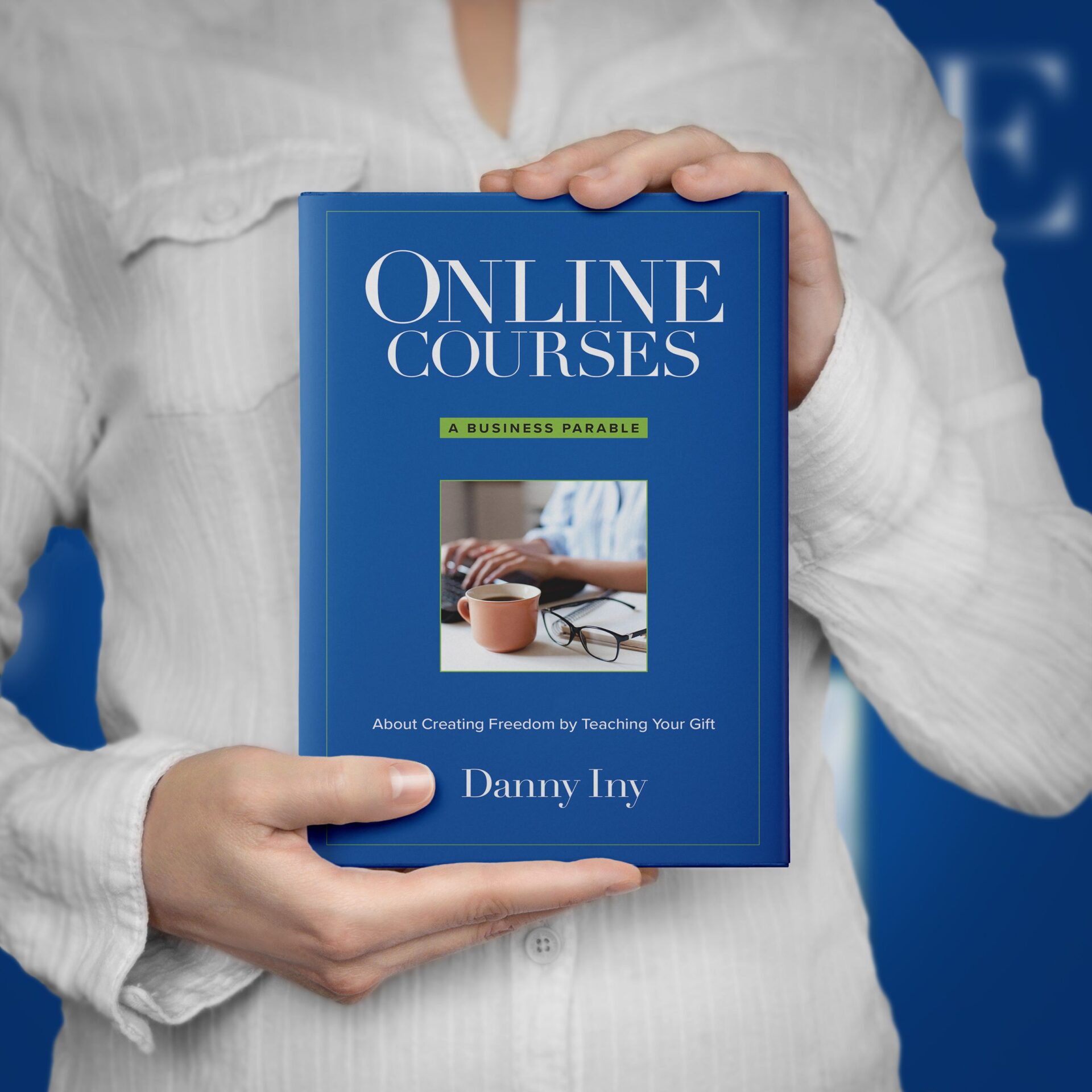
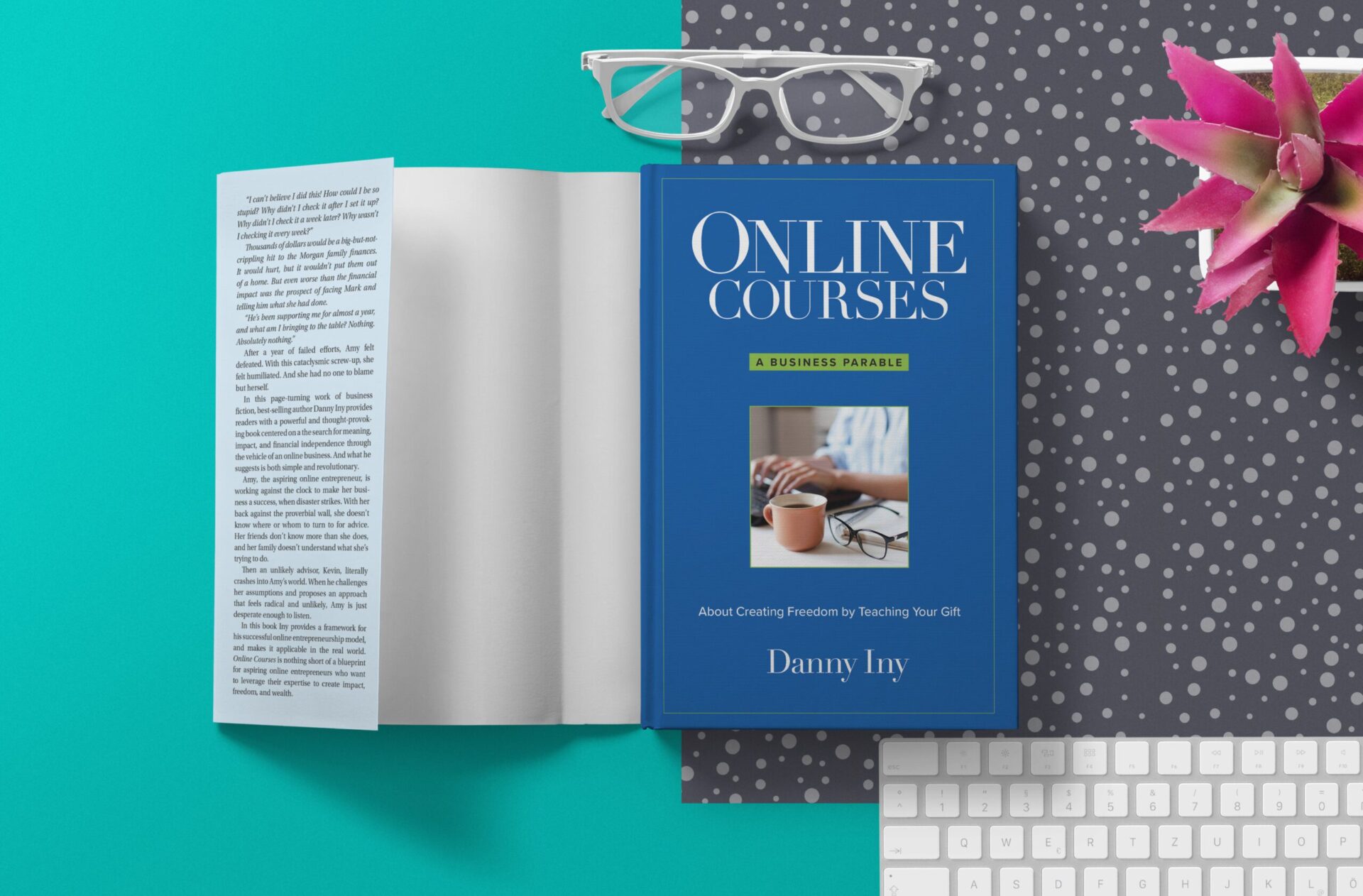
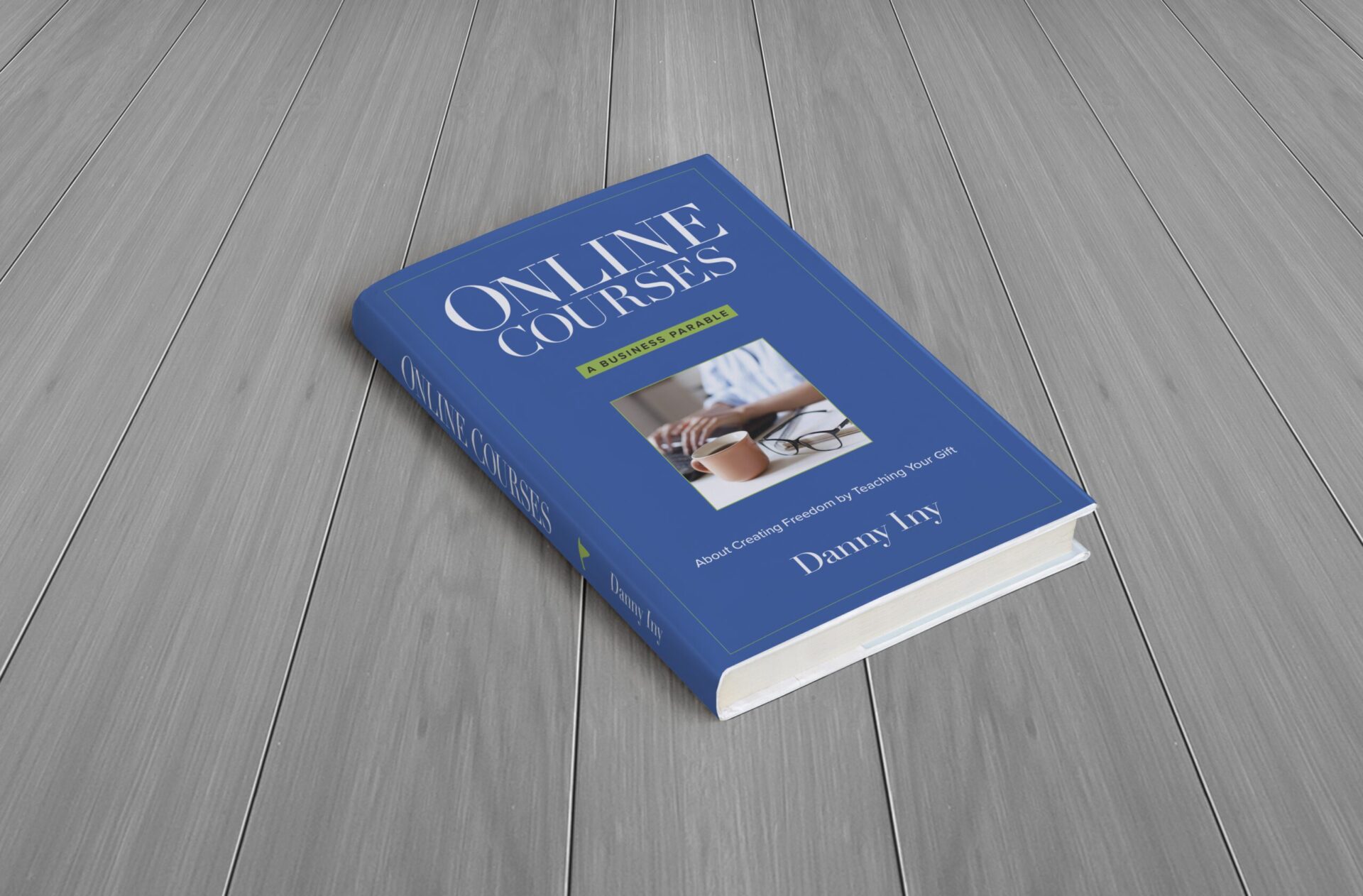
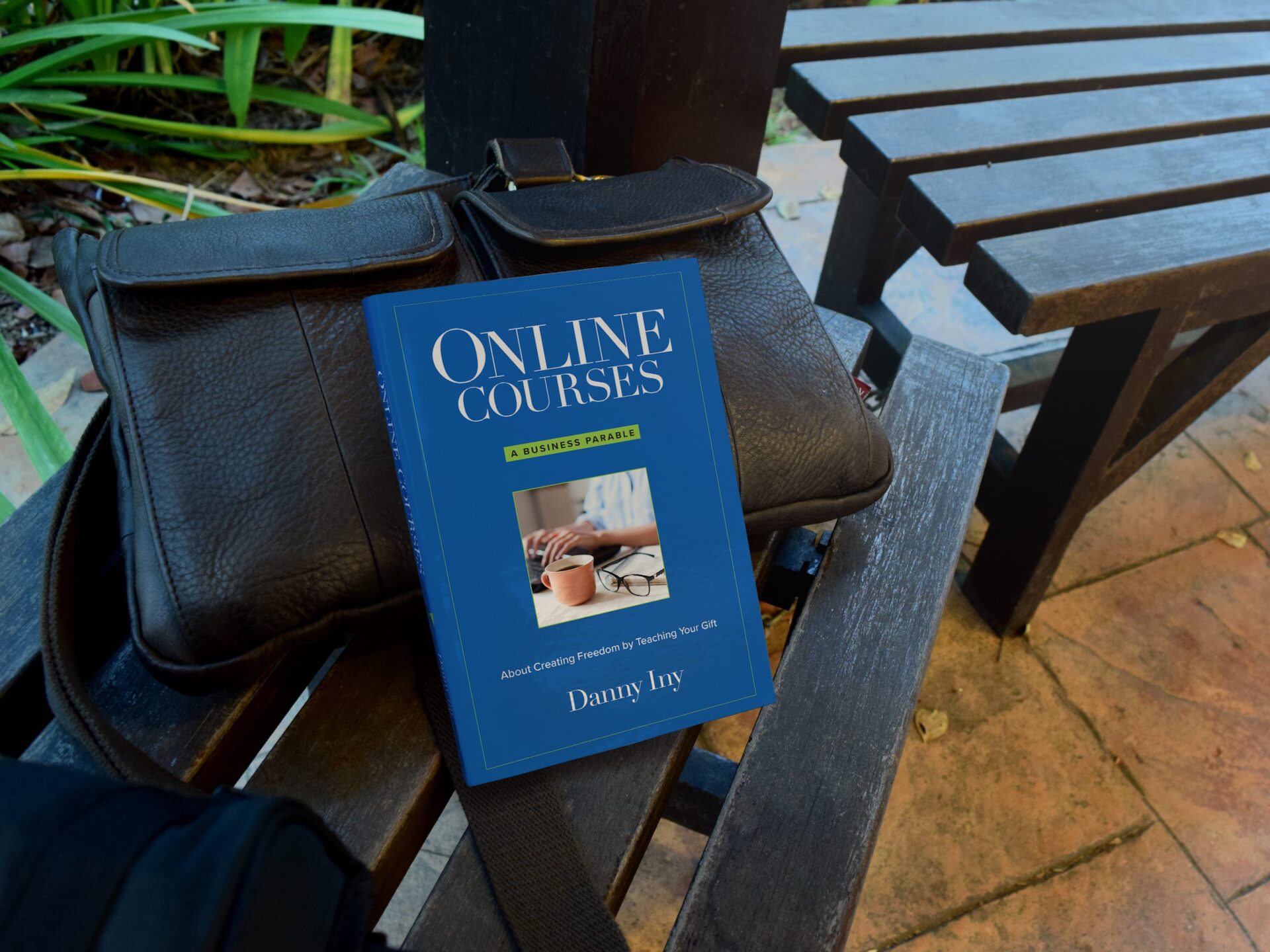
Our guest is Danny Iny, the Founder and CEO of Mirasee, which is a leading voice in the world of online courses. He’s been featured in the Harvard Business Review, Entrepreneur and contributes regularly to publications including Inc., Forbes and Business Insider. He’s spoken at institutions like Yale University and organizations like Google. His work on strategy training won special recognition from Fast Company as a world-changing idea. He’s also the author of Online Courses: How to Create Freedom by Teaching Your Gift. Welcome to the show, Danny.
[bctt tweet=”A quality course is like a piece of art.” username=”John_Livesay”]
John, thank you so much for having me. I’m super excited to be here.
I love that enthusiasm and energy. One of my favorite questions for my guests is to tell us your own story of origin. You can go back to childhood, school or wherever you want but was this process something that your parents said or did. Have you always loved learning? I’m fascinated to hear how this journey began.
I only started thinking of myself as an entrepreneur in the mid-twenties, which is funny because I dropped out of school at fifteen to start my first business. I’ve been an entrepreneur for longer than my adult life. Here’s the first entrepreneurial experience that I can remember. I was in the seventh grade. I was twelve years old and there was a cafeteria at my school and they had different lunch options. My parents would give me $2 to get lunch for the day, which got you the typical option but I like the $3 option.
Online Courses: The only people who are perpetually starting a business are the ones who are not very good entrepreneurs.
It shows us how back in time this is because I don’t think kids can get anything for $3 now.
I’m sure it was subsidized but this was a little while ago. I wanted the $3 option and I noticed that my friend would get his lunch and he would get a soda, which was $1. He would get usually a Coke or Sprite but he was a good friend. I knew that he didn’t especially like Coke or Sprite. He liked cream soda, which they didn’t sell at the cafeteria. I figured out that I could get a rack of those cans of cream soda from Costco and it would cost me $0.15 or whatever and I could sell a soda to my friend for $1. He gets what he wants to drink for the same price and now I can afford my $3 lunch. At the time, people would be like, “You’re charging your friend for a drink?” I’m like, “He’s paying the money anyway. This way, he’s getting what he wants.” This is how I’ve always thought of entrepreneurship. I didn’t see myself as an entrepreneur. I was looking for opportunities and solving problems.
[bctt tweet=”What do I want people to be able to do after working with me?” username=”John_Livesay”]
That word wasn’t anything I heard in school. Everyone I knew, even if they did have their own business, they owned a dry cleaner or an air conditioning company. It was nothing in tech or online because that wasn’t happening then. It was either you go work for a company or your family business. The entrepreneurial part of it was not solving a problem. It was a business that an individual owned. It’s a fascinating thing to think of.
It makes sense if you think about it. Let’s presume you’re good at this entrepreneurship thing. The starting of the business takes a small amount of time and the running of the business takes a long amount of time. The only people who are perpetually starting businesses are the ones who are not good at it. Any entrepreneur who’s any good that you know, you’re most likely to know them in the stage where they’re running the business because that’s most of the time that they spend in that interaction.
Teach and Grow Rich: Share Your Knowledge to Create Global Impact, Freedom and Wealth
Let’s go from that in your journey of Mirasee, which is about reimagining business in general. You have seven core values. Many people may have values. They don’t post them. They don’t think about them. They don’t put them into action. You and I were chatting before the show about how impressed I am that you do put your values into action. Openness, transparency, respect, appreciation, humility and empowering other people, I wanted to see if there was a story behind how these values came about. Do they all come at once? Was it something that continued to evolve?
There is a story. In the fairly early days of this business, we had a different name at the time because we rebranded a few years into it when we realized the original name sucked. We had a team of 7 or 13. We were small at the time. We were doing a company retreat. I was going to say people flew in. At the time, everyone’s local. This was a long time ago. We’re in the chalet up north and we’re codifying our values. The way we did that and this is learned from a gentleman named Patrick Lencioni. We start by asking everyone, “Take a piece of paper and write down the name of 1 or 2 people on the team who exemplify what it is to work here. This is private. You’re not sharing this with anyone. This is for you as a reference point.” You’re going to write down for yourself what are the things about these people that make them exemplify what it is to be here.
We took that list, put it up on the board and we have 111 things. You collapse the list because the same thing shows up seven times with different languages and you start sorting it. You cross off the aspirational things. It’s like, “It’s not so much that this is who we are. This is who we wish we were.” That’s not a core value. You cross off the things that are hygiene factors like, “Showering won’t make you happy but not showering will make you miserable.” There are things that don’t exemplify who you are. It’s a pay-to-play in the industry. We promptly respond to our customer service emails. Any decent company has to do that. That’s not a special unique thing so we cross off the hygiene factors.
[bctt tweet=”A quality course is like a piece of art. It’s only good in the eye of the beholder. There’s no such thing as an objectively good course. ” username=”John_Livesay”]
We cross off the accidental stuff. For example, at the time, almost everyone who worked at the company was into board games. That wasn’t a core value. That happened to be the case. It was a happy accident. We cross all those out and what’s left is a candidate for a core value and we haggle, negotiate and we’re like, “What is most important to us to codify?” We arrived at six core values. Those were our values for a long time and they are real and substantive. We talk about them all the time. We acknowledge each other for them. It’s not a poster on the wall, although it is a poster on the wall behind me.
Over several years, we started noticing that there were a few ways in which our values were being misunderstood by people who were newer to the organization because they didn’t have all the context to understand it. That’s when we looked at those values and we’re like, “Let’s clarify the language here. Let’s pick this up there. This one has to split in two.” That’s how we arrived at the seven values that we have now and this has been the case for a couple of years now. It’s ever-present in running our business.
Let’s go to what made you write this latest book. This is not your first book by any means. I’m always interested in the story of origin as a fellow author. I know that coming up with a title can be challenging. There are usually many versions of it before you land on it. Because you’ve written other books, there has to be a creative urge to express something that hasn’t been said before. The subtitle grabs it.
Online Courses: Reading a book about parenting is very different from sitting across from a three-year-old who’s screaming and throwing spaghetti all over the place.
In some ways, I don’t know that a lot of people think that an online course is a roadmap to creating freedom by teaching their gifts. Let’s break down those words, freedom, a gift and an online course. If you put those things together, I don’t know that a lot of people will go, “That’s a book title.” A lot of people will be like, “What does one have to do with the other?” A part of the way that you break through the clutter is giving people and bringing something new to look at going, “What?”
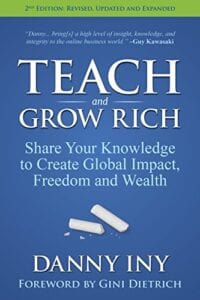
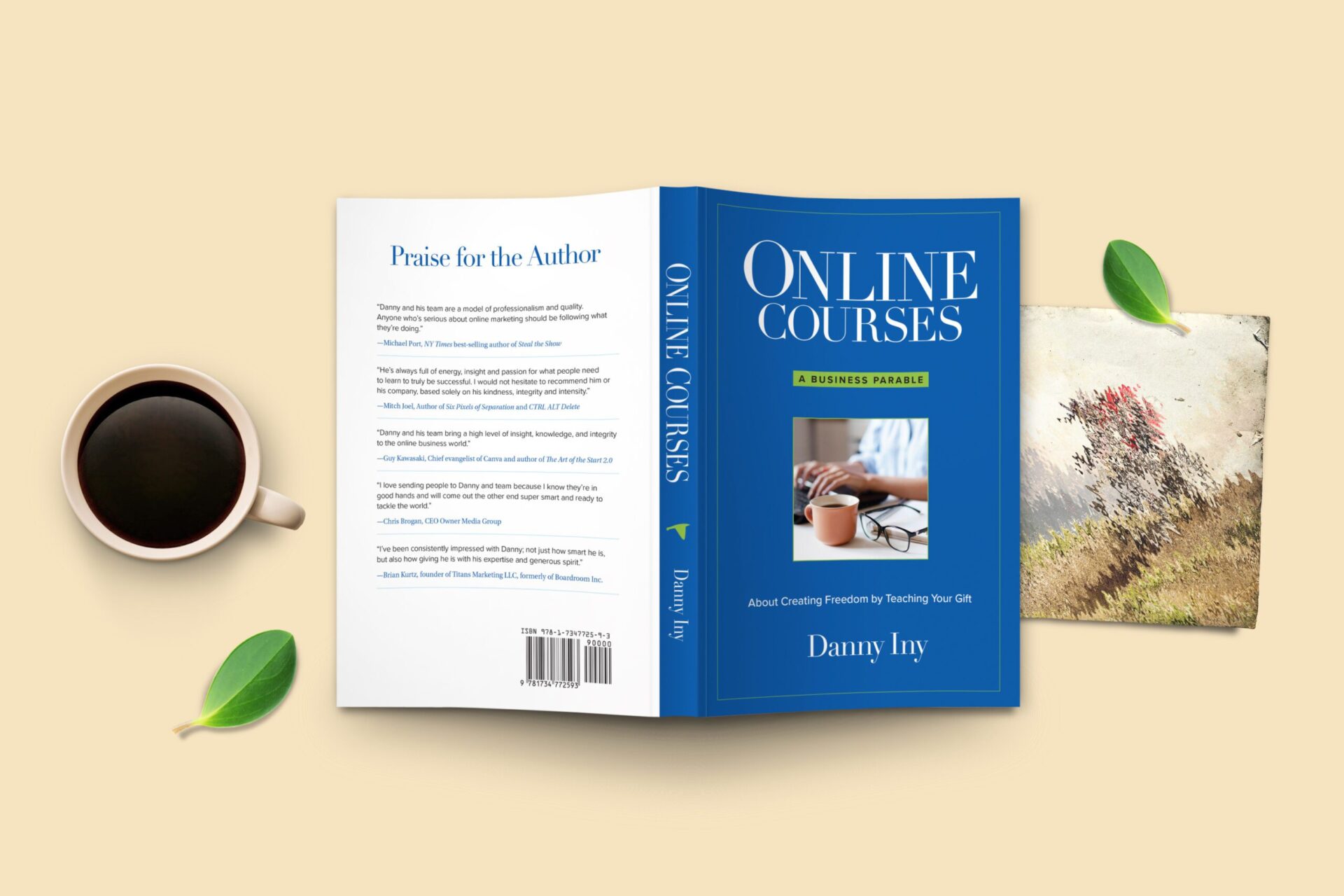
The title was pretty easy. The substance was hard. I’ve written several books about online courses. At some point, I’m searching for a reference to what’s out there. I noticed there is no book called Online Courses and yet that’s what people are going to be looking for. It was pretty clear that the next book is going to be called Online Courses and teaching your gift and creating freedom. This is what our business is all about. That was obvious so that’s what the subtitle is going to be. In terms of the content and style of the book, this was a different book than other books I’ve written. I’ve written several books about online courses. I wrote Teach and Grow Rich in 2015 and it came out with a second edition in 2017. Leverage Learning in 2018. Teach Your Gift in 2020. Effortless in 2021.
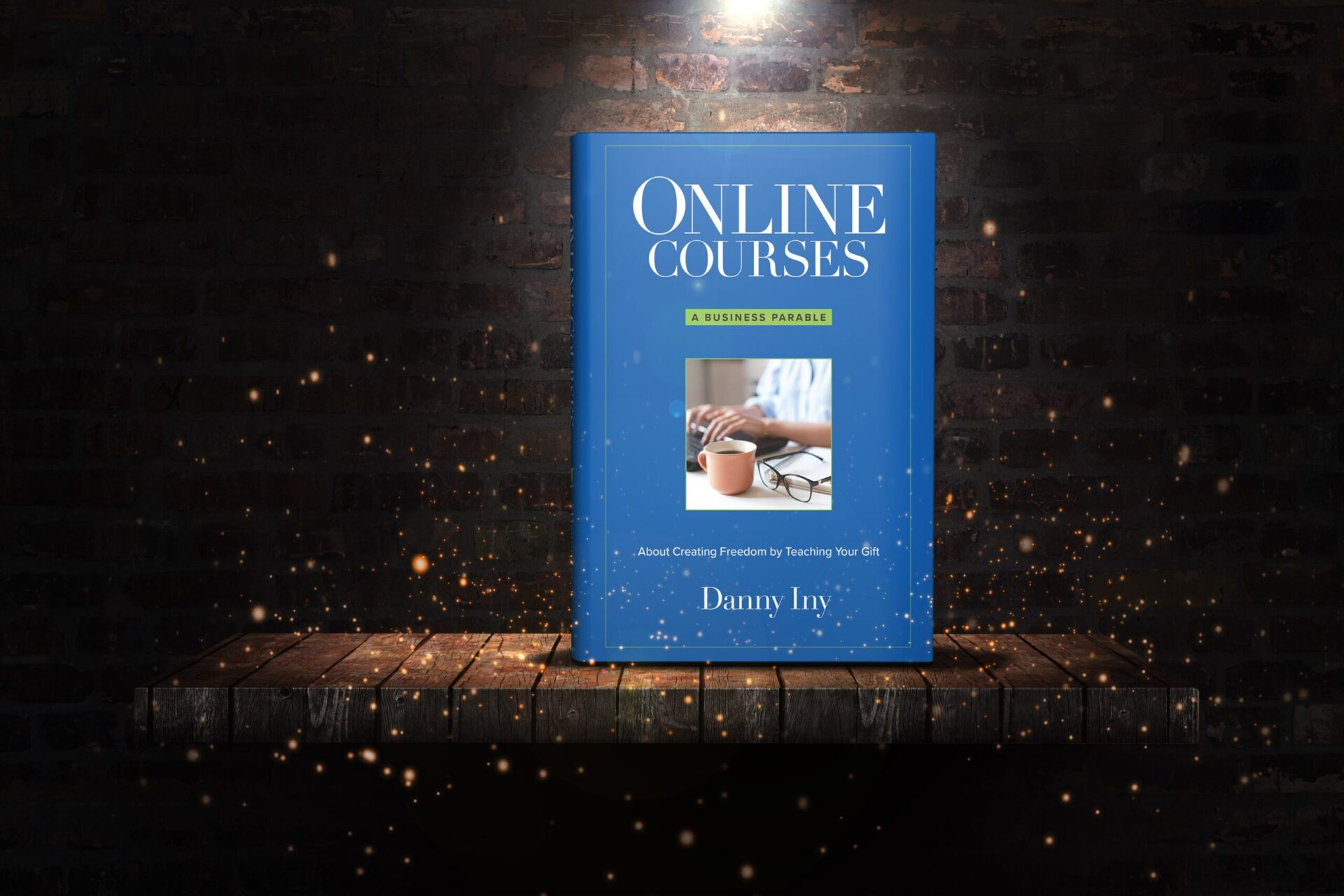
I’ve written about this a lot and based on the reviews that are out there, people seem to like it. In aggregate, they have close to 1,000 five-star reviews. I found that despite people liking the book, often there was a disconnect between what they’re learning in the book and being able to go and do stuff with it. That disconnect is about the fact that there’s a difference between learning about something and the lived experience of doing it. Hearing someone telling you about their ski journey is different from being at the top of the hill looking down and it’s terrifying. Reading a book about parenting is different from sitting across from a three-year-old who’s screaming and throwing spaghetti all over the place. They’re different experiences.
I wrote this book as a business parable. It tells the story of this fictional character. She is modeled after the thousands of people that we’ve trained in this process to show what are the steps in the journey of figuring out what you want to do. What are the demons that you have to struggle with? What are the places where people stumble and need to overcome? What are the challenges that get in their way? It’s meant to be an opportunity for getting the information and learn about all the steps. It’s also an opportunity to ride shotgun on that journey and see what it feels like experientially. That’s what I was trying to do with the book.
I’m going to go out on a limb and predict that it’s going to be as successful as Who Moved My Cheese? back in the day because it’s a parable. Parables are what I’m all about, which is storytelling. When you craft a story that people see themselves in as opposed to listing, “Here are the pain points you might be suffering,” and it goes to, “Here’s a story of Amy.” Suddenly you’re seeing yourself in the book and you’re like, “My name is not Amy but I feel the frustrations that she feels. I went and did something that was a big waste of time as opposed to spending time with my family and feeling guilty for trying to be in two places at once.”
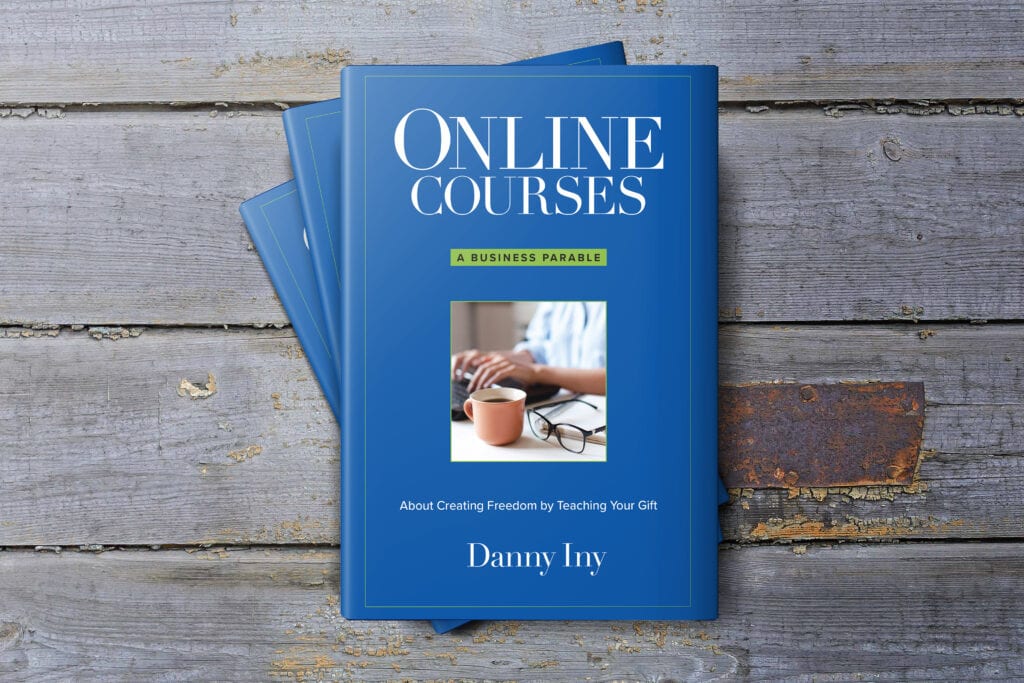
Suddenly the neck gets wider and wider and it’s not even gender-specific but entrepreneur-specific. That’s where you go, “I know ten people that would love this. What a great gift.” That’s where the magic happens in a story as well. When you tell a great story, people remember it and share it. That’s where your brand ambassadors start happening and that’s what makes you memorable. Instead of creating yet another manual on how to launch and create an online course, which you’re certainly an expert at that. If you have a roadmap, you’ve done it.
Part of the reason people join your courses, masterminds and hire you for private coaching. I’m glad that you said it was a little bit harder than even the title because anything that breaks through the clutter is a little bit harder. Do we need another manual? Maybe not. You’re not doing that. You’re giving us the experience of living it as opposed to learning about, “Here are the six steps to figure out what your gift is. You might get frustrated,” whatever the journey is. It’s the classic hero’s journey that there are going to be days that you think, “Why did I even try this?” It’s the trough of despair that entrepreneurs go through so often. If you wanted people to think of this book, what would be one of the main things you would hope they would get out of reading it besides realizing that they have a gift that if they figure out how to monetize it, it’ll give them some freedom?
The number one thing that I’d want people to take away from that, beyond the subject matter and the opportunity of online courses is that if this book does well, it will be because people feel seen when they read it. They’ll be like, “Someone gets it. It’s not just me.” That is something that is so important and necessary for all of us as human beings to not feel isolated and yet it’s such a disconnect for a lot of entrepreneurs.
The reality is that most of the people in our lives, as supportive as they might want to be, don’t understand. They don’t have any frame of reference for what it is that we’re undertaking for the ambiguity, uncertainty, unpredictability and the amount of our identity that we’ve put into what we’re trying to do for the hopes, dreams, ups and downs and the highs and lows. Everything else will be a byproduct. If this book does well, it’ll be because people feel seen and able to relate when they read.
What good parents do is make their children feel seen, heard and acknowledged. What a lot of entrepreneurs or people in big companies forget is their employees have the same needs. It doesn’t go away, “Watch me jump in the pool.” Mom or dad doesn’t go away because you get into Corporate America and the recognition program of all of that. For me, I’ve helped companies make their employees feel seen by asking them what their story of origin is. What made you get into healthcare, for example? Whatever it is that people go, “No one’s ever asked me that before.” It bonds people together.
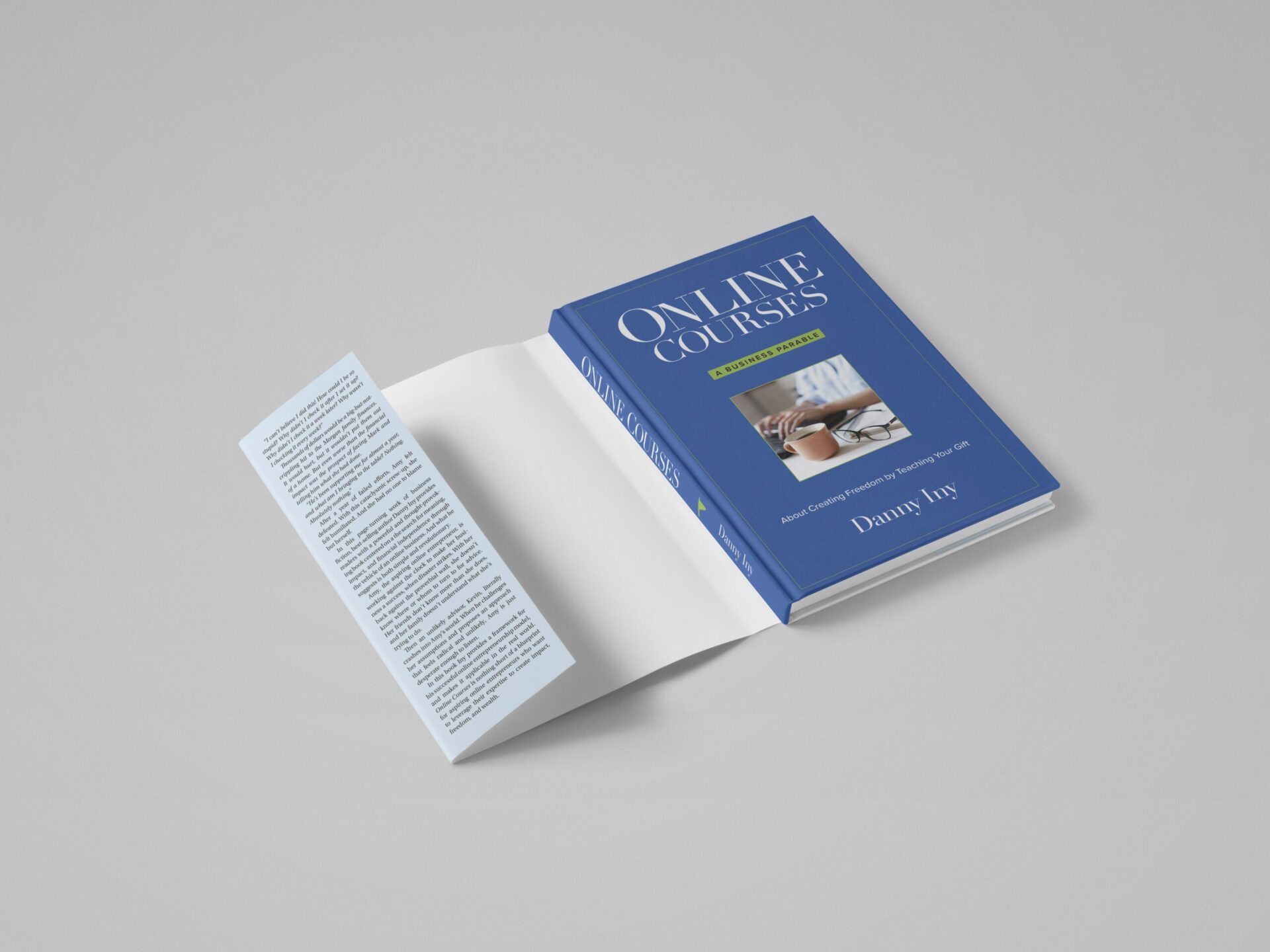
One of the things that I like about your writing, Danny, is the specificity, how specific you are. For example, there’s one line here, “Amy noticed a milk-colored stain on his left shoulder, the sort that a baby would make spitting up on you.” If you are the person that notices those details and you, as a writer, can get that specific because you probably know that people put their baby on that left shoulder, there are 101 details that go into that then we’re in the story. Part of the secret to becoming a good storyteller and a good writer is the exposition, the who, what, where, when. You have such a gift of pulling us into this parable that we’re no longer feeling we’re learning something but we’re in a story. We would be in a movie theater or Netflix. That taps into a different side of our brain, doesn’t it?
It does and it’s gratifying to hear you say that. This is my 11th or 12th book. As I sat down to write this, my first thought was, “I have no idea how to do this.” It’s like I’m completely starting from scratch. What I kept in mind a lot because I’ve been listening to a lot of audio content and audiobooks is I thought a lot about what this is going to sound like. We’re getting it produced. That content isn’t ready yet but we’re getting it produced. I’ve got a team of actors. It’s going to be amazing. I say that while knocking on wood. It’s the famous last words, “I hope it will be amazing.”.
There are people who love this whether it’s a podcast or an audiobook especially if it’s a story and you hear the sound effects like the knocking at the door and you start imagining it coming to life. The other thing that you did that is going to make that Audible so successful and I always teach people that when you tell a story, tell it as if it’s in the present tense that the dialogue is happening now. For example, when I give a keynote talk to sales teams, I talk about the time I got to meet Michael Phelps. I went up to him and I said, “You’re so successful because your physique is crazy, fins and lung capacity. I’m guessing there’s something else.” He said, “Yes, John. When I was young, my coach said to me, ‘Michael, are you willing to work out on Sundays?’ ‘Yes, coach.’ ‘Great. We got 52 more workouts than the competitors.’” I then say to the audience, “What can you do? What are you willing to do?”
That story is connected to an outcome that people can see themselves in but I tell the audience, “If I told you that story in the past tense, I met Michael Phelps. I asked him what his secret is. He told me he worked out on Sundays.” It’s not nearly as interesting. You don’t feel like you’re in the story. You probably wouldn’t remember it as much. I act out with the coach’s voice, what his young voice is. You feel like you’re eavesdropping in on the coach and Michael having a conversation, which is eavesdropping in on the conversation that I had with Michael.
That’s the sophisticated level of storytelling. I’m telling you a story about somebody who then told me a story. The way to keep that all relevant that you do so well in this book is I feel like I’m in the story and listening to the dialogue. That is not something that a lot of authors or storytellers know how to do. We always need some details of interstates left. It’s half an hour later now. We need to know where we are. You also do a great job of expressing internal thoughts and feelings that then get expressed into dialogue. That’s the other thing I wanted to ask you about. When you work with people on helping them create a course, how important is it that they’re identifying the challenges, the pain points that they’re solving in the course by having some specific empathy and ability to describe it?
It’s critical. Here’s the thing, a quality course is like a piece of art. It’s only good in the eye of the beholder. There’s no such thing as an objectively good course or an objectively beautiful piece of art. There is an art that is liked by people. There are courses that are valuable to people. Creating any good course starts with, “Who is this for?” A technique borrowed from the world of instructional design is called Backward Integrated Design. You ask yourself at the end of the day when they’re through with the course, “What do I want them to be able to do?”
You go a level or two deeper. You say, “Not what do I want them to be able to.” You want to ask yourself, “How well do I want them to be able to do it and under what circumstances?” It’s like an active listening course. I’m teaching active listening. It’s like, “Do I want them to be able to go through the motions with their partner in this little exercise? Do I want them to be able to do it in the heat of the moment during an argument with their spouse?” That’s a different level of skill in adopting the techniques. Do you start with who is this for? What will they value? What is the end goal? You work backward in terms of what you’re looking to build. Otherwise, it’s all pointless.
It’s reverse engineering in a clever way. Who do I want this to be for? What do I want them to be able to do after they take the course? What do I want them to be doing in specific circumstances? Was there something else? Was that the gist of it?
What do I want them to be able to do, how well and under what circumstances?

The how well is fascinating because my online course, The Sale is in the Tale, is all about teaching people how to become better storytellers as a sales tool. I will say sometimes that even if you think you’re a good storyteller, this is going to get you to the black belt level. People go, “Oh.” I’ll have students who go, “I always thought I was a pretty good storyteller but now I realized that there is a lot more I can learn to become a great one. Asking these kinds of questions is valuable.” I’m glad you shared it.
When I hired a coach who was a specialist in helping people give a TEDx Talk, we did a similar series of questions where he said, “Let’s pretend it’s at the end of your talk. What do you want the audience to feel, think and do?” That will determine the end of your talk. We’re starting to work on what’s your ending going to be with those three outcomes. That process whether you’re creating a piece of art that’s known as an online course or a piece of art that hopefully is your talk or whatever story you’re telling and whatever format, Audible in your case, we’re coming up next. It’s all about having an emotional impact.
Emotional and tangible. Whatever we do is meant to accomplish an objective so let’s not leave it to happenstance. Let’s not do this and hope it leads to that outcome. Let’s be strategic about making sure that’s where it goes.
You offer such a wide range of ways to interact with you. You’re also a speaker and you get called in major places. Are companies like Google interested in learning how to create an online course for their employees? This is one of my favorite topics that you’re talking about, not just how to get to be the best but how to stay the best. If you look at certain actors, they stay at the top of their game. The other ones, you’ll never hear of again or like a Blockbuster or Kodak. This ability to get to the top and stay at the top, my first question around that is what’s harder, staying at the top or getting to the top?
Staying at the top. I don’t know if you remember the movie Dangerous Minds in the ‘90s with Michelle Pfeiffer. She does this exercise with the kids. She says, “Everyone has an A as of now. You just have to work to keep it.” In the end, she’s got all these kids with A’s and they’re like, “It doesn’t count because you gave us the A to start.” She’s like, “Anyone can earn an A once. You kept the A for the whole year.” That’s the hard part.
The other part of what you do is very niched, which is the unspoken problem that a lot of companies don’t like to talk about, the cost of turnover. You’ve got to spend time interviewing, training, onboarding. Are they going to fit and become family? Meanwhile, there’s this gap of talent and productivity that’s not happening because you’ve got a gap that somebody left. The joke is nobody leaves a job, they leave a bad boss. You’ve been able to figure out how to take your skills and training. Is it because part of the problem is people aren’t onboarding properly and that’s why people aren’t able to attract and keep the best talent?
There’s a flywheel that goes in either direction. It can be a vicious spiral of not onboarding people well and you don’t have good support or infrastructure. You don’t have a good culture. You don’t have good values as an organization. It’s not a good place to work so you don’t attract customers. You don’t make much money so you can’t support people well. It’s a downward spiral. They can also go the other way. You invest all of your relationships. You invest in relationships with your customers and the people that you work with. You constantly look to get a little bit better. You have values that both attract and repel. Clear and articulated values should attract the right people and repel the wrong people. Does that mean you never make a bad hire? No, but the frequency goes down. You catch it sooner and you keep getting better. That’s what it is.

It’s almost testing ads online. You get to test. You iterate and let’s change that headline or image so now it gets better. Is it always giving us the best potential buyers? No, but the leads and the frequency get better. It’s the same thing with the hiring process using your structure and your insights on how to attract the best and repel. That’s the old concept that a lot of people have forgotten. If you try to be everything to everybody, you’re nothing. A big mistake I see a lot of entrepreneurs are making and I would love your insight on this because it keeps coming up, “What I do is complicated. I do ten things.” Even Amazon sold books first and got proof of concept. Trying to do more than one thing before you get some traction is a mistake that I see a lot. Do you see that? If you do, what advice do you have for people that make that mistake?
I do see that a lot and I made that mistake earlier. What I’ve come to understand is there is a difference between all the things you could do, all the things you should do but even beyond that, what you are known for. I am the online courses guy. That is what I do. I teach people how to take their expertise and turn it into online courses. Do I know other things? Can I do other things? Do I even help my students with some other things? Yes but that’s not ever what I lead with. I teach people how to build and sell online courses. Once they know, like and trust me and they’re in my world, we can talk about other things if appropriate. To the world, to the people who are not yet my customers, I teach people how to build and sell online courses.
It’s hard to top that. That’s brilliant. “Be known for one thing,” that’s going to be a tweet for sure. Amazon was known for selling online books for a long time. Imagine if they tried to launch selling everything they sell now and have TV shows. People are like, “What?” That ability to enter your world is my favorite description of that. What else have you got and what else can you help me with becomes a natural journey that you take us all on. Any last thoughts or quotes you want to leave us with?
In the spirit of the story, something that I tell my students often is the journey of online courses, the journey of business will involve ups and downs and setbacks and challenges along the way. What I often tell my students is that failure is only failure if it happens in the last chapter. Otherwise, it’s a plot twist and the spirit of the story.
That’s a great description. That’s a plot twist. The story’s not over yet. I love it. Thanks, Danny.
Thank you so much.
Important Links
- Mirasee
- Online Courses: How to Create Freedom by Teaching Your Gift
- Teach and Grow Rich
- Leverage Learning
- Teach Your Gift
- Effortless
- Who Moved My Cheese?
- The Sale is in the Tale
Wanna Host Your Own Podcast?
Click here to see how my friends at Podetize can help
Purchase John’s new book
John Livesay, The Pitch Whisperer
Share The Show
Did you enjoy the show? I’d love it if you subscribed today and left us a 5-star review!
- Click this link
- Click on the ‘Subscribe’ button below the artwork
- Go to the ‘Ratings and Reviews’ section
- Click on ‘Write a Review’
Love the show? Subscribe, rate, review, and share!
Join The Successful Pitch community today:
- JohnLivesay.com
- John Livesay Facebook
- John Livesay Twitter
- John Livesay LinkedIn
- John Livesay YouTube