

Take The Icky And Scary Out Of Sales With Hugh Liddle
Posted by John Livesay in podcast | 0 comments


Sales has a bad reputation for being unpleasant while for those who do them, sales can be a terrifying task. Tackling those things in this episode through his book, Take the Icky and Scary Out of Sales, is guest Hugh Liddle. The sales wizard at Red Cap Sales Coaching and Elite Sales Academy, Hugh imparts to us his almost 50 years of experience in the field how we can create a brand that helps us stand out. He shares the right mental preparation you should be doing when having a sales conversation and gives his insights about why people buy based on what they want, not what they need. Allow Hugh Liddle to teach you how to become a great salesperson so you can sell with pride.
—
Listen to the podcast here
Take The Icky And Scary Out Of Sales With Hugh Liddle
Our guest is Hugh Liddle, who is the sales wizard at Red Cap Sales Coaching and Elite Sales Academy. We can learn to make selling easy, fun and profitable. He specializes in helping chiropractors and other service-oriented businesses dramatically increase their conversion ratios, sales, and revenues. Hugh’s sales training and coaching come from almost 50 years of in the field sales and sales management experience. You get real-life experience from his teaching, not something out of a textbook. He is the author of Take the Icky and Scary Out of Sales, which is available in paperback on Amazon. He’s also the radio talk show host of his show Sales Chalk Talk which is also available on iTunes. Hugh, welcome to the show.
John, it’s a pleasure to be here and thank you for that lovely introduction. You read it exactly the way I wrote it so that was good.
I always like to ask my guests to take us back to their own stories of origin. You can go back as far as you want. You can go back to where the red cap came from or something else that led you to your wonderful career.
I got out of the service out of the Air Force in 1970. I had 5 or 6 job offers and one of them was a sales job. I liked it the best because there was no ceiling on income. I thought I would laugh my way to the bank every week and everything is going to be great because I’m a good talker. What I found out is that there’s a lot more to it than being a good talker. It was a real process for me to learn what I needed to know in order to be successful. I’ve been selling for the last 50 years or so. Years ago, I decided it was time to start my own business and start teaching other people the things that helped me be successful after I learned them. Things have changed tremendously in selling over the years and especially in the last few years or so. There have been a lot of changes and I’ve never had so much fun in my life as I’ve had to teach other people how to sell.
The red cap is a fun story. I was in a networking group in Colorado when I first started my coaching business. I was going to people’s offices to coach and I wanted to have a little uniform so I had black slacks on a red or a black shirt with logos of opposing colors. I went to a networking meeting one day and there was a guy by the name of Santa George, who was another member there. Santa George who was a professional Santa Claus in season and a magician offseason. He was wearing a red cap and I thought that it would go great with my uniform. I said, “Santa George, where’d you get that hat?” He said, “At Estes Park, Colorado,” and I happened to be in Estes Park a little bit later that month.
[bctt tweet=”People buy based on what they want not what they need. ” username=”John_Livesay”]
I went to a couple of shops with my wife to shop and found a stack of red hats. I bought some and started wearing them all the time. About a month after that, another member of the networking group asked me to have coffee and he’s a marketing guy. He said, “If you showed up at a meeting with a different colored hat or no hat at all, nobody would know who you are. You need to take that red cap and brand it.” We renamed the business Red Cap Sales Coaching and I’ve worn the red cap ever since then. My wife makes me take it off when I go to bed but that’s about the only time I don’t have the cap on.
I never realized what a powerful brand that was until I went to a Get Motivated Seminar in Denver. There were 25,000 people in the Pepsi Center. People came up to me during the breaks. People I knew and I didn’t know were there but they walked up to me and said, “We saw you right away when we came in all the way across the arena and we could pick you out immediately.” If the purpose of marketing is to be noticed and remembered, the red cap is a real winner. It’s been a great brand for me and the only challenge is when I go out to speak someplace, sometimes people come up to me and they don’t recognize me, they recognize the cap. I have no idea who that is or who they are. Sometimes that’s a bit awkward.
One of the key challenges everybody faces in sales is, how do I become memorable? Especially when they’re pitching against other people. Sometimes it’s within the same day and the buyers start to blur together. There’s nothing memorable about the person or what they’re saying and they go, “I guess we’re going to go with the best price.” You’ve got this red cap to make you stand out against all the other people that are talking about how to take the icky, as you say, out of sales. You talked about in your book, “What if I am a salesperson and people can learn to sell with pride.”
So many people that I talked to, whether they’re architects or lawyers, they know they need to sell. Lawyers, in particular, is a relatively new thing for the industry for the last 10 to 20 years. They now have to sell and not only to get referrals. Many people don’t want to consider themselves salespeople and yet they need to sell. How do you help people like that? What is your philosophy of selling that allows people who are doctors, nurses, MBAs, or didn’t go to school to be a salesperson and yet have to sell?
The truth of the matter is that everybody on the planet is in sales. Everybody sells every day. They don’t know that that’s what it is but that’s what’s going on. In fact, if you stop and think about it, when you were a baby, as soon as you came out of your mom’s tummy, you started selling. You gave those people an opportunity to take care of and love that little person that they created together. When you were hungry, you cried. When you were wet, you cried. They took care of those challenges and they picked you up and they loved you. They made sure you had everything that you needed.
We’ve been selling since we were little babies. If you’re married, have children, work for somebody, somebody works for you or have friends, you’re selling all the time. You’re simply having conversations with people. You’re asking them to participate in some things that are important to you. Sometimes they say yes, sometimes they say no, but you’re always selling. I have to tell you the story about my wife, Priscilla. She would be the first one to tell you, “I’m not a salesperson. I don’t like sales and I don’t like salespeople.” How about that? I’m a sales coach and my wife doesn’t like salespeople.
She’s got the icky attached to it, doesn’t she?
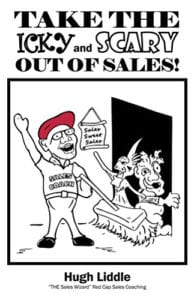
Take the Icky and Scary Out of Sales
Yes. She’s had the unfortunate problem of dealing with some icky salespeople in the past and that’s part of the reason she feels that way. My wife convinced me that it was a great idea to move from Colorado to Florida. I don’t like heat and humidity but she told me about all of the wonderful things that would happen when we moved to Florida. I wouldn’t have to drive in the snow anymore or shovel it. She’d make me a beautiful home down here and the weather would be nice. There would be green on your lawn and it would be awesome. She asked me for the sale. She said, “I’m moving to Florida. Do you want to go or not?” I said, “Yeah. I would like to go.” That is a good example of somebody who thinks they can’t sell and is awesome at it.
I love the assumptiveness of it, “I’m going.” There was no fear in asking that closing question there, was there?
Not a bit.
She also painted a picture of what your life would be like. She used storytelling a little bit about, “You won’t have to shovel snow. Imagine how great that’ll be.”
You asked me about my philosophy of selling and how I respond to people who said, “I don’t feel comfortable selling.” Here’s the philosophy. It’s not our job to get people to do what we want them to do. That’s not sales from my perspective anyway. Our job is to get people or help people do what they want to do. Selling is a process of asking people questions and finding out what they want. It doesn’t matter what they need. People don’t buy because of what they need. They buy because of what they want. They generally want a result of some kind. I always tell chiropractors that the only reason people are sitting in your office is that they want something in their lives that they don’t have yet. They do almost anything to get that thing or there’s something in their life that they don’t want at all and they do almost anything to get rid of it.
That’s true not only of chiropractors but of any type of business. Your customers or your clients have something that they want. It’s not necessarily even that they need it. In some cases, “I don’t need a new car. I’d like to have a new car. I want one.” If I went to talk to a car salesperson, they might talk to me about, “You need a new car.” My response would be, “I don’t need one because my car gets me where I want to go. It starts every morning, so I don’t need a new one. I’d like that new car smell, the new car look and I’d like the way it feels when I’m driving around. I’d like some of the new technology.” I want some things but I don’t need them. If we can find out what our prospects want and why they want it, sometimes you have to go a little deeper than I want this. Why do you want it?
Let’s talk about this in terms of chiropractors. Typically, I would assume most people go to a chiropractor because they want to get out of pain but they also need to get out of pain.
The chiropractors that I work with, most of them don’t treat symptoms anyway. They treat the underlying cause of the symptom so people can have optimal health where they function well, they feel good all the time, and they never anymore.
The difference would be, “I need to get out of pain now so I can turn my neck without pain, but I want to stay healthy. Therefore, that’s why I would keep coming even if I’m not in pain.”
[bctt tweet=”Be present with people to be successful. ” username=”John_Livesay”]
The want is more important than the need when it comes to the sales conversation.
You talk about that mindset is key to success. You have a chapter on it, Let’s Get Ready Preparing to Sell. What do you think is the right mental preparation you should be doing?
When you’re having a sales conversation, your focus needs to be 100% on the other person, what they think, feel, want, need, and their situation is, all of those things. The part of the middle of preparation is letting go of everything that’s been going on in your life before you show up to have that sales conversation. If you’re thinking about the disagreement that you had with your significant other before you left for work, that’s on your mind, that’s not where your focus needs to be. The focus needs to change. If you’re thinking about the stack of bills you have on your desk that you can’t pay and sales haven’t been that great this month, you’re thinking about that while having the conversation. One of my buddies who’s also a sales coach is Gene McNaughton and his favorite phrase is, “Your prospects can smell commission breath five miles away.”
I like that commission breath. I haven’t heard that before.
It’s absolutely true. Even if you’re thinking about after work, “I’ve got to go down and have a few with my friends down at the pub,” your focus is in the wrong place. Everybody that’s ever bought anything from a salesperson has had this experience at some point. The salesperson does a good job of explaining the product or service. It’s something that you want and the price point is okay. They ask you to buy and you get this feeling down in your gut, “There’s something wrong here. I don’t know what it is. I can’t put my finger on it, but I don’t feel comfortable. I’m going to tell him that I want to take a little while to think about it. I’ll call him if I decide I want to do it.” They’ll never call. What is almost always going on when that happens is the salesperson is focused on something besides helping the person get whatever they want. Their focus is someplace else. There’s an energy that passes between the salesperson and the prospect. If that energy isn’t clean, if they don’t feel like you want to help them and that you’re focused on their wants and their needs, they won’t buy from you.
It sounds like the fight or flight response has kicked in and it doesn’t feel safe. You don’t know why it doesn’t feel safe. Part of it is that person is not 100% present.

Sell With Pride: Selling really is a process of asking people questions and finding out what they want.
It’s important before you have the sales conversation to get your focus in the right place. I have a friend out in California who has an evergreen tree by his front door. He’s a great salesman. Every morning when he walks out of the house, he reaches out and taps the trunk of that tree. It’s an NLP thing. What it means to him is forget everything that’s gone on up until right now and focus on helping as many people as you can in the next eight hours. On the way back in the door, he taps the tree again. That’s his cue to forget everything that’s going on in the workday and focus on your family, resting, recreating and getting ready for the next day. I’ve had other salespeople that I’ve managed who actually had to sit in a room by themselves for 30 or 45 minutes to get themselves in the proper mindset to go out and sell. Most of us are between those two extremes. It’s not immediate. It’s not tapping the trunk of the tree and we’re ready to go. It’s not sitting around for 30 or 45 minutes to get ready. All of us need to go through that process before every sales conversation.
It’s some mindset or ritual, it sounds like it’s what you’re recommending. Hugh, do you feel that that’s the most important skill for a salesperson to develop? Is it being present or is it something else you recommend?
The answer to it is most people think that the most important skill that a salesperson needs to have is being able to talk, “She has the gift of gab. She could sell iceboxes to Eskimos. She’s great at talking. She’d be great at sales.” No, maybe not because the most important skill in selling is listening not only with our ears but with our minds and hearts. There’s more going on in a conversation than the words that are said. It’s the way the words are said, it’s the emotion behind what’s going on. I mentioned that there’s an energy that passes between a salesperson and a prospect. The salesperson has to be queued in to what that person is saying, how they’re saying it and what their body language is if they’re able to see them online or in person. The body language that’s going on, and the emotion that’s behind what those people are saying. If you can train yourself to listen carefully, if you can build that skill, people will feel appreciated. They’ll feel like you want to help them. They’ll buy from you if you’re a good listener. If you talk and talk, my wife would kick you out the door after about five minutes of that.
You and I are definitely on the same page about energy. When I was up for speaking engagements to speak to a sales team. The speaking agent called me back after they interviewed me and the other two speakers and they said, “Congrats. They picked you. They liked your energy.” People don’t realize that they liked your energy, enthusiasm and passion. It’s not the fact that you have a book. All those things got you into the final three. When it comes down to who do we want to spend time with? They feel good after hearing me talk and they assume that the audience is going to feel good. What you’re saying is so important. You talked in your book about how to not take rejection personally and not feel like you’re being pushy and aggressive. I’m guessing that’s one of the steps in the sales process you teach. I’m specifically interested in those two issues because many people do take rejection personally and feel pushy. Can you talk about how you help people with that?
First of all, it goes back to the mindset that you’re not trying to get people to do what you want them to do. You want to help them do what they want to do. That sets the tone as you go into the sales conversation. When you get to the point in the conversation, where you’ve asked questions and you know what they want and why they want it, you’ve explained to them that they can have what they want. They can have the result that they’re looking for. If they work with you, they can achieve that, they can have that result and you ask them for the sale. Your responsibility stops right there. If you’ve done all of the early steps in the sales process, you’ve done a great verbal agreement, asked good questions, done a good job of communicating value to them and you’ve asked them to buy, that’s the end for you. Unless an objection comes up, your job is to help them move past the obstacle that they’re seeing in their way to having your product or service.
[bctt tweet=”It’s our job as salespeople to get people do what we want them to do. Our job is to get people or help people do what they want to do. ” username=”John_Livesay”]
I love what you said there because I want to underline that and take a moment and make sure everybody got that before we go on. Many salespeople are afraid to ask for the order because they fear rejection. You gave us great insight. This is your job. If you were getting on a plane to fly from LA to New York, and the pilot makes the announcement, “We’re now landing.” No one stands up and goes, “What? We’re landing?” It’s expected that it’s his job to land the plane. I say it’s our job as salespeople to land the plane, also known as asking for the sale. You’re not doing your job if you’re not doing that. That is crucial what you said, I love it.
If you think about not getting people to buy, but offering them the opportunity to take advantage of what you sell, you’re offering them an opportunity. When you ask for the sale and if you do it the way that I teach it, you give them three different options that they have available to them and ask them which one they think is the best fit for them. Once you ask that question, you shut up. You don’t say anything until they respond. Your responsibility has ended there when you ask for the sale because it’s up to them to make a decision.
Do they want this product or service and the result that it’s going to give them or do they not? Are they willing and able to invest the time, energy and money that it takes to take advantage of the service or the product or do they not? It’s their decision. If they say, “No, I’ve decided I don’t want to do this. It’s too much money and it takes too much time. I want to think about it. I’m not going to even think about or consider making a decision right now.” That’s not anything that you’ve done wrong. It doesn’t make you bad.
If somebody tells you, “No,” it doesn’t say anything at all about your value as a human being, the value of your company, your product or service. It says volumes about the prospect. For one reason or another, they’re not willing to do what it takes to take advantage of your product or service. If you can keep that mindset that you’re offering this to them and not attached to the outcome, there are loads of people who want my product or service. If this person says no, that’s not the end of the world, and it’s not the end of my business.
One of my favorite things about your book is you said, “Stop saying we’re closing the sale because it means that something is ending.” Talk about that. Do you think that’s the most difficult step in the sales process, is closing? If that’s not it, can you tell us what you think is?
I don’t think it’s the most difficult thing. In fact, the easiest thing is asking for the sale, if you’ve done the first four things right, built rapport, done a good verbal agreement, asked good questions, and communicated the value and result that they can have. If you’ve done that, asking for the sales is like falling off a log. It’s easy. The hardest part is probably answering objections effectively. That probably is the most difficult part. The only reason that it’s difficult because the science of it is having a script and knowing what to say when you get a particular objection.

Sell With Pride: Stop saying we’re closing the sale because it means something is ending.
There’s an art to it, though. The art to it is, which question am I going to ask first? How am I going to proceed through this chain of questions that I asked when I get money or time objection? I want to think about an objection or I need to talk to somebody first objection. How am I going to respond to that? There’s a science and an art to being able to do that. That’s the hardest part. The idea of asking for the sale and the reason I call it that instead of closing is because the relationship with your prospect starts at the point where they tell you, “Yes. I want to take advantage of your product or service or no, I don’t.”
It’s not the end of the process no matter what they say. If they say, “Yes,” you’re going to deliver the product or service and you’re going to follow up, going to upsell, and you’re going to do a lot of different things there. If they say, “No,” you still want to follow up and stay top of mind because no doesn’t necessarily mean never. It means not right now. If you stay top of mind when they are ready, they’ll come back to you to buy. They won’t go someplace else. That’s why I don’t call it the close. I call it the opening, the commencement or the beginning, one of those words.
Speaking of an offer and a close because you’ve been generous, you said that anyone who’s reading can get a free strategy session with you about determining whether the Red Cap Sales Coaching could help them. You don’t even charge people. Certainly, people can tell from talking to you, there’s no pressure because you come from such a place of energy, respect, and confidence that what you have to offer is valuable. You’re not trying to pressure anybody into doing anything they don’t want. I can speak firsthand about how friendly and fun you are to talk to. Do you have any last thoughts you want to leave us with about how we can continue to get rid of the icky and scary part of selling?
[bctt tweet=”The most important skill in selling is listening, not just with our ears, but with our minds and our hearts. ” username=”John_Livesay”]
First of all, I want to clarify that the conversation that you mentioned, isn’t a sales conversation. It gives the people who have the strategy session, the opportunity to talk about their business, their sales and ask questions and get some tips, ideas, and strategies that will help them. It is a strategy session and they’ll find out whether continuing coaching after that. There’s no charge, there’s absolutely no pressure at all and no obligation to do anything. It’s a fun and friendly conversation. To answer your last question, the biggest thing that is important in having success in selling is to have a great script for each step of the sales conversation. To memorize, practice and role-play it until it’s a part of you, a part of the way you talk. Somebody could call you up at 3:00 in the morning and wake you out of a dead sleep and say, “Have a sales conversation with me.” You wouldn’t even have to think about it. You go with it. Everybody who sells has a script because you’re going to say pretty much the same thing every time you talk to somebody. It’s a matter of whether your script is effective or whether it’s not. Get a good script.
Hugh, it’s been a pleasure. Thank you so much for sharing your wisdom and your insights on how we can take the icky and scary out of selling.
John, thank you so much for having me on the call. It was fun.
Important Links
- Red Cap Sales Coaching
- Elite Sales Academy
- Take the Icky and Scary Out of Sales – Amazon
- Sales Chalk Talk
- iTunes – Sales Chalk Talk
- Bit.ly/wizard-strategy – Book in time for a free strategy session
- Better Selling Through Storytelling Method Online Course
Wanna Host Your Own Podcast?
Click here to see how my friends at Podetize can help
Purchase John’s new book
John Livesay, The Pitch Whisperer
Share The Show
Did you enjoy the show? I’d love it if you subscribed today and left us a 5-star review!
- Click this link
- Click on the ‘Subscribe’ button below the artwork
- Go to the ‘Ratings and Reviews’ section
- Click on ‘Write a Review’
Love the show? Subscribe, rate, review, and share!
Join The Successful Pitch community today:
- JohnLivesay.com
- John Livesay Facebook
- John Livesay Twitter
- John Livesay LinkedIn
- John Livesay YouTube
Raise Your Standards With Mark Evans
Posted by John Livesay in podcast | 0 comments

There’s an old way, and there’s the new way of selling – which side are you on? It’s about time you raise your standards and get intentional with your sales. In today’s episode, host, John Livesay, is joined by Mark Evans, author and Standard Sales Company founder. Mark talks about the significance of building systems into your sales process and salespeople. He also deals with the subject of fear of rejection, the four types of people you interact with, and how to do follow-ups without being pesky. Discover how sales is not something you do to somebody and how to ask the right questions to start meaningful relationships that close the deal.
—
Listen to the podcast here
Raise Your Standards With Mark Evans
Our guest is Mark Evans, the author of Raise Your Standards: The Definitive Guide to Building Seven-Figure Sales. One of the things that Mark is known for is his energy. People call him one of the most enthusiastic people you’ll ever meet. His love of sales and the game of business is infectious. That’s one of the reasons I wanted to have him on the show. He believes that in its very core, sales doesn’t have to be manipulative or sleazy. He thinks it’s the greatest job in the world and he helps companies and individuals reach the seven-figure sales mark and beyond. Mark, welcome to the show.
John, thanks for having me. It’s a treat to be on here.
You are welcome. One of the questions I always love to ask my guests is to tell us your own story of origin. Were you born happy and enthusiastic? Did you love selling as a kid? Take us back as far as you want and tell us how you get to become you.
I come from a family of entrepreneurs. My parents are both entrepreneurs. My wife and her side of the family are all entrepreneurs. My story started back my parents, when I was a young boy probably 3 or 4. They had always been a part of other family businesses and that worked out okay, but they decided to risk it all and start their own business. They moved my entire family, my three sisters and I, about four hours away to a town they had never been in, to a city that they didn’t have any connections with to buy this business. From a young age, I was working with them and that’s where I got my first exposure to realize that sales is critical. It’s the lifeblood of all organizations, especially small and medium-sized businesses. At a young age, that was drilled down into me. It wasn’t just sales for corporate earnings or for a private jet. We weren’t close to that at all, but sales were what led to our family vacations and the tuition to my little parochial school in the town where we came from and basketball shoes. That’s where I got started and fell in love with sales as a young kid.
[bctt tweet=”Don’t just show up without preparation. Be like a chef. ” via=”no”]
I’m fascinated that you grew up with entrepreneurs and you married one. Sometimes for couples, it’s challenging if one is an entrepreneur and one is not or doesn’t have that background. They don’t understand the ups and downs, and the lack of a steady paycheck. It can be a big challenge for people to adjust to. What was your first sales job once you got out of school?
My family is in the printing industry and when I graduated, it was the week where the recession hit. I remember there was a Newsweek article or there was some news publication that probably isn’t even in business anymore that said, “Now is the worst time ever to get a job.” I remember thinking like, “This is something great to see after our graduation ceremony.”
To be clear, this is not the 1932 crash, correct?
Correct.
[bctt tweet=”Use video in your emails.” username=”John_Livesay”]
I’m guessing this was back 2008?
Yes. It’s the 2008 Great Recession. I may be balding but I’m not that old. I graduated and I went to work at a company. This is the start of my new book that’s coming out. I went to work for a commercial printing company and within three days of me being there, they laid off 40% of their workforce. In that same conversation said, “Don’t worry. Mark is here. He’s going to help us.” I said, “Is there someone else here besides me?” That’s where I started and that’s where I got the idea of two types of different companies. One that have and build systems into their sales process, where they’re systematic and intentional with their approach, both in their systems as well as with their salespeople. Those that are scattershot, are showing up and throwing up all over the place, whether it comes to their sales systems or their salespeople in general.
That concept, the old way of selling, “Let’s just throw a bunch of spaghetti up against the wall and see what sticks.” It doesn’t work well anymore. Let’s talk about the three things that you have of mindset, the preparation and the actual work of asking the right questions and getting the yes. Let’s start with the right mindset. Many people, especially if they’re professionals, architects or lawyers, you name it, they don’t like to think of themselves as salespeople. How do you help people who have that mindset?
There’s an old saying that I’m sure you’ve heard as well as the rest of the ones have heard, “If a tree falls in the forest and nobody’s around to hear it, does it fall?” The same thing can be said for companies. If you have a product, a widget or service and it can’t be sold, do you have a company or do you just have a hobby? That’s where I like to start the conversation off with people that say, “We’re not in sales.” You’re in business. I hate to break it to you, but sales are going to be the lifeblood of your organization. It’s going to be critical to everything you do. That’s where I start the conversation off. My book goes into four parts of what I consider the standard sales models. The first is mindset. You have to build your house on rock, not on sand. If you don’t have the proper mindset, whether it’s going to be in sales or whether you’re in any career, you’re not going to have a successful life and I truly believe that. The next part is prep work. John, are you familiar with a concept called Mise en place, a French cooking technique?
[bctt tweet=”Curiosity is a lost art.” username=”John_Livesay”]
I’m not since I don’t cook American, let alone French.
That’s okay. You’ve probably experienced it. Whether you’ve gone out to a great restaurant in LA or you’ve gone to waffle house, not that it’s not great, but let’s call them two different restaurants. Both of those restaurants are using a technique called Mise en place. If you have an 8:00 PM dinner reservation, the chef didn’t show up at 6:30 or 7:00. They’d been in the kitchen all day. They’d been there since 9:00 AM or 10:00 AM prepping, cutting vegetables, getting the meat ready, and getting the sauces right. When you come and experience the restaurant, you get this amazing experience where the dinner service flows and you have a great meal. Many salespeople and many sales-driven companies are showing up and throwing up. They’re showing up with no intention and with no schedule. If we can do this in a restaurant and if restauranteurs, chefs and servers can be intentional with their approach, then why can’t we do that in sales? The second principle that I talk about is all about making sure everything’s in its place before you start reaching out, start emailing, start cold calling or whatever you’re going to do to make that happen.
The tweet will be, “Don’t just show up without preparation. Be like a chef.” People will get that because everyone knows a chef, if you’ve hosted any dinner party, don’t show up when people are arriving to eat. That analogy is fantastic. Going back to the mindset, I want to get your thoughts, Mark, on rejection. People have such a fear of rejection. Since that falls under mindset, any tips that you have in your book or in life on that?
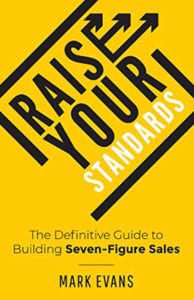
Raise Your Standards: The Definitive Guide to Building Seven-Figure Sales
I saw this study back a couple of years ago or so. I believe that about 90% of all the prospects that you meet, at any given time, aren’t ready to do business with you. Only 10% are ready to do business now. I was having this conversation with a client who was putting all of this weight into every single meeting. He was psyching himself out, to be honest with you. He’s trying to change almost his entire business model because 1 or 2 people have said no to him. We had this conversation, “Not everybody’s going to be ready that day to sign on the line that is dotted, especially the higher end and the higher level of service, widget or product that you provide.” You know this better than anyone, John, when selling luxury goods. Not everybody’s ready to drop six figures on something.
The next part of this is the actual selling and there are a lot of different steps to that. Do you reverse engineer it? Do you think to yourself before you even start building rapport, “How can I create a win-win?”
In creating a win-win and creating that type of scenario, you’ve got to have that in your mind. You’ve got to go in with some intention, but I caution salespeople to come in because I’ve been in situations where what the salesperson thinks I’m coming in for and the solution that I want are apart. We’re almost like train tracks where this person is going in one direction and I want to go somewhere else or we’re completely apart. I do a little reverse engineering, but honestly, I just want to be curious in sales conversations. That curiosity is a lost art and a lot of salespeople could benefit from being curious about the other person across the table, the company, the solution and where that company or person is trying to go.
I love a story, so I’m guessing you have a time where the buyer and the seller had a different track, then you had come in for something. Give people a story so that it locks in, whether you’re buying a car or matches.
I’ve made every mistake when it comes to sales, so I’ve got lots of horror stories if you will. I believe that there are about four types of people and I consider them to be either bowls. If you’re type A, you go get them and take no prisoners type of people. You’ve got your party people, that’s someone like me, energetic. We usually got cocktail parties. You’ve got your fact folks. Those are usually your CPAs and your engineers. The I’s are dotted, the T’s are crossed, and then they want to show you the math behind all of it. Your people pleasers are the type of individual that even if you eat their lunch right in front of them, they won’t say anything. They just want everybody to get along. How we interact with those types of people can be successful in a sales conversation.
[bctt tweet=”Sales is the lifeblood to all organizations, especially small and medium-sized businesses.” username=”John_Livesay”]
One story that comes to mind is I was trying to sell someone who is an electrical engineering manager. It’s almost the definitive individual when you think of fact folk. I saw his garage 1 year or 2 later and it was like you could eat off of it. It was impeccably clean. For the better part of a year as I tried to sell a high-end engineering solution to his company, I was constantly going up to this individual and there’s a way to build rapport and relationship. I was offering him tickets to a local sports team and front row seats. I offered him these great events where we’d have a table where he could network with fellow engineers and fellow people. I didn’t realize that and it didn’t dawn on me until a little bit later, that this person going out in public and trying to meet someone who is a complete stranger is a nightmare scenario for this guy and for this individual. He said, “Mark, I don’t want to be in a crowd. I don’t want to be around people socializing and networking. That’s a nightmare to me.” It was only when I said like, “Yeah.” Instead of trying to push these tickets on them, how about I just provide the facts and the figures that he’s asking for? As soon as I was able to do that, the business became a lot easier. We formed a great relationship.
You also talked about the fourth thing being follow-up and most people don’t do it. I know in my own career, it’s a big key to my success. How do you suggest people follow-up without being pesky?
A lot of people don’t want to be that “used car salesperson” where they feel like follow-up is something scary. They don’t want to be a pest. If you have a solution that’s providing value to someone, it’s in your best interest to follow-up with them. You can change their life if you follow-up and have a good consistent follow-up process. There’s a stat that I read that said something like 20% of salespeople are following up more than 3 or 4 times, whether by call or by email. That same study said that only 80% of all buyers will only respond to or buy something after the sixth or seventh connection attempt. We got this massive difference between salespeople that are stopping at three connects and people that are only buying at 5 or 6. John, for example, how many emails do you get in a general day?
I don’t even know anymore. It’s a lot. I can barely keep track.
[bctt tweet=”As a salesperson, your one voicemail or email is not going to make a difference. Don’t be afraid to follow up.” username=”John_Livesay”]
Probably north of 100, 150 or 200. The average executive gets over 250 emails a day. If you, as a salesperson, are out there thinking that your one voicemail or your one email is going to make a difference and reach out, that’s not going to happen. People are busy. They have lives, kids, spouses and parents that get sick or they get busy going on vacation. I always tell people like, “Don’t take it personally. It’s not up to you. It’s not about you, so don’t be afraid to follow up.”
You’re also a keynote speaker. Who’s your ideal audience?
I try to speak to companies that are looking to go to becoming sales-driven organizations. Maybe in the past, they’ve had a couple of salespeople or not professional sales organization and they want to be proactive when it comes to the sales process. That looks like a variety of different industries, whether it’s software as a service, professional services like CPAs, commercial real estate or realtors. It’s about those individuals and those entrepreneurs that want to grow their business, but they just don’t know how to get to that next level, especially when it comes to becoming sales-driven.
How did you come up with the title of your book, Raise Your Standards?
[bctt tweet=”If you have a solution that’s providing value to someone, it’s in your best interest to follow up with them.” username=”John_Livesay”]
I struggled with a title for a couple of weeks and nothing was coming up at all. I liked the Raise Your Standards part. I have a business coach. His name is Craig Ballantyne and he is out of Canada. He’s a New York Times bestselling author for 3 or 4 times and he’s a great guy. I was beating my head up against the wall for 3 or 4 weeks and within five minutes of one of our first conversations, he said, “It should be Raise Your Standards: The Definitive Guide to Building Seven-Figure Sales.” After explaining what I do and how I help a lot of sales companies, I loved it, but at the same time I was like, “Craig, how could you do this to me? You’ve figured this out right away.”
That’s what good people who have experienced do. I figured it out quickly, but it was 30 years of experience that allowed me to do that fast. We talked that your book can help people not feel pushy, sleazy or even difficult. Is there something in the book using these standards that takes it from feeling complicated or sleazy?
The core thesis of the book is that sales is changing. There’s the old way of selling and then there’s a new way of selling. John, I love your perspective on the new way of selling and you preach an intentional type of sales process. What I’m talking about is your personal interactions. Sales don’t have to be something that you have to do to somebody. You don’t have to use manipulation and kitschy techniques in order to close a sale. All you’ve got to do is ask some good questions, build some great rapport, and understand where that person is trying to go. If you have a solution, a product or a widget that can help them, then it’s your duty to make that pitch to make that ask of them. The sales approach and the sales genre that I’m trying to preach is that you don’t have to change and be the guru in front of a private jet or in front of a Lamborghini. You can work with someone else in order to get a win-win and to create a good long-lasting relationship.
Mark, what do you think makes a good question? We all know the difference between a close-ended question, yes or no or an open-ended question, but sometimes people feel awkward asking people a question. They don’t want to feel intrusive. How do you help people ask good questions?

New Sales Approach: Being in sales is like being a chef. You don’t just show up when people start coming in. There is an intentional approach and lots of preparation before you start reaching out to people.
When it comes to asking questions, that’s the core element of a good sales meeting and a good sales approach. The questions are where the magic happens. The level of depth, level of intention and level of thought that you put into your questions reflect on how you are approaching and how you are respecting your client or your prospective client. The framework that I like is thinking about what’s in it for the other person. Everybody’s tuned into the most, “What’s in it for me?” They’re trying to think of, “Where are they at currently? Where are they looking to go?” Those are the questions I tried because I firmly believed that if you can articulate the problem that your buyer or your prospect is having, better than even they can, they’re automatically going to think that you have some answer.
That’s the a-ha moment for many people. The better you can explain the problem, the better they think you have their solution, which in my mind requires some homework and some empathy. It’s not just, “It sounds like your problem is this,” but put some feeling behind it. “It must be frustrating to struggle with this particular problem and never figure out how to solve it or the same thing keeps happening and all that.” That is what makes people think, “You get me.” You have something where you say, “The first objection is not a real objection.” That intrigued me, Mark. Let’s say a couple goes into therapy and they said, “We’re here because we’re having trouble with our sex life.” The therapist is like, “That’s what you think is the problem, but there’s something underneath that.” How does that work in the sales world where you say, “Your first objection is not the real one.”
I had not heard that part but I liked that. That’s true and it’s an a-ha moment for me. John, if you’ve ever gone into a store even if you’re busy and even if you’re looking for someone and that helpful clerk comes scampering around and says, “Can I help you with anything?” Most people’s first answer is, “No, I’m just browsing. I’m just looking.” People naturally love to buy, but they don’t like being sold to. “I want to buy a new car. I love the thought and the thrill of driving off the lot, but I don’t like being sold at all.” That first objection often is real, whether it’s that therapy case. We put up these guards and barriers because we don’t want to let people in. We don’t want to be vulnerable and answer some questions. You’ve got to break through that.
Are you considered a Millennial or not?
I still fly into that, but I watch a lot of old movies and old books. I’m an old soul.
You’re what’s considered a digital native which is someone who grew up with computers as opposed to older people who had to learn it. You have whole expertise around how to stand out using video email. A lot of people don’t even know you can do it and they don’t even know what video to put in an email. Because this is your digital native, can you give us some tips on that?
One tactical that anybody who’s out there that is cold prospecting or trying to book appointments or book meetings with about anybody can benefit from is through video email. The average executive gets, let’s say 200 plus emails a day. Most of those are all text-based. One way I’ve found and my clients have found that’s effective in standing out in the inbox is a video email. The system that I use is called Vidyard. There’s a paid version and a free version. I use the free version, to be honest with you. I record a simple and easy video that can be converted into a GIF of me waving or me holding something up where I hold up my book and say, “John, it’s Mark. I’m the author of Raise Your Standards. I’d like to talk to you about X, Y, Z. We’d love to do this. I’d love to make an introduction.”
That little video stands out in people’s inboxes. Every time I send this or every time one of my clients starts using this practice, we see their conversion rates immediately jump. We see conversations come out of it. I use this to schedule a bunch of different appointments at a conference that I was attending, a big industry event. I was reaching out to different CEOs and executives and I became almost like this little mini-celebrity at these events. People are like, “I got your video. I loved it. It was amazing.” I’m still seeing the puddling effects or the ripple effects from that.
Give me the name of the service that you use.
There are two. The first is called Vidyard and the second one is a Wistia product called Soapbox.
Do people know that it’s a video in the email with the subject line somehow or you still got to get them to click to see the video?
They’ll see it when the actual video uploads. You can load it directly into your email, especially if you have Gmail or Outlook. In the email itself, there’s a little thumbnail like you would see any thumbnail. It almost looks like a YouTube box and you can turn that into a GIF. There’s motion like I’ll wave in it, I’ll move around or I’ll hold a sign up of that other person’s name. It will say like, “John, watch this video.” People naturally want to click. It’s clever. People can’t help but click on it.
What can sales teams learn from sports teams since you’ve written about this?
There are a ton that they can go with. Let’s start with the CEO, the entrepreneur who’s the head coach. I see a lot of CEOs who are the head coach and also trying to be the quarterback, the linemen, the person popping popcorn and the guy parking cars out in the parking lot. These small and medium-sized business owners are trying to be everything for everybody. The first thing is to start getting a team. Get your star performers and also start getting a good set of other coaches that can help you level up the entire team.
The book again is called Raise Your Standards. Any last thoughts or enthusiastic tidbits you want to leave us with?
In the end, sales are one of the greatest crews you possibly can be in. It doesn’t have to be something that’s manipulative. It can be a great career and at its core, it’s all about helping someone else.
Thanks for being with us, Mark.
John, thanks for having me. I appreciate it.
Important Links
- Raise Your Standards: The Definitive Guide to Building Seven-Figure Sales
- Vidyard
- Soapbox
- MarkPatrickEvans.com
- Vidyard.com
- Better Selling Through Storytelling Method Online Course
Wanna Host Your Own Podcast?
Click here to see how my friends at Podetize can help
Purchase John’s new book
John Livesay, The Pitch Whisperer
Share The Show
Did you enjoy the show? I’d love it if you subscribed today and left us a 5-star review!
- Click this link
- Click on the ‘Subscribe’ button below the artwork
- Go to the ‘Ratings and Reviews’ section
- Click on ‘Write a Review’
Love the show? Subscribe, rate, review, and share!
Join The Successful Pitch community today:
- JohnLivesay.com
- John Livesay Facebook
- John Livesay Twitter
- John Livesay LinkedIn
- John Livesay YouTube
The Way Of The Quiet Warrior with Tom Dutta
Posted by John Livesay in podcast | 0 comments


Episode Summary
Joe Campbell once said that we hear this call to adventure. Many of us ignore it, but some of us answer the call. That’s exactly what Tom Dutta did. He answered the call and went through an eight to ten-year journey going through lot of things in his career and in personal life, and came back transformed. He is now a senior business leader, speaker, and international number one bestselling author with more than 30 years of experience helping build and grow companies in Canada and the USA. Tom shares the catalyst behind writing his book, The Way Of The Quiet Warrior. Explaining in detail each of the four different personalities, he tackles how each salesperson can discover greatness and shares his insight on how you can develop your strength and eliminate things that destroy your relationship with people.
—
Listen To The Episode Here
The Way Of The Quiet Warrior with Tom Dutta
Our guest is Tom Dutta, who is the Founder and CEO of his own company. He’s a senior business leader, speaker, and the international number one best-selling author of a book called The Way of the Quiet Warrior. He brings all kinds of leadership experience from financial services and not-for-profit and health sectors and his career includes senior roles in many of Canada’s prestigious companies. He has also been the host of his own Quiet Warrior internet radio show. He received the William Shatner Moving America Forward Awards for his TV show and the 2018 Courage to Come Back Certificate of Nomination for his incredible story. His purpose is, “To Unleash the Greatness in Others.” Tom, welcome to the show.
John, it’s a pleasure to be here.
I always like to ask my guests to take us back to their own story of origin. You can go back to childhood, high school, college or whatever was your big a-ha moments of I want to become a quiet warrior. What was the catalyst for that?
I’ve written about this in my book, The Way of the Quiet Warrior. It was an eight to ten-year journey behind that to figure out my story. Let me take you back. Let me, first of all, say that when I was asked in the past to talk about myself, I would say, “I’m a corporate executive. I build and grow companies. You can call me a hired gun. I’ve worked in five sectors across both sides of the border.” I talk like that. We finally did some self-development and started realizing I had a BS story that I was telling. Now I say this. Let me take you back. I was born and raised on a military base and in the United Kingdom. My father was a commanding officer in the military and then we immigrated to Canada. My parents are both from the Fiji Islands. My grandparents are from India. I didn’t have a childhood life maybe you or many others did. My home was full of violence. My father was a sloppy drunk. He became a violent man and a command and control style person.
[bctt tweet=”Get a check-up from the neck up.” username=”John_Livesay”]
He never hid many adulterous affairs in the home. The things I saw and learned when I was a kid, I don’t talk about much because most people couldn’t handle it. The good news is right above my teen years, I decided to leave when the home fell apart and my parents divorced. I lost touch with the family. I went out to Corporate America and there I was. I had mentors at the time and said, “Tom, you should be in business.” I did. I climbed the corporate ladder. I was a manager at the age of 21, a CEO by 31 and I did many things. I took the rules that I learned in my childhood and started applying that into the leadership of other people and into my sales work. I started falling into what I called the leadership graveyard. I had difficulty relating and communicating with people, destroying relationships, sometimes maybe losing the odd job.
It was that moment there were three major things that happened in my life in 2007. One was the loss of my wife’s mom, which is a bigger story. Two was we were victims of a Ponzi scheme. We woke up one day, my wife, Anna and I, we lost everything, our home and all the assets we had worked hard for many years. The third thing was the loss of my job. I was a CEO in a corporate company that was international and they reorganized. I knew it was recombining and my job was eliminated. We woke up in July in 2007 with this desperation and I had so much anxiety and pain inside. As Joe Campbell says, “You’ve got to feel that pain, get angry and decide it’s time to do something different.” In 2007, I went on a journey. I didn’t know where I was going and where I was headed. What do I do with this story and the backstory? That’s what led to creating my company and the book and all the things.
Most people see someone successful and they don’t realize the challenges they had at a young age to supersede that. What was the catalyst for wanting to write the book? Firsthand, writing a book is a big endeavor and it requires a lot of commitment and focus. What made you want to write The Way of the Quiet Warrior?
This might sound odd as an author and a fellow author, but I never read books. When I grew up as a kid, my eyes would bounce on a page. I couldn’t get past it. Now I’m an audiobook listener. I wanted to write a book, but what got in the way was fear. I didn’t know how to do it. I had heard horror stories. When all those things happened in my life, I went on this ten-year journey as a seeker. As Joe Campbell says, “We hear this call to adventure. Many of us ignore it. Some of us answer the call.” I answered it. I probably should have answered that call to go seeking when I was a kid but I didn’t. Through that, I did many crazy things in my career and my personal life, including learning. I came back transformed as somebody different. I was the hired gun, “Tommy Gun,” they used to call me and I came back as a quiet warrior. I’ll tell you how the book came together and try to tell this succinctly.
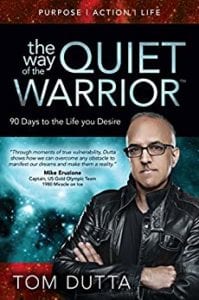
The Way of the Quiet Warrior: 90 Days to the Life You Desire
I went to Holland, Michigan. I got on an airplane. I was flat broke. This was in 2012. I traveled to see a fellow named John. He said, “I’m going to spend the day with you.” He put me in a room with a whiteboard and he took every ounce of wisdom out of my head. Before that session, which was to figure out what my business model might look like, we had dinner. He said, “What are you doing?” I said, “I’m a leader, a trainer and I’ve built companies.” He said, “What do you really do?” I said, “My mom used to say that people want to be around me. They tell me things. They want to talk to me. I quietly go on my way as a warrior and I help people. I help them see the limitations and greatness in themselves through my experiences.” He snapped his finger. He says, “I don’t know if that’s the title of your first book, but Quiet Warrior might be something.” I left that session going, “What do I do next?”
One of the things you talked about in The Way of the Quiet Warrior is that vulnerability is an undervalued virtue. Can you talk about that?
In my world, I teach some science around personalities. I know what you might be from listening to you, but there are two out of four personalities that don’t usually show vulnerability. Vulnerability isn’t throwing up or getting Kleenex and crying. Vulnerability is a strength. In the high-powered world of business, what I’ve learned through working with others and being a top leader and also being a salesperson, is that some people are wired not to show vulnerability. In other words, there’s no emotion in what they do. I listened to your talk and had you help me understand that the path to getting people to trust and follow you and maybe do something different comes through the heart, comes through emotion.
The last thing I’ll say on that is I’m a big fan of a thought leader named Brené Brown. She did a TED Talk on vulnerability and shame and this is where I learned this. She said, “When you tell your story, you need to tell it to the tribe of people that are worthy of hearing it.” Not everybody is and when you tell them, you get to write the next chapter your way. Being vulnerable can be as simple as posting a picture on Facebook hugging your dogs. Where standing up as a CEO, talking about your vision and talking about when you started the company, your partner stole money from you and you almost went bankrupt. You have to overcome this bout of depression and infuse what you’re doing with your passion for being able to come back and create what you’ve got.
[bctt tweet=”Vulnerability is an underrated virtue.” username=”John_Livesay”]
You alluded there are four different kinds of personalities. Can you tell us what those four are? I think people would find that interesting.
Let me ask you a question to help me out. I ask this in my workshops. What are the three things you can think of that you need to have great relationships with other people? Can you come up with one?
The first one is trust.
This is what I want you to know and I tell people, “I don’t want you to believe what I’m saying. I want to stretch you out of your comfort zone.” I teach and I believe that there are three things you need. Number one is to have an intact personality. In other words, understand your strengths and limitations. In that first one, comes trust. Number two is passion. Find out what your passion is. There’s a great TED Talk done on passion that I watched and it says that most people when they discovered their passion, which comes from the early roots in your life when you’re a child usually, they don’t follow it because sometimes it doesn’t pay the bill. The third one is character. Character is big and I believe that salespeople will be rated more on your character versus your skills.

The Quiet Warrior: Vulnerability is a strength. Some people are wired to show vulnerability.
There are four types of personalities in understanding who you are. I’m going to add colors to these because that’s the way I teach it. The first type is 25% of the world is what we call red people. The second type is 37% are blue, 25% are white and 25% are yellow. Let me build this out a bit. I’m not going to talk about behavior because most of the personality science in the world teach the behavior. If you have an iceberg, you look above the water 20%, that’s what most psychologists teach us is what are you based on your behavior. I found a model based on Dr. Taylor Hartman, and he’s a friend of mine that talks about what’s below the waterline or the why behind the behavior. Wouldn’t it be powerful as a salesperson to understand why your prospect is doing what they’re doing or as a salesperson to understand maybe why you’re doing what you’re doing in your pitch?
The last thing I’ll say on this piece about the four personality types is I’ll tell you the motive. The red personality has a motive of power. They wake up to get from A to B and that’s what drives them. They’re visionary and natural leaders. The blue personality, the 37%, the motive is intimacy. Why I live is to create trusting relationships with other people. My top two natural talents might be quality and service, but here’s the thing. When I communicate, I’m verbose because I infuse my language with emotions. When I write my wife a text message, I can’t fit it on one screen but when she replies to me, it’s usually like, “Okay,” because she’s a red. The third one is white, the motive is peace. The white would be my daughter in this case. It would be lawyers and accountants and maybe doctors or engineers. The motive of peace is nothing fancy. It’s like, “Can we all get along?” If you close your eyes and you visualize puffy white clouds.
I visualize a white dove. That’s easy to remember for peace.
The two top gifts that I know about whites are their clarity and voice of reason. The last one is what I’ll call the yellow people and their motive is fun. The easiest way to explain that is yellows live in the moment. Asking a yellow, “What are you going to do tomorrow?” is painful.
[bctt tweet=”You got to feel that pain, get angry, and decide that it’s time to do something different.” username=”John_Livesay”]
What percentage of people is yellow?
It’s about 25%. Their natural talents, the top two are optimism and enthusiasm. I’m going to make a bold statement here to finish on these four types and I can delve into more as we go along. What if I was to say to you that when you’re making a pitch, whether it’s face-to-face or a small group of whatever you’re presenting as a salesperson, those chances are you’re addressing only 25% of the room? Mainly when we’re born, we only speak what I call one language. We have our own motive. Personality, I’m blue, I think you might be red or blue. That’s what we come into the world with. It never changes, but my mom and dad taught us. I have two brothers, an older brother and younger. They talked to us all the same way and we learned as kids to talk to everybody the same way. I believe sales training doesn’t always address the differences. We go out and we sell to people as if they’re all the same color.
It’s almost for me the visual of all that is you need to talk to all the colors of the rainbow in a way. When you described it that way, if you’re a red and you’re talking to red all day long, you’re missing 75% of the rest of the population. If I heard you correctly, the four colors are evenly distributed across the population. Is that correct? Did you say there are more blues than others?
I’ll give you the numbers again. Red 25%, blue 37% and then white and yellow are usually split. The thing I wanted to say is when I do my training workshops to an executive team, which is a CEO and their VPs. In all the experience I’ve done with hundreds of workshops, if you have ten of these people in a room, you’ll usually find a sea of reds in a leadership team at that level. You’ll find some blue. It’s rare to find a yellow, but you might find the odd one. You have a couple of whites in there, but that’s the distribution. I’ve gone in and talked to sales teams that are completely structured wrong because they’ve got the wrong personalities in the sales roles.

The Quiet Warrior: A lot of sales teams are completely structured wrong because they’ve got the wrong personalities in the sales roles.
If you find yourself being a blue personality, you’re in verbal and you like connection and intimacy, and you have to call on someone who’s red, what are your tips?
I’ll give you the quick dos and don’ts of reds. In developing a positive connection with red, let’s say you’re Mr. Red. What I want to do is I want to be prepared with facts and figures. I want to present the material in a logical fashion. I want to be direct, brief and specific in the conversation. What I don’t want to do is I don’t want to expect you to be emotional and vulnerable. I also don’t want to be slow and indecisive. Here’s the thing and I’d make this statement boldly that I believe 50% on the sales are left on the table with reds because we don’t get that fact that they’re ready to make a decision in a day. You don’t go in with a PowerPoint that’s twenty slides with all the detail. They’re bottom-line driven. They are selfish people, “What’s in it for me? How’s this going to make my company better? Is there a better one out there?” If you say to a red, “Were you prepared to make a decision?” They are.
I remember coaching salespeople and I said, “It’s about taking people on a journey,” and in this particular case, they were showing all the different bells and whistles of something. The client said, “I’ll do it.” He said, “I have two other features to show you.” I’m like, “When they say yes, stop talking.”
I always like to say that if you try to be too emotional with a red, it’s like sticking an ice pick in your eye. When I went back to becoming a character, you mentioned that I believe all salespeople are going to be successful more on their character than skills. To become a character, there are two things I believe that I teach that you need to do. Number one is to develop a strength that’s not innate in your personality. In other words, if you are blue, I’m a blue and I’m not always able to be assertive. In order to be assertive, which maybe means going for the close in a deal, I become character. People notice I should sing from the treetops and celebrate because becoming character is extremely hard.
[bctt tweet=”Have an intact personality. Understand your strengths and limitations.” username=”John_Livesay”]
The second part though is eliminating. I’m not talking about just eliminate, I’m talking about, “Knock it off.” The things that are showing up in the second part of your personality, eliminate things that are destroying relationships with people. For example, going back to reds. One of the limitations of a red personality might be arrogance and insensitivity. If I’m in a sales presentation and that ugly limitation comes out, I’m breaking rapport right away and I’m destroying a relationship. I may never get to the top of Everest. I might sit at a base camp wishing I could get to the top. We need to understand our strengths and limitations. That’s what I mean by an intact personality. We need to develop character at salespeople or as people who are pitching others. That’s where I believe most of the salespeople fail because they don’t understand themselves or how to communicate with the other colors.
One of the things you talk about in your book is 90 days to get a better life. What does that look like?
Here’s the interesting thing. If you can take ten years of a journey like I went on and turn it into 90 days and get to that same place, wouldn’t it be cool? What I did is I developed The Way of The Quiet Warrior. I own the IP and it’s a six-phase process that is the journey I went on to go from wondering why I’m not happy? Why am I not overly successful anymore to that life I desire? I’ll tell you the quick phases. They’re on my website, they’re in the book. Phase one is called the self. I start where nobody else generally wants to start, which is understanding your strengths and limitations. Going inside and looking at your subconscious mind, looking at what’s inside you and how you’re wired.
Once you’ve discovered the self, strengths, limitations, natural talents and all of that, then phase two is the vision. There are lots of thought leaders and teachers, but developing a vision of what the future looks like, what you want to get to and infusing that with passion and with a desire of something you want. Most people don’t know what that is because they haven’t done the self-work. I call phase three, the path. That’s a combination of three things: body, mind, and soul. It needs some work on getting the body physically into shape and understanding to get a checkup from the neck up. I’ve been an advocate of mental health for decades and I can tell you that every salesperson at a higher level, every senior leader will experience a mental health issue in their lifetime. It happens.

The Quiet Warrior: Every senior leader will experience a mental health issue in their lifetime.
Let’s double click on that because we’ve seen suicide and depression. All those things are what people think of when they say mental health issues, but there are other kinds of mental health issues as well. It’s not quite that extreme.
Basically, our brains are an organ of the body. I’m going to tell you that I went in and got myself assessed to look at how unhealthy my brain was working. There’s so much to the brain. There’s the conscious mind, which you know about, which is our current reality or five senses. There’s the subconscious hard drive which stores everything that we take in through all our senses. It’s got billions of bits of data and for a salesperson, you might be in interaction with somebody talking to them or pitching and they appear to be your abusive father. The brain says that thing looks like my dad who used to hit me and beat me. Even understanding in psychology what’s wired into our hard drive, that’s all part of mental health. We also talk about the ability to understand that you can’t create success with a negative thought. Understanding how to control our thoughts and stay focused on the part of the brain that’s positive, that’s part of a mental health picture. The biggest thing is that people think that you have suicide and depression. There are all sorts of parts of mental health.
I’ve spent several years as a volunteer, chair of a board for a mental health organization. I’ve learned that there are many things within that umbrella, personalities, and disorders, in the colors that I teach. We come across sometimes people who are what I call unhealthy personalities. If you’re in a relationship with somebody and you’re always living in the limitations of your personality, then we call you unhealthy or I call you a sick personality. That’s part of mental health. I couldn’t figure all that out.
Anxiety is one of the ones I struggle with. I’ve had generalized anxiety since I was a kid. The thing I want you to know is that everybody has some connection to mental health. I should call it mental wellness. Mental wellness is a nicer way to put it, but you have a responsibility and everybody reading this to understand that why don’t we go to a doctor and get blood tests to look at our lipids or our blood levels, blood pressure. Why don’t we go in and get a checkup from the neck up to look at the health of our brain and how we’re functioning?
Tom, the time goes fast with someone like you who’s got many colors to share with us and textures. What’s one thing you want to leave the audience with?
I want to tell you about a survey that was done in Canada. It’s a Canadian survey of 90-year-olds. They asked those 90-year-olds, “At this point in your life, what are your three biggest regrets?” These were the top three after all the data comes in. The number one was they didn’t leave a big enough legacy. Number two was they didn’t take enough risk and number three was they didn’t reflect enough. I want to encourage everyone to take the time to reflect, what’s the legacy that you’re creating and what’s your passion in life? What are you risking to be better, to go down the rabbit hole and do something different to be a better person? How are you giving back? As you reflect on what you’ve done in your life so far, how does that challenge you as you go forward to do something different for the world?
I love it especially the concept of not taking enough time to reflect so you can have a legacy and not being afraid of risk. The book is The Way of the Quiet Warrior. Tom, how else can people reach you?
My website is Kreat.ca. You can find the media page, the book page and about my services. Even the workshop I was talking about. There is a link to emailing me directly. I’ll give my private phone out, (604) 764-1990. I’m always happy to connect with people directly. The last part of the website on the book page is my media kit. In that media kit is all about my bodywork, my radio show, my TV show and the work I’m doing with the book. Thank you, John.
Thank you, Tom.
Links Mentioned:
- Tom Dutta
- The Way of the Quiet Warrior
- Quiet Warrior – internet radio show
- Brené Brown
- Dr. Taylor Hartman
- Media page
- Book page
- Media Kit
- https://Kreat.ca/
- https://www.Amazon.com/Way-Quiet-Warrior-Desire-Purpose/DP/1683502655
Wanna Host Your Own Podcast?
Click here to see how my friends at Brandcasting You can help
Get your FREE Sneak Peek of John’s new book Better Selling Through Storytelling
John Livesay, The Pitch Whisperer
Share The Show
Did you enjoy the show? I’d love it if you subscribed today and left us a 5-star review!
-
- Click this link
- Click on the ‘Subscribe’ button below the artwork
- Go to the ‘Ratings and Reviews’ section
- Click on ‘Write a Review’