

Sell Without Selling Out With Andy Paul
Posted by John Livesay in podcast | 0 comments

Sales isn’t a simple job; it takes a lot of skill to earn a buyer’s trust. So how do you sell without selling out? How do you earn that trust? John Livesay dives into sales with help from Andy Paul. With over three decades of experience under his belt, Andy gives us a glimpse at his sales insights. From building trust and communication to training and avoiding persuasion, this episode is one you can’t miss.
—
Listen to the podcast here
Sell Without Selling Out With Andy Paul
Our guest is Andy Paul, the author of Sell Without Selling Out. He talks about how influence rules and persuasion drools and that you are either a sales boss that is commanding people or a sales leader that inspires them. Find out how to be a learn-it-all instead of a know-it-all. Enjoy the episode.
—
Our guest on the show is Andy Paul, who is a leading global sales expert. He has over 180,000 people following his daily posts on LinkedIn. He is the host of the top-rated sales podcast Sales Enablement with Andy Paul, with more than over 1,000 episodes and millions of downloads. His podcast is a go-to resource for sales leaders and producers. He is the author of the Amazon best-selling book Sell Without Selling Out: A Guide to Success on Your Own Terms. He has also written other books and he is the Founder of Zero-Time Selling, which is an advisory firm. Prior to that, he had a successful sales career himself in tech startups, where he sold over $600 million of complex systems and services. Andy, welcome to the show.
John, thanks for having me.
Let’s go back in time to when you knew you wanted to get into sales. Maybe you had a paper out or you sold something and you went, “I am good at this. This might be my career.”
I did not know I wanted to be in sales after I had been in it for a couple of years. Up until that, I was not too sure that I wanted to be in sales. Like a lot of people, I fell into sales. I graduated from university and did not have any concrete plans about what I wanted to do. I worked at the college I graduated from during the summer. Fall came around and my parents were urging me to get more serious about things. I went to the career placement center around campus and the jobs that were available were all the major tech companies. They were trying to recruit people into what turned out to be sales. Interestingly, none of them called it sales positions. They are all marketing management training programs, but they were nothing about marketing. They are all about sales.
Marketing people do not have quotas. That is the big distinction I tell people.
It is this whole idea that sales is dirty and, “Who wants to be a salesperson?” It was evident even then. I fell into it and as I described in my book, I was not too comfortable with what I was being taught and how I was being taught how to sell. I reached the point about year two where it started making sense to me and I started to describe or define a way to sell that worked for me. I could start to see a future in it at that point.
[bctt tweet=”A sales boss commands, and a sales leader inspires. ” username=”John_Livesay”]
You and I both have a similar background in that we sold multimillion-dollar tech pieces of equipment. Tell us about that. What was that like in the ‘90s?
I started off selling roomfuls of computer equipment back in the day. They take a lot of space and a fraction of the computing power of our phones these days that major corporations are running their companies on. I swerved into the personal computer industry for a while and worked at Apple in the early days of Apple and a couple of others what we thought was going to be an interesting startup. I worked for a company that made the first battery-powered notebook computer. That was a glorious failure.
Somehow ended up, by default, I was looking for a job after the last company had been with that imploded. I saw a news article in Fortune Magazine about a company that was revolutionizing the satellite communications business with very small aperture satellite dishes for data communications. I cold-called them. That was a Friday. I called them on Monday. I did not have a job in sales. I was an account manager as a customer success person for about the first six months before I moved back over into sales. That was my introduction to the enterprise of selling large complex systems.
What would you say was your biggest challenge as a salesperson? Was it handling rejection, overcoming objections or getting the appointment? What was one challenge that you thought and you saw all the people struggling with?
I spent a big chunk of time in the satellite communications business and the wireless business and did not have a technical background. I was selling to very technical customers.
It was a different language, was it not?
For me, the challenge was internal sales. How did I rally people to support me and help make up for my deficits in a way that was still valuable for the buyer? I got pretty good at that after a while. It was matching the internal selling as well as the external selling. As in any startup, there are tons of competing priorities and people are ultra-busy doing multiple things and it is like, “How do I get this person to invest some of their time and attention in what is important to me?” That was the key for me to be able to rally support internally for big deals I was working on.
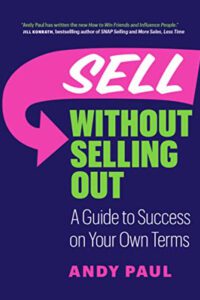
Sell Without Selling Out: A Guide to Success on Your Own Terms
How did you do that? Do you have any tips for someone who is thinking, “That sounds like my challenge, but I do not know where to start.”?
It is the same challenge you have with customers. I write about it in my book. You have to be able to connect with people on an authentic human level. You need to be able to use your curiosity and understand the most important things to them and how you can help them achieve that by working with you.
It is fascinating because you had said originally that people were like, “I am not so sure you will be good in sales because you are an introvert and an intellectual.” There are a lot of people who might identify as, “I am not extroverted. I cannot be the life of the party and entertain clients nonstop. I should not pursue this career.”
As I tell people that in the course of the first 24 years of my career when I was outselling the large 2/3 of billion dollars, I had dinner half a dozen times with clients. The opportunity presented itself. I was all over the world selling. For the most part, I had great relationships with my clients, but we did not feel like we had to have dinner with each other. It was not going to cement the relationship in a way that we were not doing in the office when we were talking with each other because their ability to trust me was based on what I was doing in the context of work more than anything else. Once I established that personal bond and rapport, I had to prove it every time I interacted with them.
How did you come up with the title of your book, Selling Without Selling Out? Do you feel like a lot of people feel like they do have to sell out in order to be successful?
They do. The simplest way to consider selling out is when you put your interests ahead of those of your customers. That is an external customer buying something from you or your internal customer. Whether you are working as part of a team or collaborating with people on things when you put yourself first, you start to sell out.
Do you have a story or example of that?
[bctt tweet=”Be a learn it all, not a know it all.” username=”John_Livesay”]
Think about it from a salesperson’s perspective. You go out at the start of the month or at some point when you start a relationship with a potential customer or client. You convince them through your actions that you are there to help them. They think you are there to help them, but then you get to that last week of the month and your boss says, “We need to bring this order in order to hit our month.” Early in my career, I was forced to go out and try to accelerate decisions that buyers were not prepared to make.
You start offering discounts and other inducements, delayed payment terms, or whatever the company does. In the mind of the buyer, suddenly, you went from being somebody that is there to help them to be purely transactional. It does not mean they will not buy from you, but they are under no illusion anymore that you are there to help them.
Once that trust is broken, it is almost impossible to get it back.
It is very difficult to get it back. They will stick with you as long as you are handy and convenient for them, but as soon as something better comes along, somebody they trust more or a product that is roughly equivalent to yours, odds are pretty high that you are going to be gone.
You talk about the difference between being a sales leader versus a sales boss. Can you give us that distinction?
A conversation that I had on my show with Stephen M.R. Covey, a great author who wrote the Speed of Trust. He has got a new book out called Trust and Inspire. It is about leadership modes. As he draws, the contrast is there are two dominant modes of leadership. There is the command and control, which we are all very familiar with because we have all been victims of it and then there is trust and inspire. That sums up the difference.
As a sales boss, it is all about command and control. Conformity and compliance are most important to me. Trust and inspire is, as a sales leader, you are going to sell to your person, “Here is your patch and territory. This could be your list of accounts of geographic territory.” I am going to support you the best way I can, but you decide the best way to get this business done in your territory. How can I help you achieve that? Trust people to continue to develop, expand, grow and learn with your support. The other is, “I know best. Do what I want you to do.”
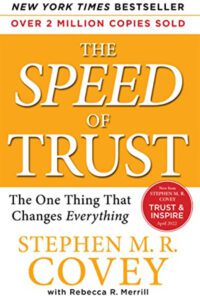
Speed of Trust: The One Thing That Changes Everything
One of the things both of you and I witnessed and experienced is a top producer is getting promoted into sales leadership without any real training and failing miserably as a leader versus a salesperson because they are different skills. Can you describe what someone should do to prepare to make that transition if they are not getting the training internally?
From my experience, I did a couple of things. I read what I could that was available about managing and leadership. I did not hesitate to ask people for guidance and mentors, internally, people that were more experienced in the role to give me some perspective on what they were doing. I asked the people that I was leading how I was doing.
It is part of your personality and it is not part of most people’s personality, the humbleness to ask for feedback, as opposed to, “I am going to pretend like I have it all together even though I had never done this before.” It is a completely different mindset to approach something with. In order to get feedback from people you are managing and/or your customers, you have to be willing to listen and not think you have all the answers all the time.
This is what I started pointing out in the book in terms of the contrast between a sales boss and a sales leader. One is a know-it-all versus one that is a learn-it-all. That is what you want to be. You want to be a learn-it-all. The humility you talk about is not just being modest and self-effacing, but it is about being intellectually humble. It is acknowledged that you do not know everything.
We put sales leaders, especially people who do not work in big companies that do not know very formal training programs and development programs, which the majority of companies out there put in tough positions. We promote them and then we do not enable them with the tools, the knowledge, and the training to have a better idea about what they are doing.
The thing that is ironic about that is that if you run polls, you look at the polls, surveys and research data, who is the single most influential in the life of an up-and-coming salesperson? It is their immediate manager. The people we should be investing in the most, we do not. According to LinkedIn, we spent roughly about $15 billion a year on sales training in the United States, of which 10% is spent on sales leaders and sales managers.
At least half of it should not be spent on sales managers. If they are the people having the most influence on the development of individual sellers, we cannot invest in them enough. Stop providing that training to sellers because they are going to get the guidance and knowledge they need from watching their sales managers.
[bctt tweet=”We are the sum of all the influences that are out there—our peers, our managers, the things we read, and the other information we absorb.” username=”John_Livesay”]
One of the things you talk about is people who say, “Let’s model what the top producer is doing. Let’s all march to that drum and say exactly what they are saying and try to be a clone.” You are saying, “That is the kiss of death. It is counterproductive.”
It is not like I was the best salesperson in the world, but no one sold like me because it was me. No one sells it like you. People did it better. That is great. I tried to learn from those people, but I had my own unique way of doing it. That has developed because we are the sum total of all the influences that are out there, our peers, our managers, the things we read, and the other information we absorb.
To force everybody into a single niche about how to sell is self-defeating. You have frameworks, you set up and you have expectations, “This is how we conduct business,” but within that framework, as a sales manager, I want to give you the freedom and the flexibility to go experiment and find out things that will work for you based on your unique strengths as a human being.
If you are going on a sales call with a boss and that boss is hyper-critical and expects you to be perfect, you do not have any room for failure trying something on your own, and then you are shutting down someone’s creativity and authenticity.
Selling is one of the most creative professions you can be in. To me, that was the one thing that has kept me in this, that in every situation, your approach is different. The way you present the solution and how you interact with the people will be necessarily different because they are also different if they are buying the same product. It is a fresh problem to solve, not solving the same problem over and over again.
I think of that as a doctor or a dentist. I thought, “How do they not get bored doing the same surgeries and over again?” I realized, much like a salesperson, in every patient and every situation, “We are putting a crown in your mouth,” or “We are removing your appendix.” Whatever it is, the outcome is the same, but there are so many unique things that require you to think, “I have never had to do it quite this way before.”
There are no small things to your customer. To your point, this is not to a patient. There are no small things when it comes to people’s health. As a seller, there are no small things in the buyer’s mind. If you try to serve to glom over those, assuming that they are like everybody else, you damage that relationship and the trust you have built.
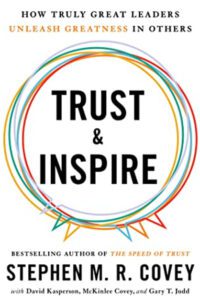
Trust and Inspire: How Truly Great Leaders Unleash Greatness in Others
One of the biggest reasons people are buying your book is that you have provided a guide on how to be successful on their own terms without having to fit into this mold of, “You have to be an extrovert. You have to do XYZ. You have to play golf.” All those stereotypical things of what salespeople used to have to do or would do and it is like, “I know what my terms are. This is how I entertain clients or not. This is how I sell. This is how I build rapport that might be different than you.”
It is becoming more essential because we are becoming more diverse in the people we are recruiting into sales. We are not doing enough. We could do more, but they all have different lived experiences. The perspectives people bring are what we need. We need more different perspectives. There is no one way.
You have so many great soundbites. One of my favorites is, “Influence rules, persuasion drools.” The visual on that is great. Tell us what you mean. A lot of people think, “I am going into sales. I am going to persuade you to buy this for this price.”
If you are persuasion-driven, you are putting your own interest ahead of those of the buyers. By definition, that is what you are trying to do. You are trying to persuade somebody to buy your product irrespective of their requirements, their needs and the things they want to achieve because you are in that mode where you are selling hammers and everybody is the nail. Even when you look at the definition of the word persuasion, it talks about prevailing or trying to prevail through force. In the wrong hands, persuasion is meant to be coercive and a little bit manipulative. Unfortunately, a lot of sellers are the wrong hands. That is not how buyers want to deal with the salesperson.
This is a big a-ha moment. I want to take a pause, circle it, underline it and highlight it. I am not in the persuasion business. Nothing against all the wonderful books about how to be persuasive, but let’s reshift this and start reframing how we think of ourselves.
Influence is all about having an effect on the thoughts and actions of others without the apparent use of force. That is what influence is and that is what position we are trying to get into. We are trying to build this connection with a buyer built on some level of trust that when the trust exists, they open up to us. When we bring our curiosity to bear, they will share information with us, perhaps at a deeper level than they would with someone where that trust and connection did not exist. Suddenly, we have more insight into the most important things to them in terms of the challenges they face and the outcomes they are trying to achieve by addressing those challenges.
When we have that understanding, we can work with the buyer to help shape this vision of success of what it will be like to get the value from the product or service you are selling. If you reach that point, that is something you do collaboratively with the buyer. It is not something you impose on them by trying to persuade them about it.
[bctt tweet=”Humility is not just being modest and self-effacing, but it is about being intellectually humble. It is acknowledging that you do not know everything.” username=”John_Livesay”]
I love that your definition of persuasion is, “I know better than you. I am right. You are wrong.” That is selling out. That is what this book is helping people not do. The opposite is the concept of selling which I have never heard of before. Therefore, there are no assumptions that you know more than they do or even vice versa. Think of it in terms of being a copilot with the buyer and this concept of, “Let’s make sure people feel heard and understood first before we jump into what we think they need.” It’s like when you go to a therapist, sometimes there is something called the presenting problem, which is a couple comes in and they say, “Our love life is not where we want it. That is why we are here.”
The therapist will go, “That is the presenting problem. I bet there are some reasons behind that.” As salespeople, we need to start thinking of ourselves as, “Whatever they tell you upfront, this is why we are changing, looking, upgrading or whatever the reason is for doing a proposal in the first place.” There might be other reasons they are unwilling to share yet, or maybe they do not even know yet. If you can help them discover that, then your trust factor has zoomed up.
Sometimes sellers are a little taken aback when I say this. I said, “You cannot take anything at face value that the buyer tells you.” They are not lying to you. They are not, not telling you the truth, but there is always more to it. If you accept what they tell you, you will hop down one path that is not the path the buyer wants to go down.
Building this level of trust so that they open up to you, as I write about in the book, then they give you permission to stick your nose into their business. What you are trying to get to is deeper level information that they do not readily share with everybody. I was in a conversation with someone on another podcast and they are talking about, “If you ask buyers scripted questions, you get scripted answers.”
If you are a robot, then they are going to give you robot answers.
You have trained them, not you, but sellers in general. Be the difference. This is the thing that I stress in the book. In the majority of instances, buyers oftentimes decide to buy from a seller despite the seller, not because of them.
If we flip that around and make it not in spite of but because we have a new tool in our box.

Sell Without Selling Out: In the majority of instances, buyers oftentimes decide to buy from a seller despite the seller, not because of them. In the majority of instances, buyers oftentimes decide to buy from a seller despite the seller, not because of them.
That is what you are trying to achieve. You become the reason they buy from your company. You, the individual. From supporting data from Gartner, Challenger and Forrester, we know that when customers make their decision, the majority of the criteria or factors in their minds are the experience with the salesperson.
That is everything from a home or the broker you pick to, if you are in Corporate America, deciding what vendor to make your equipment purchase from. People are buying your energy, your passion and your empathy.
How they experience you. Your understanding.
If people want to reach out to you and figure out how to get more coaching, more information and get on your email list, where should they go?
They can email me if they want to at [email protected]. They can connect with me on LinkedIn. Direct message me there. I would love to connect with people that are reading this.
Do you also have programs that you offer on your website?
If you go to AndyPaul.com and learn about the programs that I offer. You can download a free chapter of the book if you wish. We have an assessment that you can take there if you assume that selling out and selling in are polar opposite ends of a spectrum. You can start to determine where in that spectrum you sit. Are you leaning more towards selling out or selling in? It is not super scientific, but it is a fun quiz. Come buy the book on Amazon or wherever you purchase books.
[bctt tweet=”You cannot take anything at face value that the buyer tells you. They are not lying to you. They are not telling you the truth, but there is always more to it.” username=”John_Livesay”]
Thank you so much for sharing your insight. We are going to all become people who learn-it-all not a know-it-all. Any last thought or a quote you want to leave us with?
One of my favorite quotes is right at the beginning of the book from Ralph Waldo Emerson, “Insist on yourself. Never imitate.”
Most people think they have to become a clone in order to be successful. That is not the case at all. Thank you so much for getting us this new awareness and this new ability so that we can be ourselves and be successful at the same time. Who does not want that? Let’s go get the book, everybody. Thanks, Andy.
Thanks, John.
Important Links
- Andy Paul
- Sell Without Selling Out
- Sales Enablement with Andy Paul
- Stephen M.R. Covey – Sales Enablement with Andy Paul Episode
- Speed of Trust
- Trust and Inspire
- [email protected]
- LinkedIn – Andy Paul
- Better Selling Through Storytelling Method Online Course
Wanna Host Your Own Podcast?
Click here to see how my friends at Podetize can help
Purchase John’s new book
John Livesay, The Pitch Whisperer
Share The Show
Did you enjoy the show? I’d love it if you subscribed today and left us a 5-star review!
- Click this link
- Click on the ‘Subscribe’ button below the artwork
- Go to the ‘Ratings and Reviews’ section
- Click on ‘Write a Review’
Love the show? Subscribe, rate, review, and share!
Join The Successful Pitch community today:
- JohnLivesay.com
- John Livesay Facebook
- John Livesay Twitter
- John Livesay LinkedIn
- John Livesay YouTube
LinkedIn Sales Playbook With Brynne Tillman
Posted by John Livesay in podcast | 0 comments
How can you effectively use LinkedIn as a tool to widen your connections, increase your sales and grow your business? Get ready to take notes as the Pitch Whisperer, John Livesay, joins forces with the LinkedIn Whisperer, Brynne Tillman, to talk about the most important things that you have to remember when selling on the platform. Brynne is the CEO of Social Selling Link and author of the LinkedIn Sales Playbook. Having been in this niche since people barely knew what LinkedIn was, Brynne redefines social selling as something that is beyond pitch-spamming. She teaches her clients how they can earn the likes and the right to connect with people on LinkedIn using strategies that put more emphasis on relationship building rather than sales pitching. Listen in as they discuss the importance of building connections and engaging in conversations and building a profile that reflects your brand message, as well as a number of real-life examples that illustrate these powerful principles.
—
Listen to the podcast here
LinkedIn Sales Playbook With Brynne Tillman
Tactical Guide To Social Selling
Our guest on the show is Brynne Tillman, the Founder of Social Sales. She talks about how we have to earn the likes and earn the right to connect with people on LinkedIn and the big mistakes that she sees people making on a connect and then they try to pitch, or they don’t have a picture on their profile or worse they connect and then forget. She’s going to show you how to avoid all these mistakes and some great tips to make your LinkedIn experience and connections grow your business. Enjoy the episode.
—
Our guest is Brynne Tillman and she is the LinkedIn Whisperer. The LinkedIn Whisperer and Pitch Whisperer have joined forces. She’s also the CEO of Social Sales Link. For over a decade, she’s been teaching entrepreneurs, sales teams, and business leaders how to leverage LinkedIn for social selling. As a former sales trainer and personal producer, Brynne adopted all of the traditional sales techniques and adapted them to the new digital world. She guides professionals to establish a thought leader and a subject matter expert brand, find an exchange, the right target market, leverage clients and networking partners for warm introductions into qualified buyers. She’s also the author of The LinkedIn Sales Playbook: A Tactical Guide to Social Selling. Brynne, welcome to the show.
Thank you. I’m happy to be here, John.
The premise of getting to have you on the show is the timing we were talking about before the show started. I got to see you and your amazing team in action with your clients, helping them go from pushing out content and wondering why they’re not getting engagements on their posts to creating value and building relationships, which is completely in sync with what I’m all about and what this show is all about. You are the perfect guest. One of the things I like to ask my guests is to tell us your own story of origin. You can take us back to childhood, school or wherever you were that you feel like you’ve got this burning desire to want to learn how to connect or sell or whatever you think has led you to become the success you are.
I’ve been in sales since I was a waitress at Friendly’s. I loved being in a server, upselling, tips, the competition. I was a cocktail waitress in college and the fattest of all the girls that made the most money. It didn’t matter. I was competitive and I was going to do it. That’s the way it was. I love sales. Even though my degree is in Culinary Arts and Hospitality Management, I went into a sales career. I ended up in the sales training path versus the sales management path because everyone rode with me.
Every new person sat with me when I was in inside sales and when I was in the field. That was great and I love to train. I started a sales training company and we were teaching LinkedIn as a loss leader, initially. It was like nobody even knew what the heck this thing was when we started teaching it and then I’d have to go back and train traditional sales training. It wasn’t feeling right. I’m like, “I want this LinkedIn thing.” Many years ago, I went off on my own and launched Social Sales Link to train LinkedIn, to help salespeople start more conversations.
[bctt tweet=”The worst thing you can do in LinkedIn is to connect and pitch, because it just makes you sound like every other seller out there.” username=”John_Livesay”]
That’s such a fascinating journey that when you know that something doesn’t feel right anymore and having been in the media ad sales world for so long and I realized that when an ad agency would call us in, they called it media day. We looked at 100 magazines and we’ve narrowed it down to 10. We’re going to run in three and you get to come in one after another, like an actor almost auditioning and you each have half-an-hour. For God’s sake, do not tell us how many readers you have. We know that already. Tell us an idea or have a conversation with us about who your reader is that most people weren’t on that script. They completely flipped out. That was my a-ha moment of, “I’ve got to start learning how to tell stories.”
Whoever my premise is, whoever tells the best story is the one that gets the sale or the new client and all of that because when we tell great stories of which you were the expert at doing, especially on LinkedIn, whether it’s a post or starting a conversation, it allows other people to remember our stories and then you’ve got brand ambassadors without having to pay for them influencers or whatever. It’s more organic. That’s what I saw you doing with your team. I saw you in action, creating authentic connections and not selling. What are the things that made me laugh? Thank goodness I was on mute is one of your clients was reading what his response was to someone and he went, “You spammed him.” I thought to myself being on that Nickelodeon show when you would get all gooey with that green spray, you got slimed. The digital version of, “You got slimed,” is, “You got spammed.” That could be a funny tweet for the show. Tell us what mistakes you see people making on their LinkedIn. Where do you begin?
Number one, absolute most terrible is connect and pitch. It’s awful. All get it. In a new environment, we’re getting them 3 and 5 times a day, “We help companies like you.” It’s connected and disconnect is what it is. It’s terrible. Stop doing that because most of the people reading are doing that because that’s what salespeople do. We want to tell everybody about, “We can help companies like you.” We think it’s going to work and it doesn’t. People say, “If I send a few more, it’ll be a few more, that doesn’t work.” We need to stop.
Number two, you are going out and engaging with a very bad profile. No picture, no banner, a headline that says you’re a sales rep, which makes them go, “I’m not having a conversation with that person or sales rep.” You’ve got to move your profile from your resume to a resource in order to be effective. Another mistake is to connect and forget and we’ve all done this. We connect to that engaging. To me, that’s like going to a networking meeting with a whole bunch of business cards and I walk up and I go, “John, take my card.” I walk away and we have no conversation. That’s what we’re doing on LinkedIn. We’re handing people our business cards and walking away. Let’s start a conversation. Let’s bring value.
If you go back to when you were able to go in person and do your pitch. I can feel the days like people invite you to come to their office and that still happens when the pandemic ends. Now, it’s a virtual invitation, but you fill out a proposal, you get a final 2 or 3, and you’re able to go in and then people think, “I’m going to tell you everything about me.” It’s vomiting of information and then you leave and their competitors come and basically do the same thing. The client turns to each other and says, “That all sounds the same. We should go with whoever has the lowest price.” You’re following up and you’re getting ghosted and like, “What’d I do wrong.”
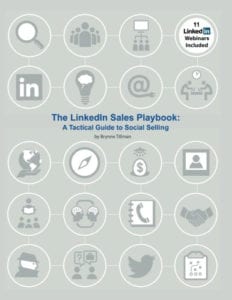
The LinkedIn Sales Playbook: A Tactical Guide to Social Selling
I love connecting with you because our belief systems and the teachings are in sync because my whole premise is, “If you want to be memorable, tell a story.” Your whole premise is, “If you want not to connect and be forgotten, have a conversation.” Most people are like, “If I’m socially awkward or an introvert in real life, I’m equally awkward and introverted in that situation.” That’s where you come in as the LinkedIn Whisperer says to them, “Take a breath, people. I’ve seen you do it. Be human. Tell me something real about yourself for me.” To me, “What’s your story of origin?” I work with a lot of healthcare professionals and they’re like, “You’re pastoring these doctors. Don’t you want to be seen as a welcome guest?” That’s my favorite soundbite with what we’re doing.
We’re taking people from being seen as an annoying pest to a welcome guest. How do you do that? What you’re teaching people to do is give them some content. One of the things that you said to your clients that were gold. I don’t know if they realized it, because sometimes when people are working with an expert like you, they don’t have any comparison, but I do. I was like, “They are getting incredible value one after another.” You said to them, “Instead of spamming somebody with your pitch, how about if you respond to their issue and say, ‘I might know someone else who could help you, would you like an introduction?’” That giving mindset and that extra effort to give instead of picked to, “What can I get?” is how you start a conversation and a relationship. I want you to speak a little bit about how did you learn to do that well?
Trial and error, AB testing, being hyper-aware of human beings in what they need and want, being a conscious person, not just awake, but try to be conscious of what’s happening, empathetic a little. I want to get in the shoes of the other person and a lot of self-reflection about how do I want to show up? What do I want to be? What’s my legacy? I do this to make a living, but what motivates me is when a client comes back to me and said, “I implemented what you taught me and closed a $1.5 million deal.” I go, “That’s my legacy.” We touched about this quote that I’m playing out with which I’m jumping ahead, “It isn’t about you hitting your goals. It’s about you helping your clients hit theirs.”
It’s like a new one. It’s the second time I’m saying it out loud. You’ve got to get a core philosophy. What do you want to achieve? Quarantine had everyone pivoting and making a shift and we recognized we had to redefine social selling because it was a different time. We redefined it as social selling is about showing empathy, building real relationships and being a resource. The sale will come when the time is right. If you can continue to help them achieve their goals when it’s time for them to need what you have you are it.
You’re memorable again because you better resource, you’ve developed a relationship and you’ve shown empathy. I talk about that based on a book I read years ago by Tim Sanders called The Likeability Factor. He did all this research around empathy and doctors spend more time with patients they like, teachers spend more time with students they like. It’s all about how do we up our likability factor? It’s about empathy. When we can show that we understand someone’s problem better than someone else can, the assumption becomes, “You must have then my solution if you’re able to phrase my inner feelings and thoughts in such a way that I haven’t been able to express it, you must have my solution because you’re ‘in my head.’” Part of what makes good headlines or content for LinkedIn is listening to the pain points your clients describe to you, what more of this client and your avatar, but then listen to how they say things. That becomes your headline or the title of a post where I have found works well. Do you have an example of that someone you’ve worked with or where you’ve heard someone say something and then you use that and you get more of your ideal clients from it?
[bctt tweet=”Social selling is about showing empathy, building real relationships and being a resource. The sale will come when the time is right.” username=”John_Livesay”]
All my content comes from conversations I have with clients. That line came from a conversation I had with a client that it’s not exactly like that, but there’s some gravitas here and I played with it until it came out and flowed. Everything that I am now is because a client had a question that needed an answer.
I’ve got a couple of examples myself because I think the more examples you and I toss out on this episode, the more this episode will be read to over again and they’re like, “Did you read that one? I hadn’t even thought of that one.” Working with the tech healthcare company, they were not numbered one in their market and one of the sales reps said, “We’ve got to stop playing defense.” I went, “That’s a headline.” A lot of people feel they’re constantly playing defense against the market leader and never getting to talk about their strengths and only being compared to the other. That was one. Another one, we are tired of coming in second place when we go pitch and then I have a whole thing around, “Unlike the Olympics in business, there’s no medal for 2nd or 3rd place.” Those things help our clients.
My biggest one is when people ask me about, “Is sales navigator worth it? Should I invest the money?” I had a client once, a prospect at the time we turned into a client who came to me and said, “I send it for sales navigator six months ago. I haven’t gotten one sale from it, but it’s because I haven’t logged in.” I said, “It’s like your gym membership.” He laughed. When people say to me and I’ve said this now 100 times publicly, sales navigator was like a gym membership. If you sign up for it and you’ve got a plan, you know when it’s leg day and when it’s arm day and when you’re doing your aerobics, you’re going to get in great shape. If you don’t show up, you’re going to pay your membership every single month and you’re going to look the same and feel exactly the same six months from now. You have to go to the gym three times a week in order to make use of it.
The other thing I heard you stated with your clients is, “Don’t connect and then ask someone to buy from you. It’s like going on a coffee date and asking somebody to marry you.”
This is dating. Take it slow.

LinkedIn Sales: Don’t just connect and be forgotten. Start a conversation.
“I’m not ready to go home with you yet.” I have done the same thing about how to go from invisible to irresistible. I constantly toggled back and forth between a dating scenario and a business scenario because it’s all relationship. In the middle of invisible to irresistible is the interesting rung. I said, “This is where most people get stuck.” In a dating scenario, maybe you say something at a cocktail party that like, “Maybe I wrote you off to pass, but I’m still not going out with you or going home with you, but I’m at least interested to keep talking.”
I see many salespeople and I can’t wait to hear your thoughts on this, get excited and even do a projection to their boss, “I’m going to get a sale. They said they were interested. They wanted some information.” I said, “It’s like being stuck at the friend zone at work.” That concept of going, “Interesting, is not a sale.” I’m stuck at the interesting rung of the ladder. I’ve gotten them into interested enough, but they’re certainly not buying yet and you must have seen that many times and still see it where someone may be interested enough to connect and you can’t get past that framework because you aren’t showing enough empathy or whatever it is.
There is a short game and long game on LinkedIn. I’m going to balance the two. The long game on LinkedIn is we’re connecting with people when they start to engage like, “They’re showing some interest.” We have a responsibility to earn the right for every next step. We put out a piece of content. They like it. We earned that like. We connect with them and thank them for liking our content and because our content was good enough, we’ve earned the right to have the connection. What’s our next step? How do we start a conversation without pitching? “John, thanks for liking the article that I posted out there. Not sure if this is a subject that’s top of mind for you, but I do have another post I’d love to share with you. Let me know. I’ll send you a link.”
Asking for permission. No spamming.
A lot more people are going to say yes, then would click on it If you sent the link.
[bctt tweet=”Don’t spam your clients with your pitches. Interact with them.” username=”John_Livesay”]
They’re engaged. They feel like, “I’m in control.”
It could be a white paper or download. You let them know. When they say yes, if you give them a gated piece of content, you ask permission. They’re not going to feel spam and now we see, did they download it? It’s a conversation and it could be a lot of things, but what level are you exploring? Where are you in exploring this? I’ve got lots of other insights that I’d be happy to share with you. Where are you in this journey? I’d be happy to share insights with you, even if we never worked together. “I’m in this industry. I’ve got lots of ideas. I’m happy to share them with you. Let me know. I’ll send you a link to my calendar. We can set up a time to talk.”
I see you have that on your About Page. It’s inviting. Let’s go back to one of the mistakes you said at the beginning, which is no picture. That’s obviously a square one. Square two is the wrong picture that still is not appropriate. Someone goes to my LinkedIn profile you see a picture of me in front of hundreds of people at a ballroom giving a talk. You know I’m a speaker from that picture, before you even read it in my profile. Make sure the picture you tell the story you want to be telling. I can’t emphasize enough the importance of someone working with someone like you ran because LinkedIn caused me to get my highest speaking engagement. Most people think, speakers spend a lot of money on SEO to get people to come to our website and look at our speaker video demo reels and all that good stuff and all that happened.
It was between me and another speaker, which is often the case. Sometimes it’s between me and multiple speakers. After I got hired, I heard the story because you and I are the same. We were like, “Can you tell me how you found me?” “It just pops in.” The marketing department picked the theme of storytelling, found me and another speaker and presented this to eight different regional vice presidents. One of those regional vice presidents was looking at the two profiles in addition to the video demo reels and the books. On my profile is very clear that I had a career at Conde Nast and I won Sales Person of the Year. It’s a big part of the profile. The other speaker, from what I can see, if I read the fine print was also in sales, but it doesn’t say what company, it’s obscure. That regional vice president said, “I think I prefer a speaker who’s been in sales and has been in my team’s shoes, has quotas, deadlines and pressures.” Here’s the secret sauce, which is when I saw you teaching.
As they were still debating after they had their meeting, it’s almost every sale. Even with hiring the speaker for the meeting, lots of decision-makers. That’s the norm. He reached out to me and I’m like, “I know that client name.” That’s not the person that I’ve been interacting with, but, “He’s in one region.” He asked to connect. I went on his profile, liked and commented on a couple of the articles that he had posted. I responded to the connection and I said, “Your company’s considering me. Would you like me to mail you a copy of my book?” He said, “That’d be great.” He sends me his address. Now, I have an inside brand ambassador salesperson cheering for me. I found out later, he said, “This is what I’m trying to teach my team to do is interact with the doctor’s posts and the fact that you did it, it will be organic for you to teach them how to do it.” There are many things with my LinkedIn that I think a lot of people think, “I’m not looking for a job. I don’t need to have a LinkedIn profile.” You can emphasize how many people you’ve helped like that.
LinkedIn Sales: Using Sales Navigator is like a gym membership. You need to show up for what you paid for.
The first story, I got into Aramark when I was a teeny tiny one person, starting locally still selling sales training, but doing this little LinkedIn thing. Aramark was looking for sale for a LinkedIn trainer. They had gone through the challenger sale training. This was the next thing. I raised my hand, I reached out to the person and she said, “I’m sorry, we’re Aramark. We need a bigger company than you.” I looked at our shared connections and I saw my friend Professor Richardson who taught at Rutgers at that time was connected to her. I taught for free a LinkedIn class one semester for her at Rutgers. I reached out to him and I’m like, “How do you know Nicole Bradley at Aramark?” who is not there anymore. She said, “She was my student.” I said, “Can you throw in my name? Here’s the situation.” She took her to lunch and said, “I’m not going to tell you Aramark who to hire, but you need to talk to Brynne.” Needless to say, I got the gig, they handed me the book and they said, “The way you got in here is the way we want our reps to get into.”
Walk your talk. That’s what you do. That’s what I pride myself on doing too. That’s why the LinkedIn whisperer and then the bitch whisperer is we’re giving people lots of context and content on how to go from invisible to irresistible. SocialSalesLink.com that’s the best place to connect with you. Go to your LinkedIn profile and connect, reach on your company team site if anybody’s looking forward. Here’s the big problem I keep hearing you with companies hire me, especially now during a pandemic, we’re having trouble starting conversations with clients that we normally could either cold call or catch in the hospital where we’re not allowed anymore and all the normal ways of connecting and meeting people is gone. We’re struggling with that first reconnection whether it’s a subject line in an email or what to say when you’re asking someone to connect. We’ve skipped put as might be obvious, but I would be remiss if I didn’t ask you, how important is it when you’re inviting someone to connect, to do it from your laptop and not your phone so you can put a note with it?
You can put a note on your phone. If you’re on your mobile device and you click on the More Button, you can go personal invite. I prefer connecting on the phone because on the desktop, it sends an invite without a message. It says, “If you’d like to add a message, you still can.” You want to hit the More Button and then hit Personalized Message from the phone.
That’s when people can tell that it’s not spam, especially, if you customize it and say how you know them or something you read. The more specific, the feedback or why you like someone’s work or what you like about it whether it’s a poster or an invitation, the better.
Look at their profile, engage on their content before you connect so there’s more con.
I can’t thank you enough for sharing these valuable tips. It’s interesting how certain situations create a need for something that existed before, but now is needed. You’re at the right place at the right time. All that preparation and long game playing have paid off for you and I’m cheering you on every step of the way.
I appreciate it. Thanks for having me, John.
Important Links
- Social Sales Link
- The LinkedIn Sales Playbook: A Tactical Guide to Social Selling
- The Likeability Factor
- LinkedIn – Brynne Tillman
- https://SocialSalesLink.com/brynne-tillman-headshot/
- Better Selling Through Storytelling Method Online Course
Wanna Host Your Own Podcast?
Click here to see how my friends at Podetize can help
Purchase John’s new book
John Livesay, The Pitch Whisperer
Share The Show
Did you enjoy the show? I’d love it if you subscribed today and left us a 5-star review!
- Click this link
- Click on the ‘Subscribe’ button below the artwork
- Go to the ‘Ratings and Reviews’ section
- Click on ‘Write a Review’
Love the show? Subscribe, rate, review, and share!
Join The Successful Pitch community today:
- JohnLivesay.com
- John Livesay Facebook
- John Livesay Twitter
- John Livesay LinkedIn
- John Livesay YouTube