

Bulletproof Selling With Shawn Rhodes
Posted by John Livesay in podcast | 0 comments
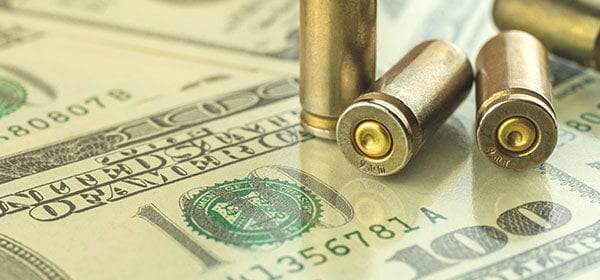

Take your sales career to a skyrocketing improvement when you learn the secrets of bulletproof selling as told by a war correspondent-turned international expert in improving teams’ pipeline and performance. Shawn Rhodes is a Tampa-based TEDx speaker published in news outlets like CNN, TIME, BBC, and Forbes. He joins John Livesay to share what he knows about the sales industry and the secrets that made him who he is today. For Shawn, his experience in the military jumpstarted his love for sales. He made use of it to continue excelling in the world of business by understanding the whole sales process around pipeline improvement. Uncover the methods to become a successful salesperson, as Shawn outlines what one must understand when making sales in the industry.
—
Listen to the podcast here
Bulletproof Selling With Shawn Rhodes
My guest is Shawn Rhodes, the author of Bulletproof Selling: Systemizing Sales For the Battlefield Of Business. Imagine if any objection or rejection would bounce off you like a bullet. He has got a great way of reframing how you look at things and creating a pipeline that will keep generating leads for you so that you can come up with a bulletproof offer. Find out how to do this and trim hope from your sales strategy.
—
My guest is Shawn Rhodes who’s leveraged his former life as a war correspondent to become an international expert in how the best teams continuously improve pipelines and performance. He’s a Tampa-based TEDx speaker and his work studying teams in more than two dozen countries, in some of the most dangerous places on the planet. He has been published in news outlets like TIME, CNN, NBC and Forbes. His clients have included Deloitte, Coca-Cola and dozens of similar businesses. He’s a nationally syndicated columnist with the business journals and author of a book, which I am a big fan of, Bulletproof Selling: Systemizing Sales For the Battlefield Of Business. That is a ton of alliterations. No one loves literation more than I do. Welcome to the show, Shawn.
It is a pleasure, John. Thanks for noticing all the alliterations.
It is just golden, the battlefield of business. It’s a really interesting place to start because people talk about the war, The Art of War, and all these other things. Are you in fact in a battle when you are in a sales situation or has the buyers become more sophisticated? I like to think of it as you are more of a co-pilot as opposed to behind enemy lines. We are going to get to how you came up with the title because before the show, you and I were talking about how we spend so much time and care crafting even with the cover image is going to be, let alone with the title and subtitle are. I want to have you start your story at the beginning. I’m going to give you complete freedom to start that story anywhere. Childhood, college, wherever you want that you were like a lot of kids grow up going, “I see they are covering the war on TV. I want to go there and do that.” How did that even happen?
This is something that a lot of entrepreneurs will recognize. In high school, I had a lot of potentials but really no outlet for it. I knew that if I went to college right after high school, I was going to do a lot of drugs, probably make a lot of bad life decisions and potentially waste that opportunity. Talking with mentors and friends, I realized I just didn’t have some life skills that I might need like self-discipline, integrity, ambition, the ability to define a goal and then plan the steps out to achieve it. Things that make us successful as adults and successful in the world of business.
The choices for me were to wander the country with a flute-like Caine in Kung Fu. That was an option for me. The other choice was to join the military. It’s polar opposites if you will. The military seemed like it would be more regular meals and maybe a place to sleep every once in a while, so that’s the choice that I made. I started looking at the branches because each branch, you will get this as a marketer, they have a very specific pitch. They are looking for a very specific type of recruit. The Army is all about travel. The Air Force, wants intelligent people to work with technology. The Navy, also about travel, got to love the water and being on the ocean. The Marines were the only ones that were communicating this warrior ethos as a recruiting pitch. Honor, courage, commitment, the few, the proud, these tag lines that we really become familiar with, especially the United States and uniform, obviously can’t be beaten.
As I started talking to the Marines, they took a look at my test scores because you take a test to find out where you might belong in the military. Every job you could do as a civilian, they have it in the military. They said, “Shawn, you failed everything, except for verbal comprehension. On that account, you are off the charts.” They looked at all the jobs and they said, “You would fail as an infantryman so we are not going to let you do that. You would not be a good engineer. Everything you built would fall apart immediately so you are not going to do that.” They went down the list of jobs. The one that they had that would be a good fit for verbal comprehension was as a journalist, writer, photographer, broadcaster, what they called a combat correspondent.
[bctt tweet=”Improve your pipeline with a bulletproof offer.” username=”John_Livesay”]
For your readers that have ever seen the old Stanley Kubrick movie, Full Metal Jacket, the 1970s, 1980s movie about the Marines in Vietnam, I was Joker, running around on the battlefield with a camera and a notepad, just capturing the stories like old school. It was so much fun. I’ve got to travel the world. I did two combat tours in Iraq. I was there for the initial invasion in ‘03 and went back for the battles of Fallujah and Ramadi in ‘04. I’ve got to meet a lot of amazing human beings. It really prepped me for the work that I do now because I saw these men and women achieve the impossible every single day.
For those who are reading right now that aren’t familiar with urban combat, it got about a 50% mortality rate. If 50 people go into a building to clear it and there are bad people in there waiting to take them out, only 25 are expected to walk out of that building under their own power. Those are the statistical averages. You think the entrepreneurs that are trying to factor what their conversion rate might be for customer conversion or pitch 50% expected loss. That’s pretty steep, especially when it’s your life on the line. Yet, these Marines and Navy SEALs, Army Green Berets and Air Force Air Rescue men, I’ve got to work with the best to the best. They all had an incredible rate of coming out alive. The military wanted to know how they were able to do that. We recognized it wasn’t because they were hoping that they were going to be successful like so many entrepreneurs do. You think about the high failure rate of small businesses, it’s one lack of conversion, lack of sales, lack of revenue but the underlying issue is so many of us are just hoping that we are successful. We are not taking the time to train, plan, prepare, map out our strategy and then break it down into time-bound tasks that we can execute.
In addition to taking a look, I made that pitch. I’ve either got the funding or I didn’t. I’ve got the customer or I didn’t. What went right? What went wrong? How can I do better next time? These Marines that I was studying every day, that was their life because their life was on the line. They made sure after every mission to debrief and to take a look at how we could get better. What did we encounter that was unique? How do we share that with our sister units as fast as possible so they don’t have to learn the hard way? Look for that tripwire in that particular location, for instance. That allowed me to really begin taking what I have learned and saying, “How can I apply this into something that I’m in love with, which is the world of sales, the world of business?” That’s where the battlefield of business came from. Bulletproof Selling is all about building those types of systems into your sales process so that you can remove hope as a strategy as well.
That’s a great tweet. Hope is not a strategy. This concept of debriefing after every call whether you win or lose, I think that’s where a lot of people think, “We don’t have to take a look at why we won. We won, who cares?” You are missing a huge opportunity there to figure out why you won so you can repeat that process. I guess we’ve just got lucky. Doctors do this when they lose a patient. They have an M&M thing where they literally sit around and talk about, “Was there anything we could have done that we don’t make that same mistake again or was this person terminal regardless?”
I can walk your readers through that process if you would like as it applies to a pitch for instance.
I think that would be incredibly valuable. I have had over 300 episodes, no one has offered that, so, please.

Bulletproof Selling: Systemizing Sales For The Battlefield Of Business
Whether you get off of a call or you are pitching your company for some funding, whatever that looks like, there are three places that you need to debrief after a sales meeting. We will just lump those all in the term sales meeting for ease of use here. The first thing you want to do is debrief yourself as the salesperson. What that looks like is, what could I have, knowing what happened, I know all the questions that were asked, I know what my responses were or were not if they ask a question, I couldn’t answer and that tainted, what was that situation. Debrief yourself. Knowing what you know now, what could you have researched, prepared, studied, done going in? What objections might you have really benefitted from in studying? I don’t have enough money or it doesn’t sound like you’ve got enough recurring capital. Your model is not sustainable. Whatever objections you’ve got that either got you the solution you want or didn’t, debrief yourself.
The second thing you want to debrief is your prospect. Debrief the customer on the other side of the call. Knowing what you know about them now, what would have been valuable to have to go in there? What pieces of knowledge do you know at the end of a call where they went to school? Where they live? How many family members they have? What interests they have? What challenges their company is going through? How much budget they do or don’t have for the product or service that you are offering? All of that might have been valuable to know going into you now know. Capture that. You are not going to be able to replicate it because you don’t have a crystal ball. Knowing what questions to ask earlier on in the sales process may be what comes out of debriefing your prospect.
The third thing and this is especially applicable if you work with anybody else, or you work for someone else, debrief your company. What could your company have provided to you in the way of samples, in the way of pricing sheets, in the way of training, in the way of anything that is really the company’s job to provide to you? If you are a team of one, like a lot of us are, that ball is back on you again. If you work for somebody else, what could they have done, provided to you or taught you that would have made a difference? Even if you close that sale, getting a larger margin on it, not having to negotiate down so much or being able to cross-sell, upsell or down-sell into different areas of the organization that you just now have as a customer.
Debrief yourself, your prospect and your company, after every what you might consider a major sales call. If you are an inside sales rep and you are making 200 calls a day, that’s not the process for you. If you are using those calls to drive into sales meetings that do make a difference because money is on the line and maybe half of your calls or a dozen a day or whatever that looks like for you, very valuable process. Debrief those three things after every call.
I really want to double-click on the one you are talking about debriefing the company. Having worked in big companies myself and now speaking to a lot of them and their sales teams, there’s this competition, a little rivalry and resentment between marketing and sales a lot. Sales are like, “We need better whatever. The leads are bad. We need a discount. We need this,” and marketing is like, “We’ve got a brand to protect. We are not going to give you a discount. We legitimately do want to give you some tools but we don’t see you using the tools.” I think that is one big thing if marketing and sales could debrief together without finger-pointing as to why, “Your idea wasn’t good enough, that’s why they didn’t buy. You did a horrible job presenting that.” We can get a place where they are not pointing fingers at each other.
You’ve tapped into what I see and I can’t wait to hear your opinion of this, it’s one of the biggest problems in big companies is that everything is siloed. That lack of cross-selling causes the marketing department to pull their hair out because they’ve got to start from scratch every time. There are no introductions between departments, whether it’s a law firm or a medical firm. They don’t even know what to say or they are suddenly afraid of rejection or ruining their existing relationship. There are so many problems. I would love to hear your thoughts and observations and how you help them solve those problems with Bulletproof Selling, with this debriefing process.
[bctt tweet=”Debrief your sales calls.” username=”John_Livesay”]
I will take you a couple of steps back even before this book because the first book that I ever wrote was called Pivot Point: Turn On A Dime Without Sacrificing Results. It was the story of a mission that we ran in Fallujah with former Secretary of Defense James Mattis. This is back when he was a General of Marines rather than a Secretary of Defense. Briefly, the reason we were in Fallujah with him at all, we were having a lot of trouble in that city. If you know anything about the war in Iraq, Fallujah was a big hotspot. Every time we had to send a patrol in there, we were getting shot at. That didn’t allow us to bring in humanitarian aid to turn the water on. People were just living in bad conditions. Sanitary conditions were just awful for the population of 300,000 human beings. They deserve the same stuff that we have, basic health, sanitation, all that. To bring the parties to the table, we have politics in America where we have to create something big to bring the parties to the table to talk, General Mattis shut it all down for the city. He shut down water, electricity, sewage. He said, “Your tribal leaders need to talk with us because we are not going away anytime soon. If you want your stuff turned back on, we need to be able to access your city without getting shot at, let’s meet.”
The tribal leaders being the smart people that they were said, “We are happy to do that General, but we need you to be the one at the negotiation table. You are not going to have more than three Marines in that room with us. You are going to have a small patrol to bring you into the city of 300,000 very angry Iraqis.” General Mattis is a smart guy. He’s a strategist. He knew that this was an invitation for him to be kidnapped, like Blackhawk down was waiting to happen. The patrol that he was on, they called it the Dead Man’s Patrol because they didn’t expect anybody to come back alive. They needed somebody to cover it on the off chance that everybody survived this thing. I was the journalist that they tapped. It was me and maybe a dozen vehicles in the middle of a city of 300,000 by ourselves.
Just to be clear on your story. Journalists don’t get to have the big red cross on their back that people like, “Don’t kill that person because they are medical.” They don’t know the difference between you and anybody else.
There are civilian war correspondents on the battlefield, Rolling Stone, Esquire, GQ, and all that. They normally wear stuff that identifies them as such. It doesn’t keep them from getting hurt, unfortunately. For me, I was a full battle guard with a rifle because I was trained as a Marine. I had a rank and all that stuff. I was in the Marine Corps. We get into the city. The reason I bring it up to answer your question is that you think of this patrol going into the city as the sales team. They were the marketing team, the planning team, the logistics team, the operational team, the warehouse to ask to deliver the product or service, the sales team and selling. All that stuff is happening back at the home base. If the sales team just decides to get a wild hair and take a patrol in the middle of Fallujah without letting anybody know or getting any kind of support, their chances of success are very slim, even if they are the best sales team in the world.
We learned this a long time ago so we definitely were practicing it in Iraq. They had to get together before a big mission like this before a big sales call so to speak and get the input, advice and assistance of anybody that might help them become more successful. Instead of building their plan in a vacuum, which is what I see marketing doing a lot of companies and the same sales team doing in the same company, also building in a vacuum. The planning table involved all the parties that were going to be involved, not just the patrol going in but the artillery, the tanks, the air support, even the intelligence community. What have they noticed there in the last couple of weeks that might be helpful? What routes to take, not to take?
Everybody was at the table so that the Marines that were on the line going in, the sales team, had all of the assistance, advice and preparation they could possibly have to do everything to stack the deck in their favor. If companies began coming to the table like this with a singular goal and objective and letting sales be the tip of the spear but understanding, there are a lot of the spear beside the tip. There are all this stuff going on that really has to come into play, like marketing, operations, delivery, customer service, we would do a better job of solving that problem where people are pointing fingers due to lost sales.

Pivot Point: Turn On A Dime Without Sacrificing Results
The other thing that intrigued me about Bulletproof Selling is this concept of the danger with sales improvement program. It’s not that the information is used once and forgotten. It’s the people who forget what all the salespeople are saying. If you are someone who’s just pushing out facts, figures, and feeds or whatever you want to call it and wondering why no one is remembering anything you say, that is not a good strategy.
No. I think it comes from not putting a client-centric focus on your messaging. I made this mistake for a long time before it was finally pounded out of me due to a lot of lost sales. I was talking about me. Everything that you mentioned in my bio, that’s pretty sexy. It’s not the average person can put a claim to being a war correspondent doing all this cool stuff. I learned to never open my sales calls trying to leverage my uniqueness because nobody cares how unique I am or what a special snowflake I can be. I say that tongue-in-cheek.
What you have said is so valuable. I want to circle and highlight it. If I hear one more sales presentation opening with the cliché, “Thanks for inviting us. I’m excited or we are excited to be here,” I think I’m going to scream. It’s what you just said. No one cares that you are excited to be there. It’s the most boring opening to every sales presentation ever. People don’t put the thought and effort into coming up with something unique. The fact that you are talking about you have this amazing, unique thing and you are not opening it and still not making it about you, how much more interesting your bio is that I’m excited to be here? Still, you don’t use it. That’s what I wanted to take a pause there. You are not using that and other people are falling back to that, “I’m excited to be here,” opening. Maybe somebody should really think about what their opening is going to be now.
I would advise you, just try it differently. Do a split test. If you get to do enough of these types of pitches, open it up the way you have been opening. Maybe even embellish your company, its history, the specifications of your product or service, how many gigabytes of RAM it can pull through in a minute or whatever kind of sexy tech specs you’ve got. Try that. On the other side, try something different. Ask yourself, if someone buys my product or service and they use it, they really get 100% of use out of it, not just lip service but they put it to work in their company or their lives, how are their business and their lives different? What changes for this person on a personal and professional level? Whatever your first answer is, go a level deeper and ask, “Why is that important?”
An example, you are selling an efficient solution to a widget manufacturer. What’s that going to allow them to do? Produce more widgets efficiently? I’ve got more widgets on hand, why is that important? I can sell more widgets. What happens if you sell more widgets? I might be able to hire more people in my community. Put some underprivileged kids to work out of high school. Get a nice pipeline in from the technical college. I could make an impact in my hometown. I’m not selling the efficiency of widgets. If I know that going into a sales meeting, I’m going to do everything I can to highlight that person’s hometown, the impact that it would have if they were able to hire more people. I’m just going to happen to build the bridge to the widget efficiency product or service somewhere in the sales pitch. It’s not going to leave there and end there because that’s not what that person cares about. They care about the end result.
We take the time to learn what that end result is, what the actual mission objective is or what we are trying to sell, it’s going to be amazing. How many more conversations we get in because people are going to be more interested in talking with us because we are talking about what they are concerned with, not what we think they are concerned with. They are going to just pretty much open the treasure chest of all the information that we would have had to pry out of them otherwise. If you can help me reach a big goal I have had in my life, all I’ve got to do is reveal some sensitive stuff, like how much budget I might have for it. I still don’t have to cut you a check if I don’t like it but now, we are talking about stuff I’m interested in. What do you need to know? That’s the attitude I hear. We have tracked this across more than 10,000 sales calls. The data holds up pretty consistently.
[bctt tweet=”As a salesperson, you have to break through the noise until you discover what’s your prospect’s preferred method of communication.” username=”John_Livesay”]
You also talk about a bulletproof offer. I’m sure a lot of people would think, “I know what a bulletproof vest does.” What in the world would be inside a bulletproof offer?
We learned this by studying how car dealerships work. We saw it play out over the military and great salespeople. Let’s say you walk into a luxury car dealership, John. If you ever had that experience, Lexus, BMW, Acura, whatever that might look like, you walk in there, they are not going to ask how much money you planned on spending that day. They might not even ask what kind of car you think you are interested in. They are going to say, “Welcome to the dealership. Here’s a nice cup of espresso if that’s your jam. Let me walk you over to our brand new car. It just got in yesterday.” It’s inside the dealership, nice and air-conditioned. Let’s play around with everything just to get you a feel of this brand. Assuming you didn’t walk in and say, “I need to see this car from this year,” You are just here to look around. That’s how they are probably going to treat you.
When you get done looking at this beautiful car and it’s got everything, the Corinthian leather, the claw that comes out and scratches your head in traffic, the autopilot Tesla features, all that good stuff. They are then going to say, “What do you think? Would you like to dig a little deeper into the financing? What else?” Your questions are going to probably be, “How much is that going to cost? What’s the cost to take this baby home?” “This car with the package you are looking at right now is $85,000.” If you are not planning on spending $85,000, what they are not going to do is ask how much you were planning on spending. What they are going to do is say, “What can you live without that we have shown you? What is a non-essential item in this vehicle?” “I don’t need the Corinthian leather. The claws are creepy. It would probably cause me to get into some accidents.” They might take you outside the dealership to maybe the next model down in the line. They will show you that one. They will keep playing this game with you until you settle on something that’s probably going to be above what you plan on spending going in.
I have seen this happen with homes as well. You don’t have the view and pool, and the grade school system. What are you willing to give up? I worked with Infinity and they renamed it. Instead of test drives, they would say, “Would you like to go on a guest drive?” Trying to get people to feel like you were a guest in their home for the essence of what that brand would be. That bulletproof offer is completely reframing it.
Any salesperson can use it. What most salespeople are doing and this is endemic in our industry, John, with our three-tiered packages, you want to hire me to speak at an event? I’ve got the gold, the silver, and the platinum level package. Tell me which one you want. Everybody’s leaving so much money on the table by doing that. What we learned how to do that really made the difference for us, we studied other salespeople that are doing this. They strip away everything that is frivolous. They build a massive singular package, an all-inclusive offer, you might call it. What is your platinum offer? Somebody had an unlimited budget, unlimited time to implement, they just wanted the full effect of your product or service.
What can you sell them? You build this massive package, dozens of items, training, implementation, online courses, the whole thing. Anything you could possibly throw in there because they are paying for it? Why not offer that out of the gate? All they can tell you is, “That’s too expensive.” Your response can be, “What on that list can you live without?” By the end of it, they might have thought they were going to spend $5,000 on your product or service. They will scrape together every bit of budget they can if you can explain how the items on the list that are leftover help them achieve their strategic outcome to our earlier conversation.

Bulletproof Selling: Take the time to learn what the end result is, what the actual mission objective, or what you’re trying to sell. It’s going to be amazing.
What is the difference it’s going to make in their lives, $5,000? If I can spend $12,500 and get twice the amount of impact, twice as fast, I will take out a loan if I care enough about what I’m trying to buy. All-inclusive offer, we wrap it in the terms of bulletproof offer because it’s bulletproof. The sexy thing, John, is if, at the tail end of one of these conversations, you can ask the debrief process again. Debrief yourself, the prospect, the company to say, “We sold a $12,500 package. It came in wanting $5,000, we made $7,500. How could we have gotten more? How could we have delivered more value?”
Continue to ask those questions even on a great close like that, that’s a bulletproof offer because the economy is going to change. The next pandemic might come along. I pray it doesn’t but I can’t tell the future. I want to learn from every sale that I close or don’t close and shift how I’m selling the language I’m using and the offers I’m putting out to my prospects to make sure that I’m staying ahead of my competition. Do you know what our competitors are not doing? Improving after every single call. They are hoping they remember what happened last time that worked well.
It’s like looking at your footage after a talk like an athlete does. They go, “Maybe that pause there really worked or didn’t work.”
“That joke really pulled off. I would never have said it before. It just seemed funny at the moment,” and now you build it in as a joke in every single speech.
“That works in live events but not so much virtually,” or all those little nuances. Let’s hear a little bit more about your ideal audience and some of your keynote topics.
Bulletproof Selling, the idea behind it is that could encompass a whole host of things inside of the sales process but it’s really around pipeline improvement. We find so many salespeople, so many entrepreneurs are treating their prospecting, their outreach, their closing situations out of a funnel. They are using a funnel to do this. The definition is, “I’m going to reach out to 50 people, maybe I will get in five conversations and close one of them.” That’s a simple funnel. The challenge is, if you are qualifying the people going into that funnel and you only close 5, 45 people are going to buy something that you are selling but it’s not going to be from you and it’s not going to be now. The idea behind creating a real pipeline, you can do this inside of a CRM, a spreadsheet if you are savvy but CRM is built to handle this, any CRM. You can set up multiple stages, multiple funnels so that if someone doesn’t convert out of one funnel, they don’t leave your view, your pipeline. They just go to the next stage in the pipeline, the next funnel and you reach out again.
[bctt tweet=”Let’s start removing hope as a sales strategy.” username=”John_Livesay”]
Which is like what you were describing with the car. “If you can’t afford that, you might want this.” It’s the opposite where someone does buy something and then you upsell them after that. It funnels up and funnels pricing down. I love that you have such a specific niche. When people don’t realize, if you don’t have a niche, “You are a sales speaker, Bulletproof Selling, I get it. I know a lot of speakers that talk about selling.” “No. My expertise is pipeline improvement.”
Suddenly, I think to myself, “That’s not my niche.” My niche is helping people on the actual pitch, tell a better story at that moment. I don’t have anything to do with getting them in the room to give that. I’m all about what story you are telling to be memorable. You are all about, “Let me get you to that point.” Of course, you have great strategies and systems to analyze but you are almost, “Let’s look and see what you said and did that work.” I’m like, “I don’t do that either.”
I know five clients that I have spoken to that I can send or I have clients telling me, “In healthcare, during a pandemic, our team never in their career had to make an appointment. They are used to dropping by the office or catching the doctors between. Any suggestions on how we can even get to the place where we can tell the story?” I have a few ideas but again, not my area of expertise. Now, I know, you should talk to Shawn Rhodes. That’s a pipeline problem. That’s getting in the virtual door problem. Amazingly, a whole generation of people has never had to develop that skill but they didn’t. It’s not just one company. It’s the entire industry.
You have heard the saying, “You’ve got a niche to get rich.” I refuse to niche inside of industry but I love niching inside of expertise because I don’t just want to work with healthcare, manufacturing or services. I love working with all of them. If I only had to work with one, I would probably just get out of the business because I do enjoy being challenged learning new things and that helps me really apply a singular skillset to a lot of different customers. Ask any salesperson or any entrepreneur. If you are an entrepreneur and you are reading this, you are a salesperson. Welcome to the club. I encourage you to look outside of your industry for a potential customer basis to ask yourself, “I do sell to this type of person now but who else is also challenged with their problems that could benefit from my product or service. Maybe it was specifically built for financial services and that’s who I have been selling to but who else is akin, who else is in kind of the network of financial services as an industry that could also use this?” Now you can expand from playing in this little, tiny puddle to now being in a pond. Eventually, you can open it up to a whole ocean.
I have a lot of experience in the healthcare industry but there’s a whole, “Does that really include insurance?” Not necessarily. I have architects saying, “We would love to hear what you have learned from healthcare.” That applies here. If you can connect the dots for people, it allows you to play a bulletproof game.
You mentioned outreach is being a big challenge. I will give you three Ms to remember in outreach. This is something that took me years and years and thousands and thousands of lost sales to be able to figure out. The first thing you’ve got to track with your outreach is movement. We are talking about pipeline movement. Many salespeople enter the conversation, not knowing what pieces of information are missing about the prospect they are about to reach out to. Do I know who the decision-maker is in the company, what the budget is when they are buying my product or service if it is time-based? If you don’t know any of those things, now you know what to ask. If you know a few of them, then you know to focus on the missing pieces to get that person closer. To either let’s get a proposal out now, a quote, whatever that looks like for you or if it can’t happen now, reach out in October. You put that in your CRM for follow-up. Without knowing movement, you are just throwing stuff at the wall and hoping you hit something.

Bulletproof Selling: So many business owners are just hoping to be successful. They are not taking the time to plan, map out a strategy, and then break it down into time-bound tasks that we can execute.
The second piece you need to understand is the type of platform you are on the method of outreach. Many salespeople will revert to their most comfortable form of outreach, email, LinkedIn. Even old-school salespeople will rely on the phone, yet I hear tons of times that old-school salespeople are now selling to a generation of Millennials and Generation Y-ers that won’t pick up the phone. They don’t know what to do. You’ve got to expand your outreach. It’s not to say that you need to only use this new thing that’s out like only try to prospect through TikTok. No, mix it all up. Use the phone, email, LinkedIn, social media, direct mail still and alternate how you are reaching out. That’s the method of outreach. You’ve got to break through the noise until you discover what that prospect’s preferred method of communication is.
You’ve got movement and pipeline method of outreach. The third one, this is the one that you are an expert at, John, is the message. The way that I term it is, what is the client-focused story that I need to tell in my outreach that will drive them to the table to want to have a conversation? How can I educate them? How can I engage them? How can I more specifically find out what they are challenged with that’s within my skillset to help?
The movement, the method and the message. Another alliteration. It makes it memorable, doesn’t it? Also, groups of three, lots of techniques that people may not be aware of and they try to just jam so much information out. They don’t group it. They don’t think of a clever way to package it. They are not aware of even what somebody else’s method is. You have given us a lot to think about. The book again, Bulletproof Selling. If someone wants to reach out to you by your book, they can go to Bulletproof-Selling.com and find out how to get you to come to speak to their audience, how to get the book, there’s a podcast. The whole theme, everything is the same font, the same color scheme because somebody cares, people. Any last thoughts or a quote you might want to leave us?
On that website, if you would like essentially a free chapter of the book, we stood up a five-minute sales assessment. It will ask you to choose between 60-plus different pieces of the sales cycle, then you choose the one that’s most important to you. It will reach into the book, pull out that chapter and deliver it to your email. We made standalone resource pages for every single one of our chapters in that way. If you would like to test the book out, take it for a guest drive, as you said, John. That would be a great way to do it. Other than that, let’s start removing hope as a sales strategy. It works in a lot of areas in life. I love hope. I’m a spiritual guy. We could do a whole other show on that. In my sales and my business, I like to fall back on certainty so that I know I can leave my office and go be with my family without having to hope that things work out in my business. Let’s make selling bulletproof.
Thank you, Shawn. I couldn’t agree more. What a treat. What a great gift, not just a gift but a free customized gift. People, look at all those details. That’s a professional in action right there. Thanks again, Shawn.
Important Links
- Bulletproof Selling: Systemizing Sales For The Battlefield Of Business
- Pivot Point: Turn On A Dime Without Sacrificing Results
- Podcast – Bulletproof Selling
- Better Selling Through Storytelling Method Online Course
Wanna Host Your Own Podcast?
Click here to see how my friends at Podetize can help
Purchase John’s new book
John Livesay, The Pitch Whisperer
Share The Show
Did you enjoy the show? I’d love it if you subscribed today and left us a 5-star review!
- Click this link
- Click on the ‘Subscribe’ button below the artwork
- Go to the ‘Ratings and Reviews’ section
- Click on ‘Write a Review’
Love the show? Subscribe, rate, review, and share!
Join The Successful Pitch community today:
- JohnLivesay.com
- John Livesay Facebook
- John Livesay Twitter
- John Livesay LinkedIn
- John Livesay YouTube
Close The Sales Gap Through Stories with Dr. Mark Goulston
Posted by John Livesay in podcast | 0 comments

Episode Summary
—
Listen To The Episode Here
Close The Sales Gap Through Stories with Dr. Mark Goulston
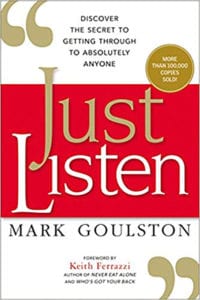
Just Listen: Discover the Secret to Getting Through to Absolutely Anyone
I am thrilled to welcome back, Dr. Mark Goulston, who is my mentor and a close personal friend. I’m honored to say that. I’m going to tell you a little bit about Dr. Mark. He was originally a UCLA professor of psychiatry for over 25 years and a former FBI and police hostage negotiation trainer. Imagine being qualified to do that. His expertise has been forged and proven in the crucible of real life, high stakes situations. If you’re in sales, there are high stakes situations all the time, whether you’re going to get the sale or not. That’s why we brought Mark on. He’s an influencer who helps influencers become more influential. His background from speaking in Russia on empathy, which is a key skill that any person in sales or pitching needs to have, as well as the author of several successful bestselling books such as Just Listen. He’s an expert on so many things, but he’s going to talk to us about how we can become better sellers and the science behind it. Mark, welcome.
Thanks for having me on again, John. I’m proud to call myself your mentor. That’s really been special.
Mark, you and I were having a conversation that generated the concept of multitasking. People are like, “I’m going to be on my phone. I’m going to be listening to you and writing an email at the same time and maybe checking a text message that pops in.” There’s a big myth around that. I think you’re an expert who can talk about that as a topical opener because you can’t sell and tell a story at the same time. It triggered so many thoughts about multitasking and the ability to be present with people. Can you talk about what inspired you to have that insight?
I have an anecdote because people remember stories. I think you may have taught me about that. Here’s a story. We live in Los Angeles and they say it’s better to show than tell. Within a month after 9/11, I was called in by a number of groups to say, “Can you call the group down?” I was a member of a professional services networking group and these were lawyers, accountants, insurance people, very transactional people, but the whole world was shaken. I did an exercise with one of the groups which had about 25 attendees. I said, “I want each of you to talk about a dark time in your life that you never thought you’d get out of but you did and that life was never the same again after you got through it.” What was fascinating is they all went around. I think it can show you the power of a story. There was a very civil, demure female attorney. It was very easy back then, hopefully, it’s changed, to see people who had manners, who are attorneys not having the killer instinct, not having what it took to be able to handle your case. She was seen in that way. She was highly competent.
Here was her story, and she said it with no scintilla of being impressed with what she said. She said, “One of those times in my life was on the day that I graduated law school and I was about to be given a chance to start paying back all the debt I had. On that same day, I was given total custody of my two younger siblings.” You could feel in the audience, she’s no lightweight. What was fascinating is I would say it was 90% recall of people’s stories. Whereas this group, we’ve been meeting for years and a lot of times you hear the elevator pitch and you still don’t know, “Is this a banker? Is this an accountant? Is this a lawyer or what do they do?” They say the same old spiel.
I think what happened is as people shared stories that they were connected to, everybody lowered their guard. That’s what you and I spoke about. When you share a story that you’re emotionally connected to, it causes the other person to feel he or she is emotionally connected to that story so I can lower my guard and lean in without worrying that they’re going to do a bait and switch. That said, and you’re a master at this, you need to teach people that when they share a story, it just can’t be a memorized one where they raise the inflection at the proper time to demonstrate how I am so emotional and then do a bait and switch. It’s a challenge because when you tell the same story many times because it touches a nerve, you need to be able to still be present in the story as opposed to knowing this is instrumental to my getting them to connect with me and then I’m going to start selling them.
Actors on Broadway get the same script every time, and yet the really good ones make it fresh and respond to how the audience is responding and they’re in the moment, which I think is the big takeaway. If I’m someone who is in sales and we all have to sell ourselves, we’re pitching ourselves to get hired, we’re pitching ourselves to get a new client, we’re pitching ourselves to get hired as a speaker, we’re pitching ourselves to get our start up funded. Whatever it is, you’re selling yourself and your ideas to get implemented all the time. People say, “It’s time to sell. Push.” My whole premise is to tell a story that people see themselves in and you become magnetic. Instead of pushing, you’re going to pull people in. When you’re telling a good story, you’re so present as you just described, that you’re not selling. What happens to us from a scientific standpoint? You obviously have a medical degree, so you understand mirror neurons and how that all works. Why is it that when we’re telling a story where accessing, if you will, a different part of someone’s brain and the defenses go down?
I’m glad you mentioned mirror neurons. I have several books and I have a book called Just Listen and the subtitle is Discover the Secret to Getting Through to Absolutely Anyone by Listening. What I talked about in there were mirror neurons. For people who don’t know much about neuroscience, mirror neurons were discovered in the late 1980s actually in macaque monkeys. They were called “Monkey see, monkey do” neurons because people noted that monkeys would imitate each other. They would even imitate you. There are pictures where you’ll see someone sticking their tongue out and one of the monkeys and the monkey sticking his tongue out backwards, back at that person. Mirror neurons mirror what’s coming to them. I introduced the concept in Just Listen, which I’ve spoken to in many occasions, called the mirror neuron gap. Imagine that we’re often trying to mirror others. We’re trying to conform to their needs. We’re trying to please them. We’re trying to not tick them off. The more that we do that consciously or unconsciously, the more it develops a hunger in us for the world to mirror us in return. The greater the mirror neuron gap, meaning the more we feel we’ve confirmed everybody else’s emotional, psychological needs, the greater the gap and the greater the gap, the higher our cortisol is. It is stressful when there’s a big gap. Some of the things that widen the gap are sarcasm, ridicule, abuse and sullenness.
Define that word for us just in case it’s not a word that everybody says in their everyday language.
Sullenness means if you have ever talked to a teenager or a spouse and they’re really upset and you think they’d feel better if they spoke about it, they just say, “Leave me alone. I’m fine. I’m okay.” Clearly, they’re not a happy camper but they’re just sullen. They’re withdrawn and they’re moody.
[bctt tweet=”You can’t sell and tell stories at the same time.” username=”John_Livesay”]
Let’s double click on that because for people reading, you can transfer this, not just to your personal life but your business life. If you’re managing people and you’re trying to motivate them or you’re a speaker, like you and I are, and we’re trying to motivate an audience or just not getting through, sometimes it has nothing to do with us. If you’re selling something to someone and you don’t have any idea what the story was, what phone call they got. Maybe they got chewed up by their boss, who knows what happened and they are just not in the mood to hear what you have to say? The awareness that not everybody’s always just as excited as you are to be talking about what you’re talking about is a huge tool in our toolbox.
It reminds me of a 60 Minutes segment that Oprah Winfrey did. It was about a program I think in Wisconsin that treats childhood trauma. In the 60 Minutes Overtime, someone interviewed Oprah because Oprah said that was the most life-changing story she’s done in her entire career. That’s a pretty big claim, so the person interviewing her in 60 Minutes Overtime was like, “What do you mean?” She said, “There’s a reason they’re so successful in treating these traumatized children who are not just passive, they’re acting out, they’re doing destructive things, they’re hitting, they’re kicking. Their whole approach is they believe that most people are good inside, but it gets distorted. Their whole approach when they approach people is to say, ‘What happened to you that this is what’s going on now?’” They always believe that something happened, a prior story, a prior incident to cause what’s happening as opposed to just jumping down their throat and saying, “Stop doing that. Why are you doing it? Why are you acting up?”
It was fascinating because the reporter asked Oprah, “Did that change your life?” She said it changed everything. I think what she was really admitting is that between the lines that you can be judgmental if someone acted up instead of realizing something had happened to them to cause them to act up. I think what she was admitting is before realizing this, I would react to the behavior and said, “Why are you doing that? Stop doing that,” as opposed to, “What happened to you?” Here’s the power of going behind things and it’s in my book, Just Listen. There’s an anecdote and this is the power. If you’re reading and you want to influence people, what’s more powerful than what you tell others is what you enable them to tell you that matters to them. The more you can get them to tell a foundational story or a story behind what’s going on. To your point, I was meeting with a CEO and it took a while for me to get an appointment with him. I’m seated with him and it is clear he’s not there. He’s not making eye contact. It’s clear that he had made the appointment and he probably wanted to cancel it.
I work for myself. I can say things that if I had a sales manager and I told him I said this, they tell you “How did you dare say that?” To this fellow who was clearly preoccupied, I said, “How much time do you got from me?” He goes, “What?” I said, “Your time’s up.” “What do you mean?” I said, “How much time do you got for me? Look at your calendar.” He ruffled around. He was ticked off and he said, “Twenty minutes.” I said to him, “We’re into minute three and it’s clear that there’s something more important in your mind than meeting with me. I’m guessing it’s more important than a lot of the things you’re going to do now. Here’s the deal. Let’s stop our appointment now at minute four, but take the remaining sixteen minutes and take care of whatever is on your mind because I think what we would talk about would be worth your undivided attention, but you can’t give that to me. It’s not fair to this conversation, but it’s not going to be fair to other people. Take care of that other thing. If I’ve been too rude, just tell your assistant, ‘Don’t ever let him back.’”
He was a big footballer and he looked at me and he paused and then his eyes watered up. I say to myself, “Mark, you can’t be the shrink out in the business world. Stop making people cry.” He looks at me and he says, “You’ve known me for four minutes and you know something that people 30 yards from us don’t know because I’m very private.” I said, “What’s that?” He looked at me and he said, “My wife’s having a biopsy and it doesn’t look good.” His voice is emotional. I said, “Go be with her. You shouldn’t be here. Make a call. I’m sorry. Take care of it.” It was fascinating because he looked at me and he felt the relief of being able to tell his story that was behind his behavior. He was like one of these big Newfoundland dogs coming in from the rain. He shook his shoulders, he looked at me and he said, “I’m not as strong as my wife, but I’m pretty strong. I did two tours of duty in Vietnam. You’ve got my undivided attention and you’ve got your full twenty minutes.”

Storytelling And Selling: A lot of people have trouble with their close, pitch or sales because they’re so nakedly about themselves.
I think if you’re reading this, what happened is I mirrored him by knowing something was going on that was causing him not to be present. By then having him tell the story of what was going on, and again I didn’t race to put it aside. If I was really a jerk, I would have said, “Do you think you’ll be able to compartmentalize that so we can get onto the pitch?” It shouldn’t surprise you. I know this person since then. That’s the power of not only storytelling but getting other people to tell their story. There’s something I’ve come up with, and you might want to try this if you’re doing a pitch. What I notice is a lot of people have trouble with their close, pitch or sales. The reason for that is because you’re so nakedly about yourself. Even if you’ve had this conversation, when you have to come in and ask for the sale, a lot of salespeople are awkward because what you’re doing is you’re stepping out of it being about a win-win into, “Am I going to get my number?” That’s I think what fuels the awkwardness.
Something I’ve been coaching sales teams about is what I call starting with the close. Somewhere early on in the conversation and you have to modify to fit the situation and whatever you’re selling and you say to the other person, “Can I tell you what I think our conversation is about? It’s not about me selling you anything or you buying anything,” which would intrigue people to go, “Can I tell you what I think is going on?” You’re doing this early on, you could say, “The purpose of this conversation is that I get a yes from you. If not now, in the near future. If I get a yes from you, there’s a possibility, I’ll not only meet my numbers but I’ll exceed my numbers. I’ll get a raise. I’ll get paid more. I’ll get a bonus. I put myself in your shoes. What I realize is it’s about for you as what I call 1116 squared.” I’m putting that together in an article and possibly a book and they’re going to say, “What is that?” You could say, “What you’re listening for as the buyer of products and services for your company is if you say yes, whether you will regret it one day, one week or one month from now. That’s the 1, 1, 1.”
You’re listening for that because if you regret it and it turns out badly, your boss is going to say, “What did you buy this thing for? We can’t use it. We can’t implement it. I have to tell my boss why we brought it into the company.” My guess is you’re listening to make sure that you won’t have the 1, 1, 1 regret, but the six squared is what you’re really listening for unconsciously. I this going to be the purchase where your boss’s boss says to your boss, “I’m giving you a raise because you and your group just brought something into the company that helped us be so much more successful than the CEO singled me out to say, ‘That was pretty neat, what you brought into the company.’” The 6 squared is what you’re hoping is that your boss’ boss will be so pleased with they’re getting a raise that they’re going to do the same for your boss. If your boss is someone who’s not totally self-absorbed, they’re going to know that not only did your bosses group to achieve that sale, but you’re the one who was the key person.
I do this when I’m being hired as a keynote speaker. I future pace the event planner and I’ll say, “What would it look like a week after this event for you to look really great to your boss? What feedback would you be getting?” They think to themselves, “I guess at the event I would see people engaged and not on their phones and then people will come up to me and say, “That’s the best speaker we’ve had in years. My boss would say, ‘You really nailed it. The people are actually using what John talked about in telling better stories now and we’re winning more pitches,’ and all of that would start happening.”
If they get stuck and they can’t visualize what good feedback sounds like, I will reference other keynotes I’ve given and say, “Here’s what happened last time, the feedback they got,” and then they see themselves in that story and they go, “That’s the journey I want to go on.” I think there are lots of applications to what you just shared there of future pacing people of when you make the right decision, because everyone’s afraid of making the wrong one. There’s fear to pull the trigger. If you can tell a story and paint the picture of what it looks like when you make the right decision, then they can take a breath, as you said, and the storytelling is happening versus the selling. They’re like, “That’s for me.”
[bctt tweet=”Show, don’t tell, how people can see themselves working with you.” username=”John_Livesay”]
What I loved about what you just said and what I hope readers will pick up is it goes to the word relevant. When you future pace it, it needs to be relevant. You outlined it perfectly that a week or two weeks later, whatever the timeframe is it’s exactly that. The speaker was engaging, people didn’t look at their phones, plus you gave them information that was doable by them. I think that’s a key component, doable by them. One of the problems that experts have is they’re so passionate about their expertise that they often want to infuse people with all kinds of insight, how it works and why it works. That can sometimes be helpful. A lot of the audiences in business, what they’re listening for is the bottom line. The bottom line is, is this something that is relevant to me that I can use immediately without having to become an expert?
What I like about what you do is you give people actual tips and a roadmap for telling a great story. They don’t have to be natural born storytellers. If they follow those steps, the result will be people saying, “You tell an amazing story.” I know that when you work with people, initially they learn the skill and it may not be authentic, but as they start to attract an influence and attention, they begin to say, “I like this. I like that telling the story was not just affective and selling more, but more people came up to me.” When people learn what you have to teach them and they give presentations, people are going to come up to them and some of these people will say, “No one’s ever come up to me after a presentation.”
I remember when we met years ago when you came up to me and you said, that’s one of the best presentations I’ve ever heard because you spoke with us or above us. I think I will always remember that my whole life because it was one of the highest compliments I’ve ever received. I didn’t know who you were, so it even took on more meaning. That’s the goal, whether it’s a keynote presentation or a one-on-one conversation where you’re trying to get someone to take some action. I think the real takeaway from what you said there is everyone has this unspoken question in their head when they’re listening to you talk, especially if you’re telling a story about someone else you helped, and that question is, “Will it work for me?” It’s great that that person went from this to that or that other event planner got rave reviews, but these people are not that. They have to see themselves in your story and you are the master with this. It’s the mirror neurons. The more we get those mirror neurons to match, the more they see themselves in the story, you’re closing that stress gap and then they think, “Yes, this will work for me too because I’m matching. The more I’d match myself in that story if I understand your whole strategy there.”
The compliment that you took from that about you talking with an audience, when you talk with an audience, you’re mirroring them. When you talk over or at them, you’re pushing them away, you’re increasing the gap. If their minds are overwhelmed, and most people’s minds are, and you’re talking to them, they will nod from the neck up, but they won’t execute because it’s just more information and they can’t hold on to everything they have. When you talk with people, people lean into it because sadly, this is an interesting awareness that you could share with your audiences. You could say, “Raise your hand if you feel talked with less than 10% of your conversations.” I think a lot of them are going to raise their hand. “Raise your hand if you feel being talked with would almost exponentially increase the other person’s influence with you.” They’re going to raise their hands. You can say, “Raise your hands if what I’ve presented so far, not just stories I’ve shared, but hopefully my enthusiasm for you. I want to make you more successful and I want to introduce a way that you haven’t recognized. It’s yours for the having, for the taking.” It’s not rocket science. It might be neuroscience and because I think storytelling, especially stories that you’re connected with and that are relevant to them, people lean in to that and they feel talked with.
You’ve been interviewed by everyone from Oprah to Larry King. You understand the value of being present in those moments when the stakes are high. It’s not hostage negotiation, but your adrenaline is kicked up a notch or two when you’re being interviewed by people like that and the cameras are rolling and it’s live TV. The preparation that goes that, that you can depend on your skills when you need them is something so valuable. I wanted to give an example of the preparation I did and then get your take on what you do. It was invited to be on a show called Talk of the Town and talk about storytelling and selling. They said, “A lot of our viewers are in the morning and they’re stay-at-home moms. Is there anything in your book better selling through storytelling that’s at all relevant to them?” I said, “Yes.” A mutual friend of ours said to me she’s got some twelve-year-old boys that she’ll say to them, “How was your day?” She gets one-word answers, “Fine. Good.” Every parent has had that experience.

Storytelling And Selling: What people respect is when you have values that you don’t stray from and that are being of service to them.
I said, “Instead of asking your kid that question, ‘How was your day?’ you could say, “Tell me a story about the best part of your day.” It causes them to think about it, learn some storytelling skills and get a dialogue going.” The producer liked that and so did the host of the show. Customizing your audience, when you talk about being relevant, the ability to shift and say, for these people who are going to possibly hire me as a speaker, it’s a very different messaging and story I’m going to tell when I’m on camera talking about my book. You have done that so many times and I wanted to get your thoughts on the ability to be prepared and what is it that we can all do and learn from you so that we can be more flexible and in the moment.
There’s something that’s helped me get prepared and at the same time, lessen my anxiety because I’m an introvert and so I have to pump myself up to be present. Something I’ve been focusing on, and I’m coaching other people to do, is if you can imagine that whoever you’re speaking to or with, if you think to yourself, they are looking and listening for what? If you imagine what they’re looking for and listening for, I’ve actually identified several key elements that they’re unconsciously looking for and listening for. If you can deliver on them, you’ll have an amazing influence. The first thing that they’re looking or listening for is can they trust me? I’m this foreign entity. I’m obviously presenting something, until proven otherwise I’m selling them on something, which is basically I want you to hire me for more. The first thing is can they trust me to not hurt them or take advantage of them? Unconsciously they’re comparing me to all the people who did hurt them, took advantage of them, especially the ones who initially they thought were their friends.
The next thing that they are listening for is confidence. The confidence is, “What’s his track record?” Confidence comes not from what I say I can do. Confidence in me comes from them hearing what have I already done that helps someone exactly like them that produced hopefully measurable results. When they hear a track record of something, I was able to do with other people just like them, that makes it relevant. They have confidence. Here’s the extra thing and this is really underneath the trust and confidence. They’re actually listening for whether they can respect and admire me. Why? When they can respect and admire me, I become someone they want more of, not for my service as a product. They want my esteem. I had seven mentors, they all passed away.
One of the most important things to me about all of them was their esteem. These influential and powerful people gave me the gift of their most precious thing, which was their time. It was interesting because I so wanted their esteem and never wanted to disappoint them, I would never tell them something I was intending to do unless I was 150% sure I would do it. I want to be in integrity and I wouldn’t want them to think, “He’s flaky.” They were so forgiving and they liked me and I think we loved each other for more than what I was doing that they would have cut me more slack than I did. People are listing for, “Can I trust you? Can I have confidence in you?” Because of their experience of really not necessarily interacting with people that they respect or admire a lot, they’re not consciously listening for that. When you can deliver on that, people want more of you. What I’ve discovered that people respect is when you have values that you don’t stray from and the values are always focused on other people being of service to them.
That taps right into why companies hire you to become a keynote speaker. They’re trying to make sure that they have a culture that attracts and keeps the right talent there so that they can be more competitive. If there’s dissonance between departments, they can bring you in to get people to start cooperating and listening and working together in a new way that’s never been possible before. Those are some of the takeaways that I’ve seen from watching your reel of you in front of Russia and seeing some of the companies that have hired you to speak before. Are there any last thoughts you want to leave this with, Mark, about what takeaways the audience has when they hear you give a keynote?
[bctt tweet=”Talk with people, not at or above them.” username=”John_Livesay”]
Here’s an anecdote. People look up Goulston Moscow on YouTube. They made a three-minute highlight reel to say this is what our events look like and our speakers look like. I actually wrote a blog called the Three Da Formula. Da is yes in Russia. It was a way of easing my own anxiety. I spoke for six hours. It was just me one day for a one-and-a-half hour module and questions. People said, “Were you exhausted?” I said, “When you have adrenaline going through every pore in your body, you only get exhausted afterwards and you can’t move after.” What I did at the beginning was what you want to do to be successful as you want to get into the other person thinking. What I did at the beginning, and I try to do this now in most presentations, I said, “Wouldn’t you agree that it’s important for the speaker to get where you’re coming from?”
I did a little research on new Russians. My first slide was a slide of a Russian audience with their arms crossed and all of them looking pissed. I showed that slide and I said, “What people told me is when you go to Russia, don’t smile.” I showed the slide and they laughed and I said, “What I realized is you’re not smiling, not because you’re upset but you’re looking for whether you can trust me to not take advantage of you or hurt you because historically, every time some foreign entity came into Russia, it was to hurt it. You have hundreds of years of people trying to hurt Russia, trying to kill off Mother Russia. You’re listening for what my intentions are. Let me see if I get where you’re coming from.”
I’ll give you an example, but other people have to modify it. I said, “Most of you are managers. You don’t get anything done yourself. You get stuff done through people. You don’t do this stuff. You let people do it. Is that true?” “Da.” “Is it also true that you’re coming here because your way of getting things done is sometimes to be pushy, which gets short-term results but it’s stressful on them, stressful on you, causes them and you to drink a little bit too much vodka, not eat that well? If there’s another way to get the same results or better results, it’s less stressful. Is that what you’re listening for?” They go, “Da.”
The third thing I said, “Finally, what you’re listening for is can you get from our six hours together tactics and tips that are doable by you and there is no upsell? I’m not selling you a course. The Russian edition of my books are out there in front if you want it. You don’t have to buy it, but you’re looking if you can get things that are doable and implementable by you in your life, and you don’t have to like psychology. You don’t even have to like thinking. If I could give you those, would this have been worth your time and money?” They go, “Da.” The idea is if you can get into people’s thinking, it’s pretty easy like what we talked about earlier.
It’s easy for you because you’ve done it so long and you’ve been used to getting in people’s heads as a therapist. I think it’s the lessons that we can all take away of empathy, listening and storytelling. Those are the three key secrets to becoming or compelling and less pushing, Mark. I can’t thank you enough. The book again is called Just Listen. I can’t thank you again for giving us such great insights into the ability that if you’re telling a story, you can’t be selling and people love stories. Thanks, Mark.
You make me want to be a better person. I feel like this is that Jack Nicholson movie.
Thank you. That’s very kind.
Links Mentioned:
- Dr. Mark Goulston
- Show – Previous episode
- Just Listen
- YouTube – Dr. Mark Goulston in Moscow
- https://MarkGoulston.com/
Wanna Host Your Own Podcast?
Click here to see how my friends at Brandcasting You can help
Get your FREE Sneak Peek of John’s new book Better Selling Through Storytelling
John Livesay, The Pitch Whisperer
Share The Show
Did you enjoy the show? I’d love it if you subscribed today and left us a 5-star review!
-
- Click this link
- Click on the ‘Subscribe’ button below the artwork
- Go to the ‘Ratings and Reviews’ section
- Click on ‘Write a Review’