

Easier: 60 Ways To Make Your Life Work For You With Chris Westfall
Posted by John Livesay in podcast | 0 comments

Chris Westfall is a sought-after speaker, consultant and author who has helped hundreds of clients achieve transformational results. Chris knows that there is an easier way to make things work for you. This is what John Livesay and Chris get into as they look into how you can transform your business. Chris looks at leadership, storytelling and connecting with people as ways of transforming your business. Tune in and learn more from Chris as he delves into storytelling and sales.
—
Listen to the podcast here
Easier: 60 Ways To Make Your Life Work For You With Chris Westfall
Our guest is Chris Westfall, the author of Easier. He talks about the best way to make things easy is to realize you always have a choice. Just because the train goes by does not mean you have to ride that train. We talk about storytelling and how important it is to make sure that you are not the hero of all the stories you tell. Make people want to see themselves in your stories and go on the journey with you. Enjoy the episode.
—
Our guest is Chris Westfall, who’s one of the most sought-after business coaches and sales keynote speakers in the world. He has helped launch over five dozen businesses and has appeared on every network out there. He’s a regular contributor to Forbes, and worked with thousands of leaders at Fortune 500 companies, nonprofits, and high-tech startups. A coach to entrepreneurs and executives around the world, his clients have appeared on Shark Tank, Dragons’ Den, and Shark Tank Australia. He regularly consults with top-tier universities, and is the author of three other books, but the one we are here to talk about is Easier. Welcome to the show, Chris.
John, thank you so much for that introduction. It’s great to be here.
You and I both share a passion for storytelling. You were all about whoever tells the best story wins, and I have a modern version of whoever tells the best story gets the sale, depending on what yours is a broader concept of what winning is. As storytelling keynote speakers, we love to help people tell better stories.
You would find this true too that it not just helps people’s careers but helps them in their personal life. With that said, let’s go into your personal life a little bit and tell us your story of origin. How did you get to be who you are? You can go back to high school or even earlier if you want, wherever you want to start.
[bctt tweet=”Things become easier when you realize you don’t have to hop on every train that passes.” username=”John_Livesay”]
I’m going to start in junior high. I’m in eighth grade, and my English teacher approaches me. She says, “I want you to give the speech at eighth-grade graduation.” I was not valedictorian and anything special. I was just a guy that got approached about giving a speech. I said what I have been saying my entire career, which is, “Yes.” I agreed to do it. That was the very first time that I stepped in front of a group and gave a presentation. There were probably 1,000 people in the audience. It’s a pretty large class of mine in junior high.
That was at age fourteen where I started as a speaker. I went on and lived my life, graduated from various schools, had a career, and all these things. I would always be pulled in front of audiences during my career to speak. I always fought it. I was always like, “This isn’t who I am.” It was a quest to come back to that place of realizing who I am, realizing the person that stepped on that stage at age fourteen is still inside of me.
To recognize that identity and step into it has been something that I have come to realize in my later life has been the most fulfilling part of my career. When you talk about storytelling and particularly storytelling in sales, it’s not just a part of my career. It’s part of my history. It’s something that I grew up with.
Look how far you have come in several years. You have been running a very successful consulting firm, and you speak at these different things. Who is your favorite client to give a talk to?
My client is typically frustrated. They are successful but they want more. My client asks themselves this question, “Is this all there is?” When organizations are looking for more and trying to access a greater market share, sales opportunities, places to make an impact in their careers, and employee engagement, these are a number of things that I touch on but ultimately, there’s a frustration. We know we can be better. We just need to understand how to get there.

Easier Life: Personal or general data protection, privacy law concept
It sounds like you give them a roadmap of how to get there no matter where they are on the frustration line.
A big part of the work that I do is to show people that while I may have a roadmap, they have an internal GPS. I’m going to speak about human nature. We all have inside of us that internal GPS. We have the ability to reroute when our thinking settles down. Even in the midst of very difficult circumstances, if we allow ourselves to see things in a new way, we can take new action.
From my point of view, that new perspective is always available. There’s always a new perspective, no matter what you are going through. It doesn’t matter whether you are going through a divorce or trying to hit a quota that is impossible. There’s always a fresh way of going about whatever it is that you are up against. That’s the premise behind Easier. There is always an easier way, even when life isn’t necessarily easy.
One of the things that stood out to me when I was reading it was not giving up on the concept that there’s an easier way to do something when it seems completely not easy. You feel stuck, and you don’t even ask yourself the question because it seems impossible. The first takeaway I’ve got from the book was, “I need to open my mind up to the possibility that there might be an easier way to get this sale, this funding for the startup, whatever it is I’m doing.”
Part of your background is that you have been helping people get funding and judging at Southwest some pitch contests. The show is called The Successful Pitch. I would certainly be remiss if I didn’t ask you some tips or thoughts on what makes a good pitch. Let’s talk about it in the framework of Shark Tank, where you are pitching investors since that’s part of your expertise.
[bctt tweet=”An Olympic swimming coach is out of the water to gain perspective.” username=”John_Livesay”]
You and I line up on one particular aspect of what makes an effective pitch. Your pitch is not a superhero story, where you stand up and beat on your chest and talk about your experiences. Not only is that insufferable but nobody wants to hear that. The story that people want to engage with is the story where the audience is the hero. Maybe you can’t make your investor or customer your hero, but it’s a good idea to start trying now, and taking your attention off of yourself will help you to create a greater connection in the sales conversation, investor conversation and in every conversation.
When you take that attention off of yourself, you are not going to forget your product knowledge and lose your ability to sell, compel or be engaging. That’s never going to be taken. Like the song says, “They can’t take that away from me.” The point is when we take our attention off of ourselves, what shows up? Here’s what I know from speaking on thousands of stages. You tell me if you see this too.
There are two questions you never want to ask yourself when you are in the middle of a high-stakes presentation. That’s a sales presentation or a presentation in front of 500 salespeople. The first one is, “Who am I?” The second one is, “How am I doing?” It’s a self-awareness that points towards self-consciousness. When you are focused on yourself, do you know what you are not focused on? It’s the sale and everything that matters.
I fell into that trap a few years back when I was hired by Coca-Cola to speak at their CMO Summit. The night before, they gave us a little program of all the speakers for the next 2 or 3 days. I’m like, “Harvard graduate, New York Times bestseller. What am I doing here? How did I get on the stage? The person who hired me is going to get fired.”
I had to talk myself off the ledge of, “Do I care how many books the speaker has sold?” No. “Do I care where they went to school?” No. I care about how they make me feel. If you don’t trust yourself at the moment, maybe you trust the person who has been at Coca-Cola for over twenty years that she knows what she’s doing and saw something.

Easier Life: You got to keep your eye on the ball. It means keeping your eye on the customer, on the client and focusing intently on how you can serve them more deeply, more fully.
I think for myself that I had to focus on, “How do I not fall into that trap,” because that’s the worst mindset in the world before you get on stage the next morning. For me, the minute I start comparing myself to other people, I say, “Cut. Stop.” It’s like a movie. The gateway drug to Imposter syndrome is comparing yourself to other people, “He’s more handsome, taller, leaner, and smarter.” It’s endless. That’s in the dating world, let alone the speaking world. I would love to know if you have any tips for people on how to avoid that horrible Imposter syndrome besides not comparing yourself.
I will tell you a story that a coach of mine shared with me. It starts with a weird question, “Do you have to be an Olympic-level swimmer to coach someone who is swimming in the pool?” In other words, do you have to be an Olympic-level swimmer to be of service to someone who is swimming in the pool? The answer is no.
As a former lifeguard, I would say no.
How do we all know that it is True, not where it’s a matter of belief for a faith that someone on the side of the pool can coach someone in the pool? It is not because of their experience, height or color of their swimsuit. It is because of their perspective. The thing that you bring that is powerful is your perspective. That guidance and wisdom for your audience is a function of your experience but there’s more to it than what you have done over the course of your career. The experience that is so valuable when you speak to sales audiences is the experience you create for the audience.
It’s the same thing for salespeople. If you think, “I don’t carry enough quota to be in this room. I have not sold enough to be in this room,” that’s the wrong question to be asking yourself. The question is, “How is your client doing? How is the person in the pool?” Look at them. That’s where your attention needs to be. It’s because of your perspective, not because of your quota, experience or where you went to school, but because of your perspective. You can share and serve, and if you get out of your own way, you can sell.
[bctt tweet=”We know we can be better. We just need to understand how to get there.” username=”John_Livesay”]
What a great solution to that because I have taught everyone from infants how to swim. You are in the water, and we are having them blow bubbles and stuff to being coached in competitive swimming. If the coach is in the water, he can’t see if your elbows are at the right height. He’s eye level with you, not above. I love this concept of zooming out and getting a perspective.
The second problem you said or question we should never ask ourselves is, “How am I doing?” Whether it’s a talk or sales pitch because it takes you out of the moment. You are not listening anymore. You are worrying about whether people like you or not, which is always the kiss of death. We start making up stories in our heads. If someone gets distracted, “I lost them. They are on their phone,” or they went to the bathroom, or whatever is going on. It may not even be true but we are making it up, and we are not in the moment.
It’s like a field goal kicker in a football game. The reason I think of it like this is that my dad kicked field goals. He was a field kicker in college. He used to say to me, “When I’m kicking a field goal, where do you think my attention should be? Should it be on how I am doing? Should it be on what the coach told me last week? Should it be on the fans and the crowd? Should I be thinking about how I’m going to be the hero of this game if I make it through the uprights or how I’m going to be the absolute bomb if I don’t?”
He would say, “Chris, none of those things matter. You’ve got to keep your eye on the ball.” In this case, keeping your eye on the ball means keeping your eye on the client and focusing intently on how you can serve them more deeply and fully. If you think you can do that by putting your attention on yourself and worrying about your likability factor, you are looking at the wrong place.
I imagined a professional baseball player at home plate, getting ready to swing. As the ball is coming, he suddenly looks up at the crowd and goes, “Do you all like me?” He misses the ball. It’s like, “Strike.” That analogy holds up. I see that you’ve got this great testimonial from a mutual friend of ours, Brant Pinvidic, who wrote The 3-Minute rule. He has been on the show. I have been on some adventures with him. He’s quite the cool guy.

Easier Life: It’s not about controlling your mind. It’s not about controlling your thoughts.
He said that your book, Easier, is unlike any other coaching guide he has ever read. What is it that makes this book so unique? What’s an outcome someone can get? I can share mine, and Brant can share his but I love to ask the author. What was your intent? This book is for people who are frustrated and somewhat stuck and know they can do better but after reading Easier, they are not only going to ask themselves, “Is there an easy way to do this?” but fill in the blank.
The power behind Easier is the power of storytelling. Whatever people take from this book and the uniqueness that Brant is talking about, I would like to think that it comes from the story that unfolds. There are two ways to share information. One is to come down like Moses off a mountaintop and say, “Here are the Ten Commandments. Do these ten things, and the right results will follow.” The other way to tell it is via a story. What people will take away from Easier, whatever it is that they gleaned, the subtitle promises 60 ways.
I was going to get to that. It’s the old Kenny Rogers song, 50 Ways to Leave Your Lover. You came up with 60 ways to make your life easier.
The way that those discoveries are made is through a story. If you find the story engaging and see yourself in the characters represented and the challenges that they have to overcome, that is where the lessons are learned. It’s not so many lessons learned. That sounds like school. It’s more like the discoveries are made if you are looking for a way to blow your quota out of the water to create a deeper market share and an impact on your customers.
I’m not going to say that training is not valuable but those discoveries you make when you are in front of your customer, when you are looking in the mirror and considering the ability to serve, that’s inside of you are much more powerful than these Ten Commandment-type lessons. Training is valuable. You have to understand how things work. You have to be onboard. You have to understand how you create connections, ask intelligent questions, and all those things. My question for the folks reading, and it’s a question in the book is, who are you when you aren’t on your mind?
[bctt tweet=”When you’re focused on yourself, you’re not focused on sales, on everything that matters. ” username=”John_Livesay”]
It’s very much like screenwriting. I took a course that years ago, and they said, “If you want to show a particular character is honest, don’t say it in dialogue. Show it in a situation where they could steal something and not get caught, and they still don’t do it.” You tap into this. It’s Chapter 4 where we are talking about, “Am I the person that eats all the Oreo cookies or am I the person that saved someone’s life? Which self do I put on the shelf? How can I integrate all the different parts of my personality that I’m judging? One aspect of my personality where I am decisive and able to not be afraid, why doesn’t that show up consistently?”
That’s an example of why this fable is so engaging because you start to think of yourself that rare is not the same all the time. Wayne Dyer, back in the day, who was a motivational speaker, used to say, “When you squeeze an orange, you always get orange juice. It doesn’t matter what time of day, in the middle of the room and the corner. What happens when somebody squeezes you, and you get stressed out? Do you get orange juice or do you get anger and fear?” That metaphysical question is my sweet spot of, “Who are we? How can we be more authentic? Why are we, at our best, not at others?” If you could speak to that a little bit and how easy it takes people on that journey of self-acceptance.
It is a journey of self-acceptance. You are right. One of the things that I have accepted in my career once upon a time, which I now reject, is this idea that peak performance comes from mindset and the idea that our minds are set is false. I anticipate that on any given day, we have between 6,000 and 60,000 thoughts running through our brains. Our minds are not set. If we try to set our minds, we are trying to stop the wind or waves from hitting the shore.
What makes things easier is when we realize that we’ve got some thinking going on at all times around a particular subject, and here’s the realization that has shown up for me that has been so powerful. Just because a train of thought shows up, you do not have to ride that train. It’s not about controlling your mind and thoughts and thinking about one thing all day long. That’s not sustainable. That’s not how thought and minds work.
When we get in concert with the way we work, we show up differently. We stop burning cycles trying to rope the wind or stop the waves. Instead of trying to stop the waves, we get on a board, get out in the waves, and start surfing. We start writing and understanding that there is a power inside of these thoughts that can lead us to new realizations and perspectives but we have to step back and stop spending our energy trying to grit and grind things out when there is an easier way.

Easier Life: Storytelling is always selective and sales is selective, and selecting the words that are going to help you most is the key to creating that compelling conversation.
I can relate to that because this concept of not having to respond immediately to something that somebody says or sends you in an email, sometimes, no response is an answer. A lot of people get all triggered. The front of our brain gets hijacked, and we are in fight or flight mode. We are like in that concept of sleeping on it. Get back to perspective, “Is this going to bug me five years from now? Probably not. Why am I letting myself get so upset?” All of that is a key lesson to learn about. Just because somebody says, “Let’s play tug of war,” doesn’t mean you have to pick up your end of the rope.
Many times, we zoom in on things, and it activates the front part of our brain. All of a sudden, we create these stories that don’t serve us, stories around our obligations and duties. The deadline is the deadline but isn’t there a way for you to relate to those deadlines, obligations, that email that you’ve got that can shift your perspective? That’s what you are talking about.
One of the things that I share in the book is a simple strategy. I call it the YAHOO strategy, which is not about the search engine but YAHOO stands for, You Always Have Other Options. If you are struggling in sales and wondering, “Why can’t I crack this customer? Why can’t I get in front of the people I need to get in front of?” You always have other options. What are those options? Thomas Edison said it best, “There is a way to do it better. Find it.”
Keep looking until you find it. As someone who writes books as we do, usually, our first idea is not the best. We go, “Is there another way I could say that? Is there a better way to say that? Is there a way to say that it’s easier for people to understand?” That’s where I see so many people in sales going down the rabbit hole of, “Let me prove how smart I am with all these acronyms and get into the complexity of everything as opposed to.” The simpler you make it to understand, the more likely you are to get someone to say yes. Just because you are making something easy to understand doesn’t mean you are not smart. That, to me, is a big takeaway from your book. It’s the reverse. The smarter you are, the easier you make things.
If sales is about proving how smart you are, that doesn’t sound very smart to me. Do you want to be smarter or do you want to be richer? Do you want to instruct or do you want to inspire? Do you want to describe or do you want to compel? Are you just there to relay information about the product or are you there to relay information so that your customer can take action, step toward you, and say, “Tell me more,” and continue the dialogue that leads to the exchange that is the transaction you are looking for? That’s so important, John.
[bctt tweet=”Training is valuable. You have to understand how things work. You have to be on board and you have to understand how to create connections and how to ask intelligent questions.” username=”John_Livesay”]
Otherwise, we are trying to impress other people as opposed to making that emotional connection that you understand their problems. That’s why you and I both decided to write fables because, through the lens of storytelling, people are not so analytical in a story like they are a movie or any other fiction that they are learning without realizing they are learning, and that sometimes sticks a little bit better.
I know you are interviewing me but I have to ask you a question. Why did you choose to write a fable? What was it that appealed to you about creating a story around The Sale Is In The Tale?
The thing that motivated me to write The Sale Is In The Tale was I kept thinking to myself, “I have given people the steps on how to tell a good story, and with my coaching, they are able to get better.” Having taken the screenwriting class years ago, they are always about show and don’t tell. I thought, “What if I did create a fable where I showed somebody going through this frustration of not making their quota, losing a big sale, not getting a promotion, and all the things that happened to people in their lives but made somebody see themselves in the story?”
You and I talked before the show that the gold standard of whether somebody takes action is if I see myself in your story, I’m going to buy, say yes or change my behavior. That’s what the motivation of, “Let me see if I can do it.” It was a stretch. I have never written a screenplay or anything that had characters in it, distinguishing that, and painting the picture and setting it here in Austin using real places that I enjoy going to and making that come to life. Having moved here years ago, the book is a love letter to Austin too.
We both set books in Austin. That is so fascinating to me. It’s Austin and Dallas for mine. What I take away from your story, and hopefully people take it away from mine as well, is that there’s an emphasis on relatability. That relatability is what makes stories compelling and engaging. Maybe not necessarily that you see yourself in the story but you see the circumstances and identify with what people are going through. That is certainly my hope, and it sounds like it’s yours as well.
[bctt tweet=”It’s no secret that sales is a people business. It’s where business gets personal.” username=”John_Livesay”]
That is the power of storytelling. Bringing that storytelling aspect back to the sales conversation and focusing on the sales folks who are reading this that are looking in the direction of relatability and receptivity. In other words, how open is the customer? Relatability and receptivity are not there. You are never going to get to slide 47 or if you do, they are looking at their phone.
One of the outcomes for us as sales keynote speakers is that people who have read the book are going to want to have us come speak because they are going to want to ask questions about the story like, “How did you come up with this idea? How did you decide to set this? I related to what you wrote in this book, which is different than other books you have written, which are some instructional tips on how to be better at sales, leadership or whatever it is.”
I heard Elizabeth Gilbert speak about her book around creativity, Big Magic. I was completely into the stories that she was talking about her own journey of creativity. It was very different than reading a book on how to be more creative because there were stories in there. The other outcome is it will get us engaged with the audiences before we even show up if they have discovered our fables.
The questions they may want to appear into the discoveries they might want to make on a personal level because it’s no secret that sales are people’s business. It is where business gets personal. To be able to share that perspective with an audience and give them an opportunity to ask you questions and gain the insights of the author, that level of personalization, from my perspective, I certainly welcome it. I’m early in this process. The feedback that I’m getting and the way people respond to this book are fascinating to me.
For us as sales keynote speakers, the key thing to remember is that aspect of connection with the customers, audience, and in a story that goes from point A, point B, to point C that takes you through on a journey that is realistic. That is not to say that it’s completely chronological like, “Let me tell you my life story from birth up until yesterday.” Nobody wants to hear that. Storytelling is always selective, and sales is selective. Selecting the words that are going to help you most is the key to creating that compelling conversation that doesn’t just describe or inform, it’s the conversation that compels. That’s the conversation that I’m here for, and you are too.
You have so many great quotes in your book. Everything in the past, from anonymous to a quote about being lazy from Bill Gates. Can you end this wonderful interview you gave us with a favorite quote of yours, either 1 of those 2 or something else that you like?
Here’s what I’m going to share with you, “Never confuse a single defeat with a final defeat.” That’s from F Scott Fitzgerald. Those are the words to live by. I don’t know about you but I have gone up in my head. This customer called it and went, “The way that I wanted it in is the end of the world. I’m going to get fired.” That’s a little extreme but we go there because we want to win and do well. I can relate. Me too, but never confuse a single defeat with a final defeat because, YAHOO, You Always Have Other Options. The battle is not over. As long as we live to fight another day, the story goes on.
If people want to find you to hire you as a speaker or as a coach, where should they go?
First of all, if they want to hire me as a speaker, I want to say they have excellent taste. My website is WestfallOnline.com. If you head to that website, you will see in the lower right-hand corner a little Contact button. You can send me an email or you can also set up a time to talk and chat for 30 minutes. If you’ve got objectives that you are trying to achieve, sometimes it’s better to parse that out in a conversation. I’m always happy to create that conversation, whatever that might look like. You can also find me on YouTube, Instagram and Twitter, @WestfallOnline. That’s where you can find me at all of those places. You can also find me on Facebook as well.
Thanks, Chris. It has been a delight. What a joy to share a passion for storytelling, fables, and connection with people.
I’m grateful for the connection with you, John. Thank you so much for having me.
It’s my pleasure.
Important Links
- Easier
- The 3-Minute rule
- Big Magic
- WestfallOnline.com
- YouTube – Chris Westfall
- Instagram – WestfallOnline
- @WestfallOnline – Twitter
- Facebook – Chris Westfall
- Better Selling Through Storytelling Method Online Course
Wanna Host Your Own Podcast?
Click here to see how my friends at Podetize can help
Purchase John’s new book
John Livesay, The Pitch Whisperer
Share The Show
Did you enjoy the show? I’d love it if you subscribed today and left us a 5-star review!
- Click this link
- Click on the ‘Subscribe’ button below the artwork
- Go to the ‘Ratings and Reviews’ section
- Click on ‘Write a Review’
Love the show? Subscribe, rate, review, and share!
Join The Successful Pitch community today:
- JohnLivesay.com
- John Livesay Facebook
- John Livesay Twitter
- John Livesay LinkedIn
- John Livesay YouTube
The Amazon Jungle With Rick Cesari
Posted by John Livesay in podcast | 0 comments

The Amazon Jungle cannot be traversed without proper planning, knowledge, and tools. The same goes for every entrepreneur who tries to make it big in its online platform counterpart. Rick Cesari joins John Livesay to talk about finding success in the vast jungle of the internet: Amazon. Rick stresses the power of storytelling in connecting with your target audience, particularly in the form of backstories and customer testimonials. He also explains how to take advantage of digital media and why enticing videos are much more desirable to Amazon buyers than simple text and pictures.
—
Listen to the podcast here
The Amazon Jungle With Rick Cesari
Our guest is Rick Cesari, the author of The Amazon Jungle. We talk about how it is a jungle out there trying to sell products on Amazon and break through the clutter. He’s got the perfect experience in his book and in this interview to show you how to make your brand stand out, how to connect, and more importantly, the power of using video as a way to engage people emotionally. Enjoy the episode.
—
Our guest is Rick Cesari who’s been a pioneer in the direct to consumer marketing industry for more than many years. Using his carefully vetted direct response strategies, he helped many build iconic brands and products, including the Juiceman, Sonicare, George Foreman Grill, OxiClean, Clarisonic, Rug Doctor, and many more. As an entrepreneur, author, and speaker, he’s the recognized leader about anything to do with the video. We all know video is important. He’s on the cutting edge of direct response and branding campaigns and his book, The Amazon Jungle talks about how to navigate that complex marketplace. Rick, welcome to the show.
John, thanks for having me on. I appreciate it.
Let’s go back as far as you want. Childhood, school, college, whenever, what propelled you to get into the world of marketing, or maybe you saw some infomercial when you were younger and say, “I want to do that?” I’m not quite sure, but I’m sure the answer is going to be interesting.
I’ll go back to college because my degree is in biology. I was hoping to be a Marine biologist one day. I graduated from college and I knew that I had to go on to graduate school if I wanted to do anything in my field. I was living in Florida at that time and I was doing odd jobs. It’s a little bit of a fun bum type of thing. I was a bartender, lifeguard, and anything to make a little bit of money. I started reading a lot of books about how millionaires made money and it turned out a lot of them made it in real estate.
I started reading a lot of books about buying and investing in real estate. Some of the books at that time were like Robert Allen’s No Money Down book, that type of thing. I started going out, doing that and taking some seminars. I met a guy who was putting on these seminars. I went out and did what he said. I bought a house, turned around, sold it, and made like $12,000. For me at that time, I was 21 years old, it was like $1 million. I was happy about it. I called the local Florida business magazine called Florida Trend. They did a story on the guy and his business took off. He asked me to start working with them and that’s how I got into marketing. I got it to promoting real estate seminars.
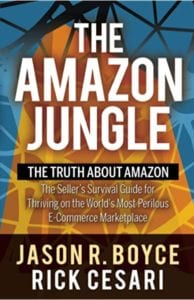
The Amazon Jungle: The Truth About Amazon, The Seller’s Survival Guide for Thriving on the World’s Most Perilous E-Commerce Marketplace
To show you how long ago this was, it was the mid-‘80s. We were using newspaper ads as our advertising vehicle. I did learn a lot of good lessons about direct to consumer marketing and what to put in an ad to get people to respond. Your show is all about the pitch. The pitch was important more from a sales pitch perspective with us because we’d have to get up on stage and convince people to buy a two-day $500 seminar. Little things that you changed while doing the pitch affected the results. That’s why I learned how to sell. I was able to take everything I learned in promoting these real estate seminars, my passion was health and nutrition.
I met a guy who was doing these small seminars and I felt like I could help him be successful. His name was Jay Kordich known as the Juiceman. I took the concept of the models we were doing with real estate seminars but used them to promote juicing seminars or health and nutrition seminars. The name of that company was Trillium Health Products. We were in the right place, right time with the right product. That business grew to $75 million in sales in only four years. We were able to sell it. Timeframe wise is about 1993. We’re still pre-internet. A company out of Chicago named Salton Housewares bought it for two reasons. They wanted our brands that Juiceman and Breadman, but they also wanted to know how to do the type of marketing I was doing.
They brought me a product which turned out to be the George Foreman Grill. I did all the television marketing for that. From that point, I got into the agency business by accident. People were coming to me saying, “Can you make a show or direct response commercial for us?” Sonicare was next and then OxiClean. I was fortunate to work with a lot of great products and watched how the business changed over the years. Starting before the internet to where we did all the television marketing for GoPro and the commercials, but then how you had to have a great online strategy as well as that. I’ve been in the business of pitching products through all of the different campaigns and things that I’ve done and figuring out how to get people to respond to what we said in our pitches.
I’m fascinated especially with something like GoPro, which is all about video. You’re creating a video to promote something that tells people to create their videos. You’re going down the rabbit hole there which is art imitating, life imitating and all that, which is great. When I was selling advertising for Condé Nast, Clarisonic was one of my clients. I used to drive down from LA to San Diego to talk to the agency about that. What a fascinating product and for those who don’t know, it’s a way to clean your face as if you’re getting a facial at home, it’s the quickest soundbite I would have for that.
I have a good kind of Clarisonic story too. The management team that started Sonicare did the marketing for that. They sold that business to Philips Electric for about $500 million.
[bctt tweet=”Stories give you an emotional connection. Video is a powerful way to connect with buyers.” username=”John_Livesay”]
For people who don’t know what that is, that’s for getting your teeth clean.
They held back from the patent or the sale to Philips the Sonic Technology for face cleaning. They started this whole other business, did the same exact marketing, they build good products if you’re familiar with it and started the Clarisonic, but it was a mirror of what they did with Sonicare. In both cases, the thing that launched both those businesses, they had some type of in with Oprah Winfrey and they got the Clarisonic skincare brush on Oprah. As soon as they do that, the business exploded and took off. It’s a fantastic product. It worked well.
Your book, The Amazon Jungle. You’re talking about that. I have a story of a founder I helped with his pitch who because in his culture, it’s a rite of passage into manhood was dropped in the Amazon jungle naked at eighteen after growing up in the Netherlands. He had to survive there for two weeks. I talk about lessons learned from the Amazon jungle, taking it to the concrete jungle of being an entrepreneur as part of his story of why investors invested with him. I love the title, The Amazon Jungle. I know it’s not your first book. What made you want to write this book?
Years ago, I got asked to do the keynote presentation at something called The Prosper Show. It is the main trade show for third-party Amazon sellers. At that time, my background was in direct to consumer marketing, but I knew very little about this platform that a lot of people were having success on. I gave that presentation and my eyes were open because I sat into a lot of the different seminars that were going on. I wanted to learn as much as I could about Amazon. I met a guy there who was at the Top 200 Sellers, named Jason Boyce. It turned out, he lived in Seattle where I live. We started dating together every Friday for coffee and he would pick my brain on what I knew about direct to consumer marketing and direct response marketing.
I pick his brain on Amazon and we came up with the idea said, “We should turn these conversations we are having into a book.” A lot of it is Jason’s expertise. He’s been selling on Amazon since 2003. He built an eight-figure Amazon business and he was at the Top 200 Seller. Now, he has an agency called Avenue 7 Media, but the book is a guide. When you talk about your friend being in the Amazon jungle, that’s scary to me.
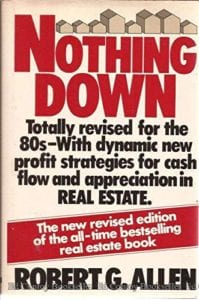
Nothing Down: How to Buy Real Estate With Little or No Money Down
If you do that without some type of guide, knowledge or whatever, you can lose your life, worst-case scenario. With the Amazon jungle, it is like that. It’s very difficult to set yourself apart. There are over a million third-party sellers. How are you going to differentiate your products? The book is a guide for anybody that wants to sell on Amazon from point A to point B. Everything you need to know, even going back to pick a category, a product, how to differentiate your product, how to optimize your listings, a step-by-step guide to be successful on Amazon.
You talk about the importance of sharing your story. That resonated with me that storytelling allows us to build trust. Do you have an example of the client that you’ve worked with that told their story as it related to a product they were selling and why that helped them break through the clutter?
It ties into Amazon a little bit. I’ve been doing that with almost every product we mentioned so far in the show. A good example of one, there were these two sisters that were from Taiwan and they were selling a product on Amazon called Puriya, which is a skincare cream that helps fight eczema. The name of the product was The Mother of All Creams. They were doing very well on Amazon. They came to me and they said, “How can we help our business?” I took one look at their website and the problem with a lot of Amazon sellers is, Amazon does all the marketing for them. They don’t have to do much outside of Amazon.
I felt like, “If they could tell their origin story, it helped their business. It gave some background to their product.” I helped them create an origin story where they grew up in Taiwan. When they wanted to treat an illness, their mother would go to the farmer’s market and buy different herbs. It was this recipe that they put into their product. That’s why they named it The Mother of All Creams because the recipe came from their mother. We put that on their Shopify site. Now, when somebody is on Amazon and saying, “Why should I buy Puriya?” They’ll go check the website and they see that there’s a story behind this product. It’s not some product that’s out of thin air. That’s a good example. Their business is thriving now. Not in the whole part of the story, but it helps build the brand.
That was my question that you’ve answered is the story doesn’t necessarily live in the product description on Amazon, but hopefully, there’s something in there that incentivizes people to go read more about it on the website.
[bctt tweet=”If people like your product or service, they’re more than happy to talk about it.” username=”John_Livesay”]
I’m a huge advocate of origin stories and tell the background story. If I start working with a client, I do a lot of marketing consulting these days. The first thing I do is go to their website, look at the About Us page, and see what happens. When I first come to the website, I’d love to see a video story of who we are, what we do, and why we’re different than the competition. If I want to dive into more detail and if a website doesn’t have that information, that’s one of the first things I tell people to do is to put that story in there because it creates credibility and authenticity to a product and helps their brand in general.
Also, the emotional connection.
That’s the most important part.
Do you have a lot of your clients putting short little videos on their Amazon product, whether it’s a testimonial?
I’m a huge believer in using video. I’ve used it for the many years. First on TV. Now online with Facebook and YouTube. There are all statistics about how powerful video is, and it’s an easy way for people to get information. Amazon is slowly opening up their advertising and even their product listings to include more video. I’m a big advocate of people using video as much as Amazon allows them online. I’m an advocate for doing that.

The Amazon Jungle: Stories create credibility and authenticity to a product and help build a brand in general.
Is that something that they can shoot on their iPhone, or do they need to hire a professional agent?
It’s funny you say that because I come from the background many years ago of you couldn’t go do a video shoot for less than $10,000 because of expensive camera lights. In testing that we’ve done and it’s obvious because of social media, people respond to video that is shot on an iPhone or whatever type of mobile device you have. More so than a very slick presentation. There are a couple of little things and your audio quality is always important. You need to have a nice little microphone and the lighting is good, but if you can go online and look at some basic video production techniques, the technology of mobile phones these days is almost as good as a $50,000 camera, ten years ago.
Since you’ve analyzed many different people selling things on Amazon, what are the common traits that you see that the top sellers have?
What a lot of sellers don’t have and you or your readers can go onto Amazon. Let’s use a coffee maker, for example, big brands that you’ve heard of. You’ll look at the product listing and you’ll see an image, a shot of the product from the front. You’ll see it from the side and they’re boring. They’re almost like something you’d seen in the instruction guide. What I’ve worked with Amazon sellers that we talk about in a book is use those listings. We took this from our success on TV. Each one of those listings should almost be like a magazine ad. If you’re going to show a coffee maker, call out the benefits of the coffee maker and use infographics so that when you’re looking at the image, you talk about the timer.
What’s the benefit of having a timer? You have delicious coffee ready for you when you wake up in the morning. Put people in your images. I was working with another guy who sold gaming products, foosball tables, ping pong tables, and he showed these products, but they didn’t have many people in them. I go, “You got to show people using the products.” It’s a simple thing that seems common sense to a lot of people. You see a lot of Amazon sellers not doing it. Those are some of the suggestions we talk about in the book and I bring to people when they ask.
[bctt tweet=”If you’re marketing a product, you must have a good foundation on Amazon.” username=”John_Livesay”]
It’s a lot like SEO with Google, where part of the problem is, if you don’t show up on the first page of a search for a product, then nobody finds you and you’re helping the book, gives some steps on how to get your product to show up fast.
We do talk about that. Yes, that is a problem. The goal is to be on the first page or first search when you come up on Amazon. We do talk a lot about how to do that with SEO, how you’re advertising both on Amazon and off Amazon can help you do that, people that are leaving reviews, and the importance of reviews. I’m a huge advocate of authentic testimonials. Mainly because they help tell your product story in a very authentic, credible way. I talk to people all the time about using real consumer testimonials on their Amazon reviews, but I tell them to take it a step further and try to get those people that are leaving reviews and do some video testimonials if possible and put those on your website. To me, that’s one of the biggest selling tools that you can have.
When someone left a review for my book, they put their picture with the review, as opposed to being the words, which I thought, “Even just that makes it pop.”
It adds a dimension. I do a little presentation on that. I talk about testimonials and exactly what you said, the basic layer is written with someone’s name, but if you add a photo to that, that’s even better. If you add audio to it, it’s even better. The ultimate is a video testimonial. Believe it or not, advertising wise, the more that you have in that testimonial from the standpoint of video or whatever, it will convert better than just a written Amazon review.
Do you have any tips on what people should do to try and get authentic reviews?

The Amazon Jungle: The goal is to be on the first search results page when you come up on Amazon.
I have one thing. Send me an email at [email protected]. I have a free download. It’s a six-step email template that if you have a database of customers, and even if you have 50 customers, this will still work. It’s something that I’ve used over the years to get people to come in and do a testimonial for you. I find that a lot of people that are product owners are afraid to reach out to get testimonials from people that have used their products. I’ve always found that if people like your product or your service, they’re more than happy to talk about it.
This email sequence is something that you can use to send to your database of customers. It’s a way of setting up and getting testimonials that you can interview. That does two great things. You can get a video testimonial of people that you can use in your marketing, but I also found it’s a great tool for product research. The feedback from someone, if you sit down and ask someone twenty questions, “How did you hear about my product? Why do you buy it? What do you like? What do you don’t like?” After interviewing ten people, you start to see a bunch of trends, and those are things that you can use in your marketing.
I do that with the students that have taken my online course. In the Facebook group, I’ll say, “What was the big takeaway from the session?” It’s fascinating to see 6 out of 10 people saying the same thing. “I learned how important it is to make my pitch conversational. I need to stay concise.” When other people keep reinforcing that that was their takeaway, the students locks in even stronger than just themselves thinking about it. Having people say it out loud, not only helps them, but also the sense of community. It helps me with my marketing knowing what to focus on for future students. If you’re struggling to say, “Be concise.” If you’re struggling not to sound like a robot, then you might need to learn how to tell better stories. It’s a continuous loop is what I found.
It’s a feedback loop. It’s awesome that you’re doing that. You’d be surprised how many people, course owners, product owners don’t talk to their customers. I got a funny story about Sonicare. We were going out doing interviews for Sonicare and we didn’t know what all the marketing messages were yet. It was a relatively new product. After interviewing about fifteen people, probably about half of them said that they had gotten better dental checkups since using the product. We put in the “the better dental checkup guaranteed” that if you bought this product, we guaranteed you have a better dental checkup or your money back. That came from customer feedback.
I’m not trying to imagine what is important to people, but hearing it. If that’s your ideal client, then that’s what we want more of. Let’s also talk about defending a brand. If we don’t have a strategy that sometimes marketing dollars that we think are driving traffic to our product, go to our competition. How does that work at Amazon? Is that unique to Amazon or is this true everywhere?
[bctt tweet=”Start an Amazon business with a product. Having a lot of money is not needed.” username=”John_Livesay”]
That’s probably true anywhere, but Amazon’s a good example. A few years ago, I underplayed the importance of Amazon. Now, you can’t. They own 50% of all the online sales in the US. They’re a gigantic place where people like to buy because it’s convenient and they get good prices. I always tell people, if you’re marketing a product, you have to have a good foundation on Amazon. Otherwise, any advertising dollars that you spend anywhere else people will end up searching automatically on Amazon for your product. Even if you tell them to go to your website, or you have some other special offer place, they can buy it. They’re going to check Amazon first. If you aren’t there and have a good brand page or good listing set up, your advertising dollars are going to drive somebody to buy your competitor’s product. It’s important to have a good Amazon foundation set up before you start spending a lot of ad dollars in other places.
Do you recommend that people start getting a product from China or something and then marking it up and then trying to sell it on Amazon? It’s something that they should have some experience with or where does somebody start to even think, “I guess I like it?” Does it require a certain minimum amount of money to make all this work?
Any business requires a certain amount of money. Starting an Amazon business is pretty low, you don’t need a lot of money. You do need to start with a product. We have an entire chapter devoted to a couple of things. You don’t know where to start. We tell you, “Think of your personal interest, whatever is your interests. You might have a pet. Let’s look at the pet category.” We tell you in the book the way to check different areas of how they’re doing because you don’t want to go into an area where there’s no sales or no interest, or nobody’s searching for it. We tell you to pick out an area where there is a lot of upside opportunity.
If you go over to China and you are going to find a product to market on Amazon, how to make that profit product different than the competition? The last thing you want is they always say, “There are 100 people selling toasters or blenders on Amazon. It’s a race to the bottom, whoever has the lowest price.” We go the opposite direction and say, “How do you take a product and make it more into a brand and differentiate it before you start selling on Amazon?” There some simple design tricks that you can work with the factory. My co-author Jason had an eight-figure Amazon business. He was selling on Amazon since 2003 and has made every mistake under the book. The book is a way of learning from other people’s mistakes.
We do get into various specifics things of doing it. It’s amazing things you find. One of our clients at Amazon Avenue 7 Media is a company that makes wheelchairs for dogs. You’d never think that that’s a big category. They get the same injuries as humans. They’ll torn ACL and they need to use these things. You would think of yourself, “That’s not a very big category.” These guys are doing six-figure business every month. It’s amazing what you can do if you do a little research and we show you how to do that.
The Amazon Jungle: The more testimonial videos you use, the more it will convert than just a written Amazon review.
Any last thought or a quote you want to leave us with?
If I tie it into the book, the biggest thing, and it relates to your friend’s story is that if you’re a seller, Amazon isn’t your friend, they’re your competitor. If you need a guide so that you don’t fall into a trap and let Amazon take advantage of you. We spent a lot of time telling you the pitfalls, what to look out for. It is almost like a map or a guide to be successful on Amazon. That’s probably the biggest thing.
The book is The Amazon Jungle. You can find it on Amazon as well as Rick’s website. Rick, thank you for sharing your fascinating background and all the successes you’ve had and how you continue to go from promoting something in a newspaper to not promoting the Amazon is the new newspaper in a weird way that everyone uses now to access and find information.
Thanks for having me on. I appreciate it.
Important Links
- The Amazon Jungle
- No Money Down
- Trillium Health Products
- Condé Nast
- Clarisonic
- The Prosper Show
- Avenue 7 Media
- Puriya
- [email protected]
- RickCesari.com
- Better Selling Through Storytelling Method Online Course
Wanna Host Your Own Podcast?
Click here to see how my friends at Podetize can help
Purchase John’s new book
John Livesay, The Pitch Whisperer
Share The Show
Did you enjoy the show? I’d love it if you subscribed today and left us a 5-star review!
- Click this link
- Click on the ‘Subscribe’ button below the artwork
- Go to the ‘Ratings and Reviews’ section
- Click on ‘Write a Review’
Love the show? Subscribe, rate, review, and share!
Join The Successful Pitch community today:
- JohnLivesay.com
- John Livesay Facebook
- John Livesay Twitter
- John Livesay LinkedIn
- John Livesay YouTube