

A Real Estate Backed Cryptocurrency Token with Matthew Sullivan
Posted by John Livesay in podcast | 0 comments
 Episode Summary
Many people want to “get in” on the new cryptocurrency innovations, but are nervous about all the ups and downs as well as the fact that it is “not backed on anything but trust.”
Imagine if the real estate market got disrupted by a cryptocurrency token that would help people take equity out of their home without increasing their monthly mortgage. What if that new token also provided everyday people a way to get in to the cryptocurrency game, but do it with a token that was backed by assets in real estate?
Well you don’t have to imagine it because Quantm.one is launching to help people get cash in exchange for a small percent of equity in their home. The social impact of this is huge as people who need money out of their home to send their child to college can now do so without causing their mortgage payment to go up.
—
Our guest on The Successful Pitch is Matthew Sullivan who is the host of his own podcast called Hooked on Startups. He is the CEO and Founder of a new cryptocurrency token called Quantm.One and it’s going to allow people to get equity out of their house without having to take on more debt as well as help those people who don’t have the money for a deposit to buy a new home. He has a fascinating background working with Richard Branson on launching a lot of Virgin brand extensions. He flies a helicopter and he also has a story of how he met the Prince in the UK. Enjoy the episode.
Listen To The Episode Here
A Real Estate Backed Cryptocurrency Token with Matthew Sullivan
I have a friend and colleague as my guest, Matthew Sullivan. He is the Founder and Chief Executive Officer of Quantm.One. He is also the Co-founder of a $50 million Secured Real Estate Income Strategies fund, and the President and Co-Founder of Crowdventure, a real estate crowdfunding company. He hosts his own podcast called Hooked On Startups. He worked with Richard Branson’s Corporate Finance Team in the Virgin Group for six years and has quite a story about flying a helicopter. He is the Director and Trustee at the time of Virgin’s London’s Air Ambulance, which is what the helicopter is involved with. He went to school in London and studied law over there and now is here in Southern California. Matthew, welcome to my humble little podcast known as The Successful Pitch.
John, it’s my unending pleasure to be here.
I like to ask my guests to take us back to their story of origin. You can go back when you were a young lad as you call yourself in London or you can tell about working for Richard Branson, however far you want to go back and take us back on, “Here’s how I got to where I am.”
It’s really a story of the moment that I decided that I was systematically unemployable. I think all of us entrepreneurs have a moment where we go, “This job thing just isn’t going to work for me.” I remember I was a stockbroker at the time. It was a great time. I was a Far East stockbroker so I would go around the world to all of the Far East Tigers or the Asian Tigers as they were known then, which were Hong Kong, Singapore, Malaysia, Indonesia, Philippines and Thailand. Every year or twice a year, we would all go in this junket around those countries meeting companies and doing research and just generally having a bit of a wild time. There was a point when I think I was out in either Hong Kong or Thailand when I just thought, “This is great fun but I want to be the person making the decisions and I want to be the person defining the policy. I didn’t just want to sit back and be an agent of execution.” I think I was in my mid-twenties or early twenties at the time.
[Tweet “A real estate backed token”]
A couple of years after that, the guys that I was stockbroking with, Tim and Rory McCarthy, they set up their own company and I went along and joined them much more as a partner rather than as an employee as it were. Rory wrote a letter one day to Richard Branson because his office was just around the corner in Kensington and he said, “Dear Richard, we own Lindstrand Balloons and I’ve always wanted to go around the world in a hot air balloon, but I think you would be a much better pilot. How about it?” I remember seeing the letter when it came back because the letter said, “Dear Rory, Why not? Yours, Richard.” It was a very simple response and then at that point onwards, we then ended up building this incredibly complex hot air balloon to try and fly around the world and there began our journey with Richard Branson and Virgin. For the next five to six years, we ended up being best friends with him and working in all sorts of really interesting projects from Virgin Jeans, Virgin Cosmetic, Virgin Clothing, V2 Music, Virgin Executive Jets, Virgin Helicopters and Virgin Bride, the list is endless.
Tell us your James Bond story because I love that. I think that’s a great visual for everybody to get just how bon vivant you are.
I learned to fly a helicopter at one of the companies we set up, which became Virgin Helicopters. At the same time, Express Newspapers Group decided that they’d spent ten years sponsoring the London’s Air Ambulance but they’d come to the end of their run as it were. The sponsorship or the funding of the London’s Air Ambulance was up for grabs and there was this risk that it would have to close down. The person in charge of the Air Ambulance at the time came to see Richard and said, “I think Virgin would be a great idea,” so Richard said, “Yes.” He handed it over to us and we sorted it all out and we put the money together. I ended up being a trustee and one of the directors or the operations director in charge of the whole process.
One of the perks that I used to get every now and then was that I would drive my car in the morning to the place where they park the helicopter at night, and I would get out and go to the crew room with all the other pilots there. I’d put my bright orange pilot suit on and my flashy James Bond with a mirror glass and I’d get in the helicopter. Because I have a license, they let me fly the helicopter under pretty close supervision I can tell you. They let me fly the helicopter to the parking place on top of the Royal London Hospital. I would fly to work and I would land the helicopter and I’d get out and I’d unzip my flight suit. I’d pick up my bag and I’d have my business suit underneath and I just catch the elevator down, hail a taxi, and I go off to work. That was my James Bond and I would do that. I’d do that a few times a year actually. It was pretty cool just flying over London looking at all these people underneath thinking that at that moment, I was Mr. J. Bond.
On your LinkedIn profile, there’s a photo of you with some relatively famous people who happen to reside in I believe it’s Buckingham Palace. Can you tell us how that happened?
We were closing one of the other projects that I was involved with. It was a sustainability campaign so that was going back a few years, not too long ago though, I think post-2008. In Europe, we were quite ahead of the US in terms of sustainability in carbon footprinting and the importance for companies to be able to demonstrate environmental credentials. One of the companies I set up, which is still running today which is called Clearway, was a consultancy that worked with companies to help them reduce their carbon footprint and improve their sustainability. One of the projects that we work very closely with was The Prince’s Trust. The Prince’s Trust was really very much at the forefront of running programs and educating companies. The picture there was we’d put together a program for schools, which was called Eco-Schools. The particular program was designed to try and get kids at a very early age to understand the importance of energy usage and sustainability and how the world doesn’t have infinite resources. That was something that was very close to the Prince’s heart and his charity. The picture there was where we were working very closely with the The Prince’s Trust at that point trying to roll this out to as many schools in the UK as we could.
We fast forward to your latest venture and what’s interesting about that story you told, Matthew, in your youth saying, “I don’t want to just execute something. I want to create it.” You have the same mindset around cryptocurrency. You don’t want to just invest in one, you want to start your own token. Tell us how that came about?
It’s a case of faint signals from the future having seen what happened with the internet back in the late ‘90s. Once or twice, there’s normally once every ten years or so, if you’ve got your feelers up and you’re listening out for these things, then every now and then, you pick up these signals where, “These sounds and feels like the thing that we had ten or twenty years ago.” The internet at that stage had its fair share of naysayers and the people on the sidelines. The guys that got in the early stages and understood the potential with the guys that actually really benefited. Having followed Bitcoin not for too long, probably for less than a year, had people talking about blockchain and cryptocurrencies, it didn’t really resonate. There was a moment when I thought, “There’s something here.” Then you see the price of Bitcoin going through the roof and you think, “I don’t actually want to be involved as a secondary player here because I have no control over this. I’m purely a passenger and completely at the disposal and at the hands of the market.”
That ride is very choppy and very volatile and it’s not enjoyable at all. To all of you investors in Bitcoin and all of the other coins out there, I know what it’s like because every morning you probably wake up and the first thing you do is you look at the price of your Bitcoin or your Ethereum or Litecoin or whatever the coins are. If it’s gone up, you have a great day. If it’s gone down, you start your day with the equivalent of a cold cup of coffee.
It’s so funny you say that because I talk about helping people get off the self-esteem roller coaster really feeling good about themselves if their numbers and their sales are up, and bad about themselves if their numbers are down. We can do the same thing with our investments and you figured out a solution to that.
The real point is how do you build something where you’re in control of it? Where you are able to shape and define the policy rather than having to react to it. What I’ve figured out over the years is that always, the answer that you want is staring you in the face. You’re just trying to look beyond it. You’re trying to look outside of it. Actually, it’s there. It’s a combination of your experience and where you are right now. That’s what you should try and leverage. Having spent a bit of time trying to get out of my own way and figure out what was actually in front of me.

Cryptocurrency Tokens: It’s a combination of your experience and where you are right now. That’s what you should try and leverage.
If you look at the components of the businesses that I’m in, real estate crowdfunding and just real estate generally, technology and then you overlay that with this cryptocurrency idea where you’ve got bits and bytes flying around the world without the normal roadblocks that you have with normal money, the solution was really to say, “How do you solve one of the big problems?” On the basis that if you wake up in the morning thinking that your Bitcoin price could have gone through the floor but thank God it hasn’t, that means it’s an inherently volatile currency. Is there a place for something that combines the benefits of cryptocurrencies, which is all this flexibility and the ability to move money around the world in the blink of an eye and something solid like real estate, which is really the mainstay of any portfolio? Real estate is there. They’re not making it anymore. We all know that real estate is a great investment. Really the a-ha moment was how do we take something solid like real estate which is predictable, which always outperforms inflation? How do we make it accessible to people by bolting on this really cool cryptocurrency technology? First of all, we don’t want a cryptocurrency that’s bouncing up and down all over the place in terms of prices. We want something that’s predictable.
There are major problems within the US residential housing market that need fixing. They need fixing by people saying, “You shouldn’t be borrowing so much money. There should be other ways to help you fund your house.” At the moment, the only way you can buy a house is by borrowing a ton of money. You don’t actually buy a house, you finance your house. Is there a way where you can get other people to come in and maybe buy a little bit of your house with you so that your debt isn’t so massive? There are ways of doing that but the problem is, people don’t really want to invest in that because you’re locked in for a long period of time and it doesn’t throw off any cashflow. There’s all these problems floating around and if you wrap the umbrella of this cryptocurrency over the top of that, suddenly it starts solving these problems one by one.
From a volatility perspective, suddenly if you add real estate as your underlying asset, it smooths it all off because real estate doesn’t bounce up and down in price. It moves really slowly. If you can tie your currency to that and the currency comes down and doesn’t bounce all over the place and it becomes much more predictable. The thing about the currency is it creates liquidity. If you can buy and sell these tokens and if these tokens represent this big piece of real estate then theoretically, you can chop up a big piece of real estate into loads of tiny little pieces and you can sell those to people by way of tokens. The people that buy the tokens can then sell those tokens to somebody else. Those tokens move around like atoms. When they’ve got this big solid object underneath, it stays there. These tokens are whizzing around the top of it like atoms and that creates liquidity.
What we’re now in the position of doing is creating money that we can spend with people who can’t afford to buy a house and we can say, “I know you can’t afford to buy a house because you can’t afford the down payment, but how about we come in and split the down payment with you?” Or let’s say, “You’ve got a ton of equity that you’ve built up in your house and you need to release some of that because you can’t pay your mortgage, how about we buy a piece of that equity from you? You don’t have to pay us back. You just sold us a piece of your house and then we can give you some money so that you can pay your college fees or you can help get yourself back on track.” That’s a very long answer to a very simple question.
[Tweet “Helping people get equity out of their home with no debt”]
Let’s break it down a little bit. You decided that instead of just investing in cryptocurrency, you wanted to start your own token because it’s too volatile and you get on that self-esteem rollercoaster based on how something is performing and you have no say in it. That’s the first problem you’re solving is realizing there’s a lot of people that need to find a place to put their tokens. Then you have a social impact element to it, which is there’s a lot of people who have some equity in their house that they want to take out and the only way to do that now is by taking on a higher mortgage amount.
Yes, exactly. This is the design. The design is to say, “Here’s the token which is much more predictable where you haven’t got to worry, you’re not going to have those sleepless nights because it’s not going to bounce up and down anything like the other cryptocurrencies.” The second thing is really interesting because I think something like 70% of people who rent homes in the US would prefer to buy their house but they can’t because they can’t afford the down payment.
The 20%.
I think it’s less than that. 20% is the optimal but even if it’s 5% or 10%, because of all the issues we had back in ’07 and ‘08, the banks are now much more stringent about how much money they lend and who they lend it to. Add it to the fact that if you look at the amount of money that the average person has by way of savings in their bank account, I can’t remember what the exact statistics are, but it’s a few hundred dollars. If something goes wrong with your washing machine, basically you’re screwed because most people don’t have enough spare cash for something like that to happen. To actually find people who are trying to get their foot on the property ladder and to ask them to suddenly come up with this big down payment, they’ve got to go and max out their credit cards, phone up their friends and family and beg, scrape, and put together this deposit. That’s why most people are renting houses. That’s why the cost of rentals is going up disproportionately to inflation and to the all other indicates because there’s so much demand for rentals because people can’t afford to buy a house. We solve that problem by saying, “We will help you with the down payment.”

Cryptocurrency Tokens: Banks are now much more stringent about how much money they lend and who they lend it to.
The other problem is, “What about people that are sitting on houses that they’ve had for a long time that have gone up in value but they’ve fallen on hard times or their jobs aren’t paying as much as they used to and the price of living has gone up?” It’s crazy because they’re sitting on hundreds of thousands of dollars of value that they can’t get a hold of because the banks will turn them down if they try and get a home equity line of credit. They are stuck there with all this value, all this money that’s basically nailed behind the walls that they can’t get access to. What we say is, “We want a piece of your house because that’s really valuable to us a real estate asset. Sell us that piece of your house, just a percentage of your equity and we’ll have that and we’ll pay for that.” It creates this liquidity. It puts money back into people’s pockets that the banks are unable to do.
Still have some appreciation but you know it’s never going to go down to zero because it’s backed by some actual residential real estate. The other thing that’s interesting is there’s probably a lot of people sitting on the sidelines going, “I’d love to be part of this cryptocurrency world but it’s too scary for me because it’s so volatile. I could buy a token that’s backed by real estate. That makes sense. That will be a good entry for me,” yes?
You’re right. The other thing is I can buy one token or I can buy a half token. Let’s say for arguments sake the tokens start out at $10 each. I don’t have to buy a whole token. I could go on to an exchange and I can say, “I want to buy a $1 or $100 or $153.45 worth.” I’m not restricted by minimums. I can buy a little bit now, a little bit tomorrow, a little bit next month. I can sell a bit. The great thing about tokens because of the technology, you can actually chop these tokens up into tiny, tiny pieces. That makes it much more accessible for people that don’t want to have to spend $1,000. How much is a Google share or an Apple share these days? You’ve got to be pretty rich just to be able to buy one Bitcoin these days. People understand real estate so it’s the next step where we go, “I don’t really understand cryptocurrencies but I do understand real estate and I do understand that this token is backed by real estate so I’m a bit closer to understanding how this stuff works.”
Also, “I want to put some high investments in residential real estate without having to be a landlord. This gives me the benefits of owning a small percentage of a lot of people’s homes without having to deal with the upkeep because the owners keep the upkeep going.”
That’s a really critical point because the best people you want to look after a home are the owners. There’s a great expression, “If you’re renting properties, you’ve got tenants, toilets and trash.” Those are the three things that any landlord hates. Getting call at 3:00 on a Sunday morning saying that the toilet is blocked so you’ve got to do something about it. If you will own a piece of someone else’s house and you own it in true partnership with them so that if they make money, you make money. If they lose money, you lose money. If you are there as partners, they’re going to look after the house. They’re going to cut the grass. They’re going to paint the walls, they’re going to keep the place clean because they’re proud of the house and you’re a partner in that with them.
The great thing is that there are literally thousands of billions of dollars of people’s houses out there where they would be willing to share or to allow other people to be part owners in their house if they could keep their house or if they could stay as owners. It is a massively untapped asset class or a piece of a section in the real estate economy that people haven’t really been interested in because it doesn’t throw off any revenues. It’s not cashflowing. It doesn’t pay rent. If you buy a share in someone’s house, theoretically, you’ve got to wait until they sell the house before you make your money. That’s what put everyone off to date and that’s what changes with this whole concept of the token and putting the token on top of that.
The real reason to tokenize, if you will, the way people buy a home or get equity out of their home is fill in the blank. Right now, there are ways for people to get equity out of their house and there’s people sitting on the sidelines that can’t come up with a down payment. The real value of having a token do it would be, what would you say? It’s liquid?
What it does is it allows people on both sides of the fence to get involved. On one side of the fence, you’ve got the homeowner who wants to release some capital. Normally, that money would come from these big nasty hedge funds or banks or funds or pension funds and basically men in suits behind glass doors. There’s no opportunity for the man in the street to be able to participate. If I’ve got a bit of cash, I like the idea of investing in other people’s houses. I like the idea of being able to help them get on the housing ladder but that opportunity is not available to anybody right now because the money to do what equity sharing there is, is provided by banks and hedge funds. What the token does is it says, “We’re going to throw this whole thing out to the average investor.” We’re going to say, “Pretty much anybody now will be able to get on the housing ladder as long as they meet certain requirements.” Also, if you want to get involved in this and help people and potentially get a good return on your money, then what the token does is it democratizes that side of the equation as well.
[Tweet “Helping people with downpayment to buy a home”]
Also, isn’t it lowering transactional cost compared to traditional asset trading?
The great thing about the technology is that things happen in the blink of an eye now whereas beforehand, you have to go through brokers and dealers. There will be commissions here and commissions there and paperwork here and sign a form there. If we can do it through this technology lair, all those things happen instantly. The tracking and the securities that we’re putting in front of these properties create more security in these transactions. What we’re doing is we’re taking something that is not tradable, that is not liquid and then using technology, we are making it liquid. The result of that is the efficiency and the magic effectively that the technology brings. It unlocks that. Your question is about cost and efficiency. It will be fractions of a fraction in terms of the cost of doing that transaction compared to what it would be if we try to do it through the normal equity ways that we have today.
Matthew, I love what you are saying so much that I decided to join the team at this very moment. If anybody wants to track what’s going on with Quantm.One token, you can go to the website which is Quantm.One. Any other final thoughts on Quantm and the future of cryptocurrency in real estate?

Cryptocurrency Tokens: In the future, everything we do will have a value and we’ll be able to translate that value into something that we can spend.
As more and more people understand cryptocurrencies, the thing that we’re not really tapping into is just the amazing scale of things that cryptocurrencies can get involved with. My prediction for the near future is that everything we do will have a value and we’ll be able to translate that value into something that we can spend. Whether it’s intellectual property or whether it’s physical activity or skills or the ability to communicate, those skills of cryptocurrencies and tokens and technology, will be able to have a value around those things. That means that people that have these amazing skills that haven’t been able to turn this into capital because capital law, normal money is just a little bit old fashioned, that will be released. We’ll see whole new economies and whole new ways of doing things will also be springing out of this ability to tokenize activities and intellectual property and value.
It’s certainly an exciting time to be a part of all of this. Thank you for being a guest on the show.
John, it’s been my pleasure. Thank you.
Links Mentioned
- Hooked on Startups
- Quantm.One
- Virgin
- Crowdventure
- Richard Branson
- Virgin Helicopters
- Matthew’s LinkedIn profile
- Clearway
- The Prince’s Trust
Wanna Host Your Own Podcast?
Click here to see how my friends at Brandcasting You can help
Get your FREE copy of John’s latest eBook Getting To Yes now!
John Livesay, The Pitch Whisperer
Share The Show
Did you enjoy the show? I’d love it if you subscribed today and left us a 5-star review!
-
- Click this link
- Click on the ‘Subscribe’ button below the artwork
- Go to the ‘Ratings and Reviews’ section
- Click on ‘Write a Review’
How To Win Shark Tank – Interview with Charles Michael Yim
Posted by John Livesay in podcast | 0 comments
Listen To The Episode Here
Episode Summary
Charles Michael Yim is a successful serial entrepreneur and has appeared on Shark Tank and other news outlets. Charles was the first one in the history of the Shark Tank show to get funding from all of the sharks. Charles also came in first place out of 10.000 startups after competing for Sir Richard Branson’s startup contest. Charles talks on his success with Breathometer, the differences between Sir Richard Branson and Mark Cuban’s business style, and his upcoming book.
How To Win Shark Tank – Interview with Charles Michael Yim
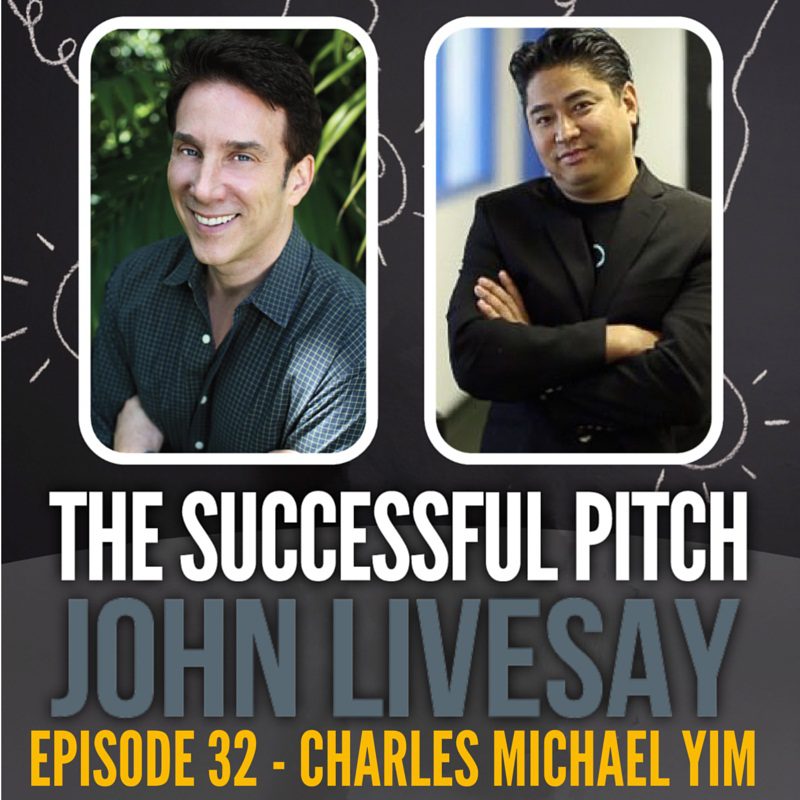
Hi and welcome to The Successful Pitch podcast. Today’s guest is Charles Michael Yim who is the CEO of Breathometer. You might know Charles from seeing him win on Shark Tank. Charles, welcome to the show.
Hey, how’s it going? Glad to be a part of it.

Breathometer is the leader in breath analysis technology.
Thank you. We really appreciate you sharing your wisdom, your insights [on how to win Shark Tank]. One of the things that I really notice about someone like you is people see you on TV and they think, “Oh, overnight success,” and you’ve been doing this for quite a while and you had several successes before Breathometer. I think that’s really one of the keys that investors look for, is serial entrepreneurs, because you have a certain tenacity and you learned a lot and all that good stuff. Can you speak to your background a little bit? I know you were at some other companies and huge success there as well?
Sure. Like what you just said, you can’t just become an entrepreneur overnight. It’s more of a risk and reward scenario in that, it’s once you start, it’s really I’d like to think, is hacking away, you start hacking away at it. I think when you start, 50% is complete. But I think climbing up the mountain, addressing adversities, driving through a certain level of perseverance and tenacity and ambition. That’s what kind of gets you passed the line.
Breathometer, my current company, is technically my third founding company. I built and sold my last two and so I’ve had a couple of successful exits. I would say my first company is where I sharpened my teeth and that’s where I made several failures and many mistakes, but the important thing is that you get back up and you learn from them and you do better the next time. Ideally, you do it fast enough where you can still survive or your company can or your business can still survive.
What gave you the idea for Breathometer? Most entrepreneurs tell me, “We saw a problem and we wanted to solve it.” It was all about, at first, helping people not drink and drive, right? That was, before they get pulled over by the police they have to take a breath test.
In terms of inspiration, it really came from Jack Dorsey’s wear product. If you’re familiar with it, it’s a pin and processing product geared towards small to medium sized businesses. I saw a dongle and I kind of connected the dots. With the smartphone, I thought to myself, why couldn’t I just switch out the sensor inside for a bio-sensor instead and apply it towards essentially an alcohol breathalyzer kind of product, value proposition.
I used it back in college and I always erred on the side of safety. I put two and two together. Consulted with a few close, trusted friends. Next thing you know, I had a working, breathing prototype within about three months.
What I love about that story, Charles, is that you didn’t have to reinvent the wheel from scratch. You actually got inspired by someone else’s startup. What a great story that is, I love it, and say, how can I make this better? What’s also fascinating to me, please correct me if I’m wrong, but from what I understand is you’ve taken Breathometer to way more than just making sure of you’re alcohol level. It’s actually helping people make sure they don’t have bad breath. Who doesn’t need that, right?
Yeah, there’s quite a few applications that breath can apply to. I think about 6 months into it, I started collaborating and connecting and partnering up with Stanford university, my alma mater, as well Cleveland Clinic. Cleveland Clinic by far has basically the most advanced breath analysis lab that I would think, that I’ve seen at least. Breath analysis actually been a science for quite some time. A lot of consumers aren’t aware, but there’s breathalyzer-type machines in these Kaiser Permanentes in the world. They can cost as much as a quarter million up. You typically need a prescription and, I would say, extra added fees so you can have access to one.
It ranges in terms of applications. Everything from allergens, gastrointestinal issues, asthma. It really goes on and on. For us, we started with alcohol, but then we’re venturing into true medical or digital health applications like oral health, like health and fitness, being able to detect certain levels of fat burning through one’s body. But again, all through breath, because breath has roughly about 300 biomarkers whereby at least 25% are applicable towards human conditions.
All the people who are buying Fitbit and keeping track of their calories could also be buying your product to keep track of their fat burning through their breath analysis for ketosis and things?

Could you pair it with a Fitbit product or what have you or some type of step tracker? Sure.
Correct, and you don’t even have to worry about calorie counting anymore, or quite frankly, how many steps you are taking. Yeah, could you pair it with a Fitbit product or what have you or some type of step tracker? Sure, but if anyone really knows health and fitness, it really boils down to 80% of what you’re eating versus 20% in terms of your workout.
If you nailed down your diet and you’re not necessarily calorie counting but understanding how much fat you’re really burning and optimizing that, essentially that’s the holy grail. That’s how you really shedding pounds and staying at a certain optimal and healthy fitness range.
I think that’s what’s going to be partly responsible, if not a lot, of the incredible growth that you’ve already had. What I saw was that the growth for Breathometer was, 2014 you were at $4 million and then you project 2016 to be at $14 million, is that accurate?
Yeah. That’s right.
That’s phenomenal growth and obviously it’s not just from awareness from Shark Tank, although there’s a great story there. You were pre-revenue from the video I saw, right, before you went on Shark Tank?
Correct. We were pre-revenue. We’ve been revenue-generating for quite some time. Next year will be even a bigger year. Now we’re launching our third product and we’re already working on our forth and we already have our 5th in the R&D phase. All, again, geared towards different applications, not just alcohol.

Charles Michael Yim was the first person on Shark Tank to ever get all five sharks to invest with him.
What’s interesting about you on so many levels is you’ve broken history multiple times. You were the first person on Shark Tank to ever get all five sharks to invest with you. What’s interesting is they all said you checked off all the boxes.
You had a great product, you knew your numbers, you were a great business person, and you were doing something that was great for society, so everybody felt good about investing in that. Did you know before you went in [to win Shark Tank] there that you were checking off all those boxes or is that just who you are and the way you’ve done business in the past?
It’s the latter. I didn’t have necessarily a checklist going in there. I would say I definitely did my fair share of preparation. I definitely made sure I knew my numbers and I run a pretty tight ship so I knew my business inside out, so I was well prepared. I think as most people kind of define luck, there was a little part of luck in it where when the opportunity arises, you’re prepared and so you can take advantage of the opportunity. There was a lot of preparation that I think was key.
In terms of product, obviously there’s bias, but I definitely feel it’s compelling. Obviously, I have experienced and of course there’s a great cause behind it. I think, there’s a combination of factors, but a good portion of being prepared and the rest just being the right fit.
One of my favorite quotes is from Arthur Ashe, who said the key to success is confidence and the key to confidence is preparation. I’d love to have you share with our listeners what kind of preparation did you do before you went to pitch Shark Tank and what do you now before you pitch investors?
[Tweet “The key to success is confidence and the key to confidence is preparation.”]
I think with Shark Tank, which was very acute to Shark Tank, was I actually met with quite a few successful fellow Shark Tank entrepreneurs that have already been on the show and did well, started interviewing them. Understanding, are these investors are actually the real deal? Can they really add value to your business? Pro-tips, if you will, prior to being on the show.
In terms of just what I do in general, I’ve been in the board room several times. Again, it’s my third company. I’ve, overall, probably closed over $50-60 million dollars in funding, VC funding, single-handedly. I’ve been around the Valley. I think in terms of just being prepared being able to anticipate questions investors will ask, that’s extremely key [to win Shark Tank].
I have a pretty good head on my shoulders now and I think that just comes along with, as you say, preparation and that built confidence. In addition to that, just having the experience underneath your belt. When you’ve been around the block a few times, it gets easier. It gets easier, for sure.
[Tweet “When you’ve been around the block a few times, it gets easier.”]
Those questions include everything from what does it cost to acquire a customer to what’s your vision. There’s so many questions to be prepared for and anticipate. I want to brag about you. You closed $2 million in 2013 and now you’re going for $20 million. Is that accurate?
That’s right. Yeah, we already closed a good chunk of it already. More than 50-60% and we’re closing the rest of it now.
When you go from that kind of $2 million to $20 million, that’s such an incredible growth and obviously, based on huge success. Do you get different questions when you’re going for $20 million than you do when you’re going for $2 [million]?
Certainty, you do. Definitely, especially when you have a company that changes from, transitions from pre-revenue to revenue. Pre-revenue is more about product validation and ultimately product launch and assessing the risk points of the company in terms of being able to at least just ship the product.
When you’re in the second phase where we are, at series A, it’s user acquisition cost. How much does it cost to bring on a user? What’s the LTV, lifetime value of the customer? What’s the cohort analysis look like? How long are you retaining your customers and how long are they staying with you. Are they happy? Are they satisfied? If they’re not, you got to quickly address them.

There’s different certain level of expectations based on the growth stages that you’re in. There’s always good and bad with that.
Additionally [to help you win Shark Tank], what’s your roadmap and do you have the team that can support that? Do you have the engineering? Do you have the product? Do you have the financial assets or foundations to be able to support something like that? What are the markets you are targeting? Who is truly your demographic? Who is your customer at the end of the day?
You need to know quite a bit more about your product or products and your customers and then mechanics and foundation of your business, because at that point, you’re no longer an infant. You’re more like a toddler.
I would say we are in the transition and the interesting phase where we’re a toddler now, but we’re quickly transitioning to become a true teenager. There’s different certain level of expectations based on the growth stages that you’re in. There’s always good and bad with that. There’s going to be natural pain points, there’s going to be growing pains.
Scaling a business, hiring quick enough, but hiring quality individuals that can truly add value to the business, finding the right investors, support partners, and dealing with the distribution, international scaling, localization, regulatory. We’re a medical company at the end of the day, so we have to deal with the FDA. There’s complaint regulations we have to address, legalities.
There’s a ton of stipulations that we have to go through. It’s just a complete different set of questions from where we once were, first airing on Shark Tank. It’s a different ballgame. Just to mind you, we are truly a Silicon Valley company at heart.

I think Shark Tank, if at all, gave us a considerable boost.
When I say Silicon Valley, what I refer to and what that means to me is that we’re very much a technology company and we’re a culmination of both hardware and software. I think Shark Tank, if at all, gave us a considerable boost. We’re an atypical company in terms of how we’ve gotten to where we’ve gotten and the momentum we’ve built so far.
Can you speak a little bit about the team? I saw on your LinkedIn profile, you have some of the same people from your previous successful companies working with you again. Obviously there’s great synergy there when you have your team following you and you guys have a shortcut. They know what you expect from them and vice verse.
That’s so important for investors, is who is the team, and you mentioned it. Anything you can do about how you find your good team? How do you keep them from company to company?
That’s a great question. I think repetition is pretty key. You need to be able to treat your people and your team members well. I think if there’s a certain level of mutual respect there, I think naturally it’s going to lead to basically a, I would say, a clan, if you will. A group of you that go from one company to the other and creating success at one place and then hopefully repeating that, making that a recurring situation.
I think it’s a lot about that. It’s just great teamwork, team synergy and treating each other with an equal amount of respect. I think that naturally occurs. I there’s a second part of that, just team building. I think that’s probably one of the most important assets or talents that one founder can have when you’re building a company.
Because if you, for instance, don’t know a certain aspect or don’t have an in-house expertise on a particular topic for a business, maybe you don’t know, but you could hire someone that does. You can hire, believe it or not, a lot away out of your problems as a startup. If you don’t know it, bring someone in-house and they’ll figure it out for you.
[Tweet “Teamwork is respect and collaboration”]
I love that so much. The teamwork is built on respect and collaboration. Which is really what you’re saying is, collaborate with people who have skills that you maybe don’t have and then everything is stronger than it was before. It’s really fantastic insights. Do all five Sharks engage with you equally while you have that many investors?
No, I think it’s more on an as needed basis. When I first got funding and it was from all five at the very beginning, it was pretty much all five cylinders pumping at the same time. It’s pretty intense. Once you start scaling to a series A and when you establish a rapport and built up the relationship, it’s more on an as needed basis. We’re no longer that little tiny company that we once were. Now, it’s basically on demand basis more so than anything.
We have now institutional investors that are involved, that tends to be why we have a much larger round. In addition to that, we have a formal board now, which is very different. I’m not the only one just kind of calling the shots. I have a legitimate board that come from the institutional investor side that help mandate policy and make decisions with me.
We haven’t even gotten to your other big accomplishment, which is winning first place out of 10,000 other startups with Sir Richard Branson. Congratulations on that. You have Richard Branson and Mark Cuban backing you. I would think that’s quite a nice calling card for investors. Tell us a little bit about the Sir Richard Branson experience?

Charles Michael Yim won first place out of 10,000 other startups with Sir Richard Branson.
Richard Branson, it was more of his version of Shark Tank, if you will. It’s an opportunity for the community to basically, I would say, add fuel to the fire. If you already had something going, like Breathometer did at the very time we entered the competition, it basically acted as a catalyst and expedited our growth. We were exposed to a lot of investors. That’s what lead to our series A. and a lot of basically partnership opportunities as well. We had a lot of opportunity to interface with Richard Branson himself, his team, was able to go on his private island, Necker, so that was pretty cool. I’ve been twice since.
It’s just a phenomenal opportunity to meet great people, really expose the brand to a great community. There was just nothing but just give, give, give and take, take, take in terms of just a mutual exchange. Overall, it was a great experience and probably had equally as difficult, if not more difficult odds, in terms of coming through. But pleasantly surprised, we took first place. It was an amazing ride.
I bet. What advise did Mark Cuban and Sir Richard Branson give you? I would assume they have different points of view. Since you’re one of the few people who is fortunate enough to know them both, I would love to her your insights and how they compare.
I can tell you what I was able to take away from each so far. I think what I get from Mark Cuban, he’s a very much of an entrepreneur than an investor type that is all about building a business and doing the grind and just getting things done. I definitely got that from him. At the end of the day, he just wants to make sure that you’re doing your best and you’re building a real business.
[Tweet “Mark Cuban is all about getting it done.”]
I think what I get from Richard Branson is creating authentic genuine value. We have, for instance, a potential application for lung cancer. He was really just focused on that. He’s like, great, you can build businesses. A lot of people do build businesses, but if you really have a lung cancer application here, you talk about really saving lives.
[Tweet “Richard Branson wants authentic value.”]
I think what I got from him was just the bigger picture in that contributing back to the community, contributing back to the world. Doing something great while building something that you’re passionate about. That’s the winning formula there.
Building something great while making a difference in the world. That’s a great line. I love it. It’s really helpful. As if that’s not enough, you are also going to be an author. Tell us about your upcoming book.
[Tweet “Building something great while making a difference in the world.”]
I’m writing a book. It’s going to be three parts. My inspiration was from the show because after airing on the show, now I’ve been a part of five episodes and soon to be airing on the new spin-off show, Beyond The Tank, as well.
I’ve developed a public persona, if you will. I get approached quite a bit in public. I have parents coming up to me saying, “Hey, you inspired my kid to start his on business,” and blah, blah, blah or, “They want to learn from you.”
That got me thinking in that, maybe there’s something to here. That inspired me to write a book [about how to win Shark Tank]. The title may be something like Making of a Shark. Meaning that if you take some of the tips that I provide, perhaps you can build something of your own [and win Shark Tank too].

We had a lot of opportunity to interface with Richard Branson himself, his team, was able to go on his private island, Necker.
It’s three parts. It’s part one, my bio background. It’s a brief background of me and how I came to be as a lemonade stand kid to a full entrepreneur. Part two is my behind the scenes behind Shark Tank and then Richard Branson’s Xtreme Tech Challenge.
Part three, where I think the majority of value in the book is, my ten step guide, if you will, of how to come up with an idea, how to validate the idea, go to product discovery, whether it be product or service. Get investment for it, whether it be crowd funding or personal investors. Then taking it and releasing it to market, and then eventually scaling it. This is kind of a proven formula, if you will, that I’ve done personally with my last three companies, so I know it works.
I’ve broken it, I’ve distilled it down to very simple points where any average consumer, someone from middle America can pick it up and read it and go run with it. It’s my way to give back. I think it’s great if you’re successful, but if you can give back a little bit, that’s when the win is.
I’m being repped by one of the top agencies in Hollywood, they’re called APA. They’ve done Kim Kardashian, they’ve done Restaurant Impossible. They’ve done Gordon Ramsey and a bunch of stuff. They’re repping me at this point. I’ve already started writing the book, so we’ll probably launching in the next, I would say, 8-9-10 months.
How exciting. It sounds like a great content. It’s got enough celebrity hook of the behind the scenes with two major people, Mark Cuban and Sir Richard Branson, and then the actual meat and potatoes. One of the things that jumped out at me when you were describing the book, which I want to pre-order the minute it is available, is the idea.
So many people have so many ideas. How do you know or any tips you can give us in advance to your book, how do you know that this is the right idea to really pursue [so you can win Shark Tank]? Do you test it with crowd funding or do you test it with consumers or check out the competition? What’s your criteria for knowing that, in this case, Breathometer was going to be the right idea?
You hit a lot of the main points. Again, it’s essentially you need to one, validate the idea. That can be done through crowd funding. Secondarily, you need to do research. Figure out what the market size is like. Is there a predicate device, is there a market? The third part of it is, what truly is the potential penetration or traction of it? Those are kind of three of some of the primary characteristics or profile requirements. If you see and you recognize a potential, then at that point it’s a matter of execution.
[Tweet “If you see and you recognize a potential, then at that point it’s a matter of execution.”]
Great. I also know that you are involved with the Stanford StartX Accelerator program, which is another way of giving back, obviously. You must hear a lot of great pitches. Just to get into those accelerator programs is extremely competitive, almost like trying to get on Shark Tank. The number of people who apply and the number of people who get in.
I’ve recently been the pitch mentor at StartFast in New York, so I know that experience. I would love to hear your insights as what’s it like working with the Stanford Accelerator?
Like you said, it’s a tough accelerator. I entered, applied, being a Stanford alumni. That’s one of the main requirements. Aside from that, you need to have a legitimate idea or product or service. If you are selected, like you said, it’s tough, then you can go to the acceleration program. We did that and we did well. We gained a Chief Medical Officer. We got funding from Stanford University. That was nice. Now we’re working with them on the essentially respiratory side of things.
Moving forward, I now, like you said, give back. I’m actually now a mentor for the Stanford StartX Accelerator personally. I do get exposed to quite a few pitches. I think my two cents there is a lot of people get really caught in the, “Hey, I’ve got a cool idea and it sounds really cool, and what if it was this, what if it was that.”
I think my advice there is, and this is in my book again, that you should think about, when you create a company or product or service for that matter [to win Shark Tank or do something on your own], is always look through the lens of a problem-solution framework. What I mean by that is your target should be, are you solving a real problem? If you are and you have an innovative and a legitimate solution, you will have more than likely built a product or service that can provide real value.
[Tweet “See your idea thru the lens of what problem do you solve.”]
If you do, that’s when you have a basis for a company or a business. I find too often that, I would say, beginner entrepreneurs that just go out in the world wanting to create something but in actuality, they’re just creating something. That doesn’t mean that they’re generating or going to essentially create a business.
That’s incredibly valuable. Who do you help and what problem do you solve are two of the key questions that I think startups need to have in their head before they ever get to an accelerator, let alone an investor, and be able to say this isn’t just something that’s fun, it’s actually solving a problem. In addition to your upcoming book, are there any other books that you’d like to recommend to startups?

Art of The Start
That’s a good question. I am a big fan of Guy Kawasaki. That’s actually how I broke into the startup world. He has a book called Art of The Start. That’s pretty big for me. Let’s see. I think Eric Ries has a pretty good book. It’s called Lean Startup. You get an idea of how to run lean and mean and the fundamentals of running a startup and surviving. There’s also Tim Ferriss, 4 Hour Work Week.
I’m a big firm believer in working smart and obviously working hard, but working smart goes a lot further than working hard. Believe it or not, I run this company and probably in the middle of launching another company.
It’s just juggling the two acts where if you can get your current company or the company you’re working on to a stable state, a manageable state where you have senior management and at that point it’s self-sufficient and you are really delegating responsibilities, then potentially you’re at a point where you can actually start something else and make the best use of your time. Staying active, it’s all about a juggle act and it really comes down to how good you are at multitasking. I think that’s pretty key [to win Shark Tank].
I love it. How can our listeners follow you, be sure that they know when your book comes out, Twitter, LinkedIn? What’s the best way to keep track of, you have a blog or anything that you want people to read?
I’m pretty active on social media. I have a pretty significant following, especially after airing on Shark Tank and what have you. I am quite often pretty active on Facebook. You can find me under Charles Michael Yim. I technically go with my middle name as well. On Instagram, Twitter, I’m always under @CharlesMYim. You can follow me on there.
Otherwise, I’m always on the news or on TV with Squawk Box on CNBC and then potentially CNN soon and what have you. Shark Tank and now Beyond the Tank. You can follow me on TV as well. I’m constantly involved in blogs, whether it be TechCrunch or Mashable or Venture Beat.
Fantastic. Charles, I can’t thank you enough for being on the podcast today and sharing your wisdom [on how to win Shark Tank]. Congratulations on all your success. We’re looking forward to your new book and watching you on Beyond the Tank and other shows as well.
Cool, awesome.
Thanks again.
Thank you.
Links Mentioned
The Art of The Start by Guy Kawasaki.
The Four Hour Work Week by Tim Ferriss
The Lean Startup by Eric Ries
Charles Michael Yim Twitter
Crack The Funding Code!
Register now for the free webinar
The Successful Pitch – Book Trailer
Share The Show
Did you enjoy the show? I’d love it if you subscribed today and left us a 5-star review!
-
- Click this link
- Click on the ‘Subscribe’ button below the artwork
- Go to the ‘Ratings and Reviews’ section
- Click on ‘Write a Review’