

ROAR Into The Second Half Of Your Life With Michael Clinton
Posted by John Livesay in podcast | 0 comments

Retirement doesn’t have to put an end to you living out your purpose and passion. Here to talk about how you can energetically dive into life post-retirement is Michael Clinton with his book, ROAR: Into the Second Half of Your Life (Before It’s Too Late). Michael is the special media advisor to the Hearst Corporation’s CEO. He is also an author and a photographer. He’s traveled to 124 countries, ran marathons on seven continents, and started a non-profit organization. And that’s just scratching the surface. In this episode, Michael joins John Livesay to advise his peers going through mid-life that you can pivot and do more after retirement. It’s just another layer to your cake. Tune in to learn more about Michael’s optimistic and proactive view on retirement and embracing the third act of life.
—
Listen to the podcast here
ROAR Into The Second Half Of Your Life With Michael Clinton
Our guest is Michael Clinton, the author of Roar: Into the Second Half of Your Life (Before It’s Too Late). He talks about a life lesson he learned early in his career that whatever job we’re doing is not who we are. He’s all about not retiring but instead rewiring and refiring. Find out how to energize and life-layer your life. Enjoy.
—
Our guest is Michael Clinton. He’s the Special Media Advisor to the Hearst Corporation CEO. He’s also an author and photographer, has traveled through 124 countries, run marathons on 7 continents and started a nonprofit foundation. If that’s not enough, he’s also a private pilot and the part-owner of a vineyard in Argentina. He holds two Master’s degrees and still has a long list of life experiences he plans to tackle. He is the author of a new book called Roar: Into the Second Half of Your Life (Before It’s Too Late). Michael, welcome to the show.
John, thank you for that great introduction. I didn’t realize that’s a lot.
To give the readers some context, I’ve known of you for decades. I also had a career in ad sales on the West Coast. You were a publisher of GQ when I first heard about you. What I respect and admire about someone like you is your reputation has always been stellar through time. That it is a rare commodity that someone is so beloved by so many people. There’s a reason behind that, which we’ll delve into. I want to ask you to bring us up to speed on your story of origin.
Your book, Roar, has been dedicated to your father, who influenced you. There must be some situation in your childhood when you went, “I’m going to live my life like an adventure.” The book opens up with you moving to New York with very little money in your pocket from Pittsburgh. It’s this wonderful story of like an actor almost moving to Hollywood and conquering the city. Take us back as far as you want. I’ll let you start the story wherever you want.
Thanks for those nice comments. I had a 40-year publishing career as a young publisher at GQ, ultimately becoming the President and Publishing Director of Hearst Magazines. Our team got to launch Oprah’s magazine, Food Network, HGTV and buy a couple of publishing companies. Throughout all of the 40 years, the one thing that I always did was have a sense of gratitude for what I was able to experience. I came from a poor working-class family in Pittsburgh. There was no education, role models, money or anything.
To your point, at a very young age, I’ve discussed this with my dad at nauseam. I had this spark that there was a whole other world out there. Part of it was influenced by my dad, my maternal grandmother, and by my high school English teacher, which I write about in the book, who is a very present way at a parent-teacher meeting said to my parents, “Michael would do well on the publishing business, the magazine business in New York. Go figure.” I had no idea what that meant.
I was the editor of the high school newspaper and ultimately became the publisher of my college newspaper. There was a little something in there that he identified. I’m still in touch with him. He’s a great influence. We still communicate. What happened was when I landed in New York with $60, no contacts and a young person, I was able to find my way and it was a combination of skills, luck, timing and all of that.
[bctt tweet=”Don’t retire but rewire and refire. ” username=”John_Livesay”]
What I learned was your reputation, integrity, character and all the ups and downs that you have in business are the stuff that is always remembered and stand out. You and I were long-time sales executives in various capacities. I remember your great reputation in terms of the various jobs that you held. What we learned is that our reputation is what preceded and followed us in any successful business relationship and business success. I learned that young.
I also learned in a young way that we all sit in a seat and the seat is not who we are. It’s what we do. I remember being a little full of myself up as a young 34-year-old publisher at GQ. It was a senior executive who said that to me and a light bulb went off in my head when I realized that I was sitting in a great seat but the reason I had access to so many things was because of the seat I sat in. At a very young age, I started cultivating this notion of what we do is not who we are. I started creating all of the personas of who I was as opposed to what I did. That served me well because I didn’t hang all my chips out of my professional seat.
There was a reason that I felt such a kinship to you because that’s going to be one of the tweets. What we do is not who we are. I also learned that life lesson when I got laid off from Conde Nast the first time. It’s the premise of if we get so identified with our job title and who we are in making reservations at a hotel or in your case, I’m sure going to all the fashion shows in Italy as the publisher of GQ. When that stops, your self-esteem can plummet. We need to realize that we’re bigger than any one thing happening to us. You talk about this in the Roar tips that who I am is bigger than winning a salesperson of the year or being laid off and all of those things that happen.
If you identify, “I had a good quarter and feel good about myself. I had a bad quarter and feel bad about myself,” or even shorter timeframes, you’re up and down all day long and that doesn’t serve anybody. I’m so grateful to have you say that, especially with your expertise and experience in the world. My first question with your background is and this explains why you’ve been so successful. When you are the publisher, you not only have to have expertise in managing and attracting a great sales team but you have to be the conduit to the editor.
Typically, they’ve been very much divided between church and state. You almost have to have empathy and understanding for what an editor feels is newsworthy and unique. Your background is in journalism. Sometimes people who like the writing part are not good at the selling part of it. You have this wonderful ability to do both. It’s almost like someone who’s an engineer is typically not good in marketing and vice versa. How did you get some sales experience as you were also this amazing journalist growing up?
That’s a very astute observation. The secret is that I did start as a journalist. I started as a journalist, a reporter and an editor at Fairchild Publications, which is a company that you worked for as well in its early days. I always had that skillset and identified as a words person and a writer. At the same time, I was a freelance writer. What happened was I was approached by the publisher of a new magazine that was being launched for the sports industry. It was a B2B magazine called Sportstyle. You may or may not remember it.
What was happening in the whole sports industry was going through a major disruption. Companies like Nike and Reebok were being born. The soft-goods side was beginning to overtake the traditional hard goods side. The publisher came to me and said, “You are so well known and established,” because I was writing for that industry, “Why don’t you come over to the sales side?” I thought, “That’s the last thing I realized.”
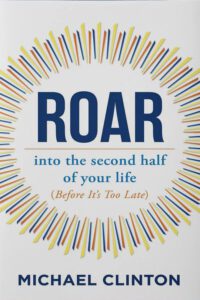
ROAR Into the Second Half of Your Life (Before It’s Too Late)
My agenda was jelling. I was in my twenties when I wanted to be a publisher, which I had to go into that lane. I jumped the fence, much to the chagrin of all my editorial friends. What I ultimately learned was that creating the affected sales pitch was like developing a story that you would write. When you’re writing a story, you’re going out and gathering the facts, interviewing and talking to different people. You sit down and write the story. In this instance, it was the same skillset but rather than write the story, you wrote the pitch.
The pitch was embedded in storytelling. That’s what you’ve always espoused and important to your message. Storytelling is critical for effective selling and results. I had that epiphany to end up loving what I was doing and being my trajectory into my career. That served me well because I always had a connection with writers and editors. I would always be talking with them, cultivating them and wanting to know what they were working on. They appreciated that from someone from the business side.
My whole premise is that whoever tells the best story is the one that gets the sale. The fact that you could write and tell good stories, it allowed you to do that. It goes back to the basics of journalism, the exposition of any story, the who, what, where and when. Many reps jumped right into the product without giving any framework of something.
I would have this discussion with many writers and editors who are also selling. They’re pitching their story ideas and that so-and-so should be on the cover of the magazine. I have evolved into this place where I do the whole world. You’re either a buyer or a seller, no matter what you’re doing. I’m very involved in the philanthropy world. I finished a Master’s degree at Columbia in Nonprofit Philanthropy.
It’s interesting going back to school in my 60s. I made this comment in class. There were a lot of young professionals. I said, “Effective development directors or CEOs of nonprofits are great sellers.” They were all appalled at the idea. I said, “You’re getting hung up on the fact that you raised millions of dollars for your nonprofit. That’s salesmanship and storytelling about your mission, purpose and recipients. That is effective storytelling and selling.” People sometimes get hung up on semantics. We’re either a buyer or a seller in all aspects of our lives. I’ve always liked being a seller as opposed to a buyer but someone’s always like, “I want to be on the other side.”
It was always a rude awakening if an ad director decided of a client that they wanted to get into sales and had all these salespeople calling them all the time. They couldn’t figure out why nobody was returning their appointment or calls as a salesperson versus every time they called us the client and got instant return. You’re not your title. What you do does not stay the same. The premise of the subtitle of your book, “Before It’s Too Late,” is so much a part of a good story. There’s got to be some sense of urgency. It’s part of good selling that we got to make a decision sooner than later.
You could have called the book Stroll into The Second Half Of Your Life but instead, you called it Roar. What hooked me was Before It’s Too Late. I thought, “Before I die and run out of opportunities, I’ll ask him because I know how much effort goes into a book name and title.” How did you come up with that hook Before It Was Too Late?
[bctt tweet=”Learn to life layer with different aspects of who you are.” username=”John_Livesay”]
Let me first say that the whole reason for the book was, as I was stepping out of the day to day, everything I read, learned and observed was all about the big wind down as opposed to the big wind up. What happens is if you’re 50 or 60 and you’re healthy, you’re going to live to be 90. The construct that you were given is based on something that was created back in the 1930s and ’40s when life expectancies were in the early 60s. You retired and died.
Retirement is an artificial construct that is about 80 years old in the history of the world. It was created by our government and policies in the ’30s. This awareness, all of a sudden, that you’re going to live another 30, 40 years, what are you going to do with that time to make it meaningful and engaging might mean something like starting a whole new second career, lifestyle or relationship. The punchline of Before It’s Too Late was to underscore a sense of urgency about it.
You can pivot in midlife and create a whole new second-half journey but you’ve got to do the groundwork and don’t want the opportunity of that to pass you by. What was ironic is the book was conceptualized and written before the pandemic. The book was bought by the publisher as the pandemic was happening.
Before It’s Too Late, you have this undercurrent of the pandemics here, stuff happens to the world at large and affects all of us. The last years have been an existential time for so many of introspection. Am I doing what I want to do? Am I living where I want to live? Am I the person I want to be with? All of those things gave it a sense of urgency. That punchline amplified the times that we’re in.
I have the image of Harrison Ford in Indiana Jones with that boulder chasing him. You talk about how important it is for us to re-imagine our life before someone re-imagines it for us. You can sit back and say, “I have a high chance of getting laid off. Print sales seemed to be down everywhere. Am I going to try to learn a new skill or am I going to wait and let that happen? If it does happen, am I going to let it take me down and never get back up? I can’t imagine doing anything else. I’ve been doing this for so long.”
Tell us a story, if you don’t mind, of either yourself or someone else. You have so many great examples in the book who said, “What I’m going to re-imagine?” You’re living your life like that. You got a new Master’s. You’re traveling. You probably have a whole list of places you still want to go and photograph, I’m imagining. The core thing I got from your book, Roar, is the people who are the most curious are the happiest and most successful. Would that be fair?
That’s very fair. One of the things that I wanted to do with the book is to identify people who were embracing this way of living. I call them the re-imaginers. I interviewed 40 people that I found who have done what I’m talking about in terms of this re-imagining process that should be with us for our entire lives. One example of this is a woman who was in our business. She was a journalist for a newspaper and saw what was going on around her.

Second Half Of Life: Retirement is an artificial construct that is about 80 years old in the history of the world.
She was a divorced single mother. In her 50s, she started thinking about the rest of her life. She decided that she wanted to go back to school and wanted to study a particular form of Psychology. She lived in New Mexico but the school was in California. It was part online and part in-person. She had to do the commute and all of that but she didn’t have the money. She decided to sell her house and move in with a roommate in her 50s to bring her costs down and did her Master’s degree.
There’s a lot of money out there for people in midlife, lots of resources like ScholarshipOwl and other sources if you want to do that. She ended up getting a degree in this form of Psychology and has become a counselor. She works primarily in the drug and rehab world. In her 60s, she said, “I can do this for the rest of my life. I’m passionate.” She did a complete 180 because she was a lifestyle reporter, had a degree in Journalism and then later in Psychology.
I found two things with common threads. One of them was curiosity, always curious about the future and the other was every single person I talked to put in the time. They spent a year plus dissecting what is it that they wanted to do in terms of not just making change. Some people say, “I’m happy with my life. I don’t need change.”
The world is constantly changing around you. You have to morph and adapt to that change. They spent a good year doing that, whether it was noticing that their job skills were waning, their company or industry was being disrupted or hit with a natural disaster in their community and making big decisions. The book has a lot of inspiration but also has a lot of tools and resources for people to use to figure out how to do it and get there.
What I love about what you’re saying and Roar is about is saying, “You’re the movie director of your life. If you don’t like what you’re seeing or doing, say cut, change the location, the cast and rewrite it.” They rewrite screenplays all the time. This whole concept of retire, your whole motto is, “Rewire and refire,” which is brilliant because it’s a great soundbite and also inspires us to take action, which is a big part of what Roar is about. Not just, “What if someday I could maybe become a photographer or help people?” Analyze it and take some action. Don’t stay in this “what if” mode where you don’t pull the trigger.
ROAR is an acronym. It’s a four-part process and the A is the Action plan. One of my favorite chapters is a chapter about life layering, which is how you can go about building these different personas, interests and directions in your life so that you’re building a multifaceted aspect of who you are and what you’re experiencing. The action plan is important but you have to step back and look at where do you think you want to go in some aspect of your life to do that.
Let’s give everybody the tease out of what that acronym is. The first R is Re-imagine, which we opened with. The second one is Own where you came from. We covered that in the sense of where you came from and where you are doesn’t define you because you’re bigger than all of that, whatever seat you’re in or title you have. We talked about A for Act.
[bctt tweet=”You can start a layer at any time in your life.” username=”John_Livesay”]
The final one is Reassess. It’s not something you’d go, “I’ve changed myself. I never have to look at it again.” No, it’s an ongoing process. I don’t know if you were the publisher of GQ at the time or not when Art Cooper retired from being the Editor-In-Chief for many years and died shortly thereafter. I thought to myself, “How tragic.”
All of that time, plans and saving money is a very common thing that we hear in men a little bit more than women. When I’ve lost my job, either through being laid off or retiring, I’ve lost my identity. That’s why your book is so valuable. If we’re all going to be Baby Boomers living longer, nobody wants that. That’s the worst possible outcome because you don’t have a reason, whatever that is. I’ve retired. I don’t know what to do with myself and I’m bored. I suddenly find myself getting sick because I’m depressed or who knows what all that is. I thought, “I cannot mention that with your connection to him and your new book about all this.”
I have great fond memories of Art. We worked together for ten years. I saw him at lunch the day that he did have the stroke later in the afternoon. It was very tragic. You raised a great point because oftentimes, people do go off the cliff when they lose that identity and seat. That’s what we need to do about being proactive, re-imagining ourselves and having things happen to us. I want to go back to life layering for a minute because it was the philosophy that I embraced when I was around 39.
I had a great job. I was at the time publisher of GQ and had my rhythm. I had a happy personal life, healthy and all that stuff. I thought I was the most boring human being on the planet because all I was doing was working. I thought, “I’ve got to, in the old vernacular, get a life.” I always had an adventure gene in me, so on my 40th birthday, I decided I was going to go climb Mount Kilimanjaro, take a flying lesson and go to Skip Barber Race Car Driving School. I was going to have a set of adventures.
I ultimately became a pilot and ended up climbing many mountains around the world. What I realized is that adventure and adventure travel were very much a part of who I am and how I self-identify. I proclaimed that my 40s were going to be my adventure years. That became my layer if you will. Many years later, I’ve had an enormous set of experiences around adventure. I took photography seriously and called that my creative years. In my 60s, I was much more interested in giving back as well. I called those my philanthropy years. One layer didn’t abandon the other.
It’s like a layered cake. You have your professional and personal layer. In my instance, I have my adventure, creative and philanthropy layer. When I stepped out of my seat, people said, “Who are you?” I didn’t say to myself, “Who am I?” I said, “I’m a photographer, an adventure traveler, a marathon runner, a student, this or this.” I had a whole host of self-identifiers. I was able to lean into my layers. You can start a layer at any time in your life, 25, 55, and 75. Life layering has become my go-to philosophy. I’ve got many friends who have been influenced by that. In the book, the chapter in the life layer gives more flavor to that.
It’s a wonderful visual, especially the cake part of it all and layering a cake. One is not siloed from the next. That’s another shout-out to another mutual friend of ours, Alison Levine, who is an amazing speaker about her adventures climbing all kinds of mountains, including Mount Everest. She’s been a guest on this show in a previous episode. When I think about it, I’m thinking, “I’ve layered without even knowing I was layering by becoming a host.” It’s so interesting how those layers add to who you are, what you know and learn and the conversations you get to have.

Second Half Of Life: Stop being obsessed about age and start being obsessed about person-appropriate versus age-appropriate.
One of the things that you have in Roar is this question, “Imagine you’re 90, what do you want your legacy to be?” That would be a great last question for you, Michael. You’re far from 90 but because you started layering in your 40s, you’re starting to imagine getting your decades labeled, adventure, creative and giving back. Have you thought about what you want your legacy to be?
I have. First of all, I’ll be working on all those layers and adding a few more to the cake. What I’ve come to learn and it was the accidental role model, is as we live longer, this is all new territory for the culture or the world. The longevity factor of people living well into their 70s, 80s and 90s and how they live is a whole new construct. Creating role models of people who are living life fully at those ages, what I’m saying is I want to be one of those people and the accidental role model with many other. The 40-year-old, the 35-year-old or a peer can say, “That’s the 75-year-old I want to be.”
I’m always looking for those 70, 75, 80-year-old people. I have a good friend, Alan Patricof, who you might know is a big hedge fund manager when he’s 87. I want to beat him when I’m 87. He’s an entrepreneur, started a new fund, training for his first marathon and dating because his long-time wife has passed away. He’s vibrant and dynamic. All of us creating role models for our peers and next generations is what I want my legacy to be.
The book again is called Roar: Into the Second Half of Your Life. It’s available on Amazon and wherever else you might like to buy books. RoarByMichaelClinton.com will give you everything you need to know about Michael and the book. We’ve scraped the surface of the tip of the iceberg. Hopefully, we’ve intrigued you enough to start thinking about your life layering, regardless of how old you are and how you need to have this book as your guide and roadmap to make your life all that it can be and become a role model for other people as well. Michael, any last thoughts you want to leave us with?
The last thought I would leave people, especially those who are in midlife, is we tend to put barriers around ourselves. Some of that is what I’ll call self-imposed ageism. “I can’t do that because I’m 50, 60.” Stop being obsessed about age and start being obsessed about person appropriate versus age-appropriate. Go back to school, start new careers and relationships, be an entrepreneur or get onto a new regimen. There is hopefully a long life ahead of you. Break the barriers of the self-imposed ageism and restrictions that we all tend to put around ourselves.
What a great inspirational thought that the only things stopping us are our own internal stories that we’re telling ourselves that we can’t do something. Thanks again, Michael.
Thank you, John. It’s great to be with you.
Important Links
- Roar: Into the Second Half of Your Life (Before It’s Too Late)
- Michael Clinton – LinkedIn
- Sportstyle
- ScholarshipOwl
- Alan Patricof
- Amazon – Roar: into the second half of your life (before it’s too late)
- Alison Levine – Previous episode
- Better Selling Through Storytelling Method Online Course
Wanna Host Your Own Podcast?
Click here to see how my friends at Podetize can help
Purchase John’s new book
John Livesay, The Pitch Whisperer
Share The Show
Did you enjoy the show? I’d love it if you subscribed today and left us a 5-star review!
- Click this link
- Click on the ‘Subscribe’ button below the artwork
- Go to the ‘Ratings and Reviews’ section
- Click on ‘Write a Review’
Love the show? Subscribe, rate, review, and share!
Join The Successful Pitch community today:
- JohnLivesay.com
- John Livesay Facebook
- John Livesay Twitter
- John Livesay LinkedIn
- John Livesay YouTube
Pursuing A Life Of Significance With Aaron Walker
Posted by John Livesay in podcast | 0 comments

Having money, a big house, and a profitable business can lead to a fulfilling life – or so we all think. In this episode, discover what a life of significance truly means as you learn from life and business coach Aaron Walker. Successful in business, Aaron first experienced retirement at the early age of 27, but it did not scratch an itch he thought it would. Learn how pursuing a meaningful life led him to masterminds and a podcast, and his “why” in writing his book, View from the Top.
—
Listen to the podcast here
Pursuing A Life Of Significance With Aaron Walker
Our guest is Aaron Walker who is a life and business coach and runs masterminds for men. He’s a veteran businessman. He continues to inspire countless entrepreneurs with his leadership skills and his transparent and authentic life. His purpose in life is to mentor men to be better versions of themselves. Having more than 40 years’ experience and more than a dozen startups allow him to lead with confidence. He is the author of View From The Top, Living A Life of Success and Significance. He shares practical insights and wisdom on how you too can find hope and inspiration. He has an amazing real life-story that will challenge your thinking and motivate you to action. Aaron, welcome to our show.
John, thanks for having me.
Would you mind taking us back to your own story of origin? I would love to find out what made you who you are. You can go back to your childhood, high school, college or whatever grabs you.
I’m going to take you way back. I’m almost 60 years old now so I’ve got to go back to when I was thirteen years old. My dad woke me up on a summer morning and he said, “Get out of the bed. We’ve got some work to do. We’re going to go down and we’re going to remodel a pawnshop.” I said, “Can I make any money?” He said “Yes.” I said, “I’m all in.” I didn’t even know what a pawnshop was or know what that was, but I went down and helped him for the summer. When we got through doing that project, I went up to the owner at the time and he was 23 years old. This guy was opening a pawnshop in Nashville, Tennessee, where I’m a native. I said, “I don’t even know what a pawnshop is but I go to school across the street and I would love to work here after school and on the weekends.” He hired me on the spot. I worked every day and then on Saturdays and two years later when I was fifteen years old, I decided this is what I want to do for a living.
People asked me, “You’ve got to be kidding. What did you enjoy about it?” I said, “It’s the people. I love the different people that came in.” I went to summer school and night school for eighteen months. I had enough credits to graduate at the beginning of my junior year. I started working every day and I met a couple of guys with a lot of money because I didn’t have any. My parents were very poor and I didn’t have any money. I went to them one day and pitched us going into business together and they laughed at me. They own the 21st largest insurance agency in the country at the time. I said, “Why don’t we take my pawnshop experience and your money and open a store?”
They said, “Mr. Walker, how old are you?” I said, “I’m eighteen.” They started laughing again. They said, “We’ve never had anybody eighteen years old approach us.” I said, “That’s beside the point. Are you interested?” After two months of negotiation, they agreed to do it. I went and opened a pawnshop when I was eighteen years old. I wasn’t even married. I was still living at home. A year later, I get married to Robin and I said, “We can’t mess this up.” We agreed to pour every dollar back into the business. In 36 months, I paid off a ten-year loan. I was 21 years old. I had a paid-for-business and I said, “I can duplicate that.” I did and then I did it again and then I did it again.
When I was 27 years old, a Fortune 500 came and made an offer I couldn’t refuse and I retired. I was 27 years old and I thought this is the American dream. I go from broke and a convict to making enough money to retire by the time I’m 27. That lasted about eighteen months. I got fat and lazy, I was getting in the bed in the middle of the day and Robin goes, “This is not what I signed up for.” I went back and bought the company I worked for when I was a kid. We spent the next ten years quadrupling that business. As I shared with you a little bit earlier, I had a very serious accident in 2001 where I ran over and killed a pedestrian. It rocked my world when that happened. I sold the business. I took off for about five years and didn’t do anything. We traveled around the world. We built a new house and took a break.
My wife approached me again and said, “You’re getting fat and lazy again.” We go into the construction business. We build a very successful construction company. I turned 50 and I retired. Robin goes, “You’re going to drive me crazy if you don’t do something.” The mastermind members of mine, which is Dave Ramsey and Dan Miller and some of those guys said, “What are you going to do now?” I said, “Nothing. I’m going to retire. I’m going to call it good. I’ve been working since I was thirteen.” They said, “You’re too young.” I started coaching. That led to doing podcast interviews which led to mastermind groups. Now, we have fifteen mastermind groups, 150 men from nine different countries. I’m having the absolute time of my life helping people be successful and significant.
That is quite a lot to unpack. I love the story of the fantasy that, “I’m going to retire at 27. I’m going to retire at this age.” There’s something about not being relevant and not giving back that I think you are probably more equipped than almost anyone else because you’ve gone through this multiple times. It’s almost like in the Wizard of Oz when you go behind the curtain and you say, “That isn’t it. That’s the fantasy.” You work hard to get to this place where you don’t need to work and then you can find a life of significance. You’re saying it isn’t the answer.
It’s not the answer at all. I thought it was, and I want to warn people, if you’re working to stop, quit doing that because it doesn’t scratch the itch like you think it’s going to. I thought by being a poor kid that I was going to have enough money, this big fine house, a vacation home, nice cars, that I was going to feel meaningful and purposeful and I was going to live a life of leisure. Quickly, I discovered that it’s not what I thought it was going to be. Don’t hear me wrong, John, I want to make this clear. I hate when people with money go, “Money is not important.” I want to go, “You liar.” It is important but I don’t want you to make it your only focus. I don’t want you to make it your God. Focus on why and your purpose in life, then you have something that’s tangible that you can hang your head on.
[bctt tweet=”The Facebook persona, for the most part, is just a lie. People don’t really share the things that are going on in their families.” username=”John_Livesay”]
Aaron, what motivated you to write your book, The View From The Top? The thing that I love about this is not just success but success and significance.
To be totally honest with you, I didn’t want to write the book and let me tell you why I didn’t want to write the book. As I said, I’ve been in a mastermind with these guys that are here in Nashville. We all live in Nashville, Tennessee for decades now. Sitting on my left for ten or twelve years was Ken Abraham. Ken is probably the most noted ghost author on the planet. If you look him up, you can see he’s written over 95 books and some of the biggest name people on the planet. He’s written their books. He had sold millions and tens of millions of copies of books and sitting on my right was Dave Ramsey.
They’re all good friends of mine. Anyway, Dave has written a dozen books and sold millions of copies and Dan Miller sat across the table from me. He has 48 Days To The Work. He’s written seven or eight books. I said, “Who’s going to read my book?” I’m in this group, with all these people that are very successful, who’s going to read my book? Ken Davis did my mastermind group and Ken wrote a book called Fully Alive. He’s traveled all over the world. He’s a keynote speaker. He’s an amazing guy. He said, “Aaron, you’re writing the book for the wrong reason.” I said, “What do you mean?” He said, “When I wrote Fully Alive, the first year it came out, seventeen people wrote me an email and they said, “Mr. Davis, I didn’t commit suicide because I’ve read your book Fully Alive.” He looked at me and he said, “Aaron, if you can change one life with your book, will it not be worth it?” I said, “You’re right. It’ll be worth it.” I’m going to write that book because now the reason is different. Now, I write the book to help people uncover for themselves what’s important in life. I teach them how to be very successful financially, all the while being significant. That’s the piece that people are missing.
I have loved this concept. My own personal mission is to help as many people as possible get off this self-esteem rollercoaster where they only feel good about themselves if they’ve gotten a certain amount of success or book sales or whatever it is, likes some social media. What I hear you saying is when you let go of that attachment of how many books did I sell and that is it more than this person and comparing yourself to other people, you are free to create something with a very different purpose without the attachment to the outcome. Would that be an accurate summary?
100% and first of all, you’re never going to win in a comparison game because I even almost did it at the beginning myself when I looked at Ken Abraham and Dave Ramsey. I said, “How could I ever compare to this?” I couldn’t compare. After the book first came out, a guy that was in my mastermind group, his young son picked up my book and read it and there was a life transformational experience for him as a result of reading this book. He got onto a different path. He was on some substance abuse and he couldn’t get off of it. This book helped him reframe his life. I got a phone call from him and said, “Thank you for your book because it’s radically transformed my life.” I went in and told my wife, “If nothing else happens, if I don’t get any speaking engagements, if I don’t get anything, if nothing happens, it’s changed this one man’s life, his family tree.” It was worth the effort. It was worth the time.
You touched earlier on the pedestrian fatality that you didn’t intentionally cause, but it did happen. A lot of people would not be so transparent and authentic about that and yet you are. I want to bring that up for people to take a look at that blind that we’re only as sick as our secrets or people can always tell when you’re trying to hide something. People who haven’t experienced something like that, we all have something that we have trouble forgiving ourselves for, I would imagine. I know someone who that happened to him as well. He did it as a young boy. First of all, I have several questions about it clearly. I want to acknowledge and applaud you for your authenticity and transparency because when you are willing to do that, you inspire other people to do that. My first question around is what made you so confident to do it and tell that story?
First of all, by being around very successful people and coming to discover early on in my career that the Facebook persona, for the most part, is just a lie. We don’t share the things that are going on in our families. Everyone sees is the nice house, they see the nice car, they know you have this job and you’ve got 2.3 kids and you’ve got 3.7 cars and you’re living this thing. They’re not privy to the conversation that’s going on inside of the home. Inside of the home, one of the partners is working more than they should and they’re doing it at the expense of their family. They come home one day with a pocket full of money to a house full of strangers. What I’m teaching people to do is to prioritize your priorities and focus on what matters. The only way that you can do that is to be authentic and transparent and vulnerable with a few people.
I’m not saying go out and air your dirty laundry to the world but I am saying that you need a group of people around you such as a small group, an accountability group, a mastermind group or a connect group. You can call it whatever you want to call it, but you need an environment where you can go and go, “Things are not going so well right now. I’m struggling in my relationship. I’ve got a child that’s gone wayward. My job is on the bubble. I’m not even going to have an income a few years from now. I’m not making my mortgage payment. I’m wrestling with these trials and tribulations in my personal life and I don’t know where I stand as an individual and I don’t have this self-esteem or this hyper sense of awareness to myself and I’m getting myself in trouble.”
The reason that I am so authentic and transparent is that’s where strength begins. When we address who we are as an individual to a group of non-biased, trusted advisors, they then can help us. If they’re giving us advice on things that we’re telling them that’s not reality, how in the world could we ever get good advice to go forward and build on a solid foundation? I’ve had the privilege of experiencing that with a number of very successful people. That’s why I come forward with telling my story.
Authenticity and transparency are where strength begins. That’s such a powerful way of combining something that people think, “It doesn’t seem like you’re coming from a place of strength at all,” but in fact, it is. Was it hard to forgive yourself and any other insights from that experience?

A Life Of Significance: People struggle to have enough money and material things thinking that they’re going to feel meaningful and purposeful. Disappointingly, many discover that it’s not what they thought it would be.
It’s been eighteen years and the first five years were very difficult. I had to go to a lot of counseling and talking to a lot of trusted advisors to help work me through this. First and foremost, I do want to mention, it was not my fault. It wasn’t an error of judgment. He didn’t see me. He was 77 years old. He was crossing the street to catch a bus and we found out later he couldn’t see good and he run right out in front of me. It was a very horrific automobile accident. Still, he was somebody’s father, somebody’s husband, somebody’s brother and it took me years to work through that.
What I come to realize working through that is how fragile everyone’s life is and in the book, View From The Top, the chapter that I talk about this, I call it Blindsided. We all can be blindsided. There’s not a person listening to my voice right now that a phone call might not change your life. Something could happen that’s devastating to your life. You may get a message or a note or a phone call that you never saw it coming. What I discovered through this accident was that we had had tremendous success early on but it was all about me and my family. What I started thinking about was my legacy. I said, “What would my legacy have been?” My legacy would have been, “A poor kid from Nashville, Tennessee makes enough money to retire at age 27 and nobody cares.” I said, “That’s not what I want. What I want is I want John’s life to be better as a result of having known me.” That’s the reason I share this.
That leads right into the never-ending power of a mastermind. You were talking about how you started your own and now you teach other people how to create them. Tell us the journey of masterminds and how people can either possibly start their own or join yours to find out.
I appreciate that and I want to touch if I may on some of the reasons that I think being in community is so important. You call it accountability mastermind. You can call it whatever you want to call it. We weren’t designed to be in isolation. Isolation is the enemy of excellence. We’re designed to be in community and we need people around us at all times. First of all, for accountability purposes. If you think about it, we need people calling us out. We need a sense of encouragement today. We need people to come up to us and say, “John, I believe in you. I know you can do this.” We can find that in the community. We need relationships which I think is the most important asset that we could possibly have. We all have blind spots and a lot of people are unaware of those. We need people to call us out and say, “John, I’ve noticed that you’ve saved this. I noticed that this is going on frequently in your life. This is going to catch you if you’re not careful.” We have people pointing that out.
I also say that masterminds give us access. It allows us to be in other spheres of influence. We talk about the insight that it can give you. We talk about perspective. What it gives me more than anything is the ability to see things differently. There are so many things like that that we have insight, different things that we need in our life that we would never have in a million years. It’s the insight that it can give us. There’s spiritual health that we need. There’s vision, there’s mission, there are values, there’s so much that this community or mastermind can give us.
That’s the reason that I am on such a quest to be sure that everyone is involved in this. People call me regularly and they call me big A. They say, “Big A, how in the world have you scaled masterminds to the level that you have?” We developed a program called the Mastermind Blueprint. What this is, it’s teaching people if you’ve never even had a mastermind how to start it, how to grow it and how to run it. A lot of people want to scale it to the heights we have. Other people just want one or two groups. If you start thinking about your sphere of influence and the impact that you could have on other people’s lives, you could start a mastermind and impact and have life transformational experiences for the people you know.
Yours is called Iron Sharpens Iron. What a great visual that is. Describe how you came up with that as a name.
I’m a Christian by faith. A biblical proverb is Proverbs 27:17, “One man sharpens another just as iron sharpens iron.” I’ve had the privilege to be in these groups where they call you out. They call you out and say, “I’ve heard you say this or I’ll watch you do this or you don’t do this.” In order for you to get better, these are the things that you’re going to have to do. It’s not for the faint of heart. We need people in these groups that are willing to call one another out and we just decided that if we’re going to help other people accomplish their dreams and goals, there have to be some sparks flying. That’s why we call it Iron Sharpens Iron.
What a great analogy. You’re only focused on men. If there are women that are reading and say, “I would like to start a mastermind for women,” could your program work for them?
Let me explain that a little bit. Some women get offended by this and let me explain and hopefully you won’t be offended. Women have become our biggest advocates because they say, “Big A, you’ve done something with my man. What have you done? He is not the guy now that he was when he joined ISI.” There are women’s groups out there. Michele Williams has BVU, Better Version of Yourself, a mastermind for women and does the exact same thing. I can introduce you to Michele. I’m happy to do that but our course is gender-neutral. If it’s women, if it’s man, if it’s mixed, it doesn’t matter. We can walk you through the process. We give you two and a half years’ worth of content to teach you and to help you along the way. You don’t have to create anything. We give you the lead magnets. We walk with you for six months, twice a month. You have support from us that gets you up and going. We don’t leave you. Once you buy this, we walk with you through the whole process.
[bctt tweet=”Isolation is the enemy of excellence. We need others to help us break our upper limits because we all have blindsides we need help seeing.” username=”John_Livesay”]
For people who might not understand the distinction, can you compare this to mastermind versus a networking group?
For group coaching or things like that, this is a whole different level. This recaps what I’ve been talking about the whole interview. You can do group coaching, you can do networking but you just deal with the surface level when you’re talking about networking. I’m talking about something that’s life transformational, personally and professionally. I’m talking about people that walk with you on a weekly basis to help you accomplish your goals, your dreams and to hold you accountable, to connect to you and to give you the resources that you need in order to be successful. I could stand up here for an hour and give a dissertation or I can lead a group coaching but that is not going to have the same impact if you get in a group and you’re meeting with the same ten trusted advisors week in, week out, month after month, year after year our people have in our groups. We’ve had people to double, triple and quadruple their business. We’ve had people that have absolutely transformed their personal lives because they have this close-knit community, their board of directors that walk with them every single day.
You talk about that isolation is the enemy to excellence. Many people don’t realize the importance of having a tribe or not doing it alone all the time. Can you speak to why isolation is the enemy of excellence?
If I don’t fess up and I don’t tell you, then there’s no one checking in. If I don’t push the ball down the field, no one knows. Brian Moran wrote a great book called The 12-Week Year and we’ve implemented that into the very fabric of what we do. You focus each and every day on these lead indicators. You focus on the task. You have weekly accountability meetings related to the objective that you’re trying to accomplish. You repeat that every twelve weeks. Procrastination is the enemy also. We continue to procrastinate and this doesn’t allow you to do that. We have people around you and that surround you, make sure that you focus on the task at hand and then the goal takes care of itself.
The reason that the isolation is the enemy to excellence is if you don’t tell anybody, they don’t know. If you don’t share your troubles, you can’t get over your Achilles heel or your blind spots. When you have people surrounding you, they can encourage you, they can help push you through these upper limit challenges. We all have upper limits challenges. It doesn’t matter who you are. We all have a threshold that we bump up against the ceiling and these people can help take you to a different level. It opens doors and possibilities that you never dreamed possible. I would just suggest that if you want to excel, you have to get involved in some topic community so that you can be all that you were called to be.
We all have upper limit challenges and it’s from our childhood and our belief systems. If we’re not associating with other people who can hold us accountable, show us where we’re limiting ourselves, whether it’s a belief or a behavior that needs to be changed, then we will just stay at our own upper limits there. I imagine that part of this successful mastermind is the quality of the people that are in it. Can you speak to what criteria you use when you help people develop their own mastermind?
When we first started doing mastermind groups, if you had the fee you could get in and I quickly saw that wasn’t going to work well. We developed an application process that we go through and we do an interview. We vet every single person that comes in and we turn away a number of people because they’re takers, they’re not givers. What we are trying to do is to fill up a room full of givers because in the natural reciprocity, you’re going to get all you need. When somebody is interested in themselves, they only want to come in and get out of it, if it’s only beneficial to them, that’s not how you grow. That’s not how you build relationships.
We take a look at the motivation of why you want to be into groups. Once we establish that you are the giver, then we go through a series of questions. There are about 25 questions. How we can help you? More about your family. What you’re trying to accomplish? What your long-term goals and aspirations are? It’s a very lengthy process and then once we worked through each and every question, we determine whether you’re a good fit for this group or not. When you’re very careful vetting this many people, getting the right person in the right seat, as Jim Collins says, on the right bus, there’s the magic that happens when you have that level of synergy.
You certainly are walking your talk and hats off to you for that. Then taking it one step further and allowing people to not just hear about it but learn how they can start and run and scale their own mastermind. I haven’t seen or interviewed anyone else who’s doing that and you’re taking your own success and not just showing people, “Here’s some fish, learn these life lessons.” You’re teaching them how to fish, which is such a great gift because you’re scaling the scaling.
Someone asked me, “Why do you do this? Why don’t you just continue to add mastermind groups, other facilitators?” There are seven billion people on the planet. We have 150 people in our mastermind. I have an abundance mindset. If you have an abundance mindset, you’re willing to show your cards. I don’t hold them close to my vest, I’m like, “First of all, I live it and I do it and you teach it.” We’re at the stage in our career where now we’ve lived it, we’ve done it and now we’re teaching it.

A Life Of Significance: Masterminds give you access to be in other spheres of influence and the ability to see things differently.
How can people follow you? I know the website is ViewFromTheTop.com. If someone has been motivated and said, “I need to learn how to start my own mastermind,” what’s the next step?
The easiest way is to go to ViewFromTheTop.com and I make myself very accessible. My phone number is there. My email is [email protected]. Reach out and send me a note and I’ll personally give you a call and we’ll talk through it. I’d love to be able to share with you more as well.
I can’t thank you enough for sharing your time, your wisdom and your passion. You are someone who I’m glad to have in my world.
Thank you, John. I certainly enjoy being with you.
Important Links
- View From The Top
- 48 Days To The Work
- Fully Alive
- Mastermind Blueprint
- Iron Sharpens Iron
- Better Version of Yourself
- The 12-Week Year
- ViewFromTheTop.com
- [email protected]
- Better Selling Through Storytelling Method Online Course
Wanna Host Your Own Podcast?
Click here to see how my friends at Podetize can help
Purchase John’s new book
John Livesay, The Pitch Whisperer
Share The Show
Did you enjoy the show? I’d love it if you subscribed today and left us a 5-star review!
- Click this link
- Click on the ‘Subscribe’ button below the artwork
- Go to the ‘Ratings and Reviews’ section
- Click on ‘Write a Review’
Love the show? Subscribe, rate, review, and share!
Join The Successful Pitch community today:
- JohnLivesay.com
- John Livesay Facebook
- John Livesay Twitter
- John Livesay LinkedIn
- John Livesay YouTube