

Easier: 60 Ways To Make Your Life Work For You With Chris Westfall
Posted by John Livesay in podcast | 0 comments

Chris Westfall is a sought-after speaker, consultant and author who has helped hundreds of clients achieve transformational results. Chris knows that there is an easier way to make things work for you. This is what John Livesay and Chris get into as they look into how you can transform your business. Chris looks at leadership, storytelling and connecting with people as ways of transforming your business. Tune in and learn more from Chris as he delves into storytelling and sales.
—
Listen to the podcast here
Easier: 60 Ways To Make Your Life Work For You With Chris Westfall
Our guest is Chris Westfall, the author of Easier. He talks about the best way to make things easy is to realize you always have a choice. Just because the train goes by does not mean you have to ride that train. We talk about storytelling and how important it is to make sure that you are not the hero of all the stories you tell. Make people want to see themselves in your stories and go on the journey with you. Enjoy the episode.
—
Our guest is Chris Westfall, who’s one of the most sought-after business coaches and sales keynote speakers in the world. He has helped launch over five dozen businesses and has appeared on every network out there. He’s a regular contributor to Forbes, and worked with thousands of leaders at Fortune 500 companies, nonprofits, and high-tech startups. A coach to entrepreneurs and executives around the world, his clients have appeared on Shark Tank, Dragons’ Den, and Shark Tank Australia. He regularly consults with top-tier universities, and is the author of three other books, but the one we are here to talk about is Easier. Welcome to the show, Chris.
John, thank you so much for that introduction. It’s great to be here.
You and I both share a passion for storytelling. You were all about whoever tells the best story wins, and I have a modern version of whoever tells the best story gets the sale, depending on what yours is a broader concept of what winning is. As storytelling keynote speakers, we love to help people tell better stories.
You would find this true too that it not just helps people’s careers but helps them in their personal life. With that said, let’s go into your personal life a little bit and tell us your story of origin. How did you get to be who you are? You can go back to high school or even earlier if you want, wherever you want to start.
[bctt tweet=”Things become easier when you realize you don’t have to hop on every train that passes.” username=”John_Livesay”]
I’m going to start in junior high. I’m in eighth grade, and my English teacher approaches me. She says, “I want you to give the speech at eighth-grade graduation.” I was not valedictorian and anything special. I was just a guy that got approached about giving a speech. I said what I have been saying my entire career, which is, “Yes.” I agreed to do it. That was the very first time that I stepped in front of a group and gave a presentation. There were probably 1,000 people in the audience. It’s a pretty large class of mine in junior high.
That was at age fourteen where I started as a speaker. I went on and lived my life, graduated from various schools, had a career, and all these things. I would always be pulled in front of audiences during my career to speak. I always fought it. I was always like, “This isn’t who I am.” It was a quest to come back to that place of realizing who I am, realizing the person that stepped on that stage at age fourteen is still inside of me.
To recognize that identity and step into it has been something that I have come to realize in my later life has been the most fulfilling part of my career. When you talk about storytelling and particularly storytelling in sales, it’s not just a part of my career. It’s part of my history. It’s something that I grew up with.
Look how far you have come in several years. You have been running a very successful consulting firm, and you speak at these different things. Who is your favorite client to give a talk to?
My client is typically frustrated. They are successful but they want more. My client asks themselves this question, “Is this all there is?” When organizations are looking for more and trying to access a greater market share, sales opportunities, places to make an impact in their careers, and employee engagement, these are a number of things that I touch on but ultimately, there’s a frustration. We know we can be better. We just need to understand how to get there.

Easier Life: Personal or general data protection, privacy law concept
It sounds like you give them a roadmap of how to get there no matter where they are on the frustration line.
A big part of the work that I do is to show people that while I may have a roadmap, they have an internal GPS. I’m going to speak about human nature. We all have inside of us that internal GPS. We have the ability to reroute when our thinking settles down. Even in the midst of very difficult circumstances, if we allow ourselves to see things in a new way, we can take new action.
From my point of view, that new perspective is always available. There’s always a new perspective, no matter what you are going through. It doesn’t matter whether you are going through a divorce or trying to hit a quota that is impossible. There’s always a fresh way of going about whatever it is that you are up against. That’s the premise behind Easier. There is always an easier way, even when life isn’t necessarily easy.
One of the things that stood out to me when I was reading it was not giving up on the concept that there’s an easier way to do something when it seems completely not easy. You feel stuck, and you don’t even ask yourself the question because it seems impossible. The first takeaway I’ve got from the book was, “I need to open my mind up to the possibility that there might be an easier way to get this sale, this funding for the startup, whatever it is I’m doing.”
Part of your background is that you have been helping people get funding and judging at Southwest some pitch contests. The show is called The Successful Pitch. I would certainly be remiss if I didn’t ask you some tips or thoughts on what makes a good pitch. Let’s talk about it in the framework of Shark Tank, where you are pitching investors since that’s part of your expertise.
[bctt tweet=”An Olympic swimming coach is out of the water to gain perspective.” username=”John_Livesay”]
You and I line up on one particular aspect of what makes an effective pitch. Your pitch is not a superhero story, where you stand up and beat on your chest and talk about your experiences. Not only is that insufferable but nobody wants to hear that. The story that people want to engage with is the story where the audience is the hero. Maybe you can’t make your investor or customer your hero, but it’s a good idea to start trying now, and taking your attention off of yourself will help you to create a greater connection in the sales conversation, investor conversation and in every conversation.
When you take that attention off of yourself, you are not going to forget your product knowledge and lose your ability to sell, compel or be engaging. That’s never going to be taken. Like the song says, “They can’t take that away from me.” The point is when we take our attention off of ourselves, what shows up? Here’s what I know from speaking on thousands of stages. You tell me if you see this too.
There are two questions you never want to ask yourself when you are in the middle of a high-stakes presentation. That’s a sales presentation or a presentation in front of 500 salespeople. The first one is, “Who am I?” The second one is, “How am I doing?” It’s a self-awareness that points towards self-consciousness. When you are focused on yourself, do you know what you are not focused on? It’s the sale and everything that matters.
I fell into that trap a few years back when I was hired by Coca-Cola to speak at their CMO Summit. The night before, they gave us a little program of all the speakers for the next 2 or 3 days. I’m like, “Harvard graduate, New York Times bestseller. What am I doing here? How did I get on the stage? The person who hired me is going to get fired.”
I had to talk myself off the ledge of, “Do I care how many books the speaker has sold?” No. “Do I care where they went to school?” No. I care about how they make me feel. If you don’t trust yourself at the moment, maybe you trust the person who has been at Coca-Cola for over twenty years that she knows what she’s doing and saw something.

Easier Life: You got to keep your eye on the ball. It means keeping your eye on the customer, on the client and focusing intently on how you can serve them more deeply, more fully.
I think for myself that I had to focus on, “How do I not fall into that trap,” because that’s the worst mindset in the world before you get on stage the next morning. For me, the minute I start comparing myself to other people, I say, “Cut. Stop.” It’s like a movie. The gateway drug to Imposter syndrome is comparing yourself to other people, “He’s more handsome, taller, leaner, and smarter.” It’s endless. That’s in the dating world, let alone the speaking world. I would love to know if you have any tips for people on how to avoid that horrible Imposter syndrome besides not comparing yourself.
I will tell you a story that a coach of mine shared with me. It starts with a weird question, “Do you have to be an Olympic-level swimmer to coach someone who is swimming in the pool?” In other words, do you have to be an Olympic-level swimmer to be of service to someone who is swimming in the pool? The answer is no.
As a former lifeguard, I would say no.
How do we all know that it is True, not where it’s a matter of belief for a faith that someone on the side of the pool can coach someone in the pool? It is not because of their experience, height or color of their swimsuit. It is because of their perspective. The thing that you bring that is powerful is your perspective. That guidance and wisdom for your audience is a function of your experience but there’s more to it than what you have done over the course of your career. The experience that is so valuable when you speak to sales audiences is the experience you create for the audience.
It’s the same thing for salespeople. If you think, “I don’t carry enough quota to be in this room. I have not sold enough to be in this room,” that’s the wrong question to be asking yourself. The question is, “How is your client doing? How is the person in the pool?” Look at them. That’s where your attention needs to be. It’s because of your perspective, not because of your quota, experience or where you went to school, but because of your perspective. You can share and serve, and if you get out of your own way, you can sell.
[bctt tweet=”We know we can be better. We just need to understand how to get there.” username=”John_Livesay”]
What a great solution to that because I have taught everyone from infants how to swim. You are in the water, and we are having them blow bubbles and stuff to being coached in competitive swimming. If the coach is in the water, he can’t see if your elbows are at the right height. He’s eye level with you, not above. I love this concept of zooming out and getting a perspective.
The second problem you said or question we should never ask ourselves is, “How am I doing?” Whether it’s a talk or sales pitch because it takes you out of the moment. You are not listening anymore. You are worrying about whether people like you or not, which is always the kiss of death. We start making up stories in our heads. If someone gets distracted, “I lost them. They are on their phone,” or they went to the bathroom, or whatever is going on. It may not even be true but we are making it up, and we are not in the moment.
It’s like a field goal kicker in a football game. The reason I think of it like this is that my dad kicked field goals. He was a field kicker in college. He used to say to me, “When I’m kicking a field goal, where do you think my attention should be? Should it be on how I am doing? Should it be on what the coach told me last week? Should it be on the fans and the crowd? Should I be thinking about how I’m going to be the hero of this game if I make it through the uprights or how I’m going to be the absolute bomb if I don’t?”
He would say, “Chris, none of those things matter. You’ve got to keep your eye on the ball.” In this case, keeping your eye on the ball means keeping your eye on the client and focusing intently on how you can serve them more deeply and fully. If you think you can do that by putting your attention on yourself and worrying about your likability factor, you are looking at the wrong place.
I imagined a professional baseball player at home plate, getting ready to swing. As the ball is coming, he suddenly looks up at the crowd and goes, “Do you all like me?” He misses the ball. It’s like, “Strike.” That analogy holds up. I see that you’ve got this great testimonial from a mutual friend of ours, Brant Pinvidic, who wrote The 3-Minute rule. He has been on the show. I have been on some adventures with him. He’s quite the cool guy.

Easier Life: It’s not about controlling your mind. It’s not about controlling your thoughts.
He said that your book, Easier, is unlike any other coaching guide he has ever read. What is it that makes this book so unique? What’s an outcome someone can get? I can share mine, and Brant can share his but I love to ask the author. What was your intent? This book is for people who are frustrated and somewhat stuck and know they can do better but after reading Easier, they are not only going to ask themselves, “Is there an easy way to do this?” but fill in the blank.
The power behind Easier is the power of storytelling. Whatever people take from this book and the uniqueness that Brant is talking about, I would like to think that it comes from the story that unfolds. There are two ways to share information. One is to come down like Moses off a mountaintop and say, “Here are the Ten Commandments. Do these ten things, and the right results will follow.” The other way to tell it is via a story. What people will take away from Easier, whatever it is that they gleaned, the subtitle promises 60 ways.
I was going to get to that. It’s the old Kenny Rogers song, 50 Ways to Leave Your Lover. You came up with 60 ways to make your life easier.
The way that those discoveries are made is through a story. If you find the story engaging and see yourself in the characters represented and the challenges that they have to overcome, that is where the lessons are learned. It’s not so many lessons learned. That sounds like school. It’s more like the discoveries are made if you are looking for a way to blow your quota out of the water to create a deeper market share and an impact on your customers.
I’m not going to say that training is not valuable but those discoveries you make when you are in front of your customer, when you are looking in the mirror and considering the ability to serve, that’s inside of you are much more powerful than these Ten Commandment-type lessons. Training is valuable. You have to understand how things work. You have to be onboard. You have to understand how you create connections, ask intelligent questions, and all those things. My question for the folks reading, and it’s a question in the book is, who are you when you aren’t on your mind?
[bctt tweet=”When you’re focused on yourself, you’re not focused on sales, on everything that matters. ” username=”John_Livesay”]
It’s very much like screenwriting. I took a course that years ago, and they said, “If you want to show a particular character is honest, don’t say it in dialogue. Show it in a situation where they could steal something and not get caught, and they still don’t do it.” You tap into this. It’s Chapter 4 where we are talking about, “Am I the person that eats all the Oreo cookies or am I the person that saved someone’s life? Which self do I put on the shelf? How can I integrate all the different parts of my personality that I’m judging? One aspect of my personality where I am decisive and able to not be afraid, why doesn’t that show up consistently?”
That’s an example of why this fable is so engaging because you start to think of yourself that rare is not the same all the time. Wayne Dyer, back in the day, who was a motivational speaker, used to say, “When you squeeze an orange, you always get orange juice. It doesn’t matter what time of day, in the middle of the room and the corner. What happens when somebody squeezes you, and you get stressed out? Do you get orange juice or do you get anger and fear?” That metaphysical question is my sweet spot of, “Who are we? How can we be more authentic? Why are we, at our best, not at others?” If you could speak to that a little bit and how easy it takes people on that journey of self-acceptance.
It is a journey of self-acceptance. You are right. One of the things that I have accepted in my career once upon a time, which I now reject, is this idea that peak performance comes from mindset and the idea that our minds are set is false. I anticipate that on any given day, we have between 6,000 and 60,000 thoughts running through our brains. Our minds are not set. If we try to set our minds, we are trying to stop the wind or waves from hitting the shore.
What makes things easier is when we realize that we’ve got some thinking going on at all times around a particular subject, and here’s the realization that has shown up for me that has been so powerful. Just because a train of thought shows up, you do not have to ride that train. It’s not about controlling your mind and thoughts and thinking about one thing all day long. That’s not sustainable. That’s not how thought and minds work.
When we get in concert with the way we work, we show up differently. We stop burning cycles trying to rope the wind or stop the waves. Instead of trying to stop the waves, we get on a board, get out in the waves, and start surfing. We start writing and understanding that there is a power inside of these thoughts that can lead us to new realizations and perspectives but we have to step back and stop spending our energy trying to grit and grind things out when there is an easier way.

Easier Life: Storytelling is always selective and sales is selective, and selecting the words that are going to help you most is the key to creating that compelling conversation.
I can relate to that because this concept of not having to respond immediately to something that somebody says or sends you in an email, sometimes, no response is an answer. A lot of people get all triggered. The front of our brain gets hijacked, and we are in fight or flight mode. We are like in that concept of sleeping on it. Get back to perspective, “Is this going to bug me five years from now? Probably not. Why am I letting myself get so upset?” All of that is a key lesson to learn about. Just because somebody says, “Let’s play tug of war,” doesn’t mean you have to pick up your end of the rope.
Many times, we zoom in on things, and it activates the front part of our brain. All of a sudden, we create these stories that don’t serve us, stories around our obligations and duties. The deadline is the deadline but isn’t there a way for you to relate to those deadlines, obligations, that email that you’ve got that can shift your perspective? That’s what you are talking about.
One of the things that I share in the book is a simple strategy. I call it the YAHOO strategy, which is not about the search engine but YAHOO stands for, You Always Have Other Options. If you are struggling in sales and wondering, “Why can’t I crack this customer? Why can’t I get in front of the people I need to get in front of?” You always have other options. What are those options? Thomas Edison said it best, “There is a way to do it better. Find it.”
Keep looking until you find it. As someone who writes books as we do, usually, our first idea is not the best. We go, “Is there another way I could say that? Is there a better way to say that? Is there a way to say that it’s easier for people to understand?” That’s where I see so many people in sales going down the rabbit hole of, “Let me prove how smart I am with all these acronyms and get into the complexity of everything as opposed to.” The simpler you make it to understand, the more likely you are to get someone to say yes. Just because you are making something easy to understand doesn’t mean you are not smart. That, to me, is a big takeaway from your book. It’s the reverse. The smarter you are, the easier you make things.
If sales is about proving how smart you are, that doesn’t sound very smart to me. Do you want to be smarter or do you want to be richer? Do you want to instruct or do you want to inspire? Do you want to describe or do you want to compel? Are you just there to relay information about the product or are you there to relay information so that your customer can take action, step toward you, and say, “Tell me more,” and continue the dialogue that leads to the exchange that is the transaction you are looking for? That’s so important, John.
[bctt tweet=”Training is valuable. You have to understand how things work. You have to be on board and you have to understand how to create connections and how to ask intelligent questions.” username=”John_Livesay”]
Otherwise, we are trying to impress other people as opposed to making that emotional connection that you understand their problems. That’s why you and I both decided to write fables because, through the lens of storytelling, people are not so analytical in a story like they are a movie or any other fiction that they are learning without realizing they are learning, and that sometimes sticks a little bit better.
I know you are interviewing me but I have to ask you a question. Why did you choose to write a fable? What was it that appealed to you about creating a story around The Sale Is In The Tale?
The thing that motivated me to write The Sale Is In The Tale was I kept thinking to myself, “I have given people the steps on how to tell a good story, and with my coaching, they are able to get better.” Having taken the screenwriting class years ago, they are always about show and don’t tell. I thought, “What if I did create a fable where I showed somebody going through this frustration of not making their quota, losing a big sale, not getting a promotion, and all the things that happened to people in their lives but made somebody see themselves in the story?”
You and I talked before the show that the gold standard of whether somebody takes action is if I see myself in your story, I’m going to buy, say yes or change my behavior. That’s what the motivation of, “Let me see if I can do it.” It was a stretch. I have never written a screenplay or anything that had characters in it, distinguishing that, and painting the picture and setting it here in Austin using real places that I enjoy going to and making that come to life. Having moved here years ago, the book is a love letter to Austin too.
We both set books in Austin. That is so fascinating to me. It’s Austin and Dallas for mine. What I take away from your story, and hopefully people take it away from mine as well, is that there’s an emphasis on relatability. That relatability is what makes stories compelling and engaging. Maybe not necessarily that you see yourself in the story but you see the circumstances and identify with what people are going through. That is certainly my hope, and it sounds like it’s yours as well.
[bctt tweet=”It’s no secret that sales is a people business. It’s where business gets personal.” username=”John_Livesay”]
That is the power of storytelling. Bringing that storytelling aspect back to the sales conversation and focusing on the sales folks who are reading this that are looking in the direction of relatability and receptivity. In other words, how open is the customer? Relatability and receptivity are not there. You are never going to get to slide 47 or if you do, they are looking at their phone.
One of the outcomes for us as sales keynote speakers is that people who have read the book are going to want to have us come speak because they are going to want to ask questions about the story like, “How did you come up with this idea? How did you decide to set this? I related to what you wrote in this book, which is different than other books you have written, which are some instructional tips on how to be better at sales, leadership or whatever it is.”
I heard Elizabeth Gilbert speak about her book around creativity, Big Magic. I was completely into the stories that she was talking about her own journey of creativity. It was very different than reading a book on how to be more creative because there were stories in there. The other outcome is it will get us engaged with the audiences before we even show up if they have discovered our fables.
The questions they may want to appear into the discoveries they might want to make on a personal level because it’s no secret that sales are people’s business. It is where business gets personal. To be able to share that perspective with an audience and give them an opportunity to ask you questions and gain the insights of the author, that level of personalization, from my perspective, I certainly welcome it. I’m early in this process. The feedback that I’m getting and the way people respond to this book are fascinating to me.
For us as sales keynote speakers, the key thing to remember is that aspect of connection with the customers, audience, and in a story that goes from point A, point B, to point C that takes you through on a journey that is realistic. That is not to say that it’s completely chronological like, “Let me tell you my life story from birth up until yesterday.” Nobody wants to hear that. Storytelling is always selective, and sales is selective. Selecting the words that are going to help you most is the key to creating that compelling conversation that doesn’t just describe or inform, it’s the conversation that compels. That’s the conversation that I’m here for, and you are too.
You have so many great quotes in your book. Everything in the past, from anonymous to a quote about being lazy from Bill Gates. Can you end this wonderful interview you gave us with a favorite quote of yours, either 1 of those 2 or something else that you like?
Here’s what I’m going to share with you, “Never confuse a single defeat with a final defeat.” That’s from F Scott Fitzgerald. Those are the words to live by. I don’t know about you but I have gone up in my head. This customer called it and went, “The way that I wanted it in is the end of the world. I’m going to get fired.” That’s a little extreme but we go there because we want to win and do well. I can relate. Me too, but never confuse a single defeat with a final defeat because, YAHOO, You Always Have Other Options. The battle is not over. As long as we live to fight another day, the story goes on.
If people want to find you to hire you as a speaker or as a coach, where should they go?
First of all, if they want to hire me as a speaker, I want to say they have excellent taste. My website is WestfallOnline.com. If you head to that website, you will see in the lower right-hand corner a little Contact button. You can send me an email or you can also set up a time to talk and chat for 30 minutes. If you’ve got objectives that you are trying to achieve, sometimes it’s better to parse that out in a conversation. I’m always happy to create that conversation, whatever that might look like. You can also find me on YouTube, Instagram and Twitter, @WestfallOnline. That’s where you can find me at all of those places. You can also find me on Facebook as well.
Thanks, Chris. It has been a delight. What a joy to share a passion for storytelling, fables, and connection with people.
I’m grateful for the connection with you, John. Thank you so much for having me.
It’s my pleasure.
Important Links
- Easier
- The 3-Minute rule
- Big Magic
- WestfallOnline.com
- YouTube – Chris Westfall
- Instagram – WestfallOnline
- @WestfallOnline – Twitter
- Facebook – Chris Westfall
- Better Selling Through Storytelling Method Online Course
Wanna Host Your Own Podcast?
Click here to see how my friends at Podetize can help
Purchase John’s new book
John Livesay, The Pitch Whisperer
Share The Show
Did you enjoy the show? I’d love it if you subscribed today and left us a 5-star review!
- Click this link
- Click on the ‘Subscribe’ button below the artwork
- Go to the ‘Ratings and Reviews’ section
- Click on ‘Write a Review’
Love the show? Subscribe, rate, review, and share!
Join The Successful Pitch community today:
- JohnLivesay.com
- John Livesay Facebook
- John Livesay Twitter
- John Livesay LinkedIn
- John Livesay YouTube
The Attention Switch With Itzik Amiel
Posted by John Livesay in podcast | 0 comments


Did you know that networking is all about listening? John Livesay’s guest in this episode is Itzik Amiel, the founder of EyeRon™ Group and author of The Attention Switch. Itzik shares his deeply personal story about the hug of life. It’s when the bus he was supposed to ride in exploded. Do you know what made him miss the bus and narrowly escape death? It’s hugging his girlfriend, who’s now his wife. From then on, he never passed by any opportunity to establish true connections with fellow human beings.
The only way to make real connections is by giving attention. If you want to succeed in networking, you need to learn how to pay close attention to the people you’re interacting with. Are you ready to get the success you always wanted? Then this episode’s for you. Tune in!
—
Listen to the podcast here
The Attention Switch With Itzik Amiel
Our guest on the show is Itzik Amiel, who is the author of The Attention Switch. We go into great detail about the different kinds of attention, how to get attention and how to keep it. He said, “Where energy flows, that’s where the attention is going. Attentional networking is the art of being you.” Enjoy the episode.
—
Our guest is Itzik Amiel, who has extensive experience for decades, gained as an international tax and M&A lawyer where he’s worked with companies around the world in the trust and financial situations. He founded a company called EyeRon. It’s the leading global expansion company where he listens to client’s needs and helps them grow their business internationally. There are lots of things you can imagine that you need to know and each country has a different situation.
He and his team operate in over 27 countries with a special focus on BRIC countries and emerging markets. He also founded the Power Networking Academy, which is the number one provider of business networking and relation capital. He is traveling all the time, has been featured on all kinds of international business TV channels, and has a great book out called The Attention Switch. He is working on a new mastermind for those people who qualify. We’ll find out more about that. Welcome to the show.
Thank you very much, John. I’m so excited to be here. I was listening to how other people introduced me because I’m learning about myself. The older you get, you start forgetting what you’re doing in your life and not appreciating it enough. When somebody else is talking about it, what goes in your mind is, “Is that me? Is that everything about me?”
I love the quote about your book being considered the Dale Carnegie super upgrade for the cyber age, which is fascinating. I want to ask you your own story of origin. You can go back to childhood or school, call it law school, wherever it was. When did you start having an interest in law and international? Did that lead to networking or did it start with networking?
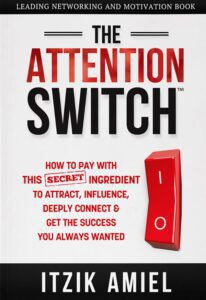
The Attention Switch: How to Pay with This Secret Ingredient to Attract, Influence, Deeply Connect & Get the Success You Always Wanted
You touched a very interesting one that nobody ever asked me in any show. You told about the book and about the fact that it was compared to Dale Carnegie. Here’s a secret I never share to nobody. The first book I ever read in my life was from Dale Carnegie, How to Win Friends & Influence People. I’m an Israeli originally. I read it in the Hebrew language. I remember finding it on the shelf in my room. It was owned by my father. He declined that he ever read that book. He doesn’t know about this book. I know it looks like, but I could not find this book anymore.
Since that day, it has influenced my life. I used to give it to a birth or for friends, but I never used to talk about it. It’s almost taboo in the legal world to talk about how to influence people and win friends while you are miserable. You have to do it. Nobody will understand. It’s almost like Napoleon Hill’s Think and Grow Rich. If people go, “I don’t want to be rich,” it’s not about that. It’s about thinking, mindset, ability and skills. We’re celebrating them but many years ago, nobody did.
I was embarrassed to say that I love people. Can you imagine? That’s a true story. This is my real story that my bestselling book, The Attention Switch, starts with. I hid this story for all my life as a lawyer. It’s from February 25, 1996. At the time, I used to live in Israel and work for a law firm in Tel Aviv. I’m originally from Jerusalem. My girlfriend then, which is my wife now, was working as an au pair in Jerusalem.
You know with boyfriend-girlfriend, I’ll sneak few times a week to Jerusalem and stay with my girlfriend. Early in the morning, I go to the bus station and from there to the center station to go to the Tel Aviv office. In that morning on 25th of February, ‘96, I woke up. If you work with me, I’ll have coffee. I was about to go to get the bus. At the station, my girlfriend hugged me. I ran and I missed the bus. It’s always the same routine. People stay in the same place. You’re going to know it because if you miss this bus, you miss the next connection and you’ll be late.
I remember being annoyed to wait there. Twenty minutes later came another bus. I was on the way to the center station in Jerusalem. There were police who stopped the bus. In the ‘90s, there was a lot of incidents in Israel, terrorists attack, all kind of stuff. We were curious about what was going on because we had to go from a different way to the central station. We asked the bus driver if he could open the radio so that we could hear what happened exactly. At that moment I heard that the first bus I was going to take exploded and everybody died.
You wouldn’t be with us if you got on that bus.
[bctt tweet=”Give attention when you love somebody.” username=”John_Livesay”]
I never shared that story. If you go over to Jerusalem, that’s a big place, though. It was the biggest terrorist attack we had. They had the same bus, same number and same hour the week after again, which was a very crazy incident. I will never think once I was miserable. I had power within myself. I was very successful. If you’re asking me, John, what was the time that I endorsed life and people? That was the moment.
My girlfriend is my wife now. This hug that I talked about is the act that I based all my life, the act of giving attention. It is the period of Corona. I guarantee you, John, if you go to an event, people meet and start hugging each other, count on me. Feel the feeling that people can transfer to each other but just warm hug. Without talking, pitching or anything, you can transfer it to another human being so much more warmth, love, care and empathy. “I’m here for you.” It’s everything you want with just a hug. That can be an act of giving attention.
That brings me to one of the things in your book, where you call it The Hug of Your Life. Can you tell us that story?
That’s exactly the hug of my life. When my girlfriend hugged me, because of that, I have my life. I will talk about this metaphorically, but also strangely enough, when I speak on stages around the world, it’s not in my culture. We don’t hug in Israel for business. People are thinking we hug, maybe in the Middle East but not in Israel. When I spoke on stage, people came around and hugged me. It’s unbelievable. I even caused people to hug each other. For me, more than the symbol, it’s a way of people understanding human-to-human. “I don’t care who you are or where you are from.” Nobody can ever convince me.
I don’t necessarily look like an Israeli or a Jewish. I could look like an Indian, Brazilian, Spanish or Arabic. I look like everything. I use that all my life to show people how miserable we are when we judge people. You’re missing so many opportunities. John, when I was speaking on the big stages and you know yourself, there are many very known figures. I’m the unknown guy doing the big stages. Everybody that’s there was Les Brown, Dalia Lama and Richard Branson. I’m the unknown guy.
I will not sit in the green room, John. There is so much bullcrap there. We don’t like that. I’ll sit between the audience somewhere in the back. I’ll talk to people. I look at the brochure. In the brochure, whose picture is there? It’s the speaker. They’ll say, “Who’s this guy? Who’s the speaker” It’s me, but I say, “Let’s see what they’re going to tell us.”

Attention Switch: Scientists prove that attention is a muscle of the brain. You need to practice the muscle of attention.
Suddenly from the big stage, they announced, “Ladies and gentlemen, our next speaker is Mr. Itzik Amiel.” “That’s my turn. I have to go.” People will look at me and say, “I’m sorry.” I’m going to use that because in the middle of my presentation, I’ll ask this person to stand up. “How did you feel you didn’t know who I am? I was not important, but you connect me out of authenticity.”
When people stand in line and they want to hug you and take a picture of you, I’m not sure what they want. I always believe you build a relationship for a reason, season or lifetime. I’m begging each one that’s reading to stop building a relationship for a reason or season because you’ll be miserable. Every relationship we build, build it for a lifetime. When I look at a person, I said, “Will I be a friend of this person the rest of my life?” If the answer is no, don’t walk away from them because it’s embarrassing. Run away from them. You don’t want these people in your life.
There are so many things you’ve said here that I want to recap for the readers. One is when you don’t have something go exactly the way you think it is. I was flying back from surprising my sister for her birthday party in Chicago to Austin. The plane was delayed. I’m like, “I’m not going to get home until after midnight.” You can get frustrated and annoyed or you can zoom out again and go, “There must be a reason I’m not supposed to be on that plane.”
The other thing I love about who you are as a person is I can feel your energy come through. That is a reminder to everyone that what you’re offering people is your energy. I remember once I was interviewed for a speaking gig and the agent emailed me, “Congrats, they picked you. They liked your energy.” I thought, “There it is in writing.” It’s not our credentials or the outcomes we’re going to give people. The client said, “I felt so good after talking to you. I figured you could make all of the people in the audience feel the same way. We want to learn about ROI and all that other good stuff.”
Whatever it is you’re selling, whether it’s to get funded, get people to join your team, start using your app or buy your product, if you can remember that you’re selling energy and money is energy in action, it totally shifts how you interact with people. You’re a walking talking example of that, which is why we become friends. I love it.
The other thing I want to ask about is this beautiful visual you’ve created called The Rainbow of Attention. You’ve got some great distinctions. Let’s go through all of them because they merit a chat. We all know what a rainbow is, but we don’t realize that there are some differences between giving attention versus getting attention. How did you come up with this wonderful concept of a rainbow?
[bctt tweet=”Build relationships for a lifetime, not a season. ” username=”John_Livesay”]
The first is out of frustration, for example, in our days in social media. If you look at it, every marketing on social media online is based on the act of getting and grabbing the attention of the audience. People measure your success by how many likes you get and how many people give you attention. I don’t care about that. I care about those people watching it. They say, “Why don’t I get likes? Why did I get only two? I’m miserable. I’m nobody.” You see all this stuff. I hate it because I feel bad for those people. It’s not true. I wanted to show it, so I’m helping more than 25,000 professionals that don’t go to some LinkedIn or somewhere else.
I’m doing everything behind the scenes, like in the messaging. I’d build the relationship. By showing them, they’re getting huge deals. If you look at the profiles, it’s like, “I’m a miserable person. I get only two likes and then a few posts,” but behind the scenes, the opportunities, the relationship building is unbelievable. We have the biggest scars in our world of getting and giving attention. How many people, when you talk to them, shut up their mouths and listen to your story? In networking, what I teach is you don’t need to speak. The introvert among us knows that. It’s not about talking. There are other network jerks many times. Listen from the bottom of your heart.
Stephen Covey talks about seven ways of listening, synthetic, inactive and disactive, whatever it is. Listen with all your heart and soul. Not dreaming what you’ll eat at dinner while speaking to another human being. Not floating around with a face while talking to somebody. Being there in the moment, you’re going to magnetize the soul of the other people. They don’t even know what happened, but they felt in their gut, “I want more from that.” You don’t even have to give them your business card or tell them the name. I promise you, they are going to find you who you are because they want more of that. They will find an only excuse to find again where you are to go there to invite you. They’ll pitch you on themselves.
John, don’t get me wrong. It’s frightening to a lot of people. Some people talk to me where they met me as a stranger and within minutes, they’re telling me the deepest secrets of their life. There comes a moment where they look at me and say, “I don’t know why I told you the story.” I said, “Relax. Enjoy it.” Attention is not an artificial thing. Attention, as proven by scientists, is a muscle of the brain like you have muscle on the body. It’s like if you go to the gym to practice your muscles, you also need to practice the muscle of attention.
Let’s give our readers a little exercise. Let us ask each one of you there, what do you hear in the room where you are? Maybe it’s the birds, a car driving, some screaming children, the pot or TV. What is out there? It was a tricky question, John. All those things are there all the time, but their brain is choosing to give attention to us. Do you see what the power of it is? From all the noises in the world, from all the sounds over there, they shut them all off and give full attention to one human being. That’s why in English, you say, “You pay attention.” It’s a financial term. Which other thing could you pay with? If you could pay with attention, they’d be a billionaire without money.
One of the biggest compliments I can ever give someone or that I can ever receive is that someone would say to me, “I feel safe to be myself with you.” That goes back to what you were talking about, the magnetizing of the soul that causes someone to open up because they feel like you’re not going to judge them. That sends any kind of basic rapport 101 because you’re getting an emotional connection, which is how we all want to connect.

Attention Switch: Speak slowly and articulate the word.
That’s why people are missing an opportunity in networking. A lot of interesting people in networking don’t stand in the middle of the floor. They’re somewhere on the side. Think about it. If you’re a CEO of a big company, you don’t want to see people to bother you if you want to come and listen to whatever lecture. You’ll sneak in the back and stand.
You’re a speaker. I’m a speaker. When we go and sneak in to watch another speaker on stage before we’re done, where are we going to go? We’re going to go in the back of the room. If you want to connect with people, find them in the side of the room. You will be surprised by what amazing people they are. Everybody will miss it because everybody looks at these people in the middle. They’re talking to everybody there. Talk to the one in the side. The one in the room, don’t worry. You’ll meet them one at a time. The one on the side, they are many times crazier than great people. I promise you. You’ll be surprised how amazing people you meet. Only give them attention. That’s all that you need to do.
You also have a distinction between positive attention and negative attention. My first thought is, “If I do something stupid like trip or drop food on myself, that gets me negative attention.” I’m guessing you have a different meaning here.
When I wrote this chapter, I was in a hotel in whatever conference. I was sitting with friends and talking about it. We start discussing philosophically. I don’t remember exactly the detail, but there was an incident that happened with the lady there. I could see the look on her. She didn’t have to say much, but it looked like, “I’m going to kill you,” with the eyes. You know that’s not positive attention, but she gave you the entire message by her two eyes looking at you.
I remember even when I was a child, my mother used to open her eyes and we know exactly that we didn’t behave nicely. These are the ability to transfer. You could use it. It’s positive-negative but not in the sense of discouraging you but more of warning you and stuff like that. Some of them is awareness alerts. “I’ll wait from here. You’ll be in danger. Don’t put yourself in danger.”
Attention is a muscle. You need to learn how to play with it. I’m playing with it a lot in airports, John. It’s also connected to body language. I used to think that attention is about eyes. I thought people give attention with their eyes. When I did the book, I found the research. It’s bullcrap. Do you remember the time you called somebody? You’re on the phone and suddenly they’re silent. “Are you still there?” We need the sign of attention. People do it in different languages, cultures or ways. They will do something or symbolize it. You know they’re giving you the attention. It has nothing to do with the eyes. A lot of it is based on the brain, how the brain works or the brain need symbols.
[bctt tweet=”Don’t put yourself in danger. Pay attention. ” username=”John_Livesay”]
Here’s another tip for people. If you want to get people to listen to you to know that you’re given attention and even you are the best expert in the world on this subject, you know so well everything about it, if somebody asks you a question, count 1, 2, 3, and now go out and answer the question. Why? It’s because the brain of the other person has to perceive you’re listening and giving attention. If you don’t give this time of silence and you answer right away because you’re the expert and you know the answer, the other brain said, “You didn’t give attention to me,” and then you lost them.
I’m big on teaching people about the concept that confident people are comfortable with silence and pauses. That completely supports what you said. You might be the expert. If you’re the expert, you don’t have to prove anything to someone else. You can be comfortable with that silence of three seconds or whatever it is before you answer, not without worrying about, “People think I don’t know the answer.” No, you own the room.
It’s the same thing when you get up to speak. You don’t necessarily have to start talking fast right away. You look at the room and the audience. You take it in and then you begin, but that takes a lot of confidence to be comfortable with not rushing through what you want to say. It’s a very unconscious thing sometimes when people talk too fast. It’s nerves plus the fear that, “I’m losing the audience. What I’m saying isn’t interesting enough, so I have to talk fast.” If you’re comfortable, you can take a pause between your thoughts.
That’s a very good one because I had to learn that myself. I tend to speak fast because I think fast, but with an audience, if I don’t think fast and I start speaking slowly, they’ll think I’m thinking they’re idiots, but it’s not true. What you said is exactly right. If the idiot will speak slowly, articulate the word and give poses, they let it sink and go even deeper in them. They get you more and they’re with you.
This is why I talk about speakers or people speaking. For example, if you go to the audience, you come in the morning and you know those speakers come in the morning, they say, “Good morning, everybody.” There are two people who answer, “Good morning.” Some of us goes, “I said good morning, everybody.” Everybody shouted. That moment, you lost the trust of the people because they gave you what they want and now you manipulate them. It takes fifteen minutes to get the attention back.
That’s why the pauses are so important because what you get is the biggest gift people give you and that’s the biggest commodity of their times, the thing that does not come back. It’s something that Microsoft did in 2005. Probably every entrepreneur know this, they do not know that Microsoft did it, but they searched the attention span of a human being. They found that in 2000 it used to be twelve seconds. 2013 was eight seconds. In 2021, who knows where it is? Do you remember what has one second more attention span from the human being? Do you know which one was that?

Attention Switch: When you let your brain relax, it will show you where the opportunities are.
Is it a goldfish?
Exactly. Don’t ask me how. I tried to see a goldfish in the aquarium. I couldn’t get its attention, but that’s what the research shows. That’s how sad it is. When it comes from that point of view that is declining, you need to know what people pay attention to because they’re going to be more and more things coming our way to steal this attention. More instruments, TV, iPad, telephone, people, all these things. How do you select what to give attention to? That’s the skill. If you know, you’ll succeed. If you give it to the wrong thing, you lose. The time’s gone.
It’s the same to network. You go to an event. You need to know who the people you want to meet are. You enter the room with 5,000 people. How will you know who to talk to? You have a two-day event. You know you’re not going to meet everybody. How will you meet the right people? Here’s a secret, John. It’s shown by research. When you go to the room, do you agree with me, John, that you are probably going to see maybe 10, 15 faces? You pick them up. The person with these glasses or the lady with the red scarf. What happened? Here’s what the research shows.
With all the 5,000 faces, your brain scans the room. The brain compares them to the library you have in your head because you have the library all the time. You cross the street. You see strangers. Your brain said, “Like, don’t like.” The brain is doing it all the time. It’s updating the library. When you’re in a room, the brain compares all these 5,000 people and shows you on the silver tray that you have 10 or 15 people you must go and speak to because something awesome comes out of it.
What most people do is push the delete button and start talking to everybody. Let the brain relax and it will show you. If you don’t have a good memory, take a pen and paper. Write it down, “The person with the red glasses. The lady with the blue scarf.” Now talk to these people. I promise you. You’re going to be so shocked. You’re going to find commonalities and opportunities in seconds. Within an hour of networking with ten people, you get opportunities. You have two days to enjoy. You have no stress. You don’t need to meet anybody else. Everything else is a bonus. This is a new thing.
The artificial intelligence inside of our brain is scanning. We just have to trust our gut. Is that what you mean when you talk about spontaneous attention versus planned attention?
[bctt tweet=”You have to be careful when you introduce the wrong people because you build relationships for years. ” username=”John_Livesay”]
That’s more out of frustration. In most of the professions I know, when they build relationships, they build it on most serendipitous attention. They go there and meet some nice people. They maybe follow up something to get you a referral. “Networking works.” To those people reading who want to build everything on serendipitous networking, do yourself a favor.
Don’t go to a networking event. When the world comes back to normal, sit at the airport in your country and meet awesome people. Each one of them could be a client. You’re not going to go wrong every day. If that’s what you want, but that’s not how you build a business because it’s not predictable. When you build a business, you need both, the planned and serendipitous.
Serendipitous is a cherry on the pie. It sounds nice, but if you have planned, then you know who you give attention to, why you give attention and when do you give attention, you’re going to get results and everything above it is an extra. This is the fun thing. Unfortunately, a lot of professionals build their business only on the serendipitous without any predictability on the model. In networking, most people don’t have predictability. They don’t know what they do. They just want somebody who told them to go to events.
All those are important things, we forget them. It doesn’t take the authenticity of it. It’s not manipulation. A lot of it is preparation. You prepare and you know who you meet. Nowadays, people are doing things online. Before you meet people physically, start building a relationship online. When you meet them physically, you feel like you met them years ago, but you just met them the first time. That’s the power of it.
I teased it out in the introduction that you have a mastermind. Can you tell us who that’s for and how you decide who you let in?
That’s a way to bring yourself back. As you know, I own Switch, which is a big training company, as well as Done For You Services for a lot of professionals around the world, but there’s one thing I was missing. My career was as a lawyer and accountant. I was helping companies expand internationally. This is my expertise in tax, legal and M&A but also in other subjects of the matter.

Attention Switch: Start building relationships online.
That’s where I started my career as an entrepreneur. I wanted to do that because I felt like the big companies know how to do it that maybe medium and a small entrepreneur doesn’t know. Some people have an amazing product, but they’re not okay. “I need to sell it somewhere else, but how do I do it? I don’t have the money to travel.”
I used to travel every two months to Brazil, India, China and Ukraine. I was traveling the world. No one paid me. The boss paid the bills. Each travel like that is $5,000, $10,000. That’s a lot of money for a small entrepreneur. The idea was, how do you find them the right opportunities faster? They don’t need to build twenty years of relationship, but they have the product. That’s all I did. It’s shaping and hopefully, we’ll go out with it for the first group. It’s very limited. It’s about 8 to 10 people because we wanted to get the business. It’s not theoretical teaching or something. All I did behind it was tap into what I call network intelligence or the power of the crowd.
There’s a lot of knowledge in there that people do not know and can solve the solution, thing that looks like, “How do I do it?” People solved it before. If you get your people to solve it and give you the answer, then you don’t need to look for consultants to do it. That’s always cheaper but also more valid and specific. They were in the franchise, so it’s not a book to read or something. We build it around global expansion. It’s mainly for entrepreneurs that are successful, maybe selling the product locally and want to expand to a new market but also those who have a good product that didn’t sell it locally. If you have lifeguard services, but you live in this area, you don’t sell it inside. You need to look.
Don’t get upset. Don’t bankrupt yourself. Maybe you’re in the wrong market. Maybe the other market is dying to have your product. I have a lot of companies that I helped in the past that I was shocked to see that they didn’t sell a single product in the local market. Let me tell you this. Many people who specialize are using that. They’ll buy it for pennies because they know they can take it to another market and sell it for a lot more money.
For example, the Canadian Goose, the coats. Once it starts declining, the German guy, after many years trying, has to sell it. The next person who bought it, within five months, sold it in a new market and made 100 times more money. People are doing things in the wrong market. There are lots of opportunities, but for me, it’s more selecting the right people that cannot be mass destruction with hundreds of people. It’s dedicated work and relationship-driven. They seem to know CEOs of company or top levels of relationship as well. You have to be careful when you introduce the wrong people because it’s something you have built for years.
When it’s up, I’ll let you know. We call it The Global Expansion Incubator. It’s not a mastermind. You know what a mastermind is. A lot of people, unfortunately, misuse the word mastermind to not make a mistake. It’s a place where you take people and expand the business internationally. That’s what I did behind it.
[bctt tweet=”Where attention goes, energy flows. ” username=”John_Livesay”]
You’re uniquely qualified for that. That’s for sure. The book is called The Attention Switch. If people want to reach out to you or follow you, what’s the best place to send them?
LinkedIn is the best place to find me. I’m always answering and active over there as well. Unfortunately, I don’t do much on Facebook. I have there a lot of followers but don’t look for me there. If you want to have the book, The Attention Switch, go to AttentionSwitch.com. The reason for it first is the limited edition. I have two versions of my book. The limited edition is four chapters more. I signed the book. It’s a free gift as training but also the most important thing, the money goes to charity to support the kidney foundation in the Netherlands because my mother died from kidney disease. It’s the same price like Amazon, I promise you, but it’s a different version of the book I made as a lawyer.
She’s 1 of the 4 women that you dedicated the book to, I saw as well.
My mother is the reason I’m speaking as a lawyer. People ask me, “How did you shift from being a successful lawyer? This is strange.” A lot of people don’t even know I was a lawyer because every brand is so good that I’ve hidden there. If you look at my profile, you won’t find it. I’m no lawyer than a speaker.
A short story is there were thousands of people at my mother’s funeral. I didn’t get it. I was like, “My mother is not a celebrity.” I asked one lady at my mother’s funeral, “How did you know my mother?” She said, “I don’t know your mother.” I said, “What are you doing at her funeral?” She said, “Your mother was a very special person. If somebody was sad in the corridor in the office, she would encourage them, speak to them, tell them good things and then she’d go back to her room. We didn’t know your mother, but we knew that’s the lady sits in that room.” When the lady in that room died, they all came to her funeral.
I remember sitting with my father and my four sisters on Memorial Day, which is the seventh day when we do it in Israel. I knew my mother never knew it. I said, “I hope she could see that because she never knew it in a lifetime that she touched so many people.” I promised myself that was the time for me. During my lifetime, I want to feel that I helped a lot of people. I don’t want to wait until I die. That’s the shift that I made of what I’m doing and the rest is history.
Thank you so much for bringing your energy, your wonderful stories and teaching us how to pay more attention and how to get it without being pushy.
Thank you very much, John, for the opportunity. Remember, where attention goes, energy flows.
Important Links
- The Attention Switch
- How to Win Friends & Influence People
- Think and Grow Rich
- LinkedIn – Itzik Amiel
- Better Selling Through Storytelling Method Online Course
Wanna Host Your Own Podcast?
Click here to see how my friends at Podetize can help
Purchase John’s new book
John Livesay, The Pitch Whisperer
Share The Show
Did you enjoy the show? I’d love it if you subscribed today and left us a 5-star review!
- Click this link
- Click on the ‘Subscribe’ button below the artwork
- Go to the ‘Ratings and Reviews’ section
- Click on ‘Write a Review’
Love the show? Subscribe, rate, review, and share!
Join The Successful Pitch community today:
- JohnLivesay.com
- John Livesay Facebook
- John Livesay Twitter
- John Livesay LinkedIn
- John Livesay YouTube
Think It, Be It with John Mitchell
Posted by John Livesay in podcast | 0 comments

Episode Summary:
Everybody wants to raise their income and have success in their careers. However, even with so many things written about achieving that, it is still pretty difficult to find one that you can follow. Taking the legendary book, Think and Grow Rich, entrepreneur and success mentor John Mitchell has created a technique that practically applies its ideas through his 12-minute-a-day Think It, Be It. Debunking the idea that hard work makes you successful, John talks about working smarter instead by influencing your everyday actions and thoughts. He gives out the four categories that will change your programming so that you can see your life in a way that allows you to pull in the people and success that you want.
—
Listen To The Episode Here
Think It, Be It with John Mitchell
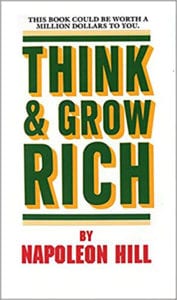
Think and Grow Rich
Our guest is John Mitchell. He has a 12-minute-a-day Think It, Be It technique that’s rated as the top practical application in the world of the legendary book Think and Grow Rich. When he applied his technique to his own life, he saw his income go up to over $5 million a year. Previously for twenty years as an entrepreneur, he earned low six figures and that twenty times difference happened because his daily technique significantly increased his control over himself by probably double. It made them laser-focused every day on the two or three things that move the needle in his business. It also allowed him to rapidly evolve his strategy for success. He was simply operating every day at a higher level than he ever had before and it showed up in his income.
The science behind his technique was profiled in a Time Magazine cover story. While John started out as a CPA, he became an entrepreneur at a very young age of 30. He’s owned companies in a wide variety of industries including real estate development, restaurants and publishing. Turning 50, he wasn’t as successful as he thought he should be. He found the top book of success written, Think and Grow Rich and he developed his own 12-minute-a-day technique. That what you envision in detail on a daily basis is what shows up in your life. John, welcome to the show.
Thank you. I’m glad to be here.
I always like to ask my guest to take that little intro that I gave and bring it to a life of your own story of origin, not so much about being a CPA. I want to hear the story of origin of turning 50 take us there and saying, “I thought I’d be more financially independent. I worked hard. I’ve been an entrepreneur and things aren’t what they need to be.” Tell us what the a-ha moment was for Think It, Be It book.
When I turned 50, I wondered if success looks what I thought I should be. I had a couple of goals in my life to make enough money, so I didn’t have to work and to find the woman of my dreams. As I assessed my life, I realized that I was falling short on both. As an entrepreneur, I’m always blessed to make well into six figures but never close to seven. On finding the girl at 50, I’d never been married. I can tell you, it was not from lack of interview. I did a lot of interviewing. The defining moment happened three days after I turned 50. I’m in my office, kick back and my feet are on the desk. I started thinking about my life and I do the math. I realized, “If I don’t make over $1 million a year, I’m never going to have that exceptional life that I’d always dreamed of.” The freedom, the lifestyle, the sense of accomplishment and that hit me like a ton of bricks. It was clear, I had to make things happen in my 50s. I made the decision that hard work doesn’t work.
While it works for making six figures a year but clearly it didn’t work for making seven. I knew there had to be something other than hard work. I made the decision to find out whatever that something else was. Three months after turning 50, as I’m puzzled about how to change this direction, a pearl of wisdom hits me. Why not find the top book in the world on success and achievement ever written and then apply it word for word to my life? The logic was so simple and compelling. After some research, I’ve found that there is one book that excels over all others and it’s Think and Grow Rich. Are you pretty familiar with Think and Grow Rich?
[bctt tweet=”‘Hard work doesn’t work for making seven figures.'” username=”John_Livesay”]
I am. It’s all about investing in real estate and letting that real estate grow for you.
It’s not quite, but I guess you’re in some of that.
That feels a little like Rich Dad, Poor Dad.
Here’s what’s significant about the book. First is the book has sold over 100 million copies whereas the next bestselling book on success and achievement has sold under ten million copies. Clearly, it’s a top book ever written on success by a factor of ten. The second thing is the book has created more millionaires and billionaires than any other book on the planet. It’s basically applying science to your life to up your success. I read the book and the central concept is what you envision in detail on a daily basis is what shows up in your life.
It’s very much along the lines of The Secret or Abraham Hicks, that whole mindset of The Science of Mind of Ernest Holmes or Your Thoughts Create Your Reality.

Think It, Be It: You got to work smarter by influencing the actual part of your brain that influences the thing that determines your success.
I read that and then I discovered there’s a problem that I and probably all of us have encountered 100 times. It’s a great idea but how to apply it in a practical way. I probably moped around for a couple of weeks not knowing how to apply it and then it hit me that maybe I had to come up with the practical application myself. I did and I applied it to a new business I was starting in the financial services industry. Over nine years, I continually tweak my 12-minute-a-day methodology. Over those nine years, my income went from low-six figures a year to $5 million a year. I felt so incredibly blessed. It’s quite a change from my twenty-year history. I could see why it was happening. By applying science to my life for the first time ever, I was influencing my daily actions and thoughts. Clearly, I was operating at a higher level than I ever could before. I could feel it. The best news was I also met the woman of my dream from applying this methodology.
It’s about pulling people in. Energetically, it’s almost like a metaphysical principle that the science is based on.
It really is. That sounds a little woo-woo, metaphysical.
Quantum physics does if you’re talking about energy for people who prefer that. Let’s go and dive right into this concept of a lot of people who go, “I don’t have time to meditate. I don’t have time to fill myself up with a bunch of positive thinking.” Give us an example of how the 12-minute-a-day methodology works.
This is essentially how it works. You’re going to feed yourself every day exactly the person you want to be, exactly what you want to accomplish and precisely how you’re going to achieve your clearly defined goals. When you feed that to yourself every day, after about 21 days, the science kicks in. That starts showing up in your thoughts and actions automatically without thinking. That’s the magic of it because when your thoughts and actions automatically start reflecting your programming, it immediately takes you to a higher level.
[bctt tweet=”Success is when your thoughts and actions match your programming.” username=”John_Livesay”]
What’s an example of somebody who did? Let’s focus on the career at the moment.
I’ll give you an example. Everybody wants to raise their income, their success and their career. To backtrack a little, the way this works is, you’ll take your life and compress it down to one sheet of paper, front and back. On the front is the ideal you and the five key areas of your life: yourself, your health, your romantic relationship, your spirituality and your career. That’s on the front. On the back are the improvements you want in each area of your life and your three goals for the quarter. That’s essentially it. One of the things in a career that we do is we articulate your succinct business plan, your strategy for success or the two or three things that move the needle. The linchpin issue that takes your business to the next level.
You feed that to yourself every day. I found that three things happen. First, your business plan is so easy to implement because it’s so top of mind. Secondly, you do become laser-focused on only what moves the needle. Everything else falls by the wayside. The third thing is that suddenly I had a way for evolving my strategy for success in the business plan in a way that moved it forward by like twenty times what I’d ever experienced before. That was happening because when you’re feeding your business plan or your strategies for success to your subconscious mind every day, it’s constantly challenging it and refining it. It had such an impact on me. I have that ability to continually refine my strategy and it made me more successful.
This is why I wanted to have you on the show, John, because I’m so fascinated by this premise. From my own speaking career, for example, when I had the courage to say out loud to people, “I want to give a TEDx Talk.” All your self-talk comes up, “Who am I to give a TEDx Talk? What a big goal? You’ll never achieve it. It’s never going to happen.” If you keep saying it to yourself and putting it out to people and let go of all the negative self-talk and worrying about whether the other people think you’re crazy to do it, then someone said, “I know someone who puts one on in San Diego. He might be able to help you figure out what you need to do to get a yes.”
The thought process of that laser-focused, keeping it top of mind, knowing that having a TEDx Talk would be one of those key drivers that you talked about moving the needle that gives you credibility as a keynote speaker. We got the laser-focused, then I get introduced to someone for saying it. It still took me a year and a half to get someone to say, “Yes.” It had nothing to do with my talk. It doesn’t fit our theme. You had to get used to those noes. This question that someone gave me that is what I hear you saying, which I want to tell everyone reading is if we plant in our seed this question of challenging that question, why is it that I’m a successful TEDx speaker? Why is it that my TEDx Talk has over a million views? That’s what I hear you saying is by having that laser-focus and then asking, “Why is it that I have my perfect soul mate in my life now?” Your brain starts matching that programming. Is that the gist of what you’re saying?

Think It, Be It: Just as you’re baking a cake where you can’t keep opening the oven, we have to give our goals and thoughts the full time to bake.
There are two parts to success. Using your example is probably a good idea. Your desire to do a TEDx Talk, that’s setting the goal. That’s being clear about what it is. Equally important, if not more important, are the action steps that you have to take to achieve that goal. You no doubt had a detailed vision of exactly what you needed to do to make that a reality. That’s the power of this 12-minute-a-day technique is that it takes those action steps that you’re going to need to take to achieve that goal. By feeding it to yourself every day that causes your thoughts and your actions to reflect your programming. That’s the game-changer. When people wonder about, “What makes me more successful or how do I become more successful?” Most people think, “I’ve got to work harder.” No, I don’t think so. You’ve got to work smarter. You work smarter by influencing the actual part of your brain that influences the thing that determines your success, which is your everyday actions and ongoing thoughts. Does that make sense?
It does. We talked about this a lot. I’ve interviewed investors to fund startups. They say, “Please tell your clients, don’t try to boil the ocean.” I tell people Amazon sold books first and have proof of concept that worked before they started selling everything. If you try to pitch Amazon now, it would be like, “That’s boiling the ocean.” I love this concept of laser-focus. People say, “I have top of mind what my goals are. I’ve figured out what I should be focusing on to take some action. Your secret sauce, from what I can gather, is this questioning your mind of visualizing it already happening where you’re saying, “Why is it that? This has already happened.” When you are fighting, in my case, when I finally did stand on that TEDx stage, on that red carpet, it seemed like, “I’m here,” or like you’re meeting the woman of your dreams for a date. It’s like, “She showed up.” It doesn’t seem like a surprise or magic. There’s the science of it because you’re doing this. The 12-minute-a-day, you mentioned the four categories: yourself, health, romance, spirituality and career. Do you spend a couple of minutes on each of these categories for the twelve minutes or do you spend twelve minutes on one?
No, it’s twelve minutes in total. Probably more of it is spent on your career because originally, I created this because I wanted to go to seven figures a year net. That was my big focus. It’s a little more towards the career, but it has all of those areas.
What is your life like? There are all these studies on happiness that we pass a certain Maslow’s Hierarchy of Needs, our basic needs are met in terms of food and shelter and what have you. In other words, the difference between making $100,000 and $1 million is not the same exponential increase in happiness as it is in money. Has that been the case for you?
When I was making six figures a year, in some ways, I was afraid to look at creating an exceptional life looked like because I wasn’t sure I’d ever get there. Once I got there and I started making $5 million a year, I was like, “This is way better than I thought it was.” Finally, I had enough money not to have to work. Because I was so fascinated by the stuff we’re talking about, I sold my company. I guess it was probably two or three months after I sold the company, I met the former chancellor and president at the University of Texas at Austin. I told him my story. He said, “You’ve got to teach this at the University of Texas and why don’t we teach it together?” I said, “That’s fine to teach at the high achievers.” My passion is to get those people that were like mad that struggle to go to that next level and teach it to them because I so relate to the pain that I had back then and so many people have.
[bctt tweet=”What you envision in detail on a daily basis is what shows up in your life.” username=”John_Livesay”]
You have empathy because you’ve been in their shoes is my big takeaway from what you said.
I had freedom was the feeling I’ve gotten as I crossed over and didn’t have to work. The best things were not material things. The lifestyle is great. That’s small potatoes compared to that sense of accomplishment, that pride of accomplishment, the level of control that this gave me over my life, that level of control was immensely great.
You’re the perfect person to ask this question to. In my observation of entrepreneurs and business people in general, a lot of people have the money thing down, but they don’t have the fitness thing down. They’re physically fit but not fiscal fit and then vice versa. There are a lot of fit people out there that have no money. You have both. You’re physically fit and you’ve got financial freedom. I tell people, “If you can get one area of your life, take the discipline you have, knowing how much your cashflow is, and what’s in your checking account and apply it to the calories and exercise you’re doing and vice versa.” Take the discipline from working out to your money. I don’t see many people talking about that. You seemed to be embracing all of this. Another reason why I wanted to have you on is you’re not talking about careers, you’re talking about all areas of our life. Can you speak to how this Think It, Be It applies? The concept of visualizing is discipline and focus from one area. Let’s say fitness can also be applied from your career.
I’m so glad you brought that up because here’s my definition of an exceptional life. You’re making seven figures a year. You’ve got a great romantic relationship and you’re fit and trim. To me, that’s the trifecta of an exceptional life. I see so often that to your point that people maybe are doing well financially. They got a lousy marriage or they’re overweight. They can’t control their weight. I particularly find this issue about having a great romantic relationship important. If you think about it, that relationship affects your happiness more than any other external factor there is. This affects all three areas at the same time. One of the things I think that you’d find interesting, this is something that we all have to overcome. We’re all using an antiquated operating system to run our lives. It’s like playing the game of life with one hand tied behind our back. The effect is that we’re all innately geared to daily survival. The effect of that is three things.
First of all, 90% of your thoughts are fear-based. Secondly, you have less than 20% control over yourself. Thirdly, you’re reactive rather than proactive on your report and agenda. All that is great if you’re running from a lion. It’s exactly the opposite of the way you need to be if you want to be productive, creative and happy. You have to overcome that. The part of your brain that controls your everyday actions and ongoing thoughts is your subconscious mind. That antiquated operating system is what’s running your subconscious mind. It’s gearing you exactly the opposite way you need to be. That’s what this 12-minute-a-day technique does. It overlays an operating system that gears you to productivity, creativity and happiness.
You have mentioned that there are two scientific discoveries that affect how much we achieve in life. Can you tell us what those are?
Over the last 30 years, there’s been a lot of scientific interest in what separates the mega achievers from the moderately successful. It comes down to two things: control of self and focus. Those are the two exact things that this affects. The principles that you’re referring to, it is that antiquated operating system. The other one is, you have a reticular activating system, which is a part of your brain that’s about the size of the tip of your little finger. It’s a filter for your brain. It determines what gets in and what doesn’t. It’s like the nightclub bouncer for your brain. When you’re feeding every day to yourself exactly the person you want to be, exactly what you want to accomplish and precisely how you’re going to achieve your clearly defined goals, then it knows what’s important to you. It brings in stuff that isn’t coming in. That’s what amazed me when I first started doing this, I saw my reticular activating system reacting to what I was doing for twelve minutes a day.
Is it the amount of time? Is there something special about twelve minutes versus ten versus fifteen?
The beauty of twelve is it’s doable. It’s not too much. I’ll give you an example of how it worked in my marriage. This illustrates how it works with everything. I didn’t get married until I was in my 50s. When I did, I discovered something that unfortunately my married friends had failed to share with me. Every once in a while, your spouse will say something irritating. I know that probably hadn’t have happened to you, has it?
It’s happened to everybody.
[bctt tweet=”Success is a necessity, not a preference.” username=”John_Livesay”]
When it happened to me, I didn’t like it. I didn’t like what would come out of my mouth. While it didn’t happen a lot, it did happen. I thought, “I’m going to put in my visualization that I’m going to be flexible, patient and thoughtful.” I’m reading that every day. Fifteen days in, I’m no more flexible, patient or thoughtful than I was at the start. About the 21st, the 22nd day, my precious wife, Ginger, said something irritating and in that moment, I was flexible, patient and thoughtful. I didn’t have to think about it. That’s who I had become.
It’s a tipping point. That 21-day thing of the brain getting reprogrammed.
I have done this with so many people. It is amazing about this 21-day mark. Some things the subconscious mind is going to accept at ten days in. I have consistently seen that around the 21st day, it then accepts everything.
I love stories. I always use the analogy of, if you’re planting a seed, you can’t keep digging it up going, “Is it growing?” If you’re baking a cake, you can’t keep opening the oven and be like, “Did it rise yet?” That’s what we tend to do with our goals and our thoughts. We don’t give it the full time to bake in this case, 21 days.
That brings up something else that’s interesting. This works on everyone, but it’s not for everyone. Maybe that’s even a negative about this. What I mean by that is it works on everyone because it’s pure science. It has to work. It cannot work. There’s one caveat to that. It’s not going to work if you don’t do it. It’s not going to work if you are trying not to do a habit or the other thing is if more success is just a preference, which is the case with most people as opposed to a necessity. It’s not going to work. More success has to be a necessity for you because if it’s not, you’re not going to spend twelve minutes a day.
Those twelve minutes a day, is it a journal that you’re writing in? Is it words you’re reading over and over? Is it making sure you’re top of mind on your action steps? What do the twelve minutes look like?
It’s pretty much all of the above. Keep in mind and picture this, you’ve compressed your life down to one sheet of paper, front and back. It’s sitting in a plastic stand that sits on your nightstand. The first thing in the morning before you get other things into your head, you spend twelve minutes a day to read it. You’re reading what’s moving the needle in your business. You’re reading the way you want to be with your spouse. You’re reading the things you want to make happen with your consistent exercise and how you eat. In the career, you’re feeding your succinct business plan, your strategy for success and your three things that move the needle. Also at the bottom of the visualization, you’re tracking every week on Sundays, the key behaviors associated with your goals. It’s that combination that has such a transformative effect on you.
The website is ThinkItBeIt.net. You have a five-day free email course that anybody who goes to the website can get. They can start to explore from that.
You can text me at 44222 and then the word, Genius, and that gets you the five-day email course.
John, I can’t thank you enough for sharing your success formula. You obviously are walking your own talk, which gives credibility. It’s been a pleasure having you on the show. Is there any last thought or quote or inspiration you want to leave us with?
I’ll share with you a story you might find interesting. When I created this a few years ago, I decided to go find the top expert in the world on success and achievement. I determined that the person is Darren Hardy. He is an amazing guy. I figured out a way to get to him. I’m able to sit down with him for three days and visit with him. Finally, we sat down and he looked at what I’ve created, this visualization. He studied it. He said, “This is good.” He looked a little closer and he said, “This is good. You’ve got a problem, though. Most people are not going to spend twelve minutes a day on anything to impact their success. That’s how it is.” I was like, “Darren, how can that be?” It’s twelve minutes a day. It’s based on the top book ever written on success and achievement. He goes, “I know, John. You’ll do it, I’ll do it. That’s a dirty little secret of the success in human achievement field is that most people won’t do anything to impact their success and achievement. The people that were a success is a necessity as opposed to a preference. They’re going to do this. It’s going to be their advantage in life for creating success.” I was like, “That’s what I experienced.” It was pretty gratifying to have him say that. Now, that we’ve done this with a lot of people and I get the inputs from how it’s changing their lives and how the template that we have makes it easy to do this, it’s gratifying.
Thanks again, John.
Links Mentioned:
- Think It, Be It
- Think and Grow Rich
- Rich Dad, Poor Dad
- The Secret
- The Science of Mind
- Your Thoughts Create Your Reality
- www.ThinkItBeIt.net
- Quantmre.com
Wanna Host Your Own Podcast?
Click here to see how my friends at Brandcasting You can help
Get your FREE Sneak Peek of John’s new book Better Selling Through Storytelling
John Livesay, The Pitch Whisperer
Share The Show
Did you enjoy the show? I’d love it if you subscribed today and left us a 5-star review!
-
- Click this link
- Click on the ‘Subscribe’ button below the artwork
- Go to the ‘Ratings and Reviews’ section
- Click on ‘Write a Review’