

Investing Between The Lines – Interview with Laura Rittenhouse
Posted by John Livesay in podcast | 0 comments
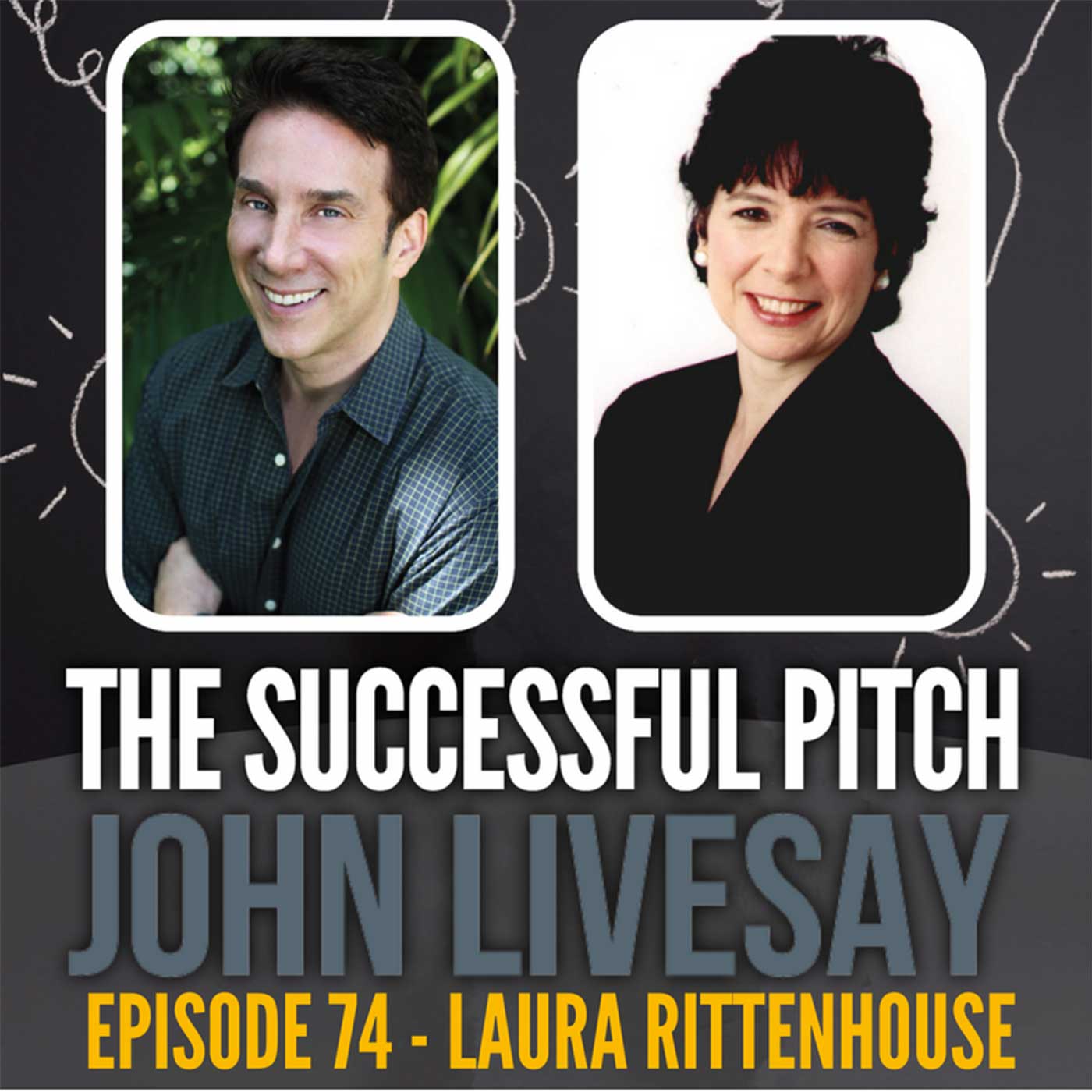
Listen To The Episode Here
Episode Summary
Laura Rittenhouse is a trust and valuation expert, as well as a financial strategist and innovation coach to fortune 500 and small cap companies. She is also the founder of Rittenhouse Rankings, Inc. and the author of Investing Between the Lines. On this episode, Laura explains the importance of candor within an organization. She believes candor is what makes a company and its team succeed against the toughest of odds.
Investing Between The Lines – Interview with Laura Rittenhouse
Hi and welcome to The Successful Pitch. Today, I’m thrilled to have as my guest, Laura Rittenhouse, who is a trust and valuation expert as well as a financial strategist in innovation codes to Fortune 500 and small cap companies. She’s the founder and CEO of Rittenhouse rankings and the author of an amazing book called Investing between the Lines, How To Make Smarter Decisions By Decoding CEO Communications. I’ve had the opportunity to talk with her before the show. You are all in for a huge treat. Laura, welcome.
Thank you, John. What a pleasure to be with you on this call.
You are not only someone who’s smart and kind and connected, but just so enthusiastic about life. I just love people like you who make the world a better place. Before we get into all the books and your connections to Warren Buffett. Who by the way everybody, Warren Buffett said that you are on the side of the angels. Laura is in fact somebody that you’re going to want to get to know and you must read her books, Investing between the Lines, Buffett Bites. Just such an expert.
How did you become who you are? Take us back a little bit before you started your company and your first early jobs that made you want to get into all this world of investing.
Coming out of college, my first job was being accepted as a Peace Corp volunteer.
I love it.
I worked in an orphanage in Turkey. That was one of the most meaningful. It was a great experience because it was a total failure. It wasn’t a total failure. It was a failure in the sense that we had signed on for a two year commitment. It ended up being one year because the revolutionary fists of a free and democratic Turkey wanted to bang on their heads. It was thought that it would be a good idea for us to leave the country at that point.
I’m going to jump around, but we’ll go back to your background. You were ranked one of the 100 Most Trustworthy People in America by Trust Across America. You’re an expert in candor and trust. You do just wrote this amazing blog, Clowns Without Borders. Now that I know that you were in the Peace Corp, it speaks more to why you have such authenticity around this.
Can you just tell us a little bit about that great blog you wrote, Clowns Without Borders, and how you’re making such a difference in the world by just putting that out there for people?
What an amazing story, John. The story gives us a window into the whole topic of candor. I blog for Forbes. What I’ve wanted to start is the series on Candor Heroes. Who are the Candor Heroes? They’re people who, and as you and I have discussed, are courageous and shining light into dark places. That mission is embodied in the very word.

Investing between the Lines by Laura Rittenhouse
The word candor comes from the Latin candere, which means to illuminate. The word candle of course comes from that same root word. When you think, what does illumination do? It shines light into dark places. Leaders who do that, very impressive and also very courageous.
The blog started out of a webinar I was listening to on a topic very much related to candor, called conversational intelligence. Wonderful work. It links brain neuroscience with the opportunity we have to use conversation in a way to create good things in the world and to avoid creating bad things.
The person who hosted this, a man named Benjamin Croft. At the very end of the blog he said, “Glad that you’re on the call today. By the way, in a few weeks, I’m going to be near the Syrian border with Clowns Without Borders. Wish me luck.” I was stunned. I thought, “Oh my heavens, Clowns Without Borders? I know about doctors, but whoever heard of clowns?” I immediately googled them. It’s a legitimate organization.
I contacted Benjamin. He wrote back to me and we’ve become friends since then. Yes indeed, this story happened after the Paris attacks. He was in Istanbul at the time. He said, “We have to do something. What can we do?”
He used the money that they earned from giving this webinar and they sponsored a tour of Clowns Without Borders. They brought clowns over from the US. They contacted clowns in Turkey. After about a week and a half of training and so on, they actually went to these refugee camps along the border.

Clowns Without Borders
There was one place they went to in Eastern Turkey where only just months before, 20 people had been massacred, on the same stage where they were performing. It was almost like an exorcism there to have this horrible experience, now turned and transformed by the clowns into a place of joy.
I felt so strongly that it was important to get this message out to the world. I’ve gotten terrific response, wonderful emails back from people who were so inspired by it.
It’s just taking a wonderful concept of lighting something in dark places and bringing it to life because it doesn’t get much darker than that. Clowns are such a opposite, you don’t think you have time for laughter and joy when you’re in survival mode. Yet, something like that can remind us all of how we can shift our focus so quickly. Like you said, “Don’t curse the darkness. Light a candle.”
Absolutely. I love what Benjamin said too when he said, “There are lots of things. We could’ve brought them stuff. Stuff can be stolen, stuff is used.” We wanted to bring something that couldn’t be stolen, that could last forever. A memory like this, how could you not love it?
That’s so wonderful. Making a difference. You were at Lehman Brothers for ten years, being involved with corporate finance. Now, you’re running Rittenhouse Rankings. You really have become an expert in being able to cut to the chase, as it were. Really cut through the clutter and get to what’s going on. Tell us about Candor Investment Fund and what you do there.
Leaving Lehman Brothers, and you asked earlier, how did I get to do the things I’m doing today. I loved being in Lehman Brothers. This was the time when Wall Street was still very much guided by the value of making sure that clients were taken care of and serving them and coming up with brilliant ideas on how they could run their businesses better.
I reached a point in my life where I felt that … I think a lot of people, if you’re lucky, you get to the point you say, “Who’s life am I living? Am I living the life I should live or the life that I truly was born to live?” I decided I wanted to take some time out, to figure out what that was.
[Tweet “If you’re lucky, you get to the point you say, who’s life am I living?”]
I spent a year travelling, talking to people. A lot of the CEOs that I had worked with on Wall Street called me and they said, “We still want to work with you. What can we do?” We began to set up investor relations programs, which at that time was a new thing to do.
In doing that, it became clear that the reputation of the CEO was a major factor in the stock price valuation. If my CEO clients could become truly effective, authentic communicators and build trust because, without candor there is no trust. Then this would be a very powerful way to enhance the valuation of their company. Trust is the foundation of a corporate culture in a business.
You’ve got people operating in all cylinders, wanting to work together. They’re aligned in a mission, aligned in a strategy and you’re going to be generating better results than your competitors who don’t have high levels of trust.
[Tweet “Without candor, there is no trust.”]
We’re going to tweet that out, “Without candor, there is no trust.” That is so insightful. What do you think caused you to be ranked as 100 Most Trustworthy People of Business? You’re clearly an expert in this. I’d love to have you define what makes people trustworthy as they have to be candor and transparent. I believe that’s one of the things you’ve talked about before.
I have a client that, when he introduces me to people he likes to say, “I’d like to meet LJ Rittenhouse. She spots bullshit faster than any …” I consider that a great tribute.
That’s great. It is. One of your key expertises is looking at the shareholder’s letter and a stock report and being able to not even have to read anything else to determine whether that’s a good investment or not, right?

In order to be effective with your investors, you have to have a very compelling story and it had to be real.
That’s exactly right, John. That is what has led to creating the first ever Candor Investment Fund. In that work I was doing with CEOs, working with them on their strategies. In order to be effective with your investors, you have to have a very compelling story and it had to be real. Again, the basis of conversation intelligence is that nothing happens outside of conversation, nothing. Conversation is the special sauce that creates things in the world.
It’s not emails, it’s not your proposals, it’s not your business plan, it’s conversation, right?
It’s conversations about the business plan. It’s emails that stimulate conversation. Again, person to person is still more powerful ultimately than digital to digital. Although, I don’t like to take anything away from digital. We’ve seen that it can have a lot of power too.
[Tweet “Person to person is still more powerful ultimately than digital to digital.”]
In my experience, moving things forward in the world, especially new things, something like candor. It’s funny. People are afraid of candor. When I say the word, they get nervous because they think that I’m judging them as to whether they’re lying or telling the truth.
I think more importantly, what people miss is the element of authenticity. Mark Twain wrote so many wonderful things about candor and truth and lying. He said, “Tell the truth and then you don’t have to remember what you said.”
There you go. It is so important when you’re pitching for an investor too, that you are authentic. Because you can’t lie. It’ll come out during due diligence and then the whole deal will fall apart.
There goes the trust. You’re asking about the shareholder letters. As I was advising my CEO clients, I read lots and lots of shareholder letters. I read my clients letters and then I read letters of their competitors or their peer companies.
Over time, I began to see patterns. That’s the first step in creating a model of reality. That’s the first step in creating a taxonomy so that you could begin to find the similarities and the differences and the ability to compare and contrast. That does make sense to you?
It does. I think it’s fascinating that you can measure something like candor into structure and then make predictions based on that.
The book, Invest between the Lines, which I never expected this. It was more than a dream come true. This book was recommended by Warren Buffett in his shareholder letter. The granddaddy, the gold standard of all shareholder letters. Warren, throughout the years, has been very supportive of our work.

Warren Buffett. The granddaddy, the gold standard of all shareholder letters. Warren, throughout the years, has been very supportive of our work.
What the analysis, when investors, portfolio managers, I’ve talked with them over the years and I’ll give them my conclusions about the value proposition, the investing value proposition in a company. It’s almost ludicrous.
They’ll say, “Yup, we understand. We agree with that. Yup, we agree with your assessment on management. Spot on. Yes, this is a strategic vulnerability they have. Yes, they’re doing great. They make great products.”
So much agreement. At the end, I’ll sit back and I’ll say, “It’s just great that we see so much of the same thing. But let me just observe something. Number one, you spend hours and hours running, spreadsheets, talking to management, talking to employees, visiting customers, talking to competitors, going to industry conferences. You’re doing all this effort.” All I did was read the shareholder letter and we came out with basically the same conclusions.
Crazy. It’s a huge amount of time and money you’re saving people if they just use your expertise. What advise would you have Laura, for someone who is a founder? Maybe they’re public, maybe they’re not.
They have to communicate in whatever form that’s going to be, whether it’s a pitch or a shareholders letter, to people so that you can get a sense of who they are. Is it the candor that we’ve had some troubles and we’ve addressed it versus trying to just gloss over things? What is it you really look for when you’re looking at those letters?

There’s something called a strategic balance. All the topics we were coding and scoring for could be organized into a seven system model.
There’s something called a strategic balance. I described this in my book. After all the years of reading these letters and creating this taxonomy, it became clear that all the topics we were coding and scoring for could be organized into a seven system model.
Those seven systems are, strategy supported by accountability systems. That’s two. Vision supported by strong leadership. The back bone of a company are the stakeholder relationships, the quality of those relationships.
In the center of a business is the commitment to capital stewardship. After all, it’s a profit making company. If you’re not focused on how smartly you’re allocating the capital, you’re probably wasting it and you won’t be meeting your investors’ expectations and you could go out of business. Capital stewardship is the key principle. Something to observe. Most importantly is candor. That’s the seventh system in this business.
As we’ve said, candor supports the quality of those stakeholder relationships and builds trust. Now, you asked how do we make assessments of companies. We have seen over time that companies that are balanced, which have high scores, high linguistic scores, content scores.
[Tweet “Candor supports the quality of those stakeholder relationships and builds trust.”]
They’re not all strategy, but they have good balance between strategy and accountability systems. Good balance between vision. It’s not over 50% vision and then very little on the other systems. Companies that are very well balanced, you think about it, that gives them a solid foundation to deal with whatever, the economy, their competitors. Whatever gets thrown at them.
That’s one factor. Another factor is the BS and the truth telling. That’s a very important factor. Those are the rankings that we publish every year. We rank order 100 companies based on how much candor, positive candor truth telling they have and how much obfuscation or BS they show in their communication.
When we correlate these top ranked companies and the bottom ranked companies, we’ve found over the past decade, that the top ranked companies outperform the bottom ranked and also outperform the market over this period.
Let’s talk about the connection between candor and vision, which is one of your other strategy systems that you talked about. I’d love to hear that connection and how important it is to balance your vision and your candor.
Let me ask you, what do you think of when you think of vision?
I think it’s important for a founder to have a vision that they can communicate to the employees about where they see the company going. What the mission statement is? What the big picture is? Then turn around and communicate that to anybody who is going to invest. Whether it’s an Angel investor or stockholder, eventually. Having that vision and if that vision needs to change, being able to communicate that with candor.
I’m so glad you asked me that question because it gives me a chance to focus on something that I’ve been spending a lot more time thinking about. You’re absolutely right. When people think of vision, they often think of what’s our mission. I think the word that kind of relates to that but I think is more powerful is, what is our purpose?
[Tweet “What is our purpose?”]
There we go.
What is our purpose? I’ve been watching this video of Richard Leider, who does a lot of focus on this. He likes to say, “What are the two most important days in your life? We can look on this as both a business and as one’s own individual life. Is it the day you’re born and the day you die? No,” he says. The two most important days are the day you’re born and then the day you learn why you were born. Purpose.
[Tweet “The day you were born and the day you learn why you were born.”]
Nice, I love that. We’re going to tweet that out, “The day you were born and the day you learn why you were born.” Great.
That is no different from a company. If you are in a company where you feel that this company is bringing something meaningful into the world, doing it with integrity, you can see what a difference it’s making, boy, that gets you up in the morning. That gets you up. It’s like Warren Buffett likes to say, “I tap dance to work every day.”
What a great image that is. Because there’s a purpose behind what he’s doing. It’s not just to make money.
It is about making money because it’s a score card to tell who’s winning, right?
Right, but if not just about that.
For him, it’s how he’s making that money that’s important.
With integrity.
It’s how can we analyze companies better than others more smartly? Here’s the really important distinction. How can we do it for the long term? What we have is the cancer in our financial system. Here’s a tweet for you. The cancer in our financial system is this focus on short termism.
[Tweet “The cancer in our financial system is this focus on short termism.”]
Yes, that is a cancer. That’s what causes turnover. That’s what causes in morale. That causes fear. When you’re just focused on short term vision of, “Oh, if you don’t hit this number for the quarter, you’re all fired.” Or, “We’re totally changing our purpose and our mission statement and shutting down factories,” as opposed to seen the big picture of what this could be.
Exactly.
What are some of the other quotes that you like from Warren Buffett? Because he has so many and I just want to hear what some of your favorites are since you’re so connected to him.
The one we shared that comes from his owner’s manual. It’s so interesting. Berkshire Hathaway is the only company that has published an owner’s manual. Just like if you’re buying an appliance and you get in the instructions here, “This is what you can expect from using this.”
He wrote the owner’s manual. If you buy the stock, this is what you can expect from us, the owners. The reason that candor is one of the principles that he follows and promises to investors is because he says at the end, “The CEO who misleads others in public will eventually mislead himself in private.”
There we go. That’s it. There’s the gem. If you lie to other people, you’re eventually going to lie to yourself.
Exactly right. Thank you for saying that because that gets us into the topic of Candor Boot Camp. I have worked with corporations on how to bring more candor into the organization. That means working with teams. What’s most successful is when I worked with multi-level teams. Anywhere from presidents down to factory workers.

It’s so powerful to get the people who don’t normally get to communicate with each other have conversations with each other.
It’s so powerful to get the people who don’t normally get to communicate with each other have conversations with each other, to stimulate that. There’s so much learning that goes on. It requires a certain humility. You’re bringing a humility to that and an openness that leads to innovation and creativity.
Candor Boot Camp, when you think about it John, this is what we’re developing now, Candor Boot Camp needs to be taught in three modules. First, and it’s what we’ve just mentioned in relation to the Buffett quote. First is intrapersonal candor. Bringing people together and helping each other suddenly confront the BS in their own lives. What am I lying to myself about? What is special? What’s my purpose? What is my purpose? If I don’t know what it is, how can I find that out?
There’s that whole piece. People come out of that session and it’s almost like I don’t want to say they’ve been to church because that has a certain connotation these days. It’s very freeing. However, once people have experienced what it means to live candidly, to go back into the workplace and work with other people that haven’t had this experience can be very hard.
The next module is to bring teams together and practice, have skills and exercise where people can practice team-based behavior.
[Tweet “You’re bringing a humility and an openness that leads to innovation and creativity.”]
Because that allows everybody be speaking the same language when you do that.
Exactly, and feel safe. The whole point about candor is that you create an environment where people feel safe to say what they really think and what they really mean.
Laura, it’s so interesting you said that because to me, that’s the highest compliment anybody can ever give me. Is, “I feel safe when I’m with you to be myself.” It’s also the highest compliment I can give anybody. “I can take my mask down, I can be a little bit vulnerable with you.”
When you said earlier about humility is one of the keys to innovation, that’s such an important takeaway for our listeners. When you’re pitching for funding for your company, you have to come across confident and humble at the same time.
In other words, you have to be coachable because that’s where the innovation comes. You can’t know everything. Nobody wants to invest in somebody who thinks they know everything. They want somebody who has a vision, with candor and humility.
Beautifully said. That gets us to the third module, which is creating the candid enterprise.
What’s a candid enterprise? Tell us about that.
We’re inventing that even as we speak.
Love it.
What it means is you start from the individual. The individual works in teams. Then there is a business, an enterprise, a corporation, whatever, that has a set of principles, a set of goals and strategies. That if these are not based on candor, then your teams are not going to be able to be supported in their efforts to candidly co-create and work together and achieve greatness.
There needs to be a design work to make sure that the enterprise itself has principles and expectations built into it. Getting back to our prior comment, that make it safe for people to experience candor on the job.
It goes back again to what you said. If you have a purpose of doing greatness, then everyone’s focused on that as opposed to necessarily trying to claim all the glory for a big idea or something.
Exactly.
Not only do you have to create a great team to get investors to want to invest in you, but then you also have to keep them working well together. It seems to me that this Candor Boot Camp is the secret sauce to keeping a team on the right track. Because you can get somebody who wants competitiveness, “I want to get promoted over you and want credit for this,” you’re way off purpose. It happens all the time.
That’s right. That’s why those three levels, intrapersonal, team-based and enterprise, are absolutely essential to be viewed together. Because if you have one and not the others, you can’t support people in this candid enterprise.
How did you come up with the title, Investing between the Lines? I love the title so much. It implies a little bit of intuition. I would love to hear how you came up with that title.
It’s a play on words. In fact, a lot of people say to me, “I love your book. Reading between the lines.” I have to say, “No, it’s Investing between the Lines.” Of course, that’s the phrase that most people are familiar with.

What does reading between the lines mean? It means that you intuit, that you’re taking signals on what’s obvious, the surface.
What does reading between the lines means, to your point, it means that you intuit, that you’re taking signals on what’s obvious, the surface. You’re getting deeper meaning from it. Similarly, investing between the lines means, “Okay, I’m reading this and I’m intuiting ideas and I’m analyzing, I’m processing information that allows me to make a better smarter investment decision.”
So great. I love it. Laura, how can people find out more about you, Investing between the Lines, the Candor Boot Camp, Twitter, all that good stuff?
First of all, you go to our website. Secondly, visit my blog, or see my articles on Forbes.
Did you have any last thoughts for our listeners about how we can all have a bigger purpose, make a bigger difference in the world from what you’re doing? Is there something that you would like to leave us with that’s inspirational?
Here’s a very, very important concept. People often say, “We need more trust in the world. We need more candor in the world.” That’s only going to happen if everybody makes a commitment to be trustworthy. If everybody makes a commitment, “Okay, I will say what I really think, what I really mean. I’ll say it in a way not to attack people, not to be a jerk, not to beat around the bush. But because I’m committed. My purpose here, I’m committed to work creatively with other people to make a positive difference.”
What’s so great about you is not only do you put that out there, but you also show people how they can do that and make money at the same time. Most people think it’s one or the other. You’re a living example of how to put something positive into the world and be strategic and still make a great return on your investments. Laura, I can’t thank you enough for being on the show today.
John, thank you for having me. Thank you for the work you’re doing.
Thanks.
Links Mentioned
J Robinett Enterprises
John Livesay Funding Strategist
Rittenhouse Rankings Website
Investing Between the Lines by Laura Rittenhouse
Clowns Without Borders Website
Crack The Funding Code!
Register now for the free webinar
Author John Livesay at NewsChannel 5
Share The Show
Did you enjoy the show? I’d love it if you subscribed today and left us a 5-star review!
-
- Click this link
- Click on the ‘Subscribe’ button below the artwork
- Go to the ‘Ratings and Reviews’ section
- Click on ‘Write a Review’
How To Pitch Millennial Investors with Lee Caraher
Posted by John Livesay in podcast | 0 comments
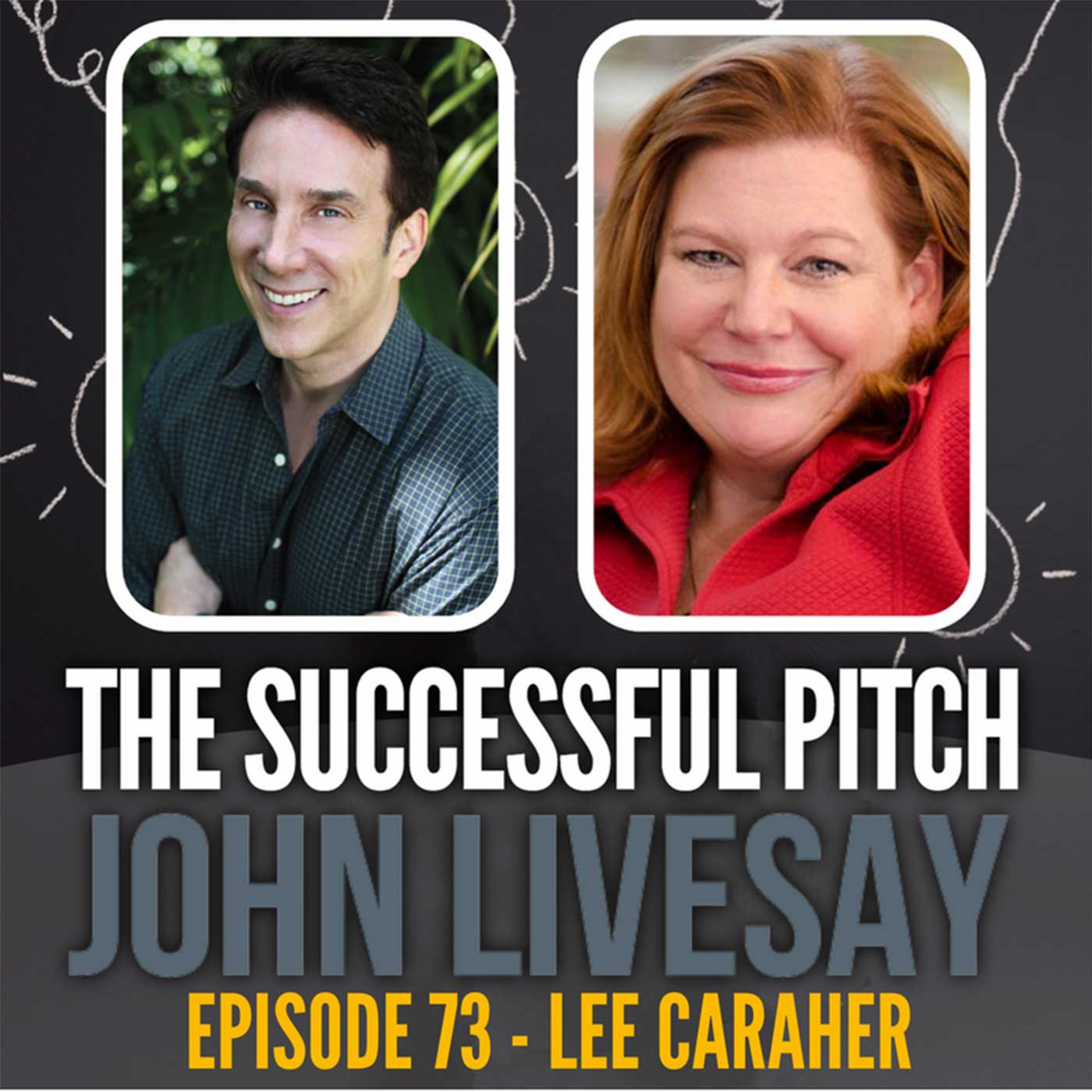
Listen To The Episode Here
Episode Summary
Lee Caraher is a CEO and an acclaimed communications strategist, known for her practical solutions to big problems. She started Double Forte as a new kind of communications firm, designed to work with good people and tell their stories. She is the author of Millennials & Management and discusses on today’s show how the older generation can connect with a millennial team member or be able to pitch millennial investors.
How To Pitch Millennial Investors with Lee Caraher
Today’s guest is Lee Caraher who wrote a wonderful book called Millennials and Management, The Essential Guide to Making It Work at Work. Lee has over 20 years’ experience in Silicon Valley producing integrated work teams that get a great deal done and have fun at the same time. She’s known as a communication strategist for practical solutions to the big problems. She founded Double Forte in 2002 to work with good people doing great work for good companies. Her clients span from well-loved brands and high tech startups not only in San Francisco Bay Area but Boston, New York and even Europe.
She struggled with trying to figure out how to work well with the Millennial clients, and how to pitch the Millennial investors. More than half of her own staff is under 32. She wrote this book saying, “I was fed up with the negative stereotypes that Millennials are burdened with,” that they’re determined to figure out how to create a culture where Boomers and GenXers and Millennials can all thrive together. Lee, welcome to the show.

Millennials and Management by Lee Caraher
John, it is so great to be with you. Thank you so much for having me.
I love people who have fun at work and have high energy and like to solve problems. That’s what the key to getting funded is, is what problem do you solve and is it a big enough problem that I could get a big return on my investment. That’s what our audience loves to hear. Before we get into how you started Double Forte, obviously you’re an entrepreneur yourself. Take us back to your experience in being an entrepreneur even before Double Forte.
Before Double Forte, I worked for InterPublic, a very large, multinational media firm. Before then, I was at Sega of America, the video game company. Once Sega of America was about a billion and a half dollar company, I left Sega to go to InterPublic Companies in the dotcom boom. I worked with, I can’t even count how many startups and took more than 20 public and all that stuff and got them acquired. Then the boom crashed.
In 2001, at 9/11, I decided … Really, 9/11 was a big moment in my life when I decide that I didn’t want to be in the big firm anymore. I really wanted to be able to craft what was important to me and create that workplace that meant that I was doing what I wanted to do more than flying around the country and waving my magic wand. I had 750 people when I was in that company. They were very generous to me but that really crystalized that wasn’t for me. It was for somebody else.
My intention was actually to take a whole year off. I had two young children. I went to yoga and I organized my house and I did all this stuff. I’m the chief baking officer in my house. My husband is the chief home officer. That’s what we call each other. I basically drove my husband crazy. With the color coding and the flower arranging, which people who know me are like, “You flower arrange?” I flower arrange. I say that I aspire to put the flower in the right place. I asked for books for the holidays. It was terrible. Oh my gosh. I had three glue guns. It was just destructive.
I drove my husband crazy and he’s like, “We’re not going to make it if you don’t use your time outside of the house.” I was always been entrepreneurial. I’ve always been very entrepreneurial. I started two companies for InterPublic Company. At Sega, I did all this entrepreneurial stuff as well. I was pretty risk averse.
In 2002, it was clear that I need to go back to work. I wasn’t going to last a year glue gunning everything, that’s for sure. I am the breadwinner and we had all these unexpected expenses, blah, blah, blah. I was looking for jobs. I was in the running for two very big jobs. Then my mother got sick. I live in San Francisco and my parents lived in Wisconsin. My mother got sick, she got diagnosed with 4 months to live. It was very clear that I was going to go be with her. I couldn’t take either of the jobs because I was going to go be with my mom when she needed it.
Out of necessity, I created my company. I had to bring home the bacon and I had to be in Wisconsin and my home is in San Francisco. In my kind of work, when you’re in house, you don’t really have the freedom to be wherever you want to be, even in today’s world. I decided that I really like this job that I do. I didn’t like how it gets expressed in a large publicly traded media company, but I love what we do. Figuring out what to say and who to say it to and helping people really understand their story and how to convey it because people aren’t really good at it.
When you’re living close to an idea, it’s harder and harder to explain to someone who’s not close to it. That’s when I decided to start Double Forte. Here we are 13 years later. I guess I’m now fully fledged entrepreneurial because when you’re an entrepreneur, what you start and what you are in are probably two very different things. A plan is wonderful but really the goal is more important.

Before Lee could figure out how to pitch millennial investors, she had to figure out her company plan and goals.
I like that.
Plans should be in sand but goals need to be in concrete. You react to or respond to what the conditions are. We have probably reinvented ourselves four times since we started in 2002 to respond to the economy, to what the world is doing in communication, to be competitive in the situation and to who we want to serve. Today in 2016, we’re going to be 14 in a few months. I’m not sure I thought that when I started but here we are. It’s new every day, which is what keeps me interested.
“A plan is in sand but goals should be in concrete,” that’s a great line. That’s really helpful. Let’s take a second and take a little deeper dive into what you said earlier. Since you’re such a master storyteller and crafting something, especially if it’s techy, you do it for the media but the same skills apply for crafting a pitch for investors.
[Tweet “A plan is in sand and goals should be in concrete.”]
Do you have any tips on how to take something that’s fairly complicated or techy? How do you craft that for the media so the listeners could think about how they could do that when they pitch millennial investors or otherwise?
I think the most important thing in crafting your story is to frame your story with a problem and to describe the problem and the scale of the problem quickly, upfront. That’s number one. What’s the problem, what’s the scale of that problem? Number two, what is your inspiration to solve that problem? Number three, what is your approach to solve that problem and how does it differ from what’s in the marketplace today?
If you can be very clear about this is a problem and it’s big, it’s worth so many dollars, number one. Number two, that you have a passion to solve it and why you were inspired to do it. I think investors are looking for people who are smart, who are business savvy but who are just compelled to do something, to get it done and they have a big passion for that problem they’re solving.
[Tweet “Good money supports the passion of the founder.”]
At least good money. In investment, there’s bad money and there’s good money. It’s all money. It’s all dollars. Bad money, from my perspective, and I’ve had a lot of clients get bad money, bad money is money that, just looking for that quick ROI, not really there to serve and help you get there, not a connector. Mostly just criticizing and diverting you from the goal. Diverting you from the goal and saying, “That wasn’t your plan.” I’ve never seen a plan that executed 100% ever in my career because you just can’t control everything.
The purpose of a plan is to know where you should be so you can try and get them back to the point. In my experience, good money is from people who support the passion and the brains of the founders. If you can scale the problem immediately. It should be some amount of dollars there. Number two, why are you inspired to solve this problem? Number 3, how are you going to do it? What’s the innovation? Scale comes in innovation. Scale doesn’t come necessarily in just getting more efficiency. Scale comes in innovation. Investors are looking for innovation and scale to get their ROI out in a productive way.
[Tweet “Scale comes in innovation, not efficiency.”]
That’s another great one. “Scale comes in innovation, not efficiency.” I love that. It’s all about finding the good money that supports the passion of the founder. That goes to the whole point of whether you’re creating a team of people who work with you or investors, they all need to fit into the same culture. That’s the perfect segue into your expertise around Millennials. Let’s just define for everybody exactly how old Millennials are right now.
Millennials in 2016 will turn 16 to 36. It’s 20 years. It’s a big band. I break them down into three sections. The first section is the oldest section, 28 to 29 year old to 36 year olds. These people came into the marketplace after 9/11. As adults, they’ve never been to the gate to pick up a family member or a girlfriend or a boyfriend or a friend. They’ve never done that at the airport. They’re used to giving their IDs to get into a building. Their idea of privacy and security is very different from their older colleagues.
The next group is probably 23 to 28 somewhere in there. These people came into the workplace, into the work market after 2008, 2009. This is the group that’s had the toughest time finding work commensurate with their education. There are still Millennials trying to catch up to where they thought they should be, given their education and the economy.
The third group is going to be 16 to about 20. People who are in school. High schoolers and college students. This group of people learned entirely different from that oldest group. The iPad did not exist for the oldest group. Now, schools have iPads for every kid and they’re looking at videos at night and doing their homework in the classroom during the day. They learned very differently. They’ve had very different kinds of technologies.
The whole generation absolutely benefits from being technology sevant for sure. They’re digitally native. They all benefit from that. The youngest group is probably going to benefit the most.

In knowing how to pitch millennial investors, it’s key to recognize the educational environment they grew up in.
It’s so funny because in business, really luxury high end companies do well and really low end, the Walmarts of the world. It’s that middle ground. Same thing with restaurants. Fast food or really expensive restaurants and then that middle ground always seems to struggle the most. The same thing is true with the way you broke up this Millennial age group. That that middle ground is struggling to get where they need to be. I’m fascinated. I never thought of it, the 28 to 36 year olds never have dropped people off at the airport and all that stuff because of 9/11, right?
Right.
You just get yourself there. I’m not going to wait in line to pick you up. It doesn’t mean I don’t love you. It’s just that they’re not going to consider it.
There was a time, in so many airports around the country, than you couldn’t even get to the airport unless you showed your boarding pass. Definitely have never been to the gate, have never gone through security to get to the gate so they could say goodbye at the gate or welcome someone at the gate, ever.
Those emotional hellos and goodbyes.

Lee has been a speaker at The White House on millennials in the workplace.
You told me before we started the show that you spoke at The White House about this. Tell me about that experience. How did that come about?
They called me.
Did you think it was a prank call?
I did. In fact I thought it was a prank call so I said, “I’m very happy to talk with you. I’m on my way to a meeting. If you can email me with what you need and what the dates are, I will be happy to call you back.” Sure enough, an email came through from @whitehouse.gov.
I was doing a key note in DC about Millennials in the government. I think some of their people were there. They have seen the roster and they invited me to come. It was an amazing experience. That is a dedicated group of people who are doing just … No matter where you are in the political spectrum, the people who are in The White House, working every day for us, they’re just doing tremendous work.
I gave a workshop mostly about interns. They have over 150 interns at a time. How to productively work with interns so that everybody benefits. No matter where you are, has nothing to do with The White House, interns today, a lot of companies start with interns. You try them out before you buy them. Not The White House. White House works very differently. In commercial world.
Interns often show up into the business world just ready and go in that business pitch with you. First, we need to change your wardrobe. You don’t get to go to the top sales guy Day 1. There’s just a lot of expectation, false expectation that have been set by the media and by parents and by education I think about what an internship is all about.
I’ve got lots of stories in my book about interns. Interns, they’re the lifeblood frankly of the future because Millennials who are getting out of college, they’re super smart, super smart, super capable. They have a lot of energy. They want to matter. They want to matter immediately. You have to figure out a way for interns to matter and not go in to, not drop down into your boss’s desk and say, “Hey! What’s going on?” that is normal. That happens all the time.
Protocol.
How I work with companies who use interns is just helping them set expectations before they show up and explain what you’re going to get out of being an intern in the company.
You’ve been called the Millennial Whisperer. How did you get that title?
Oh my gosh. My friend called me that and she tweeted it out. She goes, “Lee is the Millennial Whisperer.” I was like, oh my gosh, that’s a little pretentious. I can’t call myself that. All of a sudden, all my friend would call and say, “We have this Millennial. We have a problem with him. I don’t know what to do.” I would help them figure it out, like the Dog Whisperer I guess. Cesar, right?
Right. I love it.
It just picked up from there. I prefer the Millennial Champion because a lot of what I read when I was researching my book … The book came about because I failed miserably at hiring and keeping Millennials. I hired six Millennials, or my company did hire six Millennials within about eight weeks of each other and they all were gone within three months.
One person, could be their problem. Two people, could be maybe their problem. But all six at the same time? That had to be us. When I started looking into it, I didn’t know there was such a thing as a Millennial at the time. It was all negative. So negative. I just can’t be negative every day. An entrepreneur is an optimistic person. An entrepreneur believes that they have a future, that they can make things happen. I’m an optimistic person.
Frankly, if you don’t have Millennials in your business, you don’t have a future in your business. My point of view was there’s got to be a positive way to do this. We figured it out in the company and my book came out of that. More than the Whisperer, I prefer to be a champion because I want people to know that I’m not … I hope being patronizing when I talk about it.

“If you don’t have Millennials in your business, you don’t have a future in your business.” – Lee Caraher
For people who are working on building their team to talk about, when they get funded to an investor, one of the things you’re going to be doing is hiring XYZ developer and this kind of thing. As they continue to grow, as you said, they’re going to have to hire some Millennials if in fact they’re not a Millennial themselves. What tips do you have for them to make sure that the Millennials fit in to the culture and they don’t have high turnover?
There’s several most important things. One, be very crystal clear on what the values and the company is there for. What is the mission of the firm, what is the mission of the company, what are you trying to do and what values drive the company? Because that will dictate what the behavior is acceptable and what behavior is not acceptable.
In general, Millennials are looking for something that’s going to make a difference. If you can’t articulate yourself in making a difference, you will have very little chance of getting the A list, the top notch talent in the Millennial generation.
The second piece is setting expectations really early, like day 1. “Here’s how we work here.” Every company has a different schedule. We work with a lot of technology companies. We’re lucky if they show up by 10:30. Strolling in, 10:30. Other companies, 6:30 in the morning, they’re all there at the gym and then they’re all in their seats by 8:00. What is the culture of your company? When do we expect to see people? What is the work from home policy? When is all hands on deck? What do you expect?
Because you should not … I hate that word should. It’s so full of judgment. If you expect them to understand that your day is 10:30 to 8:30 and you don’t say so, if they leave at 6:00 you can’t be irritated with them because you didn’t tell them. This happens all the time. All the time. The hours thing is the biggest point of contest.
“They should know that these are our hours,” or, “They should know, I’m here at 8:00. They should know that they’re late at 9:30.” I talked about this woman in my book. I said to her, “How would she know that I’m here at 8:00?” But she’s not there at 8:00 so she doesn’t see you. How would she know? For all you know, she thinks you got there at 9:29. That one woman thought she was going to have to fire this younger woman. I said, “You can’t fire her without telling her that she’s been late and what the expectation was.” I said to her, “How long has this been going on?” “Six months.” I’m like, “Oh my goodness. Be prepared for her to be pissed off because you let her be wrong for six months and you said nothing.”
Which leads me to tip three, which is give a lot of feedback. Don’t let someone be wrong. No one wants to be wrong. Don’t let someone be wrong for a long time. Just get in there and say, “That was a good effort and let me talk with you about how we could improve it next time.”
Love it. No one wants to be wrong.
No one does.
That’s such a great line. Let’s flip the story now. Let’s pretend that we’re over 40, over 50 even and we’re about to pitch Millennial investors. The Millennials might think they know more than we do and we have more experience than they and we’re the ones pitching them for money. We might automatically think, “Oh, they’re only going to give money to other Millennials and not somebody who’s older than they are.” How do you help people shift all that negative thought when they pitch Millennial investors?
That does happen. I think sometimes it happens because if Millennials have been burned by their older colleagues or their older cohort, or if anyone’s been burned, it’s not just Millennials, then they show up with a bias. How do you break through a bias?
I think one, you have to figure out where the bias is because you don’t want to go in assuming there’s a bias because that is just irritating and disrespectful. There’s no way to get no money faster than being disrespectful. The difference is people think disrespectful means something different depending on who you are.
I think explaining the company in the context of the future. If you’re 54 and you’re talking to a 29 year old investor, your research better be about that generation and what the potential is in that generation and how you know that. Not just saying, “We can fix …” You have Millennials on your team or you have a panel of Millennials or whatever it is. If you’re not relating it to the future generation, that’s a little tough. Number one.
That’s a great tip.
Number two is, are you relevant? I say it to Boomers and Xers all the time. Xers this year will turn 51. They’re 37 to 51. Boomers are 52 to 69, something in there. We all expect we’re going to work longer than we plan to. If you’re not relevant to the Millennial generation, which is the largest generation, you are going to be co-opted out of a job pretty quickly. Even if you’re the CEO or not, or if you’re just a worker, if you’re a worker bee.
How you stay relevant? Are you reading the things that Millennials are reading? Are you using apps on your phone? The reading thing alone. Do you know what theSkimm is? Do you know these different apps are? Had you used them at all? Just being versed in that stuff. So, so important because if you’re not versed in the way Millennials communicate and how they get information, there’s going to be a big divide before you even start your pitch on what problem you’re trying to solve.

Be versed in the way that Millennials communicate.
Just that whole communications preference. If you leave somebody, God forbid, a voicemail, nobody does that anymore for the most part. Or you say, “I sent you an email.” They’re like, “I prefer text,” and you’re not really comfortable with texting. Or there’s something else they prefer. “I prefer Snapchat.” Who knows? Or, “Send me a message on Skype.” There’s so many different variations that you have to keep being flexible to whatever their language is of the day.
Of the other person.
Whatever their currency is.
Communication is currency. The person you’re trying to influence is the person who has the card. You got to move to them. They’re not going to move to you. Once you got them, then they can move to you. Particularly in the money situation. If you’re on Slack, maybe you’re company is on Slack or not. Some companies only work in Slack and they’d only use email or whatever it is.
Finding out how people like to communicate is probably the first … You got to keep track of all that stuff. You might go up and down Sand Hill road one day and go from an email guy to a text person to a phone person to a “I only meet in person” person. Keeping track of who does what is super, super important.
[Tweet “Communication is currency.”]
To pitch Millennial investors, you need to craft it accordingly. You have to have a short pitch, a long pitch, on and on and on. This has been great. So insightful, such a unique perspective on how to communicate a pitch, not just to pitch Millennial investors but to craft that great team that everybody needs to be successful and to show investors that you have diversity within your company. Not only races but also ages.
Age is so important.
So that you can have a future focus. Is there anything else you want to leave us with? Time goes so fast when someone like you with such great takeaways on frame your problem and scaling it, the inspiration, why me and of course the innovation, what makes us unique and really focusing on what is your mission and how do you make a difference at this company is going to make a big difference on whether you can attract top talents and keep them. Of course the feedback and expectations. Those are such amazing takeaways from today’s episode on how to pitch Millennial investors. Is there any last little bit of insights that comes to mind that you want to leave us with?
I think sometimes all those things sound so daunting. “Oh my gosh, I got to remember to do all this stuff.” In the end, it just boils down to very simple concepts. What are you doing, who are doing it for, what difference are you going to make? If you can just get it right down to those very short sentences on those kinds of things, then people can grab on.
The point is to be consistent and to just keep doing. You cannot over communicate today. If you’re over 50 or over 45 and you’re used to sending a memo or an email and that’s it? This is one thing. From your advertising days, we used to use the number seven. The seven times you had to see something to maybe convey your message.
Today, we use the number 35. I am not telling you to do things 35 times to the same person. You need to think about the fact that you’re in that, this is the situation. People are seeing things 35 times before they actually grab on to them. One time does not do it. You got to find multiple times to reinforce, reinforce, reinforce. Don’t worry about it. Until someone says shut up, you have not conveyed it.
Good point. With all the social media distractions and everything, to break through the clutter requires a lot frequency.
And a lot focus.
And a lot focus. There you go. The two Fs. Frequency and focus. I love it. You’ve been a terrific guest. Millennials and Management is the name of your book. How can people follow you in social media, what’s your Twitter and all that good stuff?
My Twitter is @LeeCaraher. My website, my personal website is www.leecaraher.com where you can find my company, Double Forte, and all my book and my speaking stuff.
Terrific. Thanks again, Lee.
Thanks so much John. It was great to be with you.
You too.
Links Mentioned
J Robinett Enterprises
John Livesay Funding Strategist
Lee Caraher Website
Millennials & Management by Lee Caraher
Double Forte Website
Crack The Funding Code!
Register now for the free webinar
Check Out John’s Latest Book
Share The Show
Did you enjoy the show? I’d love it if you subscribed today and left us a 5-star review!
-
- Click this link
- Click on the ‘Subscribe’ button below the artwork
- Go to the ‘Ratings and Reviews’ section
- Click on ‘Write a Review’
Selling Your Company For Millions – Interview with Tom Scott
Posted by John Livesay in podcast | 0 comments
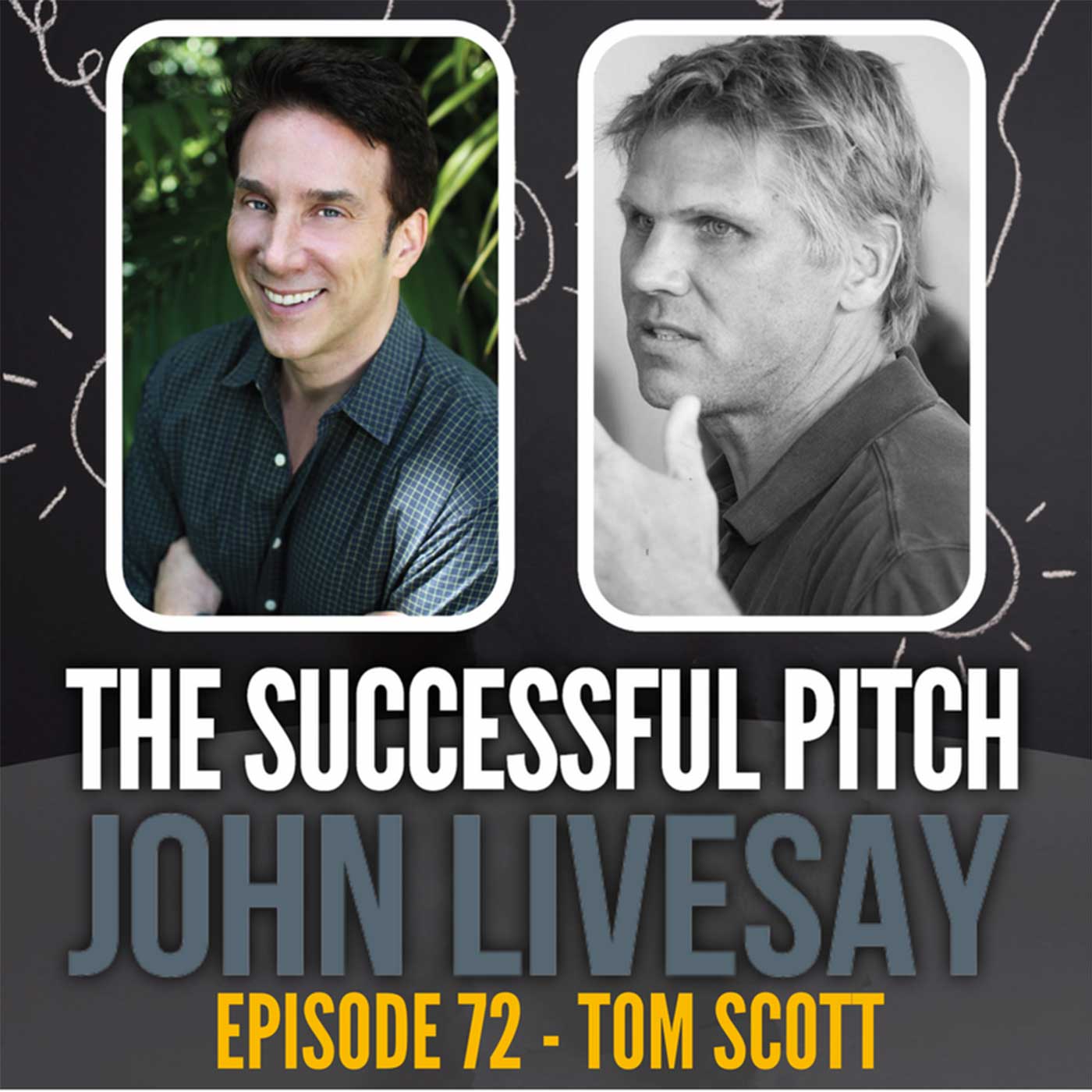
Listen To The Episode Here
Episode Summary
Tom Scott emerged as an entrepreneur at a young age when he started selling provisions to people stuck at gas lines in Maryland. When Scott and his college pal, Tom First, tried mixing peach juice and water in a blender in 1989, they did not imagine their little experiment would result in the creation of a multi-million dollar company. Tom discusses his success with Nantucket Nectars and his latest project, The Nantucket Project.
Selling Your Company For Millions – Interview with Tom Scott
Today’s guest is Tom Scott who is the CEO and co-founder of the Nantucket Project and he was the CEO and co-founder of the Nantucket Nectars which started in 1989 and got sold to Cadbury Schweppes in 2002. He has gone on to do so many amazing things, including being a film and television creator that’s won awards at both the Cannes and Sundance Film Festival. He created something called The Apple Pushers with Ed Norton, a documentary on that. He’s an expert in storytelling, and knows all the secrets that go into making a great pitch. Tom, welcome to the show.
Thank you. I’m glad to be here. Thanks for having me.
It’s my pleasure. I want to first start with, if you don’t mind, because you’re such a successful entrepreneur, taking our listeners back to how you and your co-founder came up with the idea to create Nantucket Nectars and you’re competing against major brands like Snapple and all that good stuff.

Selling your company for millions doesn’t happen overnight.
How did we come about it? We had started a business many years ago that was a floating store. We were doing this in the summers in college. The notion was you had all these yachts that would come in to Nantucket Harbor. In order to get to the land, they’d have to take a launch and it was a pain in the neck. What if you could just bring a store to them? So we did. We started selling coffee and muffins to these yachts in Nantucket Harbor.
Among the things we started to make to sell was juice. I should say that, depending on how old a listener is, in those days, there was no such thing as Tropicana Pure Premium as an example. Generally speaking, not even generally speaking, maybe entirely speaking, if you got a juice off a shelf in a store, it was pretty crappy. What we were making at the time was a fresh juice. It was different and it was more refreshing and it was something special. That’s how we started with the path. Took a lot of different twists and turns, but that’s how we got in the juice business.
I love that the initial problem was that there weren’t good juices and you solved that by creating a floating store to take it out to people who would be willing to pay a premium price for something good.
Yeah. It’s so true. It just didn’t exist. Really what we were doing, and I just, I always feel this is so important, we were making it for ourselves. Simple as that. This was something we wanted.
The passion was authentic. You would drink this stuff. It’s not something you’re really trying to force on people. When you’re telling them about it, it comes from an authentic place. When you’re telling anybody, whether it’s a potential customer or potential investor, what have to offer, that you can’t fake that passion, right?
No. I’m one of those people, and you hear it more and more, if … I think it was Henry Ford. “If I had listened to my customer, I would have ended up making a faster horse.” I’ve always made things for myself. Every part of my career, I’ve been making something I want. I have to be honest, I stumbled into that. But one of the things I’ve come to know very clearly is I’m decent at making something for me, but if I have to imagine the attributes of what somebody else wants, it’s just not who I am. It’s not my makeup. It’s not how I think about business.
[Tweet “Make Your Product Something for Yourself So Your Passion Is Authentic”]
Right. The same thing is true of a lot of other innovators like Steve Jobs and the iPad. If he just waited for people to say, “I need an iPad in addition to my laptop and iPhone,” he probably wouldn’t do it. Just like the Henry Ford example. You guys were selling multiple things. What was it about the nectar, the juice, that made you guys think, “This is what we should focus on.” Because that’s a big challenge for a lot of entrepreneurs, is focus.
It’s true. I’m going to say most valuable to us at that time was naiveté. We didn’t know what we didn’t know. We had a whole lot of energy. Because we had so much energy, you can move mountains. You will aggressively try things that others might think foolish. Some of those things, you’re going to find out probably were foolish. But plenty of those things, you’re going to find out were not. It’s vital. It’s vital. I would tell you that we came to learn and practice incredible focus. But in the beginning, the idea of stepping into such a crazy and competitive field had much more to do with naiveté than it did with anything else.
I’m going to tweet that out from the episode. Energy gives you what it takes to try new things. That’s a great line of that. Of course if you’re drinking healthy nectar, I’m imagining that’s giving you good energy, right?
Mostly. Some of those things … Drinking too much juice is probably not a good idea either, but it’s probably true with most things.
[Tweet “Energy gives you courage to try new things.”]
There’s a happy medium. Yes. You started the business in 1989. You and your cofounder are going along, did you ever need any outside funding or was all the revenue coming in just from sales?
No. More than anything else, again, I’m sorry I’m being a bit of a broken record here, but I didn’t know what a venture capitalist was. In those days … When I was 24 years old, somebody called me an entrepreneur. I thought, what a jerk. This guy is calling me a shyster. I was a relatively well-educated guy. I’d gone to Brown University. I didn’t know exactly what the word entrepreneur meant when I was 24 years old.
The reason I tell that story is, it was a different time. It was a different time. The idea of series A, series B, venture capitalists, Angel rounds, all that stuff is new. None of that stuff existed in the collective conscience of pop culture. So many of those, the pieces of the puzzle that went in to growing the company, we were unaware of. I never would have thought, I wouldn’t have even known where to go to get money. In part because I didn’t even know you need money for cash flow. We didn’t even understand what cash flow was. We did wonder how or why we were always running out of money.
The long story short is, we were very frugal. We had other jobs at night. We did what we could to survive. We therefore ran a very efficient business. Now, I did have to take a loan from my father. In the history of the company, we raised approximately 2 million dollars, which is unheard of today. We borrowed … Eventually we were able to get a line of credit from a bank based on receivables and inventory. It was an asset backed loan. We grew the company into the many millions of dollars exactly that way, which is just very different than I think the way people think about these things today.

Before you’re able to think about selling your company, you need investors; angel or otherwise.
One of the things that’s probably not different is how to build a great team. Whether you are pitching an investor, Angel or otherwise, they all want to know who’s on your team. You’ve obviously created a great culture, not only at Nantucket Nectars but what you’re doing with The Nantucket Project. Can you tell us what you look for when you are deciding whether to hire somebody to join your team? Do you first decide what your culture is and then see if that person is a fit?
It’s funny. I was doing an interview this morning. I’m all about chemistry. I’m all about the chemistry with that person. Are they a good person? Can you riff with that person? Can you trust that person? Can that person place their trust in you? Etc. it’s huge for me. It’s huge. I don’t always get it right. I’ve got to say, nobody ever gets it right. Hiring people is not a, you don’t get 100% on that. Some of the people I’ve worked with at Nantucket Nectars started as truck drivers and ended up as the president of the company. That’s a literal example.
Wow.
There’s been many of those throughout my career. I’m okay with on the job training often. I really just believe the amount of energy and focus somebody puts into something, if they’re reasonably smart and they’re reasonably aggressive and they’re reasonably entrepreneurial, I think you can work with a lot of different kinds of people.
I love that. Energy and focus again. There it is. It just keeps coming back over and over as again, the key criteria for hiring the right people to fit your culture. You’re going along, obviously, you weren’t planning on selling your company for millions at that point. From 1989 to 2002, there was no strategic exit strategy for anybody. What made you decide to consider selling your company and ultimately selling it? Were you worried about what you were going to do after it sold?
Yeah. The answer is yes, I was worried about what I would do after I sold. Here’s the thing. We worked very hard. I think most people who start businesses do. Nothing unique about that. You spend a lot of years on the road, you spend a lot of years selling, staying in lousy hotels, always afraid of making payroll. It’s a tough thing. In particular, I think at our age and we were relatively naïve at the time, it’s fatiguing. I think we had 150 distributors around the country. You got to visit each of them about twice a year. Do the math. That’s a lot of travel, a lot of trips, a lot of sales, a lot of stuff. Because our names were on the label, it was very … People found it critical to meet with us as individuals, Tom and I.
The answer as to why we sold, we never tried to sell the company. We never hired investment bankers. There came a day when we were hotly pursued. In the end, there was probably 7 different companies talking to us. We wheedled it down and ended up making a decision to do what we did with, what was initially Ocean Spray became Cadbury Schweppes, based on the fact that we liked those people, based on the fact that we felt they could do good things with the company in the future, etc.
You asked also, was I afraid? I was a little bit afraid, but I should tell you that I had been so busy for so long. There came a day when I just decided it was time for me to leave. Because after selling the company, they wanted us to stick around. It wasn’t a match for me. I definitely freaked out. I felt like, what in the world am I going to do now? I never considered having to film my days.
You have the opposite problem at the time.
That’s right. That’s the story of how we ended up making that decision.
How long was it between selling your company for millions in 2002 and starting The Nantucket Project? Tell us, was it … and how did you come up with this great concept of having this annual conference? I’m going to let you describe the vision for it because you can do it much better than I can.
You said at some point earlier, I’m paraphrasing, but I’ve been successful in businesses first. I’ve also been unsuccessful. I’ve had a number of misses. Even at Nantucket Nectars, if you took snapshots at different periods along the way, you would wonder, when you looked at some of those snapshots, how in the world this company is ever going to make it? It’s just part of the gig.
I mention that because when we were at Nantucket Nectars, we made our own ads, we made our own radio ads, we made our own printed materials. We had a staff inside that we would do it with. We never used an ad agency. But I loved storytelling and I’ve always loved films. I went to the first ever Aspen Ideas Festival. I think that was 2003. I also was a big fan of TED way back. We used to have a designer who worked with us at Nantucket Nectars and he said, “Let’s go to TED.” I said, “Get us the tickets.” He said, “No problem.” Then he told me the price. I was like, “Forget it. We are not going to that.” We couldn’t afford it.
To me, I love discovery and I love people who go to the front-lines of anything and they come back and they share discoveries with us. I just think there’s something so beautiful about it. Particularly now, it’s like we have such availability of information, which is a good thing. But we also have a massive quantity of noise. There’s just so much noise in the world. When you can get a concise telling of interesting new things right from the horse’s mouth, to me it’s like mental cocaine. I just find it so exhilarating. I think when you mix it together, in other words, when you have a number of people passionate about the same things and sharing similar things, it’s a wood stock of ideas. It’s like a Grateful Dead show of information. That’s how I think about.
[Tweet “Pitch is a concise telling of new things.”]
Tom, you just defined what I like to define as the perfect pitch, which is a concise telling of new things. It triggers our lizard brain. “Ooh, something new, I’m learning.” As you said, mental cocaine. Because we crave that. If you have that when you’re pitching for a customer, a team member or an investor, you can tell a story that engages people, then you’re light years ahead of others who can’t. Correct?
Yeah. I think so. Look, yes, I think the answer is absolutely yes. I was watching the Golden Globes the other night. You’re looking and Jeff Bezos is sitting there and winning. NBC gets zero nominations. You’re thinking, “Oh my God, do we live in a different world!” A show called Mozart in the Jungle. I don’t even know what that is but I thought, “I want to see that.” Just the title feels new. It feels like a discovery.
Here’s the thing, I think oftentimes, if you’re starting something or you’re new in a business, you want to tell that story. Here’s the frustrating truth, if you’re making something, you have to make the thing. I don’t care if it’s a juice or a service or whatever it is. I’ve got to tell you, I think the odds of you making that thing well right away, really low odds. You need to become a master at making something. You can’t skip the time part. You can’t skip the commitment part. You can’t skip the trial and error part. You can’t.
Until you know what that product is because you’ve been on the battle front and you’ve been building it, only then will you know what it is or how it works or how it could be better or why it’s better than everybody else’s. Literally, you’re just not going to know. Only then can you package what it is you’re trying to do. I feel like so many people want to tell a story before they actually even made it and it gets in their way. It just gets in their way. They say, and I’m doing air quotes right now, they say “creative things.” I always say, be creative in your, making your product, then the telling the story would be easy. Just translate. Translate the thing you’re doing to someone so they can understand it. If A, they don’t understand it B, they’re not turned on by it, I’m guessing your thing ain’t all that interesting.
[Tweet “Can’t skip the trial and error time it takes to make something great.”]
I love, we’re going to tweet that out. You can’t skip the trial and error time needed to make something. That’s so important to remember because a lot of people go, “Why isn’t this an overnight success?” Rarely is anything an overnight success, something to keep in mind if you ever want to go about selling your company down the road. You decided to take your storytelling skills from making your own ads at Nantucket Nectars into creating The Nantucket Project, which is this annual conference, and just decided to become a television and film creator and producer.

An event during the Nantucket Project Conference.
That’s an amazing pivot, if you will, as an expansion of your skillset. But a lot of people have dreams of, I like movies, I like storytelling, but they don’t get to do what you did. What was it that allowed you to figure out your way into that world?
One of the things about The Nantucket Project, if you go to The Nantucket Project, you’re going to learn many things. Some of them, you may never hear about again for the rest of your life. Some of them, you may pursue them as a career. It’s not trite to say that Steve Jobs, Bill Gates and Mark Zuckerberg share … They probably share several things in common, but they share one really interesting thing in common, which is they’ve never graduated from college. All 3 of them, these 3 cultural business icons didn’t finish college. Now, well, how did they learn all the stuff they had to learn to do what they do? The answer is, they love what they do. They’re going to figure out how to learn the things they need to learn in order to do what they do. I think if you know that … You know that Bill Gates didn’t go to computer school. He didn’t. Neither did Steve Jobs. They didn’t go to computer school or iPad school or touchscreen school. There’s no such thing. They just learned.
I can promise you, they were bad at it at the beginning. I promise. The first day, they weren’t good at it. They didn’t even understand it, the first day. They went one day after one day after one day. I just believe that. It’s that whole thing of, how do you eat an elephant? One bite at a time. I think one of the things, and I’m going to turn 50 in a couple weeks, I’ve been around a little bit. I’ve been around. The older I get, the more I realize that those silly old things your grandfather said, they tend to be true. How do you eat an elephant? One bite at a time. That’s the answer. How do you learn how to do, you go from one thing to the next. One step at a time. How do I know for me or for anyone I think, where to go next? Where’s your inner being telling you you want to go next? What are you really in to?
It’s that whole follow your bliss, follow your passion. I definitely want to ask you about, you went from not being able to afford to go to a TED conference to co-directing and co-producing an amazing documentary on your ideal films, on Richard Saul Wurman, who created TED and he’s an architect. He has a line in there that, “Most information doesn’t inform,” which I just thought was great. Can you tell us about what it was like to interview him and what gave you the idea?
Yeah. You mean for the film with him?
Yes.
He is the master. This guy talked about information architecture, information anxiety before Steve Jobs graduated from high school. This goes way back. He’s had a crazy and interesting career but his design mind, and I don’t mean that in the way of just design meaning graphic design or artistic design, but computer design and thinking design and speaking design, he has a design mind.
You asked earlier about, how do you learn this or that? The number of things that he has learned and the way he goes about it and the way he treats the packaging of things he learned or other people learned, it’s just one of a kind. TED is a cultural prize. It’s a powerful brand and a powerful concept. This is the guy who started that. This is the guy who built that. Imagine some of the things he’s seen and done. To my knowledge, I’m going to guess you knew very little of him prior to reading, to seeing that film. Am I right?
You are absolutely right. I pride myself in being pretty up on architects. I have friends who work at Gensler, I saw the documentary on Frank Gehry. But he was somebody I never heard of and his story is just amazing. The fact that you co-directed and co-produced that was phenomenal.
Again, hopefully you see my passion for TED and for him in that film.
Definitely.
It’s a film of a certain kind. It’s probably not going to be next to the Avengers or The Force Awakens in terms of viewership. But for people who are curious about a certain kind of thing, I’m proud of the film.
Yes. What else are you working on now that you are excited about that we can look forward to seeing soon?
It’s funny, last week we had our first 2016 speaker meeting for The Nantucket Project this year. It’s back to the drawing board. What I would tell you is, when we do this, when we face another year and book another year of speakers, it’s more about learning than it is about knowing. What I mean is, you’ve got to stay open to the fact that whatever’s going to be interesting in September probably barely exists right now.
Right. Whether it’s robotics or 3D printing or virtual reality, whatever.
Yes. If you were going to ask me at the moment what am I into, I’m into figuring out what I’m into.
Great.
There will probably be a few films in development about those things that we’re preparing for next year. Listen, this should be a TV show. The Nantucket Project should be a TV show. The TV show is something like 60 Minutes. It has segments something like 60 Minutes, but it’s a show about ideas and each of the ideas are carried out in some form of a film that are really instructive, like the Richard Saul Wurman film that you saw. In success, that’s where this goes.
Also, I think what you’re saying Tom, is give yourself a little permission not to know everything all the time, during the creative process. I think that’s a valuable takeaway. Before I let you go, I just want to ask you a couple more questions. One is, what’s a book that you would like to recommend about business or life or philosophy or as you said, following your inner being? Anything at all, any topic. I would love to hear what inspires you author-wise.
 The two best books I’ve read recently, one is Just Mercy by Bryan Stevenson. It’s about race in America. I saw him speak a few months back. He was incredible. He was as good as anyone I’ve seen in years. I’m watching him and I’m looking and I’m thinking, okay, the guy is smart, because he’s definitely smart. But his brilliance was in the fact that he’s gone to the front lines of death row and race in the south in America. He’s made observations that are his observations. He’s come back from that front line and he shares with us those observations. I bet it’s easy for him. I could be wrong and I’ve never spoken to him about it. I could be wrong. That’s what comes through in this book. Race is such an interesting topic that I’ve looked at it in a full variety of ways throughout my life. But if I’m honest, in the last several years, it’s been through the TV or through the newspaper. To hear something that you can really get your brain around from somebody like him, that was amazing.
 The other one I would say is probably one you’ve heard a few times, is Ed Catmull book called Creativity Inc. on Pixar. I just love it. I love everything about Pixar. It’s really good storytelling. I think it’s interesting to hear, to read a creative book from a science guy because that is hard. He’s much more of an Xs … I say that, he has a science background. He has his Xs and O background, he has a technical background. But he speaks, he writes very well about creativity. I just love that book.
Finally Tom, how can people follow you in social media? What’s your Twitter account? Let’s give out the website for The Nantucket Project.
I am not a social media guy. It’s interesting. It’s not that I’m against it. I like our people to speak for themselves. Maybe I’ll have something to say sometime in the future, but now I let my company speak for it. It’s The Nantucket Project. You can follow The Nantucket Project on Facebook and Twitter and Instagram. I think we do a pretty good job. I am really focused on making this TV show I mentioned to you come to life and pray for that to work. Then I think we’ll be able to speak to lots of people in a powerful way.
Fantastic. Well, it’s been an honor. You’ve given us so many great insights on selling your company for millions. I’m very excited to see what comes up next considering your track record, which is always a good predictor of people’s passion and focus over and over again, figuring out how to make something new happen. I can’t wait to see what you bring to us. Thanks for being on the show.
Great. Thank you so much. It was great to meet you.
Links Mentioned
J Robinett Enterprises
John Livesay Funding Strategist
Nantucket Project Website
Nantucket Project on Facebook
Nantucket Project on Twitter
Just Mercy by Bryan Stevenson
Creativity, Inc by Edwin Catmull
Crack The Funding Code!
Register now for the free webinar
Check Out John’s Latest Book
Share The Show
Did you enjoy the show? I’d love it if you subscribed today and left us a 5-star review!
-
- Click this link
- Click on the ‘Subscribe’ button below the artwork
- Go to the ‘Ratings and Reviews’ section
- Click on ‘Write a Review’