

ROAR Into The Second Half Of Your Life With Michael Clinton
Posted by John Livesay in podcast | 0 comments

Retirement doesn’t have to put an end to you living out your purpose and passion. Here to talk about how you can energetically dive into life post-retirement is Michael Clinton with his book, ROAR: Into the Second Half of Your Life (Before It’s Too Late). Michael is the special media advisor to the Hearst Corporation’s CEO. He is also an author and a photographer. He’s traveled to 124 countries, ran marathons on seven continents, and started a non-profit organization. And that’s just scratching the surface. In this episode, Michael joins John Livesay to advise his peers going through mid-life that you can pivot and do more after retirement. It’s just another layer to your cake. Tune in to learn more about Michael’s optimistic and proactive view on retirement and embracing the third act of life.
—
Listen to the podcast here
ROAR Into The Second Half Of Your Life With Michael Clinton
Our guest is Michael Clinton, the author of Roar: Into the Second Half of Your Life (Before It’s Too Late). He talks about a life lesson he learned early in his career that whatever job we’re doing is not who we are. He’s all about not retiring but instead rewiring and refiring. Find out how to energize and life-layer your life. Enjoy.
—
Our guest is Michael Clinton. He’s the Special Media Advisor to the Hearst Corporation CEO. He’s also an author and photographer, has traveled through 124 countries, run marathons on 7 continents and started a nonprofit foundation. If that’s not enough, he’s also a private pilot and the part-owner of a vineyard in Argentina. He holds two Master’s degrees and still has a long list of life experiences he plans to tackle. He is the author of a new book called Roar: Into the Second Half of Your Life (Before It’s Too Late). Michael, welcome to the show.
John, thank you for that great introduction. I didn’t realize that’s a lot.
To give the readers some context, I’ve known of you for decades. I also had a career in ad sales on the West Coast. You were a publisher of GQ when I first heard about you. What I respect and admire about someone like you is your reputation has always been stellar through time. That it is a rare commodity that someone is so beloved by so many people. There’s a reason behind that, which we’ll delve into. I want to ask you to bring us up to speed on your story of origin.
Your book, Roar, has been dedicated to your father, who influenced you. There must be some situation in your childhood when you went, “I’m going to live my life like an adventure.” The book opens up with you moving to New York with very little money in your pocket from Pittsburgh. It’s this wonderful story of like an actor almost moving to Hollywood and conquering the city. Take us back as far as you want. I’ll let you start the story wherever you want.
Thanks for those nice comments. I had a 40-year publishing career as a young publisher at GQ, ultimately becoming the President and Publishing Director of Hearst Magazines. Our team got to launch Oprah’s magazine, Food Network, HGTV and buy a couple of publishing companies. Throughout all of the 40 years, the one thing that I always did was have a sense of gratitude for what I was able to experience. I came from a poor working-class family in Pittsburgh. There was no education, role models, money or anything.
To your point, at a very young age, I’ve discussed this with my dad at nauseam. I had this spark that there was a whole other world out there. Part of it was influenced by my dad, my maternal grandmother, and by my high school English teacher, which I write about in the book, who is a very present way at a parent-teacher meeting said to my parents, “Michael would do well on the publishing business, the magazine business in New York. Go figure.” I had no idea what that meant.
I was the editor of the high school newspaper and ultimately became the publisher of my college newspaper. There was a little something in there that he identified. I’m still in touch with him. He’s a great influence. We still communicate. What happened was when I landed in New York with $60, no contacts and a young person, I was able to find my way and it was a combination of skills, luck, timing and all of that.
[bctt tweet=”Don’t retire but rewire and refire. ” username=”John_Livesay”]
What I learned was your reputation, integrity, character and all the ups and downs that you have in business are the stuff that is always remembered and stand out. You and I were long-time sales executives in various capacities. I remember your great reputation in terms of the various jobs that you held. What we learned is that our reputation is what preceded and followed us in any successful business relationship and business success. I learned that young.
I also learned in a young way that we all sit in a seat and the seat is not who we are. It’s what we do. I remember being a little full of myself up as a young 34-year-old publisher at GQ. It was a senior executive who said that to me and a light bulb went off in my head when I realized that I was sitting in a great seat but the reason I had access to so many things was because of the seat I sat in. At a very young age, I started cultivating this notion of what we do is not who we are. I started creating all of the personas of who I was as opposed to what I did. That served me well because I didn’t hang all my chips out of my professional seat.
There was a reason that I felt such a kinship to you because that’s going to be one of the tweets. What we do is not who we are. I also learned that life lesson when I got laid off from Conde Nast the first time. It’s the premise of if we get so identified with our job title and who we are in making reservations at a hotel or in your case, I’m sure going to all the fashion shows in Italy as the publisher of GQ. When that stops, your self-esteem can plummet. We need to realize that we’re bigger than any one thing happening to us. You talk about this in the Roar tips that who I am is bigger than winning a salesperson of the year or being laid off and all of those things that happen.
If you identify, “I had a good quarter and feel good about myself. I had a bad quarter and feel bad about myself,” or even shorter timeframes, you’re up and down all day long and that doesn’t serve anybody. I’m so grateful to have you say that, especially with your expertise and experience in the world. My first question with your background is and this explains why you’ve been so successful. When you are the publisher, you not only have to have expertise in managing and attracting a great sales team but you have to be the conduit to the editor.
Typically, they’ve been very much divided between church and state. You almost have to have empathy and understanding for what an editor feels is newsworthy and unique. Your background is in journalism. Sometimes people who like the writing part are not good at the selling part of it. You have this wonderful ability to do both. It’s almost like someone who’s an engineer is typically not good in marketing and vice versa. How did you get some sales experience as you were also this amazing journalist growing up?
That’s a very astute observation. The secret is that I did start as a journalist. I started as a journalist, a reporter and an editor at Fairchild Publications, which is a company that you worked for as well in its early days. I always had that skillset and identified as a words person and a writer. At the same time, I was a freelance writer. What happened was I was approached by the publisher of a new magazine that was being launched for the sports industry. It was a B2B magazine called Sportstyle. You may or may not remember it.
What was happening in the whole sports industry was going through a major disruption. Companies like Nike and Reebok were being born. The soft-goods side was beginning to overtake the traditional hard goods side. The publisher came to me and said, “You are so well known and established,” because I was writing for that industry, “Why don’t you come over to the sales side?” I thought, “That’s the last thing I realized.”
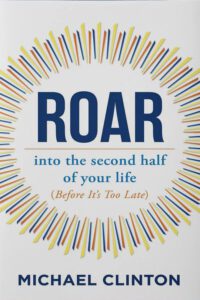
ROAR Into the Second Half of Your Life (Before It’s Too Late)
My agenda was jelling. I was in my twenties when I wanted to be a publisher, which I had to go into that lane. I jumped the fence, much to the chagrin of all my editorial friends. What I ultimately learned was that creating the affected sales pitch was like developing a story that you would write. When you’re writing a story, you’re going out and gathering the facts, interviewing and talking to different people. You sit down and write the story. In this instance, it was the same skillset but rather than write the story, you wrote the pitch.
The pitch was embedded in storytelling. That’s what you’ve always espoused and important to your message. Storytelling is critical for effective selling and results. I had that epiphany to end up loving what I was doing and being my trajectory into my career. That served me well because I always had a connection with writers and editors. I would always be talking with them, cultivating them and wanting to know what they were working on. They appreciated that from someone from the business side.
My whole premise is that whoever tells the best story is the one that gets the sale. The fact that you could write and tell good stories, it allowed you to do that. It goes back to the basics of journalism, the exposition of any story, the who, what, where and when. Many reps jumped right into the product without giving any framework of something.
I would have this discussion with many writers and editors who are also selling. They’re pitching their story ideas and that so-and-so should be on the cover of the magazine. I have evolved into this place where I do the whole world. You’re either a buyer or a seller, no matter what you’re doing. I’m very involved in the philanthropy world. I finished a Master’s degree at Columbia in Nonprofit Philanthropy.
It’s interesting going back to school in my 60s. I made this comment in class. There were a lot of young professionals. I said, “Effective development directors or CEOs of nonprofits are great sellers.” They were all appalled at the idea. I said, “You’re getting hung up on the fact that you raised millions of dollars for your nonprofit. That’s salesmanship and storytelling about your mission, purpose and recipients. That is effective storytelling and selling.” People sometimes get hung up on semantics. We’re either a buyer or a seller in all aspects of our lives. I’ve always liked being a seller as opposed to a buyer but someone’s always like, “I want to be on the other side.”
It was always a rude awakening if an ad director decided of a client that they wanted to get into sales and had all these salespeople calling them all the time. They couldn’t figure out why nobody was returning their appointment or calls as a salesperson versus every time they called us the client and got instant return. You’re not your title. What you do does not stay the same. The premise of the subtitle of your book, “Before It’s Too Late,” is so much a part of a good story. There’s got to be some sense of urgency. It’s part of good selling that we got to make a decision sooner than later.
You could have called the book Stroll into The Second Half Of Your Life but instead, you called it Roar. What hooked me was Before It’s Too Late. I thought, “Before I die and run out of opportunities, I’ll ask him because I know how much effort goes into a book name and title.” How did you come up with that hook Before It Was Too Late?
[bctt tweet=”Learn to life layer with different aspects of who you are.” username=”John_Livesay”]
Let me first say that the whole reason for the book was, as I was stepping out of the day to day, everything I read, learned and observed was all about the big wind down as opposed to the big wind up. What happens is if you’re 50 or 60 and you’re healthy, you’re going to live to be 90. The construct that you were given is based on something that was created back in the 1930s and ’40s when life expectancies were in the early 60s. You retired and died.
Retirement is an artificial construct that is about 80 years old in the history of the world. It was created by our government and policies in the ’30s. This awareness, all of a sudden, that you’re going to live another 30, 40 years, what are you going to do with that time to make it meaningful and engaging might mean something like starting a whole new second career, lifestyle or relationship. The punchline of Before It’s Too Late was to underscore a sense of urgency about it.
You can pivot in midlife and create a whole new second-half journey but you’ve got to do the groundwork and don’t want the opportunity of that to pass you by. What was ironic is the book was conceptualized and written before the pandemic. The book was bought by the publisher as the pandemic was happening.
Before It’s Too Late, you have this undercurrent of the pandemics here, stuff happens to the world at large and affects all of us. The last years have been an existential time for so many of introspection. Am I doing what I want to do? Am I living where I want to live? Am I the person I want to be with? All of those things gave it a sense of urgency. That punchline amplified the times that we’re in.
I have the image of Harrison Ford in Indiana Jones with that boulder chasing him. You talk about how important it is for us to re-imagine our life before someone re-imagines it for us. You can sit back and say, “I have a high chance of getting laid off. Print sales seemed to be down everywhere. Am I going to try to learn a new skill or am I going to wait and let that happen? If it does happen, am I going to let it take me down and never get back up? I can’t imagine doing anything else. I’ve been doing this for so long.”
Tell us a story, if you don’t mind, of either yourself or someone else. You have so many great examples in the book who said, “What I’m going to re-imagine?” You’re living your life like that. You got a new Master’s. You’re traveling. You probably have a whole list of places you still want to go and photograph, I’m imagining. The core thing I got from your book, Roar, is the people who are the most curious are the happiest and most successful. Would that be fair?
That’s very fair. One of the things that I wanted to do with the book is to identify people who were embracing this way of living. I call them the re-imaginers. I interviewed 40 people that I found who have done what I’m talking about in terms of this re-imagining process that should be with us for our entire lives. One example of this is a woman who was in our business. She was a journalist for a newspaper and saw what was going on around her.

Second Half Of Life: Retirement is an artificial construct that is about 80 years old in the history of the world.
She was a divorced single mother. In her 50s, she started thinking about the rest of her life. She decided that she wanted to go back to school and wanted to study a particular form of Psychology. She lived in New Mexico but the school was in California. It was part online and part in-person. She had to do the commute and all of that but she didn’t have the money. She decided to sell her house and move in with a roommate in her 50s to bring her costs down and did her Master’s degree.
There’s a lot of money out there for people in midlife, lots of resources like ScholarshipOwl and other sources if you want to do that. She ended up getting a degree in this form of Psychology and has become a counselor. She works primarily in the drug and rehab world. In her 60s, she said, “I can do this for the rest of my life. I’m passionate.” She did a complete 180 because she was a lifestyle reporter, had a degree in Journalism and then later in Psychology.
I found two things with common threads. One of them was curiosity, always curious about the future and the other was every single person I talked to put in the time. They spent a year plus dissecting what is it that they wanted to do in terms of not just making change. Some people say, “I’m happy with my life. I don’t need change.”
The world is constantly changing around you. You have to morph and adapt to that change. They spent a good year doing that, whether it was noticing that their job skills were waning, their company or industry was being disrupted or hit with a natural disaster in their community and making big decisions. The book has a lot of inspiration but also has a lot of tools and resources for people to use to figure out how to do it and get there.
What I love about what you’re saying and Roar is about is saying, “You’re the movie director of your life. If you don’t like what you’re seeing or doing, say cut, change the location, the cast and rewrite it.” They rewrite screenplays all the time. This whole concept of retire, your whole motto is, “Rewire and refire,” which is brilliant because it’s a great soundbite and also inspires us to take action, which is a big part of what Roar is about. Not just, “What if someday I could maybe become a photographer or help people?” Analyze it and take some action. Don’t stay in this “what if” mode where you don’t pull the trigger.
ROAR is an acronym. It’s a four-part process and the A is the Action plan. One of my favorite chapters is a chapter about life layering, which is how you can go about building these different personas, interests and directions in your life so that you’re building a multifaceted aspect of who you are and what you’re experiencing. The action plan is important but you have to step back and look at where do you think you want to go in some aspect of your life to do that.
Let’s give everybody the tease out of what that acronym is. The first R is Re-imagine, which we opened with. The second one is Own where you came from. We covered that in the sense of where you came from and where you are doesn’t define you because you’re bigger than all of that, whatever seat you’re in or title you have. We talked about A for Act.
[bctt tweet=”You can start a layer at any time in your life.” username=”John_Livesay”]
The final one is Reassess. It’s not something you’d go, “I’ve changed myself. I never have to look at it again.” No, it’s an ongoing process. I don’t know if you were the publisher of GQ at the time or not when Art Cooper retired from being the Editor-In-Chief for many years and died shortly thereafter. I thought to myself, “How tragic.”
All of that time, plans and saving money is a very common thing that we hear in men a little bit more than women. When I’ve lost my job, either through being laid off or retiring, I’ve lost my identity. That’s why your book is so valuable. If we’re all going to be Baby Boomers living longer, nobody wants that. That’s the worst possible outcome because you don’t have a reason, whatever that is. I’ve retired. I don’t know what to do with myself and I’m bored. I suddenly find myself getting sick because I’m depressed or who knows what all that is. I thought, “I cannot mention that with your connection to him and your new book about all this.”
I have great fond memories of Art. We worked together for ten years. I saw him at lunch the day that he did have the stroke later in the afternoon. It was very tragic. You raised a great point because oftentimes, people do go off the cliff when they lose that identity and seat. That’s what we need to do about being proactive, re-imagining ourselves and having things happen to us. I want to go back to life layering for a minute because it was the philosophy that I embraced when I was around 39.
I had a great job. I was at the time publisher of GQ and had my rhythm. I had a happy personal life, healthy and all that stuff. I thought I was the most boring human being on the planet because all I was doing was working. I thought, “I’ve got to, in the old vernacular, get a life.” I always had an adventure gene in me, so on my 40th birthday, I decided I was going to go climb Mount Kilimanjaro, take a flying lesson and go to Skip Barber Race Car Driving School. I was going to have a set of adventures.
I ultimately became a pilot and ended up climbing many mountains around the world. What I realized is that adventure and adventure travel were very much a part of who I am and how I self-identify. I proclaimed that my 40s were going to be my adventure years. That became my layer if you will. Many years later, I’ve had an enormous set of experiences around adventure. I took photography seriously and called that my creative years. In my 60s, I was much more interested in giving back as well. I called those my philanthropy years. One layer didn’t abandon the other.
It’s like a layered cake. You have your professional and personal layer. In my instance, I have my adventure, creative and philanthropy layer. When I stepped out of my seat, people said, “Who are you?” I didn’t say to myself, “Who am I?” I said, “I’m a photographer, an adventure traveler, a marathon runner, a student, this or this.” I had a whole host of self-identifiers. I was able to lean into my layers. You can start a layer at any time in your life, 25, 55, and 75. Life layering has become my go-to philosophy. I’ve got many friends who have been influenced by that. In the book, the chapter in the life layer gives more flavor to that.
It’s a wonderful visual, especially the cake part of it all and layering a cake. One is not siloed from the next. That’s another shout-out to another mutual friend of ours, Alison Levine, who is an amazing speaker about her adventures climbing all kinds of mountains, including Mount Everest. She’s been a guest on this show in a previous episode. When I think about it, I’m thinking, “I’ve layered without even knowing I was layering by becoming a host.” It’s so interesting how those layers add to who you are, what you know and learn and the conversations you get to have.

Second Half Of Life: Stop being obsessed about age and start being obsessed about person-appropriate versus age-appropriate.
One of the things that you have in Roar is this question, “Imagine you’re 90, what do you want your legacy to be?” That would be a great last question for you, Michael. You’re far from 90 but because you started layering in your 40s, you’re starting to imagine getting your decades labeled, adventure, creative and giving back. Have you thought about what you want your legacy to be?
I have. First of all, I’ll be working on all those layers and adding a few more to the cake. What I’ve come to learn and it was the accidental role model, is as we live longer, this is all new territory for the culture or the world. The longevity factor of people living well into their 70s, 80s and 90s and how they live is a whole new construct. Creating role models of people who are living life fully at those ages, what I’m saying is I want to be one of those people and the accidental role model with many other. The 40-year-old, the 35-year-old or a peer can say, “That’s the 75-year-old I want to be.”
I’m always looking for those 70, 75, 80-year-old people. I have a good friend, Alan Patricof, who you might know is a big hedge fund manager when he’s 87. I want to beat him when I’m 87. He’s an entrepreneur, started a new fund, training for his first marathon and dating because his long-time wife has passed away. He’s vibrant and dynamic. All of us creating role models for our peers and next generations is what I want my legacy to be.
The book again is called Roar: Into the Second Half of Your Life. It’s available on Amazon and wherever else you might like to buy books. RoarByMichaelClinton.com will give you everything you need to know about Michael and the book. We’ve scraped the surface of the tip of the iceberg. Hopefully, we’ve intrigued you enough to start thinking about your life layering, regardless of how old you are and how you need to have this book as your guide and roadmap to make your life all that it can be and become a role model for other people as well. Michael, any last thoughts you want to leave us with?
The last thought I would leave people, especially those who are in midlife, is we tend to put barriers around ourselves. Some of that is what I’ll call self-imposed ageism. “I can’t do that because I’m 50, 60.” Stop being obsessed about age and start being obsessed about person appropriate versus age-appropriate. Go back to school, start new careers and relationships, be an entrepreneur or get onto a new regimen. There is hopefully a long life ahead of you. Break the barriers of the self-imposed ageism and restrictions that we all tend to put around ourselves.
What a great inspirational thought that the only things stopping us are our own internal stories that we’re telling ourselves that we can’t do something. Thanks again, Michael.
Thank you, John. It’s great to be with you.
Important Links
- Roar: Into the Second Half of Your Life (Before It’s Too Late)
- Michael Clinton – LinkedIn
- Sportstyle
- ScholarshipOwl
- Alan Patricof
- Amazon – Roar: into the second half of your life (before it’s too late)
- Alison Levine – Previous episode
- Better Selling Through Storytelling Method Online Course
Wanna Host Your Own Podcast?
Click here to see how my friends at Podetize can help
Purchase John’s new book
John Livesay, The Pitch Whisperer
Share The Show
Did you enjoy the show? I’d love it if you subscribed today and left us a 5-star review!
- Click this link
- Click on the ‘Subscribe’ button below the artwork
- Go to the ‘Ratings and Reviews’ section
- Click on ‘Write a Review’
Love the show? Subscribe, rate, review, and share!
Join The Successful Pitch community today:
- JohnLivesay.com
- John Livesay Facebook
- John Livesay Twitter
- John Livesay LinkedIn
- John Livesay YouTube
The Five Questions With Dr. James Mellon
Posted by John Livesay in podcast | 0 comments

Life always has many questions in store for us, but a precious few of them are actually, in the long run, productive. Dr. James Mellon is the founding Spiritual Director of Global Truth Center Los Angeles and author of the new book, The Five Questions. James joins John Livesay to give you a little taste of the titular five questions that you should be asking yourself. There are certain questions—and answers—that move the needle in terms of the progress you want to see for yourself. But the journey to finding these questions and answers begins with believing in yourself and your own capabilities. After all, life’s too short to keep comparing yourself to other people.
—
Listen to the podcast here
The Five Questions With Dr. James Mellon
Dr. James Mellon is the Founding Spiritual Director of Global Truth Center, which has launched a new way to experience a body, mind, spirit connection in a program called Welcome Home. James’ philosophy of life is enlightenment through entertainment. He wears many hats in the entertainment world from being a Broadway actor, director, writer and producer. He’s a sought-after speaker in the field of personal growth. He is also the author of the book, Mental Muscle: Sixteen Weeks of Spiritual Bootcamp and has a new book, The Five Questions. James, welcome to this show.
It’s so great to be here, John.
You’ve been on the planet for a while and you’ve done a few things that have made a big impact. That’s a part of why I was so excited to be able to put a spotlight on you. I know you’ve helped so many people including myself, get clear on who they are and the impact that’s possible. A lot of the people who tune in to The Successful Pitch Podcast are entrepreneurs and they’re looking for a little bit of inspiration, motivation, and maybe some tips on when it’s time to pivot and make a change. I also want to talk to you about resilience because you’re the expert in that and that’s one of the keys to being an entrepreneur. One of the things I like to ask my guests is to tell us your own story of origin. You have so many stories and you can go back as far as you want. You can go back to being someone who wanted to be a priest in Philadelphia or you can jump right into your decision to get to Broadway. You start the story wherever you want.
Mine does start out as a kid in Philadelphia who could see the world outside of Philadelphia as something enticing and exciting. I always knew that I would be a Broadway, movie star or a television star. I had a sense that I was made for something bigger than Northeast Philadelphia. Even with all of the race consciousness and the familial encouragement or I should say lack of encouragement, making the world a big, bad place, a place that’s difficult to get into and succeed at. This is where it all began for me. I never listened to what other people had to say about what I wanted to do. I went and did it. I’ve always been that person to jump in before I knew what I would hit.

The Five Questions. Never listen to what other people say about what you want to do.
Automatically, I’m starting to think of Broadway musicals because that’s a part of who you are from Good Morning Baltimore to There’s Gotta Be Something Better Than This to Sweet Charity.
Even the one that I started on Broadway, which was West side story and that was against all odds because I didn’t have the dance training that Jerome Robbins was looking for. I didn’t have the singing training that Leonard Bernstein was looking for and I didn’t have the acting chops that any of them were looking for. Somehow when I stood on that stage and auditioned, it was like, “I’m here and I’m the right person for this. Give me a chance,” and they did. You’re right. When you decide to do something like Tony sings in West Side Story, “Something is coming.”
[bctt tweet=”Life is too short to compare yourself-tick frickin tock.” username=”John_Livesay”]
My whole life I have believed something’s coming. Even now, I still feel something’s coming. I don’t feel that I’m in the, as Jane Fonda likes to talk about, the third act of her life, I don’t feel that. I feel that there’s something new always coming. You used the word pivot. Pivot is so important to my life and I noticed yours too. If something doesn’t feel right, we need to pivot and not be afraid to pivot. Too much of the world is spent dealing with what they are accepting out of life as opposed to, “I don’t want to only accept this. I want to actually be passionate about something.” I pivot whenever I need to pivot and I don’t worry about what people will think about it.
This concept of jumping in without “having all the qualifications or the background that a lot of people think you need to do” is a helpful thing for us to double click on. How do you get the confidence or the mindset to do that?
How would you get the confidence to do something like that? It’s innate in all of us. It’s right there for us to tap into. The question is, “Do we tap into our natural authentic selves or do we tap into what the race consciousness around us is telling us?” For most people, unfortunately, we tap into what we’re being told as opposed to what we know and I mean in a deep sense not what I know because of what I’ve been told but what do I know in spite of what I’ve been told.
I want to get right to your book, The Five Questions, because I want to make sure we cover what those questions are. Think of it as a roadmap, readers, for your own entrepreneurial journey as well as your own personal growth journey. As you’re learning these questions, you can think about what your answers are for both personal and professional. Then I’ll ask you, James, how you’ve applied some of that on your own pivot. Tell us what those five questions are and we’ll go back to each one.
These questions came to me because I was caught off-guard. As you know, I’m a busy person and I tend to do a lot of things at once. I was at a retreat center and one of my partners came up to me and said, “I’m looking forward to your workshop.” I said, “When is my workshop?” They said, “It’s in an hour.” I hadn’t realized my workshop was that day. I went and sat under a tree and I said, “What do I need to know here?” All of a sudden these questions downloaded to me and they came in a specific order. It’s this, the first question was, “Why am I here?” Followed by, “What wants to know me?” Then came, “What wants me to release it?” “What is mine to do right now?” The last one was, “Do I know how great I am?” Those five questions came and I wrote them down. It was almost like a download. I wrote them down and thought, “I can work from these.”
[bctt tweet=”Money is a demonstration of integrity and passion on the right path.” username=”John_Livesay”]
I went into the conference hall and there were about 200 people there. They were all sitting and I asked them all to lay down on the ground and I said, “I’m going to go through some questions for us to start this off with.” When I started and I asked the first question, “Why am I here?” I was flooded with 100 other questions. The first question took about 30 minutes and people were crying, moving around and wriggling. I was like, “There’s something here.” When I got to, “What wants to know me?” I explained that we live in an energetic field of ideas and desires. Elizabeth Gilbert in her book, Big Magic, talks about how these ideas come up and you either take them or you don’t. If you don’t, someone else will because they’re all such viable living things and entities.
What wants to know me is, what am I allowing in my passion, intelligence and my wisdom? What am I allowing myself to absolutely engage in my own mind? It’s been a pretty amazing journey for me with these five questions and how they play out. That first question, “Why am I here?” I think of you and your amazing journey through your many careers and there are moments when something is ending like, let’s say your work at Condé Nast. When something ends, the question, “Why am I here?” can be answered on so many different levels. Why am I here at the end of this journey but why am I here at the beginning of this journey?
When entrepreneurs can ask themselves that question, why am I here? Why am I starting this company? What is my bigger purpose than just making money? They define a culture and attract the right people to their team, which attracts the ideal customers. People go, “I don’t need to figure out what my culture is in my company yet. It’s only me or me and a couple of people.” I tell people, “No. You need to know from the beginning why you’re doing this beyond profit.” That’s what people are responding to energetically.
This concept of what wants to know me, as an entrepreneur, a lot of people have a lot of ideas and in fact, so many of them that I help, say, “Don’t try to boil the ocean. Figure out one thing. Who you help and what problem you solve.” This concept of creating time through meditation or any other options. Google and big companies that now have nap rooms. A lot of people leading tech companies are saying, “One of the keys to my success is meditation and allowing other ideas to come in that are yours and not reacting to the world and emails all the time.” This question of “What wants to know me?” do you have any advice or suggestions for people of what they need to do to create that space to hear their own ideas?
It’s funny you should say that. One of my newest projects is a live space people will go to called Welcome Home. The whole purpose of creating Welcome Home is to give people an opportunity to go somewhere, into a room, into space which is our physical spaces, although they can also be entered virtually, to allow yourself to decompress. Get rid of the outside voices and world, to give yourself the opportunity to focus your mind on only you and allowing nature and nurture and all of the intentional energies out there to flow in and get into the fluidity of this thing called creative mind.
[bctt tweet=”EGO-Enter Greatness Only” username=”John_Livesay”]
You asked the question about, “Why I am here and what wants to know me about an entrepreneur?” One of the smartest things an entrepreneur can do or anyone with a new idea is to ask the question at the onset of something. “Why am I here?” If we find out that the only reason I’m here is that I feel I have to be here or it’s going to make me money, money cannot be the end goal. Money for me is always the demonstration of the integrity and passion that wants to be brought forth. Money is just a natural outcome of when someone is on the right path. Sometimes we hear, “Why am I here?” We may hear, “I’m here for all the wrong reasons.” It’s like you. I’m here for all the wrong reasons. I need to pivot. I need to ask myself, “What can I do to find what’s mine to do?”

The Five Questions. If something doesn’t feel right, you can’t be afraid to pivot.
This concept of, “What do I need to release?” Bob Iger was quoted in the New York Times launching Disney+ saying, “They realized they needed to release something true to only making money from the model of traditional television of owning ABC.” He started the streaming service and he said, “If you don’t innovate, you die.” Sometimes you’re even killing off your existing revenue source. In terms of spirituality and how people are doing things, what you’ve created with welcome home is the Disney+ of church.
Thank you.
You’re creating a place for people who want to watch ABC can still do that and go to church whether virtually or online or go to Global Truth Center or in going to hear you speak every Sunday. For others who are like, “That’s not me or I never did like that format,” you’re doing your own version of Disney +/Netflix for this place of Welcome Home. It’s important too because I’m so big on the story of every origin that Welcome Home is not a destination like, “I’m going home to see my family for the holidays.” It’s a welcome home to yourself going inside. Is that accurate?
That is absolutely right. Welcome Home, meaning that there is a place in you and a place in me that when we’re in that place, we’re in the same place. That’s what Namaste means, when you honor the sacredness and another person. John, you are so correct. I am a minister, a Reverend, I have my Doctorate in Consciousness Studies and yet I lean away from the religious side of even my own ministry. Everyone has a ministry in life. Even whoever’s the head of Sony has a ministry. It’s called Sony. I lean away from the religious side of it because, to be honest, that’s one of those dinosaurs and albatrosses that are dying out. You watch a lot of these religions and churches people aren’t supporting it anymore.
[bctt tweet=”You can’t really run very far if you are weighted down with all of the things that have no purpose in your life anymore.” username=”John_Livesay”]
There are still the holdovers, the ones that still want that type of experience but as the younger generation moves up and becomes the older generation, they want experiential. They want to feel what it feels like to be spiritual. They don’t want to be bored to death being told what it’s all about or asked to do some archaic exercises of prayers and whatever. What they want is to feel it. They want to be involved in it. That’s where we came up with the idea of Welcome Home. I still love Sunday services at Global Truth Center. I love being on stage, singing, band and fellowship. I love all of that but I recognize that there are many people who want something different so we came up with Welcome Home. It’s a series of 45-minute sessions where you go in and either have a sound bath, heart breath meditation or heart math. There are so many different modalities out there that can get us tapped into our inner self so you can finally say, “Why am I here? What wants to know me?”
What is the sound bath for those people who might not be aware of that?
A sound bath is a concert. I remember when we used to go to hear concerts and people still do. It’s a concert. It’s allowing your audible senses to be bathed in sound. Usually, those sounds are glass bowls, chimes, gongs, some rain. Also, those with big tusks that have all those pebbles in them and you turn them upside down and it sounds like a rain forest. It’s a beautiful place to go to. You usually lie on a mat with a beautiful pillow and a blanket and you’re surrounded in love and sound. People take about 45 minutes out of their day to go be immersed in this sound bath.
It gets you out of your head and all the frustrations of worrying about something. You’re fully present and you’re immersed in this experience that can reset your button. This concept that we recharge our phones and yet we somehow think we don’t ever need to recharge our bodies or our minds.
If you recharge your phone, why wouldn’t you be willing to recharge your body? You know what happens when you don’t recharge your phone.
That will be the visual image for Welcome Home. It will be a phone being charged in. It will be the future of us all becoming chips inside of us. The other question of what’s mine to do right now, everyone, whether they’re an entrepreneur or not struggles with time management. So much is coming at us with tweets and text messages and things that we weren’t expecting and our day gets away from us. How does that question allow us to make sure we are in fact doing the right thing at the right moment?
All of these questions take into consideration that you’ve given yourself space and time to let these questions answer you. It’s not about you answering them. If you allow that question to answer itself through you, sometimes we hear things that we may not want to hear like what’s mine to do right now? We may be shocked to find out that a lot of what we’re doing isn’t mine to do right now.

The Five Questions. If you recharge your phone, why wouldn’t you be willing to recharge your body?
The keyword there is mine versus delegating it to someone else.
Even the question, “What wants me to release it?” I have been on the other end of that question and found out that what wants me to release it is a relationship that no longer works for me. It could be a business partner, a friend or a family relation. It could be anything. You can’t run far if you are weighed down with all of these things that have no purpose in your life anymore. You’ve got to let it go and ask, “What’s mine to do right now?” Now you have the ability to go do whatever that is when you’ve let go of everything else. For the businessman and entrepreneur to say, “What’s mine to do right now?” If I were in the middle of it or at the beginning of a business project and I asked myself that question, “What’s mine to do right now?” I might give myself the opportunity to get out of thinking of the seven billion things that need to get done for this company to succeed and hear the first thing that I need to do.
It’s trusting your intuition to let it bubble up as opposed to, “Last night, I wrote down the number one thing is this.” Things might’ve changed and you’re still obsessed and attached to what you think has to get done first. It may not be the case. You said something about being burdened with so many things to do. A lot of this concept of what’s mine to release now might be being obsessed with what other people are doing aka what’s my competition doing and comparing ourselves to other people. That can be a burden. What advice do you have for people who want to release that trap?
It’s a big trap. You put your finger on it beautifully, it’s competition. Not to go all spiritual on you but for me, spiritually speaking, there is no competition. I understand that there is competition in the world. I am in the world. I succeed well in the world but for myself, I have to be clear that when it comes to truth, spirituality and energy of life, there is no competition. Energy is always expanding, creative, growing and moving. If I put my attention on what someone else is doing, not only am I not moving forward, I’ve stopped to pay attention. I’ve heard you talk about Michael Phelps. If you take a second to look at your competitor, you have lost because you’re not doing what’s yours to do.
[bctt tweet=”It is knowing who you are that allows you to step onto the largest stage possible.” username=”John_Livesay”]
There we go. It’s full circle because if you were to analyze what percentage of my day am I focused on what’s mine to do versus what’s everyone else is doing, how they’re ahead of me, how many more likes they have, how many more books they sold or widget, how much more money they’ve raised, or 101 things to be focused on besides what’s mine to do. You said, “I’m spending 30% or 40% of my time subconsciously thinking and focusing on that.” I’m reading the news and I’m thinking about, “Look at what that person did or got that I didn’t get.” What happened? Will you focus some of that energy on what I can do best?”
What would I do with all that time if I wasn’t doing that? I love Holland Taylor. I interviewed her for a show I’m doing called The Inner View and Holland was one of my guests. Someone in the audience, I forget who asked her, but it was a question about, “Do you ever worry about opportunities in what may go to other actresses?” She leaned forward and said, “I don’t have time for that stuff. My life is continuing to move forward, tick-freaking-tock.” I laughed because she put her finger on it. She said, “I’m living my life. Meryl Streep lives her life. Everybody else does what they do. I don’t need to be Meryl Streep. I personally don’t need to be Tony Robbins, Deepak Chopra or Marianne Williamson. I am who I am. They are who they are and we’re all doing what is best for us to do at any given moment.”
This final question of, “Do I know how great I am?” This is one that most people might struggle with. I’d love for you to talk about the difference between confidence and arrogance as you see it.
That’s a great way to put that. I always look at the ego. We think of ego sometimes as a bad thing when someone says, “That guy has such a big ego.” You better have a big ego. You better have a big understanding of who you are because it’s your belief in yourself. It’s your knowing who you are that allows you to step onto the largest stage possible. I don’t have a problem with ego whatsoever. Here’s the difference. You said confidence and arrogance. Confidence comes from an ego that knows who it is. It’s entertaining greatness only as opposed to people in spiritual terms, say edging God out, meaning edging the greatness out.
Confidence to me is someone who knows who they are. I tell this story a lot about Tom Cruise. Tom Cruise was my roommate back in the 1980s or early ‘80s. I was starring on Broadway and West Side Story and he was this teenager from New Jersey who wanted to be an actor. He would stay at my apartment because we had the same manager. Tom used to tell me all the time he was going to be a movie star and I used to laugh. I’d say, “Tom, you’re 5’7”. I didn’t see it but it didn’t matter that I didn’t see it. It didn’t matter who didn’t see it. It just mattered that he saw it because he had confidence and certainty about who he was that you could not fight him off of that. He’s also the nicest guy in the world. Arrogance is when you’re actually insecure about yourself. You don’t know who you are so you put up this pompous air of, “This is how great I am,” but you don’t believe it. Let me tell you as a director, when an actor walks into a room and they don’t believe in themselves, they barely have to speak and I already see it.
Listening to you describe these wonderful questions again and I can hear this over and over. It seems to me that there’s a circular connection to all this when I’m thinking visually. If we answer, do I know how great I am, ties into my belief in myself, which stems from answering the first question of, “Why am I here? What is my purpose?” Does the answer to why I’m here help the foundation to answer this is how I know how great I am because I know why I’m here? Is it all connected?
It’s totally all connected, John. Those five questions can be used in any situation. When you peel the onion back, every time you peel a layer back, start over, ask the questions again because if I know who I am and I know how great I am, when I say, why am I here? I’m going to get a different answer.
I promised at the beginning of this that I would ask you about resilience. You’ve had two major incidents in your life that most people would have a difficult time jumping back from. If we’re going to have things happen to us and it’s not a matter of if we get back up but I’m keen on how fast do we get back up. From being diagnosed with cancer to having your daughter tragically die at nineteen in a car accident, you’ve had more than your share of challenges in life. I don’t want people to go, “What an easy-breezy life this guy’s had from Broadway to this to that.” You’ve had all of that too. Somehow you model for yourself and other people this ability to be resilient. My big question to you is, what advice do you have for people on how they can be more resilient?
When you look at the word, resilience, resilience is the capacity to recover quickly, to recover quickly from some difficulty. When I was diagnosed with stage four cancer, to be perfectly honest, as devastating as it was to look at on the surface, I never ever felt that it would kill me even though they gave me a few months to live. They said in March I would be gone by August if they couldn’t find everything. They had no idea where it was. There was something in me that said, “You’re not going anywhere.” I had to go through five months of chemo, radiation, tearing things out of my neck. I went down to 130 pounds. For a six-foot male, that’s not a great weight. The whole time there was something behind me, which is my true self that said, “You’ll be fine. Keep going.” I’ve never had to get back on my feet through that. I don’t think I ever left my feet so I was pretty clear.
When my daughter died, which we’re about to reach the anniversary, if resilience is the capacity to recover quickly, perhaps I haven’t been resilient because I don’t think I will ever recover from that. However, what I did do quickly was to make sure everybody knew that just because the worst thing that I could have ever imagined happening to me happened, it did not change my faith. It didn’t change what I believed about God and about myself. It didn’t change how I would answer, do I know how great I am or that life may unfold perfectly no matter what.
It’s caused me to go deeper into what is life and what is death and try to have a better understanding of that. A day after my daughter passed, someone wrote on my Facebook page, and they didn’t mean it in a mean way. They wrote that they were sorry that it happened and perhaps I would reconsider the many things I’ve said as a minister and as a speaker. When I say, “Life unfolds perfectly and there’s always good in everything.” This person brought that forward and my reaction to it was so visceral that I went back onto the stage within three days of her passing and did not leave the stage. I stayed in my pulpit and my work. I have still stayed within my work this whole time. It was in reaction to that. I still do believe all this and no one is going to argue me down just because I have suffered something because my daughter’s fine. Wherever she is and whatever her next journey is, she’s fine. I miss her. I can’t even tell that I miss her every day. I miss her every moment of every day.
You always remember why you’re here. That’s the key to resilience that goes back to that answer to that first question.
“Why am I here?”
That purpose and reason for being allows you to be such a light and a gift to all of us. How can people find your book, The Five Questions, and find out about Welcome Home? What’s the best place for people to do all that?
If you go to JamesMellon.org, you will find me and my programs and you will find the book there. It’s simple. You’ll find me there. I don’t send people, I don’t even like using the word church anymore, to my center my spiritual center. If you’re interested in that, it’s called The Global Truth Center. You’ll find what goes on there. To me, it’s all one thing. Thank you for saying it at the top of the show, enlightenment through entertainment. I’m an entertainer. I will always be an entertainer, actor, singer, dancer, director, writer and minister. I get to take all that I do, wrap it up into one thing and focus my attention wherever that takes me.
James, I can’t thank you enough for reminding us that we get to remember who we are, figure out where we want to go, what wants to know us and all the other great questions that we can now ask ourselves in any situation.
Thank you, John. This has been a real treat.
Important Links
- Dr. James Mellon
- Global Truth Center
- Welcome Home
- Mental Muscle: Sixteen Weeks of Spiritual Bootcamp
- Big Magic
- The Inner View
- Better Selling Through Storytelling Method Online Course
Wanna Host Your Own Podcast?
Click here to see how my friends at Podetize can help
Purchase John’s new book
John Livesay, The Pitch Whisperer
Share The Show
Did you enjoy the show? I’d love it if you subscribed today and left us a 5-star review!
- Click this link
- Click on the ‘Subscribe’ button below the artwork
- Go to the ‘Ratings and Reviews’ section
- Click on ‘Write a Review’
Love the show? Subscribe, rate, review, and share!
Join The Successful Pitch community today:
- JohnLivesay.com
- John Livesay Facebook
- John Livesay Twitter
- John Livesay LinkedIn
- John Livesay YouTube