

Be an Olympic Startup – Interview with Todd Herman
Posted by John Livesay in podcast | 0 comments
Listen To The Episode Here
Episode Summary
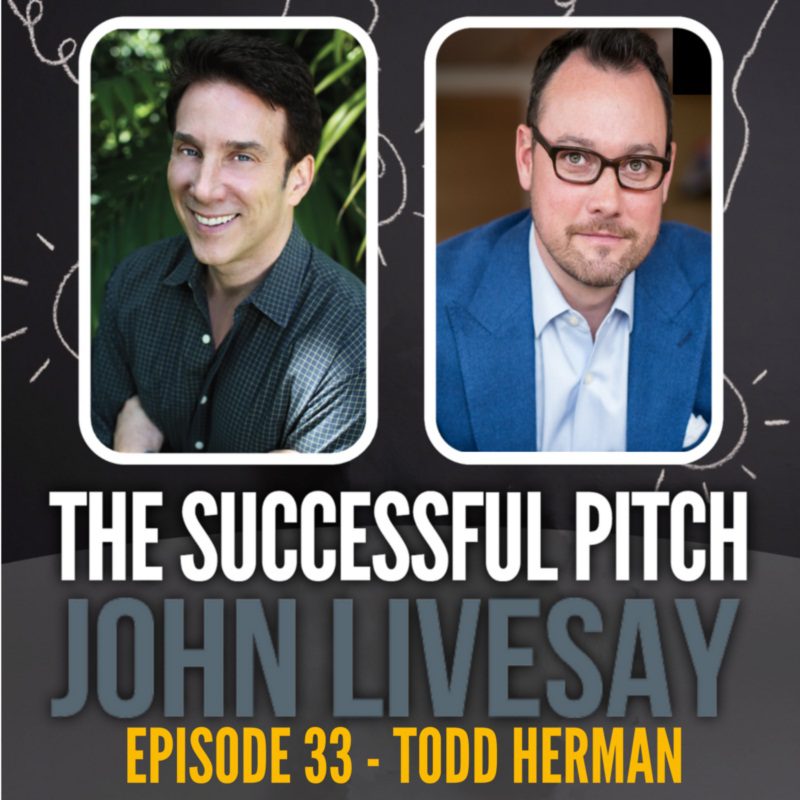
Todd Herman comes to The Successful Pitch podcast with an impressive background. He has successfully exited two companies and he has the Spanish royal family and billionaires as clients. He won the award for The World’s Greatest Salesperson in 2010 and he is also a coach for professional and Olympic athletes. Todd talks to the audience on the importance of creating an alter ego to achieve your goals, why it’s important to take care of the little things, and so much more on today’s show.
Be an Olympic Startup – Interview with Todd Herman
Welcome to The Successful Pitch Podcast. Today’s guest is Todd Herman, who has so many credentials, I don’t know where to start. He has a very successful 90 Day Year program. You’ve heard of the Four Hour Week. Now, you’re going to hear about the 90 Day Year. Todd is also a performance coach to professional and Olympic athletes. He has clients like the Spanish Royal Family and billionaire clients. What impressed me also was he won Greatest Sales Person in 2010 for the International Ad Festival in France. We’re certainly going to ask him to talk about that and more. Todd, welcome to the show.
John, it’s a pleasure to be here.
Todd, I love that you are such an expert on what it takes to become an Olympic or professional athlete. Because our listeners on The Successful Pitch Podcast are all about learning how to pitch to get investors to say yes fast. There are so many similarities between being an [Olympic Startup] entrepreneur and being a professional athlete. I think when you frame pitching to investors as the Super Bowl of meetings, that you are the expert to talk about that.

Olympic Startup: No two groups have a higher threshold for risk tolerance than entrepreneurs and athletes.
There’s a study that just came out a little while ago that my wife shared with me. It’s all about risk tolerance. They found that of groups of people that are out there, no two groups have a higher threshold for risk tolerance than entrepreneurs and athletes. It’s funny because I think that threshold tolerance was like 79 or 82%, something like that. The only group that actually rated just slightly higher than them were generals in the military. Fair enough, okay. We’ll all bow down to them.
For me, because I really dance between those two worlds and going back and forth between working with entrepreneurs on high performance and how can you actually get the maximum amount of value that’s stored up inside of you to show up on the field of play. Everyone uses this word, potential. In my world, in my business, that word is not allowed to be used because I don’t believe in potential.
Potential I think is a crutch that a lot of people like to lean on to basically excuse away a lot of their bad habits or behaviors. What I look at, and the only thing that really an investor is going to look at as well when they’re taking a look at a successful pitch is, even when you watch on Shark Tank people are like, “We like the grand idea that you have there. That would be considered potential. But what’s the real performance? Tell me the numbers.”

Even when you watch on Shark Tank people are like, “We like the grand idea that you have there. But what’s the real performance? Tell me the numbers.”
Even with athletes, I want to know what are your numbers. Don’t tell me what you think you can do. I want to know what’s showing up on the court, on the field of play. The great thing about dancing between these worlds of athletes and entrepreneurs is they’re both manic people that are doing crazy things.
You’ve got crazy ideas to think that you could actually go out there and somehow be the number one sprinter in the world or that you could somehow go into a meeting and walk out with $5 million for this idea that started rattling around in your head months or years ago on your couch. Now, you’re asking people for money. It’s crazy people but I love working with them.
I really like what you said there about the idea that you have for your product is your potential that you have, but what really counts is your ability to execute that idea, i.e. what are your numbers? Investors are saying, “We’re not going to fund anybody who ‘doesn’t know their numbers’. We’re investing in people who know how to execute.”
Todd, you’ve had two successful [Olympic Startup] businesses with great exits so you clearly have been down this path. I want to go back even further. When I was watching a short video you did about a life lesson you learned from your dad, can you share that with the audience?
Sure. I was yelling. I grew up on a farm and ranch in Western Canada. I live here in New York City now but I’m still at my core, a farm kid. We were walking out of a steak restaurant. On the way out, just like most people, I had some meat stuck between the teeth. So very natural for me to snag a toothpick.
When I walked out the door, I tore the toothpick out of the cellophane and then I’d tossed the cellophane on the sidewalk as we continued to walk towards the car. My dad is a man of very few words. Always led by example more than anything else. Very respected in the community.
He stopped, walked back, grabbed the cellophane. He always, just like most good farmers, had a breast pocket with pens and a notebook that he used for the farm. He grabbed the cellophane and he stuffed it in his pocket and kept on walking. I thought to myself, “Wow, that is a perfect example of how you win at life. It’s by taking care of all the little things.”

Olympic Startup: That is a perfect example of how you win at life. It’s by taking care of all the little things.
Most people always focus on the big stuff. But in my experience in working with high performing people is they are fanatical about making sure that details are well taken care of. A friend of mine and someone that I’ve been able to do some work with, Brian Fetherstonhaugh, who is the CEO of OgilvyOne. One of the greatest advertising agencies on the planet.
We were going through and we were doing a presentation together. The gentleman who had put together the slide deck had come in. Brian and myself and his assistant were sitting there. Just watching someone at that level go through that presentation was such a fine tooth comb and picking out just micro little punctuation errors or just the slightest little alignment issues. That’s the CEO.
Most people would think that they wouldn’t care about those things but someone who’s operating at a high level does care about that impression. Because just like the people that are listening are going in to present a successful pitch, glossing over all of those things will be picked up on by people who have a tremendous eye for detail, which are typically people who are very successful.
[Tweet “People who are very successful typically have a tremendous eye for detail. “]
I love that you brought that up.
The analogy is just take care of the cellophane in your life because it matters.
It does. I love that you brought that up, about the details on the slide because I’ve had investors tell me, “If you have a typo on your pitch deck, that’s it. That’s a no. Right off the get go.” What I love so much about that story about your dad is A, you’re a master storyteller. I’m constantly working with my clients to teach them how to become a master storyteller.
You’ve described how old you were, you described that your father is a man of few words and that he literally didn’t say anything. By not saying anything, he said volumes. Then that life lesson that you took and continue to take with you and teach other people.
We’re going to tweet that out, “If you want to win at life, take care of the little things.” That’s a great phrase and a great tweet for the first 30 minutes or whatever we’re going to be talking together. I love that.
It’s so many things. Take care of the little things and be a storyteller. You encapsulated all of that in one quick story. Amazing. Fantastic. As I promised in the intro, I want to hear about how you won Greatest Sales Person in France. Because let’s face it, when you’re pitching, you’re selling yourself and your idea to investors. There must be a great story there.
[Tweet “Win at life by taking care of the little things.”]
That’s actually how I got involved with Ogilvy because Ogilvy and YouTube are partnering up to do this search for the world’s greatest sales person. That was back in 2010, beginning of 2010. Now, I have some successful businesses. The price was going to be a fellowship at Ogilvy.
I wasn’t really doing it to get a fellowship at Ogilvy. How I found out about it was a good friend of mine actually on Twitter sent me a tweet and said, “Hey, Ogilvy, who I know that you absolutely love …” Because David Ogilvy’s book, Ogilvy On Advertising, is one of the first books I give people when it comes to just learning how to communicate or sell or market yourself. It’s still a great bible today on that subject.
She said, “They’re doing this cool thing. I think you could win this.” I went and saw their very tongue and cheek funny launch video for it. What they asked people to do was to submit a two minute video of how you would sell a red brick on YouTube.
I love it.

My whole shtick with the red brick was that the red brick was used to help build empires because the Sumerians who invented the red bricks used it to build pyramids.
As soon as I saw their pitch video, I was like, “I know exactly how I’d sell that red brick.” I was working on an important project at the time. I was like, “I’ll get to this later,” which what I teach all my clients is famous last words, because you will never get to it later. If you’re inspired to do it and it’s something that’s going to really make an impact, do it now.
I did some self-coaching there, got up quickly, threw on a sport coat, wrote out a mini little script. One hour later, I had the video done in the can and uploaded it to basically YouTube. My whole shtick with the red brick was that the red brick was used to help build empires because the Sumerians who invented the red bricks used it to build pyramids. It was also used to build roads to help connect us all because bricks were originally the thing that we used on roads. Ultimately, it has helped to revolutionize homes so that we’re no longer vulnerable to the winds of nature.
At the end of the day, all those [Olympic Startup] innovations started in the mind of one person. Just like them, you probably have an idea, a dream, a goal or something that you have never taken action on. If you buy this red brick, it will be a message to not only you but the world around you that you’ve laid your first red brick. You’ve taken your first step to a life of committed action.
I went on from there and then I said, “If you buy this brick, we’ll donate …” Because it was right around the time that Haiti had the big hurricane roll through and devastate the country. I said all the proceeds will go to the Red Cross at Haiti. Anyways, it will help rebuild that country as well. Metaphorically, it helps to rebuild the nation.
Anyways, that submission video got me down to a final three. Final three of us then were flown over to Cannes, France to the International Advertising Festival. I got a free trip out of it already, I didn’t even win yet. There was myself, a gentleman who was a Hollywood producer and then a lady from Japan.

Motorola Droid, who would use that? Batman would use it.
We all had to do a two minute pitch on stage of how we would sell the new Motorola Droid cellphone. Motorola was a client of Ogilvy’s. Now we were in the biggest theater in all of Cannes, the Cannes Film Festival, the big movies. We’re on stage, we’ve got two minutes.
Me going over there, I had never been to an advertising festival. I had no idea what to expect, what the demographic of the audience was going to be there. I actually prepared five different pitches based on different demographics. When I got there, I found out and realized after meeting a bunch people, that there’s going to be a big chunk of the audience that didn’t have English as their first language or really didn’t even speak English at all. All they’re going to hear is like, wa-wa-wa-wa.
I thought to myself, what is a character, a story, something that when I say a word, it’s the same word across every single culture? I was playing with the idea, Motorola Droid, just the word Droid. It’s a cool cellphone, it’s a technologically advanced thing. Who would use that? Batman would use it.
I started off my pitch with, “If you had the opportunity to design your own mobile device, the Motorola Droid cellphone would be that device. In fact, it would be the device used by Batman.” As soon as I said the word Batman, there was this crowd of Greek advertisers that were in front and I saw this one lady nudge one of her counterparts. She said, “This guy’s good.”
That’s when I knew that I had the audience pretty well. There’s like 1,300 people in the audience. At the end of it, everyone did live text message voting and then the result was I ended up winning this. It was a great experience. I ended up meeting Mark Zuckerberg at the Facebook party. He came up to me and said, “Hey, aren’t you the World’s Greatest Salesperson?”
What a great title.
It went on from there. That’s how I ended up doing a bunch of work with Ogilvy.
Wow, I thought there was probably a good story there. But you gave us two good stories. I love it. I want to break it down, what you did, so that the people listening can really understand just why you won and why it was so good.
When you’re describing something … I tell people, “When you tell a story, give three points for people to take away.” You said, “If you have a dream, an idea or a goal.” It just flows so effortlessly out of your mouth but clearly you’ve thought that out. People are going to say, “I have one of those three things, so this is for me.”
That’s so important when you’re pitching. I constantly work with my clients and say, “You cannot wing your pitch to investors.” Clearly, you did not wing this. You had five different pitches ready, depending on who the demographics are. That’s of course the key to success, is know your audience.

Todd Herman, voted World’s Greatest Salesperson – Olympic Startup
Investors are not all the same. You have to customize your pitch to what their specialty is and what their hot buttons are and what they like to invest in. You nailed that, and on your feet no less, of what’s the word that resonates across the world that you don’t have to speak English. In that case, it was Batman. You became the Batman and won the award.
What a great story. Thank you so much. So much great information there, on how to pitch and how to connect with the audience.
To your point, there’s a reason why rules of three are influence. It’s the whole, “see no evil, hear no evil, speak no evil.” Everyone knows, as soon as you say, “See no evil,” everyone else can repeat the next two things. You’re right, organizing information into threes is exceptionally helpful to the audience.
Now, the Batman thing leads directly into one of your key areas of expertise, which is creating an alter ego. Can you speak to that, Batman?
For sure. My first business that I started was doing mental game coaching with athletes. They weren’t pro athletes at that time because I was starting out. I was young. It didn’t take long before I started working with professional and Olympic athletes. How I got my name was I built up a name as being the person to go to build a secret identity or alter ego to boost performance.
[Tweet “Build a secret identity or alter ego to boost performance.”]
How that came about was I played college football. I was a national rank badminton player. One of the devices that I used for my mental game was not going out on the field of play as myself because Todd has his insecurities and his worries and his concerns about other people judging him.
That’s not going to serve me on the field of play where I need to perform. What most athletes do, which is what they get wrong, is they go on to the field and they carry themselves with them, as opposed to stepping into something else that’s going to perform for them.
People naturally see actors do it. They go out in that stage and they act as a character in order to deliver the results or the emotional response to the audience that makes the story believable. If we want to make your performance believable, why not step into it as someone or something else.

The concept of Olympic Startup is when you go into a pitch, there is a certain rule and there’s a certain framework around how to be successful in that field or in that room.
I’ve got this five step process. I’m in the midst of writing the book on it. I’ve been doing this for well over a decade with clients. As I started doing a lot more work with people in the corporate world or entrepreneurs, there’s a field of play that everyone steps on.
When you go into a pitch, there is a certain rule and there’s a certain framework around how to be successful in that field or in that room. Going in there with trepidation and concern and a lack of belief in what you’ve done, maybe you didn’t prepare properly, is not going to serve you by any stretch of the imagination.
People are investing at the end of the day. Yes, the idea is important and the numbers behind it are important. But they’re still investing in the entrepreneur. Because you and I both know that the odds of the thing that’s being presented actually being 100% the thing that show up in the marketplace. I’ve never seen that happen personally and I invest in products and companies all the time.
We’re investing ultimately in, “Do I believe that this person can actually steward this thing to completion? Can they execute or are they just an idea person who gets excited about something and then drops off three months later and now my money is gone?”
Building out this idea of stepping into a better heightened version of yourself on that field is the fastest way I’ve ever found to help people boost performance and the result that they’re looking for on the field. If you think about it, this is not about being fake. This is not about being unnatural. You are already doing it.
[Tweet “A heighten version of yourself boosts performance.”]
Because, who Todd is, I’ve got two little girls under the age of two and a half. I am very different with them than I am as Todd, the hard charging, spank-you-in-the-ass coach and adviser that I typically have an avatar as being. Who I am in business is very different than who I am in the home with my family. Who I am with my friends when I’m out for a drink or a beer watching the game is still another version of my personality just magnified to accommodate that experience.
It’s just that, when you get this, you become far more intentional and deliberate about who it is that you’re creating so that you can perform at the level that would be considered the highest levels, so that you get the result that you want.
I’m so glad you said that. I was going to ask you about it. You answered the question before I even could ask, which is, how do you have an alter ego and still stay authentic? You said, and we’re going to tweet this, “When you have a better heightened version of yourself, that boosts performance.” That is magic. That is gold. That allows you to still be yourself.
This word authenticity is a very big buzz word that’s out there nowadays. I challenge people all the time. I’m like, “Tell me what authentic actually means?” Here’s my premise, I don’t think anyone on this planet is really authentic. Because if people are authentic, the most authentic moment of your life was when you came out of the womb and you were bloody and you were shitting yourself and you were crying.
[Tweet “Here’s my premise, I don’t think anyone on this planet is really authentic.”]
If you want to be truly authentic that’s how you should be behaving right now. Not to be too explicit, but that’s the reality. That’s what true authenticity is. How do we all get our personality shaped? Yes, definitely being a dad of two little girls, there are just things that are baked into their DNA. My wife, Valerie and I, had nothing to do with that whatsoever. It’s just in them and you can’t explain it.
There’s environmental impacts. There’s social impacts. There’s the friends that we have that helped to shape that personality. Where does their authenticity begin and who they’re showing up in life as that personality begin as well? My challenge to people is, I just don’t believe on the word authenticity. All I care about is performance.
If you are a good person to me, I don’t care if you’re not being authentic in the moment. You’re just nice to me. What do I care if you’re being authentic? The result was my interaction with John was a good experience. Whether you were faking it or not, I don’t care.
Great. The other thing that you’re really on that I find so fascinating and useful is this whole [Olympic Startup] concept of positive thinking versus positive expectations. In Silicon Valley and the startup world, there’s this whole thing called the trough of despair that all startups go through.
You talked about in one of your blogs, about high performers tend to battle depressive states more than other people. Can you talk about that and what causes that and how can we handle those depressive states?
To use maybe a metaphor to help explain it, I think of life as having two classes of fish in the sea. There’s a class of fish that lives at the very bottom. It’s cold down there. It’s dark. Light doesn’t travel down at the bottom there. There’s an exceptional amount of pressure that’s down there.
Now, currents can come along and maybe the fish that’s living down there gets caught in the current and slowly that current starts to bring them to the surface. If that fish doesn’t escape the current and travel back down to where its natural environment is, they’ll get eaten by a predator at that level or eventually they’ll get to the surface and the sun will burn them or whatever the case is. They’re built to be down there.
Then there’s another class of fish that’s at the surface of the ocean and they’re colorful and they’re bright and they jump and they’ve danced at the very top. If they got caught in the current and get taken down to the very bottom, they would die because of the pressure that’s down there.
In my experience of working with thousands upon thousands of high performers at the Olympic level or entrepreneurs, whether it’s billionaires or whatever, they are the people who live at the bottom of the ocean. They can handle the pressure. They can handle the intensity of what it’s like to be in these situations.
[Tweet “High performers can handle pressure.”]
I think the real problem that people are experiencing is that there has been this one rule that’s set up in life that is, life is about being happy and joyful. I disagree because I don’t think that Elon Musk’s sole purpose in life is to be happy. He has said that he is here to solve really big problems for this planet.
You don’t give really big problems to someone who’s lens on life is to have just a fantastic lifestyle. I think that people need to be careful about the rules that they’re setting up in their head and making themselves feel bad because they don’t feel like they’re happy all the time, because they’re in a stressed out state. No, you chose it. Almost you didn’t even choose it, it chose you.
You’re meant to do this because you can handle it. I’ve said that to some entrepreneurs and friends that have struggled with it. One of them remarked back to me, “I’ve been living in just a state of worry and self-judgment for fifteen years.” He sent me an email the day afterwards and he was like, “I have never felt more free. You just lifted so much pain and anxiety and soft judgment off my shoulders. I felt like I was doing something wrong in life because I wasn’t that typically very, very happy person.”

The trough of despair is something that is very common. You’re meant to handle it and it’s okay.
Now, it’s one thing to be able to handle depressive states. I’m not saying that depression is an okay thing. But it is something that people who do big things deal with because our roller coasters are hell of a lot steeper. Which means they’re steep on the climb and that means the very top can be incredible. But they’re steep as well and they can go a lot deeper than other people who just aren’t taking on challenges like we would be.
The trough of despair is something that is very common but the idea that you’re a bad person for experiencing it isn’t true. It’s just the nature of the world that you’re living in. You’re meant to handle it and it’s okay.
Being a former swimmer, I love the analogy of the different levels of the water. I almost want to combine your two metaphors and say, if my alter ego is going to be a deep sea diver, I’m going to put on my deep sea equipment as my alter ego. When I have that on, I know I can handle the pressure in the analogy of the water. I won’t always stay down there. I’ll come up for air when I need to but when I need to get the job done, I’m going to be able to handle the pressure cooker. It’s really helpful.
Absolutely. To carry on with your analogy, if I’m going to give someone a tool then that they can put on and wear to help them manage that deep level of pressure that we go through. It’s the first thing I try to get all my private clients to get into, is meditation.
Here are the numbers. Ten of the top thirteen private equity traders in Wall Street here in New York City, the wealthiest people, will all credit the reason that they outperform everyone else, they meditate every single day. That helps them avoid the emotional highs and lows that everyone else in the market is going through.
Really, what meditation does is it flexes the frontal lobe. The frontal lobe of our brain is the part that allows us to stay focused, to concentrate and to mitigate the limbic emotional part of our system. Whether it’s two minutes, studies have proven, even if you do two minutes of meditation, it’s proven to help manage emotional states. Even just two minutes.
The misconception that people have with meditation is that, “I’ve tried meditation and I can’t get my mind to shut off.” Meditation has nothing to do with your thoughts going away. That’s the misnomer or the myths that’s out there.
[Tweet “Meditation is about being okay with what’s passing through your mind. Your mind is the sky.”]
Meditation is all about being okay with what’s passing through your mind and not getting attached to it. If you think about it this way, I’ll use a metaphor, your mind is the sky. The thoughts passing through it are clouds. What most people do is they get some self-judgment cloud passing through and they get entangled with the cloud, thinking that that’s who they are. I’m telling you, no, it’s not.
I love it.
Here’s the thing, we all think those thoughts. I’ve worked with the ultra-high performers on the planet. I can tell you, they deal with those self-defeating thoughts too sometimes. They just don’t get entangled in it and they continue to execute and take action.
That’s great. We’re going to tweet something out about, meditation is like clouds going through your head. Just keep them moving. Say next, next, next. Don’t get entangled in any one that would bring you down. Just go, next. Keep the wind going, keep the clouds going.
I think that’s so helpful because like you said, so many people are so afraid. “I can’t stop my thoughts. Oh, I don’t have to? I just can’t.” The goal is to just not get stuck on one and perseverate around it and go over it. Keep reliving it. How many times that we’ve done that?
Sorry to interrupt you, John. Think about when you’re just looking at the sky any way. Sometimes, you’re just looking at clouds and you’re like, “Oh, that’s an interesting shape.” The same thing can go with your thoughts. You’re like, “That’s interesting that that thought entered my head.”
[Tweet “Be a more observer of it rather than just identifying with the thought.”]
Be more curious about it. Don’t get entangled into it as, “That’s me. That’s who I am.” It’s more of like, “Oh, that’s an interesting thought. How about that? What about that one over there.” Be a more observer of it rather than someone who’s just identifying themselves with the thought.
I love that so much because I think that’s the key, is not being attached to any one outcome, especially when you go pitch an investor. You cannot be attached to that outcome because they’ll smell it. Just like a date or anything else, you can’t be attached. Is this the person that’s giving me the money? Is this the person who’s going to marry me? Is this, whatever? You just have to not be attached to any one outcome and you’ll be at your top performance.
Stay engaged in the process.
That’s great. You’ve already given us a hint of your book that’s coming and you mentioned the Ogilvy book. Are there any other books that you want to recommend to the listeners before we go?
I think a great book that’s out there, I don’t even know if it’s in publication anymore, but it’s Seeking Wisdom, from Darwin To Munger. It is a fantastic book on just thinking in the context of models. I’m a really big visual models person, whether it’s been diagrams, XY graphs and pyramids and stuff like that.

Seeking Wisdom, from Darwin To Munger
Warren Buffett has said that Charlie Munger is the fastest 30 second thinker on the planet. That’s because Charlie Munger has made it known that he has, I think it’s 96 different mental models that he’s memorized from tons of different disciplines. Whether it’s mathematics or physics or literature or psychology, so that he can think quickly.
He doesn’t get entangled in the whole subject matter. He goes, “What’s that about? What is the idea of confirmation bias about?” When I’m listening to John give me a pitch and he’s telling me why this thing is going to be successful, is he coming at it from a point of data or is it confirmation bias because he’s travelled down that road into this niche or this industry? He’s able to think far more quickly. It’s based in a real data and real science.
It’s a fantastic book. It’s just a really great read. People think that it would maybe be really dry but it’s such a great book.
I think another great book that’s out there that I actually would attribute a good chunk of maybe my messaging that I had, which was successful for the red brick video, is called Metaphorically Selling. Most people wouldn’t have heard of it. It’s not like a bestseller. The lady does such a great job of giving examples of how one speech without a metaphor and one speech with a metaphor connects.

Metaphorically Selling: How to Use the Magic of Metaphors to Sell, Persuade, & Explain Anything to Anyone
You were talking before about stories. Metaphors are just a micro story and a very short sound bite for people. Metaphorically Selling, I recommend that book. She should probably send me commission checks because it’s some of those darn books that maybe she has. It’s a great book and she’s a lovely smart lady that wrote it.
You’ve given us so much valuable insights into how to sell through metaphors, how to look at the numbers and not focus on your potential, not get stuck in your ideas, to get out of trough of despair. Is there any one final piece of advice you want to leave the listeners with?
Continuously take action. That’s it. That’s just the hallmark of how you get yourself out of the trough of despair. Just keep moving and not defining where you’re at with where you’re going to be for the rest of your life.
I want to be careful that we’re treating everyone as if they’re in this trough of despair. Just keep taking action. You never know what’s going to be around the next corner. You just don’t.
“Keep taking action.” It’s that simple. Thank you so much for being on today, Todd.
John, appreciate it. Thank you.
[Tweet “Keep taking action.”]
Links Mentioned
Ogilvy on Advertising by David Ogilvy
Seeking Wisdom: From Darwin to Munger by Peter Bevelin
Metaphorically Selling by Anne Miller
The 90 Day Year Entrepreneur’s Achievement Series
5 Steps To Change Your Life and Make It Stick with Todd Herman
Crack The Funding Code!
Register now for the free webinar
Check out John’s Latest Book
Share The Show
Did you enjoy the show? I’d love it if you subscribed today and left us a 5-star review!
-
- Click this link
- Click on the ‘Subscribe’ button below the artwork
- Go to the ‘Ratings and Reviews’ section
- Click on ‘Write a Review’
How To Win Shark Tank – Interview with Charles Michael Yim
Posted by John Livesay in podcast | 0 comments
Listen To The Episode Here
Episode Summary
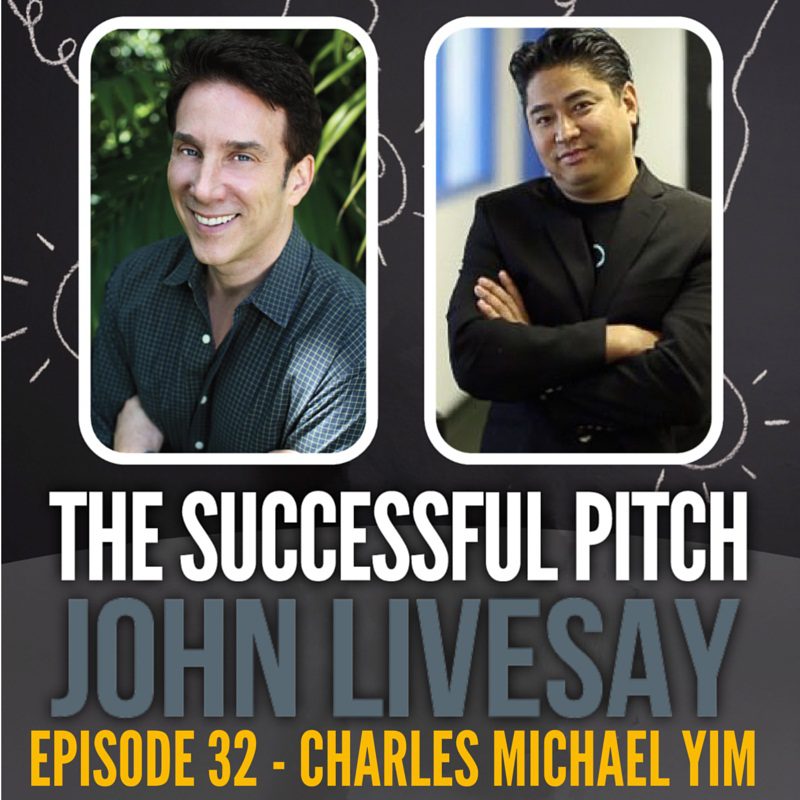
Charles Michael Yim is a successful serial entrepreneur and has appeared on Shark Tank and other news outlets. Charles was the first one in the history of the Shark Tank show to get funding from all of the sharks. Charles also came in first place out of 10.000 startups after competing for Sir Richard Branson’s startup contest. Charles talks on his success with Breathometer, the differences between Sir Richard Branson and Mark Cuban’s business style, and his upcoming book.
How To Win Shark Tank – Interview with Charles Michael Yim
Hi and welcome to The Successful Pitch podcast. Today’s guest is Charles Michael Yim who is the CEO of Breathometer. You might know Charles from seeing him win on Shark Tank. Charles, welcome to the show.
Hey, how’s it going? Glad to be a part of it.

Breathometer is the leader in breath analysis technology.
Thank you. We really appreciate you sharing your wisdom, your insights [on how to win Shark Tank]. One of the things that I really notice about someone like you is people see you on TV and they think, “Oh, overnight success,” and you’ve been doing this for quite a while and you had several successes before Breathometer. I think that’s really one of the keys that investors look for, is serial entrepreneurs, because you have a certain tenacity and you learned a lot and all that good stuff. Can you speak to your background a little bit? I know you were at some other companies and huge success there as well?
Sure. Like what you just said, you can’t just become an entrepreneur overnight. It’s more of a risk and reward scenario in that, it’s once you start, it’s really I’d like to think, is hacking away, you start hacking away at it. I think when you start, 50% is complete. But I think climbing up the mountain, addressing adversities, driving through a certain level of perseverance and tenacity and ambition. That’s what kind of gets you passed the line.
Breathometer, my current company, is technically my third founding company. I built and sold my last two and so I’ve had a couple of successful exits. I would say my first company is where I sharpened my teeth and that’s where I made several failures and many mistakes, but the important thing is that you get back up and you learn from them and you do better the next time. Ideally, you do it fast enough where you can still survive or your company can or your business can still survive.
What gave you the idea for Breathometer? Most entrepreneurs tell me, “We saw a problem and we wanted to solve it.” It was all about, at first, helping people not drink and drive, right? That was, before they get pulled over by the police they have to take a breath test.
In terms of inspiration, it really came from Jack Dorsey’s wear product. If you’re familiar with it, it’s a pin and processing product geared towards small to medium sized businesses. I saw a dongle and I kind of connected the dots. With the smartphone, I thought to myself, why couldn’t I just switch out the sensor inside for a bio-sensor instead and apply it towards essentially an alcohol breathalyzer kind of product, value proposition.
I used it back in college and I always erred on the side of safety. I put two and two together. Consulted with a few close, trusted friends. Next thing you know, I had a working, breathing prototype within about three months.
What I love about that story, Charles, is that you didn’t have to reinvent the wheel from scratch. You actually got inspired by someone else’s startup. What a great story that is, I love it, and say, how can I make this better? What’s also fascinating to me, please correct me if I’m wrong, but from what I understand is you’ve taken Breathometer to way more than just making sure of you’re alcohol level. It’s actually helping people make sure they don’t have bad breath. Who doesn’t need that, right?
Yeah, there’s quite a few applications that breath can apply to. I think about 6 months into it, I started collaborating and connecting and partnering up with Stanford university, my alma mater, as well Cleveland Clinic. Cleveland Clinic by far has basically the most advanced breath analysis lab that I would think, that I’ve seen at least. Breath analysis actually been a science for quite some time. A lot of consumers aren’t aware, but there’s breathalyzer-type machines in these Kaiser Permanentes in the world. They can cost as much as a quarter million up. You typically need a prescription and, I would say, extra added fees so you can have access to one.
It ranges in terms of applications. Everything from allergens, gastrointestinal issues, asthma. It really goes on and on. For us, we started with alcohol, but then we’re venturing into true medical or digital health applications like oral health, like health and fitness, being able to detect certain levels of fat burning through one’s body. But again, all through breath, because breath has roughly about 300 biomarkers whereby at least 25% are applicable towards human conditions.
All the people who are buying Fitbit and keeping track of their calories could also be buying your product to keep track of their fat burning through their breath analysis for ketosis and things?

Could you pair it with a Fitbit product or what have you or some type of step tracker? Sure.
Correct, and you don’t even have to worry about calorie counting anymore, or quite frankly, how many steps you are taking. Yeah, could you pair it with a Fitbit product or what have you or some type of step tracker? Sure, but if anyone really knows health and fitness, it really boils down to 80% of what you’re eating versus 20% in terms of your workout.
If you nailed down your diet and you’re not necessarily calorie counting but understanding how much fat you’re really burning and optimizing that, essentially that’s the holy grail. That’s how you really shedding pounds and staying at a certain optimal and healthy fitness range.
I think that’s what’s going to be partly responsible, if not a lot, of the incredible growth that you’ve already had. What I saw was that the growth for Breathometer was, 2014 you were at $4 million and then you project 2016 to be at $14 million, is that accurate?
Yeah. That’s right.
That’s phenomenal growth and obviously it’s not just from awareness from Shark Tank, although there’s a great story there. You were pre-revenue from the video I saw, right, before you went on Shark Tank?
Correct. We were pre-revenue. We’ve been revenue-generating for quite some time. Next year will be even a bigger year. Now we’re launching our third product and we’re already working on our forth and we already have our 5th in the R&D phase. All, again, geared towards different applications, not just alcohol.

Charles Michael Yim was the first person on Shark Tank to ever get all five sharks to invest with him.
What’s interesting about you on so many levels is you’ve broken history multiple times. You were the first person on Shark Tank to ever get all five sharks to invest with you. What’s interesting is they all said you checked off all the boxes.
You had a great product, you knew your numbers, you were a great business person, and you were doing something that was great for society, so everybody felt good about investing in that. Did you know before you went in [to win Shark Tank] there that you were checking off all those boxes or is that just who you are and the way you’ve done business in the past?
It’s the latter. I didn’t have necessarily a checklist going in there. I would say I definitely did my fair share of preparation. I definitely made sure I knew my numbers and I run a pretty tight ship so I knew my business inside out, so I was well prepared. I think as most people kind of define luck, there was a little part of luck in it where when the opportunity arises, you’re prepared and so you can take advantage of the opportunity. There was a lot of preparation that I think was key.
In terms of product, obviously there’s bias, but I definitely feel it’s compelling. Obviously, I have experienced and of course there’s a great cause behind it. I think, there’s a combination of factors, but a good portion of being prepared and the rest just being the right fit.
One of my favorite quotes is from Arthur Ashe, who said the key to success is confidence and the key to confidence is preparation. I’d love to have you share with our listeners what kind of preparation did you do before you went to pitch Shark Tank and what do you now before you pitch investors?
[Tweet “The key to success is confidence and the key to confidence is preparation.”]
I think with Shark Tank, which was very acute to Shark Tank, was I actually met with quite a few successful fellow Shark Tank entrepreneurs that have already been on the show and did well, started interviewing them. Understanding, are these investors are actually the real deal? Can they really add value to your business? Pro-tips, if you will, prior to being on the show.
In terms of just what I do in general, I’ve been in the board room several times. Again, it’s my third company. I’ve, overall, probably closed over $50-60 million dollars in funding, VC funding, single-handedly. I’ve been around the Valley. I think in terms of just being prepared being able to anticipate questions investors will ask, that’s extremely key [to win Shark Tank].
I have a pretty good head on my shoulders now and I think that just comes along with, as you say, preparation and that built confidence. In addition to that, just having the experience underneath your belt. When you’ve been around the block a few times, it gets easier. It gets easier, for sure.
[Tweet “When you’ve been around the block a few times, it gets easier.”]
Those questions include everything from what does it cost to acquire a customer to what’s your vision. There’s so many questions to be prepared for and anticipate. I want to brag about you. You closed $2 million in 2013 and now you’re going for $20 million. Is that accurate?
That’s right. Yeah, we already closed a good chunk of it already. More than 50-60% and we’re closing the rest of it now.
When you go from that kind of $2 million to $20 million, that’s such an incredible growth and obviously, based on huge success. Do you get different questions when you’re going for $20 million than you do when you’re going for $2 [million]?
Certainty, you do. Definitely, especially when you have a company that changes from, transitions from pre-revenue to revenue. Pre-revenue is more about product validation and ultimately product launch and assessing the risk points of the company in terms of being able to at least just ship the product.
When you’re in the second phase where we are, at series A, it’s user acquisition cost. How much does it cost to bring on a user? What’s the LTV, lifetime value of the customer? What’s the cohort analysis look like? How long are you retaining your customers and how long are they staying with you. Are they happy? Are they satisfied? If they’re not, you got to quickly address them.

There’s different certain level of expectations based on the growth stages that you’re in. There’s always good and bad with that.
Additionally [to help you win Shark Tank], what’s your roadmap and do you have the team that can support that? Do you have the engineering? Do you have the product? Do you have the financial assets or foundations to be able to support something like that? What are the markets you are targeting? Who is truly your demographic? Who is your customer at the end of the day?
You need to know quite a bit more about your product or products and your customers and then mechanics and foundation of your business, because at that point, you’re no longer an infant. You’re more like a toddler.
I would say we are in the transition and the interesting phase where we’re a toddler now, but we’re quickly transitioning to become a true teenager. There’s different certain level of expectations based on the growth stages that you’re in. There’s always good and bad with that. There’s going to be natural pain points, there’s going to be growing pains.
Scaling a business, hiring quick enough, but hiring quality individuals that can truly add value to the business, finding the right investors, support partners, and dealing with the distribution, international scaling, localization, regulatory. We’re a medical company at the end of the day, so we have to deal with the FDA. There’s complaint regulations we have to address, legalities.
There’s a ton of stipulations that we have to go through. It’s just a complete different set of questions from where we once were, first airing on Shark Tank. It’s a different ballgame. Just to mind you, we are truly a Silicon Valley company at heart.

I think Shark Tank, if at all, gave us a considerable boost.
When I say Silicon Valley, what I refer to and what that means to me is that we’re very much a technology company and we’re a culmination of both hardware and software. I think Shark Tank, if at all, gave us a considerable boost. We’re an atypical company in terms of how we’ve gotten to where we’ve gotten and the momentum we’ve built so far.
Can you speak a little bit about the team? I saw on your LinkedIn profile, you have some of the same people from your previous successful companies working with you again. Obviously there’s great synergy there when you have your team following you and you guys have a shortcut. They know what you expect from them and vice verse.
That’s so important for investors, is who is the team, and you mentioned it. Anything you can do about how you find your good team? How do you keep them from company to company?
That’s a great question. I think repetition is pretty key. You need to be able to treat your people and your team members well. I think if there’s a certain level of mutual respect there, I think naturally it’s going to lead to basically a, I would say, a clan, if you will. A group of you that go from one company to the other and creating success at one place and then hopefully repeating that, making that a recurring situation.
I think it’s a lot about that. It’s just great teamwork, team synergy and treating each other with an equal amount of respect. I think that naturally occurs. I there’s a second part of that, just team building. I think that’s probably one of the most important assets or talents that one founder can have when you’re building a company.
Because if you, for instance, don’t know a certain aspect or don’t have an in-house expertise on a particular topic for a business, maybe you don’t know, but you could hire someone that does. You can hire, believe it or not, a lot away out of your problems as a startup. If you don’t know it, bring someone in-house and they’ll figure it out for you.
[Tweet “Teamwork is respect and collaboration”]
I love that so much. The teamwork is built on respect and collaboration. Which is really what you’re saying is, collaborate with people who have skills that you maybe don’t have and then everything is stronger than it was before. It’s really fantastic insights. Do all five Sharks engage with you equally while you have that many investors?
No, I think it’s more on an as needed basis. When I first got funding and it was from all five at the very beginning, it was pretty much all five cylinders pumping at the same time. It’s pretty intense. Once you start scaling to a series A and when you establish a rapport and built up the relationship, it’s more on an as needed basis. We’re no longer that little tiny company that we once were. Now, it’s basically on demand basis more so than anything.
We have now institutional investors that are involved, that tends to be why we have a much larger round. In addition to that, we have a formal board now, which is very different. I’m not the only one just kind of calling the shots. I have a legitimate board that come from the institutional investor side that help mandate policy and make decisions with me.
We haven’t even gotten to your other big accomplishment, which is winning first place out of 10,000 other startups with Sir Richard Branson. Congratulations on that. You have Richard Branson and Mark Cuban backing you. I would think that’s quite a nice calling card for investors. Tell us a little bit about the Sir Richard Branson experience?

Charles Michael Yim won first place out of 10,000 other startups with Sir Richard Branson.
Richard Branson, it was more of his version of Shark Tank, if you will. It’s an opportunity for the community to basically, I would say, add fuel to the fire. If you already had something going, like Breathometer did at the very time we entered the competition, it basically acted as a catalyst and expedited our growth. We were exposed to a lot of investors. That’s what lead to our series A. and a lot of basically partnership opportunities as well. We had a lot of opportunity to interface with Richard Branson himself, his team, was able to go on his private island, Necker, so that was pretty cool. I’ve been twice since.
It’s just a phenomenal opportunity to meet great people, really expose the brand to a great community. There was just nothing but just give, give, give and take, take, take in terms of just a mutual exchange. Overall, it was a great experience and probably had equally as difficult, if not more difficult odds, in terms of coming through. But pleasantly surprised, we took first place. It was an amazing ride.
I bet. What advise did Mark Cuban and Sir Richard Branson give you? I would assume they have different points of view. Since you’re one of the few people who is fortunate enough to know them both, I would love to her your insights and how they compare.
I can tell you what I was able to take away from each so far. I think what I get from Mark Cuban, he’s a very much of an entrepreneur than an investor type that is all about building a business and doing the grind and just getting things done. I definitely got that from him. At the end of the day, he just wants to make sure that you’re doing your best and you’re building a real business.
[Tweet “Mark Cuban is all about getting it done.”]
I think what I get from Richard Branson is creating authentic genuine value. We have, for instance, a potential application for lung cancer. He was really just focused on that. He’s like, great, you can build businesses. A lot of people do build businesses, but if you really have a lung cancer application here, you talk about really saving lives.
[Tweet “Richard Branson wants authentic value.”]
I think what I got from him was just the bigger picture in that contributing back to the community, contributing back to the world. Doing something great while building something that you’re passionate about. That’s the winning formula there.
Building something great while making a difference in the world. That’s a great line. I love it. It’s really helpful. As if that’s not enough, you are also going to be an author. Tell us about your upcoming book.
[Tweet “Building something great while making a difference in the world.”]
I’m writing a book. It’s going to be three parts. My inspiration was from the show because after airing on the show, now I’ve been a part of five episodes and soon to be airing on the new spin-off show, Beyond The Tank, as well.
I’ve developed a public persona, if you will. I get approached quite a bit in public. I have parents coming up to me saying, “Hey, you inspired my kid to start his on business,” and blah, blah, blah or, “They want to learn from you.”
That got me thinking in that, maybe there’s something to here. That inspired me to write a book [about how to win Shark Tank]. The title may be something like Making of a Shark. Meaning that if you take some of the tips that I provide, perhaps you can build something of your own [and win Shark Tank too].

We had a lot of opportunity to interface with Richard Branson himself, his team, was able to go on his private island, Necker.
It’s three parts. It’s part one, my bio background. It’s a brief background of me and how I came to be as a lemonade stand kid to a full entrepreneur. Part two is my behind the scenes behind Shark Tank and then Richard Branson’s Xtreme Tech Challenge.
Part three, where I think the majority of value in the book is, my ten step guide, if you will, of how to come up with an idea, how to validate the idea, go to product discovery, whether it be product or service. Get investment for it, whether it be crowd funding or personal investors. Then taking it and releasing it to market, and then eventually scaling it. This is kind of a proven formula, if you will, that I’ve done personally with my last three companies, so I know it works.
I’ve broken it, I’ve distilled it down to very simple points where any average consumer, someone from middle America can pick it up and read it and go run with it. It’s my way to give back. I think it’s great if you’re successful, but if you can give back a little bit, that’s when the win is.
I’m being repped by one of the top agencies in Hollywood, they’re called APA. They’ve done Kim Kardashian, they’ve done Restaurant Impossible. They’ve done Gordon Ramsey and a bunch of stuff. They’re repping me at this point. I’ve already started writing the book, so we’ll probably launching in the next, I would say, 8-9-10 months.
How exciting. It sounds like a great content. It’s got enough celebrity hook of the behind the scenes with two major people, Mark Cuban and Sir Richard Branson, and then the actual meat and potatoes. One of the things that jumped out at me when you were describing the book, which I want to pre-order the minute it is available, is the idea.
So many people have so many ideas. How do you know or any tips you can give us in advance to your book, how do you know that this is the right idea to really pursue [so you can win Shark Tank]? Do you test it with crowd funding or do you test it with consumers or check out the competition? What’s your criteria for knowing that, in this case, Breathometer was going to be the right idea?
You hit a lot of the main points. Again, it’s essentially you need to one, validate the idea. That can be done through crowd funding. Secondarily, you need to do research. Figure out what the market size is like. Is there a predicate device, is there a market? The third part of it is, what truly is the potential penetration or traction of it? Those are kind of three of some of the primary characteristics or profile requirements. If you see and you recognize a potential, then at that point it’s a matter of execution.
[Tweet “If you see and you recognize a potential, then at that point it’s a matter of execution.”]
Great. I also know that you are involved with the Stanford StartX Accelerator program, which is another way of giving back, obviously. You must hear a lot of great pitches. Just to get into those accelerator programs is extremely competitive, almost like trying to get on Shark Tank. The number of people who apply and the number of people who get in.
I’ve recently been the pitch mentor at StartFast in New York, so I know that experience. I would love to hear your insights as what’s it like working with the Stanford Accelerator?
Like you said, it’s a tough accelerator. I entered, applied, being a Stanford alumni. That’s one of the main requirements. Aside from that, you need to have a legitimate idea or product or service. If you are selected, like you said, it’s tough, then you can go to the acceleration program. We did that and we did well. We gained a Chief Medical Officer. We got funding from Stanford University. That was nice. Now we’re working with them on the essentially respiratory side of things.
Moving forward, I now, like you said, give back. I’m actually now a mentor for the Stanford StartX Accelerator personally. I do get exposed to quite a few pitches. I think my two cents there is a lot of people get really caught in the, “Hey, I’ve got a cool idea and it sounds really cool, and what if it was this, what if it was that.”
I think my advice there is, and this is in my book again, that you should think about, when you create a company or product or service for that matter [to win Shark Tank or do something on your own], is always look through the lens of a problem-solution framework. What I mean by that is your target should be, are you solving a real problem? If you are and you have an innovative and a legitimate solution, you will have more than likely built a product or service that can provide real value.
[Tweet “See your idea thru the lens of what problem do you solve.”]
If you do, that’s when you have a basis for a company or a business. I find too often that, I would say, beginner entrepreneurs that just go out in the world wanting to create something but in actuality, they’re just creating something. That doesn’t mean that they’re generating or going to essentially create a business.
That’s incredibly valuable. Who do you help and what problem do you solve are two of the key questions that I think startups need to have in their head before they ever get to an accelerator, let alone an investor, and be able to say this isn’t just something that’s fun, it’s actually solving a problem. In addition to your upcoming book, are there any other books that you’d like to recommend to startups?

Art of The Start
That’s a good question. I am a big fan of Guy Kawasaki. That’s actually how I broke into the startup world. He has a book called Art of The Start. That’s pretty big for me. Let’s see. I think Eric Ries has a pretty good book. It’s called Lean Startup. You get an idea of how to run lean and mean and the fundamentals of running a startup and surviving. There’s also Tim Ferriss, 4 Hour Work Week.
I’m a big firm believer in working smart and obviously working hard, but working smart goes a lot further than working hard. Believe it or not, I run this company and probably in the middle of launching another company.
It’s just juggling the two acts where if you can get your current company or the company you’re working on to a stable state, a manageable state where you have senior management and at that point it’s self-sufficient and you are really delegating responsibilities, then potentially you’re at a point where you can actually start something else and make the best use of your time. Staying active, it’s all about a juggle act and it really comes down to how good you are at multitasking. I think that’s pretty key [to win Shark Tank].
I love it. How can our listeners follow you, be sure that they know when your book comes out, Twitter, LinkedIn? What’s the best way to keep track of, you have a blog or anything that you want people to read?
I’m pretty active on social media. I have a pretty significant following, especially after airing on Shark Tank and what have you. I am quite often pretty active on Facebook. You can find me under Charles Michael Yim. I technically go with my middle name as well. On Instagram, Twitter, I’m always under @CharlesMYim. You can follow me on there.
Otherwise, I’m always on the news or on TV with Squawk Box on CNBC and then potentially CNN soon and what have you. Shark Tank and now Beyond the Tank. You can follow me on TV as well. I’m constantly involved in blogs, whether it be TechCrunch or Mashable or Venture Beat.
Fantastic. Charles, I can’t thank you enough for being on the podcast today and sharing your wisdom [on how to win Shark Tank]. Congratulations on all your success. We’re looking forward to your new book and watching you on Beyond the Tank and other shows as well.
Cool, awesome.
Thanks again.
Thank you.
Links Mentioned
The Art of The Start by Guy Kawasaki.
The Four Hour Work Week by Tim Ferriss
The Lean Startup by Eric Ries
Charles Michael Yim Twitter
Crack The Funding Code!
Register now for the free webinar
The Successful Pitch – Book Trailer
Share The Show
Did you enjoy the show? I’d love it if you subscribed today and left us a 5-star review!
-
- Click this link
- Click on the ‘Subscribe’ button below the artwork
- Go to the ‘Ratings and Reviews’ section
- Click on ‘Write a Review’