

Evolve Your Success With Samuel Adeyinka
Posted by John Livesay in podcast | 0 comments

Personal development can affect, boost, and evolve your success to any aspect of your life. It is something one should focus on because you can have the opportunity to make a difference. When he was young, Samuel Adeyinka wanted to be a physician but realized that he could do other things related to medicine. That led him to pursue a career in medical sales. He experienced a lot of setbacks and challenges, which enabled him to give importance to personal development. Now, Samuel started his podcast to let people hear and have more information about the medical sales industry. Join him in this episode as he shares more about his inspiring journey to success.
—
Listen to the podcast here
Evolve Your Success With Samuel Adeyinka
Our guest is Samuel Adeyinka, who after graduating from the University of California in Riverside with a Bachelor of Science Degree in Biology, started his medical sales career. Over the next several years, he worked for a variety of biotech and pharmaceutical companies. He then went on to work in various roles, including medical sales development trainer, International Coaching Federation, and a certified coach. He has now started his podcast and Evolve Your Success, which is an organization that delivers digital marketing strategy and training programs to corporations and individuals.
—
Welcome to the show.
Thank you for having me. I’m glad to be here.
Let’s talk about your own story of origin. Did you know from a young age that you wanted to get into medical sales, or how did that road start for you? Do you have some great Biology teachers in high school or someone in your family?
I think everyone can say this. When it comes to medical sales, you did not know at a young age. This was new to a lot of us, probably for the last several years. I wanted to be a physician when I was younger. I was all about bones rise. I memorized every bone at a young age. I used to go around telling people what bones they had. At least I identify that all the time.
I want to be a physician. I thought I wanted that. That’s what led me to UC Riverside. I enrolled in the Biomed program. I got into that program. In that program, you got to spend some time with some physicians. I got to get a couple of mentors and I got to see what goes on at hospitals. I realized that, as much as I like this field, I want to look into other things related to it. I was not sure I wanted to practice medicine with patients.
I said, “Let me look into something else.” I spent some time working in the lab. Through that experience, I learned about this industry called Medical Sales. I worked with a PhD there, he was working on a diuretic, and he would say, “Sammy, you have a great personality. You understand the medicine. I see you have a big interest in the business. You should look into what manufacturers do for drugs and devices. Check it out and see if you like it.”
[bctt tweet=”Be a resource to your client. ” username=”John_Livesay”]
I looked into that. I looked into high-performance liquid chromatography devices and some pharmaceutical companies. With the pharmaceutical companies, I got my first role, moved out to the desert, and loved it. It was an awesome experience. I performed very well. Right going into it my first year, I had at a time in my life, loving what I was doing, and the rest is history.
When do you say desert, is it Phoenix or Palm Springs?
The desert is in the desert of California. Palm Springs, Palm Desert, Indio, those were my stomping grounds, and that is where I originated. That introduced me to the field.
A lot of people who understand science and like to study science are known as a little bit of introverts perhaps. They don’t like to even think of rejection personally, not the personality at all that sales require. When you do find a hybrid of someone who understands science and willing to put themselves out there in a sales environment, it is a magical find.
Usually, there are a lot of personalities like sales. They don’t know the science. I’m sure that combination was, in fact, a huge success. I’m fascinated to see how somebody did suggest it to you. It is amazing how one person in our life can be a major character in our own story of, “Had I not thought about that, I would never have even explored it. I didn’t know it existed.”
When you find something that fits, it is like, “This is what I meant to do.” It is not you are forcing yourself to do it, hate it, and find it awkward or whatever. Let’s talk about it because a lot of people think of pharmaceutical sales. Don’t you have to be a model to do that job because everyone is attractive? It’s crazy. The impressions that people have of the glamour of that job because it is the smartest, the best, and the most attractive, it’s like getting into Harvard or something.
Everyone has this perception that it is a difficult field to get into. You have now taken your expertise in doing it and helping people get into it, which we will talk about for sure later, but I want to get your impressions of it. Were you surprised at how competitive or challenging it was to get into when you first started?

Evolve Your Success: No matter what level of success you’ve reached in your life, you can always evolve it to the next level of success.
I’m going to be honest with you. I wasn’t even thinking about that. It’s funny. I didn’t even realize what I was getting into. When I first started, I was trying to develop my sales acumen. I had never been in sales before. I was working in the lab, and it was a high-performance liquid chromatography. We were studying these graphs and preparing liquid chromatography while running the experiments for this diuretic on live testing. That was what I knew and everything I studied in school, which was Biology.
When it came to sales, I didn’t know. I thought I needed to go develop my sales skills. I looked into T-Mobile, and there was a sales position there. A friend of mine said, “These guys teach you how to sell, you make good money, and they can help you with your first career move.” At the same time, I learned about this pharmaceutical opportunity. There was a company that wanted to work with me and I wanted to work there.
I said, “Do I develop my sales acumen at T-Mobile or even out here at a pharmaceutical company?” When anybody hears this, they’re like, “That’s an obvious choice.” At that time, it was not that obvious to me. I went ahead and went into it. I was excited to be in a role that offered that, doing things, selling, being a part of the business with them, and that excited me. Even before that role, I had this little nutraceutical company where I worked with a few providers. We were trying to have this diet nutraceutical product that we were trying to sell, market, and get out there.
It seemed like a sensible position to take on it. I felt I would learn more about what I was doing and get experienced in this new industry. I was not thinking about the challenge of getting in. Honestly, this was several years ago. It was competitive back then, but it was also not as well known. Now everybody knows about medical sales, medical device sales reps, and pharmaceutical sales reps. The average person knows what a drug rep or a medical device rep does. Now all these people want to get into it, and ever since COVID hit, even more so. It has become this very competitive and aggressive industry where you got to be a certain person and put in the work to get a foot in the door.
[bctt tweet=”Be someone your client can rely on.” username=”John_Livesay”]
The need for companies to train people has changed. When you and I were getting into sales, I got into high tech sales and they would put us through a training program, not only on the products but on the actual selling. I remember being videotaped and you should be giving someone your business card within many seconds of meeting them, in case they forget your name.
All those little tips that you don’t think about, emotional intelligence or social skills, especially if you are selling something expensive, there are a lot of people that get involved in the decision, and you are not going to walk out with a yes. You have to call on, in my case, financial people for leasing, a multimillion-dollar piece of equipment, or the tech people had to speak to the tech people and solve a problem.
It was a lot of training that was great because once you have an understanding of where things are in the pipeline, as well as where somebody is in their buying decision, you are able to make projections on a much more accurate basis. Without all that experience with somebody guiding you, you are making it up as you go along.
We have seen, without the proper training, how frustrating it can be for someone who does not have that training. How did you come up with the name of Evolve Your Success, which you’ve created now a full-service media and training company for both companies and individuals? I love it because it assumes someone’s already got a level of access, and you’re helping them evolve it.
That has always been important to me. No matter what level of success you have reached in your life, you can always evolve it to the next level of success, and human nature initiates that. If the money is great, you want to work on a personal relationship. If the relationship is great, you want to work on the finances. If all these different parts are great, you want to work on the family.
There is always an aspect of your life that you want to improve, you are either going to step toward that on your own, or something is going to pull you into wanting to develop it. That’s something that I’ve recognized pretty early on in my career. One thing that I loved was personal development. I became a fan of that early on because I had my own personal setbacks that let me see.
There is a way people can experience a personal setback and still get back to performing at a high level. I didn’t understand what that meant. I didn’t know what that meant until I started looking into the work of what personal coaches and personal development coaches do. That’s when I got to learn that no matter what you’re experiencing in life, whether it be a divorce, death, job loss, or whatever’s happening.
There’s a way where you can recalibrate, reevaluate yourself and develop from that place and evolve to even greater success than you have ever experienced. Me going through that developed a passion for me wanting to do that with my own career and help people do it as well. Several years ago, I worked with some personal development companies. I got to see what they do and how they work with people. It was completely inspiring to me. I said, “No matter what I do in this life, I have to remain connected to this work.” I started working with sales reps in all kinds of different industries.
This was passion coaching where I can help someone say, “Let’s look at what you are doing. Let’s look at your opportunities, and let’s help you ramp up your sales.” Honestly, what often happens is we end up working on their personal life. Not directly, but to show up a certain way professionally, you got to have certain things in your pocket personally. That is what would always come out when working with all these people.

Evolve Your Success: Whatever’s happening, there’s a way where you can really recalibrate, reevaluate yourself and develop from that place and evolve to even greater success.
This became a habit. What I noticed through that is a lot of these people also want it to be in the medical sales industry. I’m like, “You have all these people that want to improve their sales, their careers, and realize the value of developing personally. It carried over professionally. You have all these people that want to get into the medical sales space.” I said, “There should be something out there that gives them the opportunity to do so.” That is where Evolve Your Success was birthed, we started helping people create those opportunities, and we have been doing that ever since.
As a story keynote speaker, what I have found is how important it is that we are resilient and how fast we get back up after we get rejected, lose a job or a loved one, divorce, or whatever it is. They were all going to have experiences like that knocked us down. The trick is, how fast do we get back up. A lot of people shake it off fairly quickly, and then you see people two weeks, sometimes, even two months still talking about it. You are like, “You are not in the right mindset to move on. That’s why you’re in a slump.”
The other thing I love about what you do that I’ve noticed myself was when I got hired by a healthcare med-tech company, they wanted a sales keynote speaker to come in and teach their people how to tell stories. One of them had reached out to me during the interview process on LinkedIn. I liked and commented on a couple of his posts. He became my inside salesperson because he was trying to get his team to like and comment on doctors’ posts on LinkedIn.
The fact that I did it, he said, “I knew you were the person that would not try to squeeze that concept in, but you were doing it to sell yourself. I knew that wasn’t a good fit for our company.” The fact that you have used selling based on the science of social media to help people connect with people is important whether you’re selling yourself as we do as speakers or you’re in the medical tech world. A lot of them think, “I have to use social media to develop relationships. I’m going to keep hammering away like everybody else and send a bunch of emails going, can I have an appointment?” Tell us about what you’re doing and what makes your experience unique in this science in social media?
[bctt tweet=”There’s always an aspect of your life that you want to improve. You’re either going to step towards that on your own, or something’s going to pull you into wanting to develop it.” username=”John_Livesay”]
It’s the age we live in right now. Right now, we live in the age of social proof. Any influencers, celebrities, anybody you know the first name of that you don’t directly know, you can probably go online and find some social proof about that person. Anybody you know, you can go online and find some social proof about that person.
In this day and age, it is important to build a brand around yourself because the opportunities to provide value for people are endless. When it comes to social media or online technology, healthcare is the last space to realize the value, and healthcare has finally said, “There is a lot of value here to develop a brand for myself.” Surgeons and specialty providers are realizing that.
If I build a brand on TikTok, Instagram or LinkedIn, I am going to get more patients and get noticed. The good work that I’m putting out there in the world is going to be seen. Whether it’s intentional or not, there is going to be a level of credibility to what I do that people will believe in before they meet me. That applies to everyone, and everyone has the opportunity to do that. It makes you more marketable in the marketplace. If you work for a company and you’re ready to take your skillset to a different level, other companies can easily see the good work you’ve done at that organization and say, “Come work for us. You’re doing excellent.” Even within your own organization.
A lot of times, you’re doing all this good work in your role, and outside of your manager, the leadership has no idea all of the good work you’re doing well, but now you have the opportunity to let that be seen with your brand. The people within your organization are saying, “I didn’t know you were working on that. We want to consider you for this role over here. Let’s have a conversation.” There are so many opportunities.
Personal branding is very important. It’s more important it has ever been. I believe that we’re going to continue to go in that direction. I wanted to help in that transition. My whole thing is about developing other people. That’s what I’m big on. In every role that I’ve had, I’ve tried to focus on doing that, providing value for the customers and colleagues. Anybody I’m working with, I want to train them and help them reach their highest potential. Social branding is a great way to do that as well.
You offer this as a service. You help people optimize their profile, which people don’t even think about how important that is. They go, “I only need to be on LinkedIn if I’m looking for another job.” Wrong. You need to brand yourself on LinkedIn, which could even help you get a promotion. You take that another step further, which is, “Now we’ve got your branding done, but let’s get you to be perceived as a thought leader.” Maybe create some good content.
Think about it this way. You’re someone that understands a lot about your product or service. Let’s be honest. A good sales professional, he or she, understands their disease state, condition, and problem that their customers have better than anyone, even better than their customers. Let’s talk about it. You would have a doctor and he says, “I went to med school. I know more than you.”
It is granted, but I spent all this time, my whole livelihood is built on me, understanding this very specific detail of your breadth of knowledge to help you be even better and provide better quality for your patients. There’s got to be something there. On top of that, I spent all this time talking to your peers that do things differently than you do to give insight on how you practice what you do.
Evolve Your Success: In this day and age, it’s important to build a brand around yourself because the opportunities to provide value for people are endless.
I have friends that are providers, and a lot of them say, “A good representative is someone that I can rely on. It’s someone that I can look to them and depend on their knowledge to help me show up better for my patients.” If you are doing that, why not be seen by the right provider so that they can tap on you to be a resource to them. That is where social branding or being out there also does. It gives your customers another way for them to know that you are this person that can give them all this value and potentially lead to an in-person meeting. You become their real customer, doing business, and they are happy about it.
I talk to people all the time that we have worked with that say, “I met this account through LinkedIn. They saw what I posted about so-and-so and they contacted me. Now we were doing business, and their patients are doing better.” That’s awesome. That’s the beauty of what is happening in this day and age. That is something that I like being a part of.
I was interviewing an optometrist for an upcoming talk I’m giving to an eye care company. He said, “The reps used to be able to bring lunch in, and we would have lunch. They could present and pitch. Now they have to catch us between patients. We give them ten minutes.” Everyone is saying the same thing, “Our products are the best. Here are all our stats,” and then it is forgotten.
He goes, “I’m looking for a sales rep that I can rely on, that’s going to bring their expertise.” They’re looking at hundreds of other optometrist offices, and maybe they see a best practice going on there, or maybe I’m short-staffed. They know someone that is looking for a job. When those reps do more than give me stats, I want to do business with them. Most reps don’t think about that. They think, “My job is to pitch you what my knowledge.” That’s not it. That’s why I’m like, “You need to be a consultant and tell stories of a patient using your product, not just the stats, because we know people forget the information.”
You teach storytelling how to communicate your value to a provider. At the end of the day, what I’m all about is being a resource to your customers. When your customer can say, “When I have an issue and it comes to this space, I want to call on John. John will know how to help me in some way, shape, or form.” Your job is to be a resource to him and utilize your product as you do. That is the opportunity that every sales rep can take advantage of and truly be valued in the space that they’re working in.
Your show is called The Medical Sales Podcast. Let’s talk about picking a niche. I love it that you are interviewing all these people, and I was fortunate enough to be one of them that has expertise in this. One of the things you say here is you’ll laugh, you’ll learn, and you’ll be inspired. We need to be like that in person as well. We can’t be a robot putting out information.
[bctt tweet=”We live in the age of social proof.” username=”John_Livesay”]
There is a relationship. You are a person talking to another person, and people want to not only be informed but inspired. I maybe even entertained a little bit. That is a part that people get so focused on, “I’m only myself when I’m at home, and I’m a whole different person at work.” What you are saying that I love is, “No, when you have integrated it all together, you show up.” That is what makes you stand out in the hiring and the selling process.
One of the goals with the Medical Sales Podcast was there is this whole world that everybody hears about. The medical sales world, pharmaceutical sales, biotech sales, medical device sales, medical equipment sales, and I’ve heard patients say, “You drug reps come in, and you take up the doctor’s time.” No one understands what is going on outside of the people doing it.
I said, “There should be a resource anyone can tap into and find out not what the industry is about, the good that’s being done, and the value that every sales rep puts into medicine, but the lives these people are living, doing, care about, moves them, inspires them, and they are beautiful stories.” You were a guest, John. You have heard the episodes. You got some fascinating people doing some amazing things.
When you find that out, you will say, “Thank God they are in this space, and they’re committed to wanting to improve the quality of life through the patient and helping their providers do the best work their providers know how to do.” That’s a beautiful thing and that’s something that should be known by everyone.
I love how you evolved your career, and now you are the expert in getting other people to live the dream that you were living, and you offer many multiple ways to work with you, whether it’s branding on LinkedIn, tips on a podcast or getting coaching. What thought or quote do you have for us about life in general or medical staff?
One thing that we can all take home is no matter where you are, there is a place you can evolve to. We are in the age where if there’s something out there that you want, there’s an opportunity to go for it. You should not feel limited in this day and age. If you’re someone that’s saying, “I want to be in medical sales. I want to be the best medical sales rep ever. This year I want to be number one.” There is a way to make that happen, and you can make that happen. Nothing should make you think any differently.
When it comes to medical sales specifically, it’s a great field, and if anyone is interested, they should look into it and the beautiful careers that can recreate out of it. At the end of the day, you’re doing great work because it’s all geared to the patient. That’s the most important thing. The patient’s quality of life, regardless of what it is you’re selling. If it’s in medical sales, it’s geared to helping a patient live a better quality of life. If that’s what you’re about, that’s a field you should look into.
The best way to find you is EvolveYourSuccess.com. Samuel, thanks for doing what you do in the world. I can’t think of a number of people you have impacted in the ripple effect. That must make you feel good. Thanks for sharing your wisdom with us and your stories.
Thanks for having me, John.
Important Links
- International Coaching Federation
- Evolve Your Success
- The Medical Sales Podcast
- Better Selling Through Storytelling Method Online Course
Wanna Host Your Own Podcast?
Click here to see how my friends at Podetize can help
Purchase John’s new book
John Livesay, The Pitch Whisperer
Share The Show
Did you enjoy the show? I’d love it if you subscribed today and left us a 5-star review!
- Click this link
- Click on the ‘Subscribe’ button below the artwork
- Go to the ‘Ratings and Reviews’ section
- Click on ‘Write a Review’
Love the show? Subscribe, rate, review, and share!
Join The Successful Pitch community today:
- JohnLivesay.com
- John Livesay Facebook
- John Livesay Twitter
- John Livesay LinkedIn
- John Livesay YouTube
The Influencer: Secrets To Success And Happiness With Brian Ahearn
Posted by John Livesay in podcast | 0 comments

Developing your ability to influence people is crucial to success and happiness. Your business needs to have a solid foundation, and you also have to know how to widen your network. Join John Livesay as he talks with Brian Ahearn on the science behind the influence process. Brian is a dynamic international keynote speaker, author, coach, and consultant. He specializes in applying the science of influence in everyday situations. Tune in to discover how to recognize powerful opportunities and influence people!
—
Listen to the podcast here
The Influencer: Secrets To Success And Happiness With Brian Ahearn
Our guest is Brian Ahearn, a return guest from October of 2020. When he reached out to me and said that he has a new book called The Influencer: Secrets to Success and Happiness, that is a business parable and follows the life of John Andrews, who’s an ordinary person who becomes an extraordinary influencer as he learns from coaches, mentors, and clients. I thought to myself, “I need to have Brian back on.” I, myself, have written a fable. What he is doing is using the storytelling format to reach a new set of readers. It is about applying what is in The Influencer book on the impact that influence can have both professionally and personally.
—
Brian, welcome back to the show.
John, I appreciate you having me on. It’s good to talk to you again.
I know that one of the things that excited you about this book is that nearly every character is based on a real person that you have learned something from. What a great combination of your life’s work? I know what that feels like. You think I couldn’t have written this book several years ago, and I couldn’t have done it.
Absolutely. I didn’t start out writing the book with that in mind, but I started to quickly realize, “This character is based on Loring, Ben or Dwayne.” I started utilizing those first names so I could clearly visualize them, but it was an honor to share with the world the things that these people taught me that were so helpful on a professional and a personal level.
For those who haven’t read your episode from October 2020, give us a little snippet of your own story of origin. You can parallel that with the book as well. You do an amazing analysis and research to give some exposition on who this lead character is. I wonder if any of those things mirror your own story of origin.
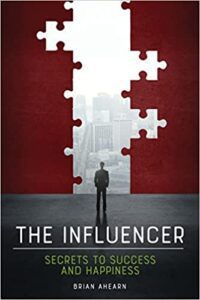
The Influencer: Secrets to Success and Happiness
They do mirror my story. I had people ask me, “Is this your story?” Its bits and pieces are. For example, when John goes off to college, he takes a Psychology class as a freshman, which has a big impact on him. That happened to me. I didn’t come across influence, but I do clearly remember that class. It obviously had a big impact, but John is a lot smarter than I was. The things that he learns, he lays hold of and puts into practice so that he starts reaping the benefits.
It took me a lot longer to figure that part of the game. Certain things do parallel. Many of the things that he learns throughout the book are things that I learned from significant people, coaches, clients and mentors throughout the course of my life. To go back to that episode in 2020 and let people know my area of expertise is the science of influence. I look at the decades of research from Social Psychology and Behavioral Economics. I look at ways to put that into practice to help clients get to yes more often. That usually means, on a personal level, a lot more success when you are in the office and usually a lot more happiness at home when people are more willingly saying yes to you.
As a storytelling keynote speaker, what I have found is that when people learn how to tell better stories, it not only helps them in their sales career, it helps them in their personal life. You do such a great job in this book of showing how the two things work in this character’s life. Can you give us a little snippet of when you fix, learn, or improve one area of your life? It is not in a siloed, “This only helps me in my career.”
I think it takes creativity to figure out how to take some of the silos and combine them. As a personal example, I’m a disciplined individual. It came from sports at a young age, football, weightlifting, running marathons, and things like that. It took me a while to figure out how do I take that silo and put it into my career to have more success. Once I figured it out, all of a sudden, especially as I stepped out on my own a few years ago, it has never been hard for me to get up early, put my head down, and put in 8 or 10 hours a day towards the business where a lot of people might say, “I would not have that self-motivation.”
That is a personal thing for me. In the book, I tried to help the character as he learns these bits and pieces. He has got this vision of what he is trying to put together in this puzzle. He doesn’t know what the picture is going to be ultimately, but he knows that these snippets of ideas that are helping him somehow have to come together to form a philosophy of life. At the end of the book, he completes the puzzle and knows what that picture is.
One of the intersections of what your work and my work is people inevitably get this objection, which is, “I don’t feel like I’m ready to make a decision right now. I need to think it over.” You have helped people come up with some things to either avoid that from happening or what to say when it does happen. Can you give us some insight on that?
I think a great way of avoiding that is very early in the sales process. John, the lead character, is a medical supply sales rep. When you understand the principle of consistency, it tells us that we feel an internal psychological pressure and external social pressure to be consistent in what we say and what we do. The bottom line, we feel better about ourselves when our words and deeds line up.
[bctt tweet=”Don’t say ‘no problem’ after someone thanks you. Give people everything they need upfront to make saying yes easier.” username=”John_Livesay”]
If a salesperson learns to ask the right questions early on, when you get to the point where you are trying to close the sale, it becomes much easier because you can reference back to. For example, “John, when we initially talked, you told me that you needed this particular price, timing, and these terms in the contract. It looks like we have done all of that and a little bit more. Go ahead and start working on the paperwork and consummate this deal.”
It becomes much harder for you to say, “Let me think about it.” It is not that you want to remove yourself from the situation. There is always a little bit of fear when you are making a change and a purchase. Learning how to ask those questions to trigger this principle of consistency allows somebody to feel good about themselves by saying yes because they are only responding that you have done everything you said you would.
The other thing that almost all of us have happened to us at one time or another, especially if there is some emotion involved in it, like if someone is breaking up with you, for example. They said, “It was never my intention to hurt you.” I know this happened to me exactly. At that time, I found that so unsatisfying of an answer and I thought, “Why is that not landing as a sincere apology or making me feel any better?”
Someone said later, “Wouldn’t it have been great if you could have said back? I’m sure it wasn’t your intention to make me feel loved by that behavior either.” I didn’t have that in my repertoire to say when it happened to me. You talk about almost all of us having that situation where we go, “I should have said this instead of that or not saying anything.” What do you show in the book that helps us with these situations?
This guy, John, is a smart and good person, down to the poor, which most people are. We want to do the right thing. He does run into situations where he ends up hurting his wife because he is making some decisions without consulting her. She was looking at this like, “This is a partnership, and you may not think this is important, but I’m not even in on the decision-making.”
He does feel bad about it, but he continues to make this mistake at times. It is never to hurt. He sometimes feels boxed into a decision, and all of a sudden, he is responding. I will say that he begins to learn his lesson, and that makes things better, having to sit down with somebody in a situation like that and not try to defend why you did what you did because we all have reasons to be able to say, “I am so sorry. It was never my intention. Here is what went on with me. I hope you can forgive me.”
That is an integral part of having relationships being able to say you are sorry and asking for forgiveness. I think asking for forgiveness is important. We could think that everything is okay because we apologize and have not gotten confirmation from the other person that they are okay. I think it is important to admit the mistake and then say, “Can you forgive me?” If that person says yes, you are in harmony. If they say, “This is going to take some time,” then you have got to be patient.

Influencing People: It takes creativity to figure out how to take some of the silos and combine them as a personal example.
I think what the frustration was, at least, for me, and I see it in other situations where it is not that big of a dramatic moment, but it is when someone doesn’t want to own responsibility for what they did or the outcome. The fact that it wasn’t my intention to hurt you means I’m off the hook. There is nothing to even ask for forgiveness for because it wasn’t my intention. I think in a business situation, it is the same thing because I have worked with clients that have lost clients and tried to win them back. We have to do the same thing as we do in our personal relationships and own that we made a mistake, explain what we are going to do, that it doesn’t happen again and have some empathy for what that other person is feeling.
The other part of what you do so well is when someone is looking for a sales keynote speaker. They typically do a Google search. Oftentimes, I have come up against a couple of other speakers. They had a meeting and interviewed the final three candidates and looked at our videos and our books. Sometimes, as many as 8 or 10 people have to agree on who is going to be the speaker. You hoped you had created somebody in there that is going to be your internal champion to rally for you. No matter what the decision is, getting a consensus can be challenging with a team. What kinds of tips are we going to learn from your Influencer book?
When you are going into a situation like that, try to discern, first of all, is this person the decision-maker, or there going to be other individuals who are part of it? Can you get some of those other individuals on the call? For example, I had the second call with a client. The first there was the lead-in, but we had a call with that lead-in’s boss and a peer of the boss. There are still other people that are going to make the decision. I know that now having a positive influence on three different decision-makers and being able to speak their language in the middle of that sales conversation gives them confidence that this guy knows what he is talking about and he can relate to us.
Three people will be a lot better for ultimately making that decision than if I had that single individual. Discerning who the decision-maker is and doing what you can to bring in other people also asking, if you and I were having the conversation and I might say, “John, it is a great conversation. I’m excited about the potential opportunity to work. Who else will you be talking with? What can I give you beyond the conversation to support your recommendation for me as a speaker?”
If it is that bio, the customer list, the videos, and all of that stuff are usually out there for any speaker. My goal is to make your life a little easier and directly give you that information so that you are ready at that moment to say, “I talked to the person, look at the list. Let’s watch this five-minute video and get that traction.”
I think that is so valuable. Sometimes you get hired because you are easy to work with, given everything else is the same. The simplest things of, “You are connecting the dots for me. I don’t have to go searching for something, or you have some empathy and are trying to put yourself in my shoes going, “You might need this. I’m happy to send it to you. You don’t have to spend five minutes looking for it,” or whatever it might be. Those little things do add up.
I had a client in 2021. I’m very diligent about staying on top of the email. When I would email that person, they are like, “Thank you so much for getting back to me quickly.” I said, “Part of my job is to make your job easy.” She was like, “You would not believe how many people don’t do that or hard to get ahold of. They don’t get me information.”
[bctt tweet=”An integral part of having relationships is being able to say you’re sorry and ask for forgiveness.” username=”John_Livesay”]
I also know this when I get something. If she had said, “Give me the bio, the customer lists, and a link to a video,” I almost always would put in the beginning, “Name as promised to make what you need.” It is only highlighting that, “Brian is a guy who does what he says he will do.” Those little bits continually work on somebody. That is when they look for a speaker again, and they say, “This person was great on stage. They were so easy to work with.” They want you back.
It is that whole thing of pre-suasion that you are such an expert at. You are reinforcing, as promised, is a subtle subconscious thing of almost edifying yourself that you keep your promises.
If you go into a store, you may have a wonderful experience, but it can be reinforced when that person says something about, “We hope you had a great experience shopping here now,” or the server who comes up. The server, like in a restaurant, should never, ever, come up and say, “Is the food okay?” Nobody goes to a restaurant for okayed food.
That is all we are aiming for.
Is the food delicious? If you come back and say, “Delicious,” you have convinced yourself that this is pretty good. I should probably come back. If it is not, they have an opportunity to say, “I am so sorry. What can I do to change this? Can you bring it back and have it warmed up or something like that?” That act becomes viewed as reciprocity, “That server was nice.” He or she went out of their way to make sure this was warmed up. I’m going to tip them a little more and come back here. Those little interactions back to that customer mean a lot.
I had an experience of this personally. I was in New York to go see some Broadway shows. You now have to stand in line to show your ID and vaccination and then another line to show your tickets. You are standing outside. It is cold and winter. They have those people saying, “Welcome back to Broadway.” Suddenly, everyone is happy in the line. You don’t mind the cold. You are excited to see a show that you have seen for many months. That one phrase said by the people who are running the line made a whole energy shift for everyone to remember why they are there. You have a great story in here about a major insurance company that was able to recover from a $700,000 mistake with post-it notes. Please share what that is.
The first book that I wrote, Influence PEOPLE: The Powerful Everyday Opportunities to Persuade that are Lasting and Ethical, looks at a lot of business case studies. There was a piece of research that intrigued me. It was around a company trying to increase the response rate for a survey they sent out. When they sent the survey out with a cover letter, I think 36% of the people responded. When they put a little handwritten note on the cover letter, it bumped it up to 48%. Taking a little extra time to sign that personally and put a little note on there increased the response rate, but in a third variation, they put a yellow sticky note. They had the same handwritten note that had been on the cover letter before.

Influencing People: There’s always a little bit of fear when you’re making a change and you’re making a purchase.
The response rate was 75%. They more than doubled it. When people hear that, they are fascinated, but they don’t always know how to put it into practice. At the company that I used to work for several years, I would come back from an extended Christmas break, and almost immediately, I was called into a room with half a dozen people. “Here is the situation we face, John. We had overpaid insurance agents in one of our operating states, $700,000 in total, 150 agents had their commission for the month of December doubled. We needed to get the money back because, at the end of January, we were going to be paying year-end bonuses to those agents. It would be nice to have an extra $700,000.”
As we strategized about it, we didn’t have the ability to go in electronically and take the money out. We were going to have to inform them that there had been a mistake and ask them to write a check. That is no easy task. If you get a letter that says, “John, I’m so sorry, but we overpaid you $5,000 last month, would you sit down and write us a check right away?”
That is where cold calling becomes more appealing than writing the $5,000. The head of accounting had been through some of my training, and I turned to him and said, “Steve, remember what I taught you guys about the sticky notes?” He said, “Yeah.” I said, “When you send out that letter that talks about the mistake and asks for the money back, make sure you put a sticky note on every one of those, personally sign it or put a little note.” He said, “I will do it.”
It was a couple of weeks later, I called them up, and I asked, “How was the collection going?” His exact words were, “John, I’m floored.” I said, “Why?” He goes, “We have already gotten money back from 130 of the 150.” The optimist in me said, “You mean we didn’t get it all back?” He laughed at me and went, “We are talking about money because I get them to say, ‘Take it out of next month’s commission, put me on a payment plan’ or anything, but ‘Sit down and write the check.’”
When we had lunch a few months later, we had collected in full from 147 of the 150. This is a hardcore accounting, black and white numbers guy, and your sales staff is BS. I don’t believe in that. He believed in the use of yellow sticky notes. He was a believer after that because he knew that was a radical change in behavior from these people to pay us that money back.
When you go, the extra effort to other people is a great way to end the episode. The book itself again is Influence PEOPLE: The Powerful Everyday Opportunities to Persuade that are Lasting and Ethical. It is on Amazon, but this concept of the unrecognized power of saying thanks and responding properly to thanks, there are two questions in that. One is, saying thanks, how is that unrecognized as a good thing to do? The second part of it is, when someone thanks you, there is a proper way to respond as opposed to maybe, “You’re welcome,” not saying anything or a smile. Let’s take the first part of that question. Are most people not aware that there is power in saying thanks, and that is why they don’t do it?
[bctt tweet=”Having positive influence on different decision makers and being able to speak their language in the middle of that sales conversation is important.” username=”John_Livesay”]
I think what you or I might have called good manners as we were growing up had gone by the wayside. I have always found that, for example, if somebody asks me something and I say, “Yes, please or no, thank you,” I have a lot of people go, “It is so nice to interact with somebody who has manners.” I will say, “My mom raised me right.” The story that I put in the book was about a man named Lieutenant Murphy who was a Navy SEAL and was killed in action.
He had to make a call back to base and expose himself on a rock. He knew he was going to die and be shot. In the middle of that, he called for airstrikes and said, “Thank you,” at the end of the call. The individual who relayed the story, a commanding officer, said, “That is the man that he was,” in the middle of a firefight and he did lose his life. My point with sharing the story is if he can find the time, life and death situation, to say, “Thank you,” then we all should.
It acknowledges that other person like, “I appreciate what you have done.” On the flip side, the other story and that you asked about how we respond to that, we never wanted to dismiss somebody’s thanks to you. When somebody says, “No problem. No big deal. No worries,” you are de-valuing what somebody felt like was valuable. The proper way when somebody says “thank you” is to say something like, “John, that is what partners do for each other. You helped me. I will help you. I’m happy to do this.”
If you want to be funny, sometimes I have said this, “It would have killed an ordinary man, but you were worth it.” Something that acknowledges you heard them. You had put forth an effort and I appreciate what they did. It is the grease of the wheels that make our relationships better. Little things like that make customers want to come back because they feel good about the transaction.
I want to thank you publicly, but most people won’t be able to see what I see, which is you did something very personalized and customized as you have a monitor with my show’s image logo. It says, “Hello, John,” on it. I have done over 350 episodes. It also shows pictures of your wonderful books. I have never had a guest do that ever.
I appreciate you saying that. I joke with people, I say, “Everybody should have their name in lights once a day,” but I’m a fast learner like John was in the book, The Influencer. Once I see that something means something to people, I make it a point to go out and make sure that I recognize and prepare for the time that we are going to spend together. It is a wonderful selling tool, too, because then people ask questions. I can stand up and talk about the virtual studio that I put in because of the pandemic. It creates a win for everybody.
Any last thought? Obviously, if people want to reach out to you, they can go where?

Influencing People: Learning how to ask questions to trigger the principle of consistency allows somebody to feel good about themselves by saying yes.
The best place to go to start is LinkedIn because I post a lot of content. If you reach out to me and don’t tell me how you found me, guaranteed, I will come back and say, “How did you find me?” I like to know why people reach out. It allows us to have a little bit of interaction. It makes social media social. If you let me know how you found me, I will still say “thank you,” and we will have a little interaction. You are going to get some one-on-one.
The other place would be my website, which is InfluencePeople.biz. There you find links to the books. You can see previews of my LinkedIn learning courses and all kinds of other information. I have been blogging weekly for several years. There are a ton of free resources available if you are a reader, and I have been on well over 100 podcasts. If you want to listen to podcasts, there are lots that are listed there.
Thanks for sharing your wonderful wisdom and fable. It is a fun way to improve our skills in becoming better influencers and having better connections with people.
Thank you, John. I appreciate you having me on the show. It was great to chat with you, and hopefully, as we get out of the pandemic, we might find each other at the same venues speaking to some audiences.
That would be terrific. I look forward to that day. Thanks again, Brian.
Important Links
- Brian Ahearn – Previous Episode
- The Influencer: Secrets to Success and Happiness
- Influence PEOPLE: The Powerful Everyday Opportunities to Persuade that are Lasting and Ethical
- LinkedIn – Brian Ahearn
- InfluencePeople.biz
- Better Selling Through Storytelling Method Online Course
Wanna Host Your Own Podcast?
Click here to see how my friends at Podetize can help
Purchase John’s new book
John Livesay, The Pitch Whisperer
Share The Show
Did you enjoy the show? I’d love it if you subscribed today and left us a 5-star review!
- Click this link
- Click on the ‘Subscribe’ button below the artwork
- Go to the ‘Ratings and Reviews’ section
- Click on ‘Write a Review’
Love the show? Subscribe, rate, review, and share!
Join The Successful Pitch community today:
- JohnLivesay.com
- John Livesay Facebook
- John Livesay Twitter
- John Livesay LinkedIn
- John Livesay YouTube
Apple v Samsung – Tom and Tracy Hazzard
Posted by John Livesay in podcast | 0 comments

Episode Summary
Tom and Tracy Hazzard are product designers and design experts of Hazz Design. They’ve collectively designed and developed over 250 products, which has generated over $1 billion in revenue for their retail clients, and counting. Their entrepreneur experiences are taught in a Harvard Business review course in 26 universities around the world. Tom and Tracy are the hosts of the 3D printing podcast, WTFFF?! They are the experts in talking about everything to do with innovation and design. In this episode, they talk about the latest ruling by the Supreme Court in Samsung V Apple and how that impacts people who have a design patent and their valuation.
Listen To The Episode Here
Apple v Samsung – Tom and Tracy Hazzard
Today, The Successful Pitch, I have a bonus episode of two really smart and really nice people named Tom and Tracy Hazzard. They’re based in Orange County, California, just down the road from me in LA. They’re product designers and design experts of Hazz Design. They’ve collectively designed and developed over 250 products, which has generated over $1 billion in revenue for their retail clients, and counting. They hold over 37 utility and design patents with an unprecedented 86% commercialization rate, which is double the national average.
Their entrepreneur experiences are taught in a Harvard Business review course in 26 universities around the world. Both Tom and Tracy have their products in all the major retailers, wholesale clubs, electronic boutiques and office super stores. Their bestselling mesh office chair has been in Costco for over four years straight.
Tom and Tracy are the hosts of the 3D printing podcast, WTFFF?!, which you have to know 3D podcasting to understand what that is, which is ranked number one in iTunes with over 45,000 listeners monthly. Besides being featured on numerous podcasts and publications like Entrepreneur, Forbes, Wired, Fortune, Small Business and CNN Money, Tracy pends a regular featured Inc column on innovation and I’ve been fortunate enough to be in one of her columns.
They are the experts in talking about everything to do with innovation and design. I asked them to record a special episode with just the two of them talking, as if you’re eavesdropping in on their personal conversation like you would on their 3D podcast. In this case, they’re talking about the latest ruling by the Supreme Court in Apple v Samsung and how that impacts people who have a design patent and their valuation. I think you’re really going to love this episode. Enjoy.
It occurred to me the other day that listeners of The Successful Pitch podcast, especially the founders that listen to the podcast all the time might be very concerned about the Supreme Court ruling, Apple v Samsung, about design patents and its affect on their valuations and their pitches.
I think it’s a valid thing to be concerned about, especially because there is, as of now, no real official test yet as to how liable Samsung is for their infringement of Apple’s patent.
Or how much less Apple gets in the process.

Apple v Samsung: This has been a patent battle playing out in the system for several years now.
Let’s go over it a little bit. This has been a patent battle playing out in the system for several years now. Most recently, I think in the summer of 2016, Samsung was held liable for patent infringement of the iPhone with their Samsung phones. This is over a design patent, which really dictated the outside ornamental look of the Apple iPhone. Samsung was found to have infringed on that patent with the outside ornamental design of one of their Samsung phones.
Then Apple was awarded a huge sum of money. We’re talking very, very large. In Apple v Samsung, Apple was awarded a huge sum of money originally, a staggering $548 million. Samsung was hoping to get $400 million of that back. They’ve appealed it to the Supreme Court saying, “Just because the outside design is the same, we shouldn’t have to be liable for all the profits of our Samsung phone because there’s so much more in it in terms of electronics and software and other things that really represent a lot more of the profits that they make on their phone.”
The idea is that something that’s an ingredient in the sales process and one of many reasons why somebody would buy an Apple phone and then Samsung happened to copy, in this particular case, isn’t a reason to get 100% of the profits of the sales of those items during that time period. That’s what they’re talking about, whether or not they should sub cut up the profit, divvy it up based on the percentage that that might have an impact on.
Honestly, that seems reasonable to me as someone who has a lot of patents and understands what goes into a patent and how big a role it plays in a product. It seems to me logical that just because Samsung copied, intentionally or not, the look of the iPhone, doesn’t mean that that look was completely responsible for all the profits they got. They have their software, their technology, their user interface, operating system, etc.
Exactly. There’s lots more reasons why you buy an iPhone versus a Samsung phone. The thing is though is that right now, while this was actually a very, very quick ruling by the Supreme Court and the decision was very clear. The process by which it’s going to be determined and used as a rule of thumb as to how to divvy up the profits and how to decide what that percentage is that’s liable is now been dropped down to the lower court that made the original ruling, which is leaving a lot of uncertainty. That’s maybe why there’s a little bit of concern, anxiety in the founder community, especially those that are depending their valuations on these patents. Because the decision here changes the valuation that your design patent, if you have one, might be valued at in that process.
The Supreme Court, I guess, declined to issue a ruling on a test or a measurement. How do you decide how much of the profits should be owed to an infringer who infringes on a design patent that represents a portion of the value of the profits of the product? The lower courts are going to have to resolve that test. That’s going to take sometime. Eventually, they will come out with a test. I’m hoping that will be a very good thing because then we’ll all know what the potential liability is in this kind of a situation.

Apple v Samsung: We’ve always treated design patents as more of maybe an offensive strategy or even a defensive strategy in certain cases.
It’d be great if it’s extremely clear. That’s hopeful thinking though. I really want to step back and start talking about this from our perspective. We have 37 patents pending and issued in the mix and probably I think close to 25 of them are utility and ten or twelve of them are design.
We don’t really rely heavily on design patents. They’re there, they’re in the mix. In practice, we’ve never treated them with a high valuation before. We’ve always treated design patents as more of maybe an offensive strategy or even a defensive strategy in certain cases where we’re plugging some holes and surrounding the utility patent with good other patents. We call it a patent fortress strategy.
That’s where we’re really building a large base of intellectual property around a certain product. Sometimes there’s a utility patent involved and other times we want to add design patents to that to make it a stronger defense against a potential infringer. Other times, there are appropriate situations where you may just want a design patent on your product. They are limited in what they can protect, but if the ornamental look of your product is really critical to the identity of your product and the success of your product, then a design patent maybe very useful for you.
We use that patent portfolio or fortress strategy that we use, we use that because it builds a higher valuation across many things. It’s like a risk assessment on a portfolio. When you have one single patent, then there’s this higher risk factor that gets mixed in by whoever is doing the valuation or the investment valuation and considering it and looking at that. When you have a mix of things that are in various states of issue, some of them might be provisional, some of them might be filed, some of them might be issued, when you have a mix of those things, it makes it harder for them to assess you at that high risk state. Some of it is more balanced here, some will likely issue, some will likely be defensible. It gives you more options and it gives you a better valuation overall and that’s what we found.

This Apple v Samsung lawsuit does show us that design patents can be very valuable.
Still, what this Apple v Samsung lawsuit does show us is that design patents can be very valuable. Even if the courts end up saying, “Apple, you have to give back some of that $548 million to Samsung because you don’t deserve all the profits they got from their phone,” certainly, Apple is going to get to keep a lot of the money that they got. At least $100 million probably or more. It was certainly a worthwhile endeavor to those who …
Worthwhile patent to have filed.
To have filed and then also to litigate. Samsung, let’s face it, the major competitor to Apple, probably did want to make their phone look as much as an iPhone as they could because they didn’t want the look of their phone to be something that would keep people from buying a Samsung phone.
In this case, once you’ve defended this once, it’s also a deterrent to future infringers and more knockoffs get settled quicker than go to court. That’s really the other important part of what they’ve done here. I want to go back to as a founder or a patent holder standpoint, really what you can do to help yourself and protect yourself and address some of these valuation issues that you’ll have as you go into that.
Really the thing that we found over time is that when you go to file a design patent and when you include a design patent in your patent portfolio is to dial it in and make it very specific on one element. You might file, and this is exactly the case of what Apple did, is they filed one on the shape of the overall phone, they filed another one on the shape of the icons. They had a different design patent for the shape of the icons that were on the home screen of the phone. By divvying up all of those design patents and not doing all in one is an extremely important strategy. We learned this the hard way on office chairs.
We have.
Or our clients have, I should say.
Us and our clients have both learned, for sure. We have experienced a client that had a design patent on the entire ornamental design of an office chair. Mostly, especially on the upholstery stitching of that because that was a unique look that they wanted to protect. They filed it, the design patent got issued and then a competitor knocked off that chair completely with one slight detail difference.
Which what constituted about a ten percent or less change. It wasn’t really major.
I would say less, quite honestly. From my perspective at the time, I thought this is really enough of a knockoff that this company will surely be found to have infringed by the courts. This case actually did go all the way to court, to trial, the whole thing because both sides, I guess they wanted to fight about it and they couldn’t agree. There was just one difference in stitching on the back side of the chair, because this design patent included not only the appearance of the upholstery from the front but also the back. There were many, many drawings covering all the elements of this design. The competitor added one stitch seam on the back side of the chair to the knockoff that did not exist in the original. Very surprising to me, the jury came back and said that the competitor did not infringe on the design patent because of that one additional stitch change, that it was not considered the same design. Personally, I didn’t agree with that. That’s what the court found.

Apple v Samsung: All the elements are broken up into multiple design patents.
Since then, the strategy has always been, in this particular case with office chairs, is we file one patent for the chair back, another one for the chair seat if necessary, the arm pad design if it’s different, the base of the chair. All the elements are broken up into multiple design patents. Now, it’s more costly to file, but in this particular case, you would have, now, with this new ruling, you would have more of an opportunity to stop someone from infringement based on just an element.
Or certainly a better ability to recover damages from a company that clearly did copy your design. By breaking it down to the upholstery on the upright back cushion of the chair, and you can even break it down into the front side, the front face of that cushion design if it’s really unique, and then the back side separately or don’t even file a patent for the back side if you don’t want to, that if somebody then incorporates that design into their design, the rest of the chair could be different and they could still infringe. We had made a recommendation to another client of ours at a later time to do the same thing. We came up with a unique design for an upholstered pattern. It was the hallmark element or signature design element of this chair design that ended up being a very successful design in Staple stores across the country. We then recommended to our client they file a design patent for that.
They refused because they thought design patents weren’t that valid, weren’t that valued. They refused on it. A year later, Staples decided to buy direct and cut our client out of the loop. They lost $4 million of value for that one single chair because they didn’t file a design patent and couldn’t stop Staples from making it. What would’ve been a few thousand dollars, under five probably for filing a design patent, they lost $4 million a year.
It was really a short sighted decision. Our client learned the hard way unfortunately. Going forward then, they were all the wiser. If they think they have a product that is going to succeed well and it has a unique element, then they could protect it. Because it’s true, we have witnessed a company like Staples. In fact, actually Staples, even though they wanted to go around the supplier and direct source of product, if there was a patent involved, they stayed away from it and they didn’t do it. In this case, they probably would have kept buying the chair from our client had there been a design patent.
It just would’ve been too risky to go at it.
Very unfortunate.
That’s where we talk about offensive and defensive strategies to using patents. In this case, I think that this ruling actually only reinforces it. Even though it’s not known what the test will be by that lower court yet, we think this is really critically important for those of you out there pitching and worried about valuations, which are so fuzzy anyway at the early stages of business when you’re really in your early seed stages or just beyond your market proof stages. These kinds of things create the company value that someone’s buying into.
They’re buying in more to the idea, they’re also buying into something that’s an asset of the company. Having these patents and having multiples of them, including design patents, make or break that valuation for you and that investment for you. We really want to encourage you to continue to do those. Don’t be discouraged by the design patents, that they have lower value and they’re not worth doing. There are so many reasons that they are worth doing and you should continue and move forward with that plan.

Apple v Samsung: Intellectual property portfolios, patents in particular, add tremendous amount of values to a corporation.
Absolutely, I agree with that, Tracy. There’s just all kinds of evidence, certainly in our experience and in other business experience that you can read out there in the media, that intellectual property portfolios, patents in particular, add tremendous amount of values to a corporation, especially when they’re seeking to be acquired. We encourage really an offensive and in some cases a defensive patent strategy. I agree with you. This case just shows that there is a value for the patents, that the courts do recognize them. They’re just talking about where does it begin and end.
Semantics of dollars.
Having that defined at some point hopefully will be a very good thing and it won’t be so ambiguous. Unfortunately, if any of you end up in a patent litigation at some point, it won’t be as much of a unknown. “If we get down this and get a ruling in our favor, is there really going to be any money there?” I think there can be and there will be proper tests for determining what that value is.
Clarity of standards can always help settlements happen quicker so that there’s less likely to be litigation involved in the process because it’s been ruled all the way up at the top, at the high courts. We want to encourage you to do that. We really hope that you have a successful pitch and that patents become a strong part of that asset that creates that success level that you have. We thank John for inviting us on the show and we really appreciate it. If you need to contact us in any way or ask us questions about that, please reach out to John directly and we’d be happy to answer them for you.
Thanks for listening everybody. Hope you enjoyed this. This has been Tom and Tracy on The Successful Pitch podcast.
Links Mentioned
J Robinett Enterprises
John Livesay Funding Strategist
Crack The Funding Code!
Register now for the free webinar
Fox 11 News Los Angeles John Livesay The Successful Pitch book
Share The Show
Did you enjoy the show? I’d love it if you subscribed today and left us a 5-star review!
-
- Click this link
- Click on the ‘Subscribe’ button below the artwork
- Go to the ‘Ratings and Reviews’ section
- Click on ‘Write a Review’