

The Power Of Reading Books: Read More And Move More With Matt Karamazov
Posted by John Livesay in podcast | 0 comments

It’s always inspiring how individuals can find motivation and guidance through literature. Matt Karamazov, a fitness model, shares his perspective on reading books as a personal journey and its influence on his life. The books “How to Fail at Almost Everything and Still Win Big” and “Purple Cow” resonated with Matt, helping him develop a resilient mindset and approach life with a growth-oriented attitude in creating a unique identity for himself as a fitness model. He integrated his love for reading books and dedication to staying fit, and he developed a distinctive personal brand that sets him apart from others in the fitness industry. This combination of intellectual and physical pursuits can provide a compelling story and potentially open doors to new opportunities for him. His story serves as a reminder of the transformative impact that books can have on individuals and their ability to shape their paths. Tune in and see how Matt used the power of reading and his journey to design a fulfilling life.
—
Listen to the podcast here
The Power Of Reading Books: Read More And Move More With Matt Karamazov
Imagine the knowledge you’d have if you read over 1,000 books. That’s what our guest, Matt, has done. He’s going to share with you how he became such a fanatic almost about reading and why he loves it so much then wants to encourage everyone else to start reading as well as moving more. He’s also a fitness model. Enjoy the episode and find out how he combines his two passions.
—
Our guest is Matt Karamazov. He’s an enthusiastic, lifelong reader, a business owner, and a fitness model who’s taken to the internet to inspire people to read more and move more. Every day on social media, he shares with more than 100,000 of his followers the magic and power of books and reading, the transformational benefits of fitness and being healthy inside and out, and the once-in-a-universe miracle of being alive at all.
He also teaches self-discipline and the supreme importance of laying out a vision of where you want to go in life and the profound truth of the fact that where you start off doesn’t have to be where you end up. He’s gone through it all from earning minimum wage as a hospital security guard to starting his own record label back to the bottom and now to his level of business success and life satisfaction. He never stopped working, never stopped getting back up, and never stopped reading. Welcome to the show, Matt.
John, thanks very much for having me. I’ve been looking forward to this for a long time.
Likewise. I’m very impressed with your Instagram creation and the success you have. Let’s not make anybody wait one second longer. I usually save this for the end, but if somebody’s curious and they need to know, give us your handle on Instagram.
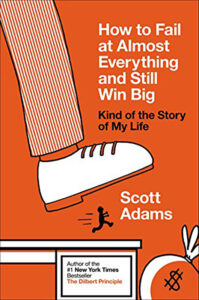
How to Fail at Almost Everything and Still Win Big: Kind of the Story of My Life
It’s @TheMattKaramazov. It’s fairly simple to find. Just look for the guy in the library holding the stack of books. That will be my profile picture.
What started first, the passion for reading or the passion for working out?
I would have to say reading. I can’t claim 100% credit for that either because my parents and my early influences are a huge part of the reader that I eventually became. I started off well, as most kids do with parents who are committed readers and learners themselves. Our house was always full of books and they took my education seriously. They took my questions seriously and they took me seriously.
They encouraged me to read. They read to me, which is probably the first book that I ever read was read to me. It was just swimming in that water that was how I came to love it. I’m certain that came first, then my father continues to be supportive of fitness and health and all that. He was an excellent hockey player in the ‘60s. We’ve always been active in our house and my mother too. I’ve had both of those things.
You had both reading and fitness modeled for you.
Yes. I’m a big believer in surrounding yourself with the people that you most like to be like or to become. If you spend time with non-readers, you’re going to become a non-reader even if you do read quite a bit already.
There’s been research about fitness and hanging out with people who are fit or people who are fat. The same thing is true. It’s interesting because I noticed once, I was with a group of people who wanted to go out and go grab fast food at 2:00 in the morning. I’m like, “I haven’t done that since college.” People still do that into their 40s or whatever or longer. If you’re likewise with people who are fit, they’re like, “We’re going on a bike ride, want to come?” You maybe wouldn’t have gone on a bike ride without that encouragement. One way or the other, peer pressure influences how fit we are, which is bizarre when you think about it.
[bctt tweet=”Read and move every day.” username=”John_Livesay”]
We don’t rise to the level of our bowls or whatever. We fall to the level of our systems, habits, support group, and peer network, which is important. There’s a somewhat tragic fact that I read in an excellent book by Maryanne Wolf. Her books are phenomenal. They’re all about the neuroscience of reading and how reading develops in the brain or doesn’t. She talks about dyslexia and all that.
In one of her books, Reader, Come Home, which is one I highly recommend, she mentions that in the United States, the National Bureau of Prisons uses 4th-grade reading statistics to predict how many prison beds they’re likely to need in the future. They’re able to take that information and predict how many criminals they will have because of the lack of reading education that someone has.
I also remember the first time I heard somebody say, “If you know how to read and write and you stop doing it after school, you might as well be illiterate.” I went, “Wow.”
The word or the term I’ve heard is functionally illiterate. You can read but you don’t. What’s the difference?
Do you think it comes down to a lack of curiosity for some people?
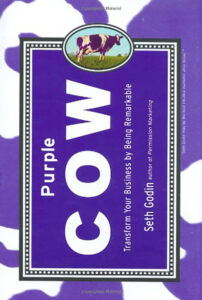
Purple Cow, New Edition: Transform Your Business by Being Remarkable
I think so. There are influences, for sure. We live in an attention economy. Attention is the new oil, essentially. You wanted to get rich in the last century. You owned oil companies. The century before that, it was railroads, but in this century, if you want to get rich, you have to command attention. Big businesses now are fighting for your attention, pulling you away.
Whenever you’re trying to pull yourself away from your phone, there are 1,000 software engineers on the other side of your screen trying to stop you. There are incentives that people have, big ones to prevent you from reading. You have to fight against that, and how do you even do that? There’s a lot of stuff working against you.
We were joking, but it’s true. Part of what you do, because it’s one of your assets, is showing yourself with your shirt off because you’re a fitness model. Tell us about that journey. How did that happen? Did you find a lot of other models reading, or did they think it was odd that you were into reading?
It’s never been negative. Not surprisingly, I’m going to mention two books to answer your question. One is by Scott Adams, the creator of Dilbert, who turns out to be a brilliant businessperson. He’s doing well. His book is called How to Fail at Almost Everything and Still Win Big. I listened to the audio version years ago. What he says is, “It’s so much harder to become the top 1% in one thing, but it’s a lot easier to become top 10% in two things and build your career at the intersection of those two things.”
What he said is that there are plenty of people who are funnier than he is, but he’s pretty funny. There are plenty of people that are better artists and cartoonists than he is, but he’s pretty good at drawing. He combined those two things and now he is an exceptionally lucrative and rewarding career in every sense of that term by being 10% in two things and combining them.
The other book is Seth Godin. He’s excellent as well. It’s called Purple Cow. The whole idea is standing out. You’re not going to mention to a friend of yours that you saw a white cow or brown cow. Everybody sees those, but if you see a purple cow standing in the field, you’re going to mention that and you’re going to tell some people. If you’re building a product, designing a career, and if you want people to pay attention to you, which is more important now than ever in a business sense, you’re going to want to be remarkable. You want to be a purple cow. I found combining books and fitness to make yourself into a purple cow.
Those two things don’t usually go together. A bookworm is not usually a fitness model.
[bctt tweet=”Attention is the new oil.” username=”John_Livesay”]
It’s a scroll stopper. You scroll down, it’s the same different, and that gets people to stop.
I love it. This concept also that your promise on your Instagram is to gain wisdom and strength. You mean it in the little word of strength. Also, there’s a stoic character strength implied there, I believe.
Correct. My reading has informed everything that I do, all the decisions that I make, and my ability to empathize with people. That’s a scientific fact. There’s so much involved in using books to design the life that you want to live. The world is more confusing than ever. It’s moving faster than ever. I’m still coming to terms with AI and incorporating that into my business. However, I’m behind that. It’s almost impossible to keep up. How do you do that? Wisdom, you can’t be dragged along with the current. You have to take a step back. Holding a book is like holding a handful of silence. You need those spaces within the day to make sense of things and where you’re going. It’s so critically important.
That’s a great soundbite, holding a book is like holding a handful of silence. I’ve never heard anybody say that before.
I can’t take credit for it, but it is something that I say a lot.

Govt Cheese a memoir
The irony is you’re making a career and a business out of having a huge following on Instagram, but you turn it off and read a book.
You have to. There’s no other way. I’m not always successful at this. Who is? After posting something on Instagram, I try to pull myself away and do something else because you can get it.
As you said, the algorithms. It’s so funny you were talking about AI. I saw a post you made about using AI to create art, which a lot of people I don’t think are aware of. You and I were talking about the respective libraries in Austin and Halifax and how beautiful they are as a piece of architecture. When I was growing up in the suburbs of Chicago, it was another building. There was no design to it. Now, to see it become this place of awe almost, that translates to the feeling of all the knowledge that’s in all those books in one place.
I stayed at a Library Boutique Hotel in Manhattan. In each hotel room is a bookshelf with books all color coded. You’re in room 405 and they give you the code. It’s a Dewey decimal system as if you’re going to an old school library. That retro, everything old is new again. It’s quite interesting to see that concept of, “How do you feel about people consuming books audible versus reading them?”
I listen to a fair amount of audiobooks. Brian Tracy, the personal development legend, I don’t even think this is his term. I think he’s borrowing from Jim Rohn or something. He says, “You can turn your car into a university on wheels.” I still remember that. I started off reading Brian Tracy years ago. You can do that with anything. There’s value in pulling away from everything like doing the dishes with no music. Nothing, just you and yourself. There’s value.
At the same time, sometimes you can do certain things and combine them. Multitasking is usually a horrible idea. It doesn’t work. You’re switching from one thing to another. There are switching costs involved in that. It diminishes your brain power, but you can do certain things. You can wash dishes or go for a walk around the block. You can do all these things and listen to books at the same time, especially if it’s read by the author. In some of my best reading experiences, I read Steven Pressfield’s memoir, Govt Cheese, which is a phenomenal book. The title makes sense. He explains it in the book.
David Goggins narrates his own books. He had in that chapter nine of his book, Never Finished, which is another fantastic one, just sold a million copies. His mother joins him on the audio version. They were in an interview in chapter nine, I believe. In the print version, it doesn’t show up. You’d have that portion of it. I read or listened to a bunch of Eric Thomas, the speaker or the motivational speaker. I love him. I’m listening to one of his books now. It can be a completely different listening versus reading experience. I take notes on every single book that I read.
[bctt tweet=”Audiobooks are real books.” username=”John_Livesay”]
How do you store those books? Are they in a journal or are they digitally taken notes?
They’re digitally stored. I have them on my Patreon. They’re all in Google Drive and they’re searchable too. It makes me nervous. There’s nothing wrong with this, but when they write in the margins of their books and highlight passages, what if there’s a fire? You move and the moving company misplaces the box and you’ve lost all of these notes.
You can do that if you like but, as I said, that makes me a little bit nervous. I take notes on everything. Speaking of audiobooks, I find it a little bit harder to take notes on audiobooks because I’d have to pause the book and rewind it or pause it every few words to take down the notes. It’s a little bit harder. If I expect to take a tremendous amount of notes on a book, I’m more likely to read the physical book as opposed to listening to the audio. That’s one of the things that I would mention. I believe the audiobooks are real books.
How many total books have you consumed, whether it’s Audible or reading in your lifetime, or since you started taking notes on them?
I know exactly. Since 2014, 1,179. One thing to say about that, and I will be the first to say this. The number that you’ve read doesn’t necessarily mean all that much. It’s a vanity metric through and through. I’ll be the first to admit that. One of the things that I find is it is very motivating to track, especially because I keep a list of all these finished books. That list is about 25 or 26 pages long. I can look back on that list and scroll. It’s a huge sense of accomplishment. I read all those books and I’ve got these thousands of pages of notes on all these thousand-plus books.
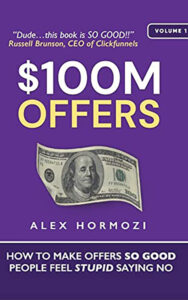
$100M Offers: How To Make Offers So Good People Feel Stupid Saying No
Your brain becomes almost like an AI because if you can retain it, you can start recommending a title in a book and give a quick sound bite from the book or something you’ve learned. Do you find one author that entices you to want to read all their books or at least look at other ones?
That’s how I find out about an awful lot of books as well, especially in the beginning when you don’t know what books are out there. You’ll find a book that you love and you’ll see an author mentions somebody else in their book. I used to read and listen to a lot of Wayne Dyer years ago. I love Wayne. He’s fantastic. He mentioned Alan Watts a lot. He referenced Tao Te Ching and all these books. I started reading them a lot based on his recommendation.
Alan Watts is phenomenal. He is one of my favorite writers ever. You go from Alan Watts, then you realize that he was friends with Christian Murdy. Christian Murdy is one of my absolute favorites, then you move on to him and it builds on itself. You had no idea when you started reading Wayne Dyer that this other guy, Christian Murdy, existed and you built that network of associations in your mind.
Do you have specific genres when you have read this many books? Do you read horror movies? Do you read comic books? Is it metaphysical, self-help, business, or I-don’t-read-finance books? Do you find yourself specializing in the genres of books?
Not really. I have certain go-to favorites. The way I usually choose what to read is by whatever problem that I currently have or whatever I’m trying to get better at. That’s a good filter for reading. If you run a business and you’re having trouble converting leads into customers, read something like $100M Offers by Alex Hormozi, which is one of the best books on offer creation that I’ve ever read.
If you’re having that problem, that book is going to solve it. If you’re trying to improve your relationships or whatever, there’s a book for that. There’s a book for every single problem. No matter what problem you ever faced in your entire life, there’s someone else who has solved or faced a similar problem and has come at least a little bit of a way towards solving it and they’ve written about their experiences in a book that you can read almost literally for free, which is astonishing on a level that’s stupid.
Now I imagine you read a lot of fitness books.
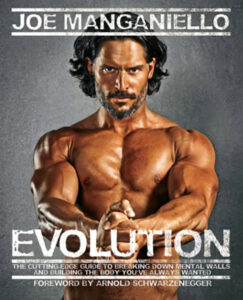
Evolution: The Cutting Edge Guide to Breaking Down Mental Walls and Building the Body You’ve Always Wanted
One of a guy named, Joe Manganiello, the actor. He was in not Twilight. He was in something. It’s something vampire related. Possibly True Blood. Anyway, he’s got an excellent book that I read years ago called Evolution and he inspired me quite a bit in terms of what fitness, health, and being in excellent shape can do for you. I haven’t even looked at my notes from that book in years, but one of the things that he said in the book is, “Earn your sleep each night.” I try to go to bed completely exhausted in every sense. You can twist that a little bit in a negative sense. I don’t mean wearing yourself to the bone every day.
I’ve read a lot of books on insomnia and things like that. They all talk that sleep is about recovery. If there’s nothing to recover from, no wonder you’re having trouble sleeping. I love that idea. I see the connection that there are a lot of mental health reasons to stay fit or, as you said, move. Get outside and take a walk. It doesn’t have to be this marathon where you’re sweating to death.
You have different fitness goals depending on your marital status. That’s a real thing. Also, your business goals. This is more superficial, but it’s a social reality. People will take a look at you and they’ll make certain snap judgments about you if you have this baseline level of physical competence that you display. This confidence comes with being healthy. That’s an energy that speaks for you as well.
It’s very interesting because a lot of people over-index in one area versus another. A lot of fitness instructors don’t have any money and are struggling. There are a lot of successful business people who are out of shape and they look like they’re one heart attack away. The ability to combine both gives people a sense of, “It’s not leaking out. It’s not visible.” If you’re overweight, it’s like a first impression thing.
There’s all the prejudice that goes along with it and a lot of self-loathing that goes with it. My weight’s gone up and down in my life. I know what that feels like. I remember a friend of mine getting gastric bypass surgery and losing weight from it. I said, “How do you feel now?” She wasn’t thin, but she was thinner than she was. She goes, “I hate myself a little less.” I was like, “How sad.”
My feeling is that you shouldn’t work out because you hate yourself. I say you shouldn’t. Feelings aren’t wrong. You might feel that way, but ideally, you wouldn’t feel that way. Ideally, you would work out because you know how good it makes you feel. You do it because you love yourself. You want to take care of yourself.
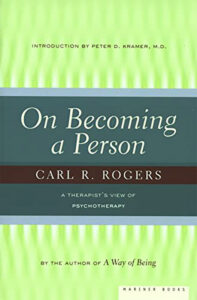
On Becoming A Person: A Therapist’s View of Psychotherapy
That brings up an interesting concept, which is the difference between internally motivated and externally motivated. When I was working with Lexus, when they were launching their car in the US, they said, “We’re competing against BMW and Mercedes.” Those brands have been in the US for decades longer than us. We don’t have any brand awareness at this point, yet we’re trying to get people to buy our car instead of those.
We have to go after internally motivated people. You could drive a BMW because you’re an agent in Hollywood and you have to wear an Armani suit and drive a BMW. That’s what the part of the package. That’s external, but there are all people who drive BMWs because they like the way it feels. They appreciate the workmanship and whatever. They’re not trying to impress anybody with it.
I thought, “That’s so true on so many different things.” You can be working out to try and compensate for self-loathing, “I’m never good enough.” You look at your own body. Even Arnold Schwarzenegger, we were talking about that before the show, admits that he never was ever satisfied with his body. Some people go, “I kept trying to work on it.” I’ve watched documentaries on models having worked in the fashion business. The same thing is true. You look at this gorgeous picture and everything is perfect.
They say something wrong that you don’t.
They remember they felt fat that day or whatever. I’m like, “My God,” or they can’t live up to that. They feel, “If I’m not at this perfect age anymore, I’m no longer lovable or attractive.” Moving through all of that, going back to Wayne Dyer, it’s not letting anything outside of ourselves define our self-worth.
It is hugely important. It is something I steadfastly believe, I don’t think you have to do anything extra in order to be valuable as a human being like infinitely so. There’s nothing you have to do or achieve or become other than yourself. There’s another excellent book. I can’t help myself from dropping these recommendations. It’s On Becoming A Person by Carl Rogers, the depth psychologist. He’s a brilliant man. His idea of unconditional positive regard and that’s how he approached all his clients. That’s how I try to approach everyone as well. You don’t have to do anything. It’s unconditional that you regard people in a positive light. It’s such a better way of moving through life.
We want that from our partners, friends, and coworkers. How can we give it if we haven’t given it to ourselves first? You help authors who have a new book coming out. My first question is, how do you help authors get the word out and get this attention as oil for their new book? It’s a crowded field. Every book is competing with everything from TikTok. Not to mention the other books. Unless you’re Michelle Obama coming out with a new book, you may have a little trouble breaking through it. You have figured out a nice formula. You were kind enough to do it for my book, The Sale Is in the Tale. Tell us what you do and some of the outcomes. If you have a little story about that, that would be great.

Harry Potter Series
Your book was easy because it’s good. I felt good about sharing it. That’s a big thing for me. I can make a lot more money than I do now.
You’re staying your own integrity and your brand. You’ve built up trust with your followers for that.
They’re not stupid. If you recommend a bad book, they’re not going to trust you. Trust is hugely important. It will be even more important in the future than it is now. It’s everything now. Trust is big. The authors that I work with already know quite a bit of this stuff. It’s not even my nature to condescend to people who assume that they don’t know what I know. What I do is share what I know about positioning yourself in a remarkable way to avoid being lost in the noise.
There are so many books being published every day. A lot of them are marketed in a lazy unoriginal way as well. It’s fantastic news for authors because it’s incredibly difficult to stand out. It’s not going to happen just because you wrote a book. Nobody cares. At the same time, you’re competing against this level of average. It’s a pretty low bar. When people’s attention spans are going down, they’re not willing to put in this extra level of work.
A dumb phrase that I say a lot is it’s never crowded along the extra mile. That’s from Brian Tracy. It’s true. You don’t have to do much to separate yourself a little bit. If you make that extra effort, things can happen. It’s not about doing the hard work and the creative work, but it’s about doing it every single day for a long enough period of time, extending your time horizon as well.
On a long enough time scale, everyone gives up. Most people give up. As unflashy as it is, one of the easiest but best ways to succeed is don’t stop. I’ve been hosting and getting better and consciously improving my craft every single day for years before anybody ever heard of me. It all compounds and you don’t stop. You keep iterating and trying to improve and evolve. Things will happen. I try to teach authors that and share that with them.

The Catcher in the Rye
What a great resilience level. It applies to fitness, writing a book, and life.
It also goes back to what we were talking about before about your pure network. Some of my posts are better than others. People like them. There are so many people who are doing fantastic, original, wildly innovative things online. I’m like, “I wish that I could do that or I wish I thought of that.” Some people would think that’s a bad thing. There are already people doing this. They’re inspiring you with their example. They’re showing you what’s possible. You can’t steal that from what they’re doing or steal their exact thing but you can use it. You can take what they’re doing well, improve what you’re doing, and create your own signature style over time.
I noticed even myself running my books on storytelling in sales that there have been a lot of people who’ve written books on sales, but no one has my story and my experience. Everyone has their own take on something. It doesn’t have to reinvent the mouse trap. It can be 10% different that will appeal to you and somebody will resonate with the way you’re saying it versus somebody else. Don’t be so obsessed about worrying about how many books you sell. Instead, worry about why you want to do this in the first place because it’s going to be more work than you anticipate usually.
Someone said, if it’s easy, everybody would do it. Many people have a dream of being an author like they have a dream of having a six-pack if you’re a guy. All of those dreams come true. At the end of the day, you go, “I’m still me. I wrote a book. I have a six-pack. Do I love myself anymore? Am I any happier? Did something magically happen?” Probably not.
Wherever you go, there you are.
That journey concept as opposed to the destination is the process. Any last thought, quote, or book you want to recommend before we say goodbye?
I’ll lead in with a Naval Ravikant quote. The quote itself is, “Read what you love until you love to read,” which is against the idea that there’s a specific reading list of books you must read before you turn 40 or whatever. There’s no list. Nobody can tell you what to read or what’s going to be good for you. You have to make your own decisions, and you can. Read what you love until you love to read. There are no wrong answers. There’s another quote too like, “The child who reads Harry Potter will grow into the teenager who reads The Catcher in the Rye and he’ll become an adult who reads Crime and Punishment.” There’s no judgment. Another quote I love goes, “If you didn’t come from a family of readers, make sure that a family of readers comes from you.”

Crime and Punishment (Dover Thrift Editions: Classic Novels)
I love that one. That’s one of my favorites. I have a bunch. On my website, I’ve got my reading list. All the list of books that I told you about, it’s all there. It’s listed with a few of my favorites. There are people you can draw from. As we said earlier, choose what you read based on the current problem that you’re facing. That’s an excellent filter.
Also, someone you admire. Most of the people who have done things of consequence, who are out there inspiring people, they’re readers. It’s no coincidence. A lot of them have spoken publicly about the books that have formed them and shaped their own lives. You take someone that you admire and you find out what books they’ve read, then you maybe start there.
Also, if people want to work with you one-on-one, you have a very limited space for that where you’re helping them either both get in shape mentally and physically and get their goals to come true. You certainly have modeled that. Anybody that’s going to be a good Sherpa, it’s you. I highly recommend people check that out if that’s of service to them.
Thank you so much, John. I appreciate that.
Give us the handle for your Instagram and we’ll send as many people there as we can.
It’s @TheMattKaramazov on Instagram, Twitter, YouTube, and all that. My website has my reading list, my recommended books, and all of that. I also have a newsletter that I send out each week. It’s called The Reading Life. About 2,000 people get it. All of my best book recommendations as I read them are there, including books that not a whole lot of people know about. I try and mention it first.
You’re curating everything for us. It’s fantastic. Your website is your name?
Yes, MattKaramazov.com.
Thanks, Matt. You’ve been a great guest.
Thanks, John.
Important Links
- Matt Karamazov
- @TheMattKaramazov – Instagram
- Reader, Come Home
- How to Fail at Almost Everything and Still Win Big
- Purple Cow
- Govt Cheese
- Never Finished
- $100M Offers
- Evolution
- On Becoming A Person
- The Sale Is in the Tale
- Twitter – Matt Karamazov
- YouTube – Matt Karamazov
- Better Selling Through Storytelling Method Online Course
Wanna Host Your Own Podcast?
Click here to see how my friends at Podetize can help
Purchase John’s new book
John Livesay, The Pitch Whisperer
Share The Show
Did you enjoy the show? I’d love it if you subscribed today and left us a 5-star review!
- Click this link
- Click on the ‘Subscribe’ button below the artwork
- Go to the ‘Ratings and Reviews’ section
- Click on ‘Write a Review’
Love the show? Subscribe, rate, review, and share!
Join The Successful Pitch community today:
Personal Socrates With Marc Champagne
Posted by John Livesay in podcast | 0 comments

As humans, we tend to lean on emotions when reacting to everything that’s happening personally and professionally. We get carried away and come up with our own narrative in our heads. And with all the noise around us, it’s easy to give in, get stressed, lose our identity and lose focus on what we were trying to achieve. If your plans are not working out and the reset button is out of sight, this is the podcast for you. Marc Champagne shares mental fitness practices and reflective questions to help you find your way back to the right track. So tune in and learn how you can tap into your Personal Socrates and find clarity and intentionality.
—
Listen to the podcast here
Personal Socrates With Marc Champagne
Our guest on the show is Marc Champagne, the author of Personal Socrates. In that book, he interviews two people that have also been on the show, Cal Fussman and Chip Conley. We have lots of mutual friends. His big takeaway is how important it is to make time for quiet reflection. When he was out of a job and trying to figure out what he was going to do next, he said his full-time job was working on his mind. Enjoy the episode.
—
Our guest is Marc Champagne who unpacks the mental fitness practices and reflective questions, shaping the lives of some of the most successful and brilliant thinkers in the world. He is the author of Personal Socrates, a bestselling book exploring the pointed questions that stimulate our mental fitness and teach us how to direct our internal narrative to work for us instead of against us. He studies the prompts and practices of legends such as Kobe Bryant, Maya Angelou, Coco Chanel, Stephen Hawking and our mutual friend, Cal Fussman.
He is the host of the Top 50 rated podcast Behind The Human and cofounded the journaling app Kyō, which reached 86.9 million people without any paid advertising. He studied mental fitness practices for over a decade and consults with Fortune 500 companies as a mental fitness strategist and practitioner. His favorite quote is, “We are all one question away from a different life.” Marc, welcome to the show.
Thank you, John. What an intro. I am jazzed to be here.
I always comment when something is so impressive and then it’s 86.9 million. We’re almost at 87 million. This is hilarious. It only shows your integrity to be so specific. Before we get into this wonderful book, which you were kind enough to send me a copy of and I was commenting on the packaging and these interviews are fascinating, it’s one of the things I so enjoyed reading on my trip. I could pick and choose where I wanted to go. I want to hear a little bit more about your story. You talk about it in your book but if you can start your story earlier, in high school, college or wherever you want that you got this entrepreneurial bug.
The entrepreneurial bug was never there at the beginning, to be honest. At least, I think that was the case. I remember I didn’t come out of university thinking, “I’m going to start my business or anything like that.” I wanted to get into sales. I had an uncle in the Toronto area and I was from a smaller city four hours outside of Toronto. It’s a mining blue-collar town. It wasn’t exposed to the world of business and sales. As a young kid, I used to spend the summers in Toronto with my aunt and uncle. My aunt was a VP over at Sharp Electronics and my uncle was the Candyman. He used to work for Hershey. Anytime he would show up, the trunk of the car would open and it was a party.
What I was interested in was the connection with all these different people, specifically with my uncle. He was one of those people that had a certain pulse and energy in the room that you had a good time with. You wanted to continue the conversation. He used to pick me up early in the morning and we’d go for these coffees. He got a hot chocolate for me and this was before university. He would pepper me with questions. “How are you doing? How is your grandmother? When’s the last time you went for a visit?”
[bctt tweet=”We are either in thrive or survive mindset.” username=”John_Livesay”]
The more I reflect on the path that I’m on and this lens of living life through a curious mind and having a book that’s called Personal Socrates loaded full of questions, it was those early days of being asked the questions and pausing to start to think and be more curious that fueled that journey into where I’m at. Before that, out of school, it was sales, which is asking a lot of different questions, being curious and trying to be as present as possible.
I had stints in analytics and market research until eventually, I got to this point which is where I was aiming for, get into product management and brand management in the healthcare space. While I was doing all of that, I had these mental fitness practices in the morning, which I wasn’t calling mental fitness because I didn’t have a terminology for it but it was essentially reading positive, uplifting content early in the morning before starting my day to put my mind in a state that was thriving, motivated or excited. It started when I was in sales because I remember at that time, they used to hire batches of people essentially.
We’d all be trained up in a matter of a few weeks altogether. I’m thinking, “If this is a sales role, how am I going to stand out of the pack if we’re all being trained in the same way?” That’s what sparked these early morning mental nutrition sessions essentially. I quickly started to realize that it doesn’t matter whether I was reading Success Magazine or biographies. Everyone that was coming up had this time where they were prioritizing reflection and journaling. I would write those questions down that they were leaving in the interviews or books. I would write or journal on them based on what was going on in my life. That essentially is what has led me to everything I’m doing.
If I heard you correctly, one of the big takeaways is to make time for quiet reflection. That’s one of the keys through lines you see from all these people that you’ve interviewed. Would that be accurate?
One hundred percent. It’s the superpower that a lot of people don’t talk about. Since the beginning of time, it doesn’t matter who you’re studying or where you’re going back. You can see those moments where there’s time. It was Ryan Holiday who brought this up in one of his books where US President Kennedy during the Cuban missile crisis was taking these long walks with no meetings just to think. It’s because we have the answers to our questions. We only need to let our minds process it.
Do you think there’s a connection there of where creative ideas come from? Even if we’re not under stress, people get their best ideas in the shower or taking a walk. Sometimes I’ll wake up in the middle of the night and have to have a notepad next to my bed. I’m like, “This wants to come through.” I hope it’s brilliant or I can read my handwriting in the morning. Sometimes they say your dreams are trying to communicate but when you have an idea like that, whether it’s a walk, a shower or the middle of the night, “What about this,” it keeps flowing, that only comes when you quiet down and for some of us, it’s when we’re sleeping.

Personal Socrates: We’re in a thriving state of mind where we feel energized, excited, and ready to go, or in a survival state of mind. We are never in both at the same time and we go back and forth all the time.
Sleeping, in the shower or doing some exercise where you’re in a flow state. The consistent thing that’s not present is typically that negative looping, fear state or anxiousness. It’s all of the things that arise when you turn on the news or hit social media. We’re getting hit day in and day out with that energy because it’s hard. We’re only ever in one of these states of mind. We’re either in the thriving state of mind where we feel energized, excited and ready to go or in a survival state of mind. We’re never in both at the same time.
We go back and forth all the time but the key is that can we recognize when we’re in those states of, “I’m feeling anxious and tight,” and acknowledge that and slow down. This is where the mental fitness stuff helps. You release that and get back into that state. When you’re sleeping, you’re typically not fighting to survive.
I love that a lot. I had an experience myself where I was dealing with so many challenges and phone calls. I’m trying to get my mom’s healthcare issues handled. I’m sitting in the parking lot of the dry cleaners taking call after call, responding to text questions and this and that. There are so many moving pieces and your brain is going, “What if this doesn’t happen and then that can happen?” If I reflect on that, I’m like, “That was a survival mode.”
When you’re in that mode, your brain can’t even retain information. It’s like somebody asked me a question and five minutes later, I’ve already forgotten what they asked me or what I’m supposed to do next. I’m writing something down every five seconds. If I could, at that point go mentally fit, I’m being stretched and I was already not resting, to begin with. It’s like an athlete.
It’s the standard state for most of the population, myself included.
We’re already a step behind. It’s like trying to run a marathon and you haven’t been training. It’s the same thing with mental fitness. Unless you’re giving yourself some downtime to replenish the tank, it keeps getting more deleted, is what I’m hearing.
[bctt tweet=”At any point, we are one question away from a different life. ” username=”John_Livesay”]
Let’s use your example as a use case because outside of the specific details related to your mother, there are a lot of similarities there. There are a lot of moving parts, decisions and actions to be taken. The stakes are high. It’s a situation that came somewhat out of the left field and rocks your routine and all of those things. That could be most people’s days.
Let’s put you back in the car at that moment and even take a few deep breaths to reset the body and slow it down. Often, you’re probably sitting there a little bit crunched over and tight. You can notice yourself doing that even working at your computer. You loosen up a bit, take a few deep breaths and that often resets things. This is where the prompts come in. “What is within my control in this situation?”
Logically, what’s the best next step in breaking down a couple of those steps that you have full control over like, “I need to do this.” You can layer on. This stuff is not new. This is coming back into stoicism practices but it’s a moment. Everything isn’t impermanent. A perspective shift of, “This sucks. No doubt. This is a rocky routine but this isn’t permanent.” In the blip of your entire life and for everyone reading, when we’re in these high-stress situations, it’s a line in the chapter. It’s not even the chapter often.
Sometimes it’s subtle shifts. This is what I was picking up in the reading in the early morning. You’re reading these passages and all of a sudden, whatever is going on in your world is put into a different perspective. It allows you then to step into the day or wherever you’re at in the day and continue on your terms versus staying in that loop. That loop is where there’s so much unnecessary mental suffering that we all put ourselves through.
Speaking of suffering, let’s hear the story of your business.
You had to hype up that big number, didn’t you?

Personal Socrates: Loosen up a bit and take a few deep breaths. That often resets things and helps you assess what’s within your control.
Yes. That’s the dream of a lot of entrepreneurs. Any hero, and you’re the hero on the show, has its set of challenges. There’s even a whole term about the valley of despair or the trough of despair. I’m thinking when people hear this story, they’re going to say, “That’s a real trough of despair.” Also, how this mental fitness, if it worked for you to get out of that, might work for me. That’s why there’s a real value in the way you write about it in the book. It is so engaging like a James Bond movie. Set the stage for us. Give us when this all started and what happened.
Thank you, John. That’s high praise from the story master himself. The stage was simply this. I found myself about three years into the journey. I had left this stable career in the healthcare space. I had this idea for a mental fitness app and specifically something very similar to what you can expect with a Headspace or Calm app where they guide you into meditation. At that time, there was nothing that would do that from a reflection standpoint or modern-day journaling.
That’s what Kyō was. I left that corporate space after doing some due diligence, testing and seeing that there was a market for it and went all in. After over probably two years is where I found myself sitting in this co-working space in Toronto, Canada. I’ve got the Apple dashboard up showing all the metrics for the app. I’m looking at one number and it’s 86.9 million. I’m specific with the number because I can never forget that number.
I’m looking at this and the next step is to hit delete from App Store. All the wrong questions start flying through my mind. How could we fail at such a colossal level? Most apps don’t even reach the eyeballs of a handful of people given the volume of apps and here we are. We had all of those Apps Store impressions. I’m deleting it. The flashbacks of my ex-colleagues that I was telling about this new idea and that I was leaving to pursue it and how they’re like, “You’re so courageous,” it’s almost like they wanted to say, “I have an idea too but good on you for doing it.” Now, what am I going to say?
There’s a whole story behind it and essentially, the business model of that app failed. I’m sure, we probably could have stuck around and figured it out but we were out of cash and mental capacity. Being in the space of mental fitness, I was starting to feel like a hypocrite. “How can I be trying my best to help as many people out there when I feel like my mind is about to explode given the stress of where we were at?” It felt like the right thing to do, even though at the moment, it blew up my world because it was a moment where essentially, it felt like I was deleting my identity for the last few years.
That is everything right there. I know that when I got laid off. After fifteen years, I felt like I lost my identity, not only my job. People who focus on their careers can relate to this as a challenge. “When something I’ve worked on and put my heart and soul into goes away for whatever reason, who am I without that title, job or all those success metrics?” That is why that story is so global and touching. As a society, you are what you drive, live, your job title and business card. “I am so and so.” Usually, it’s followed by your title.
[bctt tweet=”Do everything possible to start the day in a motivated state.” username=”John_Livesay”]
People go, “That’s the guy that started Kyō or Daily Calm.” It’d be like Tesla going out of business for Elon Musk. You’d be like, “He’s got some other things going on.” I’m sure that would be challenging. Part of why I wanted to interview you is this perception that the nonstop running, the avoidance of the quiet reflection, in my opinion, watching myself and others, is based on a fear of, “It’s never going to be enough. I can never rest on my laurels because the minute I do, it’s all going to fall apart and I’m going to be homeless.” You catastrophize everything.
You’re having all this incredible growth. There must’ve been a moment when you congratulated yourselves for achieving a goal, hitting a certain number and the press is coming. Not that you got cocky or took your eye off the ball. It goes back to health issues. I remember watching my dad die several years ago and realized, “Sometimes the doctors can do everything right. He can take his medicines on time and he still is going to die.”
That was the hardest part of that journey for me because I felt like anyone that has put their heart and soul into a project or a company and given everything, how could it come to the point where I have to shut that down?
It almost doesn’t seem logical, let alone fair.
It’s not fair. Once I was able to stabilize my mind, which took some time and I’m happy to share how that came to be, but in retrospect, the way I look at it coming back to that chapter of my life, that for sure was a chapter. That was a good chunk but it was a chapter into almost writing a new story for myself because, at the same time, I was hitting delete. I went into that project with the question, “What’s the worst that can happen?” If it all explodes and doesn’t work, I’m not leaving my job unhappy. I’m pursuing something so I don’t have regrets about not having tried it. During that journey, I realized that this is 100% the work that I need to be doing.
Delete the app and shut down the business. The backup plan does not feel aligned. Now, what? That’s when it felt like all hope was essentially pulled out of the wind out of my sails. Those were the dark moments but also, the moments where I came to that realization. I’m sure you saw the quote on the back of the book that we’re all one question away from a different life. Had it not been for the question that I was gifted by the gentleman that’s on the cover and a mutual friend of ours, Chip Conley, I don’t know where I would be.

Personal Socrates: If you just take the first step in your marathon training or your running training, then all of a sudden it becomes easier and easier and you’re doing it intuitively.
I was headed into a depression because I worked in mental health before that in my past life. I saw the signs. I felt physically sick in the morning waking up and not knowing. It was the first time in my life that I didn’t have a plan. I had no idea. Everything blew up and I was left rudderless trying to figure out, “What am I going to do?”
Let’s paint the exposition a little bit. It’s not like you’re this 25-year-old single guy and no one’s depending on you. You’re married and have a child.
I’m married and we have a child. We’re in Toronto, the most expensive city in Canada and in a place that was always supposed to be temporary. We were before that living in Montreal. We sold our condo and rented this place.
That’s the exposition that I love reading about in the book. The pain of all of that is like, “That’s gone. Why am I here? I’m in the wrong city. Everything I’m doing is wrong.”
It felt hopeless. It was a physically and mentally painful time but because of the work and exposure to having interviewed hundreds of people in this space, they took that time to still their minds. They were asking a very different set of questions. They weren’t asking questions like the ones that I was asking that were driving me into a hole like, “How could it fail at such a colossal level?” There are no issues with asking why-type questions to see where you can learn and develop. Those are dangerous questions that can loop and continue to keep you in there.
It’s the difference between, “I made a mistake and I’m a bad person. I’m a stupid person. I’m worthless.” That distinction is getting a C in school and you’re not a D person. You had all these interviews as part of your company that you had done for the app and that’s how you were able to turn this into a book. Is that how that evolved?
[bctt tweet=”My full time job was working on my mind. – Marc Champagne” username=”John_Livesay”]
Yes, but before that though, while I was in that spiral, the key priority that I focused on was I said, “I have to continue and keep the gym membership even though I can’t afford it.” I need that morning time to do everything possible to start the day in somewhat of a motivated state.
It’s a level of self-love going on there. It’s not selfishness and this is what I want the readers to take away from this. There’s a difference between, “I’m going to go get a facial and I’m keeping my gym membership for my sanity.” I’m not going to splurge on a two-week vacation when I don’t have money coming in but I need this. If I don’t have this foundation and this stress release, everything is going to get even worse and not better.
My full-time job was on my mind during that time. It had to be because it was those sessions at the gym and in the middle of the day when I felt like the pressure was rising, I would stop, take a quick walk around that neighborhood and reset. It was in those moments where the realization was made, “Who have I interviewed or networked do I feel comfortable asking for some advice?” That’s when I wrote the email to Chip Conley explaining a bit of the background of what happened. As you know, Chip, replies to all these things usually in short emails but it was probably the shortest and the most impactful email. It’s because he provided a question. He said, “What do you want for your life?”
For me, that was the question that paused the loop and the path into depression and led to many other questions like, “If this is what I want, what does my day look like? Who do I need to speak to?” It started to bring the plan back, the motivation, the hope and all of that. That’s when the idea sparked for the book. I have been collecting and curating questions for years because of the business and the podcast.
I still do that on the show but this was the first time that I’ve ever been in a situation where one question changed everything. I felt like the app was a medium in the work that I’m still doing. If you were able to see the app, you’d probably be like, “The book is similar in the sense of the objective of providing interesting narratives with powerful questions and practices.” That’s what the app was.
That’s the other big takeaway I want to pause for a second for everyone to connect those dots. The time, the creativity and the outcomes of things you’ve worked on that may not still exist are not worthless. They’re still in you and they can be repurposed and make you the Phoenix of coming out of all of that, which is what your story is and that’s why it’s so powerful. Was there someone you interviewed? Some of these people are alive and someone people were gone. Was there anybody you wanted to interview that you’re like, “That’s a big wish list,” and when they said yes, it even exceeded your expectations?
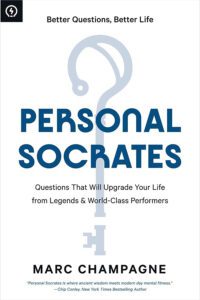
Personal Socrates: Questions That Will Upgrade Your Life from Legends & World-Class Performers
Cal Fussman for sure. Cal’s the opening chapter of the book for a reason. I didn’t put two and two together but you said a couple of lines about the conversation you have with Cal. I was like, “I listened to that episode.” It probably was when all this stuff was going around in my life. During those walks and gym sessions, I had podcasts in my ear very strategically picked. I wasn’t listening to long rambles on Joe Rogan. I was listening to stuff that I knew would be uplifting and motivating.
I sent a cold email to Cal because his shows were so motivating and are needed in that mental state that I was in. I asked him to come to the show and he agreed. It was one of those moments that I write about in his chapter. I’ll never forget this because I was still in that house in Toronto. I was at the kitchen table. I almost unplugged the fridge because I don’t want to make any noise. No one can see us but I’m in a podcast recording booth at this point. We’ve evolved a bit but I remember Cal shows up on the screen.
From someone that considers himself an interviewer or someone that wants to continue down that track, he’s one of the best. I remember I asked the first question and all I could think about was, “I’m going to mute the mic, shut the hell up and let him go.” That was a powerful moment. As the book started to materialize and I started to look at a mix of the people that I had interviewed that would be good for those chapters, Cal came to mind and full circle, which was a beautiful moment for me. I’m still very grateful for when I sent him the book, he invited me on his show and that hit the heart.
That’s a big moment. That show has had so many incredible people on it. To be in the same category has always been a thrill for me as well. Things are fantastic. Not only is the book a hit but companies are hiring you to come in and give mental fitness to their teams. Tell us what else is going on and who’s your ideal audience.
The team front is exciting. I wish I had this stuff when I was in sales or product management. I’m coming back to some of those companies I used to work at as a mental fitness strategist essentially and showing what’s possible. If I think of some of the things that I used to do putting together these brand strategies on these $100 million brands, I want my mind to be as clear, focused and thriving as possible so that I can think at my best, feel good and have a good time. That’s what these practices do.
For me, it’s a mix of showing, “Let’s take a look individually at your rituals and routines or how your days are structured and set up. Let’s first spend some time getting clear on where you’re at and where you want to be personal but also with your business and the brand. It’s no different. Let’s get intentional with, ‘If this is where you want to be.’” It’s like when I was left with the question, “What do you want for your life?” “If this is where I want it to be, then what do I need to do? How do my habits, systems and my calendar support that journey?” Lots of times when we slow down to look, we’re almost self-sabotaging.
[bctt tweet=”When the mind stops working, so does the business and the brand.” username=”John_Livesay”]
It’s almost like if you use the analogy of, “I want to get physically fit, not only mentally fit,” I look at my calendar of activities, “Did I go swim, go to the gym or do anything physical? Did I stop at Amy’s Ice Creams three times a week? Did I order pizza twice a week? Is that the calendar of someone who’s into fitness?” Probably not. It’s the same for mental fitness. I love this so much.
Marc, you’ve given us so many quotes and questions. I can’t wait to share them all. “My full-time job was my mind,” has got to be one of my all-time favorite quotes from anyone who’s ever been between jobs. If people want to find out more about the book and you or hire you to come in and get the team mentally fit, where should they go?
Thank you so much. We could talk for hours so this was a treat. BehindTheHuman.com is my site and that’s the book, the podcast and all the details for the teams I’ve been working on. If you’re one of those teams, I’d love to chat with you. At the end of the day, when a mind stops working so does the business and the brand or whatever is around that. I feel that having gone through all of this, it almost feels like a moral obligation to get these practices out because they’re all accessible.
It’s only a matter of reaching people on the other side with a narrative that makes sense and is relatable. Why I keep the podcast running is because I always have new narratives, new stories and entry points. If you take the first step in your marathon or running training, all of a sudden, it becomes easier. You’re doing it intuitively. When we can train our minds like that, we feel good.
“When the mind stops working so does the business.” That’s the mic drop moment. Thanks again, Marc.
Thank you.
Important Links
- Personal Socrates
- Cal Fussman – Previous Episode
- Chip Conley – Previous Episode
- Behind The Human – Apple Podcasts
- Kyō
- Better Selling Through Storytelling Method Online Course
Wanna Host Your Own Podcast?
Click here to see how my friends at Podetize can help
Purchase John’s new book
John Livesay, The Pitch Whisperer
Share The Show
Did you enjoy the show? I’d love it if you subscribed today and left us a 5-star review!
- Click this link
- Click on the ‘Subscribe’ button below the artwork
- Go to the ‘Ratings and Reviews’ section
- Click on ‘Write a Review’
Love the show? Subscribe, rate, review, and share!
Join The Successful Pitch community today:
- JohnLivesay.com
- John Livesay Facebook
- John Livesay Twitter
- John Livesay LinkedIn
- John Livesay YouTube
Mental Fitness With Rob Roell
Posted by John Livesay in podcast | 0 comments


Who says fitness is all about the physical? Rob Roell, Executive Coach at Equilibrium Coaching, believes we also need the mental stamina to unlock our true potential for professional success. In this episode, he joins John Livesay to talk about mental fitness, what it is, and why we need it. He dives deep into the imposter syndrome, the ways social media amplifies it, and how we can overcome that through mental fitness. Offering some great tools, Rob discusses the book Positive Intelligence, where he highlights how we can be more productive and fight off what is called mental saboteurs. Achieving success is not just about having the physical capacity to work towards our goals. It is also about having the mental part taken care of that helps us see through the challenges along the way, especially in this modern world. Join Rob in this conversation as he helps us become mentally fit.
—
Listen to the podcast here
Mental Fitness With Rob Roell
Our guest is Rob Roell, who is an Executive Coach that helps clients unlock their true potential for professional success so they can increase their performance without all the anxiety and stress. He has created a wonderful book called Positive Intelligence, PQ if you will. It’s a simple yet powerful operating system that allows you to become mentally fit like with physical fitness require some practice. This Positive Intelligence is developed with coaching in mind. He has been able to improve clients’ progress with their goals.
—
Rob, welcome to the show.
Thank you very much. I need to correct you. The book is not my book. The book was written by Shirzad Chamine, which is a great opportunity to give him credit for the foundation that I work from.
I have had some people do that with other people’s work. They give credit, whether it’s Simon Sinek’s Start With Why. It’s so wonderful when someone creates something so valuable that other people can be credited and make it a basis for a foundation and get the training directly from that.
This stuff is incredible work. It’s foundational for me. I use it as a foundation for all of my clients.
Tell us a little about your own story of origin. You can go back to childhood or school. How did you get involved or interested in coaching and helping people?
Years ago, I was at a Tony Robbins program. One of the trainers that I was working with saw something in me that can happen like a bubble went off in my head. This was something that I wanted to do. When it came together like one of those meant to be moments, I was talking to a friend of mine after the program. He’s like, “Rob, have you ever done this before?” Without even blinking or missing a note, I said off the top of my head, “It’s funny. I have been doing this all my life. I’ve never got paid for it.” It’s true. I have always been that person in every group of friends that people come, seek out advice, knowledge from and the shoulder to cry on like, “Rob, can you come over here? I need to talk to you about something.”
It fascinates me because of your background. You have a Master’s in Electrical Engineering. Nothing against engineers but as a species, you guys are exactly known for being right brain, warm and fuzzy. You toggle back and forth.
There is a reason that we use that term binary. Engineers tend to be left-brain cerebral thinkers. History-wise, my last run in the corporate world was what would be called a sales or a systems engineer, which is the person on the sales team that helps the customer to understand technology. That’s something you wouldn’t traditionally think of as an engineering role. It’s one of those places that I have always been in that unusual space between what traditionally I was trained for and what comes naturally to me.
[bctt tweet=”Celebrate your wins.” username=”John_Livesay”]
In a way, you are a translator of tech to something understandable. The same thing seems to be happening to me with this Equilibrium Coaching because a lot of people say, “I’m great at decision making. People like and respect me and yet in my personal life, I feel like I don’t have the same skills.” You can help them translate that.
I’m a little bit of that. What we tend to focus on are those things that aren’t working optimally in the business realm. The beauty is, call it stealth coaching, call it whatever you want, all of those things that they learn to use in the business world to make themselves feel more productive, happier, less stressed, translate over into the personal life, whether it’s a relationship with a partner, with kids or fitness. Whatever it is, it all translates.
Many people, no matter how successful they are, even celebrities, suffer from impostor syndrome. Let’s define what that is and what that looks like. I know I have certainly struggled with it when I was speaking at a Coca-Cola summit. I looked at all the other speakers who had MBAs from Harvard and New York Times bestsellers, I’m like, “That’s going to trigger any insecurities that would do it.” I’m a big proponent of not comparing myself to other people. I find we still all tend to do that sometimes, don’t we?
A lot of it is cultural. Nowadays, we like to bang on social media. Social media is the source of many issues. I’m a fan of the fact that social media is the accelerator. All of that stuff was there. Social media made it easier to put it all out into the public. Impostor syndrome, at the end of the day, it’s a part of what goes on with people. It’s that part of you that doubts, that judges yourself about, “Am I good enough? Have I done enough about this?” It’s that thing that keeps us up at night thinking, “Did I do everything? Did I check all the boxes to move me on powerfully?” Unfortunately, we are in a society that reinforces this idea, “You’ve got to get it done. You’ve got to get through. It’s going to be tough. It has to be tough to be worthwhile.” In some ways, that may be true. It doesn’t have to be tough on you emotionally, physically and mentally. It doesn’t have to be Pollyanna but you can do everything that you do from a positive perspective, rather than trying to attack it from the negative perspective. It’s going to get you there. It’s going to get you some success. Are you going to be happy? Are you going to be fulfilled? Likely, not.
I will never forget. I was friends with an actress when I was living in LA that had the Malibu summer house on the beach with all the other celebrities and was on a sitcom. She was miserable. She said, “No one wants to hear it,” because she’s living the dream of an actor. Getting on a show and having that lifestyle, then you are still miserable. She didn’t like the show, not well written and was embarrassed to do it. The stress of it is going to be canceled or not. Nobody wants to hear that. They want to hear you on Malibu and show. You must be happy. If you are not happy, don’t talk about it.
We could go down a deep rabbit hole about all of our societal issues with mental health. People don’t want to hear when their version of you, what they see of you is everything they think that they want.
You are busting the illusion. As soon as I had this concept, if I had that, I would be happy. I understand why I’m not happy. If you tell me that if I get that, I’m still not going to be happy, you are going to blow my circuits.
A Buddhist saying or wherever it comes from, you think about what comes first is, is success generates happiness or is it happiness that generates success?

Mental Fitness: People don’t want to hear when their version of you and what they see of you is everything they think they want.
We see all these famous people like Kate Spade or that amazing chef who committed suicide, Anthony Bourdain. I ask myself, “There it is again.” If you are not happy, all the money, fame and whatever in the world that you could want, what you are doing is crucially important. If we do this as soon as I get this, I will be a happy game. It’s a zero-some game. We have to be happy where we are, is what I’m hearing you say. Many of us are going to need some coaching to get there.
Honestly, I love it. There was some point in reading your book. There was this one saying that we are kindred spirits here. You talk about this internal voice that tries to protect us. I have the quote here, “The internal voice that tries to protect us by diminishing us and critiquing our performance.” The world I work from the positive intelligence mental fitness, we call those the saboteurs.
It’s valuable to label it. You are like, “Who’s speaking?” If I’m the thinker thinking these thoughts, “Who’s in my head telling me all these horrible mean things?” What I’m fascinated by with positive intelligence is that it’s so measurable. We know if we have worked out, we can measure our waist or our biceps. We go, “I’m getting results.” There are actual ways not to try to boost your mental fitness but measure it. Can you explain how that works?
The way that you can measure your mental fitness, Positive Intelligence gives us some great tools. If you already go to their website, they have several assessments. One is you can measure your PQ score like you can do an IQ test. Nowadays, emotional intelligence and EQ is a big thing, especially in the executive business world. You can also measure your PQ. It’s a ratio of how often you use positive reinforcement and positive perspectives to rule your life versus how much you use the negative. Where it becomes important is you get a score of 0 to 100. The target is you want to be above 75%. If you want, I can go into the science that goes behind it.
Let’s hear a little bit about Science. Here’s what a friend of mine who writes for Inc Magazine told me, anything that they write with a headline or an article about how our brain works get more clicks than anything else. Good to know. I get a chance to interview someone as knowledgeable as you that understands and can give us some valuable information on how our brain works or why something works for our brain. It seems to me that the data is there that people are interested in this. Let’s hear the highlights of it.
Look at that ratio. 75% to 25%, that’s a 3:1 ratio. The idea is that the saboteurs I mentioned live predominantly in that primitive part of your brain. The part that wants to see the leaves rustling out in the jungle just in case there’s a tiger there to come after you. It’s served a purpose at some point in our human development. Not so much now. Aside from Houston, there are not many suburban areas you are going to find a tiger rustling the tree. What that does is your brain is tuned on this 3:1 ratio to look more for something that’s going to go wrong than for something that’s going to go right. You want to be above a 3:1 ratio to be able to have an opportunity to override that tendency of your primitive brain.
It’s a survival mechanism. I heard something similar when I interviewed Steve Rohr, who wrote Scared Speechless talking about you and I are both speakers. Our brain is wired to never be separate from the tribe. When you are standing in front of people, your fight or flight response is kicked in and says, “What are you doing? The tribe is out there. You are all alone. You are going to get picked off.” I think there are some interesting things there. This concept that we are always looking for what’s wrong or could go wrong is part of the pre-wiring. He talks about when you are standing on stage in front of people, your brain is wired to say, “The tribe is out there. You are up here by yourself. You are in danger. You could get picked off by a predator.” We have to override that. That’s why people get so scared to speak. The same thing is true in our everyday life about what is going on that feels like we are not enough. We think hard to try to do this.
Going back to social media as an amplifier, you almost get this badge for being in that negative space. You post something negative on social media and everybody goes, “That’s so cool.” There are a lot of positive voices. It would be interesting to see. Is there a 3:1 ratio in that sense on social media?
[bctt tweet=”Treat mental fitness like it was physical fitness.” username=”John_Livesay”]
In journalism, if it bleeds, it leads. All of that click-through. I wrote something about this whole process of moving. I have done this a few times. Every time, I’m like, “By the time I move in, all the joy has been sucked out.” With the endless requests for the loan, problems with this, delays and you have your house inspected. Your whole focus is on everything that needs to be fixed.
It starts with that 3-inch stack of paperwork you have to sign to finalize the house.
You are thinking, “I am determined.” Ten things need to be fixed in the house, even a new house. That’s part of the process. We always have a choice toggling back and forth of, “Am I going to complain or am I going to be grateful? I have a roof over my head.” It is challenging when you keep getting knocked down or it’s one thing after another. The movers break something. There’s a leak in your roof. The laundry list is huge of what you can focus on to be upset about or you take a breath and go, “You broke something. Take a picture. I will claim, next.”
In the positive intelligence contacts, what you are talking about there is switching. We mentioned these saboteurs. Saboteurs are all within us. Let’s start there. To counter that is another part of us that’s also within us is the sage. It’s that part of us that wants to operate from the good. The sage starts with a sage perspective that everything in life that every challenge brings with it a gift and an opportunity. That resonates where you are now.
I always think this is going to make a great story, even it’s horrible. I can turn this into a story. I have heard people who write for movies go, “They are always looking for all. This is going to make a great script.” With that sage advice for me, I would love your opinion on this about zooming out. I do the 555 thing I made up, which is will this matter in 5 minutes, 5 days, 5 weeks, keep going. You realize, “Five days, zoom out. I’m so upset because this happened.” You are like, “This ability to have a sage perspective.” Ideally, the longer we live, the more of a sage we become. I have lived through this. That’s some good times and bump times. I have seen them all. I’m still here. That philosophy is sometimes difficult if you are younger. I see people get so obsessed with, “I thought I would be more successful by the time I hit this age. I probably making the 30 under 30 Forbes lists,” whatever their mindset is. How do you help people who, even if they are not “older,” are still so unhappy with where they are? You think, “As soon as I’ve got this, I would be happy.” You get that and you are not happy.
When we get there, we tend to focus on the thing we miss. In reality, we haven’t taken account of all the things that we gained along the way. There’s a famous speaker and one of his quotes is, “Shoot for the moon and the worst thing that happens is you land amongst the stars.”
That’s from an old Bette Davis movie.
Realistically, that’s true, especially when you talk about high-achiever mentality people. We look at the goal. If we don’t reach the goal, it’s a total failure. We don’t celebrate our wins along the way. Quite often, we don’t even define clearly what that goal is.

Positive Intelligence: Why Only 20% of Teams and Individuals Achieve Their True Potential and How You Can Achieve Yours
It’s always elusive. I remember when I was ten years old, I thought my dentist was so great. I thought maybe I will be a dentist. I was talking to him about it. He goes, “I settled on dentistry. I wanted to be a plastic surgeon.” I was like, “What? You settled on being a dentist.” Everyone has got this, “I’m still not happy. It’s not my dream.” From the outside looking in, you think it is. As you said, we have similar philosophies. This concept of perfectionism is a curse. I would say we need to reinvent and come up with a new word progressionist. You and I are progressionist to help other people to celebrate their progress.
The human brain and existence are geared around progress like a core coaching tenant are helping clients create progress. We also know it was one of the big personal development quotes. It’s like progress over perfection. You will hear me quote Tony a lot, I volunteer in his environment. I hear his stuff continually in my head. Tony says, “Perfection is the worst goal of attainment because it’s unattainable.”
It creates a barrier. If you come across perfect, no one can relate to you. There’s no connection. I know you pride yourself as a speaker on having this bond with the audience. Talk a little bit about how you do that.
I know you are a fan of the story. For me, my story was speaking. I was speaking in the corporate world. I was very powerful as a systems engineer or sales engineer however, I never felt like I was connected to my audience. I could spew the data, tell good stories and do well in that sales environment. When I first hired my speaking coach, that was the one thing I wanted to tackle more than anything. He’s like, “Rob, it’s very simple.” Throw away all that BS garbage that speaking coaches tell you about looking over everybody’s head. He’s like, “Find one person in the room and have a conversation with them and then find another person and have a conversation with them.” I know you have spoken from stage. Anybody that’s ever spoken from stage, you get the fact that when you speak to that one person, you get that radius effect. 10 to 20 feet out, everybody thinks you are speaking to them and then you feel connected. They feel that. It builds on itself.
Even if you go to a concert where you listen, sometimes the singer will say, “I want to tell you.” You feel like they are talking to you. There are thousands of people that are in the dark. That is fascinating, whether it’s 300 people in a ballroom or how many people Staples Center holds. That successful banter in between the songs creates that emotional connection. The other thing that I’m fascinated to ask you about. I have noticed that people who stay curious are the ones that seem to live long, healthy lives. People who are bored easily seem to be miserable all the time and tend to have unhealthy lives and not live so long. It’s the people who are like, “I decided I learned another language.” You are 80 years old. They are like, “I want to learn something new.” You are constantly up-to-date on what’s going on in the world and staying curious. What are your thoughts on being curious? I know it’s a big outcome of what mental fitness looks like. Are there things that people can do to increase their curiosity if they are not naturally curious?
One is bringing attention to it. Creating intent, when you create intent around wanting to be curious, part of it is like anything else. Creating that mental muscle to be curious takes practice. You have to remind yourself consciously from time to time, it’s being intentional about being curious. I mentioned the sage earlier. The sage has five powers. One of those sage powers is explored. The power game we play around sage explore is the fascinated explorer. Think of yourself as Indiana Jones. You notice how I’m leaning in. It’s having that posture of leaning in, listening closely and intently. Being curious has all of that around it. I get goosebumps talking about that.
The outcome besides being happier is this increase in productivity. Can you speak to how mental fitness helps us be more productive?
We were talking about these negative voices that go on inside of our heads. If you were to sit down and journal about how much of your time you are spending combating that. If you were to minimize those voices in your head, how much more productive would you be? At the end of the day, the studies show us that average people are over 30% more productive when they are coming from a positive mindset rather than a negative mindset in everything they do.
[bctt tweet=”Social media is the source of so many issues.” username=”John_Livesay”]
That’s huge. I didn’t know it would be that high. That’s a very surprising statistic. I would think maybe 10%, but 30%. Imagine, if you decided, “I can start work 30%.” I don’t have to work five days a week if I’m hitting my goals if I’m thinking more positively.
The high achievers out there going, “I still work five more days.”
I would keep Elon Musk. I would go to the moon. I would take us here.
The thing that’s nice about that extra productivity, you are not only more productive, but you are also happier while you are doing it. One of the metaphors that I love that Shirzad loves to talk about. He used to be an instructor at Stanford. He would talk about these concepts at Stanford. His students nicknamed this Jedi Mind training. I remember when I watch Return of the Jedi, Luke training with Yoda out on that planet Dagobah. It’s like, “I want to train with Yoda.” That’s what it was all about. How could Luke be calm, clear and focused in the middle of all the chaos of battle and everyday life?
That reminds me of what I watched in the documentary about Tiger Woods and how his father would constantly distract him while he’s practicing so that he had to get into the zone. When all the pressure was on, he could tune it all out. If athletes have to do that, when we are called on to perform as a speaker, in a business situation, you are pitching to win new business or whatever it is, if you are distracted by the hum or a look someone gave you, 101 things can distract us. Your phone going off and all that. Maybe you turn the distractions off that way. As you talk about laser focus, your ability is so important to mental fitness. That requires some work, doesn’t it? It’s got to get cleaning away some stuff.
Let’s put some foundation around this idea of mental fitness. To state the obvious, it’s based on the idea of physical fitness. When you are physically fit, you can climb a steep hill. You can jog down the street without losing your breath and without having physical stress. The same thing with mental fitness. When you are mentally fit, you can deal with life’s challenges without all the stress, anxiety, doubt and frustration that can come up all of the negative emotions from being in life. To be mentally fit, it’s not something that you can turn on just like that for the average person. To be physically fit, you have to train regularly to be there. Michael Phelps didn’t become a world-class swimmer by going to the pool once a week.
I have a story. When he was young, his coach said to him, “Michael, are you willing to work out on Sundays?” He said, “Yes.” He goes, “We’ve got 52 more workouts from the competition.” People go, “It’s not his physique. It’s not he got lucky genetically. In the end, he put in that extra work.” That’s important for people to realize you don’t suddenly get into shape overnight physically. Why would you think you could mentally with a few affirmations?
At the end of the day, mental fitness is a concept of being more positive than negative. It’s creating a practice around that. It’s something you do regularly. For me, knowing that I was nervous coming in here, I did somewhat we call them PQ reps, positive intelligence reps. There are about ten seconds a piece that help you to become more body-centric and centered. To put it, it helps the part that minimizes those saboteur voices in your head nice. When you are there, that gives you that opportunity to choose to take on the sage perspective.

Mental Fitness: When you are mentally fit, you can deal with life’s challenges without all the stress, anxiety, doubt, and frustration that can come up from all of the negative emotions in life.
I call it stacking your moments of certainty. 2 or 3 times, when you knew you had a good interview, you are like, “I know John likes me. He’s going to make me look good. Whatever saboteur voices I have in my head, this is not one of those gotcha interviews. This is going to be fun. I’m going to be of service. People are going to love what I say. There’s a technical glitch here and there. Who cares? We will figure it out. It’s not the end of the world.” We have the perspective so we can zoom out.
One of the other things I love about your work and what you do is, as you mentioned at the beginning, go from, “I’ve got to get this out and white knuckle it almost,” to the concept of, “I can take action. I move through life with grace and ease. Things always work out for me.” Many people are presenting the concept. I have watched people have visceral, angry reactions. “That’s not true. It’s not about working smarter. You’ve got to work hard. Everything has to be hard.” There’s no such thing about being in the flow. That’s why I love teaching people how to become storytellers. When you tell a story, you are in the flow. You are pulling people in. The action they want to take is like landing a plane. It’s not this surprise push at the end. Speak to how you help people get in the flow.
Let me back up again, add a little bit of science to this. Realistic as to where Shirzad came up with all of this in his studies, he’s worked with hundreds of CEOs around the world. We talked about the Stanford students that he’s worked with. He’s worked with world-class athletes. At this point, hundreds of thousands of people that are participated in his Positive Intelligence program. In working with them, what they did is they work from this idea of what’s called factor analysis, specifically root factor analysis where you are trying to find the root of why things are. What root factor analysis gives us is a radical simplification of why things are and why. That’s what resulted in the nine saboteurs. There are ten. There’s the judge saboteurs, the principal, and nine accomplices and the sage with the five sage powers.
To give you an idea of what root factor analysis is, we all know that of all of the thousands of colors that exist in our beautiful world, three colors exist at the root of all of that, red, green and blue. That’s when you look at a monitor. Those of us that are old enough to remember used to refer to monitors as RGB monitors. It’s a similar thing here with mental fitness. The root factor analysis with all of these people resulted in these ten saboteurs. Be very clear about the 1 sage and 5 sage powers. Also, what we learned from the root factor analysis, three main muscles create mental fitness. The saboteur interceptor muscle. It’s the idea of understanding when a saboteur is in your presence and acting on your mentality. To put it very simply, the saboteur interceptor muscle is a negative emotion. When you recognize your negative emotion, you equate that with the existence of a saboteur.
Labeling that helps take some of the chaos in our head and rip above it, doesn’t it?
It does. Having that interceptor muscle be strong, whether it’s personal development or coaching. The difference between having that a-ha moment and acting on that a-ha moment is like, “What are those things? What are the saboteurs that are keeping me acting powerfully on this?” That comes from, “I’m scared of this or I’m getting stressed. I’m getting anxious about it.” Noticing that you have the opportunity to do something about it. That brings up the second muscle. It’s the sage muscle. Knowing that the sage operates from everything as a gift and an opportunity, you have these five powers of the sage with the power games that go along with them. You can leverage those to help you make that shift as well.
The third muscle is where these PQ reps come from. The idea of the PQ reps is to exercise that third muscle so that you recognize you are in saboteur mode. You can do PQ reps to bring that voice down in your head. Now, you can powerfully bring the sage up. All of these things are all ready, just like your physical muscles are part of you. All of these three mental fitness muscles are already a part of you. You have to exercise them. You have to create a practice around it to strengthen them so that when the saboteurs come up, you can go, “That’s a saboteur.” If you want to identify this saboteur, “That’s the controller or stickler. The stickler wants to get everything right.” You could identify it to that level. The idea of knowing that saboteur is powerful in and of itself, and choosing the sage perspective and making the shift.
If someone wants to get ahold of you, what’s the best way to do that?
[bctt tweet=”Creating that mental muscle to be curious takes practice. You have to remind yourself consciously from time to time.” username=”John_Livesay”]
The best way to get ahold of me is very simply my name [email protected].
Rob, any last thought or quote you want to leave us with?
I would love to offer to anybody that’s reading, if they want to have a conversation with me, schedule 30 minutes with me. You can go to my website, EquilibriumCoach.us/contact. If you go there, it will give you a website/contact/connect. You get access to my calendar. You can schedule a 30-minute. We can sit down and talk about how mental fitness might work for you.
Thank you. It has been fun hearing about how we can all get a little more mentally fit from you, Rob. Thanks again.
Thank you, John. I appreciate you.
Important Links
- Equilibrium Coaching
- Positive Intelligence
- Start With Why
- Steve Rohr – Past Episode
- Scared Speechless
- [email protected]
- EquilibriumCoach.us/contact
- Better Selling Through Storytelling Method Online Course
Wanna Host Your Own Podcast?
Click here to see how my friends at Podetize can help
Purchase John’s new book
John Livesay, The Pitch Whisperer
Share The Show
Did you enjoy the show? I’d love it if you subscribed today and left us a 5-star review!
- Click this link
- Click on the ‘Subscribe’ button below the artwork
- Go to the ‘Ratings and Reviews’ section
- Click on ‘Write a Review’
Love the show? Subscribe, rate, review, and share!
Join The Successful Pitch community today:
- JohnLivesay.com
- John Livesay Facebook
- John Livesay Twitter
- John Livesay LinkedIn
- John Livesay YouTube