

Outbounding: Win New Customers With Skip Miller
Posted by John Livesay in podcast | 0 comments

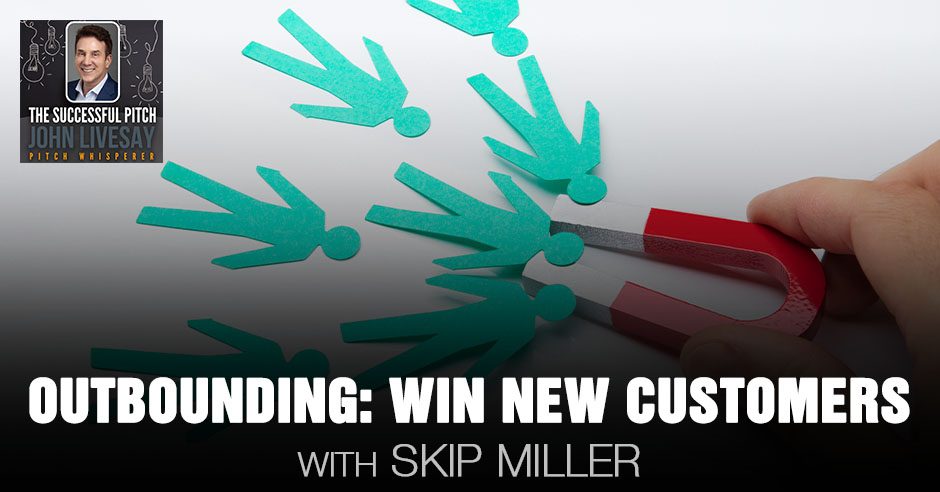
Enticing people with your offers through cold calling, email marketing, and other business strategies will take more than just mere persuasion. Instead, much more in-depth and carefully thought outbounding techniques are needed. John Livesay sits down with Skip Miller, the President of M3 Learning, to talk about the ingredients that make up an effective outbounding process. Skip talks about connecting with your target audience through emotions, comparing outbounding to a first date, the power of references, and the importance of tapping above-the-line buyers. He also shares his mission to destroy the term decision-maker and how to let go of your fears.
—
Listen to the podcast here
Outbounding: Win New Customers With Skip Miller
Our guest on the show is Skip Miller, the author of Outbounding. He said, “The best sales call in the world is one where you don’t say much. The secret is to get people to be curious when you’re reaching out to them.” He’s on a mission to destroy the concept of there being decision-makers, find out what he means by that as well as a magical question to ask to determine whether someone’s going to take action right away or not. Enjoy the episode.
—
Our guest is Skip Miller, the President of M3 Learning, a pro-active sales management and training company based in the heart of Silicon Valley. He’s also the author of Outbounding. As the President of M3 Learning, Skip has provided training to hundreds of companies in over 35 countries. He created M3 Learning to make a salesperson better on each individual call. M3 Learning signature selling methodology ProActive Selling is unique in its high-definition focus on the tactics of selling and proactive sales controls. Skip, welcome to the show.
It’s a pleasure. Thank you for having me.
It’s my pleasure as well. We were having a wonderful chat pre the show talking about our passion for helping salespeople connect better. Before we get into your expertise and the team you’ve created, I love to ask guests their own story of origin. You can go back to childhood, school, wherever you were, along with this concept of, “I like connecting to people or I love sales,” or anything you want to share about your own particular background would be great.
I’ve got a big family, five brothers and sisters so you can’t avoid people in that situation. In college, I worked part-time at a small sporting goods store in Cleveland, Ohio. My job was to go to school in the mornings. In the afternoon, I’d try to go to high schools and bid on their football uniforms, cheerleading and basketball. We were a small little store about as big as an office. We were small. We were competing against big giant sporting goods stores.
[bctt tweet=”Make me curious.” username=”John_Livesay”]
I figured out that junior highs have as much money as high schools. I would go to these junior highs and pick up these orders because it was below the radar of the senior high schools. I had a good time building my little own business that way. When I left college, I became a salesperson and sales manager and stuff. For about twenty years, I was Sales VPs and stuff. The company I was with was a high-tech market research firm called Data Quest got bought by a company on the East Coast. I’m from Cleveland but I’ve been living in California for many years. I didn’t want to go back to the East Coast.
Not an offense to the East Coast people, but I like California. I said, “I might as well as to try to start my own business.” That was many years ago. The second or third month I started my business, I got a good-sized customer and I never looked back. It’s been a fun ride. To your point in the intro, I love walking away. A few years later, out of nowhere, I’ll get an email or a LinkedIn from somebody saying, “Skip, I took your course five years ago and I still use your tools. I want to drop you a note.” It’s hysterical. If you can make somebody a manager or a salesperson better at the point of attack, I feel great. That’s my reward so it’s been fine.
I’m guessing M3 Learning has a story of origin behind it. What does M3 stand for?
John, like you, you start your business and you’ve got to file a form to the states or whatever else saying the name of your business. I know I didn’t want to name it Skip Miller Consulting. It stands for Miller and his three kids. I’ve got three kids. In every one of my books, I call out my kids. When they were in school, they would take their friends to Barnes & Nobles or somebody and show that their name was in my book. They liked it.

Outbounding Techniques: A manager must know when and how to tweak strategies based on market demand, competition, and everything out there.
You’re a rockstar for that. One of the things that we were talking about is this need to feel seen, heard and appreciated. Kids say that all the time, “Watch me jump in the pool, dad or mom,” or whatever. That need to be seen, heard, acknowledged and appreciated does not go away when we go into our job. It may be subconscious. Let’s talk a little bit about that because that’s something that is unique. You and I both have a big passion for that. An awareness of it having both been in the salespeople’s shoes, in management and see those little acknowledgments as opposed to the once a year.
Let’s stand it on its head. People do need to be heard. They do need to be seen. The best sales call in the world is not where you hang up the phone or you get off the Zoom meeting going, “Nailed that puppy. That was a good call. I was on my game. That was good.” While you’re doing that, the customer is going, “What was that?” The best sales call in the world is where you hang up the phone or you get off the meeting and go, “I didn’t say anything. I didn’t even use a slide.” The customer is going, “They heard me. They feel great.”
As a next step, you can start doing your presentations but if you don’t get that attachment up front, they’ve taken your call, they’re going to take your meeting, they’re going to take your ten seconds of a cold call, whatever else but you want to make them feel like they’ve been heard. That’s a powerful draw. Everybody, managers don’t reward their salespeople enough. They always were telling them what they’re doing wrong and not right. Take what you said about being heard, felt and standing on its head and that’s a powerful drive for when salespeople need to outbound.
One of the things I love about your book, Outbounding, is how you talk about certain actions and certain ones are things that only inbound people are doing versus what outbound people are doing. There are a lot of crossovers but there’s a big difference. Would you speak to what the big difference is?
[bctt tweet=”Consistency wins.” username=”John_Livesay”]
It’s all about the buyer. We spend so much time thinking about ourselves, our approach, presentation, demo and our products. From a buyer standpoint, if you get an inbound lead, data shows they’re about 50%, 55% through their biocycle already. They’ve got an understanding that they got to make a change. They’ve somewhat monetized it. That’s why they’ve approved the budget. They’re about halfway through a sales cycle. They know they have a problem and they have to make a change.
Outbound, it’s like throwing darts. Did we get them at the right time? Is the buy window open? Most of the time an outbound, the buyer doesn’t know they don’t know. Once informed, they’re like, “I know I’ve always had a problem there. I live with it. I didn’t know there was a fix.” The approaches must be different. What we do is wrong. What we tell the outbound people is, “Those inbound templates we’re using are great. Why don’t you use some of those things?”
Let’s go to another three-day class where we could teach them more about our products, features, benefits and competitive advantages so you can use those in your outbounding. I don’t even know I have a problem yet. You’re telling me about your competitor doesn’t do this. Great. I didn’t know I had a problem. The messaging, I’m getting a lot of input regarding we can’t door knock anymore. We can’t walk halls. We can’t go to trade shows. You’re limited to social. You’re limited to email or you’re limited to the phone.
What can we do to get better attention? Change your message, change your cadence and your sequence. John, I went up to a salesperson at a meeting. I said, “You want to learn about outbounding? How has it been going for you?” He goes, “I outbound.” I said, “What have you been doing?” He goes, “I sent two people an email last week and I’m waiting to hear back.” I go, “That’s your outbounding. Good luck with that one.” That’s where we’re at with that. The whole point is inbound and outbound is different. We don’t treat it differently and we don’t have the correct management dashboards to reward the rep correctly. The processes are different.

Outbounding Techniques: The best way to get a hold of somebody is obviously referencing a person.
I hear a lot of people saying that are “inside salespeople” reaching out, trying to get business that they’re measured on how many calls they make as opposed to the quality of the calls or the outcome from the calls. I’m like, “What a bizarre thing to measure? If you don’t make X number of calls in X amount of time, you’re not working hard enough.” It goes back to that old stuff of throw a bunch of spaghetti up against the wall and see what sticks, which is not a strategic way to sell at all.
There are control knobs, John. Companies like Zoom with the pandemic, it’s a numbers game, dial, demands high, low-hanging fruit, whatever we want to call it. For that short timeframe, the pitch is good enough, make contact. In normal business times, you have to control outbound quality with competency. We call them frequencies and competencies. It’s doing a lot or a little bad, good stuff. If the market is in hot demand like when Tableau first came out, the whole market for visual analytics was hot. Dial, get an appointment, throw it over the wall and go and that’s not common. For most of your readers, they’re going to be sitting there going, “I can’t do 100 or 1,000 calls a day.”
Let’s work on quality. There’s a mixture of both in your cadence and sequences. We see people’s quality as poor. It’s all about us, what we do. That’s got to start being worked out but there are control knobs. We see people who do good emails but they’re doing five a week. Can you get it to ten? Can you get it to 100? There are control nubs and that’s a great management dashboard. It’s not about the hike. If I can get a meeting, throw it over the wall, that’s my job. It’s the same ISRs or the same SDRs. I want to get the meeting, talk to both the decision-makers and stuff and then throw it over the wall. It depends on where you’re at in the marketplace but there’s no doubt that quality and quantity are control knobs that managers got to tweak based upon market demand, competition and everything out there.
My background was in advertising sales and they were always talking about frequency and reach. The same concepts apply. Like a car company when I would call on them to advertise with me, they would say, “We never know when someone is in the market to buy a car. We have to advertise all year long. Hoping that our ad in a magazine or a commercial or on a website happens to catch somebody at that magical moment when they think, “I might go test drive this weekend.” If you have millions and millions of dollars to do that, you can do that. As a salesperson, that strategy is not efficient to say the least because you haven’t qualified someone or created some content that maybe somebody would even be intrigued enough to even start the journey. They don’t even know they have a problem until you point out there is a solution.
[bctt tweet=”The best sales call in the world is where you say very little.” username=”John_Livesay”]
John, consistency wins. One of the best people out there we’ve seen, they have a salesperson who does a regular sales job and takes a list of 25 people, puts them in a 12-touch 2-week cadence. At the end of the two weeks, they take that 25 out, take the ones out that didn’t respond or who do respond to write out and put that aside. You take a second 25 for a 2-week 12-touch cadence, take that out. They have three 25-touch cadences. I’m going to touch you for two weeks then I’m off for four and then I come back for two. They have a rotating carousel of three 25-touch cadences. It takes a good outbound salesperson who’s always busy an hour a day. If you get the system down and get your messaging down and stop outbounding like you want to get married, “I’m Skip Miller. We have the best product. I’m the representative for seven. You have to see ours. It’s our first day.” Treat it like the first day. Make me curious. Don’t tell me who you are.
I talk about that in terms of going from invisible to irresistible and if it rungs on a ladder like in dating. He’s where I see a lot of people get stuck and I would love to hear how you help them is in the middle of invisible to irresistible is the interesting. Wrong. In the dating world, maybe you say something to somebody and they like, “I’m interested to keep talking to you. I’m not agreeing to fly with you yet.” Salespeople get all excited and they tell their boss, “They were interested. They asked me to send them information,” and then it’s crickets. They’re stuck in the friend zone at work. They don’t know how to get out of it. I tell people storytelling is one way to get out of the interesting friend zone at work. I know from your book and your expertise, you’ve seen this happen all the time, yes?
Yeah, without a doubt. The best way to get ahold of somebody is to reference a person. You know somebody, I know somebody and that’s going to be instant rapport. That’s going to be hard to break. After that, it ties to your interesting comment. I come up with the big five. Here are the five things that you should look at if you’re going to outbound to try to get somebody’s attention. The top of the list, without a doubt, to you is curiosity. Make me curious about my title, about my industry, about things that my company’s doing.
“I’m going to do some homework on Debbie because I’m going to go after Debbie there and find out about Debbie.” That’s a rifle shot. Good luck with that. It can work but also Debbie’s curious about people at her level in other companies. Debbie is curious about other companies that are in her industry. Make me curious, give me a little dab. Don’t give me, “Here are five attachments.” Curiosity to your interesting level makes me go, “Let’s talk some more.” Same with that interesting wrong so make me curious, the great theme for those outbounding touches.

Outbounding Techniques: The passion must come from the salesperson, as well as their mission to tap into that energy for the prospect they’re talking to.
One of the things that you touched on is this concept of emotions at the start of the Inc. article. I am a big believer that people buy emotionally, even back it up with logic, even if it’s a big purchase or a corporate purchase. You talk about greed, fear and pride. A lot of people overlook the unspoken fear buyers have that if I make the wrong decision or pay too much, I’m going to get in trouble and I’m even fired. That concept of fear, uncertainty and doubt has been around since the ‘80s when IBM used it if you bought anything that wasn’t their product. It broke, they would point the finger at the other vendors that were dealing with that. I wanted to get your take on curiosity is certainly in that world of, “We’re out of people’s heads.” How important is emotion in getting people engaged?
Emotion is going to drive energy. I’m a huge energy person. I believe that a sale, it’s like a rollercoaster. You get to the top of the roller coaster and it’s losing energy and then the deal goes dark. It goes south. It goes quiet. It’s not getting energy at the top of the hill trying to push it over. You should have gotten energy earlier in the sales call. That earlier energy is emotion. It’s not so much what we call pleasure emotion. It’s more away from pain. We all want to look for pain points. A classic question is what’s the size of the problem? If you don’t understand a problem, they’re not going to have to change.
If it isn’t broke, I’m not fixing it. Something broke and what’s the size of the gap? Those are great mission statements to be on. I started writing the book and I was probably about 2, 3 weeks into it and I scrapped it and started over. Attitude is important as you outbound. It’s not, “I hope they take my call. I hope I can make my pitch.” A good outbounder believes, especially in a B2B world, they’re making their company money. They’re losing money daily by me not being able to talk to them about their issues and challenges. You’ve got to have that emotional passion to go out. You also got to try to find that emotional passion. It’s great when you get somebody on the phone or on Zoom or they go now that’s the problem.
That’s where you want to get to but if you don’t have that same emotion, that same energy, you’re not going to find it. Great outbounders are looking for emotion in themselves because they’re the top people. The ones who can speak the most or the biggest alpha dog, they’re on a mission to help the customers. My job is to have you listen to ten minutes of me and if it doesn’t fit any problems or challenges you have, no harm, no foul. The buy window is not open. I’ll call you in six months but you owe me ten minutes because I’ve done some homework on your company.
[bctt tweet=”To get the attention of many, changing your message, cadence, and sequence is important.” username=”John_Livesay”]
I was talking at a speech a couple of years ago to about 100 CEOs. I asked them why they would take a sales call and they said they wouldn’t. At the bar, I asked them, “Why would you take a sales call?” A bunch of them sat back and said, “The problem with salespeople calling us is they’re a solution hunting for a problem.” One of the first things they say is, “We can help.” You don’t even know what my problem is and you’re telling me you can help me.
You got to come up with a passion and my job is to listen to your story, to what you’re up to quickly. Maybe we can help or not but you can’t sit back and say, “I’m here to help. My mission is to help you,” but my first step has got to be, “I don’t know if I help or not.” I get a sales call and the guy calls in and says, “We want to train our salespeople. Can you help?” What’s your problem?” We can help in certain areas in certain areas we don’t. That mission has got to be emotional. The passion has got to be from the salesperson as well as their mission to go tap into that energy for the prospect they’re talking to.
There’s a myth that people think, “I lost the sale in the closing.” What I’m hearing you say is you probably lost it at the beginning because you didn’t bring enough energy and passion.
That’s one of the things we don’t teach is closing skills because the close started happening back at Stage 2. If you’re selling proposals, “John, we have a quick technology sales cycle, initial interest discovery, proposal harass,” that’s what we typically do here. It’s, “I want a presentation. Here’s the demo. Here’s the proposal. Buy now and I’ll give you ten points off if you’d make it by the end of the month.” It’s ridiculous. There’s no energy, no emotion, no anything. You’ve got to get over that.

Outbounding Techniques: A good way to handle objections is to agree with the demand direct where you want to take them.
You talk about that there are two decisions in a business-to-business sale, one above the line and one below the line. I like that formula. First teaching people to identify who’s who and there are meetings that happen after the meeting. This awareness that you’re creating and giving people some skills because they hear a bunch of proposals, a lot of presentations and then the decision-makers, “Now what do we all think?” Let’s talk about the ATL, the Above The Line, the Below The Line and what their needs are and how a rep can start to zoom in on that.
I was into buyer’s personas. You’ve got the user buyer, the fiscal buyer, the technical buyer, the executive buyer. There are too many buyers out there. One day I said, “There are three types of buyers, the user buyer, the fiscal buyer and the executive buyer. The user buyer is a feature function. The fiscal buyers create value for me, the executive buyers, market share, market size and still was messed up. I said, “Why don’t we name this?” We’ll call the user buyer Spaniards, the middle buyers Russians, the top people Greeks. You’ve got Spaniards, Russians and Greeks.
If you have a meeting with three Spaniards and a Russian, what language should you speak? The obvious answer is Russian because they’re the top person. That worked well. People were getting a little like, “Why are the Spaniards on the bottom?” We did some work for a company where the entire senior management team was from Russia. They want to know why the Greeks were ahead of them because they’re broken. It’s a metaphor.
Finally, our friends at Google said, “It’s not politically correct and stuff.” We came up with this above and below the line. John, I am on a mission to destroy the term decision-maker. There are two, the below the line buyer is one who says, “I’m responsible for making this work, the support. If we’re going to bring this on, I want these features. I want this security package. I want this. I want that. That’s their job.” The above the line buyer says, “As I look at 2021, our new product is probably got to generate $50 million. I probably got $20 million in the bank. I’m missing $30 million. If we could do something that can make a dent in that $30 million gap, what was the name of that again? Buy one of those things. I don’t care what features and benefits it has. As long as below the line buyer’s above the line buyers where you’re going to find energy. The above the line buyer is the one who says, “I got a gap. Bob, here’s the $50,000 budget. Go find something to make a dent in my $30 million problem.” I don’t care per se. The above the line buyer does care if they’ve been heard.
[bctt tweet=”Treat outbounding as a first date. Make the other person curious.” username=”John_Livesay”]
As you prospect and outbound of the buyer, the goal is not to give them your below-the-line pitch. They don’t speak Spanish. Go above the line and find out what are their initiatives for the next 3, 6, 9 months? What gaps do they have on those initiatives? We call them trains at the train station. Why is the train in the station? If you can make a dent in 2 or 3 of their trains, you don’t have to fix the whole train. Make a dent in 2 or 3, watch how much energy your deal has. Most salespeople go below the line. They want to talk about us. We want to talk about us. We all talk about us but when you go above the line, I’ll give you an executive overview of all the stuff we’ve been talking to below the line on.
It’s different. We’ve got to understand what an above the line buyer wants. What they want is to be able to mitigate risk. They want to be able to make a dent in their problems, on their initiatives or trains that they have in the train station. It’s two different ways of looking at a sale. Overall sales cycles usually are cut in half when this happens because the above the line buyer goes, “We’ve got to get this. We got it. Let’s go. We’ve got to do this now.” Rather than Bob has taken his time, he’s doing a two-month evaluation. Bob’s got the whole thing going. Sales cycles get shorter when you do it.
We’ve turned your book, Outbounding, into a course. I know one of the lesson sessions is about handling objections. I’d be remiss if I didn’t ask you to touch on how you’re helping people handle objections.
John, objections are always fun because what we hear as you all know, not all the time right now, “Now’s not a good time. We’re fine. We don’t need anything,” those typical objections. What happens is your body’s chemistry wants to go into defense mode, the fight or flight. You’re wrong and here’s why you’re wrong. We have a tool in there called Flow of the River. It’s a martial arts term. Martial arts teaches not to block energy but the flow of energy. When you hear an objection like, “Now’s not the right time,” agree with it, “John, you’re right.” A lot of companies we talked to say, “This is not the right time. However, if you give me ten minutes of your time, you may see where it could be a good time.” I’m asking for ten minutes, John. If you block me, you’re wrong. You’ve got my guard up. If you agree with me, I’m going to let my guard down.
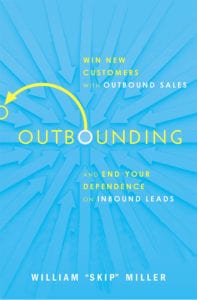
Outbounding: Win New Customers with Outbound Sales and End Your Dependence on Inbound Leads
Call Verizon and AT&T up, “I got a problem with my phone. I can see you’re right. It takes the winds out of your sales and now you’re ready for a conversation. I’m mad. My thing has been out for three hours. What’s your problem? You have a good right to be mad. Thank you.” It puts them defenseless. A good way to think of objection handling right up front is the bottom line is to make sure you think to agree with it and then direct where you want it to take it.
It reminds me of the old statement I heard years ago, “Do you want to be right? Do you want to be happy?”
Let’s put that stake in the ground. That’s not a good stake in the ground.
The book, Outbounding, can be found on Amazon. If people want to learn more about you, they can go to M3Learning.com. You do a lot of speaking to the clients.
We’ve got some training classes. John, I hate writing books. I don’t know about you, but I hate it. It’s 4:00 in the morning stuff for me. It’s Miller time at 5:00 PM. When I see a problem, in 2019, all the low-hanging fruit was going away. People had to start outbounding. You talk to salespeople, “I’d get to 80% of my number. I’m going to have to do a little outbounding.” They wait until November. By that time, it’s late. People were hurting because they’re so fearful of outbounding, fear of rejection, fear of the word no, I got to get six noes before I get a seventh yes. I hate getting noes. Who wants that rejection? I took it as a challenge to try to help the individual salespeople come up.
Don’t be fearful about this. It’s not a big fear thing. Do A, B and C, be on a mission to help your prospects, your customers and managers start measuring the right stuff. You’re measuring old-school stuff. If you want to measure good outbounding practices, given that we’ve got numerous channels, we have mail, social media, direct emails. There are numerous starts putting better dashboards together than the ones you like, “How many calls you make now?” which is hysterically archaic. It’s good but archaic. There are new ways. That’s why I wrote the book, help managers out, help salespeople out. If people want to read it, great. If they’re doing fine, if they don’t have a problem, there’s no reason.
Thanks, Skip, for sharing your knowledge and your insights. I love this concept of being on a mission to destroy decision-makers.
I’m on a mission to destroy the decision-maker because there are two. There’s not one.
That’s a great concept of how to look at all of that and how to reframe it. As you said, “Let go of the fear.” We will let everybody know how to become better at outbounding. Even if your job is not sales, we all have to sell ourselves all the time. There are some real tidbits in that book that will help everyone get over that fear of “the cold call.”
For me, I hate returning things. I go to Target or somewhere and I go, “Did you use this? I’m sorry.” I hate rejection as much as anybody. If I had to overcome it, people will read the book too.
Thanks, Skip.
John, thank you for your time.
Important Links
Wanna Host Your Own Podcast?
Click here to see how my friends at Podetize can help
Purchase John’s new book
John Livesay, The Pitch Whisperer
Share The Show
Did you enjoy the show? I’d love it if you subscribed today and left us a 5-star review!
- Click this link
- Click on the ‘Subscribe’ button below the artwork
- Go to the ‘Ratings and Reviews’ section
- Click on ‘Write a Review’
Love the show? Subscribe, rate, review, and share!
Join The Successful Pitch community today:
- JohnLivesay.com
- John Livesay Facebook
- John Livesay Twitter
- John Livesay LinkedIn
- John Livesay YouTube
The Repositioning Expert With Chala Dincoy
Posted by John Livesay in podcast | 0 comments

With the ever-changing marketing landscape, it’s getting harder to grab the consumers’ attention. You would have to make shifts in your business to capitalize on what the market wants. Chala Dincoy, a marketing strategist who helps B2B service providers accelerate their growth, joins John Livesay on today’s show to talk about super niching and repositioning your message to rocket-fuel your business. Don’t miss this episode as Chala and John double down on the importance of niching down into an industry.
—
Listen to the podcast here
The Repositioning Expert With Chala Dincoy
Our guest on the show is Chala Dincoy, who’s an expert at helping people get a great elevator pitch. She has specific examples and stories in this episode of how she’s helped companies with boring, bland, and confusing elevator pitches find their niche and differentiate themselves from the competition. You’re going to want to read and learn how you can stand out by finding the right niche. Enjoy the episode.
—
Our guest is Chala Dincoy, the CEO and Founder of The Repositioning Expert, which is a division of coach tactics and a marketing strategist who helps professional service companies change their messaging to attract more decision-makers. In her former life, she was an award-winning marketer at places like Pepsi and Pizza Hut for many years. Now, she is the author of Gentle Marketing: How to Gently Attract Loads of New Customers! and How to Win Friends the Way Apple Wins Customers. Welcome to the show.
Thank you.
I’m going to ask you to take us back to your own story of origin. You can go back as far as childhood. How did you start becoming aware of your passion for marketing and storytelling?
It’s weird that you asked that because I spoke at NASDAQ in 2019. Have you ever spoken at NASDAQ?
I was scheduled to speak at NAB on storytelling, which is the entertainment industry’s trade show, helping people who create TV shows and movies tell their story of how to get it sold. That was one that I was looking forward to that got canceled with the quarantine. The NASDAQ is a whole other ring the bell experience.
They didn’t let me do that, but they do put you on the jumbotron in Times Square. If you go to Repositioner.com, which is my website, that’s what you see. What they asked for that audience was to tell the ugliest, the scariest, disgusting childhood story that you would never tell anybody. You think of why. I dare you to tell that story, so that’s what I told the story of how we were immigrants and my mom was a lawyer, my dad was an engineer, but they come from a poor country called Turkey. When they immigrated, my mom was a coupon lady. We had no money. My dad was restructured. That’s the story that I told that I always had this scarcity mentality and they said, “Chala, you have to study hard, go to school and work for these large corporations.” I worked for Pepsi, Frito-Lay, all those large corporations. Have you ever worked for a large corporation that restructured you?
That’s part of my TEDx Talk called Be The Lifeguard of Your Own Life.
That was the reality. That mentality always kept my business from being able to grow faster. Imagine if my dad was Warren Buffett. I don’t know if your dad was Warren Buffett, that’s such a difference. That’s what I was able to overcome to be able to get to the level that I’m at, the success that I’ve had. It’s always overcoming a devil. That’s all it is. Now, I’m overcoming a new devil like you and I have lost our stages and our conferences. You less so because how many years have you had this show?
I’ve been doing this for over five years.
You’re one of the ancients, that’s what I mean. I am a baby compared to this online world. During COVID, that’s what I’m doing is I’m using that whole resilience mindset from my childhood to port all of my channels over. Have you done that?
Yes. In fact, I launched an online course based on my book that I now provide as part of a package when people hire me to give virtual keynotes and workshops. It works out perfectly that it’s all seamless and virtual, that people can hear me give a virtual talk and then give a virtual workshop and then they can all take an online course to reinforce what they learned.
[bctt tweet=”Be known for one thing. Don’t confuse people with your elevator pitch.” username=”John_Livesay”]
You’re one of the pivots success stories that are going to come out. In a couple of years, it’s going to be like, “Who was able to pivot and who wasn’t?”
Part of it for me, I want to hear your story is I started the online course back in September 2019. It was ready to launch in 2020 and some people are scrambling to do it. It’s like a book. You can’t just throw something together in 30 days and have it good. The same thing is true with an online course. That’s why I’m happy. This is what I want to speak to you about. Do you think of yourself as a stock and that you invest in yourself?
Yes, and I’ve invested. That’s the mindset I had to shift because when I told my parents that I invested what I invested in my first coach, their eyebrows disappeared off the phone. We were FaceTiming. They’ve been supportive even though they’re scared for me, but my mom, the coupon lady, gave me seed money to give to that coach. We’re talking about 5, 6-figure coaches here. This is not chump change. I did not go into those group online programs. That’s such a part of my story that I was able to invest in.
The thing that wowed me and why you’re the perfect guest for the show is you have a topic around elevator pitches that wow buyers. Let’s jump right in and start giving some value to everybody. What tips do you have around that?
Have you ever been to a procurement conference? What they do is they have these buyers from a giant corporation like Pepsi, Staples or Walmart. They have ten suppliers sitting around that person, then each person has 30 seconds to pitch them. Have you ever been into that?
I’ve been in a version of that. It’s not pleasant.
I’m a part of a diverse organization called WBENC. It’s for women business owners, but there’s every kind of diversity conference going on. We used to be every single day now virtual for African-Americans, Latinos, veterans, gay, lesbian. There is every single kind of diversity and these are procurement conferences and there are thousands of people, John. You’ve never seen many women in one. You’ve never seen many of one diversity in one room. I started to sit at those tables. Do you do something well and then you are watching someone doing it badly? Is there something like golf or something like that? How does it make you feel?
You feel inept.
You want to help them. They’re screwing it up badly and you’re a pro, so that’s what started happening. That’s how I got into it. They were like, “I want it to poke my eyes out.” Listening to these women trying to introduce themselves and they would continually make a laundry list of all the different industries they serve and all the different services they have. It would be confusing, long and boring. Most of them were saying the same thing. Not one buyer at the table said, “Can I have your card or an appointment?”
I tell people the whole goal of an elevator pitch, especially when it’s got a time constraint on it, is to intrigue people enough to say, “That’s interesting. Tell me more.” The biggest mistake I see, and I would love your thoughts on this, is that everybody tries to boil the ocean. Amazon sold books first. They were known for books. You’re known for one thing. Don’t tell everybody everything you do or can do. What do you think about that?
I love that. That is wonderful. The whole idea is to niche. When I try to say I’m a niching coach, people thought I was a knitting coach and they kept asking me questions about pearling and knitting. All joking aside, when you’re niched in either the industry or interest group that you help and/or the pain point that you’re an expert in, that’s magic. That’s when people are hooked in. You can sell them anything you want after that. That’s what you’re talking about is you hope that you have hooked their interest.

Repositioning Your Message: When people are hooked in, you can sell them anything you want after that.
Get me intrigued enough that I want to know. For me, I say I’m The Pitch Whisperer. Our brain goes, “I know what a dog whisperer is. I know what a horse whisperer is. What’s a pitch whisper?” That’s my niche. It’s true with salespeople, there are lots of different training and speakers in sales, but my niche is teaching people in sales how to turn a boring case study into a compelling case story. When that happens, they win more business. That’s a short elevator pitch.
Let me give you an example of some elevator pitches that I’ve fixed. I have a podcast about this. I don’t know if you’ve seen it, the first portion is five minutes. It’s called Polish My Pitch. People come on the show, they do 30 seconds and then the rest of the five minutes I fix them. Twenty minutes we go deep dive what you’re doing. I’m sure you’ve met ad agencies. This one said, “We’re an ad agency who does strategy and design.” When we did the research and we niched them into this, we help get leads online for foodservice manufacturers ten times faster than your sales staff. That was one. Here’s another one. This was a translation company. This was literally what they were saying. We’re a translation company that works with governments and agencies and all industries. That was it. When we niched them, this is what it sounded like. Do you know when marketing agencies need a fast translation of other languages such as Punjabi or Cantonese? We translated it in a week rather than a month like the industry. They became niched in other languages because it turned out from the research, 75% of the world speaks a language other than English.
What I love about what you did there was it’s specific as well as a frame of reference. The norm is a month. We do it in a week as opposed to saying something like, “We save you time.” That doesn’t mean anything to me if I don’t have a frame of reference.
That is true because I speak in CEO groups and I do a pre-survey about this. I say, “What is your differentiator?” Let me tell you, CEOs, a little bit of ego there. First of all, every single one of them says they have a differentiator because they know its death not to. Can you try to guess what are some of their differentiators?
It’s going to be these cliché things like, “We have strong values and celebrate diversity,” or something.
One is we have a lot of experience. First of all, nobody cares that you’re old. They don’t. The second one is they go for service. One client that I was talking to wrote a book called The Extra Scoop and he thinks like, “That’s the differentiator.” Everybody’s saying it, hence it’s no longer a differentiator. Everybody’s trying to say that they have a better price. It’s not sustainable. Somebody could undercut you the next minute and it’s not defendable. It’s not differentiated because everybody’s saying it. You see the conundrum here.
A lot of companies whether they’re law firms, ad agencies, tech companies, executive search firms, everybody architects. They all go through the same process. They get a request for a proposal. They send it in. They’re in the final 2 or 3, and then they get invited to speak for an hour. I had to do that when I sold advertising. It was Media Day and I was talking to some CEOs and they said, “We hope we can go last because whoever goes last is memorable.” I said to them, “If that’s your strategy, I hope you go last when you can’t control the order you present. That you’re not saying anything memorable, there’s a problem here.”
Did they hire you?
They did. When you tell a good story, it doesn’t matter what order you go in. You’re memorable. You talk about winning your competition and why many buyers can’t tell the difference between the vendors. They all say the same thing. It all blurs together. What is twinning your competition?
I don’t know if you knew this, but this is scary. Eighty-six percent of buyers can’t tell the difference between the two suppliers.
They’re not saying anything to differentiate them or be memorable.
[bctt tweet=”70% of human beings purchase on problems. If there’s no problem, there’s no sale.” username=”John_Livesay”]
I used to sell vodka. I worked for Smirnoff. I don’t know if you knew this. I don’t know if you’re a drinker, but it doesn’t have an odor or a taste.
It’s generic. It’s right up there with lipstick.
That’s the whole deal is we had to differentiate them. That’s what you are as a product. If you don’t differentiate, you’re just a bottle with clear water or just water. Guess what people start to do? They price shop you. That’s what happens and people don’t even understand, “Chala, I don’t know why. No one’s getting back to me or they want me to cut my price more,” because you are not giving them a reason why you’re different. Let me share with you some of the ways that we’ve made some companies differentiated. The way to differentiation is through super niching. You will love that word from me because that’s all I’m about. An IT support company, have you ever met any IT support companies, like a million of them?
We fix your computer.
Managed services, that’s exactly what their problem was. They said, “We can’t get into meetings because everybody either has one or they are not interested because there are a million of us.” We super niched them into something you will never believe. We would never have guessed until we did the research because we don’t dictate the super niche. I don’t let the client dictate. The market tells us. They super niched in healthcare call centers where they now reduce wait times. Can you believe it? They have a sub-brand called On-Hold Rescue.
It tells you exactly what it does. I love that title.
You’re the one-liner guy. I love it. Here’s another one, a generic marketing strategy company. With the research, we super niched them into helping food manufacturers. The lady that makes the cookies, the sauces, the soups get listed and stay listed in grocery stores. That guy, his URL became FoodDistributionGuy.com and he went from zero sales, new, non-organic to sixteen new contracts in the next year. At the age of 61, he asked his girlfriend to marry him, invited me to the wedding, put me in the speech. I sat at the kids’ table by myself, but it was lovely. Don’t ever go to a wedding by yourself.
You sit around the kids’ table and you think, “Who don’t I know to get this table?” I remember being the usher at my sister’s wedding and I got tired of saying, “Are you a friend of the bride, a friend of the groom?” I figured if I don’t know you, you’re a friend of the groom. It was like, “I can’t keep saying the same thing over and over again.” It drives me crazy. I think this concept of super niching is a powerful takeaway for everyone to differentiate yourself. The more specific you get, even with my online course I was laser-focused on, I’m going to help anyone in tech sales because tech people are notorious for not telling stories and only talking about the tech stuff. I then started getting people in who were productivity experts wanting to learn how to shorten the sales cycle and get people to say yes faster. If storytelling can do that, then that’s a big outcome for our clients who want to learn how to be more productive. That became an unexpected niche. You’re smart to advise people to listen to what the market is saying your niche is as opposed to you thinking, “This is who’s bought it so far.” Sometimes these unexpected niches, once you have 1 or 2 productivity experts endorsing the course and getting it, then it becomes easy to get others to join.
The way that you went about it is a smart business person who is along the way listens and makes shifts in their business that they can capitalize on what the market wants. I’ve gone one step further so that in two weeks, I can give it to you. Within the two weeks, we go out and ask the market. We figure it out in two weeks so that if you’re launching, you don’t have to course correct. You already know where the sweet spot is.
The other thing that I love doing, and I want your insights and I’m sure you have a story around this, is I’m an avid listener not only to my guests, but also to clients. When they tell me a pain point, I turn it into a marketing copy. I’ve had people say to me, “We are tired of coming in second place when we pitch for new business. Are you tired of coming in second place?” I had the CEO of Sugar Mountain Foods, which makes this delicious cheese up in Seattle. He had salespeople that have to call on the stores to put it not just on the shelf, but eye-level on the shelf, there are many things. How the whole line versus part of the line and he goes, “Can you teach my team how to be persuasive and not pushy?” There’s another trigger, sound bite. Literally listening to what their challenges are that become your solution so the people go, “Are you in my head?” I am a firm believer that once you’ve said something that registers for one client and you want more of that client, then other people start going, “That’s what we struggle with.”
That’s me, and in fact, I don’t know if you knew this stat and you’re already doing this, but 70% of human beings purchase on problems. If there’s no problem, there’s no sale. Only 30% purchase on improving something or adding value. In fact, the super-niche is based on pain. That’s what we do in the research. We research, we dig out pain points. For example, there are 1.5 million leadership coaches and none of them are differentiated. When we did the research, have you ever worked for a manufacturing company like a small one, 300 people around?

Repositioning Your Message: A smart business person listens and makes shifts in their business so that they can capitalize on what the market wants.
I’ve sold multimillion-dollar mainframe computers against IBM. I’ve sold advertising space for Condé Nast. I’ve sold advertising agency, creative services, turning movies into commercials. I’ve had a wide variety of things.
You’ve probably met some manufacturing companies along the way.
I’ve been on the tours of all the Guess jeans and Lucky jeans. Talk about jeans and trying to differentiate what makes your jeans better than another. There’s a whole trade show on that called Magic in Vegas twice a year. That’s all denim.
Do you know the biggest leadership problem in a manufacturing firm? Not the big ones like you’re talking about, but a midsize one or small to midsize. Can you give us?
I would guess that the biggest challenge in leadership is getting people to feel like they’re part of the team, that they don’t understand what the vision is.
You went way further. They’re not even there. This is pedestrian and primitive. They can’t make decisions. The mid-level managers cannot make decisions and they don’t know how. They don’t feel powerful enough and they don’t know how. It’s a process and it’s a $1.4 billion problem for that industry.
An analysis paralysis.
There you go. What happens to the line of jeans or whatever is on that line is it slows down because there’s no decision. It’s all managed by fire and I don’t mean firing people but trying to put out fires.
“They need this order. Do we have to cut back on the quality control?” “I don’t know. Get it done.”
You get it. We super niched her in decision-making. She became a decision-making coach. She couldn’t even get CEOs to take any phone calls with her and now they try to get into her executive roundtables.
They’re like, “This is us. We see ourselves in that.” I had a high-tech medical company say to me, “We have to call on doctors in between surgeries and we feel like an annoying pest.” I’m like, “Would you like to be seen as a welcome guest instead of an annoying pest?” “Yes.” People always have time for a good story. Not for you to dump off a bunch of product information between surgeries. Listening to what people’s pain point is and turning it into marketing copy, you and I are completely on the same page there. What are the big mistakes you see people making in their messaging?
[bctt tweet=”The way to differentiation is through super niching.” username=”John_Livesay”]
One is not niching. It’s too generic. Most people are terrified of niching down into an industry. The secret is that there are some channels that are not developed enough, like podcast channels. They’re not developed enough to have enough presence in one industry. I get that. If your entire funnel is podcasting, I get that there isn’t healthcare, 500 healthcare podcast. You can be a little more generic for that, but in general, they’re terrified of going deep into an industry and using language in their marketing on their website for that industry. They’re like, “I can’t turn it off because what if other industries want to purchase?”
They can still purchase but there are many benefits to being known in that industry, because you know the whole 7 to 12 touchpoints. If you’re in the same industry, you can touch them all day long, every day in the same circles. There’s the word of mouth that keeps going faster and faster. Those are the things people are afraid of. They don’t know or understand how to niche in one facet of a pain point. They don’t understand that they don’t get it. People like you understand it, but you’re a strategist. Most businesses don’t understand how to differentiate and how to niche.
You talk about in your books, Gentle Marketing, How to Win Friends the Way Apple Wins Customers. Tell us what you mean by that.
Those are two different books, but it’s everything. Every time I opened my mouth or wrote a book, it’s all the same concept about getting focused. I wrote the Apple book because of my TV tour. I would go on TV and I’d bring a shelter dog and they get adopted on the air, but it was all part of the story that what Apple does is when they used to be open, we’re in Toronto. We’re still closed, but they had the geniuses. You would walk in and they would treat you like gold. They would greet you as a dog would greet you. If you ever treated any human-like that, they’d become a friend for life. Those are some of the metaphors, but it’s all true for business too because you have to get specialized. Apple’s not for everyone. They started with the creative text and then they went on.
Think different and go against the stock. It went from the original Super Bowl commercial all the way through to, “If everything you buy is Apple, we’ll make it all work.” That alone, that Genius Bar, nobody else has that. That one-on-one attention and we’ll train you how to create a PowerPoint or whatever it is, I’m in.
If you treat your friends like that, if you’re there for them, you greet them. You’re not everybody’s friend, but you spend more time with them. These are all things that I teach for businesses is that whole focus, talking about their language and being there for them.
Retail, in particular. First, it had to shut down during the quarantine. They opened back up only to have to shut down again with protests and rioting. What do you think are some of the hardest challenges ahead for businesses like that after this all opens up again?
Anything that has humans in large numbers is going to be that. People are scared of going there and going back. It’s going to take a while for them to lose that fear, to see that people are interacting normally. They’re going to open up. Some brave conferences are still going to have them in the fall, but I’m curious to see how many of those 5,000 people that I’m used to seeing are going to be there because I certainly won’t be.
Who wants to be the first?
I’ve developed a much more superior model. I’m going to say I quadrupled my business during COVID and never had to get on a plane again as long as I lived. Don’t you want to say that?
That road-warrior thing can get old for people. The joke with speakers is we speak for free. They pay us to travel.

Repositioning Your Message: One of the biggest leadership problems in a manufacturing firm is they don’t understand how to differentiate and how to niche.
It’s how I felt.
Any last thought or quote that you want to leave us with?
I want people to let go of the fear and it is a fear of scarcity and it is a fear of being different. Don’t do it by yourself. Hire someone like you or me, a professional. You don’t ask your contractor or your gardener to draw up a blueprint. The city wouldn’t even give you a permit to build if that was the case. In business, they do that all the time. They go to SEO. They go to ad agencies who put lipstick on the pig or they go to anybody and everybody to ask them to do a blueprint for their structure of what their communication strategy needs to be. These people are not the architects of such a thing. Stop doing that. That’s my biggest. Ask the market and you don’t know how to do that. Ask the strategist to show you how to ask the market and then do something around that. Don’t be afraid of the advice that they give you because it’s all going to be around getting small to get big.
You’re known as The Repositioning Expert. That’s your Facebook profile and Repositioner.com is your website. How else can people get in touch with you?
I’m open to people who are 6 and 7-figure businesses who are looking for this super niching help and they could reach me at Repositioner.com/schedule. You’ll be able to book a call with me if you’re in that process of looking at your super niche and if you’re interested in going further on that, I’d be more than happy to talk to you. There’s a lovely video there too, John.
If you don’t use your expertise and you aren’t super niched, you will waste a lot of time and lose a lot of clients. There’s the need to take action now. Thanks for being on the show and sharing your wisdom.
Thank you. I never thought I’d meet anyone like you, John, somebody who thought like me about niching, pitching, and all that.
Important Links
- Chala Dincoy
- Gentle Marketing: How to Gently Attract Loads of New Customers!
- How to Win Friends the Way Apple Wins Customers
- Be The Lifeguard of Your Own Life
- WBENC
- Polish My Pitch
- The Extra Scoop
- FoodDistributionGuy.com
- The Repositioning Expert – Facebook
- Repositioner.com/schedule
- Better Selling Through Storytelling Method Online Course
Wanna Host Your Own Podcast?
Click here to see how my friends at Podetize can help
Purchase John’s new book
John Livesay, The Pitch Whisperer
Share The Show
Did you enjoy the show? I’d love it if you subscribed today and left us a 5-star review!
- Click this link
- Click on the ‘Subscribe’ button below the artwork
- Go to the ‘Ratings and Reviews’ section
- Click on ‘Write a Review’
Love the show? Subscribe, rate, review, and share!
Join The Successful Pitch community today:
- JohnLivesay.com
- John Livesay Facebook
- John Livesay Twitter
- John Livesay LinkedIn
- John Livesay YouTube