

Own It With Robert Hunt
Posted by John Livesay in podcast | 0 comments

With the trials and problems you face every day, do you blame other people or specific circumstances? It’s time to own it. John Livesay sits down for a conversation with Robert Hunt about the importance of accountability. Robert is the business owner and forum leader of Renaissance Executive Forums Dallas. He has been a marketing and sales leader most of his career, but in 2013 he decided to transition his focus to leading business owners and CEOs in monthly peer-to-peer advisory groups. He helps leaders remove obstacles that keep them from being their best. He believes that it’s his purpose in life, and God has wired him to pursue this passion. In this episode, he shares valuable insights on handling stress and pressure as well as the importance of accountability in business and leadership.
—
Listen to the podcast here
Own It With Robert Hunt
My guest on this show is Robert Hunt, who helps CEOs figure out how to remove things that keep them from being their best and more often than not, it has to do with head trash. He said the difference between pressure and success is knowledge because when you have the knowledge, you can make a plan. Enjoy the episode.
—
My guest is Robert Hunt, who’s a business owner and forum leader of Renaissance Executive Forums Dallas. He’s been a marketing and sales leader most of his career, but in 2013, he transitioned his focus to leading business owners and CEOs in monthly peer-to-peer advisory groups. His first group started back in 2013 and it’s been working with small and medium-sized business owners and CEOs in Dallas, and helping them remove anything that’s keeping them from being their best. He also has a new book coming out on accountability. Robert, welcome to the show.
You make it sound so exciting when you say a book in accountability. I also have one on how to grow onions. I don’t think anyone’s going to get excited about it, but I’m super excited about the book.
Do you have a title that might be snazzier than the topic?

Peak Accountability – Navigating the Climb to a Victorious Life
We decided at one point we were going to call it Peak Accountability. As we started writing it, we thought, “If someone walked by a bookshelf at an airport or someplace and said, ‘A book on accountability, let me get that.’” I don’t think it’s going to be a grabber. We’re probably going to use the phrase that is the turning point of accountability, which is nobody cares. We’ll probably call the book with a big black cover, red light in red words, Nobody Cares.
It sounds harsh, but if you want to stop being a victim in your life, you have to have this mindset that nobody cares about the reasons why you can’t do this or that. At the end of the day, it’s all up to you and you either own it or you don’t. If you want to own it, you can fix it. As long as it’s someone else’s problem, you don’t have any control over your life. I don’t like being a victim. I want to have the freedom to do things and make a change, but that means you have to own it.
That’s a great tweet you gave us, “You own it or you don’t.” Let me ask you about your own story of origin. What was life like before you started helping CEOs? Give us more details about your background in sales and marketing.
I grew up in Southern California. My career was a marketing agent, coordinator, manager and sales guy. I had a lot of careers in the sales and marketing area. I moved to Texas in 2010 because California was imploding and I needed to get out. It felt like the right time. When we came here, I was doing marketing consulting. I met a guy who had bought the franchise rights for Renaissance Executive Forums. He was telling me what they do. I was listening to him and thought, “People pay you money to help them. That seems so foreign.”
As a marketing guy, you’re always trying to make everything look better than it was. You’re trying to address, “We’ve got all these problems, unhappy customers and the product doesn’t work. Why don’t you get out there and figure out how to tell our story?” I said, “Why don’t we just be a great company and then it’s easy for me to tell the story,” but nobody wanted to go down that road. That was too much work.
[bctt tweet=”Remove things that keep you from being your best.” username=”John_Livesay”]
What I was hearing when I tell that story is I thought, “That aligns with my personal purpose in life,” which became my company’s focus. My purpose in life is I help people remove things that keep them from being their best. That’s how God has wired me. It’s what I’ve done all my life, but I never got paid for it. It’s been this cool opportunity to take my purpose and my passion and have a job that does that. It’s been the greatest combination ever.
I can’t wait to hear a story of an example of one thing you’ve removed for somebody that allows them to be better.
I think the most successful leaders already know what to do, they’re just not getting it done for some reason. A lot of times it’s head trash. I found that you can know to do ABC, but when you’re stuck trying to do it, you can’t get that first step. Coaches don’t tell people what to do. You ask them, “What do they want to do?” They say, “What would you do? What’s the first step?” You said, “Let’s do it right now.” You don’t hold their hand, but you’ve helped them get over the thing that holds them back. Tiger Woods does not need his coach telling them how to hit a ball. He does need his coach to say, “I thought you were going to keep your elbow down. Your elbow is up in the air. Why are you doing that?”
When my clients tell me, “I want to spend more time with my family. I don’t think I’m having the life I want to have.” “What would that look like? What are you going to do? What’s the first step?” All I do is ask him more questions and more questions. They usually self-discover what the solution is. It’s rare that I have to bring up something as an idea to somebody because they’re smart, successful leaders. They run a business with lots of employees. They do it for years, but sometimes the head trash makes it where they can’t see clearly.
I’ve heard of the monkey mind and negative self-talk. I’ve never heard of head trash before, which I love because what a great concept that we can click on it and put it in the trash bin.

Own It: As long as it’s someone else’s problem, you don’t have any control over your life. Don’t be a victim. Have the freedom to do things and make a change, but that means you have to own it.
It sounds that easy, but it is because when it’s not your problem, you look at it objectively. I had a coaching session with a client. He was supposed to do a one-page business plan. It’s a really simple one-page business plan. I gave it to him three weeks ago and he says, “I’ve done the mission vision, core values and purpose but I can’t seem to get my first five strategies down.” I said, “You’re making this too hard. What would you do? If you’re going to drive to New York, what would you do? Get a car. What else? I need some gas. What else? I need a map. What else?”
You got three things, a car, gas and a map. You’re halfway there. I said, “What do you have to do?” He was focused on trying to have additional sales. What’s the first thing you have to do to get more sales? I have to find customers. What’s the first step in finding customers? We started talking, but for some reason, every time he opened up the document, it was giving him anxiety. It’s like this huge test that if he did it wrong, he’d have to wear big Baba glasses. I said, “You’re making this too hard.”
People at that level are worried about perfectionism. Is that part of the problem?
There’s a lot of beat down through COVID from 2020. I think people are a little shell-shocked. I have two sets of clients. One that said, “This was an amazing time of reset. I’ve changed my life, my business. I’ve done all these healthy things and we’ve had amazing growth.” I have another set of group members who have been beaten down. They have to lay off their favorite employees, lose their favorite customers, mortgage their house and all these things to stay alive. It’s been a beat down.
This guy’s been in the beat-down mode. He lost his office building. He had to go move in with someone else to keep going with their business. They lost a lot of great clients. It’s been a hard year. I think at some point you get frozen in stress or uncomfortableness. I think that you need someone who says, “It’s not that big deal. Get a piece of paper, write down the first word. What’s the next word?” That’s that role I play as a coach. He knows what to do. We just had to get some more head trash out.
[bctt tweet=”The difference between pressure and stress is knowledge.” username=”John_Livesay”]
You reminded me, Robert when you said that, of a former guest on the show, Rob Angel, who created Pictionary. When he was trying to start the idea for a game, he got overwhelmed like you were talking about. It was pre-COVID obviously, but “Who am I to do this? I don’t know anything about this,” so and so. He finally made it so simple as you were talking about a roadmap. He got a dictionary, a pad of paper and a pen. He said, “What would be the first word I would make for my game that someone would have to draw?”
He looked up and said, “Aardvark.” He wrote it down and goes, “That would be fun to draw and people would laugh. Now I’m a game-changer and a game creator.” That’s the name of his book Game Changer. You described that almost verbatim. Just start. His whole thing is about finding your aardvark. The fascination of interviewing multiple guests and getting to connect the dots of stories like that is my passion. Thank you for that. That was fascinating to hear you describe it like that of how people cannot make it too hard for themselves and take some next step as opposed to being a deer in headlights, if you will.
I heard this great phrase that says, “The longer you wait to take the first step towards your dream, the lower the chances you’ll ever achieve it.” When I met the guy, who had the franchise rights to this organization here in Dallas, I had no experience facilitating means. I’d never coached anybody for a living and I didn’t have any money saved but I knew that was what God had created me for. I’m wired for that guidance and that role. I knew I had to do it.
I went home and talked to my wife and I said, “I feel like this is the job, the place. This is where everything I am comes together with my passion and my journey.” We knew we had to do it. It was exciting and scary at the same time. Because we took that first step and I got my first group going in six months, which seems like a long time, but it’s fast to do this. You go to some businesses and you’re like, “You don’t know me, but do you want to be in a group with a bunch of your leaders.”
It’s like when I started my show asking certain people to be on the show, “Robert, Kevin Harrington, would you like to be on the show?” It’s a little tricky at the beginning to get people to say yes. Once you’ve got some track record, like you do, it’s a lot easier for people to go, “Look at all these other people who’ve gotten so much out of it.” To launch something is a challenge mindset-wise and momentum-wise. You said something that I find interesting and hopefully helpful to everyone reading, which is, “I knew I was wired for this.”

Own It: There’s no reason you can’t do anything. When you keep blaming why you can’t, you’re a victim and everyone has power over you.
I’m guessing one of your offerings, one of your secret sauces, is you can help other people figure out what they’re wired for, which then leads to another level of confidence beyond, “I think I can do this. I want to do it. I hope I can do it.” I didn’t hear any of that from you. I heard, “I’m wired to do this.” From that grounded faith-based sense of awareness, what a difference that makes?
I think a CEO’s number one job is to cast a vision that everyone else can get excited about. Where there’s a lack of vision, people perish. It is what the Bible says. The reality is that the people who come to work for you don’t need step-by-step on how to do their job. They need a vision of what it looks like when it’s done. Even with my own self, if I don’t have an exciting vision of why I’m doing what I’m doing, it becomes mechanical and it’s frustrating and boring.
When I close my eyes and I see my group members all together in one room and I can see the load of the world they carry being lifted off their shoulders because they’re in a room with other people who know what they’re going through and they feel loved, encouraged, challenged, motivated and inspired. When I see that in my mind, it makes me want to make those awkward phone calls to people who don’t know me and go, “I know you don’t know me, but I know a lot of people. You probably hate cold calls as much as I do. I’m going to ask you three questions and I’ll get off the phone really quick.” If they respond, they do. If they don’t, there are 10,000 more CEOs that I can call here in DFW.
What I find fascinating about what you’re doing is that people come for one thing and then get multiple benefits beyond it. Reading your testimonials, it’s like, “I got so many different perspectives on one problem. The comradery and the relationships I’ve made.” It’s like one thing if you joined the Chamber of Commerce or something else, maybe to network, but that’s not why people are coming. Yet there’s all these additional bonuses of that and that ripple effect.
[bctt tweet=”Some things sound easy, but it really is because you look at it objectively when it’s not your problem. ” username=”John_Livesay”]
I know for myself, when I worked with a healthcare tech company, they hired me to train their team on how to tell better stories to win more sales, “If you help us increase our market share and tell better stories to beat the competition, we’re happy.” Not only did that happen, but then they took all the stories and put them on a repository map. It started breaking down silos, which is as you know, a big problem in every industry. The silos are being broken down because people never knew anybody else’s stories to even make an intro. They had a client in one division, but they never made intros because they never knew a case story.
It’s amazing the similar problems that everybody has no matter what industry they’re in, their journey and their experience. We have four things that we always see in common. People, cash, technology and time. Those four things are the same for every single company. My largest group map, my largest size company is the president of the Coca-Cola bottling company, Southwest here in Dallas with 8,000 employees under his responsibility. He’s a super cool guy. He’s down-to-earth and genuine.
The smallest companies probably did a couple million and yet we all have the same problem when we get together. How do I get more employees to show up for work? How do I get more employees to care? How do we manage cashflow when I can’t buy any chemicals to make stuff or to do jobs? I can’t get raw materials. I can’t get people to show up to do the work. Even the customers who are having problems have enough employees to let us do the work. We’re all dealing with the same stuff. Nothing’s different. It’s a just different color, shape or size.
When you put things into buckets like that, and then you say, “How are other people solving the problem of people,” for example. The other outcome of that repository map where all the stories were, I’d also ask the salespeople to tell their own personal story of origin. What got you into healthcare? “My mom was a nurse. I was a microbiologist. I didn’t want to spend my life behind a microscope,” and all that.
Now, it’s an onboarding tool for new people. The number one thing I hear of people managing salespeople is how do we attract and keep top talent? They’re responsible for it. During the pandemic, they weren’t seeing them in person at annual meetings and this repository map became a way for the team to feel seen and heard. I wanted your insights on that because when we’re kids, we jump in the pool and we say, “Watch me jump in the water, mom or dad.” We want to be seen and heard as kids and validated. That doesn’t go away when we’re in the business world.

Own It: When you feel stressed out, it’s because you don’t have a plan. A plan doesn’t have to be that complicated.
If anything, you need more because it’s such a beat down. What we’ve done is we’ve replaced the relationships we used to have where you would know what house to go to in the neighborhood because all the bikes were stacked out. We’ve got to where I don’t have any friends. I have contacts. I have 4,000 contacts on LinkedIn. People are constantly sending me notes, “Do you know this guy?” I’m like, “I don’t even know how I met that guy.” People send me a request and I stopped accepting requests on LinkedIn for a while.
I would say, “If you want to know me, my phone number or email is right there on my LinkedIn page.” I put it right there. Call me if you want to talk. I don’t need more people on my LinkedIn page. What it did is it gave you this false sense of friendship. There’s a cool song out right now called Pictures of Mountains. It’s beautiful. It talks about no one’s heart ever skipped a beat by looking at pictures of mountains. It says, “I sit outside this restaurant reading reviews of what’s going on inside.” It tells about how we’ve lost connection with the world. It’s poignant for now.
Getting back to being in the moment and not so overwhelmed that it paralyzes us is what I heard from that. Let’s talk about your book. Congratulations, first of all. I know how much work goes into it. You’re obviously already envisioning what it’s going to look like on a shelf and would you pick up a book like that? That’s a tip right there for everybody. Reverse engineer, whatever you’re working on, and then what would it look like? What section of the bookstore is it in? Can I visualize myself speaking at Barnes & Noble? Who would show up? What would I talk about? What’s the problem I’m solving?
We all know what happens when there’s a lack of personal accountability and then going back to managing people. Many people in sales are micromanaged a little bit with CRMs and they all hate filling them out. We need to know how many calls you’re making a day. You need to be accountable. We somehow focus more on the number of calls instead of the quality of the relationships and how close we are to getting a sale. I’d love to hear your thoughts on that.
[bctt tweet=”The longer you wait to take the first step towards your dream, the lower the chances you’ll ever achieve it. ” username=”John_Livesay”]
In that sentence right there, I see so many things that are in that book because the only people who get micromanaged are the people who aren’t doing their job. If I’m rocking it, if I’m a superstar, they don’t even care what I’m doing. They don’t care when I come to work or when I go. The only people who get, “How many calls did you make?” It’s because your numbers are bad. That’s why we’re asking that question. People are so unaware of accountability at the very beginning.
We think like, “Everything’s going on. I take care of my stuff. You take care of your stuff and everything’s fine.” They’re constantly complaining about how the world is not delivering on what they expected or they’re not getting this or that. When some level of accountability comes up into their picture, they’re so quick to dismiss it. If you and I are meeting for lunch and you show up late, you go, “Traffic was horrible. Isn’t traffic always horrible?”
You could have come here 20 minutes early and sat in the parking lot and read your emails. We have a computer on our phone. There’s no reason we can’t be somewhere and still be productive. We look at ways and go, “It’s seventeen minutes to that restaurant, no problem. I’ll do one more email.” All of a sudden, there’s a traffic jam and now you’re late. When the first time they become aware of accountability, whether this is you personally, or you at work or whatever environment you’re in, you blame, then you make excuses or you say, “I can’t,” or at the last part, you wait and hope.
All those four things, you’re a victim. You’re not in control. “I tried that, but this guy was a bad boss. I didn’t get that job. I didn’t get promoted.” If you are a rockstar and you had a bad boss, they’d fire him and keep you. The fact is we want to blame and make excuses and say, “I wasn’t growing my business at the clip that we’re supposed to grow for years.” I’d say, “I’m not good at sales,” but I wouldn’t do anything about it.

Own It: Pressure’s good pressure makes us push to be our best. It makes us creative. It makes us see things beyond where we are today.
I would say, “I’m never really good at sales.” Why don’t you get some sales training? I signed up and paid an awful lot of money to Frank Gustafson in the Fort Worth area. I met with him every week and learned the Sandler philosophies of sales to not only clean up a lot of my head trash, which was keeping me from making sales calls in the first place. My close rate went from 10% to over 90%. It’s because I got sales training and got my head around why I was doing it. Now, it’s amazing.
There’s no reason you can’t do anything. When you keep putting the blame as to why you’re a victim, everyone has power over you, the government, your spouse, your family and the world. When you go, “This is horrible. I hate it.” You acknowledge reality. You embrace the suck and go, “This is going to be a long road, but I’m going to do it.” You make a plan and get it done. Now, you’re the victor over it. It may still take a long time, but you can still control it. If the problem belongs to you, you have the ability to solve it. If the problem belongs to somebody else, you’re a victim. I don’t want to be a victim. I want to solve my problems.
It’s a great perspective on it. It’s that whole premise of, “Is this something I can control?” Live events are canceled. I can’t control that right now. It may be coming back a little bit, but then getting canceled again and all that back and forth. I wanted your opinion on this. The thing that helps me bounce back up, be resilient, which is a key that CEOs need. They need to inspire their team to be resilient is doing what you said. Is this something I can control or is it not?
The awareness that things are not always linear. When I realized that, it helped me. I’m like, “We’re all going to get vaccinated. Everything will go back to normal.” Then it goes, “There’s another variant.” This event got canceled and you thought it was going to be a comeback. It’s a setback. That could be a metaphor for anything. “I fixed this problem. Why isn’t this happening yet?” If you aren’t willing to roll with what’s coming and not realize everything is linear, I think that manages your expectations a little bit.
[bctt tweet=”It may still take a long time, but you can still control it. If the problem belongs to you, you can solve it. ” username=”John_Livesay”]
My mom told me when I was a kid that there are two things you shouldn’t worry about, things you can control and things you can’t control. The reality is a lot less is under control than you think there are. I say, “Business isn’t good, I’m going to go get sales training.” I get sales training. Now I’m a great salesperson. If also the market is tanking and nobody’s buying that stuff anymore, all your great sales training still doesn’t fix the problem if you’re in the same market, selling the same stuff that nobody wants to buy.
I control another aspect. I’ll go to another market or launch a new product. There’s a lot that’s out of your control. You need to be resilient. The CEOs that I have had the most respect for in watching how they have lived their lives and run their business, they’re resilient. They’re not all the best at what they do. They’re not the most brilliant or whatever, but they’re resilient and decisive. They are willing to make decisions, not always the right ones, but they make them and own them. They’re resilient. When something goes wrong, they bounce back and they don’t give up. That’s a huge part.
If someone wants to explore, I am guessing you have to be a CEO in the Dallas area to be part of your forum, correct?
Yes. There are other groups across the country that deal with Renaissance Executive Forums. I focus here in the DFW area.
Obviously, anybody can buy the book?
Yeah.
Any last thought or a quote you want to leave us with, Robert?
[bctt tweet=”There are things you can control and things you can’t control. And the reality is a lot less is under control than you think there are. ” username=”John_Livesay”]
I had a conversation with someone who was stressing out and I reminded him that the difference between pressure and stress is knowledge. When you feel stressed out, it’s because you don’t have a plan and a plan doesn’t have to be that complicated. Sometimes it’s the first step. When you are stressed, it’s like, “Everything’s out of control. What am I going to do? I don’t know what to do.” You then come up with a plan and then you have pressure. Pressure’s good. Pressure makes us push to be our best. It makes us creative. It makes us see things beyond where we are now.
When you feel stressed and overwhelmed, stop. Get some knowledge and let that motivate you to be your best. Sometimes that comes through research, learning and reading, but in our world, it comes through being a part of a group or of other business owners that we lead. I think that’s where great group learning occurs. You end up getting more questions about the things you hadn’t thought about before you make a bad decision.
It’s a great way to end. It’s great information and a distinction between pressure and stress. Thanks, Robert.
It’s my pleasure.
Important Links
- Robert Hunt
- Rob Angel – Previous episode
- Game Changer
- Kevin Harrington – Previous episode
- Better Selling Through Storytelling Method Online Course
Wanna Host Your Own Podcast?
Click here to see how my friends at Podetize can help
Purchase John’s new book
John Livesay, The Pitch Whisperer
Share The Show
Did you enjoy the show? I’d love it if you subscribed today and left us a 5-star review!
- Click this link
- Click on the ‘Subscribe’ button below the artwork
- Go to the ‘Ratings and Reviews’ section
- Click on ‘Write a Review’
Love the show? Subscribe, rate, review, and share!
Join The Successful Pitch community today:
- JohnLivesay.com
- John Livesay Facebook
- John Livesay Twitter
- John Livesay LinkedIn
- John Livesay YouTube
How To Raise Successful People with Esther Wojcicki
Posted by John Livesay in podcast | 0 comments

Episode Summary:
In this day and age, we are faced with an epidemic of parental anxiety as more and more parents struggle on building a strong foundation for their children to be successful in life. Esther Wojcicki, author of How to Raise Successful People: Simple Lessons for Radical Results, is here to encourage parents and tell them to relax. Her book offers essential lessons for raising, educating, and managing people to their highest potential. Known to her friends as “Woj,” she is an educator, and author, and a journalist. Woj shares the significance of empowering children starting from home and why we need trust and show them they can do and figure things out on their own no matter what age they are. Moreover, she shares her secret to raising successful people – TRICK – which stands for trust, respect, independence, collaboration, and kindness.
—
Listen To The Episode Here
How To Raise Successful People with Esther Wojcicki
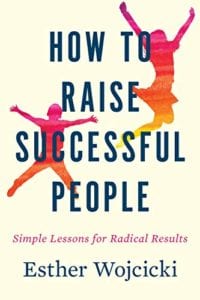
How to Raise Successful People: Simple Lessons for Radical Results
On this episode, my guest is Esther Wojcicki who has written a book called How to Raise Successful People: Simple Lessons for Radical Results. She is famous for three things, teaching a high school class that changed the lives of thousands of students, raising three daughters who have each become famously successful. One is the CEO of YouTube, one is the Founder and CEO of the 23andMe and a top medical researcher. The third thing is inspiring Silicon Valley legends like Steve Jobs. We’re going to ask her what these three things have in common and what she is talking about in her book that relates not just to parenting but to the business world in helping people, whether you’re an entrepreneur or working for a big company become more passionate using her tips. Esther, welcome to the show.
Thank you, John. I’m very excited to be here. Thank you so much for inviting me.
I always like to give people a little context. You and I met on a plane ride from Helsinki back to Silicon Valley where we were attending an event called Slush, which was all about having entrepreneurs come together from around the world. Part of the value of attending things like that is getting to meet people like you. Then we struck up a friendship and have kept in touch ever since. You have this wonderful book, How to Raise Successful People: Simple Lessons for Radical Results. Would you mind taking us back to your own story of origin, before you even had children? Did you always know you wanted to be a teacher?
No, I didn’t know I wanted to be a teacher at all. In fact, my parents didn’t expect me to work at all. Their goal for me was to be a mother. It is a very different goal. My parents were Russian immigrants and they came to America to try to live a better life. Unfortunately, they ended up here at the end of the depression and the beginning of World War II. They didn’t really get a better life. It probably was better than where they were in a Russia because if they would have been in Russia, they probably wouldn’t have been alive. They probably should have thought about that one or at least, I think about that. That was my humble origins. I grew up in a family where money was something we did not have.
Now you have evolved from that to being very involved with education. Tell us how you got from that humble background into becoming a teacher.
My goal after college was to see what I could do as a journalist. I started writing for a newspaper when I was thirteen, fourteen years old as a person writing that was not important and I continued all the way through high school. Then when I was in college, I also earned side money by being a local journalist on what was called the Berkeley Daily Gazette. From there, I went into teaching because teaching was an easier profession for women to enter in the 1960s and 1970s. It was hard to be a journalist for a woman in the 1960s and ‘70s because women were blocked. For example, I couldn’t get into the San Francisco Press Club because I was a woman. I thought, “I might as well be a teacher. That seemed to be a path that was open.” That’s how I ended up being a teacher, but it turns out that I was a very effective teacher. I didn’t realize how effective I was until I went into the classroom. The kids liked me and I like being with them. As a matter of fact, I love being with them. That’s why I’m still there in the classroom after many years.
You were a teacher first and then became a mother, is that correct?
Yes, but I was only a teacher for a short time, a year or two, then I became a mother and then I went back into teaching.
Were you able to take the lessons you have learned and implemented as a teacher into raising your three daughters?
Let’s put it this way. When I was a teacher, I was following the instructions I got in the schools of education. When I was home as a parent, I decided I was going to use an experimental system on my children because I wanted them to be as empowered and as independent as they could possibly be. That was not the goal of the school system. The goal of the school system was, “Can you make them learn as much of the material that we designed?” I didn’t have that goal as a parent. My goal as a parent was to make sure that they were as independent and as self-confident as they could be early on. I started very early, when they were born, to be honest. They were my little guinea pigs.
[bctt tweet=”Be vulnerable to get respect.” username=”John_Livesay”]
I know that your method is the opposite of helicopter parenting. You talked to infants as if they’re adults. There must be the same thoughts that people who are managing people could take away from the opposite of helicopter parenting. A lot of managers like to micromanage their team. For example, if someone’s a sales manager and they say, “Salespeople, here’s the exact script you must say a word for word,” instead of letting people put it in their own words. Would you say that’s a transitional skill that you’re talking about there?
That is an important skill that I am talking about there because all these managers, all these people in business want their employees to work as effectively as possible, be passionate about their job and produce great results. It turns out that the less respect and the less trust you have for your employees, the less likely it is that they’re going to be passionate about their job. They’re going to be doing their job because they want that paycheck. You don’t want them to want the paycheck. You want them to want to make a difference.
Let’s dive into some of the content in your wonderful book. The title is How to Raise Successful People: Simple Lessons for Radical Results. My first question is what’s a radical result for you versus just a result?
A radical result is an opposite of what you think you might get with the regular normal result. A radical result in changing parenting would be instead of having children where you have to take care of them all the time, tell them what to do all the time and control them all the time. The radical result would be you have self-empowered, ethical children that want to do some of the things that the family wants to accomplish without you as a parent, always being the one that is telling them what to do. How do you get to that point in your family? That’s what I’m addressing in the book, How to Raise Successful People.
How do we do that in our companies, which is also another version of the family? Especially what resonates with me, when you said not just self-empowered but ethical people. How can you teach your children or your employees to be ethical when no one’s watching?
One of the things you want to do is to model this yourself. It’s funny how people don’t realize that the model at the top carries incredible weight and people watch you. Sometimes it’s subconscious, they don’t even realize it. If the model at the top is unethical, if the model at the top isn’t kind or doesn’t collaborate well, then it’s hard for the people in the company to model on that behavior. They won’t collaborate well. They won’t be ethical or they won’t be kind. They do what they see and that’s true in the family too. What happens in your family is if you are always telling your kids, for example, “Don’t be on the phone at dinner or don’t be on the phone at meals and all that stuff,” and you confiscate their phone. Then you take out your own phone and there you are saying, “This is an important call. I can’t pass this one up. I have to do it.” What are you saying to your kids?
It’s that old parenting model that doesn’t work at all, “Do as I say, not as I do.” It doesn’t work in the family and it doesn’t work at the office either. You have this wonderful acronym called TRICK. I remember hearing about it when we first met before the book was out. It stands for Trust, Respect, Independence, Collaboration and Kindness. I want to double click on each one of those. Starting with Trust and you’ve already alluded to it a little bit, that without Trust and Respect, the first two in the acronym TRICK, there’s less passion for work. Let’s talk about Trust because this is the foundation for everything, any kind of relationship. Brands are always talking about, “How do we get people to trust us if they haven’t heard of us before?” What is your philosophy around building trust?
Trust starts early. It starts in the home and parents tend not to trust their kids. They think they know the best. The kid knows nothing. As a result, the kid doesn’t feel trusted and they are afraid to take any step where the parent isn’t there. Lack of trust means a lack of trust in yourself. When the child doesn’t feel like they’re capable, then they aren’t because it’s all mindset. It’s all what you think about, what you can do. It’s the same way in a company and it’s in the same way in a school. The way you think about yourself is the most important thing of all. There’s a woman at Stanford that talks about the mindset all the time and how you can change your mindset. It’s really important for people to realize that your mindset is very controlling.
Imagine if you were on a ski, I don’t know how many people ski, but if you get to the top of the hill and you say to yourself, “It looks terrible, I’m going to fall the whole way down.” That’s unfortunately what you usually do. That’s your reality. You need to think about the mindset in all areas of your life, in your home, your school and your business. Your mindset especially is so important in business because all these companies are trying to make a difference in one way or another. They have a product, they have a service. They have something that’s important. What you want to do is you want to model the trust. When you model it, what happens is everybody else follows and sees that you’re a trustworthy company. Everybody wants to be a trustworthy company.
You and I are singing from the same songbook, that’s for sure. We employers tell our employees, “We trust you not to cheat on your expense report, not to say you’re going to see X number of people a week,” or whatever it is you’re empowering them to do without having to. Some people are saying, “We don’t trust you so we’re putting a tracking device on your iPad and your phone to make sure you’re where you say you are.” All of that lack of trust causes so much resentment. This mindset that you were talking about with the skiing example, when I’m giving keynote talks to sales organizations, this need to be perfect and being a perfectionist and how that cramps your creativity. I tell people if you’re climbing Mount Everest and you’re halfway there, your choice is, you either look down and say, “Look how much progress I’ve made,” or you look up and say, “Look how much further I have to go.” That’s the same thing that happens in managing people and certainly parenting children is, “How do you help children let go of this need to be perfect?”

Raising Successful People: Show your children that they can do things no matter how old they are or how young they are.
You don’t get upset when they make a mistake. When you model it yourself, if you make a mistake and you get upset and your kid gets upset, you have to look at yourself. What did you do when something happened that wasn’t right? Every day we make mistakes. That is the way we learn. You learn by making mistakes. Your reaction to life is the only thing you can control. There is nothing else. You cannot control what happens, but you can control your reaction to what happens.
Imagine having a boss or a parent say to you, “You’re going to learn how to ride a bike. You’re probably going to fall down a lot. That’s how we learn by making mistakes. Don’t worry about it.” It takes all the pressure to be perfect the first time you try something new off the table. The concept of respect and I’m guessing it’s going to be a lot like trust you. You have to respect yourself before you can respect your children and you have to respect yourself before you can respect your co-workers. What is it that people can do in their family or in their workplace to increase the respect that they get?
They have to behave like a person that people want to respect. They have to be willing to be vulnerable too. It’s important for you not to be perfect all the time because no one’s perfect. We’re all hiding this from each other. If you can show that you make mistakes, you get hurt and you’re sad about this but you’re still continuing, you’re still working. You are controlling the way that it is you’re responding to life. You’re going to make it no matter what. You’re going to be as positive as possible. That is the key.
We move on from trust and respect to independence. You wanted to raise three independent daughters. Clearly, you’ve done that. What were some of the things that you did to make them feel confident and independent?
They were not being served in the house like a lot of children are. They actually had to participate. They had to help make dinner. They had to help set the table. When they were small, when they were eighteen months to two years old, they had to help clean up every day. I made it simple, but the concept was there. I bought a little plastic swimming pool. They’re available everywhere. The way that we cleaned up is every day they had to pick up their toys and put them in the plastic swimming pool and it worked really well. The next morning when they came out, all their toys were in one place in a plastic swimming pool. That’s an example of one thing that they were doing. They were also busy. If they could, they would mix things for dinner. I didn’t let them use a knife until they were maybe six or seven years old, but they were able to set the table and put things back. When they were little, they were doing things like helping me fold diapers. I made it into something that was fun. They all wanted to do it. What I was trying to do is show them that they can do it no matter how old they are or how young they are. Another thing I did is I taught them how to swim really young. They were twelve months old when they learned to swim. I know that sounds unbelievable, but small babies can learn to swim.
I used to be a lifeguard and I used to teach parents how to get their infants in the pool and blowing bubbles. The key is to make it fun. That leads right into collaboration, which I’m thinking is another key aspect of getting people to come up with good ideas and to work together well is if you can make it fun. Are there other tips you have around how to get collaboration in the workplace as in the home?
Collaborations were the hardest things to do because people usually want to do things by themselves and they take credit for having done it by themselves. What you want to do is make it cool and make it exciting for people to do things in teams. Team A and Team B could be two people together, but working together, the ideas bounce off each other. They do a better job when they’re working together in teams, even if it’s an individual thing. Even if you’re coding, you can talk to the person next to you who’s also doing something and you can be more effective. All the education research shows that people are much more effective when they interact than if they stay on a computer all day and try to learn. That’s not learning. That’s nothing. That’s entertaining.
While you were saying that comment, I can hear my friends’ children and remember my younger sister is saying to my parents, “I can do it myself,” and not wanting any help. This urge to get out of that childlike mindset of, “I want to do everything by myself and I want to take all the credit for it,” and get them into this collaborative concept is valuable. There are books about this, teams that collaborate together and share the credit are much more effective at coming up with innovative solutions that you can’t possibly come up with when you’re in your own head.
Google did this project called the Aristotle Project, where they were looking at what makes the most effective employees. It’s online you can go and find it. What it basically shows is the power of the group and the power of being supportive in a group. When little kids want to do it themselves, that’s usually like, “I want to put my clothes on myself,” which is not a problem. That’s a good idea. They usually put it on backward to start. Don’t let that bother you. As time goes on, they should be able to do things together. You can’t play a ball game by yourself. You could if you throw it up in the air and down and up in the air. All these team sports, they teach so much more than just how to catch a ball. You know how to lose and how to win, how to be part of a group or part of the team. It’s important for parents to encourage team sports. In a company, it’s a good idea to take that same coaching model. That model where there’s somebody there coaching the team to be as effective as it can be and realize sometimes you lose because teams don’t win all the time. That’s important for them to think about. That’s our collaboration and we need to learn it early and then practice it all through life.
The last letter of TRICK is Kindness. In a time when students are being bullied and there are a lot of issues around depression, especially for teenagers. What, if any tips do you have about teaching your children to be kind and how to respond when people are not being kind to them?
[bctt tweet=”Without trust and respect, there is no passion.” username=”John_Livesay”]
This is based on modeling. You personally have to show that you’re kind and kindness starts at home, kindness and compassion. You can read books to them about kind people. You could watch videos about it, you can talk about it and you can do it. That can be things like volunteering at a local homeless shelter or providing food for people that don’t have food. There are a lot of different things that you can do to be kind. Even saying hello to people. It’s shocking sometimes people walk by the custodians in the school on a daily basis and they don’t even say hello to them. These are human beings too. Be kind to everybody. How about saying hello? How about respecting other people? Their job might not be as prestigious as yours or vice versa, but we can all be kind to each other. It’s very important in the classroom for the teacher to model kindness because the minute that teacher does something mean or nasty to one student in the class, all other 30 students are like, “I don’t want that to happen to me.” The reputation of the class is, “This is a mean class.” You cannot do that.
The old way of selling when you were being trained how to sell was, “I’ll always be closing ABC.” I shifted that when I work with salespeople to ABK, “Always be kind” to the way you talk to yourself and then the way you interact with everyone, as you were saying. Some of these salespeople, I’m constantly trying to help them with their empathy skills, which I think is a next-door neighbor to kindness. From the moment you leave your home to you are in that room presenting, and if you’re rude to the receptionist, that person may not be the decision maker but they’re part of the team that is and vice versa. If you show empathy and are kind to everyone that you interact with, the energy completely shifts.
It’s important to be kind to everyone. There is not a religion in the world that does not teach kindness. Every single one does it and we should all respect that. There must be something in the importance of kindness if every single religion in the world teaches it.
One of your strategies and methods is allowing teenagers to pick projects that relate to the real world and their own passions as opposed to making everybody follow the same curriculum. How does that work in the business world do you think?
In the business world, what you want to do is something similar to the Google 20% time. I’m proposing that for the schools as well. You give employees or students an opportunity to work on a passion project of their choice that relates to your company or relates to your subject matter 20% of the time. Even if they don’t take you up on that, even if they don’t have a passion project, just the thought of having the freedom to have that project if you want it, that is liberating.
That concept of “What if?” is the way I talk about it all the time. Paint a picture for someone and help them discover their passions and you’re going to help companies retain their employees. There’s such a problem right now with Millennials being seen as not being loyal to companies. If they’re working for a place that has trust, respect, independence, collaboration, kindness and the ability to help them tap into their passions, you’re not going to have that turnover problem that’s existing. Don’t you agree?
That’s right. The reason the Millennials are leaving these companies is because they need a passion and they want to do things that make a difference in the world and make a difference in their lives. They don’t want to do a routine job. If you can give them that opportunity, even 20% of the time, they won’t go anywhere. They’ll stay there.
One of the things that you talked about is inspiring people like Steve Jobs. Do you have a Steve Jobs story that you can share?
Steve Jobs was a super kind person to me. I liked him. He helped me a lot at the beginning because he came into my class. That was a time when he was not at Apple and he wasn’t anywhere. He was in between all his projects and companies. He would come into class because his daughter was in a class and hang out. He would say things like, “That doesn’t work very well. Let’s see what I can do to help.” The next day help arrived in the form of a new computer, for example. He was a very kind person. He loved teachers. I know he was very demanding in other areas of his life, but I can say that in the education arena, he was great. He was totally focused on what he wanted to do and he could not be diverted. I remember him talking about the phone was going to be in your pocket. I remember being, “This is really far out, a phone in your pocket.”
It’s like talking about everyone going to the moon or something.

Raising Successful People: Millennials are leaving companies because they want to do things that make a difference in the world and in their lives. They don’t want to do a routine job.
It’s another story. He was very interesting to talk to about it because he had a laser vision about what it was that he wanted to do. He was extremely artistic. Those are some of the stories. He was a great person. All the parents had to supply food for the program that his daughter was in. He brought all organic food back before anybody was doing it. He and his wife were like, “This is what they’re going to have.” It was great food.
Is there a characteristic that you see that all three of your daughters are using now as successful business people? Is it the laser focus that Steve Jobs at or is it something else you see?
One is the laser focus, but it’s the other one that is really important. It’s their reaction to life, their reaction to setbacks. They don’t let it get to them. That is what I said earlier. The only thing you can control in life is your reaction to life.
Instead of letting something devastate you, you bounce back and say, “What else can we do to fix this?
You have to have a positive attitude. You can be devastated by some things that happened because some things are pretty upsetting. You can give yourself, “I’m going to worry about it, I’m going to get upset for a day but then after that, I’m going to move forward,” because the alternatives are nasty. The alternative is moving backward or losing your ability to think clearly because you’re so upset or getting your employees all upset.
[bctt tweet=”All you can control is your reaction to life.” username=”John_Livesay”]
As you said in modeling, if the boss gets upset whenever a big account goes away, then everyone else is devastated.
One of the things I realized as a teacher because sometimes we would have repeated fire drills. It wasn’t a drill, it was people pulling the fire alarm and that is completely upsetting to students. They’re like, “Not another fire alarm.” The teacher’s reaction to that false fire alarm, even if it happens two or three times a day, is the key to keeping those students focused. If the teacher gets upset, I can promise you all the students get upset.
The thing that strikes me about How to Raise Successful People, your book, is it’s not just being a parent or it’s not being a manager at a company. You are helping us parent ourselves by using the TRICK acronym.
The number one thing we have to do is to parent ourselves and to take care of ourselves. We have to treat ourselves with kindness. TRICK applies to us too. You have to trust yourself and respect yourself. We aren’t perfect and people get mad at themselves. Then they don’t know how to forgive themselves. You have to forgive yourself no matter what you’ve done because you cannot move forward unless you do that. It’s important.
Esther, that is such a great note to leave on. Forgive yourself, parent yourself and be kind to yourself. Get the book, How to Raise Successful People: Simple Lessons for Radical Results. I can’t thank you enough for being on the show.
Thank you so much and best of luck to everybody.
Links Mentioned:
- Esther Wojcicki
- How to Raise Successful People: Simple Lessons for Radical Results
- 23andMe
- Slush
- https://RaiseSuccessfulPeople.com/
- https://www.Amazon.com/How-Raise-Successful-People-Lessons/dp/1328974863/ref=sr_1_1?keywords=how+to+raise+successful+people&qid=1556048622&s=gateway&sr=8-1
- Quantmre.com
Wanna Host Your Own Podcast?
Click here to see how my friends at Brandcasting You can help
Get your FREE Sneak Peek of John’s new book Better Selling Through Storytelling
John Livesay, The Pitch Whisperer
Share The Show
Did you enjoy the show? I’d love it if you subscribed today and left us a 5-star review!
-
- Click this link
- Click on the ‘Subscribe’ button below the artwork
- Go to the ‘Ratings and Reviews’ section
- Click on ‘Write a Review’
- JohnLivesay.com
- John Livesay Facebook
- John Livesay Twitter
- John Livesay LinkedIn
- John Livesay YouTube