

Connectable With Steven Van Cohen
Posted by John Livesay in podcast | 0 comments


Loneliness and isolation have become significant challenges for workers in recent years. Isolation contributes to the growing mental health problem affecting everyone. In this episode, we have a special guest, Steven Van Cohen, author of “Connectable,” who will shed light on the alarming issue of loneliness among workers worldwide. He also shows how inclusion plays a role in solving today’s loneliness. Steven also provides value in increasing belonging, engagement, and performance with employees. Tune in to this episode and be a connectable leader today!
—
Listen to the podcast here
Connectable With Steven Van Cohen
Have you ever felt lonely at work? This episode is for you. Steven Van Cohen talks about how loneliness is the absence of connection and that loneliness is depleting and solitude is restoring. Enjoy the episode.
—
Our guest is Steven Van Cohen, who has a Master’s of Science and Organizational Development. He’s also a graduate of the University of Illinois in Champaign, Urbana, where I went to school. He’s much younger than I am, but he is a global leadership consultant and executive coach, and author of a wonderful book called Connectable: How Leaders Can Move Teams From Isolated to All In. Steven has spent twelve years working with hundreds of leaders from organizations like Salesforce, The Home Depot, and Bridgestone, helping them improve worker well-being, reducing employee isolation, and boosting team belonging. He’s also a Cofounder of LessLonely.com. Steven, welcome.
I always have to preface, it is not a dating site, even though it does sound very much like so, but you just go to LessLonely.com and all of your loneliness troubles will fall away.
Let’s start with your own story of origin. You can go back to your days at Champaign, Urbana since we share that or even earlier. What made you decide you wanted to get into this whole world of communications and connections?
Like a lot of origin stories, it wasn’t something I planned. I learned early on that I had a knack for coaching. My youngest brother is seven years younger than me and I was really into soccer and I played competitive travel soccer most of my life. When I was 14 or 15, none of the parents wanted to coach his soccer team. I said, “I’m happy to do it.” I rode my bike to the soccer field and ran in through drills. I was there on the sideline coaching them every Saturday. I loved every second of that experience. Fast forward to where I’m at now as an entrepreneur, most of my work is coaching-related and helping people see things in themselves that they don’t see that I see.
I get to do a lot of amazing work around leadership development. It’s super fun. I think back in my teenage years that was the spark that subconsciously took me to where I’m at now. I got a random job as a consultant working for the largest international gold mining company and doing a bunch of leadership work. People left that company to go work for other companies and they would call me and say, “Can you come do that same stuff over here?” That was many years ago, and I’ve been doing it ever since.
Let’s talk about your book. You have a coauthor. How did you guys come up with the title?
The book is all about loneliness, specifically the impact of loneliness at work, why it shows up, and essentially what leaders can do to help solve the problem. We wanted to call the book Rescuing a Lonely Workforce. We thought that was pretty catchy. John, there you go. You thought that was good too?
I love analogies with lifeguard stuff. I have a life buoy on the cover of my book, so anything with rescuing grabs me.
[bctt tweet=”Texting is transactional, not connecting.” username=”John_Livesay”]
You weren’t our editor. I wish you would’ve been because our editor at McGraw Hill said we cannot use the word lonely in the title or subtitle of the book, even though that’s what the book is about. We were proud of the fact that we wrote the first book to ever address loneliness specifically at work. She said, “People will be too embarrassed to read a book about loneliness because it’s such a shameful, stigmatized, charged topic.” They came up with the term connectable, which fits the book nicely, but that’s how it came about.
You have this great visual of a puzzle, a piece missing, and completing the whole look of that. I like the subhead, From Isolated to All In. You talk about loneliness as a silent, sweeping epidemic and we just all got out of a pandemic that triggered that more than ever, whether it was work-related or personal. Let’s talk about the timing of this because people don’t realize how much work goes into a book and how many years you think of it and write it before it comes out. What about the timing of what you’ve done? How does that feel?
The book was written in 2019, so this was all before the pandemic hit. The genesis of the book came compliments of my coauthor and business partner Ryan. He’s an expert in emerging generations in the future of work. He wrote a book called The Generation Z Guide. When he wrote that book, he came across a statistic that 79% of Gen Zers sometimes always feel alone, which is crazy. Almost 80% of an entire generation is feeling that way. As a consultant, a speaker, and a thought leader, he started to do a lot of work with these clients to understand that, “If you’re going to recruit, engage, develop, and retain a lonely workforce, here’s what you need to know and here’s what you need to do.”
We had all of this material and research and stuff built out, and then when the pandemic hit, we went to our clients like Home Depot and Liberty Mutual Insurance and said, “Do you want to talk about loneliness? Is this something that’s of interest?” Client after client said, “Yes, we do.” We got an agent to represent our book. McGraw Hill was one of several publishers who came to the table and wanted to publish it, and the rest is history. That’s how it started in March 2022. We were fortunate enough to have it hit the Wall Street Journal bestseller list and we’ve been going gangbusters ever since.
Everyone experienced a sense of loneliness by being isolated during the pandemic. The effects of that are probably still echoing through people’s lives. I don’t think it’s something you go, “Now I’m with people. I’m no longer lonely.” I remember in school myself the concept of, “You’re at a party. How could you possibly feel lonely?” The anxiety of that sometimes was so great that I was like, “I just got to get out of here.” I feel more lonely being in a room full of people I’m not connecting with than I do when I’m by myself. It amplified it.
Can you speak a little bit about what causes loneliness and then we’ll get into what causes loneliness in the workplace? How can you be lonely? You’re in a dorm, at a party, or you’re in a big office with a bunch of coworkers and you’re lonely at work. If we zoom out and go over what even causes loneliness no matter where you are at work or not, that might be a good starting point because you have this great visual here of starting with, “I feel lonely,” which then leads into all of these being hyper-vigilant of all your emotions. The irony is you start avoiding people according to your book, which is bizarre. It’s counterintuitive.
As I’ve dived into understanding loneliness, it is very bizarre. Let’s start with a definition because you mentioned a couple of things that are very important. The definition of loneliness is interesting because loneliness is not defined by the absence of people. It’s defined by the absence of connection. It’s essentially how that person makes us feel when we’re in their presence. The late great Robin Williams came up with one of the most heartbreaking quotes I’ve ever heard in my entire life when he said, “I used to think the worst thing in life was to die all alone. It isn’t. The worst thing in life is to be surrounded by people who make you feel all alone.” That’s loneliness.
It’s like you mentioned, “How can you feel this way if you’re surrounded by people?” It’s like, “These people don’t give me a spark. They see through me. They don’t see me. They’re not interested in me. They’re not listening to me. They’re not showing concern about whatever I’m talking about.” There are all of these things that happen when people are together that either cultivate that feeling of connectedness or inadvertently push us far away and make us feel isolated and reclusive. Yes, you can very much feel lonely and surrounded by people. I’ll validate that you are not some rare out-there example of someone who felt that way, John, in the past. It’s quite normal.
When you look at why loneliness has been ascending, which is one of the questions you asked, there are lots of reasons. Busyness is one of the big reasons we have less margin to spend quality time with others. Also, remote work. We’re just not spending enough quality time in person. We have seen a massive dependency shift. Many years ago, especially at work, if I needed answers to questions, I had to find a person, and that person had to show me, teach me, guide me, or give me wisdom. Now I just go to YouTube, Google, or an online learning platform. When you look at Gen Z, this young generation never had to rely on other humans because all of the world’s answers have been curated into their mobile and smartphones. That’s created separation in how we interact.
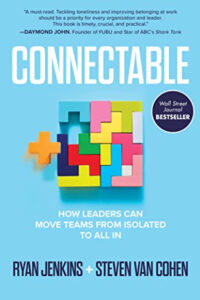
Connectable: How Leaders Can Move Teams From Isolated to All In
It even impacts how they date. They go on group dates. They’re not even dating one-on-one because they don’t have any social skills to do that. It’s so bizarre to me.
It’s just a different way of navigating through the world. Here’s what’s something that’s important to understand. When you talk about technology and how we engage with it from a communication standpoint, most of our conversations that happen through technology are transactional, and communication is not connection. If we’re communicating, especially via text, email, or DMs on social media, those tend to be transactional conversations.
That’s all frontal lobe processes. That’s data and information. The feeling of connectedness like the sensation of, “This person sees me and gets me,” happens in the back part of our brain in a totally different region. That connectedness is most likely to occur when we’re together in person where I can see your face, hear the intonation of the tone of your voice, and I could get that sense of how you’re reacting to what I’m saying. That just doesn’t become possible when we’re communicating over devices.
I hear a lot of people in management getting so frustrated with the younger people not ever wanting to pick up the phone and call a client, “I just texted them to see if they want to buy.” When you just said there, I love that texting is transactional because it’s not a connection. For most young people, they’re like, “I text my best friends all the time. What do you mean that’s not a connection? That’s my preferred way of connecting. I don’t want to everyone pick up the phone. I don’t ever want anyone to call me ever.” It’s considered rude.
“How dare you call me and leave me a voicemail. Are you insane? You’re going to actually record something that I have to push a button to listen to? Come on.”
I get amused when people will leave me a voicemail text. I’m like, “How is that any different? I got to listen to you now.” We talked about my own experience when I moved from LA after being there many years to Austin, Texas, on March 1st, 2020, and had all the great plans of discovering a new city and meeting friends of friends. Like you, I go traveling and speak at live events as a sales keynote speaker on storytelling. All that came to a screeching halt at the same time within two weeks. The disorientation of your business, as you know, is changed. Everything’s going to be virtual. Most people can remember there was a shortage of everything. Not just toilet paper. You’re like, “You want to set up a home office with some nice lights and a microphone? Good luck. That’s going to be months back order.”
You got the sense of, “The swimming pools are closed. Going to a Broadway show is not possible. Restaurants are closed. I got to go back to what else I want to do that brings me joy if I can’t be around someone.” We all know moving is a stress. Anybody who has their business disrupted and everything has to go virtual is stressed. The combination was isolating. How long it’s going to last? That’s what I want your opinion on because, to me, that was the hardest part. I heard eighteen months, and I’m like, “No, it’s two weeks. Come on. Eighteen months?” That unknown, is that factor sometimes into loneliness, do you think?
Loneliness has a lot of components to it. When you think about why people feel disconnected, it could be because they’re disconnected from themselves, so that could create loneliness. It could be a disconnection to my strong-tie relationships. It could be a disconnection to my weak tie relationship. It could be my connectedness to how my work makes me feel because that value and impact is a connectedness level.
Yes, that adrenaline rush when you’re on stage.
[bctt tweet=”Loneliness is depleting. Solitude is restoring.” username=”John_Livesay”]
It’s the connection to the community. There are all of these connection components. When the pandemic hit, what people started to feel and understand is the gravity of how important human connection is and how awful it feels when it’s been ripped away from you. We grossly underestimate how badly we need one another. The pandemic shed light on the importance of making more time to connect and be pro-socially active. Even now in 2023, we’re still starting to see some of the residual impacts of this play.
One of my favorite quotes in your book is, “Loneliness is depleting, and solitude is restoring.” I have to say I didn’t feel that during the pandemic at the beginning. I didn’t feel enough solitude already. I need to be restored and I’m not feeling it at all, but I’m like, “I can’t even get a haircut.” I didn’t realize how much I’d miss talking to the guy who cuts my hair, yet that’s a form of connection. Somebody’s touching you and you’re talking to them, you see them on a regular basis. When that gets cut off, you are like, “Alright.” The stories of all these people having to be together in a small space, they would beg for solitude.
They’re like, “You don’t know how lucky it is? At least you’re not with your ex.” Imagine having to stay at home with somebody you weren’t getting along with and the stress that calls on. The question that all leads me to is what can someone do who does feel lonely at work? What can someone do who’s a leader of people that sees it? I’m guessing they’re two different things. One, how do you take care of yourself if you’re feeling lonely and you maybe feel embarrassed? Also, if you’re managing people and you go, “I know that person’s struggling. I don’t know that they would even label it loneliness, but I’m guessing that’s what it is.” I know that’s two questions at once, but I want to give the perspective because it’s an interesting range there.
Let’s start with what you can do as an individual at work who’s feeling this way. The framework and the title of the book, Connectable, is a great way to think about how to operate. When someone’s likable, they’re easy to get along with. When someone’s connectable, they’re easy to connect with. There are things we can do to make us more connectable. One of the first things that we can do that allows us to feel way more connected is to be very grateful to others. Gratitude, demonstrating gratitude, and making somebody else feel important, valued, desired, and impactful makes us feel good and boosts connection in a very powerful way. That’s one way to be more connectable.
Another is to channel this idea of interruptibility. We are so bogged down every second of the day with items on our to-do list and our meetings back to back. What we have to do is try to build a social regimen. We have to be mindful of how to create routines that are on our calendars and defended with some vigilance so we can make time to do the social connecting activities that make us feel connected to others or else we just get bogged down with too many things that happen in a given day.
The other thing we can do is we can leverage what is called weak tie connections. We all know strong tie connections, like friends, family, and children if you have children. Weak tie connections are the baristas at the coffee shops that you bump into on a regular basis. It is the person on the train that you’re sitting next to. It’s all of these people that we rub shoulders with in the wild but don’t engage with.
Some research out of Harvard found that the quantity and the diversity of your weak tie connections are almost as important to your happiness, your connectivity levels, and your health and well-being as the strength of your strong tie connections. All those people that you’re standing next to in line while you’re on your cell phone, checking on your email, are great people to just smile at. “What are you up to? What’s going on? How are you?” All of those moments are very restorative and we take them for granted.
It is gratefulness, being somewhat interruptible, and not making yourself seem like you get angry anytime. You talk about it in the book, “These days, few things in life strike as much dread as the doorbell ring.” It made me laugh because, during the height of the pandemic, Amazon would come and they’d ring the doorbell and then they’d leave. I’d be running to the door just to yell out to somebody thank you from a mile away. “We made eye contact. I feel better.” It is these weak connections that we underestimate.
That’s why I was reading that with Amazon creating these stores where you don’t ever check out with a person. Even Whole Foods now has a thing. You don’t want to talk to a person you can self-checkout. It goes, “This deja vu of when you had to start pumping your own gas. It’s not enough. I got to pay these prices, and now I got to bag my own groceries.”

Connectable: Busyness is one of the big reasons we have less margin to spend quality time with others. In remote work, we’re not spending enough quality time in person.
It’s true. The frontman for Talking Heads, David Byrne, wrote a cool article called Eliminating the Human. The whole idea of eliminating the human is what you’re talking about. We’re taking away the social fabric of our society. That’s a problem because it allows us to not do what we need to do, which is to be around other people, to find connectivity, to be seen, and to smile. One of my favorite memories as a kid growing up was riding my bike to tower records to listen to a piece of music. I would go and talk to the person behind the stand to play the CD, I would talk to the cashier, and then I would’ve to go to a friend’s house to listen to that CD or cassette tape with another human. Listening to a song you wanted to listen to was a very collaborative and connective experience.
Making mixed tapes for people and all that. It’s a customized gift.
Now it’s, “Alexa, play. Go to Spotify.” All of those touchpoints have been eliminated. As we get things to be more convenient, it is destroying the opportunities that we need for connectedness. Without a counterbalance and awareness and some proactivity, we’re just going to continue to be wandering around solo without having to ever talk to another human again, which is very problematic.
The great things you gave us about how we can deal with our own loneliness, are they the same three for a leader who sees somebody with a leader go up to someone and say, “I’m grateful you’re doing such a great job here. I’m grateful you went the extra effort.” Does that help that person not feel so lonely? Can you use those three things that way?
As a leader, yes, they are transferable, but there are some other things that leaders specifically need to keep in mind. One of the biggest areas of loneliness at work is due to feeling lost. As you could imagine I’m alone in the wilderness, with no map, don’t know where I’m going, don’t have anybody to turn to, and am not sure if I’m going to get attacked by a wolf. That creates a very lonely sensation. At work, it’s no different.
Onboarding the first 90 days, I imagine it’s at the peak.
Also, depending on the leader if that leader’s not giving clarity, clear expectations, clear direction, and the right resources to tap into. If I don’t get the sense that there’s someone there to help guide me, I’m going to feel disconnected and lonely. Leaders need to be very mindful of creating clarity with the work that their teams are doing. That’s a big piece to fostering more connectedness. The second thing that leaders need to be aware of is that connection doesn’t take a very long time to create.
It takes 40 seconds for two people to have what’s called a restorative exchange. What leaders tend to do is think, “Let’s just go to a happy hour. Let’s do an offsite once a year. Let’s have fun together on a periodic schedule and we’re all going to have bonding, connectedness, and belonging.” It’s not how it works. Go to one event one time with one person, and be like, “We’re connected forever.” That’s just not a sustainable or solid strategy. What has to happen is leaders need to find ways to make sure that people can see and understand each other on a regular basis.
One of the activities I do with a lot of my leaders is, every Friday, before the team concludes for the week, they do a huddle and each person just shares what was the week like from A to F. A was a great week, and F was a terrible week, give a grade, and then you give some context. “This was a C week, and here’s why.” Someone might say, “Actually it was a B-plus week for me, and here’s why.” What leaders can do is they can start to figure out other patterns. Are we consistently having good weeks for bad weeks? Which team members consistently have good weeks or bad weeks? Having everybody understand the perspective of each team member, that’s connective. It is another way to get people to share and feel seen. There are a lot of these things that leaders need to do more explicitly with their team members.
[bctt tweet=”Leaders must find ways to ensure that people can see and understand each other regularly.” username=”John_Livesay”]
I love the huddle. There are so many questions I have. I loved your book by the way. I highly recommend everyone get it. You talk about the past, be at work, and there will be some commute time, which a lot of people love that commute time. There’s the only time of solace or solitude, and now it’s this hybrid thing. You come back 3 or 4 days a week and you have a choice of which day week you’re working from home, so it’s very inconsistent. They’re not trying to make everybody work the same days off because they don’t want every Friday to be a ghost town. Is the hybrid work creating more loneliness, or is it just a contrast to the pandemic when you were not at the office at all and it’s better than nothing?
Is it creating more loneliness? One hundred percent. There’s a little bit of an asterisk next to that statement. Is it possible to have strongly connected teams in a remote environment? One hundred percent. Is it a catalyst, and are we seeing loneliness levels increase because of the way we’re working remotely? Yes, it’s a lot harder to build in connectivity when we’re remote and we’re doing what we’re doing now over Zoom, but it’s possible. It just takes intentionality, effort, awareness, and commitment in order to make it come to life.
I laughed out loud when I was reading your non-helpful guide to helping a lonely person. First of all, I love everything. If you’ve ever heard, and God forbid you’ve said it to someone, “For God’s sake, just go outside, John. Take a walk, call somebody, and get a pet.” I’m like, “I have a dog already and I’m still lonely. I can’t imagine what it would be like without a dog.” “You’re too much in your head. You’re overthinking everything.” Almost everything that you have in here I’ve either said to myself or have heard and go, “Maybe I’m depressed and it’s not loneliness because this walk didn’t make me feel any less lonely.” Is there one thing you would say that is helpful to say either to yourself or somebody else since we have this great guide on what not to do?
One thing that’s important for people to understand is it’s not like feeling hungry and getting an apple. It’s a similar pattern. Hunger is our biological cue that we need to eat. Feeling lonely is our biological cue that we need to connect. What happens when people feel lonely is they retreat further inward. The reason is, if I’m already dissatisfied with my level of connectedness, it’s very risky for me to continuously put myself out there. It’s a lot easier just to continue to wallow in my own sorrow by myself behind the curtain.
When people make those kinds of statements, “Go walk your dog, go make a friend, call someone,” it’s really hard for that person to do, which is why it’s bad advice. One of the quickest ways to get somebody to feel more connected is to make them feel important. It is different than showing gratitude and thanking somebody for their efforts.
If I feel like you’re lonely and isolated, John, I would come to you and say, “John, I have this really big problem. I don’t know what to do. I want your advice. If you were me, how would you approach X, Y, Z?” By making somebody feel like, “This person is asking me for advice, they want my perspective, they care about my opinion,” that’s a really powerful way to get them to feel that sense of connectedness.
It gets them out of their own head.
It’s a lot easier a way to approach someone without saying, “John, you look lonely.”
It’s way too aggressive. Apple came out with their new video on their new version of VR. You wear this while you’re having FaceTime with somebody, and it creates an avatar of the other person. You don’t see somebody wearing the glasses but it’s still not really them, and you would wear this on an airplane to watch a movie. You have a lot of examples in the book about technology at home and technology at work. You’re constantly addicted and isolated. We used to look at the newspapers you said, and now we’re on our phones all the time. It’s still avoidance. What do you think VR is going to do to loneliness?

Connectable: One of the biggest areas of loneliness at work is feeling lost.
It depends on how it’s being leveraged and used. I get nervous that people are going to inadvertently become tied to their virtual selves. If that’s the case, the real self is going to be devoid of what they need to feel connected and a sense of belonging, importance, and significance. There are scenarios where VR is going to be very problematic. However, there’s some interesting research from the University of Wollongong in Australia. They found that social media and technology can be very good for building strong connectedness if the platform is a means to connect away from it in real life.
John, if I see you just went on vacation and I call you like, “How was Bailey? I want to know all about it,” that’s powerful because I got cued to talk to you about something, but then I made an effort to connect in a more meaningful way. If VR is allowing us to have those opportunities to further connect away from the space, it’s a great way to start to spark connectedness. If we’re only living in the VR, that’s no Bueno, in my opinion.
It’s one extremely the other. The book is Connectable. We can get it anywhere. If somebody wants to bring you in to coach their teams, what’s the best place to send them?
The website is SyncLX.com or message me on LinkedIn. I’m pretty active on that social network, Steven Van Cohen. I’d be happy to get in touch and explore how to collaborate.
Thank you so much for sharing your wisdom and making us all feel a little less lonely.
Thank you, John.
Important Links
- Steven Van Cohen
- Connectable: How Leaders Can Move Teams From Isolated to All In
- The Generation Z Guide
- Eliminating the Human – Article
- SyncLX.com
- Steven Van Cohen – LinkedIn
- Better Selling Through Storytelling Method Online Course
Wanna Host Your Own Podcast?
Click here to see how my friends at Podetize can help
Purchase John’s new book
John Livesay, The Pitch Whisperer
Share The Show
Did you enjoy the show? I’d love it if you subscribed today and left us a 5-star review!
- Click this link
- Click on the ‘Subscribe’ button below the artwork
- Go to the ‘Ratings and Reviews’ section
- Click on ‘Write a Review’
Love the show? Subscribe, rate, review, and share!
Join The Successful Pitch community today:
Hunting Discomfort With Sterling Hawkins
Posted by John Livesay in podcast | 0 comments

Getting results comes down to pushing past your comfort zone and limiting beliefs. That is what today’s guest, Sterling Hawkins, the CEO and Founder of the Sterling Hawkins Group, firmly believes. From a multi-billion-dollar startup to collapse and to come back to launch, invest in, and grow over 50 companies, Sterling takes that experience to work with C-level teams from some of the largest organizations on the planet and speaks on stages around the world. Sterling is out to break the status quo. He believes that we can all unlock the incredible potential within ourselves, and he’s on a mission to support people, businesses, and communities to realize that potential regardless of the circumstances. Today, he talks about how important it is to hunt discomfort and how, when you feel seen and heard, your loneliness goes down, and your productivity goes up.
—
Listen to the podcast here
Hunting Discomfort With Sterling Hawkins
Our guest is Sterling Hawkins, the author of Hunting Discomfort. We’ve talked about how important it is to hunt discomfort, not just tolerate it, and how when you feel seen and heard, your loneliness goes down, and your productivity goes up. Enjoy the episode.
—
In this episode, our guest is a repeat guest, which I don’t have many of those, but when someone says stand out and has such amazing new content as Sterling Hawkins does, it’s always a treat to have him back. In case you don’t remember, Sterling is out to break the status quo. He believes that we can all unlock the incredible potential within ourselves.
He’s on a mission to support people, businesses, and communities to realize that potential, regardless of the circumstances. He’s got this amazing story from a multimillion-dollar startup to collapse and coming back to launch, invest in, and grow over 50 companies. He’s got a new book out, which I am a big fan of, called Hunting Discomfort: How to Get Breakthrough Results in Life and Business No Matter What.
—
Sterling, welcome back to the show.
No matter what. Thanks, John. Great to be back with you. Thanks for having me on.
I want to ask you about three ways that we can start hunting discomfort and how that can help us change our lives for the better. Many of us avoid it. The concept of the comfort zone is what we all know, and I remember hearing years ago that if you’re not actively getting outside your comfort zone, your comfort zone shrinks. That was a shock to me. The majority of the time, I’m trying to be in my comfort zone, not hunt discomfort.
That’s probably the thing I hear most about this book. People tell me, “Sterling, look at my business, bank account, relationships, friends, and family. I don’t need to hunt discomfort. I’m surrounded by it.” My answer is always the same. That means you’re living with discomfort, not hunting it. When you’re hunting discomfort, you are forever free of it. Not circumstantially free. Not like, “I need enough money, then I will. I need to be in the right relationship, then I will.” It’s free based on yourself. It’s the only real freedom there is.
It’s an oxymoron, isn’t it? Our brain thinks, “How can I be free of discomfort if I’m hunting it?” Part of it is we’re in control a little bit. Would that be accurate? If you’re hunting something, you’re not afraid of it.
I found this research at the University of Michigan and they were studying my favorite topic, which is discomfort. They were looking at physical discomfort, maybe you broke something, emotional discomfort, you lost a job, broke up with a loved one, and mental discomfort, on and on. They were scanning people’s brains and their bodies. What they found blew me away.
[bctt tweet=”Loneliness can be cured when people feel seen and heard.” username=”John_Livesay”]
No matter what discomfort we were experiencing, physical, mental, emotional, or arguably spiritual, but that wasn’t in the study. Our bodies and brains process them identically. So much so, you can take a sip of methapine, and it will help you with emotional pain, believe it or not. That’s not a bio-hack from Sterling, by the way. I’m not suggesting that.
We have mentioned this hashtag that’s part of your brand, #NoMatterWhat. We’re going to get into why some of us back off from the discomfort the minute it starts to hurt but your whole premise is lean into it a little bit.
It will build the muscle for it because if we process it the same everywhere, we can grow our capacity to deal with it anywhere. You go to the gym to build your biceps. If you want to grow your resiliency and ability to breakout growth, will you hunt discomfort? There’s no other way.
You have all these great social media posts about how you yourself physically push past your own level of comfort, like riding a bike up a mountain or all these athletic things you do. How did you first start to embrace this as one of your favorite topics?
It was forced on me. I don’t wish discomfort on anybody, myself included. As you alluded to a little bit on my introduction, I was part of a massive startup. We raised hundreds of millions of dollars, a multibillion-dollar valuation. It was like the Apple Pay before Apple Pay. Hugely successful for a while then long story, very long story, very painful story, very short is when the company collapsed, so did I. My identity, how I saw success, how I saw my friends, and how I saw everything was so tied to it. The company crashed, and so did I.
It was like I was thrown into the unknown or ultimate discomfort. Having some of those dark nights of the soul kinds of moments, I’m asking myself, “Why am I here? What’s my life about? Where do I go from here?” As part of building myself back, I said, “I don’t know what I’m going to do or how I’m going to do it, but I’m going to take steps forward no matter what.” That was the origin of the whole thing.

Hunting Discomfort: Commit to one thing every day that you’ll do no matter what.
One of my favorite lines from your various successful and popular keynote is from the boardroom back to?
My parents’ house.
I think that’s such a fascinating, humble, vulnerable way to look at that. Let’s assume now that you have got us to start thinking, “I’m going to start hunting discomfort.” Is there one thing we can start to do that would be an easy first step? Is it take a cold shower, or is there something else you recommend?
You could. I’m a fan of that cold exposure therapy, for sure, but I suggest to people, especially those getting started, to commit to one thing every day that you’ll do no matter what. It doesn’t have to be the same thing. It might be, “I’m going to call my mom and I’m going to send this email. I’m going to make a cold call the next day.” It can be different. When you get up in the morning, you commit to one thing you’ll do no matter what. What that does is it builds your capacity to get things done regardless of the circumstances.
Many people give excuses for why they didn’t return the phone call. “I know I promised I was going to do this and I got distracted by this or that.” At the end of the day, it’s an integrity thing, isn’t it? Keeping your word to yourself is the first step.
It is, and when we are thrown into chaos that is not of our own choosing, pandemic, tech disruption, you lose your job, or whatever it is, we have built that muscle inside of us to get things done.
[bctt tweet=”You can hunt discomfort at any age.” username=”John_Livesay”]
A lot of people have goals and dreams, and they get stuck, or they give up on their dreams, but you’re saying that we start working this muscle of hunting discomfort. It gives us more tools in the toolbox to make those dreams come true. Do you have a story of that happening?
I would say it a little bit differently. I would say that you get the discomfort out of the way that’s in the way of reaching your full potential. I think there’s an innate love, joy, happiness, and gratitude inside each of us. That is I promise you greater than whatever is in front of us. When we get the discomfort out of the way at that, we become literally unstoppable.
One of our mutual friends, Emanuel, who’s part of the #NoMatterWhat community, is a great example of this. He lost his job as many did going into the pandemic. He was confronted with this question, “Where do I go from here? What are my next steps?” I think you know this story but he was walking by himself somewhere in the suburbs of New York. He stumbled into this tattoo parlor and said, “I want to get a tattoo of the business I want to start on my left bicep.” He did. It’s massive. It takes over his whole bicep. I don’t know how he explained that to his wife when he got home, but he committed in a way where there was no going back.
It’s a very important part of getting results. I would call it getting a tattoo. Proverbial, but he got literally a tattoo. Within weeks of that, he had moved to Texas. He had started his business. He started working with many clients, myself included. We started doing some work directly with him, and he’s built an eight-figure company.
He and his wife are traveling in Portugal.
They’re in Peru at the moment. They’re living the dream.

Hunting Discomfort: Feeling alone isn’t a function of having people around. It’s a function of being seen for who you are.
I’ve seen that tattoo, and I thought to myself, “That is a level of commitment.” I’ve only seen it when people were drinking the proverbial Kool-Aid at Nike, and they’d get the swoosh tattooed on them. What I love about what he did is he had the tattoo before the outcome. I think that’s what you’re talking about.
That’s critical. Otherwise, it’s a memory, which is fine. This is not a critique of tattoos, obviously, but when you commit and don’t know how you’re going to achieve it. You know it’s not impossible but you’re not exactly sure how. That’s a real commitment that is going to make a difference for you. It worked for him, me, and anybody that uses it.
Yes, and one of the things I admire about him is his willingness to give people a sample at no charge of his work because he believed in it so much and knew that he would pay for it.
I don’t think he’s doing that anymore.
No, he doesn’t need to, but that reminds me of Mrs. Fields’ cookies that used to stand outside. You’d smell it, but they go, “Do you want a free sample?” Everybody would come and eat multiple cookies. When you’re starting out with that commitment, it’s a total belief and has something of value. If I have to give it away or a sample of it, prove it. I will, and most people aren’t willing to do that. He came from a very humble place of that. Look how it’s paid off. It’s great.
You introduced me to him. I introduced him to people here in Austin who since have hired him. It’s very cumulative. That energy is very contagious, and you want to help someone like that. Do you think it’s ever too early or too late for someone to hunt discomfort? They’re like, “I’m 100 years old or I’m only 20 and whatever.”
[bctt tweet=”No matter what kind of discomfort we are experiencing – physical, mental, emotional, or spiritual – our bodies and brains process them identically.” username=”John_Livesay”]
Only the people that aren’t born yet or are already dead. For everybody else, it’s not only helpful but it’s critical and living a meaningful life. One of the reasons I wrote this book is because I want myself and the people I work with to be able to look at their life on their deathbeds and say, “I lived something that was true to myself.” The number one deathbed regret is, “I wish I had the courage to live true to myself.” If this movement can give even a couple of people that courage, that’s what it’s about.
You talk about self-doubt and how our brain is wired to look for patterns of failure if we let it. The awareness is that it’s a fight or flight response. It’s why of doing that but we need to override that. How do we do that?
It’s something that we can have worked to our advantage. There’s something in our brains called the Reticular Activation System, RAS for short. It works like the bouncer of our conscious mind. It looks at all the things in the world and says, “These are the important things for you to pay attention to.” The reason why I bought a new car and now I see that car everywhere. It’s the RAS kicking in, knows that it’s important, and now it looks for it. It’s not everybody bought the same car on the same day I did. It’s the fact that I started noticing.
When we succumb to self-doubt, what happens is that RAS is tuned, looking for reasons to give us an out, to make us fail, to have us crash and burn, especially if we failed in a similar way before. The good news is that RAS also works the other way. This was a perfect segue, John. When you make that big commitment, you’re behind it, and you are all in no matter what, your brain will start to look for openings for action, new opportunities, and new potentials like it did for Emmanuel. That RAS, when we’re a victim of it, it will kill you. When you use it to create breakthrough success, it’s the tool that will let you see things that are invisible from where you sit now. It’s hugely powerful.
It’s almost like we’re rewiring the fight or flight response to work since we’re not being chased by cyber tooth tigers anymore. We’re rewiring it to, “Don’t constantly focus on what could go wrong or what’s a danger here. I want you to start focusing on opportunities and any progress and reinforce that.” It’s helpful. This other part of the exposure, you have something here called The Loneliness Factor, which is rarely addressed in a business book.
I want to give you huge kudos for that. When I moved from being in the heart of everything in Austin near the airport by a house, I had some friends who live in the heart of everything come and visit. They said, “Aren’t you lonely out here?” I thought to myself, “I don’t think loneliness is a geographic thing.”
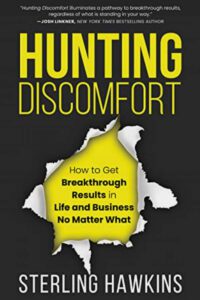
Hunting Discomfort: How to Get Breakthrough Results in Life and Business No Matter What
We’ve been at a party and feel very lonely sometimes or sometimes you feel you’re with one person and you don’t feel that. I don’t need to be crowded to not feel lonely. I thought that was such a fascinating thing. Everybody has different needs. I need to step outside my door in Manhattan and be in Times square in order not to feel lonely is not my MO. This concept of exposure and aloneness, can you address that a little bit? Tell us about the visual of trying to climb a smooth wall. It is so great.
I’d be happy too. Feeling alone isn’t a function of having people around. It’s a function of being seen for who you are. What happens for many of us, and I was certainly a victim of this myself, is we want to be accepted. We want to be successful and seen as successful with the people around us, family, friends, our coworkers, investors, and what have you. From an evolutionary standpoint, it makes a ton of sense because if you were kicked out of your tribe in the caveman days, it didn’t mean you didn’t have friends anymore. It meant death, like literal death.
We now have that same biological response where we’ve constructed these identities, views, ways of thinking, being, and acting that satisfy those around us but maybe aren’t true to who we are. When we let people into that view of who we are, we open ourselves to be a little bit vulnerable. It not only makes us not feel alone anymore. It makes us feel seen. It also helps other people connect with us. The wall analogy you used, I thought of that. I talked to my mom one day. We were out rock climbing and talking about love.
I always have these deep, profound conversations with my mom, and we were talking about perfection because we’re both recovering perfectionists. I said, “Perfectionism is like a smooth granite wall. There’s nothing to grab onto and climb. There’s nothing that makes it stand out. It’s perfect.” As there’s a wall that’s got some cracks in it, crevices, places for a foothold, or a handhold, that’s how you connect to it.
It’s the same with love. When we open ourselves, show those cracks, and show those imperfections, not only is it something that people can grab onto. We feel seen and somewhat paradoxically. We also get all the results, dreams, connections, and even money that we’ve always wanted. They are in the same place.
Talking about perfectionism as a goal and the smoothness of a wall with no cracks reminds me of what people talk about with plastic surgery that it’s called Plastic For A Reason. If you don’t have any character on your face, there’s not a laugh line or a wrinkle, then you can’t relate to that. That’s like a doll instead of a person. It doesn’t feel emotional. Actresses have gotten so much Botox that they lose their acting chops. I think there’s a lot to be explored there in terms of not being afraid to let the light in on those cracks and tell people, “I don’t have all the answers all the time.”
[bctt tweet=”There’s innate love, joy, happiness, and gratitude inside each of us that is greater than whatever is in front of us. When we get the discomfort out of the way, we become unstoppable.” username=”John_Livesay”]
It also leads to high-performing business cultures. It’s not just to feel good. The feel-good component is fantastic and arguably the most important thing. When you’re in a business, community, family, or any cultural dynamic that does that, you’re going to perform infinitely better because, as you said, you’re going to talk about your failures. You’re going to open yourself up and say, “I don’t know but let’s figure it out together.”
One of the other sections in Hunting Discomfort that jumped out at me was the concept of balancing discomfort with surrender. With those two words together, alone seemed like a lot to handle. Let alone coming up with a balance and then you talk about our comfort zone. What I love about this is the concept. There’s a difference, a distinction between mild discomfort and severe discomfort. On the far extreme is it’s paralysis of it, where we’re not even moving at all. Let’s give people a hint so that they want to get the book and read this themselves. On either side of growth is either mild discomfort or severe. I think of it as salsa. Do you want mild, medium, or hot?
One of the quotes that have always meant a lot to me is the Robert Frost quote, the way out is through. If the way out is through, the way through is to surrender. Not in terms of giving up, sitting on the couch, or ordering a pizza. Although there’s a time and a place for that surrender in terms of accepting what is, how it is, and how it isn’t, including yourself. When you do that, it frees you from the views, perspectives, ways of thinking, and enacting that have successfully gotten you to the way you are now, but they’re limiting you from taking that next step. How we surrender and how we move into discomfort is very important.
I saw a lot of these concentric circles on Instagram like you’re in your comfort zone, and the further you get away from that, the more dreamland of growth there is. That’s simply not the case. The sweet spot of discomfort is more like a bell curve. If you’re in your comfort zone all the time, that’s not good. There’s no growth. You’re not going to progress anything for yourself or your business. On the other side of that can be thoroughly paralyzed. Part of the reason I wrote the book is because there are steps for how to do this. You want people around you. You want the right environment to be able to move from that discomfort.
If you don’t have that in place, too much discomfort can be traumatic and make your discomfort even worse. There is this sweet spot that’s different for everybody. That splits the difference between comfort and extreme discomfort. That’s where growth is. When you’re in that spot, according to Yale’s research, you are able to learn four times faster. It’s like a bio-hack to getting better, faster, and smarter.
A lot of companies are bringing you in as the keynote speaker to talk about this very topic. You’re represented by Executive Speakers. They manage you. Who are some of the ideal audiences that you find craving this content?

Hunting Discomfort: When you make that big commitment and you are all in no matter what, your brain will start looking for openings for action, new opportunities, and new potentials.
It’s the audiences that are looking for growth. There are two flavors of them, you could say. One is companies and cultures that are facing extreme adversity. Maybe they’ve had some pandemic fallout, got labor shortages, supply chain issues, and people in Europe somehow involved in the war over there. They’ve got extreme adversity, and yet they still want to grow no matter what.
That is an audience where the #NoMatterWhat and Hunting Discomfort message has resonated. The other group are people that may be doing well already but want a breakthrough. They’re ready from an investment, a culture, and a company standpoint. They’re saying, “We’ve been successful thus far. We’ve been in business for maybe a while, and we’re ready to take it up a notch. Can you help us do that, Sterling?” The answer is certainly yes.
The keynote is just a start. From the keynote, we get into creating the ultimate intent of the company, leadership, and everybody that works there. It’s what matters to them at the end of the day or at the end of their lives. As that becomes a guiding beacon for each of them individually and their company culture, that’s what’s going to produce the breakout growth.
It sounds like you’re also helping companies attract great talent. If someone has that personal motto or I want to keep growing, I’m going to go work for a company that matches that vision versus another offer I have that maybe seems content to rest on their laurels. It’s the company that is growing, pushing, and hunting the discomfort that fits my needs. Those are the top producers in any field, whether it’s sales, tech, or what have you. The book again is called Hunting Discomfort on Amazon and anywhere you buy your book. If people want to get ahold of you as a speaker or a consultant, where should they go, Sterling?
SterlingHawkins.com. That’s got all our social media. You can join that #NoMatterWhat community there and check out all the details around the book and everything else. Thanks for that, John.
Thank you. What a great gift to the world at a time it’s certainly needed. When you’re describing all those people who are facing supply chain challenges and employee shortages or challenges with European at war, I’m like, “Your phone must be ringing off the hook.” It’s well deserved.
Thank you. We’ve been very busy, and I’m grateful for every moment of it.
Thanks again, Sterling.
Thank you, John.
Important Links
- Sterling Hawkins
- Hunting Discomfort
- #NoMatterWhat
- Amazon – Hunting Discomfort
- Better Selling Through Storytelling Method Online Course
- Mrs. Fields
Wanna Host Your Own Podcast?
Click here to see how my friends at Podetize can help
Purchase John’s new book
John Livesay, The Pitch Whisperer
Share The Show
Did you enjoy the show? I’d love it if you subscribed today and left us a 5-star review!
- Click this link
- Click on the ‘Subscribe’ button below the artwork
- Go to the ‘Ratings and Reviews’ section
- Click on ‘Write a Review’
Love the show? Subscribe, rate, review, and share!
Join The Successful Pitch community today:
- JohnLivesay.com
- John Livesay Facebook
- John Livesay Twitter
- John Livesay LinkedIn
- John Livesay YouTube