

Get Interview Connections with Jessica Rhodes
Posted by John Livesay in podcast | 0 comments

 Episode Summary

Today’s guest on The Successful Pitch is Jessica Rhodes who is the founder of Interview Connections. She’s an entrepreneur that found a niche of helping people get booked on podcasts as a guest. She also helps podcast hosts find the best guest. She talks about how she figured out that that was what she was really passionate about. When she had her why, she took off. People really know that they can trust Jessica to find them the right guest, very similar to how investors trust Judy Robinett and I to find them the right startups to put in front of them to hear a good pitch.
Jessica has great insights today on what it takes to be a successful entrepreneur, how to get someone to pitch you in the right way. Most importantly, the catalyst connector that she is, talks about the chemistry that is so important in matching up people. Whether it’s getting somebody on the right show or in the case of a startup, getting them in the right room with the right investor.
Listen To The Episode Here
Get Interview Connections with Jessica Rhodes
Hello. Welcome to The Successful Pitch. Today’s guest is Jessica Rhodes, who is the founder and CEO of Interview Connections, the premier guest booking agency for podcasters and guest experts. She literally is the person that gets me on this amazing podcast. She’s an entrepreneur herself. I wanted to have her on because she knows how to rock the podcast from both sides of the mic. I have found a lot of startups who can get themselves on a podcast, get tremendous social proof for investors that what they’re doing is newsworthy and interesting.
Jessica is also the host of Interview Connections TV where each week she helps her viewers rock that podcast, as I’ve mentioned. She host three podcasts herself, Rhodes to Success, The Podcast Producers and The Parenting Rhodes. She was selected by Apple as a How to Podcast show in iTunes, and has a whole syllabus for a course about podcasting from Western University in Ontario. Jessica, welcome to the show.
Thank you for having me, John. I’m so excited to be here.
You are the expert on podcasting and entrepreneurship in particular. You grew up in a family of entrepreneurs. I want to hear how you became you, from a standpoint of how did you decide what problem you were going to solve and decide that podcasting and getting people on shows was the answer.
My dad is an entrepreneur. It’s in my blood in a way. When my husband and I started a family and I was pregnant with our first child, I was very committed to leaving my job and being a stay-at-home mom. My husband, being a nonprofit, one nonprofit income was not enough to support a whole family. I was talking with my parents who are both really supportive of me being that home mom. My dad said, “Why don’t you start a virtual assistant business and you could work from a home office, create your own schedule.” I really had no idea what that entailed. I didn’t know anything about the online business world. I was working in nonprofit, running a door-to-door field campus. I barely knew what Twitter was. Getting into online marketing and podcasting, this was all a whole new world.

I started as my dad’s virtual assistant and I was doing a lot of different tasks.
My dad said, “Listen,” because he was so supportive of me wanting to be a stay-at-home mom, “I’ll help you.” He has written a lot of books about business. He has several businesses. He’s a business coach. He said, “Read my books. I’ll be your first client.” I started as his virtual assistant and I was doing a lot of different tasks. I was doing his Pinterest marketing, creating infographics, client support work, general VA work. Then, in about April 2013, he said, “Why don’t you start getting me on podcasts? When I get interviewed, it’s a great way for me to get exposure to new people, connect with new followers and fans.” I said, “Sure.” I started just researching for business podcasts and really just figured it out as I went. He started referring a couple of his friends to work with me as well. As I was pitching podcasters, as I was making these connections, I started having hosts ask me about what I did.
I wasn’t really thinking like an entrepreneur at that point because my dad was basically my only client. I had a couple other VA clients, but I really felt like I got an at-home job. I didn’t think about myself as this authority figure and this expert. I was just doing something and somebody was paying me to do it. I started to get this light bulb where I wanted to make more money in my business. I wanted to be more efficient with my time because my son was a little baby, and he was starting to nap less. I’m like, “If I’m going to make any money, I need to change something.”
I talked with my dad. I realized that out of all the VA tasks that I was doing, booking podcast interviews was something that people were really interested in. I was getting a lot of interest and it was something that I enjoyed a lot too. He helped me figure out how to niche down and start InterviewConnections.com and have my main service be podcast interviews, and booking podcast interviews, finding podcast guests, and eventually also getting people on shows.
What you said there about niching down is something I really want to dive into, because I work with clients all the time and I tell them, “When you’re going to pitch an investor for funding …” One investor said to me, “Don’t try to boil the ocean. Start with a cup of water.” People forget that Amazon just sold books. When you are a specialist and have one thing that you do really well better than anybody else, then you can expand into other things, that really separates you from everybody else and all the other, at that time, VAs. You’re the specialist in getting people on podcasts. Your network becomes really valuable because you know how to do it.
Let me do a little exercise with you because I’m fascinated to hear your answers on this, as it relates to you as an entrepreneur. One of the things that investors will often ask people pitching them for money is, what’s the why behind your why? In other words, why are you so passionate about helping people who need to get on podcasts do this? It’s going to be more than just making money for your family because there’s a passion there. Can you tell us a little bit about what’s your why behind the why?
The why behind the why. The main reason, the why behind the why, I started to figure out back when I was niching down from being a general VA into podcast interviews, when my dad asked me, “Okay, out of all these tasks that you’re doing, what do you enjoy the most? What’s the most profitable? What’s in highest demand?” The reason I said I enjoy the podcast booking the most is because I’m bringing people together, like I am a connector. Some people call me a matchmaker for podcasters and guests. I absolutely love seeing the relationships that come out of an introduction that me or my team made. It’s so, so fun to watch.
I think it was in Chicago for Podcast Movement, I brought clients out to dinner. Two of my clients, they didn’t know each other before then, but they both came out to the client dinner. They are now accountability partners. Every Monday, they’re talking and it was just so great. I just love that. They are now such good friends and helping each other. That’s just one example of relationships and friendships that start because of how I brought people together. That’s really my big why. I’m sure there’s ways that I could be making more money or other businesses that I’m more profitable or something or easier, maybe not as labor intensive. John, I love bringing people together. I’m an extrovert too. I like to talk a lot. I’m pretty social. I love this business.
It comes across in your voice and it comes across the way you treat your clients, since I’m one, I know firsthand. I can’t emphasize that enough to everybody listening to this, how important it is that your personal passion come through when you’re pitching. Let’s give an example of that. Before we jump into that, I want to talk about what you’ve done for me personally, which is you’ve gotten me on some amazing podcasts as a guest from EOFire to even introducing me to someone who hosts a podcast about 3D printing. While you said, “You’re not the right guest for that podcast, she also happens to write articles for Inc Magazine and is interested in interviewing you.” I almost fell off my chair. Talk about relationships.
Now, I have a quote from Inc Magazine calling me The Pitch Whisper, which I ended up putting on my cover of my book. I’ve become great friends with her. The relationships, the way I see you, Jessica, because I’m all about helping people craft a tagline, something that makes you memorable, like if I’m The Pitch Whisper, you’re the Catalyst for Connections. You bring your special sauce, your chemistry. You know whose personality is going to click with who. Who’s going to be a good guest? Who’s going to be a good host? I think that little alliteration, Catalyst for Connection, takes it to another level of, “Oh, you have the magic alchemy to make that magic chemistry that happens between people, whether they’re dating or just really liking each other as friends and business come to life.” That’s really your secret sauce from my observation and experience.
I would definitely agree with that because it’s hard to explain to people. Obviously I get asked by potential clients or new clients, “How do you find the shows? How do you know they’re a good fit? How big is the audience?” I’m like, “I don’t know how big the audience is. I don’t know these certain things, but I know. I’m the connection catalyst.” I can tell when I look through their website, when I listen to the show, when I read their About section, I learn about the host. I can tune in and know pretty easily if two people are going to be a good match for each other in an interview or as friends or what have you.
That’s really what it’s all about when you’re pitching an investor, is you have to have that chemistry with them because they’re not just giving you money. They’re becoming a part of your culture and either it’s a good fit or not. That is so key to be able to tell upfront. Let’s talk about your expertise in pitching people to get them on podcasts and why it’s so important to have somebody else pitch you as opposed to you pitching yourself?

When you have somebody pitch you, when you have a booking agent who is representing you, it shows that you are at a certain level of success.
Number one, having somebody else pitch you is just good positioning. A lot of entrepreneurs forget that. They say, “I know I could do this pitching myself.” Of course you could, this is not rocket science. I’ll be the first to admit. It does not require a super advanced degree to be doing this. You need some persistence, some tenacity and some sales skills. Of course, you can do it yourself but it’s not worth your time. When you have somebody pitch you, when you have a booking agent who is representing you, it shows that you are at a certain level of success. If you are running a business and you’re spending time researching for shows, writing pitches, doing follow ups, that shows me that you’re not very busy in your business, which means you’re not very successful. People want to interview and be associated with people that are successful. It’s good positioning. Also, it’s hard to say what’s so great about yourself. It’s good to have a booking agent.
When I have a conversation with a new client, I say, “Tell me about yourself. Tell me about your story. What are you an expert in?” I hear things, just like you can plot taglines in people, John. You can see what makes them unique. I do that with my clients too. They’ll say something about their story. I’m like, “Oh, that’s something that a podcaster is going to be super interested in.” I can hear and know what is going to make them unique, because we book 400 interviews a month at Interview Connections. I know what pitches and what kinds of stories and guests podcasters want and which kinds of guests podcasters are like, “Okay, I’ve had enough of that already.” We bring this level of expertise to what podcasters actually want. Also, the connections too. We are already connected with thousands of podcasters that know us and trust us. When you’re doing it yourself, you don’t have all those connections.
I love what you said right there about knowing and trusting because that is what people have in the back of their head when they’re hearing any kind of pitch, a pitch to get somebody on the podcast, a pitch to fund your startup. The first one is, do I trust you? That’s a gut thing. Then it goes to the heart, which is, do I like you? Then it’s, do I know you and trust you to bring me good people?
That’s what I do in Crack the Funding Code with Judy Robinett, is we bring good people to the investors and they trust us. In this case, you are the trusted person that vets the guests. You are not going to put somebody on the show that’s not ready for that level of expertise to make sure that they are a good guests and give the audience some great takeaways and all that good stuff that makes for a great guest.
Let’s talk about the importance of getting on a podcast, regardless of the size of who’s listening. You alluded to it at the beginning there about social proof. Just like you said, if you have a booker booking you, it shows you’re successful. Getting on a podcast, what does that do for your credibility? Do you think in the world as social proof? How is it tying with social media? All that good stuff.
There’s a lot of benefits to being on a podcast. Number one, what people don’t talk about a whole lot, I just did a video on this. There’s a huge benefit for your SEO, for your search engine optimization. When you’re on a podcast, most likely you’re having a backlink back to your website. When you’re on a podcast, they’re putting your website link on their show note’s page. If you’re getting interviewed consistently, you’re continuing to get more links back to your website. That’s what’s going to bring you higher up in the search results. Regardless of how big the audience is to that podcast, you’re getting higher up in the search results.
Corey Coates and I just talked about this on my podcast, the episode that just came out today, about show notes. A lot more people prefer to read and will find your blog post to your show notes than will listen to your podcast. It’s great to have your link in the show notes and be on a podcast because it’s kind of a double whammy. You’re getting interviewed. People listening to the podcast hear you. But then you’re also in this blog post on the show notes page. My most viewed post on my blog website has 1.7000 views but only 200 downloads on the episode, on the podcast. A lot of people went through and read the content, but a small fraction of them actually wanted to hear the episode. That was a little bit of a tension.
People consume content the way they want. Some people don’t have time to read and they’d rather listen to it in the car or at the gym, and some people say, “I’d just rather scan the article for what I need from it not take the whole twenty minutes to listen.”
My point is, it’s repurposing content. You’re hitting two birds with one stone. You’re being on a podcast, but you’re also getting this content about your expertise is being written up in a blog post as well. The other thing is, a lot of the success stories and the ROI that happens with podcast interviews, it’s not because 200 people joined your email list the day your show came out. It’s because one person, two people, three people reached out to you and came to your live event or purchased your book, and then became a client. You don’t really need a huge audience to see results. You just need to be in front of the right audience.
I have a great story, John, that I would love to share, if we have a minute. Yann Ilunga hosts the podcast 360 Entrepreneur. He has some very complementary topics. He did the Podcast Success Summit. I had him on my podcast for an interview back in May. He gave me chance to plug his Success Summit and he was selling tickets for like $97. I think the idea was the Summit, you see it all free for a day and then you can pay a $100 to get the whole thing downloaded. Within 48 hours after his interview on my show went live, he sold five tickets at a $100 each. He made $500 in less than, I think it was like between 50 and 75 downloads at the time. Five people out of an audience of say 60 people. He didn’t need be to have an audience of 10,000 downloads. Because he was in front of the right audience, he had five people take action, and he made $500 for that 30 minutes he was on my show. I would say that was worth his time.
I love it. That’s a good ROI. That’s for sure. Let’s shift gears a little bit. Because you have such an expertise in virtual assistance, a lot of startups are looking for a virtual assistant on a part time basis to help them grow their business, where they can’t afford somebody full-time. What advise do you have for someone who’s an entrepreneur of when should they get a virtual assistant? How much should they pay them? What should they give them to do?
Virtual assistants, otherwise I call them Vas, are very, very helpful because there’s a lot of tasks in your business that are not worth your time, but you don’t necessarily want to take on a full time W2 employee in your business. There’s this amazing movement in this country where people are very entrepreneurial, people are starting their own businesses. A lot of people are starting virtual assistant businesses. Where they’re either doing it full-time as a full-blown business or they’re taking on clients on the side, managing social media accounts, creating graphics while being a home-based stay-at-home mom. The first thing you want to do, when you think you need a virtual assistant, you probably do. It’s like if you’re thirsty, you probably should have been drinking already.
It’s too late. Yes, you’re already dehydrated.

If you’re feeling like, “I think I’m busy. I think I need a virtual assistant. I think I need some help,” you do.
If you’re feeling like, “I think I’m busy. I think I need a virtual assistant. I think I need some help,” you do. The next thing you need to do is, before you start putting out the word, “I need a VA,” you need to know what tasks you need done. I’ll give you a quick tip, something that I did. To write down a list of everything you do takes a lot of time. In addition, you’re doing your work, you’re also are writing it down. I use the voice memo app on my phone. For two days, I said everything that I did. Literally turned on the voice memo app, checked email, dealt with this billing issue. I just did that. Then I sent that audio recording to Rev.com and they transcribed it for a dollar a minute. I probably paid $3 to transcribe it. Then, I send that to Kate, who is now my executive assistant. When we are talking, I said, “Kate, this is everything I do. Can you help me with this?” She goes, “Yes, I can take all of that off your plate.”
Depending on what you need done, you probably want to work with somebody who has experience as a virtual assistant because while you may pay a virtual assistant with experience more per hour than you would somebody who is just getting started as a freelancer, the person who’s just getting started as a freelancer, you’re going to pay a lot more in your time telling them what do to, telling them how everything works.
There’s the gold right there. Jessica just gave it to you everybody. Pay somebody what their worth. If they can do something in half an hour for twice the price versus somebody for half the price that takes two hours. You come out ahead and you’re more productive, which is the whole point, yes.
I just definitely recommend people to find a virtual assistant by way of referral, somebody that can say, “Hey, I know this person is good. I’ve work with them.” Most of my business mistakes come from hiring virtual assistants or people that weren’t quite right, because you can definitely waste time and money by bringing somebody on your team who’s not a good fit. That’s also stressful, having to deal with that. Sticking with referrals is sure fire, it’s better.
That’s one of the key things startups have to do, is create a great team, and that’s one of the key factors that investors look at when they decide which startup to fund. Who’s on the team? How well do they get it long? All that stuff. If you’re going to use that same criteria for finding a tech person or somebody for your advisory board, referrals and warm introductions are everything. You need a warm introduction to get a virtual assistant. You need a warm introduction to get in front of the right investor. It just continues and continues.
Let’s go back to you being such a catalyst connection expert. What tips do you have for people who are trying to find someone to join their advisory board, trying to figure out if this investor is the right person for their startup, or if this VA, virtual assistant, is that right person. Do you have any tips on how to measure that chemistry besides just start from a referral, that helps a lot. Is there something else that you look for in people’s characteristics?
It’s such a good question and it’s so hard too when it’s a virtual working relationship because you can’t be in the same room with them. For me, the judgment of that chemistry starts from the moment you interact with them. Whether it’s them responding to a post about you looking for somebody or if it’s you reaching out to them via Upwork. The moment you guys first start connecting, how fast do they respond to your emails? How did they write their emails? Are they professional? How did they treat you as their client? How friendly are they? Some people are super buttoned up and they don’t want to chitchat or anything. I know for me, I need somebody that’s going to be friendly because I’m super talkative. If I have somebody that only wants to do business and nothing else, it will probably be too awkward. I need somebody who’s going to be responsive. You have to know your personality and what would work well within your team dynamic.
It is like the million-dollar question, John. You have to be listening to your gut the entire time. You know that old tip, hire slow, fire fast. It really, really is true. You don’t want to make a decision too fast. Having conversations, getting on Skype, Skype video, just getting to know them. As you’re having a conversation, again, listen to your gut. Do you think this is a good fit? For a virtual assistant and somebody that you’re thinking about working with you, don’t just say, “Great, we’re working together and indefinitely.” Start with the project. Say, “Okay, I’ll have you start by doing this.” Have there be an endpoint. Then if they do a couple of projects that’s going really well, then you can say, “Great. Now, let’s commit to working together for a while.” It’s like dating before you get married. Ask them out on a date. See if it goes well, ask them out on another one, and don’t commit too soon. Then, if it doesn’t go well, stop it fast. Get rid of them because red flags rarely go away.
[Tweet “Hire slow, fire fast.”]
In dating or in business. That’s great information. We’re going to tweet that out, “Hire slow, fire fast,” and all that good stuff. Next thing I wanted to ask you is, because you’re so good at this, when someone has a startup business, one of the things investors really take a deep dive into is, “Okay, you’ve gotten a little bit of traction. You have some clients. What do you do to keep those clients happy and renewing as opposed to having to constantly find new clients to keep the revenue coming in?
Client retention is so important. I put way more focus on client retention than I do client acquisition. First of all because referrals from your happy clients are way better than cold leads. Client retention is super important. We have a whole retention strategy at Interview Connections. I have somebody on my team, Sue, she’s our director of client happiness. A huge part of her work with me is implementing a gratitude program. This is what we do, when a client signs up, they get a welcome package in the mail, by priority mail. They’re going to get something two days after they sign up in the mail. It has a tip sheet, a handwritten note card, thanking them for joining. A couple little goodies just so they have something there. Then, every few months they’re getting something else in the mail, whether it’s a free book, a business book or a t-shirt, we have Rock the Podcast t-shirts. We send brownies out from SendOutCards every few months.
Yes, I just got some.
Just stuff to keep saying, “Hey, we’re really happy that you’re working with us. Thank you so much.” We started doing these awards. I don’t know if you got one yet, John. They’re just these certificates.
Yes, I did. I did get one.
It makes people smile. I think that a lot of business owners think they need to be sending out these expensive gifts. While you do want to accurately thank your clients, a handwritten note sometimes goes a much longer way than some expensive bottle of wine sent from your assistant. Just reminding people, “Hey, we’re thinking about you. We’re really happy that you’re a client.” All of that, we do that. Another part of my retention, John, is I am a content creating machine. I really focus on creating content for my clients.
For example, one episode of my podcast that I did recently was Your Roadmap To Podcast Interview Success. I tried to e-mail that link to that podcast personally to as many of my clients as I could, really encouraging them to listen to it. I’ve actually seen my client retention increase a lot since I have been focusing my podcast episodes on topics that are helping my clients be more successful with their podcast interviews. I know when they’re more successful with their podcast interviews, they’ll stay with me longer. That’s a huge part of it.
You’re giving them media training in addition to getting them booked. It’s what it looks like to me.
Exactly. That was a huge light bulb for me over the last six months or so. People pay Interview Connections to get booked, but the only reason they’re going to stay is if it actually works for them, and there’s so much more that they need. They need media training, they need to learn about marketing, they need to know about how to work with a virtual assistant because they can’t do it all on their own. I’m doing blogs, videos, podcasts, all about that. In my intake calls now, I say this directly, “I highly encourage you to become a student of me so I can teach you how to do better.” I have not had many clients canceling. The retention has gone up since I’ve really put a focus on all that.
[Tweet “How to have a gratitude program to keep clients happy and stay with you.”]
That’s fantastic. We’re going to tweet that out, “How to have a gratitude program to keep clients happy and stay with you.” It’s really great. Do you have one little last tip you can give? If someone is fortunate enough to get to work with you and you get them on a podcast that can help them with relationships and exposure and social proof, what’s one tip you would say that makes a great guest on a podcast?
Provide value. I know that sounds super general and we hear that all the time, provide value. What does that actually mean? You really have to get in a mindset of serving first and being a giver and just focus on making that podcast the best it could be. Be a giver, be someone that’s providing value to that show. I say that because a lot of people go into podcast interviews, especially when you’re viewing it as a marketing strategy for your business, and you’re thinking a lot about like, “How is this going to grow my business? How’s this going to grow my list?” You really need to flip that switch and think about, “How am I going to help the podcast grow their audience? How am I going to make this show as valuable as I can make it?” Really focus on quality, compelling content and you will attract people to you.
[Tweet “Provide value and compelling content when you’re a guest on any show.”]
That’s great. Quality, compelling content. That’s it, people. Right there. Figure out how you can give value whenever you’re asked to be a guest on anything. Jessica, how can people follow you? How can they find out more about getting you to get them on a podcast? Or if somebody wants to start a podcast and get guests, they can get you to help them make all that happen, what’s the best way to do all that?
If you go to JessicaRhodes.biz that is my main home base on the web. It has my blog, podcast, videos. If you click on the Work With Me tab, you can learn about Interview Connections and how we get people booked on podcast.
Fantastic. It’s been wonderful having you on. Sharing your own entrepreneurial journey, how to pitch to get people to really understand why they’re the right fit. That’s the secret to getting funded as well. Thanks, Jessica.
Thanks, John.
Links Mentioned
- Interview Connections
- Judy Robinett
- Interview Connections TV
- Rhodes to Success
- The Podcast Producers
- The Parenting Rhodes
- as a guest from EOFire
- 360 Entrepreneur
- my podcast for an interview
- Yann Ilunga
- Rev.com
- Upwork
- SendOutCards
- Your Roadmap To Podcast Interview Success
- JessicaRhodes.biz
Crack The Funding Code!
Register now for the free webinar
The Successful Pitch – Book Trailer
Share The Show
Did you enjoy the show? I’d love it if you subscribed today and left us a 5-star review!
-
- Click this link
- Click on the ‘Subscribe’ button below the artwork
- Go to the ‘Ratings and Reviews’ section
- Click on ‘Write a Review’
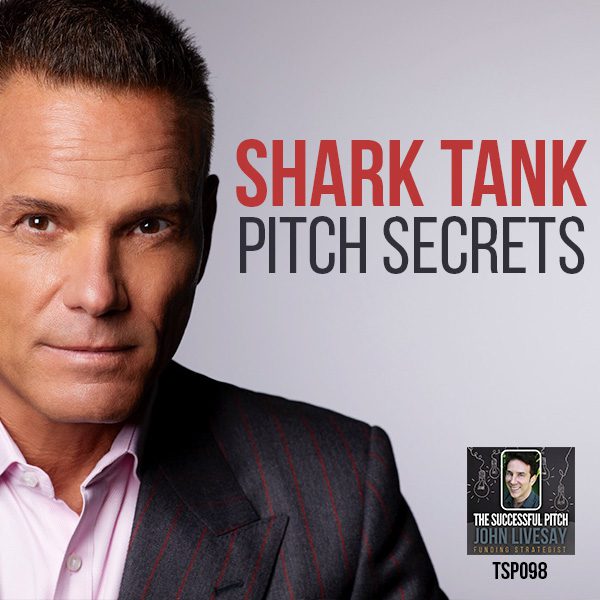
Shark Tank Pitch Secrets with Kevin Harrington
Posted by John Livesay in podcast | 0 comments
 Episode Summary
 Today’s guest on The Successful Pitch is none other than Kevin Harrington, one of the original judges on Shark Tank. If anybody knows what it takes to have a good pitch, it’s Kevin Harrington. He’s literally heard over 50,000 pitches in the many years he’s been doing this, from listening to pitches for infomercials to listening to pitches on Shark Tank. He has a really great key here which is that, “Consistency is the ultimate motivational tool.” He said, “When you’re out there, you need to show the investors how they’re going to get their money back.” He gives an example of exactly the kind of pitch he would like to hear in order to get him to say yes. He said, “You need to test before you invest.” He gives us great insights into what a magical transformation is that he is looking for when he hears a pitch.
Listen To The Episode Here
Shark Tank Pitch Secrets with Kevin Harrington
Hi. Welcome to The Successful Pitch podcast. Today, I am thrilled to have Kevin Harrington. You probably know him as one of the original Shark Tank judges. He has been so successful in so many different areas. He has written multiple books, one called the Key Person of Influence, and he is definitely a person of influence. He is known not only for his expertise on Shark Tank, but he is the inventor of the infomercial, the As Seen on TV pioneer. Now, he’s involved with Quantum Media, which is a digital media agency. He hears so many pitches. He’s going to give us insights into what makes a great pitch. Kevin, welcome to the show.
Hey, John. You said a mouthful there, thank you for all that.
I’ve been a big fan of yours for multiple years. I’ve watched a lot of your clips on television and your areas of expertise. I always like to go back to someone’s story of origin. Did you always know you wanted to be an entrepreneur?
I was lucky. I grew up one of six kids in Cincinnati, Ohio. My father was an entrepreneur and he always said, “Kevin, I want you to be an entrepreneur, own your own business, control your own destiny.” Now, my mother, her father was in banking, so she came out very conservative, “Oh no, I’d really like for you to be a doctor or a lawyer.” They struggled a little bit. The good news is I have two older sisters. One married a doctor, one married a lawyer. I got to be the entrepreneur.
[Tweet “Shark Tank Pitch: Consistency is the ultimate motivational tool.”]
Everybody filled the different dreams of your parents, so you got to do your own expertise there. One of the things that you’ve recently written about in Forbes is that, “Consistency is the ultimate motivation tool.” I’d love to have you talk about that.
I think that when I look at the infomercial business and I look at the infomercials space, that is an industry of consistency. We take Tony Little, who goes on in HSN and gives his pitch. Then, he hones it. Every time he comes on, he has to be consistently the same. He comes back week after week, month after month, year after year, and we’d take that infomercial and it continues that whole path, all around the world. When I get involved with products and companies and people like the Tony Littles of the world, I get involved once they have reached that level of knowing what the consistency of that pitch is and how powerful it is. Then we capture it on tape, put it up in front of millions of people and take it around the world.

Shark Tank Pitch: It’s a much more authentic world in the world of marketing and business today than it was even ten years ago.
Yes, consistency is important. That’s in a product but also running in the business. It’s the same thing. Why is McDonald’s so successful? It’s the special sauce. They give you the same thing. No matter where you go, you’re going to get that same quality little cheeseburger, whatever it is you’re getting. That’s why franchising works. Ultimately, successful businesses are good because they deliver on a promise of consistency. It’s important. People today, they don’t mind paying a little extra or the right price for something, whatever the deal might be. But they expect to get the same thing each and every time. I think, it certainly is as the millennials are coming out. They don’t want to be messed with. It’s a much more authentic world in the world of marketing and business today than it was even ten years ago.
I think we can use this as a through line for the whole episode because consistency is so important in what you’re doing with Quantum Media. When you’re talking about helping businesses increase their conversion rates and use social media and all these other digital tools to create a brand, it’s so important that brand would be consistent.
Absolutely. Let’s put it this way. In the world of marketing, when we first started, I didn’t even know what an infomercial was, we didn’t call it infomercial, we’re just putting them up. But it got down to where we were running our shows, looking for consistent dollar per phone call. We had an allowable with the station where we said, “Okay, we’re going to let you run this show and we need to get $10 for every time the phone rings.” That’s our allowable, that’s our consistency.

Shark Tank Pitch: If you’re not consistent in the world of digital, it’s even a bigger problem today.
In the world of digital marketing, it’s pretty much the same thing. If you’re going to go on Facebook and you’re going to use affiliates and you’re going to do different things, you have to be able to provide consistent everything. Because if you’re shipping your product within 48 hours and that’s consistent, and all of the sudden you have a delay on inventory and you’re shipping in three or four weeks. Your returns are going to go from 5% to maybe 20%. If you’re not consistent in the world of digital, it’s even a bigger problem today. In the old days, we could say at the end of an infomercial, “Hey, call the number, we’ll ship it within four to six weeks.” Can you do that in today’s world?
No. Not with the drones in Amazon and everything. That’s funny.
“Did you mean four to six hours or four to six days?” Don’t give me four days. I want this in 48 hours. The world expects authentic consistent performance. They just don’t allow for the alternative anymore.
It’s all about giving people an expectation that you can meet and then being consistent with meeting those expectations. Because the minute you lose credibility in an infomercial, on what you’re promising your clients from Quantum Media, or what the ad is promising people if they click on it that they don’t get, then everything goes out the window. Now, you have heard so many pitches. Let’s talk about of course your experience with Shark Tank, how did Mark Burnett pitch you to be a judge?
I’m going to tell you that in one second. I got to finish one point you just made. In today’s world, with the star system of rating people’s products and stuff, that is the other reason why consistency is so important. Because in the old days, you could ship something, if it wasn’t perfect, people didn’t have a way to complain other than call the number and say, “You know what? It’s not exactly what I wanted.” Now, you get one or two stars, you get yanked off the air, you get yanked off a website. You’ve got to be consistent. We’ll close that subject down.
I love that loop. Thank you. Even an Uber driver gets rated now, so everybody gets rated.
I was sitting there. I had done about 300 or 400 infomercials with Tony Little and George Foreman and Jack LaLanne and the juicer and all these different fancy shows and things. Taking them all around the world, built a public company with $500 million in sales and had done literally billions across the board. One day, Mark Burnett was on the line and he’s like, “Hey, Kevin. This is Mark Burnett. I’m a TV producer.” I said, “Mark, I know exactly who you are. I’m in your industry.” He said, “Look, I got a new reality show I’m doing. Would you come out to LA? I want you to meet my team and tell you what we’re up to. It’s something I want to see if you might be interested.”I said, “Mark, what an honor to get this phone call. I appreciate it. Thank you. But any kind of heads-up you could give me so I can be thinking about it? Is there any news on it yet?”He said, “No, it’s coming out but we haven’t shot it yet. It’s called Shark Tank. Don’t worry, just come on out here. I’ll tell you more about it when you get out here.”
I said, “Mark, wait a minute. I’m not sure that this is going to be for me. I do know you do some crazy things to people on that Survivor Island show. I don’t know about a show called Shark Tank. What are you going to do to me?” He thought about it and said, “Look, it’s not crazy like that. It’s a business show, Kevin.” That’s when I said, “If it’s a business show, I’m interested, if you’re involved Mark.” My wife said, “How is Shark Tank a business show?”
It was kind of funny. Think about this. When I was shooting Shark Tank, nobody knew what it was. I tell my wife, “I’m heading out to LA. I’m shooting Shark Tank.” She says, “What are you going to do?”I said, “I’m going to be investing money.” She said, “Wait a minute, they’re not paying you? You have to pay them?” “That’s how it works, yes.” She said, “How much are you going to invest?” I said, “I don’t know. It could be hundreds of thousands, it could be millions.” She said, “When would we get that money back?” I said, “I don’t know, maybe never.” She said, “Why do you want to be on this show?”
[Tweet “Shark Tank Pitch: I’ve heard over 50K pitches over the years.”]
When you think about it, I was investing one of the first deals I did, I’d put a half a million into a company. She closed the doors six months later. It was a very risky endeavor and I was one of the original sharks in putting money up and wheeling and dealing and all that. I think the bottom line is this, once we got distribution, once it was on the air, once it got the buzz, then everybody understood. “Okay, there’s the Shark Tank show. Yes, I understand. Kevin’s on that show called Shark Tank.” Then, it started paying off for me. Much like why are we doing a podcast today. I’ve taken now 50,000 pitches over the last 30 years. This is why Mark Burnett wanted me, because I had taken so many pitches before I’ve even got on Shark Tank that I was an experienced pitch taker, if that’s the right way to say. I go to tradeshows every week somewhere. I’ll do 30 tradeshows this year. I’ll invest in products in every show that I go to, whether it’s the pet show or the fitness show or the beauty show or the golf or the toy fair or the house wares or the hardware. That’s what I do for a living and that’s what I love to do.
The one thing I can tell you, John, is that I have learned what it takes to give a good pitch because I’ll sit there in a day, I took 96 pitches in one day. Just think about this, do five minutes times 96, it’s 500 minutes, and do it back to back to back, it’s an eight hour a day and beyond, and there was time in between. Sit there for eight to ten to twelve hours and take pitches, you’re going to learn a thing or two when you get to 47 and you think you’ve taken 500. You’re ready for a little break in the action and you’re ready for a good pitch. I learned a thing or two about good pitches. That’s what I love sharing with people right now. That’s part of my DNA.
I’ve been called The Pitch WhispererR because that’s equally something I’m passionate about as well. I love helping people become great story tellers, and you and I are on the same page. I’ve heard you talked about the need for a pitch to have a magical transformation. Can you describe what that is for you?
I’m in a very visual business, in the world of as seen on TV products. If it’s Tony Little in fitness, we want to see people losing weight. We want to see people getting stronger. If it’s acne, we want to see their bad skin get cleared up. Just think about it. If it’s a kitchen gadget, we would take a little gadget and turn an apple into a bird, “Wow, what was that? That was pretty amazing.” The bottom line is this magical transformation sells. It’s before and after, before and after. It’s visual, it’s demonstrable, and it works. We know that it does.
[Tweet “Shark Tank Pitch: Magical transformation sells.”]
People ask me a lot of times, and you’re the expert to ask this question to. How real is it on Shark Tank compared to when somebody pitches someone like yourself in front of an Angel group? Because I know you’re involved with the Angel Investor Network as well. The contrast obviously is quite different, but I’d love to hear your answer on TV versus reality.
Look, the one thing that I would always say, Shark Tank is a great show but Mark Burnett is a television producer and he looks for ratings. He’d come down halfway through a day and say, “Nobody has invested any money, what’s going on here? If we’re going to have good television, we’ve got to have some deals.” We’d say, “Mark, you want good television, but we want good deals.” There’s a mix there. We could make fun of people or whatever, which I never really particularly wanted to do that. I was more of a constructive guy. Mr. Wonderful, that’s his brand, to make fun of people. That’s okay. He built his brand on that. Me, I like to empower entrepreneurs.
I would say this, that Shark Tank was about making good TV and getting good ratings and getting lots of viewership. They’ve done a good job of that. Along the way, you’ve got to have a mix of some good deals, or the sharks aren’t going to be interested. I’d be sitting there and somebody would come out with something that you just knew. They were looking for ten grand, for 20% of their company, they haven’t even started and it’s this crazy idea, and you just knew this one that it was just made for television.
Do you think that Mark Cuban, who owns a multibillion dollar enterprise and the Dallas Mavericks, is interested in really investing ten grand in one of these teeny little deals? It’s made for TV that they had to do, whereas when we’re pitching equity deals like Angels network and some of these things, these are hardcore deals where we want to see research. We want to see competitive analysis. We want to see exit plans. We want to see the risk analysis where we can really get into the hardcore crunch of the deal.
I did dozens of deals on Shark Tank and I know Cuban’s done probably, I think I read an article that he had done about 35 or 40 deals. He said a third of them are making some money or in business, a third of them are out of business and don’t know it, and a third of them are never going to make it and are virtually done. Two-thirds were done almost and just selling and not really understanding that they really don’t have a business.

Shark Tank Pitch: People forget, when they come on Shark Tank, it’s not really about them. It’s about how do they get the shark to want to write the check.
I think that’s probably not too far off the investor rule in investing in Angel-kind of deals, is if you can get a third of your stuff to work, that’s probably pretty good. However, I wonder how many of the third that are still in business, as Mark says, are actually going to have any kind of an exit to where he might get his money back even. That’s really the ultimate thing. People forget, when they come on Shark Tank, it’s not really about them, it’s about how do they get the shark to want to write the check. That’s the perspective people pitching a lot of times forget. They’ve got to get the shark to write the check. It’s more about understanding really the motivation of the shark to want to be your partner.
Would you say, for someone like yourself who has heard as many as 96 pitches in one day, that having a really compelling story is a way to get people to standout out of all those pitches? You remember the story more than the product, typically?
I’ll say this. I think the story is important, absolutely. I want to hear the story, but at the end of the day, I focus on a couple of things. I want to know, is there an exit strategy, because one of the challenges is this. If it’s a private company, let’s say somebody wants to have half a million dollars for X percent of their private company. There is never a distributions in these small companies. They always need more money. Here’s my half a million, I’m not going to get it back for a long time unless you sell the company or go public. I want to know that there’s an exit strategy.
This is the other trick that I talk about, and Mr. Wonderful uses this one quite a bit. Is there a way to accelerate the pay back to the shark? When I say shark, to the investor. I’ll give you an example. If somebody says to me, “Look, I want your half a million. I’ll give you 20% of my company, but I’ll give you 100% of the profits until you get all your money back. Now you’re whole. Now you own 20% for the rest of your life. You don’t have to be worrying every day, “Where’s my money? Where’s my money?” You got your money back right away. Now, you can focus on building the business to the exit.
I tell people to always focus on getting that money back to the shark. If you’d notice, O’Leary, in many cases is talking about, “Okay, you’re a donut business. I want 50 cents for every donut you sell,” as a way to monetize his investment. That’s because he realizes that he’s going to be riding these people like crazy if he just has equity and he’s never seeing any distributions. But if he’s getting 50 cents back on every donut sold, he’s getting a distribution on a weekly basis and having the chance to have equity also.
I love it because not only does the investor get their money back sooner than the exit strategy, but also it takes the pressure off the founder not to have an exit strategy until they’re really ready because the investors already made their money.
Exactly. In all of the years of watching and doing Shark Tank and being there myself for 175 of my own segments, never did one person ever actually lay it out to me, the shark, “Hey, look. I’m so focused on you to get your money back fast. My goal as the entrepreneur here is to tell you that I’ve got a great business, here’s my plan, here’s my execution, here’s my team. But my goal is to get you your money back within one year, and this is how I’m going to do it.” If somebody came with that storyline, that’s going to be powerful pitch.
It’s really about showing empathy for the investor as opposed to what you need, isn’t it? I love that, Kevin.
I’ll give you an example. I had a company I got involved with. They needed $20 million. We went out and did a raise. They said, “Would you help us go on the road show?” I said, “Absolutely.” They said, “Look, give us a couple of weeks up in New York. We’re going to have people coming in one at a time, have a couple of group meetings. We’ll have you, if you could. There’s a couple of billionaires as part of this, if you could maybe go and sit in their big building that they own at the corner of 15th and Madison or something. We’ll make a couple of appearances here and there.” I made 90 something pitches over that two and a half week period of time.

Shark Tank Pitch: What is it that you like? What have been some of your most successful investments?
We made 90 something pitches to individual investors. The first thing that I did was sat, talked, got to know them for a few minutes. What is it that you like? What have been some of your most successful investments? They would instantly tell me what it was going to take for them to get the money. “This is what I’ve been doing. When I invested in this deal, I love it. I ride it out for years, and boom, boom, boom.” They would basically, within five minutes, tell me what it was I needed to do to convince them that we might have the right investment for them. Sometimes, you’ve just got to sit and listen.
It also sounds like you’re really smart in asking the investors before you even pitched what their criteria is of what makes them say yes. Also, you get them in the mindset of remembering a positive experience before you even pitch, which I think is also very clever.
Exactly. Because on Shark Tank, the advantage that people have today is they can watch all the Shark Tank segments, and they see what Barbara is looking for, what excites O’Leary, how to make those pitches. But when you’re one-on-one with an investor you just met for the first time, how are you going to pitch them? You’ve got to get in their head real fast. That’s what I like to do.
Kevin, one of the key things I know is so important to investors like yourself is, who’s on the team? Recently, I interviewed Laura Wagner of Digitzs. She put together such an impressive team of people from Apple and PayPal and Google, plus herself. Is that a key factor for you when you’re looking at a company that’s pre-revenue and maybe even pre-minimum viable product, is will they have a great team?
Yes. There are various things that I do look for. If someone says to me, “What is the one thing that an entrepreneur really needs to do to be successful?” I say, “They’ve got to have passion and vision and all that. But they need to surround themselves with experts and a dream team that supports their strengths and weaknesses, and more supports their weaknesses than strengths.” I think at the end of the day, Laura surrounded herself with some amazing people and was very, very successful in doing that. What was interesting is that when she first tried to raise some money via crowdfunding, she had some challenges. The bottom line is, it landed soft in the first part and then when we brought the shark stuff and brought more of this dream team aspect to the table, it has super charged what she was doing. The bottom line is we had some very powerful stuff happen as the dream team came together.
You’ve had your pulse on success for so long, from being on the cutting edge of what’s going on in infomercials, being one of the first Shark Tank judges when there was a lot of risk for you, it obviously paid off. Now, you continue to invest in a lot of startups. Let’s talk about where you see the future with what you’re doing with Quantum Media. What is it about that that you feel is so exciting and has so much growth, and how can people possibly use Quantum Media, and who are you targeting?
What’s happened is there’s been a disruption in a lot of industries. Uber has disrupted taxis and Airbnb is disrupting hotels. Not that they’re putting all these out of business, necessarily. They’re tightening up some of these industries. The TV industry has been disrupted itself. There is 50% fewer viewers on TV. By the way, there is big financial drain in the world of television right now. ESPN is losing millions of viewers every single year. ABC owns ESPN and Disney, they’re hurting because of this. What’s happening is, where do the eyeballs go? If they’re not watching TV, they’re watching digital. They’re on digital. They’re on Facebook. They’re on Pinterest. They’re on Instagram.
The bottom line is that there’s this mass exodus to other places. What do I do? I follow the eyeballs. Quantum Media, what we’ve done, five years ago, it was 80% TV, 20% internet digital. Now, I’m 80% digital, 20% TV. We’re doing campaigns for major corporations, for products across the board. We call it a test before you invest kind of a format and do a lot of stuff long before we go to TV, because TV is so expensive. Quantum Media is our new baby. We shoot very inexpensive videos, test them up on social media channels to see what the results are before we go to the next steps. It’s the new way for us. Digital is without a doubt the future in my mind for not only testing products but also rolling them out and, as you started off this conversation, getting the consistency you need as an entrepreneur.
[Tweet “Shark Tank Pitch: Test before you invest.”]
Nice. We’re going to tweet that out. I love that line, test before you invest. What a great sound bite that is. That’s fantastic. I know that people are probably going to want to follow you on social media. Your handle is @HarringtonKevin. You have thousands and thousands of people listening to your advice. I just want to personally thank you for being such an advocate and inspiration for so many people, myself included.
John, it’s been a pleasure to be here today. Thanks for having me. Keep the pitches coming for both of us. I love to take the next home run pitch. I love every single day when I wake up because I never know what I might be pitched that day. That’s what keeps my days exciting, is knowing that I’m going to be hearing some cool new things. I look forward to doing some more business with you. Good luck in your podcast ventures and taking new pitches.
Thanks a lot, Kevin. I appreciate you being on the show.
Thank you.
Links Mentioned
- J Robinett Enterprises
- John Livesay Funding Strategist
- Kevin Harrington
- Key Person of Influence
- As Seen on TV
- Quantum Media
- @HarringtonKevin
Crack The Funding Code!
Register now for the free webinar
The Successful Pitch – Book Trailer
Share The Show
Did you enjoy the show? I’d love it if you subscribed today and left us a 5-star review!
-
- Click this link
- Click on the ‘Subscribe’ button below the artwork
- Go to the ‘Ratings and Reviews’ section
- Click on ‘Write a Review’
Get Your Dreams Funded with Manny Fernandez
Posted by John Livesay in podcast | 0 comments

 Episode Summary
 Today’s guest on The Successful Pitch podcast is Manny Fernandez, who you might have seen on television CNBC’s Make Me a Millionaire Inventor. He was named the 2014 San Francisco Angel Investor of the Year. He shares with us how he had a successful exit, and the three things he’s looking for when he hears you pitch. Number one is of course, the team, and why you’re able to execute your idea. Number two, is how large is this market, because without a large market, there’s no return on investment for the investor. Finally, are you early in the market, in other words, it’s too late to be the next Uber. Enjoy the episode.
Listen To The Episode Here
Get Your Dreams Funded with Manny Fernandez
Hi and welcome to The Successful Pitch. Today’s guest is Manny Fernandez. Manny, you might know as an investor on CNBC’s Make Me a Millionaire Inventor. I’ve watched him be on that show and he’s amazing. He’s also amazing on CNBC’s Squawk Box. He’s quite successful in so many ways, and we’re just thrilled to have him here. He’s had a successful exit. He’s an active Angel Investor, and he was awarded the 2014 San Francisco Angel Investor of the Year and Equity Crowdfunding Leadership Award.
He’s not only the founder of the San Francisco Angel Groups, but he is also the founder of DreamFunded as the CEO. What that company does is crowdfund startups with an online market place. He’s got quite an interesting background. I’m going to let him tell us all about it. Manny, welcome to the show.
Thanks for having me, John. I’m honored to be here.

How to Make Money Investing in Pre-IPO Stocks
It’s great to have you. You have touched every possible touch point on how to be successful from writing a book, How to Make Money Investing in Pre-IPO Stocks, to being on television, to launching not one but two different things. I know that you have been involved with Stanford and Wells Fargo, but take us back, if you will, before you got to be on television as the investor, how did you get involved in this whole world of startups? Because so many people say, “Wow, I would like to be an investor someday, but I don’t have a clue.” What was your journey?
It all started with this thing called real estate, where not as an agent, but I just bought a piece of investment property and learned that I was pretty talented at it and then later, I wanted more. I was stuck with the question, “How do you raise money to be able to buy a hundred homes?” I networked aggressively to figure out the answer. Later at the age of 23, I created a real estate fund, then we bought a portfolio of single family homes and sold at the peak of the market. What many people didn’t know is during the down times, I was studying Computer Science out of our office. I created the online brokerage that was later acquired by the largest Century 21 franchise in Northern California. Later on, I created another real estate fund.
One thing I learned about it was how to work with other people, to invest their money appropriately and get a return. When I was attending Stanford, one of the things I learned professionally was about venture capital, Angel investing. Those are the courses that really stood out at me because it reminded me what happened so many years ago. A lot of the dynamics are the same, that one of the big differences, obviously, the asset class is different. That was the start. As I started to Angel invest and joined a group called TiE Angels and later created our own group called SF Angels. Asked for help like always, and was fortunate to network with someone do an introduction, I’d invested early in Google and Paypal. Was a former partner of this legend, Ron Conway. I learned a lot from him and I did a scary thing, John.
I had to go out, which every entrepreneur has to do. I have to go out and talk to customers about the business. It was the hardest thing that I had to learn, I had to be really high profile in Silicon Valley and that was hard to do. Look at my skin. I had to learn how to public speak and talking to entrepreneurs, those were the customers. I had to let them know that we have money for them, but I had to do it in a different way, John, where I gave them advice and education on the subject to allow them to raise money Which was unheard of because everyone want to keep the secrets, like, “Don’t tell entrepreneurs how to raise money because if you do that, then everyone will have the money.” That’s not the case. A lot of people are still stuck in fear.

Get Your Dreams Funded: I learned how to work with other people, to invest their money appropriately and get a return.
Indeed. Let’s talk about San Francisco Angel Group. I’m really interested in how that works compared to other Angel groups, for example. I know you have 30 plus accredited investors. Do you only typically fund people who are in Silicon Valley? Let’s start with that.
Yes, that was the purpose. The purpose was even more specifically in San Francisco early stage. It did go a little bit more into later stage companies, when they were doing the Series A or Series B round, some of our members had access to it. It was primarily Silicon Valley. Throughout that experience of only funding companies here, I realized there are a lot of great companies outside of Silicon Valley, in Austin, in Seattle, L.A., even Florida. At the same time, just being out there in the community, I was forced then to be a keynote speaker in many parts of the world. Many entrepreneurs wanted funding, but what was the most amazing thing, John, is many investors wanted to co-invest. I said, “Our meetings are every Thursday of every month, come on down.” Obviously, I didn’t invite people if they lived in Shanghai or Singapore or Texas and L.A. or New York. I just held their business cards. I remember that many of the entrepreneurs pulling at my heart strings, they want to get introduction to investors, and there was really no way of doing that. I just started thinking about it.
Interesting. If someone lives in San Francisco, Silicon Valley area, and wants to come pitch to the San Francisco Angels, what’s the process and what does it look like when they get in front of your group?
Primarily, you go on a website and you can apply. Some of the members, actually, they’re the best method to get an introduction, usually they’re interested, they’re investing, they’re “sponsoring” you to be presented to the group. If you’re qualified, the entrepreneurs will say their story and the entrepreneur will be asked to leave the group, then the group will ask a few questions among the group if there’s enough interest to do what you call due diligence. If there’s enough, then we will move it forward to do a little research to see if this is an investment we want to do. That’s it in a nutshell.
That’s great. Because this is The Successful Pitch, I’m always interested to hear, do they get ten minutes for a pitch and then there’s a ten minute Q and A? Is that the format you use or is it something different?
No, you’re absolutely correct. It’s approximately anywhere from seven to ten minutes, and then we ask questions among the members of the group.
Those warm introductions are so important, to get even invited to come in and pitch. I know you specialize in equity crowdfunding, the internet real estate software. Does the group itself look for high tech solutions, or is there a type of startup that you like to see come in?
Yes. Everyone in that group is very specifically focused on tech, software, internet-related startups.
Are you funding people who are pre-revenue, giving them their seed round?
Absolutely.
Those typically range anywhere from … The definition is so broad now. It could be anything as 250, all the way up to a million, typically. Is that in the ballpark of what your group does?
The interesting thing about the group, some people make a group decision and some people do it individually. Sometimes you don’t have everyone’s approval. I provided checks as low as $25,000. This will be the first check in to a company, and give them a little boost and try to connect them to other investors to fill their round. It’s not one individual cutting a check for a million, it’s multiple people coming together.
Can you tell us about a good pitch that you’ve heard, Manny, that you’re thinking, “They had me in the first three minutes, and they’ve been a big success story”, either at San Francisco Angel Group or DreamFunded.
I think that one of the things that I hear a lot is entrepreneurs, they’re not telling a story. A lot of people talk in logical terms and things that we don’t care about. One entrepreneur that worked out quite well, they talked about the market, they talked about the team, they talked about the potential for the investors to make money, and that sometimes gets our attention. I don’t know why.
The best way for the investors to feel like they’re going to make their money is to have a successful exit. It’s what I typically hear. Do you have other suggestions?
Absolutely, that’s the case. If the entrepreneur says they’re going to hold it for twenty years and give it to their step-kids, then that’s probably not the right business for us. If they think they’re going to become the next Facebook and make it go public, maybe that will work. But if they look at they’re going to potentially have an acquired, and these are the natural acquisitioners, then we can understand the thought process behind the entrepreneur. I think the best I’ve seen, they tell a story, the beginning, middle and the end. The beginning is why they created it, their personal problem, what team they have established, the great market, and they have some traction, it doesn’t mean it’s sales. At the end, where they’re going with it if they did have the money? What would it look like at the end? If you can imagine a movie, all the dynamics of it, I think the entrepreneur should probably cover that.
[Tweet “Get Your Dreams Funded: Pitch like you’re telling a story in a movie.”]
Nice, I love that. Pitch like you’re telling a story in a movie, like you’re pitching a movie and have us visualize it. Paint a picture, if you will. I like this, why you created it, how big the market is, what the team is. People are always interested in what you look for, besides sales, in terms of traction. I have some ideas, but I’d love to hear what you think is important, or what you think is valid traction if it’s not sales.
I think there’s one thing I was taught, it was three little things. I think you can screen out 90% of the startups that are presenting, or if you’re a startup, look for these dynamics. Because these are the dynamics that some investors look for for really large returns. Number one, it’s a large market. Without a large market, it’s going to be challenging to make any real money and to make it a big business. Second, early in that market. Not chase after something that’s really too late because there’s many relationships, and most of the market is already taken. Last but not least, it is the most important thing, is the team. The team who’s executing behind it, who did I piece together to make this story into a reality.
Nice. Those are great three things. We’re going to tweet that out, a large market, early in that market, and a great team. Speaking of tweeting, you have quite the award there, Manny, with being number fourteen in the top 100 Angel Investor’s to follow in Twitter. Of course I’m following you. One of 150,000 people. Congratulations on that. I couldn’t resist giving you a little shout-out on that.
Thank you. One day, it will have extra number behind, 1.5 million, because the more information we can provide to the public about how to invest or how startups can use the equity crowdfunding to raise money, the numbers will greatly grow. The motivational tweets that I provide, it really goes viral a lot.
Let’s talk about DreamFunded.com. This is different than the San Francisco Angel Groups. It’s an online capital platform, where people can invest in startups for as low as $3,000. Yet, you guys have done some major investments alongside major VC firms, like Tim Draper and Greylock, etc. Tell us, how did you get inspired to start DreamFunded? For people who are listening, maybe you could contrast and compare? Like, if this is you, then you should go to San Francisco Angels, if you have a warm intro, or if that’s not you, DreamFunded is more in line with what you need to do.
When I started Angel investing, I had a certain vision of it. When I got involved, then I had a certain reality of it. I said, “Maybe, I’ll create a group and get a few of my friends and network together so we could fund more entrepreneurs,” and more entrepreneurs were being funded. However, 99% plus unfortunately weren’t getting funded. Maybe because for whatever reason, they weren’t in our network, kind of unfair. They’re not in our network, they can’t get an intro, they can’t present in a meeting, and I had a problem with that.

Get Your Dreams Funded: Money should be more distributed to anyone that has a desire of creating a business.
In addition to that, it was other entrepreneurs that probably had a small business or a business that maybe couldn’t really scale but could do well for the entrepreneur and their community. I started thinking about that. I always had a problem with that. Money should be more distributed to anyone that has a desire of creating a business. They should be able to be backed because that’s a rare desire, an entrepreneur who wants to do something different than have a job.
One day in the fall, it was a slow period in December. This was in 2013. I had some time to go through my emails, and there are thousands of them, unfortunately, I haven’t read yet. I was going through them and I said, “It’s a good time to go back and see companies that applied and see what happened to them. I could do a self-study.” I saw two companies that presented but unfortunately were a little bit slow. It took an average of 60 days to get funding, and fortunately they had another way they got funded. They went on some big name platform and actually received the funding. I said, “Wow.” I played with the numbers of what the exit was. I’m keeping the name quiet. What was exit and what were they asking for and what our return was, and boy, when I saw seven figures, I got really frustrated. I got upset because I started thinking about all the investors who are out there that wanted to get access to it, and yet if we’re faster, then maybe we could have got in.
I started thinking about the entrepreneurs that were trying to get funded as well as the investors that want to invest. I thought back, “What am I going to do about this?” I got a stack of business cards of many investors that wanted to invest. I have endless entrepreneurs who are looking for funding. I thought back, my early 20’s, my first dream was to create a startup or create a business. My second dream after that was I need to get funded. That was almost impossible. I said, “Okay, I know that, but then now, I’m a successful investor and entrepreneur. My dream is to fund the next big thing.” It just came to me, DreamFunded. I bought the name and used our network at SF Angels.
It was an interesting time because there was this new thing called equity crowdfunding happening, t allowing accredited investors to invest. We were the fourth platform approved by Angel Capital Association, a trade organization. Almost in a short period of time, 90 days, we had 3,000 plus accredited investors signed up for many of the Angel groups nationwide. I was looking at it, I could not believe we had so much interest. Maybe many people were just checking out what was going on, but then we had some pretty well-named companies that we funded through DreamFunded and it just kept growing.
I love it. How do someone decide if they should pitch the San Francisco Angel Group or another Angel group or go to DreamFunded? What’s the criteria for getting funded via DreamFunded?
Now we’re trying to have everyone go to DreamFunded and apply there, because there’s, we call it deal flow, where we have to start there and sometimes it’s right for a group, sometimes it’s right for our platform, sometimes it’s right for our fund. We don’t know until they apply. Going to DreamFunded.com and signing up and applying, we as a team can quickly review what they’re doing. Unfortunately, not everyone is going to get accepted but some people are better to tap in this thing called equity crowdfunding, Title III of the JOBS Act. What that really means, it allows everyday people to invest. Just to say what you said earlier, at one time the minimum was $3,000, but now the minimum is $100.
DreamFunded is solving two problems. One, allowing people who are not “accredited” investors with a million in assets to invest in startups. Secondly, giving a platform without needing to have a lot of connections to investors directly to get in front of an Angel group, to possibly get seen and not only be part of equity crowdfunding, but if it’s a big enough idea, get the attention of someone like you who says, “You know what, this is equity crowdfunding and then some.” Correct?
Absolutely.
It’s really exciting. I think what you’re doing is solving so many problems for so many people that I don’t know how you have time to sleep.
[Tweet “Get Your Dreams Funded: Leverage – have a great team.”]
Leverage, my friend. I got a great team. I may be a good marketer but I have a great team, like my co-founder, Avery Haskell. He just graduated from Stanford. He has been secretly building DreamFunded with me throughout the time while he was in his dorm room. He didn’t want to get his focus off of his study. Now he is really improving the site to great ability, because we really have over a 160,000 members all around the world now signed up. We have about 20 companies that are going to be approved shortly, that’s going to be able to raise a million dollars from everyone. People are really spreading the word about DreamFunded because they see it on CNBC Make Me a Millionaire Inventor, or they may have seen it on Wall Street Journal in December or in Bloomberg in December.
The word is being spread, but the message is, entrepreneurs now, they have an interest in raising money and you’re not born in that special network where you can get access to that special club, this is for you. If you are one of the investors that are out there saying, “I don’t know how to get into that special network,” or, “I don’t want to wait for Facebook to go public. Plus, I don’t have much money, I’m not one of the accredited investors. I cannot invest $25,000 or $50,000. I just want to spend $100 or $500.” Maybe back the entrepreneur that I know, that’s going to be creating something. That’s what DreamFunded is about.
Typically, a lot of people will say, “If you’re going to use crowdfunding, equity crowdfunding or any other kind of crowdfunding, you need to “bring your own crowd.” Is that the case with the DreamFunded?
It’s partly the case. But how I started building it is that I started with the foundation of SF Angels and then many of the Angel members nationwide that are members and many of the talks that I’ve done throughout the world brought a stronger base of investors. CNBC’s Squawk Box in the studio, they tremendously increase the visibility as well as the amount of investor sign-ups. It is helpful for the entrepreneur to have a small handful of people that believe in them, to back them. Many of those people can be just found on LinkedIn, so it’s nothing too complex, it’s a combination of both. In a Shark Tank mindset, we have the hungry sharks, the smaller sharks that are ready to bite on the new startups that are going to be applying.
I’m going to shift gears a little bit. In your LinkedIn profile, it describes your successful exit, and that’s always an interesting topic for everybody to hear. Can you tell us that story?
Some things start off one way and they change and they become something different. I think that’s an important thing to know. Every entrepreneur may start off one way and end up changing their direction based on feedback. I just really wanted to create a site where I thought people want to sell their house when the market would change and they wanted a quicker way of selling it. Then the market changed, and unfortunately they didn’t have much equity in their home.
We had people all across the country who were signing up and ended up devolving into an online real estate brokerage where we receive the commission upon the sale of their house. At that time, it was so early, no one knew what this thing called short sales were. We went from zero to an excess of $5 million in sales in a very short period of time. Sometimes you get lucky. It was acquired by the Select Group Real Estate, the largest Century 21 Coldwell Banker, ERA owner in Northern California, with 60 plus offices, thousands of agents.
Congratulations. What you’ve gone through that experience, like going through due diligence. Now you know what to look for and help people that you’re funding get through that process in a way that gives the investors a great return on their investment. Is there any book, besides yours, which we have mentioned, that you would recommend to people to read either about life or about getting funded?

Think and Grow Rich by Napoleon Hill
I do have a new book that’s coming out, that’s going to help people to raise money. It will be on Kickstarter shortly to allow people to buy the book in advance. For those that want to raise up to a million or raise up to 50 million, the secrets will be in there. One book that I really love is Think and Grow Rich by Napoleon Hill. If any of your listeners are looking for a book that’s probably a free version of our book, just email [email protected]. When that book comes out, I’ll send you a copy of it, just put a headline that you heard about it on the show. There’s no cost, you can save the $20. If you feel bad that you saved the $20, just find an unfortunate person and give it to him.
That’s such a great gift. I really appreciate you doing that. Are there any final thoughts you have on giving a good pitch or just perseverance required to be a successful entrepreneur?
Yes. There’s this guy, and this gentleman came up to me late 2013.I was at this event I was judging, he came and grabbed my arm, he said, “Hey, how are you doing? Nice to meet you. Can you help me show me how to fund my hair product?” I really didn’t understand what this guy said. All I heard was, “fund my hair product.” I’m like, “Sorry, we fund software internet companies.” I turned because my attention was pulled somewhere else. He grabbed my arm and I said, “What is going on?” I turned around and looked at him, and I made a mistake because I looked at his eyes, and his eyes are really sincere. It reminded me of myself a few years ago when I was in my 20’s. “How do you raise money? What is the secret about raising private money? Hey, can you show me?”

Get Your Dreams Funded: How do you raise money? What is the secret about raising private money?
I didn’t have an answer, but instantly when he said that, I thought about it and I said, “There has been a PowerPoint that’s been used by our Angel group,” and I’ve seen it circulated throughout the Valley. For some reasons it’s helping a lot of people get funded. I said, “Tell you what, I’m going to give you my business card, you put PowerPoint on the headline, send me an email, I’ll send you a copy of the PowerPoint”, because in my mind I was going to take out the ingredients and just keep it general so people can have a framework. I gave it to him and later on, about 45 days later, he sent me an email that he raised over $600,000.
What’s interesting about that is because I’ve never seen it work outside of Silicon Valley. I’ve never seen it work outside of tech companies. For a guy who I didn’t even understand what he was saying to be able to raise that, it was like, wow. One of the things I do now is, for those that really want a framework to be able to raise money, I can’t say it’s perfect, but it allows you to think what an investor is looking for. I give this away, if you want a copy of that free PowerPoint that will help many people, just email, [email protected]. It’s no cost. It’s my community gift.
There’s a video on YouTube. Type in the word “equity crowdfunding” and it pops up, the number one most viewed video of all time for equity crowdfunding. It was a talk I did at keynote talk in Finland. I gave out that PowerPoint, and I think many people loved that gift, so they started spreading the video everywhere. Fortunately, it has over 200,000 views now. For the entrepreneurs that are looking for a template, take a look at that, GetFunded@DreamFunded. It also shows you ways to follow-up in terms of how to pitch us.
Fantastic. So much value added, so many great insights. You’re so generous with your time, your insights and your knowledge. Anybody who gets to work with you is indeed lucky, so follow you at @MannyFernandez on Twitter. Manny, I can’t thank you enough for being on The Successful Pitch today.
One last thing, there’s an upcoming TV show we’re doing. It’s a new type of show that allows the public to invest in these companies that are approved. More information will follow for those. Follow me on Twitter, Manny Fernandez on Twitter. You will find out the moment I can release it to everyone.
Good. Exciting little tidbits. That’s a great open loop. That’s how you get people intrigued, everybody. Give them a little teaser. Give them a reason to stay listening to your next tweet. Thanks again, Manny.
Links Mentioned
- J Robinett Enterprises
- John Livesay Funding Strategist
- DreamFunded
- How to Make Money Investing in Pre-IPO Stocks – Book
- Equity Crowdfunding video
- TiE Angels
- San Francisco Angel Groups
- Think and Grow Rich by Napoleon Hill
- [email protected] – get new book for free
- [email protected] – get the PowerPoint framework/template for free
- @MannyFernandez – Twitter
Crack The Funding Code!
Register now for the free webinar
Fox 11 News Los Angeles John Livesay The Successful Pitch book
Share The Show
Did you enjoy the show? I’d love it if you subscribed today and left us a 5-star review!
-
- Click this link
- Click on the ‘Subscribe’ button below the artwork
- Go to the ‘Ratings and Reviews’ section
- Click on ‘Write a Review’