

How To Win Shark Tank – Interview with Charles Michael Yim
Posted by John Livesay in podcast | 0 comments
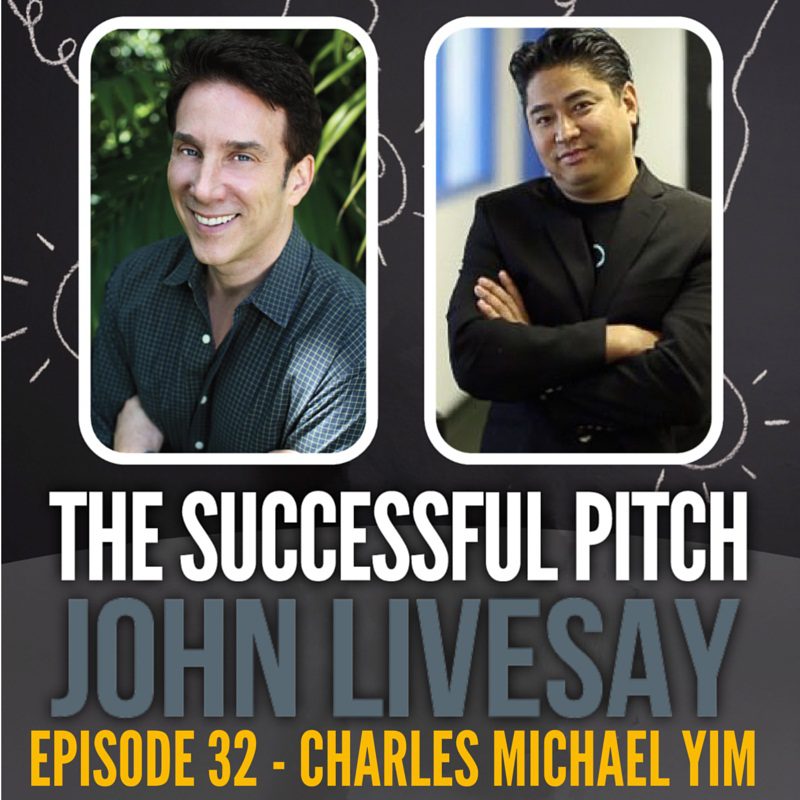
Listen To The Episode Here
Episode Summary
Charles Michael Yim is a successful serial entrepreneur and has appeared on Shark Tank and other news outlets. Charles was the first one in the history of the Shark Tank show to get funding from all of the sharks. Charles also came in first place out of 10.000 startups after competing for Sir Richard Branson’s startup contest. Charles talks on his success with Breathometer, the differences between Sir Richard Branson and Mark Cuban’s business style, and his upcoming book.
How To Win Shark Tank – Interview with Charles Michael Yim
Hi and welcome to The Successful Pitch podcast. Today’s guest is Charles Michael Yim who is the CEO of Breathometer. You might know Charles from seeing him win on Shark Tank. Charles, welcome to the show.
Hey, how’s it going? Glad to be a part of it.

Breathometer is the leader in breath analysis technology.
Thank you. We really appreciate you sharing your wisdom, your insights [on how to win Shark Tank]. One of the things that I really notice about someone like you is people see you on TV and they think, “Oh, overnight success,” and you’ve been doing this for quite a while and you had several successes before Breathometer. I think that’s really one of the keys that investors look for, is serial entrepreneurs, because you have a certain tenacity and you learned a lot and all that good stuff. Can you speak to your background a little bit? I know you were at some other companies and huge success there as well?
Sure. Like what you just said, you can’t just become an entrepreneur overnight. It’s more of a risk and reward scenario in that, it’s once you start, it’s really I’d like to think, is hacking away, you start hacking away at it. I think when you start, 50% is complete. But I think climbing up the mountain, addressing adversities, driving through a certain level of perseverance and tenacity and ambition. That’s what kind of gets you passed the line.
Breathometer, my current company, is technically my third founding company. I built and sold my last two and so I’ve had a couple of successful exits. I would say my first company is where I sharpened my teeth and that’s where I made several failures and many mistakes, but the important thing is that you get back up and you learn from them and you do better the next time. Ideally, you do it fast enough where you can still survive or your company can or your business can still survive.
What gave you the idea for Breathometer? Most entrepreneurs tell me, “We saw a problem and we wanted to solve it.” It was all about, at first, helping people not drink and drive, right? That was, before they get pulled over by the police they have to take a breath test.
In terms of inspiration, it really came from Jack Dorsey’s wear product. If you’re familiar with it, it’s a pin and processing product geared towards small to medium sized businesses. I saw a dongle and I kind of connected the dots. With the smartphone, I thought to myself, why couldn’t I just switch out the sensor inside for a bio-sensor instead and apply it towards essentially an alcohol breathalyzer kind of product, value proposition.
I used it back in college and I always erred on the side of safety. I put two and two together. Consulted with a few close, trusted friends. Next thing you know, I had a working, breathing prototype within about three months.
What I love about that story, Charles, is that you didn’t have to reinvent the wheel from scratch. You actually got inspired by someone else’s startup. What a great story that is, I love it, and say, how can I make this better? What’s also fascinating to me, please correct me if I’m wrong, but from what I understand is you’ve taken Breathometer to way more than just making sure of you’re alcohol level. It’s actually helping people make sure they don’t have bad breath. Who doesn’t need that, right?
Yeah, there’s quite a few applications that breath can apply to. I think about 6 months into it, I started collaborating and connecting and partnering up with Stanford university, my alma mater, as well Cleveland Clinic. Cleveland Clinic by far has basically the most advanced breath analysis lab that I would think, that I’ve seen at least. Breath analysis actually been a science for quite some time. A lot of consumers aren’t aware, but there’s breathalyzer-type machines in these Kaiser Permanentes in the world. They can cost as much as a quarter million up. You typically need a prescription and, I would say, extra added fees so you can have access to one.
It ranges in terms of applications. Everything from allergens, gastrointestinal issues, asthma. It really goes on and on. For us, we started with alcohol, but then we’re venturing into true medical or digital health applications like oral health, like health and fitness, being able to detect certain levels of fat burning through one’s body. But again, all through breath, because breath has roughly about 300 biomarkers whereby at least 25% are applicable towards human conditions.
All the people who are buying Fitbit and keeping track of their calories could also be buying your product to keep track of their fat burning through their breath analysis for ketosis and things?

Could you pair it with a Fitbit product or what have you or some type of step tracker? Sure.
Correct, and you don’t even have to worry about calorie counting anymore, or quite frankly, how many steps you are taking. Yeah, could you pair it with a Fitbit product or what have you or some type of step tracker? Sure, but if anyone really knows health and fitness, it really boils down to 80% of what you’re eating versus 20% in terms of your workout.
If you nailed down your diet and you’re not necessarily calorie counting but understanding how much fat you’re really burning and optimizing that, essentially that’s the holy grail. That’s how you really shedding pounds and staying at a certain optimal and healthy fitness range.
I think that’s what’s going to be partly responsible, if not a lot, of the incredible growth that you’ve already had. What I saw was that the growth for Breathometer was, 2014 you were at $4 million and then you project 2016 to be at $14 million, is that accurate?
Yeah. That’s right.
That’s phenomenal growth and obviously it’s not just from awareness from Shark Tank, although there’s a great story there. You were pre-revenue from the video I saw, right, before you went on Shark Tank?
Correct. We were pre-revenue. We’ve been revenue-generating for quite some time. Next year will be even a bigger year. Now we’re launching our third product and we’re already working on our forth and we already have our 5th in the R&D phase. All, again, geared towards different applications, not just alcohol.

Charles Michael Yim was the first person on Shark Tank to ever get all five sharks to invest with him.
What’s interesting about you on so many levels is you’ve broken history multiple times. You were the first person on Shark Tank to ever get all five sharks to invest with you. What’s interesting is they all said you checked off all the boxes.
You had a great product, you knew your numbers, you were a great business person, and you were doing something that was great for society, so everybody felt good about investing in that. Did you know before you went in [to win Shark Tank] there that you were checking off all those boxes or is that just who you are and the way you’ve done business in the past?
It’s the latter. I didn’t have necessarily a checklist going in there. I would say I definitely did my fair share of preparation. I definitely made sure I knew my numbers and I run a pretty tight ship so I knew my business inside out, so I was well prepared. I think as most people kind of define luck, there was a little part of luck in it where when the opportunity arises, you’re prepared and so you can take advantage of the opportunity. There was a lot of preparation that I think was key.
In terms of product, obviously there’s bias, but I definitely feel it’s compelling. Obviously, I have experienced and of course there’s a great cause behind it. I think, there’s a combination of factors, but a good portion of being prepared and the rest just being the right fit.
One of my favorite quotes is from Arthur Ashe, who said the key to success is confidence and the key to confidence is preparation. I’d love to have you share with our listeners what kind of preparation did you do before you went to pitch Shark Tank and what do you now before you pitch investors?
[Tweet “The key to success is confidence and the key to confidence is preparation.”]
I think with Shark Tank, which was very acute to Shark Tank, was I actually met with quite a few successful fellow Shark Tank entrepreneurs that have already been on the show and did well, started interviewing them. Understanding, are these investors are actually the real deal? Can they really add value to your business? Pro-tips, if you will, prior to being on the show.
In terms of just what I do in general, I’ve been in the board room several times. Again, it’s my third company. I’ve, overall, probably closed over $50-60 million dollars in funding, VC funding, single-handedly. I’ve been around the Valley. I think in terms of just being prepared being able to anticipate questions investors will ask, that’s extremely key [to win Shark Tank].
I have a pretty good head on my shoulders now and I think that just comes along with, as you say, preparation and that built confidence. In addition to that, just having the experience underneath your belt. When you’ve been around the block a few times, it gets easier. It gets easier, for sure.
[Tweet “When you’ve been around the block a few times, it gets easier.”]
Those questions include everything from what does it cost to acquire a customer to what’s your vision. There’s so many questions to be prepared for and anticipate. I want to brag about you. You closed $2 million in 2013 and now you’re going for $20 million. Is that accurate?
That’s right. Yeah, we already closed a good chunk of it already. More than 50-60% and we’re closing the rest of it now.
When you go from that kind of $2 million to $20 million, that’s such an incredible growth and obviously, based on huge success. Do you get different questions when you’re going for $20 million than you do when you’re going for $2 [million]?
Certainty, you do. Definitely, especially when you have a company that changes from, transitions from pre-revenue to revenue. Pre-revenue is more about product validation and ultimately product launch and assessing the risk points of the company in terms of being able to at least just ship the product.
When you’re in the second phase where we are, at series A, it’s user acquisition cost. How much does it cost to bring on a user? What’s the LTV, lifetime value of the customer? What’s the cohort analysis look like? How long are you retaining your customers and how long are they staying with you. Are they happy? Are they satisfied? If they’re not, you got to quickly address them.

There’s different certain level of expectations based on the growth stages that you’re in. There’s always good and bad with that.
Additionally [to help you win Shark Tank], what’s your roadmap and do you have the team that can support that? Do you have the engineering? Do you have the product? Do you have the financial assets or foundations to be able to support something like that? What are the markets you are targeting? Who is truly your demographic? Who is your customer at the end of the day?
You need to know quite a bit more about your product or products and your customers and then mechanics and foundation of your business, because at that point, you’re no longer an infant. You’re more like a toddler.
I would say we are in the transition and the interesting phase where we’re a toddler now, but we’re quickly transitioning to become a true teenager. There’s different certain level of expectations based on the growth stages that you’re in. There’s always good and bad with that. There’s going to be natural pain points, there’s going to be growing pains.
Scaling a business, hiring quick enough, but hiring quality individuals that can truly add value to the business, finding the right investors, support partners, and dealing with the distribution, international scaling, localization, regulatory. We’re a medical company at the end of the day, so we have to deal with the FDA. There’s complaint regulations we have to address, legalities.
There’s a ton of stipulations that we have to go through. It’s just a complete different set of questions from where we once were, first airing on Shark Tank. It’s a different ballgame. Just to mind you, we are truly a Silicon Valley company at heart.

I think Shark Tank, if at all, gave us a considerable boost.
When I say Silicon Valley, what I refer to and what that means to me is that we’re very much a technology company and we’re a culmination of both hardware and software. I think Shark Tank, if at all, gave us a considerable boost. We’re an atypical company in terms of how we’ve gotten to where we’ve gotten and the momentum we’ve built so far.
Can you speak a little bit about the team? I saw on your LinkedIn profile, you have some of the same people from your previous successful companies working with you again. Obviously there’s great synergy there when you have your team following you and you guys have a shortcut. They know what you expect from them and vice verse.
That’s so important for investors, is who is the team, and you mentioned it. Anything you can do about how you find your good team? How do you keep them from company to company?
That’s a great question. I think repetition is pretty key. You need to be able to treat your people and your team members well. I think if there’s a certain level of mutual respect there, I think naturally it’s going to lead to basically a, I would say, a clan, if you will. A group of you that go from one company to the other and creating success at one place and then hopefully repeating that, making that a recurring situation.
I think it’s a lot about that. It’s just great teamwork, team synergy and treating each other with an equal amount of respect. I think that naturally occurs. I there’s a second part of that, just team building. I think that’s probably one of the most important assets or talents that one founder can have when you’re building a company.
Because if you, for instance, don’t know a certain aspect or don’t have an in-house expertise on a particular topic for a business, maybe you don’t know, but you could hire someone that does. You can hire, believe it or not, a lot away out of your problems as a startup. If you don’t know it, bring someone in-house and they’ll figure it out for you.
[Tweet “Teamwork is respect and collaboration”]
I love that so much. The teamwork is built on respect and collaboration. Which is really what you’re saying is, collaborate with people who have skills that you maybe don’t have and then everything is stronger than it was before. It’s really fantastic insights. Do all five Sharks engage with you equally while you have that many investors?
No, I think it’s more on an as needed basis. When I first got funding and it was from all five at the very beginning, it was pretty much all five cylinders pumping at the same time. It’s pretty intense. Once you start scaling to a series A and when you establish a rapport and built up the relationship, it’s more on an as needed basis. We’re no longer that little tiny company that we once were. Now, it’s basically on demand basis more so than anything.
We have now institutional investors that are involved, that tends to be why we have a much larger round. In addition to that, we have a formal board now, which is very different. I’m not the only one just kind of calling the shots. I have a legitimate board that come from the institutional investor side that help mandate policy and make decisions with me.
We haven’t even gotten to your other big accomplishment, which is winning first place out of 10,000 other startups with Sir Richard Branson. Congratulations on that. You have Richard Branson and Mark Cuban backing you. I would think that’s quite a nice calling card for investors. Tell us a little bit about the Sir Richard Branson experience?

Charles Michael Yim won first place out of 10,000 other startups with Sir Richard Branson.
Richard Branson, it was more of his version of Shark Tank, if you will. It’s an opportunity for the community to basically, I would say, add fuel to the fire. If you already had something going, like Breathometer did at the very time we entered the competition, it basically acted as a catalyst and expedited our growth. We were exposed to a lot of investors. That’s what lead to our series A. and a lot of basically partnership opportunities as well. We had a lot of opportunity to interface with Richard Branson himself, his team, was able to go on his private island, Necker, so that was pretty cool. I’ve been twice since.
It’s just a phenomenal opportunity to meet great people, really expose the brand to a great community. There was just nothing but just give, give, give and take, take, take in terms of just a mutual exchange. Overall, it was a great experience and probably had equally as difficult, if not more difficult odds, in terms of coming through. But pleasantly surprised, we took first place. It was an amazing ride.
I bet. What advise did Mark Cuban and Sir Richard Branson give you? I would assume they have different points of view. Since you’re one of the few people who is fortunate enough to know them both, I would love to her your insights and how they compare.
I can tell you what I was able to take away from each so far. I think what I get from Mark Cuban, he’s a very much of an entrepreneur than an investor type that is all about building a business and doing the grind and just getting things done. I definitely got that from him. At the end of the day, he just wants to make sure that you’re doing your best and you’re building a real business.
[Tweet “Mark Cuban is all about getting it done.”]
I think what I get from Richard Branson is creating authentic genuine value. We have, for instance, a potential application for lung cancer. He was really just focused on that. He’s like, great, you can build businesses. A lot of people do build businesses, but if you really have a lung cancer application here, you talk about really saving lives.
[Tweet “Richard Branson wants authentic value.”]
I think what I got from him was just the bigger picture in that contributing back to the community, contributing back to the world. Doing something great while building something that you’re passionate about. That’s the winning formula there.
Building something great while making a difference in the world. That’s a great line. I love it. It’s really helpful. As if that’s not enough, you are also going to be an author. Tell us about your upcoming book.
[Tweet “Building something great while making a difference in the world.”]
I’m writing a book. It’s going to be three parts. My inspiration was from the show because after airing on the show, now I’ve been a part of five episodes and soon to be airing on the new spin-off show, Beyond The Tank, as well.
I’ve developed a public persona, if you will. I get approached quite a bit in public. I have parents coming up to me saying, “Hey, you inspired my kid to start his on business,” and blah, blah, blah or, “They want to learn from you.”
That got me thinking in that, maybe there’s something to here. That inspired me to write a book [about how to win Shark Tank]. The title may be something like Making of a Shark. Meaning that if you take some of the tips that I provide, perhaps you can build something of your own [and win Shark Tank too].

We had a lot of opportunity to interface with Richard Branson himself, his team, was able to go on his private island, Necker.
It’s three parts. It’s part one, my bio background. It’s a brief background of me and how I came to be as a lemonade stand kid to a full entrepreneur. Part two is my behind the scenes behind Shark Tank and then Richard Branson’s Xtreme Tech Challenge.
Part three, where I think the majority of value in the book is, my ten step guide, if you will, of how to come up with an idea, how to validate the idea, go to product discovery, whether it be product or service. Get investment for it, whether it be crowd funding or personal investors. Then taking it and releasing it to market, and then eventually scaling it. This is kind of a proven formula, if you will, that I’ve done personally with my last three companies, so I know it works.
I’ve broken it, I’ve distilled it down to very simple points where any average consumer, someone from middle America can pick it up and read it and go run with it. It’s my way to give back. I think it’s great if you’re successful, but if you can give back a little bit, that’s when the win is.
I’m being repped by one of the top agencies in Hollywood, they’re called APA. They’ve done Kim Kardashian, they’ve done Restaurant Impossible. They’ve done Gordon Ramsey and a bunch of stuff. They’re repping me at this point. I’ve already started writing the book, so we’ll probably launching in the next, I would say, 8-9-10 months.
How exciting. It sounds like a great content. It’s got enough celebrity hook of the behind the scenes with two major people, Mark Cuban and Sir Richard Branson, and then the actual meat and potatoes. One of the things that jumped out at me when you were describing the book, which I want to pre-order the minute it is available, is the idea.
So many people have so many ideas. How do you know or any tips you can give us in advance to your book, how do you know that this is the right idea to really pursue [so you can win Shark Tank]? Do you test it with crowd funding or do you test it with consumers or check out the competition? What’s your criteria for knowing that, in this case, Breathometer was going to be the right idea?
You hit a lot of the main points. Again, it’s essentially you need to one, validate the idea. That can be done through crowd funding. Secondarily, you need to do research. Figure out what the market size is like. Is there a predicate device, is there a market? The third part of it is, what truly is the potential penetration or traction of it? Those are kind of three of some of the primary characteristics or profile requirements. If you see and you recognize a potential, then at that point it’s a matter of execution.
[Tweet “If you see and you recognize a potential, then at that point it’s a matter of execution.”]
Great. I also know that you are involved with the Stanford StartX Accelerator program, which is another way of giving back, obviously. You must hear a lot of great pitches. Just to get into those accelerator programs is extremely competitive, almost like trying to get on Shark Tank. The number of people who apply and the number of people who get in.
I’ve recently been the pitch mentor at StartFast in New York, so I know that experience. I would love to hear your insights as what’s it like working with the Stanford Accelerator?
Like you said, it’s a tough accelerator. I entered, applied, being a Stanford alumni. That’s one of the main requirements. Aside from that, you need to have a legitimate idea or product or service. If you are selected, like you said, it’s tough, then you can go to the acceleration program. We did that and we did well. We gained a Chief Medical Officer. We got funding from Stanford University. That was nice. Now we’re working with them on the essentially respiratory side of things.
Moving forward, I now, like you said, give back. I’m actually now a mentor for the Stanford StartX Accelerator personally. I do get exposed to quite a few pitches. I think my two cents there is a lot of people get really caught in the, “Hey, I’ve got a cool idea and it sounds really cool, and what if it was this, what if it was that.”
I think my advice there is, and this is in my book again, that you should think about, when you create a company or product or service for that matter [to win Shark Tank or do something on your own], is always look through the lens of a problem-solution framework. What I mean by that is your target should be, are you solving a real problem? If you are and you have an innovative and a legitimate solution, you will have more than likely built a product or service that can provide real value.
[Tweet “See your idea thru the lens of what problem do you solve.”]
If you do, that’s when you have a basis for a company or a business. I find too often that, I would say, beginner entrepreneurs that just go out in the world wanting to create something but in actuality, they’re just creating something. That doesn’t mean that they’re generating or going to essentially create a business.
That’s incredibly valuable. Who do you help and what problem do you solve are two of the key questions that I think startups need to have in their head before they ever get to an accelerator, let alone an investor, and be able to say this isn’t just something that’s fun, it’s actually solving a problem. In addition to your upcoming book, are there any other books that you’d like to recommend to startups?

Art of The Start
That’s a good question. I am a big fan of Guy Kawasaki. That’s actually how I broke into the startup world. He has a book called Art of The Start. That’s pretty big for me. Let’s see. I think Eric Ries has a pretty good book. It’s called Lean Startup. You get an idea of how to run lean and mean and the fundamentals of running a startup and surviving. There’s also Tim Ferriss, 4 Hour Work Week.
I’m a big firm believer in working smart and obviously working hard, but working smart goes a lot further than working hard. Believe it or not, I run this company and probably in the middle of launching another company.
It’s just juggling the two acts where if you can get your current company or the company you’re working on to a stable state, a manageable state where you have senior management and at that point it’s self-sufficient and you are really delegating responsibilities, then potentially you’re at a point where you can actually start something else and make the best use of your time. Staying active, it’s all about a juggle act and it really comes down to how good you are at multitasking. I think that’s pretty key [to win Shark Tank].
I love it. How can our listeners follow you, be sure that they know when your book comes out, Twitter, LinkedIn? What’s the best way to keep track of, you have a blog or anything that you want people to read?
I’m pretty active on social media. I have a pretty significant following, especially after airing on Shark Tank and what have you. I am quite often pretty active on Facebook. You can find me under Charles Michael Yim. I technically go with my middle name as well. On Instagram, Twitter, I’m always under @CharlesMYim. You can follow me on there.
Otherwise, I’m always on the news or on TV with Squawk Box on CNBC and then potentially CNN soon and what have you. Shark Tank and now Beyond the Tank. You can follow me on TV as well. I’m constantly involved in blogs, whether it be TechCrunch or Mashable or Venture Beat.
Fantastic. Charles, I can’t thank you enough for being on the podcast today and sharing your wisdom [on how to win Shark Tank]. Congratulations on all your success. We’re looking forward to your new book and watching you on Beyond the Tank and other shows as well.
Cool, awesome.
Thanks again.
Thank you.
Links Mentioned
The Art of The Start by Guy Kawasaki.
The Four Hour Work Week by Tim Ferriss
The Lean Startup by Eric Ries
Charles Michael Yim Twitter
Crack The Funding Code!
Register now for the free webinar
The Successful Pitch – Book Trailer
Share The Show
Did you enjoy the show? I’d love it if you subscribed today and left us a 5-star review!
-
- Click this link
- Click on the ‘Subscribe’ button below the artwork
- Go to the ‘Ratings and Reviews’ section
- Click on ‘Write a Review’
TSP031 | Mike Edelhart – Hunting beyond the Unicorn
Posted by John Livesay in podcast | 0 comments
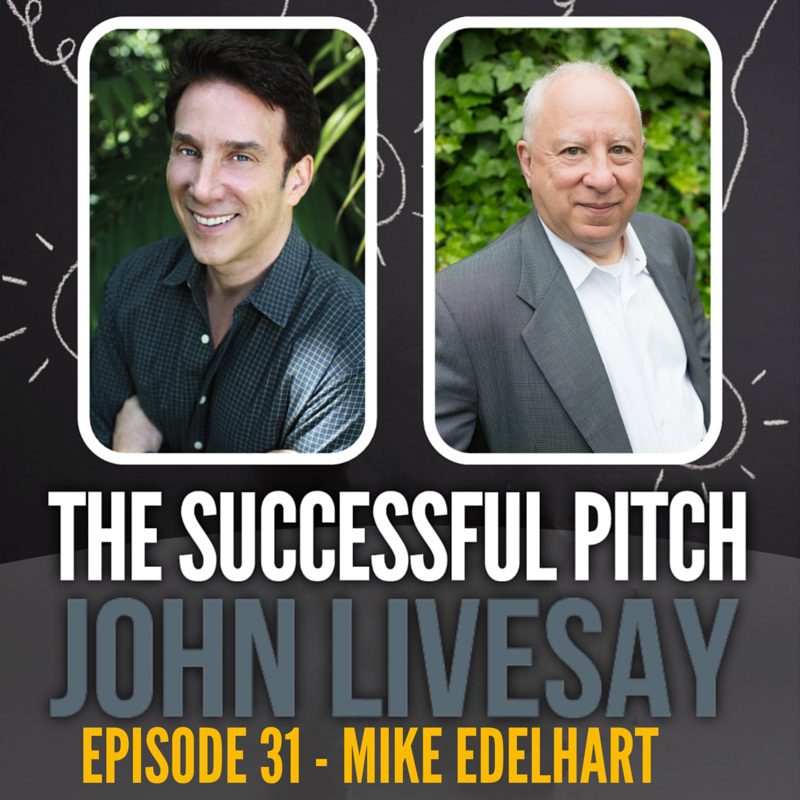
Listen To The Podcast Here
Episode Summary
Mike Edelhart is the lead partner for the Social Starts moment-of-inception investment fund and CEO of the Tomorrow Project.
Key Takeaways
-
- 02:30 – How did Mike become an angel investor?
- 07:40 – The team is incredibly important. This can not be emphasized enough.
- 10:00 – Mike believes a good team understands clearly what the company’s mission is.
- 11:46 – Great teams follow their leader with discipline, but not with rigidity.
- 13:25 – Becoming a unicorn is an outcome, not a cause.
- 14:40 – Having the desire to become an entrepreneur isn’t normal.
- 17:00 – Leaders who believe in themselves, their team, and can remain calm when everything goes wrong instills confidence in their team.
- 18:20 – How did Pinterest get started?
- 24:55 – Why did Mike and his team invest in Pinterest in the beginning?
- 27:45 – Entrepreneurs make the common mistake in thinking all investors are the same and they don’t do their homework.
- 30:00 – Mike talks about the rabbit archetype in business.
- 30:50 – Mike breaks down the tortoise archetype.
- 32:45 – What’s the idea behind the bear archetype?
- 36:15 – The final power animal in business is the hawk. Mike explains further.
- 40:00 – Mike recommends the book Extraordinary Popular Delusions and The Madness of Crowds
Tweetables
[Tweet “Entrepreneurship is a socially accepted form of mania”]
[Tweet “What you think is true will probably not turn out to be true”]
[Tweet “Clarity is key trait to get funding”]
[Tweet “Be obsessive about your customers”]
Links Mentioned
SocialStarts – The Venture Bestiary: Hunting Beyond The Unicorn
Extraordinary Popular Delusions and The Madness of Crowds by Charle Mackay
SocialStarts
Want the Transcription?
Share The Show
Did you enjoy the show? I’d love it if you subscribed today and left us a 5-star review!
-
- Click this link
- Click on the ‘Subscribe’ button below the artwork
- Go to the ‘Ratings and Reviews’ section
- Click on ‘Write a Review’
Pitching Yourself And Your Product – Interview with the Beekman Boys
Posted by John Livesay in podcast | 0 comments
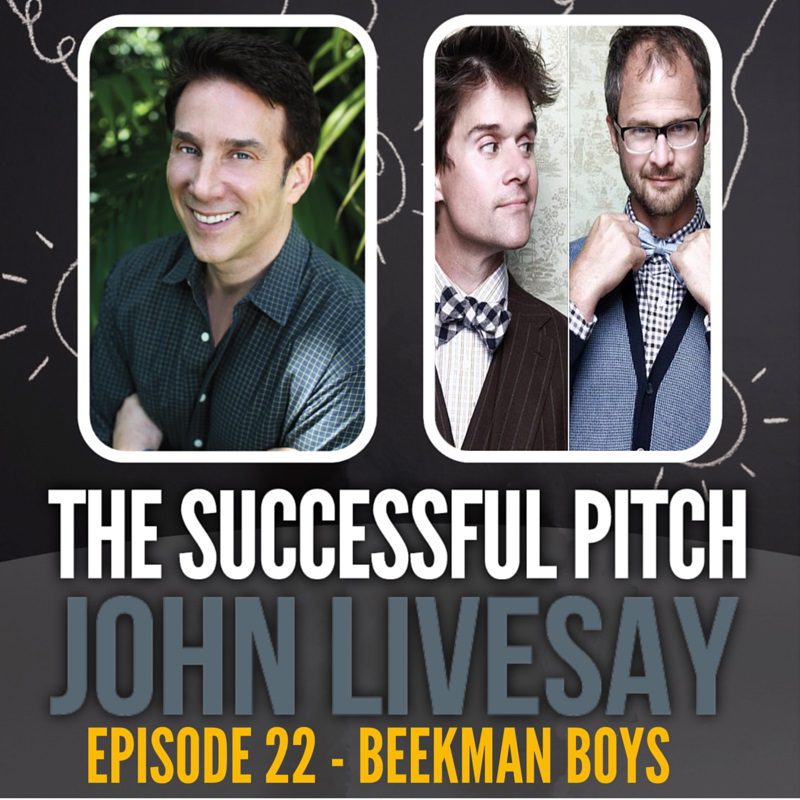
Listen To The Podcast Here
Episode Summary
Josh Kilmer-Purcell and Brent Ridge are famously known as the Beekman Boys and the winners of The Amazing Race. When both Josh and Brent were laid off from their jobs and were facing a million dollar mortgage, they focused their full attention on turning their farm into a profitable business. They first started selling goat milk and goat milk soap products, but now they currently work with over 50 artisans and have their products featured in Target, Disney Resort, Anthropologie, and more. The guys talk to John on how they got started, important life lessons learned from their goats, utilizing their social media following to promote products, and so much more on today’s episode.
Pitching Yourself And Your Product – Interview with the Beekman Boys
Hi and welcome to The Successful Pitch podcast. Today’s guest are the fabulous Beekman Boys. You might know them as the winners of The Amazing Race. Josh Kilmer-Purcell, who was a former advertising executive, and Brent Ridge, who was Martha Stewart’s health and wellness expert, got laid off from their jobs and turned that around. They bought a goat farm in upstate New York and started selling soap from the goats. They have an incredible story of taking an idea and growing it and making it hugely successful.
There are over 50 different artisan products that they now sell on their website. Their products are carried in major department stores like Anthropologie and Target. They have great insights on how to get people to work together well, how to get people to say yes to what you’re offering, and how to work with your neighbors in a way that allows you to win every time. I think you are really going to enjoy this authentic, fun interview. Guys, welcome to the show.
Thanks so much for having us.

The fabulous Beekman Boys, Josh Kilmer-Purcell and Brent Ridge, were winners of The Amazing Race.
One of the things that really impressed me is that the strategies that you have for living your life is the strategy that allowed you to win the Amazing Race as well as the strategy that how you run your business. I’d love to have you guys just talk about those three things right off the get go.
I appreciate you calling it a strategy, because they weren’t very strategic, they just happened. In fact, they became a strategy. As you alluded to, when we lost our jobs and we had to find a way to save our farm, we learned a lot of things in that process and we learned that life actually can be pretty simple and that there are three rules that can get you through just about anything. Those three rules are: Work hard, never quit, and help your neighbor.
They seem really basic and they are really basic, but we guarantee you, if you apply them to any challenge in your life, you’ll come out better than where you started. I think the story we told about the Amazing Race was the most surprising application of those rules. Because when you’re competing for a million dollars, racing for a million dollars, the last thing you’d think you will do is help your neighbor. You’re competing against them.
But we had learned those strategies and they’d worked for us in life. So even on the race, we helped our competitors finish puzzles, we waited for them to finish their challenges, we helped them find clues. At the end of the day, I don’t know why that kept us in the game, but it kept us in the game until the very end and then we won. So it works.
[Tweet “3 rules that can get you through anything: Work hard, never quit, help your neighbor.”]
That really is, as Josh said, it wasn’t something that we sat down beforehand and wrote down on paper and a business plan, here’s our strategy for growth as a company. Just to give your listeners who may not be familiar with our story a little bit of context, we’re two city guys. We had these great careers in the city.
As you said, I was working at Martha Stewart and Josh was an advertising executive. We bought this, at the time, it was an empty farm in this tiny little village, Sharon Springs, New York, about three and a half hours outside of New York, thinking it was just going to be our weekend getaway. We were going to do a little gardening and grow some food.
Shortly after we brought the property, a farmer who was losing the place where he had his goats wrote a note and put it in our mailbox and said, “I’m losing the place where I have my goats. Can I bring the herd to your farm to graze?” At that time, we just thought it’d be great to have a petting zoo. We said, “Sure, bring them.” The property had a caretaker’s house on it, so he moved in there. It was that openness and that willingness to bring him on that really ultimately was our saving grace.
That was in 2007. In 2008, we both lost our jobs during the recession and literally had a million dollar mortgage on the farm and no income coming in. For people who were working in media in New York City at that time, you could not see when the jobs were coming back.
Ever having a job again.
We became very close to losing the farm until we literally pulled ourselves up by our bootstraps and said, “What are we going to do here to make this happen?” Sat out and said, “What do we have?” We have some marketing background, we’re relatively intelligent people, and we have goats. What can we do with that? We started making products using goat milk.
Started with goat milk soap and goat milk cheese and then started working with our neighbors who are also great artisans and craftspeople. Blacksmiths, weavers, potters. They were wonderful crafts people, but they didn’t know how to sell their wares to a wider audience.
We folded them under the Beekman 1802 umbrella and now we work with over 52 different artisans and selling to natural chains like Williams-Sonoma, Anthropologie, Bloomingdale’s, Target. It’s been an adventure. Three things: work hard, never quit, help your neighbor.

The Beekman Boys started with goat milk soap and goat milk cheese and then started working with our neighbors who are also great artisans and craftspeople.
That’s so valuable for our listeners, mostly people who have a dream of starting up their own business or are in the process of it. We’ve all heard, work hard and don’t give up, especially as a startup, that’s so easy to do. You have to keep going back to the why did I start this in the first place. But really what resonates with me and makes it so unique is, you guys don’t just walk, you walk your talk, you just don’t come up with the talk.
Time and time again, this helping your neighbor from literally letting the neighbor’s goats graze on your farm for free, which then allowed you to start selling goat soap and milk, then helping people on The Amazing Race. Now you’re doing something that’s even more revolutionary. I want to sort of jump ahead.
We’ll come back to other topics, but can you tell us what you’re doing with … You were able to pay off your million dollar mortgage from winning The Amazing Race. I teased the audience a little bit. What are you doing now with something called Mortgage Lifter to, again, help your neighbors?
Before we ran The Amazing Race, our big challenge, as you said, was paying off this mortgage. We, tongue and cheek, decided we were going to sell a pasta sauce made out of an old heirloom tomato. The name of that tomato was called the Mortgage Lifter tomato. It was named that in the Great Depression by a farmer who sold so many that he paid off his mortgage. We said, we’re going to plant these tomatoes, these heirloom tomatoes, and we’re going to make a pasta sauce and that will help us pay off our mortgage.

Pitching yourself and your product: The Mortgage Lifter tomato was named in the Great Depression by a farmer who sold so many that he paid off his mortgage.
That was in April 2012. In May, we ran The Amazing Race and we won. We had enough money to pay off our mortgage. When we returned, we had all these tomatoes out in the field and we said, you know what, we’re going to continue with our plan, call it the Mortgage Lifter, but we’re going to pay it forward. We’re going to pay our winnings forward and the profits, 25% of the profits from this product, we give back to other small farms.
The first year, we were able to give away $15,000. We recently gave away another $18,000. We really believe that we had that good fortune of getting cast on The Amazing Race and winning, and not all small farmers are going to be able to do that. We decided to pay it forward. It has now become sort of a virtuous circle, because people love that message so much that they start buying so much of the product, we weren’t able to supply the tomatoes anymore.
Now we’re able to contract with other small farms to supply the ingredients. It’s a virtuous circle. Not only are small farm ingredients going into the product, but then the profits are going back to other small farms to help them scale up.
It’s such a great story of living your brand. You have this great expression that you’re not just storytellers, which you are compelling storytellers and that’s the key obviously to pitching anything, either pitching yourself to get on the Amazing Race, pitching your products to be sold in all these stores, but you don’t just tell a story, you live the story. This is a classic example.
When you said that, “We’re not just storytellers, we’re story livers,” that resonated with me so much. I want to encourage all the listeners to think about, if you’re telling your story to a potential investor, someone who is going to carry your product, someone to join your team, are you in fact living the story that you’re telling like the Beekman men are doing? It’s just so great.
[Tweet “Story Living vs Story Telling is key to success.”]
Yeah and I think that the consumer these days is so well versed in branding and …
Marketing.
Marketing. It’s really hard to just be a storyteller anymore, because people can see through that. They can see through a made up story or something fabricated just for the purpose of selling a product. I think a story of living is going to be much more important going forward for people who are looking for more authentic products.
Not only that, but when business people have some success based on their story, it’s often very easy to lose track of how you started. You don’t want to be the Mrs. Fields sitting at the head of a corporate table. You have to remember where you started. To that end, Brent and I, we always take every Sunday to be on the farm and working on the farm and doing all of the chores. We still do all the chores we ever did.
On Sundays, we’re not flying around the world, we’re not being business people. We’re actually living the story that we started out with. Because I think if you just stop doing that, you lose sight of what made you successful in the first place.

We always take every Sunday to be on the farm and working on the farm and doing all of the chores.
It’s such a great example. We hear major corporations saying how important it is for the top executives to get their hands dirty, if you will. If you’re running a hotel chain, work behind the front desk and take reservations, really get in touch. You literally are getting your hands dirty. I love that you call them chores, doing the chores around the farm to keep the farm going so that you live the brand so well.
One of the things that really impressed me on your website are all the reasons you give consumers to buy from a wide variety of your products. The fact that you have 50 artisans, so it’s everyone in the neighbor that you’re living in is benefiting from your marketing savvy, obviously, and you’re selling something unique.
That is so important when you’re pitching yourself or anything to anybody, is what makes this so unique? In a world where no matter where you go, you go to a certain place, it’s like that same product is available. Would you tell our listeners the story of how you turned a challenge with the cost of the soap into a positive? It’s such a great story and an example of unique products.
When we first started making goat milk soap, we’re struggling, we’re a new business. Then we got a call from Anthropologie and they said, “We want to buy 43,000 bars of your soap.” We thought it was the best thing to ever happen to us. We thought we were going to be rich that day. Then they said, “We only want to pay 23 cents a bar.” At the time, our cost was north of a dollar a bar.

You find a liability or an expense and you figure out how to turn that into an asset.
We went to the soap maker, Deb who lives down the street from us, and we said, “How can we reduce the cost?” She said, “I just don’t know if I can do it.” We said, “What are the fix costs in this?” She said, “It’s not the ingredients. But when you make real home made, natural goat milk soap, as it cures, there’s a fine layer of ash that forms on the surface.” She said, “That’s what costs so much money. I have to go through and shave each of that layer of ash off by hand,” so there’s a labor cost, the expense.
We thought about it and we couldn’t figure out a way to get the price down. Then we realized, we said, “Deb, is it only natural soap that has that layer of ash on it?” And she said, “Yes. If you make it with chemicals, it’s super clean. You don’t have to worry about it.” Now, even today, when you buy our soap, there’s a little card inside that says, “You know this is all natural, 100% real goat milk soap because there’s a fine layer of ash on the top of it.” We turned that negative into a selling point.
I think that’s how any business is successful, is that you find a liability or an expense and you figure out how to turn that into an asset. Just like when we were first starting out and literally, we thought the only thing that we had was a million dollar mortgage. We sat down and said, “No, here are the assets that we have.” That’s what a lot of people don’t do when they get mired down in the liabilities, in the expenses, is think, is take a step back and say, “Yes, I might have those liabilities and expenses, but let me do an inventory of my assets and how can I use those to solve a problem in a creative way.”
[Tweet “How can I use my assets to solve a problem in a creative way?”]
We’re going to tweet that out. How can I use my assets to solve a problem in a creative way? It’s so useful in this example of, “We have goats, we’re going to make goat soap. Oh, but wait, there’s a problem.” That’s the number one issue that investors ask startups when they’re asking for investment, is what’s the cost of acquiring a new customer, what’s the cost of your product versus what you’re selling it for?
You had what seemed to be an insurmountable distance between your cost to make the soap and what the store was willing to pay for it, and yet you figured out a way to get the cost down and turn that, the reason why we’re so expensive into a positive that then it makes it unique and makes people connect to your brand.
[Tweet “Look at your assets to pivot.”]
The story just goes on and on and there’s so many lessons there. It’s absolutely fantastic. The other thing that you have on your site that is … When I talk to investors and I say, “What’s your criteria for funding a startup?” They’ll say, “We invest in the jockey, not the horse.” It’s all about the team. You guys certainty, as a team together, have been through all kinds of challenges of your relationship and being laid off and working together and pulling together.
What you created and that you are so open with on your website, Beekman1802, is what kind of culture are we having and how do we pay our people? It reminds me a lot of Howard Schultz giving benefits to his part time employees way before benefits were a common thing. Can you share with us your philosophy of compensation and your team and what you look for in your team?
Our company is headquartered in a very small village in rural upstate New York. One of the most conservative and impoverished counties in all of New York state. Attracting job candidates is pretty difficult. Not only do we seek to offer people something that’s relatively competitive from a salary and benefits package, but offer people a chance to be a part of something with a bigger mission.
I think that’s what’s resonating with so many of the young people who are joining team Beekman. We’re still a relatively small company. I think eleven full time employees. I think everyone who works here sees a much bigger picture and being a part of that.
There’s not a lot of opportunities in rural areas to grow, so we have a growing business and it’s a place that you can actually grow your career. A lot of very talented and intelligent people don’t want to rush head long into the cities anymore. How can we create a company that could offer you a career, but still be in a rural area?
We opened up our flagship store here in Sharon Springs, New York. There was a lot of deliberation about whether we should invest in creating a flagship retail location in this little village.
Population 547.

We opened up our flagship store here in Sharon Springs, New York.
When we sat down and, again, it was being the jockey and trying to think about where this is going to go. We looked at companies like L.L. Bean in Maine or Orvus or Vermont Country Store, which are similarly located in very rural environments but have become destinations. Now, what we’ve seen, by putting so much effort into the flagship store and investments into the flagship store …
Because our model for the flagship retail store was the old grand department stores in New York City where they paid attention to every single fixture and every single detail. It’s not about how much product can we cram on the shelf and discount it and what not.
We really did want to create this old school retail experience. Now we do have people who come from all over the world just to see this retail store in this little tiny town, Sharon Springs, New York. It really worked for us to do that. Likewise, it gives a reason for the brain drain in this area to stop. For decades, there were no opportunities for kids. When we graduate our 25 kids from the high school each year, there was no opportunity for them. By doing, by creating this brand, we create reasons for people to stay around.
It goes back to, once again, you’re helping your neighbors, which is just amazing. You have so many products that are so unique and specific to your brand. I want to talk about your cook book and being invited to ring the bell at NASDAQ. What a huge honor. Can you take us back that day? What did it feel like? Tell us some of the reasons. This is your chance to brag a little bit, or I’m happy to do it for you, on how you think they selected you. People write books all the time and launch a book, but very few authors get invited to ring the NASDAQ bell.
Again, I think that NASDAQ is an exchange for discoveries and innovation. They were looking for new business, I think they were looking for small businesses who represented something different and a new way of thinking. Obviously for them, they’re trying to highlight businesses that they think at one point will be listed on the NASDAQ exchange.
They really approached us because they were interested in our story and the type of business that we’re growing and the type of fundamentals we were sitting so that we could be the representation of what they stand for. For us, it was just a huge marketing opportunity because you’re not only ringing the bell and getting the experience of doing that. But for five minutes, they’re putting your brand on the billboard at Time Square and for all the world to see.
It’s just a really once in a life time opportunity for us and we were so happy to be selected. Again, I think it goes back to beginning authentic and not only telling the story, but living the story.
Great. Let’s talk a little bit, just because I want the listeners to really remember this tomato sauce for the Mortgage Lifter. How can people support that? It’s only sold at Target and you have something really clever about pictures that I think would be fun to hear.
It’s not only sold at Target. You can buy it on our website. You can also find it at Disney Resorts, actually.
Congrats.
They choose a handful of small American companies to feature in the resorts and Beekman and Mortgage Lifter was one of them.
One of our challenges, of course, now we were on the shelves of a major national retailer and we’re sitting next to Prego and Ragu and they have giant marketing budgets and couponing and you’re in every newspaper every week. We didn’t know how we could counter that.
And cheaper product.
And cheaper product. We decided we needed to get the story out. We turned to social media, we have a wonderful social media following. We call all of our followers Beekman neighbors. We called upon all of our Beekman neighbors to help us get the word out in lieu of a big ad campaign. We said, “It’s you guys, you have to get the word out.” We invented something called the Shelfie instead of a selfie. The week it launched, we said go to Target … We knew they all wanted to buy the sauce. They’ve been part of the project. They were as excited as we were. It was in Target.
[Tweet “Shelfie vs Selfie.”]
We said, “Go to Target, clear out the shelf, take a picture of you with this empty shelf holding a jar of sauce and call it a Shelfie, and post it on your Facebook page.” We had tens of thousands of people posting a Shelfie of them and the sauce, and then all of their friends were saying, “What is that? I’ve never heard of that. Why are you doing this?” We really, again, we turned to our Beekman neighbors to help us.
Leveraging your social media following to become brand ambassadors so that word spreads virally and people are feeling good about paying more for a product that’s worth more because it’s from farmers. It’s actually why we pay more for organic food, even though it’s in a can. Not only are you doing something good for yourself by buying products that are healthier, but you’re making a difference in the world and then having fun with social media all at the same time.
It’s just such a great example of creativity, overcoming how do you compete with the big guys, which leads me to, I want to have you just chat with our listeners about some of the things you’ve learned from having goats. I remember you talk about don’t fight with a big goat or something along those lines.
You have to know who the goat is with the big horns. Anybody who’s watched goats at play or in a pasture will know that they’re always butting heads.
The goat with the bigger horn always wins. It just does.
The lesson that we learned about that is that regardless of what business you’re going into or what community you’re working in, you always need to identify who the goat is with the biggest horns.
Don’t go up against that person, don’t go fight against your competition that’s bigger than you are. Either work with them or go your own way.
[Tweet “Identify which goat has the biggest horns. Don’t go up against that person.”]
If going your own way, understand that knowing the goat who has the biggest horns, you’re going to ave to strategize around how to get around those bigger horns. Whether you’re going to use them to your benefit or you’re going to to run the other way, you still have to identify who that goat is with the biggest horns.
One of the examples that we use for that is Martha Stewart. Brent worked for Martha Stewart for many years and then in the recession, when Martha had to close his division, of course Martha laid off Brent as part of the downsizing. When we launched our company, a lot of reporters wanted to use that fact in our favor and say, “You guys are the new Martha Stewarts. How do you feel, you were laid off from Martha Stewart, now you’re building this big brand? Isn’t this sort of pay back or are you the anti-Marthas?”
In reality, Martha has been a fantastic supported and a wonderful partner. She has bigger horns than we do, so we knew it was futile to try and take that position of being the anti-Martha or we’re going to be bigger than Martha or better than Martha. Instead say, “No, she’s the master, she’s the Goddess and she’s always been supportive of us and continues to be supportive of us.”
Yes, she even came to your wedding, for God sakes. That really shows how wonderful it can be when you align with other people doing similar things, not direct competitors or even direct competitors. Just when you have that mindset, it’s so useful. Is there anything else that you’ve learned from your goats that you can share as a metaphor for our listeners in the startup world?
We should maybe give one more. What’s our other favorite one?
What about the first goat down?
I love that.
Goats, there’s no place more comfortable than someone else’s tummy. That’s what we learned from them. What you see with our goats, when they all come in at the end of the day, they come in and they stand around, stand around. Because they live in a barn and the barn floor is hard and it’s not the most pleasant.
One of them lays down, and then that first goat lays down, the next goat lays down and puts his head on their stomach and then it continues down. Every goat puts their head on someone else’s stomach because it’s more comfortable. We always say, sometimes you have to be that first goat down and go ahead and take the sacrifice and be the one that lays down on the cold hard floor.
If you’re working in a team or a community and …
You find everyone complaining.
Everyone’s complaining, maybe you’re complaining that things aren’t getting done. That’s because someone has not agreed to be the first goat to lay down. Someone has to be that first goat so that someone else has the tummy to lay on.
I love it.
A lot of people don’t learn that lesson.

Someone has to be that first goat so that someone else has the tummy to lay on.
If you are, then things get down and things move forward. Do you have any last minute tips you can give our listeners? Obviously, you’ve had to pitch your whole career to get stores to carry your products. When you’re pitching yourself to a new store, whether it’s Target or Disney Resorts, is there something you do or say that makes it useful? Do you tell stories? How do you get people to understand and want to buy your product?
Every product that we design is directly inspired by the farm. We don’t start out designing a product with a niche already in mind. We don’t look at the market and say, “There’s not this, let’s create that to fill this void.” We are creating things that we need on the farm and are inspired by what we’re directly doing on the farm. When we go in to talk about a product, we tell the entire creation story about how this product was formed and why it’s different than the next thing sitting on the shelf.
[Tweet “When pitching yourself or a product, tell the entire creation story.”]
As I said, all these people who work in retail, they understand that today’s consumer can read through any brand building BS. By being able to tell that creation story, they understand that what we’re creating is different than what someone else might be pitching them.
We also find ourselves, when we walk into a room, just having conversations. I think when you fall into the mode of, “We’re pitching you something and we’re going to see if you bite,” we see it more as it’s going to be a partnership and we’re going to present our story, our wares, our ideas.
The person on the other side, they’re either going to accept and become a partner or not. It’s not a game to try to get them to be a partner. It’s they’re either the right person on the other side of the table or they’re not. If they’re not, nobody goes home upset. It’s just not meant to be.
Pitching yourself and your product is always in terms of how you’re going to help that other person’s business.
I can think of no good outcome than having to convince someone to work with you.
[Tweet “Pitching yourself and your product: help that other person’s business.”]
Right. That’s incredibly valuable information. It really is a partnership and you’re interviewing them as much as they’re interviewing you. Therefore, you’re not begging or pushing. You’re just saying, “Here’s who we are. Let’s see if this is a fit. If it’s not, no hard feelings.” That reduces the stress and the pressure on you and the person that you’re pitching yourself to, would you agree?
Exactly.
Absolutely.
My other tip is sit on the same side of the table. In my years of advertising, there was always the agency on one side and the client on the other side. I learned that if I sat down right next to the client instead of the other side of the table …
[Tweet “When pitching yourself, sit on the same side of the table as the investors.”]
That’s a great tip, Josh. Thank you. You literally turn your neck to the left or right when you’re talking to them as oppose to … Wow, body language, everything, you can never get enough of those tips. That’s fantastic. How can people follow you guys on social media, go to your website and sign up for your newsletter? Tell us all the goodies.
Our website is Beekman1802.com. If you send an email through the website, Josh and I read every single email still. We manage all of our social media accounts. We’re on Facebook, Instagram, Pinterest and Twitter and YouTube. We’re Beekman1802Boys. Again, if you send us a question on any social media or respond to something we posted, it’s the two of us. We’re the only two with access to our social media. You’re getting an authentic response when we respond.
Just like the soap.
Just like the soap.
Fantastic. What’s next for you? Do you do a one year plan or a big plan? Do you have, we want to be at a 100 artisans a year from now? Or how does that all come together?
We try to launch about 20 new products a month.
A month.
We try to keep it very interesting and refreshing. Most of our products are still very artisanal and small runs. We know that there’s not going to be a single product that’s going to be a billion dollar product. We try to meet our customer expectations by always offering something new and something unique and in small runs, so that when you get something from Beekman, it’s going to be special. We always want to maintain that specialness.
If people are looking for anything specific coming up, we have our style book coming out in September. We have our magazine, new magazine launch coming out in October called Beekman Almanac. Towards the end of the year, we’re hoping to have a bigger relationship with Target to announce.
[Tweet “The Farm is Bigger Than Its Fences”]
Oh, how exciting. We’ll be working for that. Your tag line is, The Farm is Bigger Than Its Fences. I just love, and I think that’s a great way to end the show. No matter whether it’s your own farm, like you literally have a farm, or your farm metaphorically is your business. Just remember, it’s bigger than whatever boundaries you initially physically put up and you’ll be successful, like these guys.
Thank you.
Thanks for joining us today.
Links Mentioned
Beekman 1802 Website
Beekman 1802 Boys Facebook
Beekman 1802 Boys Twitter
Beekman 1802 Boys Instagram
Beekman 1802 Boys Pinterest
Crack The Funding Code!
Register now for the free webinar
How to get VC funding for YOUR tech company w/ Funding Strategist, John Livesay
Share The Show
Did you enjoy the show? I’d love it if you subscribed today and left us a 5-star review!
- Click this link
- Click on the ‘Subscribe’ button below the artwork
- Go to the ‘Ratings and Reviews’ section
- Click on ‘Write a Review’