

Where Imagination Meets Business With Christopher Kies
Posted by John Livesay in podcast | 0 comments

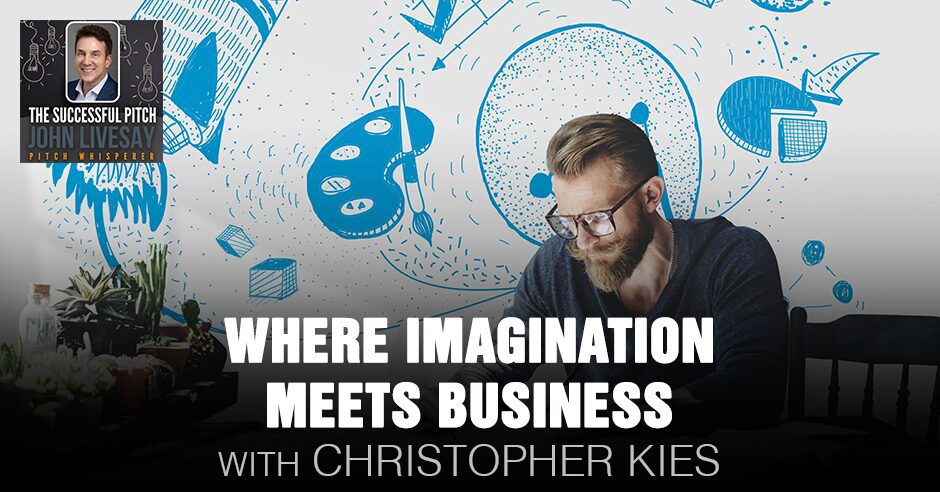
Mark Twain once said, “You can’t depend on your eyes when your imagination is out of focus.” The same applies to the world of business. If you don’t have an imagination, then your venture will be in for rough sailing. In this episode, John Livesay speaks with Christopher Kies, Executive Sponsor at Blue Sky Consulting. Christopher thinks of Blue Sky as the place where imagination meets business, and that is exactly what he focuses on, helping others tap their imagination to succeed. Be inspired to unleash your imagination by tuning in to Christopher and John.
—
Listen to the podcast here
Where Imagination Meets Business With Christopher Kies
Our guest is Christopher Kies. He has many years of successful corporate sales experience and enjoys using his insight to help others achieve their goals. Many of his clients need a second opinion on a sales opportunity or a specific strategy to enhance a deal. He works with CEOs, entrepreneurs and executives on a wide range of opportunities, all with the same focus in mind, understanding what stops may happen along the way and how to move beyond them. Christopher, welcome to the show.
Thanks, John. I appreciate you having me on.
We met through a mutual friend, Ken Rutkowski, with whom you went to grammar school if I remember correctly.
I met Ken in sixth grade and I don’t care to count how many years ago that was. It has been a long time.
I love to ask my guests to take us back as far as they want to their own story of origin since you have a sales background as I do. We both are from the Midwest. I was interested to hear similar influences, concepts, motivations and all that good stuff. You can start in sixth grade with Ken if you would like or wherever you want to start your story in terms of understanding that you had an interest in communications and connecting with people.
We could start back in my past because things for me have always been about long-term relationships. It’s one of those moments in time where we have a mutual friend and somebody I have known for many years. I kept my relationship with my wife from first grade. I moved at a point in time in our relationship and we stayed in touch. We reconnected when we were in our late twenties. We dated for a while and then decided to get married. We were in our mid-30s. When I talk about meaningful relationships, it does focus on how I help folks. I hope those two little vignettes of my life and the way I communicate with people helps you out with that.
We both had a background selling tech equipment. You were at HP. One of the things that I noticed in that world was an emphasis on that term speeds and feeds in terms of relationships, empathy or let alone storytelling, which is my passion. What was your experience in that world?
That’s a great question because it does boil down to what type of salesperson you are. Are you transactional or relationship-based? Those are the two worlds that I grew up in. Probably, like you, I call those the go-go ’90s. It was back between 1995 and 2000, right before the dot-com boom in 2001. It was when I was getting my foot in the sales world.
One of the things that I saw very early on in my career was there weren’t many older men or women in sales that caught my attention quickly. I was like, “Anybody that was over the age of 45 was either a manager or senior-level executive that I didn’t have a lot of connection with.” Even my direct managers were still in their 30s or barely over the age of 40.
That caught my attention because even some of the older guys that I did work with and I say older back then because I was in my late 20s and they were in their 40s, I saw them get pushed aside quickly when the numbers didn’t match up. How I took integrated information as a salesperson in my younger career was, “This is a short-lived world. I better make hay while I can and enjoy it.”
[bctt tweet=”You are not just enough; you are more than enough. ” username=”John_Livesay”]
I went to relationship-based sales because that’s what I enjoy. I know you like the storytelling aspect because it does create a binder for the person that you’re speaking and communicating with. I take that from a relationship side because I wanted to get to know my prospects and customers. That was my initial focus.
I remember going to see Death of a Salesman play, where the guy stayed in sales way past his prime. It painted such a bleak picture of what it’s like to not be in management and still be in sales at a certain age and carrying a briefcase, quota and rejection, yet I still wanted to be in sales. I did see that you need to reinvent yourself almost like an actor or athlete. There’s a special premium time.
When you’re first starting, you’re in your early twenties. You don’t have enough experience. You get some experience under your belt. In 27 to 35, you’re getting offers left and right. You think it’s going to last forever. You were smart enough to zoom out and go, “This doesn’t last forever. How can I either not just enjoy this but have that awareness?” You’re not so shocked.
I used to see that in the publishing world that even at the top, the publishers would hit a certain age. The magazine is still doing great, but once 50 something happened, they were like, “We’re going to bring in somebody younger. It’s less money.” Everyone thought it wasn’t going to happen to them, especially if they had been in the company for a long time. That awareness, especially at a young age, is quite fascinating.
You have been doing your own consulting, Blue Sky. Let’s start with that name. I have a sense of where the name came from, but I’m always big on asking people stories of origin, including the story of origin around a company name. You could have named your consulting company anything. What made you pick that?
Blue Sky was easy for me because that’s always been me. When I was a kid in grade school, high school and college, I would always look out the window in class. I could take in the information in one ear, listen to it, decipher it relatively well, but I was always dreaming. I was always in another space. I was like, “What would I like to be doing?” I would imagine myself in situations. Blue Sky was what I always looked at. It was wide open. That’s what I look at my organization and company as wide open.

Imagination Meets Business: What you think is what you create.
I have been in sales for many years. I even manage and run my wife’s business as well and do her P&L. I understand finance very well and also roadblocks. Roadblocks aren’t always about who is stopping you. I find that it is more or less people stopping themselves and not having the imagination triggered. They are focused on their quota, what their lack and limitations are.
I have had this company for years. I would go in and out of it. I would get other offers and opportunities and work with people. Years ago, I finally said, “I’m done. I’m going to dedicate 100% of my time to helping those that are interested.” If you’re interested in what your Blue Sky or dream is, this isn’t a transactional deal. This is you pay me hourly. I’m not a therapist or licensed in any state. I’m just a guy that has been through a lot. I have been through the highs and lows of sales.
I have insights. There are not a lot of men or women over the age of 50 carrying a bag anymore. The insights and relationships that we sometimes have can enable people in our age group that are looking for the next step. That’s what Blue Sky does. It opens up possibilities. To finish that, my tagline is, “Where imagination meets business.” If you don’t have the imagination, I want to help you reignite that, find it again or cultivate it. If you do, look out there because what you think is what you create.
It’s very metaphysical, which is also another reason you and I clicked so fast because I have that same concept of energy and mindset. There is a great Mark Twain quote about, “It’s hard to keep things in focus when your imagination isn’t working.” I think to myself, “Most people think of business as unless you’re hired to be a graphic designer or something, it’s not that creative of a career. It can be extremely creative if you look for solutions where they are not obvious or what else needs to happen to zig and zag.”
If you’re on the left side of your brain trying to analyze things like it’s a math problem, you’re not going to see those. The roadblock is the roadblock. It’s black and white. It’s like, “If you’re doing accounting, it either adds up or it doesn’t. This is a no and it’s a no forever. I’m never going to try again. I’m going to take rejection personally and go down this downward spiral of who I am. I’m not worth anything and anybody else could have done anything else.”
[bctt tweet=”What fun can you bring to your job? ” username=”John_Livesay”]
You’re summarizing what I will say. I’ll contend everybody thinks at the moment. We always go from 0 to 100 miles an hour in the negative. You get down to the space like, “I’m worthless. I’m just lucky to have this job. I’m going to figure out how long I can keep it before I find my next opportunity because my numbers are crap. I’m not selling anything.” I always want to tell people, “Let’s take a breath and pull back. Let’s acknowledge you’re not where you need to be with your numbers. Let’s say that that’s a real thing. Let’s say, ‘What do you want to do?'”
Quite honestly, you have people take a breath for a moment. You and I believe in breathing too. Breath exercises are super helpful. We take breathing for granted because we do it pretty well. Unless you’re on a ventilator, you need support. You don’t think about it. In your life, you must stop and take a breath. That’s where the imagination comes in because it’s asking yourself questions like, “First of all, what am I doing? Is this where I want to be?”
People are like, “I got bills to pay. In the Midwest, it’s ComEd and Nicor. I have got a mortgage to pay and kids to put through school.” I get all of that. You’re young and ambitious. You’re like, “I’m trying to make a name for myself.” Those are all real things. I want to get out of the reality for a second because you’re doing that 99% of the day. Why don’t you take 1% of your day and start to imagine what it would be like if you had fun doing the job you do? Nothing has to change except the idea of having fun.
That’s where I start my clients like, “What’s fun to you in your job?” I have had every person tell me, “There is no fun at all. There is always some fun,” even if it’s your coworkers. It’s anything like, “I like the coffee service.” If you work for Microsoft, you’ll get a great coffee service or somebody still pushes an ice cream cart. That’s one aspect of it. What kind of fun can you bring to your daily routine?
This isn’t rocket science, but we don’t talk about it in business. As you so eloquently pointed out, once you look at your forecast, start getting the numbers and start realizing how many noes you have gotten in 1 week, 1 month or 2 months, your focus is on the lack. It’s a simple redirection. It’s not a trick. It’s like, “Let’s redirect on what’s fun.”
I’ll give you a story. I remember this was years ago and I was working for a company. The guy that was running the company, he and I had a long-term relationship. I had known him for many years. He had asked me to come on board and help him out in the sales area. We had a lot of success early on and then there was a dip. I started realizing that I was taking on the pressures of always being the closer. I would get the award every year for the best closer. I had the highest win percentage and then it became this thing where I was like, “I had to compete against myself. I’m not doing that anymore.”

Imagination Meets Business: Roadblocks aren’t always about who’s stopping you. It is more or less people stopping themselves.
That is such a common thing with all of the sales organizations that hire me to speak to their sales teams. The number one thing I hear is, “I have had this great year. How am I ever going to top my number?” I have been in their shoes and had that exact experience, so they go, “You get us. We want to hear what you have to say.” You think of, “You do this great movie, The Godfather, or you’re Michael Phelps and you have won all these medals. Now what? How do you keep topping yourself? There’s nothing better than a gold medal. You have got eight of them or more.”
In corporate, they can slice and dice your territory. It’s impossible to beat that number even because they don’t want to have to keep paying those bonuses. It’s a fascinating thing. I want to go back to what you said because it’s so important. I want to underline this for everyone. Instead of looking for, “What is this job doing to be fun for me,” you flip the question to, “What can I bring to this job that will make it fun?” It’s a whole different mindset.
The responsibility is not on the individual to make the company fun but to bring what they believe is fun or what they enjoy to the company because it will only make the company better. You will realize that there is not a match energetically and you will move on with complete consciousness that you did everything you could. You feel good about where you’re at and you take that. You have no idea what opportunities open up when you are in the center of having fun.
It’s like when you were a kid. You’re not worried about the bills and your grades. You’re worried about, “Where am I going to have fun? Who am I going to play with?” It’s the same idea. We got trained out of it. There’s nothing wrong with responsibility and wanting to provide the best possible life for yourself, your family and your friends. The point is I took a day off. We have this little pool in the backyard. It was a beautiful July afternoon. I said, “I’m shutting everything down. I’m going to lay in the pool and meditate.”
I laid on this big raft. I had my headphones on. Of all people, I was listening to Tony Robbins and Tony said something very interesting. He said, “I feel bad for people making over $200,000 a year.” It intrigued me. I thought, “What is he talking about? It’s a lot of money for a lot of people.” He goes, “You feel stuck because there are not a lot of jobs out there where you’re going to get paid out of the shoe $200,000. You can’t explore and imagine.”
That’s where I went back to what I was trained in, which was having fun. They had given me a client called Batteries Plus Bulbs. They are a national chain all over the place. We had told them three times, “We don’t want to work with you.” They were looking for a new marketing partner for database, email and digital. The guy that was running the deal left and they gave it to me as a save. I thought, “This is great. We got nowhere else to go but up because we completely embarrassed ourselves. The sales guy that was working with us left.”
The traditional way of doing it was to get 6 to 7 people together in my organization, have a quick meeting, develop a PowerPoint presentation, get everybody online and go do the pitch. I did none of it. My idea of fun was I created a 5-slide deck and the first 2 questions were, “Why do you want to work with us? What aren’t you getting from your current provider that you think we’re going to offer you?”
That’s where I led with and I told the seven people that were coming with me, who are all smart people., “I’m not going to ask you a question you can’t answer. Don’t raise your hand if you don’t know the answer to something. I won’t call on you. Just trust me.” This flew in the face of everything we did. We had everything always planned. It’s always very surgical and strategic. We had success with it.
I walked into that meeting and the first question I asked was, “Why do you want to work with us? We have turned you down several times. We’re not very friendly to what you want to offer. One of the main things you’re asking for, we don’t offer. That was the reason why we turned you down.” The Chief Marketing Officer stood up. She was a tiny little lady. She looked at me and I thought, “This is going to go one of two ways.” She goes, “Nobody has ever talked to us like this.” I said, “That may be the case.” She said, “I like it. Here’s why we want to work with you.”
[bctt tweet=”Build trust through transparency.” username=”John_Livesay”]
They are selling you instead of you selling them.
She laid out why they wanted to work with us and I said, “Here are the things we can do well. Here are the pieces we can’t do well. We never did that as an organization.” I like pointing out what we can do well and what we don’t do well. This company, Batteries Plus Bulbs, had problems and they were going through vendors every year. When you do marketing, you want to have a partner for five years minimum because it takes a while to build up the relationship.
What you said is gold. It’s this concept that when you ask people a question and are completely transparent about what you do and what you don’t do, most people try to hide that. It’s like going on a date. “Do I need to tell them I snore?” If you are that transparent upfront, “Here’s what we do well and what we don’t do,” your credibility, authenticity and trust are off the charts. “They are showing us the whole thing. They are not trying to pretend they are perfect, have all the answers all the time or can do anything.”
It’s when you say, “No, I don’t do that. That’s not what we’re known for. We would do a horrible job at that.” It’s who this is for and who this is not for, including even in a job interview if you say, “That would not be a good job fit for me. If you asked me to sit in a cube and do numbers all day in an Excel sheet, I would go crazy.” People are so afraid of showing when it does the opposite. It makes you magnetic because if you don’t have trust, as you know in any relationship, you don’t have anything. We have to start with trust. That’s a great way to build trust that most people don’t think of.
Even to echo your point further, I always do a post-analysis with a client or somebody I lost the deal to. I like to get information from both because there’s something that wasn’t a fit. I always wanted to be educated. It’s not about, “We can offer you less money.” I’m like, “Tell me what we did wrong. I’m not going to bother you anymore. You would be helping me in the future if I didn’t bring something to the table that we currently do offer.”
When I gave that pitch to Batteries Plus Bulbs, I said, “We’re not a silver bullet. First of all, there is no such thing, but I’m going, to be honest with you.” That was my lead-in. They said, “We’re only going to do a one-year deal and only want email marketing.” Within a month of talking to them and working with them, their team and my team, we sold the marketing database, email, digital marketing campaigns and creative because they needed all of that with that trust that you’re talking about.

Imagination Meets Business: You don’t have any idea what opportunities open up when you are in the center of having fun.
I said, “Here is the silver bullet that I do have. These are the four areas we’re excellent in and we have many references you can speak to.” They did their due diligence. In that one-year contract, I said, “That’s not a possibility for us.” After I got and earned their trust, I didn’t sign one-year deals with anybody. Other people in my organization do.
I don’t because I was like, “I need three years of your time in investment. Things are going to go sideways. They always do. If we correctly layer this and have the right people working together, we can make it through three years. You’re going to get a better discount on a three-year plan because I can go to management and save you money.” They ended up doing the three-year deal with all of those additional add-ons that we had. That’s one example of many.
To your point, the trust piece is simply, when you have fun, you let go of the tribal BS that you have brought to the table with everybody whispering in your ear as a salesperson or manager. “You need to sell, do and push this.” You don’t need to do anything. You need to be yourself because they bought from my company and team at the end of all of that experience. I represented them, and I don’t want people to forget that.
If you are not in a state of mind before you get into that meeting where you like and trust yourself, good luck selling that. You may be able to fool some people initially, and I have done it. Trust me. I have been in those places where I was like, “I don’t even know what I’m selling them when I go in there.” You have to like yourself. What I do is more about getting you back to understanding who you are, your values, and what you like having fun with.
All of the little tricks and things I can teach you all day. There are nuggets that all good sales and marketing people have that they are willing to share because it’s exciting to see somebody win. You want people to win, but unless somebody is willing to do the work on the front end, all those tricks and tips aren’t going to amount to much because the magnetic part of your personality is the fact that you like who you are.
At the end of the day, what people are buying is our energy if you zoom out and think about that. An example of that was I was up for a speaking gig. It was between two other speakers and me. I got a call from the agent going, “Congrats. They picked you. They liked your energy.” I thought to myself, “Rarely is that clearly stated.” I did my post after they hired me. I said, “What was it about me?” She goes, “I felt so good talking to you that I felt like you would probably make the room feel that good too through the 400 people.”
If we remember that our money is energy and action, that we’re in the energy business as opposed to the pitching business, that will shift your outcomes big time because you approach that from, “The vibe isn’t right. What am I creating here? Am I tense? Are they tense? Can we make this at all fun? Otherwise, why are we doing it and not trying to force something?”
In one of my quotes, Abraham Maslow, the therapist, said, “The only tool in your toolbox is a hammer you tend to go around looking for nails to hit.” The old way of selling was, “If you want to buy, you hammer.” You and I are out in the world telling people, “There’s a whole other way to do this that’s fun and less pushy. We’ll make you proud to be doing it as opposed to, ‘I’m drained.'”
It’s rewarding. You reward yourself, your customers, clients and prospects however you go about it. Let me share something with you. On my website, MyBlue.org, Neil Bohr was a quantum physicist in the late 1800s and early 1900s. He was talking about energy. Going back to what you talked about, “If quantum mechanics hasn’t profoundly shocked you, you haven’t understood it yet. Everything we call real is made up of things that we cannot regard as real.”
I have that on my website because 99.9% of you, me, the room you’re sitting in and the microphone I’m speaking into is energy. 0.1% of that is mass. You don’t have to be a quantum physicist to get excited about the fact that everything is energy. Even the analogy of if we took out all of the space in between the nuclei and atoms that are in our bodies and then all the physical objects, you could shrink the entire globe, this world, into the size of a marble when you get rid of all the space.
[bctt tweet=”This is a short-lived world, and you better make hay while you can and enjoy it.” username=”John_Livesay”]
You’re very profound when you said magnetic, “The energy you put out is the energy you get back.” That’s true. Not everybody is going to want to buy from you. Get out of that mindset. Get into the mindset of, “Where am I aligning myself in terms of how I feel about myself?” The people that are aligned with themselves will come to you. The people who want and feel your energy come to you too. Through your kindness and grace, you help them.
It’s not your job, but your energy helps them and they are like, “I can do this too.” What I found when I was selling was that not everybody was aligned with the way I was thinking, but all of a sudden, all the other salespeople would ask to partner with me after that deal. The account managers that had accounts started coming to me and said, “We have an account going sideways. Would you come in?”
My senior VP at that time was like, “What do you want to create?” I said, “I want to create a hybrid salesperson. I don’t want to just have to carry the bag. I also want to take on challenging clients and opportunities because I thought that was more fun.” Plus, I’m a low-risk guy. The crappier the account, the more fun you can have because if it goes down, it goes down. If you save it, you look like a hero.
No stand-up comic ever goes and tries a new joke out without saying, “What if nobody laughs? Nobody laughs. It’s not the end of the world.” It’s the same thing with rejection. What a treat to get to know your insights and all your wisdom put to use. Any last thought you want to leave us with? People can find you at MyBlue.org for coaching and other potential ways to work together.
It’s a simple support, an hourly rate and nothing fancy. The one thing that I would like to leave folks with is, you’re more than enough. I hear this little statement, “I’m enough.” It’s like, “No, you’re more than enough. You were born perfect. There are elements in this world that will try and train you out of that thinking. It’s not their fault. Nothing is being done to you. These opportunities are being done for you on your behalf for you to create what it is that you want to create. Take responsibility for your situation, own it and say, ‘I can do more. There’s more out there for me.'” That’s what I want to share with people, a simple message that you have so much more. You are not even aware of all the things that you are going to create. You have to get into the mindset that you are capable. You are totally more than enough in terms of being prepared for that opportunity.
If we have that mindset, we won’t ever have the imposter syndrome. That’s great. It’s not just, “I’m enough for this,” but, “I’m more than enough for anything.” Thank you so much, Christopher. Everybody, go to MyBlue.org to find out more.
Thank you, John.
Important Links
Wanna Host Your Own Podcast?
Click here to see how my friends at Podetize can help
Purchase John’s new book
John Livesay, The Pitch Whisperer
Share The Show
Did you enjoy the show? I’d love it if you subscribed today and left us a 5-star review!
- Click this link
- Click on the ‘Subscribe’ button below the artwork
- Go to the ‘Ratings and Reviews’ section
- Click on ‘Write a Review’
Love the show? Subscribe, rate, review, and share!
Join The Successful Pitch community today:
- JohnLivesay.com
- John Livesay Facebook
- John Livesay Twitter
- John Livesay LinkedIn
- John Livesay YouTube
Transformational Storytelling With Scott Monty
Posted by John Livesay in podcast | 0 comments

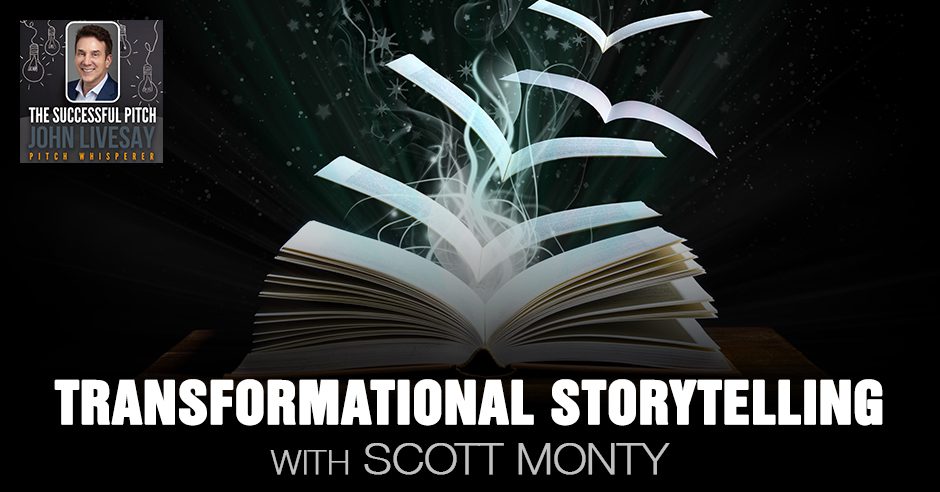
A good story is defined by whether you’ve moved somebody emotionally or not. When you bring the emotions out, you make your audience feel like they are part of it, and that could become the best customer experience you can ever design. On today’s podcast, John Livesay welcomes Scott Monty on the show to tell us more about transformational storytelling and the concept of creating emotions in the details. Scott is a Strategic Communications and Leadership Advisor helping executives become better communicators, better leaders, and better humans with timeless and timely advice.
—
Listen to the podcast here
Transformational Storytelling With Scott Monty
Our guest on the show is Scott Monty, who’s an expert in storytelling from a historical point of view. His definition of a good story is whether or not somebody is moved by that story emotionally. He also said to people, “Do you want to read about a case story or do you want to be cutting- edge and be a case story, as I call them, versus case studies?” We have a great conversation about how you build trust through transparency. Enjoy the episode.
—
Our guest is Scott Monty, who is a strategic communications and leadership coach and advisor, who helps the C-Suite embrace better communication with timeless and timely advice. A Fortune 10 leader whose background in classics positioned him to see through the shiny objects, Scott can drill down to understand the common human needs from throughout history that will still drive us all. He was ranked by The Economist as the number one, top of the list of 25 Social Business Leaders, and Alan Mulally, the CEO of Ford Motor Company called him a visionary.
Scott spent six years as an Executive at Ford, where he helped turn the company around with an uncanny ability to merge technology with humanity. He served as a strategic adviser across a variety of business functions, leading the company’s global social media strategy. He also has another decade and a half of experience in communications and marketing agencies. Scott’s clients have included companies such as Walmart, IBM, McDonald’s, Coca-Cola and Google. He writes the Timeless and Timely newsletter, which I can’t rave about it enough. I can’t tell you how lucky you are to get to hear Scott’s insights. Welcome, Scott.
Thank you, John. It’s a treat to be with you here.
We both love storytelling, marketing, messaging and both of us have a passion for arts, although yours is at a whole other level. Your in-depth knowledge of it is quite fascinating to me. Let’s start wherever you would like to in your own story of origin. You have some insights that might be interesting. I know a lot of my friends say, “When I have a kid, it brings back a lot of my own childhood memories, or I’m reliving my own excitement at whatever holidays coming up.” You can go back to childhood or school, wherever you want.

Transformational Storytelling: Luxury is not about the price, but anticipating a need before somebody knew they needed it.
There are many choices here. Let me start where it brings the most meaning. I went to school at Boston University. I grew up in New England. I gravitated to and stayed in Boston for twenty years after I graduated. While I was there, my intent was to go to medical school. I was pre-med. I didn’t want to major in Biology, Chemistry or the typical sciences because I figured, “I’ll be scienced out for the rest of my life if this is my career. Let me try something different.” I was at the College of Liberal Arts. It’s now the College of Arts and Sciences, but it was CLA. I said, “Let me try some classic liberal arts.”
I took a class in Greek Civilization. Maybe it was the professor or the material. I had three years of Latin in high school, so I understood the ancient world, but I was immediately hooked at that moment. This gets to the core of what you do here, and that is, “He was a storyteller. He brought the past to life.” To me, if you can take the past and make it relevant to what we’re experiencing, it’s the same. If you go to church and sit through a homily, nobody wants to hear the reading regurgitated. What you want to hear is what does it mean in respect of what I’m dealing with in my life now and the challenges that I have?
This professor was able to take that. I still remember the line he used because I had never heard a teacher use profanity before. We were talking about Oedipus and he said, “You have to understand that to the ancient Greeks, calling someone an Oedipus was the ultimate insult.” He paused and went, “Oedipus was a mother effer.” I went, “Now it’s relevant. I get it.” It was a smack in the face, but it suddenly hit me that there’s a whole world out there that happened before that can be brought to life in new and different ways. From there, I went on. I didn’t go to medical school. I went to business school focusing on the business side of medicine. I went into biotech, medical device consulting, and managed care. Ultimately, I ended up at an agency that did B2B marketing in healthcare and high-tech space.
That’s where I discovered social media back in the mid-2000s. I had to leave that agency because they couldn’t get it. They had a client who wanted a new way to tell their story. This is when podcasting had come out. My vision for them was to host a podcast, surround yourself with smart people, highlight your own type of thinking, and showcase it. They went, “We’re not sure. Have you got a case study on this?” I was like, “This was launched three weeks ago. Do you want to read a case study or do you want to be a case study?” She went, “We want to read a case study.”
[bctt tweet=”A good story is defined by whether you’ve moved somebody emotionally or not.” username=”John_Livesay”]
Removing the flat spot from my forehead from beating it against the wall, I left there and went to an agency that did strategic consulting with large brands to help them understand social media strategy. I did that for about a year and all of a sudden, I got a call from Ford Motor Company from their head of communications saying, “We’re behind the eight balls. We know digital communications and social is important. We need someone to come in here and lead it.” I said, “Do I have to move to Detroit?” I was in Boston at the time and working virtually with the agency I was with. We were all around the country. He said, “Yes. This is a high-level leadership position. We need your presence in the building.” I went, “I’m not interested.”
I’ll never forget his response. He didn’t say, “How dare you, sir? We are the Ford Motor Company. He said, “Are you sure?” which to me spoke of humility and willingness to let the other side explore their feelings. I said, “I’m pretty sure. The timing doesn’t feel right to me.” At the time, Alan Mulally had been the CEO of Ford for two years. He’d come from outside the auto industry and he transformed Ford or was about to transform Ford, which was on the ropes. The whole auto industry was in late 2007, early 2008. I followed Ford’s progress. They made some financial progress in that first quarter of 2008. The head of communications and I reconnected. He said, “We’ve talked to about 50 people. We still haven’t filled the role and your name keeps coming up. Why don’t you humor us? Come out here, spend 1.5 days with us, talk to 8 or 10 people to get a feel for what we’re all about, and then you can decide what’s right for you.” I did that.
John, I’ll never forget walking up the walkway to the glasshouse as it’s known Ford World Headquarters in Dearborn, which is probably about an 8th of a mile long and twelve-stories high. It’s an impressive building. You’re walking into history. Henry Ford put the world on wheels and by the 1920s, half of all vehicles in the world were Ford Motor Company vehicles. This is a storied past. When I met with everybody that day, they were intelligent, talented, but most of all, they were passionate. I thought, “You can’t just invent passion out of nothing. There’s something special happening here.” Long story short, I signed up and by July of 2008, I was the head of Global Digital Communications and Social Media for Ford.
I love the choices there of humility versus hubris, and how one question can say so much about a culture and a person, “Are you sure?” versus, “How dare you?” The other part of that was clearly they’re selling you. When we’re younger, I know for myself in my early twenties, if somebody ever tried to recruit me, I was flattered. I never stood back and analyzed whether that was something I should do or not. As we get a little more seasoned in our career, we think, “That’s not right for me. I’m not willing to move for that.” The premise of, “Let’s not get you to commit on the phone, humor us,” which is another humble way to phrase that, “Spend some time with us.” It is all part of the journey, whether it’s the funnel we’re creating in digital marketing or a social media way to start to get people to engage with us, where in fact, in actual sales call where you’re getting someone to “take a test drive.”

Transformational Storytelling: If you can take the past and make it relevant to what we’re experiencing today, that can be brought to life in new and different ways.
This was the ultimate test drive, which is what they do when they sell the cars. What a great metaphor of coming out. If you can get somebody to test drive and sit in the car, that’s what the whole goal of marketing and advertising has always been. After that, it’s up to the salesperson and the person’s criteria. If we get you in the car from an advertising standpoint, from my ad sales background, we’re like, “Our job was done. That’s all we need to do.” He knew that if we can get you here, we’re not at the top yet. We don’t have a yes, but it’s a much easier to ask than come here and interview.
When you think about it, whether it’s a sales or a management process, there are several leaders who feel like they need to be in control. They need to control the situation. The bottom line is when you’re dealing with an employee or a prospective employee, a lead or a prospective customer, the decision lies with them. They are going to do whatever it is they’re going to do. All you can do is create a culture around them to make the decision easier. For example, when Bill Ford decided to bring Alan Mulally in as the CEO, Bill Ford was the great-grandson of Henry Ford. The family’s name is still on the logo. It’s a family-owned company. Bill was the President, CEO and Chairman of the Board. He said, “Alan, if you come in, I want you to be the CEO.” This will be the first time somebody from outside of the auto industry as a CEO. He said, “I’m even willing to give up my chairman seat on the board for you.”
You talk about humility. Knowing that you come from the family that invented the moving assembly line, and you’re telling the world and the guy that’s going to replace you, that you’re not the right guy for the job. That’s leader humility right there out of Bill Ford. Alan said, “I don’t want to do this without you. I need you by my side to be the visionary. While I do the heads down, hard work to start changing the company, you have to be my cheerleader. You need to keep me in line.” This relationship between the two that it wasn’t all one or all the other, they were willing to give up some control in pursuit of excellence and their ultimate goal. You don’t see that a lot. Many times, people want to control, micromanage, steer you in a certain direction, and force you into a box. That old chestnut is true. If you love something, set it free. If it loves you, it will come back.
It sounds like Bill Ford love the company and the legacy enough to not let his ego get in the way of being the one to have to keep it going or adapt. What is fascinating is that Alan said to Bill, “I still need you to be my visionary.” He ended up hiring you and calling you a visionary. Alan surrounded himself with visionaries above him and reporting to him. That’s a nice way to look at what the story is as you told us like, “As a leader, I need visionaries in every corner, please.”
[bctt tweet=”Emotions are created in the details.” username=”John_Livesay”]
One of the first parts of leadership is to know that you don’t know everything. Many times, we promote people from within because they are a particularly good individual contributor. You would have the most sales, you designed the best product, or you got so far at customer satisfaction scores. How does that translate to management? Being a good individual contributor doesn’t necessarily mean that you know how to lead a team or how to motivate people. One of the first things you can do as a leader when you’re promoted is to say, “First of all, I’m new at this. I need to admit that I don’t know everything. I need to find the people that know more than I do about a whole lot of subjects and to complement my skills with other people around me, so together we form a cohesive team.”
I know you get hired a lot as a consultant, as well as the speaker. One of your topics is transformation storytelling. Since this show is all about storytelling and pitching with storytelling as a tool, I’d love to hear what you think is your definition of a good story.
I’m a big fan of history, as I mentioned. The difference between the recorded past and the remembered past, the recorded past is history that’s in the books. It’s a spiked cannon. It’s a statue, a monument. The remembered past is not what happened 200 or 2,000 years ago, but stories about what happened 200 or 2,000 years ago. To me, a series of events, a story well told becomes the difference between moving someone emotionally or not. If you want to take us back to our most basic level, consider early humans who were hunters and gatherers. There are two of them that are out in the woods and they hear a twig snap. All of a sudden, they turn and there’s a tiger there. The tiger is beginning to give chase.
One of the guys goes up a tree. The other guy gets mauled by the tiger and his neck snapped, and he’s gone. The guy up in the tree is quietly waiting for the tiger to finish his business and go elsewhere. He comes down and he returns to his tribe. He recounts the tale of being alone with his friend, Kevin. Kevin is there in the forest with them and how that twig snapping sound, how the hair raised on the back of their necks, and how his heart raced. By putting those different levels of details in there, by making his audience, which in this case was his tribe, feel like they were part of the action and embellishing that, not falsely, but bringing those details and the emotion out, he makes them feel like they were part of it.

Transformational Storytelling: When you work for the same company, it doesn’t make sense that you’re trying to outdo your colleagues. You should be out doing your competition, not your colleagues.
The tribe is able to say, “Now we’ve got a lesson. We know what to look for when we’re out. If we hear a twig snap, what does that mean to us? If we are chased, we know to seek out a tree.” These become life lessons for them. They become a cautionary tale to become something that’s handed down from generation to generation. If we can do that in the workplace with anything that happens to us, it could be a sales call that went bad. It could be the best customer experience we ever designed. You name it. This becomes part of the culture that we build around us. The challenge now, not only with the pandemic where we’re all separated, those water-cooler moments, those opportunities to chit chat in the hallway before a meeting is gone.
At the same time, we also see that in terms of workplace retention, people are jumping from job to job. There is a lack of institutional memory. There’s a lack of these stories, this oral tradition being upheld. To me, that’s why it’s important to capture these stories wherever we can in video, in audio and in written form, and make them part of the experience so that when a new generation or workforce comes on board, they can absorb these stories without having been part of them or without having been touched directly by the people who experienced them.
There’s a lot to unpack there. I love this line that a good story is defined by whether you’ve moved somebody emotionally or not. What great short criteria, whether it’s a commercial, social post, storytelling, did it move people emotionally, yes or no? That’s all we care about at this point. You then go on to tell us that the emotions are created in the details. That’s a thing that I see most people are completely unaware of when they’re learning storytelling is they’re like, “I need to be specific with the time, the day and the location, or what it felt like.” In order to describe someone’s problem, you have to describe how it felt for them so the people can see themselves in that story, that concept of emotions are created in the details. Once you believe and engage in the premise, that’s the whole criteria for a good story.
Most people don’t have an awareness of is that storytelling not only help you win new business but help you retain employees. That is a topic that not many people are talking about. I’ve experienced it myself, working with a healthcare tech company, by having all of their sales teams create a story of origin and then putting it into a repository map so that they can get to know each other personally and feel part of the culture and the tribe. Somebody took the time to ask me, “How I got into healthcare? What I did before I worked here? Anything that’s personal and that it’s valuable enough to be recorded to your point between remembered versus recorded history. It also allows new people to join the tribe or new hires to get a sense of, “Who am I working with here?”
[bctt tweet=”One of the first parts of leadership is to know that you don’t know everything.” username=”John_Livesay”]
I love that you talk about this need for storytelling to create a legacy that creates a culture that people then feel like they’re a part of it, whether they were there at the beginning or not. Working for a legacy brand like Ford, you’ve got to experience that full-time, which goes full circle back to what you were saying, that it wasn’t just a group of talented people, but a group of people who were passionate. My question there is do you think part of that passion came from them identifying themselves with a legacy story?
It was part of the legacy story, John, knowing that they were carrying on in the giant footsteps that they had to fill. Let’s not forget when Steve Jobs died in October of 2011, he was compared to two other businessmen that transformed the 20th Century: Thomas Edison and Henry Ford. If you’re one of those companies and you’re following in the founder’s footsteps, there’s got to be some passion there and some trepidation in terms of, “Am I living up to the legacy?” At the same time, there was this wonderful culture that Alan brought as the new CEO of a created a spirit of working together with Bil Ford until that time had become a series of silos of fiefdoms, where people were competing for knowledge, rather than sharing knowledge. They were hoarders of knowledge. They were thinking that they were outsmarting their colleagues. They were pushing them down.
Alan said, “We all worked for the same company. It doesn’t make sense that you’re trying to outdo your colleagues. You should be outdoing your competition, not your colleagues.” He very quickly made it clear that there was going to be One Ford and it was translated through very simply, “One team, one plan, one goal.” It was something that everyone could remember. The challenge of a leader, of a storyteller, is to take a complex issue and to boil it down in its simplest terms with emotion, but in a way that doesn’t make people feel like you’re talking down to them. That’s a talent. I’ve got kids and I’ve seen them go through various stages. I’ve got a seventeen-year-old all the way down to almost seven years old.
I made a note a while back for a newsletter or a blog post. It was titled Thirteen Minutes. The only note that I put under it is it takes my kid forever to tell a story. If you’ve ever been with a little kid, they ramble on and on without getting to the point, and you’re thinking to yourself, “This kid’s cute, but when are they going to get to the real meat of it here? I’m getting bored.” At the same time, when they go to tell a joke, they run forward to the punchline immediately. You get back to what we were talking about before, in terms of putting those details in there. When you’re telling a joke, the timing matters, but the level of details that you put in and the suspense that you build with people is an important emotion. Suspense is a little bit different from horror.

Transformational Storytelling: When you’re telling a joke, the timing certainly matters. The level of details you put in and the suspense you build with people is very important.
When somebody asked Alfred Hitchcock about what suspense means, he said, “It’s the difference between a bomb going off on a train and telling someone that there is a bomb planted somewhere on the train.” It’s how you build that emotion with them and how you craft it. You don’t want the story to stretch out for thirteen minutes. You want to do it in a way that keeps their attention, keeps them engaged, and ultimately, gets to that punchline.
I’m happy that you shared that phrase from Ford, the use of one. I’ve seen that with another client. I’ve worked with Gensler, their architecture firm, and they call themselves The One Firm Firm, meaning that they don’t want to be perceived as doing silos and practice areas. They want to be perceived as some company that can do all of the things you might need from marketing all the way up to designing your law office or your airport. Also, that culture is not about having a one-star name architect. When you look at companies, cultures and their whole business model, two CEOs and different cities, they’re the largest revenue of all the firms.
When you have defined your story is then not only do the right team members come but also then you can explain that to potential clients as what your point of differentiation is. Therefore, usually justify a premium price along with it. You’ve also consulted with Google, what a range from a new company to Ford, and I’m curious, without getting into anything proprietary, what’s the consistent things you see, whether it’s a Google or a Ford that they bring you in to do?
Initially, people are interested in what’s the latest thing you can tell me? What’s going on in the marketplace? What are people saying?
[bctt tweet=”If you have unquenchable curiosity, it will take you to heights unimaginable.” username=”John_Livesay”]
Is TikTok where we should be?
I will always begin with some grounding data. People are spending less time on traditional televisions and more time on handheld screens, whatever the data point is relevant to them. There comes a time in the presentation or in the engagement where we step back and say, “Let’s take the trends out of it because those will always be changing. Let’s step back and fundamentally, look at what it is that you’re doing now. How are you approaching this particular problem? Who do you have working on it? What are their points of reference? How are they going to market? What types of things are they sharing with their audience? In what format are they sharing them?” We look at the mix of paid, earned and owned media and all of that.
Fundamentally, if you can understand what it is that people want from you and you go back to Steve Jobs, nobody in 2003 or whenever the iPod came out was saying, “I need a thousand songs in my pocket.” It wasn’t there, but he knew people love music. People used Walkmans forever. What if he could create something new that met a need that wasn’t specifically expressed? To me, it’s a question behind the question and getting my clients to ask more questions and to not think that they already have the answer. I do this as a consultant. I ask a lot of questions. One is because I don’t know the answers, but two, I’m innately curious. Curiosity is one of the best traits of a leader, a marketer, a salesperson. If you have unquenchable curiosity, it will take you to heights unimaginable. Dorothy Parker once said that curiosity is the cure for boredom, and there is no cure for curiosity. If you have a curious spirit, you will never find yourself at a loss for information.
First of all, you said a phrase and it’s one of my all-time favorite phrases, which is the “What if?” question. When we ask people that, we get into the right brain where imagination and storytelling live. If we can ask and get them to imagine, “What if we did this? What if we created this?” What you’re saying about where the iPod came from, it’s coming up with a concept of Walkman was popular that people love the dots and be ahead of the puck, as Wayne Gretzky says. Anticipate where it’s going. The example I have is when I was working with the Banana Republic and they had the premise that their definition of luxury was not the price, but anticipating the need before somebody knew they needed it.

Transformational Storytelling: If you have a curious spirit, you will never find yourself at a loss for information.
With that, as their starting point, they then ask the questions. What could we do to give our top 20% of our clients that experience without having to raise our prices or anything? There’s some basic stuff like acknowledging their birthday with a card and things like that, but then they came up with the idea of allowing people to charge their phones in their Rockefeller store and their Banana Republic, Union Square store like, “No charge to charge your phone while you’re shopping as an unexpected luxury.” You’ll be like, “I need this. I didn’t know I could get it done here. This is great.” They’re never going to be Neiman Marcus in terms of service, but they can at least try to do something. Their sales went up so much in those stores because people kept shopping while they waited for their phone to fully charge, not just charge a little bit. That’s a great example of what you were describing the reasons people would want to bring you in for those kinds of outcomes.
It reminds me of one of my first meetings while I was at Ford. It was a couple of months into my tenure there. It was an all-employee town hall. I was standing at the back. I was standing next to the Chief Marketing Officer, Jim Farley. Incidentally, Jim was named the CEO of Ford. I said, “Jim, I will give you a great, free idea that you can take.” I don’t oversee this area. “When you go to a car dealership, wouldn’t it be great if they had free Wi-Fi?” This was 2008. Free Wi-Fi wasn’t like water as we have now. He immediately said, “Scott, it’s going to be too much. It’ll be too expensive for the dealers to complicate it.” I said, “Jim, you’re missing the boat on this, the bigger picture. If you create Wi-Fi experiences, you’re going to keep people in the dealership rather than wanting to take a courtesy car home.”
A few years ago, I had a client who is the number one Honda dealer in the country. He operates a single store out of Queens, New York. He came to me and he said, “Scott, I want to work with you.” I said, “Brian, you’re already number one. What do you have to prove at this point?” He said, “You don’t get it. The dealership model is broken.” I said, “You’ve got my attention. What do you propose to do about it?” He said, “I don’t know but we are getting hammered, not by other car dealerships, not by Tesla, but by Apple, Uber and Amazon because of the experience.” I went and took a tour of his storeroom, which is a typical New York place. It is crammed with vehicles and a postage stamp size lot. I said, “Tell me a little bit about your customers.” He said, “We’ve got 180,000 customers in our email database.” I said, “That’s interesting. Tell me about your service.” He went, “Our service, we’re doing oil changes and all the regular services were booked six weeks out. We’re open from 7:00 AM to 7:00 PM,” which is certainly better than the 9:00 to 5:00.
That is incredibly inconvenient when you think about it. He went, “We’re booked out from 7:00 to 7:00, six weeks in advance. We are 100% full. I said, “No, you’re not.” He went, “What do you mean?” I said, “You are 50% full. What about those other twelve hours of the day?” He went, “Who’s going to want to bring their car in at midnight?” I said, “Nobody, that’s why you’re going to go pick their cars up from them.” You almost saw his head explode. Logistically, we figured out how to do it. They have an on-demand service where they don’t tell you what openings they have. They ask you when you’re available. They send a valet out to pick your car up from your driveway, from your garage, from the street or your place of work at whatever time is convenient for you. They take it. They get it done. While the car is in there, they send you a text. When it’s arrived, they send you a selfie of the mechanic. They show you the parts they’ve taken out. They show you a picture of the parts they’re going to put in. It is complete transparency because transparency builds trust.
What is an auto dealership, but a black hole where you are convinced they are sucking money out of your bank account? As you’re sitting there in the waiting room in the old days without Wi-Fi, drinking their old coffee and eating their stale donuts, they’ll tell you it’s going to be an hour and you’re there two and a half hours. They’ll come out and tell you, “In addition to your oil change, John, we’ve discovered these three other things.” You’re ready to blow your lid and you go, “I have two questions, how much and how long?” You’re ready to say, “I’ll risk my life. I don’t care. I’m not spending a dime more with you guys at this.”
When you do this pickup and delivery with them, your home on your couch, and you’re getting these texts and they say, “It’s going to be an additional $212.70. Would you like us to do it? Hit here for yes. Hit here for a no.” That’s easy. Over time, Brian at Paragon Honda has seen their repair orders go up by 36% and has seen $1.5 million dropped to the bottom line that they weren’t getting otherwise. It is simply because they changed their perspective and wanted to make it more convenient for the customer. They seeded control. I said, “Let’s go with what the customer wants.” It created a completely new business for them. This was pre-pandemic. You look at all the dealers. This is what they’re doing because they have to. Brian was a few years ahead of the game on that.
I could talk to you forever. I love that line, “Transparency builds trust.” Many people are always saying, “How can I build trust?” You gave us an amazing gem there. Do you have any last thoughts you want to leave us with? A quote, a favorite book, a favorite art piece, anything that you want to leave on?
I will give you my favorite marketing quote of all time, “If you wish to persuade me, you must think my thoughts, feel my feelings and speak my words.” This wasn’t said by Dale Carnegie. It wasn’t said by Seth Godin or any of the marketing and management gurus. This was said 2,000 years ago by Cicero, whose job was to orate, to be up in front of the Senate and to convince people to see things his way. He knew that he had to get inside their head and their heart to make them move.
It doesn’t get better than that. Scott, people can find you at ScottMonty.com. They can also figure out how to subscribe to Timeless and Timely, your newsletter. If they want to engage and hear more of this incredible content and delivery entertainment as a speaker or as a consultant, ScottMonty.com is the place to go. Thanks again, Scott.
Thank you, John. It was such a treat being with you here.
Important Links
Wanna Host Your Own Podcast?
Click here to see how my friends at Podetize can help
Purchase John’s new book
John Livesay, The Pitch Whisperer
Share The Show
Did you enjoy the show? I’d love it if you subscribed today and left us a 5-star review!
- Click this link
- Click on the ‘Subscribe’ button below the artwork
- Go to the ‘Ratings and Reviews’ section
- Click on ‘Write a Review’
Love the show? Subscribe, rate, review, and share!
Join The Successful Pitch community today:
- JohnLivesay.com
- John Livesay Facebook
- John Livesay Twitter
- John Livesay LinkedIn
- John Livesay YouTube