

Sell Without Selling Out With Andy Paul
Posted by John Livesay in podcast | 0 comments

Sales isn’t a simple job; it takes a lot of skill to earn a buyer’s trust. So how do you sell without selling out? How do you earn that trust? John Livesay dives into sales with help from Andy Paul. With over three decades of experience under his belt, Andy gives us a glimpse at his sales insights. From building trust and communication to training and avoiding persuasion, this episode is one you can’t miss.
—
Listen to the podcast here
Sell Without Selling Out With Andy Paul
Our guest is Andy Paul, the author of Sell Without Selling Out. He talks about how influence rules and persuasion drools and that you are either a sales boss that is commanding people or a sales leader that inspires them. Find out how to be a learn-it-all instead of a know-it-all. Enjoy the episode.
—
Our guest on the show is Andy Paul, who is a leading global sales expert. He has over 180,000 people following his daily posts on LinkedIn. He is the host of the top-rated sales podcast Sales Enablement with Andy Paul, with more than over 1,000 episodes and millions of downloads. His podcast is a go-to resource for sales leaders and producers. He is the author of the Amazon best-selling book Sell Without Selling Out: A Guide to Success on Your Own Terms. He has also written other books and he is the Founder of Zero-Time Selling, which is an advisory firm. Prior to that, he had a successful sales career himself in tech startups, where he sold over $600 million of complex systems and services. Andy, welcome to the show.
John, thanks for having me.
Let’s go back in time to when you knew you wanted to get into sales. Maybe you had a paper out or you sold something and you went, “I am good at this. This might be my career.”
I did not know I wanted to be in sales after I had been in it for a couple of years. Up until that, I was not too sure that I wanted to be in sales. Like a lot of people, I fell into sales. I graduated from university and did not have any concrete plans about what I wanted to do. I worked at the college I graduated from during the summer. Fall came around and my parents were urging me to get more serious about things. I went to the career placement center around campus and the jobs that were available were all the major tech companies. They were trying to recruit people into what turned out to be sales. Interestingly, none of them called it sales positions. They are all marketing management training programs, but they were nothing about marketing. They are all about sales.
Marketing people do not have quotas. That is the big distinction I tell people.
It is this whole idea that sales is dirty and, “Who wants to be a salesperson?” It was evident even then. I fell into it and as I described in my book, I was not too comfortable with what I was being taught and how I was being taught how to sell. I reached the point about year two where it started making sense to me and I started to describe or define a way to sell that worked for me. I could start to see a future in it at that point.
[bctt tweet=”A sales boss commands, and a sales leader inspires. ” username=”John_Livesay”]
You and I both have a similar background in that we sold multimillion-dollar tech pieces of equipment. Tell us about that. What was that like in the ‘90s?
I started off selling roomfuls of computer equipment back in the day. They take a lot of space and a fraction of the computing power of our phones these days that major corporations are running their companies on. I swerved into the personal computer industry for a while and worked at Apple in the early days of Apple and a couple of others what we thought was going to be an interesting startup. I worked for a company that made the first battery-powered notebook computer. That was a glorious failure.
Somehow ended up, by default, I was looking for a job after the last company had been with that imploded. I saw a news article in Fortune Magazine about a company that was revolutionizing the satellite communications business with very small aperture satellite dishes for data communications. I cold-called them. That was a Friday. I called them on Monday. I did not have a job in sales. I was an account manager as a customer success person for about the first six months before I moved back over into sales. That was my introduction to the enterprise of selling large complex systems.
What would you say was your biggest challenge as a salesperson? Was it handling rejection, overcoming objections or getting the appointment? What was one challenge that you thought and you saw all the people struggling with?
I spent a big chunk of time in the satellite communications business and the wireless business and did not have a technical background. I was selling to very technical customers.
It was a different language, was it not?
For me, the challenge was internal sales. How did I rally people to support me and help make up for my deficits in a way that was still valuable for the buyer? I got pretty good at that after a while. It was matching the internal selling as well as the external selling. As in any startup, there are tons of competing priorities and people are ultra-busy doing multiple things and it is like, “How do I get this person to invest some of their time and attention in what is important to me?” That was the key for me to be able to rally support internally for big deals I was working on.
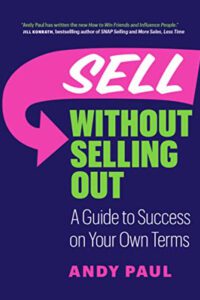
Sell Without Selling Out: A Guide to Success on Your Own Terms
How did you do that? Do you have any tips for someone who is thinking, “That sounds like my challenge, but I do not know where to start.”?
It is the same challenge you have with customers. I write about it in my book. You have to be able to connect with people on an authentic human level. You need to be able to use your curiosity and understand the most important things to them and how you can help them achieve that by working with you.
It is fascinating because you had said originally that people were like, “I am not so sure you will be good in sales because you are an introvert and an intellectual.” There are a lot of people who might identify as, “I am not extroverted. I cannot be the life of the party and entertain clients nonstop. I should not pursue this career.”
As I tell people that in the course of the first 24 years of my career when I was outselling the large 2/3 of billion dollars, I had dinner half a dozen times with clients. The opportunity presented itself. I was all over the world selling. For the most part, I had great relationships with my clients, but we did not feel like we had to have dinner with each other. It was not going to cement the relationship in a way that we were not doing in the office when we were talking with each other because their ability to trust me was based on what I was doing in the context of work more than anything else. Once I established that personal bond and rapport, I had to prove it every time I interacted with them.
How did you come up with the title of your book, Selling Without Selling Out? Do you feel like a lot of people feel like they do have to sell out in order to be successful?
They do. The simplest way to consider selling out is when you put your interests ahead of those of your customers. That is an external customer buying something from you or your internal customer. Whether you are working as part of a team or collaborating with people on things when you put yourself first, you start to sell out.
Do you have a story or example of that?
[bctt tweet=”Be a learn it all, not a know it all.” username=”John_Livesay”]
Think about it from a salesperson’s perspective. You go out at the start of the month or at some point when you start a relationship with a potential customer or client. You convince them through your actions that you are there to help them. They think you are there to help them, but then you get to that last week of the month and your boss says, “We need to bring this order in order to hit our month.” Early in my career, I was forced to go out and try to accelerate decisions that buyers were not prepared to make.
You start offering discounts and other inducements, delayed payment terms, or whatever the company does. In the mind of the buyer, suddenly, you went from being somebody that is there to help them to be purely transactional. It does not mean they will not buy from you, but they are under no illusion anymore that you are there to help them.
Once that trust is broken, it is almost impossible to get it back.
It is very difficult to get it back. They will stick with you as long as you are handy and convenient for them, but as soon as something better comes along, somebody they trust more or a product that is roughly equivalent to yours, odds are pretty high that you are going to be gone.
You talk about the difference between being a sales leader versus a sales boss. Can you give us that distinction?
A conversation that I had on my show with Stephen M.R. Covey, a great author who wrote the Speed of Trust. He has got a new book out called Trust and Inspire. It is about leadership modes. As he draws, the contrast is there are two dominant modes of leadership. There is the command and control, which we are all very familiar with because we have all been victims of it and then there is trust and inspire. That sums up the difference.
As a sales boss, it is all about command and control. Conformity and compliance are most important to me. Trust and inspire is, as a sales leader, you are going to sell to your person, “Here is your patch and territory. This could be your list of accounts of geographic territory.” I am going to support you the best way I can, but you decide the best way to get this business done in your territory. How can I help you achieve that? Trust people to continue to develop, expand, grow and learn with your support. The other is, “I know best. Do what I want you to do.”
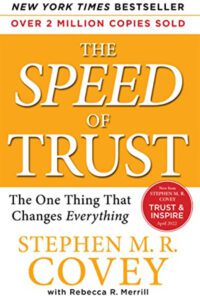
Speed of Trust: The One Thing That Changes Everything
One of the things both of you and I witnessed and experienced is a top producer is getting promoted into sales leadership without any real training and failing miserably as a leader versus a salesperson because they are different skills. Can you describe what someone should do to prepare to make that transition if they are not getting the training internally?
From my experience, I did a couple of things. I read what I could that was available about managing and leadership. I did not hesitate to ask people for guidance and mentors, internally, people that were more experienced in the role to give me some perspective on what they were doing. I asked the people that I was leading how I was doing.
It is part of your personality and it is not part of most people’s personality, the humbleness to ask for feedback, as opposed to, “I am going to pretend like I have it all together even though I had never done this before.” It is a completely different mindset to approach something with. In order to get feedback from people you are managing and/or your customers, you have to be willing to listen and not think you have all the answers all the time.
This is what I started pointing out in the book in terms of the contrast between a sales boss and a sales leader. One is a know-it-all versus one that is a learn-it-all. That is what you want to be. You want to be a learn-it-all. The humility you talk about is not just being modest and self-effacing, but it is about being intellectually humble. It is acknowledged that you do not know everything.
We put sales leaders, especially people who do not work in big companies that do not know very formal training programs and development programs, which the majority of companies out there put in tough positions. We promote them and then we do not enable them with the tools, the knowledge, and the training to have a better idea about what they are doing.
The thing that is ironic about that is that if you run polls, you look at the polls, surveys and research data, who is the single most influential in the life of an up-and-coming salesperson? It is their immediate manager. The people we should be investing in the most, we do not. According to LinkedIn, we spent roughly about $15 billion a year on sales training in the United States, of which 10% is spent on sales leaders and sales managers.
At least half of it should not be spent on sales managers. If they are the people having the most influence on the development of individual sellers, we cannot invest in them enough. Stop providing that training to sellers because they are going to get the guidance and knowledge they need from watching their sales managers.
[bctt tweet=”We are the sum of all the influences that are out there—our peers, our managers, the things we read, and the other information we absorb.” username=”John_Livesay”]
One of the things you talk about is people who say, “Let’s model what the top producer is doing. Let’s all march to that drum and say exactly what they are saying and try to be a clone.” You are saying, “That is the kiss of death. It is counterproductive.”
It is not like I was the best salesperson in the world, but no one sold like me because it was me. No one sells it like you. People did it better. That is great. I tried to learn from those people, but I had my own unique way of doing it. That has developed because we are the sum total of all the influences that are out there, our peers, our managers, the things we read, and the other information we absorb.
To force everybody into a single niche about how to sell is self-defeating. You have frameworks, you set up and you have expectations, “This is how we conduct business,” but within that framework, as a sales manager, I want to give you the freedom and the flexibility to go experiment and find out things that will work for you based on your unique strengths as a human being.
If you are going on a sales call with a boss and that boss is hyper-critical and expects you to be perfect, you do not have any room for failure trying something on your own, and then you are shutting down someone’s creativity and authenticity.
Selling is one of the most creative professions you can be in. To me, that was the one thing that has kept me in this, that in every situation, your approach is different. The way you present the solution and how you interact with the people will be necessarily different because they are also different if they are buying the same product. It is a fresh problem to solve, not solving the same problem over and over again.
I think of that as a doctor or a dentist. I thought, “How do they not get bored doing the same surgeries and over again?” I realized, much like a salesperson, in every patient and every situation, “We are putting a crown in your mouth,” or “We are removing your appendix.” Whatever it is, the outcome is the same, but there are so many unique things that require you to think, “I have never had to do it quite this way before.”
There are no small things to your customer. To your point, this is not to a patient. There are no small things when it comes to people’s health. As a seller, there are no small things in the buyer’s mind. If you try to serve to glom over those, assuming that they are like everybody else, you damage that relationship and the trust you have built.
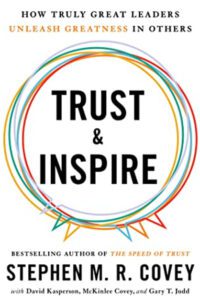
Trust and Inspire: How Truly Great Leaders Unleash Greatness in Others
One of the biggest reasons people are buying your book is that you have provided a guide on how to be successful on their own terms without having to fit into this mold of, “You have to be an extrovert. You have to do XYZ. You have to play golf.” All those stereotypical things of what salespeople used to have to do or would do and it is like, “I know what my terms are. This is how I entertain clients or not. This is how I sell. This is how I build rapport that might be different than you.”
It is becoming more essential because we are becoming more diverse in the people we are recruiting into sales. We are not doing enough. We could do more, but they all have different lived experiences. The perspectives people bring are what we need. We need more different perspectives. There is no one way.
You have so many great soundbites. One of my favorites is, “Influence rules, persuasion drools.” The visual on that is great. Tell us what you mean. A lot of people think, “I am going into sales. I am going to persuade you to buy this for this price.”
If you are persuasion-driven, you are putting your own interest ahead of those of the buyers. By definition, that is what you are trying to do. You are trying to persuade somebody to buy your product irrespective of their requirements, their needs and the things they want to achieve because you are in that mode where you are selling hammers and everybody is the nail. Even when you look at the definition of the word persuasion, it talks about prevailing or trying to prevail through force. In the wrong hands, persuasion is meant to be coercive and a little bit manipulative. Unfortunately, a lot of sellers are the wrong hands. That is not how buyers want to deal with the salesperson.
This is a big a-ha moment. I want to take a pause, circle it, underline it and highlight it. I am not in the persuasion business. Nothing against all the wonderful books about how to be persuasive, but let’s reshift this and start reframing how we think of ourselves.
Influence is all about having an effect on the thoughts and actions of others without the apparent use of force. That is what influence is and that is what position we are trying to get into. We are trying to build this connection with a buyer built on some level of trust that when the trust exists, they open up to us. When we bring our curiosity to bear, they will share information with us, perhaps at a deeper level than they would with someone where that trust and connection did not exist. Suddenly, we have more insight into the most important things to them in terms of the challenges they face and the outcomes they are trying to achieve by addressing those challenges.
When we have that understanding, we can work with the buyer to help shape this vision of success of what it will be like to get the value from the product or service you are selling. If you reach that point, that is something you do collaboratively with the buyer. It is not something you impose on them by trying to persuade them about it.
[bctt tweet=”Humility is not just being modest and self-effacing, but it is about being intellectually humble. It is acknowledging that you do not know everything.” username=”John_Livesay”]
I love that your definition of persuasion is, “I know better than you. I am right. You are wrong.” That is selling out. That is what this book is helping people not do. The opposite is the concept of selling which I have never heard of before. Therefore, there are no assumptions that you know more than they do or even vice versa. Think of it in terms of being a copilot with the buyer and this concept of, “Let’s make sure people feel heard and understood first before we jump into what we think they need.” It’s like when you go to a therapist, sometimes there is something called the presenting problem, which is a couple comes in and they say, “Our love life is not where we want it. That is why we are here.”
The therapist will go, “That is the presenting problem. I bet there are some reasons behind that.” As salespeople, we need to start thinking of ourselves as, “Whatever they tell you upfront, this is why we are changing, looking, upgrading or whatever the reason is for doing a proposal in the first place.” There might be other reasons they are unwilling to share yet, or maybe they do not even know yet. If you can help them discover that, then your trust factor has zoomed up.
Sometimes sellers are a little taken aback when I say this. I said, “You cannot take anything at face value that the buyer tells you.” They are not lying to you. They are not, not telling you the truth, but there is always more to it. If you accept what they tell you, you will hop down one path that is not the path the buyer wants to go down.
Building this level of trust so that they open up to you, as I write about in the book, then they give you permission to stick your nose into their business. What you are trying to get to is deeper level information that they do not readily share with everybody. I was in a conversation with someone on another podcast and they are talking about, “If you ask buyers scripted questions, you get scripted answers.”
If you are a robot, then they are going to give you robot answers.
You have trained them, not you, but sellers in general. Be the difference. This is the thing that I stress in the book. In the majority of instances, buyers oftentimes decide to buy from a seller despite the seller, not because of them.
If we flip that around and make it not in spite of but because we have a new tool in our box.

Sell Without Selling Out: In the majority of instances, buyers oftentimes decide to buy from a seller despite the seller, not because of them. In the majority of instances, buyers oftentimes decide to buy from a seller despite the seller, not because of them.
That is what you are trying to achieve. You become the reason they buy from your company. You, the individual. From supporting data from Gartner, Challenger and Forrester, we know that when customers make their decision, the majority of the criteria or factors in their minds are the experience with the salesperson.
That is everything from a home or the broker you pick to, if you are in Corporate America, deciding what vendor to make your equipment purchase from. People are buying your energy, your passion and your empathy.
How they experience you. Your understanding.
If people want to reach out to you and figure out how to get more coaching, more information and get on your email list, where should they go?
They can email me if they want to at [email protected]. They can connect with me on LinkedIn. Direct message me there. I would love to connect with people that are reading this.
Do you also have programs that you offer on your website?
If you go to AndyPaul.com and learn about the programs that I offer. You can download a free chapter of the book if you wish. We have an assessment that you can take there if you assume that selling out and selling in are polar opposite ends of a spectrum. You can start to determine where in that spectrum you sit. Are you leaning more towards selling out or selling in? It is not super scientific, but it is a fun quiz. Come buy the book on Amazon or wherever you purchase books.
[bctt tweet=”You cannot take anything at face value that the buyer tells you. They are not lying to you. They are not telling you the truth, but there is always more to it.” username=”John_Livesay”]
Thank you so much for sharing your insight. We are going to all become people who learn-it-all not a know-it-all. Any last thought or a quote you want to leave us with?
One of my favorite quotes is right at the beginning of the book from Ralph Waldo Emerson, “Insist on yourself. Never imitate.”
Most people think they have to become a clone in order to be successful. That is not the case at all. Thank you so much for getting us this new awareness and this new ability so that we can be ourselves and be successful at the same time. Who does not want that? Let’s go get the book, everybody. Thanks, Andy.
Thanks, John.
Important Links
- Andy Paul
- Sell Without Selling Out
- Sales Enablement with Andy Paul
- Stephen M.R. Covey – Sales Enablement with Andy Paul Episode
- Speed of Trust
- Trust and Inspire
- [email protected]
- LinkedIn – Andy Paul
- Better Selling Through Storytelling Method Online Course
Wanna Host Your Own Podcast?
Click here to see how my friends at Podetize can help
Purchase John’s new book
John Livesay, The Pitch Whisperer
Share The Show
Did you enjoy the show? I’d love it if you subscribed today and left us a 5-star review!
- Click this link
- Click on the ‘Subscribe’ button below the artwork
- Go to the ‘Ratings and Reviews’ section
- Click on ‘Write a Review’
Love the show? Subscribe, rate, review, and share!
Join The Successful Pitch community today:
- JohnLivesay.com
- John Livesay Facebook
- John Livesay Twitter
- John Livesay LinkedIn
- John Livesay YouTube
What Are The Success Secrets You Need To Know? With Chip Helm
Posted by John Livesay in podcast | 0 comments

The success secrets for career and life are more straightforward than you think. John Livesay sits with Chip Helm, a #1 National Bestselling Author & Speaker. Chip talks about how it all comes down to treating people right. When you do what you said when you said you would, money will come. Join in the conversation to discover more success secrets you’ll need. Remember, mentors don’t find you. You find mentors. So don’t miss out on this episode!
—
Listen to the podcast here
What Are The Success Secrets You Need To Know? With Chip Helm
Our guest on the show is Chip Helm who has expertise in sales in the med-tech world. He’s also the author of two books. We get into a big discussion about how mentors don’t find you, you find mentors. We talk about what soft skills are, not just storytelling, listening, and empathy but also humility. He puts a nice twist on the concept of treating people like they want to be treated. Enjoy the episode.
—
Our guest is Chip Helm, an author, a speaker, a sales leader, and a consultant. He has more than 36 years of experience in sales leadership in the med-tech and life science industries. As a National Sales Manager for a multimillion-dollar medical device company, Chip helped seed and grow a standalone business unit from $0 to $50 million. Chip has honed his expertise and sales skills from the ground up starting as a District Manager who consistently ranked number 1 or 2 on the team and delivered $1 million in revenue year-over-year.
He’s worked alongside clinicians practicing medicine in fourteen different specialties and has established a robust network of genuine relationships across disciplines, physicians, associates, and academic institutions. He supported physicians with the development and launch of medical devices that advanced patient care and improved outcomes. He’s a national bestselling author of two books, Everyday Sales Wisdom for Your Life & Career and Bigger than Sales: How Humility and Relationships Build Career Success. Welcome to the show, Chip.
Thank you. It’s an honor, John. We just met and it is quite an honor to be on your show.
I’m glad to have you. You certainly have an impressive career, an MBA from South Florida. You have a quote that I love, which is, “No matter the career you have chosen, you are in sales.” Let’s talk about that as we tap into your own story of origin. Take us back to your childhood or when you decided to major in Biology. When did you come to that realization that we are all in sales?
It’s funny. I started early on that all I wanted to do growing up was be a dentist and orthodontist like my father. I strived on it. I worked hard in high school and college. That’s all I wanted to do. I want to be like my dad. I’ve got lucky. I’ve got accepted to Indiana University School of Dentistry, and the world turned upside down on me. It wasn’t the academic part of dental school.

Success Secrets: It doesn’t matter what you do in your career; you are in sales.
Three years into my dental school training, I found out that I didn’t have good small motor skills. I remember the day. It was June 15th. It was my dad’s birthday. I came home and bought him a card. We sat down together and he opened up the car. He and I cried because I said, “Dad, I’m sorry, I have let you down. I don’t think I can become a good dentist and I’m probably not going to be able to continue in dental school.” He goes, “I never knew.” I said, “I couldn’t tell you because I tried so hard and wanted it badly.”
What was interesting was there was a mentor and I believe that mentors. Like a quote for me in one of my Chipisms, “They don’t find you but you find mentors.” A guy named Bill Armstrong from Indiana University was a mentor and he said, “Chip, you’ve got great communication skills. I remember stories of people telling me that they would come to your dental clinic. The mothers and fathers with these kids, all the way down the hallway around the corner, outside waiting to come into your dental clinic because of your communication skills in a way that you connected with people.” I said, “Really?” He says, “There’s a medical company that would be good.”
I went through the interviewing process. Many years later, I have worked for the same medical company. He made a statement and he goes, “You would be good in sales.” “Into sales? What sales?” Back when I was growing up, there was no sales education. There was no diploma for sales like there is now. There’s nothing like that. What I have learned is it doesn’t matter what you do for your career. I don’t care if you are an IT or in marketing. I don’t care if you’re an entrepreneur. I don’t care if you wash dishes or a bartender. You are always communicating. Everyone is in sales.
You are either selling yourself every day, selling a widget or a concept. For me, I’m trying to sell my wife half the time. That doesn’t work well, so there you go. In a nutshell, bringing that together, I have always believed that no matter what you are doing in your career, you are in sales. The problem is, that is a myth to a lot of people. Most people in this country believe that if you don’t have sales in your title, then you are not in sales. I have been going around for the last few years trying to provide that message to everyone I can talk to. It doesn’t matter what you do in your career, you are in sales.
The irony from your bio is that one of your children became a dentist, is that correct?
It’s interesting to say that. My oldest is an orthopedic surgery resident at UT Houston. My daughter is a veterinarian. Last but not least, my football player, Sam, is in dental school at Indiana University and wants to become an orthodontist like his grandfather.
[bctt tweet=”Do everything humanly possible to help people.” username=”John_Livesay”]
I love that it still runs in the family. We discussed before the show that I also thought I wanted to be a dentist when I was ten years old. I liked my dentist. As a kid, I thought that was a great job and my parents gave me a model tooth. I went into pre-dentistry and didn’t get as far as you did. I thought, “I don’t think I’m good with my hands either.”
I took a Sculpting class. That’s where I first was introduced to the concept of negative space. Between that and the Biochemistry, I went, “I’m out.” It is devastating when you are young because you don’t have a frame of reference. You make a decision, “I’m going to do this,” and you put your nose to the grindstone, and years later, you go, “I have to reinvent myself.”
Little did I know that I would have to reinvent myself much later in my career when I’ve got laid off from a sales job. This concept of reinvention and resilience is something I wanted to ask you about, especially now that you are a parent of grown children and you see this as a sales keynote speaker yourself. How do you help people become resilient? Sales, as we know, is a lot of rejection.
When you become resilient, it’s all in your heart. When you do things with the right intent and in the right heart, most of the time, you will go down the right path. You may not get to where you are going, may not become a CEO, may not be exactly where, God willing, you want to go but if you do things with the right heart and intent, then you will find that resilience. Most people in this country don’t have passions. If you can discover and uncover your passion, I have three and I’m lucky, then you never will have a job.
To this day, my wife’s like, “My husband wakes up with a huge smile on his face and it cracks me up. He wants to get up in the morning and wants to go to work.” It’s not work for me. I haven’t had a job in over 37 years. It’s a combination of uncovering and discovering your passions. It’s also a combination of being genuine, heartfelt, and doing things with the right intent and heart. Hopefully, you come across with that humility, that sincerity to people. You will reach your goal of where you want to go.
In your book, Everyday Sales Wisdom for Your Life Career, I resonated with the concept of how important it is to communicate soft skills. As a storytelling keynote speaker myself, I’m constantly talking to people about how soft skills make you strong. For me, soft skills are storytelling, listening, and empathy. I would love to know if there’s anything else you put into that list. If so, what other soft skills do you see people need?
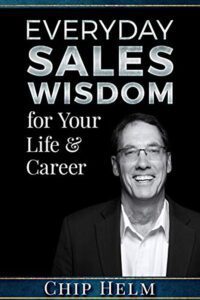
Everyday Sales Wisdom for Your Life & Career
First of all, it’s not what you say to people. It’s how you say things to people. People don’t understand that you don’t have to have a firm fist. You can talk with kindness and it’s your voice, you raise your tone. It’s not what you say to someone. I like to repeat things because if you repeat things, that means it stays with you. It’s important and you will take adherence to it. You are right in that list of empathy and sympathy. The Golden Rule says, “Treat people like you want to be treated.” Chip’s Golden Rule is, “Treat people how they want to be treated.”
I have a great friend of mine who’s a president of a big car dealership here in Bloomington, Indiana. Here’s how you put it. He goes, “Treat your employees like you want your employees to treat your customers.” You can’t say it better than that. It starts at the top and moves down for any kind of corporation, company or whatever you do for your career. We don’t have enough of what I call humility in this country.
How we look at things and put other people’s thoughts first is the old servant leadership but it’s more than that. Do you care about the other person? Do you want that person to be successful? Do you want to mentor that person? I’m big in mentoring. That’s part of what you are talking about as far as soft skills. I like the word soft skills. There are a lot of people who don’t like to use that word but I believe it’s right and spot on to use soft skills in how you talk to people, what you say to people, how you listen to someone, and how you put them first.
Always think about the other person and learn about that other person. I will leave you one thing and you can continue. One of the greatest leaders that you could ever be is the one that from day one, always wants you to get you from A to Z. If you want to become a vice president or whatever you want to do in your company, that person, that leader is more worried about getting you into that position than they are worried about their own career.
Would you say that soft skills are those three things I mentioned, empathy, listening, and storytelling?
Yes. I would say that as well. You can say sympathy. You can add on whether or not you are storytelling or listening but it’s how you speak to someone. How do you tell someone that there’s a difficult situation? How do you tell someone that you have to fire them or maybe they are not getting promoted this year? Can you do that with kindness, humility, and caring about them in your voice? How do you do it versus using a hard fist on the table with raising your voice or being quick with them?
I have always said, “If they walk into your office on Tuesday and ask you a question and you give me an answer, if I walk back in in your office on Thursday and ask you the same question, you better give me the same answer.” What I mean is being consistent with your colleagues, friends, and employees. Be consistent in how you react to things. That is correct communication.
[bctt tweet=”Treat people the way they want to be treated.” username=”John_Livesay”]
In your other book, Bigger than Sales: How Humility and Relationships Build Career Success, you alluded to humility earlier, we could probably put that under the category of soft skills. There’s so much belief that nice people finish last. I interviewed Tim Sanders who said, “Nice smart people are successful. Nice doesn’t mean you are weak, not prepared or all that stuff.”
What is your thought around people who need to change their beliefs to be a little humble? It’s like, “If I’m humble, it’s a sign of weakness. Buyers are going to take advantage of me and I will be walked over in my career.” There’s so much fear around that you have shown that’s not the case. What advice do you give people on that?
First of all, if I’m dating someone and a girl tells another friend that I’m nice, that’s not a good thing. In dating someone, if a woman told that you are too nice, means I probably won’t end up having a relationship and spending too much time with that person again. When it concerns how you treat people, building relationships, networking, and caring about what you do, the humble part needs to be there, whether you call it being nice. I call it being true to yourself and honest, as a day as long.
I always said two things that I would pray and talk about when I went to bed at nighttime. One is I would say to myself, “Did I not screw someone over today?” In my years in this industry, I have never screwed anybody over. The second thing is I would say to myself, “Did I do everything humanly possible to help the people, my company or the patients today?” Whatever business I’m in. I was in the medical business, so it’s like, “Did I help more patients get back to the community and get back to people?” That’s how I treat it.
It’s funny, what you said is some of the nice guys finish last, smart guys finish last or however you put it. The problem is when you are true to yourself and you are totally honest, you care. You take things a lot more personally than most people. The bottom line is you may not get to where you are going. You may not become what you want to become or what you think you need to become but only the man upstairs knows that. My opinion is, do it right.
A CEO of a company says to me, “Do things the right way and you will be fine.” I have always led my life that way personally and professionally. Maybe that’s why people always ask me about how I came out with the three kids, how they ended up where they were, etc. I don’t know if I answered your question per se but I’m a firm believer in honesty, sincerity, gentleness, and doing things the right way, not screwing people over. I have been screwed over my career and my life, so I do understand both sides.
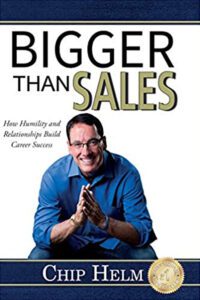
Bigger Than Sales: How Humility and Relationships Build Career Success
You have also managed salespeople in your career. What similarities do you see in doing that versus raising children?
It’s a great thing to be patient, put yourself in their shoes, be kind, and listen more than you probably would ever listen. Also, sometimes you have to be truthfully honest. I always say this, “You may not like or agree with what I’m going to say but if you want my true and honest opinion, I will give it to you. Let’s leave it at that.”
Meaning, it doesn’t mean we have to agree. We can agree to disagree or you may not like it but I’m not going to tell you something that I haven’t been there, done there, and had taken the test. I’m going to tell you because I have been there, done there, and had taken the test. I’m not trying to tell you something I haven’t gone through already. I’m trying to minimize and lessen your pain to help you.
The old way of selling was always be closing and pushing. I created a new acronym called ABK, which is Always Be Kind. Since you mentioned kindness, you and I are simpatico on so many levels because we approach selling in life in general from that standpoint. It has to start with what we say to ourselves, that negative self-talk. You must have seen some salespeople or even your own children start beating themselves up with some self-talk. Have you been able to notice it and help them not keep doing it?
I have worn a positive blue band for years from Butler University in Indiana cancer patient. A lot of times, even Chip who’s usually mostly happy, a go-getter, and smiling all the time, struggled too with always being positive. I utilize this band a lot and we look down and say, “Stay positive, Chip.” When things get tough, the tough get going. Positivity breeds positivity. Negativity breeds negativity. One solution is you hope that you try not to hang out with negative people. Stay away from it as much as you can. It doesn’t do any good for yourself.
Number two, look at the glass half full and not glass half empty. There was a study done a while ago that most people look at the glass as half empty. That means they are pessimistic. If it rains on Tuesday, they believe it’s going to rain the following Tuesday. I hate to tell the story about my sister-in-law. I love her to death but she had come to visit me, John. By the time I was done, she took me to drink. I had to go upstairs and start drinking. I had to go downstairs and start drinking because I had to get away from the negativity. She was negative. I don’t want to spend too much time around negative people when I don’t have to, at least I’m trying.
There’s this great line about, “We are the sum total of the five people we spend the most time with.” You must have seen that as a parent. If your children tend to get with the wrong peers, that can be a danger for their future.
They drove their goals. There’s never a plan B. I like that in life. I never had a plan B. It doesn’t mean that I didn’t have to change course and go down a different path when I didn’t get dental school but I didn’t have a plan B. They never had a plan B. My older son wouldn’t know what to do if he didn’t become a doctor. It’s the same with a veterinarian. They never talked about a plan B. I believe in going for your goals. I don’t have a plan B but if it doesn’t work in Plan A, something will come up.
[bctt tweet=”Humility is a skill. ” username=”John_Livesay”]
Both of us, our plan A was to be a dentist and it didn’t work out for us but it didn’t mean we weren’t committed. It brings up something that is crucial for everyone reading, whether you want to say you are in sales or not. When you decide to do something, interview for a job, write a book or whatever it is, go for it 100%. Give it your best.
I was doing all this work and effort to get a job and they are like, “You are putting yourself out there. What if you don’t get it? You are going to feel so disappointed.” I would rather do a medium effort. If I don’t get it, I don’t feel bad because I didn’t try so hard. I thought, “What a bizarre way to go through life.” They explained to me that they can’t tolerate the pain of getting a no if they have tried their hardest but they don’t end up winning because they are not giving heart. It’s this vicious cycle.
I told my kids, “If you want to get to medical school or vet school, this job, or you want to get there, there are a lot of things in between that you are not going to like. It’s a means to an end.” It doesn’t matter that everything in between, you are going to like it at all but that’s okay. If you know what the game is and how to get over there to that end result, there are lots of things you are going to do in your life that you are not going to like that much. If you want to get to the end where you are going to like it, sometimes you have to go do it, realizing that you are not going to enjoy and like it but if you get through it, you will get the carrot at the end. It will become your rainbow there at the end.
Any last thought or quote that you want to leave us with, Chip?
I’m big on this. It doesn’t seem to happen across the industry. I’m big about following up. Following through is equal to success. Most people don’t set an urgency behavior because user behavior changes to get back to people by email, text, and phone. People want to be acknowledged. You don’t have to have any answers. They want to be acknowledged and it starts from the top down in any culture.
What I would end with is, do what you say you are going to do and do it when you say you are going to do it. You will count all the money you couldn’t accumulate. The money is going to come rolling in, and you can sit in the Bahamas and count it. If you do what you say that you are going to do and do it when you say you are going to do it, then you are going to win it. It doesn’t matter what you do for your life, your career, what business, and what direction you go.

Success Secrets: Positivity breeds positivity, while negativity breeds negativity.
You helped us reframe what winning is. I love it. If people want to reach out to you as a consultant or a speaker, where should they go?
I have a website, ChipHelm.com. A sneak preview, I am bringing out a new book. It’s going to be more of a business book. We probably talked about a couple of things on the show because some of the things that we accomplished with our kids will be part of that business book, as I think it applies to any business. I’m also accessible by email, [email protected]. People call me all the time at (812) 947-3588. My books are up on Amazon.
I hope they make a difference even if it’s for one person. They are short and easy reads. It sounds like John did his homework or something, and before I came on, I was impressed, on understanding. Probably my biggest thing that connected me to it is what I call KISS, Keep It Simple and Sweet. That’s how I lead personally and professionally. That’s it for me. It’s simple. Sales and careers are not rocket science but we all are in that game of sales. I’m sorry for anyone reading who disagrees.
You remind me of that Einstein quote that said, “If you can’t explain it, you simply don’t understand it.” It’s important. It shows your mastery at something when you can keep it simple and sweet. Thank you so much for joining us, Chip. It has been a pleasure.
Thank you, John. I appreciate you, too.
Important Links
- Chip Helm
- Everyday Sales Wisdom for Your Life & Career
- Bigger than Sales: How Humility and Relationships Build Career Success
- Tim Sanders – Past episode
- [email protected]
- Better Selling Through Storytelling Method Online Course
Wanna Host Your Own Podcast?
Click here to see how my friends at Podetize can help
Purchase John’s new book
John Livesay, The Pitch Whisperer
Share The Show
Did you enjoy the show? I’d love it if you subscribed today and left us a 5-star review!
- Click this link
- Click on the ‘Subscribe’ button below the artwork
- Go to the ‘Ratings and Reviews’ section
- Click on ‘Write a Review’
Love the show? Subscribe, rate, review, and share!
Join The Successful Pitch community today:
- JohnLivesay.com
- John Livesay Facebook
- John Livesay Twitter
- John Livesay LinkedIn
- John Livesay YouTube
Humbitious – The Power Of Low Ego, High Drive Leadership With Amer Kaissi
Posted by John Livesay in podcast | 0 comments


The best leaders often do not see themselves as above anyone. They recognize the things they don’t know thus, striving to become even better not only for themselves but for others. If we could name the qualities that this point, it would be humility and being ambitious. Award-winning Professor of Healthcare Administration at Trinity University, Amer Kaissi, Ph.D. put the two together and came up with what he called Humbitious —which is also the title of his new book. In this episode, he joins John Livesay to shed light on these qualities and why he thinks they are important for leaders. He talks about the power of low ego, high drive leadership and being both compassionate and decisive, breaking down misconceptions in seeing kindness as a weakness. When leaders behave with both compassion and action, humility and ambition, good things happen. Let this conversation show you.
—
Listen to the podcast here
Humbitious – The Power Of Low Ego, High Drive Leadership With Amer Kaissi

Humbitious: The Power of Low-Ego, High-Drive Leadership
Our guest is Dr. Amer Kaissi, who is an award-winning Professor of Healthcare Administration at Trinity University, which is a top fifteen national program. He is the author of the book Intangibles, which has won the 2019 Healthcare Book of the Year award. At Trinity, Dr. Kaissi teaches courses in Leadership, Professional Development and Public Speaking and is the Director of the Executive Program. His research interests include leadership and strategy. He’s a national speaker with the Studer Group and a faculty member with the American College of Healthcare Executives.
He is also a certified Executive and Physician Coach. He works with MEDI as an Executive Coach, where he consults with hospitals and healthcare organizations in their strategic planning efforts. He lives in San Antonio, Texas, down the street from me as they say here in Austin. What is also very exciting is he has a new book coming out that I am looking forward to hearing more about. It’s called Humbitious instead of ambitious, combining humility with there, I’m guessing. Welcome to the show.
Thank you, John. Thanks for having me. I’m excited about this.
Let’s hear your own story of origin. You’ve got such an impressive background. You’ve got your PhD, obviously and all of these things. You can go back to childhood or when you were getting your PhD. How did you get so interested in EQ and all of these issues?
I will go back into childhood a little bit. As the audience can tell from my accent, I wasn’t born in the US. I was born in Beirut, Lebanon. My childhood coincided with the Lebanese Civil War, which some audiences may be aware of. It was not a regular childhood per se but I would say it was a happy childhood. One of the main things that influenced me growing up was that my mom worked as a Director of an orphanage. A Civil War was happening so there were a lot of orphans. With the nature of her job, she had to be there 24/7. My mom worked long days. She worked weekends, holidays and summers. During those times, I would go with her to the orphanage.
[bctt tweet=”Humility is being open-minded.” username=”John_Livesay”]
As a child, you will go through the orphanage, what are you going to do? You are going to play with the kids. For years, I played with the kids every single day, I ate and spent time with them. I felt like I was one of them. I was the son of the director but kids don’t care about this stuff. These experiences started teaching me about the value of humility. The value of not seeing yourself as above anyone else because your parents have more money, you have more education or whatever it is.
At the time, I didn’t realize it was humility but now reflecting back at it, that experience influenced my personality and primed me to start becoming a little bit more interested in this topic of humility. The rest of my childhood was normal. The war in Lebanon ended. I ended up going to college. I did an undergrad in Public Health. I then started focusing on Healthcare Administration. I always knew that I loved teaching.
For some reason, teaching was my passion. I call it my first love. I knew that if I wanted to work in higher education in teaching, I needed to get a PhD. I started looking at PhD programs. We didn’t have 111 so I looked at programs in the US. When you are overseas and looking at a program in the US like Nebraska or in Oklahoma, it all sounds the same. I ended up going to Minnesota in the middle of the winter. That’s where I did my PhD.
I was young when I started my PhD. I was 23. I had no business doing a PhD at age 23. No one should do that. That’s my advice to the audience. Don’t do a PhD at that age but for a variety of reasons, I did that. Going into the PhD program, I was thinking to myself, “I’m a pretty smart guy. I’m book smart. How hard could it be?” I didn’t know what I didn’t know.
I went into this program and the people who were doing their PhD, at that time, were at least 15 or 20 years older than me and they have work experience. They had done stuff with my life and I was a 23-year-old kid. I knew nothing. That also taught me another aspect of humility, which is to recognize what you don’t know and to try to know what you don’t know.
In that situation, I did what everyone should do, which is I stayed quiet. I listened because I had not much to contribute to the conversations that were happening in the classroom. Here, I was sitting next to people who had worked and healthcare for years. They had experience and had stories. I had nothing. All I had was book-smart. I learned from them and I started to improve.
I would say these two major experiences primed me for studying humility later on in my life. I then finished my PhD. I’ve got the job here at Trinity in San Antonio. I started teaching graduate students in healthcare administration. For the audience that is not familiar with healthcare administration, this is preparing people to manage hospitals. It’s like an AI program but for healthcare administration. I started working with graduate students who wanted to work in hospitals.
One thing I started to realize is that both our educational system as well as our organizations do not value humility. If you are going to think about it, in the classroom, this is something that I admit that I used to do earlier on in my career, we reward the loud students. We reward the students that are raising their hands all the time and talking before they speak.
We reward that behavior but we don’t reward the students that are a little bit more humble in terms of, they want to take their time to think about things. They don’t want to open their mouth before thinking. That was happening in the classroom but I also noticed that organizations didn’t value humility that much. When they’re hiring for leadership positions, typically you tend to hire the person who is self-promoting, who is charming, maybe a little bit of narcissism in there. Whereas like the humble person, the humble people tend to get passed on for promotions for development in the organization. So all of this stuff together made me think more and more of what the value of humility in our lives and especially within the context of leadership.
All of this stuff together made me think more about the value of humility in our lives, especially within the context of leadership. One major study that I’ve looked at got me into starting to study that in a more formal way. In 2014, the Harvard Graduate School of Education published a report in which they interviewed middle school and high school students. They asked them, “What is the most important thing for you? What is your priority as a 12, 14 or 16-year-old? What do you want to achieve?” The middle schoolers and the high school about half of them said that their priority is an achievement, which is not surprising. They said, “I want to get good grades. I want to go into college. I want to get a good job.” That was not surprising. A little bit less said that their primary priority is happiness. “I want to chill. I want to have a good life. I want to have fun.” As my kids would say, “I want to vibe.”

Humbitious: Organizations don’t value humility that much when they’re hiring for leadership positions. They typically hire the person who is self-promoting, charming, and maybe a little bit narcissistic.
That wasn’t surprising either but what surprised me was about only 22% of the middle schoolers and high schoolers said that caring for others was a priority for them. Think about this, 1 in 5 younger Americans say that caring for others is a priority for them. That got me concerned, especially as an educator, because I started thinking about it. I’m like, “These kids are in middle school and high school now, which means that in a few years, they are going to be in my classroom. More importantly, a few years later, these are going to be the people leading our organizations.”
Only 1 of 5 of them said that, “Caring for others is important.” I dug a little bit more into the values of empathy, compassion at work and how that impacts individual outcomes but also team outcomes and organizational outcomes. I started doing more research on that. I ended up writing the book that you mentioned earlier Intangibles and that’s why I published my second book called Humbitious.
[bctt tweet=”Leaders should have agility, humility, and kindness.” username=”John_Livesay”]
One of the other guests I had on the show, Dr. Diana Hendel was talking about her 100th day as the CEO of the hospital all the tragedy happened with a former employee coming in and killing some people. If you are not prepared with some compassion, as a leader in that situation, if you are only good with spreadsheets, let’s say or leading from your ivory tower, that is not nearly enough in those situations.
That’s why leaders of countries and the president of our country, whoever it is at the time when there’s a tragedy like that, people need to see compassion for what people have gone through and empathy skills in those situations. You may not think that will ever happen to you or under your watch. If you haven’t done any work on developing that skill, you are going to be seen as coming up short in those situations.
In the story that you shared, every leader has one of these stories where there’s some crisis, a major negative event where you have to show up as a leader with humility, compassion and empathy. I agree with you 100%. This is important for leaders but I would say it’s not enough. In addition to compassion, what people want from you is action and decisiveness. That’s where I start talking about the importance of compassion but also courage.
You mentioned the title of my book. It’s not only humility. It’s humility and ambition. These traits, humility, compassion and empathy, I would say they are necessary but not sufficient. If you only have that, you are not going to be successful as a leader, whether during a crisis or during regular times. You need to add more to that. You need to add more tools in your toolbox if you will and have action, competence, courage, ambition.
Let me share with you a story that many people may be familiar with because it happens at the world stage. I don’t know if you are familiar with the Prime Minister of New Zealand. Her name is Jacinda Ardern. You have heard of her and I’m sure many of the audience have heard of her. Jacinda Ardern became the Prime Minister of New Zealand a few years ago. She was the youngest female leader in the world.
Typically, when that happens, people are a little bit skeptical and they were like, “What does she have to offer? Is she going to rise up to the challenges?” She had a challenge right away. Right after she became the Prime Minister, they had a shooting attack in the sound of Christchurch. It’s very similar to the story that you shared. There was an event, deaths involved, victims, mourning and all of that. The first thing that she did showed up as a compassionate leader and was there with the families of the victims mourning with them.
That wasn’t all she did because right away, she went into action. One of the first actions she took was to go to her parliament and force them to pass Gun Control Law. Now, I don’t want to get into the politics of Gun Control Law because I know people agree or disagree with that. I want to focus on the actions themselves, which was Gun Control Law in New Zealand worked fast two weeks after the attack.
That shows that leaders can do both. You can be compassionate, humble, empathetic, and be there with the victims and people who need you. You can also be courageous and take action. You need to have the competence to get things done in these situations. I realized that example because it shows how we can combine these two traits.
Fast forward to the COVID crisis. Again, when New Zealand, like any other country, was facing a global pandemic. What the first thing Prime Minister Jacinda Ardern did was action. They closed their borders. You can agree or disagree with her actions but she was decisive and at the same time, every single day, she was on LinkedIn, social media, talking to the people in her country and trying to understand what are the concerns of the small business owners. She’s trying to emphasize with them and tell them how the government is going to help them to stay above the surface while the lockdown was happening.
[bctt tweet=”Humility is in the value of not seeing yourself as above anyone else.” username=”John_Livesay”]
I have been following New Zealand on what’s happening there for a while now because that interests me. In June of 2020, they had zero active cases of COVID-19 in New Zealand. It’s a small country. It’s an island different than the US. The point remains that when leaders behave with both compassion and action when they behave with humility and ambition, good things happen.
The other thing that you talk about is kindness. That’s something that I resonate with as well. I interviewed the author of a book about deep kindness and the old way of selling, which is my background it’s Always Be Closing, ABC. I have changed it to a new acronym of ABK, which is Always Be Kind. I have people write it on Post-it notes, post it on their mirrors, phones and their computers.
If we can’t be kind to the way we talk to ourselves, how can we possibly give it out to others? I would love to hear how you incorporate kindness, compassion and humility into leaders. I also interviewed Tim Sanders and he goes, “Sometimes people confuse being nice with being weak and it’s not true at all that nice and smart people are successful.” It’s not being kind. Much like you were saying, humility is not something to be avoided but instead, embraced.
I agree with that. Many people have this misconception that being kind is being weak. “She’s sweet or He is so nice.” That’s not what we are talking about here within the context of leadership. We are talking about being kind in a way that you care about the other person, whether the other person is your employee, a client that you are trying to sell something or you care about them. You want good things to happen to them with that concept of kindness, compassion and humility. My background is in healthcare so I want to share with you this healthcare story.
This is a story that was told to me by a physician, a friend of mine who I was working with. Let’s call him Dr. Lee. That’s not his real name. Let’s call him Dr. Lee for the sake of the story. Dr. Lee told me about the time when his diabetic patients came to see him. The patient was there for a regular foot exam. Now that specific patient was severely obese. We are talking about someone very big. Now the patient came in for the foot exam. After the foot exam was over, the patient was sitting on the chair but was having a hard time putting on his socks and shoes back because of his size.
What Dr. Lee did, he noticed that the patient was struggling so very quietly and gently, he went towards that patient. He knelt on his knees and kindly helped that patient. He slipped his socks on, put his hand behind his foot and allowed him to put his shoes on. At the moment, that patient was at first embarrassed but then he started feeling an overwhelming sense of gratitude. He thought to himself, “Look at this prestigious doctor. He’s kneeling in the very humble way, in a compassionate way to help me put my socks on and my shoes on.”
Six months later, that patient came back to Dr. Lee having lost 60 pounds. He told him, “I have been trying to lose weight all of my life. I have never been able to lose more than 5 pounds at a time but because of the act of humility and compassion that you showed me that day, I lost 60 pounds. I have always been sabotaging myself when I tried to lose weight but because you showed me that compassion, I was able to show that compassion to myself.”
He said, “Mark my word, in six months, I’m going to come back having lost another 60 pounds.” That story shows the power of kindness, compassion and humility. When we talk about these traits, we are not only talking about the basic stuff like saying, “Please and thank you,” and all of that. We are going beyond that. We are talking about an act that transformed the life of the other person because you show them how much you care about them.

Humbitious: The real test is how do we behave when the world punches us in the mouth? When we’re in crisis, when someone on our team commits a mistake, when you, yourself, make a mistake. Are you still humble, kind, and compassionate?
When we are talking about leaders in organizations, they all can do similar stuff that showed their employees that you care about them as whole human beings. Same with entrepreneurs or salespeople. You can do similar acts of kindness towards the person that you are working with to show them that this is not only a transaction. “I don’t care about me selling you this product. I want to build a relationship with you because I want what is in your best interest.” That’s how I understand and I studied these concepts within the context of business.
The need to be seen, heard and acknowledged that we have as a child when you jump in a pool and I watch me swim or whatever it is to your parent it doesn’t go away in a job. When you can make employees or patients feel seen and heard, not only a cog in a wheel, then you get incredible results from them because they feel seen and heard.
The flip side of all this is we still get triggered. We hope that our best self shows up and we have acts of kindness and compassion. There can be situations where we get embarrassed. You wrote about this in a blog about this one-second gap that we can have between feeling angry, scared or whatever the issue is before we relax. Can you talk a little bit about that?
[bctt tweet=”Another aspect of humility is recognizing what you don’t know to try to know what you don’t know.” username=”John_Livesay”]
A great philosopher once said, “Everybody has a plan until they get punched in the mouth.” Do you know who that great philosopher is? Mike Tyson. How does this connect to your question? I believe that most of us want to be humble, kind and compassionate, especially when the world around us is behaving the way that we want it to behave.
When I wake up in the morning, the sun is shining, it’s a beautiful day, I have my morning coffee, my kids are listening and there’s no traffic on the road, I tend to be very humble, kind and compassionate but that is not the real test. The real test is how do we behave when the world punches us in the mouth? When they are in crisis, when someone on your team commits a mistake, when you, yourself, make a mistake. Are you still humble, kind and compassionate? That’s why it’s so important to remain calm under pressure. It’s important to delay the response.
Viktor Frankl once said, “Between stimulus and response, there is a space. In that space is our freedom. Freedom to choose how we are going to react.” We are all are getting stimuli from the environment. We are all getting stuff that’s happening to us that irritates us. It may be a colleague in a meeting that rolls their eyes on you, your boss that dismisses your idea, a client that you are going to see or you call who behaves rudely. All of these are happening around us.
We can’t control that but what we can control is our reaction to it. What we can control is how to fall. That’s the One-Second Rule. It could be more than one second. It’s about giving yourself space to react intentionally, rather than to react on autopilot, to lose your cool, yell and scream or get upset, irritated and all of that.
You can still do that later on if it’s appropriate but at least you are doing it intentionally. You are driving the emotion rather than the emotion is driving you. There’s a concept in psychology that people refer to is called the Amygdala hijack. Very briefly, this region in our brain says the emotional region. When we don’t take time to pause, when we are reacting emotionally, the amygdala literally takes over the whole brain and the rational parts of the brain stopped.
There’s no rationality and no logic anymore. An example of that is when you get an email that annoys you and you reply right away in all caps. Five seconds later, you are like, “What have I done? Why did I act in this way?” The One-Second Rule may be the One Night’s Rule, which is sleep on it. Don’t reply to this email right away but allow yourself to be calm, controlled and think about it before you react with it. This is not a call to be submissive or accept everything that people tell you. Not at all.
You can still send an angry email in the morning but at least, now the anger is controlled. You are intentional about you being angry may be appropriate to go and confront that colleague that dismissed your idea but when you do it, you are doing it in a way that you are driving the emotion, rather than the emotion is driving you.
That’s key because where the thinker is thinking our thoughts and not the other way around. I remember Dr. Wayne Dyer, when he was alive said, “When you squeeze an orange, you’ve always got an orange juice. Doesn’t matter what time of day. You squeeze it in the corner, it’s still orange juice,” but what happens when someone squeezes us, we are pressured and in the corner? Do we still get kindness and love or do we get a little anger?
[bctt tweet=”In addition to compassion, what people want from leaders is action. ” username=”John_Livesay”]
I was parked in a parking lot. I wasn’t driving and someone bumped me with their car. I was like, “For God’s sakes, I’m not even driving.” He bumped into my car and I was like, “Take a breath.” When I looked and he didn’t damage the car. It was this big truck and I had said to the driver, “Back up,” and they dinged it again, then my amygdala got hijacked because I was like, “What? You made the same mistake twice?”
You realized that person probably got their amygdala hijacked. They were so nervous. They went the wrong way and didn’t do it intentionally. Once I calmed down I thought, “You have made the same mistake more than once sometimes yourself,” but you don’t have a lot of compassion for somebody when your brain has been hijacked like that.
Let’s get back to reminding everybody if they want more of this insight, skills and takeaways, the book again is called Humbitious: The Power of Low Ego, High Drive Leadership that allows people to realize that they are not mutually exclusive, you can have a low ego and still be a high drive high-performance leader.
To dig a little bit deeper into this concept of humility, what does this concept mean and how do we combine it with ambition, sometimes when you look at the word, it helps you go back to the origin of the word. Sometimes I do that. I’m a professor. I went through the Latin origin of the word humility. Now the Latin origin is humus. What humus mean is close to the ground or close to the Earth. Think of that definition and its application to leadership, and business situations. For someone humble and close to the ground or the Earth, how does that look like in a real-life leadership position?
Let me share with you the story of a leader that not a lot of people are familiar with. Although, he was the CEO and Founder of one of the biggest companies that we all know. This is a story of a guy called Jim Sinegal, the Cofounder and CEO of Costco. We all know Costco. I don’t think anyone is not aware of Costco. We all love Costco.
Jim Sinegal, when he was CEO of Costco and when he cofounded it, if you want us to go and talk to him on any given day, you couldn’t find him in his office. The company headquarters is in Washington State but he was never there. The reason he was never there, it’s because every single day, he still kept playing and visited a different Costco store. Think of that.
Some days he would visit more than one store. Why did he do that? He would show up like that with a name tag that said, “Jim.” He would go into the store with no entourage, no fanfare and he would start talking to the employees working at that specific store. In a very informal conversation, he would ask them, “What do you like about working at Costco? What are some things that you need so you can do your job better? How can we help you? How can we support you?”
[bctt tweet=”When leaders behave with both compassion and action, when they behave with humility and ambition, good things happen. ” username=”John_Livesay”]
In the same way, he would walk up to customers and say, “Why do you like shopping at Costco? There’s a stem club down the road. Why don’t you shop there?” Every single week he would do that, then on Friday, he would fly back to the offices, meet with his executive team and make decisions based on what he learned.
When we think about, what does humility mean? What does this abstract concept mean? That’s what it means. It’s close to the ground or the Earth. Being close to the people that you are leading. He didn’t stay in his ivory tower, in his corner office, closes the door and makes decisions based on what he thought was the right way to do it. He listened to the people and that’s how he made the decision.

Humbitious: One of the main aspects of humility is to be open-minded to realize that you do not have a monopoly over the truth.
One of the main aspects of humility is to be open-minded to realize that you do not have a monopoly over the truth. You are confident in your abilities, experience, qualification. You have done this before but still, you don’t know everything. That’s why you need to be open-minded. In humility research, we call it teachability, that you are willing to be teachable, whether you are talking to a fellow executive or the janitor in your organization. You go into that conversation with curiosity. You go into it with the open-mindedness that, “I’m going to learn something new from this conversation. I don’t know everything.”
I have been reading a lot of autobiographies of movie Directors like Mike Nichols. They obviously have their own ideas, they were also open to other people, the actor’s ideas. If somebody else had an idea of how an ending should come that they were struggling with, they were open to anybody’s input. I love the Costco story. It wasn’t only talking to customers but talking to the employees and getting feedback from both.
I think that shows the willingness to hear both sides of how you can improve and not like, “I don’t care what the employees think. I care what the customers think,” and vice versa. You need both, which is it’s great. Any last thought or do you want to send someone to a particular website to learn more about you as a speaker or a coach?
[bctt tweet=”One of the main aspects of humility is to be open-minded to realize that you do not have a monopoly over the truth.” username=”John_Livesay”]
They can go to my website AmerKaissi.com as well as to anywhere where books are sold. They can get themselves a copy of Humbitious. My hope is we change the way with humility. Let’s stopped doing it as a weakness but we recognize that it’s a strength. It takes courage to be humble, especially when we are combining it with ambition and with competence.
You remind me of the research that Brené Brown does on shame. You are doing it on humility, which obviously the world needs both. Thank you so much for your work and for sharing your insights with us.
I appreciate that. That’s the ultimate form of flattery to be in the same sentence as Brené Brown.
Thanks again.
Thank you. I appreciate it.
Important Links
- AmerKaissi.com
- Trinity University
- Intangibles
- Humbitious
- Studer Group
- American College of Healthcare Executives
- MEDI
- Diana Hendel – Past Episode
- Tim Sanders – Past Episode
- Better Selling Through Storytelling Method Online Course
Wanna Host Your Own Podcast?
Click here to see how my friends at Podetize can help
Purchase John’s new book
John Livesay, The Pitch Whisperer
Share The Show
Did you enjoy the show? I’d love it if you subscribed today and left us a 5-star review!
- Click this link
- Click on the ‘Subscribe’ button below the artwork
- Go to the ‘Ratings and Reviews’ section
- Click on ‘Write a Review’
Love the show? Subscribe, rate, review, and share!
Join The Successful Pitch community today:
- JohnLivesay.com
- John Livesay Facebook
- John Livesay Twitter
- John Livesay LinkedIn
- John Livesay YouTube